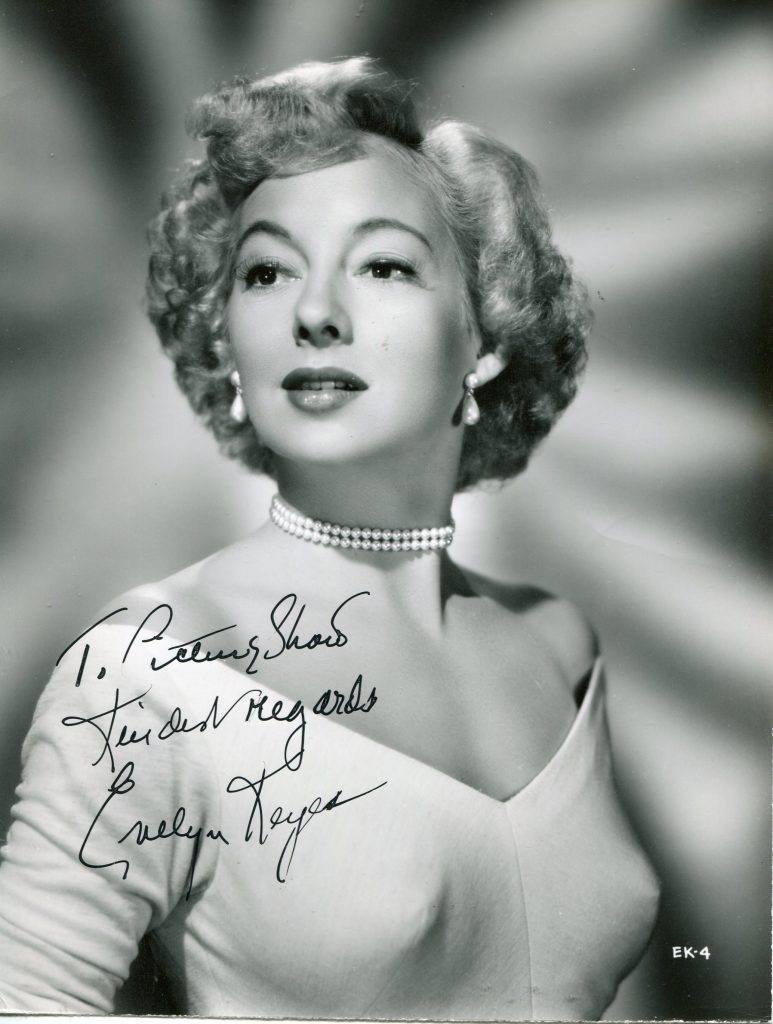
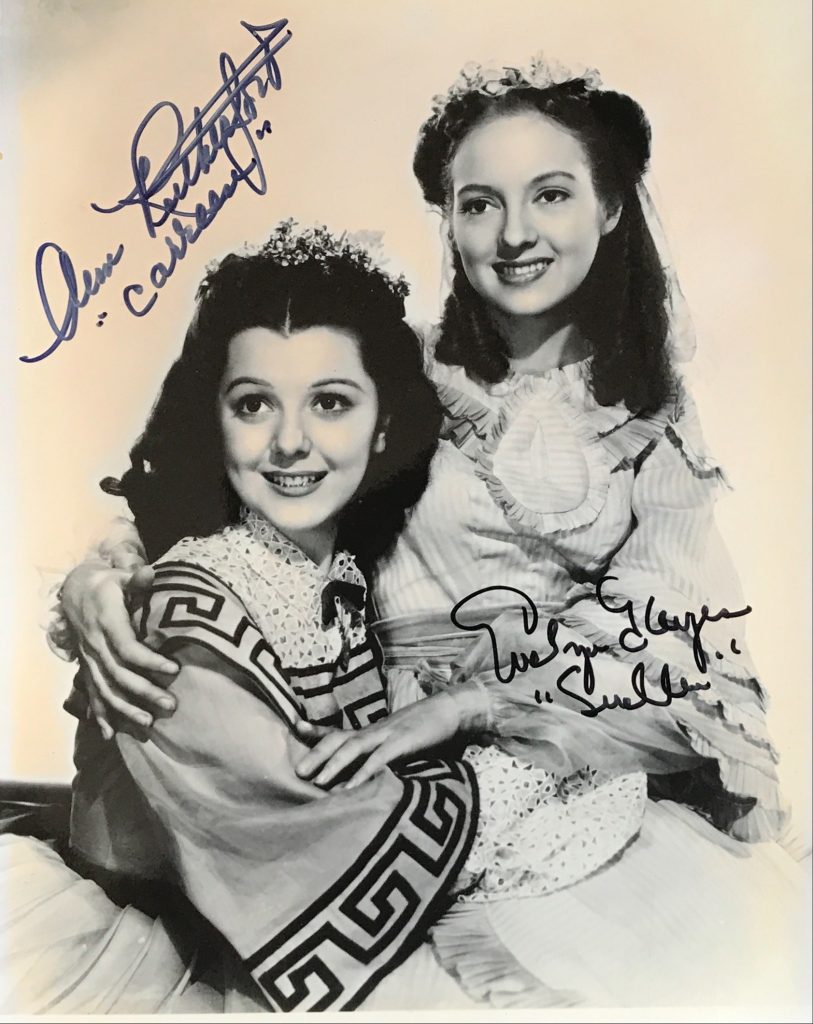
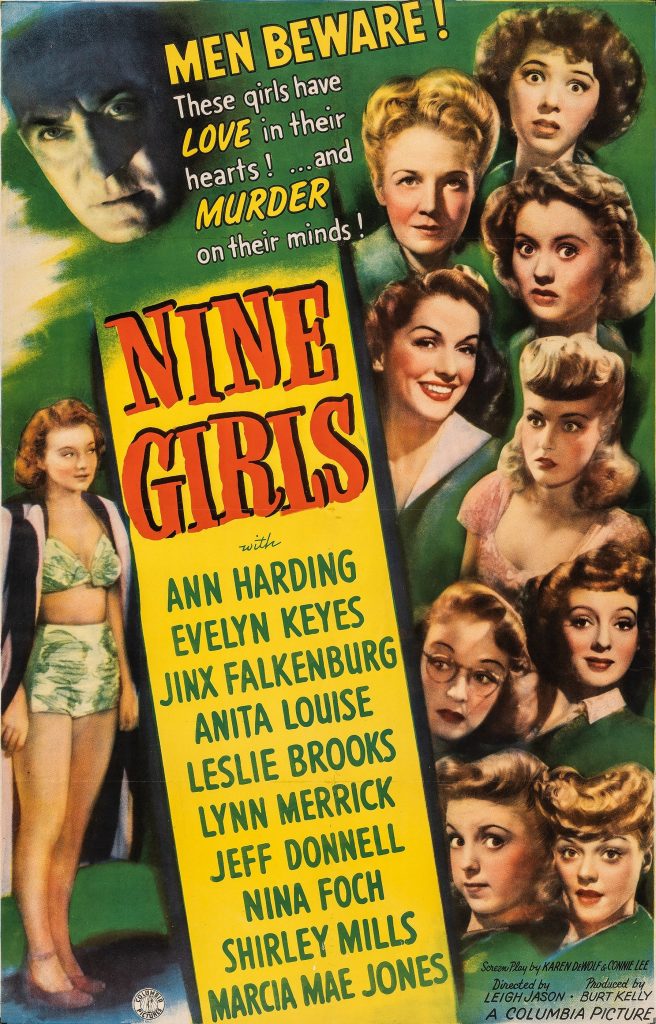
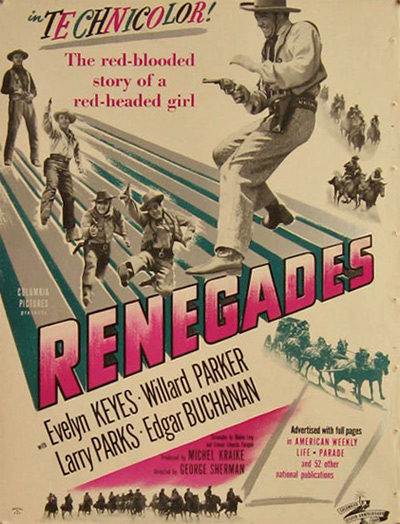
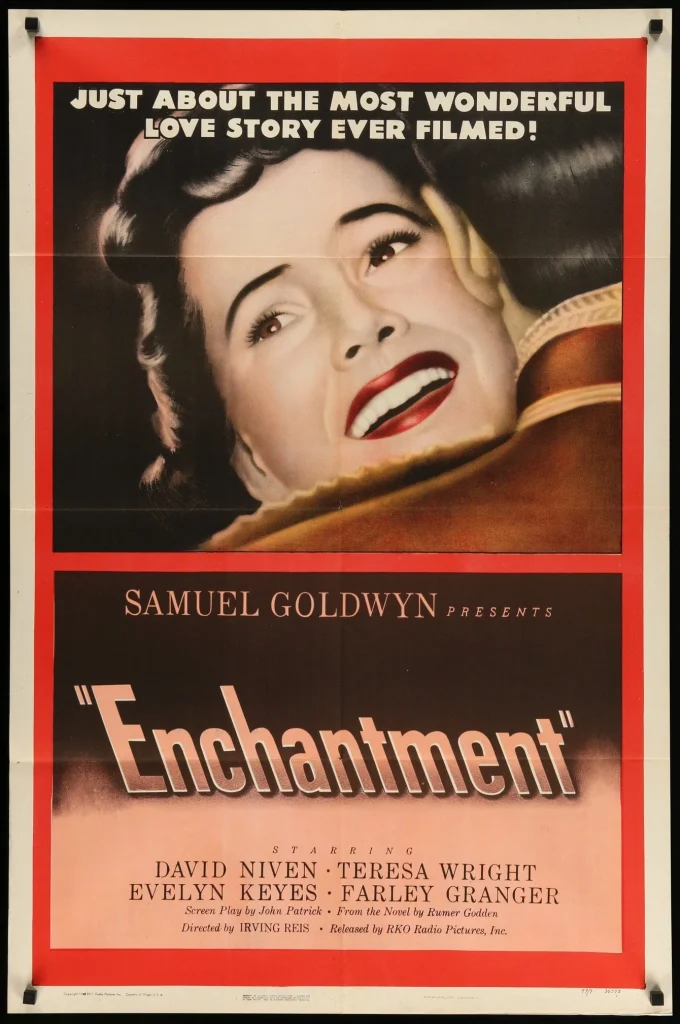
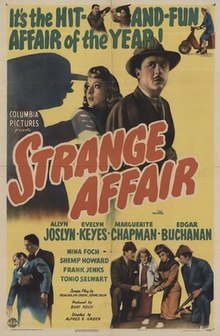
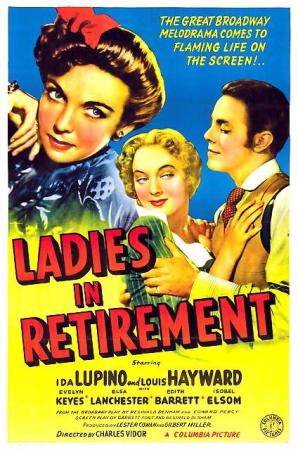
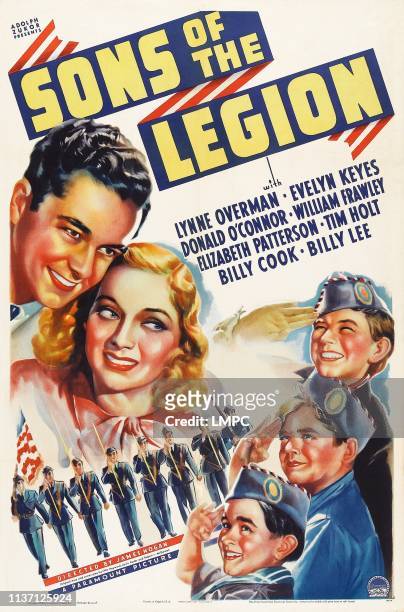
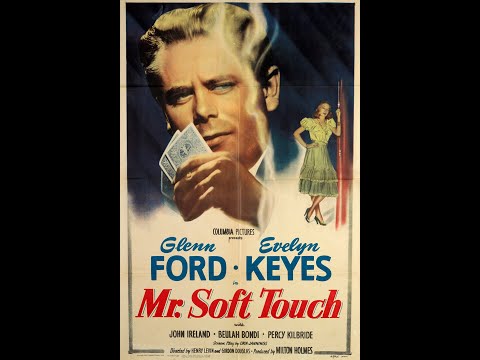
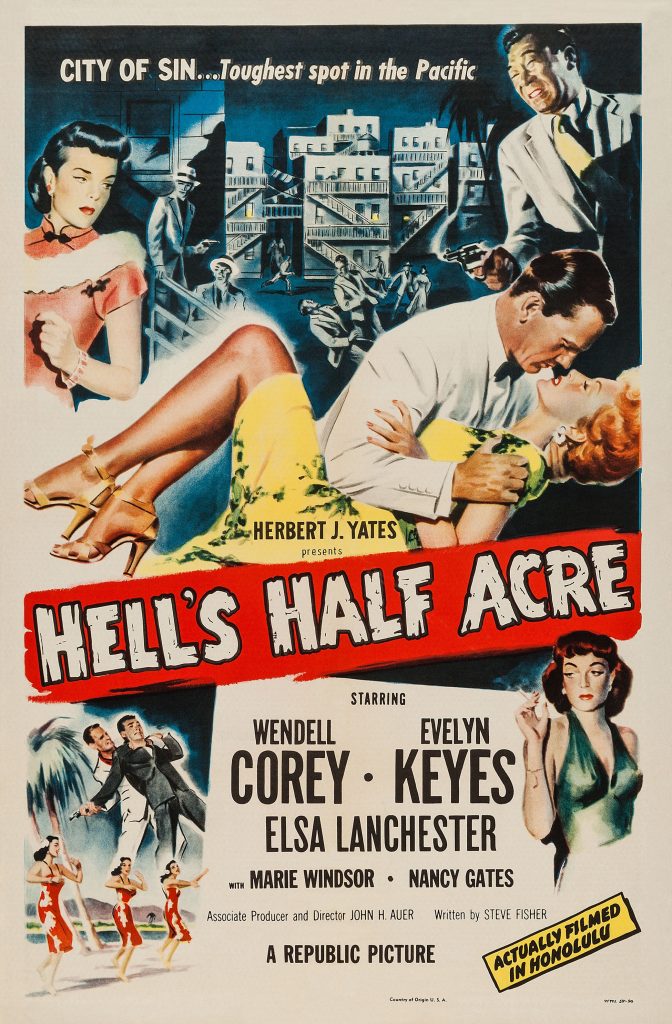
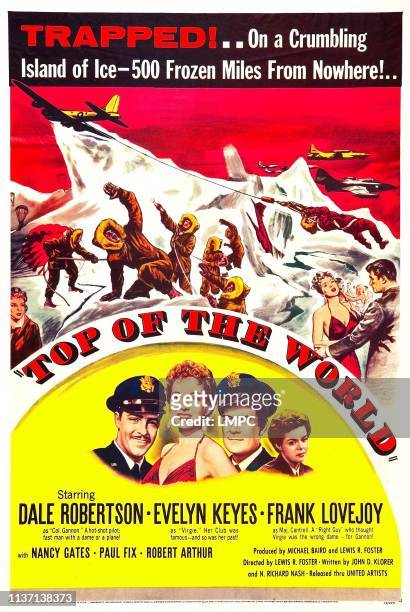
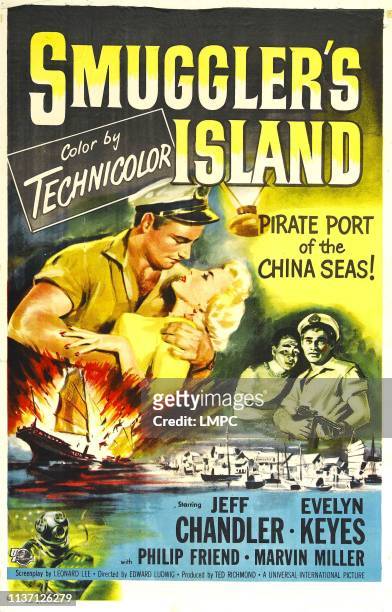
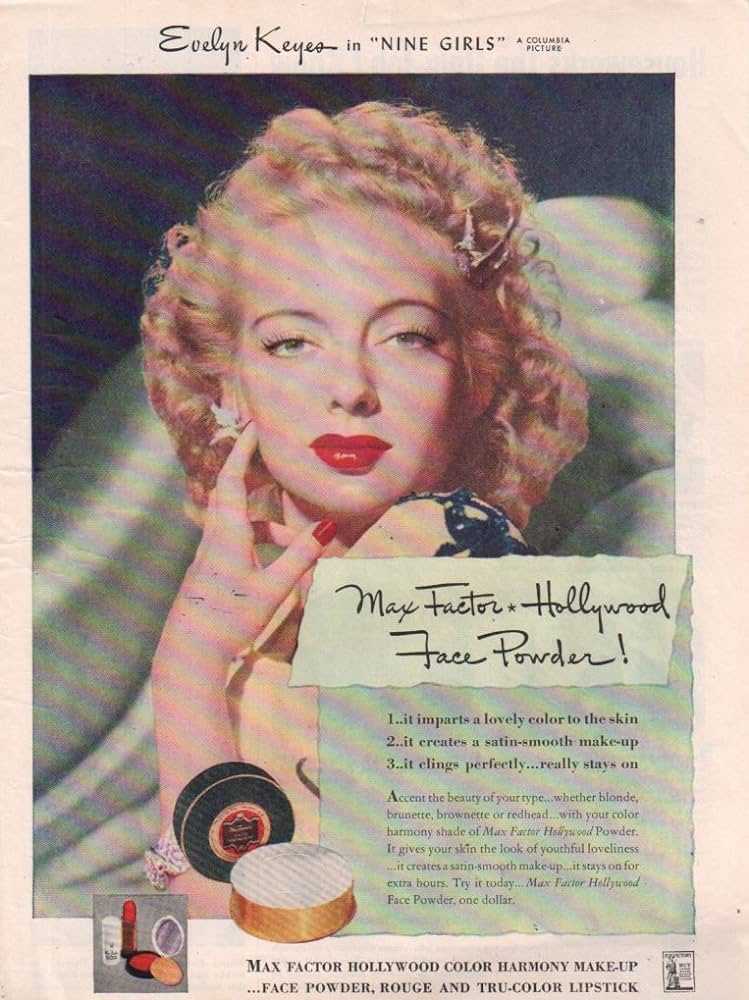
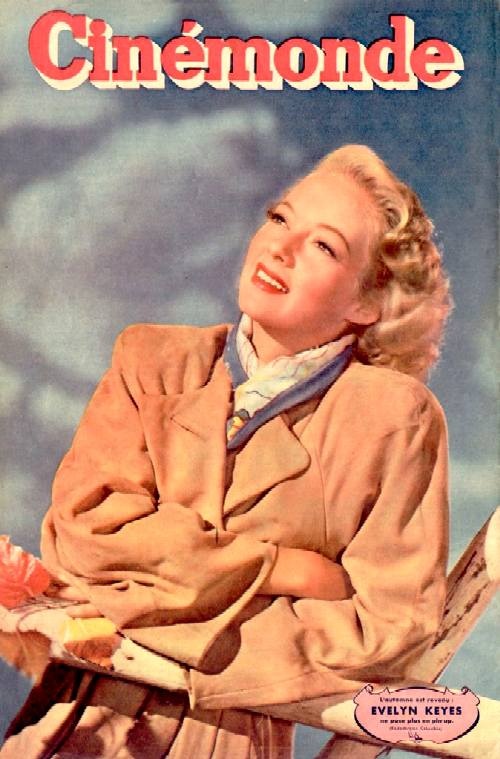
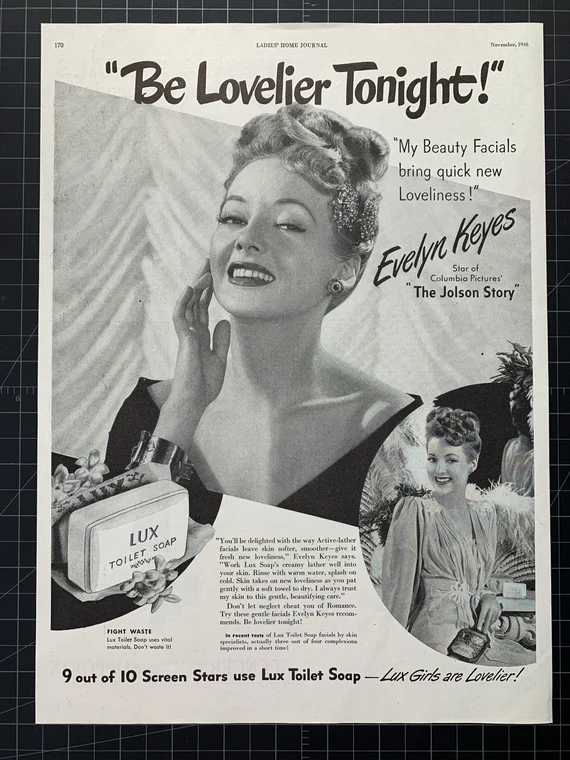
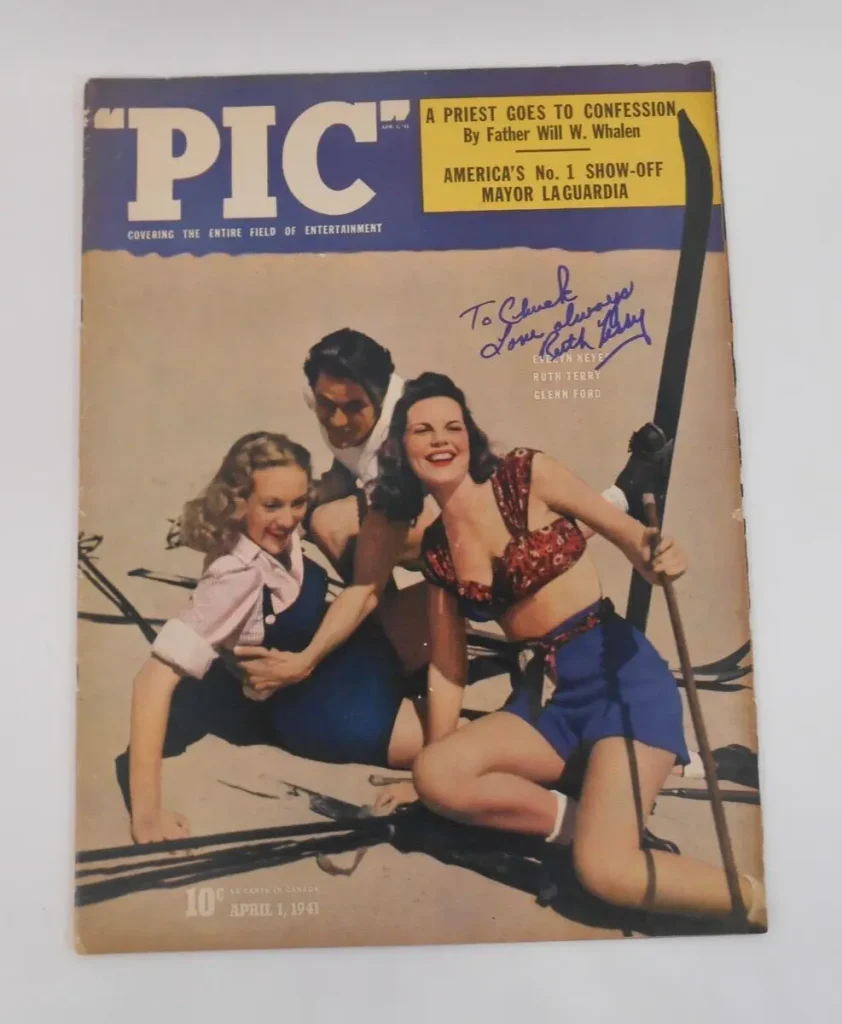
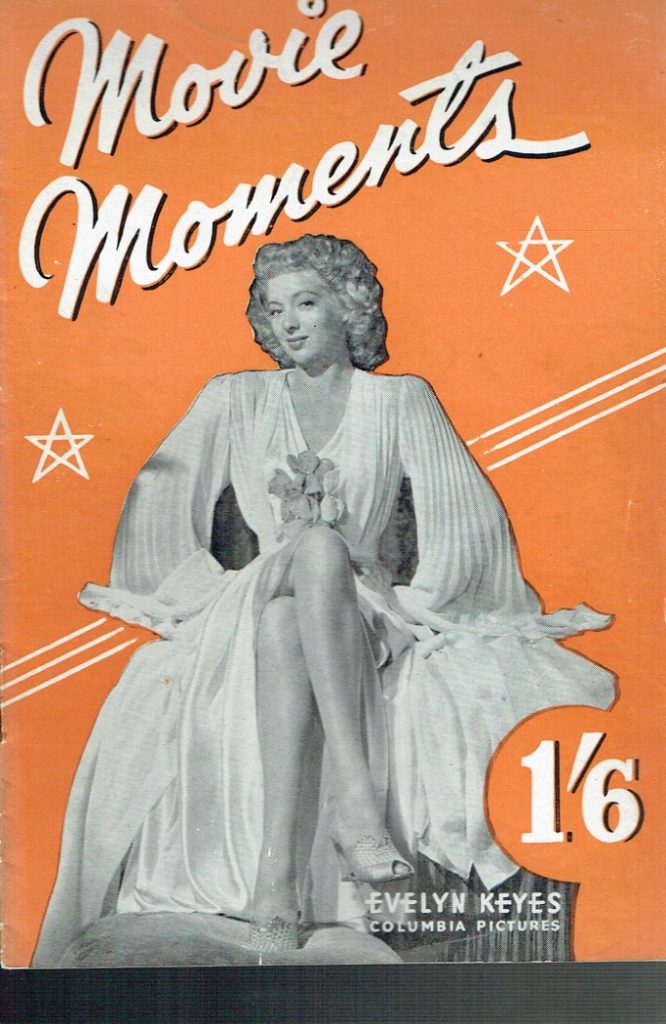
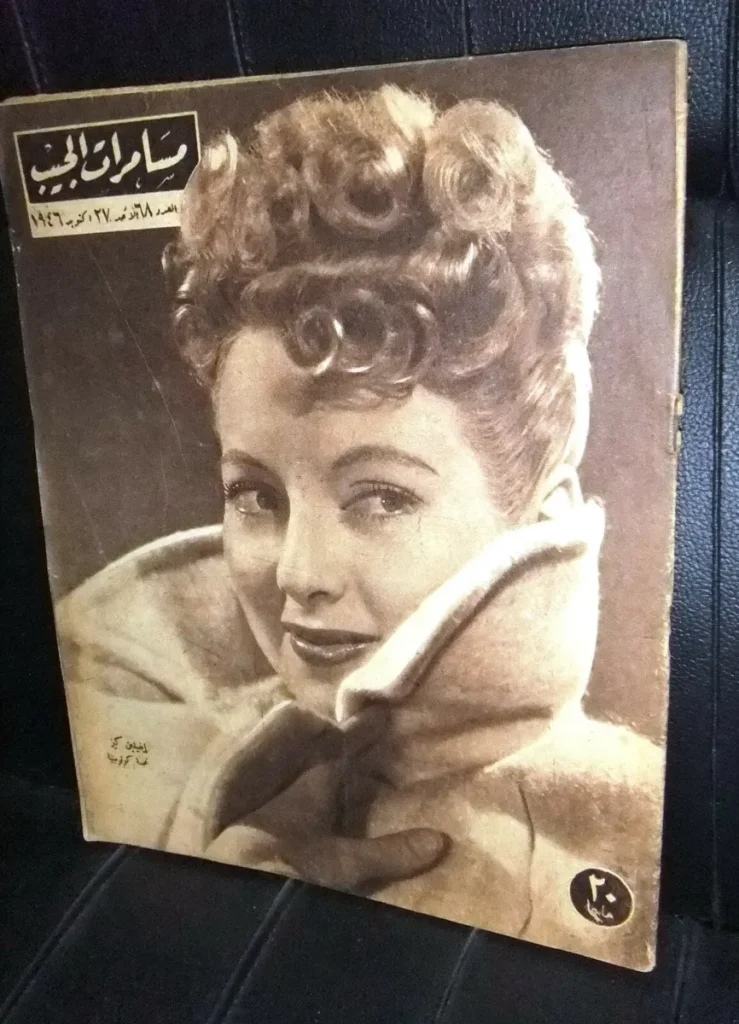
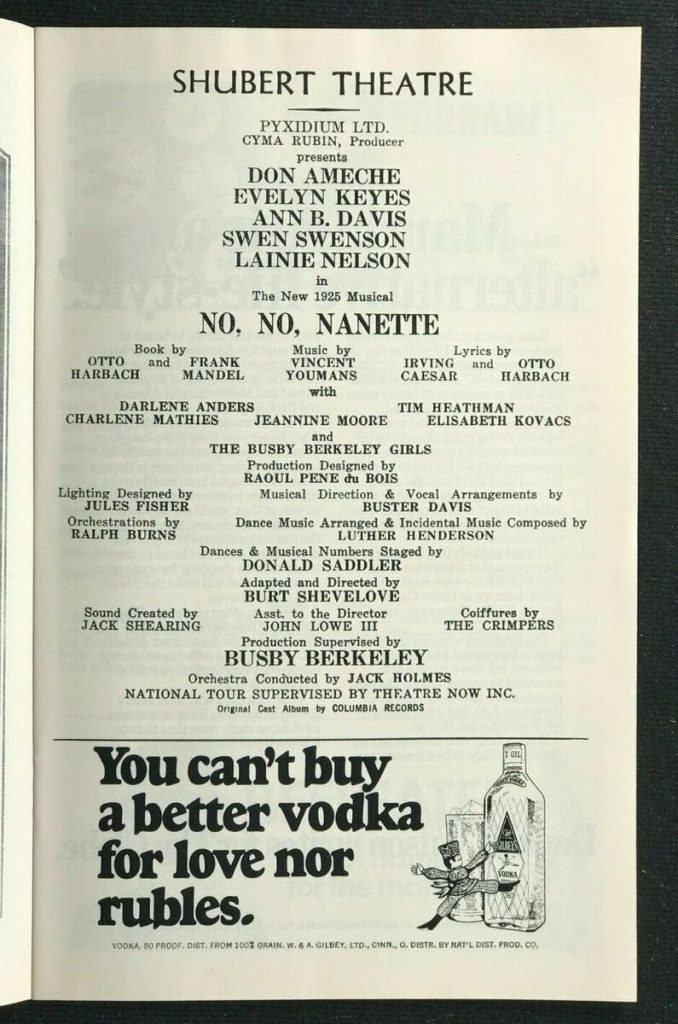
Evelyn KeyesAnn Rutherford & Evelyn KeyesSons Of The Legion, poster, l-r: Tim Holt, Evelyn Keyes, Billy Lee, Billy Cook, Donald O’Connor, 1938. (Photo by LMPC via Getty Images)Top Of The World, poster, US poster art, from bottom left: Dale Roberston, Evelyn Keyes, Frank Lovejoy, 1955. (Photo by LMPC via Getty Images)Smugglers Island, poster, US poster art, Jeff Chandler, Evelyn Keyes, 1951. (Photo by LMPC via Getty Images)
Evelyn Keyes obituary from “The Guardian” in 2008.
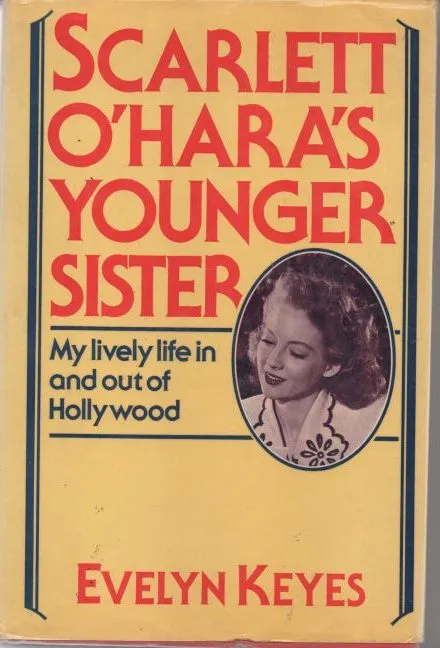
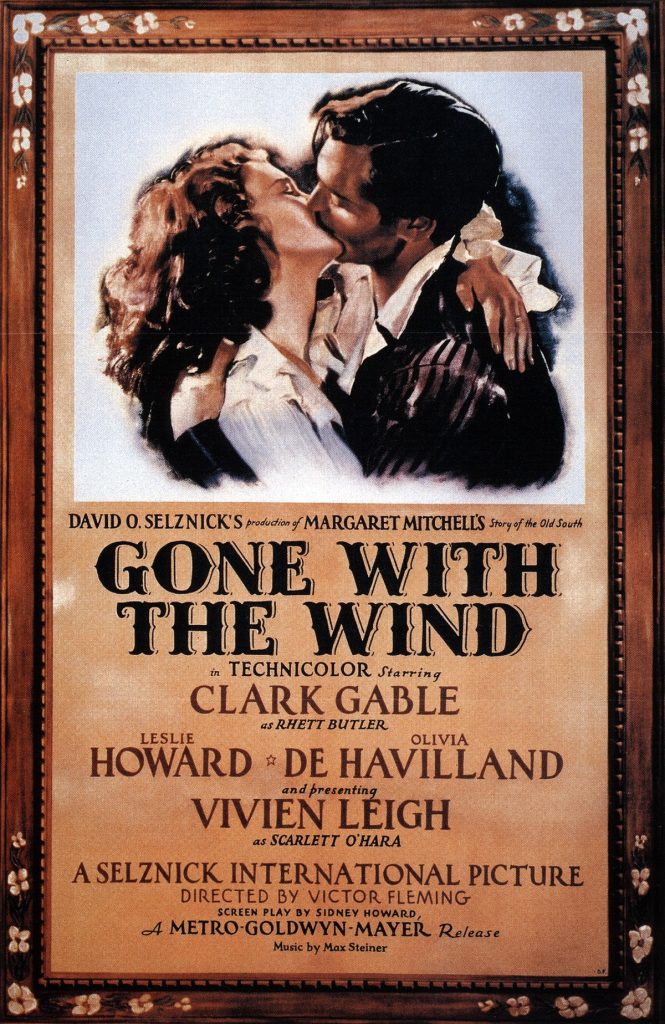
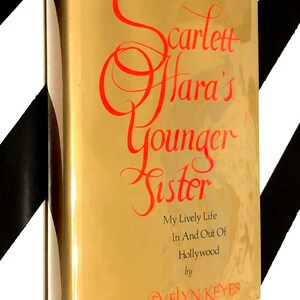
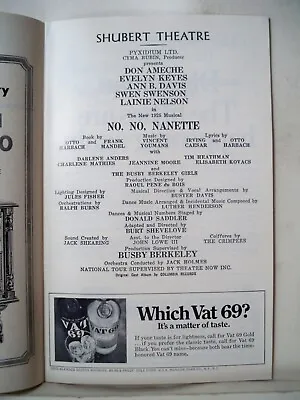
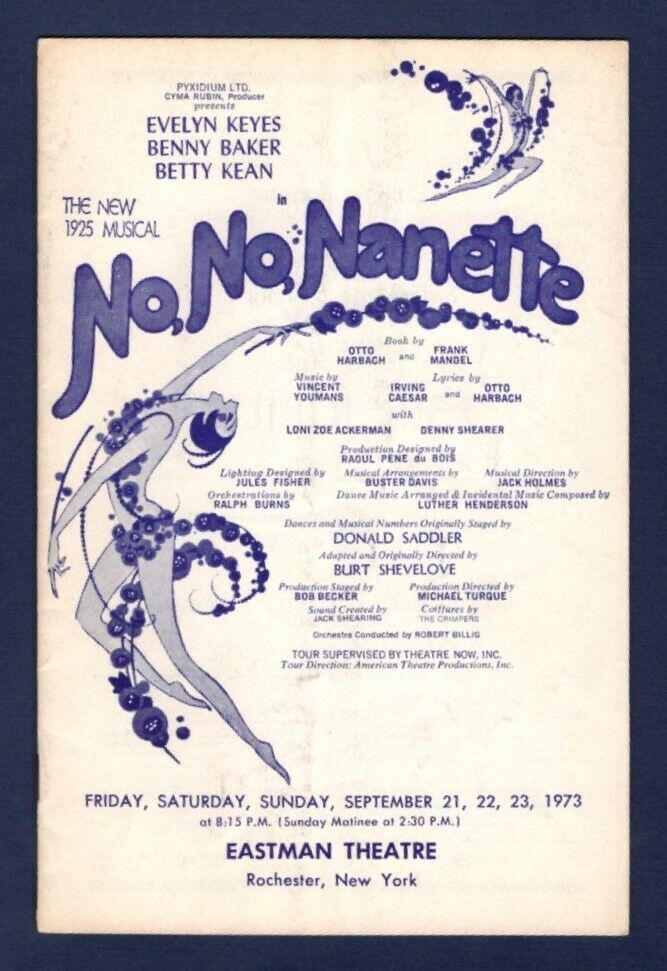
Evelyn Keyes, who has died aged 91, entitled her 1977 autobiography, Scarlett O’Hara’s Younger Sister. But there was more to Keyes than her role of Suellen O’Hara in Gone With the Wind (1939). Her memoirs, subtitled My Lively Life in and Out of Hollywood, were more about her marriages, sexual liaisons and abortions than about her film career.
In 1940, after two years of marriage, her depressive first husband, Barton Bainbridge, shot himself. Her second marriage, to Columbia director Charles Vidor, lasted two years from 1943 before she left him to marry John Huston in 1946. From 1953, she lived with producer Mike Todd, and became jazzman Artie Shaw’s eighth wife in 1957. They separated in the 1970s, and divorced in 1985. After his death in 2004, she sued his estate and was awarded $1.42m.
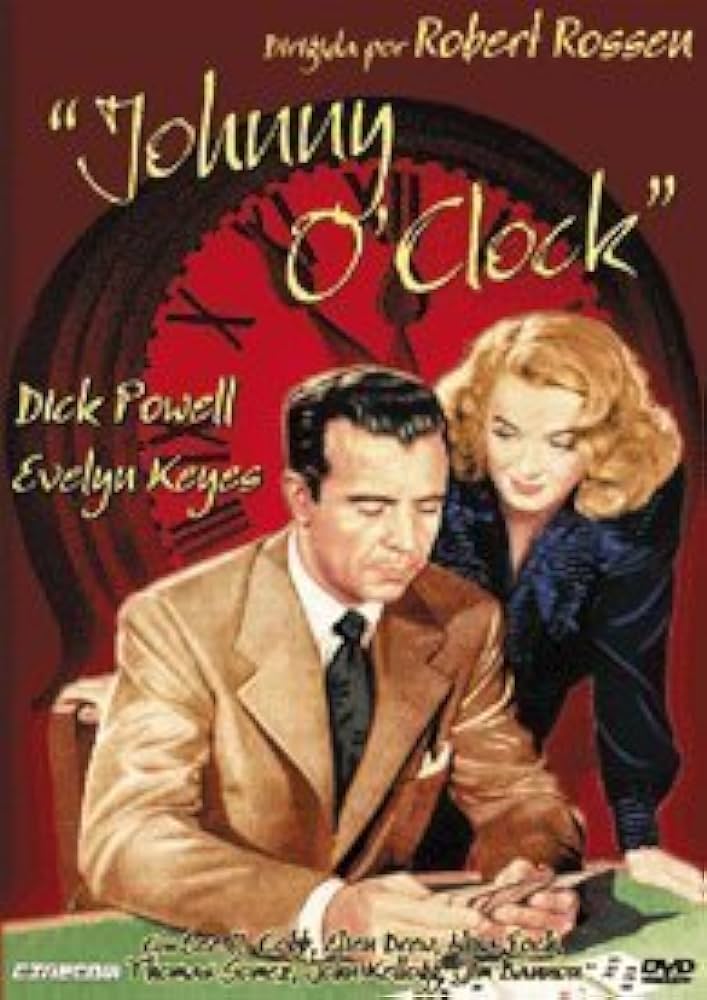
The most interesting period of her career was in film noir. When told that she had become a film noir icon, she laughed: “It seems that I had a whole career I didn’t even know about!” Once past ingenue, the redhead showed a dark side in dramas in which her morality is altered by confrontations with sex and cupidity. As a showgirl in Robert Rossen’s debut, Johnny O’Clock (1947), she is drawn into a shadowy world in pursuit of the murderer of her sister.
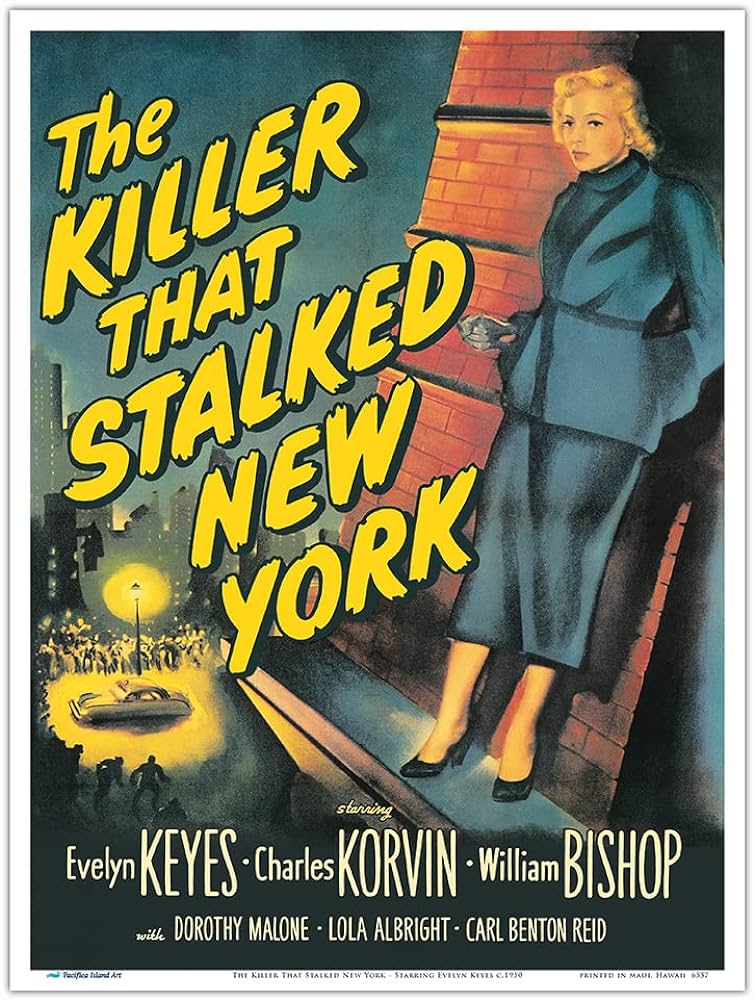
Keyes was literally a femme fatale in the title role of The Killer That Stalked New York (1950). As a jewel smuggler on the run, carrying the smallpox virus, she moves effectively from cool confidence to desperation. In classic noir fashion, she tracks down her husband for one last embrace so she can infect him as a punishment for his infidelity.
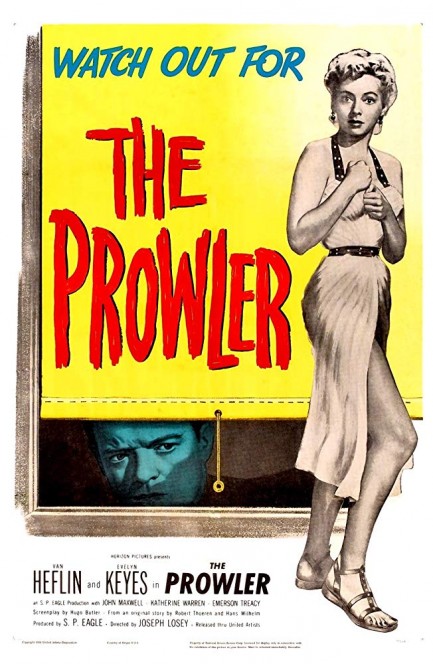
The Prowler (1951), Joseph Losey’s tense thriller, had Keyes as a lonely, sexually-frustrated wife who has an affair with a cop (Van Heflin). After the cop shoots her sterile husband, making it seem as if he were a prowler, the two benighted lovers are locked in an atmosphere of mistrust and paranoia.
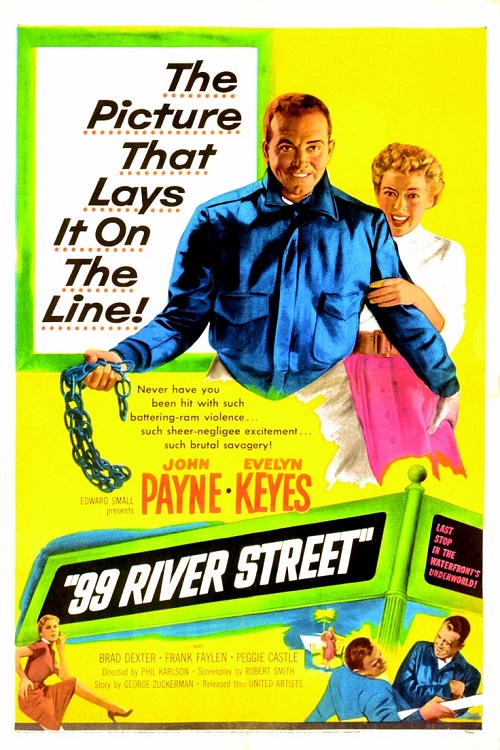
In 1953, 99 River Street had her shifting between femme fatale and girl-next-door without stretching credibility. She plays an actor playing the part of a murderer, but gets involved in a real one.
Born in Texas, at 18 Keyes was talent spotted while dancing in a nightclub, and put under personal contract to Cecil B DeMille. However, she was merely asked to be passive and pretty in The Buccaneer (1938) and Union Pacific (1939) until, freed from her Paramount contract, David O Selznick asked her to play the selfish and weak Suellen, whose beau her elder sister Scarlett marries in Gone With the Wind. Apparently Keyes outran Selznick when he chased her around his office at their first meeting, but he cast her anyway.
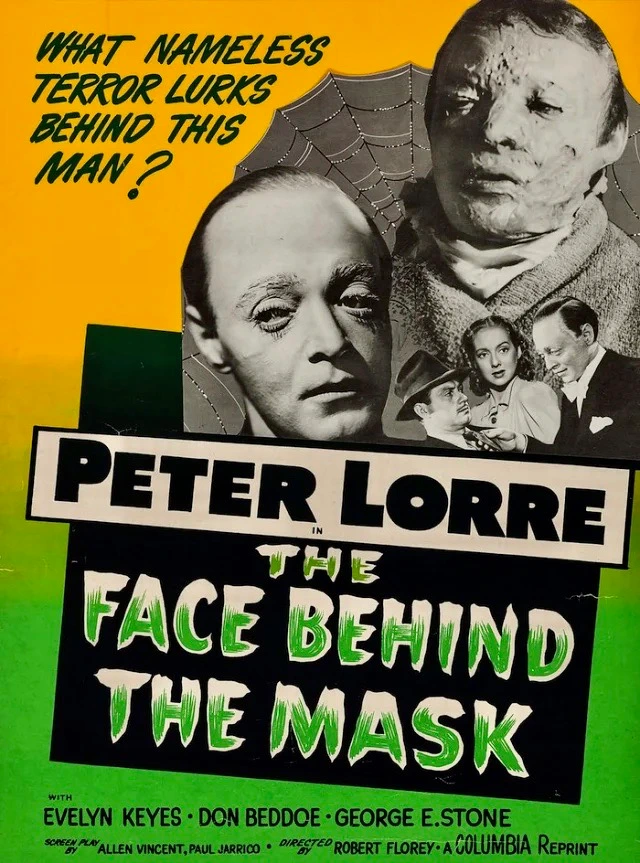
In 1940, she signed a Columbia contract and began getting bigger and better roles such as mad scientist Boris Karloff’s daughter in Before I Hang (1940), and the blind girl whom disfigured gangster Peter Lorre loves in The Face Behind the Mask (1941). During the shooting, Keyes had to cope with Lorre’s dependency on drugs and alcohol.
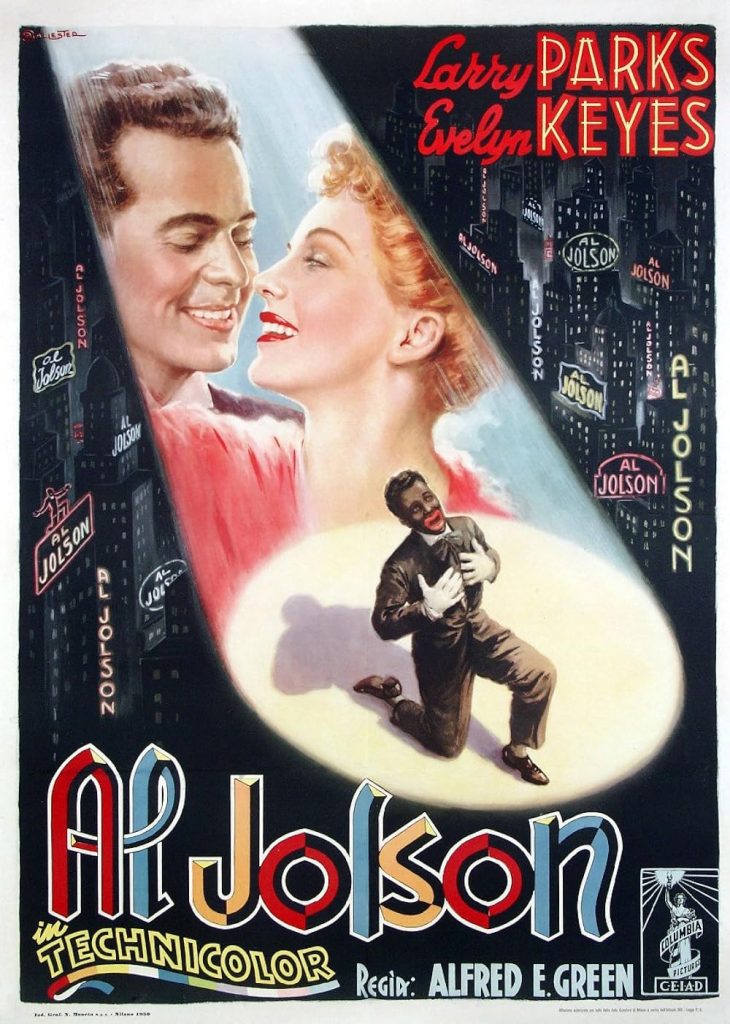
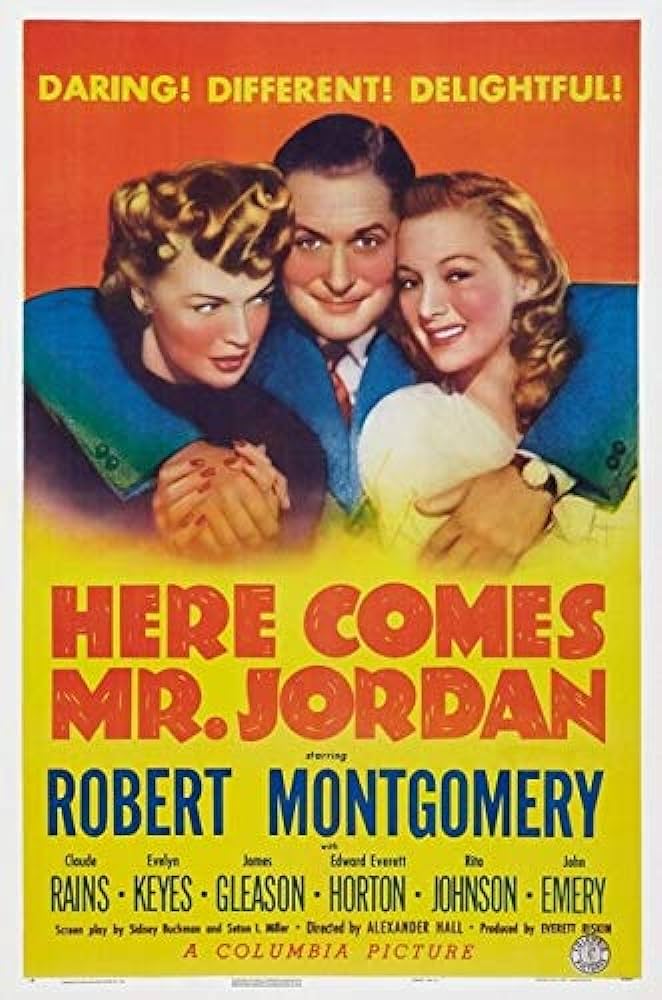
Keyes is radiant in Here Comes Mr Jordan (1941) as the woman in love with Robert Montgomery, who reincarnates into the body of the businessman who ruined her father. Another huge success was The Jolson Story (1946), in which she played Al Jolson’s first wife.
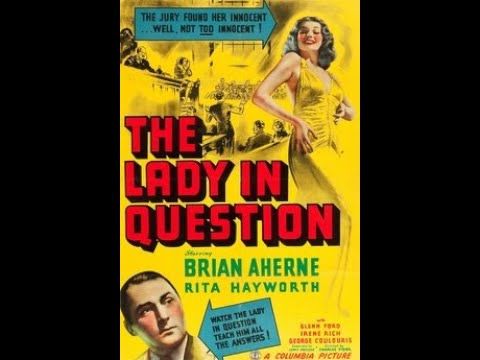
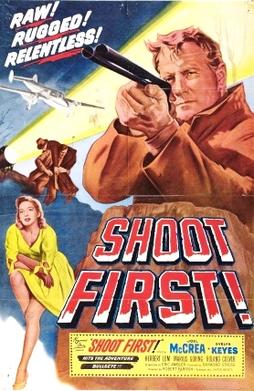
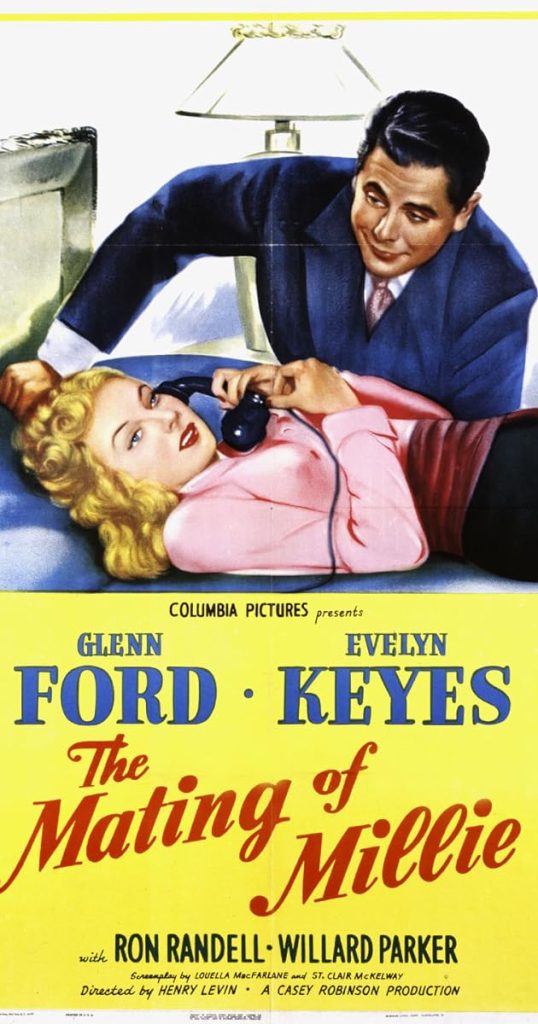
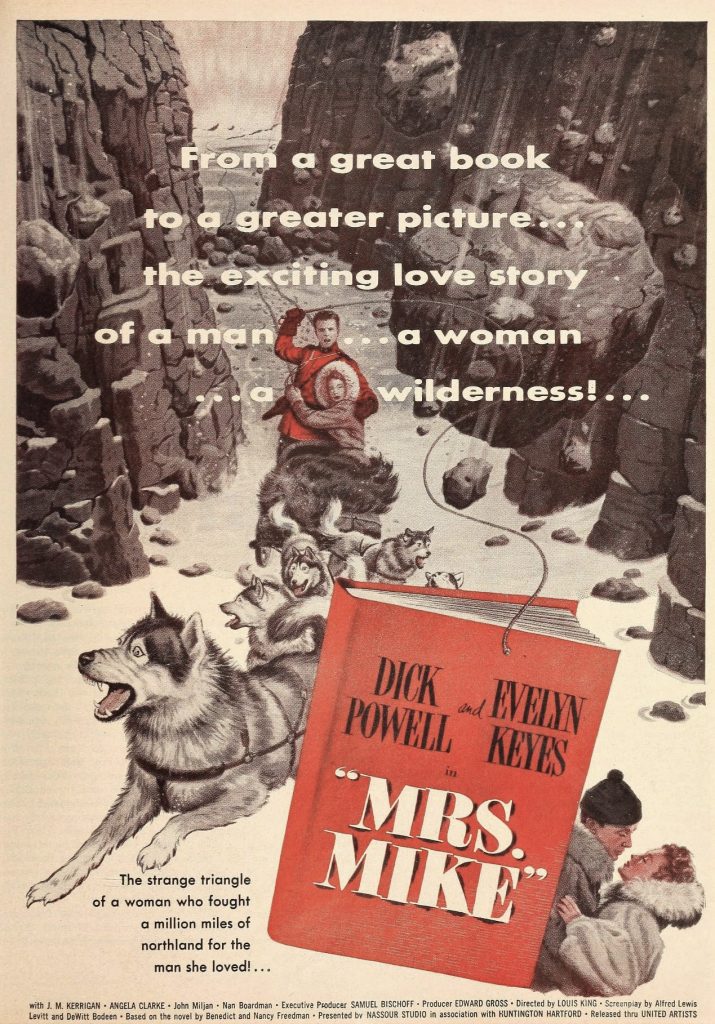
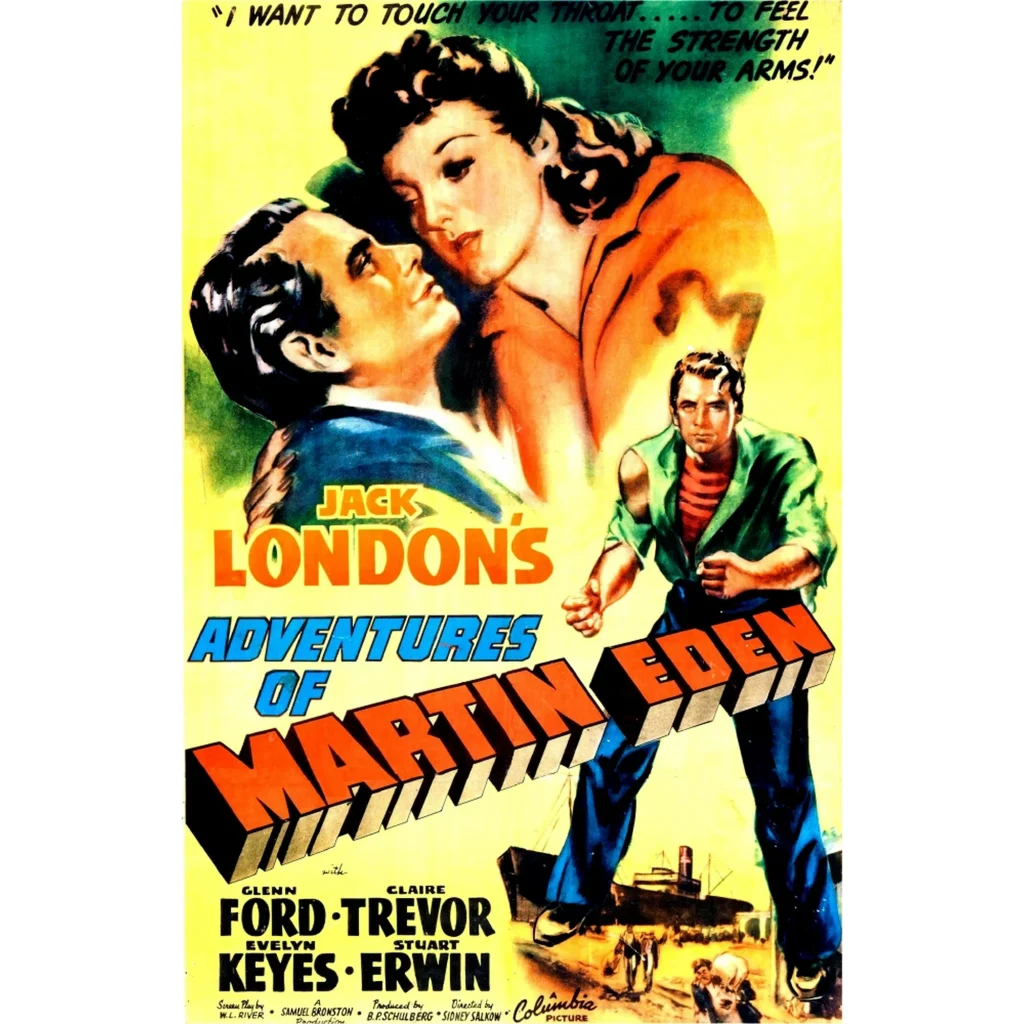
While Harry Cohn, Columbia’s big boss, was polishing Rita Hayworth’s star image, Keyes languished in run-of-the mill comedies and westerns mainly opposite Glenn Ford, such as The Adventures of Martin Eden and The Desperadoes (both 1943). In 1949, she turned freelance, making a few interesting films, including Mrs Mike (1949), as a Boston girl who gives up everything to face the hardships of life in northern Canada to be with her Mountie husband (Dick Powell); and Shoot First (1953), a murky espionage tale filmed in a Dorset countryside crawling with spies.
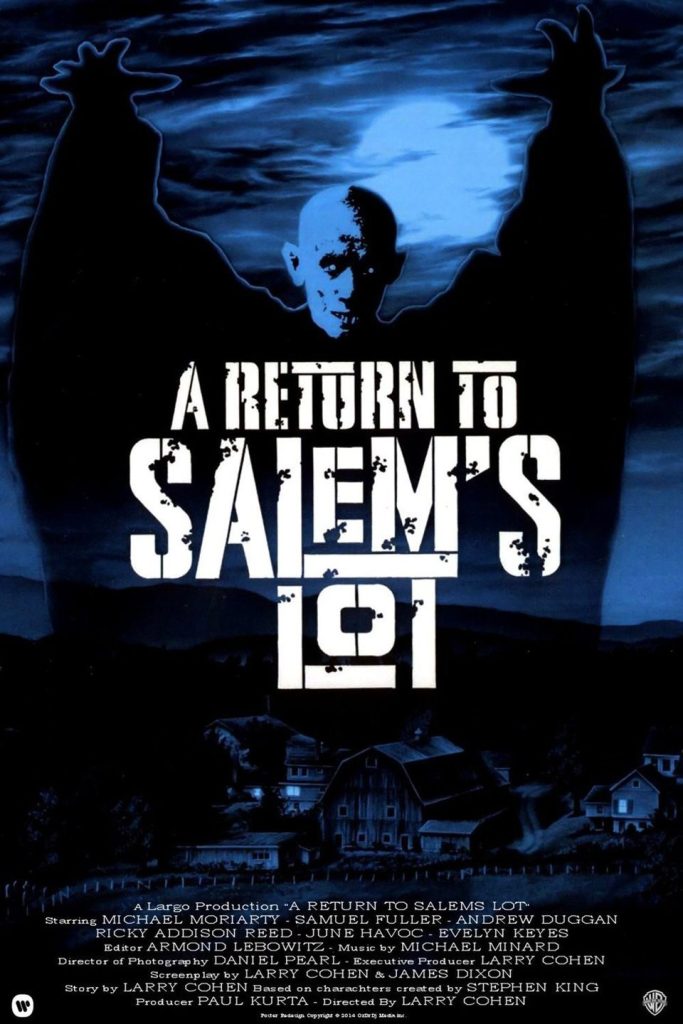
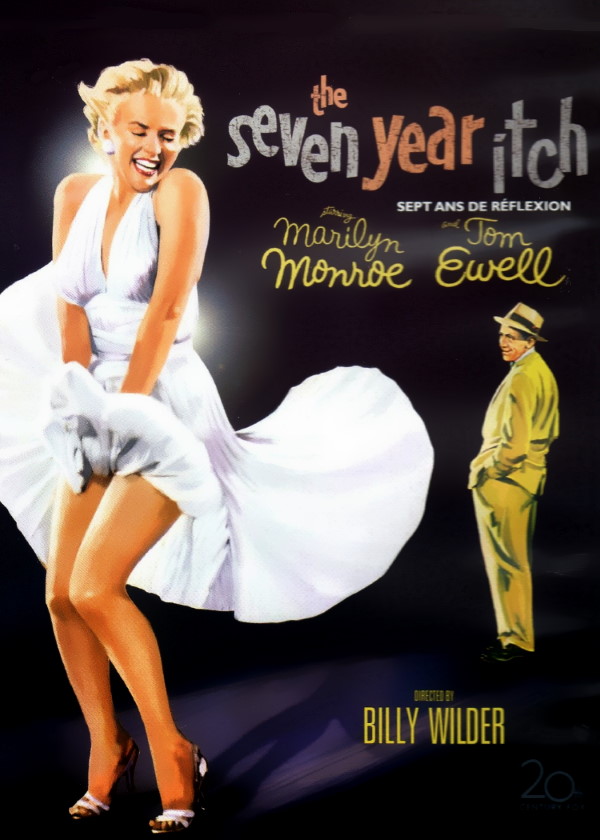
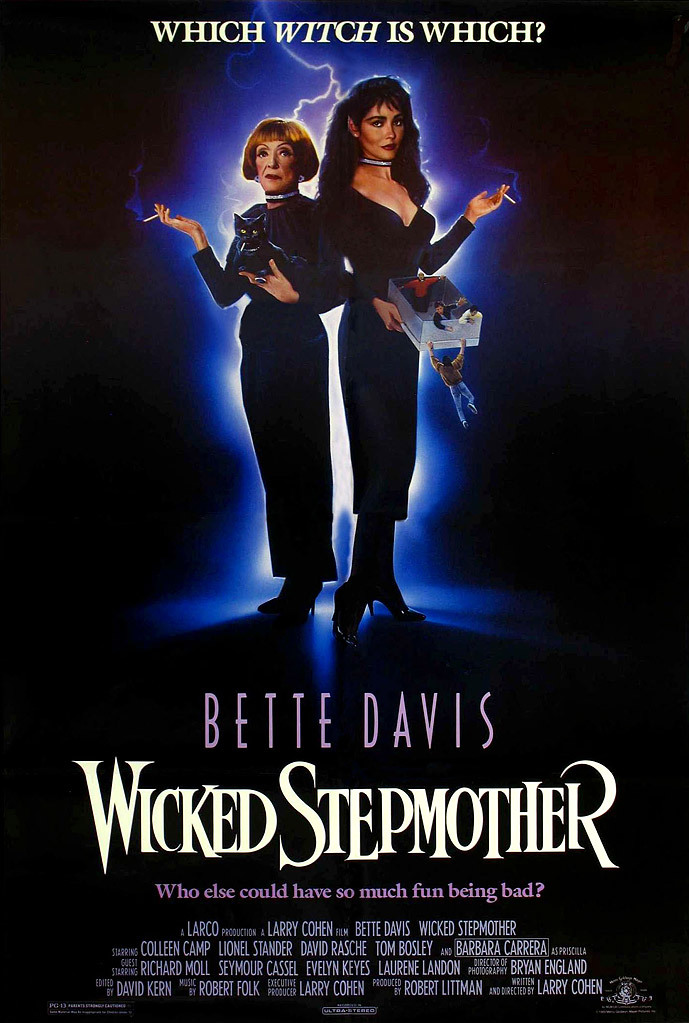
Her final film, before retiring in 1956, was as Tom Ewell’s absent wife in Billy Wilder’s The Seven Year Itch (1955). Keyes later returned to the screen in a couple of gothic melodramas directed by Larry Cohen: A Return to Salem’s Lot (1987) and Wicked Stepmother (1989).
A self-described “flaming liberal” who was once a “mush-minded bigot”, the plain-speaking Keyes explained that having an abortion just before filming Gone With the Wind, left her unable to have children.
· Evelyn Keyes, actor, born November 20 1916; died July 4 2008
The abpve “Guardian” obituary can also be accessed online here.
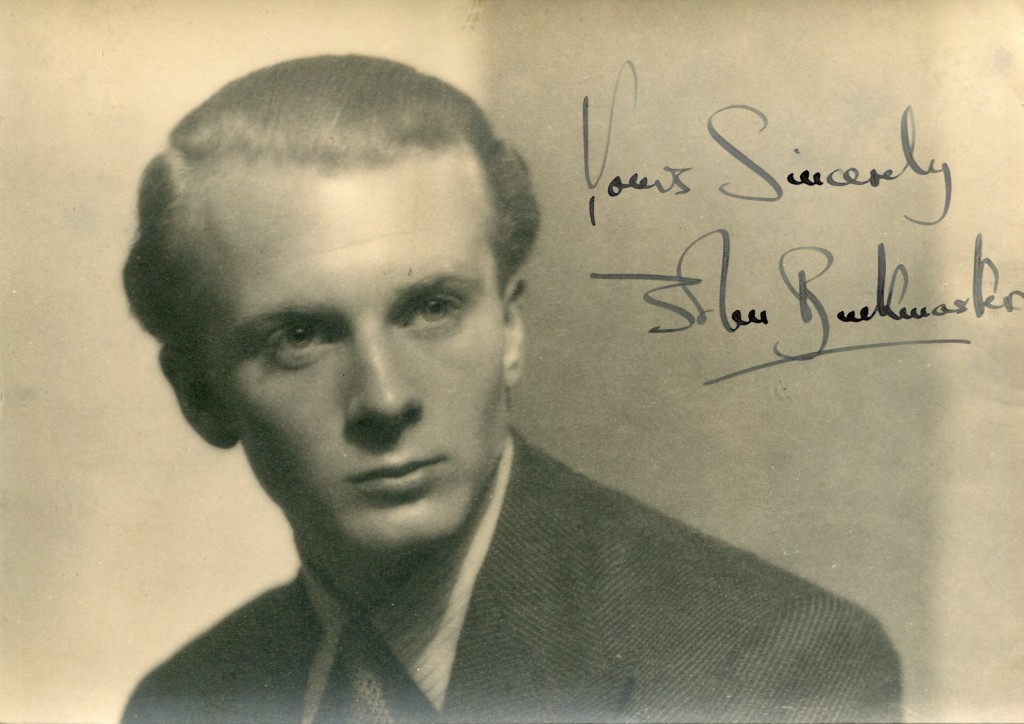
John Buckmaster was born on July 18, 1915 in Frinton-On-Sea, Essex, England as John Rodney Buckmaster. He is known for his work on Sherlock Holmes (1954), Sample People(2000) and The Philco-Goodyear Television Playhouse (1948). He died in 1983 in London, England. He was the son of Gladys Cooper.
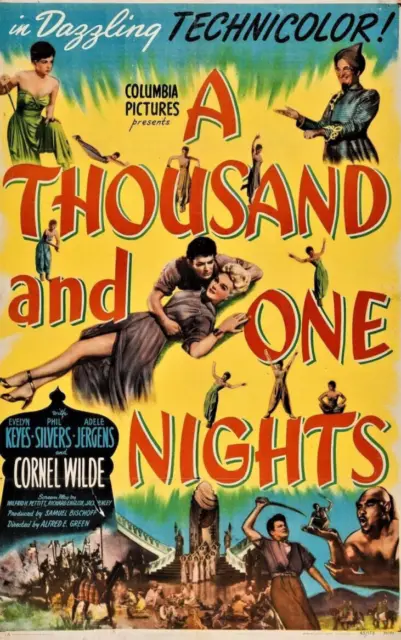
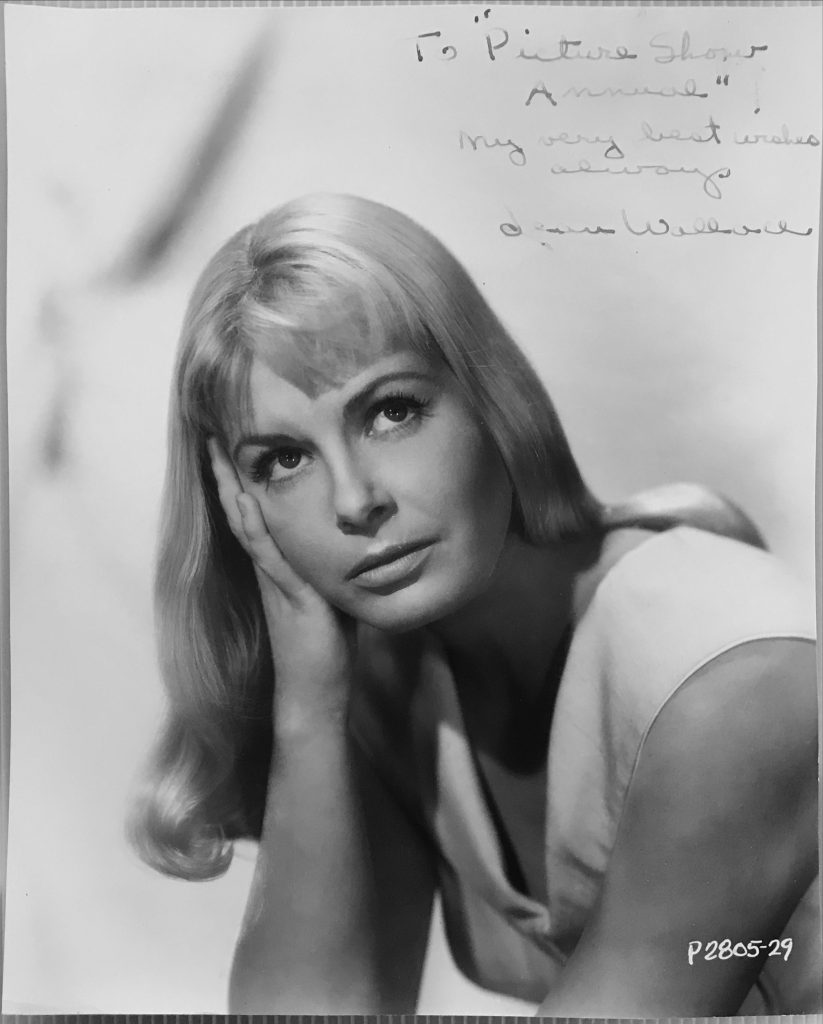
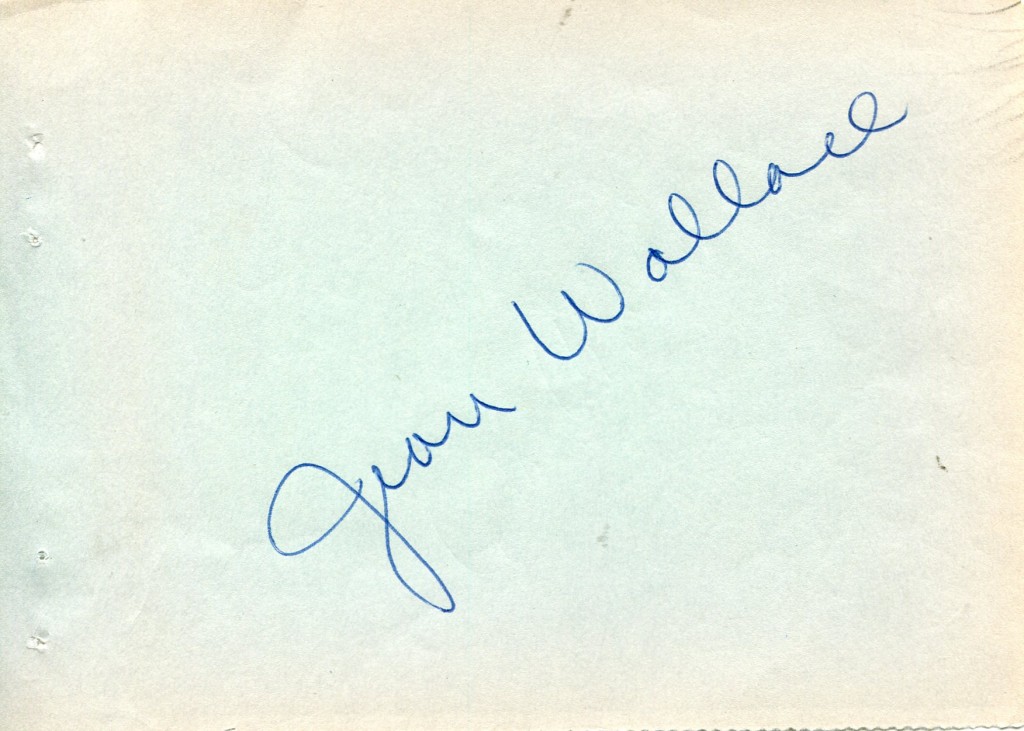
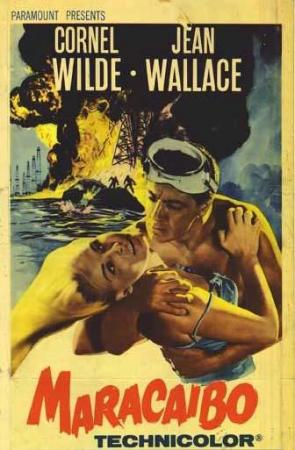
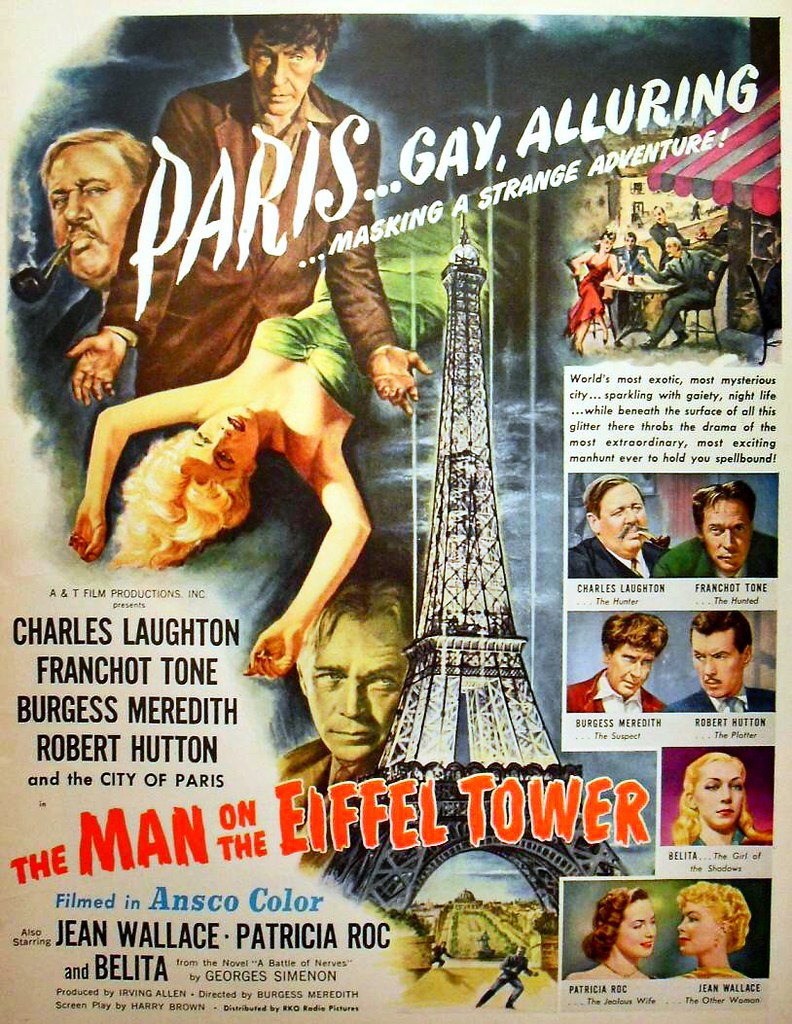
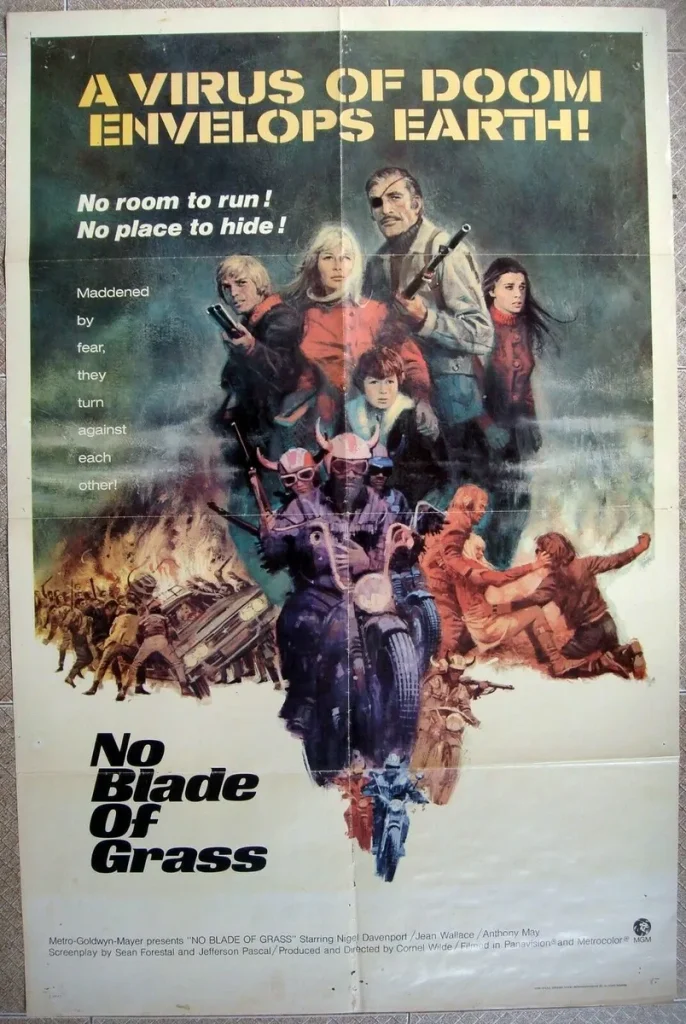
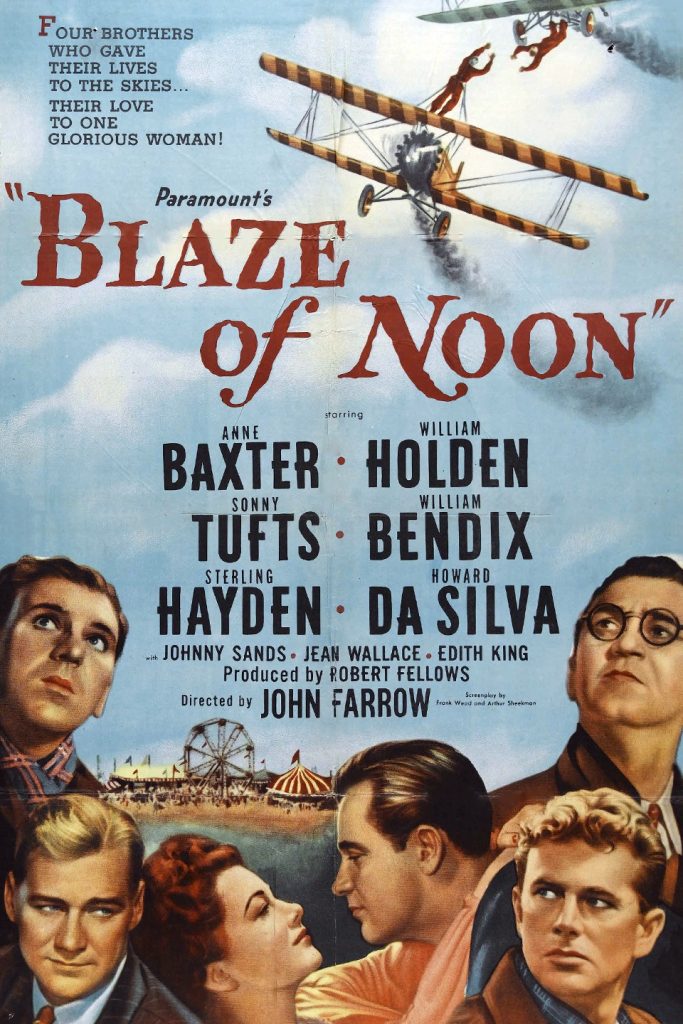
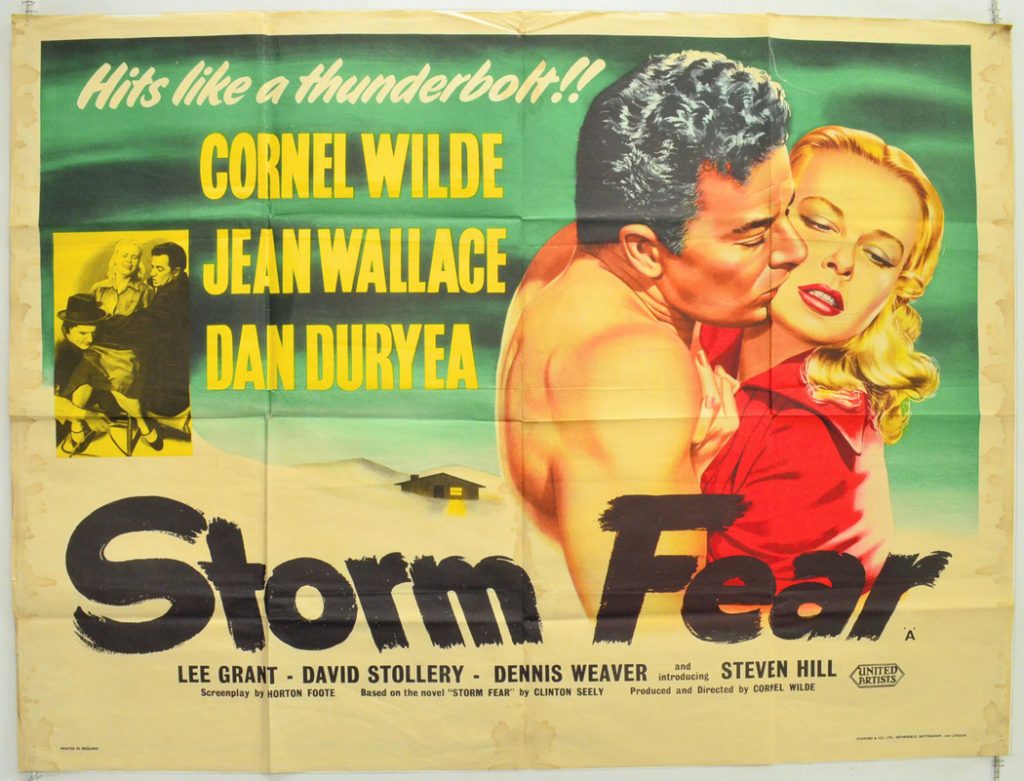
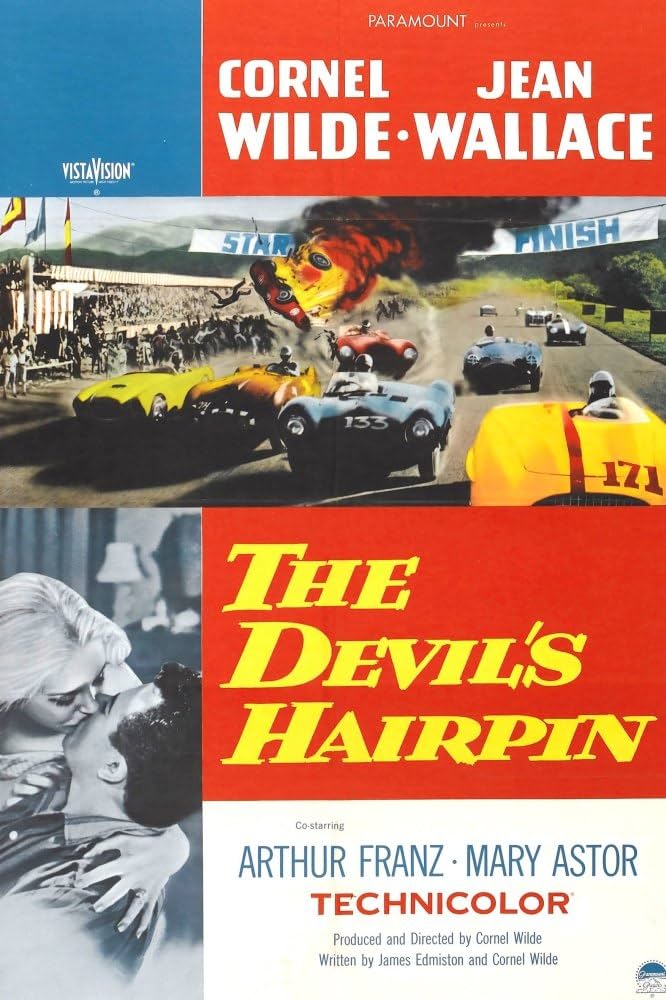
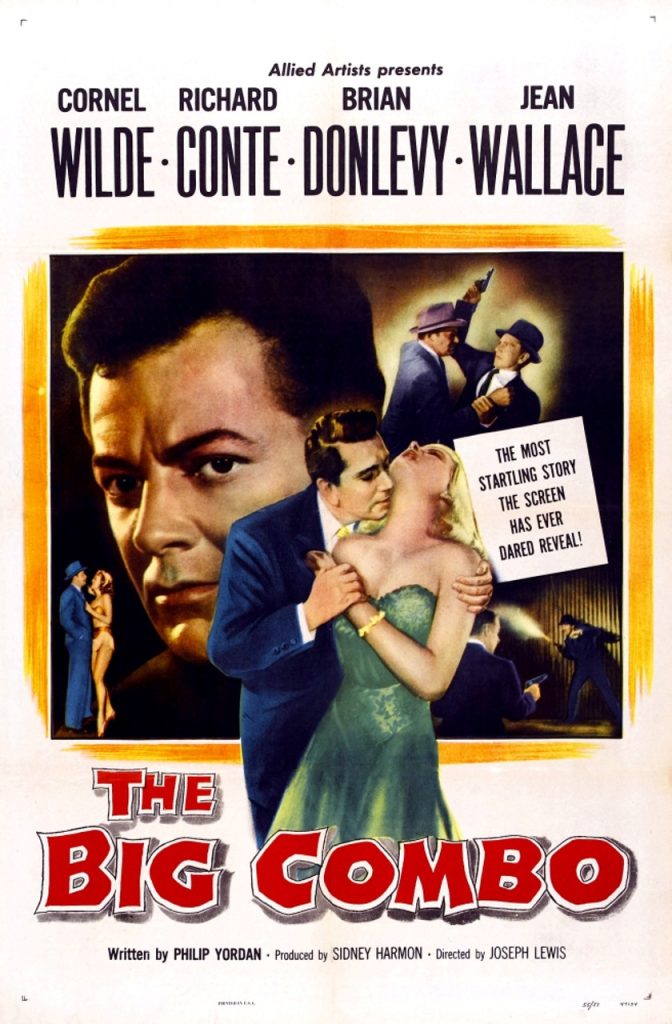
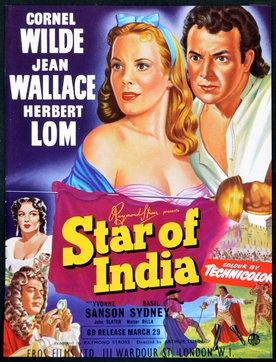
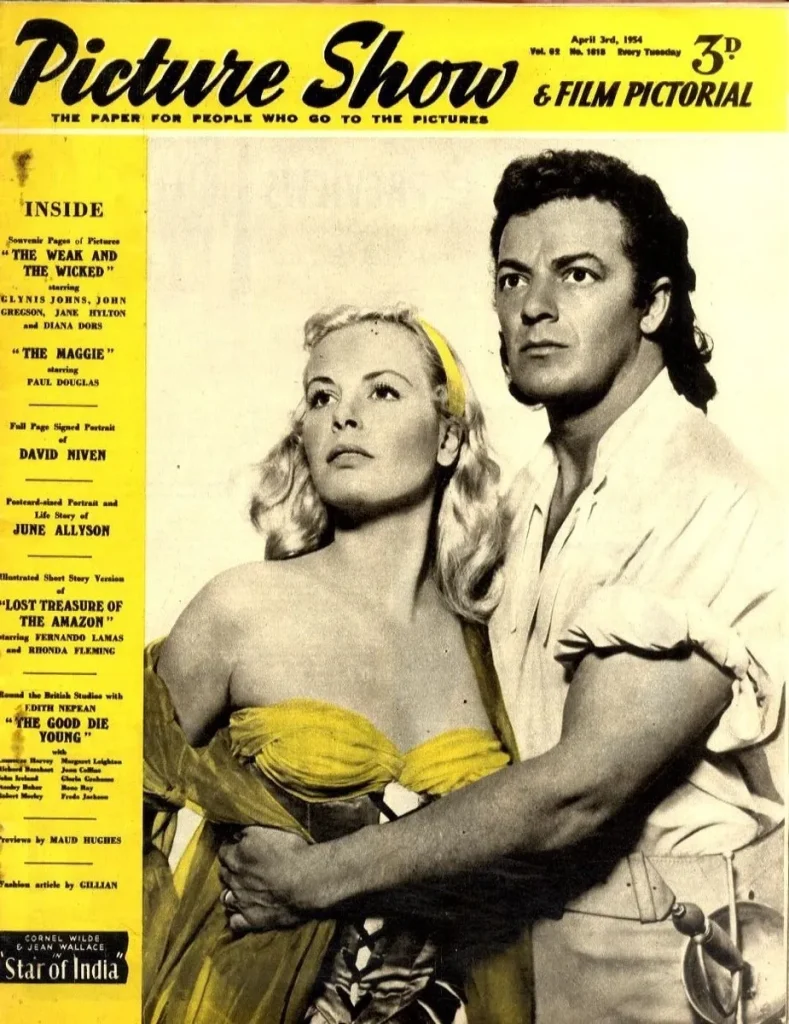
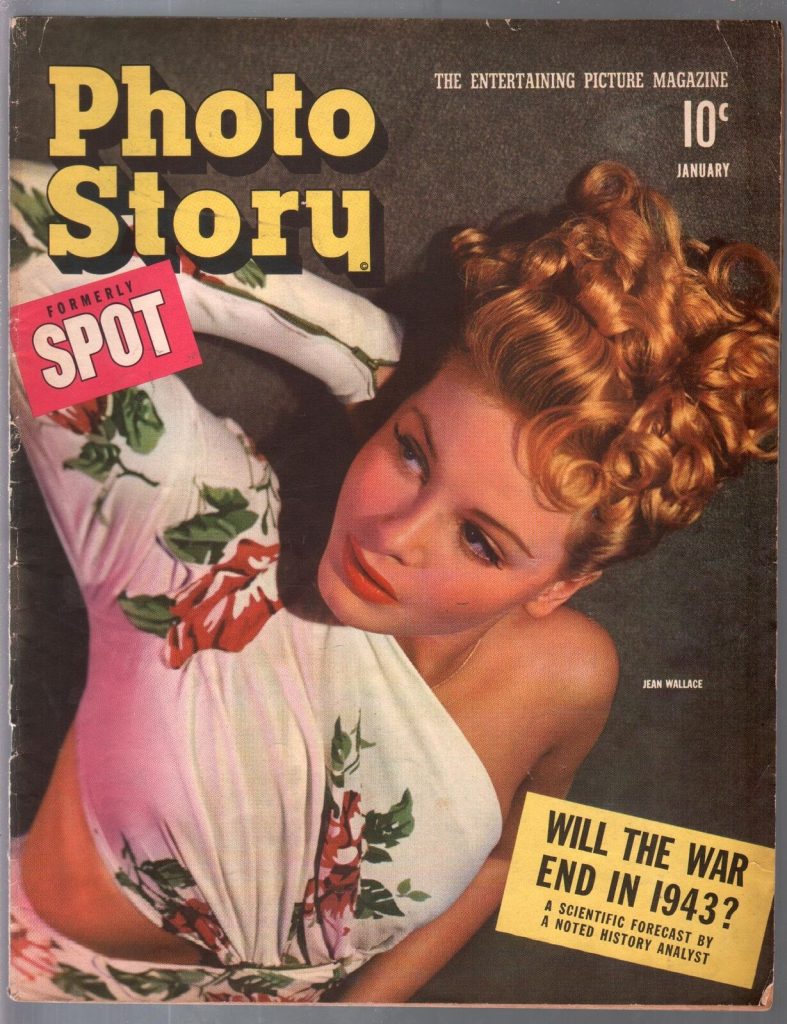
Jean Wallace, a screen actress who had feature parts in a dozen Hollywood productions and was married to two stars, Franchot Tone and Cornel Wilde, died of a gastrointestinal hemorrhage Wednesday at her home in Beverly Hills, Calif. She was 66 years old.1
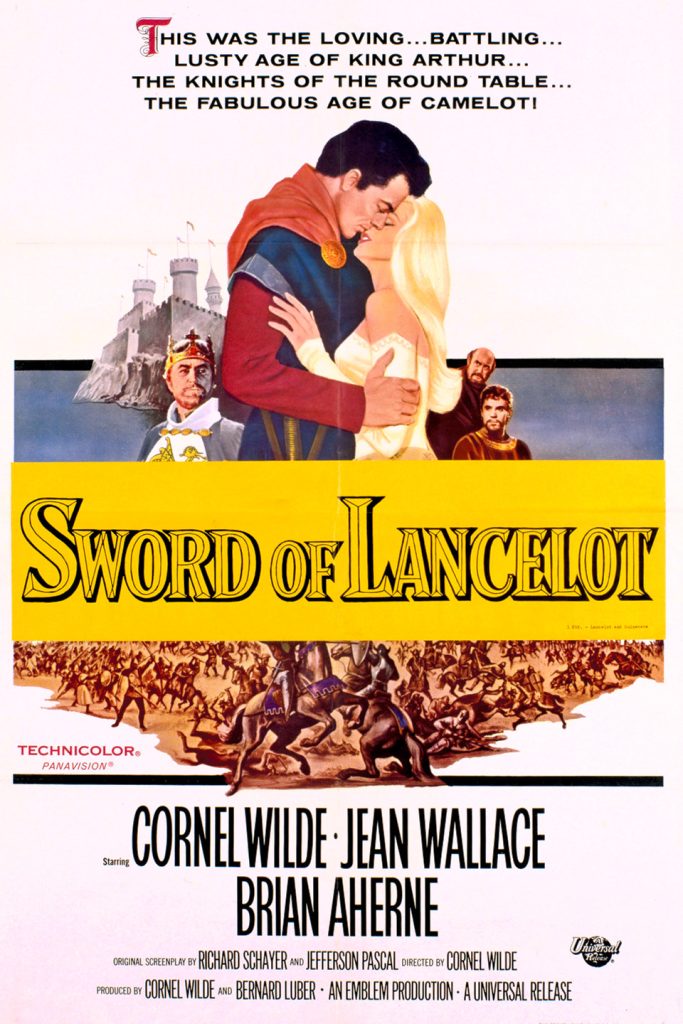
Among Miss Wallace’s films, most of which were made in the 1940’s and 1950’s, were ”You Can’t Ration Love,” ”Song of India,” ”Maracaibo” and ”Lancelot and Guinevere.”
Miss Wallace, born Jean Walasek in Chicago, was a fashion model in her teens and went to Hollywood to get into pictures.
Rescued by Paramount
Metro-Goldwyn-Mayer gave her a part in a Hedy Lamarr feature, ”Ziegfeld Girl,” but dropped her upon learning that she was not 19 years old, as she had said she was, but 17, which meant that under state law she could work only four hours a day and had to have a tutor.
Paramount gave her a six-month contract, complete with tutor. She was given a bit part in the 1941 musical ”Louisiana Purchase.” By then she had become a protegee of Franchot Tone, who at 36 was twice her age, and in October 1941 she and the actor eloped to Yuma, Ariz., and were married.
The marriage lasted seven years, during which the couple had two sons, whose custody was awarded to Mr. Tone when they were divorced.
In 1949, after a visit with the chldren, Miss Wallace stabbed herself in the abdomen with a kitchen knife, but quickly recovered.
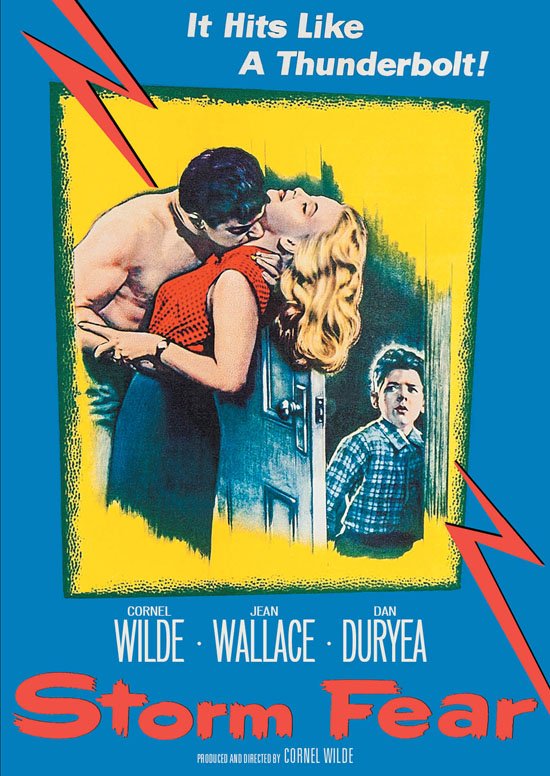
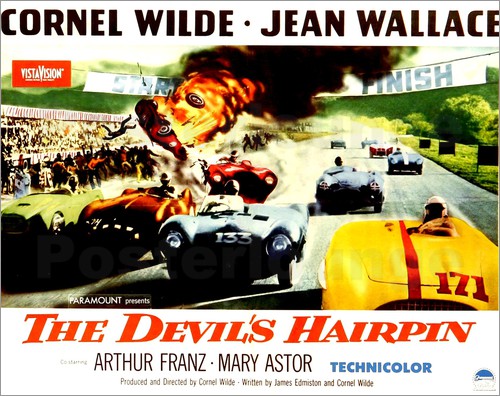
Early in 1950 she was married to James Randall, a soldier she had met while on a hospital tour. The marriage was annulled after five months. She married Cornel Wilde in 1951 and appeared in several movies made by Theodora Productions, a company she and Mr. Wilde created. They were divorced in 1981.
Miss Wallace is survived by three sons, Pascal Tone of Hamilton, Mass.; Thomas Tone of Ottawa, and Cornel Wallace Wilde of Beverly Hills, a brother, John Wallace of Los Angeles, a sister, Karol Crawford of Los Angeles, and three grandchildren.
The abpve “New York Times” obituary can also be accessed online here.
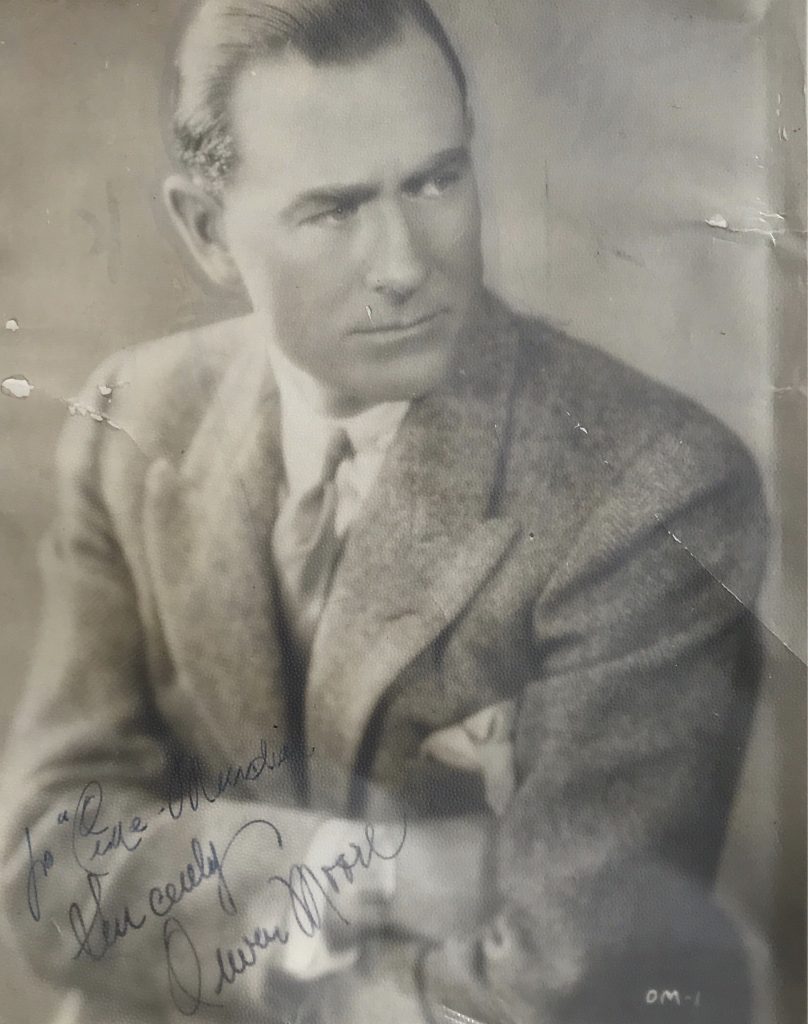
Oweb Moore was born in Fordstown Crossroads, County Meath, Ireland, and along with his brothers Tom, Matt, and Joe (1895–1926), and sister Mary (1890–1919), he emigrated to the United States as a steerage passenger on board the S.S. Anchoria and was inspected on Ellis Island in May 1896. All went on to successful careers in motion pictures in Hollywood, California. He died in 1939 in Beverly Hills, California at the age of 52.
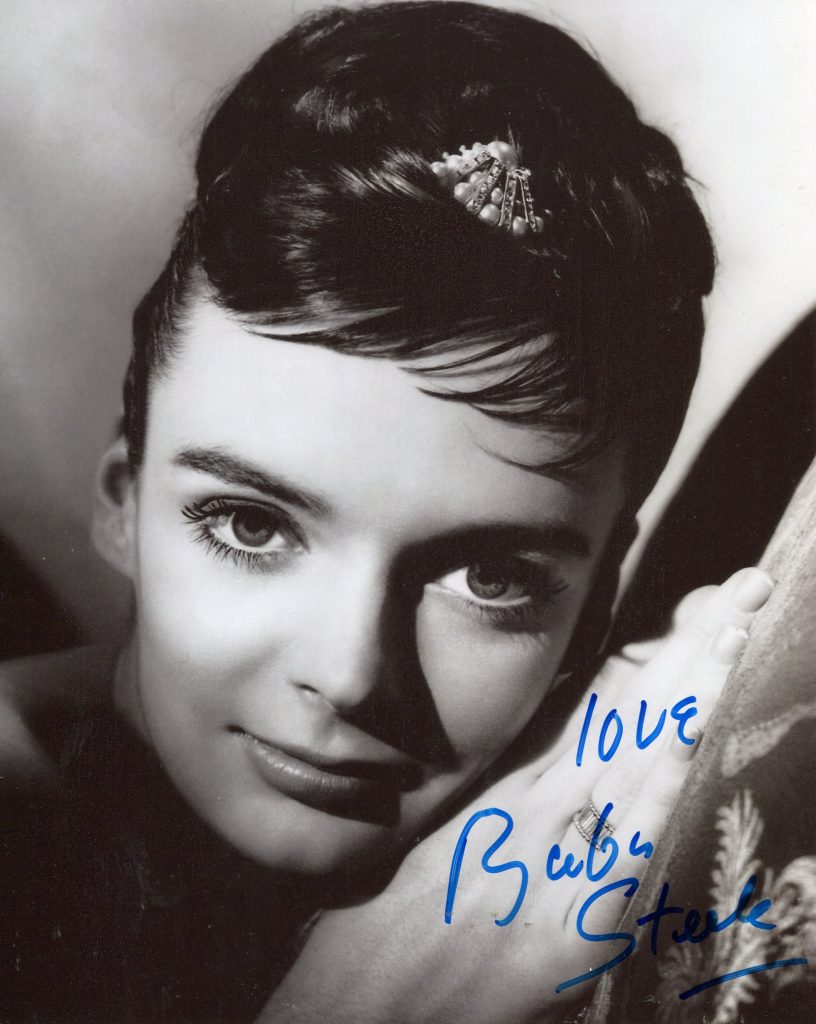
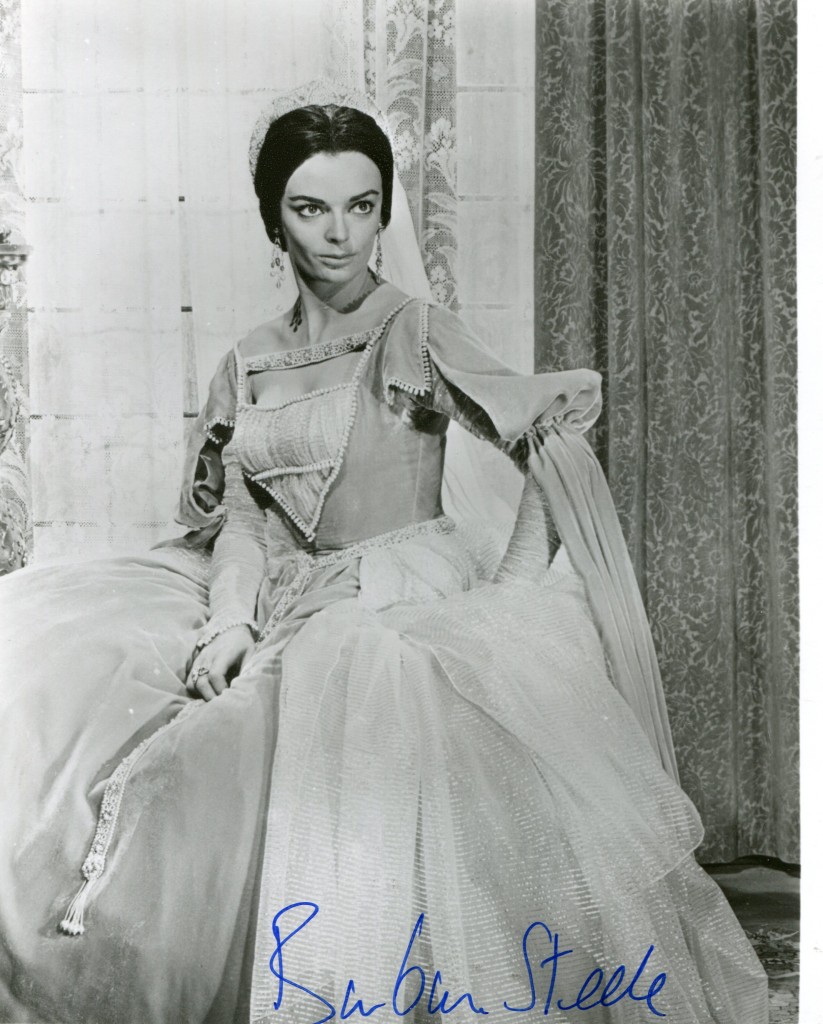
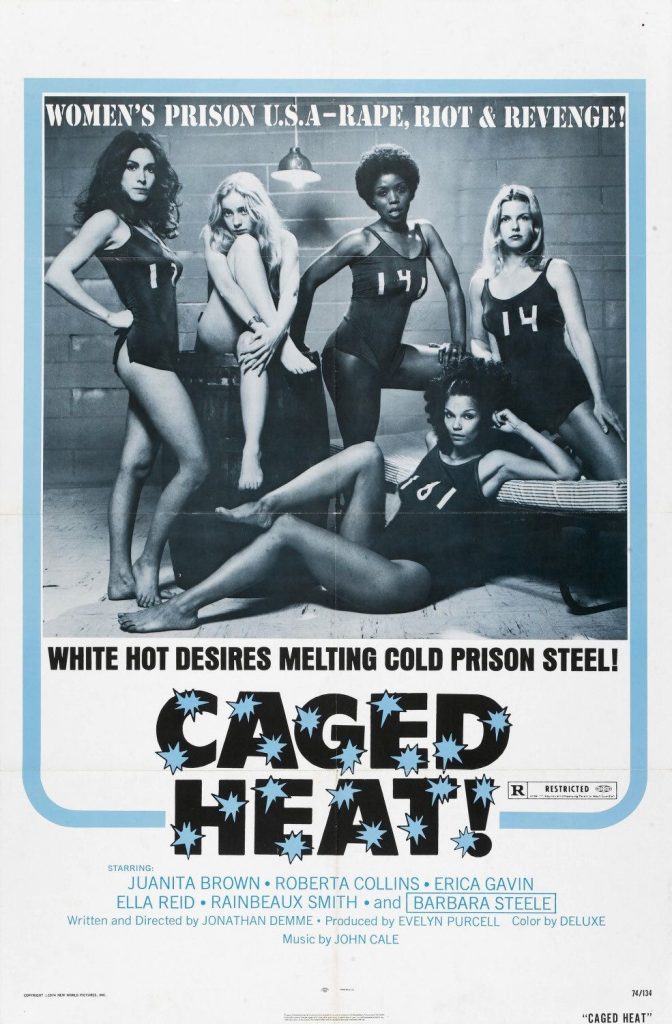
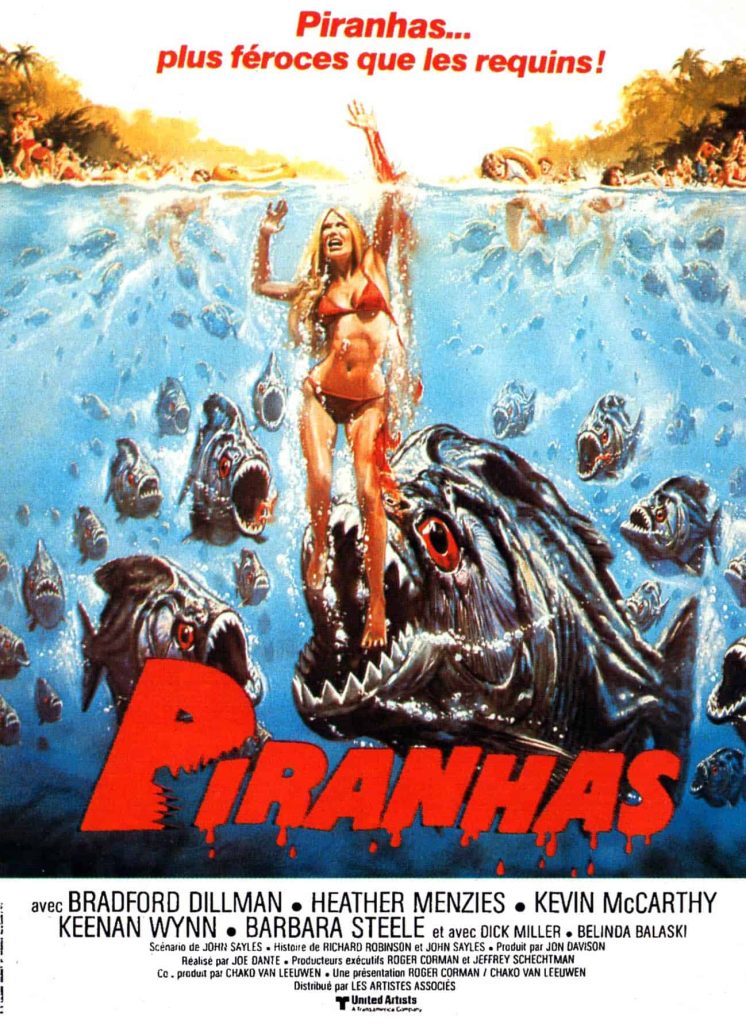
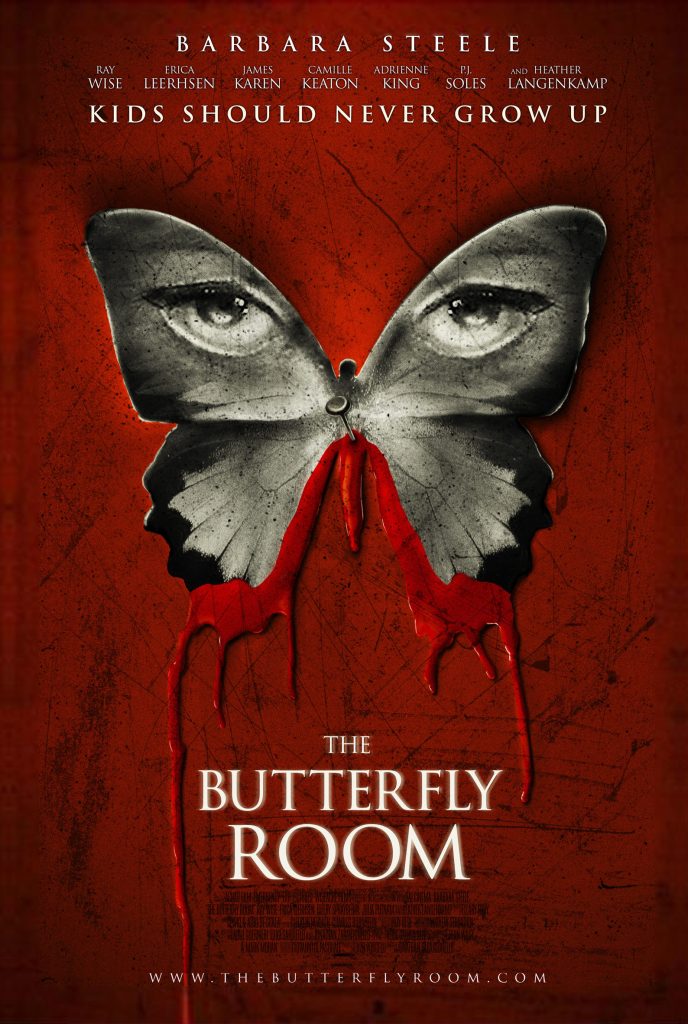
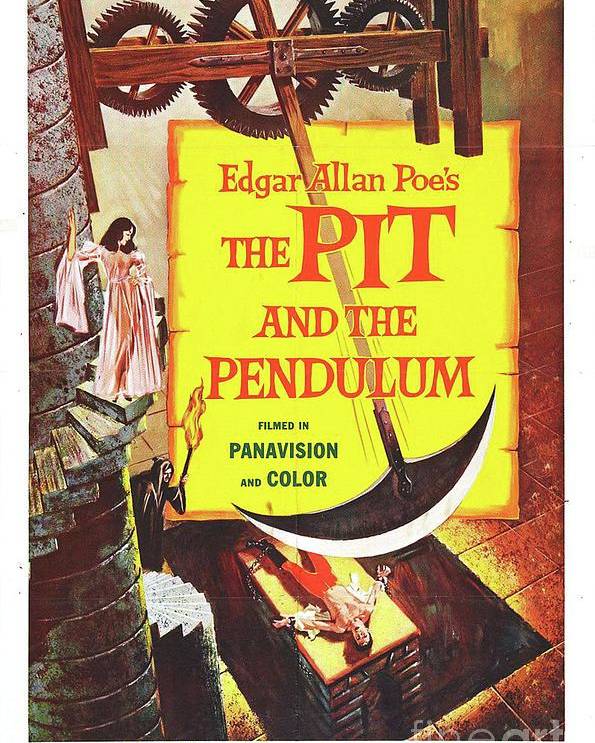
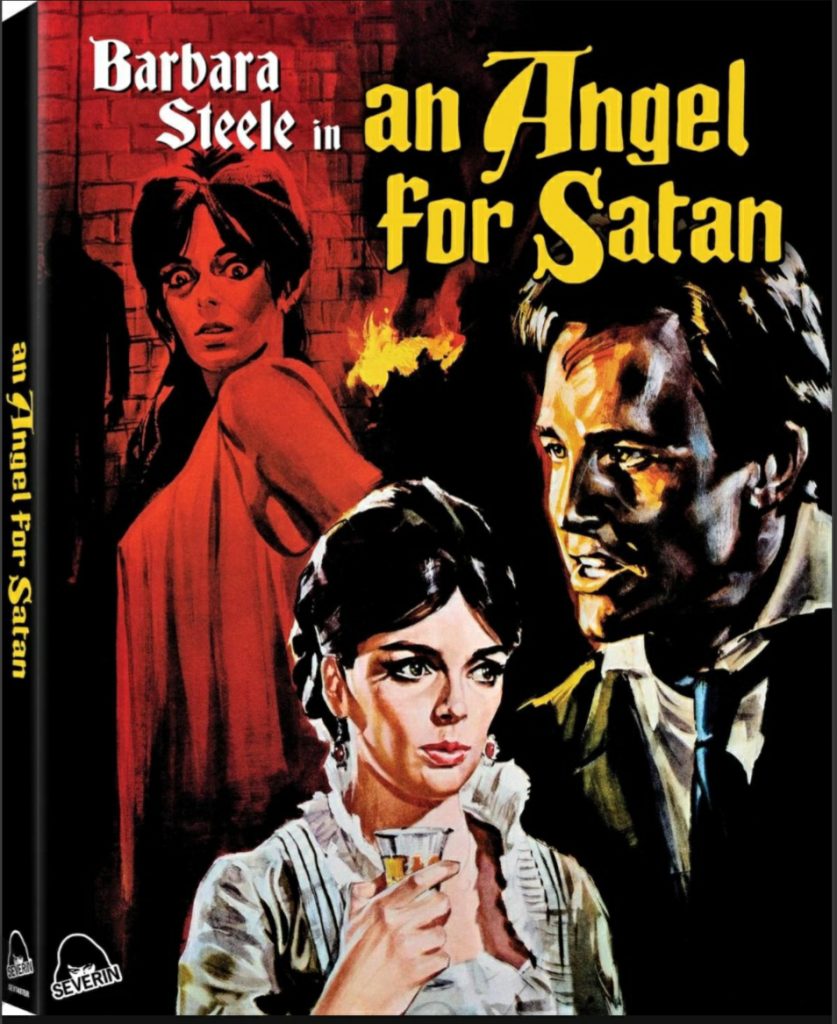
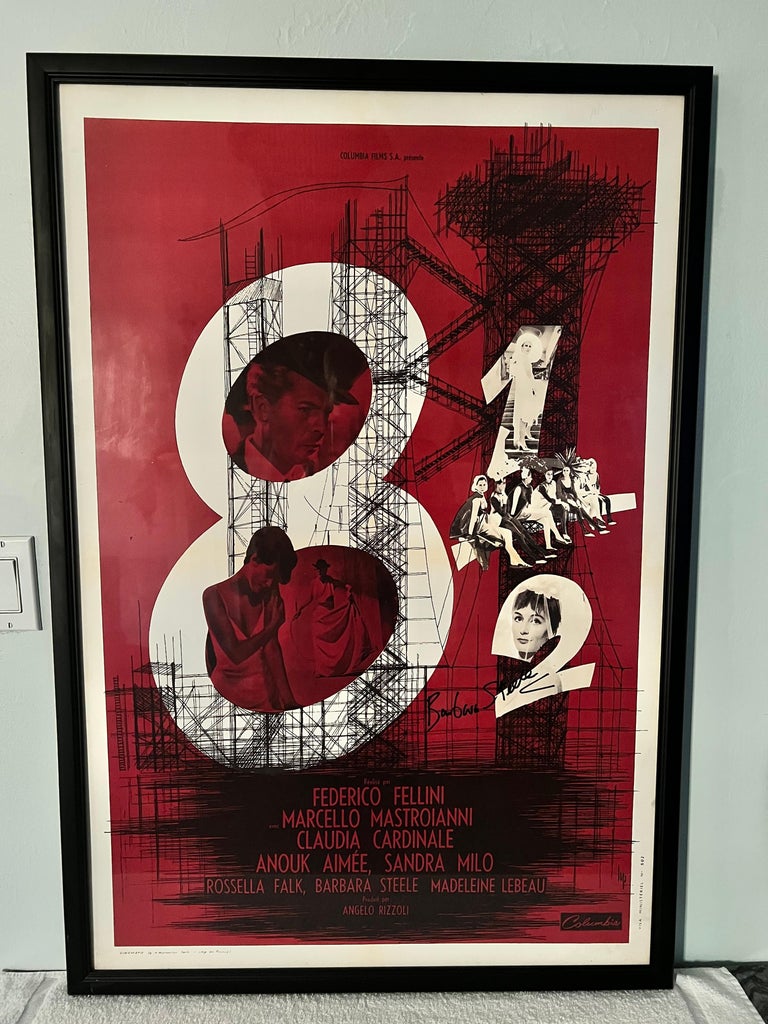
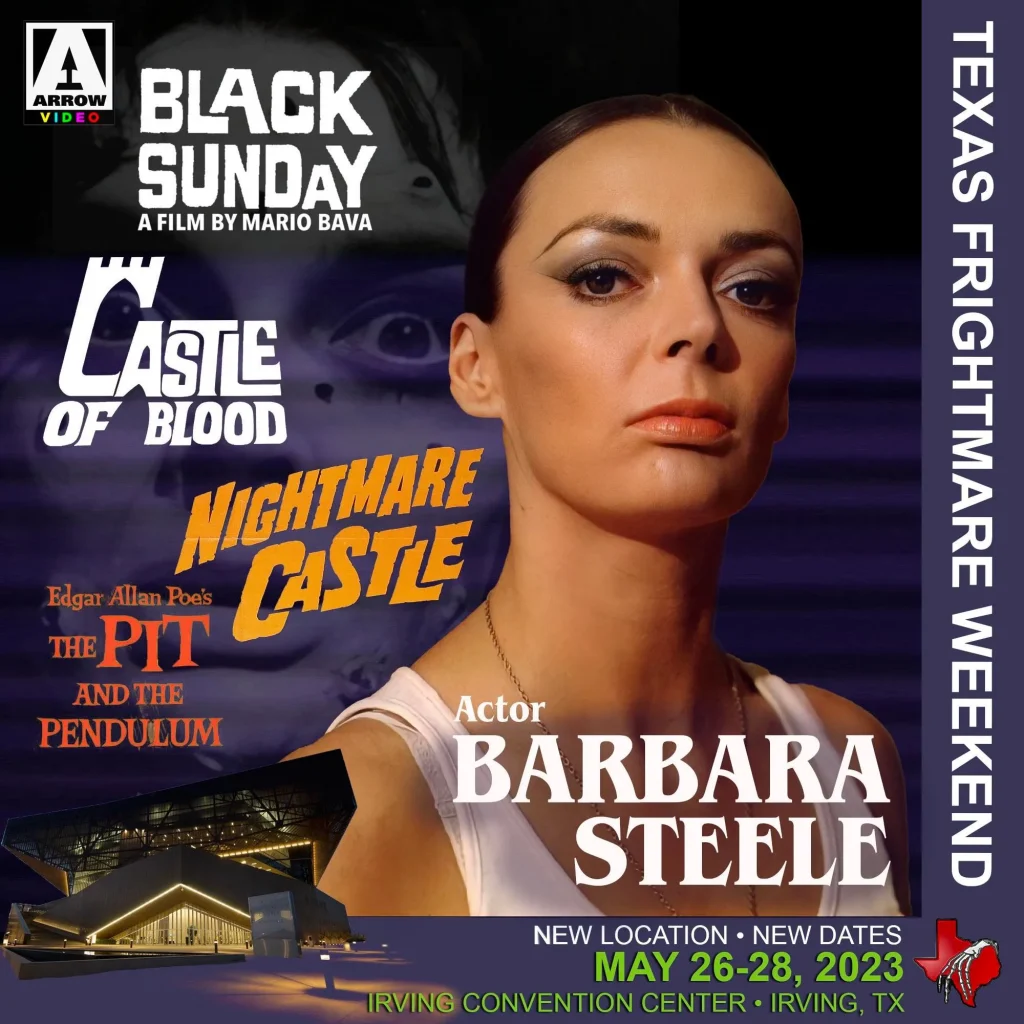
Dark-eyed British actress Barbara Steele had the perfect face for horror. Though the Rank Organization starlet had been imported to the United States by 20th Century Fox to play Elvis Presley’s love interest in “Flaming Star” (1960), Steele proved an ill-fit for the Hollywood cookie cutter and was replaced after a week of shooting. An actor’s strike drove Steele back to Europe, where her haunting beauty was used to good effect in a string of Gothic horror films, beginning with Mario Bava’s “Black Sunday” (1960). In the ensuing years, Steele skulked through such lurid chillers as “The Horrible Dr. Hichcock” (1962), “Castle of Blood” (1964) and “Terror-Creatures from Beyond the Grave” (1965), in which she brought sex appeal to characters of both pure and dark motives. Federico Fellini found a place for the slinky actress in his masterful “8-1/2” (1963) while German New Wave director Volker Schlöndorff offered Steele one of her better roles in “Young Törless” (1966), but the glut of cheap European fright flicks in which she found herself mired drove Steele back to North America. No longer an ingénue, she married a Hollywood screenwriter and cashed in on her cult credibility with meaty roles in Jonathan Demme’s “Caged Heat” (1974), David Cronenberg’s “Shivers” (1975) and Joe Dante’s “Piranha” (1978). Finding a measure of artistic satisfaction behind the camera, Steele won an Emmy as the producer of the 1988 miniseries “War and Remembrance” while learning to enjoy her lifetime association as horror cinema’s reigning scream queen.
The above TCM overview can also be accessed online here.
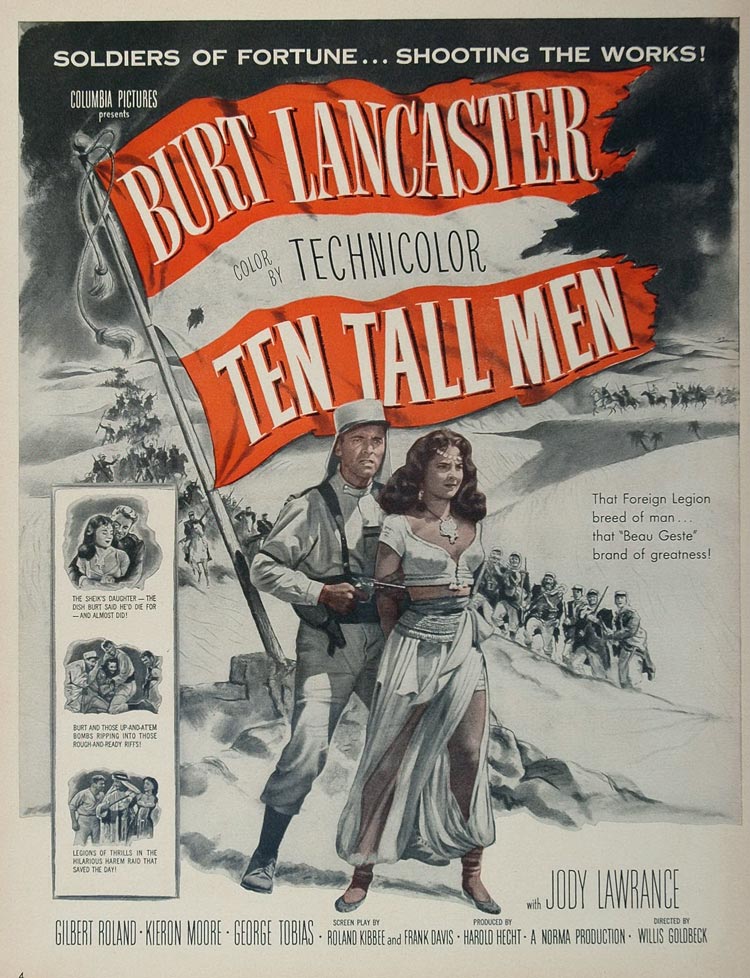
The entrancing and exotic-eyed “B”-level leading lady Jody Lawrance, whose 1950’s career was spotty at best, provided lovely diversion from the manly adventure movies she helped bring to the screen. Personal turmoil and studio conflicts, however, ultimately hurt her career and the remainder of her life was spent out of the limelight.
She was born Nona Josephine Goddard in Fort Worth, Texas, on October 19, 1930. Her childhood was troubled and disruptive. Parents Ervin S. (“Doc”) and Eleanor (née Roeck) Goddard divorced while Jody was a child. Ervin, nicknamed “Doc” although he was not one, was an amateur inventor and research engineer at the Adel Precision Products Company at one point. Moving to Caliornia, he eventually married Grace McGee in 1937. Jody subsequently migrated to California and lived with her father and stepmother in their Van Nuys bungalow. Marilyn Monroe (then Norma Jeane Baker) was a foster child of her stepmother Grace, who knew Norma Jeane’s mother when both worked for Columbia — Grace as a film librarian and and Gladys as a film cutter. Jody and Norma Jeane lived together briefly in 1941-1942.
Jody went on to attend Beverly Hills High School (studying under Benno Schneider and his wife) and the Hollywood Professional School. Excelling as a swimmer, Jody’s first shot was appearing in a water show operated by Larry Crosby, who was also a publicity manager for famous younger brother Bing Crosby.
The teenager was awarded her first on-camera professional part on the TV show “The Silver Theatre” in 1949. Because her real name, Nona Goddard, lacked glamor, she changed it to Jody (short for Josephine, her middle name) Lawrance (her maternal grandmother’s maiden name). Jody’s drama teacher Schneider managed to get her an introduction to Columbia. The studio took an immediate interest in the 19-year-old beauty and signed her to a 7-year contract at $250 per week.
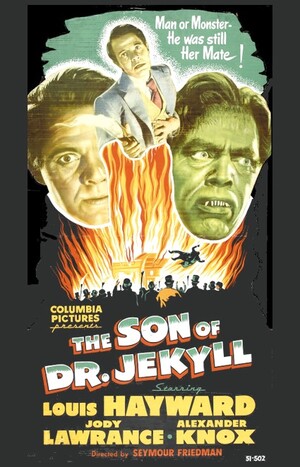
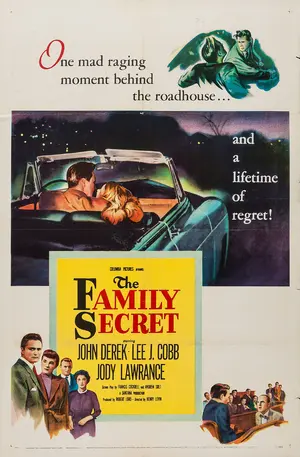
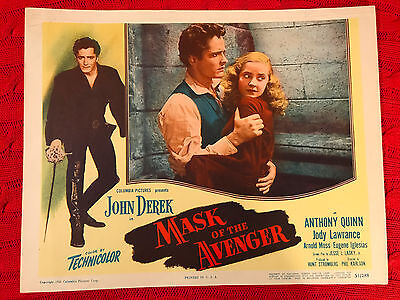
Jody made four relatively strong films in 1951. She provided damsel-in-distress duty in her screen debut between up-and-coming screen hero John Derek and established villainAnthony Quinn in the spirited swashbuckler Mask of the Avenger (1951). This was followed by The Family Secret (1951) playing the altruistic fiancée to a murder suspect (again, John Derek. Things looked even more promising when she co-starred an exotic love interest to robust Burt Lancaster in the Eastern adventure yarn Ten Tall Men (1951). Her final film that year was a horror opus portraying the fiancée to Louis Hayward as theThe Son of Dr. Jekyll (1951).
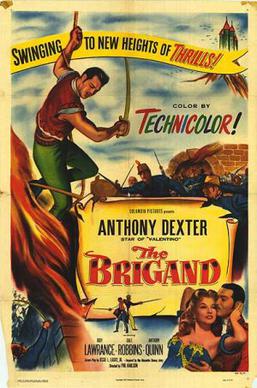
She started the following year off with the adventure film The Brigand (1952) opposite handsome, sliver-eyed Anthony Dexter, better known for his captivating Valentino-like looks than for his acting ability. In 1953 career problems surfaced when the studio assigned Jody, who had now completed six film projects, to a lackluster role in one of its minor musicals, a poor man’s version of “On the Town” entitled All Ashore (1953) which starred sailors-on-leave Mickey Rooney, Dick Haymes and Ray McDonald. Peggy Ryan,Barbara Bates and Jody were cast as their the love interests. Set this time on California’s Catalina Island instead of New York, Jody balked at the assignment while citing a lack of confidence in her singing and dancing abilities. She ask the studio to replace her but Columbia refused and the actress begrudgingly filmed the movie. Her “difficulty” with the studio on this assignment ultimately led to a break of her contract. Feeling overlooked by the studio at the time, she supposedly did not regret her release too much.
On her own, however, the quality of Jody’s films declined markedly with her the “Poverty Row” independent film, the subpar and highly distorted biographical piece Captain John Smith and Pocahontas (1953) again starring Anthony Dexter. It was revealed that Jody suffered a frightening allergic reaction on the set after dying her lighter hair jet black for the role. Among many other problems, the 23-year old, blue-eyed actress was quite miscast in the role of the much younger Indian maiden. The released film was a dismal failure and Jody’s career suffered as a result.
Finding almost no offers in 1954-1955 and in order to make ends meet, Jody took on employment as an ice cream shop waitress near the UCLA campus in Los Angeles. The story goes that one day one of her customers was her former co-star Burt Lancaster. He came to her aid by introducing her to his friend, director Michael Curtiz, who reignited her career with his minor film noir The Scarlet Hour (1956) which starred Tom Tryon and had Jody playing a second femme role behind Carol Ohmart, who was being built up as Paramount’s supposed answer to a difficult Marilyn Monroe at the time. Jody was promoted as one of the “Deb Stars of 1955” along with other hopefuls including Cathy Crosby, Anita Ekberg, Mara Corday, Marisa Pavan and Lori Nelson, among other lesser knowns.
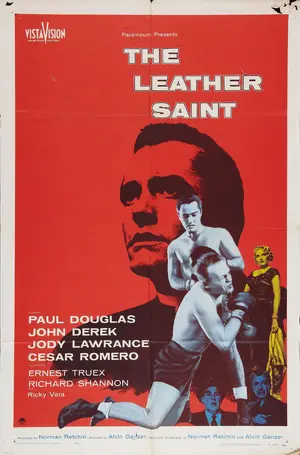
Back on the boards again, Jody revived her look on screen as a blonde again. Things looked hopeful when Paramount Studios signed her to a contract, earning $300 a week. In the spiritual drama The Leather Saint (1956), she plays a platinum-blonde nightclub singer (and even sings a bit of “I’m in the Mood for Love” in the film) and temptress to (once again) John Derek whose Episcople minister agonizes over his decision to box for money in order help medically finance church/community projects for special needs children.
Things fell apart once more, however, when Paramount released her the following year. It seems that the studio was perturbed when, while promoting her to the public as a sexy single, Jody resisted the cheesecake angle and also secretly married Bruce Tilton (1930-2007), an airplane parts company executive, in Las Vegas on April 7, 1956. A daughter, Victoria, was born a year later.
She remained unproductive career-wise during this period of new marriage and more family. By April of 1958, however, the Tilton marriage had dissolved and a bitter custody suit ensued (in the end, Jody lost). While she returned to the screen, the pickings were slim. She landed minor parts in the Shirley Booth vehicle Hot Spell (1958) and Barry Sullivan film The Purple Gang (1959), and found isolated work on TV in such dramatic fare as “Perry Mason,” “The Loretta Young Show” and “The Rebel”. Her last screen role of any substance was the minor western Stagecoach to Dancers’ Rock (1962) starringMartin Landau.
Jody met second husband Robert Wolf Herre and they married in November of 1962. Two children, Robert Jr. and Abigail (“Chrissy”) were born from this relationship. Other than an isolated TV appearance on “The Red Skelton Show” in 1968, little was heard of Jody following this period until it was learned that she had died in Ojai, California on July 10, 1986, at age 55.
– IMDb Mini Biography By: Gary Brumburgh / gr-home@pacbell.net
The above IMDB entry can also be accessed online here.
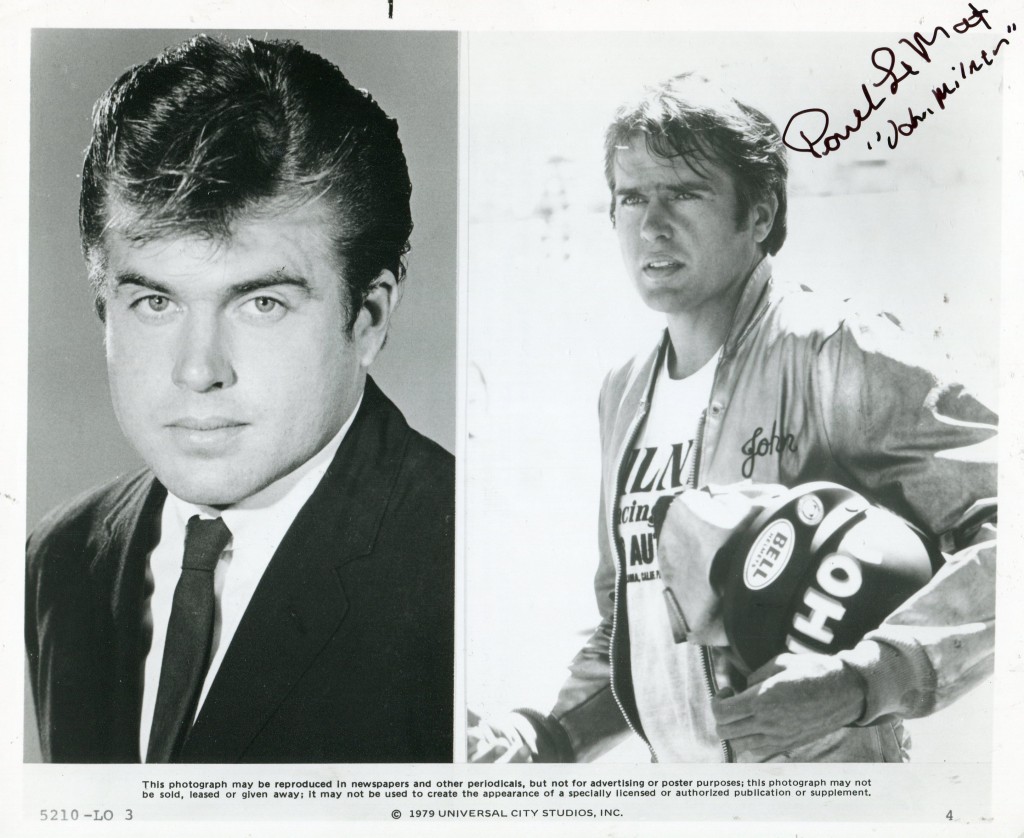
Vietnam War veteran awarded the National Defense Medal and Vietnam Service Medal, and won the George Washington Honor Medal, from the Freedom Foundation. Attended Newport Harbor High School, San Diego City College, Cypress Junior College, Chapman College, and LA Valley College. Paul won the LA Diamond Belt, Welterweight Division, the Southern Pacific AAU Boxing Championship in 1972. Won two Golden Globes. Starred in “American Graffiti”.
– IMDb Mini Biography By: Anonymous
TCM Overview:
A beefy, laconic leading man of the 1970s, Le Mat is best known for his performances in George Lucas’ “American Graffiti” (1973) and especially as Melvin Dummar, an aimless blue-collar worker who enjoys a fortunate encounter with millionaire Howard Hughes, in Jonathan Demme’s engaging, off-beat “Melvin and Howard” (1980). He has also worked frequently in TV, notably as Farrah Fawcett’s abusive husband in “The Burning Bed” (NBC, 1984) and as newspaperman Josiah Peale on the syndicated series “Lonesome Dove: The Outlaw Years” (1994-96).
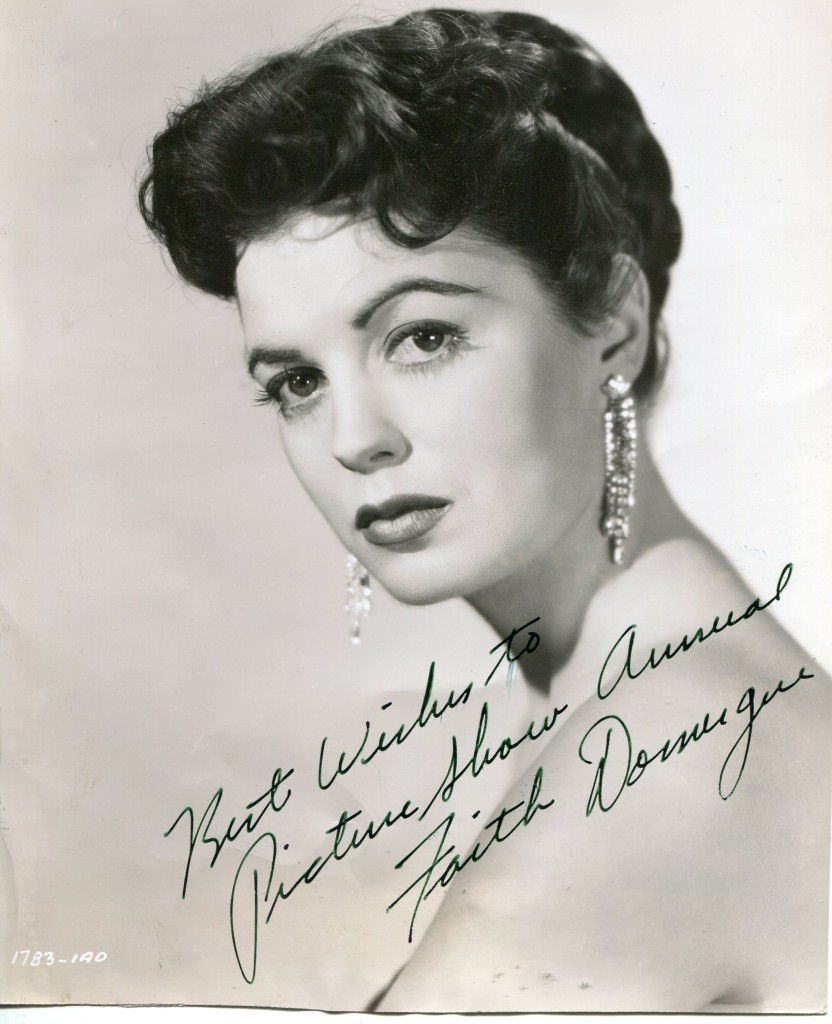
Faith Domergue obituary in “The Independent” in 1999.
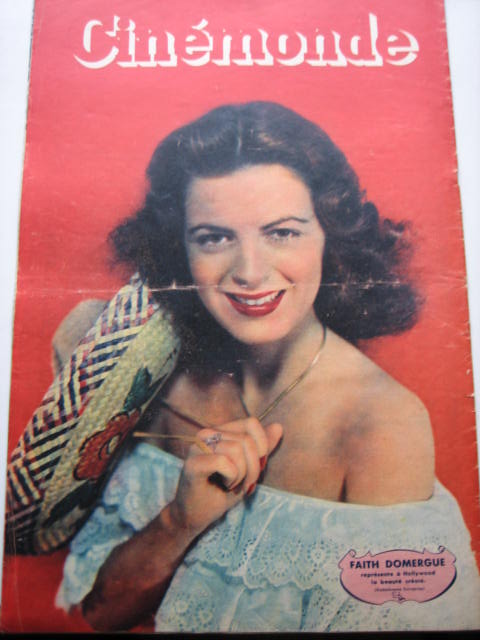
Tom Vallance’s obituary of Faith Domergue in May 1999’s “Independent”: MAGNATE Howard Hughes promoted the careers of several film actresses both before and during his tenure as head of RKO Studios, but the two stars in whom he invested most time and money were Jane Russell, who made it to the top, and Faith Domergue, who didn’t. ±§
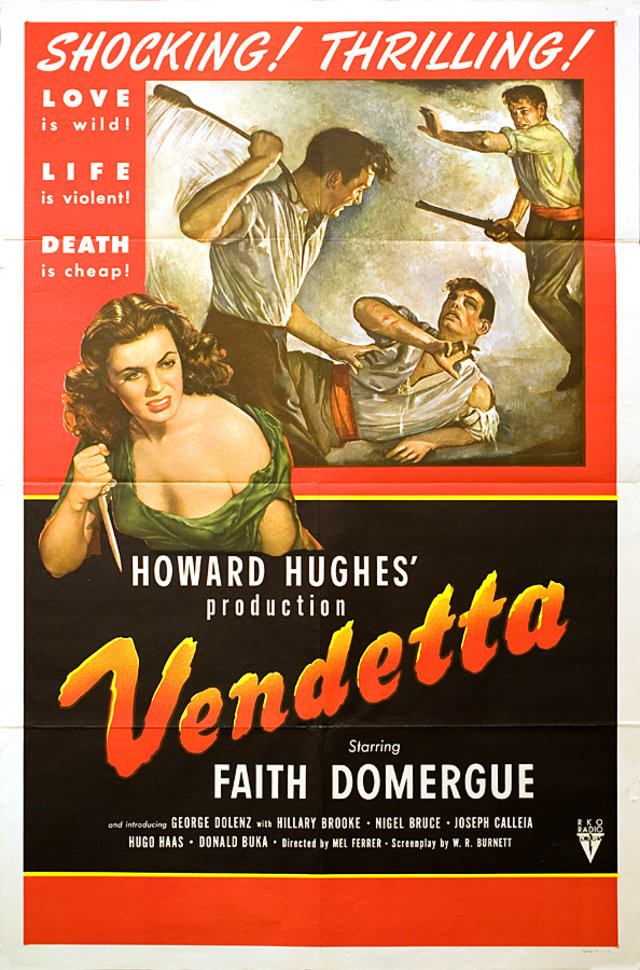
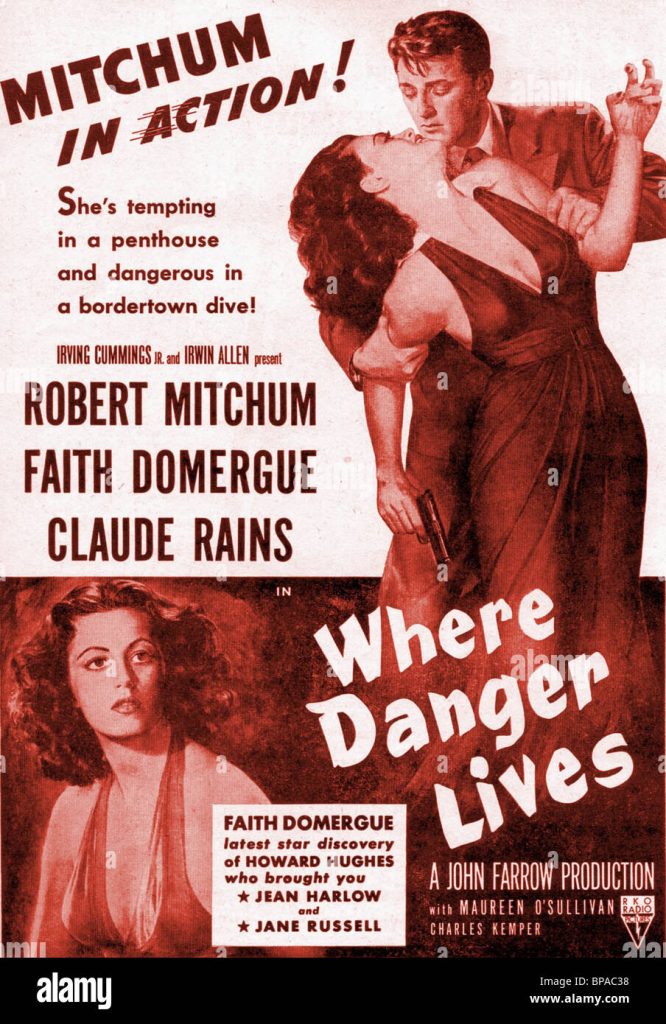
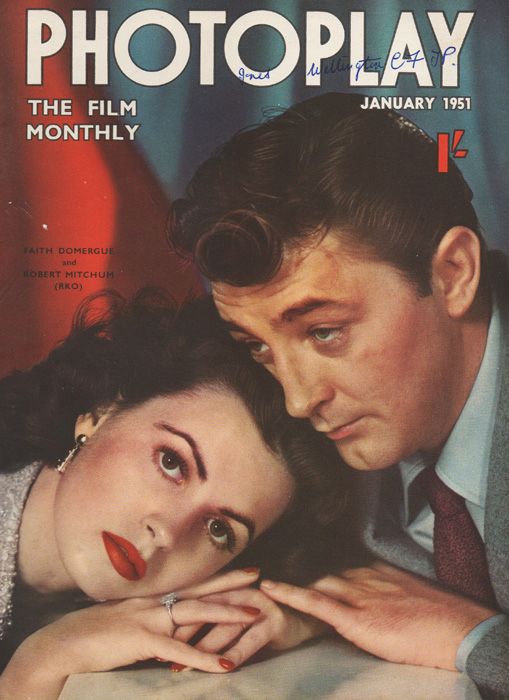
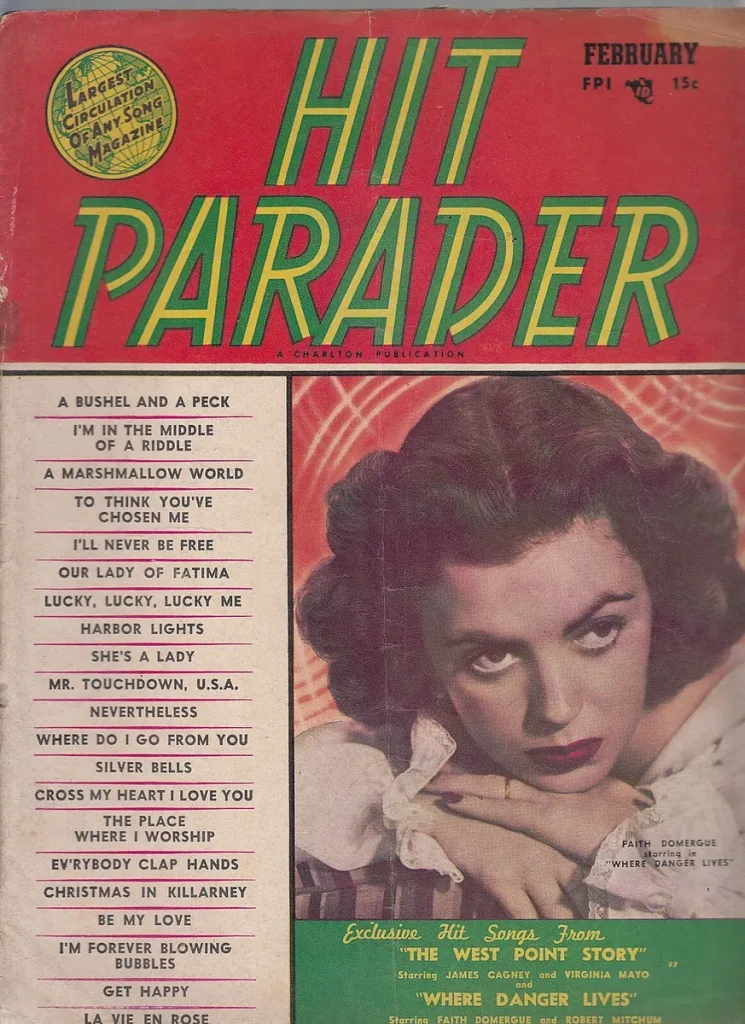
Hughes nurtured the career of the sultry, dark-haired beauty Domergue for seven years, starting when she was only 16 years old. The first film in which she starred, Vendetta, is one of Hollywood’s legendary disasters, finally released in 1950 four years after starting production, having gone through five directors, including such illustrious names as Preston Sturges and Max Ophuls. The same year that Vendetta opened to damning notices and an indifferent public, Where Danger Lives, in which Domergue co-starred with Robert Mitchum, also did poor business, and Hughes lost interest in his protege.
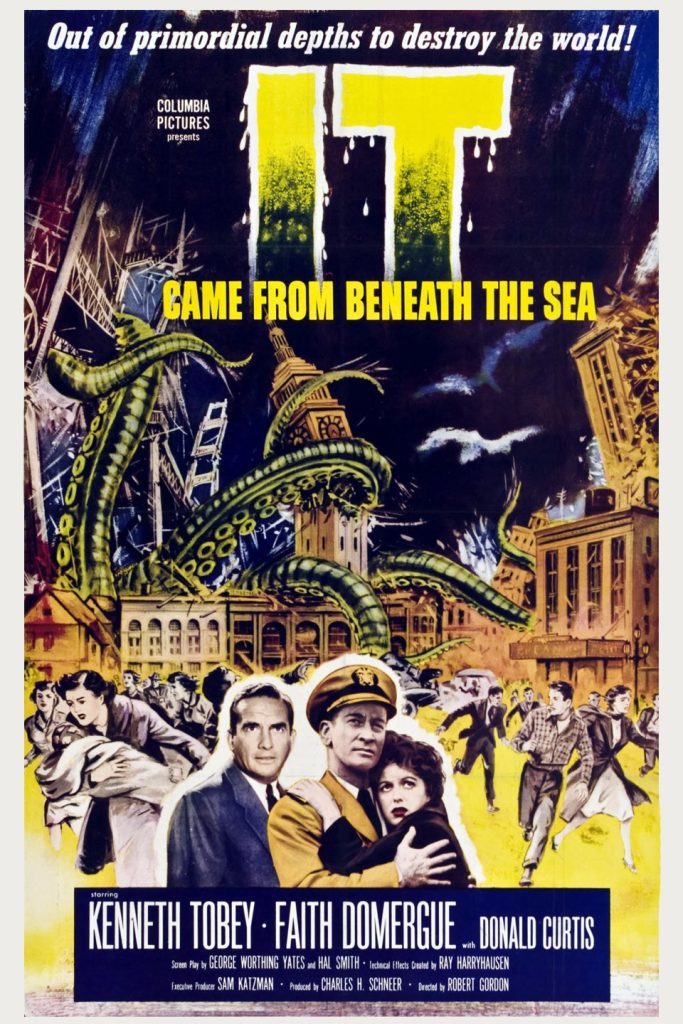
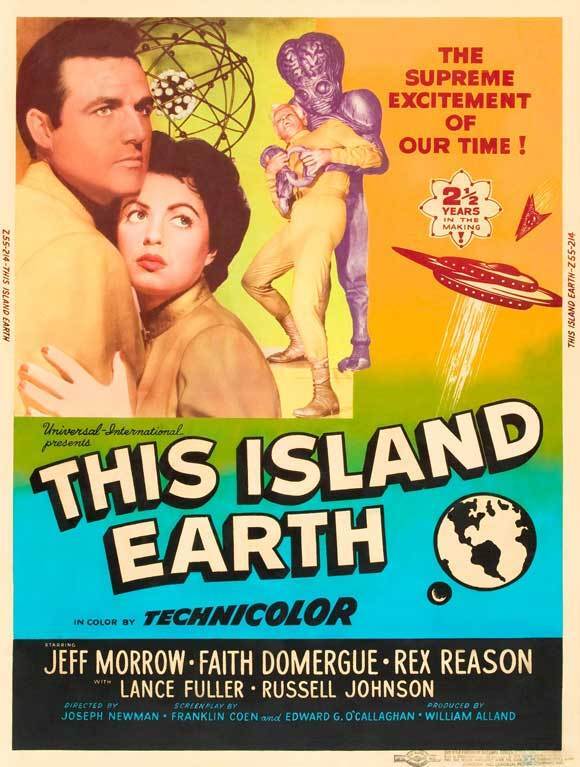
The exotic actress eventually achieved a fame of sorts, becoming a cult favourite for her roles in science-fiction movies such as It Came From Beneath the Sea, Cult of the Cobra and one of the most notable Fifties sci-fi films, This Island Earth.
Born in New Orleans in 1925, she was the adopted daughter of Annabelle Quimet and Leo Domergue. In the early Thirties the family moved to California, where Domergue attended Beverly Hills Catholic School and St Monica’s Convent School. Shortly after leaving school in 1942, she attended a party aboard Howard Hughes’s yacht, and so impressed him with her striking looks that he signed her to a long-term contract. Over three years of voice, diction and drama lessons followed before he considered her ready for the camera.
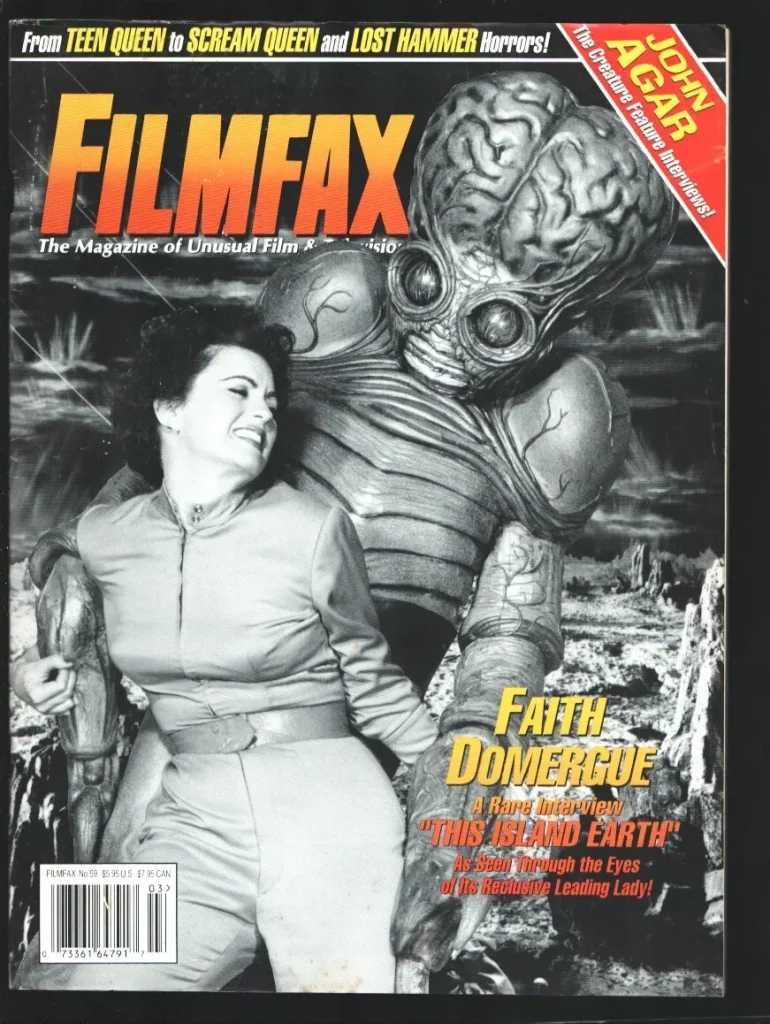
After a small one-scene role in Young Widow (1946) starring Jane Russell, Hughes cast her in the leading role in Vendetta. Domergue told Filmfax magazine in 1997,
Howard had formed a company with Preston Sturges called California Pictures and Preston had an idea to do what was then called Colomba (based on the novel by Prosper Merimee). He told Howard that he wanted to do a film with his girlfriend Frances Ramsden and Harold Lloyd called The Sin of
Harold Diddlebock [later retitled Mad Wednesday] and, if Howard would allow Preston to produce and direct that, then Preston would produce Colomba with me. He told Howard, “I will make a star of Faith”, which of course is what Howard wanted to hear.
Sturges chose Max Ophuls to direct Colomba and worked with him on the script, but when shooting started Sturges decided to take over the direction. According to Domergue,
Max would be allowed to say “Action!” and that was it – he was not allowed to say “Cut” or instruct any of the actors. Just before we started shooting Howard had been piloting his plane and had crashed into a house and remained between life and death for weeks, so now Sturges had total control of the company and at this point he lost his bearing. So much hubris came into his actions, this arrogant pride. Actor Nigel Bruce became short- tempered and my leading man George Dolenz wanted to leave. The whole picture was supposed to be for my benefit and here it was all going down the drain.
When Hughes became aware of the situation, the company was dissolved and Sturges and Ophuls dismissed. Stuart Heisler was hired, primarily to shoot close-ups, before the film was temporarily abandoned. Two years later Hughes, having taken over RKO, shot more footage for the film (now retitled Vendetta), then hired Mel Ferrer (who received sole screen credit as director) to shoot six weeks of retakes. In 1947 Domergue had married the director Hugo Fregonese, and on completion of the film went with him to his native Argentina:
The Vendetta experience was still on my mind – all that time and money wasted. By the time it was all over, I had no drive left, and, to be perfectly frank, I lost my first child because of Vendetta. I had a miscarriage and this was heartbreaking.
Domergue returned to Hollywood when Hughes offered her an RKO contract and the lead in John Farrow’s film noir Where Danger Lives, in which Domergue was a psychotic who lets a doctor (Robert Mitchum) believe he killed her husband when in fact she has smothered him herself. “Robert Mitchum was wonderful,” commented Domergue.
There was a scene where I was to get hysterical and it was difficult for me. After we shot the scene, Robert said to me, “I like you. You don’t know what you’re doing, but you’re in there doing
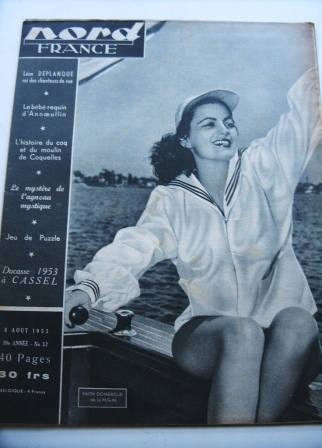
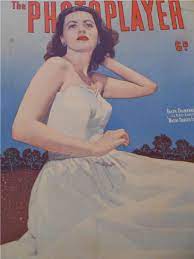
it with all your heart!” There was an enormous publicity campaign for me after I finished the film. I was on practically every cover of every magazine – 15 pages in Pageant, four pages in Life, the cover of Look – you name it.
Then, with both my films about to open in New York, I told the studio I couldn’t go there because I was tired, angry and pregnant again. Howard phoned me and told me there was a lot of money tied up in the campaign. When I told him I was going to have a baby he said, “OK, goodbye Faith”, and that was the last time I ever heard his voice.
Where Danger Lives opened to lukewarm response, followed by the heavily panned Vendetta, a wordy and turgid melodrama of Corsican vengeance. “It is not a good film,” confessed Domergue,
but we all were quite good. Unfortunately all of the performances that Max and I worked on were out the window. What you see in the final version is bits and pieces of everything – but nothing of what Preston shot at all except a couple of long shots.
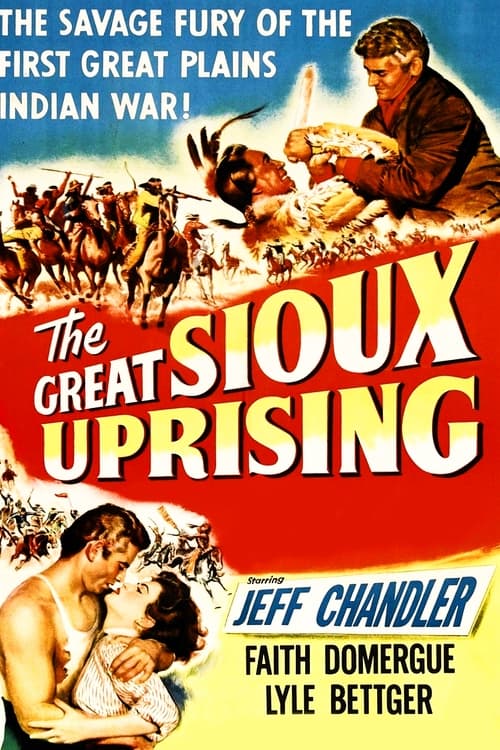
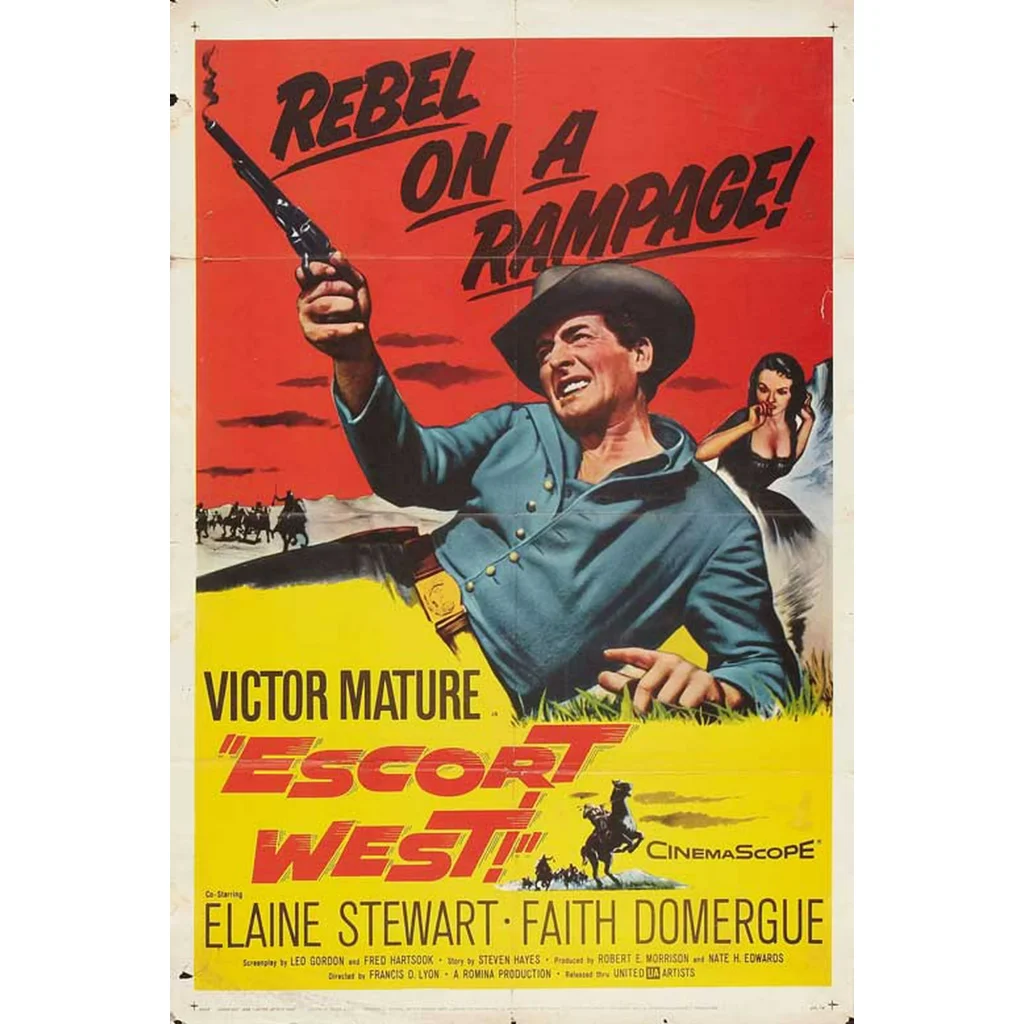
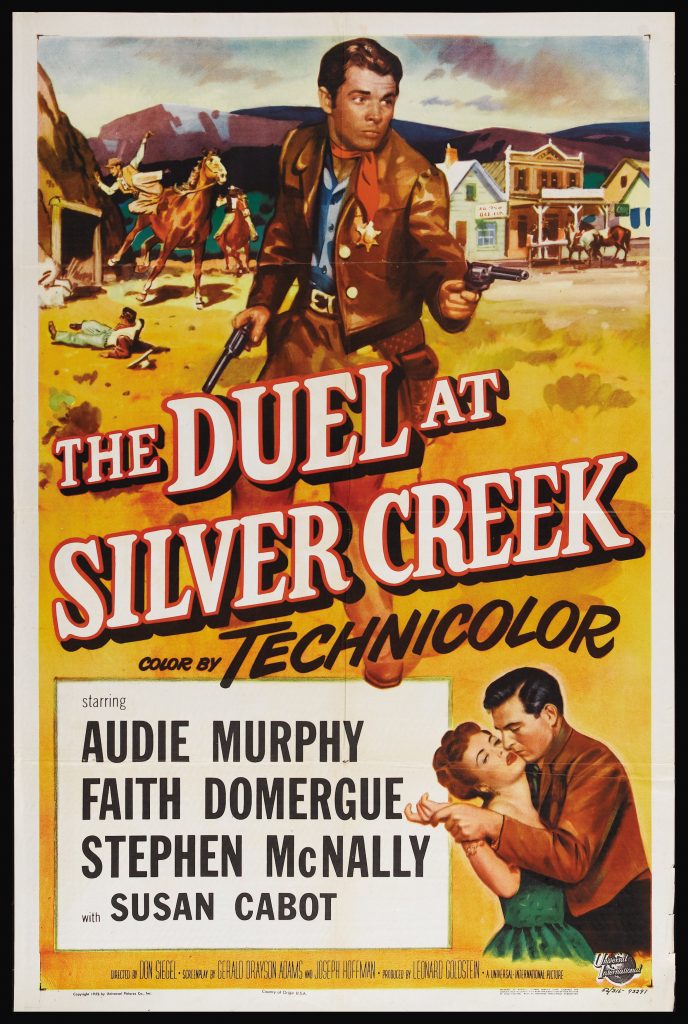
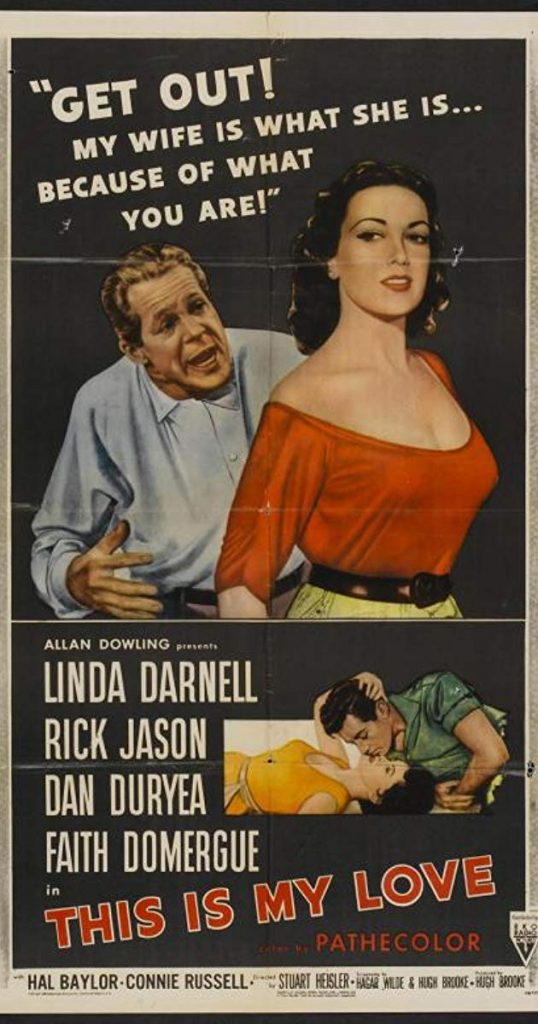
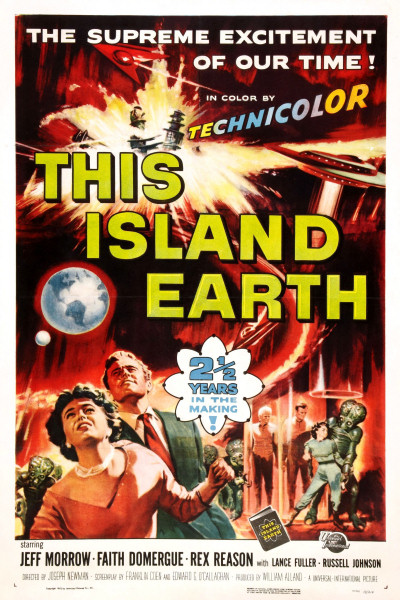
Domergue was in three minor movies – Don Siegel’s Duel at Silver Creek (1952), Lloyd Bacon’s The Great Sioux Massacre (1953) and Stuart Heisler’s This is My Love (1954) – and travelled extensively with Fregonese, by whom she had two children, before her most significant year in pictures, 1955, when she starred in This Island Earth, It Came From Beneath the Sea and Cult of the Cobra as well as the western Santa Fe Passage (“I don’t think I had one day off in the whole of 1955!”).
Considered one of the more intelligent science-fiction tales, Joseph Newman’s This Island Earth (partly directed by Jack Arnold when Newman fell ill) featured Domergue as a scientist shanghaied with her colleagues to the alien planet Metaluna to help defend it from invasion. “It has attained more popularity than anything else I’ve done,” said the actress, “though such films are really for the technicians – actors take second place to them and the sets.”
Metaluna was constructed on Universal’s old Phantom of the Opera stage, said to be the biggest in the world, while the film’s giant mutant (which grapples with Domergue on the platform of the spaceship near the film’s climax) showed the make-up expert Bud Westmore and his team at their most imaginative. The film also benefited from being one of the last shot in the three-strip Technicolor process.
Domergue was a scientist again in Robert Gordon’s It Came From Beneath the Sea, helping to destroy a giant octopus (created by Ray Harryhausen, who cut costs by giving his monster six arms instead of eight) which invades San Francisco.
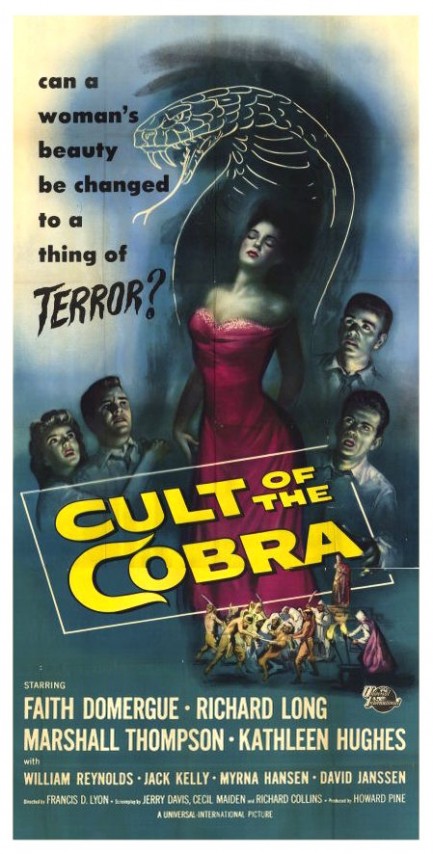
After Santa Fe Passage (“with a wonderful director named William Witney who was the best director I’ve ever worked with”), Domergue was asked to take over the lead in Cult of the Cobra. Universal had started the film with the actress Mari Blanchard but were unhappy with the footage and replaced her with Domergue, who later said, “That film was not a fond memory for me. My marriage to Hugo was breaking up – he was in Europe and I was in Hollywood.” The bizarre tale cast Domergue as leader of an Asiatic cult of snake-worshippers, able to transform themselves into snakes at will. When six GIs photograph a secret ceremony she puts a fatal curse on them, and they are then killed by the exotic snake-lady.
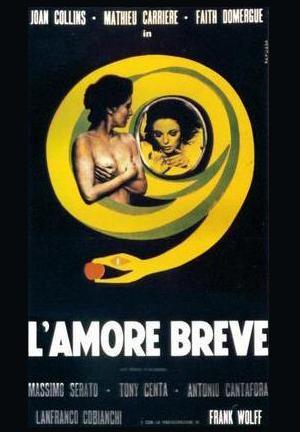
Having divorced Fregonese, Domergue then made three films in England, Ken Hughes’s taut Timeslip (1955), Vernon Sewell’s B-movie thriller Soho Incident (1956) in which she headed a gang of racketeers, and a disappointing crime film, Man in the Shadow (1957). “This period of my life became an active time,” she said, “because I was a single mother with children to support.” Domergue was now living in London and Rome, and in 1966 married the agent Paolo Cossa, subsequently making several Italian films including Una Sull’Altra (1969) with John Ireland and Elsa Martinelli and L’Amore Breve (1970) with Joan Collins. “I had 30 wonderful and cherished years with Paolo,” she said recently, “and I miss him dearly.”
In 1972, a New York publisher announced that he would issue a book by Domergue called My Life with Howard Hughes, stating in Variety that “this will be the first time one of his ladies really talked about the intimate relationship she had”. The book never appeared, and Domergue said two years ago:
I don’t talk much about Howard Hughes. I think it quite sad that it’s the negative side of someone’s life that is so interesting to the public and not the fact that he was one of the great contributors to aeronautics in this country since the beginning of the century. All my memories of Howard are good ones.
Faith Domergue, actress: born New Orleans 16 June 1925; married first Ted Stauffer (marriage dissolved), 1947 Hugo Fregonese (one son, one daughter; marriage dissolved 1955), 1966 Paolo Cossa (deceased); died Santa Barbara, California 4 April 1999.
The above “Independent” obituary can also be accessed online here.
Faith Domergue (1924–1999) was an American actress whose career moved from RKO melodrama and film noir to 1950s science‑fiction and horror, then on into B‑movies and television. She is best remembered today as an early “scream queen” in 1950s genre films, but her work also reveals a more serious, often under‑utilized dramatic presence anchored in classical Hollywood style.
Early career and Howard Hughes
Domergue began her film career in the early 1940s, appearing in minor roles before being “discovered” at about age 18 by Howard Hughes, who was then running RKO. Hughes signed her to a contract, extricated her from Warner Bros., and cast her as the lead in Vendetta(1950), a Mediterranean‑set thriller that spent years in troubled production under Hughes’s erratic supervision. The shoot was reportedly so grueling that she seriously considered quitting acting altogether, and both Vendetta and the later noirish Where Danger Lives (1950) were commercial disappointments, fueling a sense that her early promise was being mismanaged rather than nurtured.
From a critical standpoint, her first decade can be read as a symptom of Hollywood’s treatment of young women under powerful male patrons: her early roles are glamorous and sexualized, but they rarely give her the kind of psychological depth or character arc that would fully justify her screen presence. Nevertheless, in Young Widow (1946) and Where Danger Lives, she shows a cool, intelligent restraint that hints at stronger dramatic instincts than the scripts fully exploit.
Universal contract and 1950s “scream queen” phase
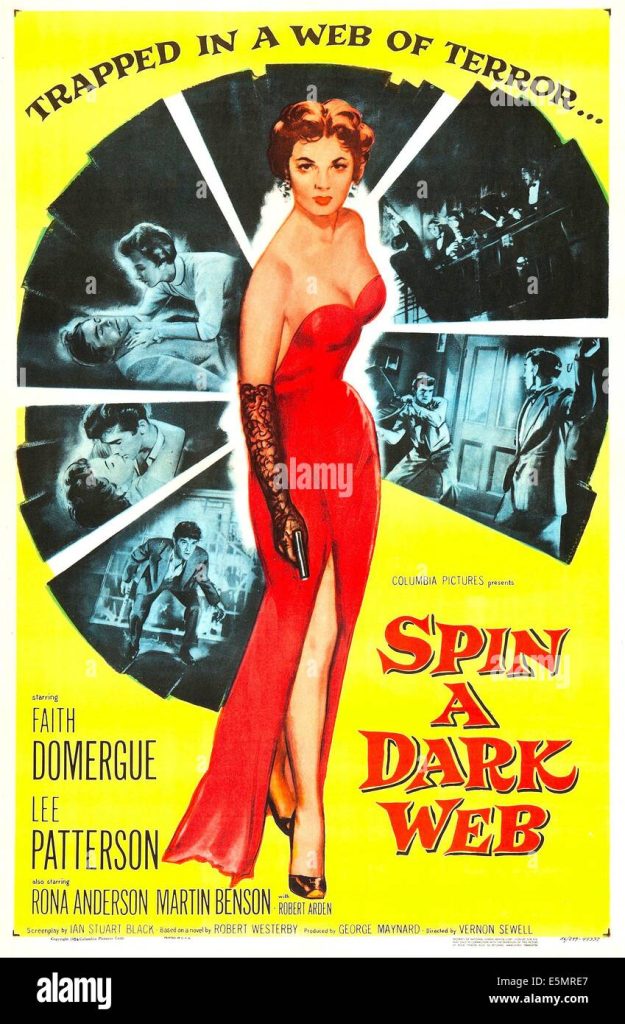
After a brief stint in England, Domergue returned to the United States in 1953 and signed with Universal‑International, where she finally found consistent visibility. Her first major Universal credit was the Western The Duel at Silver Creek (1952), in which she played a frontier woman opposite Audie Murphy, signaling that she could handle both romance and action‑oriented material. This was followed by a rapid run of 1950s genre films that cemented her reputation as a horror‑ and sci‑fi leading lady.
Her most famous roles from this period are:
Cult of the Cobra (1955), where she plays a mysterious, cobra‑worshipping high priestess who uses a snake‑like disguise to kill U.S. soldiers.
This Island Earth (1955), one of Universal’s first color science‑fiction films, in which she plays the enigmatic scientist/extraterrestrial‑host Exeter’s assistant and later a kidnapped Earth‑woman caught in an interplanetary conflict.
It Came from Beneath the Sea (1955), a Ray Harryhausen‑style squid‑monster picture in which she plays the lone scientist‑woman in a male‑dominated military‑engineering team.
Critically, these films are often praised for their inventive effects and paranoid Cold‑War subtext, but Domergue’s performances are the emotional anchor in all three. In Cult of the Cobra, she projects a cool, almost priestly menace, blending seduction and dread in a way that anticipates later “erotic‑occult” horror heroines. In This Island Earth and It Came from Beneath the Sea, she plays rational, scientifically minded women who are neither hysterics nor passive damsels, offering a more modern, professional‑type heroine for the 1950s genre landscape.
It is exactly this cluster of 1955 roles—often called her “year of the monster” in fan and critical writing—that earned her the label of an early “scream queen,” even though she rarely screams in the conventional sense. Instead, her typical mode is controlled fear or steely resolve, which makes her scream‑queen status more nuanced than it first appears: she is more of a “thinking woman in peril” than a pure victim figure.
Later B‑movies, television, and late career
From the 1960s onward, Domergue’s film roles grew sparser and more B‑film oriented, though she never fully disappeared from the screen. She appeared in minor European and exploitation‑style pictures such as The Man with Icy Eyes and The House of Seven Corpses, and in the 1974 psychological thriller So Evil, My Sister (also known as Blood and Lace), where she plays a troubled matriarch in a gothic‑tinged family drama. These later performances are often praised in retrospectives for their psychological subtlety: she uses small gestures and vocal shifts to suggest inner repression, guilt, and emotional erosion, giving lurid material a more grounded, almost naturalistic charge.
Parallel to her film work, she became a familiar face on American television, guest‑starring in episodes of Sugarfoot, Have Gun – Will Travel, Bonanza, The Rifleman, and Perry Mason. In her two Perry Mason episodes—“The Case of the Guilty Clients” (1961) as a calculating murderer, and “The Case of the Greek Goddess” (1963) as a murder victim she plays roles with a sharp, controlled edge, blending glamour and menace in ways that echo her best film work but on a smaller, more tightly framed scale. Critics of these later TV turns often note that her voice and timing are especially effective: she can deliver a line dryly or warmly, depending on whether she wants to seduce, deceive, or intimidate.
Critical reputation and analysis
Critically, Domergue is often described as a “beautiful but underused” actress whose career never fully matched the promise of her early RKO contract or the cult‑film stardom of her 1955 horror‑sci‑fi peak. She is frequently admired for her poise and vocal control, with some critics arguing that her restraint in horror roles makes her more credible and menacing than more flamboyant contemporaries.
Her work also reflects broader patterns in 1950s Hollywood: she was pushed into both glamorous “society” roles and genre‑woman‑in‑jeopardy parts, rarely offered the kind of complex, long‑arc character studies given to top‑tier A‑list actresses. Yet, within those constraints, she often tried to add psychological shading—particularly in her later B‑film and TV work—turning melodramatic or exploitative premises into vehicles for quietly tense, morally blurry performances.
In sum, Faith Domergue’s career is best understood as that of a graceful, intelligent actress who found her most enduring fame in 1950s genre films, but whose best work reveals a more serious, understated dramatic range than the “scream queen” tag alone suggests. Her legacy lies in bridging classical Hollywood glamour with postwar horror and sci‑fi, bringing a restrained, cool‑headed presence to a screen era often defined by larger‑than‑life spectacle