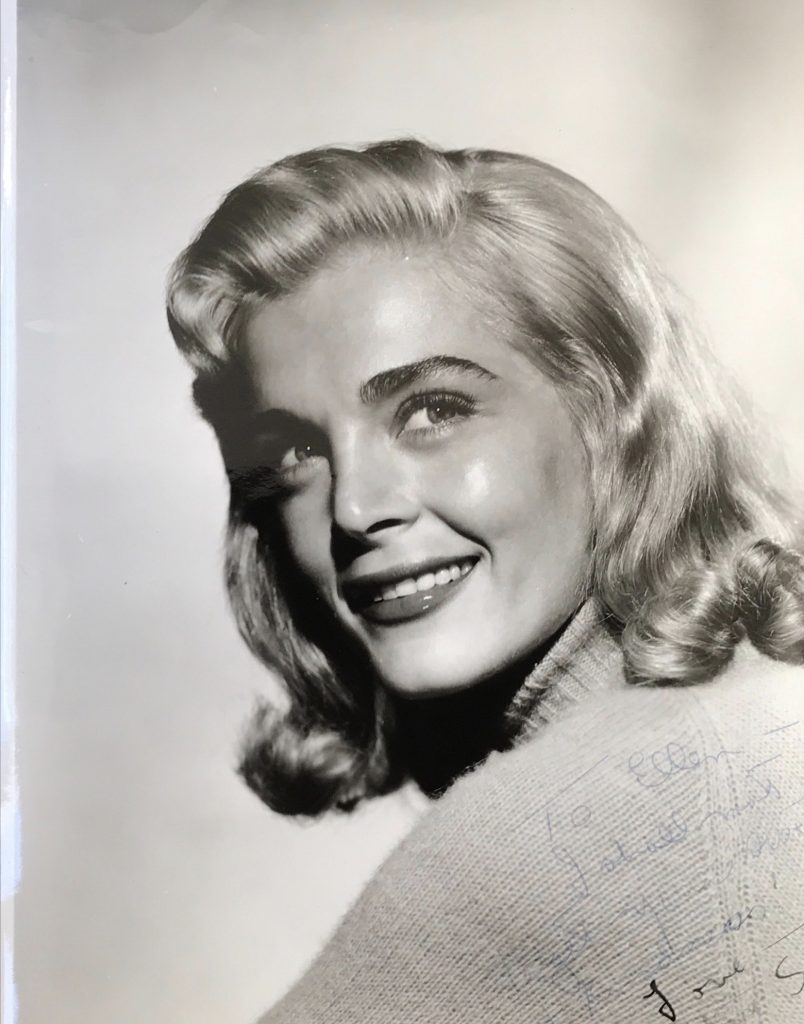
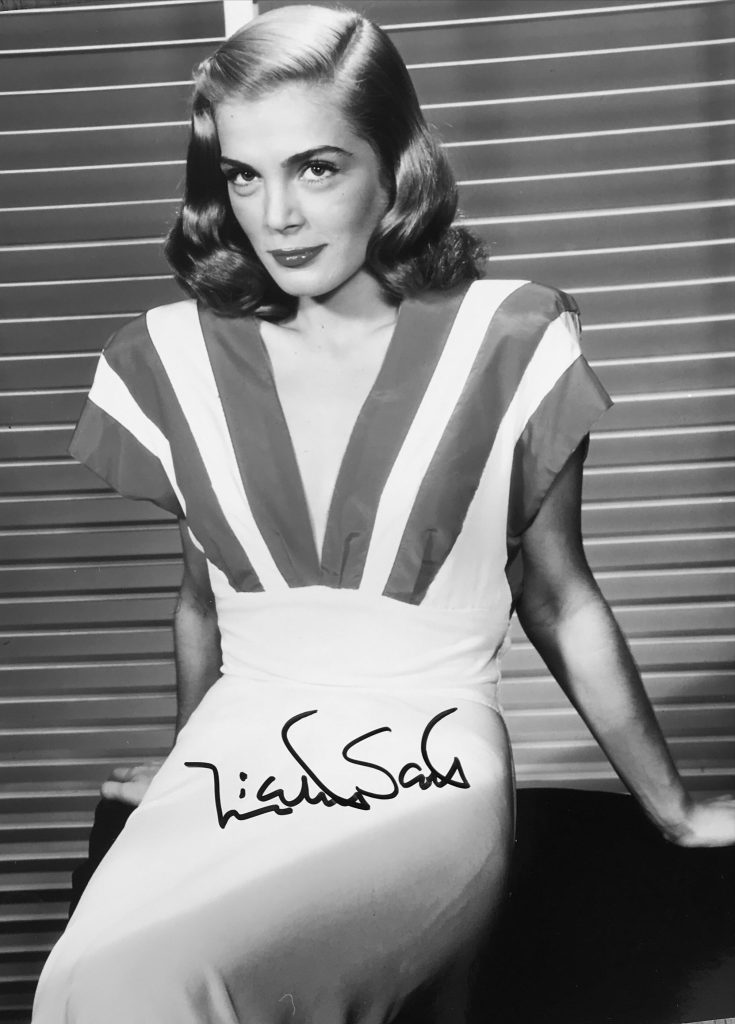
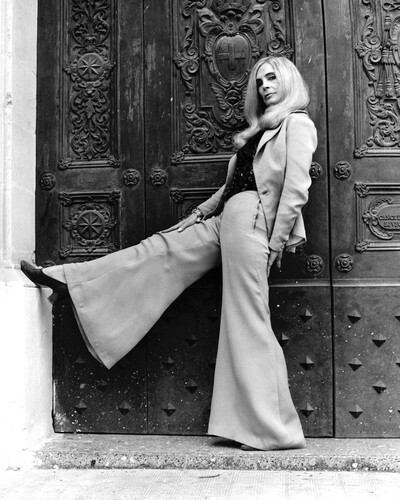
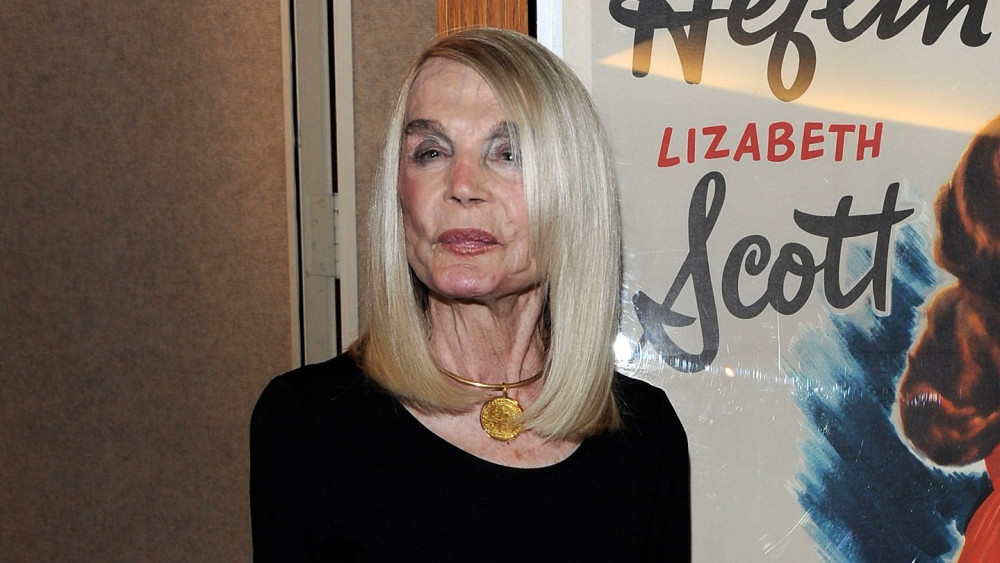
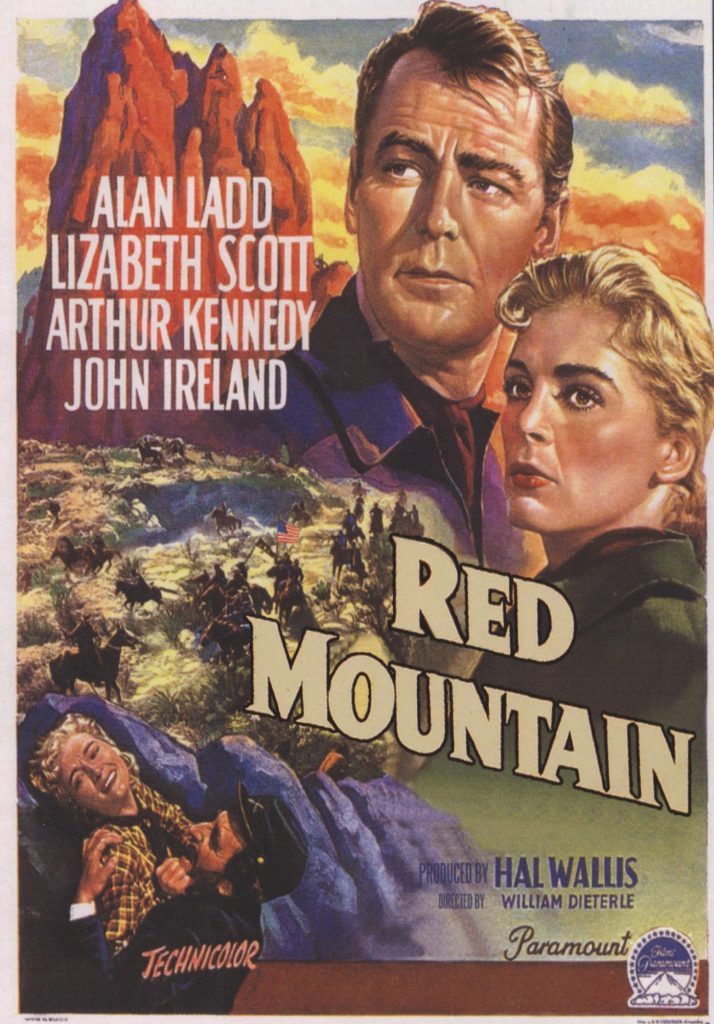
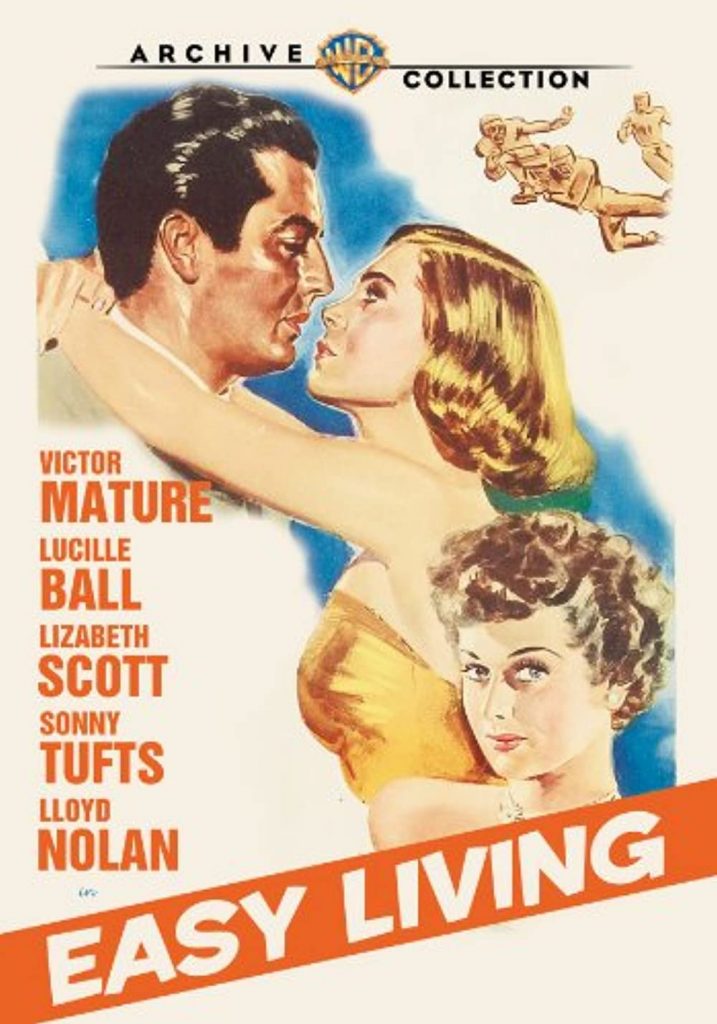
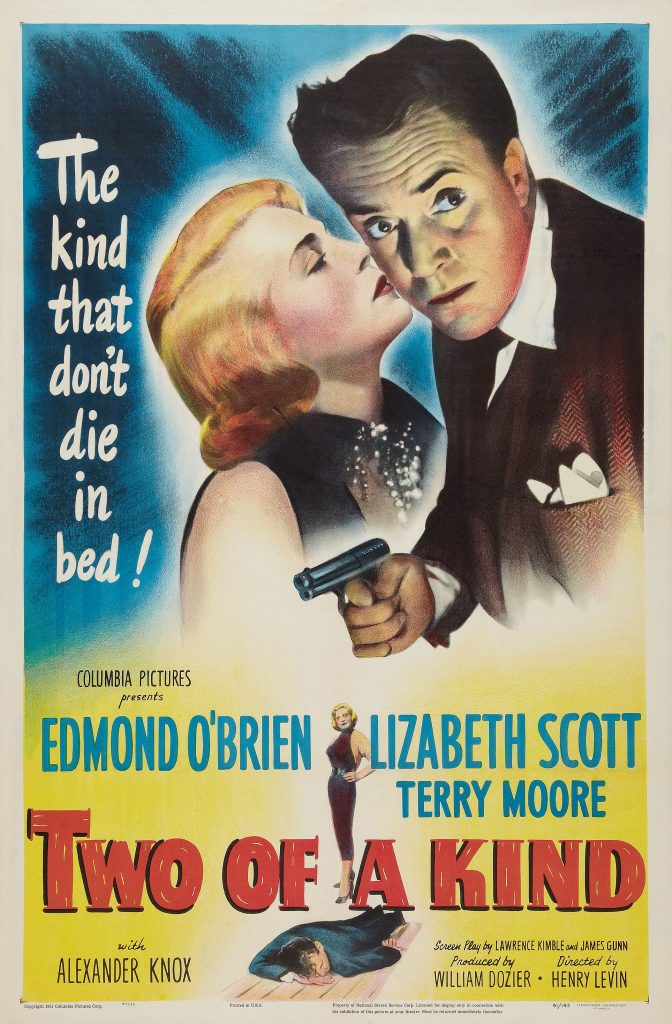
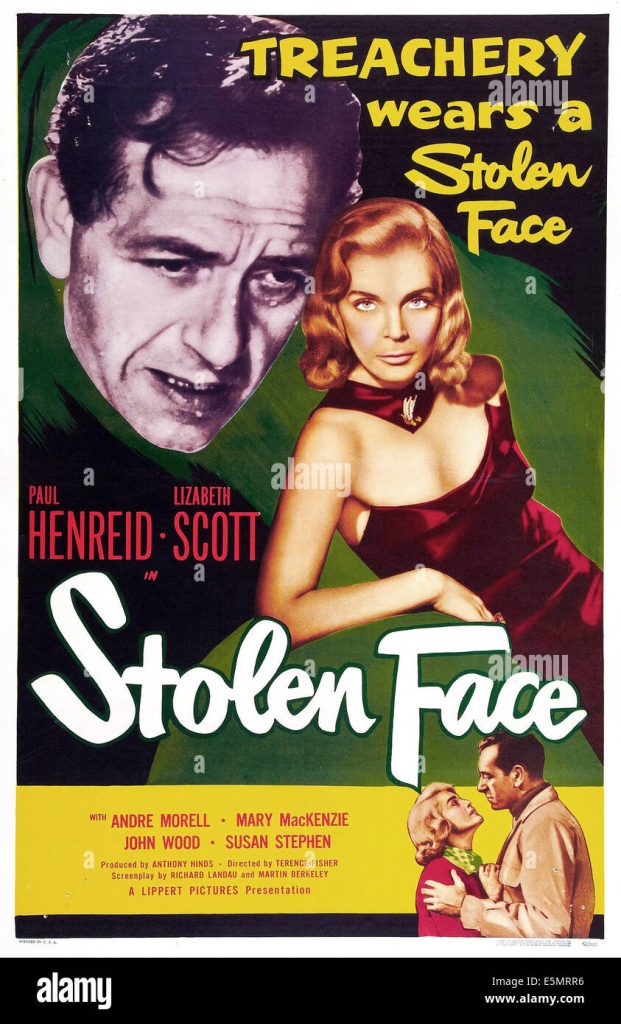
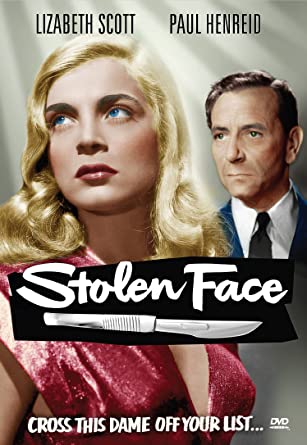
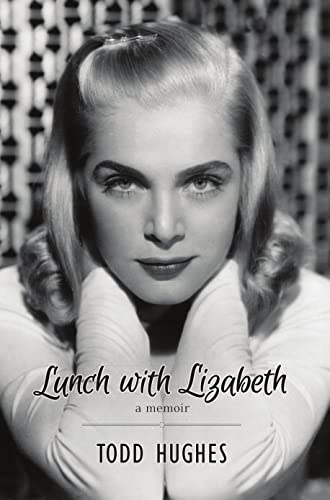
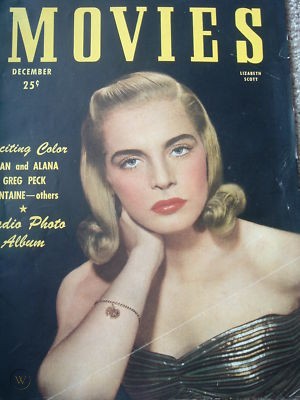
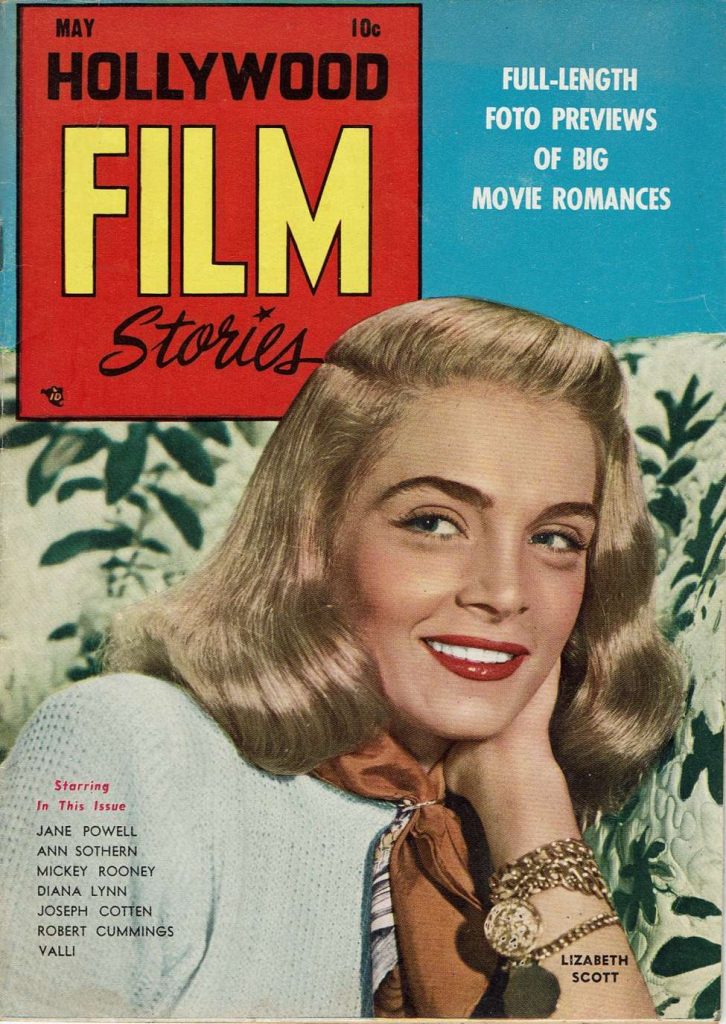
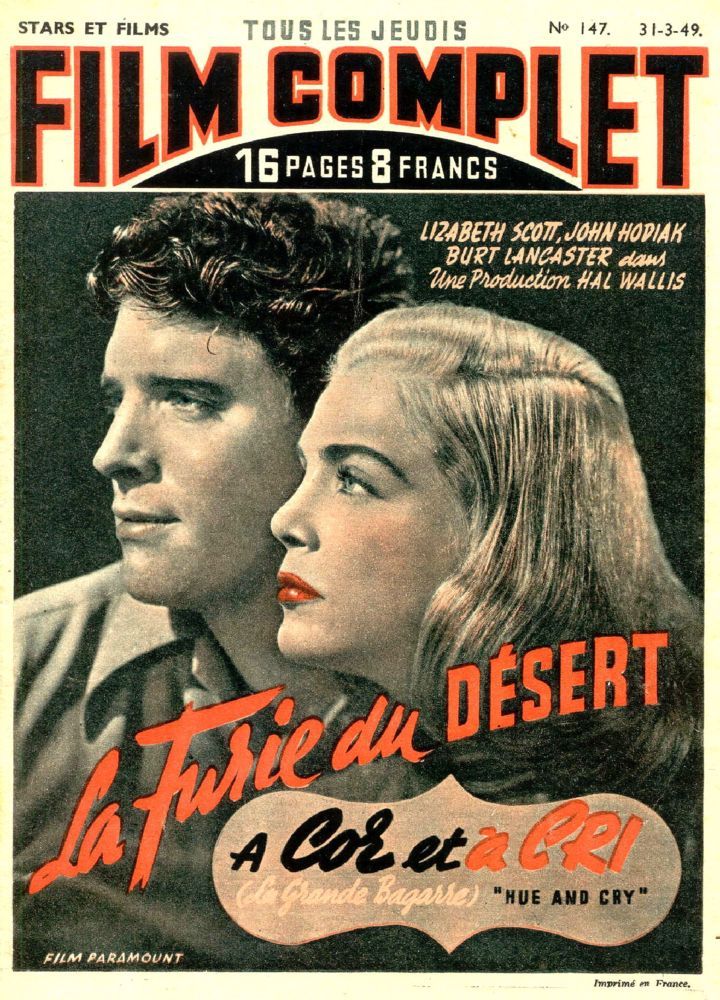
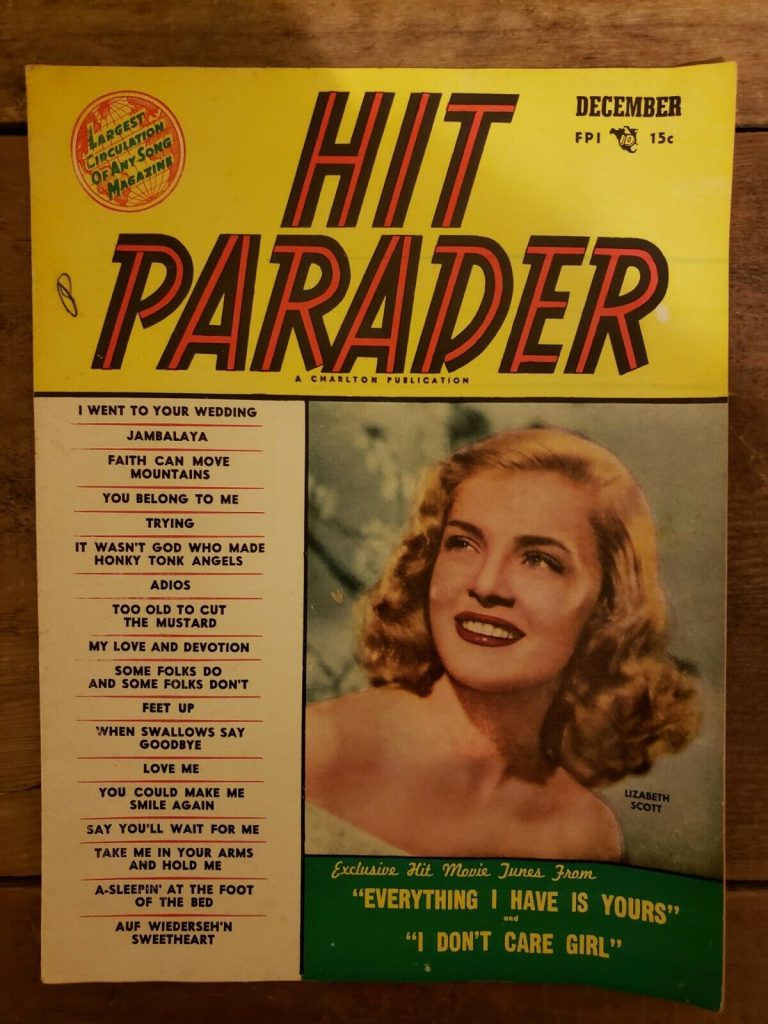
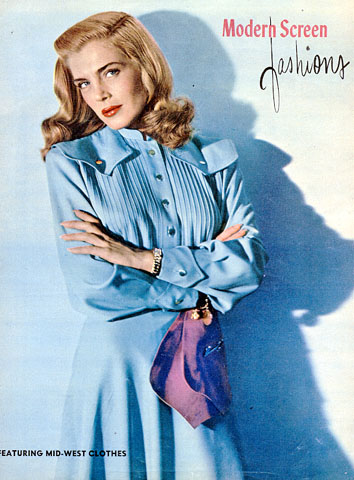
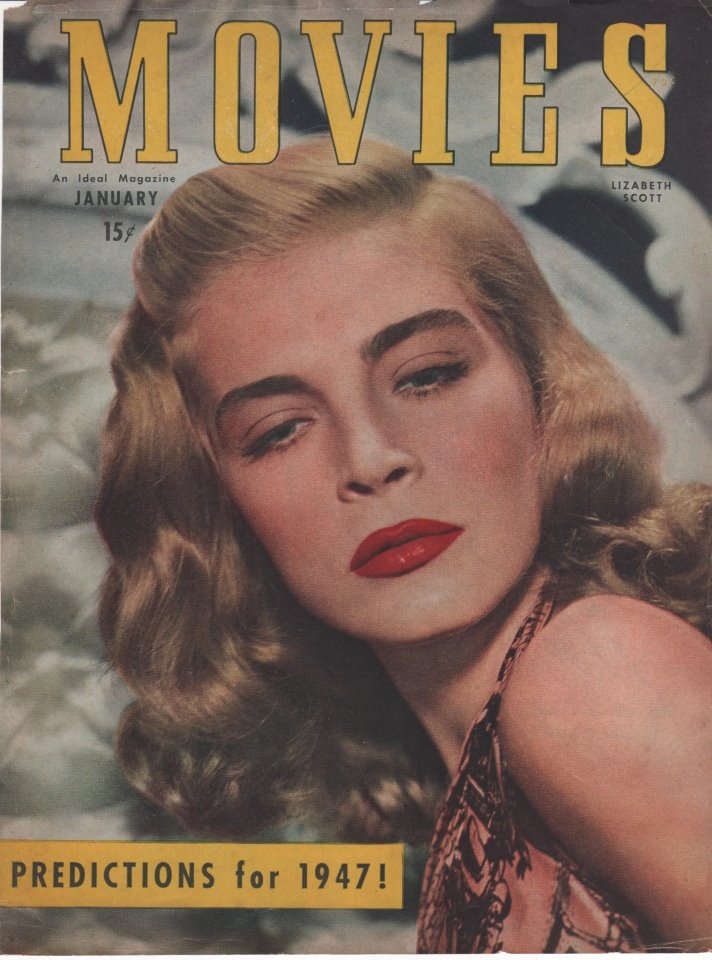
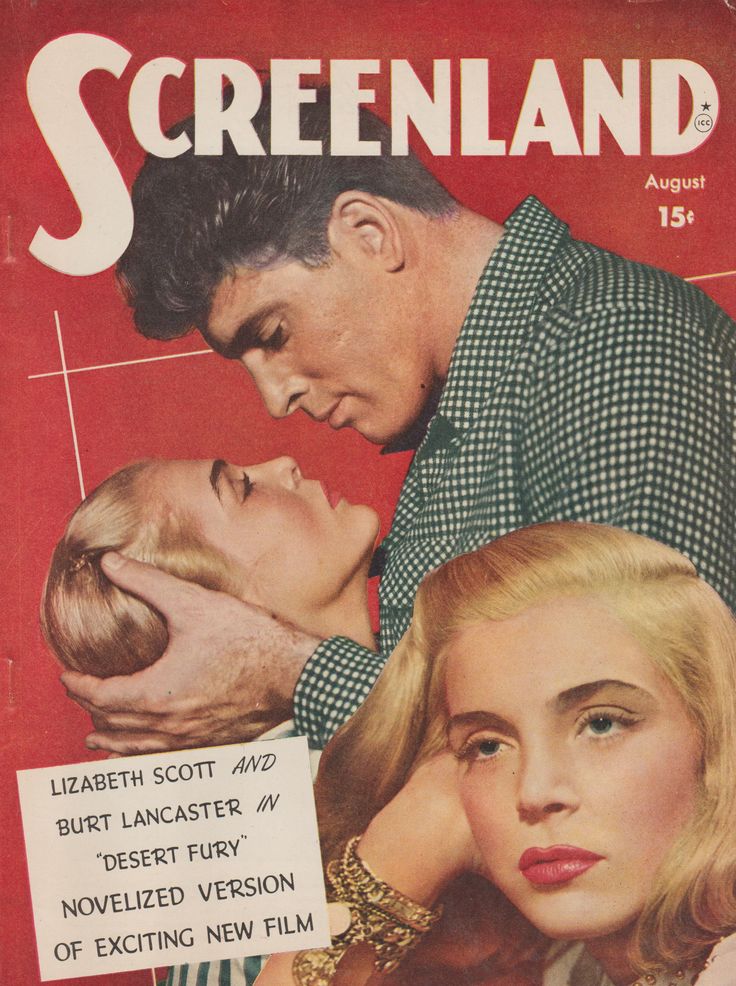
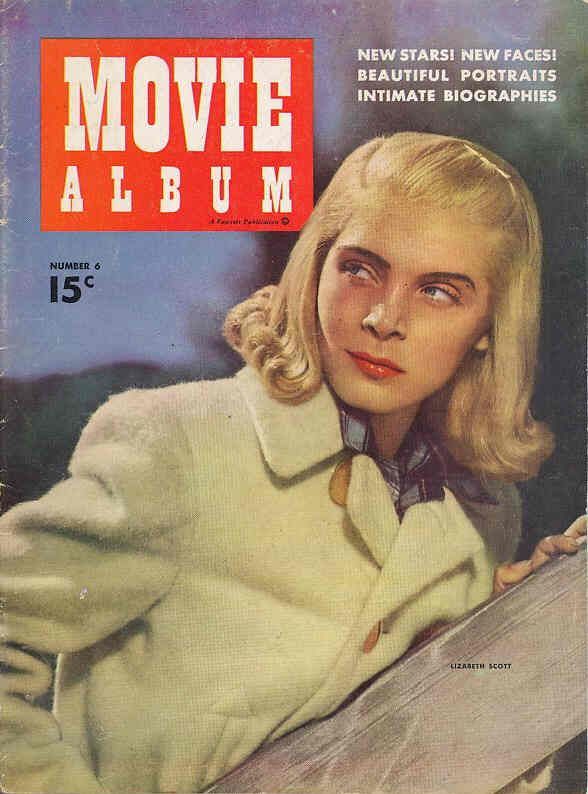
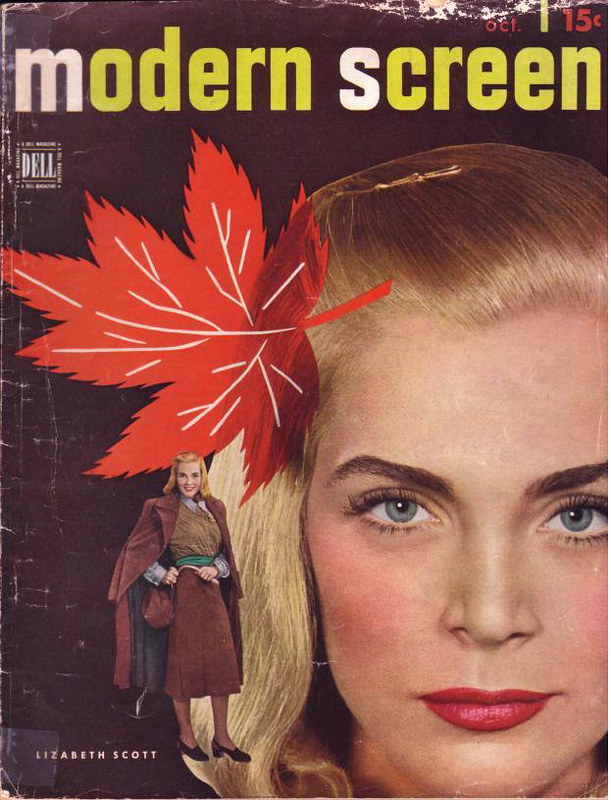
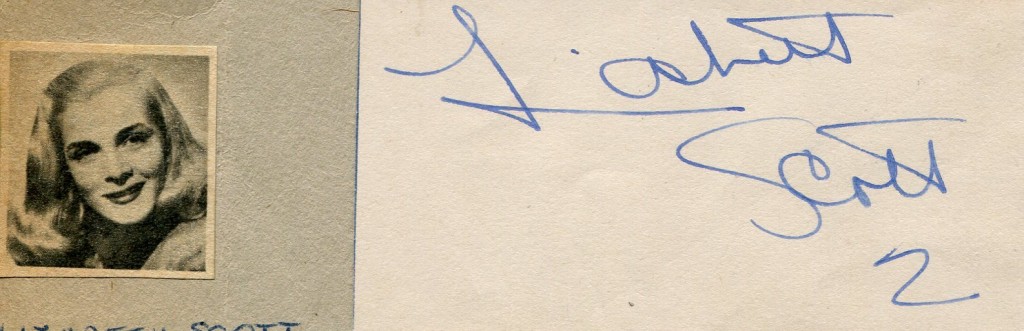
Lizabeth Scott obituary in “The Guardian” in 2014.
In the mid-1940s, Paramount described their latest star signing, Lizabeth Scott, who has died aged 92, as “beautiful, blonde, aloof and alluring” and, in anticipation of her becoming another tough-girl siren of the period, nicknamed her The Threat. However, during her 12-year film career, the critics and public never saw her as a threat to the two other noirish dames she most resembled, Lauren Bacall and Veronica Lake, although they rarely played duplicitous dames, as Scott did. Only later, some years after her career was in tatters, was she appreciated for being her own woman.
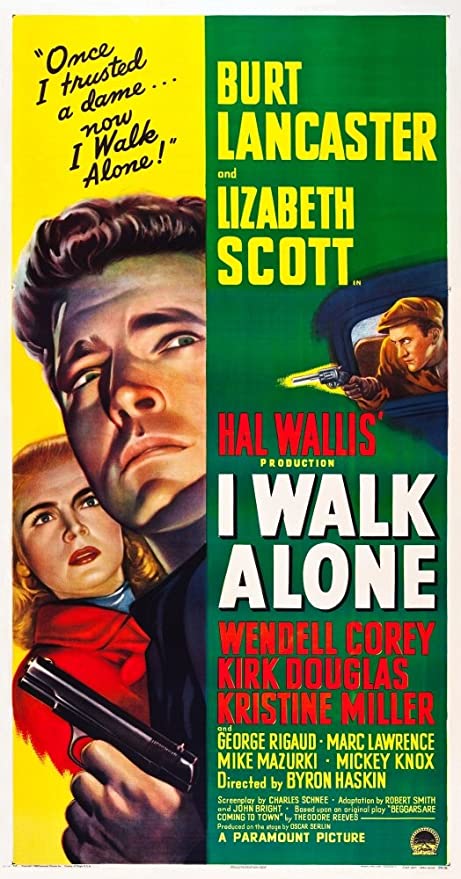
Scott was strong and sultry, her heavy dark eyebrows contrasting with her blonde hair. Like Bacall, she had a low and husky voice, but she was far harder; in fact, she was able to suggest hidden depths of depravity – the ideal femme fatale of the 1940s. As Burt Lancaster says to her in I Walk Alone(1948), “What a fall guy I am – thinking just because you’re good to look at, you’d be good all the way through!”
She was born Emma Matzo, the daughter of John Matzo and his wife Mary (nee Pennock) in Scranton, Pennsylvania. Despite her parents’ opposition to an acting career, she went to the Alvienne School of Drama in New York. She got her first professional engagement with the touring company of Hellzapoppin, where she had little to do but appear in stunning gowns in a series of comedy blackouts.
Back in New York, unable to get an acting job, she landed work as a fashion model with Harper’s Bazaar at $25 an hour. In 1942 she was taken on as understudy for Tallulah Bankhead in Thornton Wilder’s The Skin of Our Teeth on Broadway. Bankhead proved to be unusually healthy, and Scott sat backstage for almost a year before leaving the company. However, she did get to play the lead on tour, taking over from Miriam Hopkins.
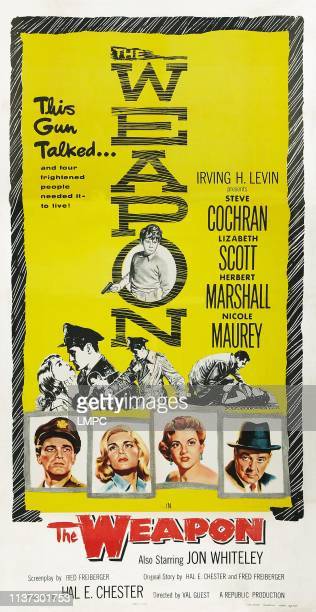
The Weapon, poster, US poster art, bottom from left: Steve Cochran, Lizabeth Scott, Nicole Maurey, Herbert Marshall, 1956. (Photo by LMPC via Getty Images)
But it was a four-picture spread in an issue of Harper’s Bazaar that led to her long-term Hollywood contract with Hal Wallis, who now had his own producing organisation through Paramount Studios. “I wanted to be a great stage actress. I never once thought of movies,” Scott explained. “But it was off season on Broadway and since I wasn’t able to find a job there, I thought it might be a good experience to come to Hollywood and find out what it was all about.”
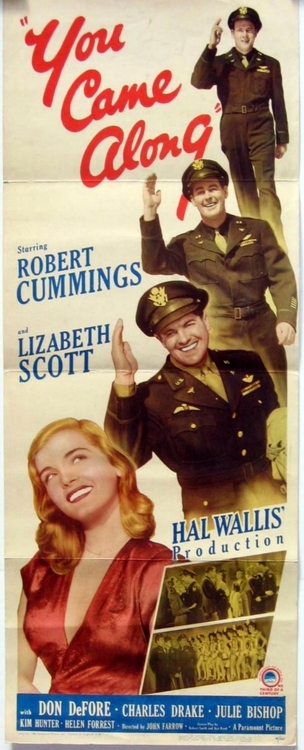
Wallis starred Scott in her first film, You Came Along (1945), as a treasury department employee charged with looking after three pilots on a patriotic bond-selling tour. It is later discovered that one of the pilots (Robert Cummings) has an incurable disease. “Promise me one thing. Never grieve for me,” he tells her. There was little such sentimentality in most of the other movies she made.
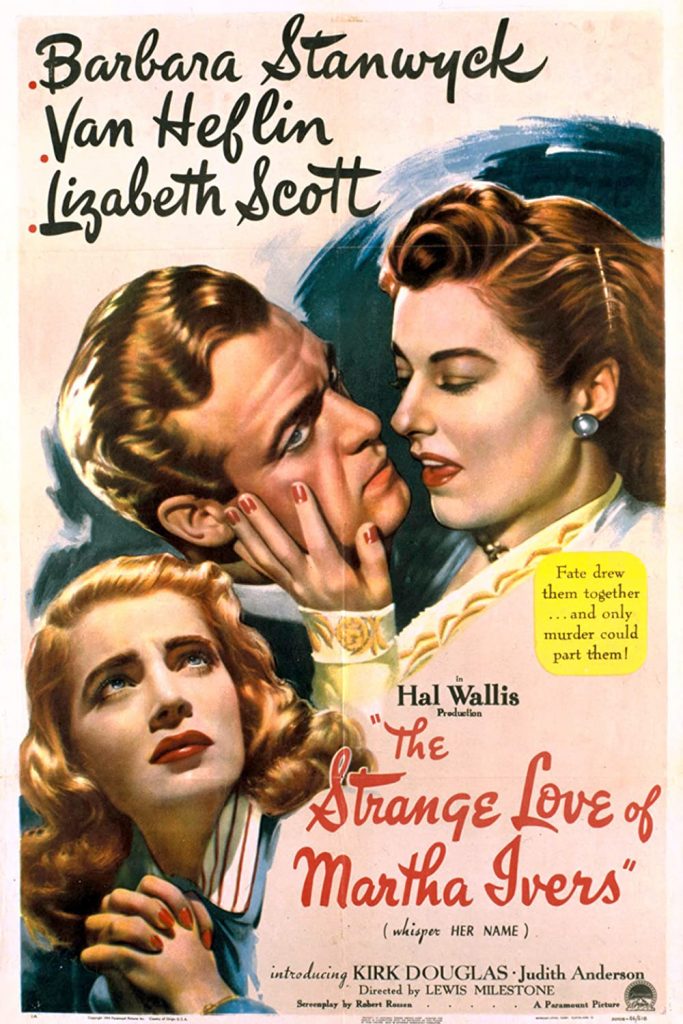
In her second film, The Strange Love of Martha Ivers (1946), Scott, as a young woman wrongly jailed – sensuously announcing, “My name is Toni Marachek” – was rather peripheral to the plot and, besides, she had Barbara Stanwyck to contend with.
She made more of an impression in Dead Reckoning (1947) as a gangster’s wife, almost luring Humphrey Bogart into her corruptive trap. Scott plays a woman of mystery, emphasised by the fact that she is shot in oblique angles and low-key lighting. In the garish melodrama Desert Fury (1947), Scott, stylishly dressed by Edith Head, is perfect as the good girl gone bad becoming good again. The most rational of the characters, Scott, by now pushing 25, plays Mary Astor’s rebellious 19-year-old daughter who has run away from finishing school and fallen for a psychotic gambler (John Hodiak), who is obsessed with her mother, while his sidekick (Wendell Corey) is obsessed with him. Burt Lancaster is a clean-cut cop trying to redirect Scott’s libido.
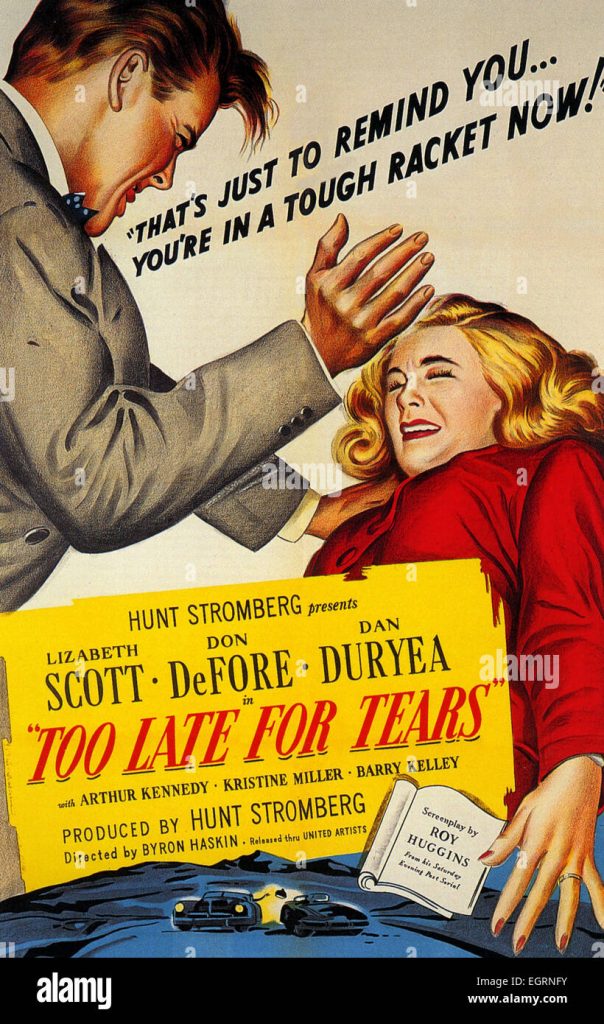
Billed as “the blonde with the brown voice”, and co-starring with Lancaster again, Scott played a nightclub singer (the first of several) in I Walk Alone. Ironically, although Scott had a good singing voice – she made an LP of songs in 1957 called Lizabeth – her songs in films were always dubbed. In the atmospheric Pitfall (1948), solid married man Dick Powell is caught in the tentacles of fashion model Scott, even though he is aware that she’s dangerous. She was more decadent than ever in Too Late for Tears (1949), having killed two husbands because she wanted “to move out of the ranks of the middle-class poor”.
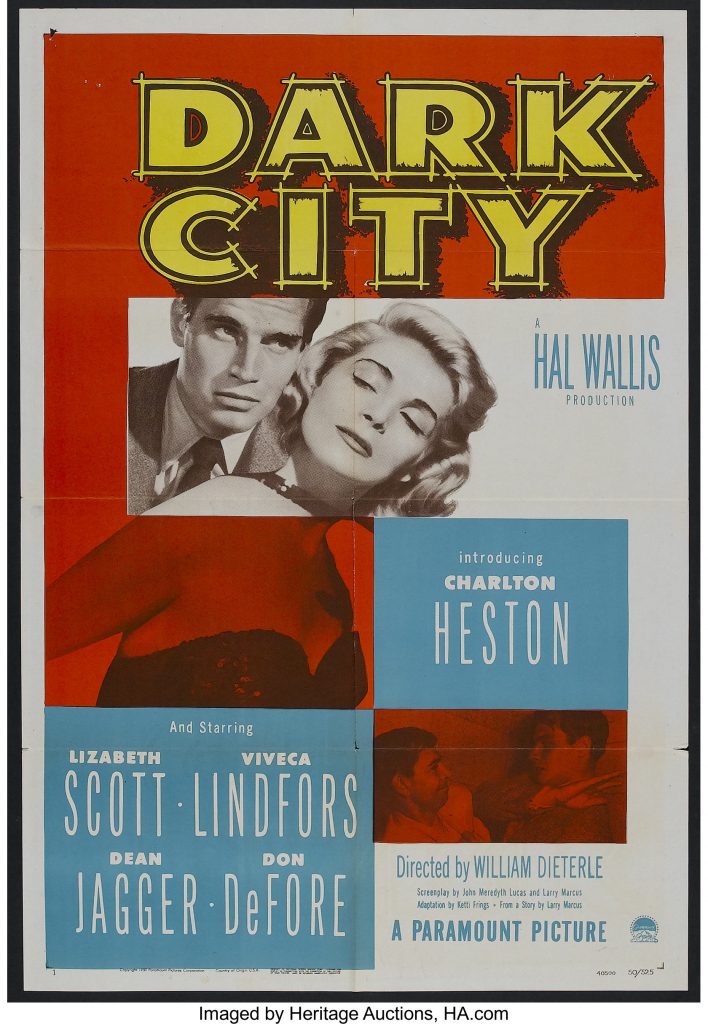
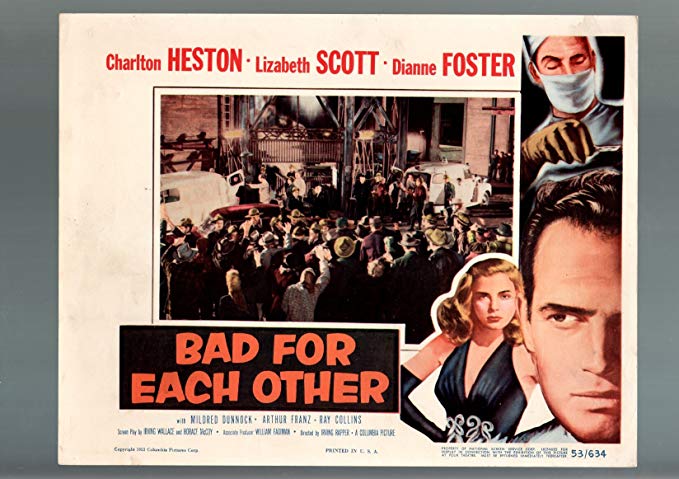
In another film noir, Dark City (1950), she is a nightclub singer again who drifts on the edges of a shadowy criminal world, though her love for gambler Charlton Heston (in his first Hollywood role) is uplifting. There followed similar roles of a woman willing to change her louche ways, but doomed to find a worthwhile man to love her only when she had already passed the point of redemption.
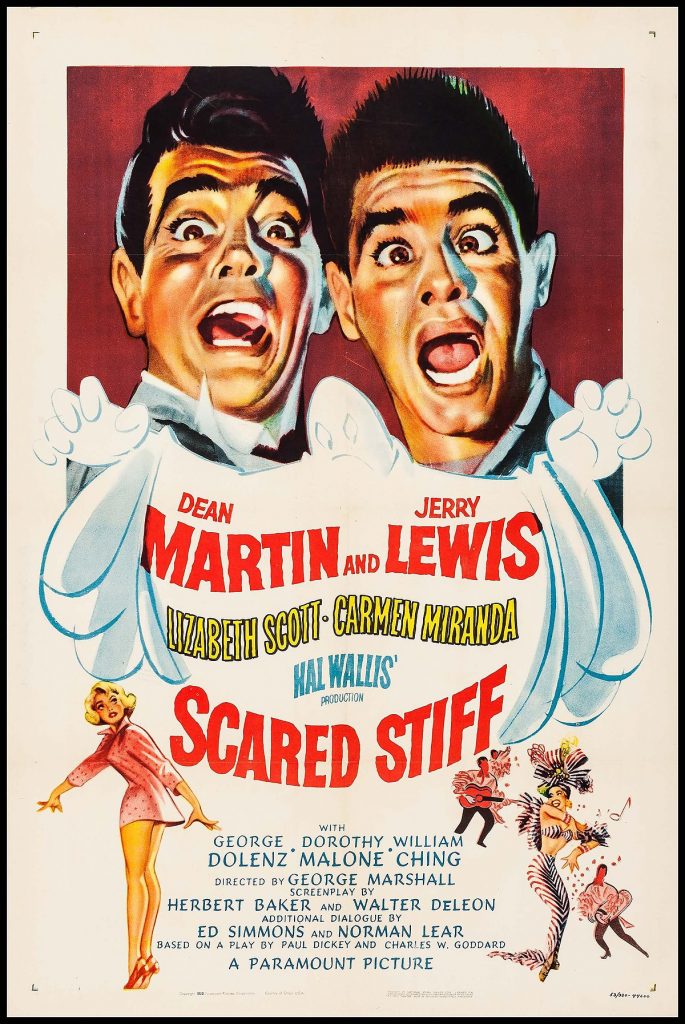
She rarely appeared in comedies, and for that reason alone one of her favourite films was Scared Stiff (1953) with Dean Martin and Jerry Lewis.
In September 1954, a front-page story in the magazine Confidential claimed that Scott was a lesbian and was linked to “the little black books kept by Hollywood prostitutes”. It was also said that on a trip to Paris she had taken up with Frede, that city’s most notorious lesbian entertainer. Some months later, her lawyer instituted a $ 2.5m suit against Confidential, accusing the magazine of “holding the plaintiff up to contempt and ridicule and implying in the eyes of every reader indecent, unnatural and illegal conduct in her private and public life”. Scott lost her suit on a technicality, however, and, given the witch-hunting atmosphere of the times, the case certainly harmed her. Compounding her plight was her rebellious nature, having never paid conventional homage to the film establishment and to gossip columnists Louella Parsons and Hedda Hopper. Luckily, she had invested her money wisely.
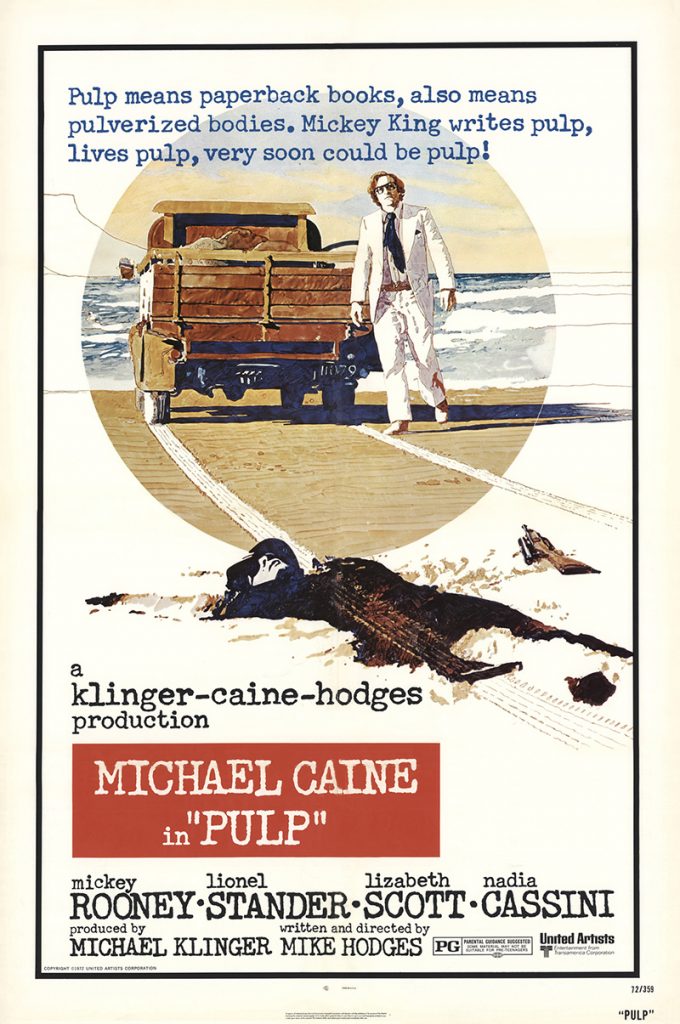
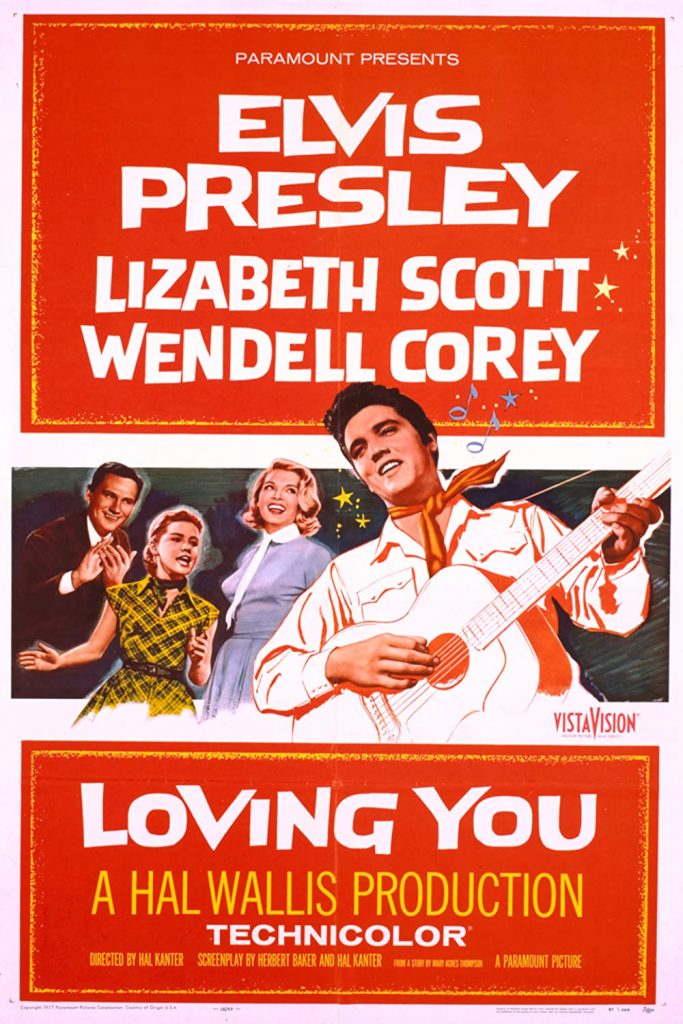
Her last film, excepting a quirky appearance as an nymphomaniac princess in Mike Hodges’s Pulp (1972), was as a press agent who discovers country boy singer Elvis Presley in Loving You (1957) and sets him on the road to fame.
In the last decades of her life, aside from doing voiceovers for commercials, she set about training her body and mind, attending health clubs regularly and studying literature, philosophy and languages. “I simply decided there was more to life than just making films,” Scott said in a 1970s interview she gave at her house in the Hollywood Hills, where she lived alone. “And, I proceeded to explore all of life’s other facets. None of us is ever too young or too old or too smart to learn or to create.”
• Lizabeth Scott (Emma Matzo), actor, born 29 September 1922; died 31 January 2015Topics
Lizabeth Scott was one of the signature faces and voices of 1940s and 1950s film noir: glamorous, smoky-voiced, and especially effective as a cool, wounded, or morally ambiguous woman. Her career never developed into the full-scale stardom Paramount seemed to imagine, but she left a lasting mark through a small group of standout performances, especially The Strange Love of Martha Ivers, Too Late for Tears, Pitfall, and Dead Reckoning.
Career overview
Scott made her screen debut in You Came Along (1945), then quickly rose to prominence with The Strange Love of Martha Ivers (1946), where her work opposite Barbara Stanwyck, Van Heflin, and Kirk Douglas established her as a major noir presence. Over the next decade, she became closely associated with crime dramas and thrillers, reportedly appearing in around 20 noir-related films, while also trying westerns, melodramas, and later a small role in Loving You with Elvis Presley.
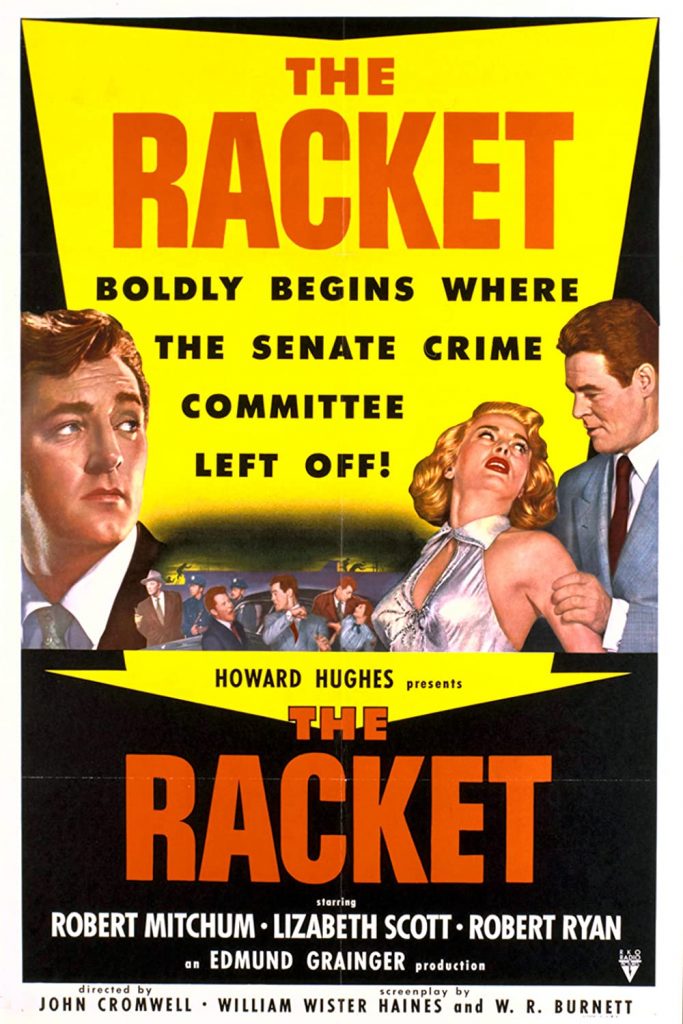
Her most important films include Dead Reckoning (1947), I Walk Alone (1947), Pitfall (1948), Too Late for Tears (1949), Dark City (1950), The Racket (1951), Silver Lode (1954), and Scared Stiff (1953). Her later screen work was much sparser, and by the 1960s and 1970s she had largely receded from the mainstream, with Pulp (1972) as a late return.
Acting style
Scott’s screen persona was built on contrast: she looked poised and elegant, but often played women with frustration, menace, or vulnerability under the surface. Her voice was one of her most distinctive assets, and critics often treated it as central to her appeal, helping her project both allure and emotional distance.
What made her interesting is that she was rarely just a conventional femme fatale. In her best work, especially Too Late for Tears and Pitfall, she gives the impression of a woman whose hardness is a survival strategy rather than a fixed identity, which makes her more psychologically layered than a simple genre stereotype. That combination of glamour and restlessness is why she remains memorable even in films that are otherwise uneven.
Critical assessment
Scott’s strongest performances are usually praised for their intensity, control, and emotional ambiguity. In The Strange Love of Martha Ivers, she holds her own beside Barbara Stanwyck and Kirk Douglas, and the film helped define the role she would be offered repeatedly: the stylish, dangerous woman who seems both an object of desire and a threat.
Her best noir work benefits from directors who understood how to use restraint. In Pitfall, for example, she is often seen as especially effective because she turns a seemingly polished suburban wife into something more troubling and human, while Too Late for Tears lets her push further into ruthlessness and desperation. These performances suggest real intelligence in her acting: she knew how to imply inner conflict without overexplaining it.
At the same time, her career is also a record of Hollywood underusing a performer with a strong and unusual identity. She was frequently cast in similar roles, and while that consistency made her iconic within noir, it may also have limited the public’s sense of her range. Some accounts of her career argue that she was undervalued and not given the breadth of material that might have broadened her reputation.
Best-known films
Film
Year
Why it matters
You Came Along
1945
Screen debut and a promising introduction .
The Strange Love of Martha Ivers
1946
Breakthrough role and a defining noir performance .
Dead Reckoning
1947
One of her most admired noir roles, opposite Humphrey Bogart .
I Walk Alone
1947
Strengthened her reputation in hard-edged crime drama .
Pitfall
1948
Often cited as one of her most psychologically effective performances .
Too Late for Tears
1949
A peak example of her dangerous, emotionally compressed persona .
Dark City
1950
Continued her association with noir and urban menace .
The Racket
1951
Another solid crime-film role in her wheelhouse .
Silver Lode
1954
Showed her in a western setting, beyond her noir image .
Scared Stiff
1953
A lighter, more commercial change of pace .
Legacy
Scott’s legacy is strongest among noir fans and film historians because she embodied a specific postwar mood: elegant surfaces covering private damage, anxiety, and moral instability. She is not usually remembered as one of Hollywood’s biggest stars, but she is remembered as one of its most distinctive ones, especially in roles that required coolness, danger, and emotional undercurrents.
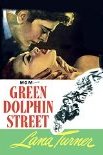
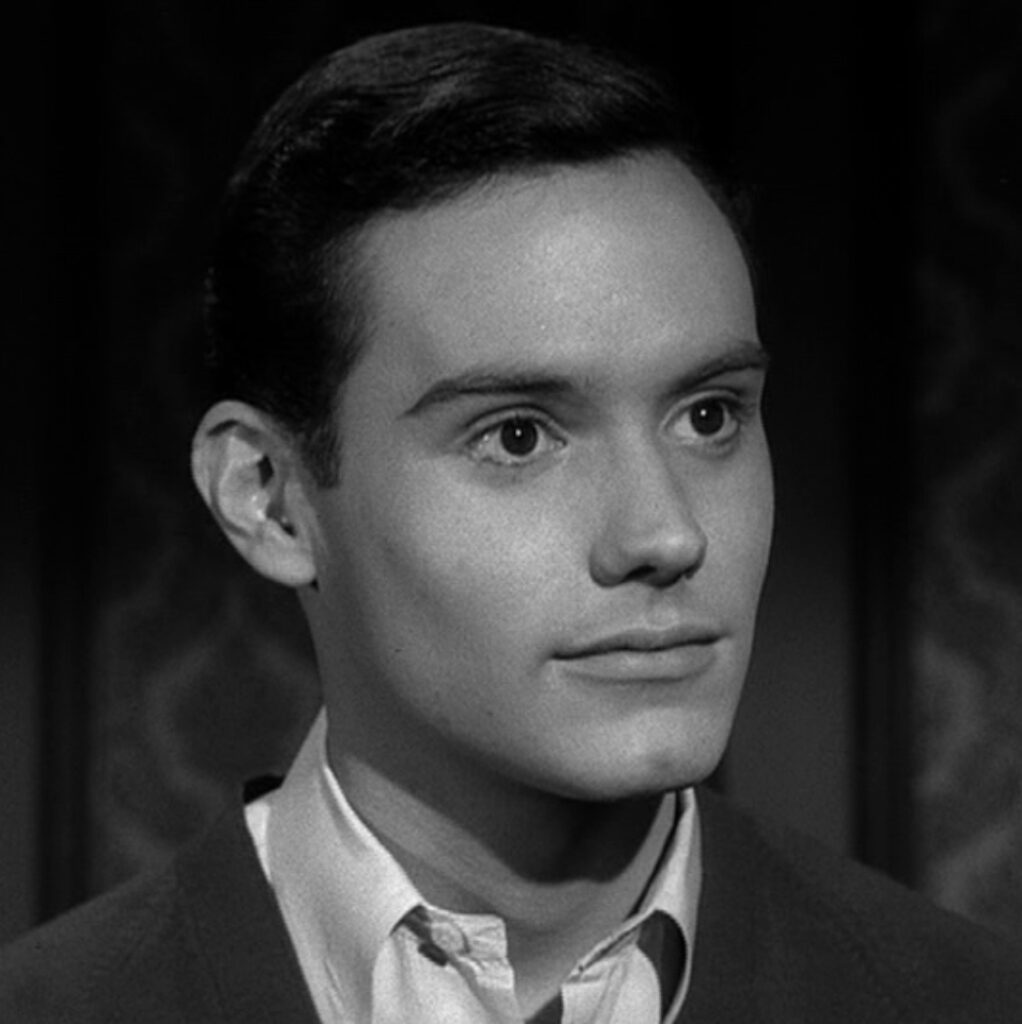
Richard Hart acted mainly on the stage but for a brief time he was a leading man in Hollywood. He was born in 1915 in Providence, Rhode Island. In 1945 he had a success on Broadway with “Dark of the Moon”. He was spotted by a talent scout from MGM and offered a contract. He appeared opposite Lana Turner and Donna Reed in the big budget “Green Dolphin Street” and with Greer Garson in “Remember Me”. Unhappy in Hollywood he left and returned to New York to the stage. He was in two successes, “Goodbye My Fancy” and “The Happy Time”. He died suddenly from a heart attack at the age of 35 in 1951.
IMDB Entry:
While he had a short life and very short film career, sleekly handsome actor Richard Hart, with his dark and virile looks, demonstrated much promise in those few years, especially on Broadway and in TV’s “Golden Age.” It all ended quickly, however, with his sudden demise at age 35.
Born Richard Comstock Hart, in Providence, Rhode Island on April 14, 1915, the middle child of a prominent local lawyer, Henry Clay Hart. His grandfather, Richard Comstock, was also a lawyer. Following education at the Quaker-run preparatory Moses Brown School, he majored in English and psychology upon entering Brown University. After attaining his degree, his interest changed and he took journalism classes and had a brief job at Gorham, the silver company, and also took journalism classes before pursuing acting.
A summer stock job in nearby Tiverton, Rhode Island, decided things for Hart and he moved to New York City to pursue a professional stage career. Wife (and high school sweetheart) Eugenia did not adjust to the Manhattan life style and returned to Providence with son Christopher in tow. They abruptly divorced. Following his Broadway debut in “Pillar to Post” in December of 1943, he then went out on tour with Constance Bennett in “Without Love.” A superb performance in a repertory production of “Dark of the Moon,” led to him being cast in the Broadway version, winning a Theatre World Award in the process and continuing on the national tour. He met second wife, theatre actress Louise Valery, during the run of the show. MGM saw the dark-haired actor with the trimmed mustache as potential leading man material after seeing his stage success and, with no film training at all, signed Richard and gave him the chance to perform in three prominent movies. In Desire Me (1947) he replaced Robert Montgomery as the man who takes Robert Mitchum away from Greer Garson. In Green Dolphin Street (1947) he was the love interest of both Lana Turnerand Donna Reed. In B.F.’s Daughter (1948) he loses Barbara Stanwyck to Van Heflin. A terrible experience in the first picture mentioned (numerous rewrites, retakes, added scenes and director changes in Desire Me (1947)) disillusioned Hart in pursuing career film work. Not helping was his rather diffident performances on film and a burgeoning alcohol problem.
Following a dismal MGM loan-out opposite Arlene Dahl in Reign of Terror (1949) [aka The Black Book], Hart asked for a release from his contract. Returning to New York, he replaced Sam Wanamaker in the 1949 production of “Goodbye, My Fancy” and co-starred with Charlton Heston and Coleen Gray in the short-lived “Leaf and Bough” which closed the next day. He then enjoyed a major success in “The Happy Time” with Eva Gabor, Leora Dana and Claude Dauphin the following year. Hart also found a valuable medium in TV, appearing in numerous live productions of Fireside Theatre, NBC Presents, Ford Theatre Hour and Studio One. He also returned to his “Dark of Moon” stage success on TV for a Phico-Goodyear Television Playhouse presentation and appeared in such classics as “Hedda Gabler” and “Julius Caesar” (as Marc Antony). In 1950 he became the first Ellery Queen on TV, appearing in the low budget Dumont series “The Adventures of Ellery Queen.”
On January 2, 1951, Hart died suddenly of a coronary occlusion, possibly triggered by his proliferate alcohol intake. He was divorced once and estranged from his second wife at the time he died. He left a son, Christopher, from his first marriage; two daughters from his second; there is also a debate about another possible son, Richard Lee Hart, from an out-of-marriage relationship to Phyllis Buswell.
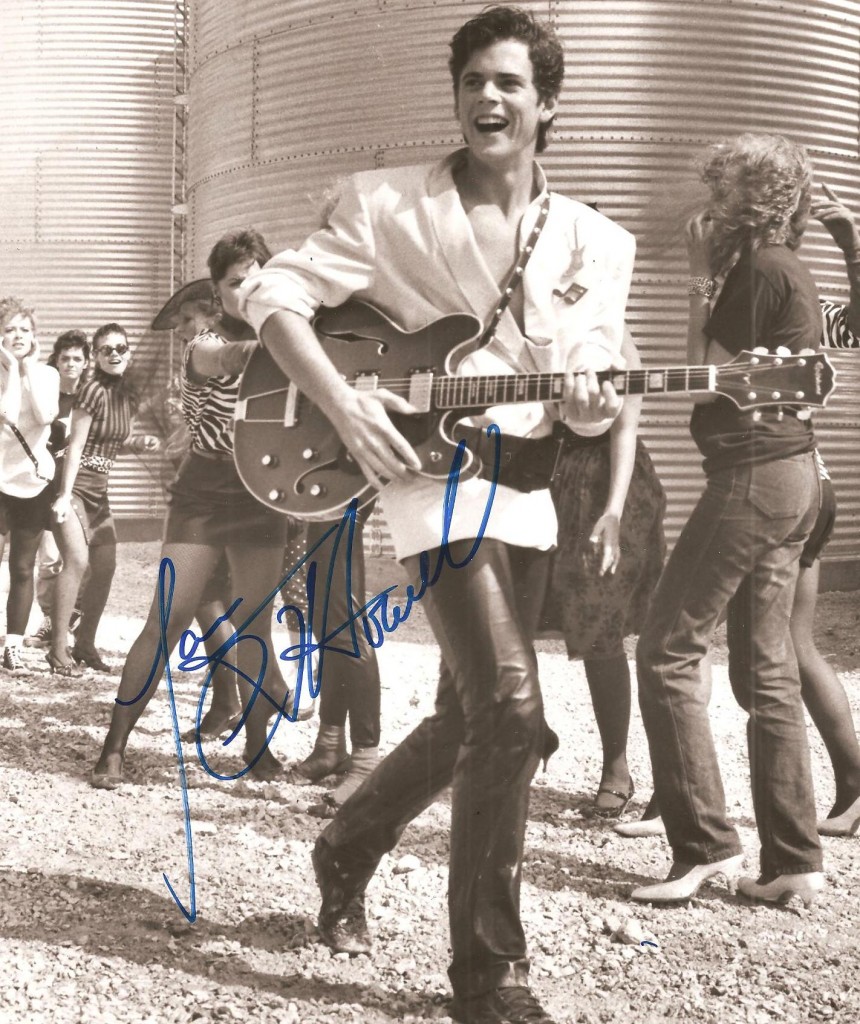
C. Thomas Howell was born in 1966 in Van Nuys, California. He made his mark in “The Outsiders” and also in “The Hitcher” with Rutger Hauer. In “Tank” he was the son of Shirley Jones and James Garner. His later films include “The Day the Earth Stopped”.
TCM Overview:
When he was in his teens this baby-faced leading man’s career blossomed with his affecting performance as Ponyboy Curtis, the sensitive greaser with the soul of a writer, in Francis Ford Coppola’s classic, “The Outsiders” (1983). Then, as quickly as his Tiger Beat status began, the bottom fell out after only a few years. Despite such minor hits as “Red Dawn” (1984) and “Soul Man” (1986), Howell’s career descended into direct-to-video flicks and filler TV movies for the latter part of the decade, into the 1990s. Of the all-star cast of “The Outsiders,” Howell’s big screen success was later overshadowed by Ralph Macchio’s “Karate Kid,” Emilio Estevez’s Brat Pack films — to say nothing of Tom Cruise’s “Top Gun” superstardom. Seemingly fine with his post-“Outsider” status, Howell continued to shine as an actor, even if the majority of the more than 50 films he appeared in were less than memorable.
The above TCM overview can also be accessed online here.
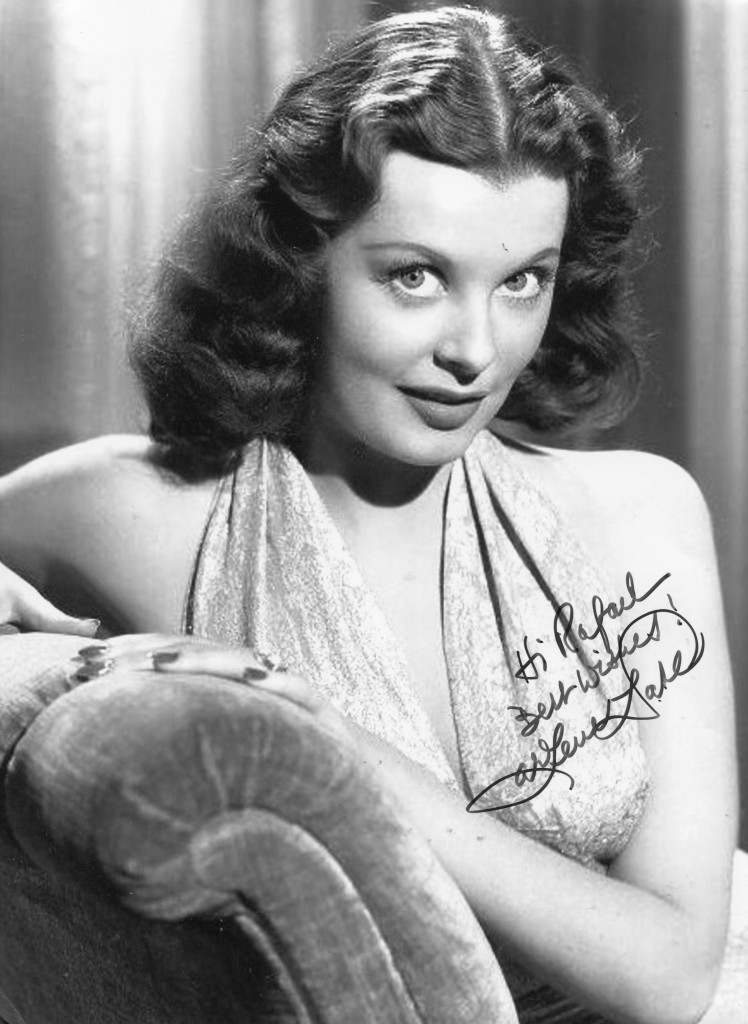
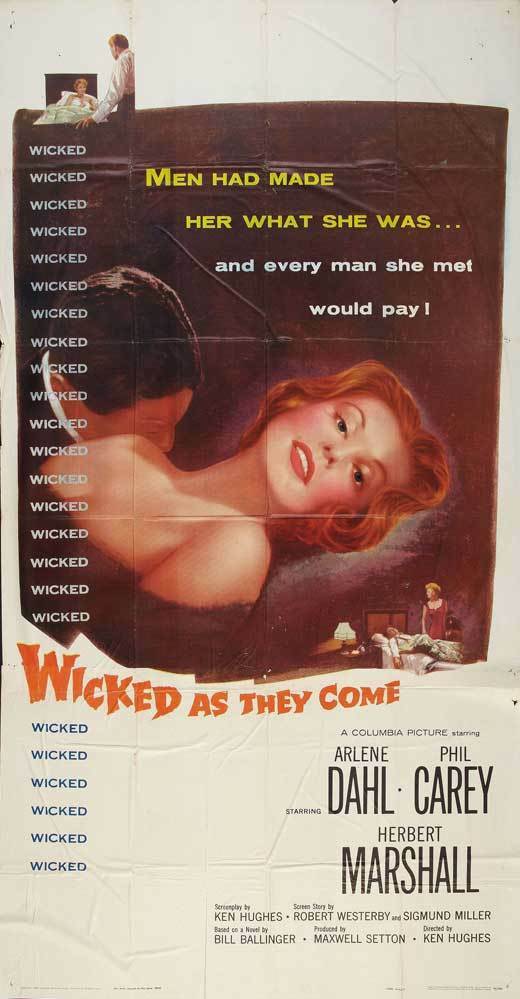
Beautiful Arlene Dahl was one of the most attractive actresses on screen in the 1940’s and 50’s. She was born in 1928 in Minneapolis of Norwegian. Her first film was in 1947 “Life with Father” and then she had the lead role in “My Wild Irish Rose”. Among her other films are “Three Little Words” and “Journey to the Centre of the Earth”. Article on Arlene Dahl here.
TCM Overview:
With her lush red hair and signature beauty mark, Arlene Dahl joined the court of MGM royalty in late 1940s and early 1950s, soon becoming more an icon of womanly elegance than of thespian prowess. A Minnesota native, Dahl followed the standard pattern of fresh-scrubbed, Midwestern girl-makes-it-big, whose ravishing looks and curvaceous figure vaulted her from beer advertising to the silver screen almost overnight. Paired early in films with Red Skelton and Van Johnson, she largely played the role of eye-candy, often in color-filmed adventures and fluffy comedies. She distinguished herself more in smaller films with more textured roles, including as a vampy French conspirator in “Reign of Terror” (1949) and a felonious temptress in “Slightly Scarlet” (1956).
The limelight fell on her personal life as well, via celebrity couplings with “Tarzan” Lex Barker and “Latin Lover” Fernando Lamas, both tempestuous unions and the first of her many marriages. A colorful sci-fi splash in “Journey to the Center of the Earth” (1959) signified the apex of her film career, but she had already established a plan B as a beauty and fashion maven via a syndicated newspaper column, which she would expand into a book series and a lucrative career in advertising and the beauty products industry.
After going bankrupt in the early 1970s, Dahl returned to show business for a smattering of television projects, highlighted by a three-year stint on the soap opera, “One Life to Live” (ABC, 1968- ), and would reinvent herself again as a celebrity astrologer. She wound down her screen career with intermittent appearances in projects starring her son, Lorenzo Lamas. A star of stage, screen and business, Dahl turned her relatively short stint as the toast of Hollywood into a launch pad to become a kind of pre-feminist Renaissance woman.
The Guardian obituary:
The graceful actor Arlene Dahl, who has died in November 2021 aged 96, was hardly ever seen with a hair out of place, nor less than elegantly and fashionably dressed. Though her refusal to look anything but her best, on or off screen, limited the range of her acting roles, she was able to profit from this immaculate image when she retired from films to establish a highly successful business selling cosmetics and lingerie.
Dahl began her career with Warner Bros in the late 1940s before moving to MGM for whom, in 1950, she was in a couple of good westerns, opposite Robert Taylor in Ambush, and Joel McCrea in The Outriders, looking gorgeous and staying clear of any horses. She continued in colourful action adventures for various studios throughout the 50s, allowing her male co-stars, such as Ray Milland in Jamaica Run (1953), Alan Ladd in Desert Legion (1953) and Rock Hudson in Bengal Brigade (1954), to sweat on her behalf.
Arlene Dahl with Ray Milland in the 1953 film Jamaica Run. Photograph: Archive Photos/Getty Images
In 1953, Dahl, newly divorced from the screen Tarzan Lex Barker, co-starred with the Argentinian actor Fernando Lamas in a couple of kitschy melodramas, Sangaree, set in the deep south, and The Diamond Queen, in which Dahl lounged languorously as Maya, the queen of Nepal. Lamas, whom she married the following year, once remarked, “In the six years I was married to Arlene, I never saw her without makeup. Being married to her was very nice at night. But in the daytime, it was like being married to Elizabeth Arden.”Advertisement
One of her few interesting roles of the period was in Alan Dwan’s Slightly Scarlet (1956), in which Dahl, a redhead, played the evil ex-con sister of the equally flame-haired Rhonda Fleming. Continuing to inject a little wickedness into her persona, she came to England to make Fortune is a Woman (AKA She Played With Fire, 1956) as a wife using her charms to trap an insurance investigator (Jack Hawkins) into blackmail and murder.
After appearing in one of the best Hollywood Jules Verne adaptations, Journey to the Center of the Earth (1959), she established her beauty business, Arlene Dahl Enterprises. She had already begun writing an internationally syndicated newspaper column, Let’s Be Beautiful, that ran for 20 years, and she also went on to design fashion collections for Vogue Patterns in the 1970s and 80s, to create a jewellery line and to launch a perfume called Dahlia. Her books, mostly on beauty and astrology, included Always Ask a Man: The Key to Femininity (1963) and Beyond Beauty: A Three-Part Journey to Help You Reach Your Full Potential as a Woman (1980).
The daughter of Rudolph Dahl, a car dealer, and Idelle (nee Swan), Dahl was born in Minneapolis, of Norwegian extraction. Her first jobs were as a buyer and model for department stores in Chicago, and then she won some early acting roles, including a small part in a Broadway musical, Mr Strauss Goes to Boston (1945), which got her noticed by Warner Bros.
That studio did not do much for her, giving her a walk-on in Life With Father (1947) and casting her as the sweet wife of the composer Dennis Morgan in the soppy biopic My Wild Irish Rose (1947), so she soon moved over to MGM.Advertisement
There she was given roles as straight woman to another redhead, the slapstick comic Red Skelton, in two comedies, A Southern Yankee (1948) and Watch the Birdie (1950), that were both reworkings of better Buster Keaton material.
In the likable musical biopic, Three Little Words (1950), Dahl had little to do as Skelton’s silent screen star wife, though she did get to sing the number (Nevertheless) I Love You So Much. In fact, she had a pleasant singing voice, which she had little chance to use in films.
“I consider my years in Hollywood nothing but an interim. What I always wanted was to be a musical comedy star,” she said when she starred as Margo Channing in Applause, the musical version of All About Eve (following Lauren Bacall and Anne Baxter) on Broadway in 1972.
After the peak of her career in the 50s, Dahl made very few films, though she played the feisty Lucinda Schenk for three years (1982-85) on the popular TV soap One Life to Live. One of her last screen appearances was as a guest in Night of the Warrior (1991), which starred her son Lorenzo Lamas.
Dahl is survived by her sixth husband, Marc Rosen, a designer of cosmetics packaging, whom she married in 1984, and by Lorenzo, the son of her second marriage; by a daughter, Carole, from her third marriage, to Christian Holmes; and a son, Stephen, from her fifth marriage, to Rounsevelle Schaum; and by nine grandchildren and two great-grandchildren.
Arlene Carol Dahl, actor and businesswoman, born 11 August 1925; died 29 November 2021
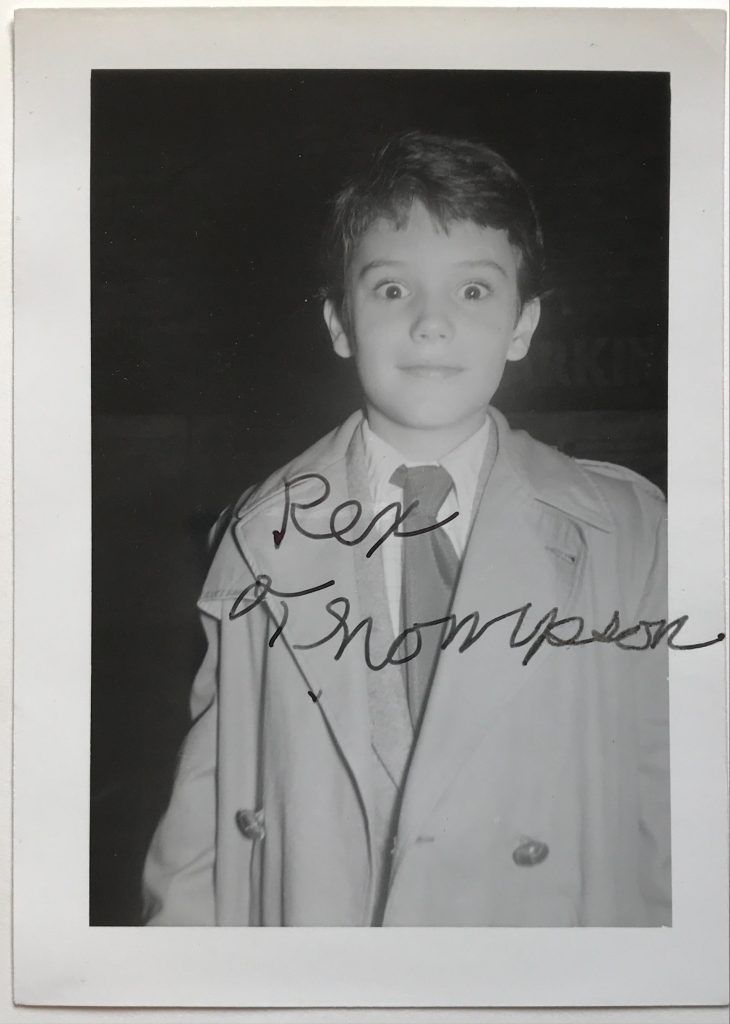
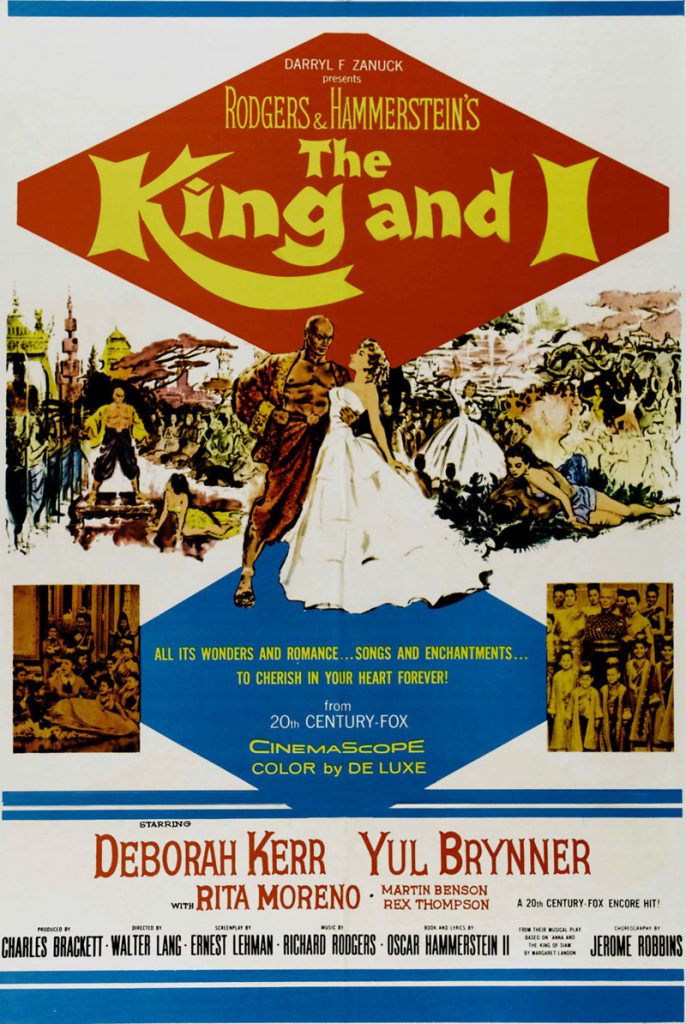
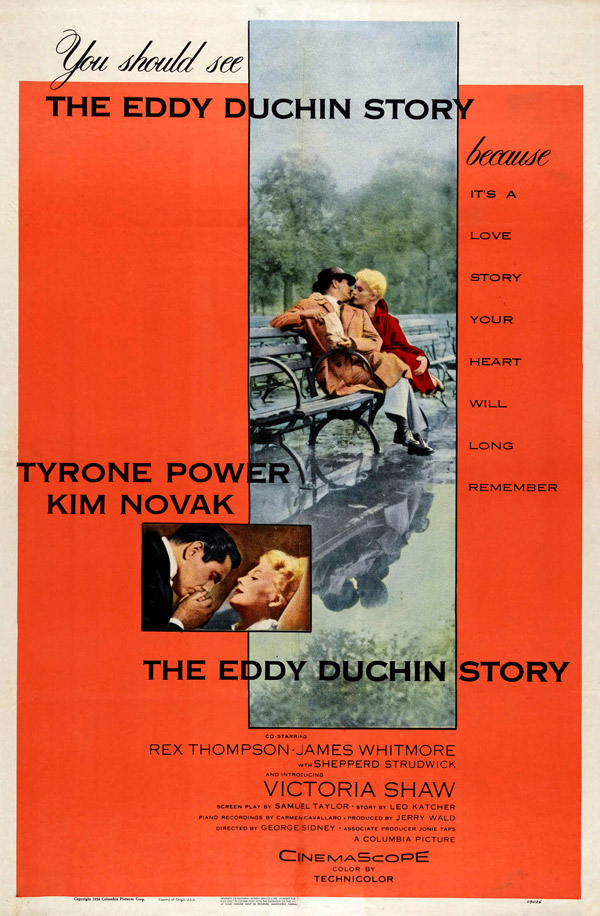
Rex Thompson was a popular child actor in the Hollywood of the 1950’s. He was born in 1942 in New York City. Among his more popular films were “Young Bess”, “The Eddy Duchin Story” and “The King and I” as the son of Deborah Kerr. His last acting role was in an episode of TV’s “The Fugitive” in 1966. His IMDB website here.
Whatever happened to the amazing young actor Rex Thompson, born on 14 December 1942
Thomson began his child-acting career in 1952 television series, Hands of Mystery.
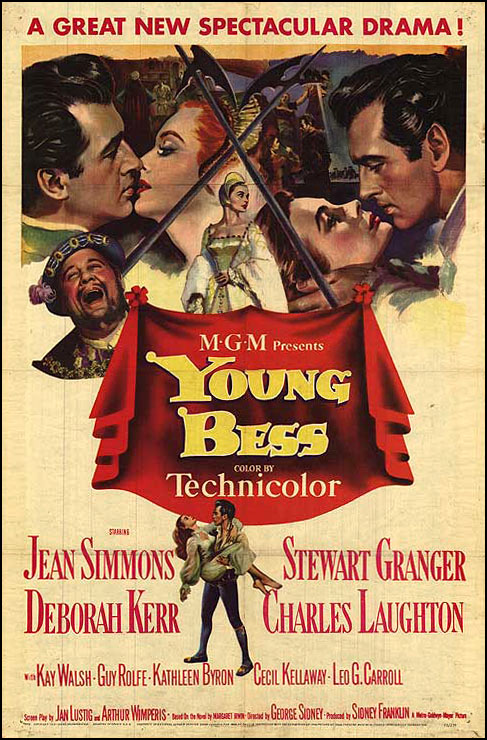
In 1953, he made his superb film debut in the underrated George Sidney-directed Young Bess. In 1956, played the character of Louis Leonowens in Walter Lang-directed film, The King and I. In both films, he starred alongside Deborah Kerr.
In the TV series Robert Montgomery Presents, he starred as David Copperfield (1953/4). Rex appeared with Greer Garson in Her Twelve Men (1954).
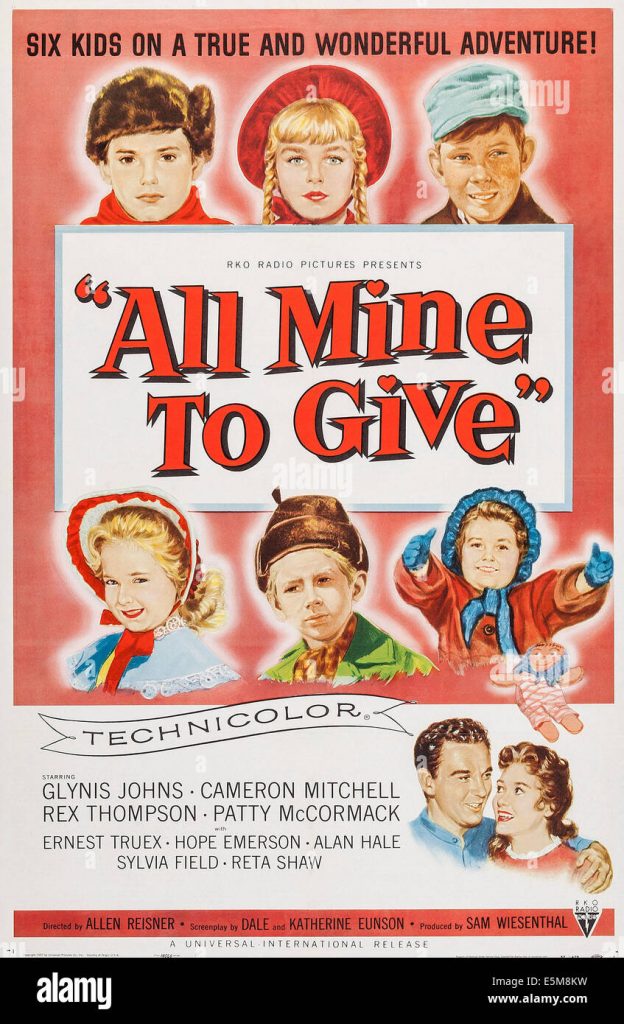
He was excellent as Tyrone Power’s son in The Eddy Duchin Story and terrific as the eldest son, whose dying mother asks that he find families for himself and his five siblings, in the tear-jerker All Mine To Give, with Glynis Johns and Cameron Mitchell.
There have been fewer than ten acting credits after that, a few of them unverified.Notably, he was in three Omnibus episodes ( one as Miles in The Turn of the Screw), in The DuPont Show of the Month ( The Prince and the Pauper), as a calculating teenage student in Studio One ( The Morning After) and an episode ( The Little Lame Prince)of Shirley Temple’s Storybook.
In 1963/4, he was in twelve episodes of The Doctors, and in 1966, appeared as a young concert violinist virtuoso in an episode of The Fugitive.
Also in 1966, he was apparently in a film, Lamp at Midnight, with a terrific cast including Hurd Hatfield, Kim Hunter, Melvyn Douglas and Michael Hordern. He was way down the cast list, as The Page.
Thereafter, his career seems to have stalled, or he chose a different path in life.
In the subsequent years, there have been attempts to find him, without success.
In 2021, I wrote about him and was delighted when Jandolin Marks commented : ‘ He lives in Pennsylvania, has a grown daughter and grandchildren. He is a very kind man
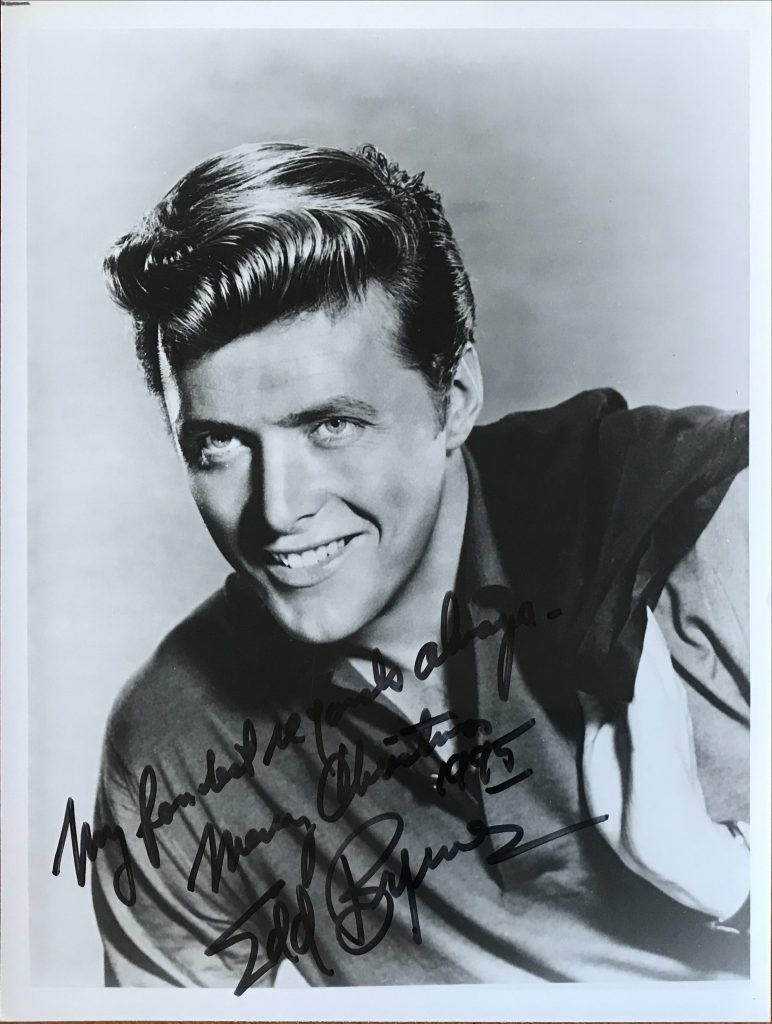
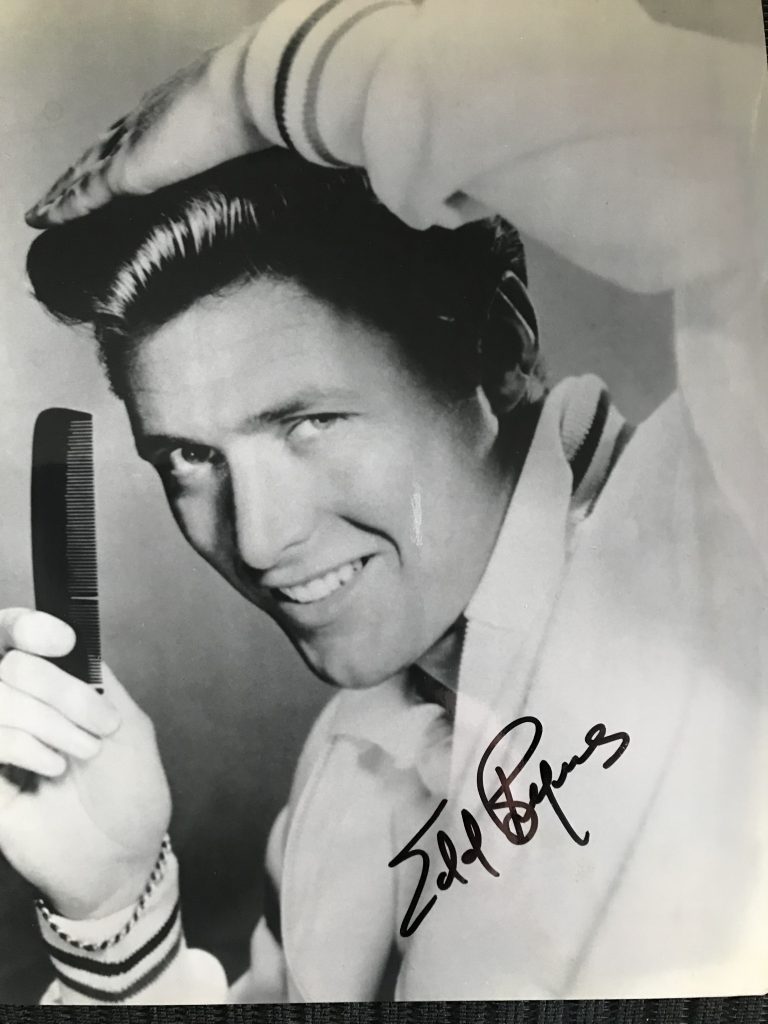
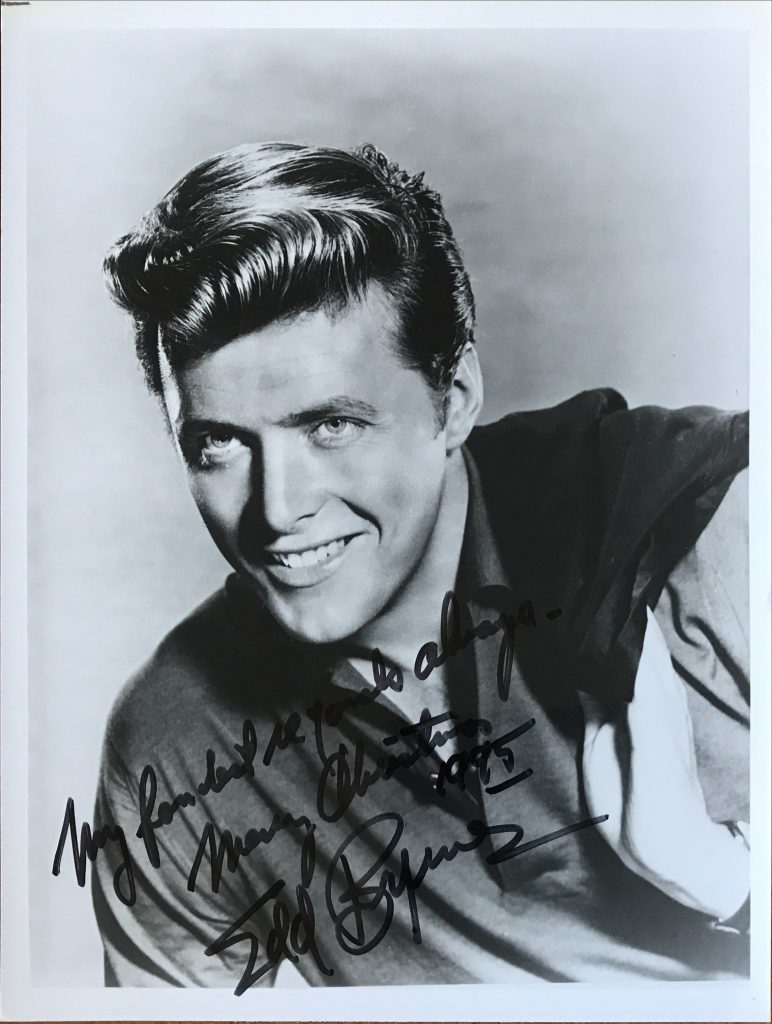
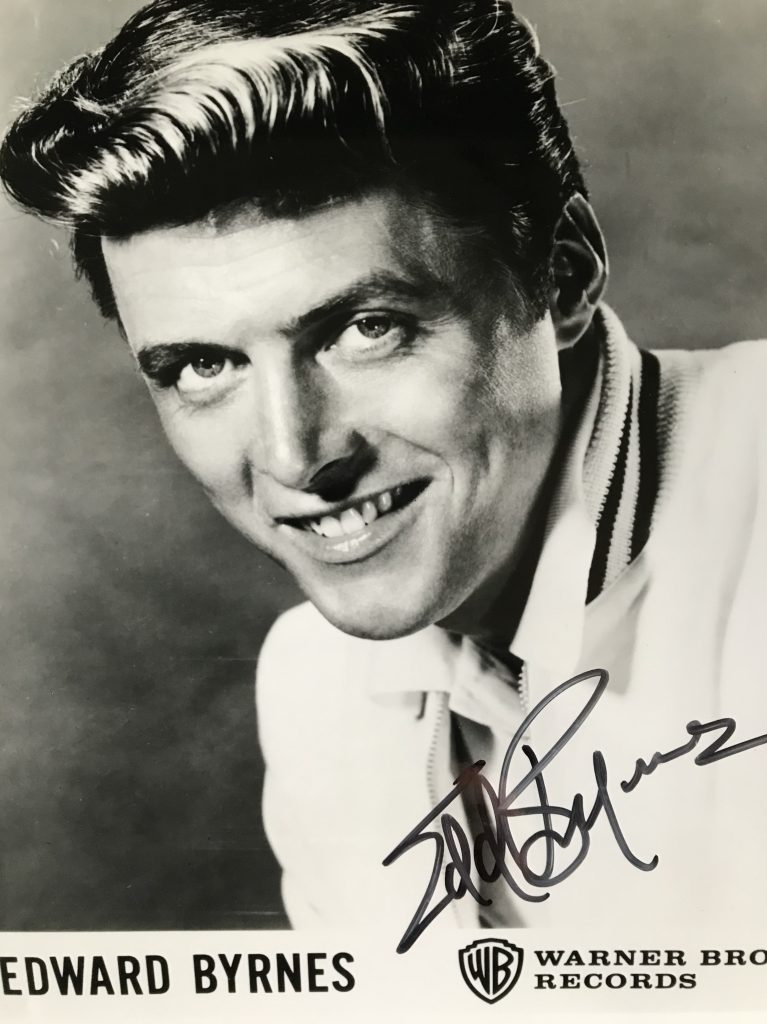
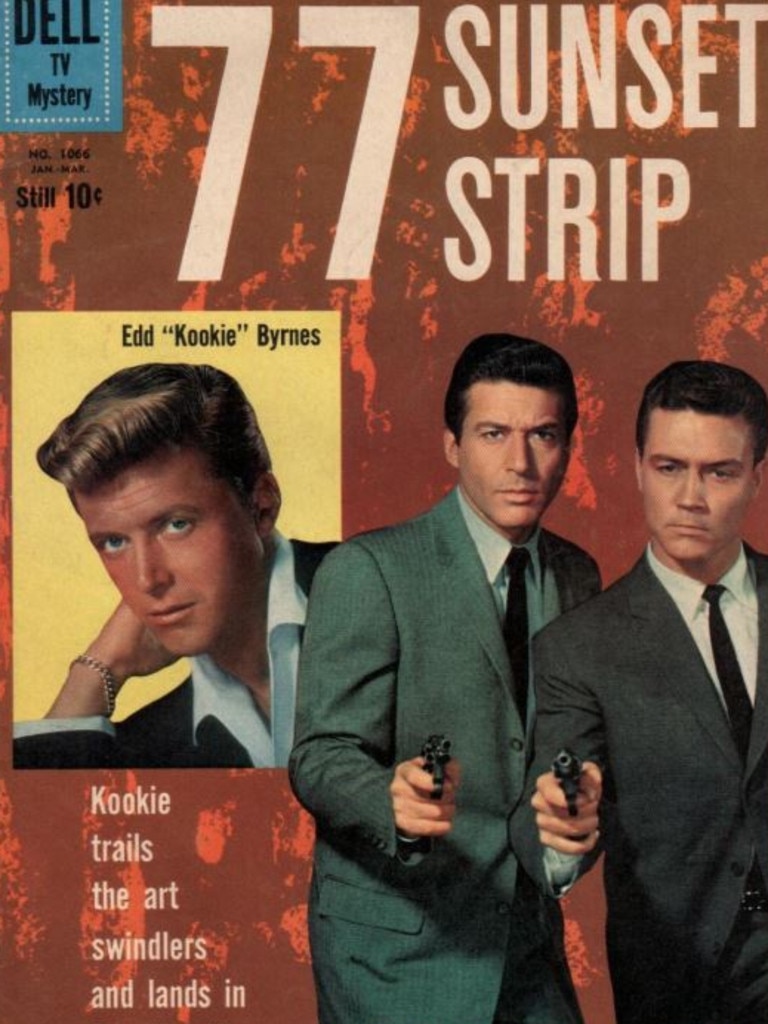
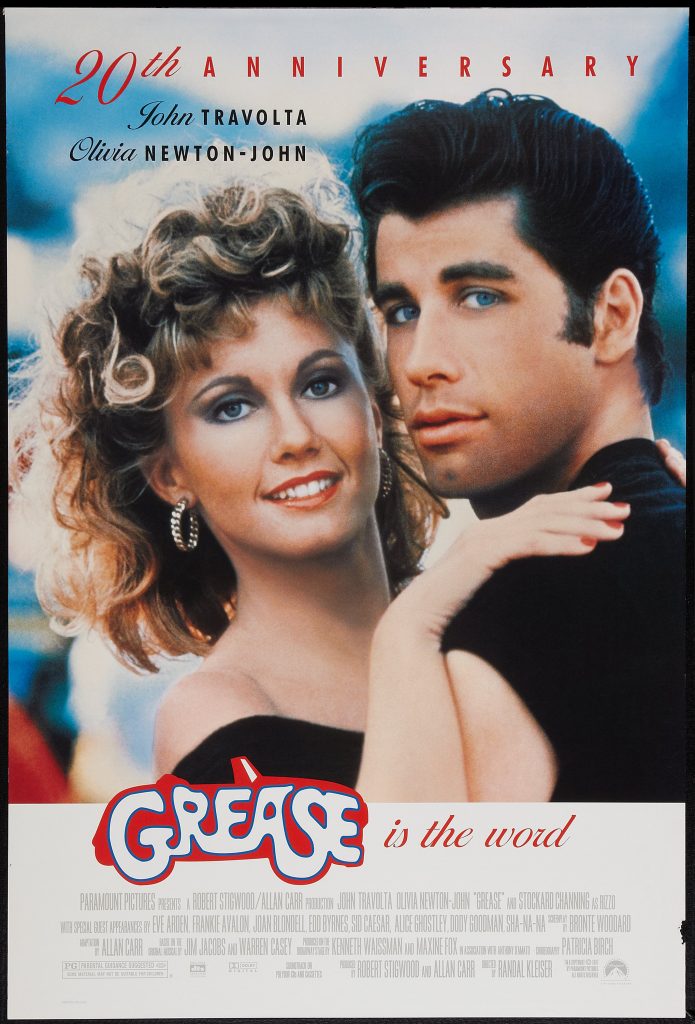
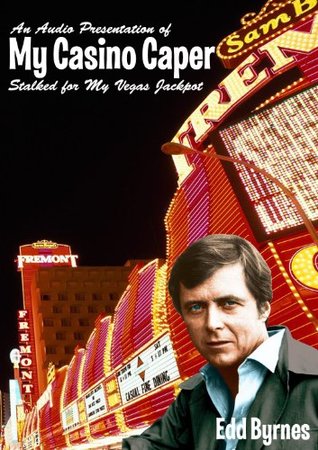
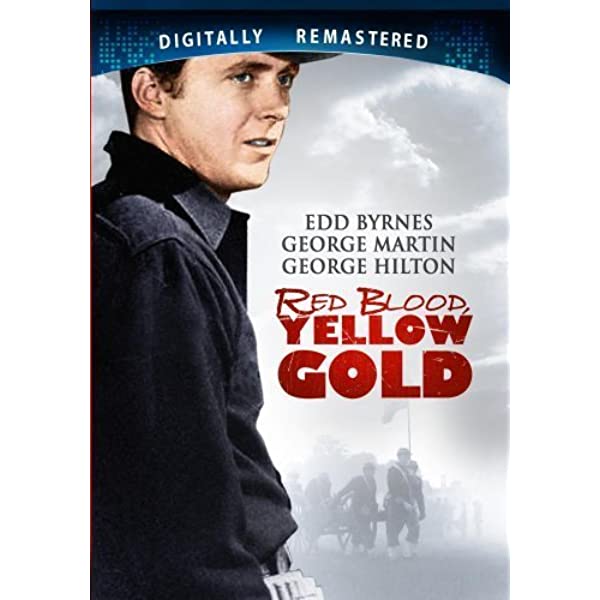
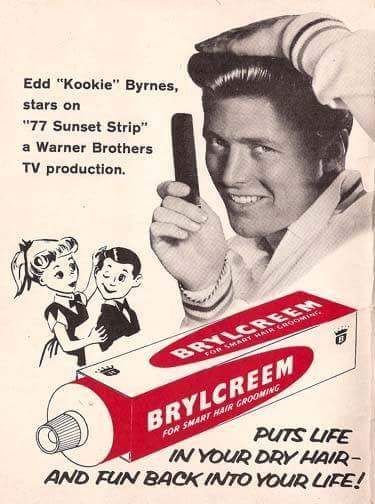
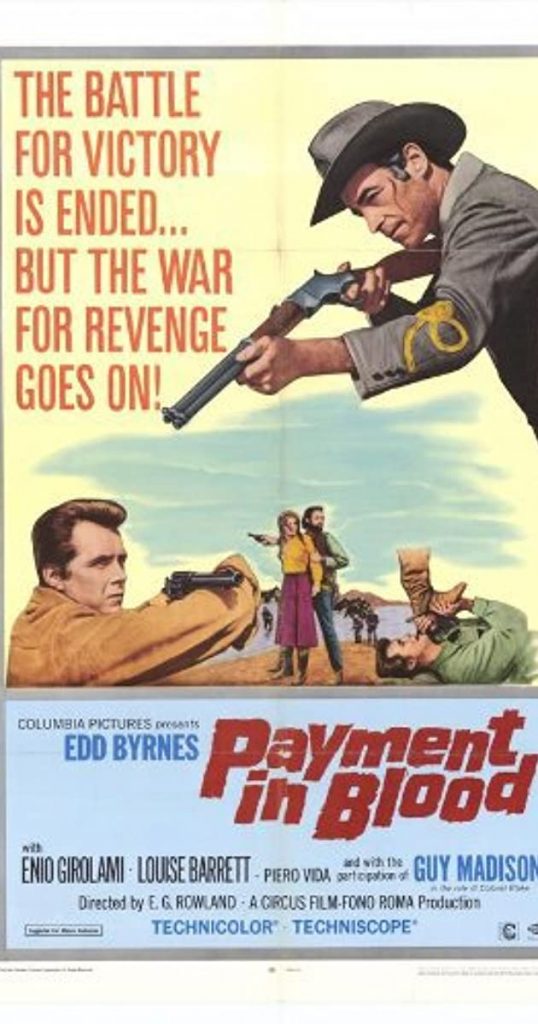
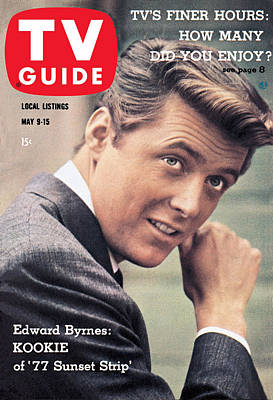
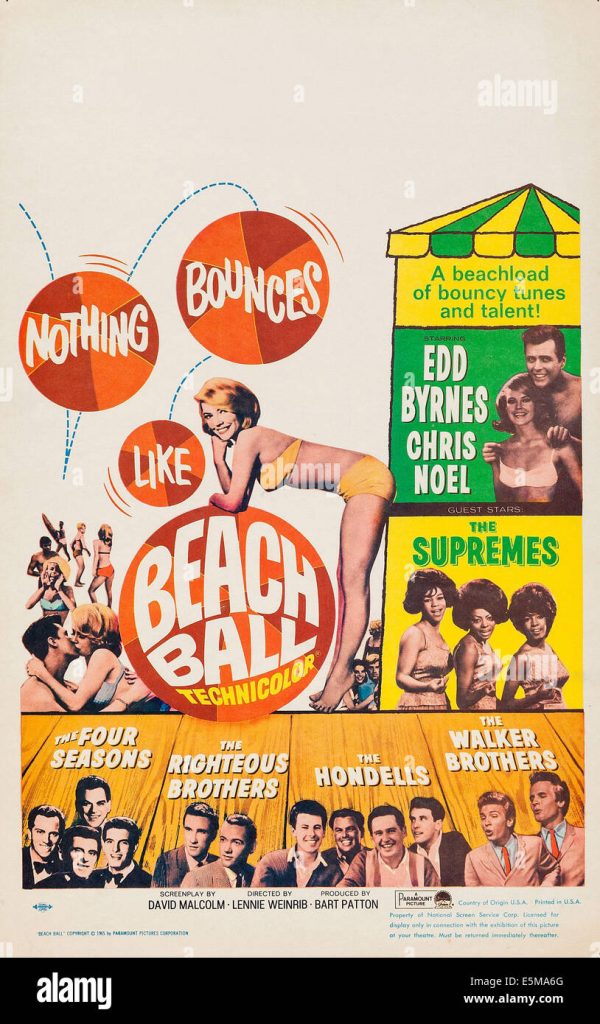
Edd Byrnes is best known for his role as “Kookie” in the late 1950’s series “77 Sunset Strip” which he made with Efrem Zimbalsit Jnr and Roger Smith. He was born in 1933 in New York City. He had a Warners Brother’s contract and starred in “Darby’s Rangers” , “Marjorie Morningstar” and “Yellowstone Kelly”. In 1978 he starred with John Travolta and Olivia Newton-John in “Grease” which restored his popularity. An interview on Youtube here. Edd Byrnes died in 2020.
Brian Roper was born in 1929 in Doncaster, Yorkshire. He made his film debut in 1947 in the British movie “Just William’s Luck”. He screen tested for the role of Dickon in 1949’s “The Secret Garden” with Margaret O’Brien and Dean Stockwell. He won the part and travelled to to Hollywood to make the movie. Although he was nearly twenty at the time, he made a convincing 13 year old. Although the film was a popular success and is now regarded as a classic, he returend to Britain and made films there throughout the 1950’s. He returned to Hollywood to work as a film agent and then went into sales training. He died in Livermore, California in 1994.
Wikipedia entry:
Roper played youthful parts during his career due to his young physique, which included his appearance as the animal-loving young boy “Dickon” with a pet fox in The Secret Garden (1949), starring Margaret O’Brien. The Secret Garden was prepared for MGM’s 25th anniversary as a film studio and was heavily promoted in 1949–50. Newspapers would claim his age as 14 at the time. He appeared this age but was actually five years older. Roper was noted for his reddish hair and some freckles.
Born in Doncaster, Roper left England at age 19 on American Overseas Airlines from London on 5 October 1948 via a Constellation plane (number N90922, Flagship Denmark) after his selection for The Secret Garden from more than 100 boys who were tested during a six-month search.
Brian Roper
He arrived in Washington, D.C. in the United States on 6 October 1948,[note en route to MGM-British Studios in Culver City, California (now Sony Pictures Studios) who had paid for his trip. Work on the film began 4 October 1948 and lasted to late November, during a period of excitement regarding the appearance of a predawn bright long-tailed comet (1948 L, aka the Eclipse Comet of 1948) becoming visible. He lived in both Britain and California, depending on shooting locales, and acted for 24 years.
Following his acting career he went briefly into the film industry agency business. Roper married Barbara L. Eaton (aka Barbara L. Stafsudd), in Los Angeles when he was 38 years old, on 30 December 1967. Shortly after this marriage, Roper established the Roper School of Real Estate in 1968 in Hayward, California and served as its lecturer and instructor. He would go on to train new salespeople while serving as director of sales training for Red Carpet Realtors in Northern California.
Career overview
Brian Roper (1929 – 1994) was a British‑born actor best remembered for his role as the gentle, animal‑loving boy Dickon in MGM’s The Secret Garden (1949). Though his screen career was relatively brief, he represents a distinctive tradition of post‑war child and teenage performers whose natural sincerity and working‑class charm lent warmth to British and American family films of the late 1940s and early 1950s.
Early life and entry into acting
Born Brian T. Roper in Doncaster, Yorkshire, Roper began performing as a child in Britain around 1936 . He was a red‑haired, freckled youth frequently cast for his wholesome looks and unaffected manner. By the mid‑1940s he was appearing in stage and film work, including Just William’s Luck (1947), playing one of the mischievous “Outlaws” in Richmal Crompton’s comic schoolboy stories . His slight build and youthful face meant he continued to portray boys well into his late teens, a pattern noted throughout his career.
Hollywood breakthrough: The Secret Garden (1949)
Roper was chosen by MGM from more than 100 boys tested to play Dickon Sowerby in the Technicolor version of The Secret Garden, starring Margaret O’Brien and Dean Stockwell. Although he was nineteen during production, publicists billed him as fourteen (; ).
As Dickon—the Yorkshire lad who coaxes life back into the locked garden and into the repressed hearts of its children—Roper offered an unaffected warmth that perfectly matched the story’s tone. His gentle northern accent, sunny innocence, and rapport with animals made the performance the emotional center of the film. Modern critics still cite it as one of the most endearing portrayals of pastoral youth in post‑war family cinema. Reviewer Liam Bluett called it “the role for which he is best remembered… charmingly truthful,” noting how he “made a convincing thirteen‑year‑old” despite being five years older .
Continued film and television work (1950s)
After The Secret Garden, Roper alternated between British and American projects for roughly a decade. In England he appeared in films such as William Comes to Town (1948), The Naked Heart (1950), The Rainbow Jacket (1954), and The Girl on the Pier (1957) . He also featured in the Cold‑War adventure Hong Kong Confidential (1958), one of his last credited screen appearances.
Throughout, he remained confined to wholesome, boyish roles—often youths with moral clarity or cheerful vigor. His looks, once an advantage, began working against him as he transitioned into adulthood: audiences and producers struggled to accept the eternally freckled “boy next door” as a romantic lead or complex adult.
By 1960 he had retired from acting after roughly two dozen film and television credits .
Post‑acting career
Roper briefly worked in the film‑agency business before reinventing himself in a completely different field. After relocating permanently to California, he founded the Roper School of Real Estate in Hayward in 1968, lecturing and training new salespeople while serving as Director of Sales Training for Red Carpet Realtors in Northern California (; ). He remained successful in this profession until his death in Antibes, France in 1994 at age 64 .
Acting style and screen persona
Naturalism and modesty: Roper’s performances are striking for their lack of theatrical affectation. He delivered dialogue plainly, with open expression and emotional clarity.
Physical sincerity: His slight, wiry build and shy smile gave a palpable vulnerability that suited youth‑centered moral tales.
Ethical warmth: Even when playing mischievous characters, he projected decency and curiosity rather than guile.
Limitations: The same innocence that made him effective as Dickon circumscribed his range. Lacking the dramatic technique or transformation of later child stars, he struggled to transition to adult roles once his youthful aura faded.
Critical assessment
Strengths - Enduring emblem of post‑war innocence; a performer of sincerity and grace. - A key contributor to The Secret Garden’s enduring popularity. - Exemplary professionalism during Hollywood’s promotional frenzy around MGM’s 25th Anniversary; despite misreporting of his age, he handled publicity gracefully.
Limitations - Typecast as the eternal boy, leaving little room for adult complexity. - Lack of major theatrical or leading‑man opportunities limited his artistic growth.
Historical placement Roper belongs to a generation of transitional performers bridging pre‑war stage training and post‑war screen naturalism. In The Secret Garden, his open, unforced acting anticipated the credibility later prized in television realism. While his filmography is modest, his contribution to one of MGM’s classic children’s films ensured a quiet immortality within its genre.
Legacy
Today Brian Roper’s name surfaces primarily in discussions of The Secret Garden, yet that single performance encapsulates the virtues of earnest natural acting in children’s cinema. He represents a poignant case of early success and later reinvention—an actor who, having given a memorable embodiment of youthful goodness, gracefully exited stage and screen for a new life elsewhere. His story illustrates both the short half‑life of child stardom and the enduring power of one perfectly cast role to secure a place in film history ( ).
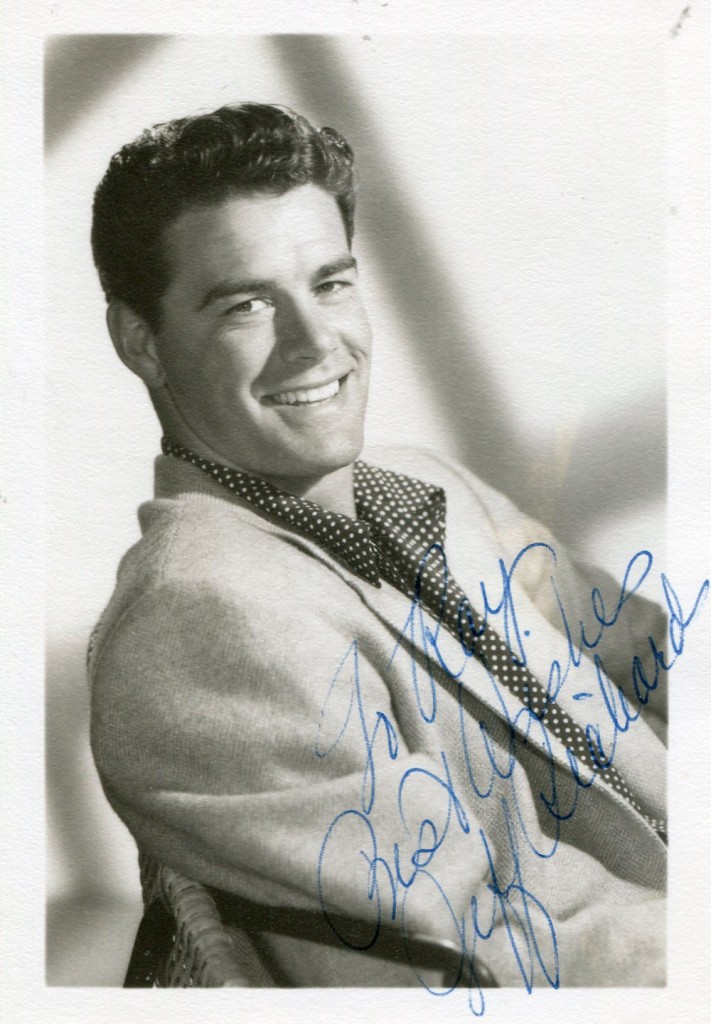
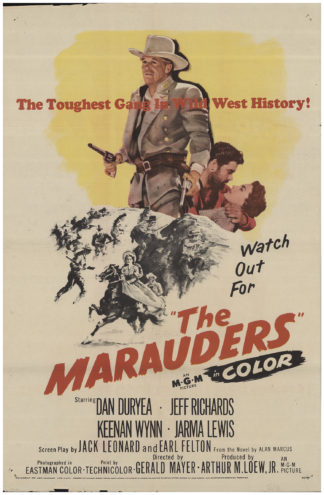
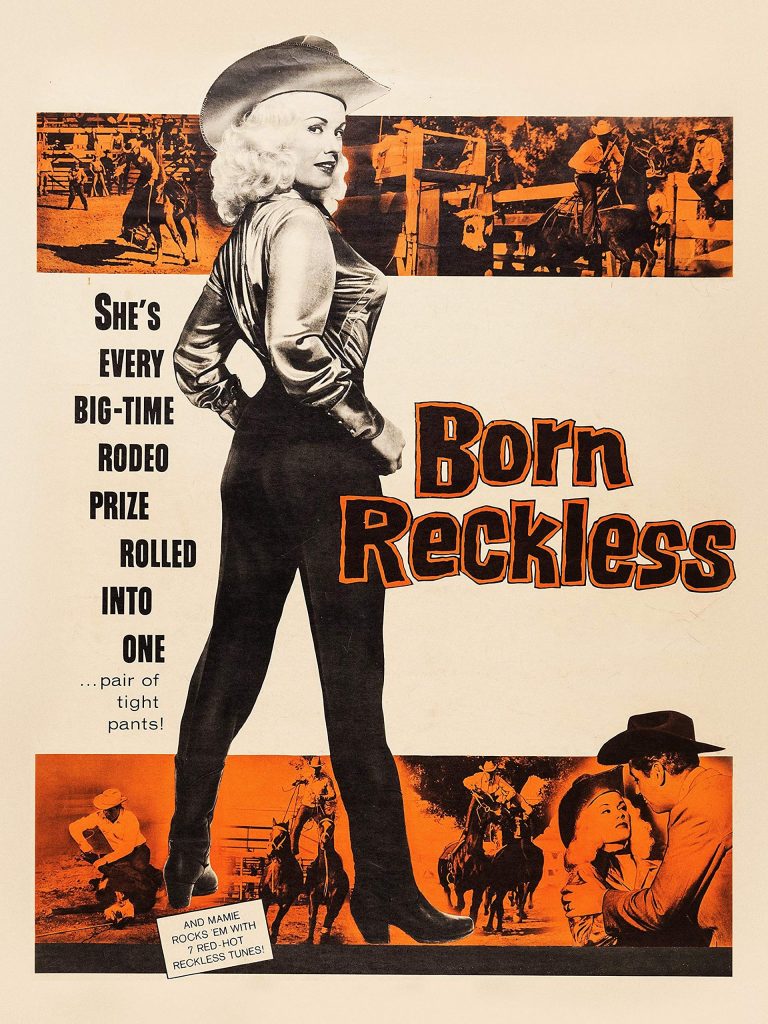
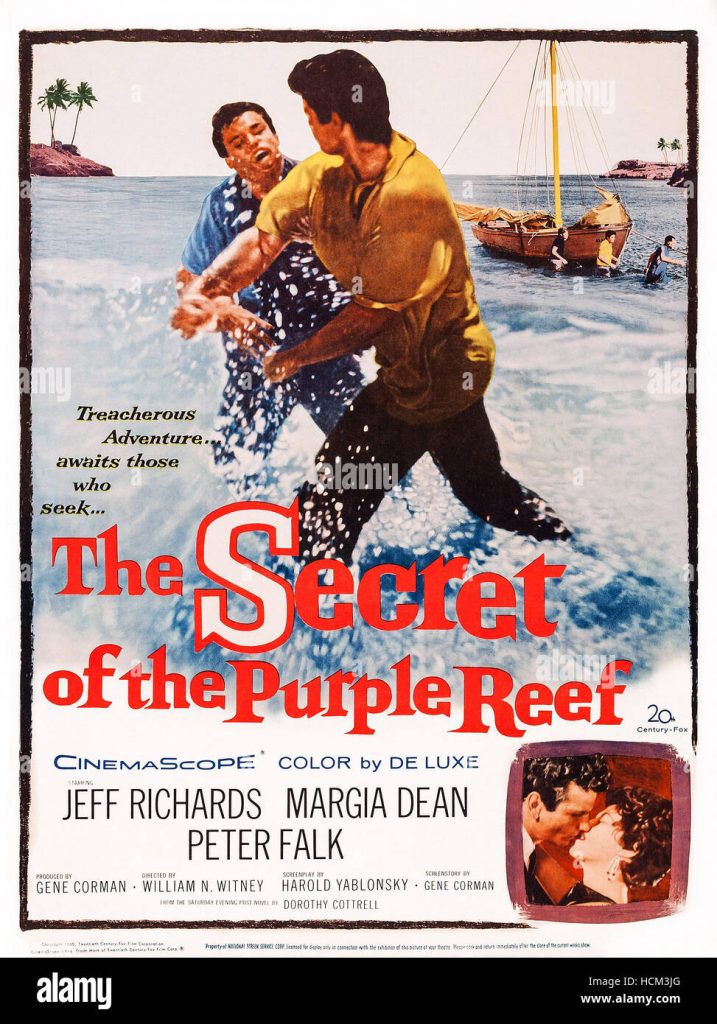
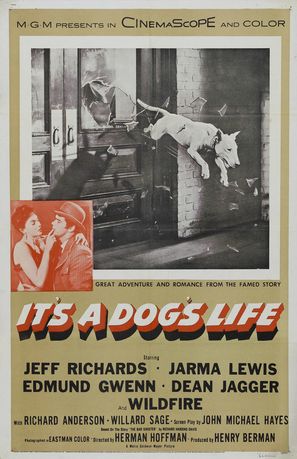
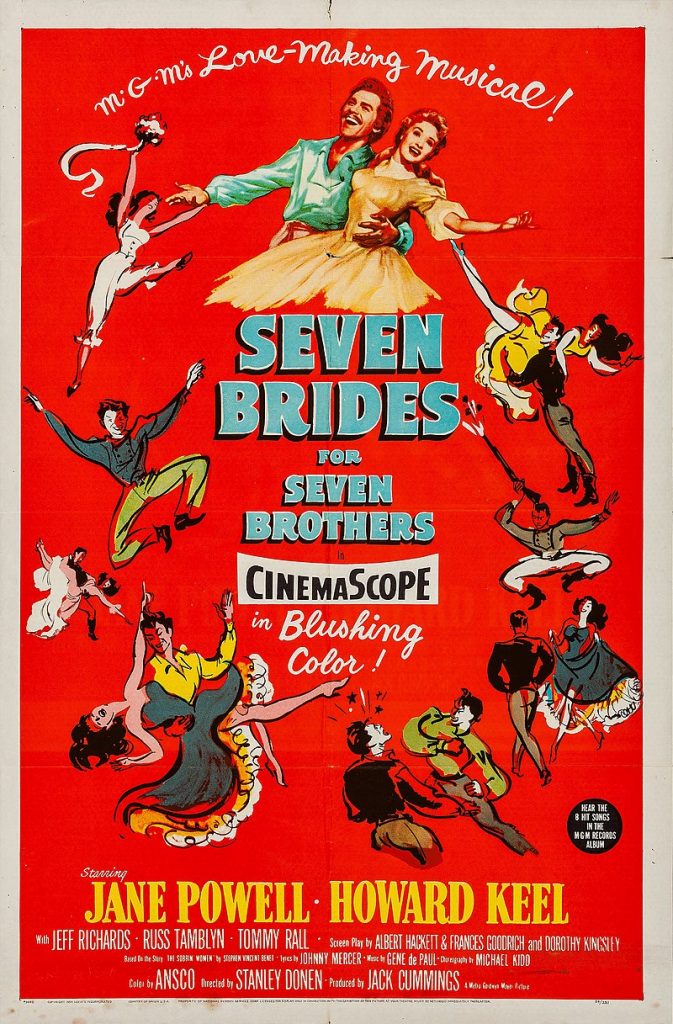
Jeff Richards was an American baseball player who became an actor. he was born in 1924 in Portland, Oregon. His best known role was in “Seven Brides for Seven Brothers” in 1954. His other films include “Many Rivers to Cross”, “Don’t Go Near the Water” and “Born Reckless”. Jeff Richards died in 1989. TCM Page on “Seven Brides for Seven Brothers” can be viewed here.
After the war was over, Richard Taylor played shortstop for the Portland Beavers for a year and then for the Salem Senators; however, his baseball career ended after he tore his ligament and was unable to play anymore. He then went to Hollywood to pursue a film career. He got a screen test at Metro-Goldwyn Mayer and the studio changed his name to Jeff Richards. The former baseball player started his acting career during the late 1940s with mostly bit parts, but in 1950 he played a strong role, displaying his baseball skills as Bob Langdon in Kill the Umpire and later as Dave Rothberg in Angels in the Outfield (1951).
In 1958, on television, Richards played the title role in the NBCwesterntelevision seriesJefferson Drum, the story of a crusading journalist, with Eugene Martin portraying his young son. The series was cancelled after twenty-six episodes aired over two seasons.[1]Richards guest-starred in numerous television series, including the role in 1961 of Jubal Evans in the episode “Incident of His Brother’s Keeper” of the CBS western Rawhide. His last role was in 1966 as Kallen in the film Waco.
He was married to Vickie Taylor and they had one child before they divorced. Jeff Richards died on July 28, 1989, aged 64 from unknown causes. He is buried at Riverside National Cemetery in Riverside, California.
Jeff Richards (1924–1989): The Athletic MGM Star
Originally a minor league baseball player (shortstop for the Portland Beavers), Richards transitioned to acting after an injury. He was the classic “beefcake” star of the mid-century, valued for his physicality and rugged charm.
Career Highlights
The Breakthrough: His most enduring role was as Benjamin Pontipee in the classic musical “Seven Brides for Seven Brothers” (1954).
Critical Accolade: He won a Golden Globe for Most Promising Newcomer in 1955, tying with George Nader and Joe Adams.
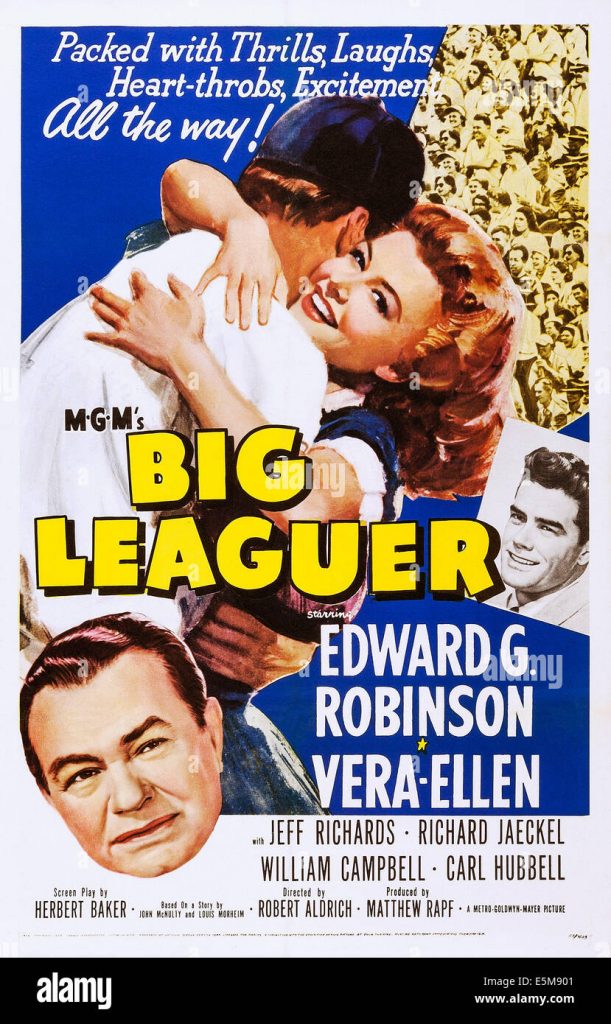
The “Baseball” Actor: He leveraged his real-life skills in films like Angels in the Outfield (1951) and Big Leaguer(1953).
Television: He starred in the NBC Western series Jefferson Drum (1958–1959), playing a crusading frontier editor.
Critical Analysis
Richards represented a specific studio-system archetype: the “High-Potential Athlete.” While he possessed “tremendous personal charm” (according to MGM head Dore Schary), his career was a victim of timing. As the studio system began to crumble in the late 50s, the “rugged leading man” market became oversaturated.
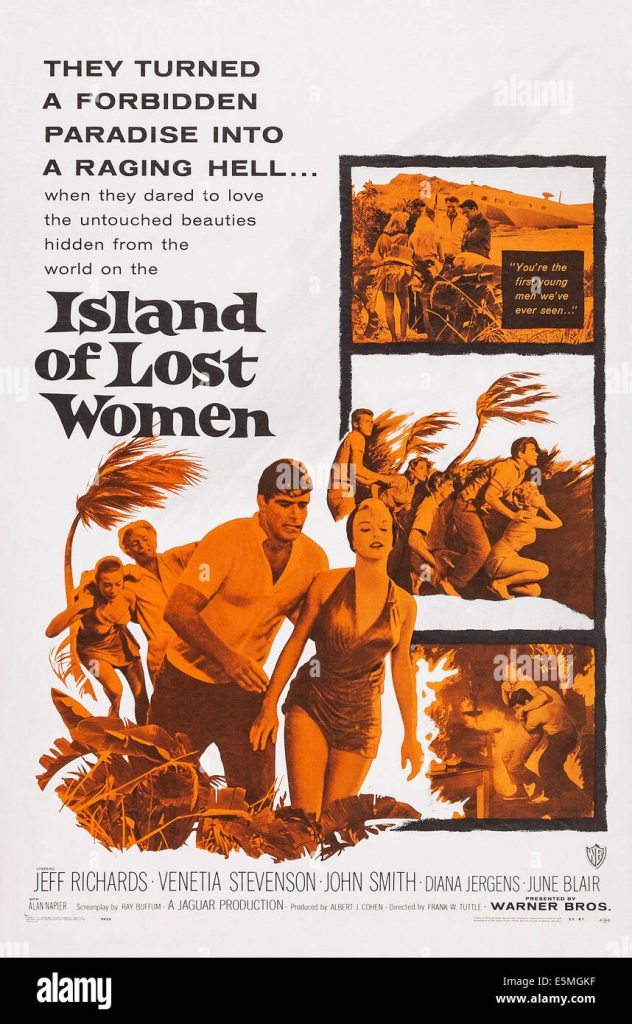
Richards lacked the transformative range of contemporaries like Marlon Brando, leading to his relegation to low-budget “B-movies” (e.g., Island of Lost Women) and guest spots on TV Westerns like Rawhide before retiring from the screen in 1966
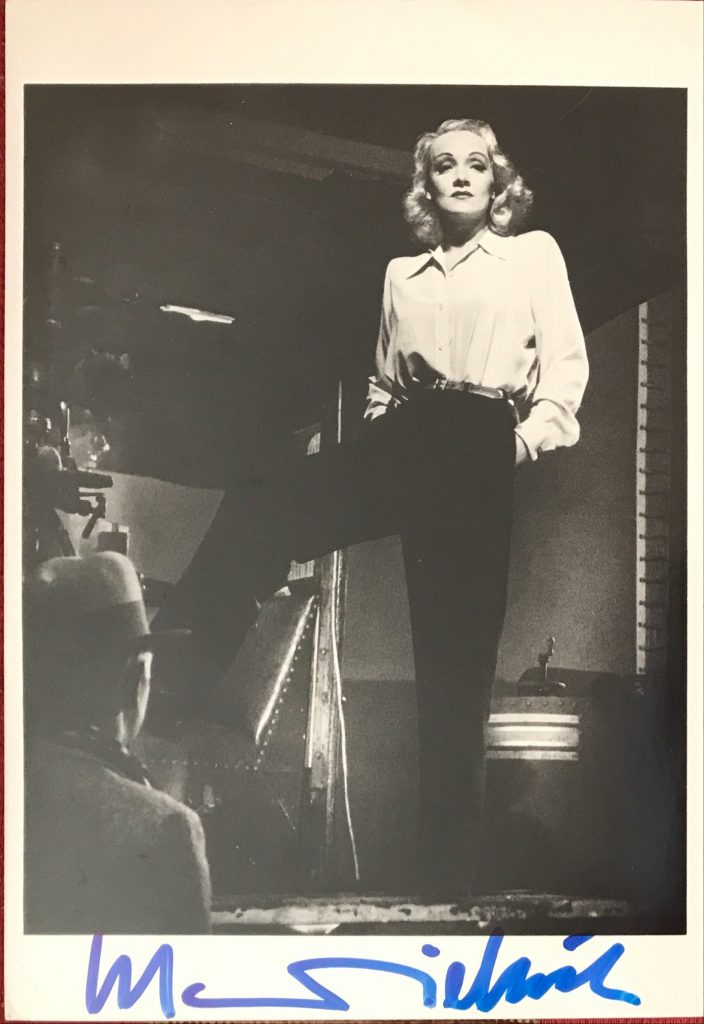
Marlene Dietrich was born in Berlin in 1901. She began her career in German silent film and then won international acclaim as Lola-Lola in “The Blue Angel” with Emil Jannings. The popularity of the film led to offers from Hollywood and Dietrich went to the U.S. in 1930. She had a contract with Paramount Studios and her first Hollywood film was “Morocco” opposite Gary Cooper. Her most famous movies include “Shangai Express” with Anna May Wong, “The Garden of Allah” with Charles Boyer and “Knights Without Armour” with Robert Donat. In later life she had a very successful career as a concert performer. She had a late career movie success with “Witness for the Prosecution” with Tyrone Power. On retirement she went to live in Paris and became reclusive in her later years. Marlene Dietrich died in 1992 at the age of 90. Her website can be accessed here.
Daily Telegraph obituary in 1992.
Celebrated for her roles in The Blue Angel and Destry Rides Again, she appeared in 50 films between 1923 and 1964. She was the last well-known survivor of the Kaiser’s Germany.
Her theme tunes – Falling in Love Again, Johnny, The Boys in the Back Room and Where Have All the Flowers Gone? – haunted generations; her rendering of Lilli Marlene became as popular as that of Lile Andersen which was the favourite of British and German troops in the Second World War.
Husky-voiced and fair-haired, with heavily-lidded eyes, she displayed a cool ‘don’t care’ expression of world-weary disillusion. In an age when stardom is transitory, she proved enduring.
Marlene Dietrich was a postmistress at dispensing her own dangerous blend of glamour and carried through life the aura of Berlin’s smoky decadence.
Blonde, Teutonic, with high-chiselled cheekbones, she mesmerised her audiences by innuendo, letting her vacant eyes drift over the room, pulling in her heavily magenta-ed lower lip, displaying all the artifice of languor.
Famed for playing prostitutes in films, her world was never one of convention. She yearned for all that was artificial.
As a singer she was a polished performer, alternatively lazy in mood and powerfully aggressive, almost paramilitary. Her delivery of Johnny was both breathy and erotic and she manipulated the microphone in a manner nothing less than sexual.
No one who saw her spectacular entrance down the winding staircase of London’s Café de Paris in the 1950s is ever likely to forget it. Sparkling from head to foot with no shortage of white mink, she did not so much descend as glide down like a serpent, disdainful, glamorous, a little threatening.
Far from modest, Dietrich relished a record of the applause at these performances. One evening she played this to Noël Coward, explaining: ‘This is where I turn to the right . . . Now I turn to the left.’ When the first side ended, she threatened to turn the record over. Coward erupted: ‘Marlene, cease at once this mental masturbation]’ Marlene Dietrich was born in Berlin on Dec 27, 1901, the younger daughter of a Prussian officer, Louis Dietrich, and his wife, Josephine Felsing, who came from a family of jewellers. She spent part of her childhood in Weimar.
Her father died in 1911 and her mother, who then married Eduard von Losch, a Grenadier colonel, played a big part in her life. She was brought up in the Germanic tradition of duty and discipline. The theatre was in her blood from the start; she worshipped Rilke, read Lagerlof and Hofmannsthal and knew Erich Kästner by heart.
She was keenly musical and learned the violin. From 1906 to 1918, she attended the Auguste Viktoria School for Girls in Berlin. At the end of the First World War, she was enrolled in the Berlin Hochschule fur Musik but stayed only for a few months.
The family soon fled to the country, where her stepfather died. In 1919, she entered the Weimar Konservatorium to study the violin. She hoped to become a professional violinist but a damaged wrist destroyed this hope.
In 1920, Marlene was back in Berlin. The next year she auditioned for the Max Reinhardt Drama School and played the widow in The Taming of the Shrew.
A string of minor parts followed. Marlene lived in virtual penury, worked in a glove factory and acted and danced. It was a depressing way of life.
In 1923, she played Lucie in The Tragedy of Love, on the set of which she met her husband, Rudi Sieber. It was by no means love at first sight but Marlene began by being in great awe of him. They married and had a daughter, Maria (born in 1925).
The marriage did not last. Sieber was overshadowed by Dietrich, who described him as a ‘very, very sensitive person’. She bought him a farm in California where he dwelt with his animals, a mistress (until she went mad), her blessing and her financial support; he died in 1976.
In the late 1920s, Dietrich acted and filmed in various productions in Berlin, including I Kiss Your Hand, Madame.
In 1930, she was discovered by the Viennese director, Josef von Sternberg, who detected in her the raw sexuality of a seductive vamp and brought her to fame in his film The Blue Angel. Von Sternberg transformed her from a rather brawny girl with the slight air of a female impersonator into a creature of glamour.
Even in The Blue Angel, as she sits on the barstool as the seductive temptress Lola-Lola, luring the salivating professor to his doom, her legs appear more well covered than is now considered fashionable. Von Sternberg recognised the conflict within her: ‘Her personality was one of extreme sophistication and of an almost childish simplicity,’ he wrote.
Originally Dietrich had been rejected for the part as ‘not at all bad from the rear but do we not also need a face?’ But then von Sternberg saw her by chance in the Georg Kaiser play ZweiKrawatten. She was gazing bored at the action on stage and he was drawn to her disdain and poise.
Despite her success, UFA did nor renew her contract and so she signed with Paramount and emigrated to Hollywood. There she made several memorable films for von Sternberg.
Morocco, in which she played a cabaret star in love with a French legionnaire (Gary Cooper), included a scene in which Dietrich, dressed as a man, plants an unchaste kiss on a girl’s mouth in a café. The film brought massive fame and Marlene contrasted the adulation she received off camera to the virtual martyrdom she endured under von Sternberg’s precise and relentless direction.
Dishonoured followed, in which she played an Austrian spy, who fixed her make-up in the reflection of an officer’s sabre and applied her lipstick while a German officer ranted at her. The firing squad then shot her dead.
She was described as a ‘vamp with brains and humour’ and was paid pounds 50,000.
Von Sternberg was harshly criticised in his later films for presenting Dietrich in a series of lavish films in which she was little more than a clothes-horse, bedecked in black lace, feathers and jewels – Shanghai Express, Blonde Venus, The Scarlet Empress and The Devil is a Woman.
These criticisms von Sternberg repudiated. Dietrich displayed a mixture of self-love and outward tenderness, her egoism and Germanic ruthlessness belied by a sweetly feminine mouth and high, serene forehead. In 1933, at von Sternberg’s suggestion, she played Lily Czepanek in Song of Songs for Reuben Mamoulian. Von Sternberg ended his association in 1935 (following which his career floundered).
He concluded: ‘When we first met, her pay was lower than that of a bricklayer and, had she remained where she was, she might have had to endure the fate of a Germany under Hitler.’ Whatever the pains of the association, it had been a rewarding one.
Dietrich’s association with von Sternberg was the subject of an analytic study, In the Realm of Pleasure, concerning von Sternberg, Dietrich and the ‘masochistic aesthetic’.
The author, Gaylyn Studlar, concluded: ‘Dietrich is frequently mentioned as an actress whose screen presence raises questions about women’s representation in Hollywood cinema. She has also acquired her own cult following of male and female, straight and gay admirers.
‘The diverse nature of this group suggests that many possible paths of pleasure can be charted across Dietrich as a signifying star image and across von Sternberg’s films as star vehicles.’
Kenneth Tynan also pursued this theme in a celebrated profile of the star: ‘She has sex but no particular gender. Her ways are mannish: the characters she played loved power and wore slacks and they never had headaches or hysterics. They were also quite undomesticated. Dietrich’s masculinity appeals to women and her sexuality to men.’
Inevitably, the arrival of Dietrich was seen in Hollywood as that of a blonde Venus in the vanguard of Garbo, the Sphinx. There was some similarity in the style of the films (Mata Hari then Dishonoured, Queen Christina in comparison to The Scarlet Empress).
It was generally accepted that if any rivalry existed, Garbo won without effort. A remarkable composite photograph by Steichen exists portraying Dietrich and Garbo together but, if they ever met, it was an unsatisfactory encounter.
At the behest of Mercedes de Acosta, with whom both were romantically linked, they made the wearing of slacks by females fashionable. In 1936, Dietrich starred opposite Cary Grant in Desire and then played in The Garden of Allah, Knight Without Armour and Angel. In 1939, came her energetic portrayal of Frenchy, the Wild West saloon keeper in Destry Rides Again.
This classic included Dietrich’s spirited wrestling with James Stewart, and she gave tongue to the evocative song The Boys in the Back Room, while bestriding the bar.
In the early years of the Second World War, there were more films for more directors. Meanwhile, in Germany Hitler destroyed all but one copy of The Blue Angel and went to great lengths to try to lure Dietrich to his cause.
But in 1943 she assumed the honorary rank of Colonel in the American Army and made radio broadcasts and personal appearances on behalf of the American war effort. In 1944, she joined the United States Overseas Tour and paid extensive visits to the Allied troops in Europe.
Dressed in an elegant version of military uniform, her blonde hair as flowing and feminine as ever, her mission was to boost morale, to entertain and to encourage Allied victory. There is film footage of Dietrich greeting the Fifth Army with a jaunty ‘Hello, Boys]’ and congratulating them on their singing.
Jean-Pierre Aumont was a fellow actor she met in wartime Italy and who was destined to become a lifelong friend. He summed up her role: ‘In the eyes of the Germans, she is a renegade who serves against them on behalf of the American Army. They wouldn’t hesitate to shoot her.
‘Under the veneer of her legendary image, Marlene Dietrich is a strong and courageous woman. There are no tears. No panic. In deciding to go sing on the field of battle, she knew the risks she was taking and assumed them courageously, without bragging and without regrets.’
Dietrich’s line was that her former countrymen had fallen under the tyranny of Hitler and that this evil must be removed. Jean Cocteau was sad that in the early post-war years she never sang Falling in Love Again in the original German in fear of being associated with the Germany of 1940.
Of her war-work, she said: ‘This is the only important work I’ve ever done.’
The elder sister Dietrich never mentioned (Elisabeth) was incarcerated in a prisoner-of-war camp in Germany and her mother died in 1945. Marlene returned to America after the cessation of fire. She was awarded the Legion of Honour and the American Medal of Freedom.
Dietrich made many further films, including Billy Wilder’s A Foreign Affair, Hitchcock’s Stage Fright, and Witness for the Prosecution for Wilder. In this she played two roles, one a Cockney, her unlikely accent coaxed by a despairing Noël Coward.
She also appeared in Touch of Evil for Orson Welles and Stanley Kramer’s Judgment at Nuremberg opposite Spencer Tracy. In 1956, she contributed a memorable cameo to Mike Todd’s Around the World in 80 Days, perched on a stool Destry-style.
Dietrich also ran her own radio spy series, Café Istanbul, on America’s ABC Network. But it was as a singer that her later career blossomed.
By now in her early 50s, she began by compèring a Madison Square benefit arranged by her daughter. Out of a wish not to sit on an elephant, she took the role of ringmaster in top hat, tailcoat and tights. This white tie look was to be a lasting trademark.
Dietrich made her debut at the Sahara, Las Vegas, in 1953 and the next year took London by storm at the Café de Paris. She was always glamorously dressed and accompanied by an orchestra of 22 men.
Thereafter she made long tours all over the world, invariably accompanied by Burt Bacharach. Though she relied heavily on Bacharach, whom she described as her ‘arranger, accompanist and conductor’, she was always her own agent.
In 1960, Dietrich made a controversial return to Germany where she was greeted by a bomb on one side and Willy Brandt on the other. She toured Israel the same year and visited Russia in 1964.
In 1967, she made her debut on Broadway. Dietrich’s one-woman show carried on until the late 1970s when accidents recurred with startling frequency.
She broke so many bones that comedians used to mimic her, singing ‘Falling off stage again . . .’ Finally, she broke her thigh in Sydney in 1976 and gave up.
As Dietrich grew older, she seemed to defy the passing years. Cecil Beaton watched her 1973 Drury Lane performance on the television and dissected her ruthlessly: ‘Somehow she has evolved an agelessness.
‘The camera picked up aged hands, a lined neck and the surgeon had not be able to cut away some little folds that formed at the corners of her mouth.
He had, however, sewn up her mouth to be so tight that her days of laughing are over . . .’
Beaton admired her dress, her ‘huge, canary yellow wig’ and her showmanship: ‘She has become a mechanical doll, a life-size mannequin. The doll can show surprise, it can walk, it can swish into place the train of its white fur coat. The audience applauds each movement, each gesture, the doll smiles incredulously – can it really be for me that you applaud? ‘Again a very simple gesture – maybe the hands flap – and again the applause, and not just from old people who remembered her tawdry films but the young find her sexy.
She is louche and not averse to giving a slight wink, yet somehow avoids vulgarity.
‘Marlene is certainly a great star, not without talent, but with a genius for believing in her self-fabricated beauty, for knowing that she is the most alluring fantastic idol, an out-of-this-world goddess or mythological animal, a sacred unicorn.’
Beaton attributed her success entirely to perseverance and an ability to magnetise audiences into believing she was a phenomenon, just as she has mesmerised herself into believing in her own beauty. An experienced critic of such creatures, Beaton could find no chink in her armour.
Despite himself, he sat enraptured. He almost concluded that she was ‘a virtuoso in the art of legerdemain’ but then he wrote: ‘ ‘You know me,’ Marlene is fond of saying. Nobody does because she’s a real phoney. She’s a liar, an egomaniac, a bore.’
It was to the music of Falling in Love Again that Dietrich bade the world a spirited farewell in Paris: ‘Je dois vous dire adieu, parce que c’est fini.’
Sparkling in sequins and surrounded by flowers, she glided off stage, bowing low, clenching and unclenching her hands as though casting a spell over the audience, returning for more applause and, finally, clinging to the curtain.
At length, she disappeared behind it by degrees with a parting wave to the besotted audience.
Her last film appearance was in 1978 as the glamorously veiled Baroness von Semering in Just a Gigolo with David Bowie, in which she intoned the title song. She was still high cheekboned but the power had gone from her voice.
The myth of Marlene lived on and the rumours of her loves – with Jean Gabin, Ernest Hemingway and others – were long discussed. She moved between her apartment in the Avenue Montaigne and a flat at 993 Park Avenue. In her ABC book, she declared: ‘A man at the sink, a woman’s apron tied around his waist, is the most miserable sight on earth.’
As for pouting, she wrote: ‘I hate it but men fall for it, so go on and pout.’
Dietrich was not only a star. She was a nurse to many friends, a cook to her grandchildren and, in reality, there was much about her that was hausfrau-ish. Kenneth Tynan described her as ‘a small eater, sticking to steaks and greenery but a great devourer of applause’.
She was the author of an unforthcoming book of memoirs, in which she finally rejected the world: ‘What remains is solitude.’
In the years of her retirement, there were rumours that Dietrich was drinking or in a home. Ginette Spanier, the directrice of Balmain, suggested that she dine in a neighbouring restaurant and that they have a tame photographer on hand to record her evening out to show that all was well.
Spanier worried that Dietrich might not be equal to the challenge but, on the night in question, the Teuton emerged from her building as glamorous as ever. When the photographer approached, she pushed Spanier firmly out of the picture to ensure she was portrayed alone.
Every time the world thought they had heard the last of her, she was either photographed at an airport or issued a curious statement to the press.
Then, in 1984, she agreed to make a documentary film with Maximillian Schell (her co-star in Judgment at Nuremberg), without appearing on camera, her voice overriding the visual images in a mixture of German and English, ‘three days this and three days that,’ as she put it.
In that film, she was dismissive of many of her old films, judging them ‘kitsch’; she rejected women’s lib as ‘penis envy’; maintained that women’s brains weighed only half a man’s and declared: ‘Well, I’m patient and I’m disciplined and I’m good.’
In extreme old age, she remained in her Paris apartment and many friends from the past were bitter when their telephone calls were answered by Dietrich pretending to be the maid.
Jean-Pierre Aumont was a favoured friend, who submitted to many hours of telephone conversation, and occasionally took her out to tea at the Plaza Athenee opposite her apartment.
She rose at six, could sometimes be seen early in the morning, draped in Indian shawls, walking a tiny dog, accompanied by a minder. But officially she was never seen and, after Garbo’s death, became the world’s most celebrated recluse, existing on a diet of champagne, autographs, reading and the telephone.
Yet the lingering image must forever be her descent of the Café de Paris staircase, the club specially adorned with cloth of gold on the walls and purple marmosets swinging on the chandeliers and Noël Coward intoning his gracious, if clipped, introduction: Though we might all enjoy Seeing Helen of Troy As a gay cabaret entertainer, I doubt that she could Be one quarter as good As our lovely, legendary Marlene