

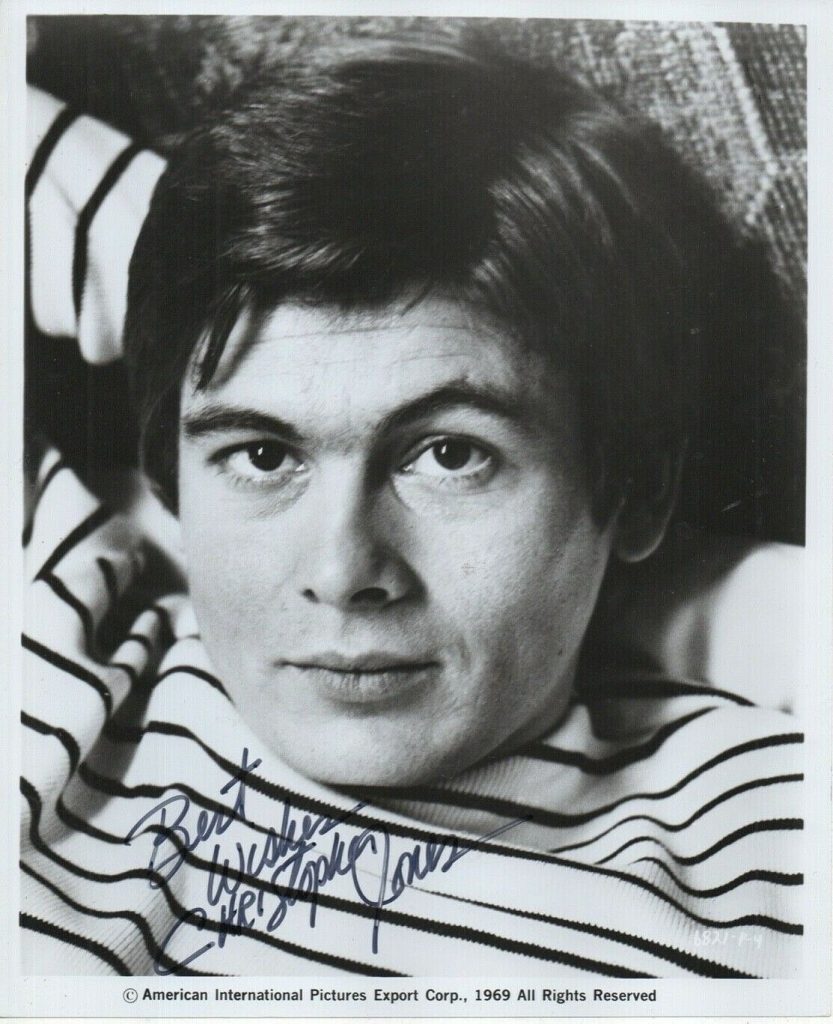
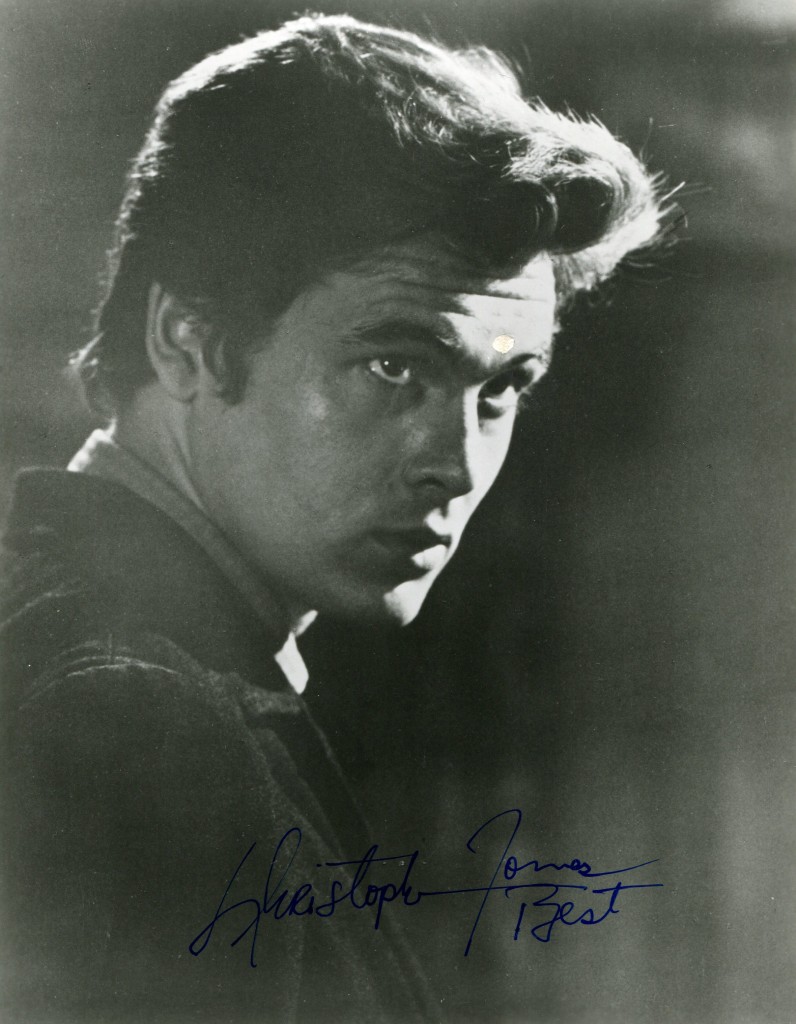
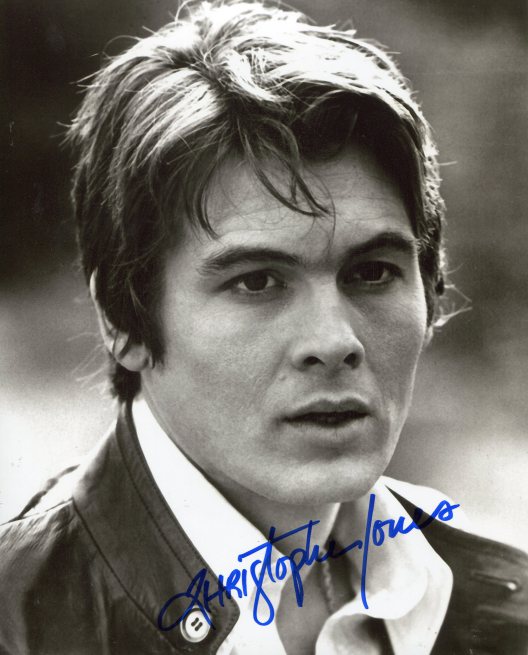
Christopher Jones obituary in “The Daily Telegraph” in 2014.
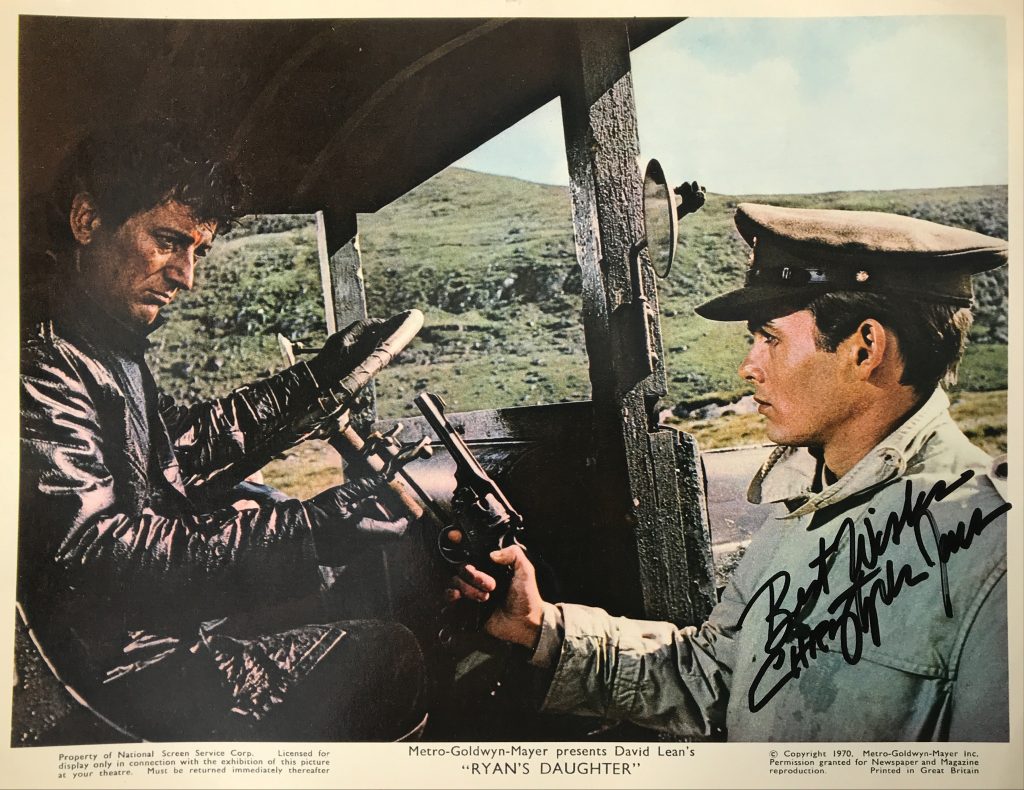
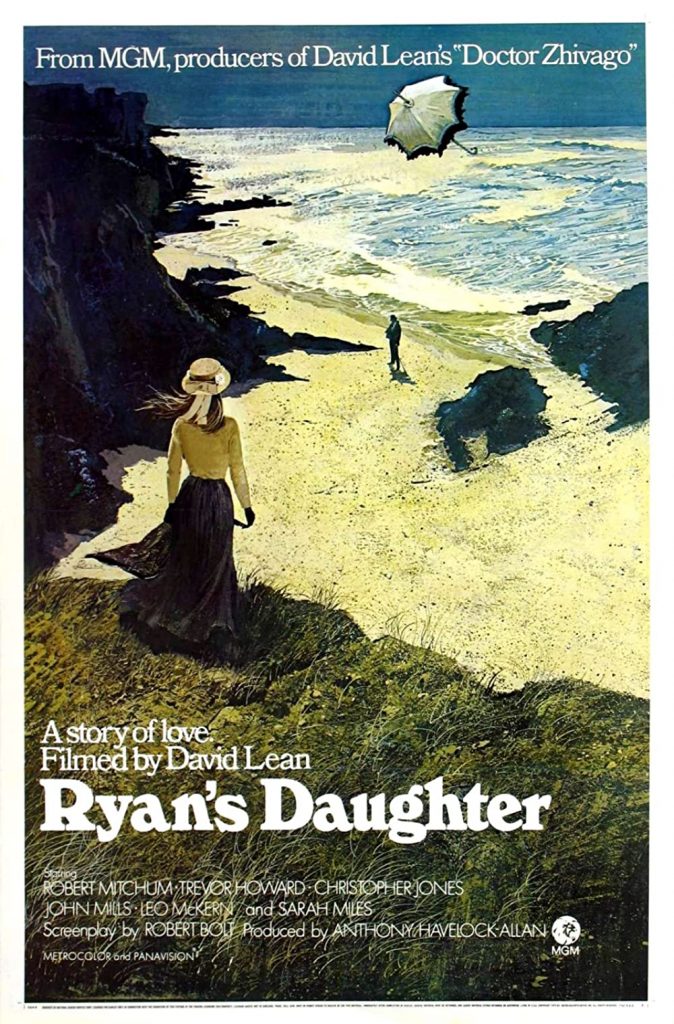
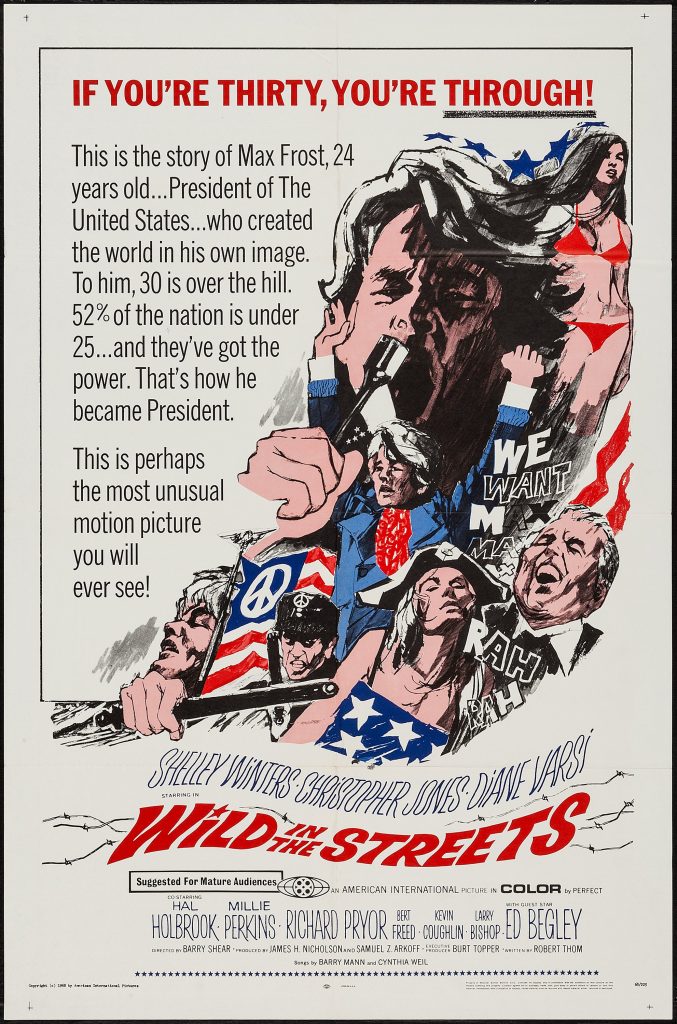
Christopher Jones was born in Jackson, Tennessee in 1941. He was very similar in looks to the late James Dean and was promoted as such on film and television. In 1965 he starred in “The Legend of Jesse James” on television. He starred in the cult classic “Wild in the Streets” in 1968. In Europe he made “The Looking Glass War”. In 1969 he came to the West of Ireland to make David Lean’s “Ryan’s Daughter” with Sarah Miles and Robert Mitchum. For whatever reason, this proved to be his last fim for years. He disappeared from public view. Quentin Tarentino tried to persuade him to return to film acting by offering him a role in “Pulp Fiction”. However he refused the offer. He did though make a comeback in 1996 in “Mad Dog Time”. This film seems to be his last film. He died in January 2014. His obituary in “The LA Times” can be accessed here.
“Telegraph” obituary:
Christopher Jones, the actor, who has died aged 72, was tipped in the late 1960s to be James Dean’s successor as the idol of the Odeons. However, on the cusp of international fame, and with a life riven by tragedy, he turned his back on Hollywood shortly after completing his most famous role, the romantic lead in David Lean’s Ryan’s Daughter.
He faced two major traumas. First, he struggled to cope with his mother’s mental breakdown and early death in a Tennessee asylum. Then, as big roles finally materialised and the industry lay at his feet, he was irrevocably disturbed by the murder of Sharon Tate (Roman Polanski’s wife) with whom he was having an affair. Shaken by the events and his mauling by the critics on the release of Lean’s epic, he retired from acting in 1970.
Billy Frank Jones (known professionally as Christopher) was born on August 18 1941 in Jackson, Tennessee, into straitened circumstances. His family lived above the grocery store where his father was a clerk. When Jones was four, his mother was confined to a psychiatric hospital, where she remained until her death in 1960. “I can remember her picking me up once,” recalled Jones, “but I can’t remember what she looked like.” He was passed between relatives and a boys’ home and frequently separated from his brother. In his early twenties he joined the Army but went Awol two days after signing up (for which he was briefly jailed).
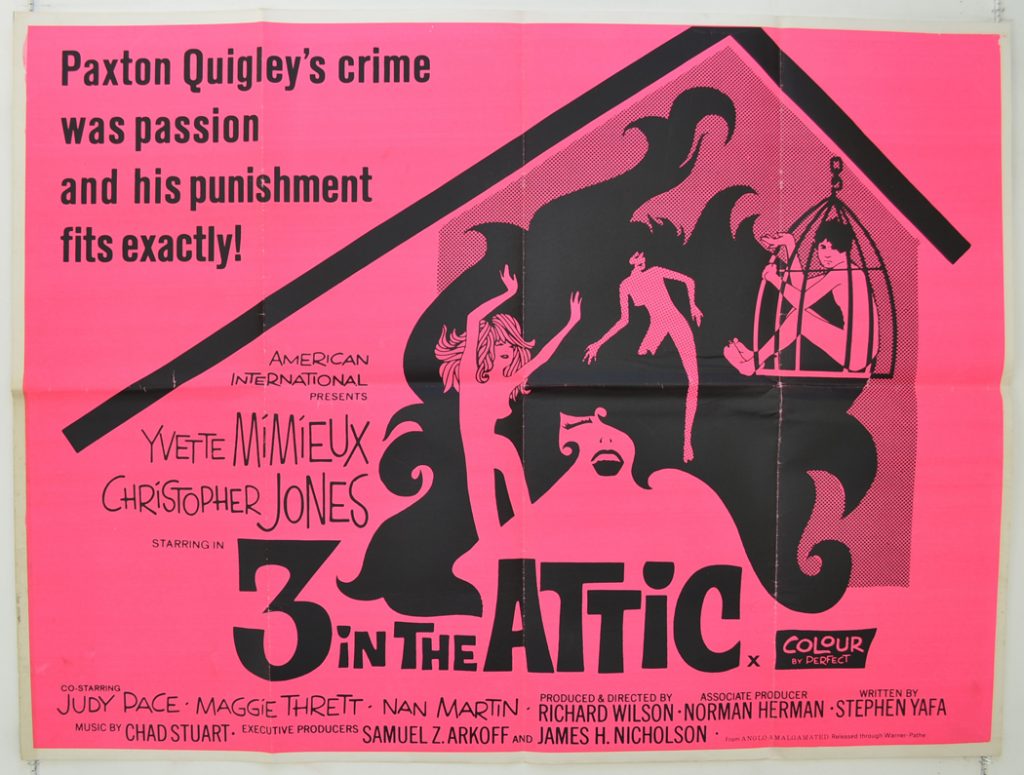
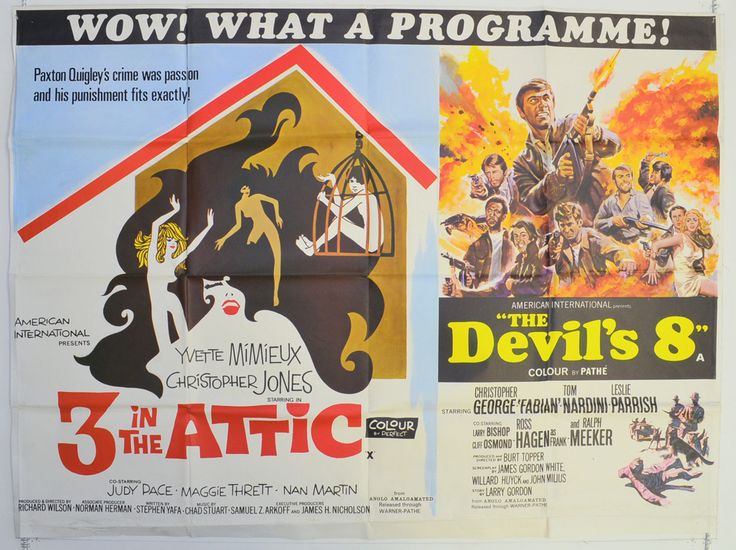
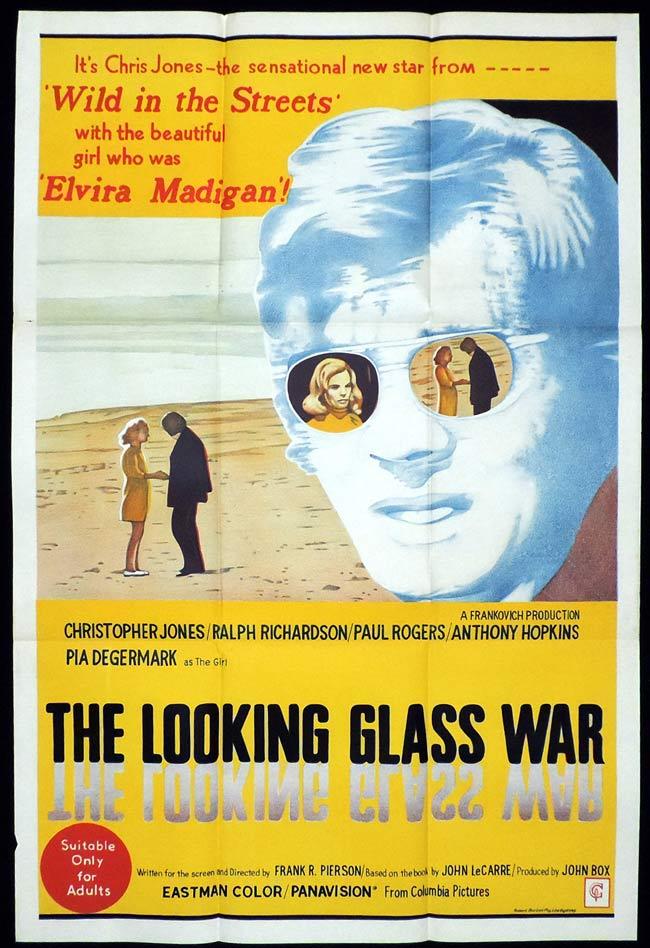
His acting trajectory was a blueprint for 1960s matinee stars. He lit up Broadway in The Night of the Iguana (1961) and auditioned at the celebrated Actors Studio in New York – he even married Susan Strasberg, the daughter of its director, Lee Strasberg. Television roles included the cult classic Wild in the Streets (1968) and the titular outlaw in The Legend of Jesse James (1965-66). Hollywood beckoned. He took on swinging farce in Three in the Attic (1968), and The Looking Glass War (1969) saw him in a John le Carré thriller.
This rise led to his role in Ryan’s Daughter. Jones played Major Randolph Doryan, the English commander of an Army base on Ireland’s Dingle Peninsula, who has an affair with Rosy (Sarah Miles), the wife of a local schoolmaster. The casting was unlikely. The shoot dragged on for a year and relations between Lean and Jones became strained. A lack of chemistry between Jones and Miles provoked the crew to drug him in order to “help matters” in the love scenes. The lack of authenticity didn’t end there – Jones’s dialogue was dubbed in post-production.
Celebrity, however, brought with it the attentions of some of the world’s most beautiful actresses, including Pia Degermark and Olivia Hussey. “My manhood is my soul,” he once claimed. Bette Davis disagreed. “I tried to jiggle her,” admitted Jones, “but I wasn’t sophisticated enough.” One of his lovers was the English starlet Susan George who, he recalled “came up to my apartment when I was staying in London and the next day moved her toothbrush in, so I had to say: ‘No way’”.
However, it was his short-lived affair with Sharon Tate that was to affect him most deeply. The pair’s dalliance took place in 1969 in Rome, where Jones was filming and Sharon Tate was visiting. She was pregnant with Polanski’s baby at the time and Jones was involved with Pia Degermark.
On the evening of August 9 1969, while Jones was filming in Ireland, members of Charles Manson’s cult broke into Sharon Tate’s home in Los Angeles and stabbed her to death. “I loved Sharon and she loved me,” stated Jones (who only talked of the events in 2007 “partly because I want to see if God strikes me dead”). When the news reached him at his hotel in Ireland he experienced a breakdown and, as Sarah Miles described in her memoir, his behaviour became increasing erratic.
After Ryan’s Daughter he gave up acting – “I realised I hated it” – and lived off the proceeds of his film career, taking up painting and sculpture. “He was big, and with the right person directing, he could still be as big as anybody,” noted Quentin Tarantino in the 1990s. However, in 1994 Jones turned down the director’s offer to play the part of Zed the “Gimp” in Pulp Fiction (1994). His then girlfriend called the role “disgusting”. A late return to acting in the 1996 crime caper Trigger Happy failed to fan the embers of a once blazing career.
Jones’s marriage was dissolved. He is survived by his partner, Paula McKenna, and seven children.
The above “Telegraph” ob ituary can also be accessed online here.
Gary Brumburgh’s entry:
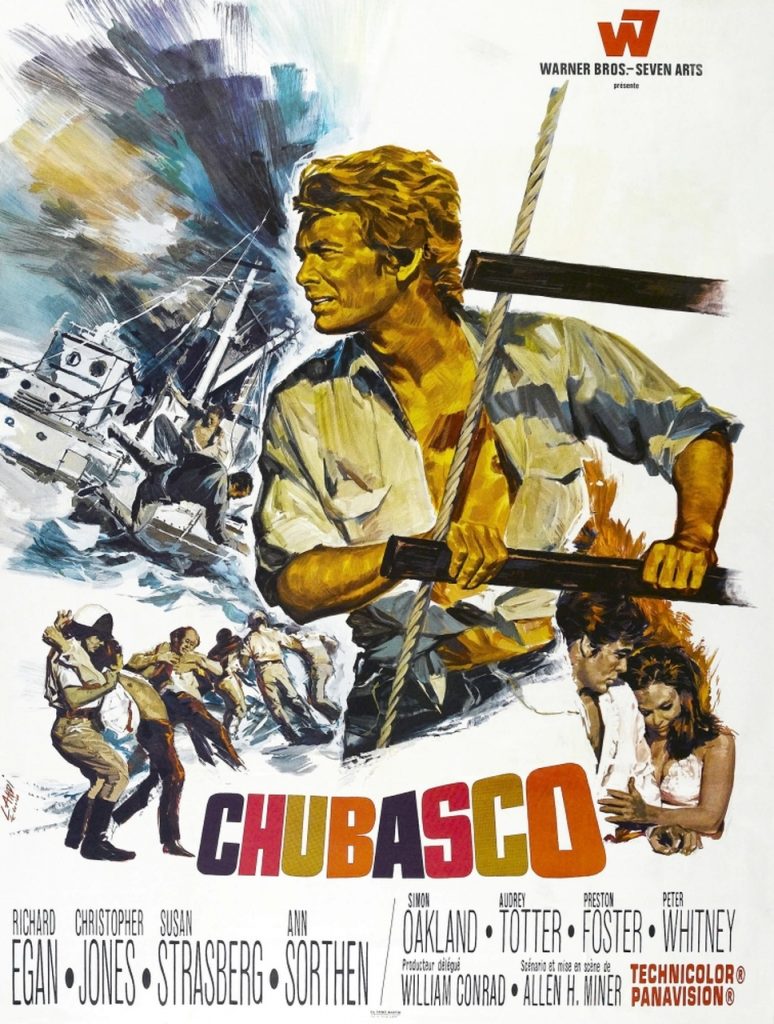
Christopher Jones was a brief cult star of the late 60s counterculture era and a would-be successor to James Dean had he wanted it. Born Billy Frank Jones amid rather impoverished surroundings to a grocery clerk in Jackson, Tennessee in 1941, his artist mother had to be institutionalized when Chris was 4. She died in a mental facility in 1960 and this was always to haunt him. Shifted back and forth between homes and orphanages and placed in Boys Town at one point to straighten out his life, Chris joined the service as a young adult but went AWOL two days later. After serving out his time on Governor’s Island for this infraction, he moved to New York and studied painting, meeting a motley crew of actors and artists. Friends were startled by his uncanny resemblance to James Dean – his brooding good looks and troubled nature were absolutely eerie. Encouraged to try out for the Actor’s Studio, he was accepted and eventually won a role on Broadway in “The Night of the Iguana” in 1961. He ended up marrying acting coach Lee Strasberg’s daughter, Susan, in 1965 but his erratic behavior sent her packing within three years. Chris’ undeniable charisma led him to Hollywood for a role in Chubasco (1967) with wife Susan, and then brief cult stardom in Wild in the Streets (1968) as a rock star who becomes president. This popular satire, in turn, led to international projects such as The Looking Glass War (1969) and Ryan’s Daughter (1970). But the trappings of success got to him. Numerous entanglements with the Hollywood “in crowd” took its toll, including those with Pamela Courson (Jim Morrison’s girlfriend at the time), the ill-fated Sharon Tate, one-time co-star Pia Degermark and Olivia Hussey (who rushed into a marriage with Dean Paul Martin shortly after Chris turned his back on marriage). The work load left him emotionally spent and Tate’s brutal murder left him devastated. He split the scene but ended up a victim of Sunset Strip drug culture. Little was heard of Chris until decades later when Quentin Tarantino offered him a part in Pulp Fiction (1994). The now reclusive and eccentric Jones refused the role, but this was not the case with a lower profile role in Mad Dog Time (1996) a couple of years later. This proved to be only a minor comeback or not has yet to be determined.
– IMDb Mini Biography By: Gary Brumburgh / gr-home@pacbell.net