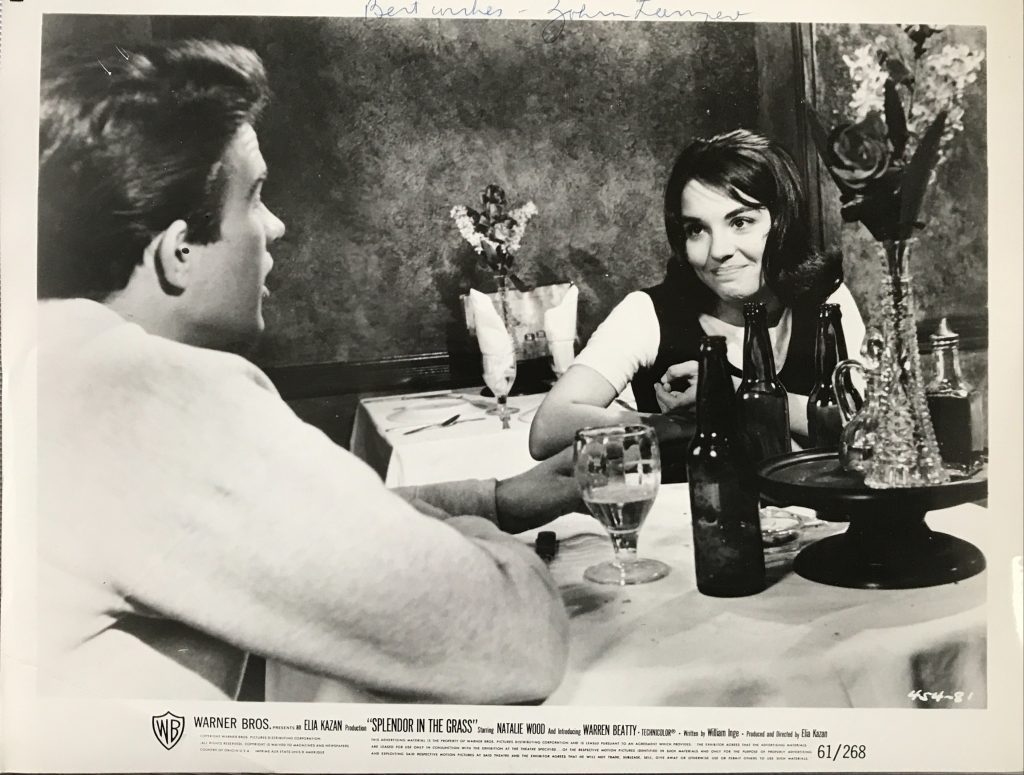
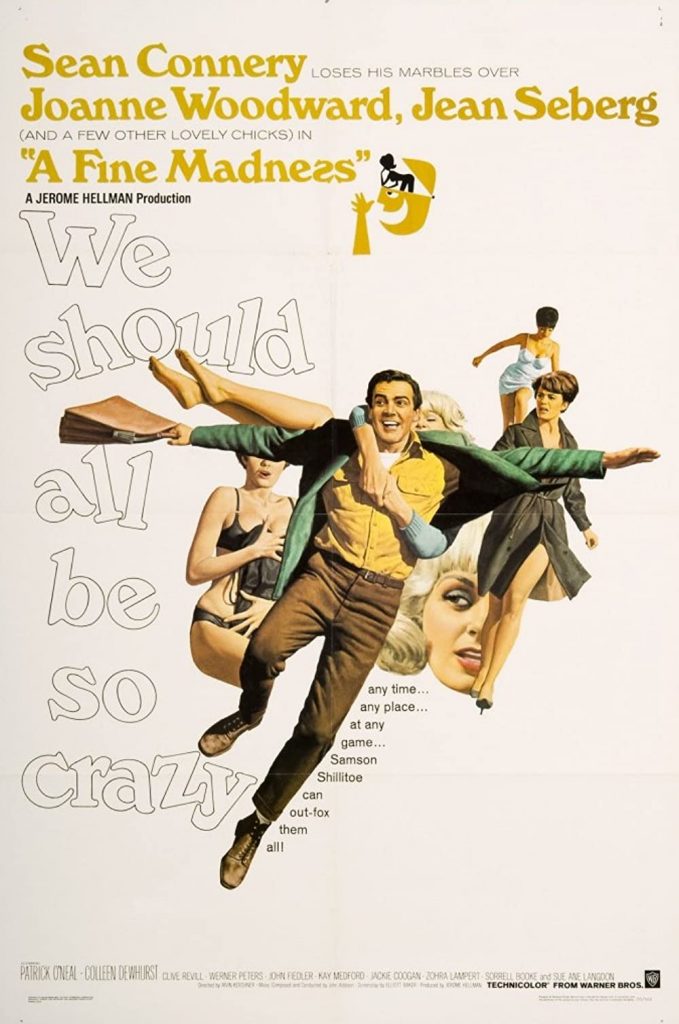
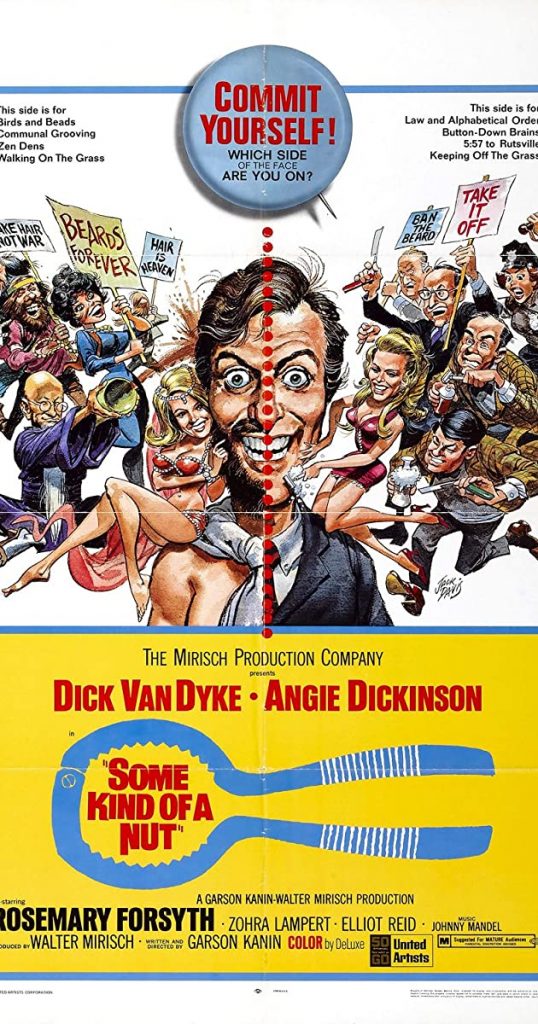
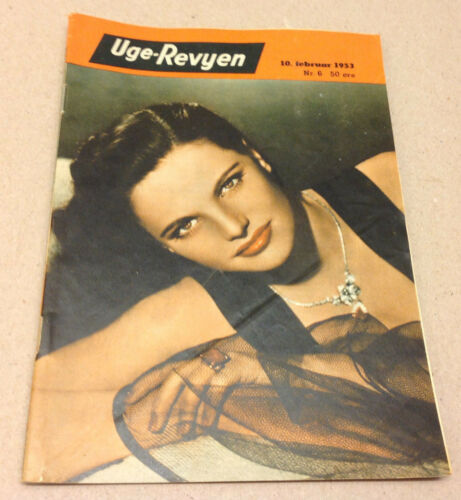
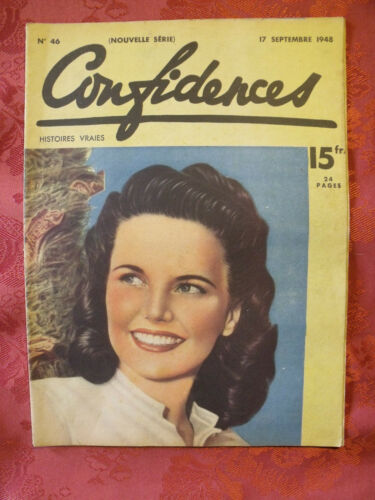
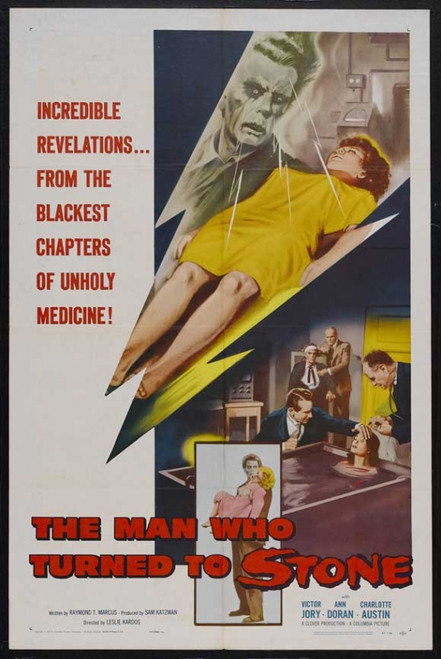
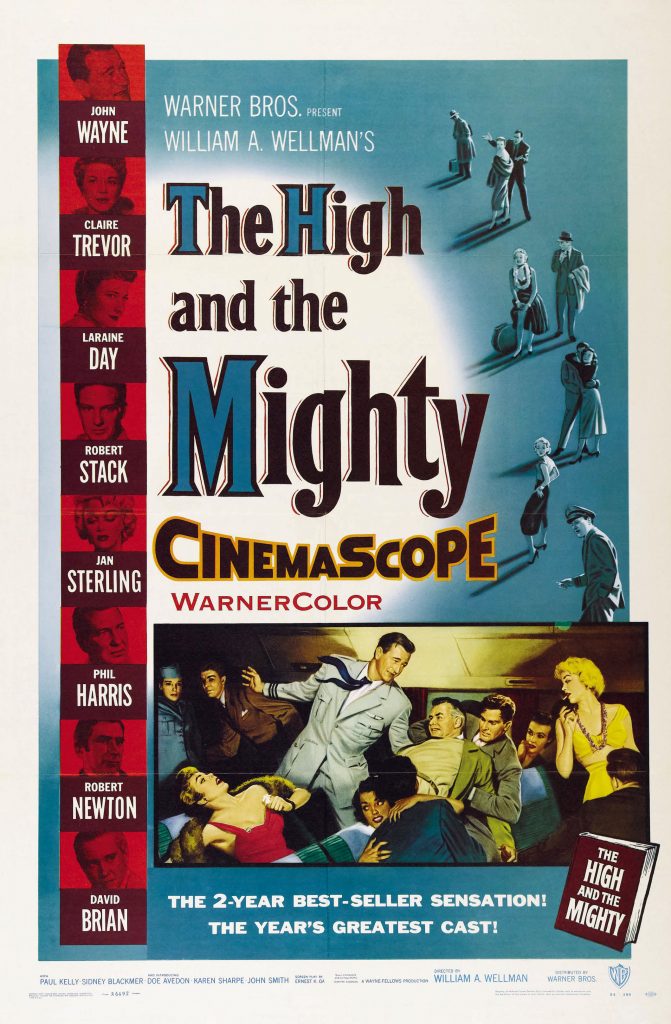
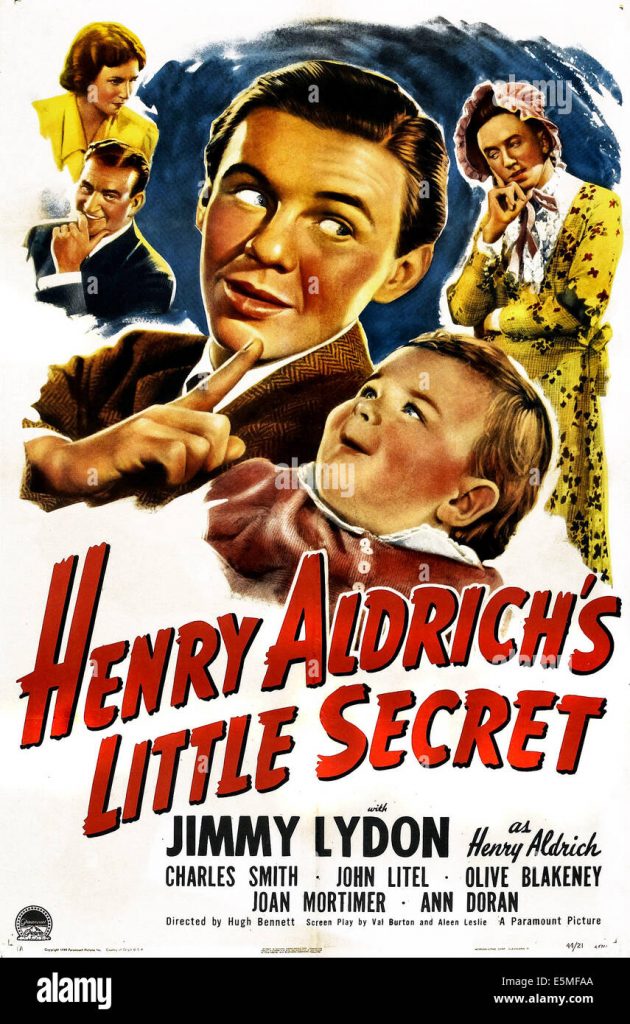
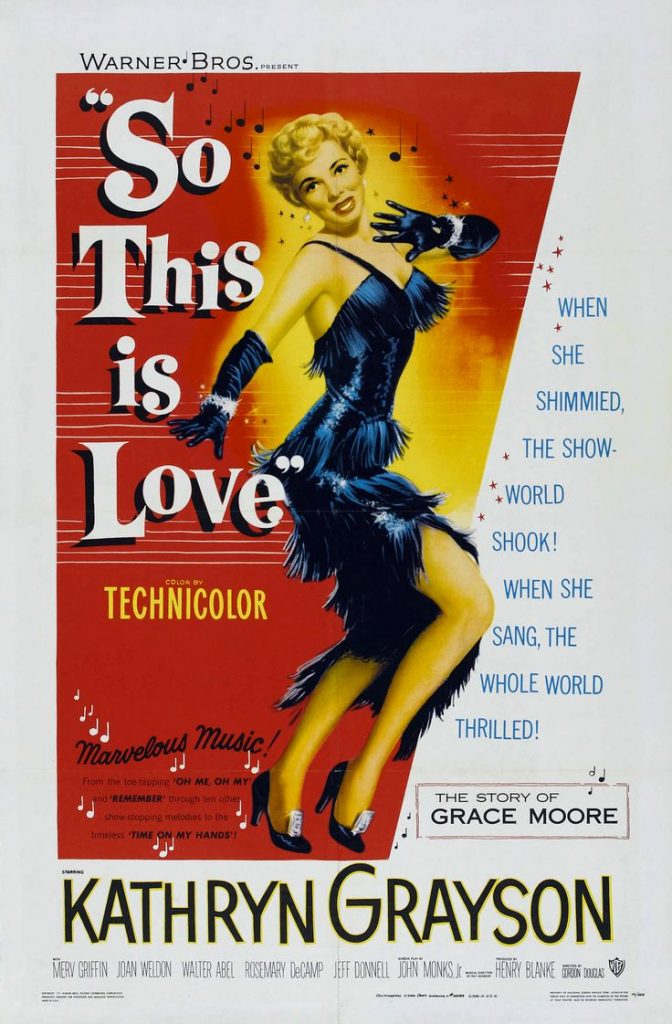
Zohra Lampert was born in 1937 in New York City. She acted on the Boradway stage before making her film debut in a small role in 1959 in “Odds Against Tomorrow” which starred Harry Belafonte and Gloria Grahame. She had a small but telling role in Elia Kazan’s “Splendour in the Grass” with Warren Beatty and Natalie Wood. In 1971 she had the lead role in the cult thriller “Let’s Scare Jessica to Death”.
Gary Brumburgh’s entry:
Solemn, Middle Eastern-looking Zohra Lampert had a touching, understated quality to her talent that should have gone further in the film business than it did. Somehow she never got the bigger breaks necessary for top-flight stardom. Still and all, this comely actress with soft, vulnerable features managed to contribute a number of genuinely affecting performances, particularly on TV. Born in New York City, the daughter of Russian-born hardware store owners, Lampert attended Manhattan’s High School of Music and Art and later graduated from the University of Chicago. After a stint with the Lincoln Center Repertory Theatre, she made an impressive mark on Broadway with Tony-nominated performances in “Look We’ve Come Through” in 1961 and “Mother Courage and Her Children” in 1963. Films also came her way in the early ’60s and she scored well for her humble, deeply stirring performance as Ernest Borgnine‘s Italian wife in the minor crime story Pay or Die (1960), and stole a touching scene from Natalie Wood and Warren Beatty as Beatty’s careworn spouse in Splendor in the Grass (1961). Those two performances alone should have lifted her to the heights of a star, but strangely they didn’t. Lampert was deemed a chameleon-like actress who didn’t quite fit into the Hollywood structure as a personality type. Instead she moved into a few noticeable supporting film roles along with an occasional low-budget lead, her best being the cult chiller Let’s Scare Jessica to Death (1971). By the ’70s, she was performing primarily on the small screen in character roles and was earning Emmy-winning notice for her endeavors. In later years, she found some really quirky ladies to inhabit, but has since been seen less and less.
– IMDb Mini Biography By: Gary Brumburgh / gr-home@pacbell.net
In the hugely successful US television series Perry Mason (1957-66), Barbara Hale, who has died aged 94, played Della Street, Mason’s secretary. She reprised the role in 29 TV movies between 1985 and 1995. Della’s indefatigable calm and poise established her as a partner to the LA lawyer Mason (Raymond Burr) and his investigator, Paul Drake (William Hopper). Although Hale’s all-American girl-next-door looks had seen her cast typically as supportive wives in her film career, in Perry Mason she was a single career woman, who out-bantered Drake’s flirtatious advances in almost every episode. “When we started it was the beginning of women not working at home,” she said. “I liked it that she was not married.”
The series was a triumph of casting. William Talman, as the always-losing district attorney Hamilton Burger, and Ray Collins, as the police detective Arthur Tragg, were great character actors. Mason’s creator, Erle Stanley Gardner, reportedly leaped from his chair during test screenings for Burr, a classic film noir heavy, shouting “that’s Perry Mason”. Although publicists tried to promote the idea of a romance between Burr and Hale, in reality he lived with a man, though he and Hale became devoted friends, with a common love of horticulture. Burr bred orchids, and named one after his co-star.
Hale’s role in Perry Mason was not big in terms of screen time – she joked that she basically had six scenes and costume changes to denote the changing of days – but its impact was strong enough for her to win an Emmy in 1959 as best supporting actress.
Her path to Hollywood was a highly publicised Cinderella story. Daughter of Willa (nee Calvin) and Luther Hale, she was born in DeKalb, Illinois, and grew up in nearby Rockford, where her father was a landscape gardener. She was 19 and studying at the Chicago Academy of Fine Art when she was spotted by a modelling agent. The agent sent photos to the RKO movie studio, which summoned Hale to Los Angeles. She was sitting in a casting director’s office when a phone call came asking for a starlet to replace one who had fallen ill. Hale was sent to the set of Gildersleeve’s Bad Day (1943) and made her film debut. Although studio publicity trumpeted her instant stardom, in reality she had but a single line, and went unmentioned in the credits.
But she landed a contract at RKO, and got her first screen credit in the Frank Sinatra movie Higher and Higher (1943). Her first starring role came opposite Robert Young in a gambling comedy, Lady Luck (1946). At RKO, she met the actor Bill Williams (born Wilhelm Katt), and after making West of the Pecos (1945) together, in which Hale starred with Robert Mitchum, they married. Williams would go on to star on television as Kit Carson in a successful western series. Hale, a more talented actor, was trapped in lesser studio parts until she too found success on the smaller screen.
Her best RKO parts came working with child actors, Dean Stockwell in Joseph Losey’s The Boy With Green Hair (1948) and Bobby Driscoll in Ted Tetzlaff’s noirish The Window (1949), her penultimate RKO release. She moved to Columbia, where she generally played adoring wives and steadfast girlfriends. Her light touch saw her cast with James Stewart and James Cagney, and opposite Robert Cummings in the early Frank Tashlin comedy The First Time (1952).
She had the title role in Lorna Doone (1951) but became a feature in low-budget but interesting Columbia westerns, including André de Toth’s remake of Sahara, Last of the Comanches (1953) and Joseph H Lewis’s 7th Cavalry (1956), her last Columbia picture. She then worked in episodic television such as Playhouse 90, and made The Oklahoman (1957) with Joel McCrea, and an interesting picture about a manufactured western movie star, Slim Carter (1957), alongside both her husband and Hopper. Ironically, in her last feature film before Perry Mason, Desert Hell, she played the unfaithful wife of a Foreign Legion commander.
When CBS cancelled Perry Mason, Hale reverted to episodic television, including a spot on Burr’s successful police series Ironside and regular roles in Disney’s Wonderful World of Color. She had a telling part in the original “disaster movie”, Airport (1970), and in 1975 she played the lead opposite Steve Brodie in the unforgettable disaster of a film The Giant Spider Invasion.
When, in 1985, NBC produced a TV movie, Perry Mason Returns, Hale was back as Della, and her son, William Katt, was cast as Paul Drake Jr, replacing Hopper, who had died in 1970. It was so successful that NBC produced 25 more movies before Burr’s death in 1993, and three more starring Hal Holbrook, cast not as Mason but as Wild Bill McKenzie. The last of the three, in 1995, was Hale’s final acting appearance.
Bill Williams died in 1992. Hale is survived by her son, and two daughters, Judy and Juanita.
• Barbara Hale, actor, born 18 April 1922; died 26 January 2017
Original Cinema 1-Sheet Poster – Movie Film Posters
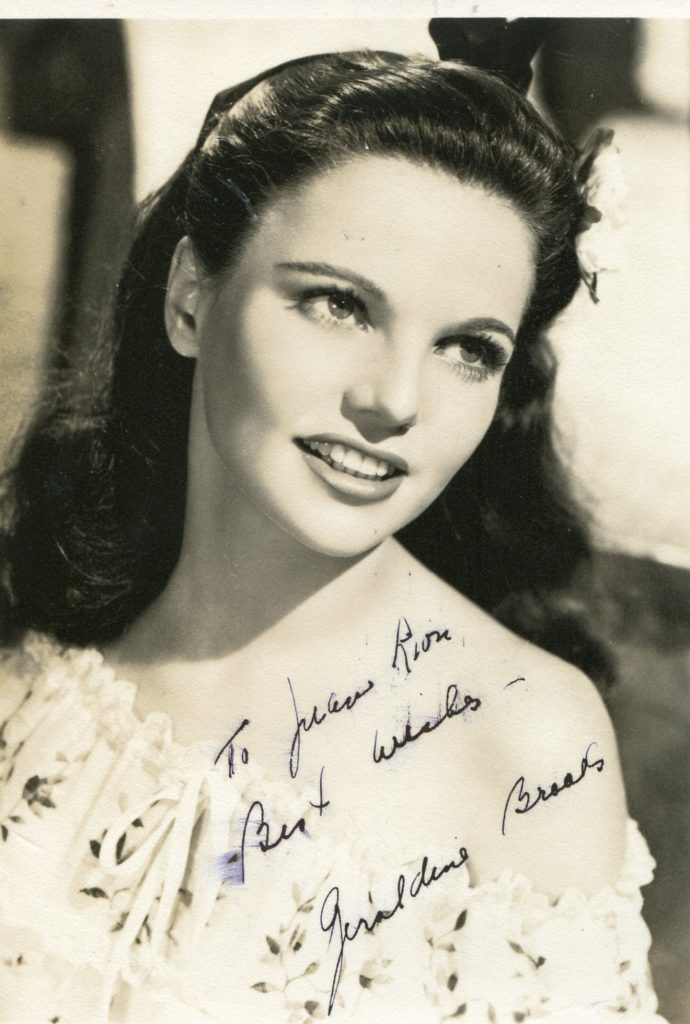
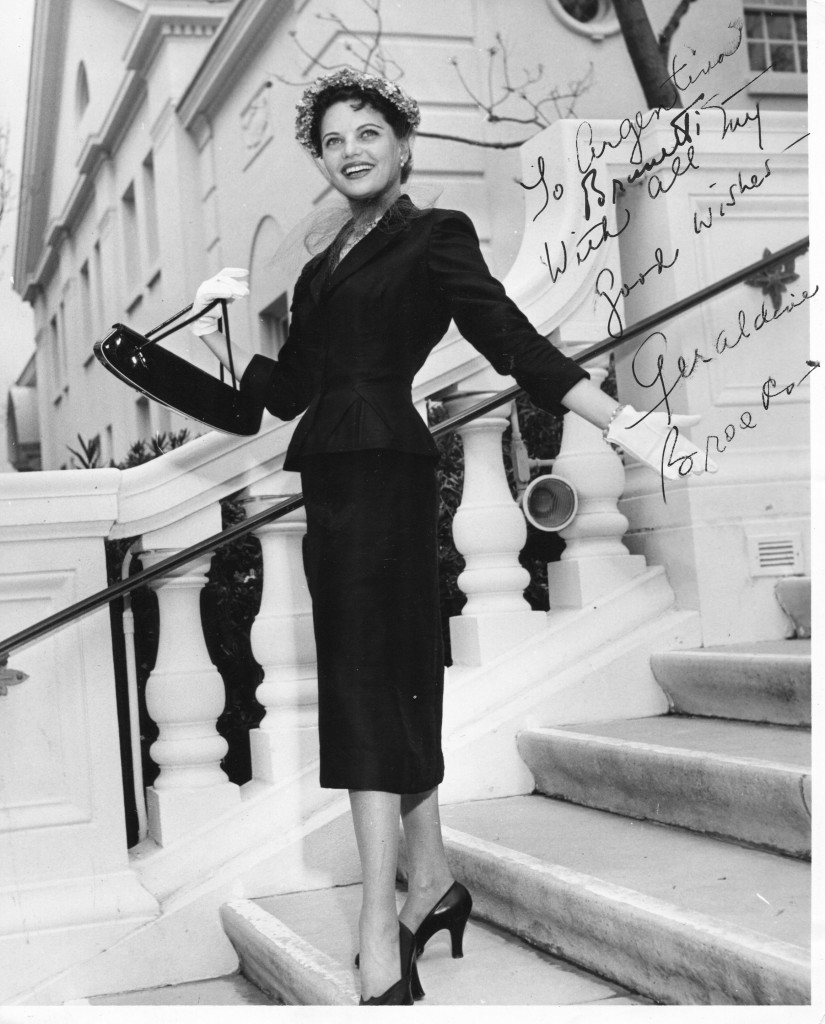
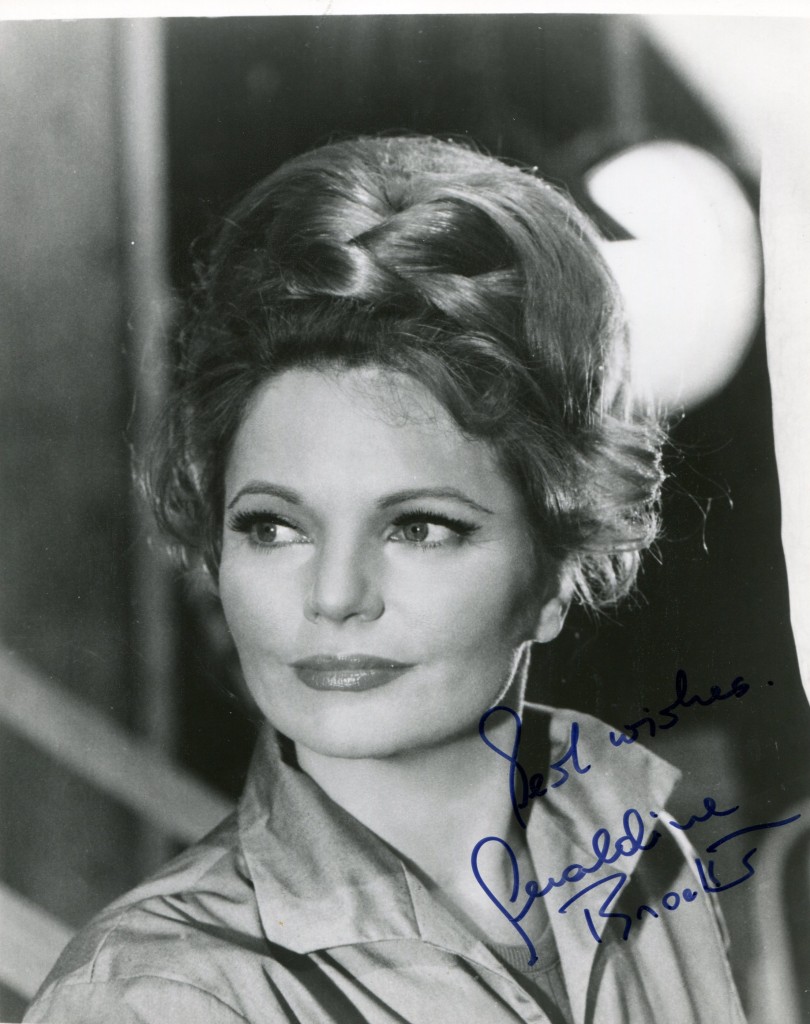
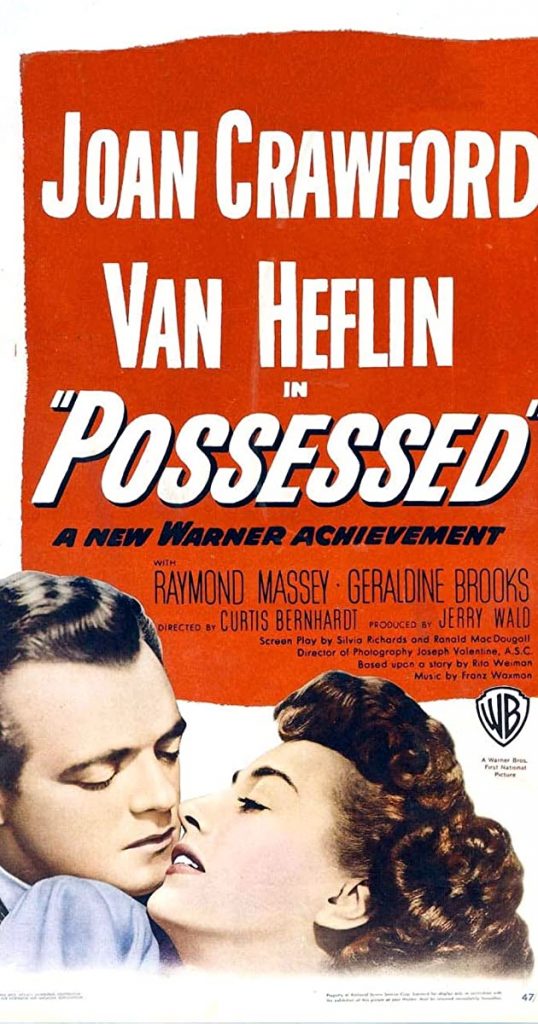
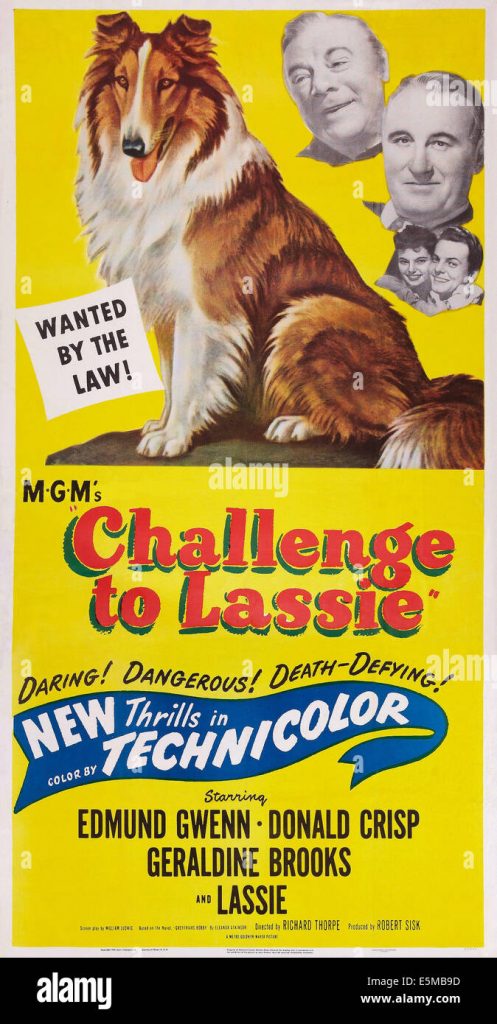
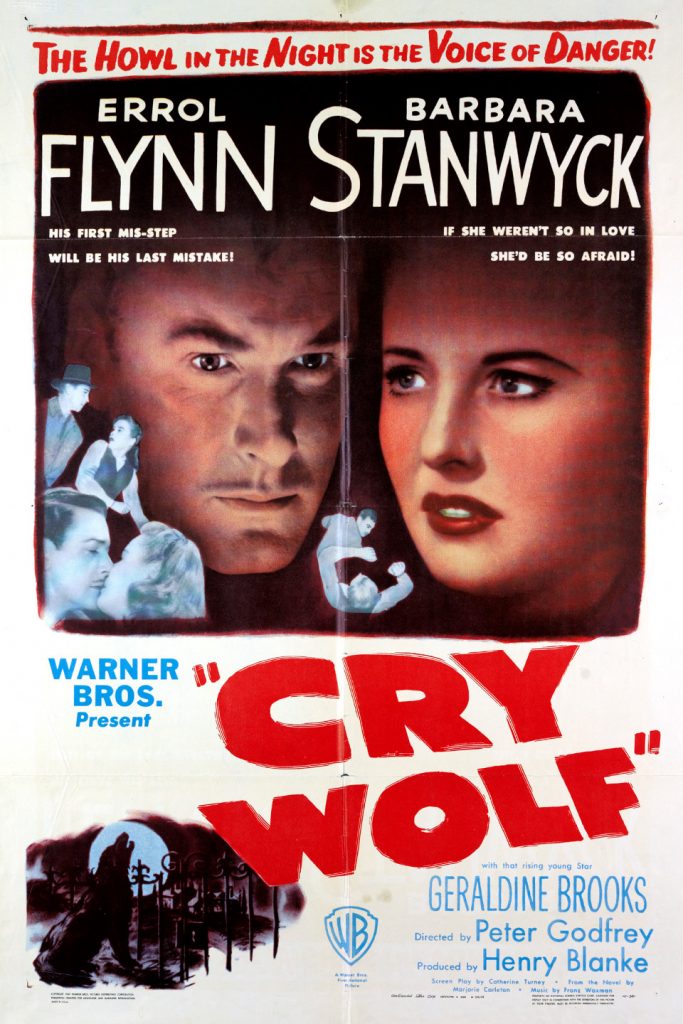
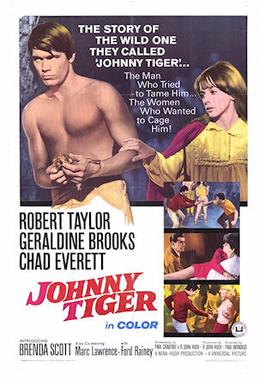
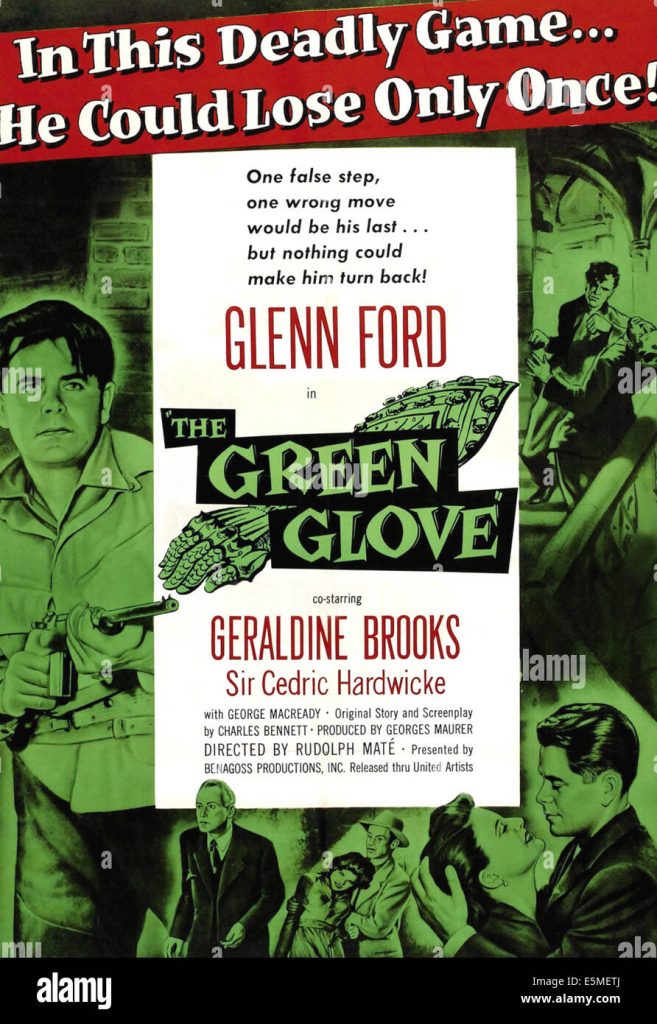
Geraldine Brooks was a lovely talented actress who landed a starring role in her first movie. She was born in 1925 in New York City to Dutch parents. She acted for a time on Broadway and then in 1947 went to Hollywood to film for Warner Brothers “Cry Wolf” with Errol Flynn and Barbara Stanwyck. She hel her ground against Joan Crawford in “Possessed” and w ent on to make “Embracable You”, “Challenge to Lassie” and “Johnny Tiger” with Robert Taylor in 1966. She was married to author and playwright Budd Schulburg. Geraldine Brooks died in 1977 at the early age of 52.
“Hollywood Players : The Forties” by James Robert Parish:
In the flood of new faces at 1940s Warner Brothers there were among others, Dorothy Malone, Joan Leslie, Martha Vickers, Janis Paige, Andrea King, Faye Emerson, Joan Lorring, Geraldine Brooks and Lauren Bacall. Unquestionably Miss Bacall had such a unique screen charisma that she would have surfaced without even the studio support of husband Humphrey Bogart. But how does one account for the non-emergence of Geraldine Brooks, a petite 5ft 2″ blue-eyed brown-haired beauty. She displayed a particularly radiant smile and even more importantly demonstrated such a marvelous ability at powerhouse acting. Had she checked in to the Burbank studio earlier in the 1940s she might just have won the coveted role of Veda in “Mildred Pierce”, taking it away from Ann Blyth and established herself as the talented lady she was. Instead Geraldine was cast by the post-World War Two Warners into conventional roles, publicised as just another starlet, subject to over-makeup for the camera, and then dumped by the company in their recession shuffle. It has remained for television to provide her with recurring showcases to exhibit her persistent clear beauty and her know for adding dimension to emotionally framatic roles.
Gary Brumburgh’s entry:
A resolute, blue-eyed brunette with attractive, slightly pinched features, Geraldine Brooks was born to a Dutch couple on October 29, 1925, in New York City. Her parents had a theater-based background — father, James Stroock, owned a top costume company and mother, Bianca, was a costume designer and stylist. In dance shoes from age 2, her closer relatives were also extensively involved in theater — one aunt being a former Ziegfeld Follies girl and another a contralto with the Metropolitan Opera. Growing up surrounding by these theatrical types, it was only natural that it rubbed off on her. She attended the Hunter Modeling School as a young teen and graduated from Julia Richman High School in 1942 as president of her drama club. Older sister, Gloria Stroock, also became an actress, primarily on TV.
In New York, Geraldine studied at the American Academy of Dramatic Art and the Neighborhood Playhouse before apprenticing in summer stock productions. In a pre-Broadway tryout of “Follow the Girls” in 1944, Geraldine subsequently went with the show to Broadway in May of that same year and enjoyed a nine-month run. Following her role as “Perdita” in “A Winter’s Tale” at the Theatre Guild, she was signed by Warner Bros. and made her film debut promisingly as a second femme lead in the mystery thrillerCry Wolf (1947) starring Barbara Stanwyck and Errol Flynn. At this time, she shunned her odd-sounding last name of “Stroock” in favor of the more complementary marquee name of “Brooks”, which was the name of her father’s costume company. Playing Flynn’s cool, conniving niece who gives trouble to Stanwyck, she gave added suspense to the film. In her second movie, Possessed (1947), she is again at odds with another powerhouse star, this time Joan Crawford, but shows more sensitivity against the manic Crawford character in this film-noir chiller.
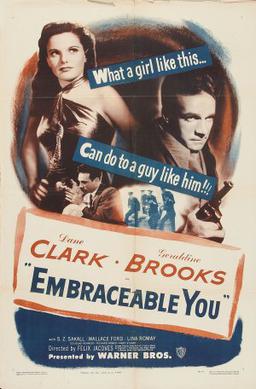
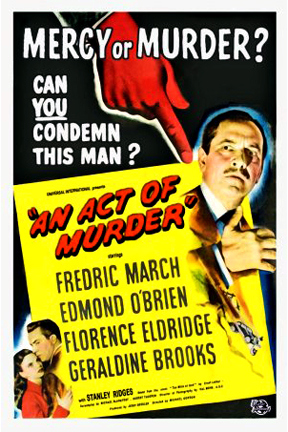
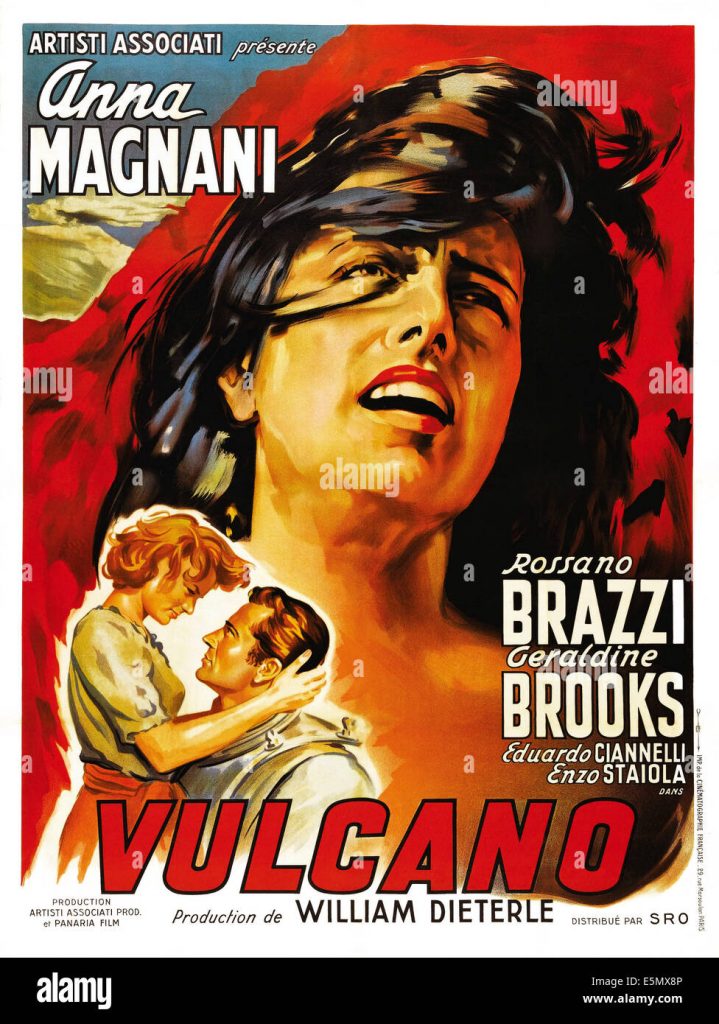
Geraldine moved to dramatic lead status with Embraceable You (1948) opposite Dane Clark, and played daughter to real wife-and-husband team Fredric March and Florence Eldridge in An Act of Murder (1948), a drama that dealt with the topic of euthanasia. Less impressive was the standard Warner Bros. “B” western The Younger Brothers (1949) and her MGM loanout appearance in Challenge to Lassie (1949). Floundering a bit at this time and failing to strike a star-making chord with audiences, she attempted a few continental film assignments, one in which she played Anna Magnani‘s younger sister, but grew quickly disillusioned there as well and returned to America.
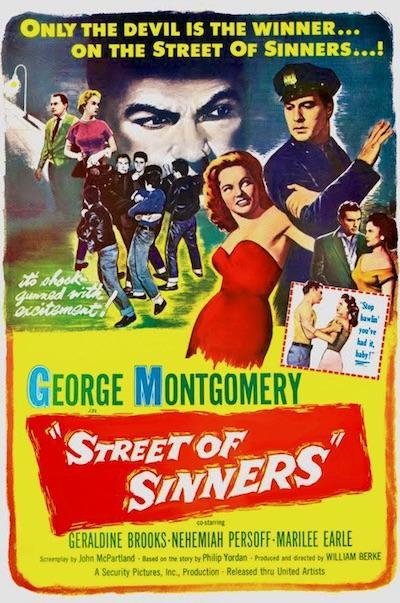
Focusing instead on stage and TV, including a Broadway stint in “Time of the Cuckoo” starring Tony-winning Shirley Booth, Geraldine eventually went back to studying acting again. In 1956, she became a member of the Actor’s Studio and became a strong exponent of its method style. Despite this renewed, enlightening acting technique, her film career found no momentum at all. In fact, she appeared in only two films in the oncoming years as brittle, harder-core ladies in Street of Sinners (1957) and Johnny Tiger(1966). Her greater notices were to be found guesting on various popular TV series. Particularly noteworthy were her roles on Perry Mason (1957), The Defenders (1961), Bus Stop (1961) (for which she earned an Emmy nomination), the pilot of Ironside (1967) and the last final climactic episode of The Fugitive (1963). A regular as Dan Dailey‘s secretary on the mildly received Faraday and Company (1973), she also appeared in the 70s episodes of Kung Fu (1972), Cannon (1971), Barnaby Jones (1973) and McMillan & Wife(1971), the last in which sister, Gloria Stroock, had a recurring role as Rock Hudson‘s secretary.
Geraldine’s later theater included her Tony-nominated role in “Brightower” (1970) (despite it closing after only one performance) on Broadway and as wife “Golde” in the musical “Fiddler on the Roof”. Her final movie part came in the rather ho-hum crimer Mr. Ricco (1975) alongside Dean Martin. A short-lived series regular as the matriarch of The Dumplings (1976), a rare comedic venture for her, and a stage production of Jules Feiffer‘s “Hold Me!” in 1977 capped her capable but somewhat unsatisfying career. She deserved much better attention than she got, especially in films. Divorced from TV writerHerbert Sargent after only three years (1958-1961), she married author Budd Schulberg(best known for his screenplay of On the Waterfront (1954)), in 1964. The couple moved to Los Angeles and opened a writers’ workshop together for the underprivileged. She also collaborated with Schulberg on the book Swan Watch (1975), a study on the elegant birds in which she also took photographs. In addition, she wrote poetry for children although she herself never had any. Sadly, Geraldine died in 1977 at age 51 of a heart attack while battling cancer, thus depriving the entertainment industry of a valuable talent. She was survived by her husband, mother and sister.
– IMDb Mini Biography By: Gary Brumburgh / gr-home@pacbell.net
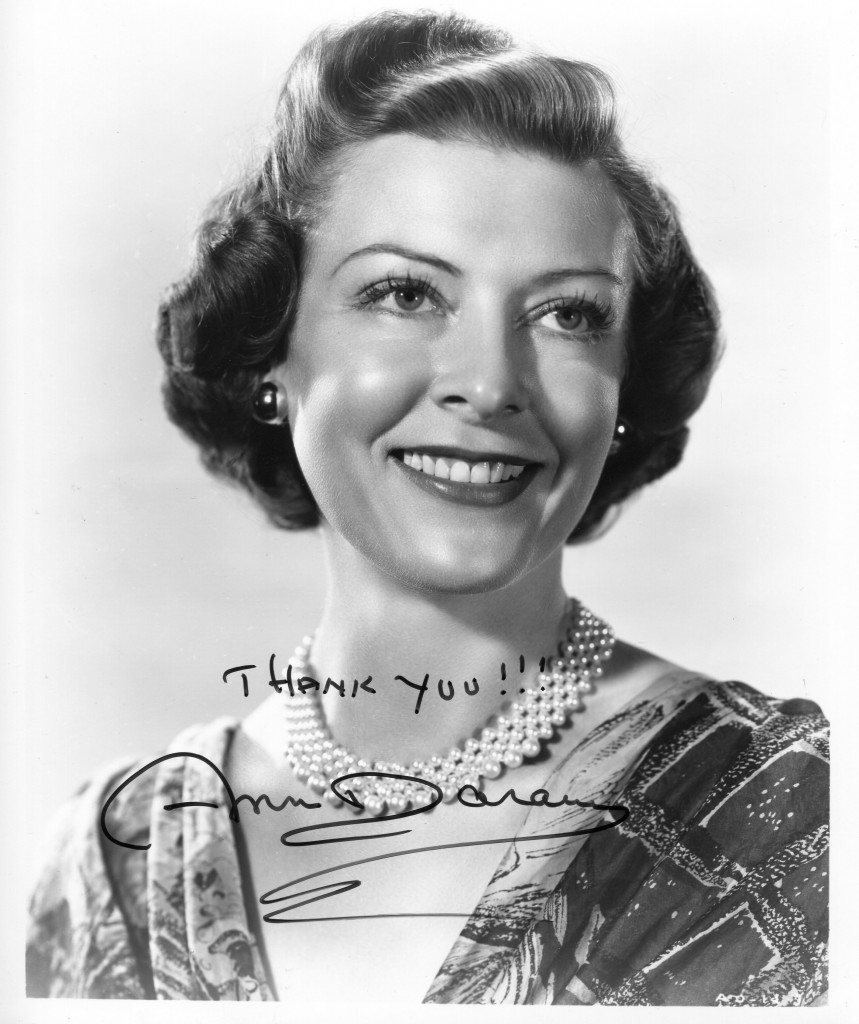
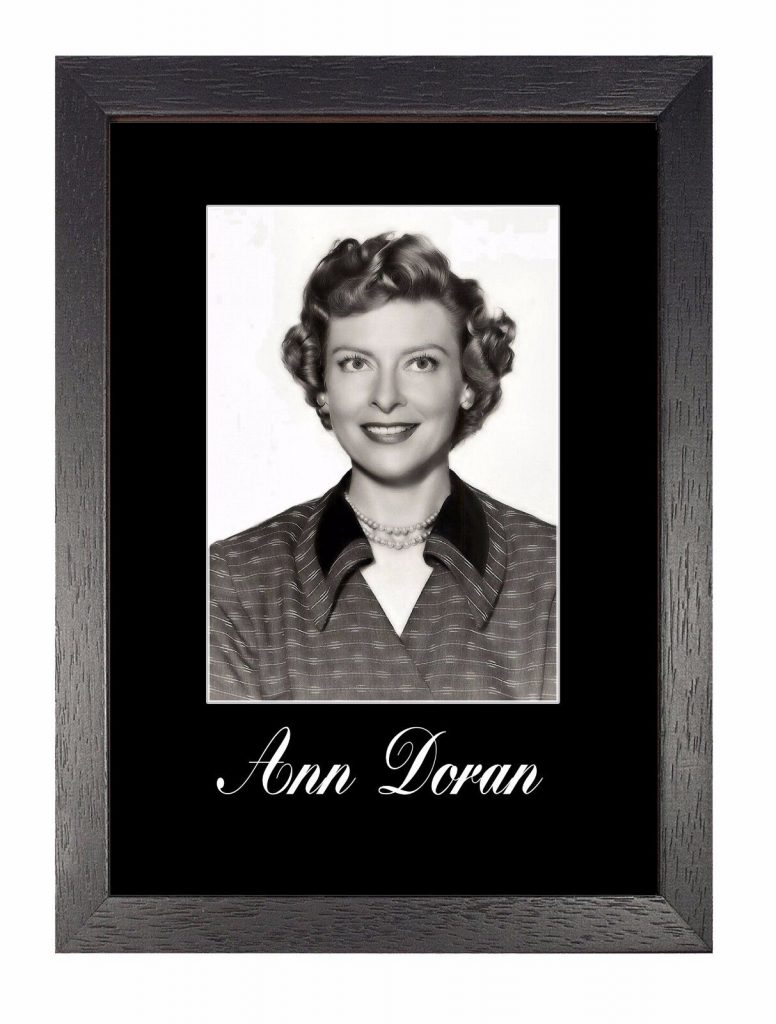
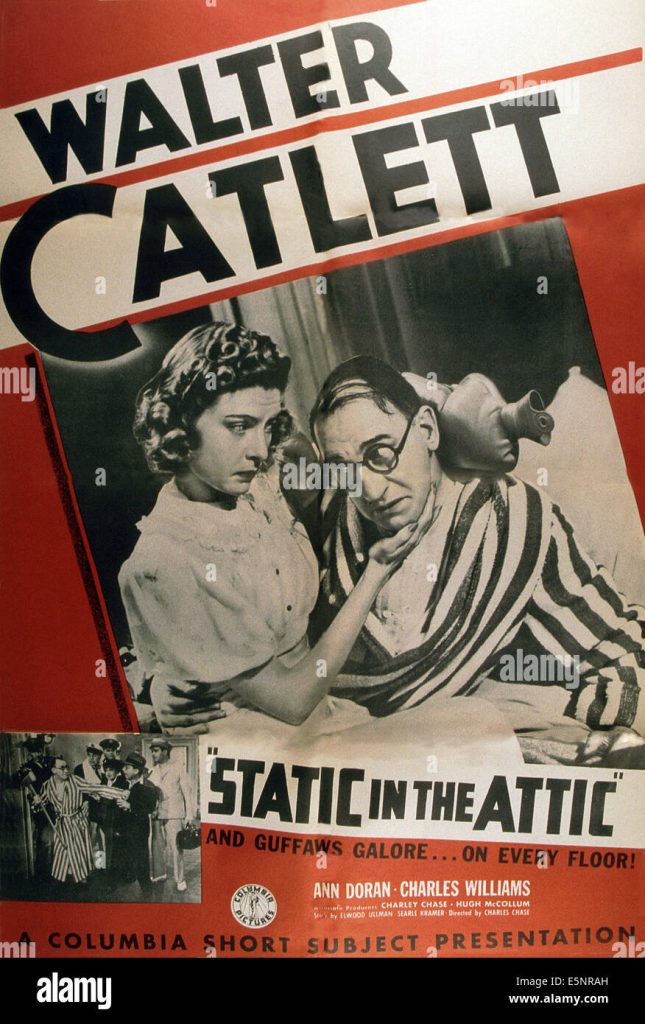
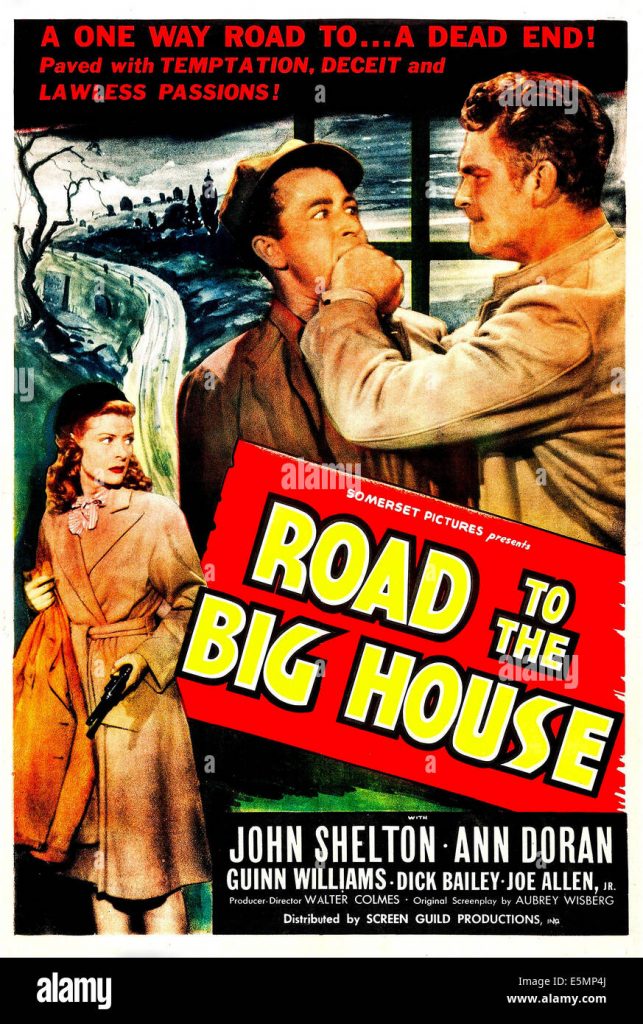
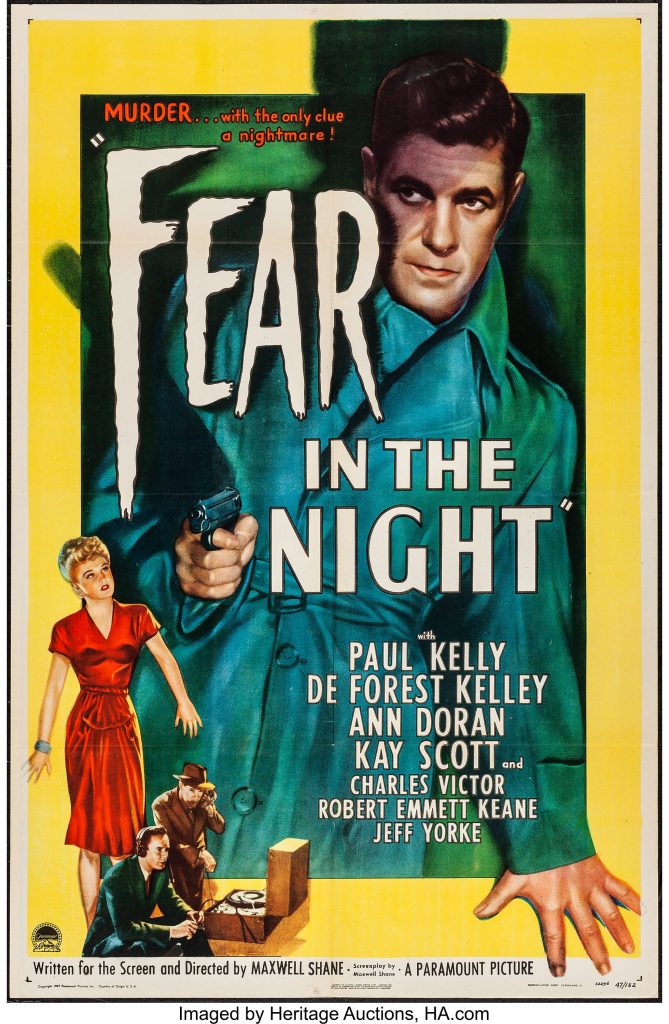
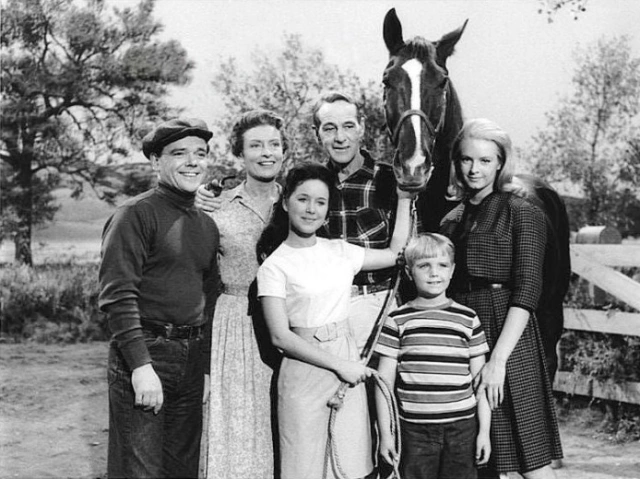
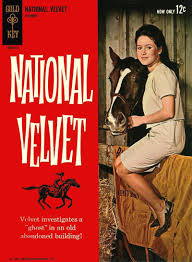
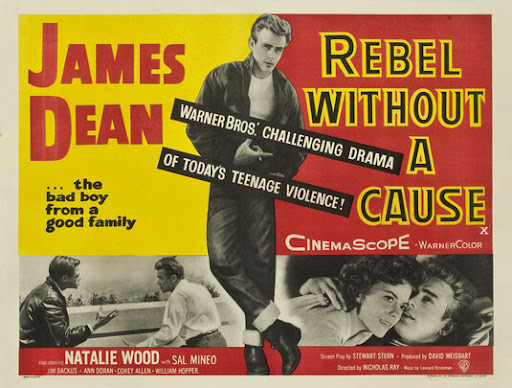
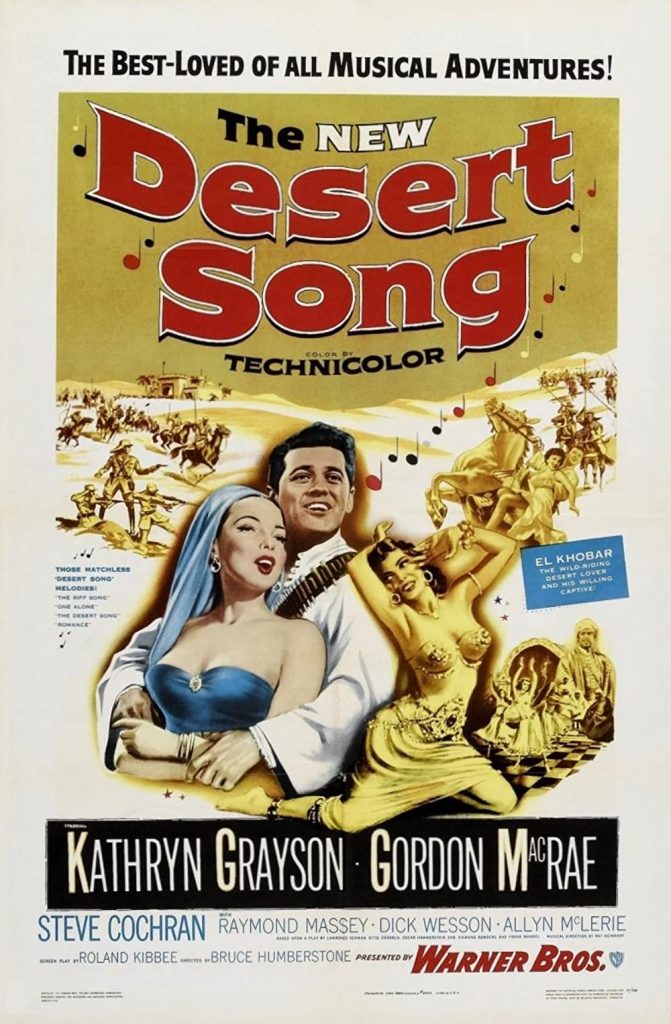
Ann Doran is best known for two roles, James Dean’s mother in 1955’s “East of Eden” and the mother again of Velvet Brown in the 1961 TV series “National Velvet”. She was born in Amarillo, Texas in 1911. She had a very profilic career as a character actress in films beginning with “Paid to Dance” in 1937. Her other films included “His Girl Friday” in 1940, “So Proudly We Hail”, “A Summer Place” and “The Arrangement” in 1970. Ann Doran died in 2000 at the age of 89.
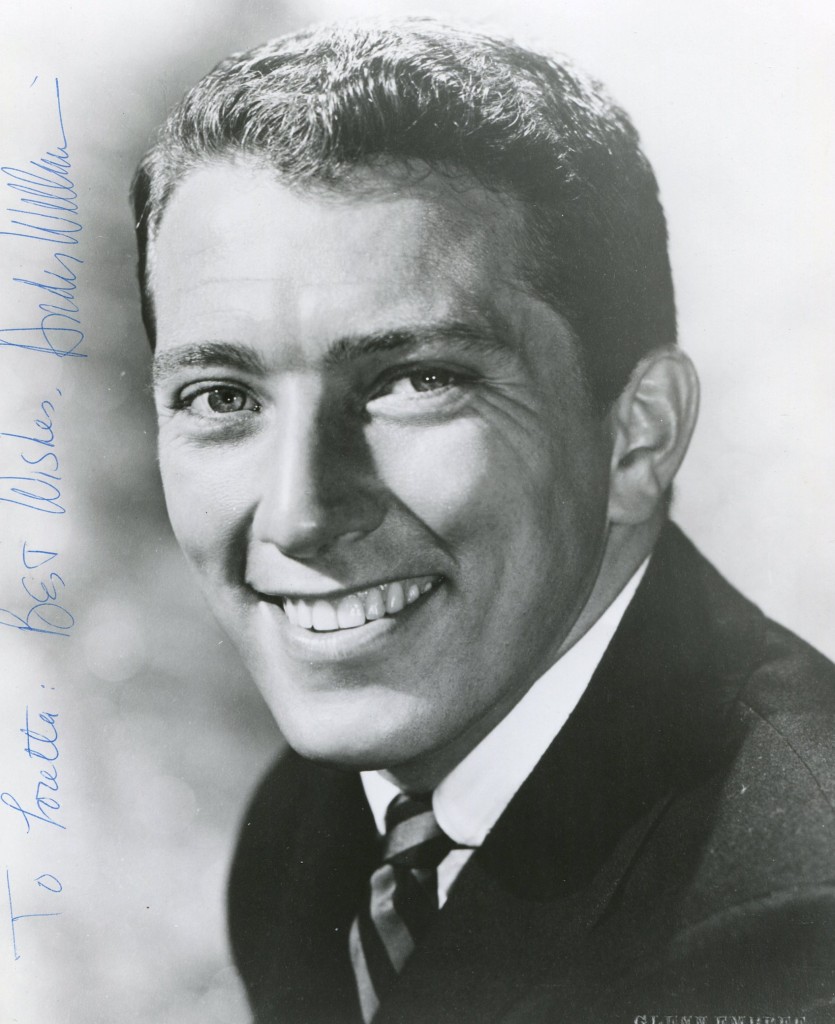
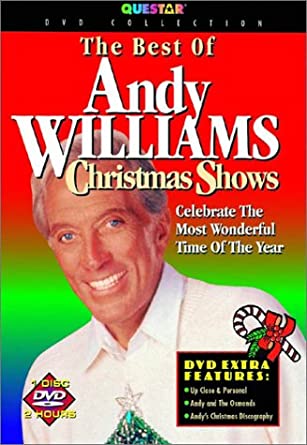
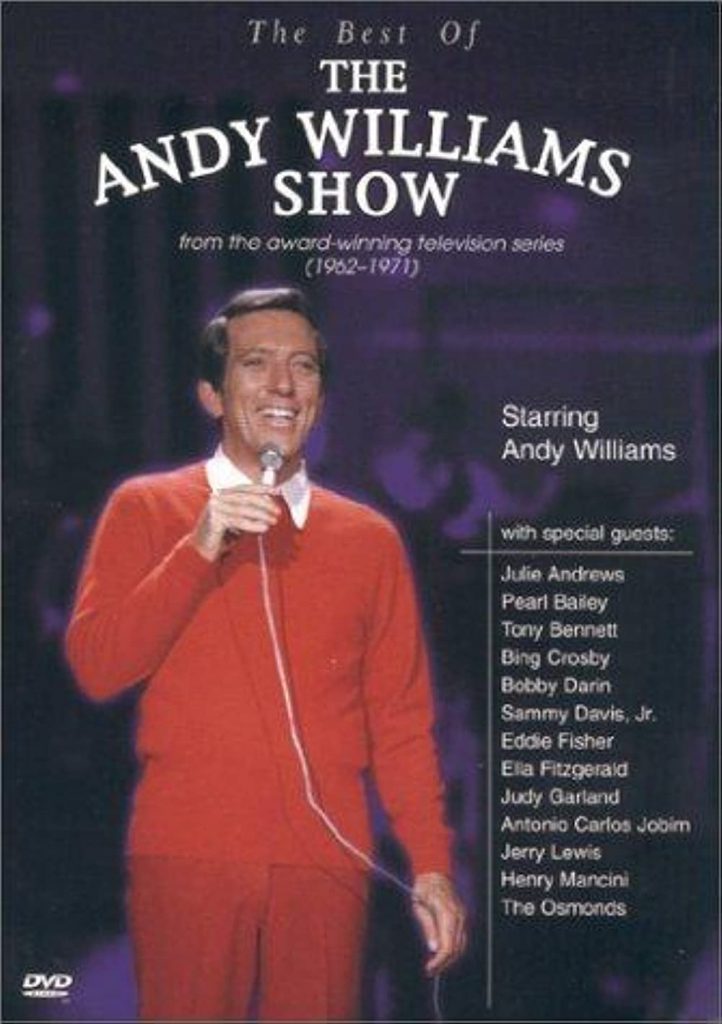
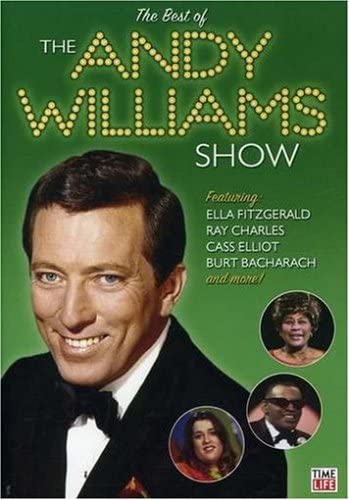
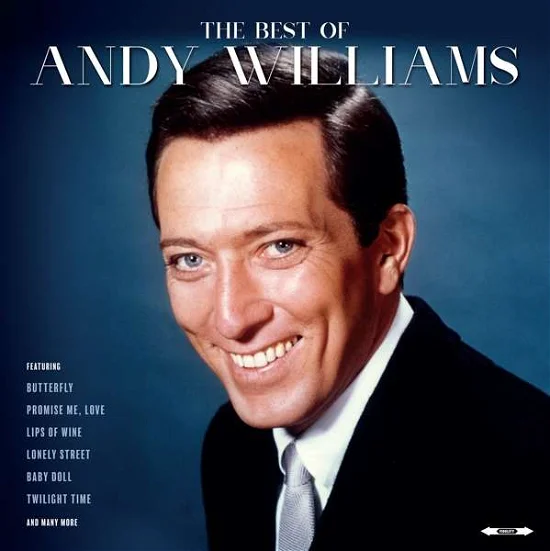
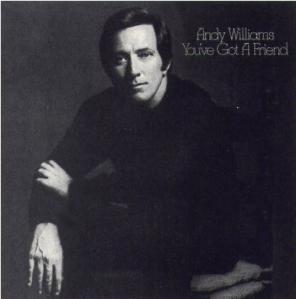
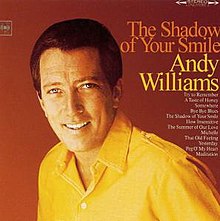
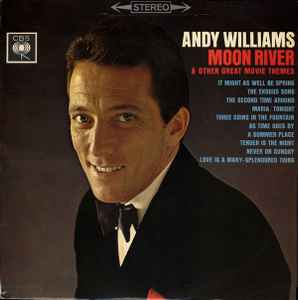
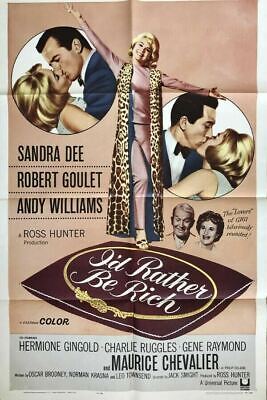
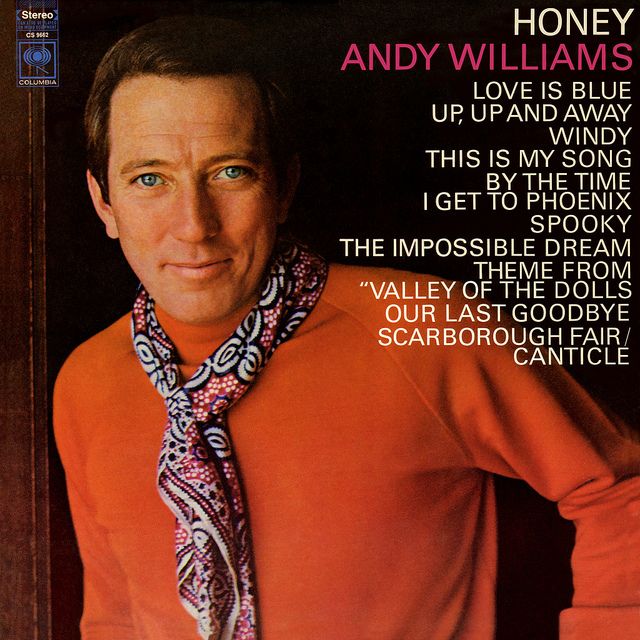
Andy Williams is of course one of the most celebrated of popular singers, but he did make an attempt at film making in the early 1960’s. He was born in 1927 in Iowa. He and his brothers were a popular singing group in the 1940’s and in that de cade he did feature in a few films including “Janie” in 1944 and “Something in the Wind” in 1947. In 1964 he starred with Sandra Dee and Robert Goulet in a comedy “I’d Rather be Rich”. He sang the Top Ten hit “Almost There” in the film. He did not though pursue a career on film and returned to his very popular recording and concert career. He died in 2012.
“Guardian” obituary:
Through the popularity of his television show and his mellifluous tenor voice, Andy Williams, who has died aged 84 after suffering from bladder cancer, was one of the best-loved figures in American popular culture. In a career that spanned eight decades, he sold more than 100m albums. Ronald Reagan described Williams’s distinctive voice as a “national treasure”.
The Andy Williams Show was also a favourite on British television and he had numerous UK hits in the 1960s and 70s. Among the biggest were Can’t Get Used to Losing You (1963), Can’t Help Falling in Love (1970) and Where Do I Begin (1971), the theme from the 1970 film Love Story. Williams’s British career was revived in 1998 when his 30-year-old hit Can’t Take My Eyes Off You was used in a commercial for Peugeot cars. Soon, a Fiat advertisement revived Music to Watch Girls By, and The Most Wonderful Time of the Year (from one of his eight Christmas albums) was chosen for a Marks & Spencer Christmas campaign in 2002. He even appeared in an episode of Strictly Come Dancing in 2009 to sing Moon River.
Williams grew up in Wall Lake, Iowa, the second youngest of six children, to Jay and Florence Williams. His father, a railway worker, arranged for Andy and his three elder brothers, Bob, Don and Dick, to be the choir at the town’s Presbyterian church. The quality of their harmonising inspired Jay to train the quartet for a professional career, beginning with performances at weddings and socials. His ambition for the boys led the family to move to Des Moines in 1936 to seek a regular radio show. There, Jay’s perfectionism hardened into an obsession: Andy was to claim that his self-confidence was deeply dented by Jay’s edict that “you have to practise harder because you’re not as good as others out there”.
The Williams Brothers were eventually awarded their own 15-minute show on a station where Reagan was a sports reporter. But the family were still not well off, and when the youngest child died of spinal meningitis, the only way the family could pay the funeral costs was for the brothers to sing hymns at the funeral parlour after school for several months.
There were further moves to Chicago and Cincinnati so that the Williams Brothers could perform on more prestigious radio stations, and in 1944 the family uprooted again to Los Angeles. There, Jay Williams, by now his sons’ full-time manager, negotiated a studio contract with MGM, which gave the quartet cameo roles in several B movies. He also persuaded Bing Crosby to employ them as backing singers on his hit record Swinging on a Star.
The group broke up as each brother was called up for second world war service – the 17-year-old Andy was briefly in the merchant navy – and did not re-form until 1947. They next performed as a cabaret act, appearing in Las Vegas and the Café de Paris in London before splitting up in 1953. The actor and choreographer Kay Thompson then launched Andy on a solo career, which ignited when he landed a job as resident vocalist on Steve Allen’s late night television show on NBC (1954-56).
In 1956 he signed a recording contract with Cadence, and the following year had a No 1 hit in both the US and Britain with Butterfly. Although Williams studied Elvis Presley’s recordings, he avoided rock’n’roll and had four more top 10 hits with ballads. In 1961 CBS offered him a lucrative record deal.
The 1960s were to be his golden decade. The Andy Williams Show ran on NBC from 1962 to 1971, with consistently high ratings, and he had at least one album in the US top 10 in every year, aided by his musical director, the acclaimed jazz pianist Dave Grusin. The essential blandness of the show was reassuring to middle America, but it introduced new singers, notably the Osmonds, whom Jay Williams had spotted performing at Disneyland, and the fledgling Jackson Five, featuring a seven-year-old Michael.
The popularity of the show kept the crooning Williams afloat during the tidal wave of pop in the 1960s. Also, while contemporaries such as Frank Sinatra and Tony Bennett were baritones, Williams, a tenor, shared his vocal range with the Beatles and Beach Boys.
All his albums of the 1960s sold more than 1m copies each, with Moon River and Days of Wine and Roses each selling almost 2m. The latter was No 1 in the album charts for 16 weeks in 1963. When his contract with CBS came up for renewal in 1966, his manager, Alan Bernard, negotiated an unprecedented guarantee against royalties of $1.5m. In return, Williams agreed to record 15 albums over the next five years.
The formula for his albums was carefully calculated to attract fans of the television show. Williams seldom recorded new or unknown songs. Instead, he chose a mix of titles from successful movies, Broadway shows and versions of recent pop hits. Williams and his producer, Bob Mersey, were careful to include material by songwriters of the rock era, albeit their most melodic numbers. Thus, he recorded songs from the pens of Lennon and McCartney (Michelle), Burt Bacharach (Don’t You Believe It) and Jim Webb (McArthur Park).
On one occasion, he decided to experiment with a “concept” album of songs by the arranger Mason Williams (no relation), depicting existence from birth to death. Clive Davis, the head of CBS Records, warned him that sales would suffer. After some haggling, the concept songs took up one side of the LP Bridge Over Troubled Water. Davis was proved right and the album sold only half a million copies.
The loss of his television show led to falling record sales for Williams in the early 1970s. However, his celebrity enabled him to play lucrative concerts and cabaret engagements throughout the US and Europe. In 1992 he opened his own Moon River theatre in Branson, Missouri, where he appeared for several months each year.
Although he was a lifelong Republican, Williams became a close friend of Robert and Ethel Kennedy in the mid-60s. He was present when Kennedy was assassinated in Los Angeles during the 1968 campaign for the presidential nomination. Williams sang The Battle Hymn of the Republic at the funeral and voted for George McGovern at the Democratic party convention, having been nominated as a delegate by Kennedy. More in keeping with his political convictions was his outspoken criticism of Barack Obama, and he allowed the rightwing radio commentator Rush Limbaugh to broadcast his recording of Born Free with added gunshot sounds. Sony Music (now the owner of CBS Records) forced Limbaugh to remove it.
Williams was married twice. He had three children, Noelle, Christian and Bobby, named after Robert Kennedy, with his first wife, the singer and dancer Claudine Longet. After their divorce, he was publicly supportive when, following the death of her new partner in a shooting incident, she was found guilty of criminally negligent homicide in 1977. He is survived by his second wife, Debbie Haas, and his children.
• Andy (Howard Andrew) Williams, singer, born 3 December 1927; died 25 September 2012
The above “Guardian” obituary by Dave Laing can also be accessed online here
Allyn Ann McLerie. Obituary in “Playbill” in 2018.
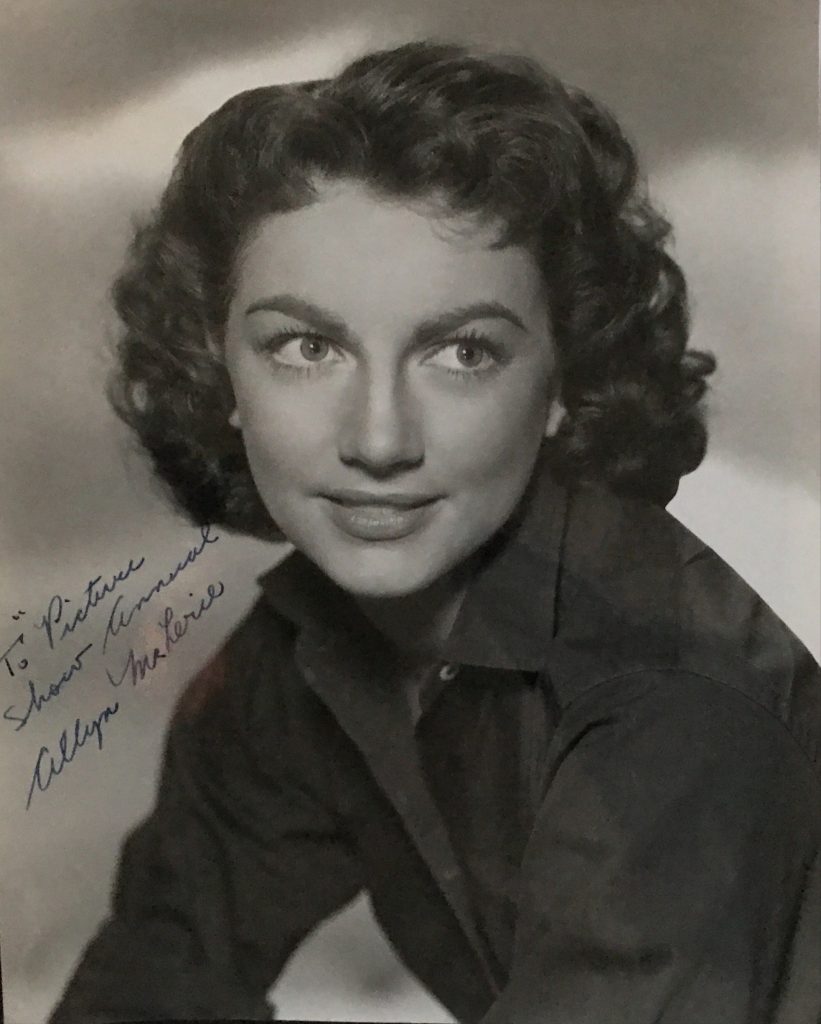
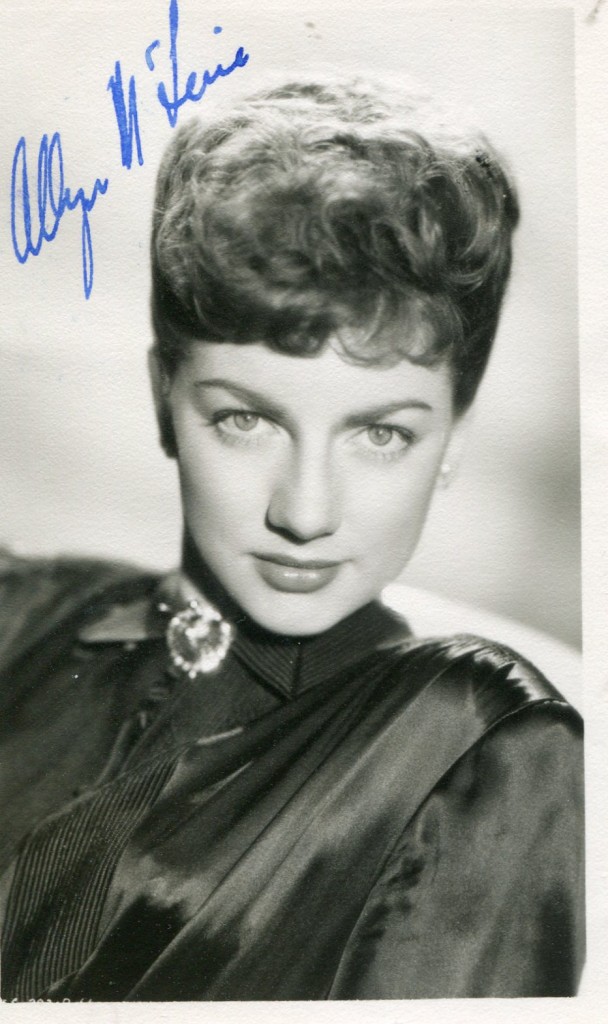
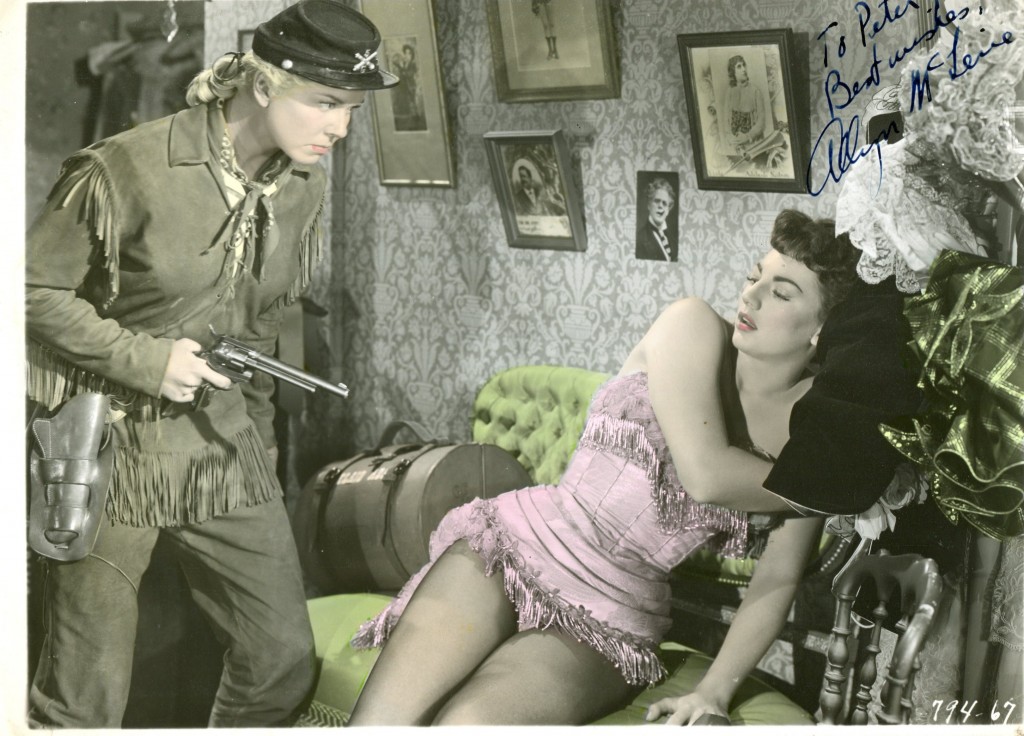
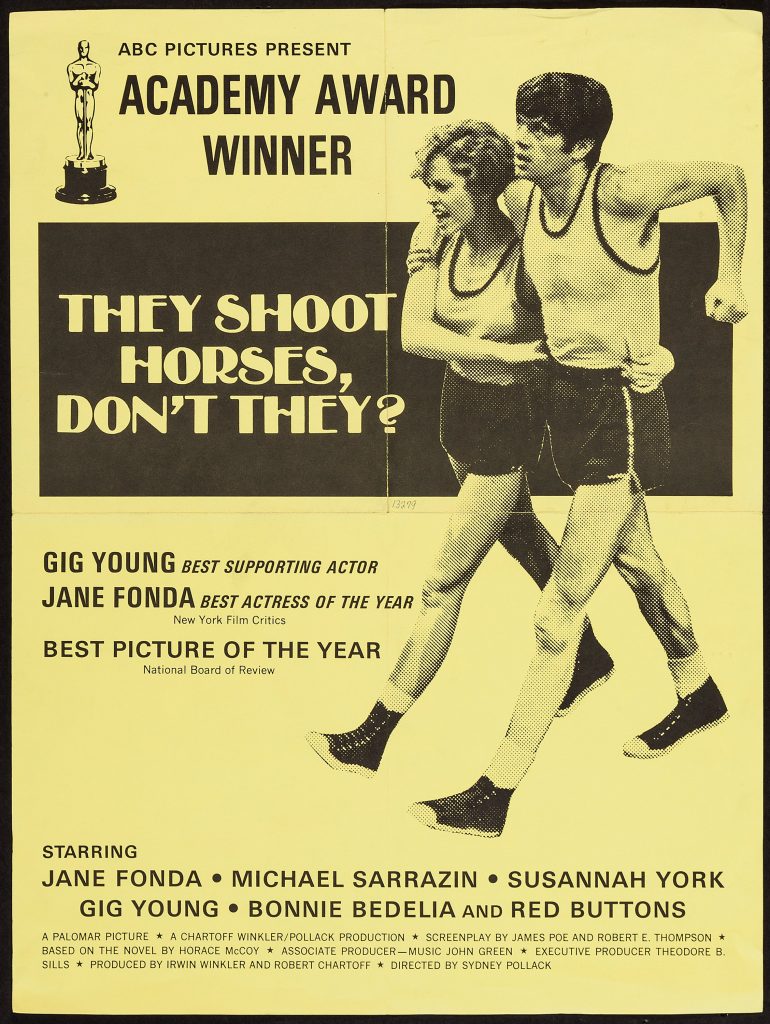
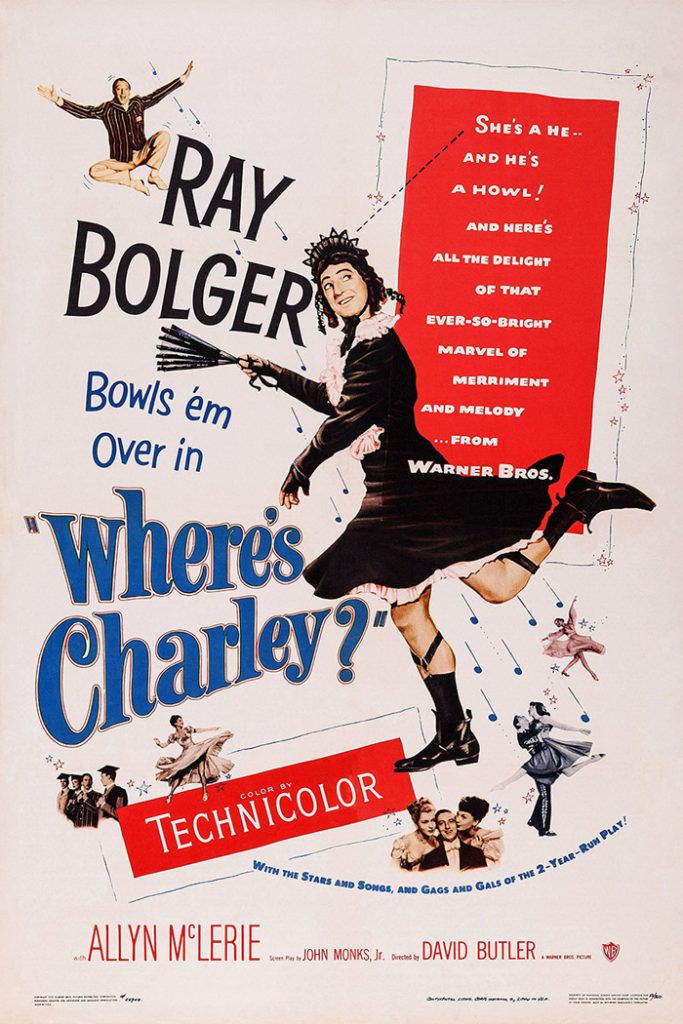
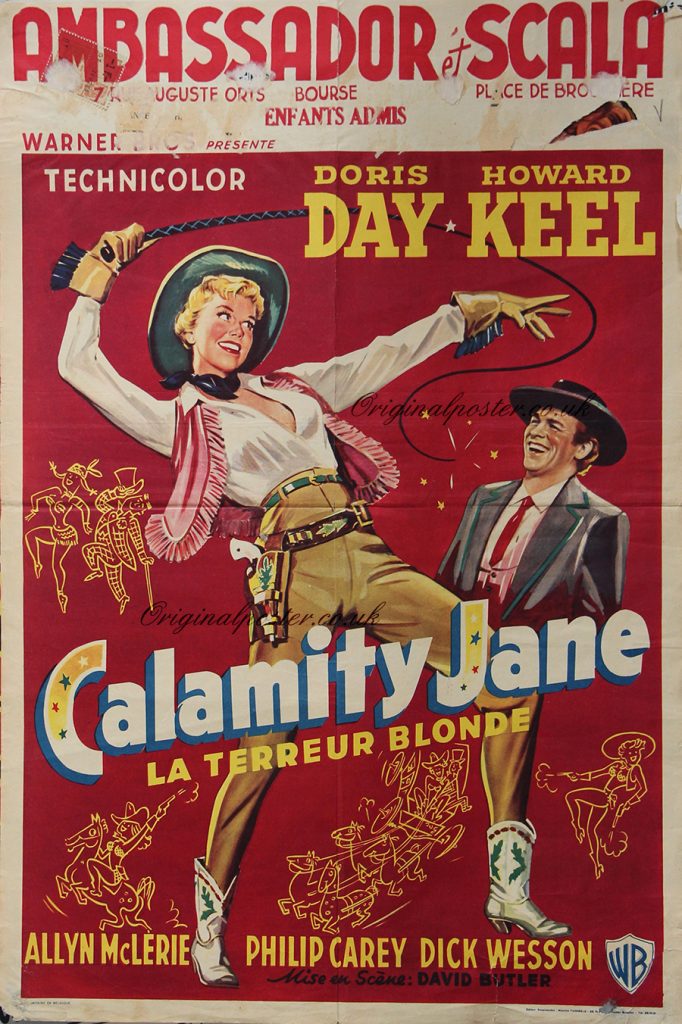
Allyn Ann McLerie was born in Canada in 1926. She starred on Broadway in “Where’s Charlie” in 1948. She went on to make the film of the show in 1952. Her two best known film roles are “Calamity Jane” with Doris Day and Howard Keel in 1953 and “They Shoot Horses Dont’ They” with Jane Fonda, Michael Sarrazin and Susannah York in 1969.
Allyn Ann McLerie, who had a celebrated career on the Broadway stage before exploring a variety of roles on screen, has died at the age of 91 following a battle with Alzheimer’s disease. Her death was confirmed to The New York Times by her daughter, Iya Gaynes Falcone Brown.
Ms. McLerie made her Broadway debut at the age of 16 in the dancing ensemble of 1943’s One Touch of Venus. She then appeared in the original production of On the Town, marrying co-star Adolph Green the following year (they divorced in 1953).
She next starred in Frank Loesser and George Abbott’s Where’s Charley? opposite Ray Bolger. Her performance as Amy Spettigue (who sings the soprano staple “The Woman In His Room”) earned Ms. McLerie a 1949 Theatre World Award.
Her later Broadway credits includedthe musical comedies Miss Liberty and Redhead and the 1960 revival of West Side Story (in which she played Anita opposite the musical’s original stars, Larry Kert and Carol Lawrence; Chita Rivera, who originated the role, was on Broadway at the same time in Bye Bye Birdie). Ms. McLerie made her last Broadway appearance in 1963 in the musical revue The Beast in Me.
On screen, Ms. McLerie is known for her work in such films as Calamity Jane and Cinderella Liberty, as well as on TV in Cannon, The F.B.I., The Tony Randall Show, and, later in her career, The Days and Nights of Molly Dodd.
Ms. McLerie married the late actor George Gaynes in 1953; the two briefly shared the screen as love interests in a two-episode arc of Punky Brewster. She is survived by their daughter, as well as a granddaughter and two great-granddaughters
Adrian Booth was born in 1917 in Grand Rapids, Michigan. She also acted under the name of Lorna Gray. Her films include “Daughter of Don Q” in 1946 and “Dakota”. She was long married to actor David Brian.
BRIMSTONE, US poster, top from left: Rod Cameron, Adrian Booth, Walter Brennan, bottom right: Forrest Tucker, 1949
New York Times obituary in 2017.
Adrian Booth, a versatile film actress who also took pies to the face alongside the Three Stooges, died Sunday, April 30, 2017. She was 99.
Relatives of the actress announced Booth’s death in a post via social media.
Booth appeared in several Three Stooges short films including a memorable pie-throwing scene in “Three Sappy People.” She played Sherry, a spoiled wife. Other Stooges shorts included “You Nazty Spy!”, “Oily to Bed, Oily to Rise,” and “Rockin’ Thru the Rockies.”
She was born Virginia Pound July 26, 1917, in Grand Rapids, Michigan.
During the 1930s, when she became a contract player with Columbia Pictures, studio executives renamed her Lorna Gray. She played parts in “Flying G-Men” alongside Robert Paige, “Pest From the West” with Buster Keaton, and the above-mentioned Stooges film shorts.
Her films included “Red River Range,” a 1938 film starring John Wayne; “O, My Darling Clementine,” a 1943 film starring the country music singer Roy Acuff as a singing sheriff; and “Hold ‘Em Navy.” In the latter film, her birth name appeared in the credits.
Booth also played the lead character’s secretary, Gail Richards, in Republic Pictures’ 1944 “Captain America” film serials about the comic book superhero.
After leaving Columbia in 1945, she took a different stage name, Adrian Booth, and had retained the name ever since. She retired from her film career after marrying the actor David Brian in 1949; he preceded her in death in 1993.
In 2007, Booth told writer John Beifuss that she had a great time working for Republic Pictures in films such as “Along the Oregon Trail” and “Home on the Range.”
“They were so good to me,” Booth said. “Every time I started a picture, my boss would send me flowers.”
After appearing in the Three Stooges film shorts, she became good friends with the Stooge Larry Fine. She called Fine, who died in 1975, “a very sweet boy.”
For her work in Western films and TV series, Booth received the Golden Boot Award in 1998. She was a frequent film festival attendee even into her 90s.
Alvy Moore was born in 1921 in Indiana. His first role was in 1952 in “Okinawa”. His other films include “Susan Slept Here” in 1954, “5 Against the House”, “Screaming Eagles” and “Early Warning”. Despite been featured prominently in many feature films, he was often credited in the cast lists which is a shame as he was always a fine actor. He died in 1997 in Palm Desert, California.
TCM Overview:
A comic player of feature films and TV, Alvy Moore will always be remembered as county agent Hank Kimball on the long-running CBS sitcom “Green Acres” (1965-71). Wearing a trademark hat, Hank Kimball made Eddie Albert’s life nuts by never quite knowing the answer to any agricultural question, but hedging the situation with double-talk.
Moore studied drama in his native Indiana before serving in the Marines during WWII, during which he participated in the battle for Iwo Jima. Post-war, he furthered his training at the Pasadena Playhouse. Moore succeeded David Wayne in the role of Ensign Pulver opposite Henry Fonda’s “Mister Roberts” on Broadway, and later toured with the play. As if life were following art, he made his screen debut playing the quartermaster in “Okinawa” (1952). For much of the 1950s, he was relegated to small roles in features, like his turns opposite Marilyn Monroe in “Gentlemen Prefer Blondes” (1953) and as Mitzi Gaynor’s boyfriend in “There’s No Business Like Show Business” (1954). Frustrated by his stalled career, Moore supplemented his income by purchasing an interest in an iron foundry that made tile tabletops and considered abandoning his dream. He had one of his better roles as the wisecracking member of a group out to rob a casino in the crime caper “Five Against the House” (1955), co-starring Brian Keith and Kim Novak. While he appeared in support of stars like Gregory Peck and Lauren Bacall in “Designing Woman” (1957) and Jack Lemmon in “The Wackiest Ship in the Army” (1961), his roles remained decidedly supporting. He remained active in features into the 1980s, generally in small parts such as a gas station mechanic in a sheriff in “Dr. Minx” (1975), and a chili salesman in “The Horror Show” (1989), among others. With L Q Jones, he formed a producing partnership that resulted in the above-average thriller “The Brotherhood of Satan” (1971), about a town overtaken by a coven of witches, and the futuristic black comedy “A Boy and His Dog” (1975), starring Don Johnson. Moore also reprised the voice for Grandpa in “Here Comes the Littles” (1985), a feature based on the 1983 ABC animated series.
Moore found his greatest success on the small screen. In 1955, he was the narrator for the ABC series “Border Collie” and that same year appeared as a reporter in the “What I Want To Be” segments of “The Mickey Mouse Club” (ABC). He amassed numerous guest credits on series, including “My Little Margie”, “Pete and Gladys”, “The Beverly Hillbillies” and “The Andy Griffith Show”. Moore remained active into the 1990s, with guest appearances on “Frasier” (NBC, 1994, as a patient) and “The Pursuit of Happiness” (NBC, 1995, as a wedding guest).
In TV longforms, Moore played a distraught father in “Cotton Candy” (NBC, 1978) and the first mayor in “Little House: The Last Farewell” (NBC, 1989). He also revived the character of Hank Kimball in “Return to Green Acres” (CBS, 1990).
The above TCM overview can also be accessed online here.
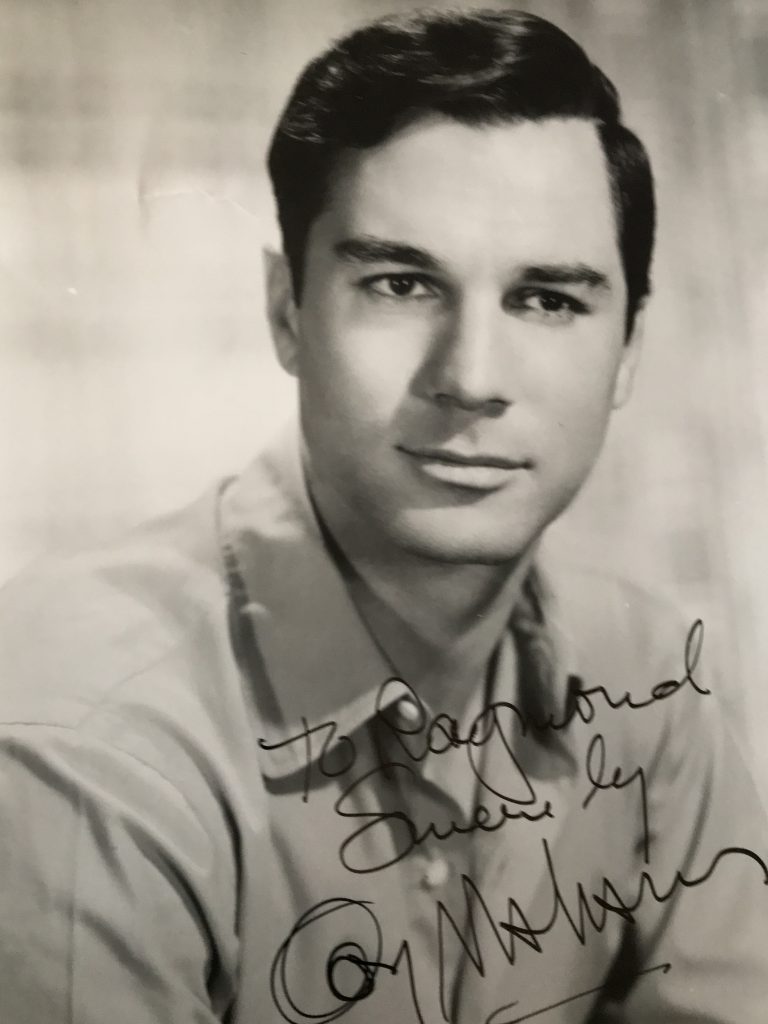
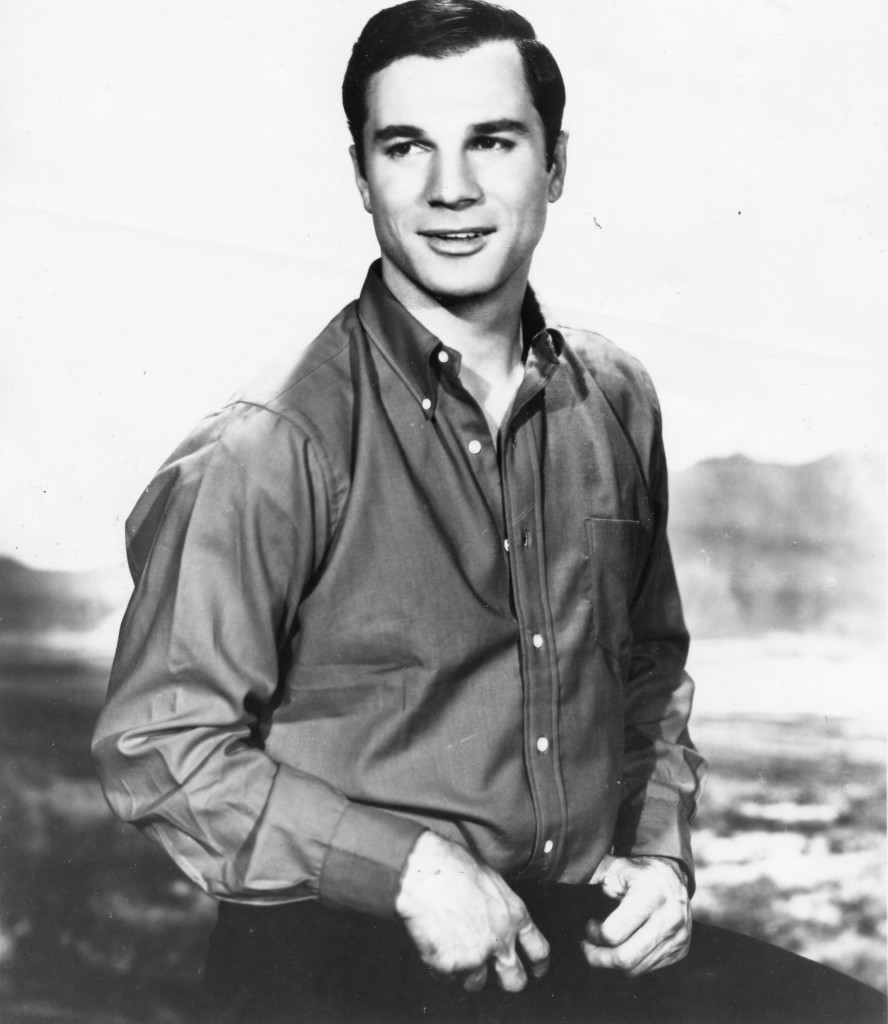
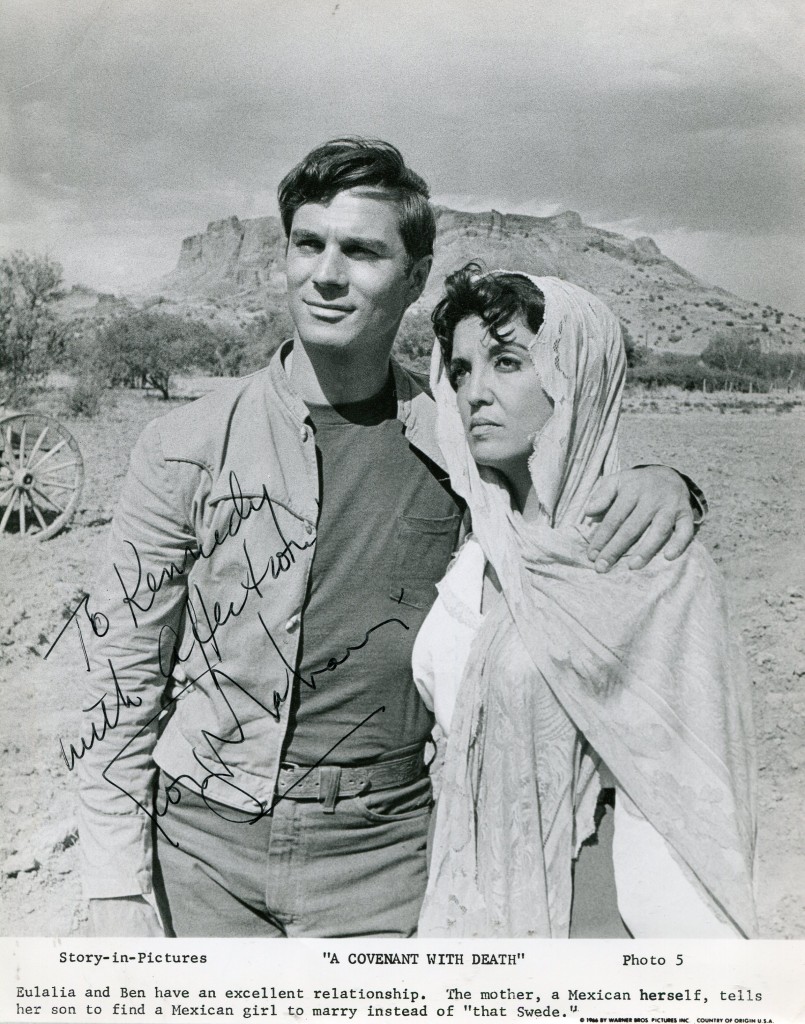
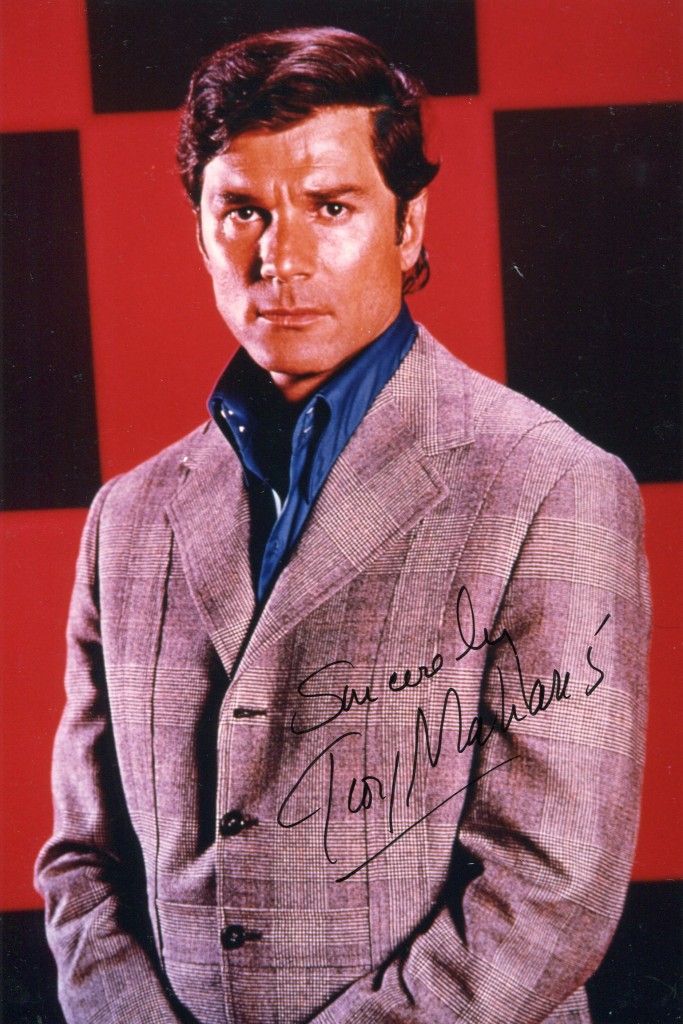
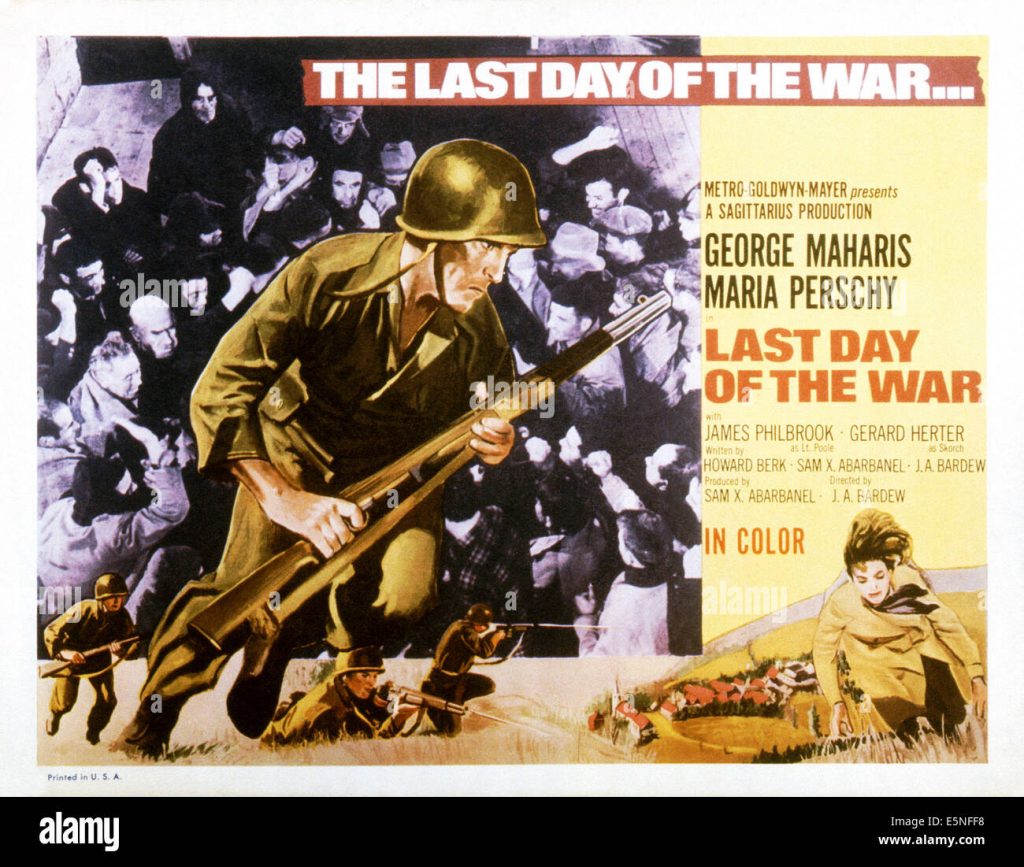
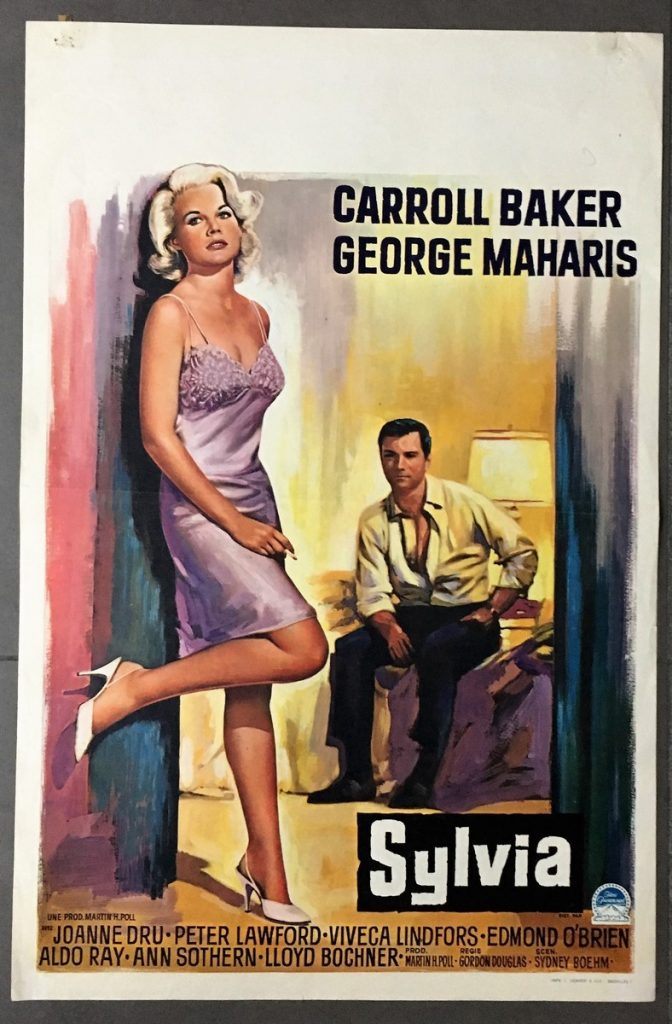
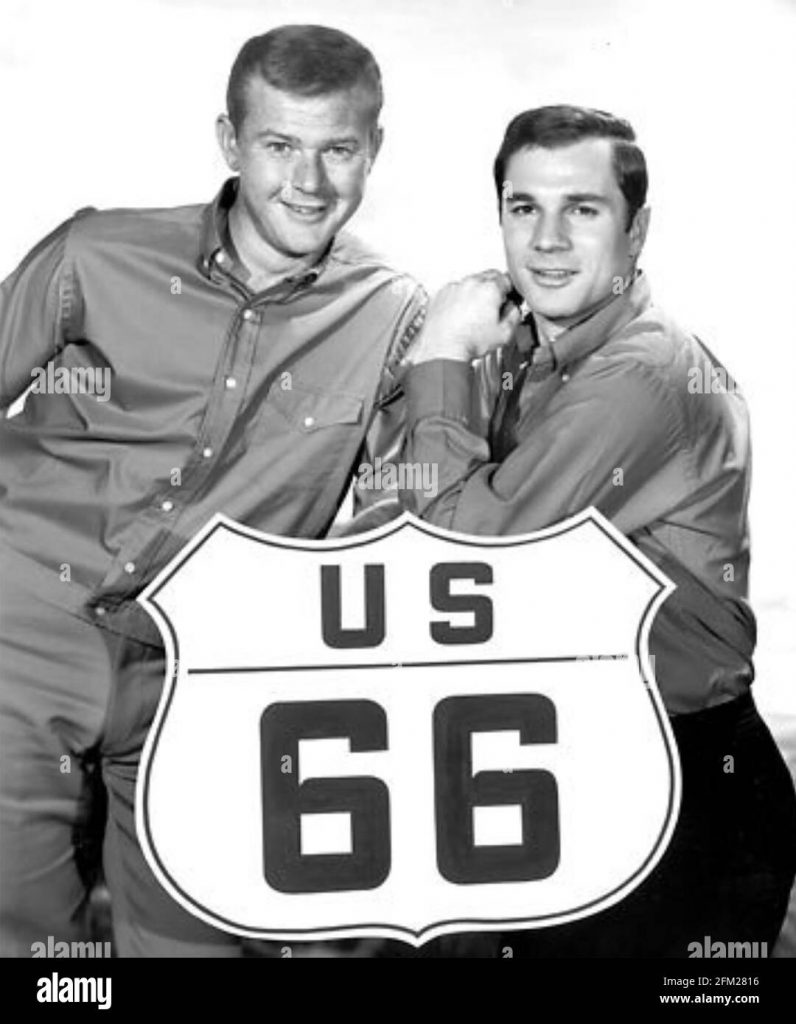
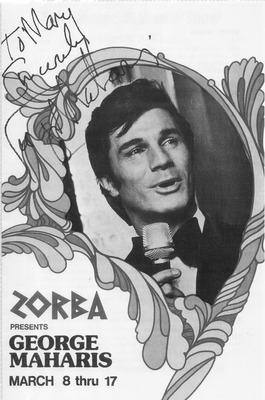
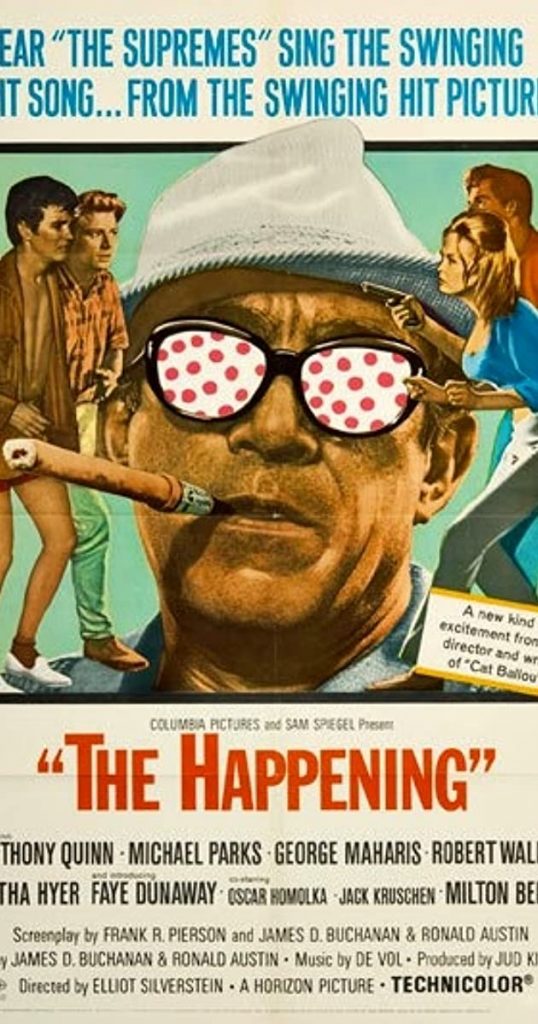
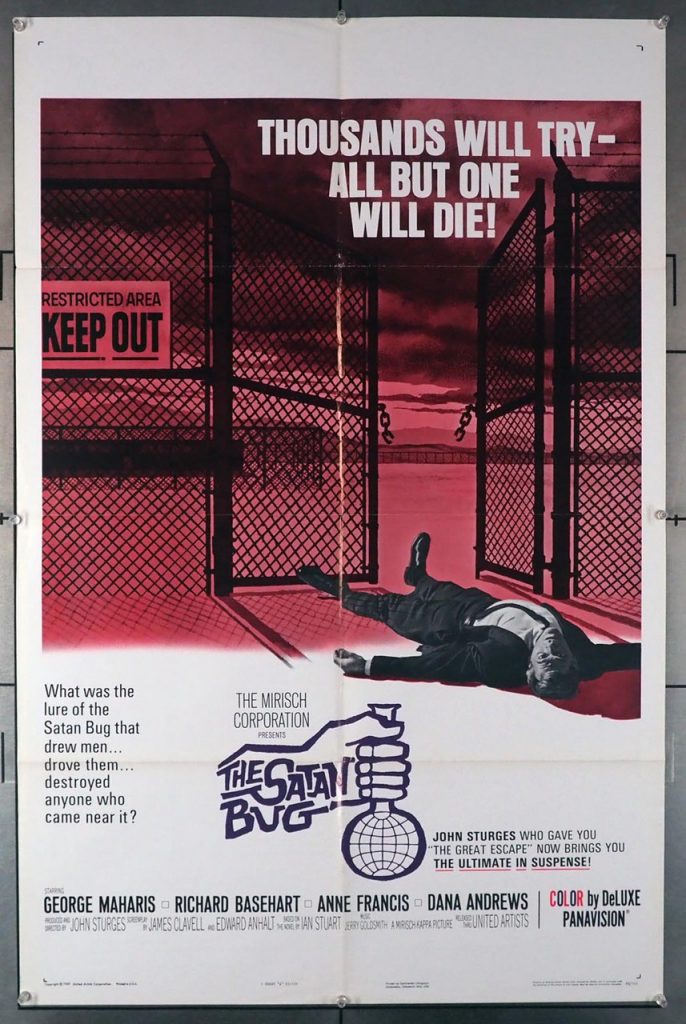
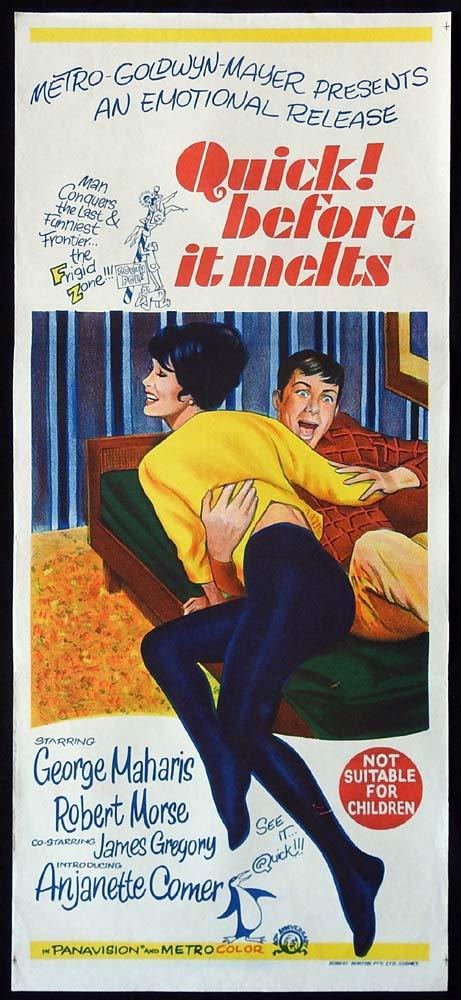
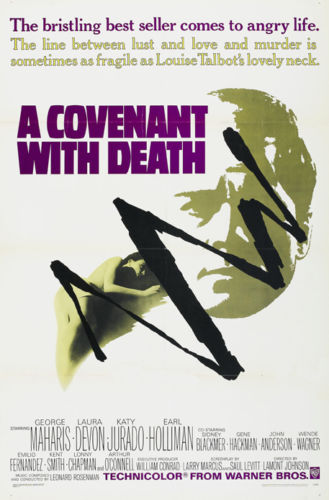
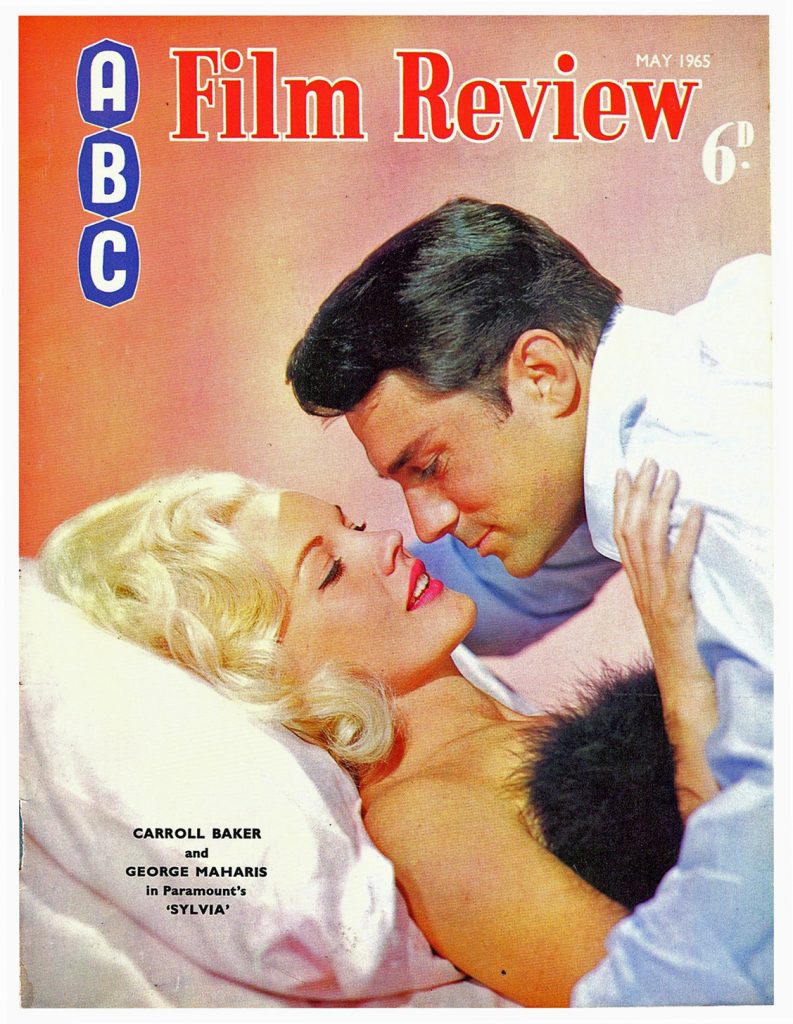
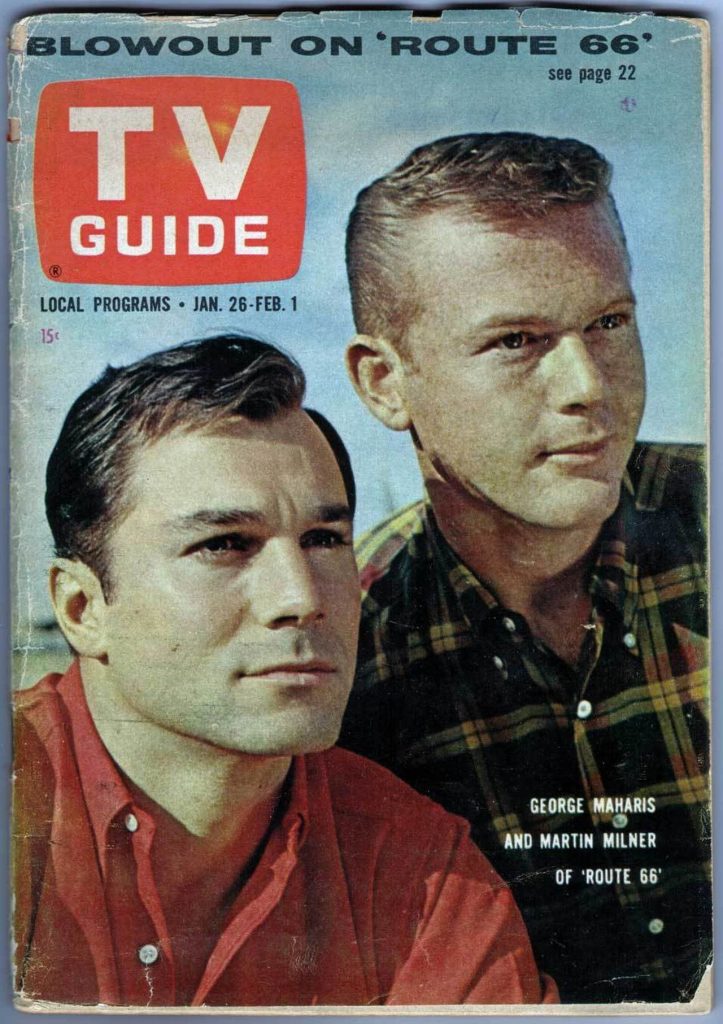
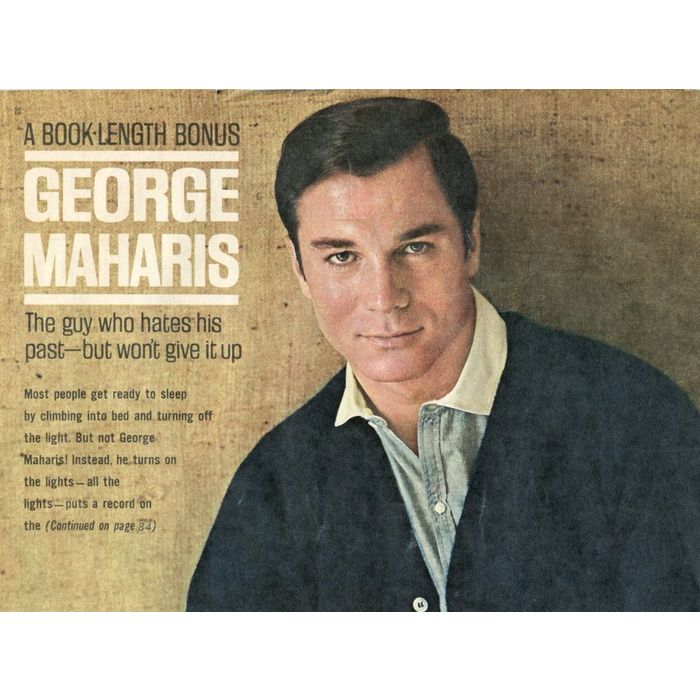
George Maharis is best known for his role in the cult TV series of the 1960’s “Route 66”. He was born in 1928 in Astoria, New York of Greek parentage. He studied at the Actor’s Studio and acted on the stage in New York. His fil debut was in 1960 in Otto Preminger’s “Exodus”. That same year he was cast as Buz Mordock in “Route 66” with Martin Milner. He left the series midway through the third year and was replaced by Glenn Corbett. He made some further movies including in 1964 “Quick Before It Melts”, “The Satan Bug” a thriller with Anne Francis, “Sylvia” with Carroll Baker and “A Covenant With Death” with Katy Jurado. He guest-starred in may television series, one of the last was “Murder She Wrote” with Angela Lansbury in 1990.
Gary Brumburgh’s entry:
Tall, dark and handsome, not to mention a charismatic rebel of 60s Hollywood, actor George Maharis (real Greek family name is Mahairas) was born in 1928 in Astoria, New York as one of seven children. His immigrant father was a restaurateur. George expressed an early interest in singing and initially pursued it as a career, but extensive overuse and improper vocal lessons stripped his chords and he subsequently veered towards an acting career.
Trained at the Neighborhood Playhouse with Sanford Meisner and the Actor’s Studio withLee Strasberg, the “Method” actor found roles on dramatic TV, including a few episodes of “The Naked City,” and secured an early name for himself on the late 1950s’s off-Broadway scene, especially with his performances in Jean Genet‘s “Deathwatch” andEdward Albee‘s “Zoo Story”. Producer/director Otto Preminger “discovered” George for film, offering the actor a choice of five small roles for his upcoming film Exodus (1960). George chose the role of an underground freedom fighter.
One of the episodes George did on the police drama “The Naked City” series (“Four Sweet Corners”) wound up being a roundabout pilot for the buddy adventure series that would earn him household fame. With the arrival of the series Route 66 (1960), the actor earned intense TV stardom and a major cult following as a Brandoesque, streetwise drifter named Buzz Murdock. Partnered with the more fair-skinned, clean-scrubbed, college-educated Tod Stiles (Martin Milner, later star of Adam-12 (1968)), the duo traveled throughout the U.S. in a hotshot convertible Corvette and had a huge female audience getting their kicks off with “Route 66” and George. During its peak, the star parlayed his TV fame into a recording career with Epic Records, producing six albums in the process and peaking with the single “Teach Me Tonight”.
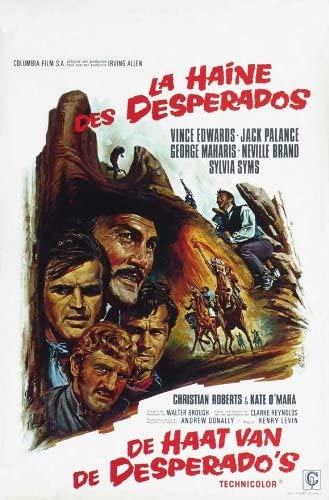
For whatever reason, Maharis left. His replacement, ruggedly handsome Glenn Corbett, failed to click with audiences and the series was canceled after the next season. Back to pursuing films, the brash and confident actor, with his health scare over, aggressively stardom with a number of leads but the duds he found himself in — Quick Before It Melts(1964), Sylvia (1965), A Covenant with Death (1967), The Happening (1967), and The Desperados (1969) prime among his list of disasters — hampered his chances. The best of the lot was the suspense drama, The Satan Bug (1965), but it lacked box-office appeal and disappeared quickly. Moreover, a 1967 sex scandal (and subsequent one in 1974) could not have helped.
Returning to TV in the 70s, George returned to series TV with the short-lived The Most Deadly Game (1970) co-starring fellow criminologists Ralph Bellamy and Yvette Mimieux(who replaced the late Inger Stevens who committed suicide shortly before shooting was about to start). The decade also included a spat of TV-movies including the more notableThe Monk (1969) and Rich Man, Poor Man (1976). In between he appeared in Las Vegas nightclubs and summer stock, and was one of the first celebrities to pose for a nude centerfold in Playgirl (July 1973).
His last years brought about the occasional film, most notably as the resurrected warlock in The Sword and the Sorcerer (1982) and an appearance in the horror thrillerDoppelganger (1993). Maharis’ TV career ended with guest parts on such popular but unchallenging shows such as “Fantasy Island” and “Murder, She Wrote”.
Maharis’ later years were spent focusing on impressionistic painting. He has been fully retired since the early 1990s.
– IMDb Mini Biography By: Gary Brumburgh / gr-home@pacbell.net
New York Times obituary in 2023:
George Maharis, TV Heartthrob of ‘Route 66,’ Is Dead at 94
He appeared in Off Broadway roles before starring on CBS as one of two young men who find adventure crossing the country in a Corvette convertible.
George Maharis, the ruggedly handsome New York-born stage actor who went on to become a 1960s television heartthrob as a star of the series “Route 66,” died on Wednesday at his home in Beverly Hills, Calif. He was 94.
His longtime friend and caretaker, Marc Bahan, confirmed the death.
Mr. Maharis’s greatest fame arose from the role of Buz Murdock, one of two young men who traveled the country in a Corvette convertible finding a new adventure and drama (and usually a new young woman) each week on CBS’s “Route 66.”
“Route 66” began in 1960, and Mr. Maharis left the show in 1963. His co-star, Martin Milner, got a new partner, played by Glenn Corbett, and the series continued for one more season.
Mr. Maharis attributed his departure to health reasons (he was suffering from hepatitis), but Karen Blocher, an author and blogger who interviewed him and other principal figures on the show, wrote in 2006 that the story was more complex.
Herbert B. Leonard, the show’s executive producer, “thought he’d hired a young hunk for the show, a hip, sexy man and good actor that all the girls would go for,” Ms. Blocher wrote.
“This was all true of Maharis,” she went on, “but not the whole story, as Leonard discovered to his anger and dismay. George was gay, it turned out.”
Ms. Blocher attributed Mr. Maharis’s departure to a number of factors. “The producers felt betrayed and duped when they learned of Maharis’s sexual orientation, and never trusted him again,” she wrote, adding, “Maharis, for his part, started to feel that he was carrying the show and going unappreciated.”
Mr. Maharis was arrested in 1967 on charges of “lewd conduct” and in 1974 on charges of “sex perversion” for cruising in men’s bathrooms.
He did not discuss his sexuality in interviews, but he proudly described being the July 1973 nude centerfold in Playgirl magazine in an interview with Esquire in 2017.
Story continues below advertisement
“A lot of guys came up to me and asked me to sign it for their ‘wives,’” he said.
Mr. Maharis had done well-received work in theater before becoming a television star. In 1958 he played a killer in an Off Broadway production of Jean Genet’s “Deathwatch.” Writing in The Times, Louis Calta described Mr. Maharis’s performance as “correctly volatile, harsh, soft and cunning.”
Two years later, he appeared in Edward Albee’s “Zoo Story” in its Off Broadway production at the Provincetown Playhouse. That year he was one of 12 young actors given the Theater World Award. The other winners included Warren Beatty, Jane Fonda, Patty Duke and Carol Burnett. In 1962, he was nominated for an Emmy Award for his work on “Route 66.”
Mr. Maharis told a writer for The Times in 1963 that he treated the TV series like a job in summer stock theater.
“The series taught me how to maintain my integrity and not be sucked in by compromise,” he said.
George Maharis was born in the Astoria section of Queens on Sept. 1, 1928, the son of a Greek restaurateur. He attended Flushing High School and later served in the Marines.
Before succeeding as an actor, he told interviewers, he had worked as a mechanic, a dance instructor and a short-order cook. But he had aspired to a singing career first, and after he became a television star he recorded albums, including “George Maharis Sings!,” “Portrait in Music” and “Just Turn Me Loose!” At least one single, “Teach Me Tonight,” became a hit.
After leaving “Route 66,” Mr. Maharis appeared in feature films, including “Sylvia,” with Carroll Baker, and “The Satan Bug,” a science-fiction drama, both from 1965. He tried series television again in 1970 as the star of an ABC whodunit, “The Most Deadly Game,” with Ralph Bellamy and Yvette Mimieux, but the show lasted only three months.
Story continues below advertisement
In the 1970s and early ’80s, he made guest appearances on other television series, including “Police Story,” “The Bionic Woman” and “Fantasy Island.” He did occasional television films, including a poorly reviewed 1976 “Rosemary’s Baby” sequel. He worked infrequently in the 1980s and made his final screen appearance in a supporting role in “Doppelganger,” a 1993 horror film starring Drew Barrymore.
Information about his survivors was not immediately available.
Because of his filming schedule when the shows aired, Mr. Maharis did not have a chance to watch “Route 66” until it was rereleased on DVD in 2007, he told the website Route 66 News that year.
“I was really surprised how strong they were,” he said. “For the first time, I could see what other people had seen.”
In a 2012 reappraisal of the show in The New York Times, Neil Genzlinger praised the literary quality of the scripts and commented, “This half-century-old black-and-white television series tackled issues that seem very 21st century.”
Several actors who went on to greater renown appeared on the show, including Martin Sheen, Robert Redford, Robert Duvall and Barbara Eden.
In an interview in 2007 with The Chicago Sun-Times, he reflected on his “Route 66” days and on how the country had changed since then. “You could go from one town to the next, maybe 80 miles away, and it was a totally different world,” he said. “Now you can go 3,000 miles and one town is the same as the next
George Maharis (1928–2023) was an actor of smoldering, urban intensity who became the face of the “Restless American” in the early 1960s. A critical analysis of his work reveals a performer who bridged the gap between the theatrical Method acting of the 1950s and the gritty TV realism of the 1960s, carrying a “Brando-esque” weight that felt dangerous.
I. Career Overview: From Hell’s Kitchen to the Open Road
1. The Method Apprentice (1950s)
Raised in Astoria, Queens, Maharis was a pure product of the New York acting scene.
The Actors Studio: He studied under Sanford Meisner and Lee Strasberg, developing the “searching” quality that defined the Method.
The Stage Breakthrough: He won critical acclaim in off-Broadway productions, most notably in the U.S. premiere of Edward Albee’s The Zoo Story (1960).Critics praised his “harsh, soft, and cunning” performance, which established him as a “tough personality” in the tradition of John Garfield.
2. The Cultural Icon: Route 66 (1960–1963)
As Buz Murdock, Maharis became a household name.
The “Beat” Archetype: Paired with Martin Milner, Maharis played the darker, streetwise half of the duo.His Buz Murdock was a man looking for something he couldn’t name, traveling the highway in a Corvette.
The Emmy Nod: His performance earned him an Emmy nomination in 1962. Critically, he was hailed for bringing a “Kitchen Sink” reality to prime-time television, making the “drifter” feel like a legitimate moral seeker rather than a simple vagrant.
3. The Cinematic Pivot and Departure (1964–1970s)
Maharis’s career is famously defined by his abrupt departure from Route 66.
The Health Battle: He contracted hepatitis in 1962 and eventually left the show after relapsing, though rumors at the time suggested a desire to break into film.
The Genre Leap: He moved into big-screen roles, most notably in the “Noir-adjacent” sci-fi thriller The Satan Bug (1965) and the melodrama Sylvia (1965).While he remained a leading man, he never quite reclaimed the “superstar” status of his Route 66 days, eventually becoming a television staple in shows like The Most Deadly Game.
II. Detailed Critical Analysis
1. The “Architecture” of the Outsider
Critically, Maharis is analyzed for his physical and vocal “edges.” * The New York Cadence: Unlike the “Mid-Atlantic” polish of many leading men, Maharis kept his Queens accent. Analysts note that his voice had a “staccato” rhythm that suggested a man who grew up in the noise of the city. He didn’t speak his lines; he “pushed” them, giving his characters an urgent, Noir-tinged energy. He was the “Anti-Establishment” herobefore the term became a cliché.
2. The “Symmetric” Partner
Maharis was a master of the “Buddy Dynamic.”
The Foil to Order: In Route 66, his Buz was the “id” to Martin Milner’s “ego.” Critics point out that Maharis provided the “Psychological Friction” that made the show work. He wasn’t afraid to be unlikable, moody, or “intriguingly remote.” This “Modernist” approach to TV acting helped move the medium away from the “Security Blanket” perfection of the 1950s and into the grittier 1960s.
3. The “Fragile Toughness”
Like Nicol Williamson, Maharis possessed a “Nervous Vitality.”
The Vulnerable Alpha: In his film work, such as The Happening (1967), he played men who were physically imposing but emotionally exposed. Critics note that he had “Mediterranean good looks” paired with a “restless eye.” He represented the “Post-War Disillusionment”—the sense that even a man in a fast car on a beautiful road might still be running away from himself.
Iconic Performance Highlights
Work
Role
Year
Critical Achievement
The Zoo Story
Jerry
1960
Won the Theatre World Award for “First-Rate” acting.
Route 66
Buz Murdock
1960–63
Created the definitive “Urban Drifter” archetype.
The Satan Bug
Lee Barrett
1965
Anchored a high-stakes thriller with “Rugged Authority.”