Hollywood Actors

Collection of Classic Hollywood Actors

Robert De Niro
Robert De Niro
Robert De Niro

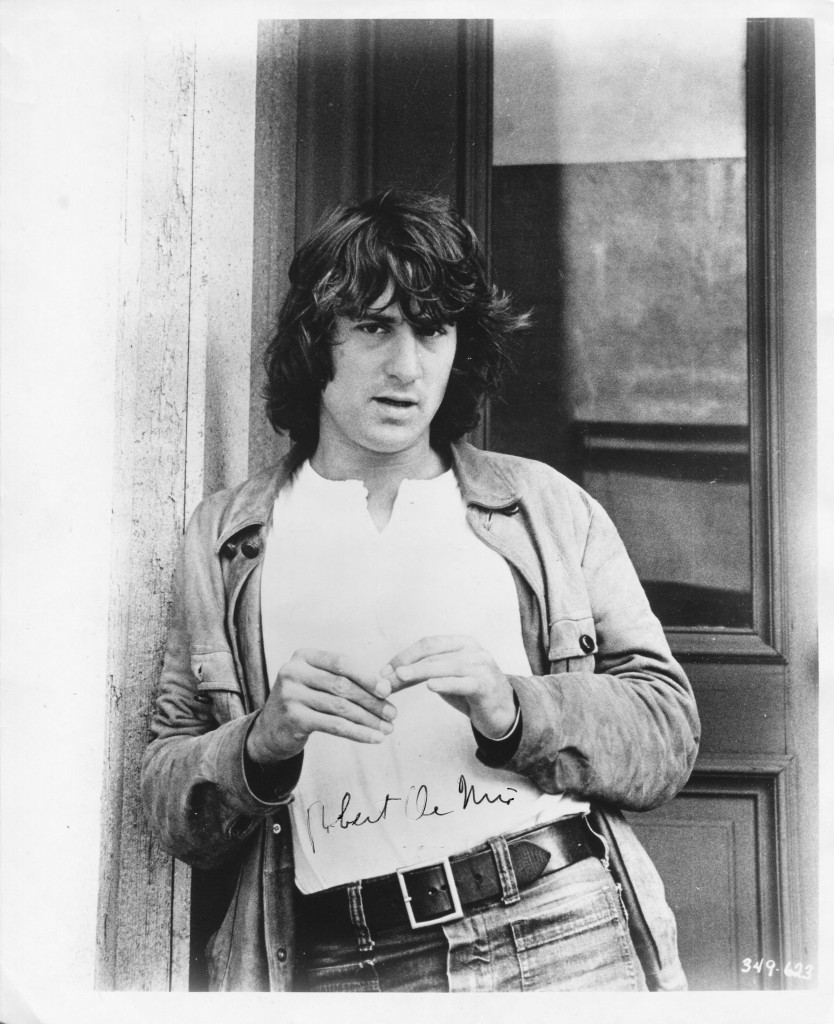
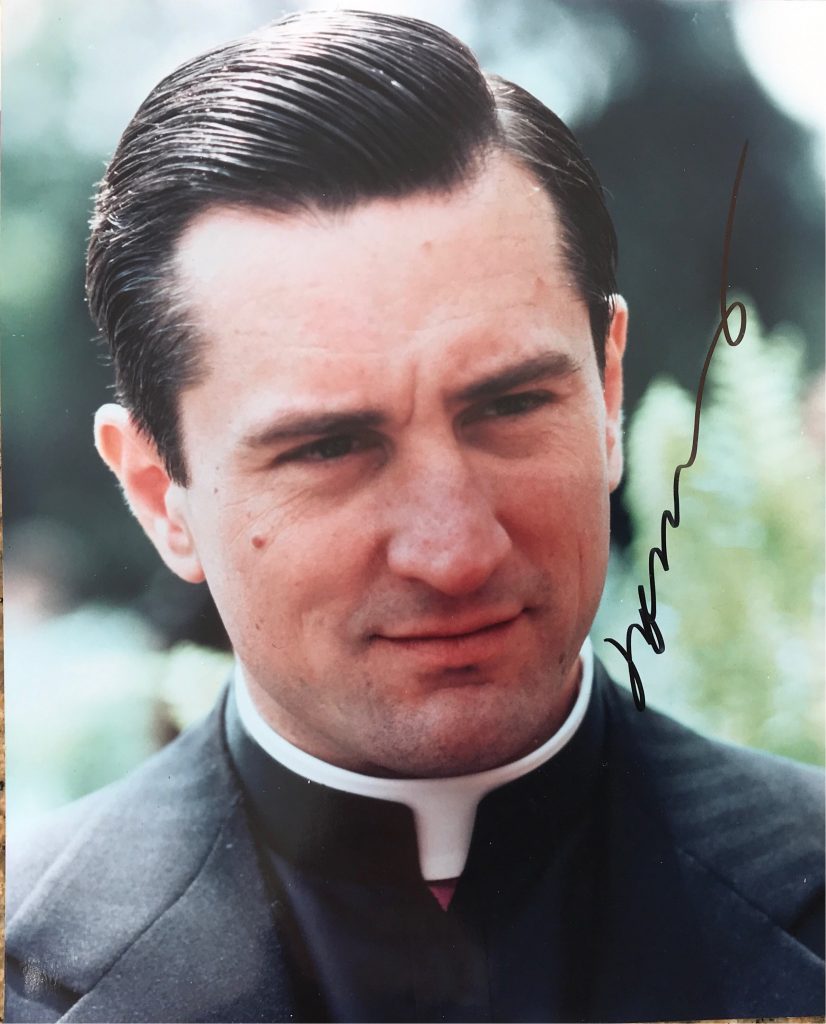
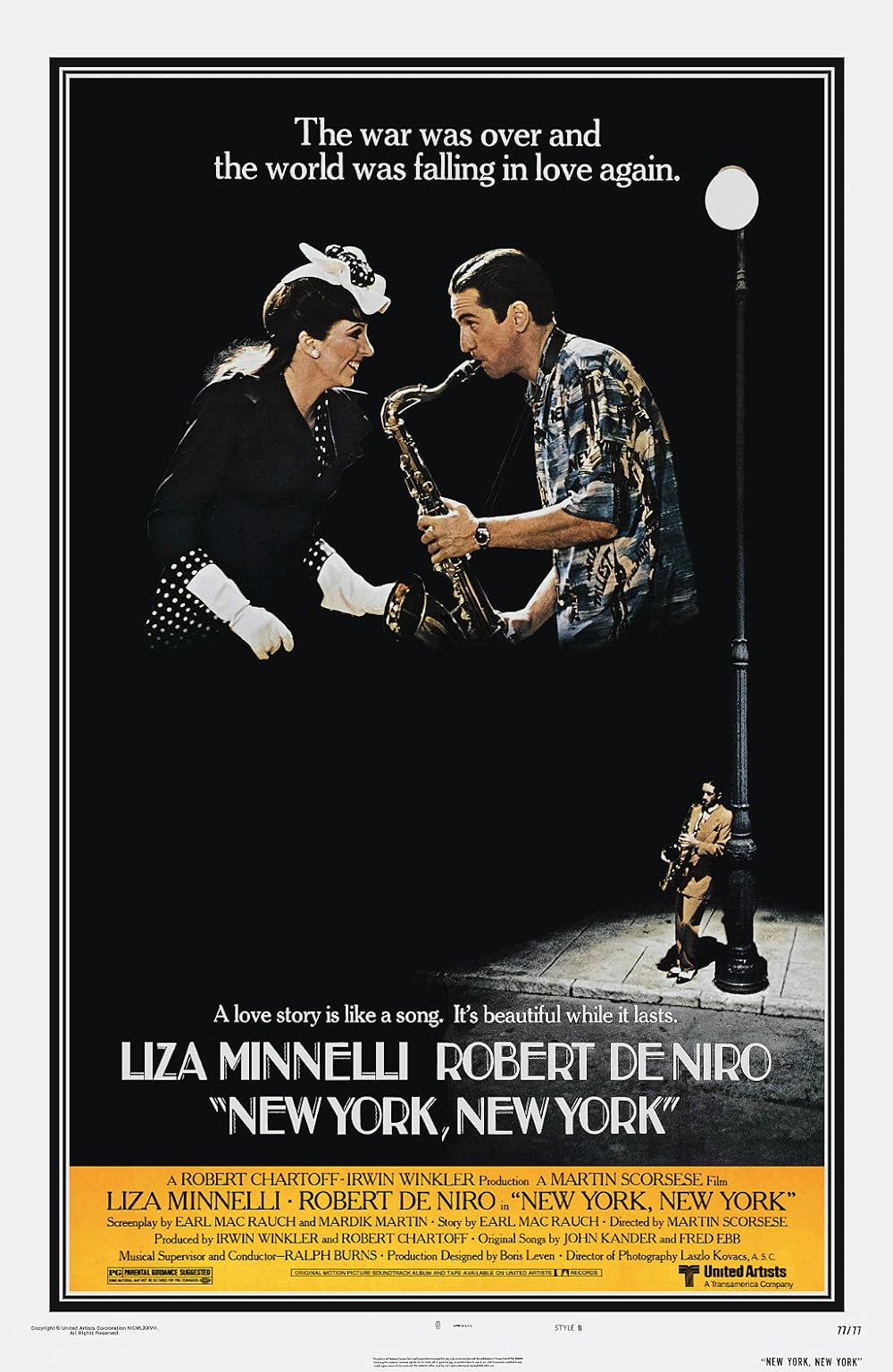
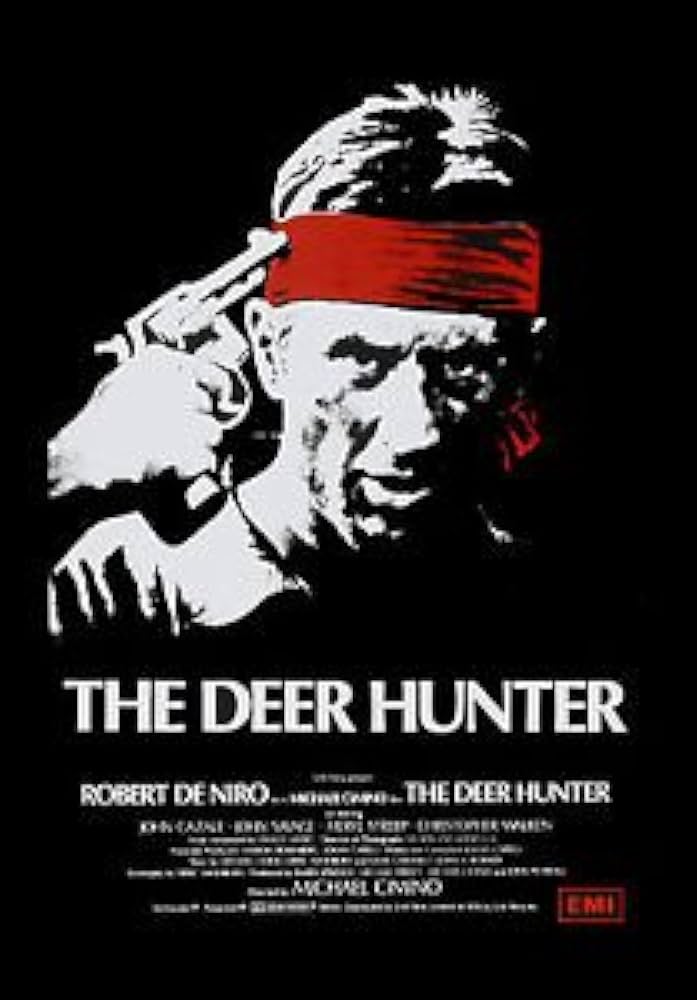
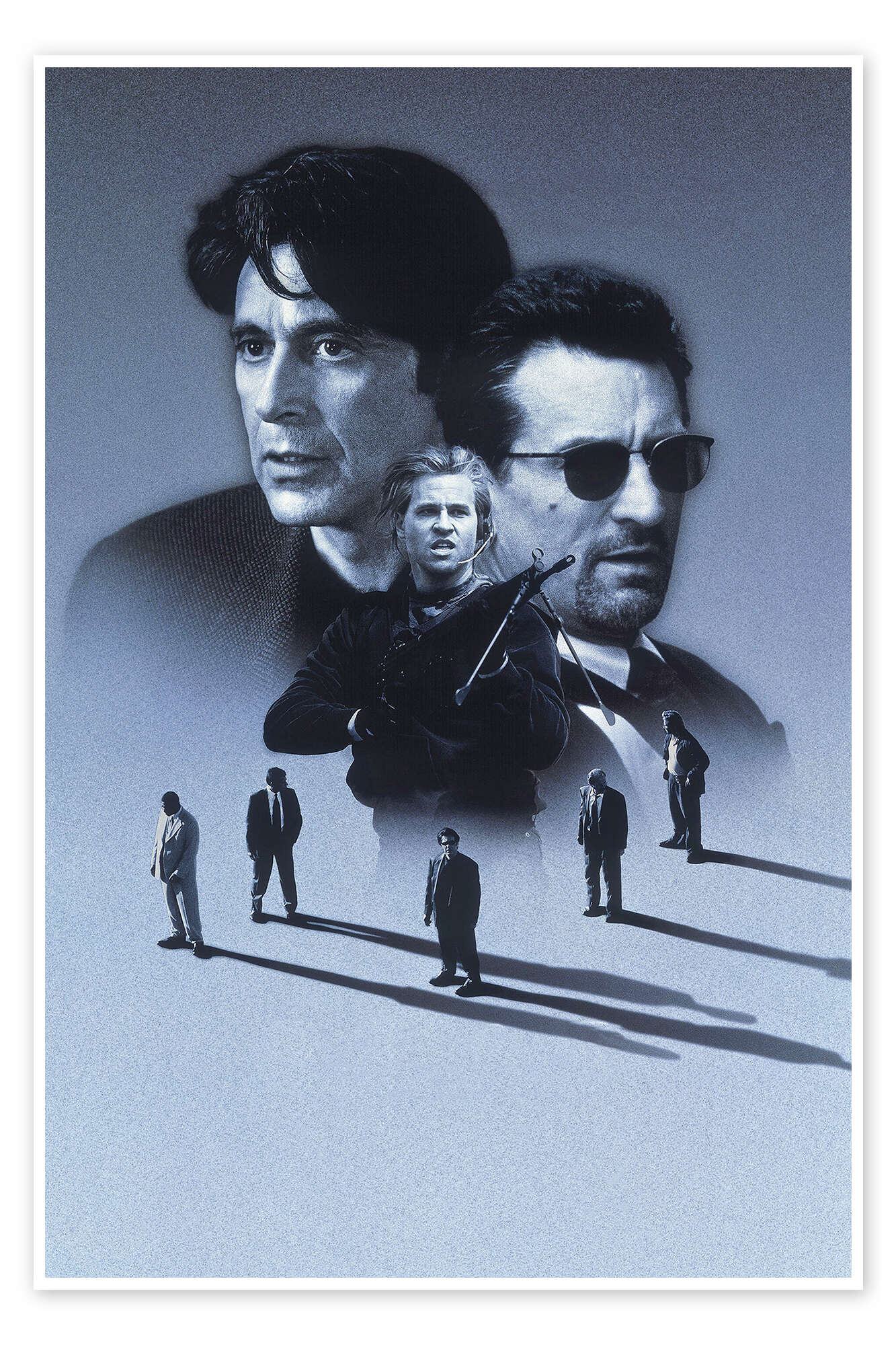
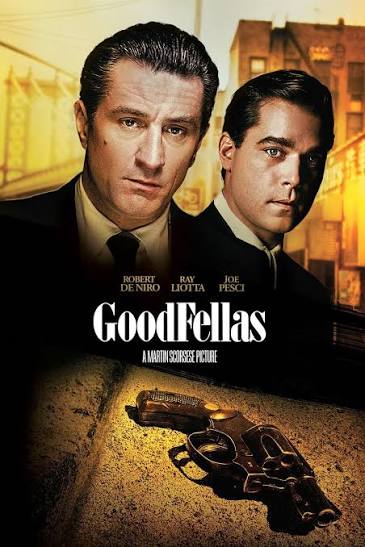
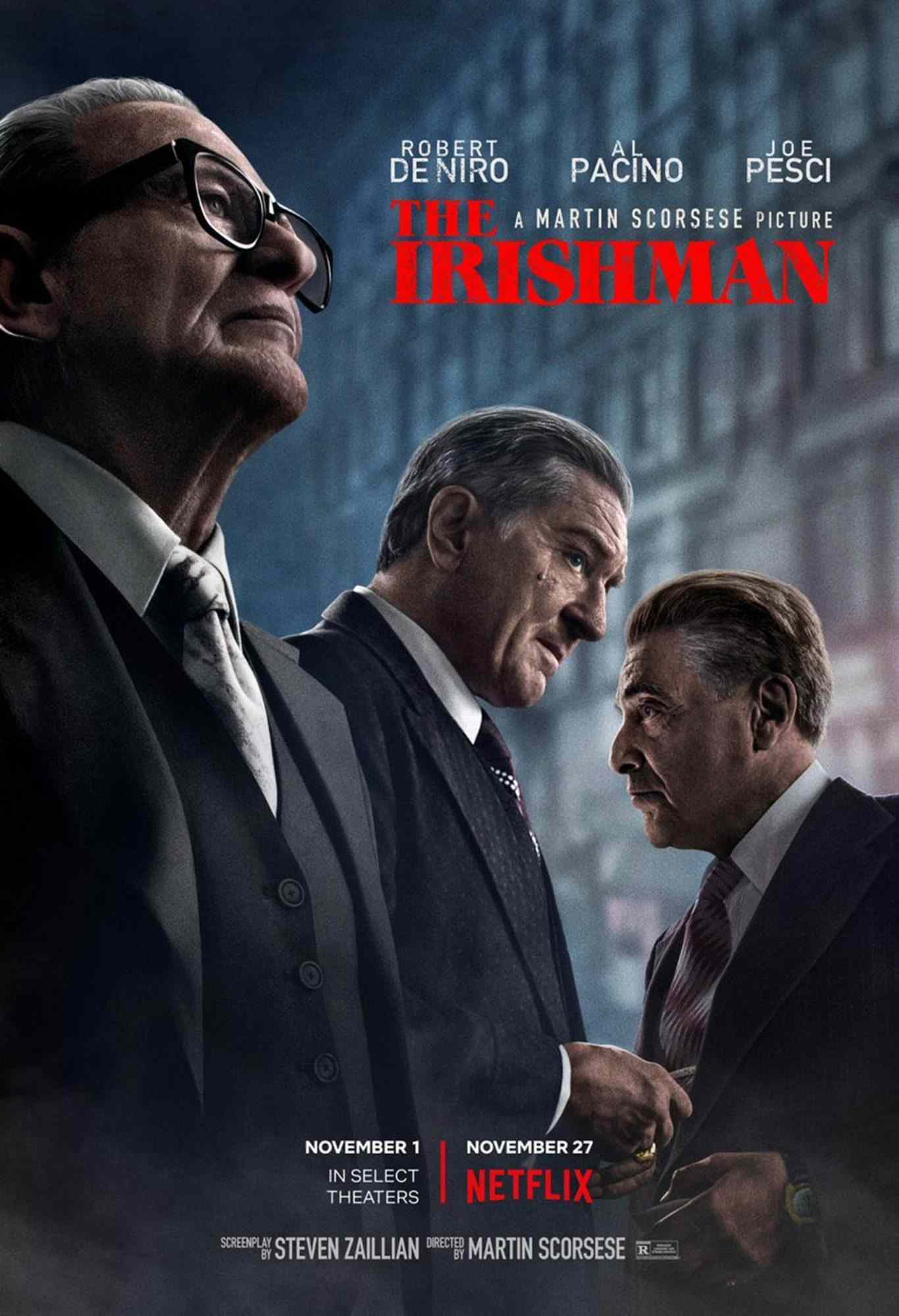
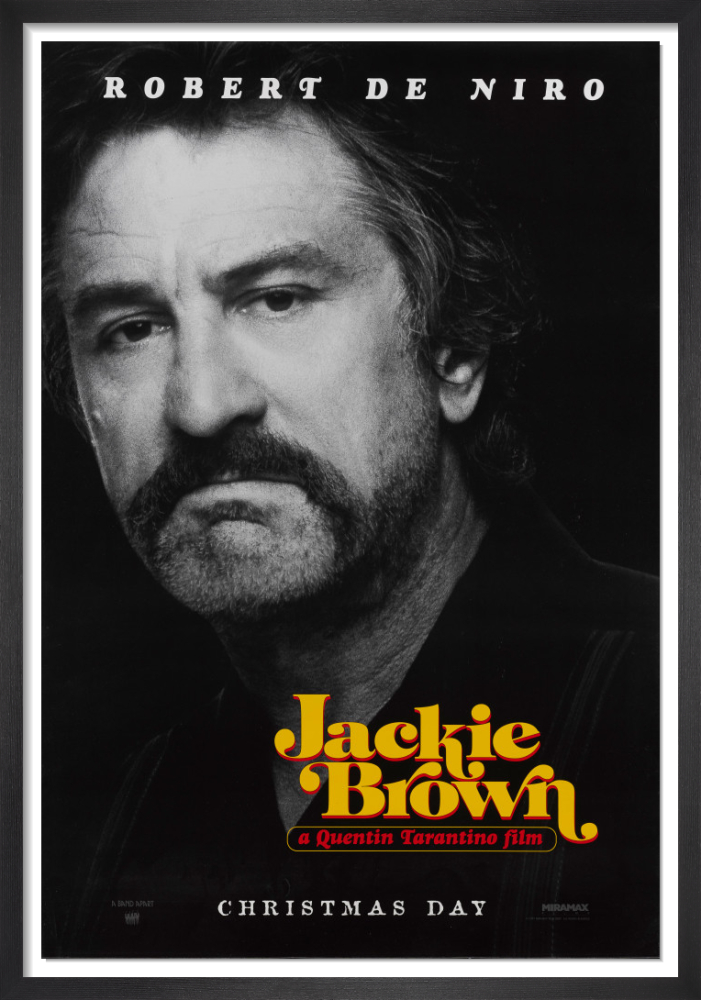
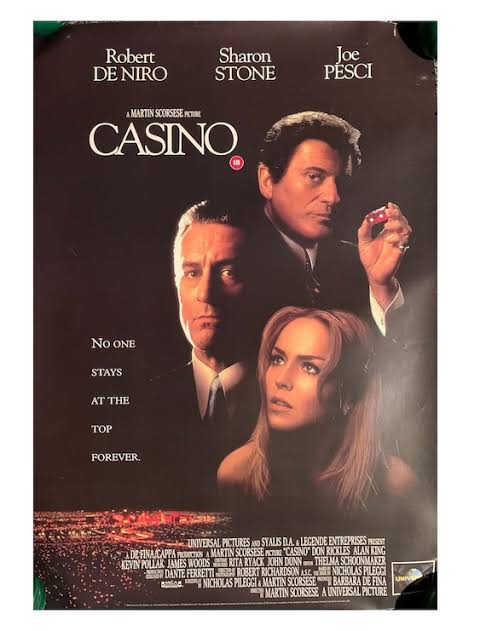
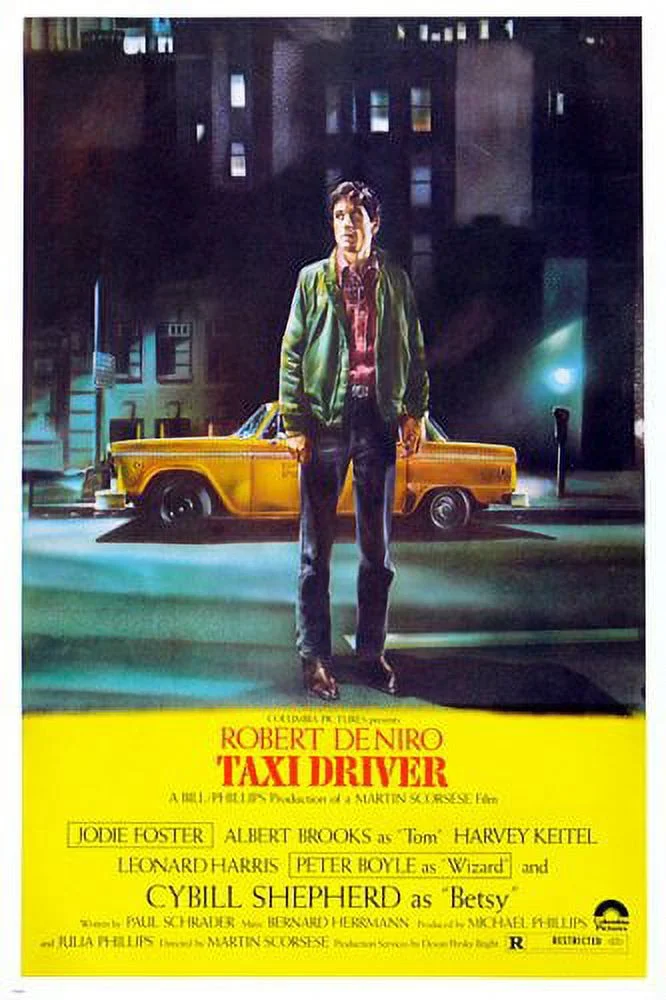
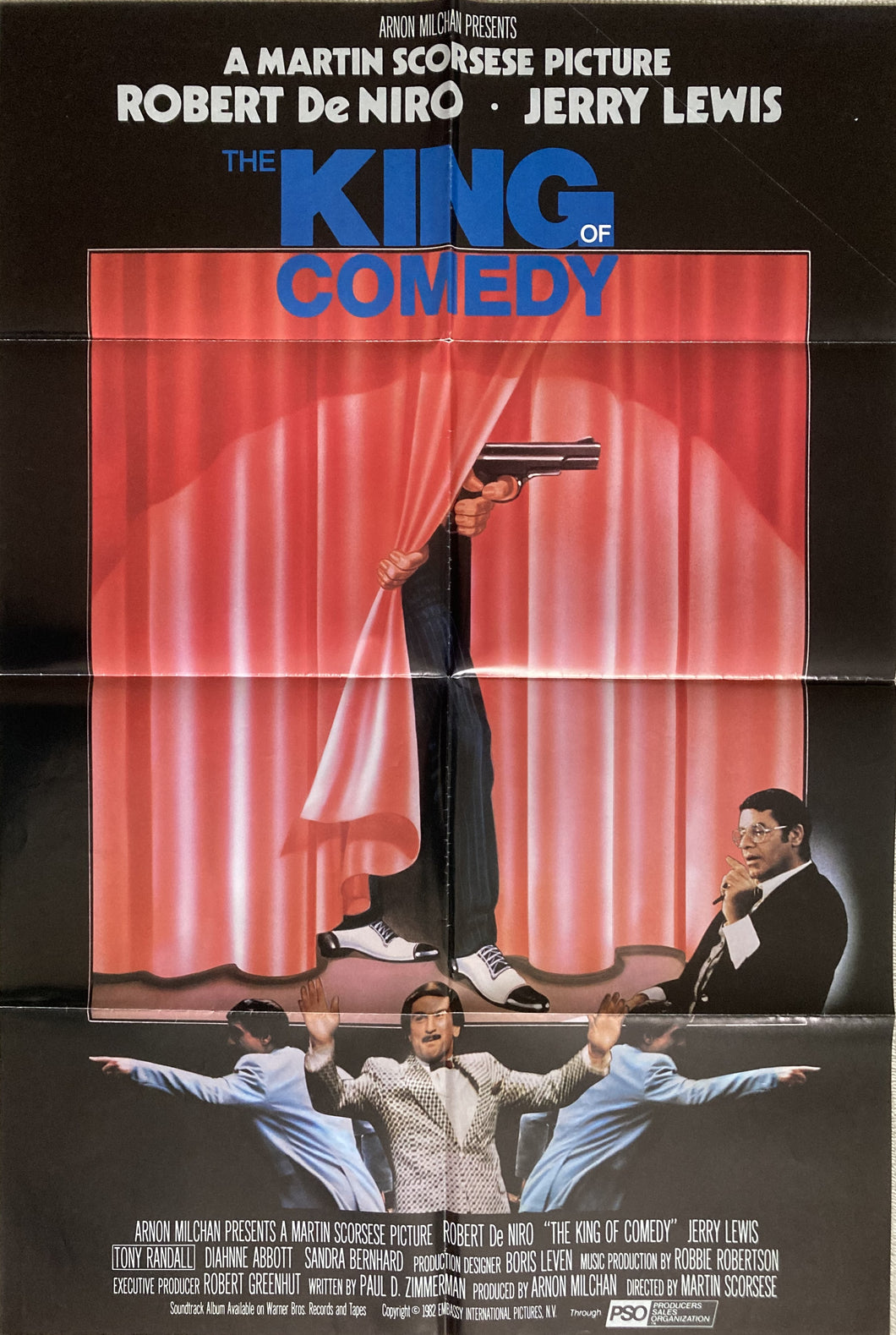
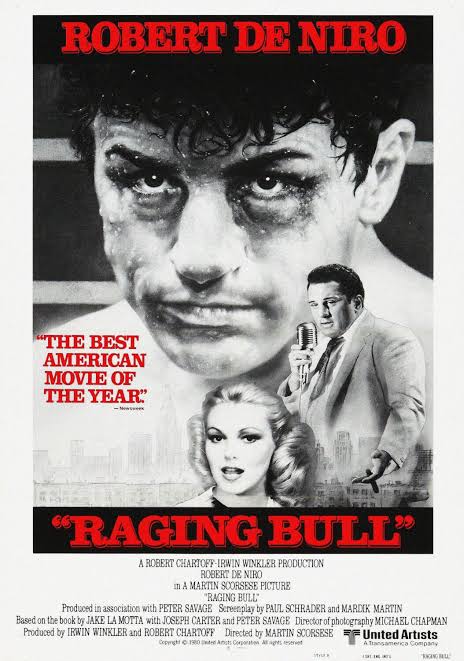
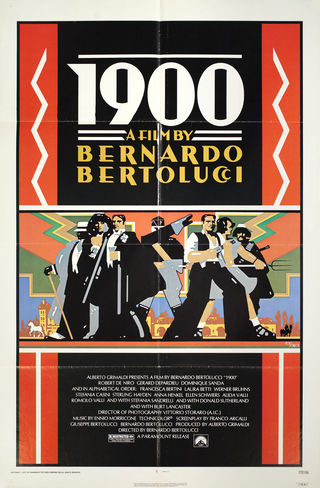
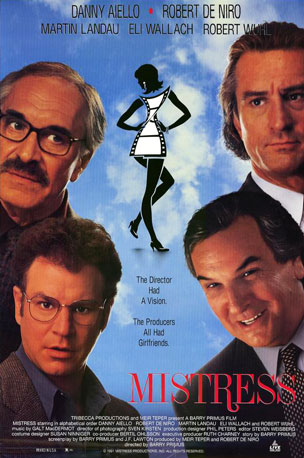
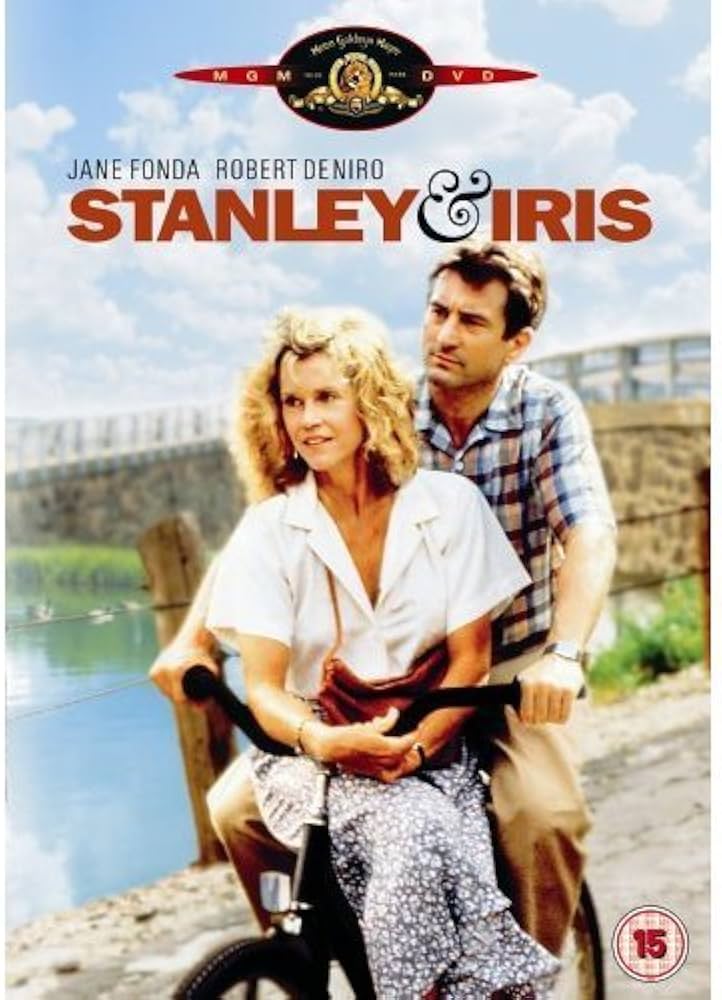
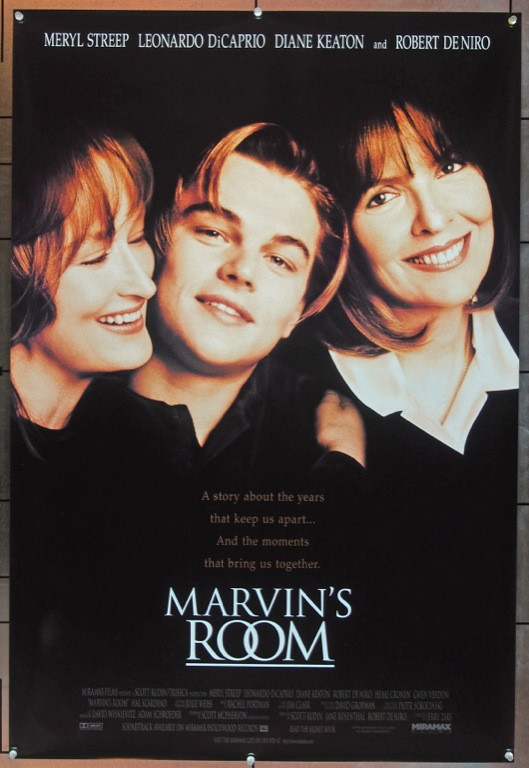
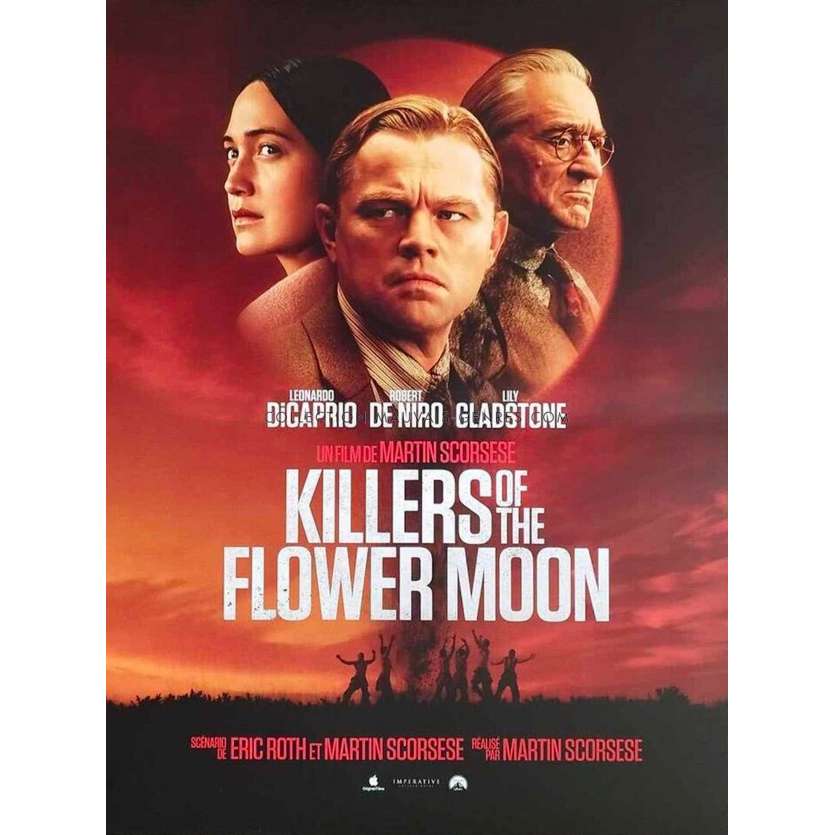
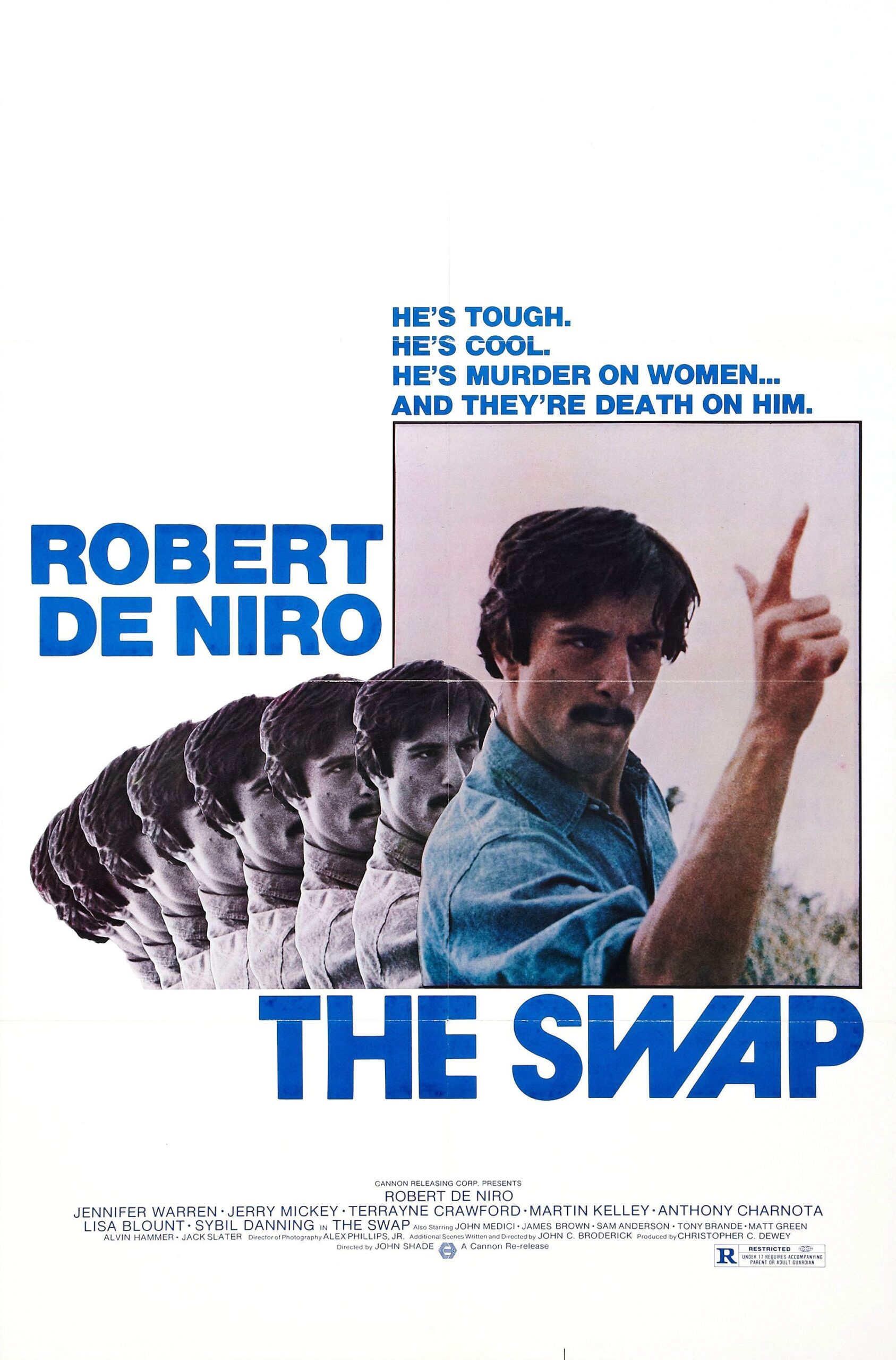
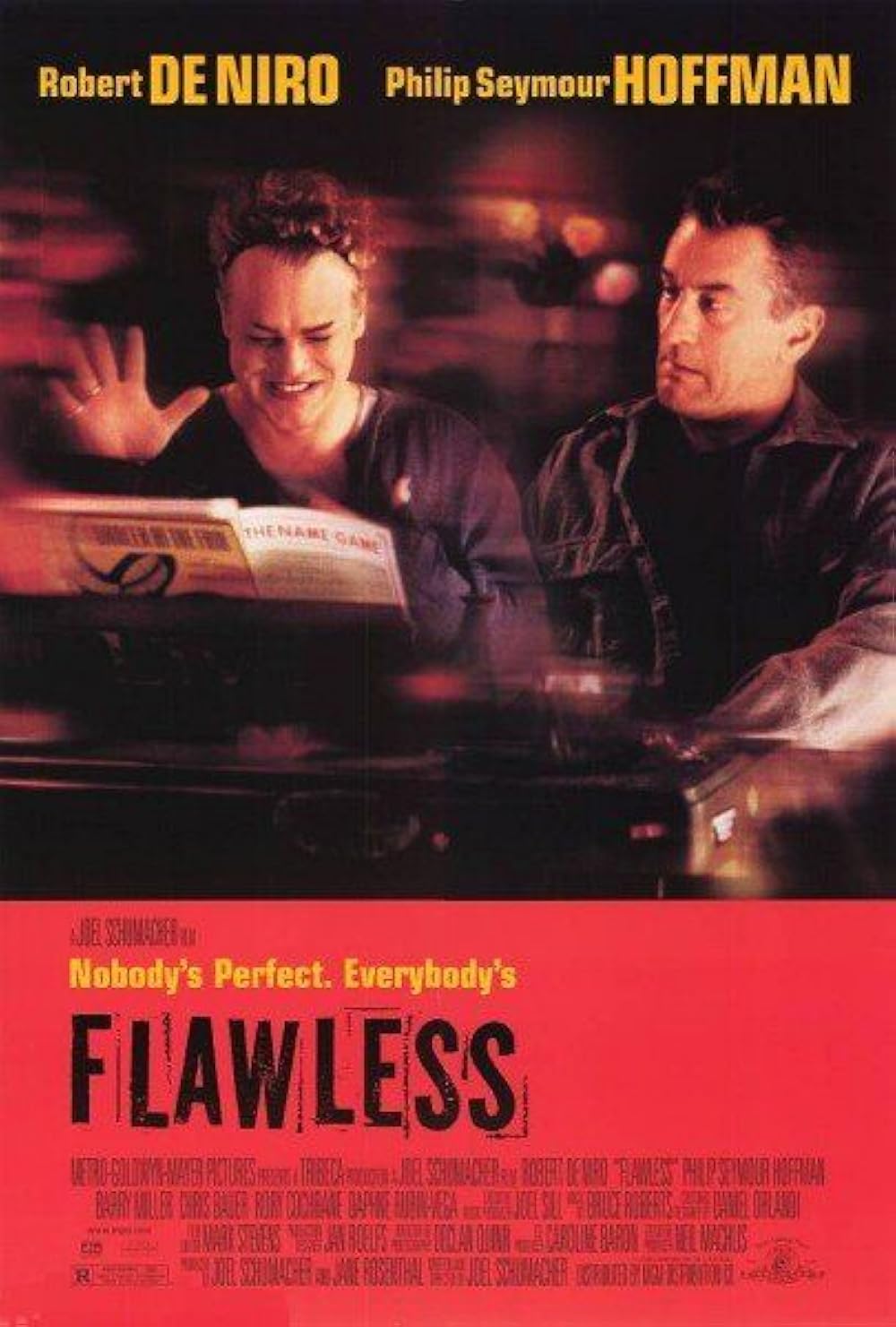
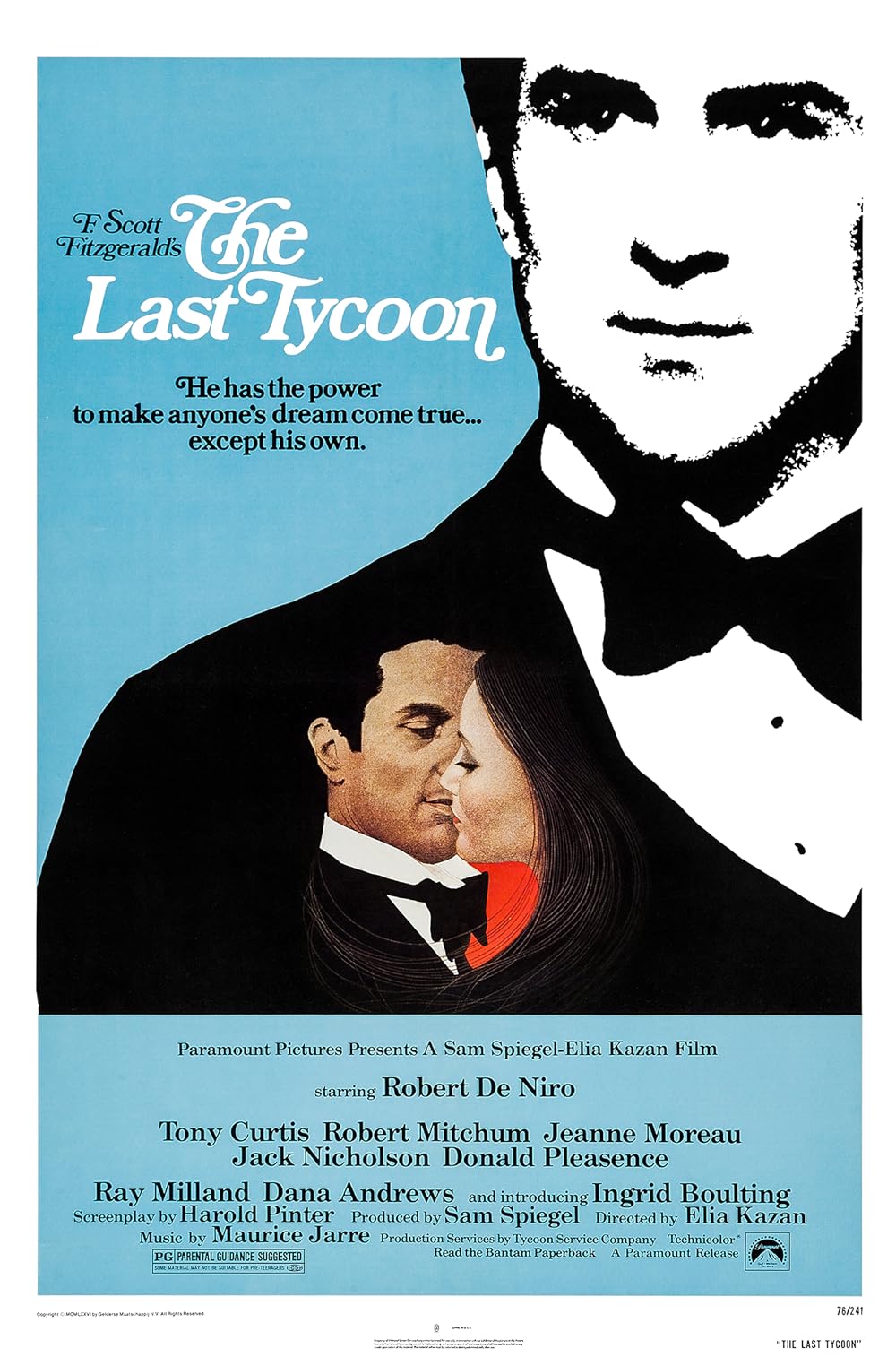
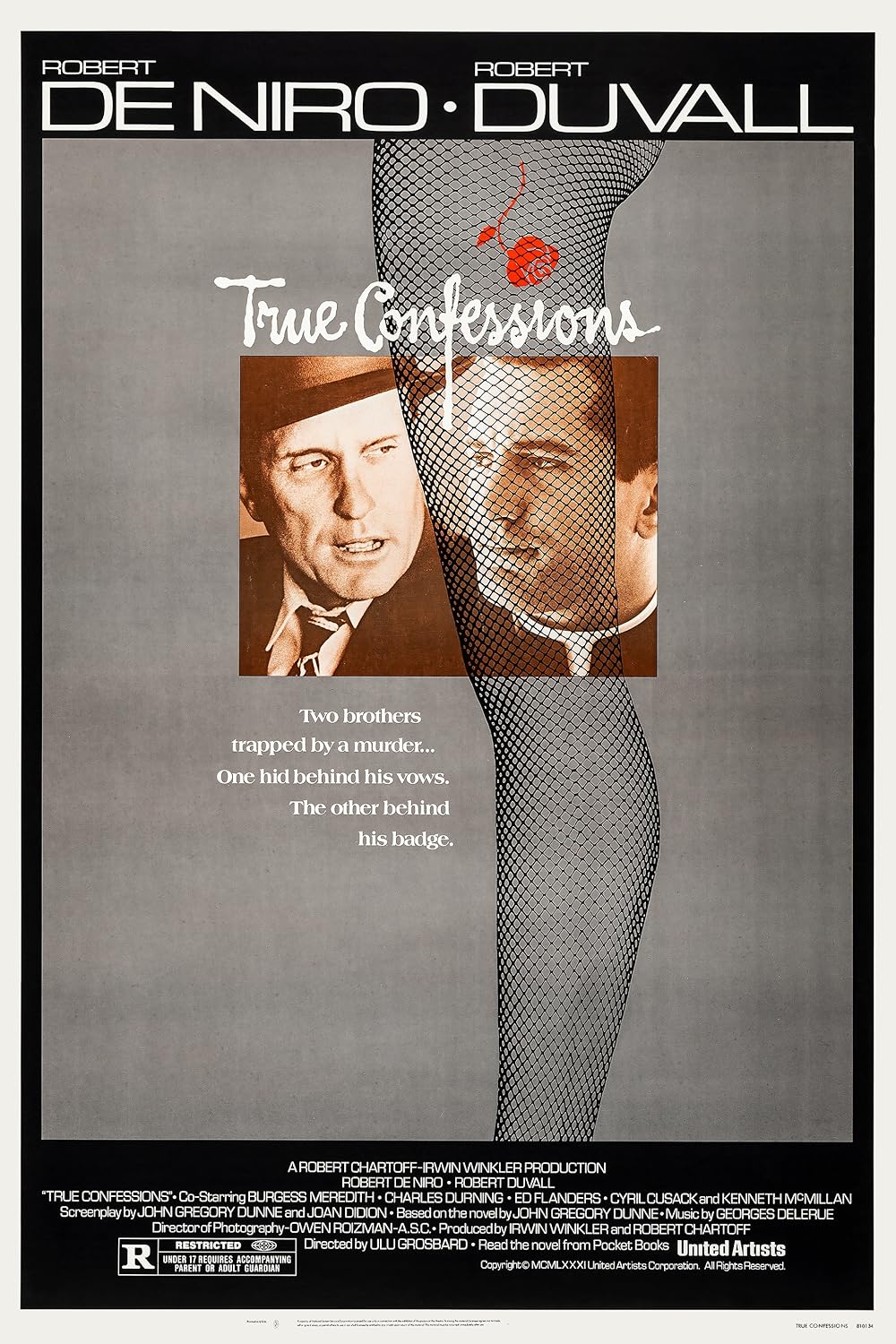
Robert De Niro is a true icon of the cinema and one of the very best of American actors.   He was born in 1943 in New York City.   He made his film debut at the age of 20 in 1963 in Brian De Palma’s “The Wedding” with Jill Clayburgh.   In 1973 he came to international acclaim for his performance in “Bang the Drum Slowly”.   The folowing year he won a major role in “TYhe Godfather Part 2” and won a best supporting actor for his performance.His other major films include “Mean Streets”, “Taxi Driver”, “Raging Bull (for which he won a Best Actor Oscar) ,”The King of Comedy”, “Goodfellas”, “Casino” and “Heat”

TCM overview:

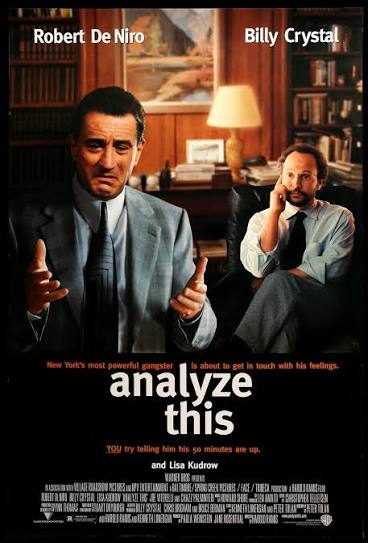
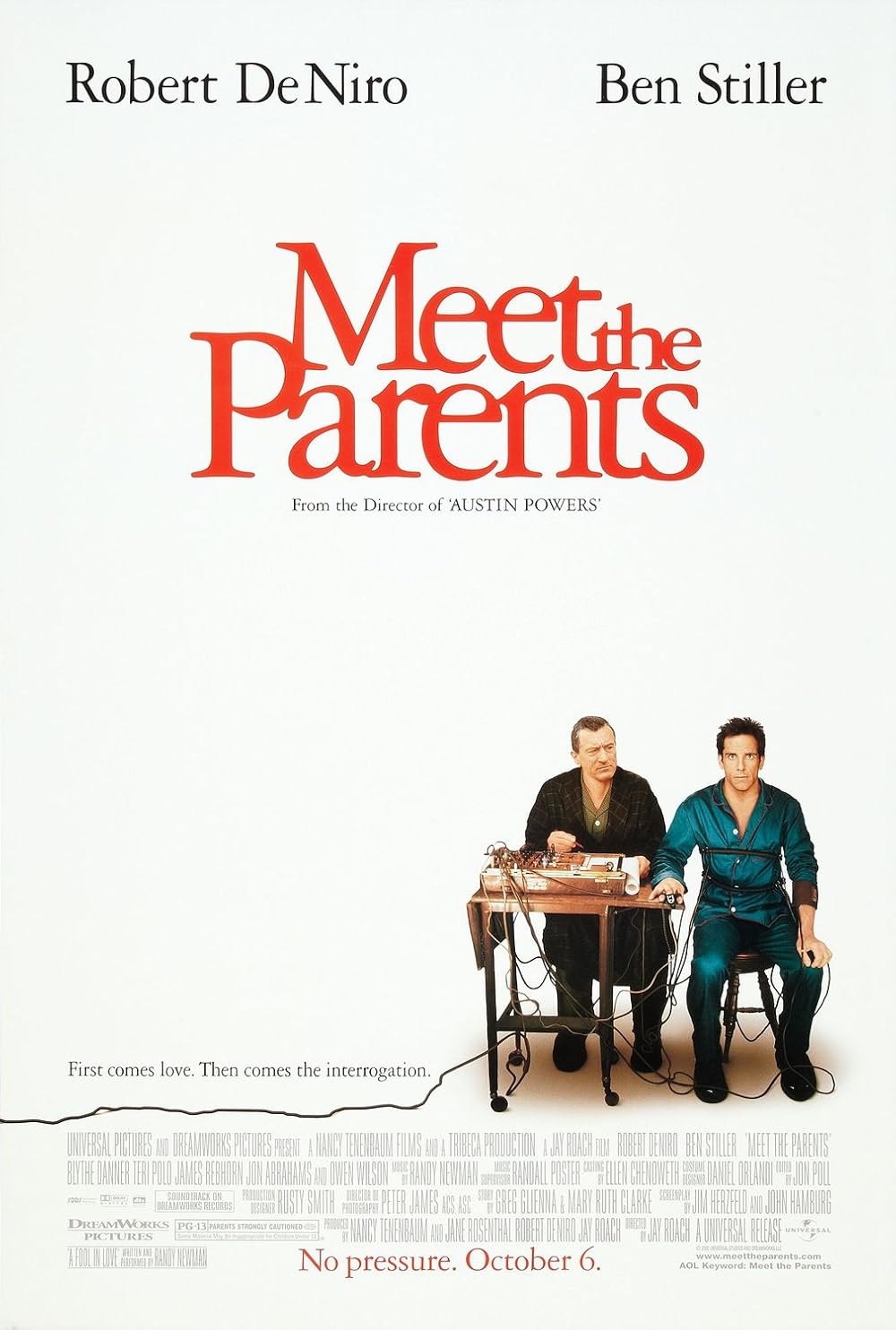
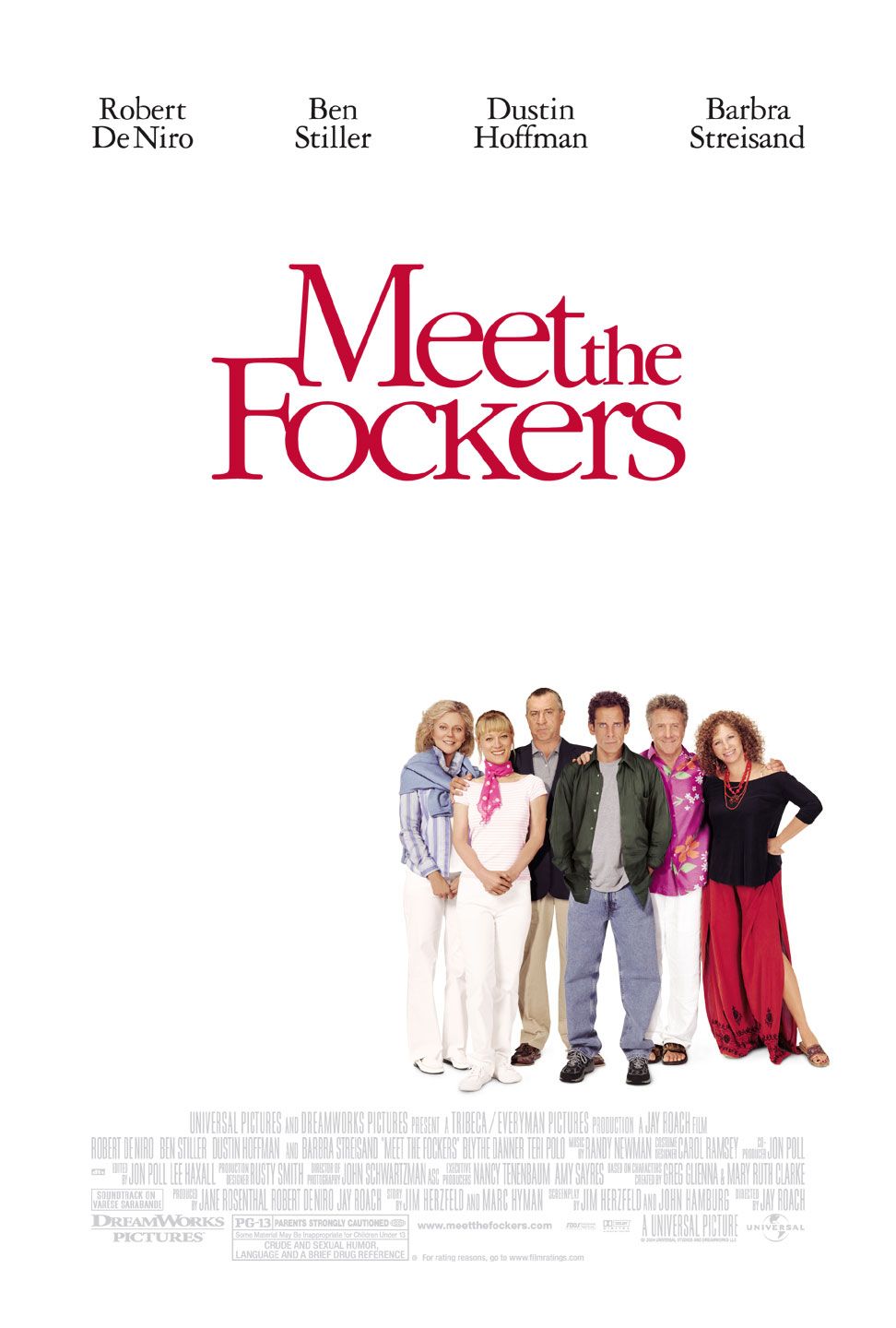
Often regarded as one of the greatest actors of all time, Robert De Niro was also one of the most enigmatic and remained famously tight-lipped about his personal life throughout his career. After gaining attention in “Bang the Drum Slowly” (1973), De Niro exploded onto the public’s consciousness as the reckless Johnny Boy in “Mean Streets” (1973), which commenced his partnership with Martin Scorsese, one of the greatest actor-director combos of all time. He earned his first Academy Award as a young Vito Corleone in “The Godfather Part II” (1974) and delivered his most iconic performance as would-be vigilante Travis Bickle in “Taxi Driver” (1976). De Niro offered a haunting turn as a Vietnam veteran in “The Deer Hunter” (1978), before gaining 60 pounds to play boxer Jake La Motta in “Raging Bull” (1980). From there, he delivered great performances in “The King of Comedy” (1983), “Once Upon a Time in America” (1984), “The Untouchables” (1987) and “Awakenings” (1990). He reunited with Scorsese for “Goodfellas” (1990) and “Casino” (1995), and starred opposite Al Pacino in “Heat” (1995), but took a surprising turn to comedy in “Analyze This” (1999) and “Meet the Parents” (2000), both commercial hits that opened him up to criticism that he had sold out. Despite calls that he was past his prime, there was never any doubt as to where De Niro stood in the history of acting – he was a towering figure with an amazing body of work unmatched by most actors of any generation.

The full TCM overview can be accessed here.

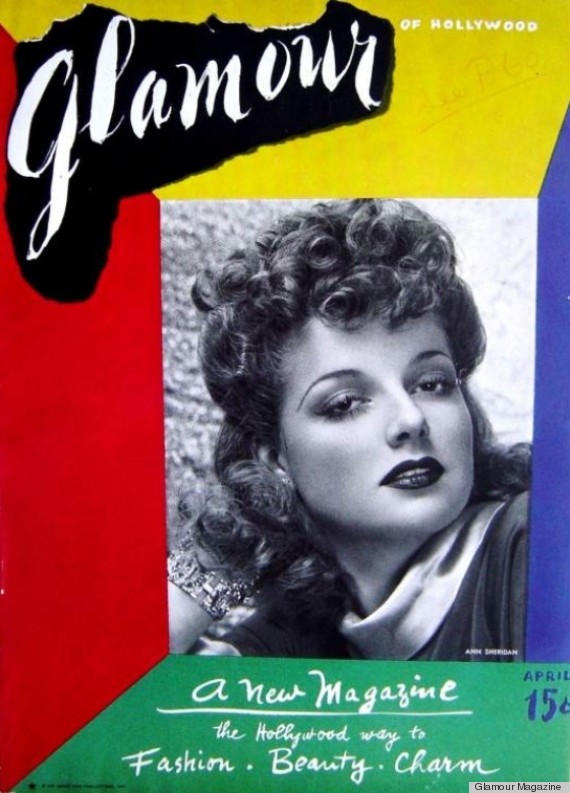
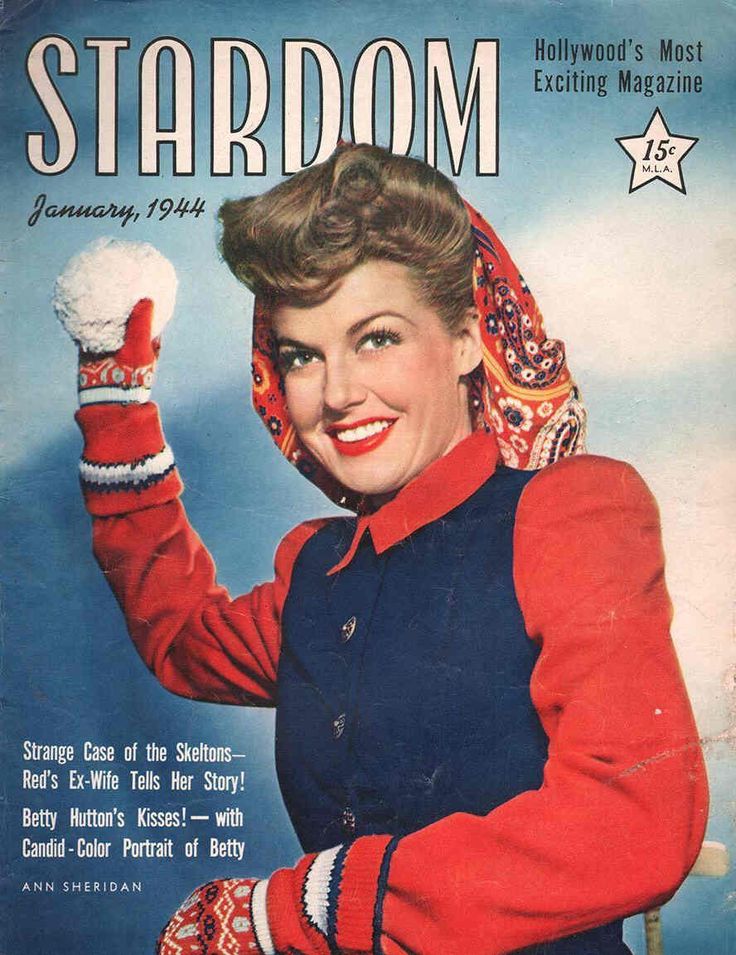
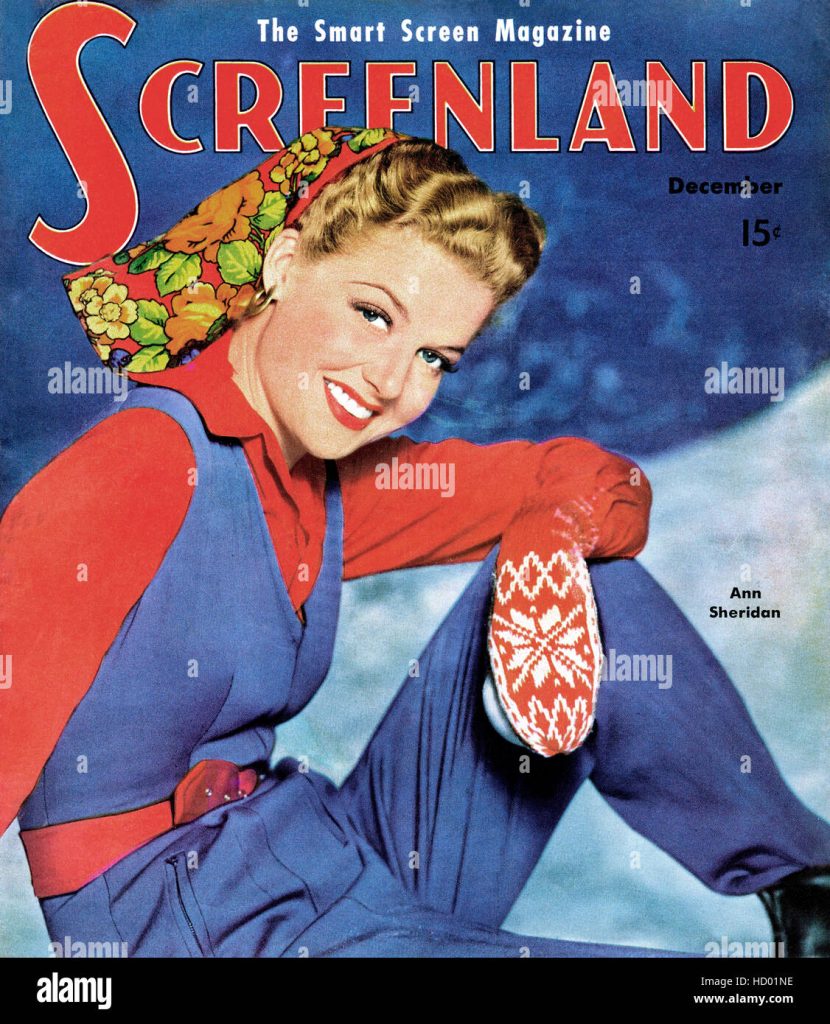
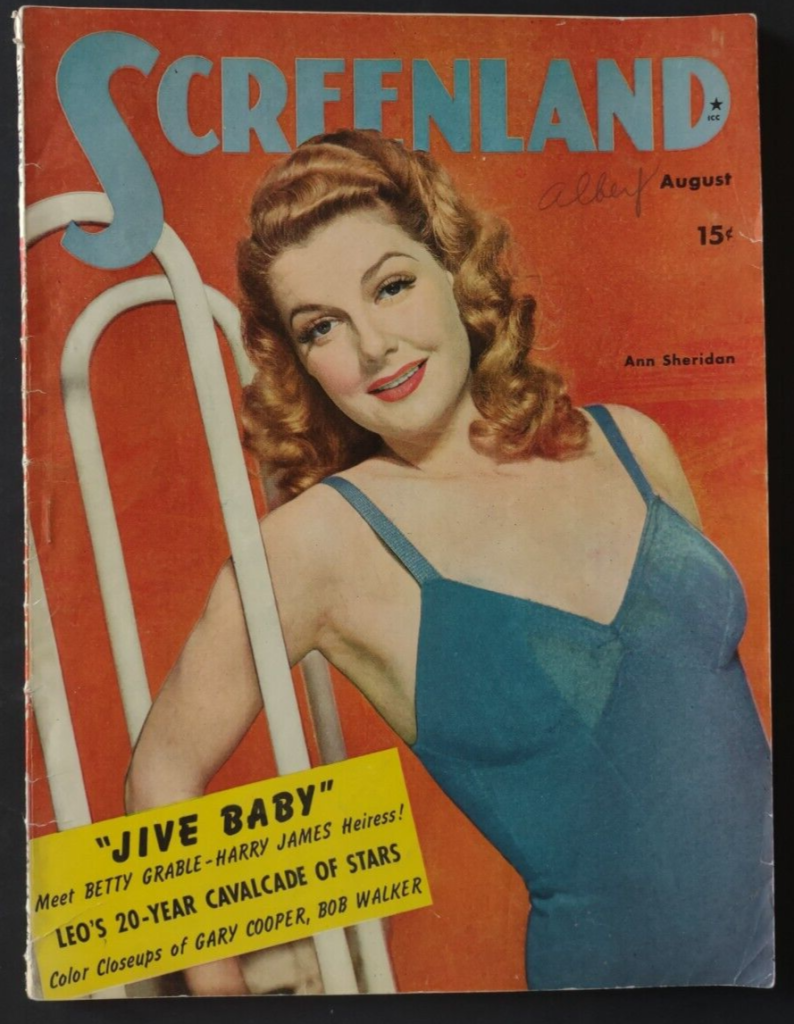
Ann Sheridan
Ann Sheridan
Ann Sheridan

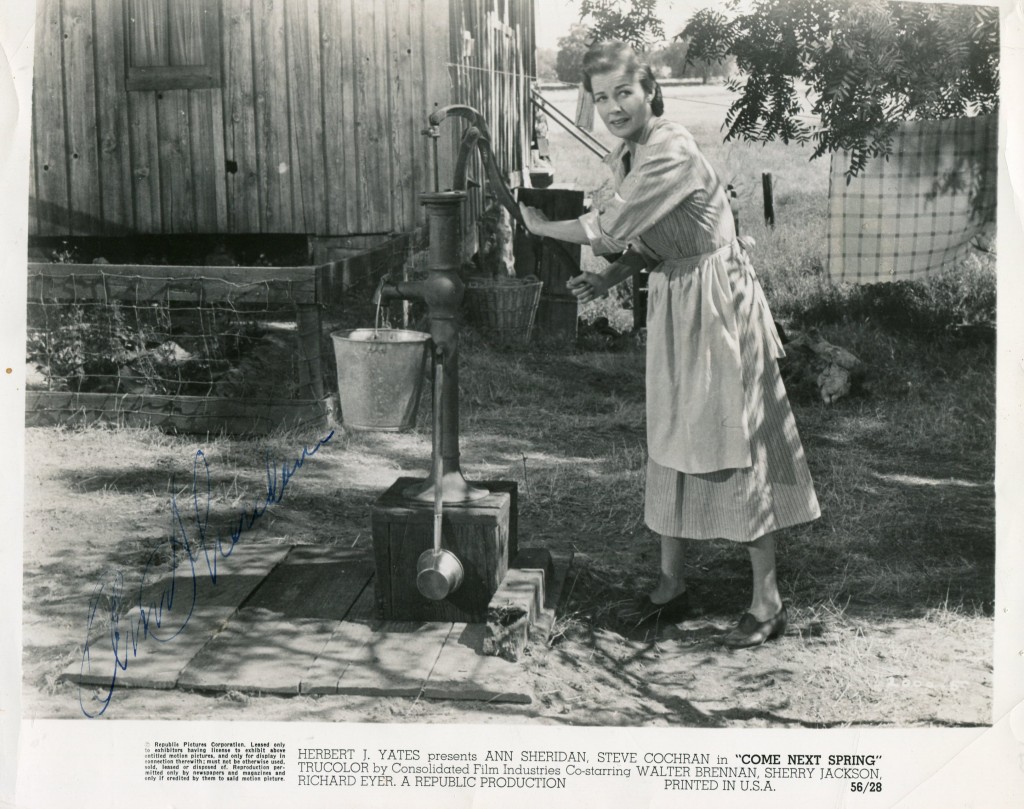
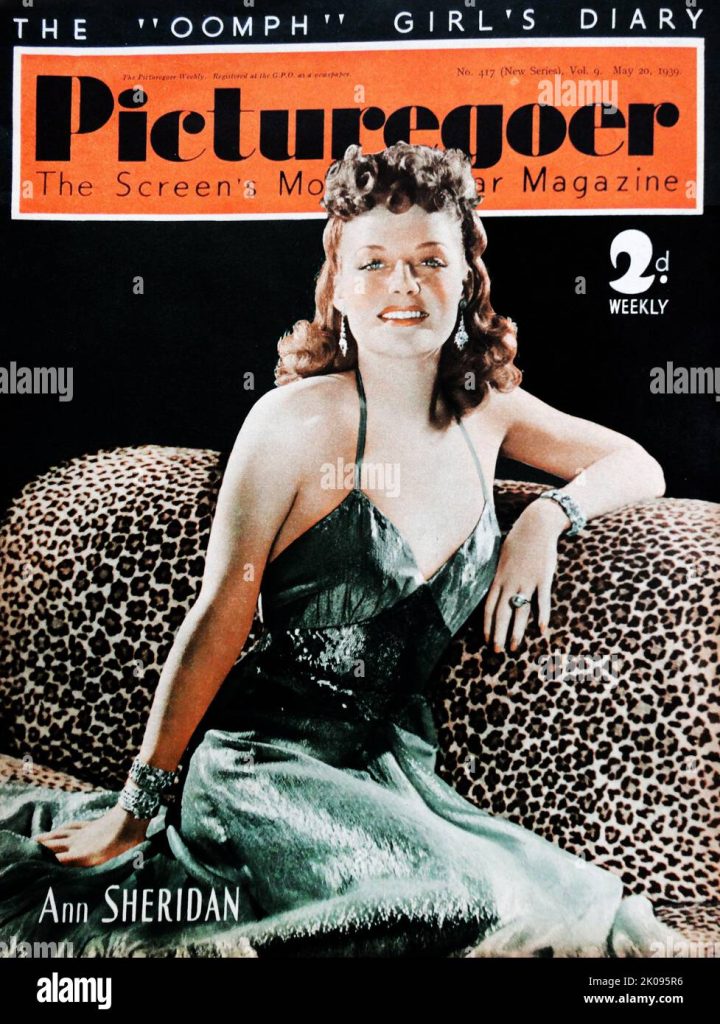
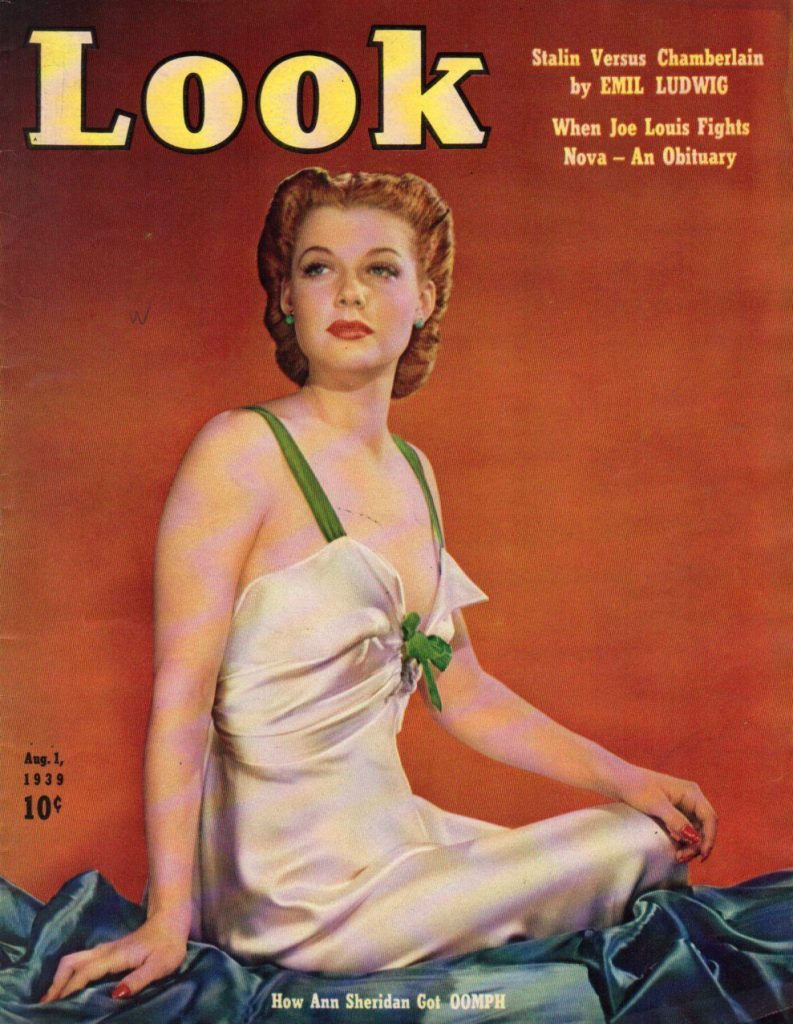
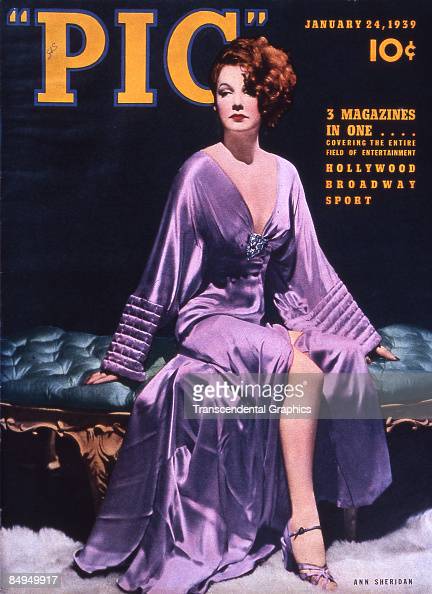
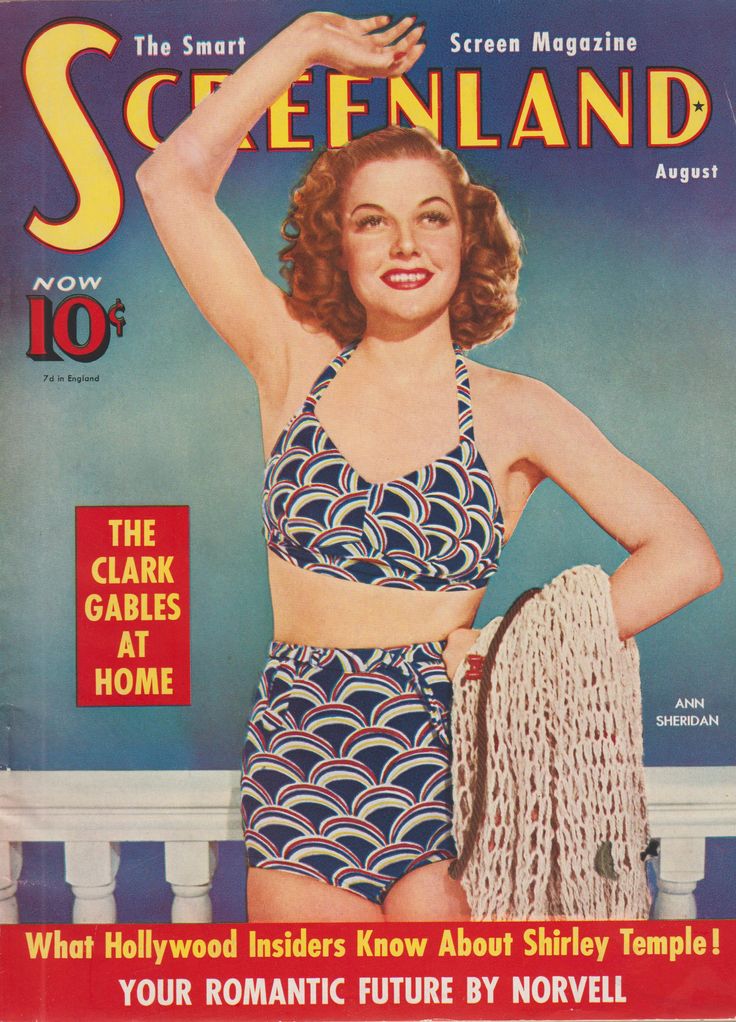
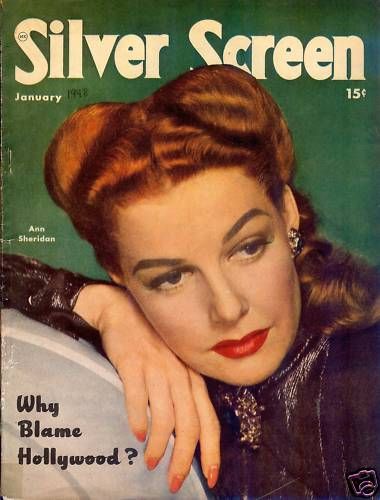
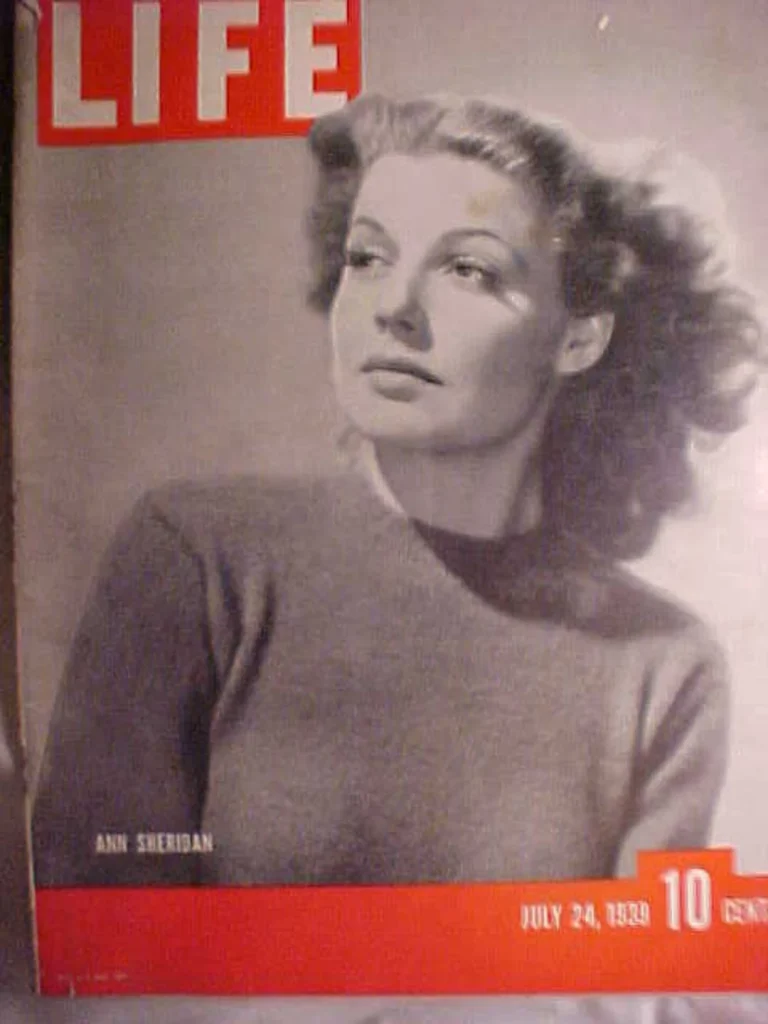
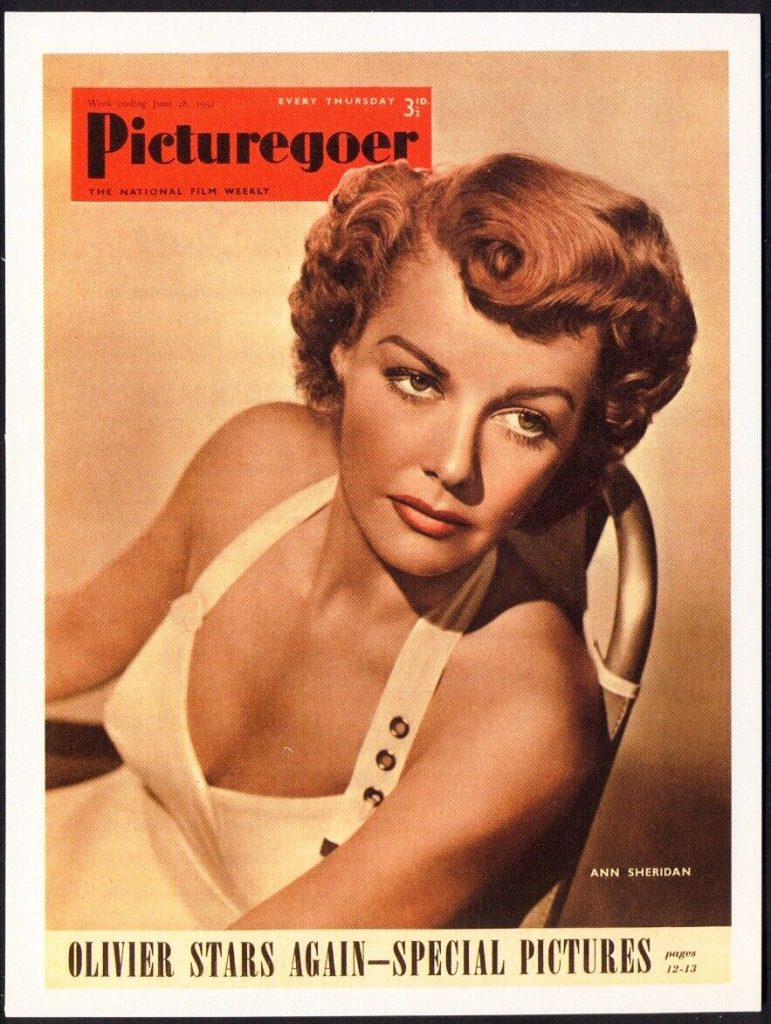
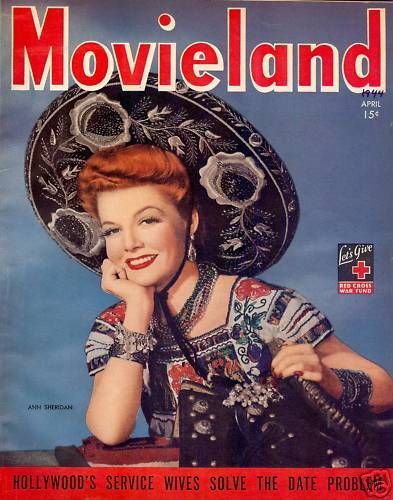
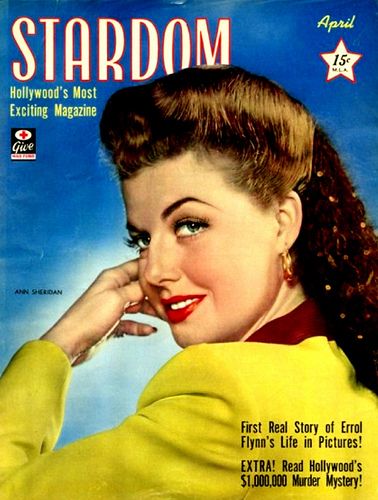
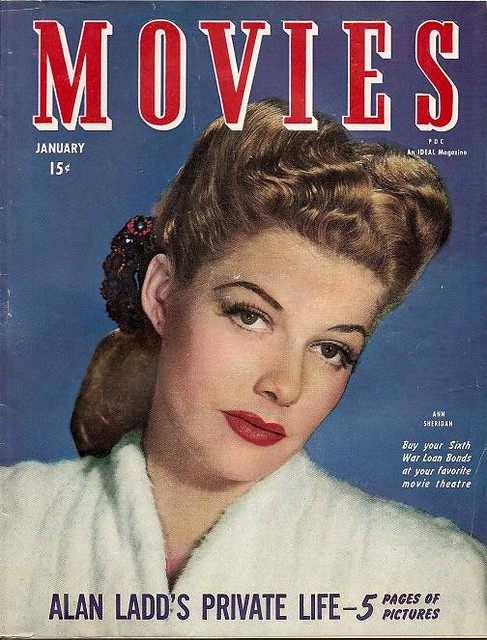
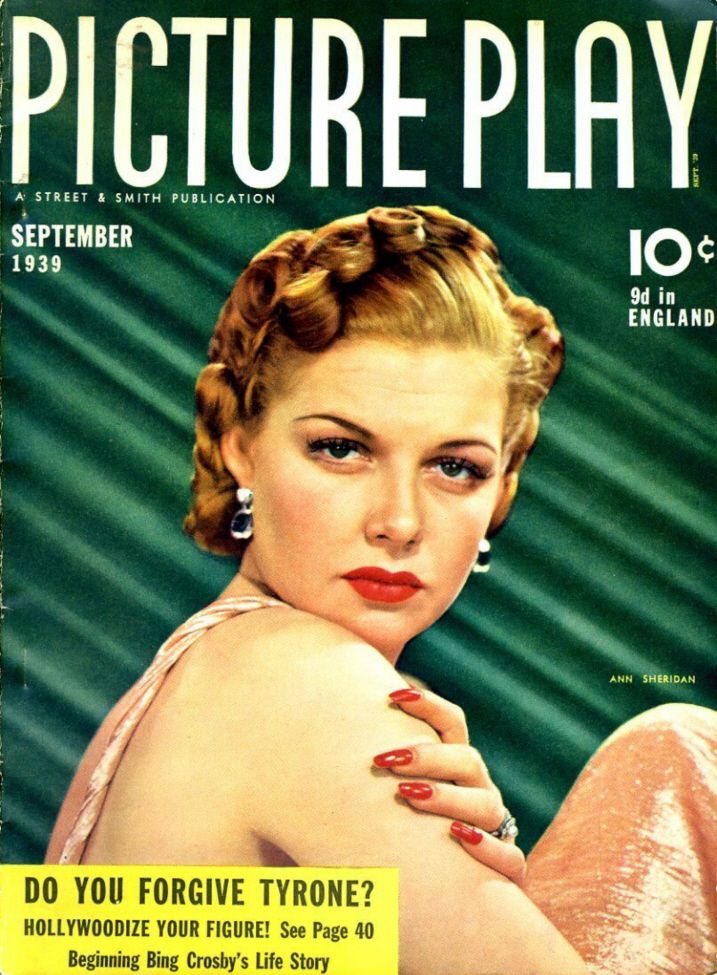
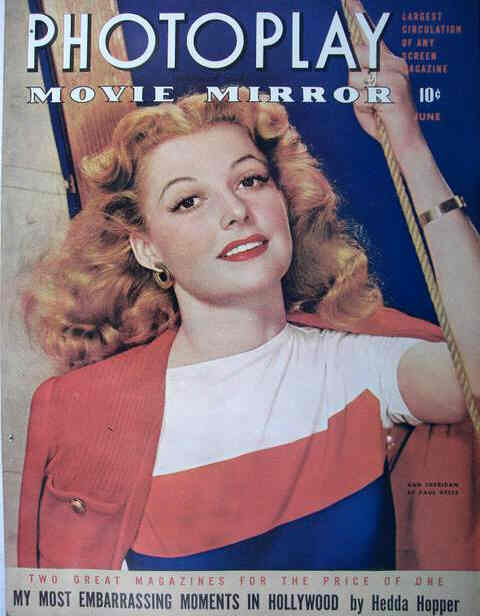
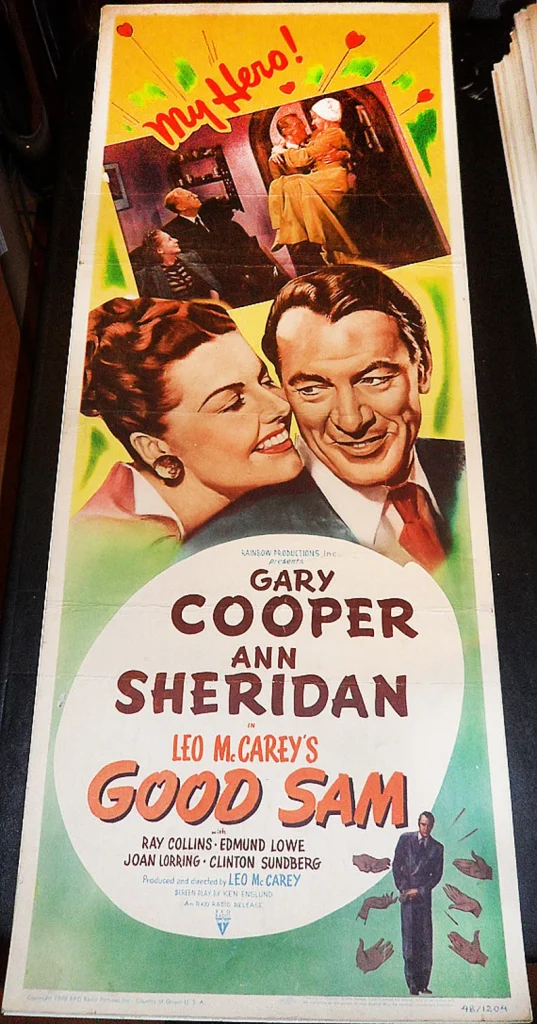
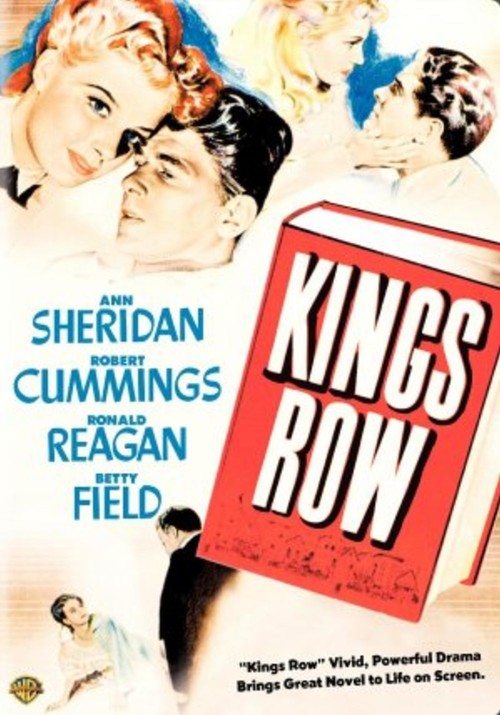
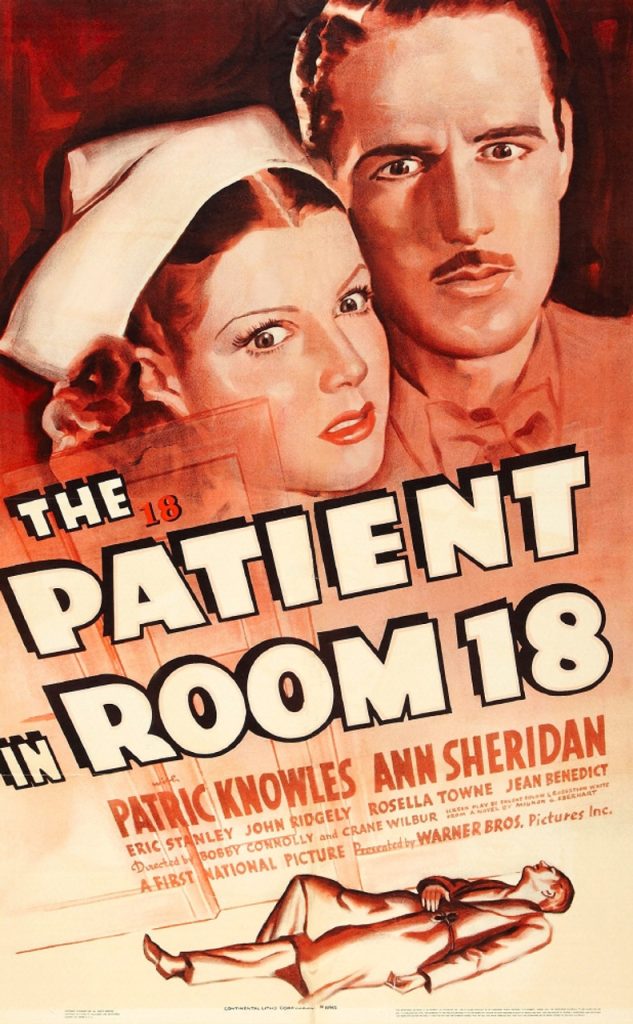
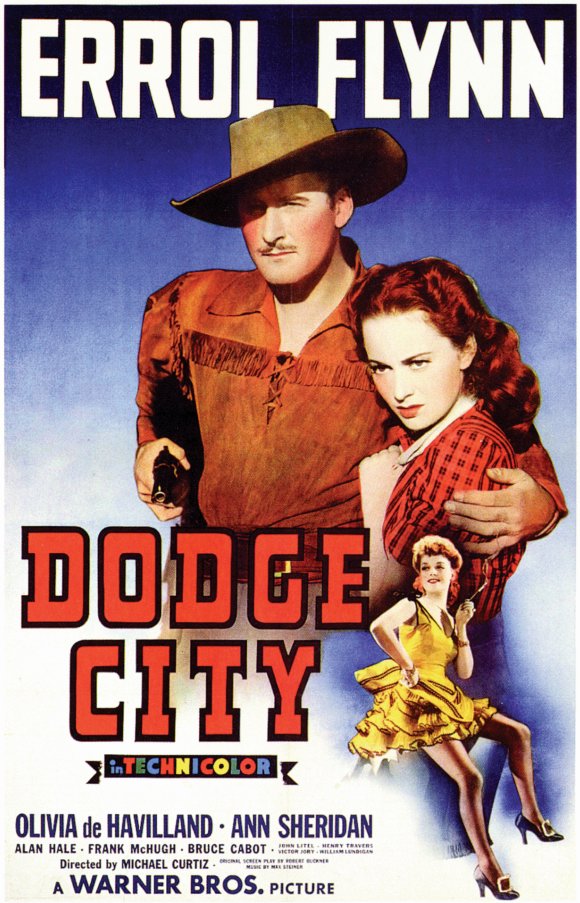
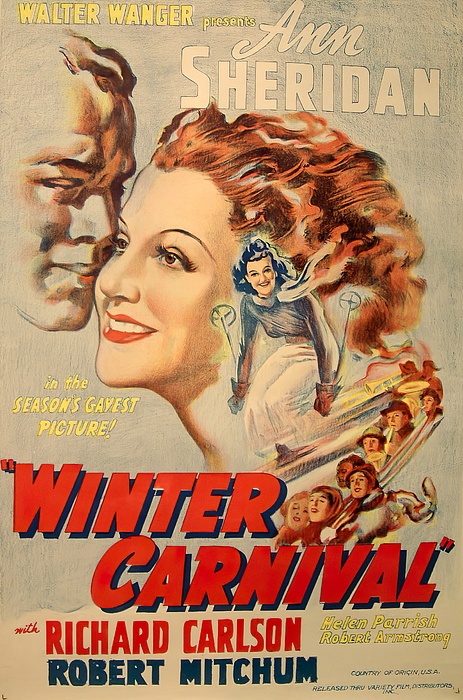
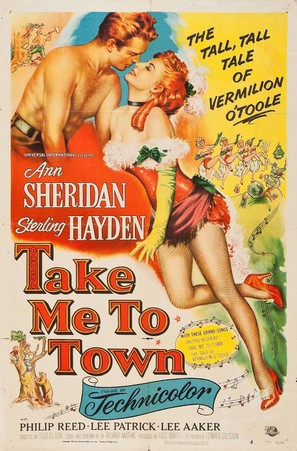
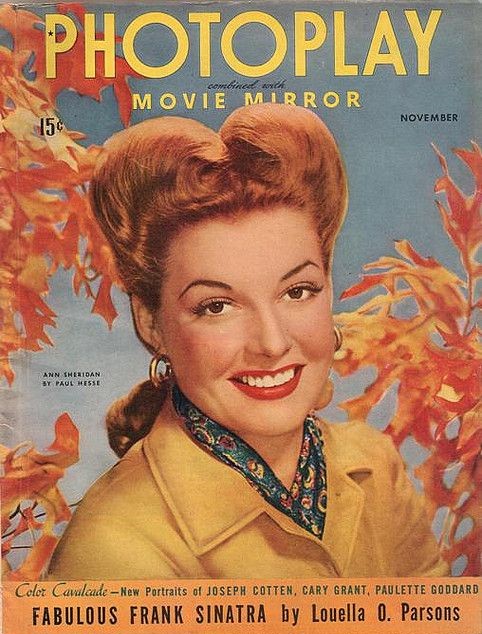
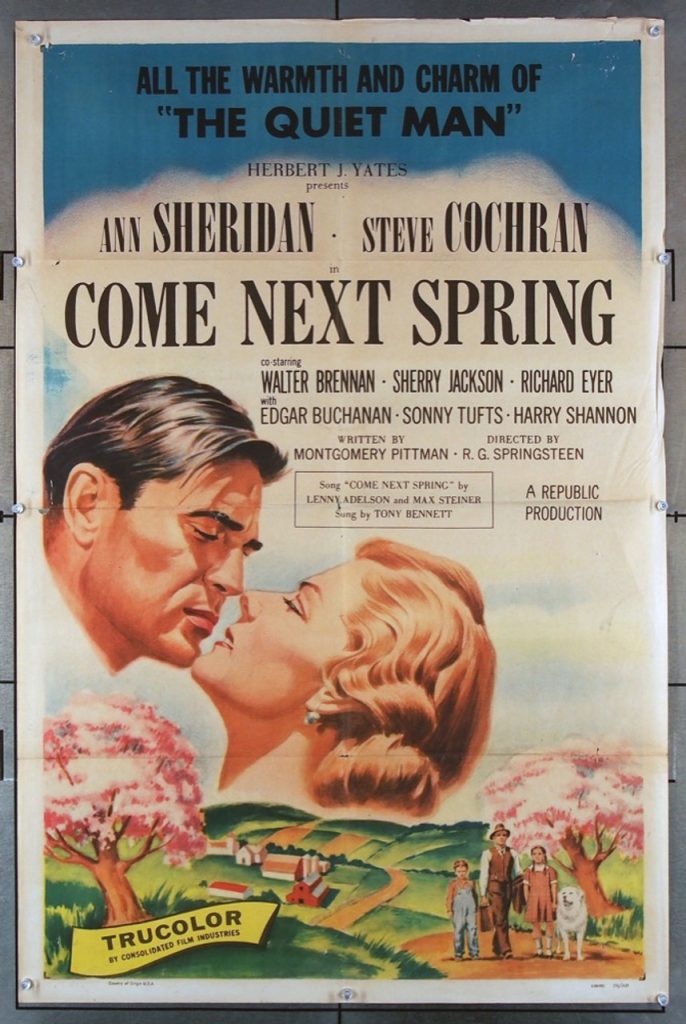
It is surprising and disappointing that Ann Sheridan is not better known today.   In her prime years in the 1940’s she was one of Warner Brothers most famous leading ladies on the same pedestal as Bette Davis and Joan Crawford.   Her career is in urgent need of positive reappraisal.   She was born in 1915 in Texas.   She made her film debut in 1934 in “Search for Beauty”.   Her more famous movies include “Angels With Dirty Faces” with James Cagney and Humphrey Bogart in 1938, “Dodge City” opposite Errol Flynn, “King’s Row”, “Nora Pre ntiss” and “The Unfaithful”.   She was starring in the television series “Pistols’n Petticoats” when she became ill and died in 1967 at the age of 52.

TCM overview:

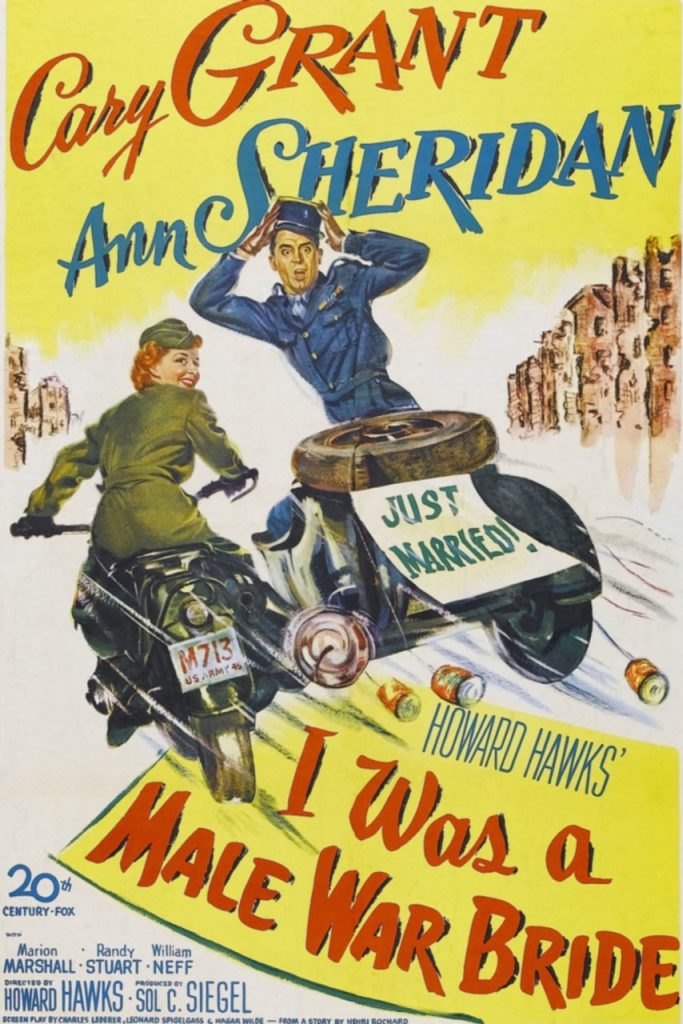
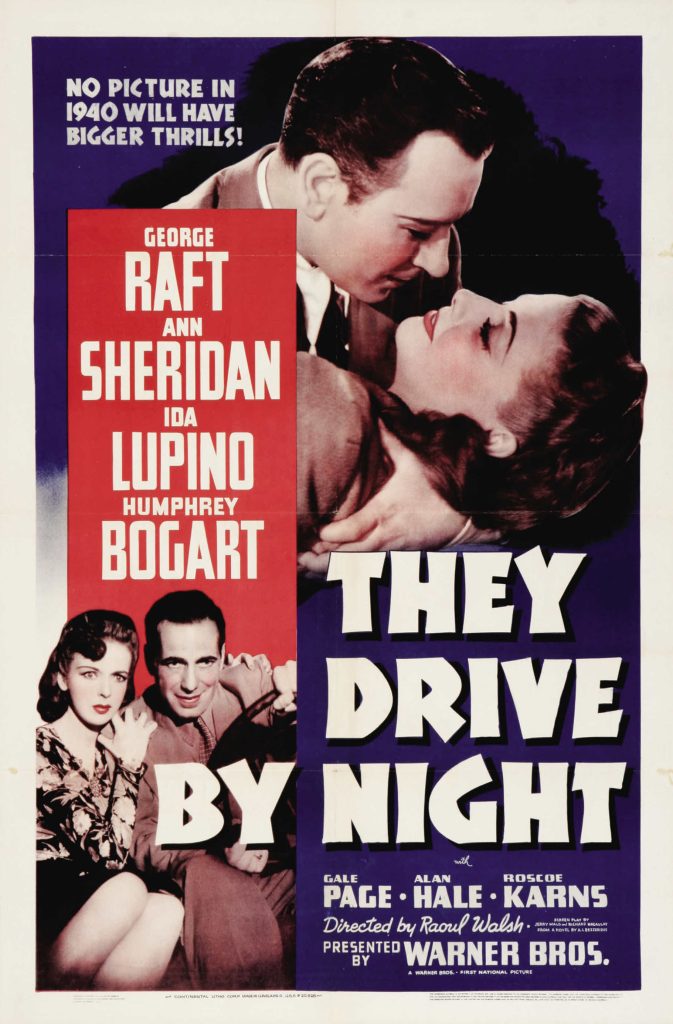
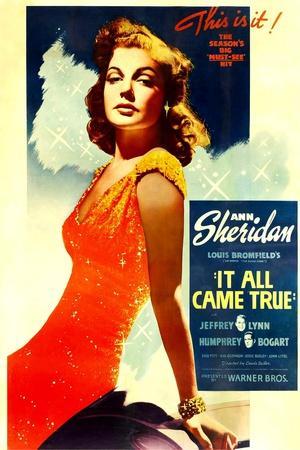
She was Warner Brothers’ “Oomph Girl” and a popular WWII pin-up but Ann Sheridan fought to be taken seriously in Hollywood. After a fruitless start at Paramount, the ravishing redhead allowed the Warners publicity mill to make her an overnight sensation, channeling the buzz to barter for better roles. She enjoyed name-above-the-title status for “It All Came True” (1940), in a role rejected by Bette Davis, then teamed with Davis for the screwball classic “The Man Who Came to Dinner” (1942), and more than held her own opposite studio mates George Raft and Humphrey Bogart in “They Drive By Night” (1940). It was as the small town heroine of “King’s Row” (1942) opposite Ronald Reagan, that Sheridan became a bone fide star, but her tenure at Warners was punctuated by suspensions for turning down roles. Prior to breaking with the studio in 1948, she scored as a Frisco chanteuse who compels doctor Kent Smith to fake his own death in the noir sleeper “Nora Prentiss” (1947). As a free agent, Sheridan enjoyed one of her better roles opposite Cary Grant in “I Was a Male War Bride” (1949) but a downturn in her industry stock drove the aging actress to television. She capped her 30-year career as the star of the CBS western sitcom “Pistols ‘n’ Petticoats” (1966-67) but was felled by cancer before the end of the first season. Gone at 51, Ann Sheridan escaped in death the humiliating career twilights of aging rivals Bette Davis and Joan Crawford, remaining in the eyes of movie lovers a quick-witted comedienne and a sensuous dramatic actress rolled into one unforgettable package.

Ann Sheridan was born Clara Lou Sheridan in Denton, TX on Feb. 21, 1915. The last of five surviving children born to George W. Sheridan, a garage mechanic and direct descendant of Union general Philip Henry Sheridan, and the former Lula Stewart Warren, Sheridan grew up a tomboy, riding horses, playing touch football, and standing up to bully boys twice her size. After completing her primary education at Robert E. Lee Grade School and Denton Junior High School, she enrolled in North Texas State Teachers College with a mind toward studying art. Growing frustrated with the disciplines required of fine art, Sheridan drifted towards campus dramatics and participated in the school band, dreaming of traveling to New York City to become a Broadway chorus dancer. In 1932, Sheridan’s older sister Kitty enrolled the 17-year-old in a national contest sponsored by Paramount Pictures in Hollywood as publicity for the upcoming film “Search for Beauty” (1934). Sheridan was one of 30 finalists invited to Hollywood for the privilege of a screen test.

Despite pudgy cheeks, unmanageable hair, and a gap-tooth smile, Sheridan was offered a six-month contract with Paramount, earning a then-admirable $50 a week. After her 10-second bit as a pageant contestant in “Search for Beauty,” Sheridan was given little to do on the Paramount backlot, apart from taking drama lessons from the studio’s resident coach Nina Mousie, and appearing in plays staged for the exclusive pleasure of the studio front office. While appearing as a character named Ann in the Harry Clork-Lynn Root comedy “The Milky Way,” Sheridan was advised by her handlers at Paramount to change her name so that it might fit more comfortably on a marquee. Adopting her character’s name, Clara Lou Sheridan became Ann Sheridan. A friendship with director Mitchell Leisen led to a featured role, as a stenographer driven by snobbery to suicide, in “Behold My Wife!” (1934), which allowed the young hopeful to break from the purgatory of extra work and doubling that her been her lot as a Paramount contract player.

Sheridan enjoyed her first lead role in Charles Barton’s “Car 99” (1935), as rookie cop Fred MacMurray’s telephone operator girlfriend. She was paired with cowboy star Randolph Scott for Barton’s “Rocky Mountain Mystery” (1935) but was bumped back to bits, playing a nurse who bandages George Raft in “The Glass Key” (1935) and a Saracen slave in Cecil B. DeMille’s “The Crusades” (1935). While she was on loan to Ambassador Pictures for “Red Blood of Courage” (1935), Paramount dropped Sheridan’s option. She made one film for Universal, playing a spoiled rich girl who flirts with campus radicalism in Hamilton McFadden’s college comedy “Fighting Youth” (1935), before finding her way to Warner Brothers, her home base until 1948. Though her scenes were cut from Ray Enright’s musical comedy “Sing Me a Love Song” (1936), she found work in Warners’ steady output of crime films, appearing in prominent roles in Archie Mayo’s “Black Legion” (1937), Lloyd Bacon’s “San Quentin” (1937) and Michael Curtiz’s “Angels with Dirty Faces” (1938) alongside fellow contract player Humphrey Bogart. Between 1936 and 1938, Sheridan was married to B-movie actor Edward Norris.

In 1939, Sheridan became the focus of an unusual Warners publicity stunt, inspired by a comment made by gossip columnist Walter Winchell that Sheridan, as gangster James Cagney’s social worker girlfriend in “Angels with Dirty Faces,” had “umph.” Recoining the phrase slightly, the studio assembled a team of 13 judges – including choreography Busby Berkeley, designer Orry-Kelly, photographer George Hurrell, producer-director Earl Carroll, and bandleader-actor Rudy Vallee – charged with naming “America’s Oomph Girl.” Following a highly-publicized but patently rigged competition, Sheridan was awarded the honor, beating out (so the Warners publicity mill had moviegoers believing) Alice Faye, Carole Lombard, Hedy Lamarr and Marlene Dietrich. Hurrell’s elegant portraits of the titian-tressed actress helped put Sheridan across to the public, creating curiosity and sensation where there had once been disinterest. As a result, Sheridan would soon become one of the most popular pin-ups of the Forties, but she always derided her nickname as the sound an old man makes when bending over to tie his shoes.

Interest in Sheridan’s crowning as the Oomph Girl had a retroactive effect on several movies in which she had already appeared. Though she played small roles in both, Sheridan received preferential placement on the posters for Busby Berkeley’s “They Made Me a Criminal” (1939) and Michael Curtiz’s Errol Flynn starrer “Dodge City” (1939). Ill at ease at having achieved success through crass studio duplicity, Sheridan was given a backlot pep talk by actor Paul Muni, who advised her to use the exposure from the stunt for the betterment of her career. She was selected by producer Mark Hellinger to star in Lewis Seiler’s “It All Came True” (1940), a role turned down by Bette Davis. Cast as a down-at-heel nightclub singer given a second chance at stardom when mobster Humphrey Bogart turns her boarding house into a nightclub, Sheridan charmed audiences and sang two songs. Now boasting name recognition with moviegoers, Sheridan enjoyed an elevated status in her subsequent film assignments and was, like teen starlets Bonita Granville and Deanna Durbin, made the heroine sleuth of her own mystery novel, marketed by the Whitman Publishing Company for young readers.

Cast again opposite George Raft and Humphrey Bogart in Raoul Walsh’s “They Drive By Night” (1940), Sheridan played the good girl to Ida Lupino’s bad egg. On the lighter side, she donned furs and jewels to play a conniving actress in William Keighley’s “The Man Who Came to Dinner” (1942), winding up packed inside a mummy’s case for her troubles and shipped to Nova Scotia, and teamed with Jack Benny for Keighley’s “George Washington Slept Here” (1942), with the pair cast as city dwellers who buy a tumbledown Pennsylvania farm house. Sheridan enjoyed top billing as the tomboy heroine of Sam Wood’s “King’s Row” (1942), an adaptation of the 1940 novel by Harry Bellaman, which made a star of Sheridan’s fellow Warners contract player Ronald Reagan. Though the studio publicity department announced Sheridan and Reagan as the proposed stars of the upcoming “Casablanca” (1942), the actors were never seriously considered for the roles that went ultimately to Ingrid Berman and Humphrey Bogart.

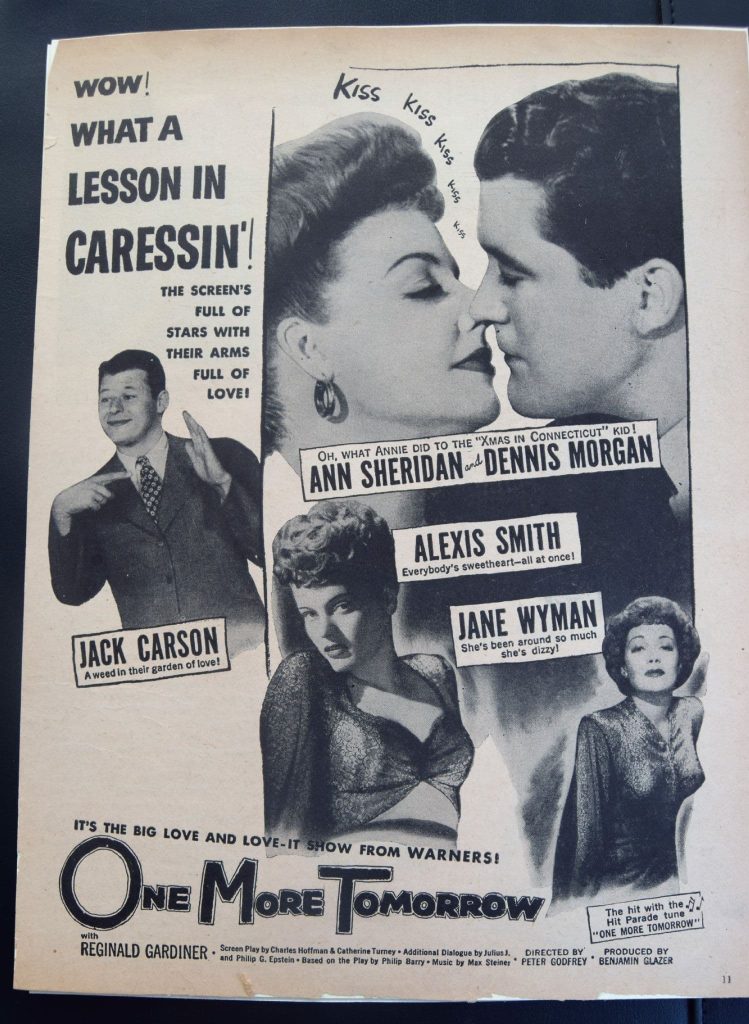
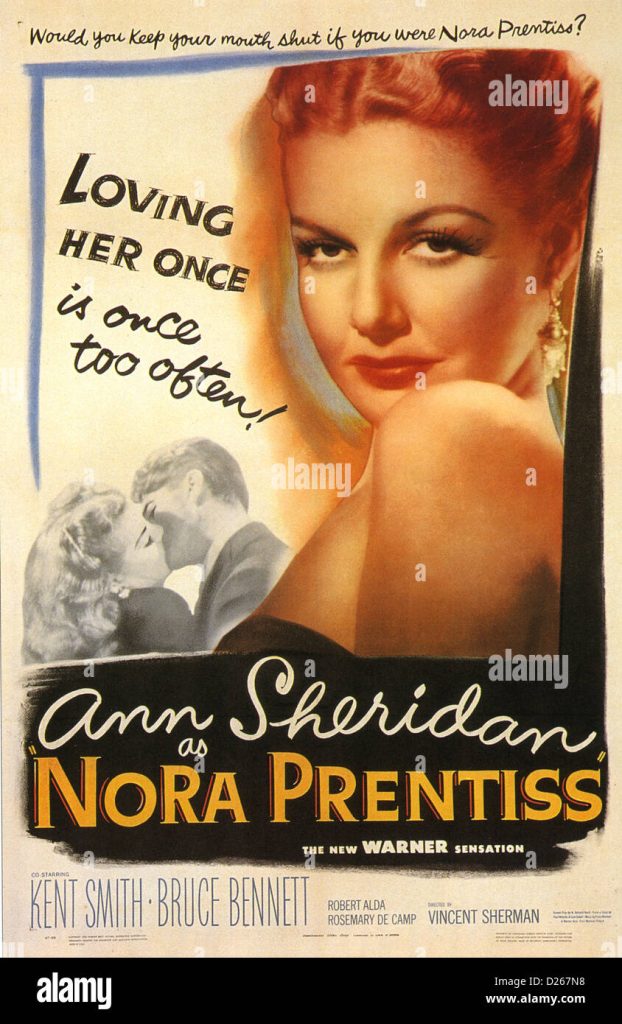
In 1942, Sheridan married actor George Brent, her co-star in Lloyd Bacon’s “Honeymoon for Three” (1941), a union that lasted just one year. The actress’ star turn in “Shine on Harvest Moon” (1944), a biopic of vaudeville singer Nora Bayes, was pitched by Warners as “Sheridandy” though the actress loathed the picture, eager to expand into edgier material and more demanding roles. Placed on suspension for refusing assignments after the troubled production of “One More Tomorrow” (1946), Sheridan sat out most of 1946 before a writer’s strike and the looming expiration of her Warners contract left her with bargaining leverage. The result was a six-picture deal for which Sheridan was given script approval and enjoyed an uptake in her asking price. The first film out of the gate under these new terms was Vincent Sherman’s “Nora Prentiss” (1947), a noir-flavored woman’s picture recounting the tragic love affair of Sheridan’s slinky nightclub singer and Kent Smith’s guilt-wracked surgeon, who fakes his own death as the start of an ill-advised midlife do-over.

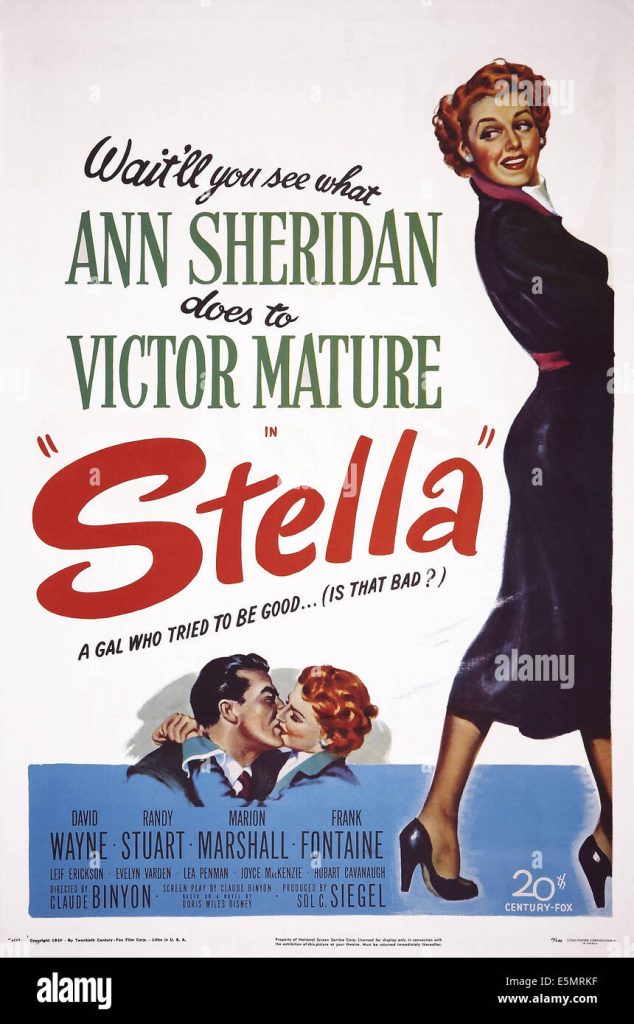
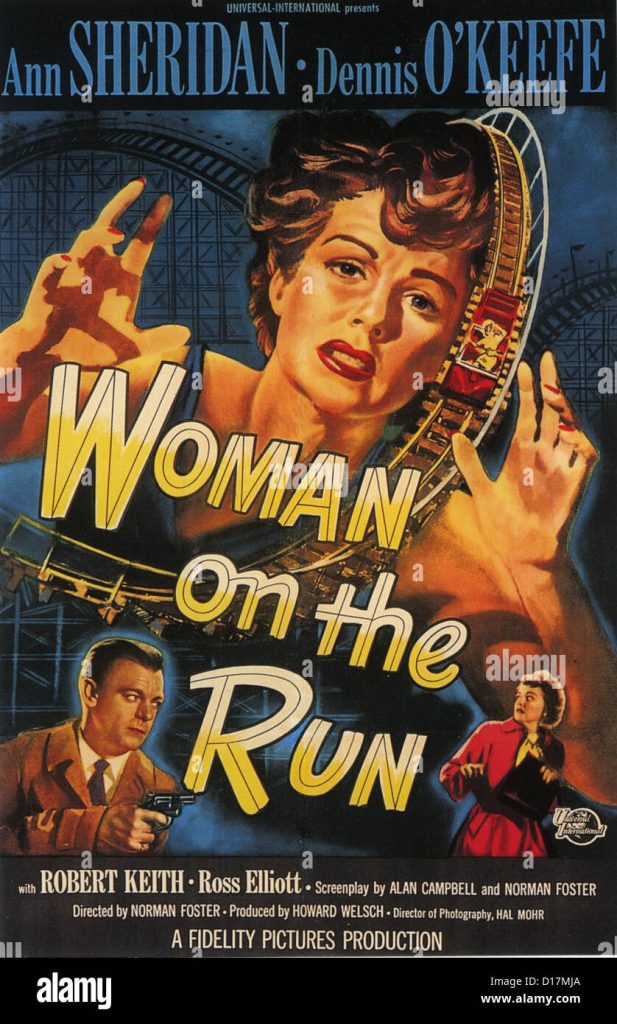
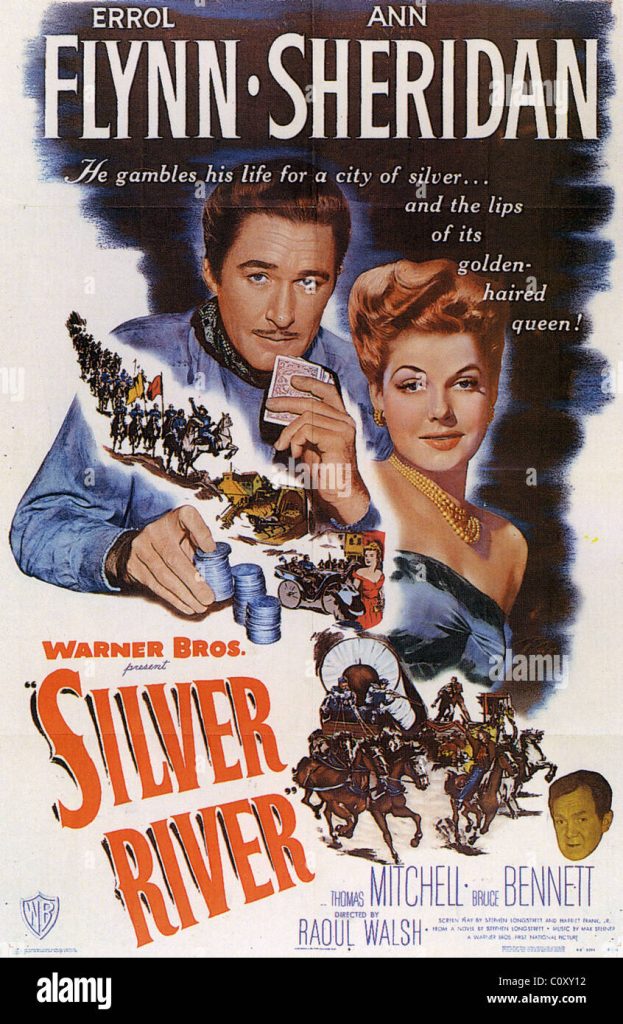
Sheridan reteamed with Sherman for “The Unfaithful” (1948), which found her charged with murder for the fatal stabbing of her ex-lover. She finished out her Warners contract with an uncredited bit as a Mexican prostitute in “The Treasure of the Sierra Madre” (1948), done as a favor for director John Huston, and by playing a comely mine owner in “Silver River” (1948) opposite Errol Flynn. As a free agent, Sheridan made few remarkable films but many satisfying ones. Among these was Howard Hawks’ “I Was a Male War Bride” (1949) at Fox, in which she and co-star Cary Grant played American and French allies who fall in love while on a mission and employ the War Bride Act in order to remain together in the United States. Sheridan had the title role in Claude Binyon’s “Stella” (1950), as an upwardly mobile woman duped into helping her hayseed relatives cover up an accidental death, and received top billing for George Sherman’s “Steel Town” (1952), a class conscious melodrama co-starring John Lund and Howard Duff. She took a producer’s role for Norman Foster’s “Woman on the Run” (1950), in addition to headlining as a San Francisco housewife who works with newspaper reporter Dennis O’Keefe to track down her errant husband, material witness to a gangland murder.

Less in demand as she approached middle age, Sheridan shifted the focus of her labor to live television, appearing in episodes of such anthology series as “Schlitz Playhouse of Stars” (CBS, 1951-59), “Playhouse 90” (CBS, 1956-1961) and “The Ford Television Theater” (NBC, 1952-57). In 1965, the year she turned 50, she joined the ranks of fading Hollywood stars agreeing to lend their big screen credibility to the medium of daytime drama and appeared in the second season of the NBC soap opera “Another World” (1964-1999). Just as discriminating in the downward arc of her career as she had been at its apex, Sheridan passed on the part of a French brothel owner in Norman Jewison’s “The Art of Love” (1965), a role that went instead to Ethel Merman. In 1966, she married actor Scott McKay. She capped her career as the star of the Western sitcom “Pistols ‘n’ Petticoats” (CBS, 1966-67). Diagnosed during the first (and only) season with esophageal cancer, Ann Sheridan died at age 51 on Jan. 21, 1967.

by Richard Harland Smith

The above TCM overview can also be accessed online here.

New york times obituary in 1967.

Ann Sheridan, the actress who was once billed as “the oomph girl” died today after a long illness in her San Fernando Valley home. She would have been 52 years old Feb. 21. The cause of her death was not divulged.

Miss Sheridan had recently returned to the limelight as star of the televison series, “Pistols ‘n’ Petticoats” on the Columbia Broadcasting System.
Beauty Contest Winner

Ann Sheridan, with her reddish-gold hair and youthful face and figure, was one of the very few beauty-contest winners ever to be heard from again after arriving in Hollywood.

She was one of 33 young girls brought to Hollywood in 1933 by Paramount Pictures as part of a promotional campaign for a picture called “Search for Beauty,” and she was the only one who developed a career out of this publicity stunt.

During a Hollywood career in movies and television that spanned more than 30 years she was often suspected by studios – or went on strike as she used to call it – either because she felt she was not getting enough money or did not like the roles chosen for her.

In 1941, she went on a six month strike against Warner Brothers because she wanted more than the $600-a-week they were paying. But she lost and went back to work.

After World War II, she stayed out of pictures for 14 months because she was not allowed to choose her own roles. She took another sabbatical in 1956.

But eight years ago, her film career waning, Miss Sheridan turned to the stage and toured in “Kind Sir” with Scott McKay, who she married last June. 
At Home in Many Roles

In her acting roles – which began with a one-picture contract she signed after winning the beauty contest — Miss Sheridan was equally adept as a schoolmarm, dance hall queen, gangster’s moll or comedienne. Before moving to Warner Brothers in 1939, she made five Westerns for Paramount, then quite to freelance.

As a relative newcomer to screen in 1935, Miss Sheridan palyed in “Car 99” the story of a manhunt, opposite Fred MacMurray.

Another early role cast her as a rowdy frontier dance-hall hostess with Errol Flynn and Olivia de Havilland in “Dodge City.”

By the early 1940’s Miss Sheridan had reached stardom. One of her best-known roles was hat of the feline actress in “The Man Who Came to Dinner” who tries to steal a young man from an unsophisticated Bette Davis.

Also in that 1942 screen version of the George S. Kaufman-Moss Hart were Monty Woolley, Jimmy Durante and Billie Burke.

In the same year she starred as the wife of Jack Benny in “George Washington Slept Here” which is revived each Washington’s Birthday on television.

Miss Sheridan appeared opposite Zachary Scott in “The Unfaithful” and James Cagney in “Angels with Dirty Faces.”

In the wartime comedy, “I Was a Male War Bride” her leading man was Cary Grant.

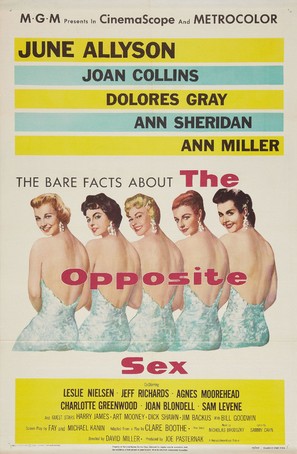
Among her other films were “Kings Row” — one of several in which she starred with Ronald Reagan — “Shine on Harvest Moon” with Dennis Morgan and Jack Carson, and “The Opposite Sex.”

In 1940, the Harvard Lampoon created a stir by characterizing her as the actress who was “the most unlikely to succeed,” to which she quipped back, “Harvard is the home of the unadulterated heel — and you may quote me.”

She often admitted that she had no idea what “oomph” meant and described it as “what a fat man says when he leans over to tie his shoelace in a telephone booth.”

Ann Sheridan was born Clara Lou Sheridan on Feb. 21, 1915 in Denton, Texas, a small town northwest of Dallas.

Miss Sheridan first married S. Edward Norris, a stage actor, in August 1936. They were divorced in October, 1937 having separated after just 375 days of marriage. Her second marriage to George Brent, another actor, on Jan. 5, 1942 lasted only 263 days.

In the 1940’s she was linked romantically to the publicity agent Steve Hannagan. They were often reported about to be married, but Hannagan died a bachelor in 1953. He left Miss Sheridan nearly $250,000.

Ann Sheridan (1915–1967) was one of the most charismatic and resilient stars of the Golden Age of Hollywood. Born Clara Lou Sheridan in Texas, she evolved from a studio-manufactured “pin-up” into a formidable dramatic and comedic actress known for her wit, “no-nonsense” screen presence, and ability to go toe-to-toe with the era’s most intense leading men.

Career Overview

Sheridan’s career is a case study in surviving the rigid Hollywood studio system through sheer personality and professional persistence.

  • The “Search for Beauty” (1934–1936): After winning a beauty contest, Sheridan was signed by Paramount. For two years, she was relegated to bit parts and body-double work. Frustrated by the lack of progress, she moved to Warner Bros., where her name was changed to Ann.

  • The “Oomph Girl” Stardom (1937–1941): Warner Bros. launched a massive publicity campaign, dubbing her the “Oomph Girl” (a title she famously loathed, calling it the sound an “old man makes when bending over to tie his shoes”). Despite the “blonde bombshell” marketing, she proved her mettle in gritty dramas like Angels with Dirty Faces (1938) and They Drive by Night (1940).

  • The Peak Years (1942–1949): Sheridan reached A-list status with Kings Row (1942), a dark, prestigious drama that proved her dramatic depth. She spent the 1940s as a major box-office draw, excelling in comedies like The Man Who Came to Dinner (1942) and Howard Hawks’ I Was a Male War Bride (1949) opposite Cary Grant.

  • Television and Later Years: As film roles for women over 40 became scarce in the 1950s, Sheridan transitioned to stage tours and television. She was starring in the Western sitcom Pistols ‘n’ Petticoats (1966) when she passed away from cancer at age 51.


Detailed Critical Analysis

1. The “Male Peer” Archetype

Unlike many of her contemporaries who played the “femme fatale” or the “helpless ingenue,” Sheridan developed a persona that was frequently described as “one of the boys.” * Equality of Energy: Critics like Richard Schickel noted that she was one of the few actresses who could share a scene 50/50 with James Cagney or Humphrey Bogart. She didn’t shrink in the presence of their “tough guy” energy; she matched it with a dry, skeptical wit and a low, smoky voice that projected intelligence rather than just allure.

  • The “Working Girl” Realism: Many of her best roles were waitresses, secretaries, or “hash slingers.” She brought a blue-collar authenticity to these parts, likely rooted in her humble Texas upbringing, which made her incredibly relatable to Depression-era and WWII audiences.

2. Subverting the “Oomph” Label

A critical tension in Sheridan’s career was the gap between her studio-mandated “glamour” and her natural acting instincts.

  • The Battle for Better Roles: Sheridan famously went on strike against Warner Bros. for better pay and more substantial scripts. She fought against being a “decoration.”

  • Kings Row (1942): This film is often cited as her artistic vindication. As Randy Monaghan, she played a woman from the “wrong side of the tracks” with a dignity and emotional gravity that stripped away the “Oomph Girl” artifice, proving she was a serious dramatic technician.

3. Comedic Versatility and Timing

While often remembered for noir and drama, Sheridan was a gifted screwball comedienne.

  • The Deadpan Delivery: In The Man Who Came to Dinner, she satirized the Gertrude Lawrence-esque “glamour queen” with sharp, self-aware humor.

  • Physical Comedy: In I Was a Male War Bride, Howard Hawks utilized her natural athleticism and “down-to-earth” vibe to ground the film’s frantic slapstick. Critics praised her ability to play “straight man” to Cary Grant’s absurdity without losing her own comedic shine.

4. The Contralto Voice and “Directness”

Later film historians have noted that Sheridan’s voice was one of her most effective tools. Her warm, Texas-tinged contralto provided a “grounding” effect in melodramas that might have otherwise felt overwrought. Her acting style was characterized by a “directness”—a lack of theatrical affectation that made her feel modern even by today’s standards.

Rise Stevens
Rise Stevens
Rise Stevens

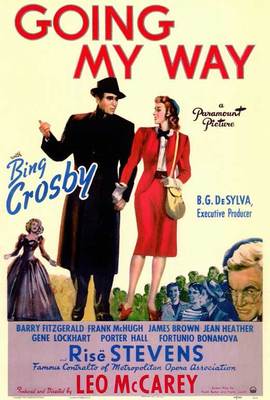
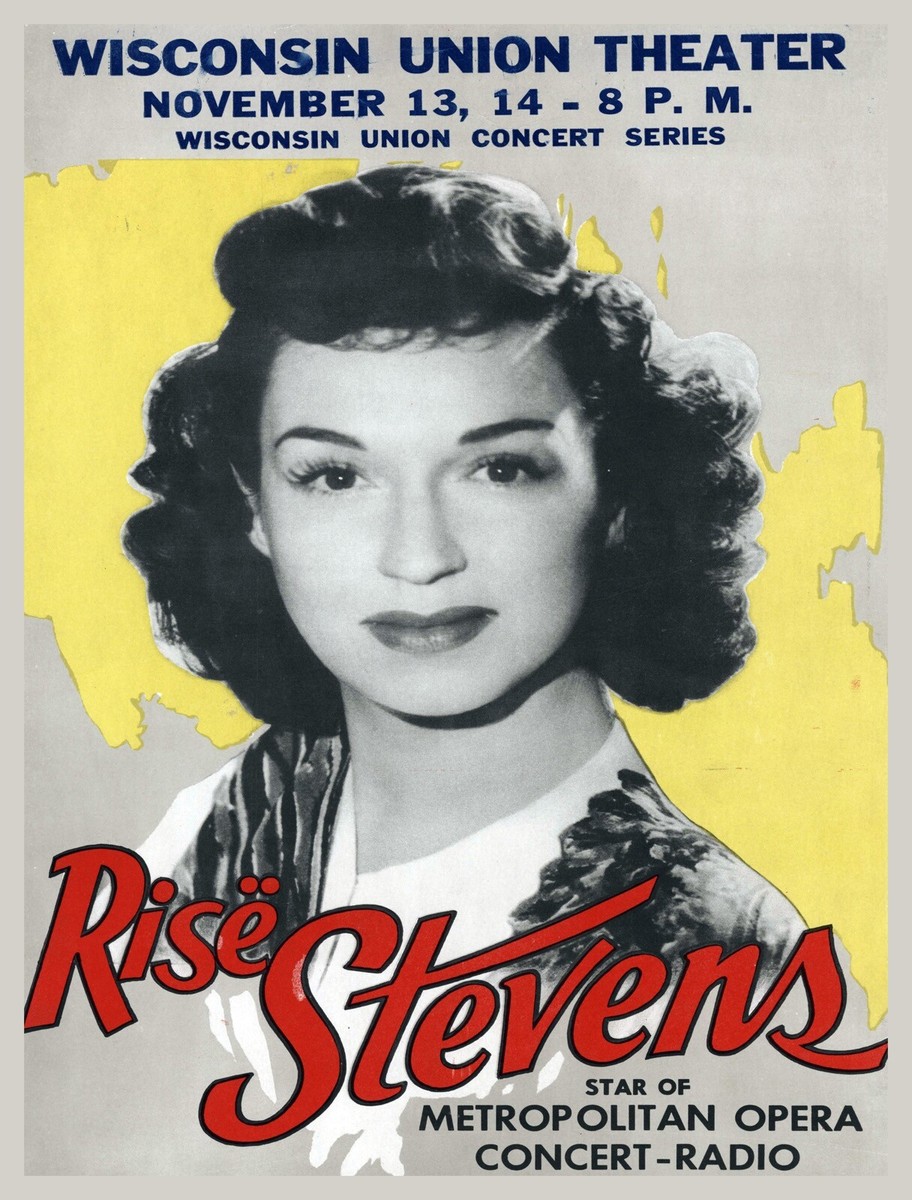
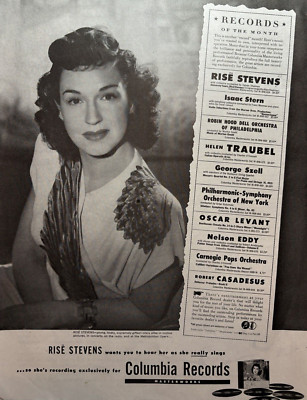
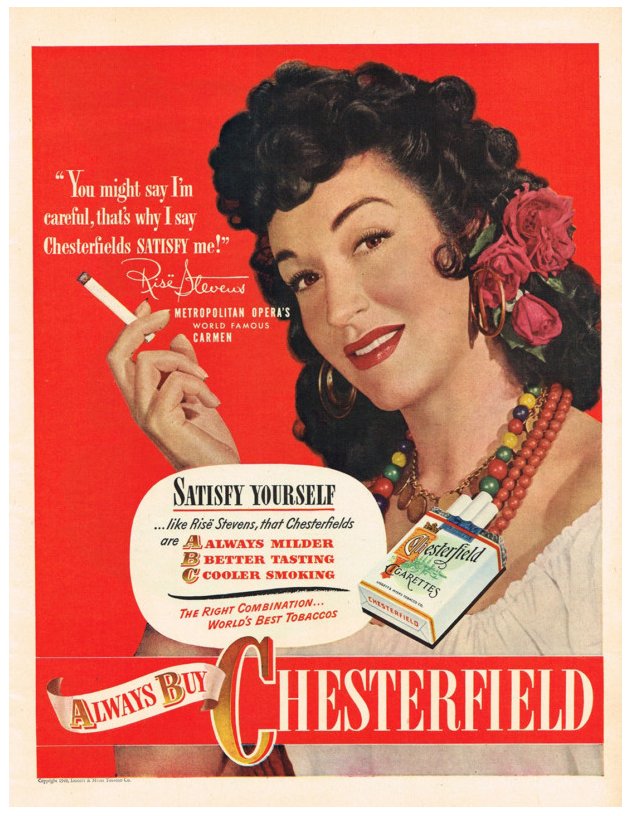
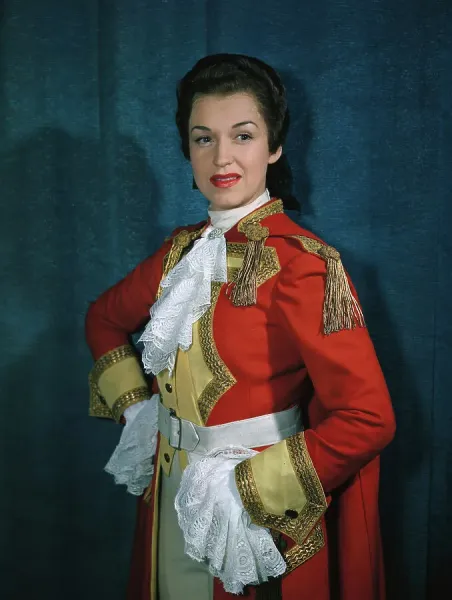
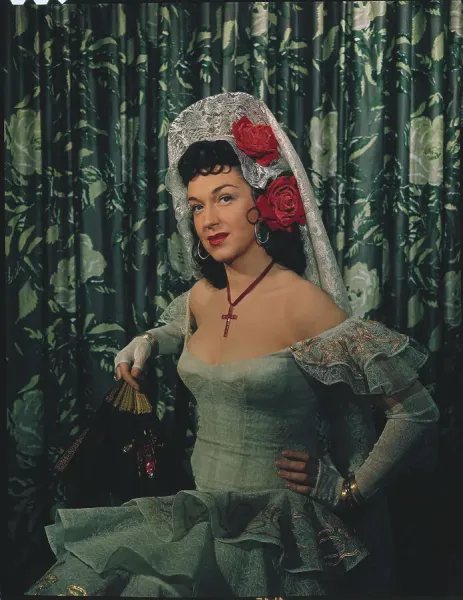
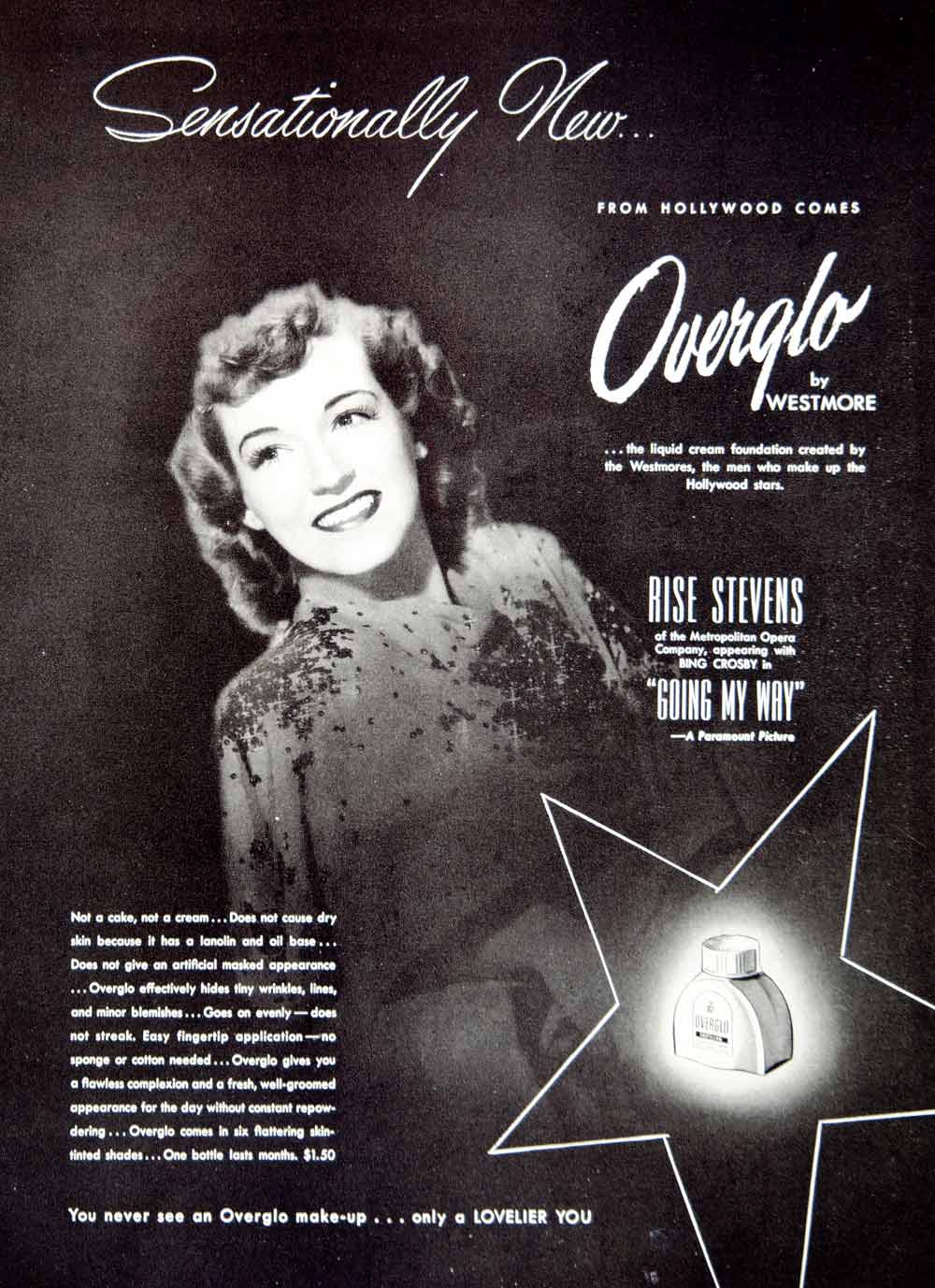
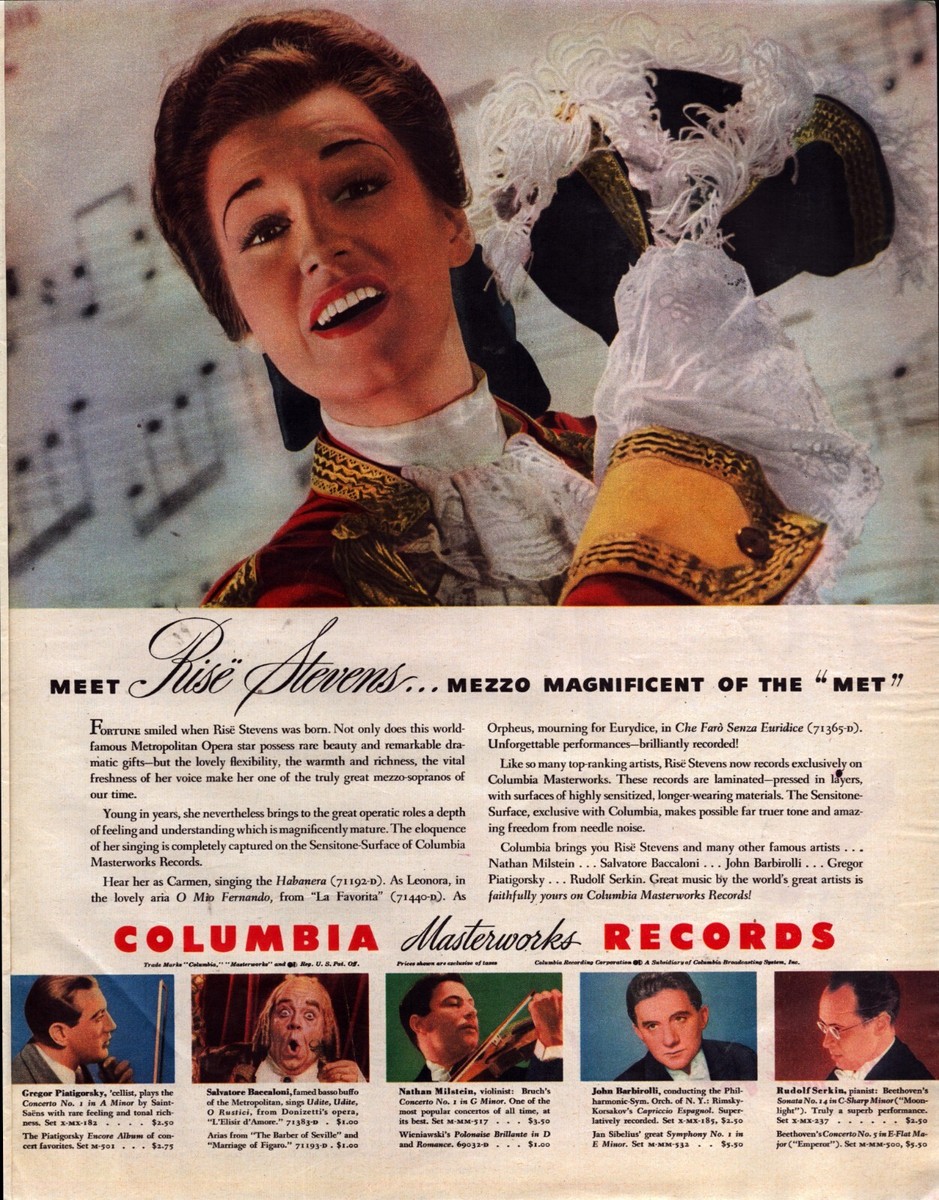
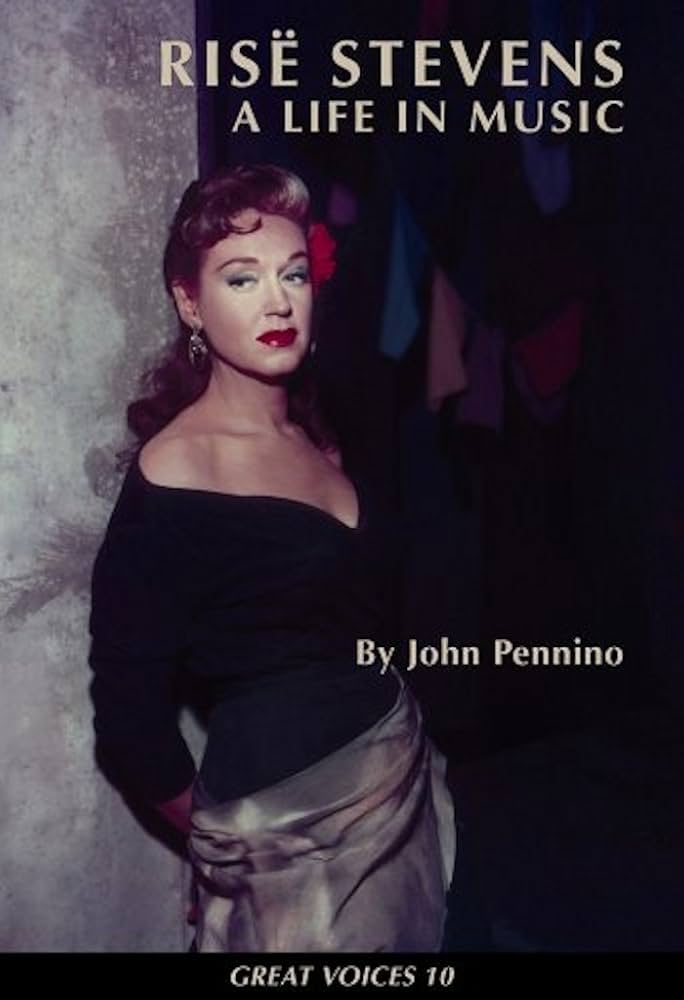
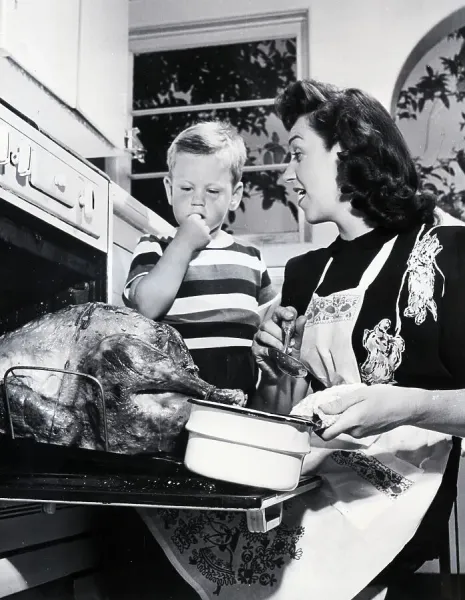
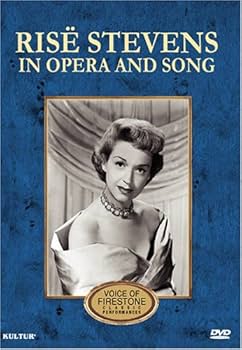
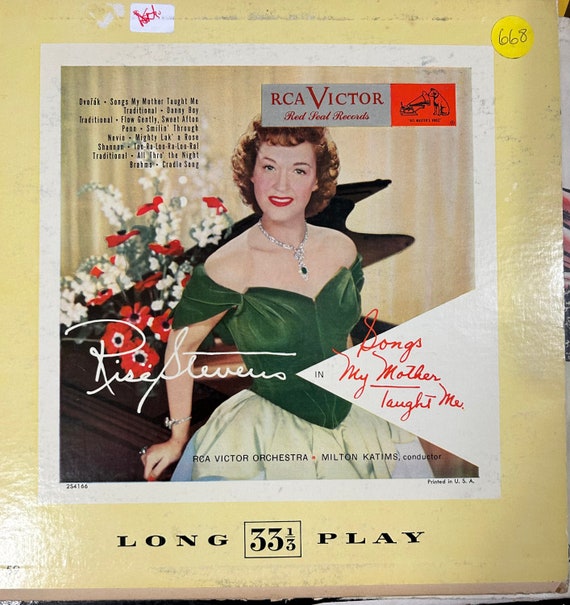
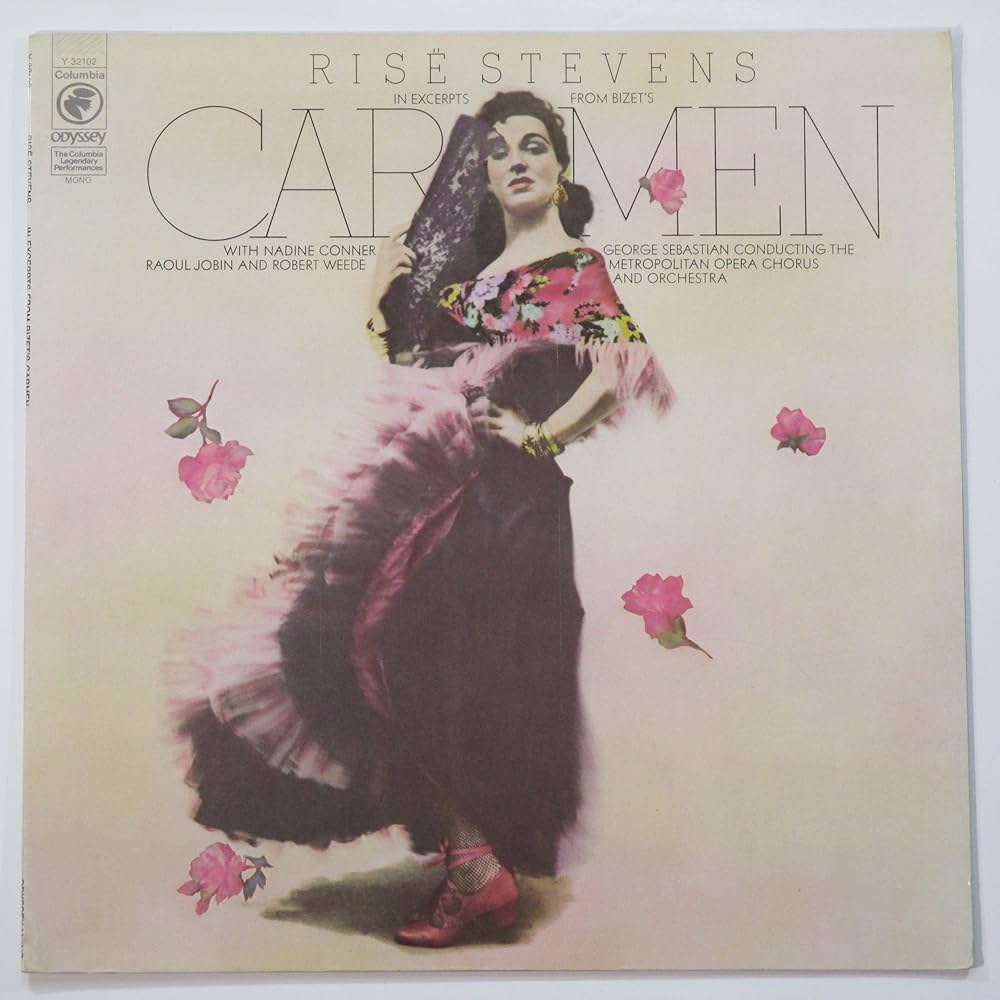
Rise Stevens is a reknowned mezzo-soprano who was born in New York City in 1913.   She has had a lenghty career in opera and in concert.   In the 1940’s she branched out into some Hollywood films including “The Chocolate Soldier” with Nelson Eddy in 1941 and “Going My Way” with Bing Crosby and Barry Fitzgerald in 1944.   Her son is the actor Nicolas Surovy.   She died in 2013 in her 100th year.

Tribute in “Huffington Post” by Susanne Mentzer :

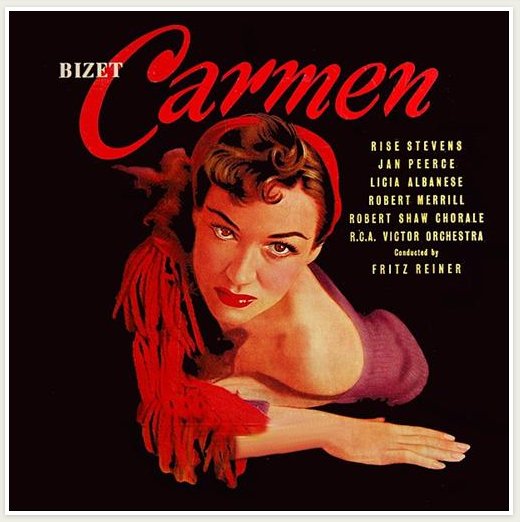
The first eleven years of my life were spent in suburban Philadelphia in Springfield, Delaware County, to be exact. We were one of the working class families living in the numerous identical, small, brick houses of the cul-de-sac. In our living room we had a rather wide, two door, dark wood console that housed a black and white TV. Remember the kind that took forever to warm up starting with a small white dot that slowly grew into the picture? There was also a turntable that rolled out with space underneath for LPs. The one and only opera LP we owned was the RCA 33 1/3 rpm long-playing Bizet’s Carmen– black-covered and about one half inch thick. The sultry Risë Stevens was the seductress, facing the camera posed in a sort of feline crouch ready to pounce any minute. Until my late teens this was all I knew of opera. I am sure mom wore out the grooves listening to the overture, and the arias “Habañera” and “Séguidilla”. I knew these, too, by osmosis. (I have written here about some other memories from back then. See “My Mother’s Voice“).

My mother always raved about Risë Stevens. In my mind this singer was larger than life and possessed a voluptuous sexy sound. She was an amazing beauty too and had a really exotic name. As far I knew, she was the only opera singer in the world even though Robert Merrill and Jan Pierce were also on the recording. Mom, being a mezzo/contralto only spoke of Risë Stevens. I cannot help but think this early exposure influenced my choice of being a mezzo with high notes.

Many years later, I sang the trouser role of Octavian in Richard Strauss’ Der Rosenkavalierat the Met. (Mezzo’s often are cast as young men or boys in certain operas. A former classmate at a high school reunion once said, “It is a tough job but someone’s got to do it.”) There was an evening on which there was a small gathering at the Opera Club at the Met honoring artists who had sung this role. Little did I know I would be in the company of Jarmila Novotná (another legend) and the one and only Risë Stevens. In my ignorance I somehow never imagined Miss Stevens singing anything other than Carmen and the news that she had been Octavian — the role of a young nobleman in love with two women — knocked me flat. Moreover, she sang the role exclusively for a period of ten years. There was an era at the Met when a singer famous for a particular role would be the only person to sing that role over a long period of time. Not only that, here was this petite woman, older but still stunningly beautiful, with a New York accent and low speaking voice, who in my mind, as I mentioned above, was larger than life and the epitome of female sexuality. It was an experience I will never forget. She was so generous and warm to me. I have a photo to remember that evening. I only wish I could have heard her live and really known her. She accomplished far more than her operatic career, later being a leader in the arts.

Risë Stevens died last week at the age of 99. For many of my generation — whether into opera or not — it is the passing of a legend. Although many younger people might have no idea who she is, she was once a household name on Gibbons Road in Springfield, Delaware County, PA. and beyond.

 The above “Huffington Post” tribute can be accessed also online here.


Margaret Hayes
Margaret Hayes
Margaret Hayes
Margaret Hayes
Margaret Hayes

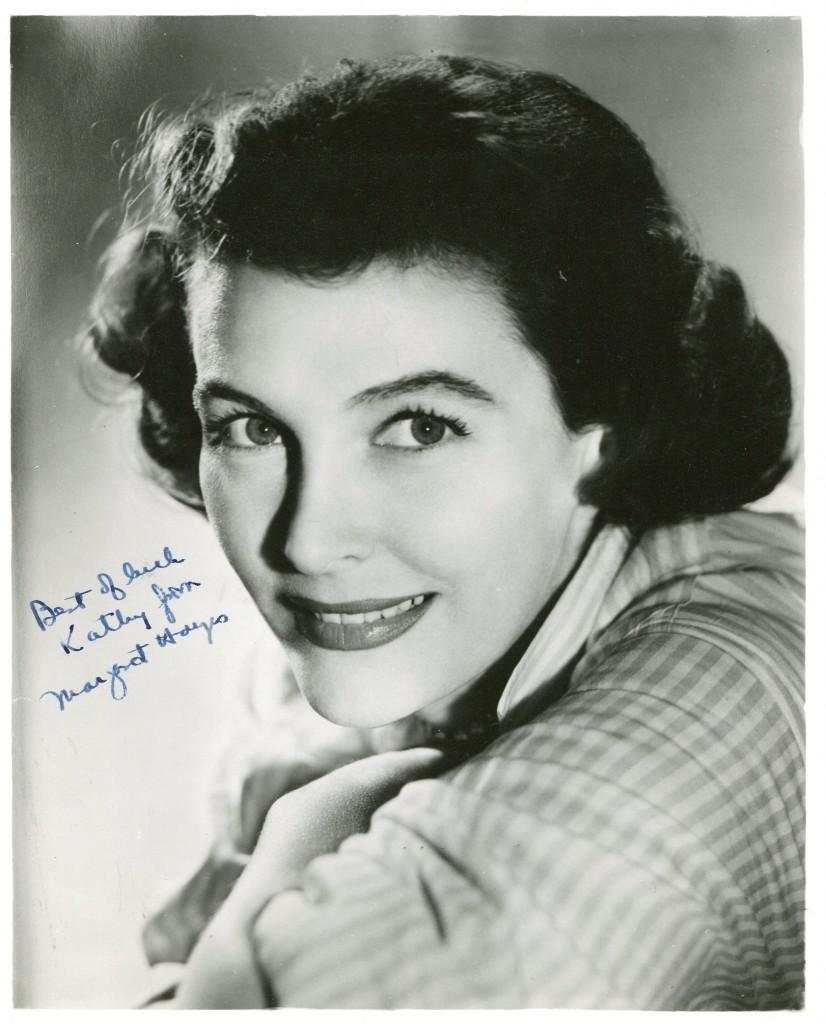
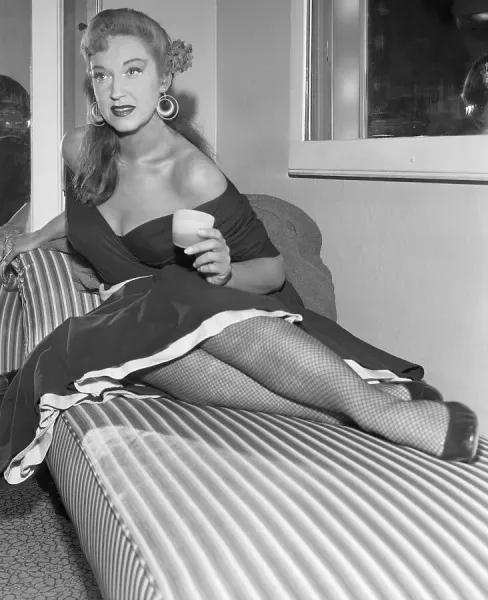
Margaret Hayes was born in 1916 in Baltimore.   She gave a fine performance as a fellow teacher to Glenn Ford in 1955’s “The Blackboard Jungle”.   She was featured in “Girl’s Town” and “The Beat Generation” both with Mamie Van Doren.   She died in 1977.

IMDB entry:

Auburn-haired Margaret ‘Maggie’ Hayes made her Broadway debut in 1940 and was signed by Paramount the following year. She generally played second leads, often as ‘the other woman’, but was never quite fulfilled in her profession. Instead, she pursued diverse other career paths outside of acting, both in between performing, and after her retirement in 1962: as fashion designer, model, owner of a boutique in Palm Beach and designing/selling jewelry in New York. She even worked for a while as a public relations executive for luxury goods department store Bergdorf Goodman on Fifth Avenue in Manhattan. In the late 40’s, she became fashion editor for ‘Life Magazine’, before returning to the New York stage and acting in television where she had some of her best roles.

– IMDb Mini Biography By: I.S.Mowis

Margaret was born in Baltimore, Maryland. Her father was Jack Lewis Ottenheimer, musician, theatrical man and one of the first “gag” men in the entertainment field. He prepared much of the stage material for Thurston, the Magician. After graduating from Forrest Park High School, Margaret went to work for the May Company in Baltimore as a window dresser. As a diversion, she joined the Emerson Cook Stock Company, where she decided to make acting her life’s career. She entered Johns Hopkins under-graduate school with an alternative idea to become a nurse, but stuck to her dramatic ambitions. While studying at Johns Hopkins, Margaret joined “The Barnstormers”, a theatrical organization. Then came an opportunity to act professionally with a stock company at Deer Lake, Penn. Her first Broadway role, in 1940, was in “Bright Rebel” and followed that with a role in Broadway’s “The Family” , which led to a motion picture contract with Paramount Pictures.

– IMDb Mini Biography By: Les Adams <longhorn1939@suddenlink.net>

The above IMDB entry can be accessed online here.

Sue Lyon
Sue Lyon
Sue Lyon
Hampton Fancher & Sue Lyon
Sue Lyon

Sue Lyon

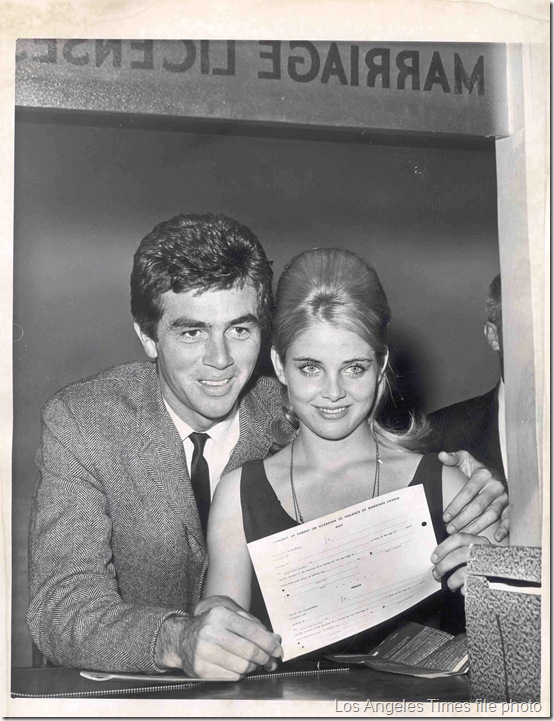
Sue Lyon was born in Davenport, Iowa in 1946.   She shot to fame in the title role of “Lolita” in 1962.   Other roles included “The Night of the Iguana” directed by John Huston with Richard Burton, Ava Gardner and Deborah Kerr and “7 Women” the last film directed by John Ford.

TCM Overview:

This blonde ingenue made a rocky transition to leading lady. Lyon won the controversial role of Dolores Haze, the sexually charged adolescent and the object of an older man’s obsessions in Stanley Kubrick’s “Lolita” (1962). From the Vladimir Nabokov novel of the same name, Kubrick’s “Lolita”, although a toned-down version of the story, was nonetheless one of the most notorious films of its day and Lyon rode to fame on its coattails. She played a similar role in John Huston’s “Night of the Iguana” (1964), competing for the affections of Richard Burton’s defrocked alcoholic preacher against the likes of Deborah Kerr and Ava Gardner, and she played an innocent in John Ford’s last film, “Seven Women” (1965). She continued to work in films and television throughout the 1960s and 70s.   Sue Lyon died in 2019.

Sue Lyon obituary in “The Guardian” in 2019.

A much celebrated movie poster shows Sue Lyon peering over a pair of heart-shaped sunglasses while sucking a red lollipop under the legend “How did they ever make a movie of Lolita?” The answer lay in the casting of 14-year-old Lyon in the title role of Stanley Kubrick’s film adaptation of the controversial Vladimir Nabokov novel, in which Lolita is 12 years old.

Although Kubrick later complained about having to stick to the Hollywood Production Code, he said of Lyon, who has died aged 73, “she’s a one-in-a-million find”, and Nabokov thought her “the perfect nymphet”, a noun he coined in his 1955 novel. Her performance in Lolita (1962), her first feature, won the Golden Globe for most promising newcomer. Few film actors can claim such a prestigious start to their careers.

Her first three pictures were directed by three cinema greats: Kubrick, John Huston (The Night of the Iguana, 1964) and John Ford (Seven Women, 1966). Unfortunately, from such heights there was nowhere else to go but down, and whatever she did, whether professional or personal, Lolita would be evoked without fail.

She was born Suellyn Lyon in Davenport, Iowa, the last of five children of Sue Karr Lyon, who worked as a hospital house mother. She was 10 months old when her father died. At 11, to help pay the bills, she got jobs as a model with the JC Penney agency, while still going to school in Los Angeles.

She soon got small parts in the TV series Dennis the Menace and The Loretta Young Show (both 1959). It was after seeing her in the latter that Kubrick suggested that she audition for the part of Lolita, beating, as rumour has it, 800 other young women. “Even in the way she walked in for her interview, casually sat down, walked out, she was cool and non-giggly,” Kubrick recalled. “She was enigmatic… She could get people guessing about how much Lolita knew about life.”

It was just this quality that Lyon brought to her role – teasing Humbert Humbert (James Mason), the middle-aged British professor, sexually infatuated by her.

Lyon retained some of Lolita in The Night of the Iguana, among a group of Baptist teachers in Mexico. As the 16-year-old niece of the leader of the school, she seduces the tour guide, a defrocked priest (Richard Burton), or vice versa. “You’re as dangerous as you are young and lovely,” he tells her.

In contrast, in Ford’s final film, the underestimated Seven Women, Lyon brought an air of naivety to the role of the youngest in a group of Christian missionaries in rural China in 1935. There is a subtle implication that the head of the mission (Margaret Leighton) has more than a maternal interest in the young woman and is jealous of the fascination she holds for an atheist doctor from New York (Anne Bancroft). It was a performance that should have brought Lyon more laurels than it did.

Her first grown-up role came as the romantic interest in The Flim-Flam Man (1966), directed by Irvin Kershner. A less good performance might have slowed up the lively comedy in which she played an affluent woman, a potential victim of George C Scott and Michael Sarrazin as a couple of con men.

Lyon played Diana Pines in Tony Rome (1967), a typically brash 1960 neo-noir starring Frank Sinatra as the titular private eye, and was the long-suffering wife of the famous stunt man in Evel Knievel (1971), a biopic starring George Hamilton.

After making a few low-budget international thrillers and guest appearances in Police Story and Fantasy Island (both 1978), she retired from show business in 1980.

Lyon was married and divorced five times. Her husbands were the film-maker Hampton Fancher, Roland Harrison, a photographer and football coach, Gary Adamson, whom she married while he was in prison, Edward Weathers and, in 1985, Richard Rudman, a radio engineer; they divorced in 2002.

She is survived by Nona, her daughter from her second marriage.

• Sue (Suellyn) Lyon, actor, born 10 July 1946; died 26 December 2019

Katharine Helmond
Katherine Helmond
Katherine Helmond

Katharine Helmond was born in Galvaston, Texas in 1928.   Her films include “The Hospital” with George C. Scott in 1971, “The Hindenburg” again with Scott and “Family Plot” the last film directed by Alfred Hitchcock.   Ms Helmond died in 2019 at the age of 89.

TCM Overview:

Most noted for playing outspoken, bawdy or endearingly ditzy matriarchs, actress Katherine Helmond enjoyed a career lengthier and more diverse than her beloved television roles might have suggested. After more than a decade of scattered parts in film and on television, the classically trained stage actress earned a 1973 Tony Award for her performance in Eugene O’Neill’s “The Great God Brown.” Following her work on TV movies like “The Autobiography of Miss Jane Pittman” (CBS, 1974) and “The Legend of Lizzie Borden” (ABC, 1975), Helmond landed her breakout role as the spacey Jessica Tate on the envelope-pushing sitcom “Soap” (ABC, 1977-1981), earning the actress her first Golden Globe in 1980. Tapping into her inner “grotesque,” Helmond collaborated with filmmaker Terry Gilliam for a pair of horrifyingly hilarious appearances in “Time Bandits” (1981) and “Brazil” (1985). Offbeat mothers seemed to be her bread and butter, and she successfully modulated her Jessica character for roles on “Who’s The Boss” (ABC, 1984-1992) and “Everybody Loves Raymond” (CBS, 1996-2005). Continuing to work well into her eighties, she lent her talents to such diverse projects as the animated Disney-Pixar blockbuster “Cars” (2006) and the gore and sex soaked vampire soap opera “True Blood” (HBO, 2008- ). Whether playing a delightfully addled socialite, a plastic surgery addict in the dystopian future, or a sexually voracious grandmother, Helmond brought her uniquely manic and seemingly inexhaustible energy to each and every role.

Biographies of Helmond never mention her father’s influence on her early years. Born Katherine Marie Helmond in Galveston, TX on July 5, 1928, she was raised by her mother, Thelma Malone, and grandmother. Withdrawn as a youth, she was assigned a role in a school play by the sisters at her Catholic school and discovered that acting provided a new way to express her emotions. The stage soon became her main passion, and she worked behind the scenes at her local theater before heading to South Carolina to attend the fundamentalist private college, Bob Jones University. While there, Helmond made her film debut in “Wine of Morning” (1955), a film version of the novel of the same name by the university’s president, Bob Jones Jr., who also funded the project. Her professional stage debut came in a New York production of Shakespeare’s “As You Like It,” and she was an active member of the state’s theatrical community throughout the 1950s and into the 1960s. In addition to her regular performances, Helmond operated a summer theater in the Catskills and taught acting classes at various universities. Television also afforded her an outlet for her talents. She made her small screen debut in an episode of “Car 54, Where Are You?” (NBC, 1961-63) in 1962.

The 1970s saw the true blossoming of Helmond’s career and the launch of her status as a TV favorite. A 1973 Tony Award as Best Supporting Actress in a production of Eugene O’Neill’s “The Great God Brown” signaled that she was a performer to watch. Her film career also began in earnest with supporting turns in “Believe in Me” (1971), a disturbing drama about drug addiction, as well as the Paddy Chayefsky-penned black comedy “The Hospital” (1971), “The Hindenburg” (1975) and Alfred Hitchcock’s final film, “Family Plot” (1976). However, television took the fullest advantage of her abilities, and she was put to excellent use as society ladies, mothers of all stripes and professional types in Emmy-winning projects like “The Autobiography of Miss Jane Pittman” (CBS, 1974) and “The Legend of Lizzie Borden” (ABC, 1975).

Helmond’s first turn as a series regular was something of a doozy. “Soap” (ABC, 1977-1981) was a primetime parody of daytime soap operas that left no hot button issue untouched in its pursuit of laughs. Helmond played Jessica Tate, the wealthier of two sisters whose extended and deranged families filled out the show’s massive cast of characters. Blissfully ignorant of the chaos that surrounded her, Jessica’s sole interest seemed to be sex, which she sought from her husband Chester (Robert Mandan) to no avail. Instead, she found relief in the arms of numerous men, including a private investigator (Robert Urich), whose murder lead to a first season cliffhanger concerning her innocence. Jessica later became involved with a South American dictator known as “El Puerco” (Gregory Sierra) and found herself on the wrong end of a firing squad. Unfortunately, fans of the show never got to see if she escaped this demise, as the show was unceremoniously cancelled in 1981. Viewers who tuned into its more successful spin-off, “Benson” (ABC, 1979-1986), received something of an answer about Jessica’s fate in a 1983 episode featuring Helmond as Jessica’s wandering but still confused spirit.

Save for Billy Crystal, Helmond’s career received the most positive impact from appearing on “Soap;” a four-time Emmy nominee and 1981 Golden Globe recipient for her work on the show, it made her a welcome presence for television viewers and producers, who sought her out for comic roles in their own projects. Most were generic TV sitcoms, though there were interesting roles as Rosemary Clooney’s mother in the dramatic “Rosie: The Rosemary Clooney Story” (CBS, 1982) and an episode of Shelley Duvall’s “Faerie Tale Theatre” (Showtime, 1982-87) as Jack’s mother in “Jack and the Beanstalk” (1983). The British seemed to appreciate her sense of humor as well, and she was well cast as the dithering wife of an ogre (Peter Vaughn) in Terry Gilliam’s feature film, “Time Bandits” (1982) as well as in the bizarre cult comedy “Shadey” (1985). The former was the first of several enjoyable big screen collaborations with Gilliam, the best of which was “Brazil” (1985), which cast her as Jonathan Pryce’s scheming mother, whose addiction to plastic surgery reached absurdist limits. In addition to her acting roles, Helmond enrolled in the American Film Institute’s Directing Workshop, which led to her helming episodes of “Benson” and her next series, “Who’s the Boss” (ABC, 1984-1992).

Helmond returned to work as a series regular on “Boss,” the popular sitcom with Tony Danza and Judith Light as a housekeeper and his employer, respectively. Helmond effectively stole all of her scenes as Light’s uber-confident and man-hungry mother Mona, who garnered the lion’s share of the laughs with her outrageous statements. Though at first blush a kissing cousin to Jessica Tate, Mona was decidedly more together than the “Soap” character and could even be counted on to provide some honest advice to Danza’s daughter (Alyssa Milano). She even opened her own ad agency with her daughter in later seasons. A ratings success during the majority of its network run, “Who’s the Boss” netted Helmond two additional Emmy nominations and her second Golden Globe in 1989. Though “Who’s the Boss” kept Helmond busy for nearly a decade, she remained exceptionally active in TV movies and the occasional feature. Chief among these big screen offerings was the underrated ghost story “Lady in White” (1988), which cast her as a tragic spinster with connections to a small town spirit, and the cult comedy “Inside Monkey Zetterland” (1993) as a former soap opera star facing unemployment. In 1995, she began a recurring role on “Coach” (1989-1997) as the eccentric, money-mad owner of a fictional football team that hires Hayden Fox (Craig T. Nelson) as its head coach.

In 1996, Helmond marked the first of several appearances on “Everybody Loves Raymond” (CBS, 1996-2005) as Patricia Heaton’s well-bred mother, who invariably came to loggerheads with Ray’s working class parents (Doris Roberts and Peter Boyle). Well paired with an impossibly tanned and beaming Robert Culp for these episodes, Helmond received a fifth Emmy nomination for a 2002 episode of the series. While on “Raymond,” Helmond could be found in numerous television movies and episodes, as well as the occasional feature, including a brief turn as a desk clerk in Gilliam’s surreal adaptation of “Fear and Loathing in Las Vegas” (1998) and as the voice of a Model T named Lizzie in Pixar’s mega-successful “Cars” (2006). Television continued to be her best showcase, and in the midst of her seventh decade, she successfully stole away such projects as “Mister St. Nick” (2005), which cast her as Mrs. Santa Claus, and as an veteran song-and-dance actress opposite Ernest Borgnine in “A Grandpa for Christmas” (2207). After a three-year break, Helmond returned to television with guest turns on the Everglades-based drama “The Glades” (A&E, 2010- ) and the “Who’s the Boss” redux, “Melissa & Joey” (ABC Family, 2010- ). She increased her output the following year when she once again gave voice to Lizzy in “Cars 2” (2011) and made appearances on such primetime series as “True Blood” (HBO, 2008- ) and “Harry’s Law” (NBC, 2010- ) opposite Kathy Bates.

 The above TCM overview can also be accessed online here.

Kathleen Freeman
Kathleen Freeman

Kathleen Freeman was born in 1919 in Chicago.   She was a wonderful character actress and can be noticed in small parts in “Naked City” in 1948 and “Singing in the Rain” in 1953.   She specialised in roles of maids, busybodies, nosy neigbours and domineering housewives.   Her films include “Athena”, “The Errand Boy”,”North to Alaska” and “Support Your Local Sheriff”.   She was appearing on Brodaway in “The Full Monty” when she became ill and had to withdraw from the casr.   She died shortly thereafter in August 2001.

Ronald Bergan’s “Guardian” obituary:

What Margaret Dumont was to Groucho Marx, Kathleen Freeman was to Jerry Lewis. In other words, a perfect comic foil and friendly adversary, though Freeman, who has died of lung cancer aged 82, was no hoity-toity dame like Dumont. She was more the American equivalent of Peggy Mount or Hattie Jacques in being the mother of all battleaxes.

She made almost 100 films, sometimes in extremely brief roles, but, as she said, “I think I’m a living example of the fact that you don’t have to be in every inch of a film or play to be important to it.” For instance, who could forget her in Singin’ in the Rain (1952) as Phoebe Dinsmore, the diction coach trying to get screechy-voiced dumb blonde star Lina Lamont (Jean Hagen) to make rounded vowels in saying, “I can’t stand him,” instead of “I keeent stendim!”

This might have prepared her for the high-pitched nasal whine of Lewis, with whom she said she “shared a love for clowns and crazy people”. She faced Lewis in 10 films and became a kind of mascot for him, often having to suffer from his slapstick.

Freeman knew all about playing the stooge. She was born in a trunk in Chicago, where she first toddled on to the stage aged two as part of her parents’ vaudeville song and dance act, Dixon and Freeman. But her mother insisted she attend regular school. “For some strange reason, I got into a play at school,” she recalled. ” That’s when a really terrible thing happened – I got a laugh. I just said a line and, then boom!”

She began working in small theatre groups, before forming the Circle Players with friends. It was while performing in the group’s production of an adaptation of Edith Wharton’s Ethan Frome that she was discovered by a Hollywood scout.

Her film debut was as a walk-on in Jules Dassin’s The Naked City (1948) and, until the end of the century, she played a plethora of complaining maids, overbearing landladies, domineering housekeepers, nosy neighbours, frightening mothers-in-law and demented nuns. At the same time, from the early days of television, the big, brash and funny Freeman appeared in a multitude of sitcoms, dating from her portrayal of the “spooked” maid in the Topper series to I Love Lucy, The Beverly Hillbillies, The Dick Van Dyke Show and Hogan’s Heroes.

Among her more conspicuous later film roles were her Sister Mary Stigmata in The Blues Brothers (1980); the bellicose landlady in Dragnet (1987); and hoodlum Fred Ward’s tough-as-nails mother in Naked Gun 33: The Final Insult (1994). Her last film job was dubbing the voice of an old woman in Shrek (2001).

On stage, she was in touring companies of Annie (as Miss Hannigan) and Deathtrap (as Helga Ten Dorp). Her first Broadway appearance was as Madame Spritzer, a downwardly mobile countess in Georges Feydeau s 13 Rue de l’Amore (1978), opposite Louis Jourdan. In 1999, in Los Angeles, Freeman did a one-woman show entitled Are You Somebody?, a question autograph hunters always asked her.

Ironically, she finally became a big name on Broadway in her last role, that of the wisecracking piano player Jeanette Burmeister in The Full Monty, in which she did a show-stopping routine called Jeanette’s Showbiz Number. “People in the street used to say hello because they thought I was a neighbour,” she remarked, “but now that’s changing. Suddenly I have a name to go with my face.”

Freeman is survived by her long-time companion, Helen Ramsey.

• Kathleen Freeman, actor, born February 17 1919; died August 23 2001

The above “Guardian” obituary can also be accessed online here.
Robert Preston

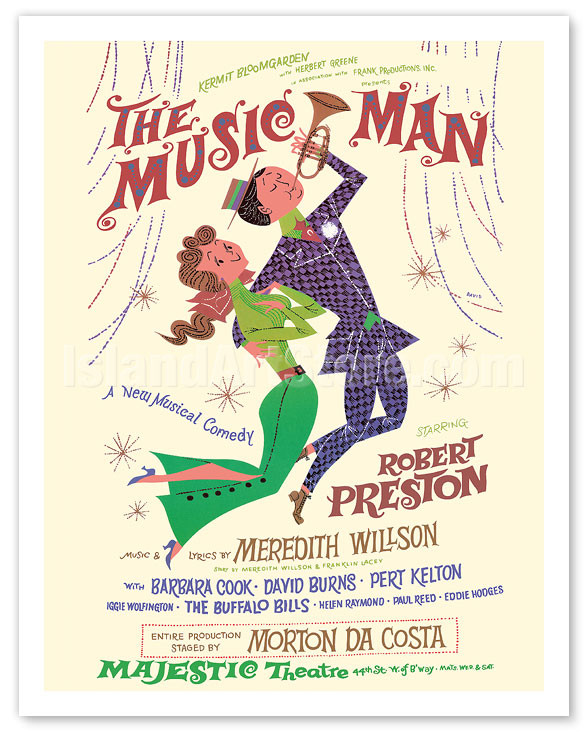
Robert Preston was born in 1918 in Newton, Massachusetts.   He made his movie debut in 1938 and among his early credits are “Union Pacific”, “North West Mounted Police” and “Moon Over Burma”.   In the 1950’s he had enormous success on Broadway in Meredith Wilson’s “The Music Man”.   He recreated his part on film in 1962.   In 1982 he again received rave reviews for his performance in the film “Victor/Victoria” opposite Julie Andrews.   Robert Preston died in 1987.

TCM overview:

Dynamic musical comedy star from the stage who began his career in entertainment appearing in rugged film melodramas (e.g., the unjustly neglected B-film, “King of Alcatraz” 1938) and occasional lighter fare in the late 1930s. His promising early appearances in the Cecil B. DeMille epics “Union Pacific” (1939), “Northwest Mounted Police” (1940) and “Reap the Wild Wind” (1942) did not, however, spell major stardom with the interruption of WWII. When he returned Preston did enjoy good roles in “The Macomber Affair” (1947) and “Tulsa” (1949), but it took a lengthy sojourn on the stage, in which he surprised many with his aptitude for musical comedy, for him to become a major star. Upon returning to films in the 1960s Preston performed zestfully in the film for which he is best remembered, “The Music Man” (1962), in which he recreated his stage role of an endearing huckster turned unexpectedly successful bandleader. Late in life Preston also garnered praise for two highly amusing performances in the Blake Edwards farces, “SOB” (1981) and “Victor/Victoria” (1982).

Peter Graves
Peter Graves
Peter Graves
Peter Graves
Peter Graves

Peter Graves was born in 1926 in Minnesota.   His older brother was the “Gunsmoke” star, James Arness.   One of his first major film roles was in the World War Two drama “Stalag 17”.   He starred in the very popular television series “Mission Impossible” and also starred in the 1980 cult classis “Airplane”.   Peter Graves died in 2010.

Ronald Bergan’s “Guardian” obituary:

Despite his long career as a serious actor in dozens of films and television shows, Peter Graves, who has died aged 83, might be most remembered for a role that lampooned his square-jawed, stolid screen persona. As the captain of a plane heading for disaster in the spoof movie Airplane! (1980), Graves got laughs by playing it as straight as his other roles. (Although his roles in a number of trashy, low-budget science fiction movies in the 1950s had produced unintentional laughs.)

Audiences around the world were also familiar with Graves as the tall, gruff, deep-voiced, silver-haired Jim Phelps, head of the IMF (Impossible Missions Force), an elite American espionage group, in the TV series Mission: Impossible (1967-73). He won a Golden Globe in the role in 1971.

The show famously opened with the words: “Your mission, Jim, should you decide to accept it, is …” Following the briefing, Phelps was told: “As usual, should you or any member of your IM Force be captured or killed, the secretary will disavow any knowledge of your existence. This tape will self-destruct in five seconds. Good luck, Jim.” After the puff of smoke cleared, Phelps always accepted the mission, usually involving some un-American foreign power.
Graves was very proud of – and proprietorial towards – Phelps, and when the big-screen version of Mission: Impossible (1996), starring Tom Cruise, was released, Graves was aggrieved that the character played by Jon Voight used the same name. “I am sorry that they chose to call him Phelps. They could have solved that very easily by either having me in a scene in the very beginning, or reading a telegram from me saying, ‘Hey boys, I’m retired, gone to Hawaii. Thank you, goodbye, you take over now’,” Graves remarked.

Born Peter Aurness in Minnesota, of Norwegian-German stock, he was the son of Rolf Cirkler Aurness, a businessman, and Ruth Duesler, a journalist. His older brother, the actor James Arness, also made his name in a TV series (Gunsmoke). After two years in the US air force, Graves studied drama at the University of Minnesota.

His first credited film roles were as a confused youngster in Rogue River (1951) and as Dane Clark’s blind brother in the western Fort Defiance (1951). In 1952, Graves featured in The Congregation, produced by the Protestant Film Commission, an evangelical organisation, and had the leading role in Red Planet Mars, a McCarthyite tract in the guise of a Christian science fiction film. Graves played a scientist who gets messages from Mars, which pretends to be a utopian society but is controlled by Soviet agents, setting out to destroy the freedom of the US. As a result, Christian revolutionaries overthrow the communist government in Russia.

Graves’s blond, rather bland good looks were brilliantly used by Billy Wilder in Stalag 17 (1953), revolving around a German informer masquerading as an American PoW. The director’s brother, W Lee Wilder, who churned out low-grade science fiction movies, then cast Graves in Killers from Space (1954) as a nuclear scientist captured by aliens (kitted out in hooded sweatshirts, mittens and eyes made out of ping-pong balls), who manages to save Earth from them.

In It Conquered the World (1956) and Beginning of the End (1957), Graves battled against a Venusian and giant (back-projected) grasshoppers. He then reverted to treachery in a series of B-westerns: War Paint (1953), The Yellow Tomahawk (1954), Robbers’ Roost (1955) and Canyon River (1956).

But, in 1955, Graves did manage to work in four excellent movies, though in minor roles. In Jacques Tourneur’s Wichita, he played Morgan Earp, brother of Wyatt (Joel McCrea), and he appeared as military men in John Ford’s The Long Gray Line and Otto Preminger’s The Court-Martial of Billy Mitchell. He also had a small but key role in Charles Laughton’s haunting The Night of the Hunter. As Ben Harper, who shares a prison cell with a “fire and brimstone” preacher (Robert Mitchum), he talks in his sleep about the hidden $10,000 he has stolen from a bank, thus setting the evil preacher on the scent of the money.

In the 1960s, Graves’s stern face was seldom off the TV screen. He started the decade with 34 episodes of an Australian western series called Whiplash, in which he played an American, Christopher Cobb, who established the first stagecoach line in Australia in the 1850s. He continued mostly in TV westerns, and the odd film, until he hit the jackpot with Mission: Impossible.

Jim Abrahams, who wrote, directed and produced Airplane! with the Zucker brothers, David and Jerry, thought that Mission: Impossible “was just so stupid and was great to send up”. They had the wit to cast the straight-as-a-die Graves as Captain Oveur – much corny play is made of the character’s name and that of his co-pilot, Roger Murdock, such as “Roger, Roger” and “Over, Oveur.” Oveur is also at the helm with a young boy, Joey, whom he asks questions such as: “You ever seen a grown man naked?”; “Joey, do you like movies about gladiators?”; and “Have you ever been to a Turkish prison?”

It’s hard to believe that audiences ever took Graves seriously again, but they did and he returned to a new series of Mission: Impossible from 1988 to 1990. He also hosted more than 50 episodes (between 1994 and 2006) of Biography, in which he sounded like an authority on every subject, whether they were artists, politicians, generals or film stars.

From 1997 to 2007, Graves made a number of guest appearances as John “The Colonel” Camden, the grandfather in the squeaky-clean Christian family in the TV series 7th Heaven. A devout Christian himself, Graves is survived by Joan, his wife since 1950, and by three daughters.

• Peter Graves, actor, born 18 March 1926; died 14 March 2010

The above “Guardian” obituary can also be accessed online here.