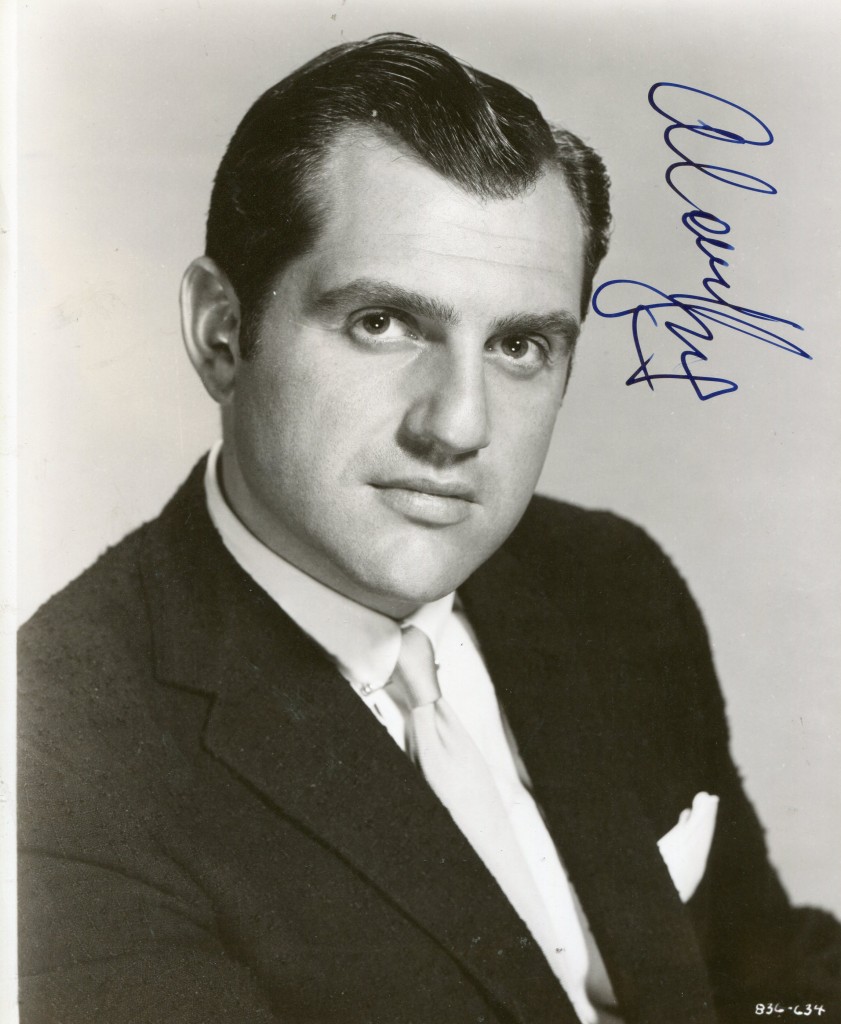
The acerbic wisecracking of Alan King, who has died aged 76, was the essence of Jewish comedy for mainstream Americans, and once for British royalty. In 1956, he opened for Judy Garland at a royal command performance. In the receiving line, the Queen asked him, “How do you do, Mr King?” “How do you do, Mrs Queen?” the comedian replied. As King recounted, “Then Prince Philip laughed. Thank God, he laughed.”
King’s combination of wit and chutzpah made him a popular comedian, but he was also a underrated actor, a successful producer of theatre and films, and a very funny writer.
Born to Russian immigrant parents in Brooklyn’s Williamsburg district, he moved with his family to the Lower East Side, where he claimed to have survived the rough neighbourhood by fighting back with humour. He left school at 14 to work the Catskills borscht belt, first as a drummer and then as a stand-up comic. His success opening for Frank Sinatra led to stints with Lena Horne, Patti Page, Billy Eckstein and Garland, with whom he had a record-breaking run at New York’s Palace Theatre.
The key to King’s success involved taking advantage of America’s suburbanisation in the 1950s. When he married, in 1947, his wife Jeanette persuaded him to leave Manhattan for Forest Hills, Queens. His urban Jewish take on suburban life led to his nicknaming the Long Island Expressway as “the world’s longest parking lot”.
King’s books, among them Anyone Who Owns His Own Home Deserves One (1962), were commonplace on American suburban bookshelves in the 1960s. He was one of the most frequent performers on the Ed Sullivan Show, and a regular guest on the Tonight Show, where his interest in people made him a natural fill-in for host Johnny Carson.
Although his film career began in 1955, he first attracted attention as the rabbi in Bye Bye Braverman (1968). His character parts were typified by his role in Martin Scorsese’s Casino (1995), but he was effective as the husband trying to save his marriage in Sidney Lumet’s Just Tell Me What You Want (1980) and memorable as the father in John Sayles’ Sunshine State (2002).
He joked that his best role was as the villain in Rush Hour 2 (2001), because playing with Jackie Chan was the only time his grandchildren thought he was cool. On Broadway, he had a two-year run in Impossible Years in the mid-1960s; 30 years later, he won acclaim playing Samuel Goldwyn in an off-Broadway production. He began a second career as a producer, both in theatre (The Lion In Winter, Dinner At Eight) and less successfully in film (Wolfen).
This allowed him to spend more time with his family after discovering that one son was addicted to drugs, and to indulge his love of tennis; he kept a box at the US Open and sponsored a tournament in Las Vegas. His autobiography, Name Dropping, was published in 1996, and a second memoir, Matzoh Balls For Breakfast, is due this year.
He is survived by his wife and three children.
· Alan King (Irwin Alan Kniberg), comedian and actor, born December 26 1927; died May 9 2004
The above “Guardian” obituary can also be accessed online here.
Clive Owen was born in 1964 in Coventry. He first came to prominence in the UK with his performance in the lead in the cult TV series “Chancer” in 1990 and 1991. His cinema fame came with “Close My Eyes” in 1991. He has since made films in Hollywood and on the international scene. His movies include “Gosford Park”, “The Bourne Identity”, “Closer” and “Sin City”.
TCM overview:
After a decade of steady work on British television, actor Clive Owen broke out internationally with American art house success of the taut crime-thriller “Croupier” (2000). With his rugged good looks and low key charm, comparisons to the great Sean Connery seemed inevitable as he delivered a series of strong performances in such films as “Gosford Park” (2001) and “The Bourne Identity” (2002). Nearly unanimous praise was heaped on the actor for his wicked performance in Mike Nichols’ brutal relationship drama, “Closer” (2005) – in a role he had originated on the stages of London – followed by a stylistic about-face as part of Robert Rodriguez’s hyper-stylized neo-noir “Sin City” (2005), adapted from Frank Miller’s graphic novel. His work in the intelligent, affecting and ultimately terrifying look into the near-future “Children of Men” (2006) secured Owen’s status as one of Hollywood’s top talents. He showed exceptional comic timing opposite Julia Roberts in the sexy satire “Duplicity” (2009) in addition to a willingness to tackle historical icons in acclaimed work like “Hemingway & Gellhorn” (HBO, 2012). While harkening back to the leading men of film’s golden era, Owen also brought to the table an unmistakably 21st-Century artistic sensibility, making him both an actor’s actor and bona fide movie star.
Born on Oct. 3, 1964 in the small town of Coventry, England, Owen was raised in a fairly rough neighborhood by his country music singing father, who was divorced from his mom in 1968. Owen knew early on that he wanted to be an actor after playing the Artful Dodger in a school production of “Oliver!” When he was 13 years old, he joined a youth group run by the Coventry Theatre while a student at Binley Comprehensive. Accustomed to poverty and occasional violence, Owen spent two years after graduating high school on the dole while trying to jump-start his acting career. He previously tried applying to the Royal Academy of Dramatic Art (RADA), but decided instead to drop out of civil society and make it on his own terms. Two soul-sucking years later, Owen reapplied to RADA and got in. He was fortunate enough to be working with a group in school that was workshopping a Howard Barker play that had yet been put to market. The play later opened at the Royal Court, attracting agents wishing to represent young Owen before he had the chance to even graduate.
After graduation, he took to the stage at the Young Vic, playing Romeo in “Romeo and Juliet” – where he met his soon-to-be wife, Sarah-Jane Fenton, who played Juliet – and Claudio in “Measure for Measure.” Owen made his feature debut in “Vroom” (1988), a story about three people – Owen, David Thewlis and Diana Quick – who escape their dreary surroundings and go on a road trip that suddenly turns disastrous. That same year, he displayed his darker side as a psychopath in the BBC adaptation of “Precious Bane,” which aired in America on PBS’ “Mystery!” before turning roguishly heroic for the British TV series, “Chancer” (1990-91). Owen delivered a strong portrayal of an ambitious businessman who is seduced by his older sister (Saskia Reeves), then becomes obsessed when she tries to break the affair off in Stephen Poliakoff’s excellent drama “Close My Eyes” (1991). Owen was tapped again by Poliakoff, this time to play a Jewish doctor who clashes with the head of a medical center (Charles Dance) in the period piece “Century” (1993).
Owen crossed the Atlantic to appear in the ABC drama “Class of ’61” (1993), as an Irish graduate of West Point who goes off to fight in the Civil War. Owen received strong notices for his seductive hedonist in “The Return of the Native” (CBS, 1994) and as Halle Berry’s lover in “The Rich Man’s Wife” (1996). After starring as a British private investigator in the series “Sharman” (1996), Owen essayed his most challenging role to date, playing a concentration camp inmate in Sean Matthias’ film version of “Bent” (1997). As Max, the actor gave a powerful performance, skillfully negotiating the characters evolution from selfish and debonair decadent to caring individual. Owen and co-star Lothaire Bluteau worked off one another to great effect, with both delivering star-making performances.
After co-starring on the London stage in “Closer” (1997), the actor appeared opposite Alex Kingston in director Mike Hodges’ absorbing crime drama “The Croupier” (1999), the film that would provide his breakthrough role. As a hard-boiled dealer who conspires to defraud a casino, Owens’ performances prompted critic Roger Ebert to compare his steely reserve to that of Sean Connery, noting “he doesn’t give himself wholly to the action, but seems to be keeping a part of his mind outside of it, measuring and calculating.” Not surprisingly, Owen quickly began topping the lists of potential successors to the James Bond role after Pierce Brosnan. Meanwhile, the actor’s popularity increased when he starred in a series of four “Second Sight” telepics for the BBC, playing hot shot British detective Ross Tanner in 1999 and 2000, and he became an icon of cool as The Driver in a series of avant-garde action shorts sponsored by BMW and helmed by directors John Woo, Ang Lee, Guy Ritchie, Tony Scott, Joe Carnahan and John Frankenheimer.
On the big screen, Owen again impressed with his turn in “Gosford Park” (2001), director Robert Altman’s delightful ensemble riff on British drawing room murder mysteries, playing the brooding Robert Park, who emerges as a central figure in the storyline. Off that success, he was cast in the big budget studio adaptation of Robert Ludlum’s spy thriller “The Bourne Identity” (2002) as the ruthless, steel-nerved assassin, The Professor. Owen next starred opposite Angelina Jolie in the disappointing melodrama “Beyond Borders” (2003), the story of a disaster-relief worker who falls in love with a socially conscious wealthy woman. He rebounded strongly, however, when he reunited with Hodges for the noirish “I’ll Sleep When I’m Dead” (2004), playing a retired British gangster who emerges from his secluded countryside life to investigate the death of his brother.
Next up was Antoine Fuqua’s supposedly “demystified” retelling of the legend of “King Arthur” (2004), a big budget, action-oriented film that cast Owen as England’s once and future king, this time set in a more historically correct context, if indeed a King Arthur actually existed. Owen’s next role made him an overnight star in the States. The highly literate, often romantically brutal drama “Closer,” directed by Mike Nichols followed the complex relationships between two couples (Owen, Natalie Portman, Julia Roberts and Jude Law) who become messily intertwined in a love/sex gender war. Despite such starpower, it was the relatively unknown Owen’s hard-edged performance that was the most heavily cited by critics and viewers. Not surprisingly, Owen took home the Golden Globe for Best Performance by a Supporting Actor and was nominated for an Oscar in the same category.
Amid furious rumors that he was being courted to become the next James Bond – he later admitted he wasn’t interested in the role, which ultimately went to Daniel Craig – Owen appeared to splendid effect in director Robert Rodriguez and writer-artist Frank Miller’s co-venture “Sin City” (2005), a visceral, visually stunning adaptation of Miller’s crime noir comic book series. Headlining the segment drawn from Miller’s story arc “The Big Fat Kill,” Owen played the hard-edged but noble Dwight McCarthy, who becomes embroiled in a sudden, violent battle over control of Sin City’s Old Town, where prostitutes armed to the teeth reign. A portion of Owen’s storyline, the eerie sequence in which he drives the talking corpse of the corrupt cop Jackie Boy (Benicio del Toro) was also directed by Quentin Tarantino. Next was the thriller “Derailed” (2005), which cast Owen and Jennifer Aniston as two married business executives having an affair who are forced into violent and illicit acts by a sadistic criminal, and must turn the tables to save their families.
After the blackmail thriller came and went without much notice, Owen starred in Spike Lee’s impressive genre piece, “Inside Man” (2006), playing a brilliant and cool-headed thief who remains one step ahead of a smooth-talking hostage negotiator (Denzel Washington) in an effort to pull off the perfect heist. Owen rounded out the year on a high note, starring in Alfonso Cuarón’s multi-award nominated “Children of Men” (2006), a futuristic dystopian tale about a former political activist (Owen) turned down-and-out bureaucrat who is convinced by a former lover (Julianne Moore) to help transport a young woman pregnant (Clare-Hope Ashitey) with the infertile world’s only child to the fabled Human Project in order to save the future. He was next cast as Sir Walter Raleigh in “Elizabeth: The Golden Age” (2007), Shekhar Kapur’s follow up to “Elizabeth” (1998) in which the Virgin Queen (Cate Blanchett) becomes involved in a relationship with the famed poet and explorer during one of the British Empire’s many entanglements with Spain.
Proving himself comfortable in virtually any and all imaginable genres, Owen starred opposite a scenery-chewing Paul Giamatti in the cartoonishly violent “Shoot ‘Em Up” (2007), as a nameless, carrot-chomping gunslinger, united with a beautiful prostitute (Monica Bellucci) in the guardianship of an infant targeted by a ruthless criminal (Giamatti). Far more somber in its tone was the espionage thriller “The International” (2009), in which Owen played an Interpol agent investigating a global banking organization involved in money laundering, arms trading and murder. Also that year he demonstrated nearly irresistible chemistry with co-star Julie Roberts in the jaunty “Duplicity” (2009), a romantic comedy in which they played two corporate spies conning a pair of captains of industry, even as they alternately scammed and wooed each other. Working with actor-turned-director, David Schwimmer, Owen gave a heart-wrenching performance in the drama “Trust” (2010) as a father whose world is turned upside down after his teenage daughter (Liana Liberato) is stalked and later raped by a man she met on the Internet. Returning to pure action, he paired with Robert De Niro and Jason Statham for the thriller “Killer Elite” (2011), prior to working alongside actress Nicole Kidman in the lauded period biopic “Hemingway & Gellhorn” (HBO, 2012), which covered the great American writer’s (Owen) love affair with war correspondent Gellhorn (Kidman) during the Spanish Civil War. His performance as Hemingway earned him an Emmy Award nomination for Outstanding Lead Actor in a Miniseries or a Movie – the first such honor of his career. He also received a SAG nod in the same category.
The above TCM overview can also be accessed online here.
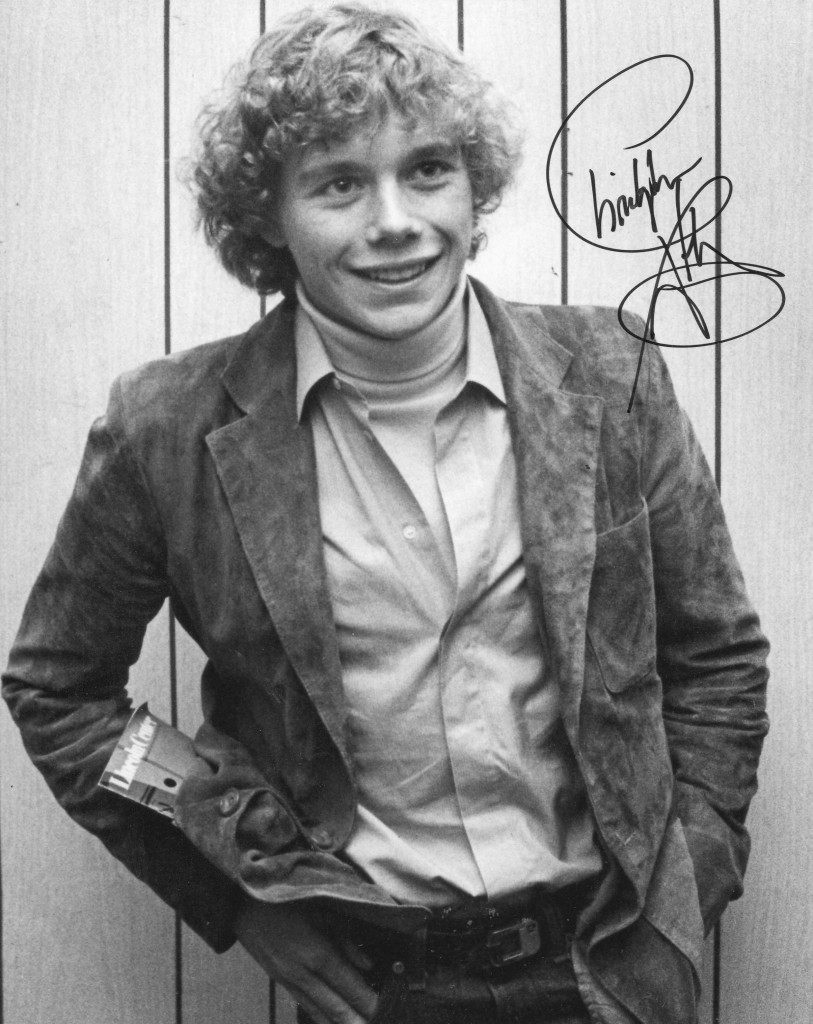
Christopher Atkins was born in 1961 in New York. Heis best known for his role opposite Brooke Shields in “The Bllue Lagoon” in 1980. Other roles include “The Pirate Movie” in 1982 and “Prism” in 2009.
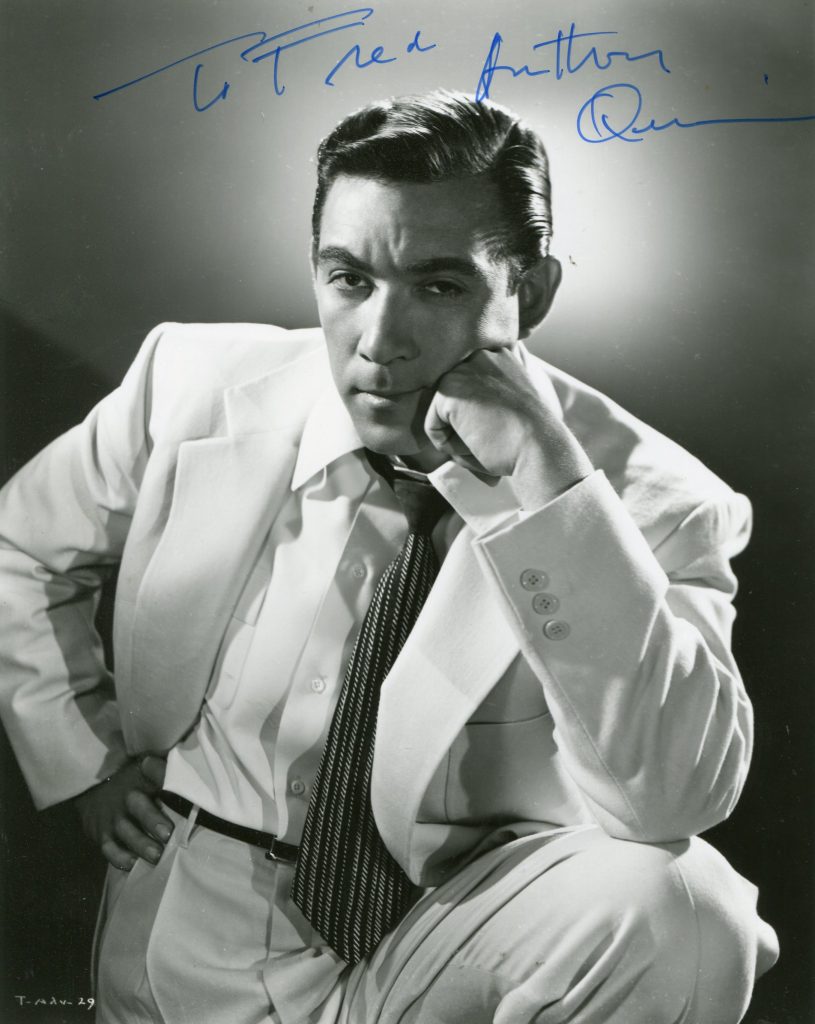
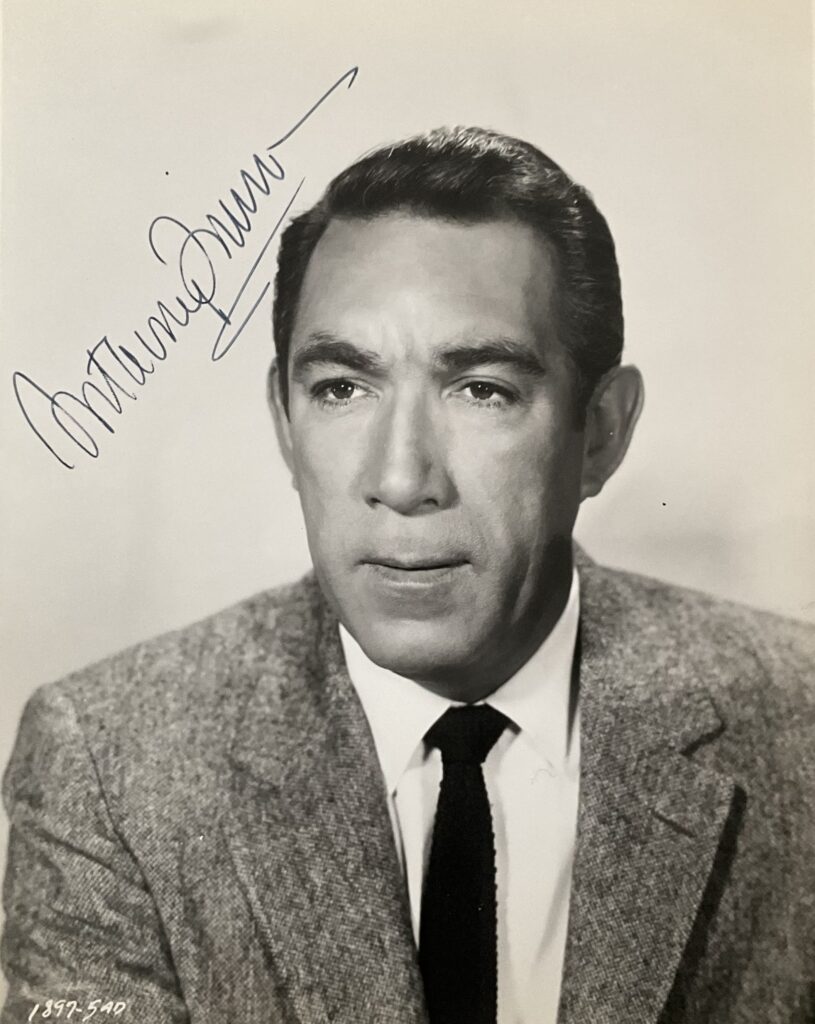
I met Anthony Quinn once in London in 1994. A friendly man, he talked a little about “The Guns of Naverone”. Quinn is one of my favourite actors. He had a very long movie career. He was born in 1915 in Mexico.His grand father was from Cork.. He began making films in 1936 in “The Milky Way”. He had support parts throughout the 1940’s in such films as “The Black Swan” in 1952. He won two Oscars in the 1950’s and then became a major movie star in the 1960’s in such films as “Laurence of Arabia” in 1962 and “Zorba the Greek” in 1964. In 1990 he starred with Maureen O’Hara and John Candy in “Only the Lonely”. He died in 2001 at the age of 86.
His obituary from “The Guardian” by Ronald Bergan:
There has always been a resistance among some inhibited Anglo-Saxons to the rumbustious personality of Anthony Quinn, who has died aged 86.
Some, however, like Basil (Alan Bates), the buttoned-up English writer in Zorba The Greek (1964), gradually became intoxicated by his life-force character. In fact, there were few better noble savages in Hollywood movies.
When he emerged as a leading performer in the 1950s, constantly roaring for our attention and sympathy, following more than 10 years as an all-purpose, ethnic supporting actor, Quinn was the antithesis of introspective stars like Montgomery Clift, Marlon Brando and James Dean, and reserved English ones such as Rex Harrison and David Niven.
Despite having lived in the United States since childhood, the Mexican-born actor hardly ever played an American, except a native one. His most famous portrayals were as Greeks, Mexicans, Frenchmen, Italians, Arabs and even an Inuk.
He was born in Chihuahua, of poor Irish-Mexican parentage. His maternal grandmother was a Cherokee; his father, who spoke Spanish with an Irish accent, fought with Pancho Villa.
When Anthony was a boy, the family arrived in California as migrant workers picking grapes. After his father died, he did a lot of odd jobs, including shining shoes, boxing professionally at 16, having lied about his age, and preaching for the evangelist Aimee Semple McPherson in the Mexican neighbourhoods of Los Angeles.
He taught himself literature, music and painting, and decided to become an architect after meeting Frank Lloyd Wright.
But the taste for acting diverted him. After studying with Michael Chekhov, and performing with small theatre groups, he was given the wordless role of a prisoner knifed to death in a gangster picture called Parole! (1936). As Paramount wanted actors who could pass as native Americans, Quinn pretended to be a pure Cheyenne to get a role as a chief in Cecil B DeMille’s The Plainsman (1936) starring Gary Cooper.
The same year, he married DeMille’s adopted daughter Katherine, although his father-in-law did little to advance his career, not only to counteract any suggestion of nepotism, but because he did not think much of his acting talent.
Quinn’s parts consisted mainly of foreign heavies or native Americans in a number of Paramount movies, dying in almost all of them. “I was the bad guy’s bad guy,” he said. “I rarely made it to the final reel without being dispatched by a gun or a knife or a length of twine, typically administered by a rival hood.”
Even in DeMille’s Union Pacific (1939), in which he had a small role as a gambler’s hatchet man, he died at the hands of Joel McCrea.
In 1941, when loaned out to other studios, he was given better roles. In Rouben Mamoulian’s Blood And Sand, for 20th Century-Fox, he played a young matador out to win Rita Hayworth from Tyrone Power, and in Raoul Walsh’s They Died With Their Boots On (1941), at Warner Brothers, he was an imposing Chief Crazy Horse. In the same year, his first child, Christopher, drowned in a swimming pool, aged three; he and Katherine went on to have four more children.
Quinn’s first lead was as an illiterate horsebreeder in a small-budget movie called Black Gold (1947), in which Katherine played his wife. However, at the start of America’s anti-communist witchhunt, his leftish leanings made him decide to leave Hollywood and return to the stage. He toured in Born Yesterday, and attended the Actors’ Studio, where he got to know Elia Kazan. Kazan then chose him to replace Marlon Brando, who had gone into films, as Stanley Kowalski in A Streetcar Named Desire, which he played for almost two years on Broadway.
Quinn’s return to the screen was in Robert Rossen’s The Brave Bulls (1951). “The supporting cast was entirely Mexican, and I was thrilled to be in such company,” he commented. “After so many years as the token Latin on the set, I found tremendous security in numbers. For the first time, I belonged.”
This was followed by his Oscar-winning supporting role in Kazan’s Viva Zapata! (1952), in which he played Eufemio Zapata, the hard-drinking, ill-disciplined brother of the hero (Brando).
In 1954, after a few more bandit movies, Quinn made two epics in Italy, Ulysses and Attila, as well as Federico Fellini’s La Strada. In the latter, he was superb as Zampano, the whoring, drunken itinerant strongman who ignores the simple-minded girl (Giulietta Masina) he has put to work as a clown. Cruel as the character is, by the end, Quinn has revealed his own heartbreak and isolation.
Then it was back to the bullring in Budd Boetticher’s The Magnificent Matador (1955), in which, as a great Mexican matador, he took to the hills because “fear is eating him”. Needless to say, he ended up happily slaying bulls once more, encouraged by Maureen O’Hara.
In 1955, Quinn won his second Oscar as supporting actor for his relatively brief, but powerful, performance as Paul Gauguin in Vincente Minnelli’s Lust For Life, sending sparks flying while clashing temperamentally with Kirk Douglas’s Van Gogh.
Because it was felt that no American actress was fiery enough to match Quinn, he was co-starred with the three hottest Italian female stars: Anna Magnani (Wild Is the Wind, 1957), Gina Lollobrigida (The Hunchback Of Notre Dame, 1956) and Sophia Loren (Black Orchid, 1958, and Heller In Pink Tights, 1960).
In 1958, an ailing Cecil B DeMille handed over the direction of The Buccaneer (the remake of his 1938 movie) to his son-in-law. Although Quinn is credited as director, DeMille, who died a month after the opening, cut the film to suit his own tastes, turning it from a more intimate, political drama into a yawning pirate epic.
After two good westerns, Warlock and Last Train From Gun Hill (both 1959), he took on one of his most difficult roles in Nicholas Ray’s anthropological The Savage Innocents (1960), in which he was convincing as an Inuk hunting and fishing in northern Canada, where it was filmed.
Further “savage innocents” embodied by Quinn were the title role in Barabbas (1961) and Mountain Rivera, and the worn-out boxer in Requiem For A Heavyweight (1962). Simultaneously, however, he appeared successfully on Broadway as Henry II, opposite Laurence Olivier in Jean Anouilh’s Becket, and in François Billetdoux’s two-hander, Tchin Tchin, with Margaret Leighton.
After playing a Greek colonel in The Guns Of Navarone (1961), and a Bedouin leader in Lawrence Of Arabia (1962), Quinn applied himself to Michael Cacoyannis’s Zorba The Greek (1964), based on the Nikos Kazantzakis novel. As Alexis Zorba, the passionate, free-spirited Cretan peasant with an earthy laugh and a lust for life, he reached his apotheosis.
According to Quinn, he himself invented the film’s celebrated dance with the sliding step. He had broken his foot the day before shooting began, and found that if he dragged it along, it would not cause too much pain.
“I held out my arms, in a traditional Greek stance, and shuffled along the sands. Soon Alan Bates picked up on the move … We were born-again Greeks, joyously celebrating life. We had no idea what we were doing, but it felt right, and good.”
In 1965, Quinn divorced Katherine and married Iolanda Addolari, the Italian costume designer he had met on the set of Barabbas, four years previously. It was a marriage that lasted 30 years, and produced three sons.
But fidelity was never Quinn’s strong point, and he also had three children by two other women, and affairs with, among others, the French actress Dominique Sanda and Pia Lindstrom, Ingrid Bergman’s daughter.
Although he kept working, he admitted: “The parts dried up as I reached my 60th birthday, loosely coinciding with my growing disinclination to pursue them. Indeed, I could not see the point in playing old men on screen when I rejected the role for myself.”
Quinn then concentrated on painting and sculpture, examples of which sold for thousands of dollars. “Some days, I paint like an Indian. Some days, I paint like a Mexican … I steal from everybody – Picasso, Kandinsky … I steal, but only from the best,” he commented.
In the late 1970s, in two films directed by Moustapha Akkad, The Message, in which he played the prophet Mohammed, and Lion Of The Desert, the story of Omar Mukhtar, the guerrilla leader who fought against Mussolini’s forces in Libya, Quinn became a leading star in the Arab world. “It took the faith of 750m Muslims to restore my faith in myself,” he said later.
Then it was back to being a Greek in The Greek Tycoon (1978), a thinly disguised portrait of Aristotle Onassis, and – at the age of 68 – revisiting his cherished role in Zorba! (1983), the stage musical version on Broadway.
Quinn continued to work in the cinema into the 1990s, notably in Spike Lee’s Jungle Fever (1991), and in A Walk In The Clouds (1995), exhibiting little reduction in his power. His final role was as a mafia boss in Avenging Angelo, with Sylvester Stallone, which is still in production.
In 1996, after an acrimonious divorce from Iolanda, and a heart bypass operation, Quinn, aged 80, had a son and a daughter by his former secretary Kathy Benvin – making him a father 13 times over, by five different women, and continuing, as he always did, to blur the line between his on- and off-screen “earth father” personality.
• Anthony Rudolph Oaxaca Quinn, actor, born April 21 1915; died June 3 2001
Tony Martin had a long career as a singer in the U.S. In the 1940’s and 50’s he also had success in Hollywood movies. He was born in 1913 in San Francisco and lived until he was 98. He was long married to Cyd Charisse. He died in 2012.
His “Guardian” obituary by Ronald Bergan:
The American entertainer Tony Martin, who has died aged 98, was once described as a singing tuxedo. Although he was rather a stiff actor, he was handsome and charming, with a winning, dimpled smile. What mattered most, however, was his mellifluous baritone voice, which he used softly in ballads such as To Each His Own and I Get Ideas, and powerfully in Begin the Beguine and There’s No Tomorrow, all hit records in the 1940s and 50s.
He was one of the top crooners of the period with Vic Damone, Andy Williams and Dick Haymes, all of them just below Bing Crosby and Frank Sinatra in esteem and popularity. According to Mel Tormé: “Tony Martin was technically the greatest singer of them all, as well as being the classiest guy around, both as an entertainer and a person.”
He was born Al (Alvin) Morris in San Francisco into a Jewish family and brought up in Oakland. The young boy started singing at his mother’s sewing club. He switched to the saxophone when his voice changed, and quickly mastered that instrument and the clarinet, organised a band and began playing professionally.
One night a Hollywood agent heard him singing on a radio show, saw that he had the good looks to match his voice, and promised to get him to Hollywood on condition he change his name. He took “Tony” from a gambler in a story in Liberty Magazine and “Martin” from the bandleader Freddy Martin. When his father heard of the name change, he shouted: “Tony’s a name for a horse.”
Martin’s first film was the Fred Astaire-Ginger Rogers musical Follow the Fleet (1936), in which he had a bit part as a sailor. A contract followed with 20th Century-Fox, where he met his first wife, Alice Faye, soon to be the studio’s leading musical star. Married in 1937 and divorced in 1940, they appeared in four films together, although Martin usually just had a number as a band vocalist. The first, Sing, Baby, Sing, brought him the Oscar-nominated number, When Did You Leave Heaven?, and in You Can’t Have Everything (1937), Faye was the star, while Martin, eighth-billed, sang The Loveliness of You.
In his first starring role, he was billed as Anthony Martin in Sing and Be Happy (1937), little more than a vehicle for what Variety called, characteristically, his “socko vocalisthenics”. He then played the romantic lead and straight man to the Ritz Brothers in Life Begins in College (later known as The Joy Parade, 1937) and Kentucky Moonshine (later Three Men and a Girl, 1938), and to Eddie Cantor in Ali Baba Goes To Town (1937). More satisfying to him was his co-starring with Rita Hayworth in Music in My Heart (1940), a modest Columbia musical.
Martin’s most prestigious film was Ziegfeld Girl (1941) at MGM, in which he warbled You Stepped Out of a Dream to a statuesque Hedy Lamarr, and Caribbean Love Song. The Big Store (1941) is not considered the Marx Brothers’ funniest movie but, for most critics, the comic high spot, albeit unintentionally, was Martin’s heartfelt rendition of the bombasticTenement Symphony – “The sounds of the ghetto inspired the allegretto.”
In the second world war, Martin served briefly in the navy then switched to the army amid rumours that he had tried to buy a navy commission. The rumours persisted after the war, even though he served bravely in the Pacific, and was decorated with a Bronze Star. After the war, Martin returned to Hollywood and Casbah (1948) in which he was miscast as Pépé le Moko, jewel thief in hiding, previously played by Jean Gabin and Charles Boyer, though he did make full use of the tuneful Leo Robin-Harold Arlen songs.
In Two Tickets to Broadway (1951), Martin bravely attempted the Prologue from Pagliacci, less ill-conceived than Sinatra’s version of Mozart’s La Ci Darèm La Mano in It Happened in Brooklyn a few years earlier. He was more at home as a smoothie romancing Esther Williams in Easy to Love (1953), in which he had the best number, That’s What a Rainy Day Is For. Other songs he delivered with panache were Lover Come Back to Me, in Deep in My Heart (1954), and More Than You Know, in Hit The Deck (1955).
As the Hollywood musical declined, so did Martin’s film career – his last musical was the British-made Let’s Be Happy (1957), starring Vera-Ellen. He then began to concentrate on his cabaret shows around the US and abroad, sometimes appearing with his second wife, the leggy dancer Cyd Charisse, whom he married in 1948. They remained together for 60 years until her death in 2008. Martin reappeared on the big screen in 1982 in a German-made film, Dear Mr Wonderful, in which he genially took himself off as a Las Vegas nightclub singer. The voice had not changed much and the tuxedo still fitted him perfectly.
He is survived by Nico Charisse, his adopted son from Cyd Charisse’s first marriage. Tony Martin Jr, his son by Charisse, died last year.
• Tony Martin (Alvin Morris), actor and singer; born 25 December 1913; died 27 July 2012
The “Guardian” obituary can also be accessed on-line here.
Carole Shelley was born in 1939 in London. She made her Broadway debut in 1965 as one of the Pigeon sisters in the play “The Odd Couple”. She subsequently repeated the role on film with Jack Lemmon and Walter Matthau. She also played in the TV series with Tony Randall and Jack Klugman. She also featured in the film “Bewitched” with Nicole Kidman. Carole Shelley died in 2018.
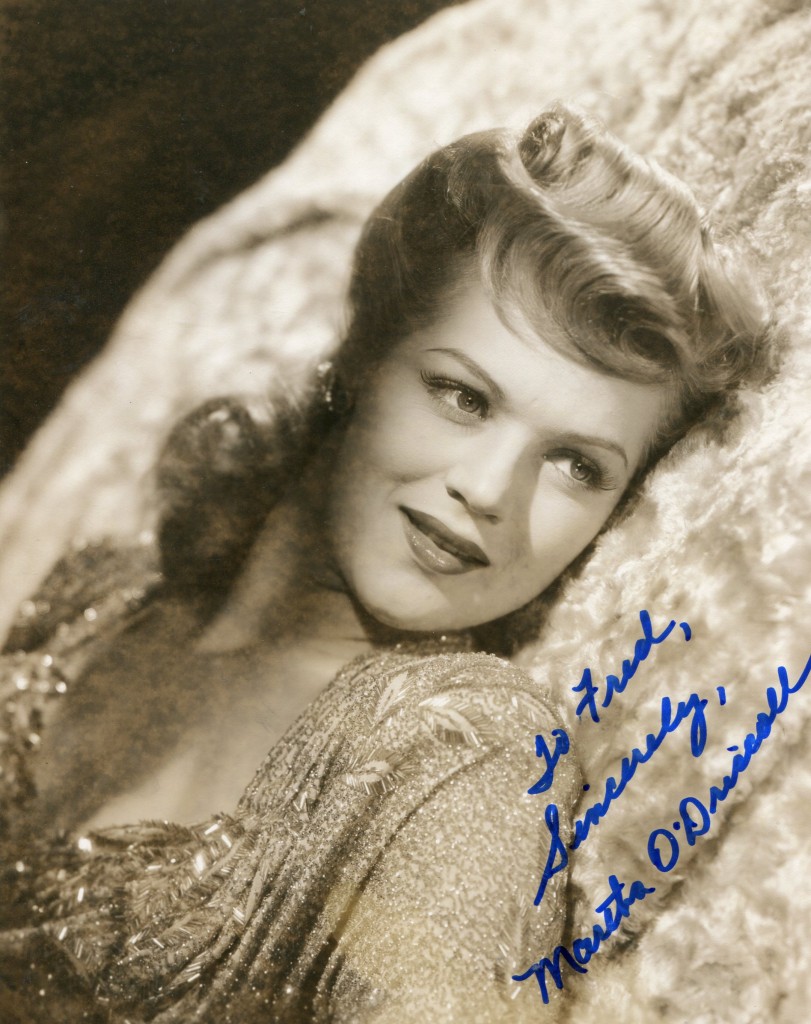
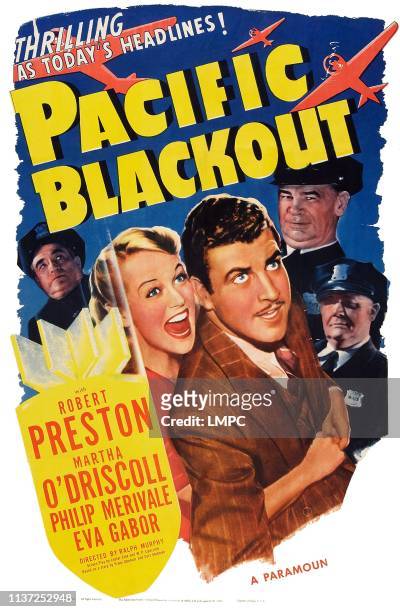
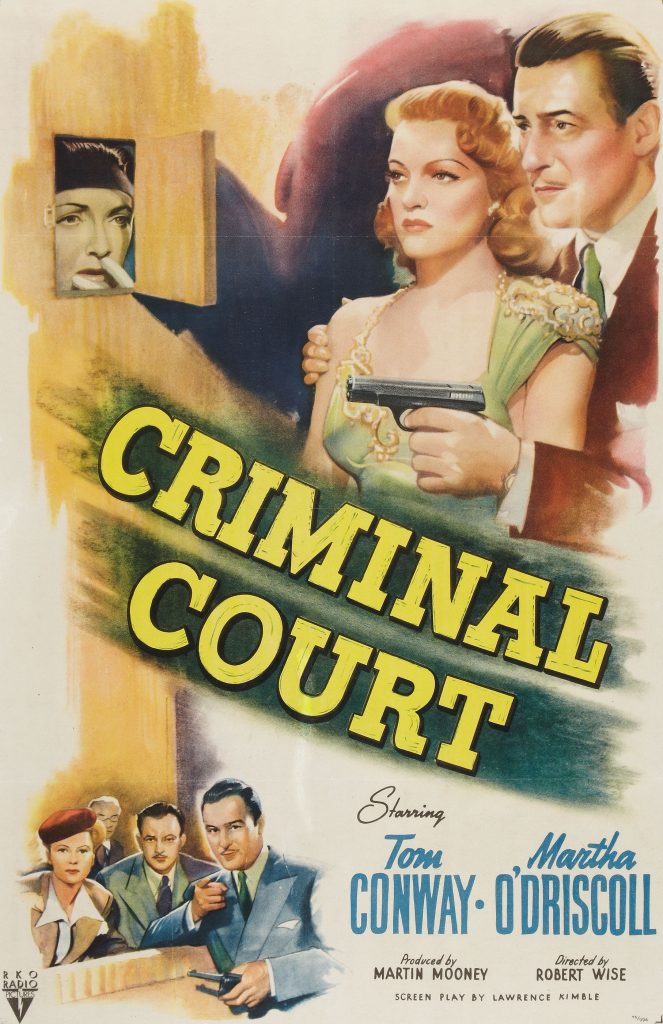
Martha O’DriscollThe Fallen Sparrow, poster, US poster art, Martha O’Driscoll, Patricia Morison, John Garfield, Maureen O’Hara, 1943. (Photo by LMPC via Getty Images)Pacific Blackout, poster, US poster art, from left: Martha O’Driscoll, Robert Preston, 1941. (Photo by LMPC via Getty Images)
Martha O’Driscoll had a brief career in movies in Hollywood films of the 1940’s. Born in 1922 in Tulsa, she featured in such movies as “The Fallen Sparrow” with John Garfield and Maureen O’Hara in 1943 and “Young and Willing”. She retired early after her marriage. She died in 1998.
“The Independent” obituary:
EVEN BY Hollywood standards. Martha O’Driscoll was an actress of uncommon prettiness, with blond hair, blue eyes and a slightly pouting mouth. Though strictly a B movie star (her failure to graduate to bigger things is attributed by some to a dispute she had with her studio early in her career), she commanded a loyal following who were sorry when she retired at the age of 24 (after 11 years and 37 films) to marry a millionaire.
Born in Tulsa, Oklahoma, in 1922, she was always a pretty girl and at the age of four was modelling children’s clothes. She had started dancing lessons from the age of three, when the family moved to Arizona in 1931. O’Driscoll began appearing in local pageants and plays. The choreographer Hermes Pan spotted her in a production at the Pheonix Little Theatre and suggested to O’Driscoll’s mother that Martha would have a good chance in movies.
They moved to Hollywood in 1935, but Pan was out of town, so they answered an advertisement for dancers and O’Driscoll was given a role in Collegiate (1935), a musical typical of its time in which a playboy inherits a college and, as the new Dean, insists that the students’ principal efforts should be directed toward learning how to sing and dance. Betty Grable had an early leading role in the film and it was also unusual in having its songwriters, Mack Gordon and Harry Revel, playing themselves as co-chairmen of the school’s music department, but otherwise it was unremarkable and O’Driscoll had little to do as a dancing co-ed.
She had other small dancing roles in Here Comes the Band (1935), The Big Broadcast of 1936 (1935) and The Great Ziegfeld (1936), an Oscar-winning success, in which she was spotted by a Universal talent scout who arranged for her to have a screen test, followed by a contract.
Her roles were initially small – in her first Universal film, a B thriller She’s Dangerous (1937), she was billed simply as “blonde girl” and in the Deanna Durbin vehicle Mad About Music (1937) she was billed as “pretty girl”. But her face soon became familiar to film fans because of the many endorsements she did, sanctioned by the studio. Her face appeared on such advertisements as Charm-Kurl Supreme Cold Wave and Max Factor Hollywood Face Powder.
Around this time O’Driscoll met William Lundigan, a former radio actor then making his way in films, and they started an affair that was to last for several years, though they never married.
Universal loaned O’Driscoll to MGM for parts in The Secret of Dr Kildare (1939) and Judge Hardy and Son (1940), but it was RKO who gave O’Driscoll her first two starring roles, as romantic interest to the cowboy Tim Holt in Wagon Train (1940), and notably as Daisy Mae in a transcription of Al Capp’s comic strip Li’l Abner (1940), an attempt to transfer Capp’s stylised county of Dogpatch to the screen which did not really come off, though O’Driscoll was captivating as the beauty desperately trying to win the husky Abner (Granville Owen) for a mate.
Paramount now became interested in the actress and acquired her contract, casting her first as a maid in Preston Sturges’s classic comedy The Lady Eve (1941). Reap the Wild Wind (1942), Cecil B. De Mille’s epic sea story, had two beautiful stars, Paulette Goddard and Susan Hayward, but O’Driscoll held her own as a Southern belle, her hair in long blond ringlets (it was her first film in colour), evincing polite disapproval when Goddard, as a Scarlett O’Hara-like heroine, shocks a society ball with an off-colour shanty.
O’Driscoll was then given the lead in an enjoyable B film, Pacific Blackout (1942), with Robert Preston as an innocent man convicted of murder who escapes during a blackout practice and uncovers enemy plans to destroy a US city during a mock air-raid. The actress followed this with a good role as a show- business hopeful in Paramount’s Young and Willing (1943), but then the studio let her return to Universal, who cast her in the Olson and Johnson comedy Crazy House (1943), then loaned her to RKO for Richard Wallace’s stylish thriller The Fallen Sparrow (1943).
Unhappy with the progress of her career, O’Driscoll tried to get out of her contract on the basis that she was under age when she signed it, and the studio was forced to sue her. They won the case, and some historians have surmised that the ensuing bitterness may have kept O’Driscoll in B pictures.
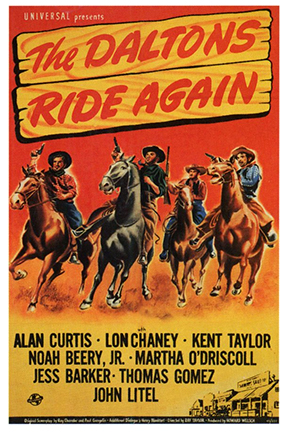
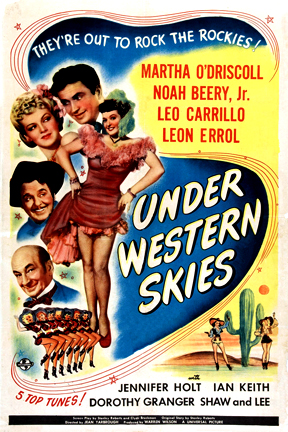
Hi Beautiful (1944) was one of five films in which she co-starred with Noah Beery Jnr, the others being Allergic to Love (1944), as a bride who gets hay-fever whenever she is near her husband, Under Western Skies (1945), a pleasant musical about a vaudeville troupe out west, The Daltons Ride Again (1945), as a publisher’s daughter in love with one of the notorious outlaw brothers, and Her Lucky Night (1945), in which she is told by a fortune-teller that she will meet the man of her life in a cinema, so she buys two tickets, throws one away and hopes for the best.
O’Driscoll also featured in House of Dracula (1945) and Week-end Pass (1945, as a socialite who runs away to join the WACS and meets a shipyard worker who has won a weekend off with pay). The B movie specialist Don Miller wrote of the latter: “It approached the surprise-hit status . . . Into its slender narrative director Jean Yarborough managed to cram not only several amusing situations but also 10 song numbers, all in 63 minutes.”
The following year she made her last Universal film, Blonde Alibi, receiving top billing as a girl who sets out to prove her lover (Tom Neal) innocent of murder. Her last film was Edgar G. Ulmer’s Carnegie Hall (1947), after which she retired.
In 1943 she had married a young Lieutenant-Commander in the US Navy, but divorced him 10 months later stating that her husband had no comprehension of the demands on her time made by the studio, while admitting herself that she had not fully understood her duties as the wife of an officer in wartime. The court stayed her divorce for the duration of the Second World War, and in July 1947, less than 48 hours after her decree was final, she married another naval officer, Arthur Appleton, who was also the heir to an industrial empire. On return to civilian life, he became president of his family’s electronics firm in Chicago. At their wedding, his bride announced that she was “definitely through with pictures, stage and all of that”, and so it was to be.
The happy marriage produced three sons and a daughter, all four college graduates pursuing careers away from show business, though the daughter was elected Dartmouth Winter Carnival Queen in 1971. After Appleton’s retirement the couple spent most of their time in their Miami beach house cruising on their yacht, or travelling abroad. They bred and raced thoroughbreds, and founded the Appleton Museum of Art in Ocala, Florida. O’Driscoll served for a time as president of the Women’s Board of the Chicago Boys’ Clubs as well as serving on the board of directors of various Appleton enterprises.
The actress became noted for her reluctance to talk about her past career, and, when interviewed by Richard Lamparski for his Whatever Happened To . . . radio and book series, she gave vague or non-committal replies to his questions and “gave the impression of being very ill at ease throughout the brief exchange”.
In 1987 she attended the annual reunion of Universal contractees, and one of her former colleagues stated afterwards, “It was like being with her sister or double. She remembered everything but as though it happened to someone else. The Martha O’Driscoll I knew doesn’t seem to exist any more. There’s only Mrs Arthur Appleton.” That is doubtless how the former actress wanted it to be. As she told the writer David Ragan some years ago, “My life has been very full since I left Hollywood.”
Tom Vallance
Martha O’Driscoll, actress: born Tulsa, Oklahoma 4 March 1922; married secondly 1947 Arthur Appleton (three sons, one daughter); died Miami, Florida 3 November 1998.
The “Independent” obituary by Tom Vallance can also be accessed here.
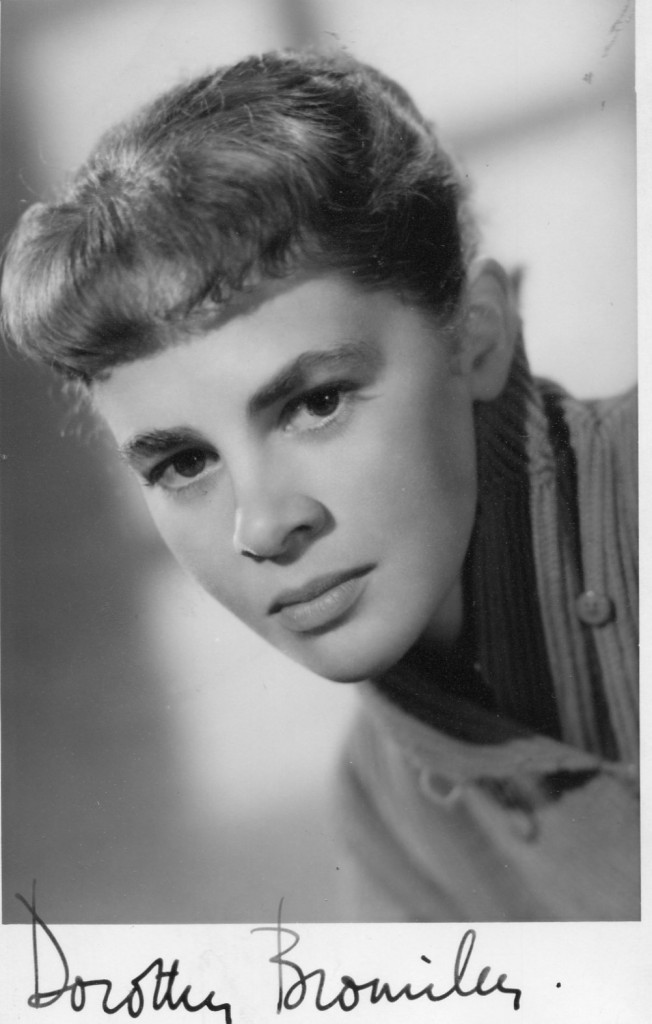
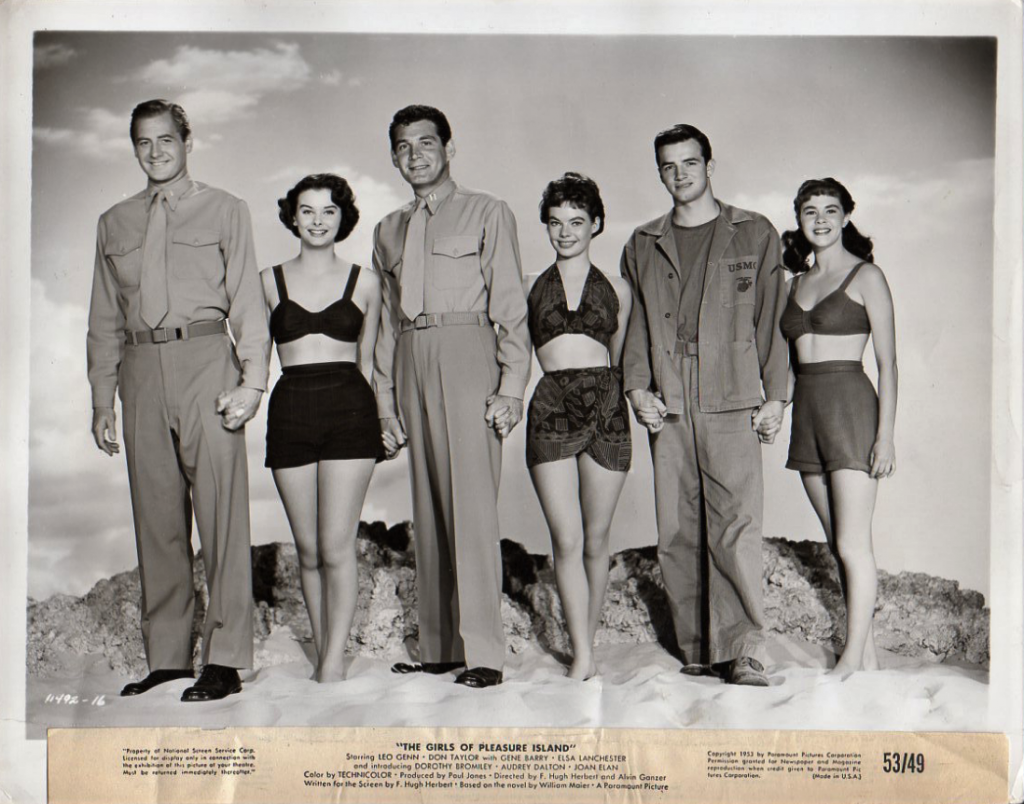
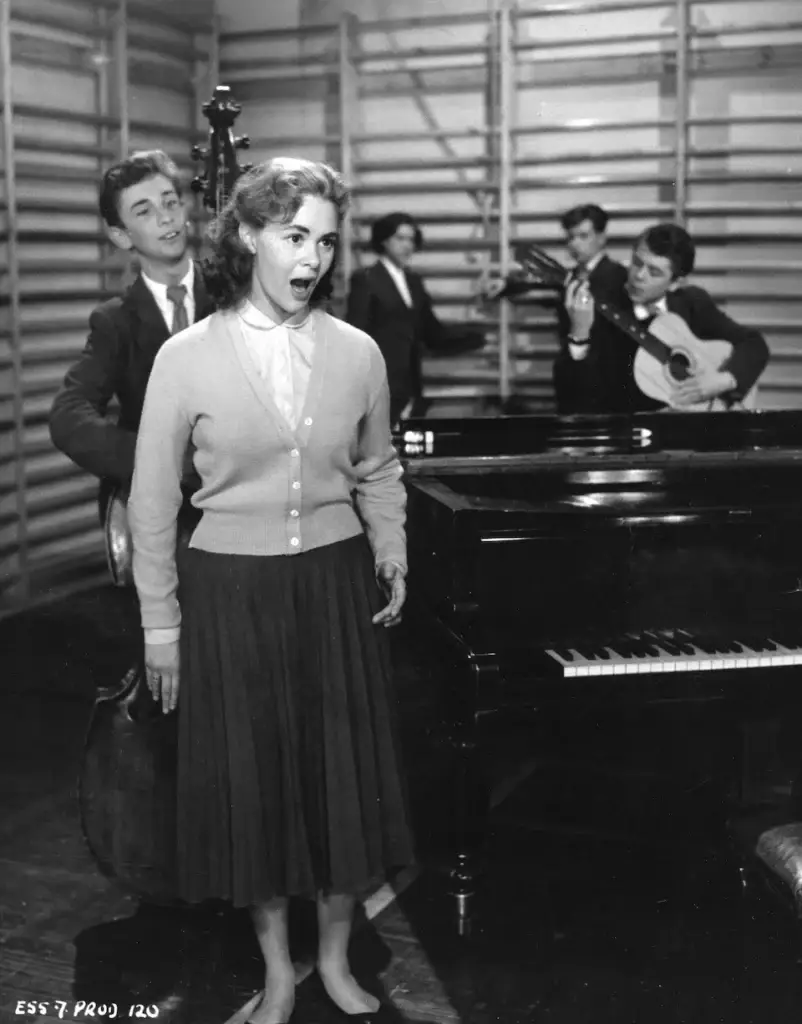
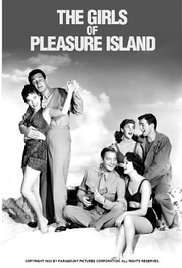
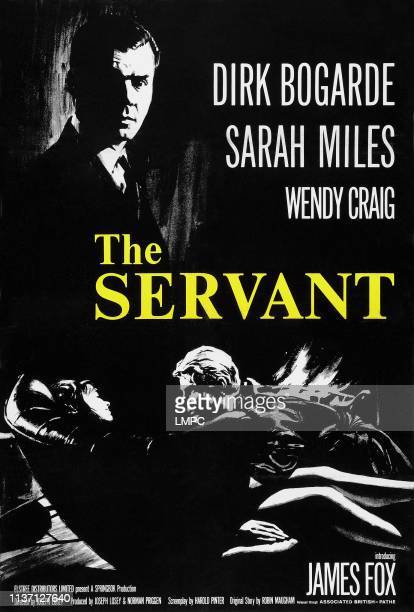
Dorothy Bromiley was born in 1930 in Manchester. In 1952 she, along with Joan Elan and Audrey Dalton won major parts in the movie”The Girls of Pleasure Island” which was made in Hollywood. Ms Bromiley did not stay in the U.S. but pursued her career in Britain. Among her other films are “It’s Great to be Young” with John Mills in 1956 and “The Servant” which was directed by her one time husband Joseph Losey. An interesting article on Dorothy Bromiley can be accessed here.
Dorothy Bromiley
Dorothy Bromiley Phelan (born 18 September 1930) is a British former film, stage and television actress and authority on historic domestic needlework.
Born in Manchester, Lancashire, the only child of Frank Bromiley and Ada Winifred (née Thornton). Bromiley played a role in a Hollywood film before returning to the UK where, in 1954, she started work as assistant stage manager at the Central Library Theatre, Manchester; followed by a West End stage role in The Wooden Dish directed by the exiled US film and theatre director Joseph Losey(who became Bromiley’s husband from 1956 to 1963). They have a son by this relationship, the actor Joshua Losey. Since 1963 Bromiley has lived with the Dublin-born actor and writer Brian Phelan (who appeared in the 1965 film Four in the Morning), they have a daughter, Kate.
Bromiley successfully auditioned for the role of Gloria in the Hollywood film The Girls of Pleasure Island (Paramount, 1952). Her major roles in several British films include sixth former Paulette at Angel Hill Grammar School (aged 26 at the time) in It’s Great to Be Young (1956) in which Bromiley’s singing voice for the Paddy Roberts/ Lester Powell Ray Martin song “You are My First Love” was dubbed by Edna Savage (and by Ruby Murray in the pre-credits sequence), Rose in A Touch Of The Sun (1956) co-starring with Frankie Howerd, Sarah in Zoo Baby (1957) with Angela Baddeley, Small Hotel (1957), Angela in The Criminal (1960) and a minor role in The Servant (1963), the latter two directed by Losey.
Bromiley made her television drama debut as Pauline Kirby in “The Lady Asks For Help” (1956) an episode of Television Playhouse produced by Towers of London for ITV. This was followed by the role of Ann Fleming in “Heaven and Earth” (1957) part of the Douglas Fairbanks Presents series for ATV. Directed by Peter Brook, it also starred Paul Scofield and Richard Johnson, and was set on board a plane that develops engine trouble. Bromiley also had roles in such popular television series as The Adventures of Robin Hood (1956) as Lady Rowena (“Hubert” episode), Armchair Theatre (1957), Play of the Week (“Arsenic and Old Lace”) (1958), Saturday Playhouse (“The Shop at Sly Corner”) (1960), Z-Cars (1964), The Power Game (1966) and No Hiding Place (1965, 1966), and the television play Jemima and Johnny (1966). Her last television drama role was as Sarah Malory in Fathers and Families (BBC Television, 1977) directed by Christopher Morahan.
Dorothy Bromiley taught at the London Academy of Music and Dramatic Art (LAMDA) between 1966–72 and left to create The Common Stock Theatre Company, staging socially relevant theatre in colleges and non-traditional halls.
Retired from acting, Dorothy Bromiley lives in Dorset, and has developed an interest in 16th and 17th century amateur domestic needlework, writing on the subject, and curating two major exhibitions
The Telegraph obituary in 2024.
Dorothy Bromiley, who has died aged 93, was a Mancunian actress plucked from drama school to star in the Hollywood comedy The Girls of Pleasure Island (1953); she subsequently married the mercurial American director Joseph Losey, and later became a leading authority on the history of domestic needlework.
Dorothy Ann Bromiley was born in Levenshulme, Manchester, on September 18 1930. Her father, Frank, was a sports reporter and sometime designer of cotton bedspreads; her mother Ada, née Thornton, was a Court dressmaker.
Dorothy won a scholarship to Levenshulme High School and later moved to London to study at the Central School of Speech and Drama, then based at the Royal Albert Hall.
The extraordinary start to her career would have made for a Hollywood storyline in itself. In 1952, aged 21, she auditioned along with some 900 other young actresses for the American screenwriter and director F Hugh Herbert, who was looking for three “typical” English girls for his next film. The young student from Manchester fitted the bill, and Herbert invited her to give up her course and sign a contract with Paramount Studios.
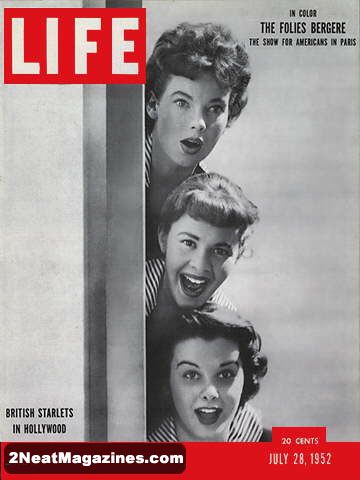
There was much US press interest in the arrival of Dorothy Bromiley and her fellow Brits, Audrey Dalton and Joan Elan. They made the cover of Life magazine in July 1952; inside, a photoshoot demonstrating the differences between English and American girls showed them drinking tea and dancing demurely.
A Paramount insider, asked to sum up the differing appeal of the girls, told the magazine: “The Bromiley dame is a pixie.” In The Girls of Pleasure Island, shot on the Paramount backlot, she played a 16-year-old, the youngest of three girls living with their uptight English father (Leo Genn) – the only man they have ever seen – on a largely uninhabited Pacific island. Romantic chaos ensues when 1,500 marines turn up to establish an aircraft base.
When the film was released in April 1953 the young stars visited 35 cities on a five-week publicity tour. Thereafter, however, Paramount, unable to find suitable roles for Dorothy Bromiley, left her idle.
Since her dream had always been to have a stage career, she happily returned to England in 1954. “I… went immediately to work as an assistant stage manager at the Central Library Theatre, Manchester, much to the disgust of my agents, MCA Ltd,” she recalled.
Within a few months, however, she secured a role in the West End in Edmund Morris’s The Wooden Dish; it marked the British stage-directing debut of Joseph Losey, who had been blackballed in Hollywood as a Communist.
She became his third wife in 1956. “The morning we were married, he gave me a ring and said, ‘For my child bride,’” she recalled. “I felt we had a Pygmalion and Galatea relationship.
Dorothy Bromiley’s youthful appearance saw her continue to be cast in juvenile roles. She was Wendy to Barbara Kelly’s Peter Pan in the 50th anniversary revival of JM Barrie’s play at the Scala Theatre, and played a rebellious sixth-former trying to save John Mills’s inspirational music teacher from the sack in the boisterous film It’s Great to Be Young (1956), written by Ted Willis.
She also played leading roles in the tepid comedies A Touch of the Sun (1956), with Frankie Howerd, and Zoo Baby (1957).
A juicy role she was offered in her husband’s melodrama The Gypsy and the Gentleman (1958) might have boosted her movie career, but she gave the part up when she became pregnant with their son, Joshua. Thereafter her only notable cinema role was a memorable cameo in Losey’s masterly chiller The Servant (1964), as a woman badgering Dirk Bogarde to vacate a telephone box.
By then she and Losey had divorced: “I think it was the most unselfish thing I’ve ever done, as I didn’t want the relationship to end,” she recalled. She always remembered him lovingly, although one of his lovers, Ruth Lipton, attested that “he spoke to her as if she was an idiot, [and] treated her… as a not very good servant.”
On television Dorothy Bromiley appeared in Z-Cars, The Power Game and No Hiding Place. From 1966 she was a teacher at the London Academy of Music and Dramatic Art, and then in 1972 left to co-found the Common Stock Theatre Company, which brought “relevant theatre” to state-school teenagers and other non-traditional audiences. Enervated by battling with the Arts Council for funding, she retired to Dorset in 1976.
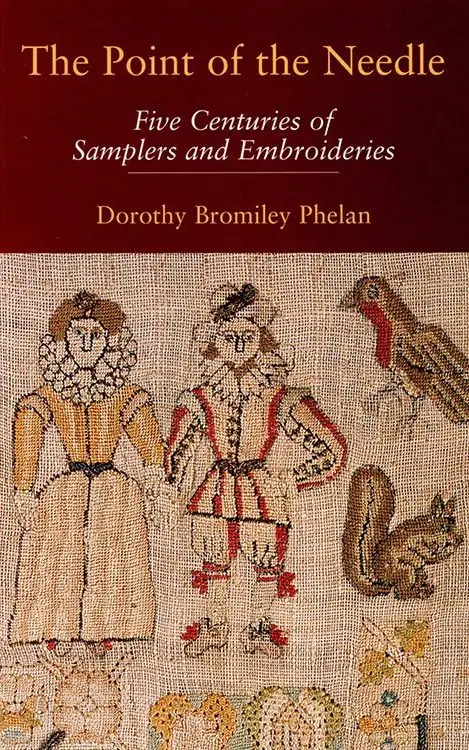
Having inherited a love of embroidery from her parents, in 1982 she found “my second calling” running a specialist needlework shop in Sherborne.
She went on to curate highly acclaimed needlework exhibitions for the Holburne Museum, Bath, in 2001, and the Dorset County Museum in 2003-04. The earliest exhibits included Elizabethan pillow covers and nightcaps, but one of her favourite pieces was a bucolic English scene embroidered by a Mrs Constance Dickinson on to linen cut from a pair of shorts while she was a PoW in Changi Prison.
Dorothy Bromiley’s books, which included The Point of the Needle (2001) and The Goodhart Samplers (2008), were published under the name Dorothy Bromiley Phelan. From 1963 her partner was the Irish actor and screenwriter Brian Phelan, although they never married.
She predeceased him by five days and is survived by their daughter, Kate, and her son.
Dorothy Bromiley, born September 18 1930, died May 3 2024