
Contemporary Actors

Collection of Contemporary Actors

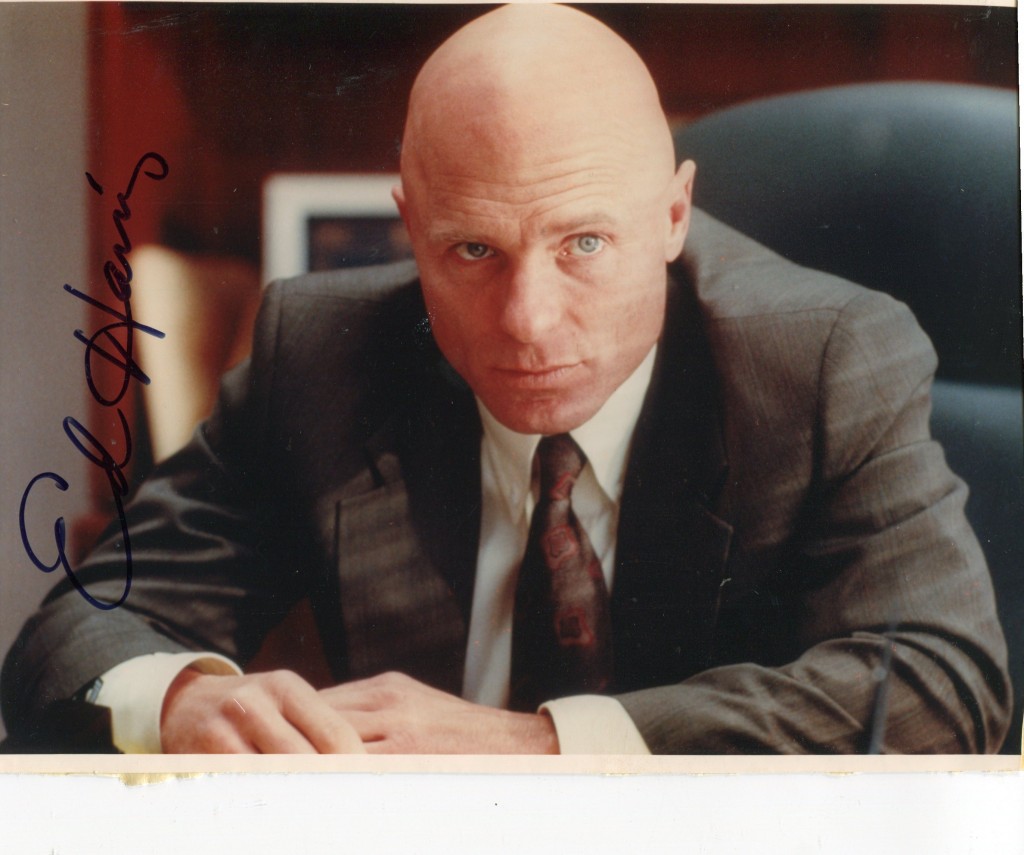
Ed Harris
Ed Harris
Ed Harris

Ed Harris was born in 1950 in New Jersey.   In 1983 he achiebed international recognition for his part in “The Right Stuff”.   He went on to make such great movies as “Paris Trout”, “Places in the Heart”, “The Truman Show” and “The Firm”.   He is married to actress Amy Madigan.

TCM overview:

Largely associated with stoic, hardened characters, actor Ed Harris went on to impress with a wide array of diverse performances in dozens of acclaimed films. Following a series of low-budget genre movies, Harris gained notoriety with his turn as legendary astronaut John Glenn in “The Right Stuff” (1983). Despite the accolades, it took several years before the actor landed another memorable role, which finally came when he was cast in James Cameron’s ambitious undersea adventure “The Abyss” (1989). Reaping the rewards of his new A-list status, Harris vacillated between literary character work in such acclaimed endeavors as “Glengarry Glenn Ross” (1992) and rousing crowd-pleasers like the NASA docudrama “Apollo 13” (1995). The versatile actor proved just as at home with pyrotechnic blockbusters like Michael Bay’s actioner “The Rock” (1996) as he was in more heady material, such as the Jim Carrey vehicle “The Truman Show” (1998). Harris later astounded audiences as both the director and star of the enthralling biopic “Pollock” (2000), which he followed with equally heralded supporting work in the dramas “A Beautiful Mind” (2001) and “The Hours” (2002). Incredibly dexterous, he played wildly divergent characters in the small town drama “Empire Falls” (HBO, 2005) and the shocking “A History of Violence” (2005). He returned to the director’s chair once more to helm the sweeping western “Appaloosa” (2008), cementing his reputation as a deft cinematic storyteller. One of the finest American actors of his generation, Harris’ artistic reputation and professional résumé knew few equals.

Born on Nov. 28, 1950 in Tenafly, NJ, Harris was raised by his father, Robert, a former singer-turned-bookseller, and his mother, Margaret, a travel agent. Growing up in a middle class Presbyterian home, Harris was captain of the Tenafly High School Tigers football team during his senior year. After graduating in 1969, he played football for Columbia University, but dropped out in 1971 to attend Oklahoma State University, where he made his professional debut as King Arthur in a Jewel Box Theater production of “Camelot.” Harris left OSU to major in theater at the California Institute of the Arts, where he finally earned his Bachelor of Fine Arts in 1975. From there, he quickly earned a reputation for his talent and intensity, namely in productions of “A Streetcar Named Desire” and “The Grapes of Wrath.” Meanwhile, Harris made his onscreen debut in the made-for-television miniseries, “The Amazing Howard Hughes” (CBS, 1977), then appeared in his first feature with a small part as a pathology resident in “Coma” (1978), a conspiracy thriller about strange happenings at a Boston hospital.

Following more supporting turns on “The Seekers” (syndicated, 1979) and “The Aliens Are Coming” (NBC, 1980), Harris had his first leading role in George Romero’s “Knightriders” (1980), playing the leader of a motorcycle gang who hits upon a get-rich-quick scheme of dressing like the Knights of the Round Table and performing at local renaissance fairs. Three years later, he emerged as a star with the one-two punch of the laconic cowboy with a troubled past and uncertain future in Sam Shepard’s off-Broadway hit “Fool for Love” and a stalwart turn as astronaut John Glenn in “The Right Stuff” (1983), Philip Kaufman’s epic drama about the dawn of the U.S. space program. Based on Tom Wolfe’s novel of the same name, “The Right Stuff” was lauded for its epic scope and sterling performances. While the expected accolades for his performance as Glenn failed to materialize, Harris nonetheless became an actor in demand. After a charismatic supporting role as Goldie Hawn’s soldier husband in “Swing Shift” (1984), Harris made a strong impression as a cheating spouse in “Place in the Heart” (1984). The latter marked the actor’s first screen pairing with Amy Madigan, whom he married before they headlined Louis Malle’s “Alamo Bay” (1985).

Also in 1985, Harris turned in a strong, believable performance as hard-drinking, good ole Southern boy Charlie Dick who woos and weds ascendant star Patsy Cline (Jessica Lange) in “Sweet Dreams.” The actor returned to his stage roots to make his Broadway debut opposite Judith Ivey as the stern, but loving father in George Furth’s autobiographical “Precious Sons” (1986), for which he earned critical praise and a Tony Award nomination. Back on the small screen, Harris played a conscience-ridden attorney who quits the profession after getting a string of guilty clients off the hook, only to be brought back by his mistress (Roxanne Hart) for one more case, this time involving a truly innocent man (Darrell Larson) accused of killing an undercover cop, in the HBO original movie, “The Last Innocent Man” (1987). Harris next starred in the little-seen “Walker” (1987), Alex Cox’s odd biopic of the 19th-century adventurer William Walker who declared himself president of Nicaragua, only to wind up a victim of his own hubris and overreaching ambition that resulted in widespread repression. The actor offered an intense portrait of a real-life soldier of fortune who bore more than a passing resemblance to Oliver North, who was then dominating the news.

In James Cameron’s big-budgeted underwater spectacle “The Abyss” (1989), Harris provided the anchor as the foreman of a civilian crew – which includes his estranged wife (Mary Elizabeth Mastrantonio) – tapped to rescue a U.S. nuclear submarine, only to discover the crash was caused by an extraterrestrial spacecraft containing an alien species. It was during this very difficult shoot, where the actors and crew were often submerged for hours underwater, that Harris famously declared he would never again work with Cameron, after the two butted heads more than once. In a return to the small screen, Harris starred in “Paris Trout” (Showtime, 1991), playing a lawyer hired to defend an unrepentant racist (Dennis Hopper) who finds himself drawn to his client’s wife (Barbara Hershey). In “Running Mates” (HBO, 1992), Harris was a bachelor presidential candidate who romances a widowed children’s author (Diane Keaton) who hates politics. Both projects allowed Harris to demonstrate a light, almost playful side that enhanced his standing as an unlikely comedic actor. Harris was firing on all cylinders in “Glengarry Glen Ross” (1992), the big screen adaptation of David Mamet’s incendiary play about a group of low-rent real estate agents. Harris played David Moss, a loudmouth who tells his down-and-out colleague (Alan Arkin) about his plan to steal the coveted Glengarry leads from their office, only to discover that an older, more desperate coworker (Jack Lemmon) beat him to it. Though the accolades went in large part to co-star Al Pacino for his fiery performance, Harris more than held his own in a cast that also included Kevin Spacey, Jonathan Pryce and Alec Baldwin.

After playing a frustrated FBI agent smoking out corruption in “The Firm” (1993), Harris was on the other side of the law as a creepy serial killer in “Just Cause” (1995). He then stood out in the ensemble of Ron Howard’s “Apollo 13” (1995), playing NASA mission control flight director Gene Krantz, a performance that earned him his first Oscar nomination. A turn as Watergate co-conspirator E. Howard Hunt in “Nixon” (1995) was followed by playing a military hero who precipitates a hostage crisis at Alcatraz in “The Rock” (1996). Following a performance as a homicide detective investigating a murder involving the president (Gene Hackman) in “Absolute Power” (1997), he received nearly unanimous praise and a second Best Supporting Actor Oscar nomination as the God-like creator-director of a popular 24-hour-a-day TV series in “The Truman Show” (1998). Harris again showed his softer side as a man caught between his ex-wife (Susan Sarandon) and his new girlfriend (Julia Roberts) in the comedy-drama “Stepmom” (1998), which he followed by playing a charismatic priest who investigates reported miracles on behalf of the church in the little-seen drama, “The Third Miracle” (1999).

In 2000, Harris realized a decade long dream, directing and starring in “Pollock,” an independently financed drama about abstract painter Jackson Pollock. Ever since his own father had sent him two biographies of the artist, the actor harbored a desire to portray Pollock on screen. The resulting motion picture, which premiered at the 2000 Venice Film Festival and was selected as the centerpiece of the 2000 New York Film Festival, earned positive critical reviews and Harris’ first Best Actor nod at the Academy Awards. Harris continued to add to his growing galaxy of film performances as the new millennium unfolded, portraying a German assassin sent to take out a Russian sharpshooter (Jude Law) in the WWII drama “Enemy of the Gates” (2001). After playing a high-ranking intelligence officer dealing with a schizophrenic mathematician (Russell Crowe) in “A Beautiful Mind” (2001), Harris co-starred opposite Meryl Streep in “The Hours” (2002) as an author dying of AIDS. In this film, Harris delivered another of his more riveting performances, as his character struggles with his disease, his relationships with the crucial women in his life and his reasons for continuing to stay alive. His captivating turn was rewarded with an Academy Award nomination for Best Supporting Actor – his third in that category and fourth nod overall.

The following year, he reunited with Nicole Kidman as her abusive ex-husband in a supporting role in “The Human Stain” (2003), then was seen as a southern football coach-turned-town hero in the feel-good hit “Radio” (2003), which starred Cuba Gooding, Jr. as a mentally challenged high school student who is allowed to help out with the team, but struggles to earn his welcome. Harris next appeared in the humorous, poignant HBO miniseries “Empire Falls” (HBO, 2005) as New England restaurateur Miles Roby, for whom the promising opportunities of youth have given way to the demands of family obligations, especially those concerning his cantankerous father (Paul Newman) and impressionable daughter (Danielle Panabaker). Unable to escape the town or the dominating shadow of his employer (Joanne Woodward), who owns the restaurant he runs, Miles copes with a recent divorce from his wife (Helen Hunt) while piecing together the shared events that shaped their lives. “Empire Falls” was nominated for a slew of Emmy Awards, including Harris for Outstanding Lead Actor in a Miniseries or Movie.

Harris delivered a standout supporting turn in director David Cronenberg’s masterful thriller, “A History of Violence” (2005). Harris played the menacing and acerbic Carl Fogarty, a shadowy, scarred figure who arrives in small town Indiana to confront a loving, rock-solid father and husband (Viggo Mortensen) whose brief notoriety after foiling a violent robbery attracts Fogarty’s attention and has him insisting he recognizes the man from a secret, bloody past 20 years earlier. Harris’ perfectly measured mix of threat and gallows humor was one of the highlights of a superbly tense film. After depicting Ludwig von Beethoven at the time he composed his famed “Ninth Symphony” in “Copying Beethoven” (2006), Harris was a descendant of Lincoln assassin, John Wilkes Booth, who implicates treasure hunter Ben Gates’ (Nicolas Cage) great-great grandfather after discovering missing pages from Booth’s diary in the adventure sequel “National Treasure: Book of Secrets” (2007). He returned to the director’s chair following an eight year absence to direct “Appaloosa” (2008), an old-school Western that showcased Harris as a U.S. marshal tasked to clean up a New Mexico territory city after a band of outlaws murdered the previous law enforcement.

As an actor Harris continued to deliver impressive work in a plethora of distinct and varied films. In the based-on-fact sports drama “Touching Home” (2010) he played a stern patriarch trying to reconnect with his adult sons, while in the WWII adventure “The Way Back” (2010), he played a cynical American attempting to escape from an isolated Siberian gulag. He then reteamed with his “Beautiful Mind” co-star Jennifer Connelly for a pair of ventures, starting with the religious satire “Salvation Boulevard” (2011) and followed by the psychological-drama “Virginia” (2012). Although the mainstream heist-thriller “Man on a Ledge” (2012) failed to set the box office on fire, Harris’ uncanny turn as 2008 Republican presidential candidate John McCain in “Game Change” (HBO, 2012) proved to be one of the more talked-about cable events of the year. Co-starring Julianne Moore as Sarah Palin, the telefilm was based on the political tell-all by John Heilemann and Mark Halperin and focused on the ultimately unsuccessful McCain-Palin ticket run for the White House. Harris’ exemplary performance was widely hailed by all and earned him a Golden Globe win and an Emmy nomination for Outstanding Supporting Actor in a Miniseries or a Movie.

 The above TCM overview can also be accessed online here.
Sam Claflin
Sam Claflin
Sam Claflin

Sam Claflin was born in 1986 in Ipswich.   He featured as ‘Philip Swift’ in “Pirates of the Caribbean”.   He also starred on television in “White Heat”.

IMDB entry:

English actor Sam Claflin is the son of a finance officer father and a classroom assistant mother. As a child he was football mad often going to see his local team Norwich City and he was a talented footballer, playing for Norwich schools at city level and Norfolk county level. However, he suffered 2 broken ankles and at 16 gave up thinking about a footballing career. He took up performing arts and a teacher from Costessey High School was impressed with his performance in a school play, and encouraged him to take up drama. He joined the local youth group at Norwich’s Theatre Royal and went on to gain entry to LAMDA drama school in 2006 graduating with a 3 year acting degree in 2009. He is the 3rd eldest of 4 boys, his older brothers Dan and Ben are not involved in drama but his younger brother Joe Claflin commenced at the same drama school in 2009 also doing a 3 year acting degree.

In 2010, Clafin made his debut screen performances in two award-winning series, The Pillars of the Earth (2010) and Any Human Heart (2010). His film debut came playing footballer Duncan Edwards, one of the ‘Busby Babes’, in United (2011). Clafin then came to the attention of cinemagoers across the world when he was cast as Philip in Pirates of the Caribbean: On Stranger Tides (2011). Various roles followed, including Jack in White Heat (2012) and Prince William in Snow White and the Huntsman (2012). He has been cast as Finnick Odair in the sequel The Hunger Games: Catching Fire (2013).

– IMDb Mini Biography By: Anonymou

The above IMDB entry can also be accessed online here.

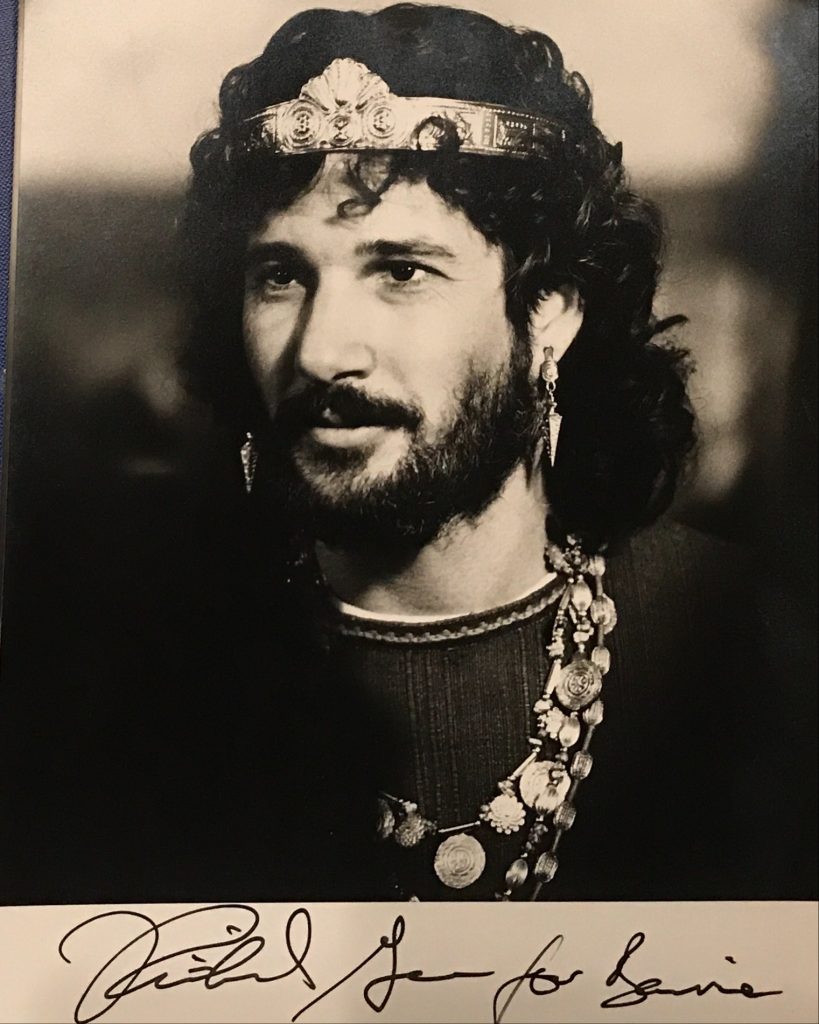
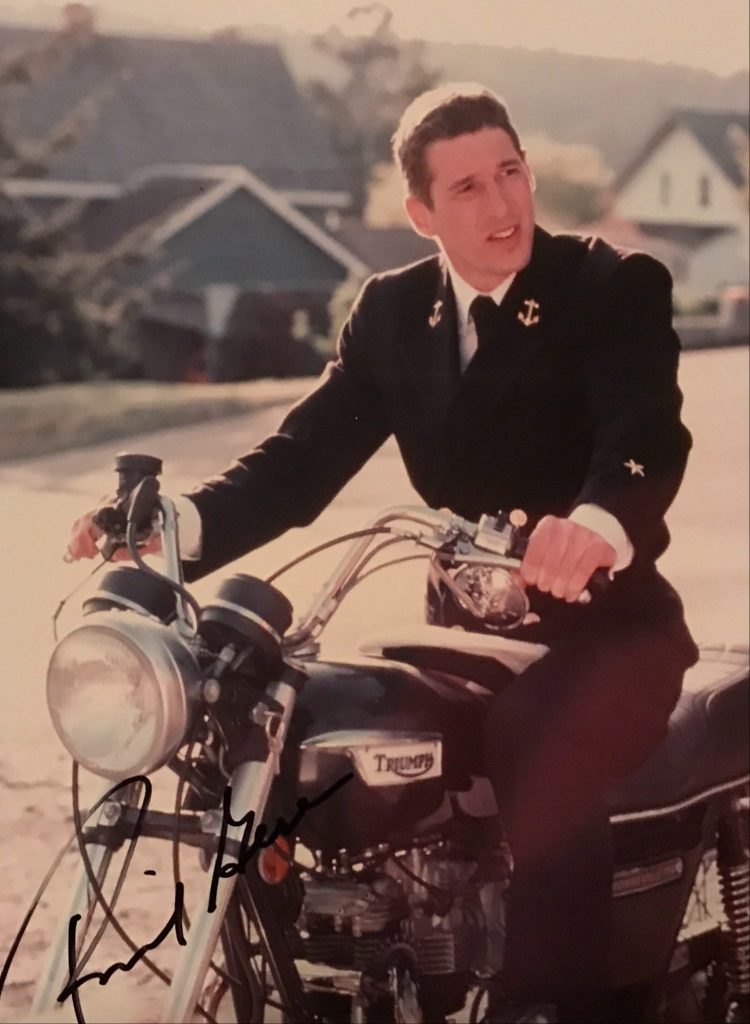
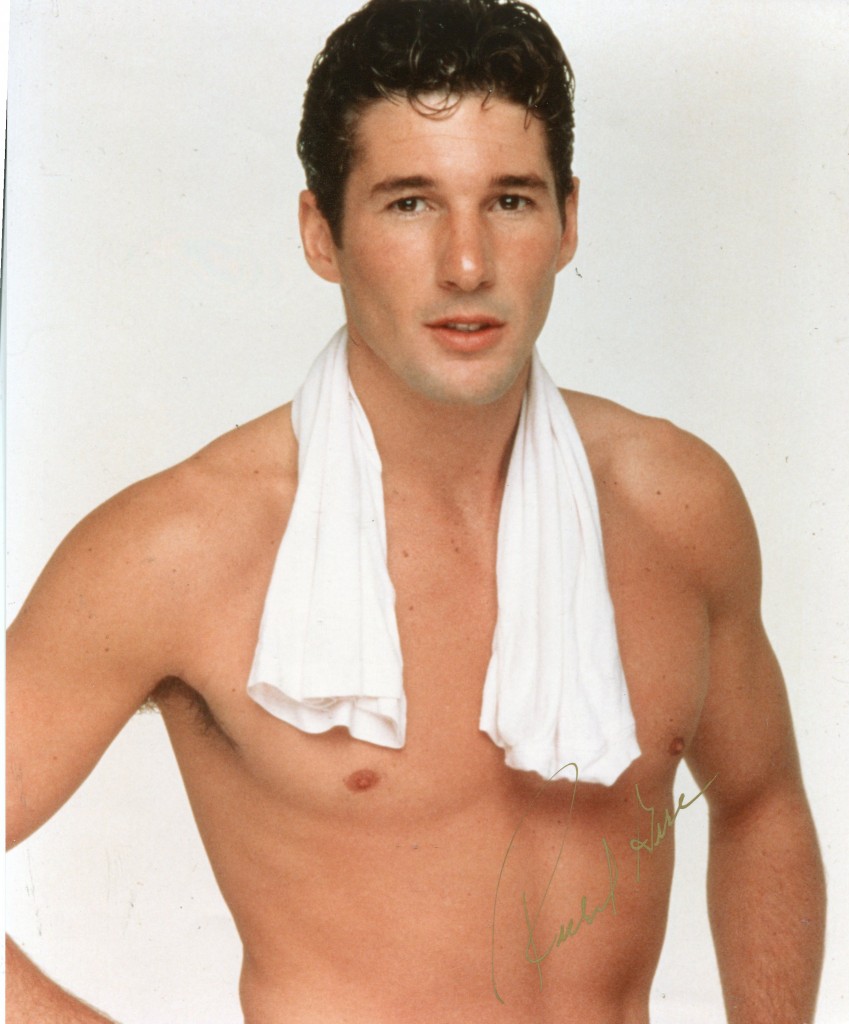
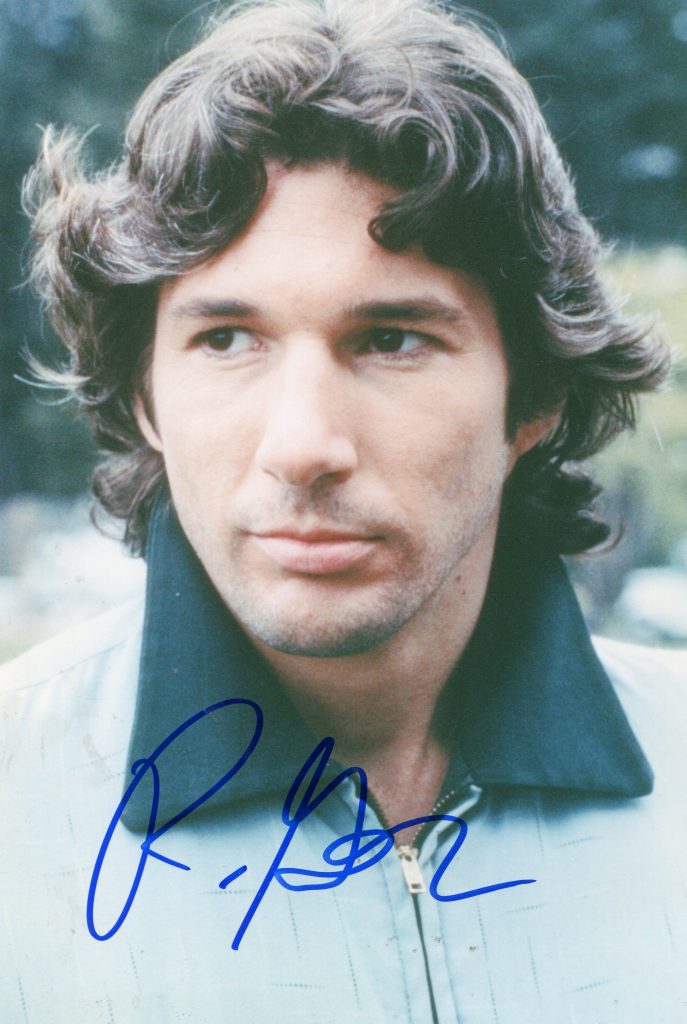
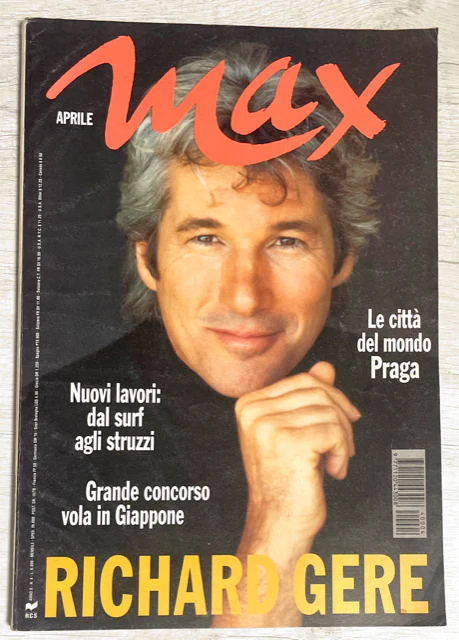
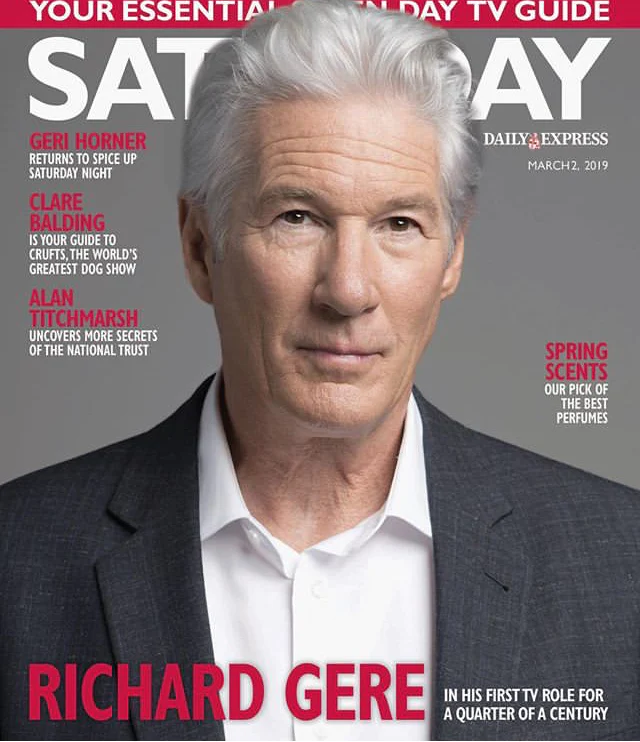
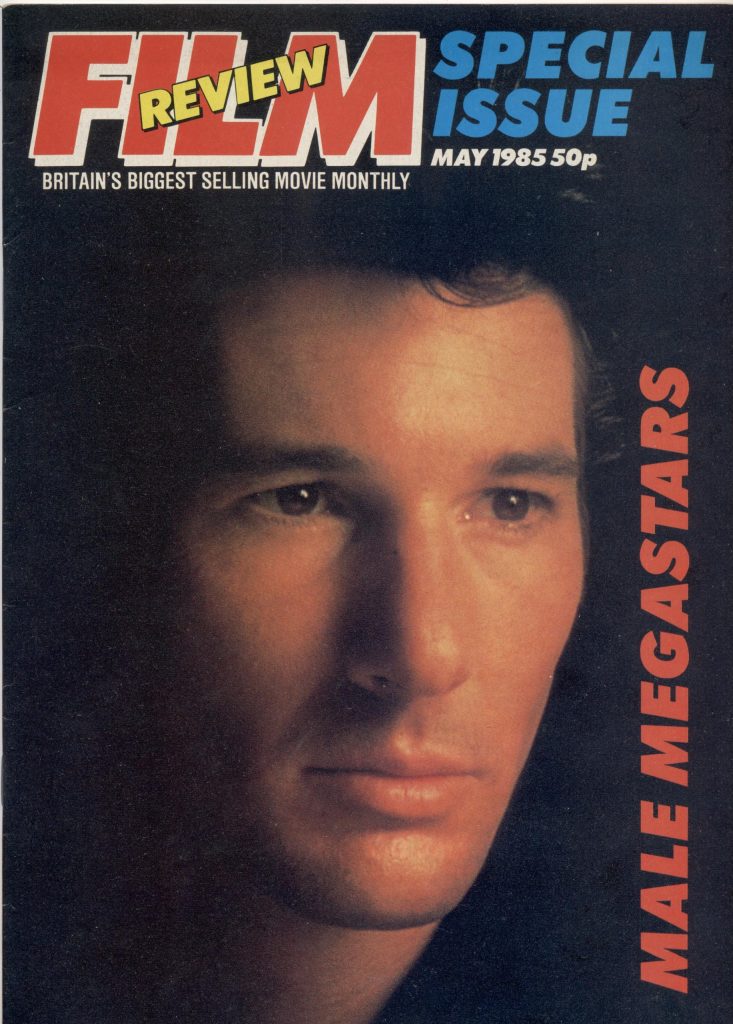
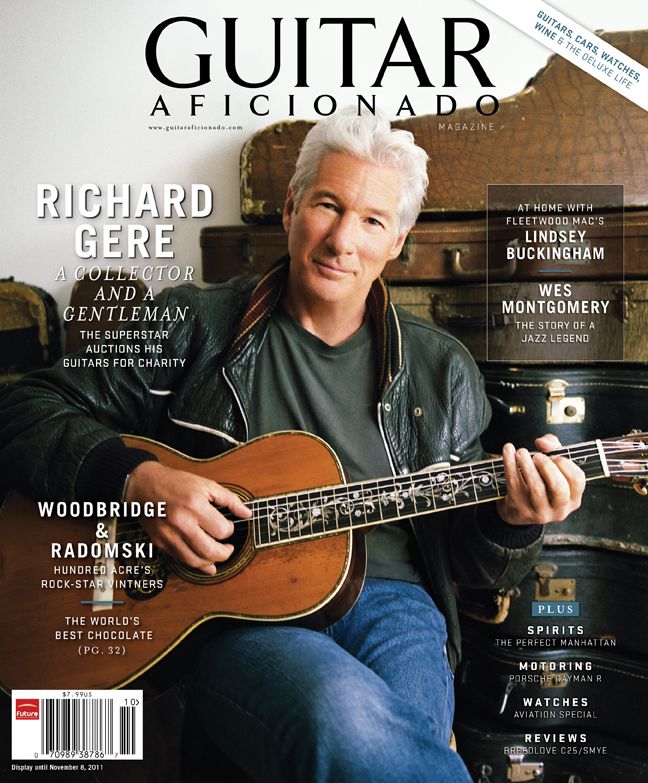
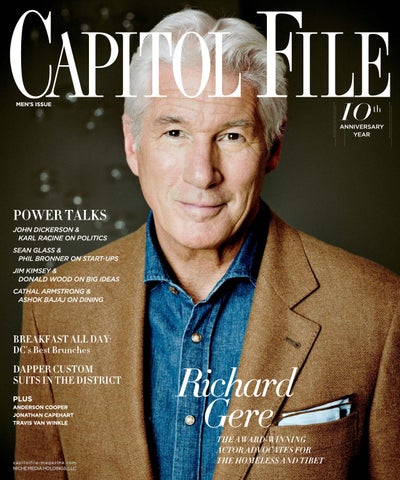
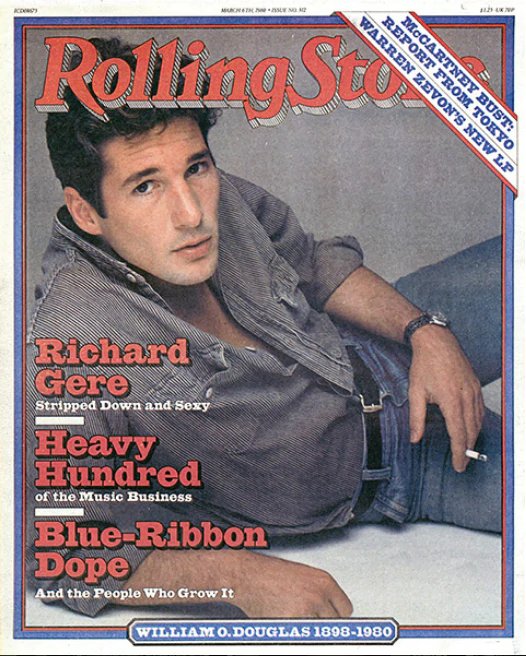
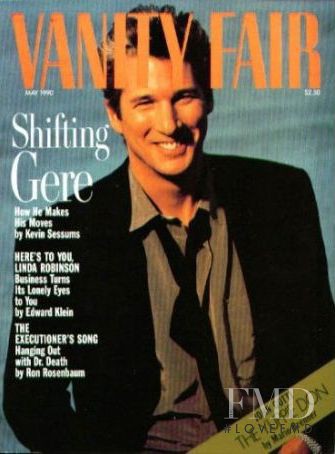
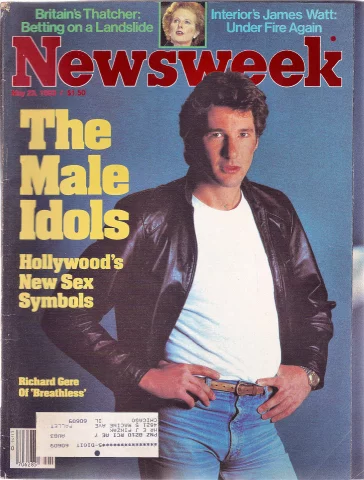
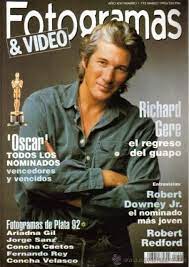
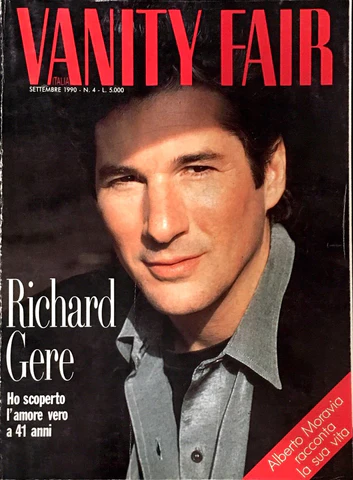
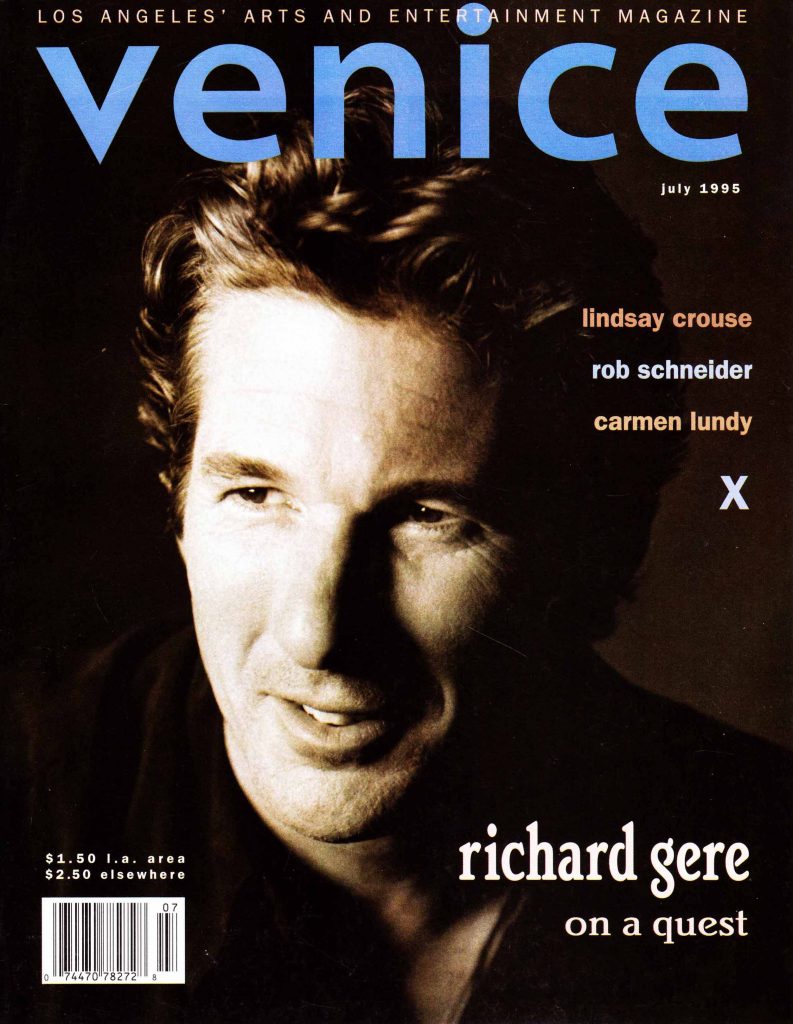
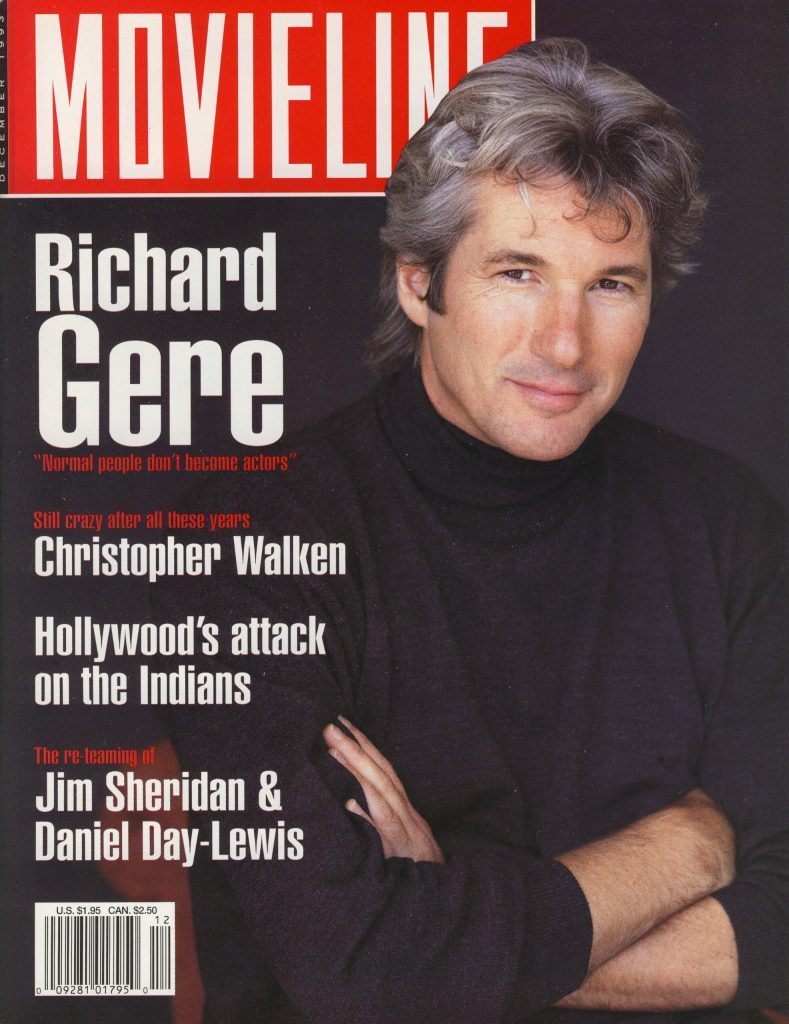
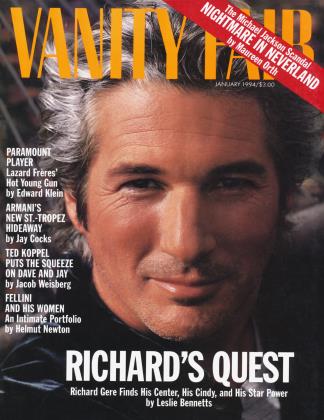
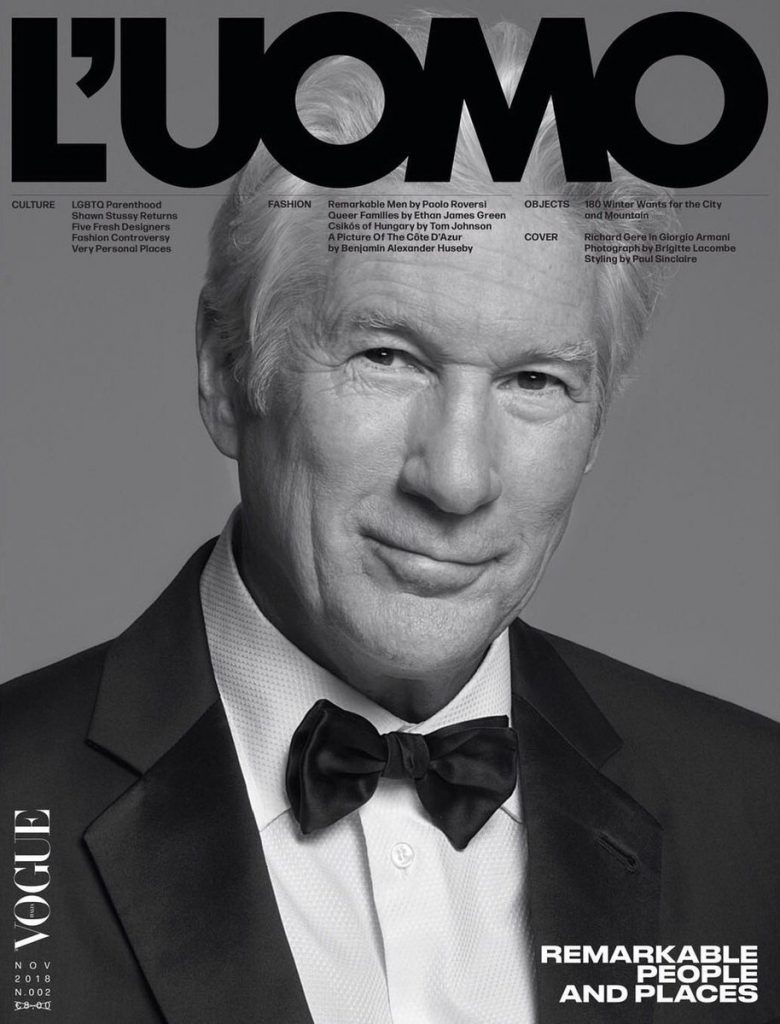
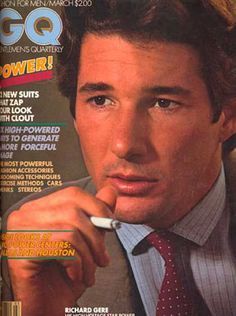
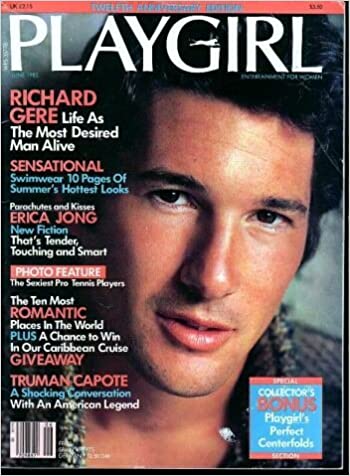
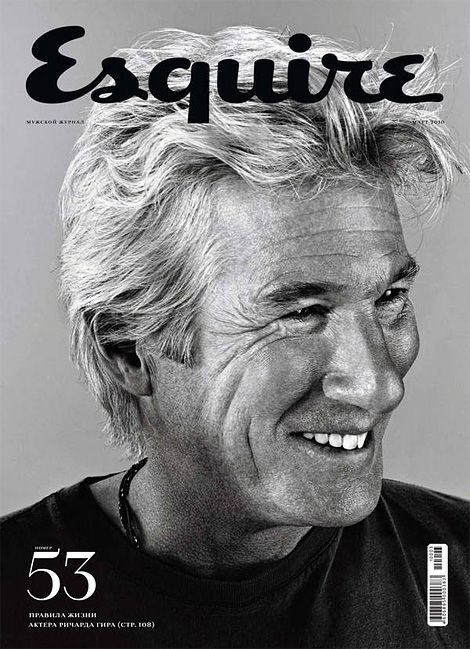
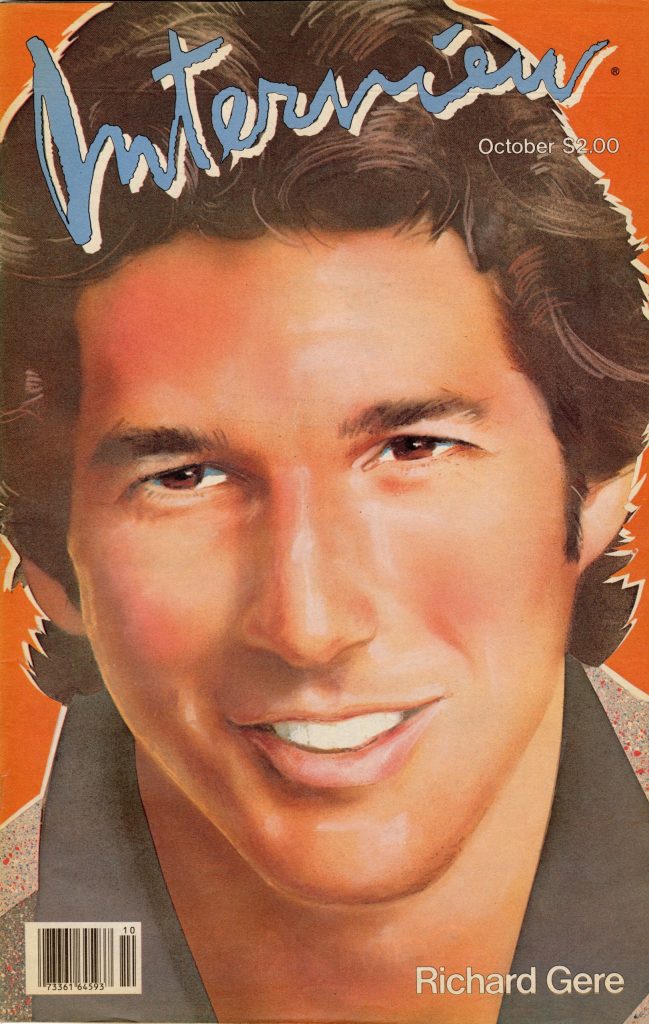
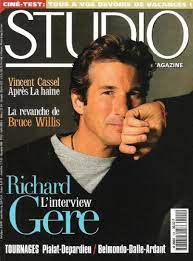
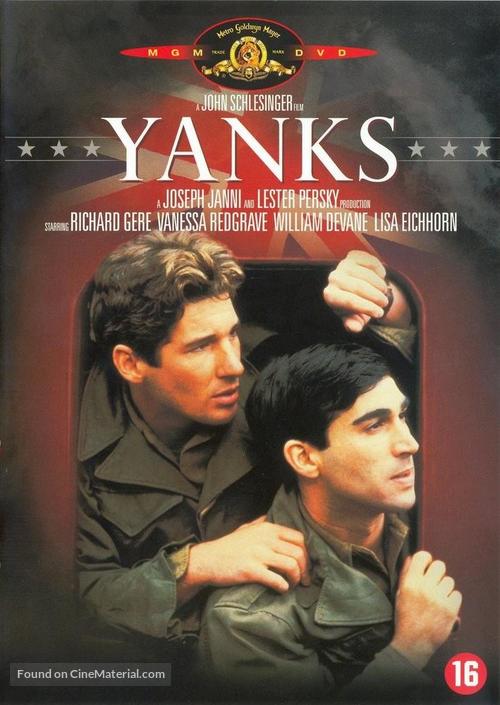
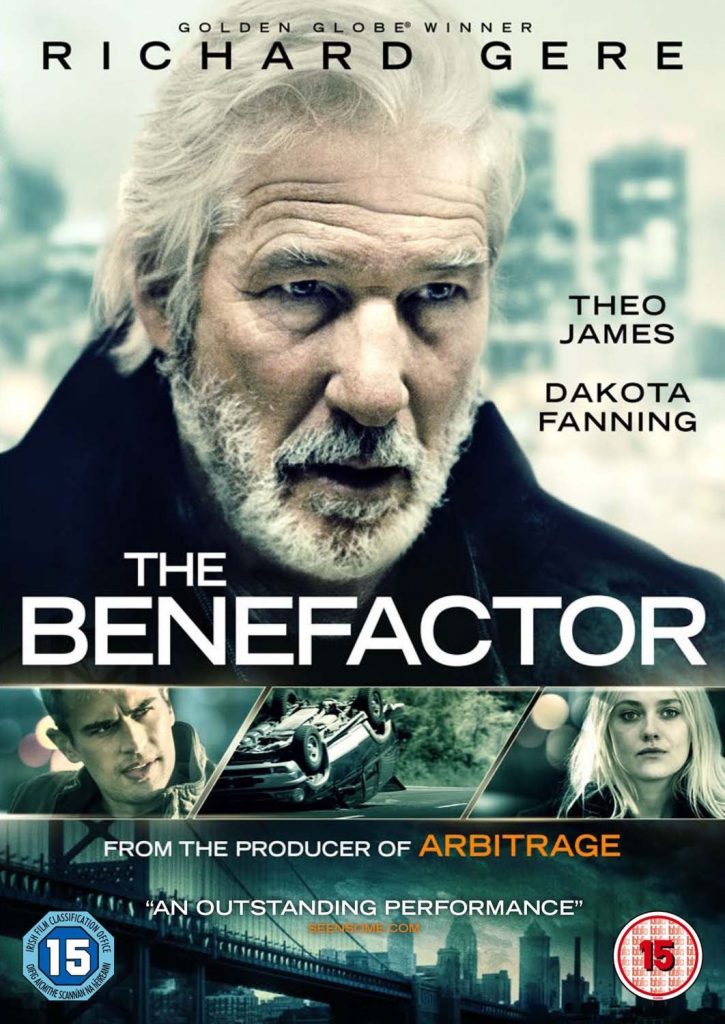
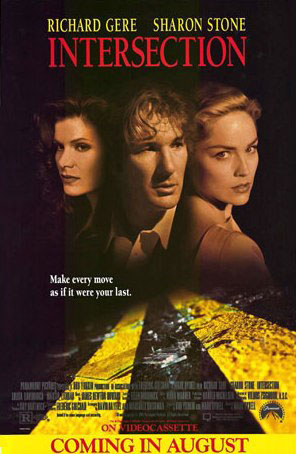
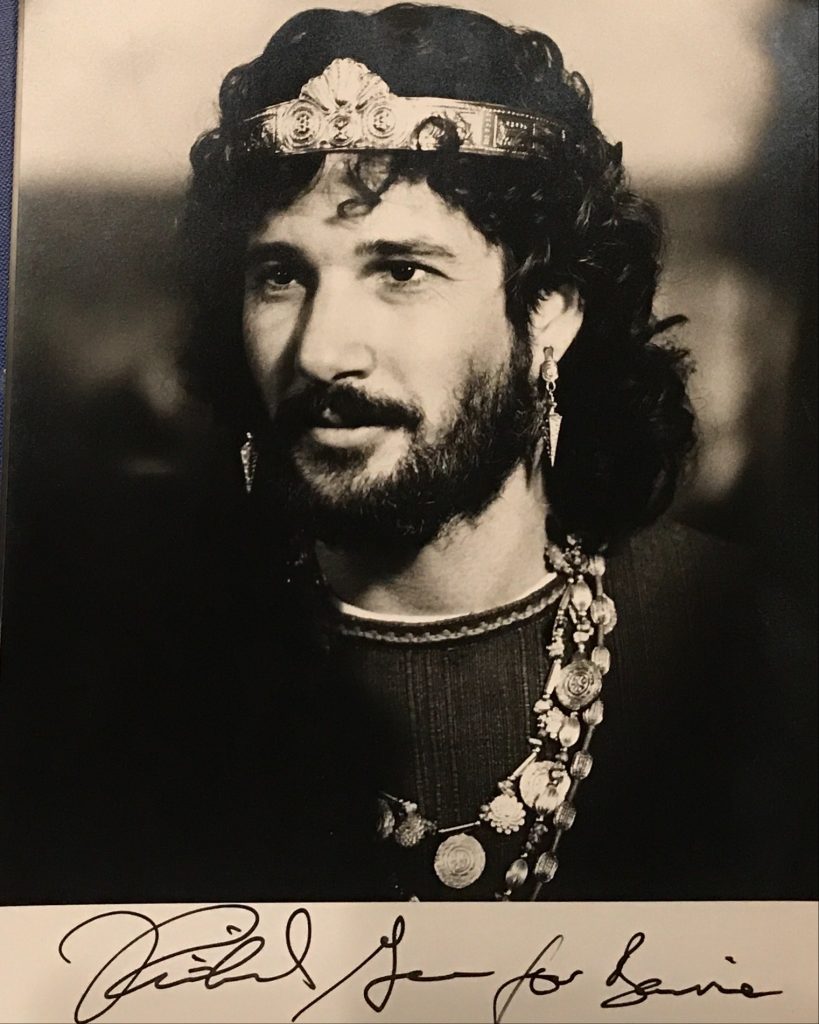
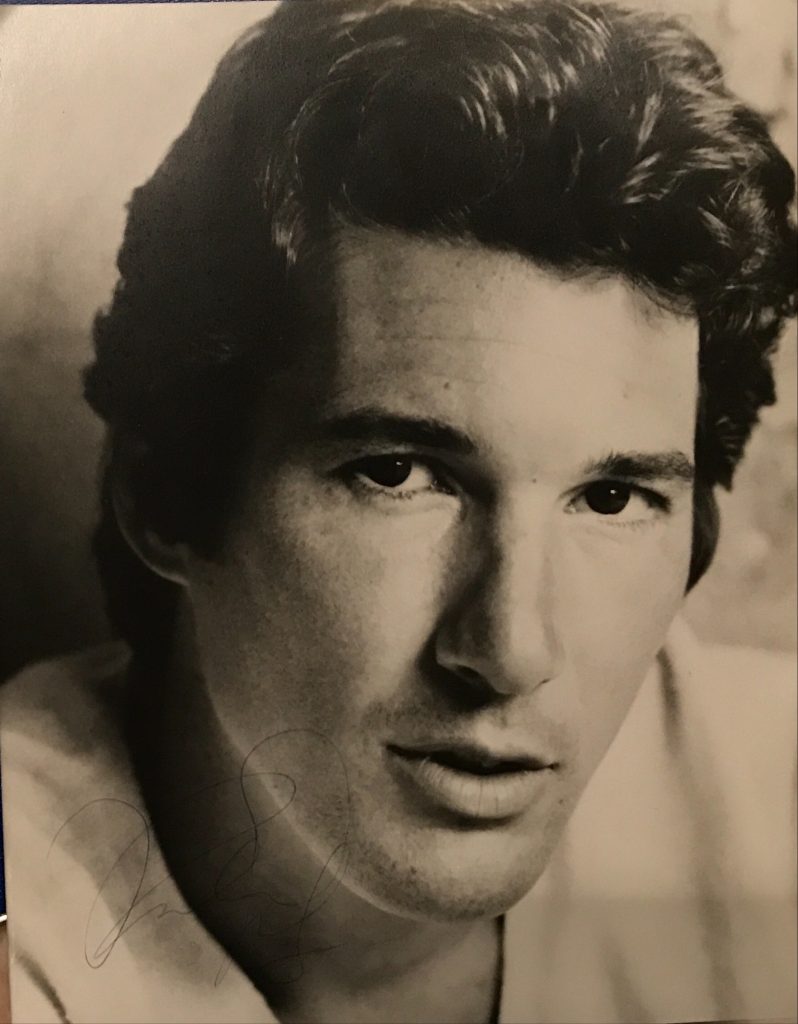
Richard Gere
Richard Gere

Richard Gere. TCM Overview

Good looks have never hindered a film star but they can make him suspect – as in the case say of Robert Taylor, who certainly did not owe his steller position to any thesping ability.   Those MGM executives ho moulded Taylor’s career remembered the mesmerizing effect of Valentino and showcased Taylor so he could bring in the sort of money to satisfy stockholders.   Gere has had no studio to help him.   He could not have achieved his position in an age of ‘uglies’ if he had only looks: his interviews indicate a man with a almost desperate regard to be taken seriously.   He is handicapped that like Valentino – with whom he shares both a self-absorption and sexual insolence – he is disregarded by men whitle their womenfolk adore him.   There are worse things.” – David Shipman in “The Great Movie Stars – The Independent Years”.   (1991).

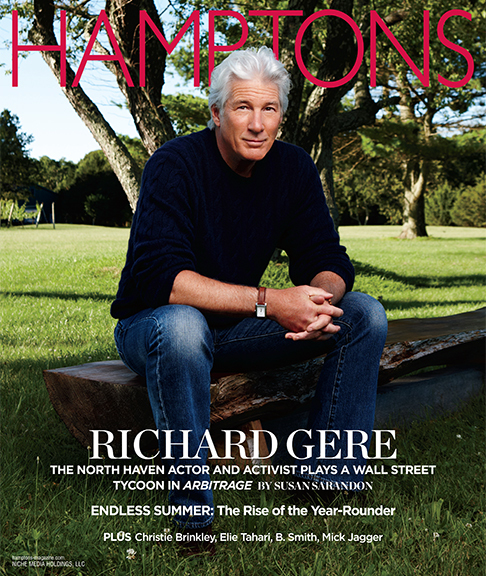
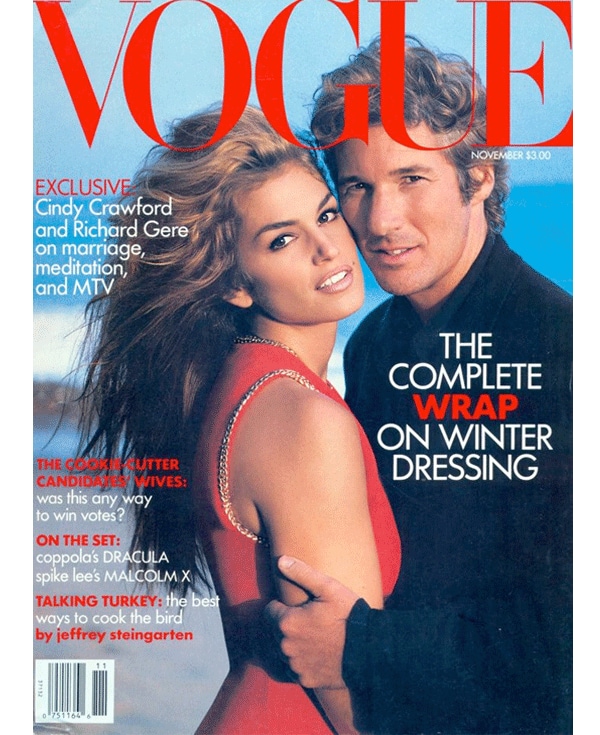
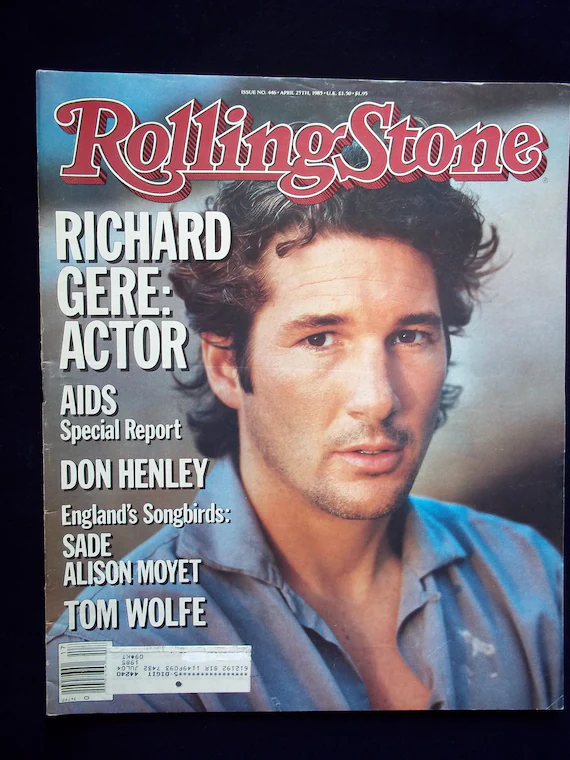
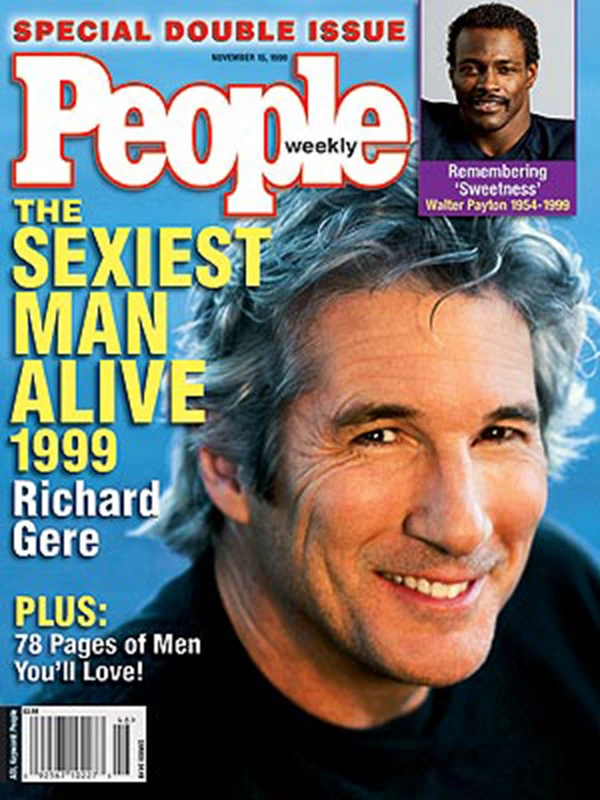
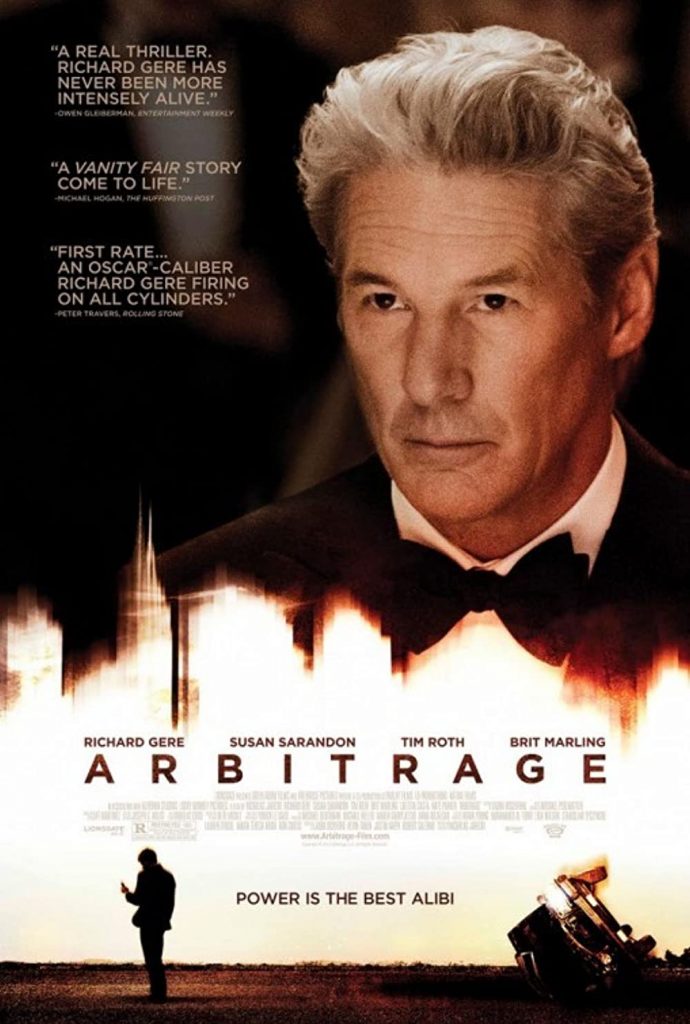
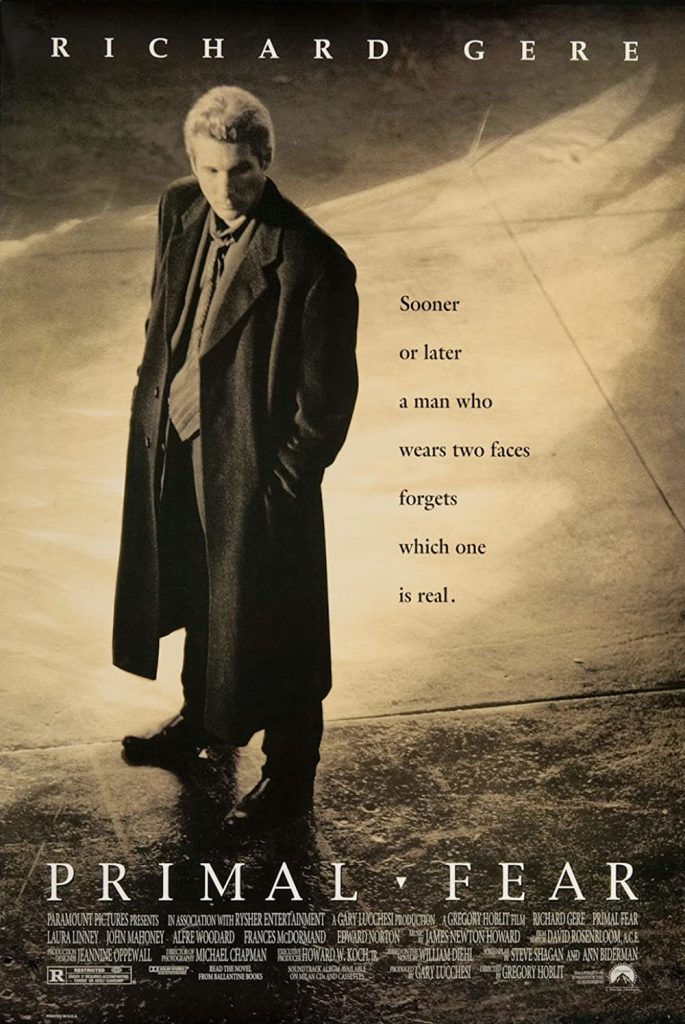
Richard Gere (born August 31, 1949) is an American actor. He began acting in the 1970s, playing a supporting role in Looking for Mr. Goodbar, and a starring role in Days of Heaven. He came to prominence in 1980 for his role in the film American Gigolo, which established him as a leading man and a sex symbol. He went on to star in several hit films including An Officer and a GentlemanPretty WomanPrimal Fear, and Chicago, for which he won a Golden Globe Award as Best Actor, as well as a Screen Actors Guild Award as part of the Best Cast.   He is currently winning rave reviews for his performance in “Arbitrage”.

TCM overview:

Long recognized as one of Hollywood’s most bankable leading men, actor Richard Gere was at times almost as widely known for his brief marriage to supermodel Cindy Crawford, as well as his spiritual convictions to Buddhism and political support of the region of Tibet. Emerging as an up-and-coming talent both on and off-Broadway, Gere soon garnered attention for roles in films like “Looking for Mr. Goodbar” (1977) and Terence Malick’s “Days of Heaven” (1978). A career-making turn as the titular “American Gigolo” (1980) made him an instant sex symbol, while his magnetic performance as “An Officer and a Gentleman” (1982) solidified his reputation as a top leading man. However, a series of box office disappointments followed, until his turn as a modern day Prince Charming opposite Julia Roberts in “Pretty Woman” (1990) once again made the actor a hot commodity. While offerings like the legal thriller “Primal Fear” (1996) met with modest success, Gere returned to his Broadway musical roots to reinvent himself onscreen for the Academy Award-winning film adaptation of “Chicago” (2002), which earned him a Golden Globe. Although he continued to work steadily over the following decade, it wasn’t until the harrowing drama “Arbitrage” (2012) that Gere once again found himself on the receiving end of unanimous critical praise. Over a career that experienced its fair share of highs and lows, Gere remained a consistent film presence, frequently surprising audiences with new levels of craft and charm.

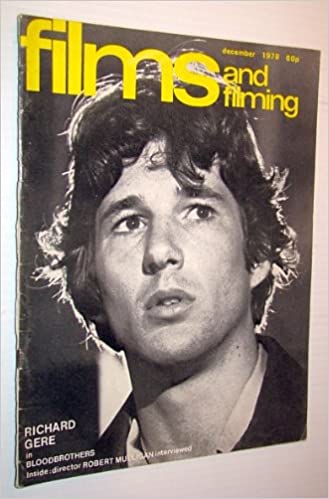
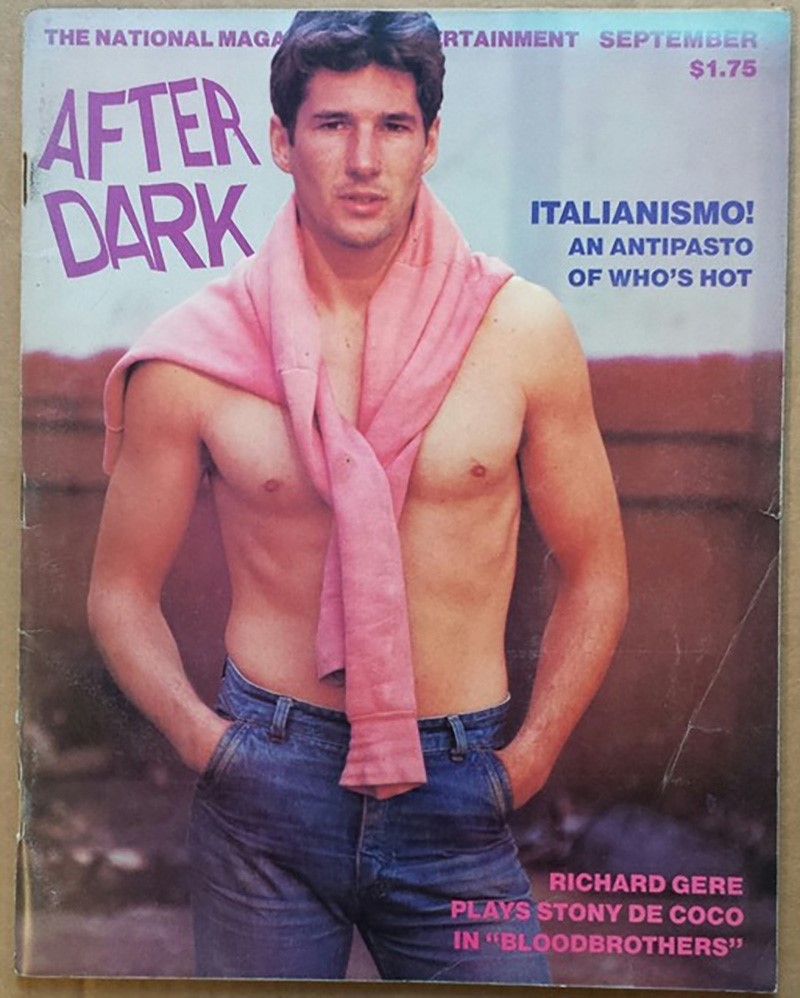
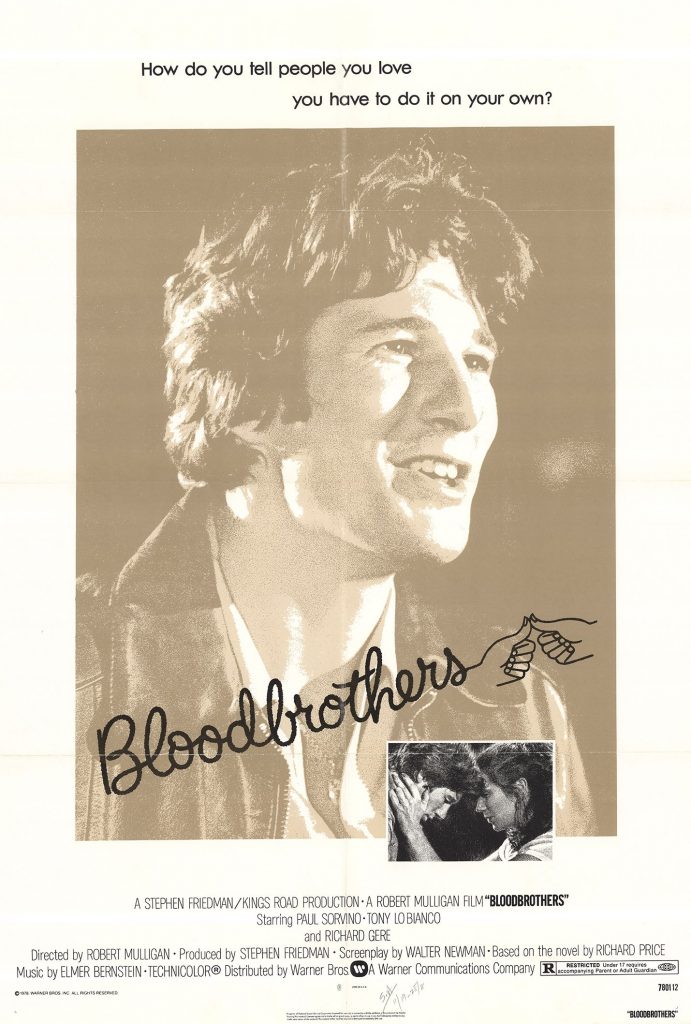
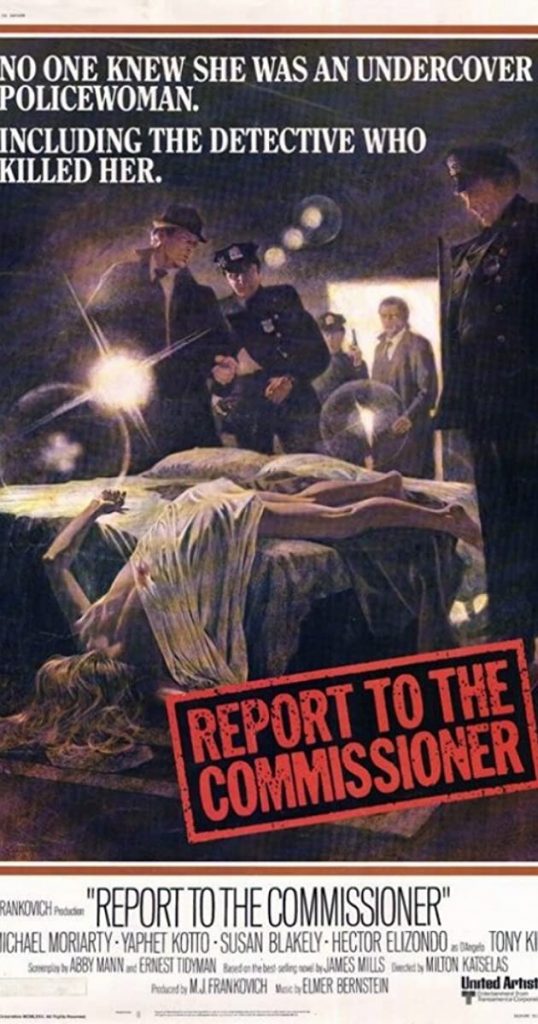
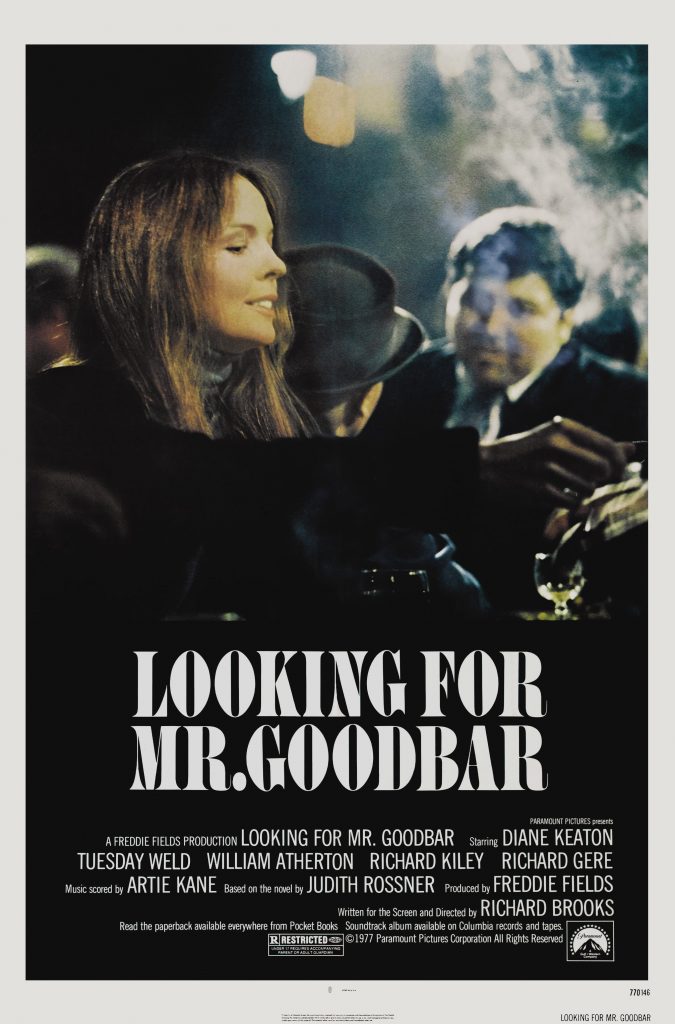
Gere was born on Aug. 31, 1949 in Philadelphia, PA, but grew up in upstate New York where his father, Homer, sold insurance and his mother, Doris, worked as a homemaker. Finding his way to the University of Massachusetts on a gymnastics scholarship, Gere studied philosophy and drama, only to drop out after two years to pursue acting. Gere spent a season each with the Provincetown Playhouse and Seattle Repertory Company before settling in NYC, where he eventually starred on Broadway as Danny Zuko in “Grease” (1973). He continued to work in theater while securing his first film parts, making his debut in “Report to the Commissioner” (1975), before finally gaining notice as Diane Keaton’s hustler beau in “Looking for Mr. Goodbar” (1977). He landed his first leads in two films released a week apart in the fall of 1978: Terrence Malick’s lyrical “Days of Heaven” and Robert Mulligan’s urban working class family drama “Bloodbrothers.” Stardom came two years later with “American Gigolo” (1980), Paul Schrader’s ambitious updating of Robert Bresson’s film “Pickpocket” (1959) to a contemporary Californian milieu. Playing a cocky prostitute, decked out in Armani suits and driving a fancy car, Gere’s character became not only a fashion statement but a symbol for the Reagan years about to come.

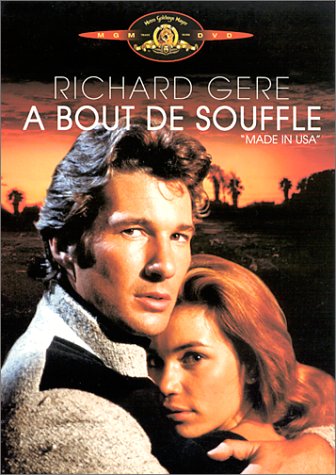
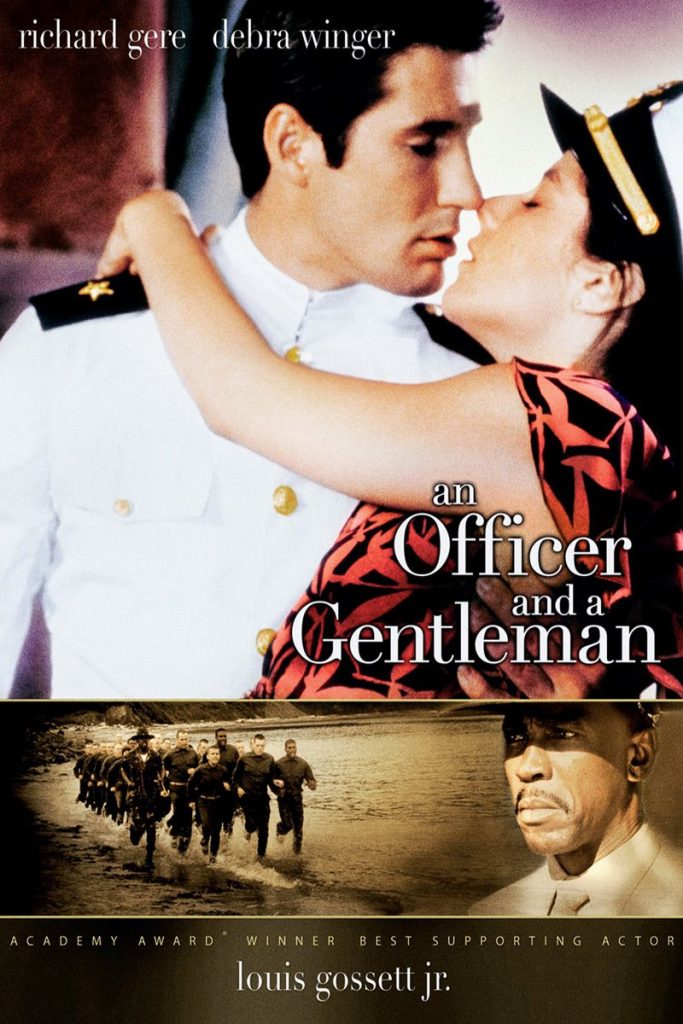
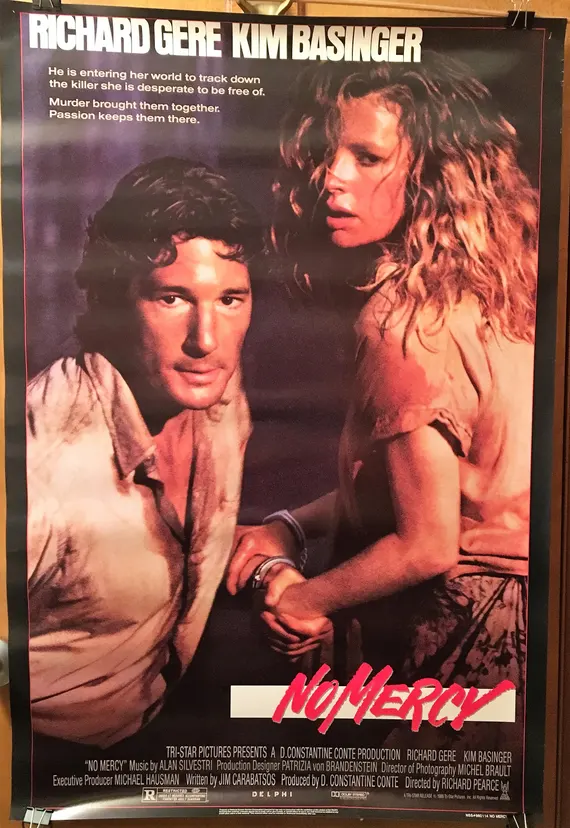
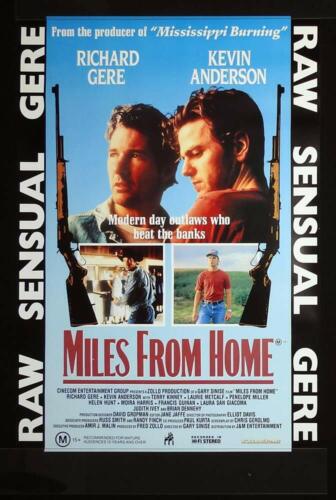
Gere enjoyed his greatest commercial success of the 1980s with “An Officer and a Gentleman” (1982), a surprisingly old-fashioned military romance pairing him with Debra Winger, a co-star with whom he famously fought with off camera. Despite the on-set rancor between the two leads, it did provide combustible chemistry onscreen, culminating with one of filmdom’s most famous scenes: Gere carrying Winger out of the factory, to the tune of “Up Where We Belong.” It had taken a mere five years to reach the top, but he would have little time to savor the altitude. Miscast as a British doctor who becomes involved with South American revolutionaries in “Beyond the Limit” (1983), an adaptation of Graham Greene’s The Honorary Consul, Gere fared no better as an amoral punk in “Breathless” (1983), as his non-stop scenery-chewing and trouser-dropping began growing tiresome at that time. Meanwhile, “The Cotton Club” (1984) proved disastrous from the word go, and a lack of screen chemistry between Gere and sexy co-star Kim Basinger doomed the mindless melodrama “No Mercy” (1986). He turned down blockbusters like “Wall Street” (1987) and “Die Hard” (1988), but his risk-taking – which had paid off with critical raves for his starring turn as a homosexual Holocaust victim in Broadway’s “Bent” (1979) – backfired in failures like “King David” (1985) and “Miles from Home” (1988). In just a few short years, Gere suffered a string of failed movies, casting a spotlight on his early promise now unfulfilled.

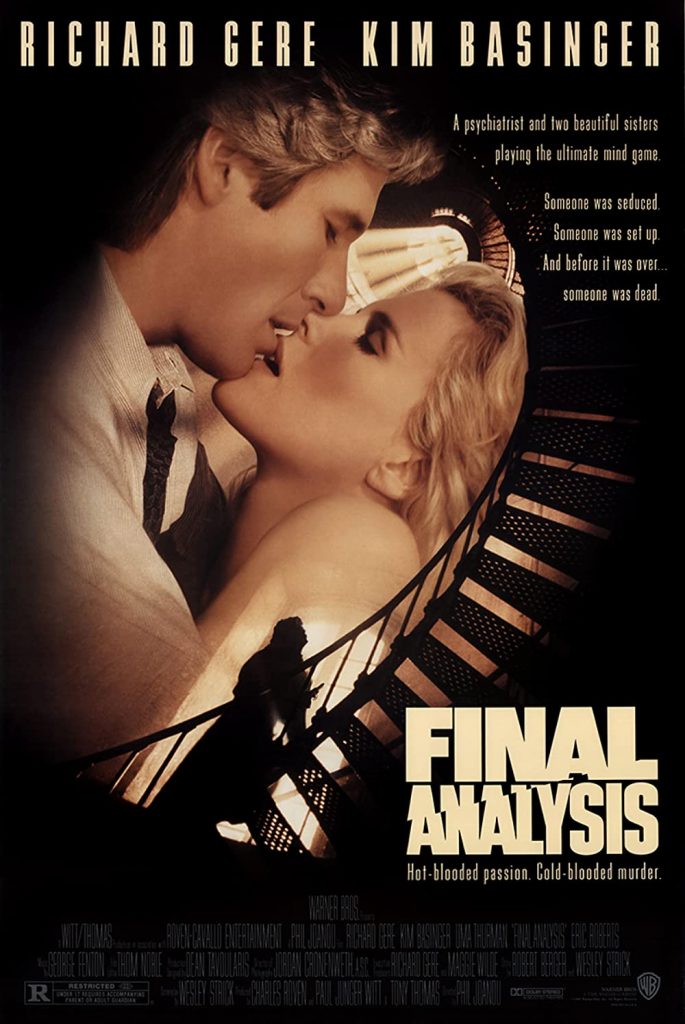
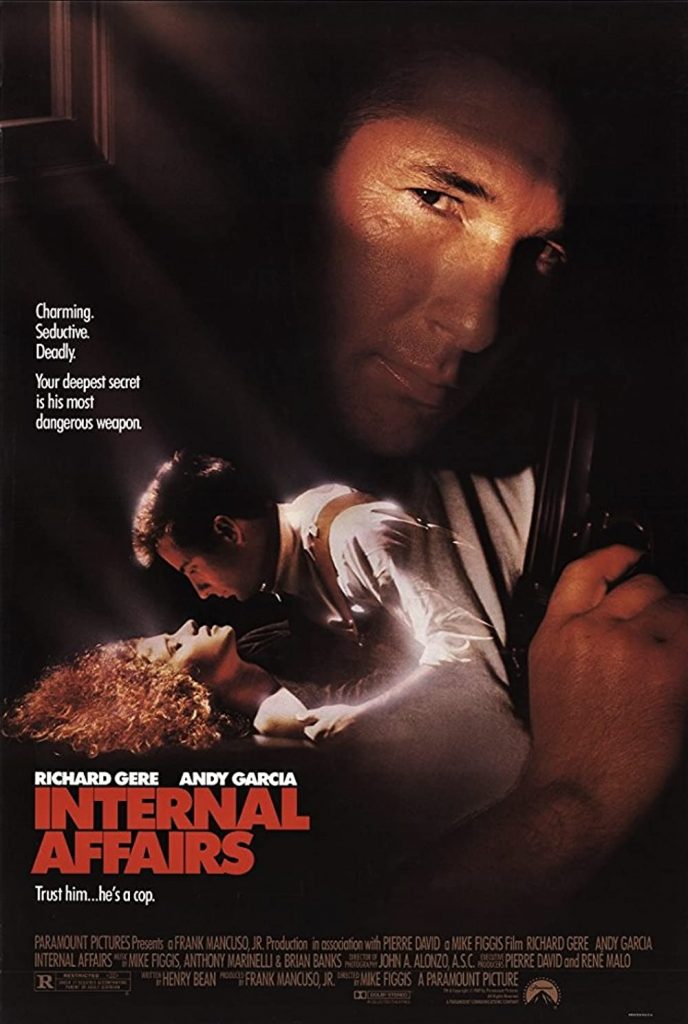
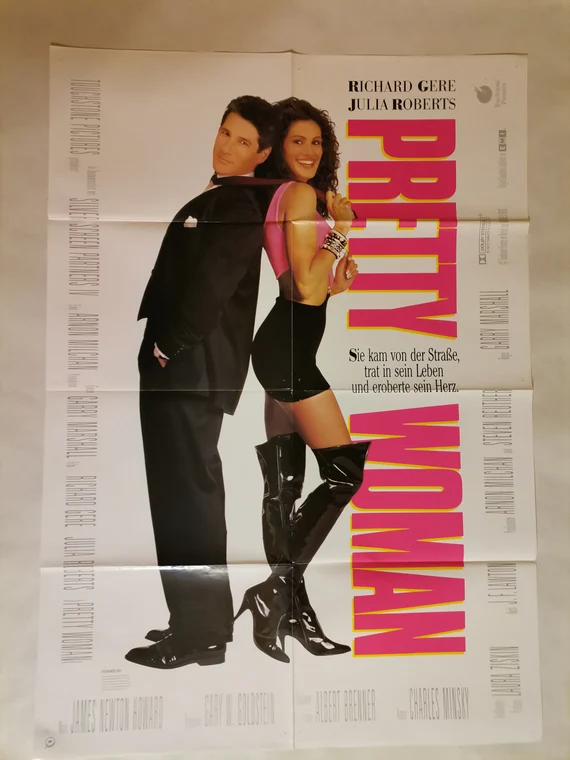
But it took only two years before he reasserted his position as a bankable star with two change-of-pace roles. First, he painted a chilling portrait of corruption and misogyny with his portrayal of rogue cop Dennis Peck in Mike Figgis’ sophisticated thriller “Internal Affairs” (1990), a film which returned him to the homoeroticism of “An American Gigolo.” He followed with the huge box-office success “Pretty Woman,” which allowed him to display a heretofore untapped Cary Grant-like comedic sensibility. There was also no lack of screen chemistry with co-star Julia Roberts; two beautiful people who allowed each other to shine in this updated take on “Cinderella.” Gere went on to play a Eurasian who visits his Japanese relatives in Nagasaki in Akira Kurosawa’s well-intentioned “Rhapsody in August” (1991) before making his executive producing debut with the psychological thriller, “Final Analysis;” a duty he also performed for “Sommersby” and “Mr. Jones” (both 1993). With the exception of “Sommersby,” which co-starred Jodie Foster, Gere was mired in feature failures throughout the early 90s, but his small role as a gay choreographer helped launch HBO’s “And the Band Played On” (1993), earning him an Emmy nomination.

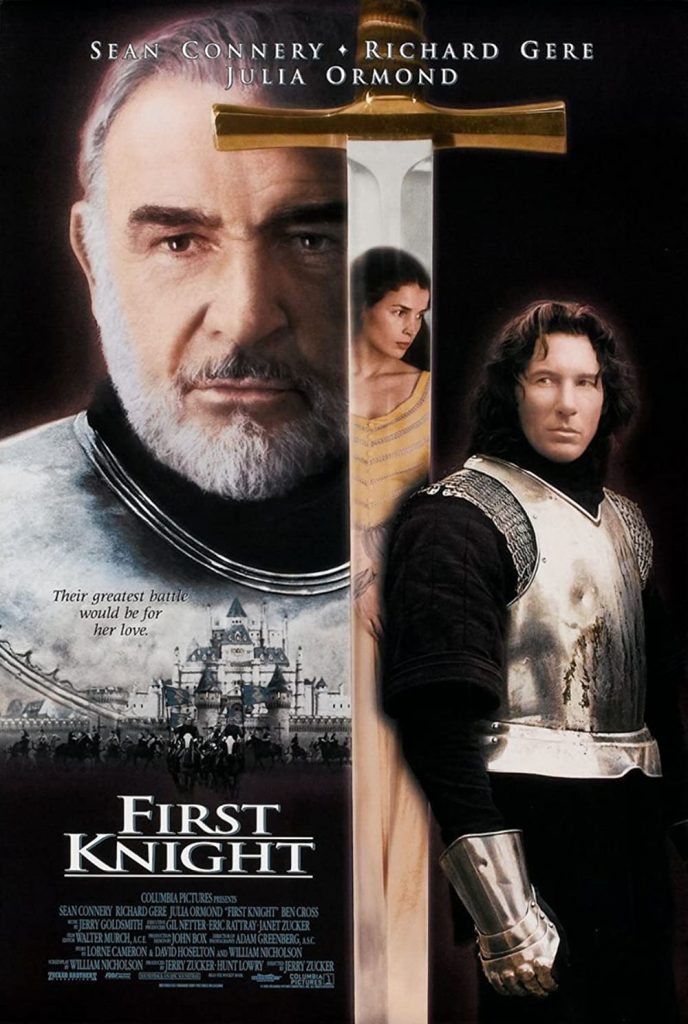
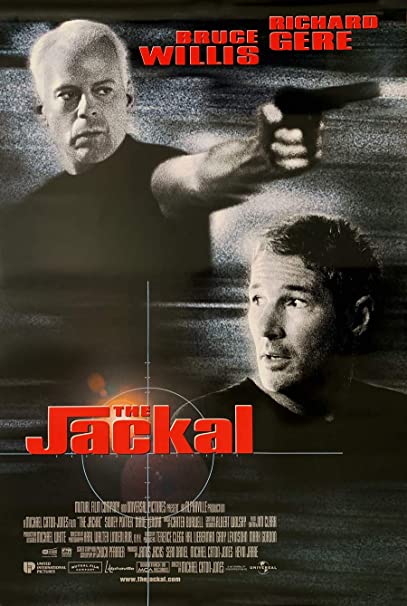
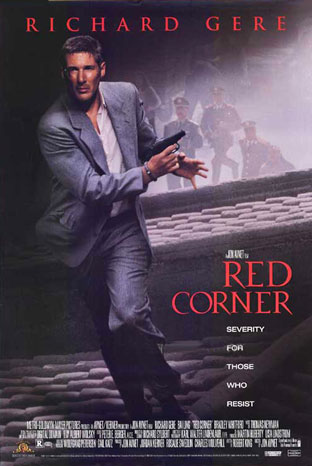
After the embarrassment of his contemporary American-sounding Lancelot in yet another telling of the Camelot story, “First Knight” (1995), Gere returned to form as a cocky attorney defending accused killer Edward Norton in “Primal Fear” (1996). The courtroom thriller “Red Corner” (1997) addressed something close to his heart: the oppressive Chinese regime which had persecuted his beloved Tibet since 1949. Featuring an all-Chinese cast, whose involvement placed their families back home in danger, “Red Corner” told the story of an American entertainment lawyer (Gere) railroaded by a brutal, arcane judicial system. He followed quickly that same year with “The Jackal,” playing a former IRA commando hunting a noted terrorist (Bruce Willis) in this loose remake of Fred Zinneman’s “The Day of the Jackal” (1973). Meanwhile, Gere’s continued promotion of Tibetan Buddhism and its spiritual leader while raising awareness of Chinese repression of the Tibetan culture made him the Hollywood “point man” for high-profile appearances and fundraisers involving the Dalai Lama.

Gere continued to act steadily in movies, though for a stretch his films were less than remarkable. He re-teamed with his “Pretty Woman” co-star Julia Roberts and director Garry Marshall for “Runaway Bride” (1999), a sort-of-sequel-in-spirit, in which he played a journalist investigating the story of a woman who has backed out of several marriages at the altar. The film did well enough at the box office, but the excitement was nowhere near the original Gere/Roberts/Marshall teaming. Worse was the May-December romantic tearjerker, “Autumn in New York” (2000), in which both he and Winona Ryder were seriously miscast against one another in a soggy “dying-girl-finds-love” melodrama. Gere fared much better under the direction of Robert Altman in the seriocomic “Dr. T and the Women” (2000), playing a handsome gynecologist who seems beset by the many demanding women in his life, including his wife, daughters, office staff and patients. Gere was perfectly believable as a man who lures females into his orbit, yet fails to understand what drives them; nevertheless, it was one of Altman’s entertaining but trifling efforts and never lured a large audience.

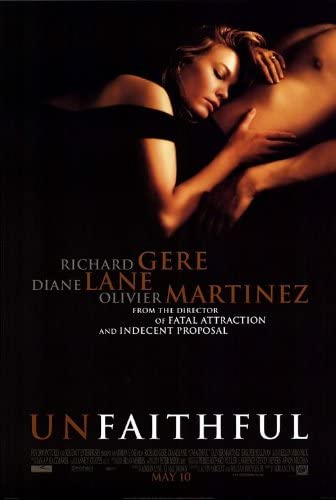
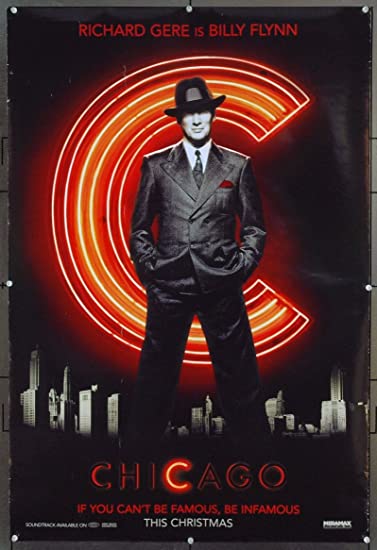
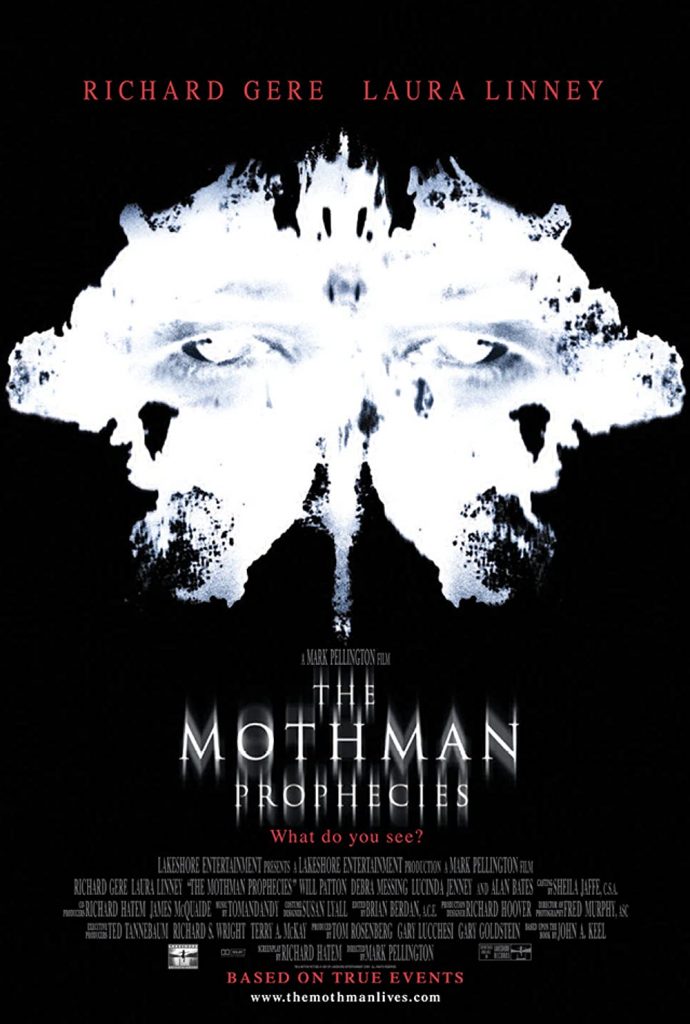
In 2002, Gere starred in “The Mothman Prophecies,” a horror thriller pairing him with Laura Linney that disappeared from theaters with nary a ripple. His next project, “Unfaithful” (2002), brought Gere back to the fore, playing the loving, attentive and dashing husband whose beautiful wife (Diane Lane) nevertheless cheats on him with a sensual Frenchman (Olivier Martinez). The film offered one of the best, most measured performances of the actor’s career, particularly when the truth is finally revealed to him. Gere next got to display his oft-ignored musical talents in the much-anticipated movie version of the musical “Chicago” (2002), playing the slick huckster of a lawyer Billy Flynn, in a role that earned him several award wins, including a Golden Globe for Best Actor – Musical or Comedy. Around this same time, he married his companion of seven years and the mother of his son, actress Carey Lowell. His previous marriage to supermodel Cindy Crawford, while perfect fodder for the tabloids, what with the natural beauty of both on full display, had shockingly ended in 1994 after the couple had been together since 1988.

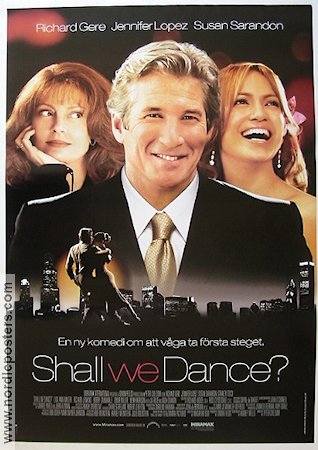
Now in his mid-fifties, Gere still cut a dashing enough figure to be believably paired opposite Jennifer Lopez for the romantic comedy, “Shall We Dance?” (2004), playing a family man who becomes obsessed with reigniting the passion inside Lopez’s chilly dance instructor, while simultaneously discovering the joy of dance himself. He then received mixed reviews for his role in “Bee Season” (2005), playing Saul Naumann, a family man previously distracted by his religious studies of the traditional cabala who bonds with his daughter (Flora Cross) when she becomes a champion speller. Though many critics admired the film and the performance, some took Gere to task for not convincingly portraying the character’s intellectual inner life, as well as not making a convincing Hebrew due to his WASP-y looks and his famous Buddhist beliefs.

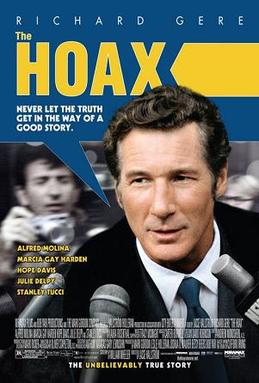
The actor made yet another return to form with his next film, “Hoax” (2007), the true story of faux Howard Hughes biographer Clifford Irving (Gere). In 1970, Irving claimed he had permission to be the biographer of the reclusive and enigmatic Hughes, landing a six-figure advance from publisher McGraw-Hill. Irving later handed the publisher a finished manuscript, which was eventually snuffed out by journalists, and later Hughes himself, as being fraudulent. Gere was persuasive as Irving, a performance that earned the actor critical kudos. Meanwhile, Gere made headlines around the world in April 2007, after an incident involving Bollywood actress Shilpa Shetty at an AIDS awareness event in New Delhi. In an impromptu moment, Gere embraced an unsuspecting Shetty, then bent her backwards while profusely kissing her. “The Kiss,” as it was henceforth called, ignited fury across India, with groups of men burning and kicking effigies of Gere in public. Even a judge from the northwestern city of Jaipur issued an arrest warrant for both stars for violating obscenity laws. While Gere apologized as profusely as he had kissed Shetty, the actress expressed concern that her countrymen were overreacting. The arrest warrant was later rescinded after the furor died down.

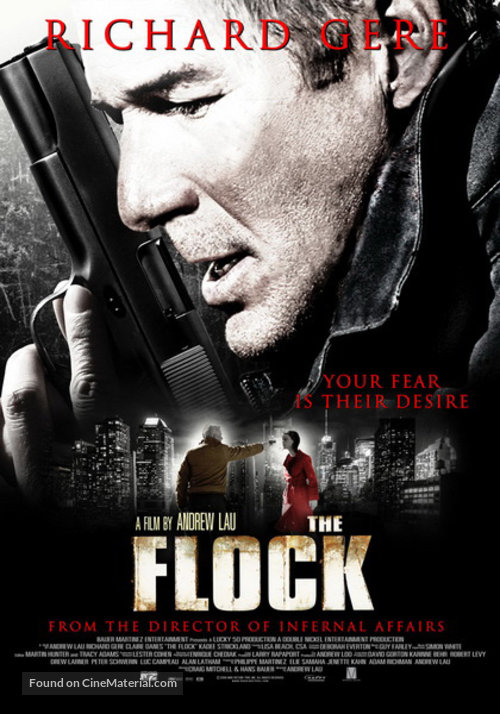
Largely overshadowed by the recent controversy was Gere’s appearance with Claire Danes as a Public Safety agent obsessed with locating a kidnapped girl in the grim mystery “The Flock” (2007). The first English language film directed by noted Hong Kong director Andrew Lau, it was given a wide theatrical run internationally, although it would only be released on DVD the following year in the U.S. Capping off an exceptionally busy year, he also appeared as one of several different metaphorical variations of Bob Dylan in the experimental biopic “I’m Not There” (2007), co-starring Heath Ledger, Christian Bale and Cate Blanchett as other interpretations of the folk-rock legend. The following year saw the always dependable leading man in familiar territory opposite Diane Lane in an adaptation of novelist Nicholas Sparks’ romance “Nights in Rodanthe” (2008) prior to taking on the role of George Putnam, husband of America’s most famous pioneering aviatrix (Hilary Swank) in the historical biopic “Amelia” (2009). Another effort that performed reasonably well overseas, yet only saw a DVD release stateside, was “Hachi” (2009), a based-on-fact inspirational drama about a young Akita puppy who forms an unbreakable bond with an American professor (Gere) after being abandoned at a train station.

Richard Gere

Gere next starred alongside Don Cheadle, Ethan Hawke and Wesley Snipes in director Antoine Fuqua’s gritty police drama “Brooklyn’s Finest” (2010) as a cynical cop facing a crisis of conscience in the weeks leading up to his retirement. Unfortunately, while Gere and his co-stars earned high marks for their work, the majority of critics felt Fuqua and writer Michael C. Martin delivered little more than genre clichés and a bloody climax. After a co-starring turn alongside Topher Grace in the unremarkable spy thriller “The Double” (2011), Gere delivered what many pundits considered to be among his very best in the character drama “Arbitrage” (2012). Cast as a hedge fund billionaire whose professional and personal worlds begin to crumble around him as he attempts to cover up a fatal accident, Gere brought to life a man of fascinating contradictions nearing the end of his rope with intensity and believability. He received a Golden Globe nomination for Best Actor for his work in the film. The above TCM overview can also be accessed online here.

David Caves

David Caves

David Caves
David Caves

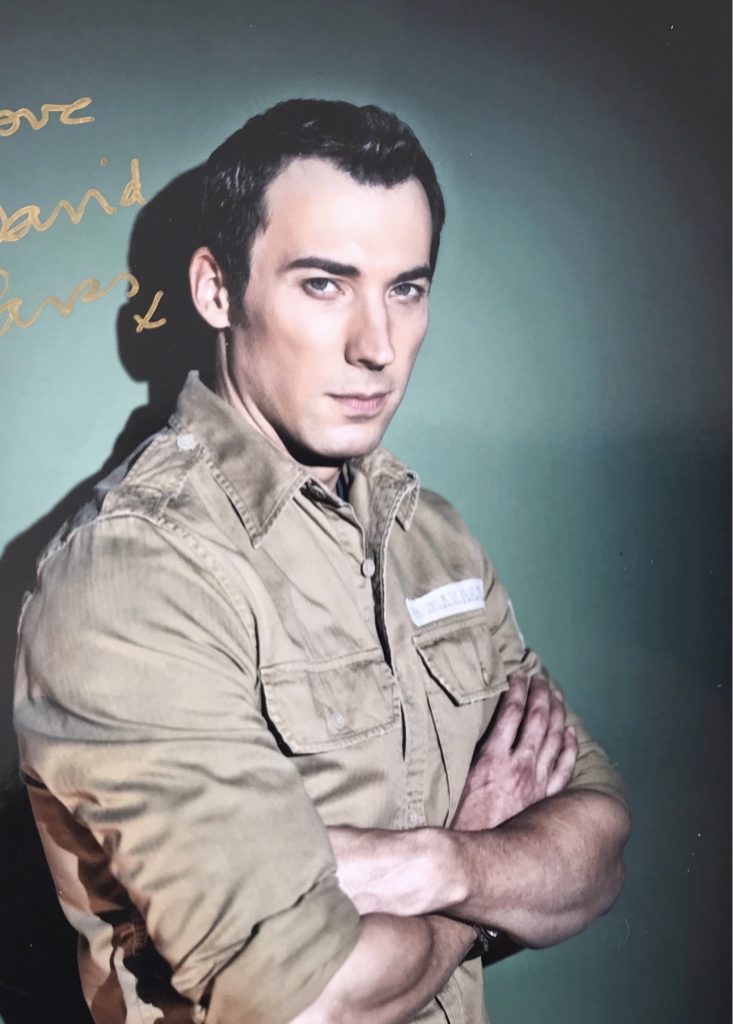
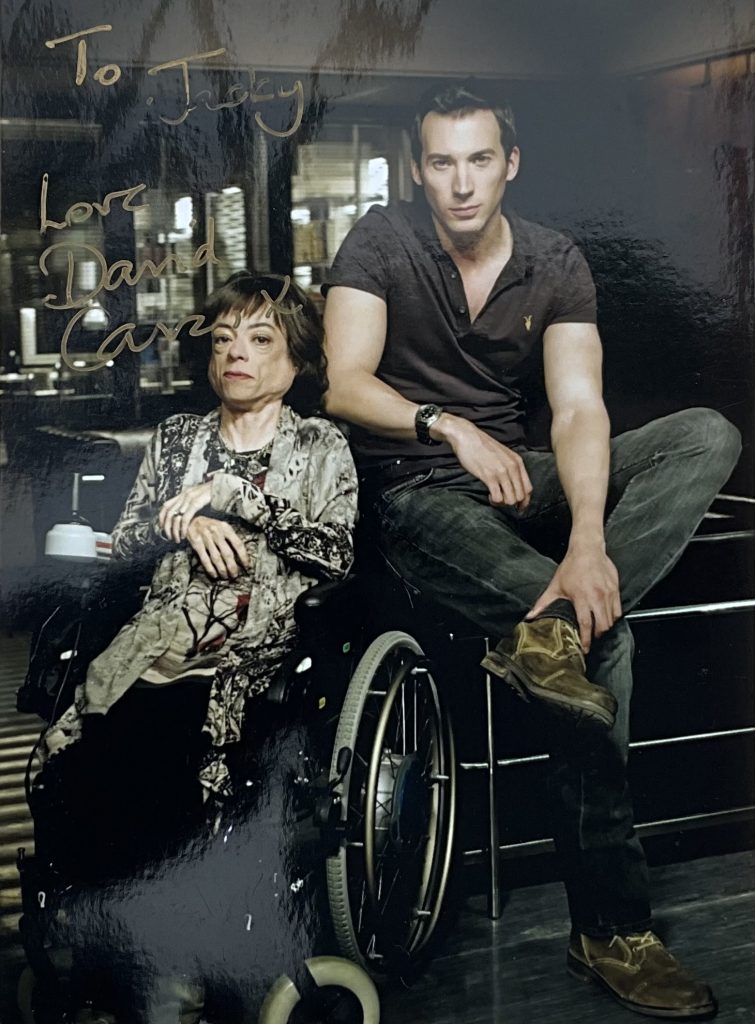
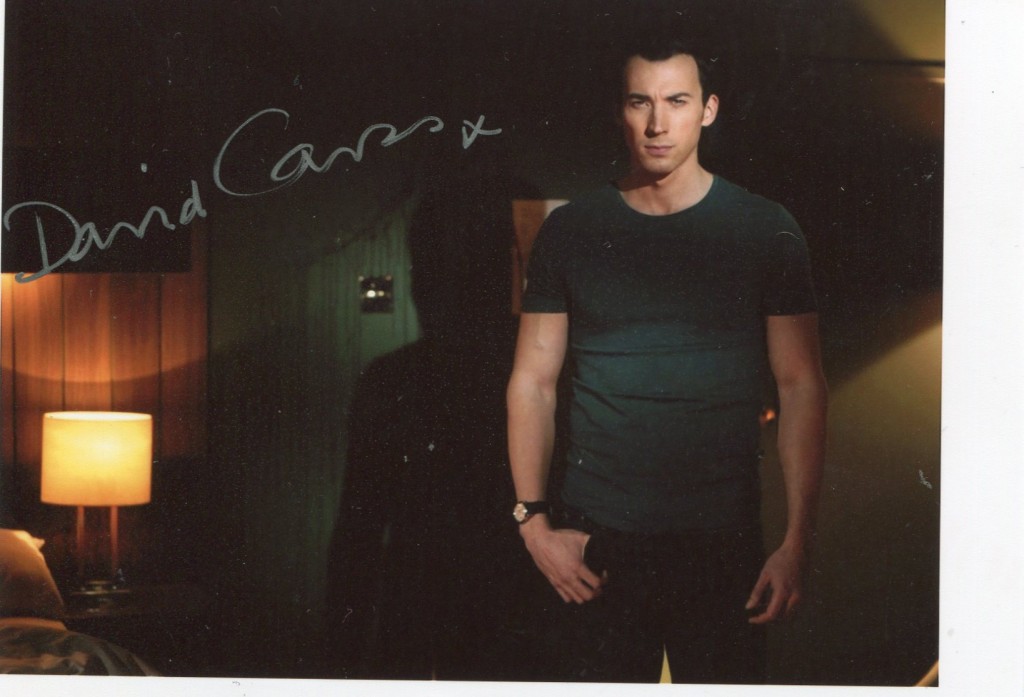
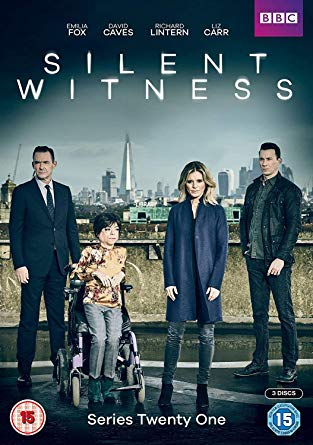
David Caves is from Ballymena in the North of Ireland and has made an excellent foil to Emilia Fox in his role as Jack Hodgson in the BBC drama series “Silent Witness”

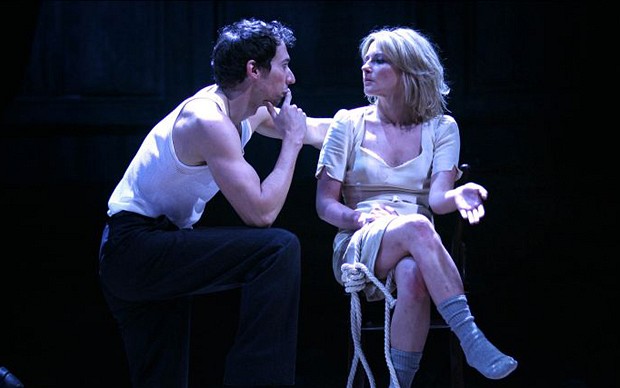
Caves originally planned to become a teacher before training at LAMDA and, prior to his addition to the Silent Witness cast, was known only as a stage actor, having made an impact as Petruchio in the Royal Shakespeare Company’s  2012 touring production of “The Taming of the Shrew”.

“The Stage” interview from 2013:

It’s the morning after the first episode of Silent Witness’ 16th series, and the morning after David Caves’ small screen debut. The actor has just begun appearing in the popular crime series as forensic scientist Jack Hodgson, having already built up a reputation as a stage actor, notably in productions such as theRoyal Shakespeare Company’s The Taming of the Shrew. And while other performers might, by this time, have flicked through the papers looking for a review, or jumped on Twitter to see what people have been saying about their turn, Caves has been avoiding reading anything.

“Sometimes the curiosity gets the better of me,” he admits. “But usually I try not to read anything, as I think, good or bad, it should not change anything. With a show like this, where such a loved character [Harry Cunningham, played by Tom Ward] has gone, people are going to be disappointed, of course, and always wary of a new guy coming in, and could be quite critical. But there is nothing you can do. Some people will like it, others won’t. All you can do is the best job you can do.”

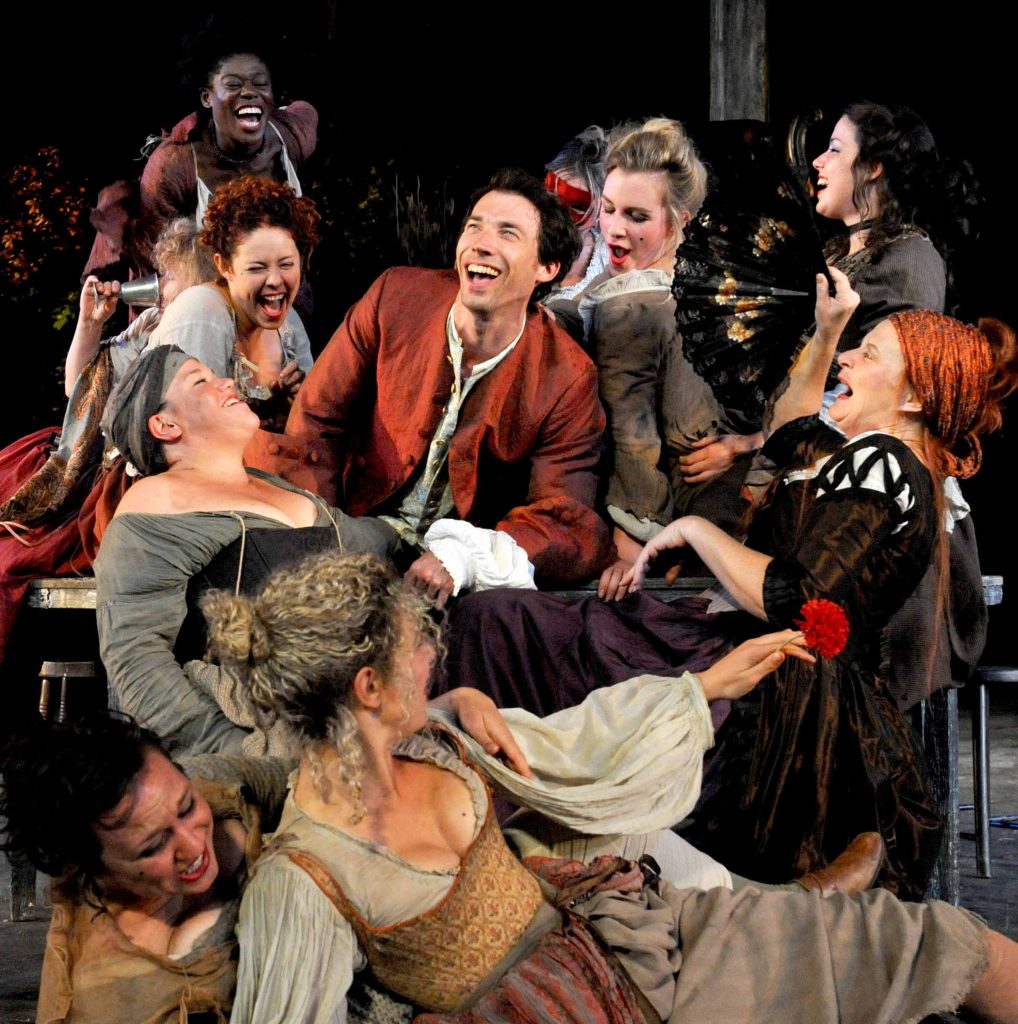
Caves graduated from LAMDA in 2005 and has since then appeared in a variety of stage productions, including The Beggar’s Opera at Regent’s Park Open Air Theatre and The Changeling at the Southwark Playhouse, a performance which Janie Dee called the best she’s ever seen.

The Beggar’s Opera performed at the Open Air Theatre, Regent’s Park Centre David Caves as Captain Macheath ©Alastair Muir

Following his stint in this production, he went on to appear in the aforementioned The Taming of the Shrew playing Petruchio, which again earned him rave reviews. However, it was while appearing in this production that Caves decided he wanted to branch out from theatre work, and try his hand at something new.

“I really wanted to do some television but my theatre schedule up to then had been pretty hectic,” he explains. “I was extremely fortunate to be working as I did, and with some incredible people along the way. I absolutely love theatre and my heart will always be there, as that is where I started. But I did feel, coming to the end of that job [The Taming of the Shrew] that I would like to try something else, some TV or film work. And as luck would have it, along came Silent Witness. It was great timing.”

Caves’ character, Jack Hodgson, is described as “straight-talking and quick witted” and as someone who is “confident in his own ability”. Playing Petruchio helped, Caves says, in preparing him for his audition.

The actor describes Jack as “confident, brash and a little cheeky” and explains: “I thought some of those are similar to Petruchio. Auditions are pretty nerve-wracking, particularly for something like Silent Witness. I was nervous, so I thought, if I can take in the energy of the part I am playing now, that will be helpful and hopefully it will get me through.”

He adds that being in work at the time of his audition helped with his own self-belief.

I made it daunting in my own head but in real life everyone was so generous [on Silent Witness]

“I was in good shape, I suppose, as it always helps when you are working,” he says. “You are riding high on that, and are confident, so carry yourself better in auditions.”

Caves says he was given an “in-depth character analysis” of Jack, and admits he was “intimidated” when he first started digesting the information he had been given.

“There was a lot of information about who he was,” he recalls. “Too much information can kill things a bit, take the life away, because you just try to play exactly what the author has written, which does not leave you any room to bring something yourself. Having said that, once we were up and running, it was up to me what I wanted to try and do, and the more touches of lightness I could bring to the role the better.”

Alongside his work as a forensic scientist, Caves’ character also has a penchant for cage fighting, or mixed martial arts. Caves says he was unable to do much research for the forensic scientist part of his role, but he wanted to train as much as he could for the martial arts part.

“I was really looking forward to that bit,” he says. “I was impatient to start doing it. I asked if there was any way to have some weights brought in on set, so I could pop out between scenes and have a quick session. To my utter surprise they agreed. It was so great, as I would not have been able to train as much as I had wanted without that.”

Caves isn’t expecting all future jobs to be like that, but he clearly relished his time working on Silent Witness. His appearance makes for a pretty impressive television debut, too, especially given how he did not originally set out to be an actor.

Caves, who is from Northern Ireland, studied modern languages at St Andrews in Scotland, and initially thought he was going to be a teacher. He worked as a teacher in France as part of his university course, but when he returned to the UK, he found he had “lost the drive for the academic side of things” and found himself getting heavily involved in plays and musicals at the university.

“I found I loved this medium and wanted to look into it more, to see what was out there and what drama school was about,” he says. “So I did some research and decided to have a go, not really expecting anything to happen. I was naive and did not know how tough it was. I thought I was probably not good enough but something inside me told me I should have a go, so I did.”

Caves ended up being offered places at both LAMDA and Bristol Old Vic, opting for the former because of the lure of London. His training focused on theatre, and although this is where he has spent most of his career to date, he is now enjoying being on television, which he says has been a learning curve for him. He calls it “Alice in Wonderland stuff”.

“I made it daunting in my own head but in real life everyone was so generous [on Silent Witness],” he says. “I was very quickly put at ease. It was like a little family, like joining a theatre company. It was a really pleasurable experience.”

He goes on to explain that the differences between theatre and television are “mainly technical”, but says he tries not to get too bogged down with that side of things.

“You can go overboard and get so vain about how you look in a shot and then it becomes a vanity project,” he says. He misses the rehearsals that come with working in theatre, and adds that, while they do rehearse in television, “it’s quick and minimal”.

“They expect you to come having done the work and made some choices,” he continues. “If those choices don’t work, they tell you and you have to make quick decisions. But that is a really good thing.”

He adds: “Sometimes you can over think things and over rehearse. But sometimes great things come out of very quick decisions in the moment – just by listening and reacting.”

For “The Stage” interview with David Caves, please click here

Chesney Hawkes

Chesney Hawkes

Chesney Hawkes

Chesney Hawkes was born in 1971 in Windsor.   His father Leonard was in the 60’s pop group The Tremeloes.   In 1991 he had a huge hit with the song “My One and Only”.   He starred in “Buddy’s Song” and “Prince Valiant”.

IMDB entry:

Chesney Hawkes born September 22, 1971 in Windsor, Berkshire, England Is the son of Len (Chip) Hawkes, the singer of The Tremeloes (known for their hit “Silence Is Golden”) and Carol Hawkes, who was a TV hostess and actress in the UK.

It was in early 1991 when Chesney, then 19, won the lead role in the film Buddy’s Song(1991) (also starring Roger Daltrey of The Who), and signed to sing the sound track but suddenly found himself one of the first teenagers in pop history ever to bag the Number One spot with a debut release. “The One And Only” stayed at the top for five weeks, going on to become one of the undisputed global teen anthems of 1991 as it crashed Top 10s world-wide, including the notoriously difficult markets of Japan and America. The song was also featured over the titles of the Michael J. Fox movie Doc Hollywood (1991).

Chesney and his band (featuring his brother Jodie on drums) rounded off 1991 with a sell-out tour, playing everything from small clubs to 10,000 seaters the length and breadth of Europe. Both fans and critics alike voted Chesney’s live show a spectacular success, with special honours going to the much remembered last night show at London’s Hammersmith Odeon. This triumphant concert was to signify the symbolic end of that particular stage of Chesney’s career. Chesney had out-grown the confines of teen idol-dom and was eagerly looking forward to the challenge of establishing himself as a song writer in his own right.

So after gaining more valuable live experience supporting Huey Lewis and Bryan Adams in Europe, Chesney removed himself from the glare of the public eye and spent time in his studio writing and rehearsing for his next album. The hard work paid off and the album “Get The Picture” was as spirited, diverse and uncompromising as anything delivered by self-styled street credible types in recent years.

For the next few years and no longer signed to his original record label, Chesney decided that, rather than respond to numerous offerings of pantomime, store openings and West End roles which, although lucrative, would have taken him away from the music, it was time for him to pay his musical dues, albeit in reverse given that he had a No. 1 record behind him. He formed a new band, “ebb”, and spent 1997 living and working in New York from which base he played a series of East and West coast gigs to great critical acclaim, always continuing to write and demo new material.

Since this time Chesney has worked with numerous talented writers and producers, amongst them Mark Goldenberg who co-wrote The Eel’s “Novocain For The Soul”, Adam Schlesinger of Fountains Of Wayne, Jesse Vellenswealla of The Gin Blossoms, and Counting Crows producer Marvin Etzioni. Other collaborators include Howard Jones, the Police’s Stuart Copland, Nik Kershaw & Bijou Phillips.

English band “Hepburn”, covered “Next Life”, which Chesney co-wrote with Phil Thornally. (Phil co-wrote “Torn”, a hit for Natalie Imbruglia). Caprice charted in March 2001 with “Once Around The Sun” which Chesney co-wrote with Eric Pressley and he has also collaborated with Tricky on his “Mission Accomplished” EP. Another of Chesney’s songs, “Almost You”, was in the film Jawbreaker (1999) starring Rose McGowen and Marilyn Mansun and “Missing You Already” was in the film The Night We Never Met (1993), starring Matthew Broderick.

During the latter half of 2000, and the beginning of 2001, Chesney has been recording a batch of new songs in London and in Los Angeles with producer Charlton Pettus. A number of tracks have been mixed by Neil Dorfsman who has worked with Sting, Dire Straits and Paul McCartney. A single, “Stay Away Baby Jane”, from these sessions was scheduled for release in summer 2001. The video has been filmed in LA with director Rory Rooney.

During April, Chesney has been performing at student venues (Nottingham, Leeds, Lincoln, Hull, Middlesbrough). Such has been the overwhelming response that the, initially mini, tour has now been extended to take in dates throughout May and early June. The teen audience that discovered him in 1991 has now grown up and are, now in their early twenties, thrilled to see Chesney back and performing at the height of his ability.

Chesney has combined touring with appearing on ‘Top Ten Teen Idols’ (Channel 4), Banzai (Channel 4) and ‘Question of Pop’ (BBC1). Interviews in The Sunday Express and The Telegraph have centred on his writing and the tour, and his current media profile (the above plus Heat, Loaded, ILR interviews and sharing a Sunday Express {not the above} centre spread with The Beatles and The Spice Girls) is being watched by the media itself with Ally Ross recently (July) congratulating Chesney on his ubiquity in his News of The World column.

At present, Chesney is working on his new album. He now lives in West London with wife Kristina and his son, Casey George Hawkes who was born on August 29, 2001.

– IMDb Mini Biography By: Anonymous

The above IMDB entry can also be accessed online here.

Jamie Dornan
Jamie Dornan
Jamie Dornan

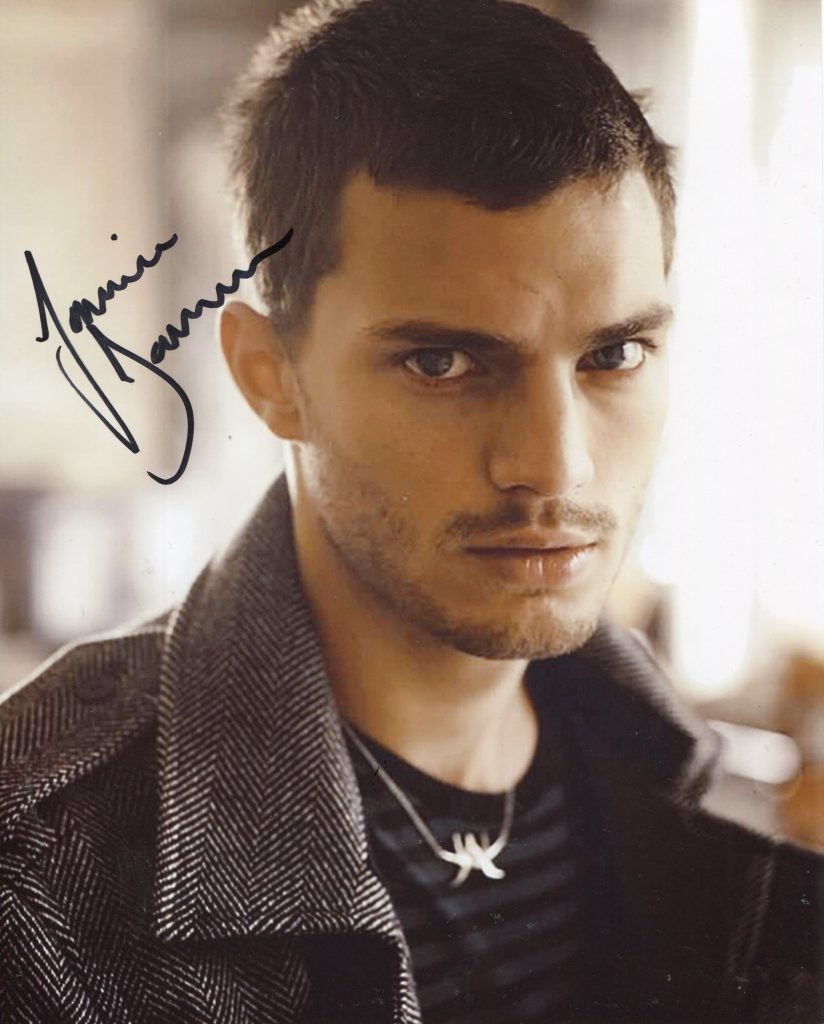
Jamie Dornan was born in 1982 in Belfast.   He played ‘Sheriff Graham’ in the series “Once Upon A Time”.   His movies include “Marie Antoinette” in 2006 and “Shadows in the Sun”.

TCM overview:

Largely unknown until 2013, actor Jamie Dornan was thrust into the spotlight when he was cast as the male lead in the major movie adaptation of the hit erotic novel Fifty Shades of Grey. A native of the Belfast area, the handsome Northern Irishman pursued acting after briefly attending university, while also working as a model and performing in a band called Sons of Jim. In 2008, Dornan found his first lead role in the horror movie “Beyond the Rave,” but he mostly remained under the radar until he was cast in the dual role of Sheriff Graham and the Huntsman on the fantastical TV series “Once Upon a Time” (ABC, 2011- ). While occasionally appearing on the hit show, he joined Gillian Anderson for the Belfast-set psychological drama “The Fall” (BBC, 2013- ). As word of the well-received series gradually expanded beyond the United Kingdom, his role as Christian Grey in “Fifty Shades of Grey” was announced, immediately making him a subject of intense international interest.

Born and raised just outside of Belfast, Dornan is the great-nephew of WWII-era actress Greer Garson, and he decided to follow her path, but not before stints as a model and musical artist. In addition to appearing in ad campaigns for high-end fashion companies such as Dior and Calvin Klein, Dornan played in the group Sons of Jim, which met with limited success before disbanding. Given his rugged yet regal looks, he found a fitting first screen role as Count Axel Fersen in Sofia Coppola’s bold historical drama “Marie Antoinette” (2006). Dornan’s initial headlining turn arrived in 2008 when he portrayed a British soldier sucked into supernatural events involving dance-obsessed creatures of the night in “Beyond the Rave.” Shifting gears considerably, he subsequently appeared in the pensive English drama “Shadows in the Sun” (2009), co-starring Ophelia Lovibond and veteran actress Jean Simmons.

In 2011, Dornan landed the part of Sheriff Graham and the Huntsman on the popular American show “Once Upon a Time,” giving him exposure to a much wider audience. On the fairytale-inspired series, his hunky law-enforcing character became torn between the scheming Regina (Lana Parrilla) and the virtuous Emma (Jennifer Morrison), showcasing his undeniable sex appeal. Outside of his “Once Upon a Time” appearances, Dornan signed on as a regular on the tense Northern Irish show “The Fall,” starring as Paul Spector, a charming serial killer attempting to elude the investigation of a determined police detective (Gillian Anderson). While enjoying the success of these two ongoing series, Dornan had an unexpected breakthrough-during the fall of 2013, it was announced that he would be replacing Charlie Hunnam as the cinematic version of Christian Grey, the bondage-loving businessman in E.L. James’ sensual novel Fifty Shades of Grey, which had proved to be a pop-culture phenomenon. One of the most highly anticipated Hollywood movies of 2014, “Fifty Shades of Grey” found Dornan working closely with actress Dakota Johnson, leading to much speculation about how the pair would fare as on-screen lovers drawn into a steamy and dramatic relationship.

 The above TCM overview can also be accessed online here.
Jamie Doran
Jamie Doran
Jamie Doran
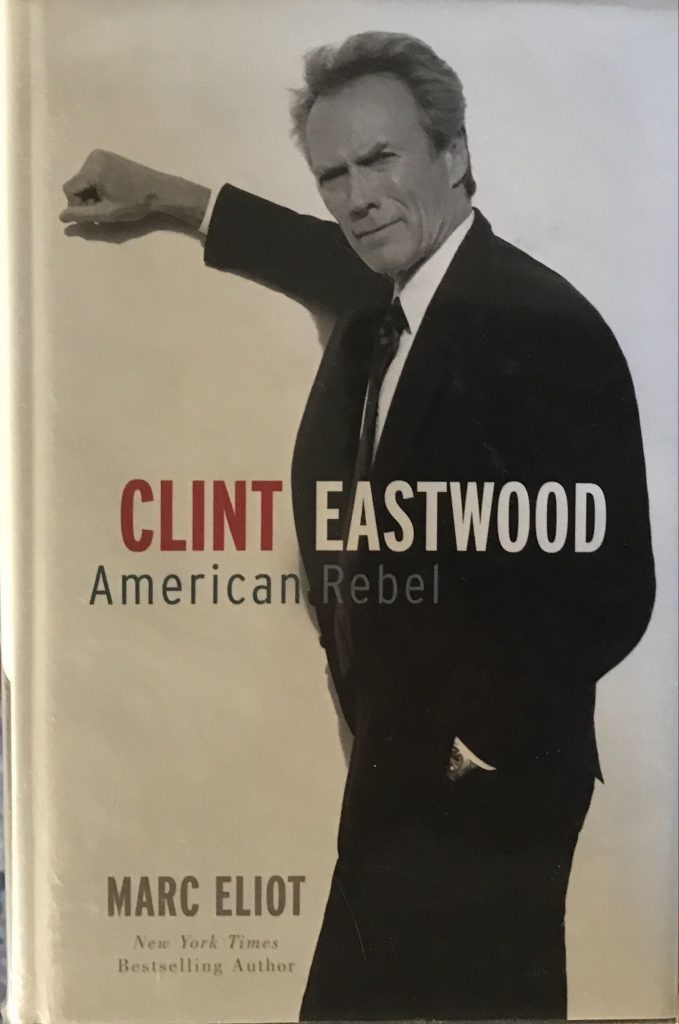
Clint Eastwood
Clint Eastwood
Clint Eastwood
Clint Eastwood

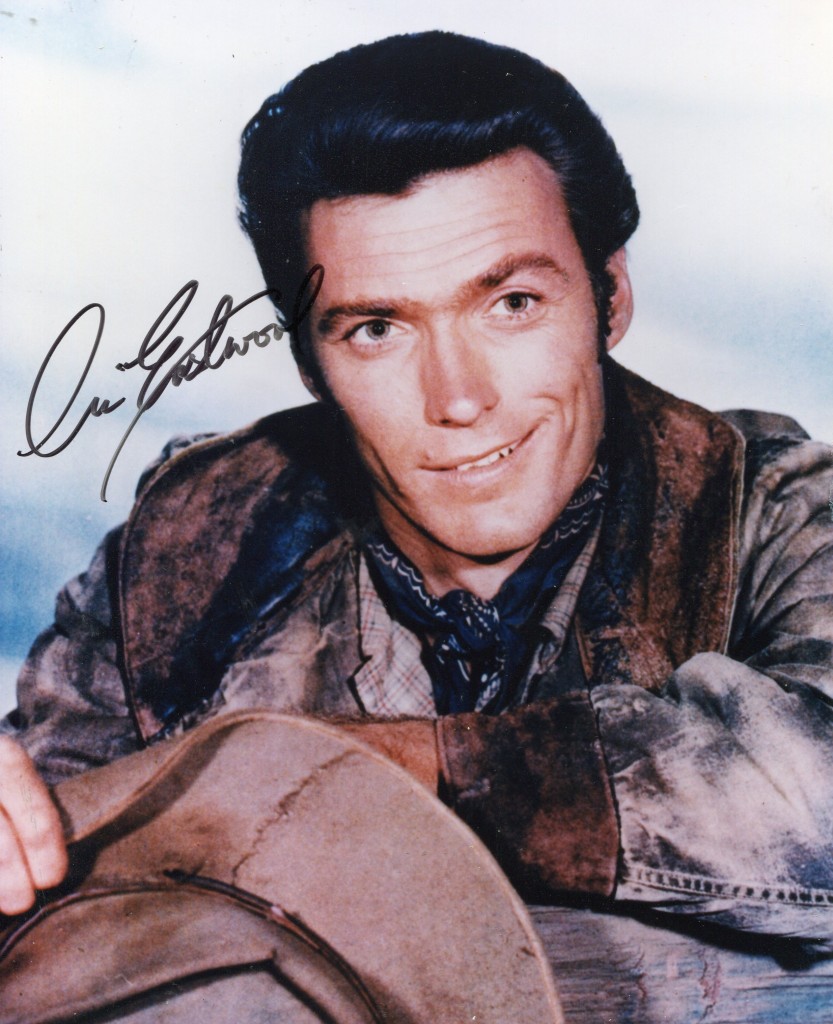
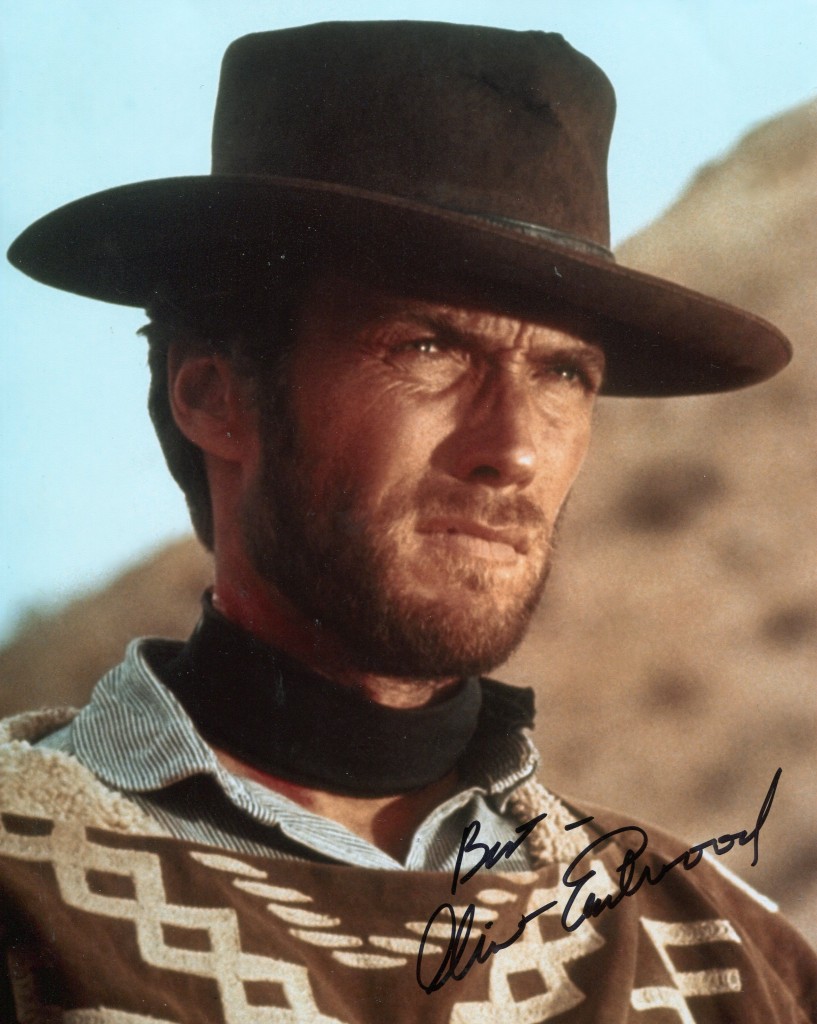
Eastwood is my very favourite actor. Born in San Francisco in 1930, the length of his career is amazing. From his debut in 1955 in “Revenge of the Creature” to 2012 and “Trouble With the Curve, he has consistently shone in the movies. I particularily like “A Fistful of Dollars”, “The Good, the Bad and the Ugly”, “Where Eagles Dare”, “Play Misty For Me”, “Dirty Harry”, “Thunderbolt and Lightfoot”, “The Bridges of Madison County” and “Gran Torino”. Long may he continue.

TCM Profile:

Survey the iconic leading men through every generation of Hollywood filmmaking, and you’d be hard-pressed to find one who has been as durably bankable as Clint Eastwood. Literal generations of devoted fans have been snared by the considerable charisma of the tall, athletic figure with the demeanor as leathery as his features, the less-is-more approach to his craft, and unforgettable portfolio of implacable cowboy and cop heroes. His star clout also enabled him to start a remarkable career behind the camera, and the years have seen him lend an ever-more assured directing touch to many personal projects as well as his more familiar genre efforts.

Clinton Eastwood, Jr. was born in San Francisco on May 31, 1930, to a steelworker father who kept the family transient through the era of the Depression as he searched for steady employment. The Eastwoods ultimately settled in Oakland, where Clint graduated high school in 1948. He spent the next several years of his life rather aimlessly, as he pursued a string of menial jobs from pumping gas to digging swimming pools to playing piano in honky-tonks. In 1950, he entered the U.S. Army, and served as a swimming instructor. Among his fellow servicemen stationed at Fort Ord were actors David Janssen and Martin Milner, who suggested that Clint consider Hollywood after his discharge.

Thereafter, Eastwood enrolled in Los Angeles City College as a business major on the GI Bill; he would never complete his studies. Marrying the former Maggie Johnson in 1953, Clint would finally get his foot in the door with Universal the following year. The studio signed the novice actor for $75 a week, and he logged his first screen time with small roles in Revenge of the CreatureFrancis in the Navy and Tarantula (all 1955). Universal cut him loose after a year, but Eastwood persevered over the next few years, continuing to do odd jobs in between sporadic studio assignments.

His first big break came in 1959, when he successfully auditioned for the CBS Western series Rawhide. The show enjoyed a seven-year run, and his stint as cattle driver Rowdy Yates made his name with American TV fans. It was while Rawhide was on production hiatus in 1964 that Clint made a sojourn to Spain, piqued by a screenplay that transferred Kurosawa’s Yojimbo (1961) to the American West. His performance as the taciturn and deadly Man With No Name in Sergio Leone’s A Fistful of Dollars (1964) became a European smash hit. Leone would lure him back abroad to reprise the gritty character in For a Few Dollars More (1965) and The Good, the Bad and the Ugly (1966). Once the trilogy came to American screens in 1967, Eastwood enjoyed cinema superstardom in his homeland as well.

Now a hot commodity, Eastwood was swiftly adopted by Tinseltown as a contemporary cowboy hero, headlining sagebrush stories like Hang ‘Em High (1968) and Coogan’s Bluff (1968), the latter of which started his long-running and influential collaboration with director Don Siegel. He weathered the notorious disaster ofPaint Your Wagon (1969) to headline memorable Westerns and war movies like Where Eagles Dare (1968),Two Mules For Sister Sara (1969) and Kelly’s Heroes (1970).

1971 was a watershed year in Clint’s career in many respects. First, he made the film that he has long considered his personal favorite, Siegel’s unusual Gothic drama, set during the Civil War – The Beguiled(1971). Next, he got his distinguished directing career underway, and also played the lead role of a stalked disc jockey, in Play Misty For Me (1971). Finally, he put in his debut appearance as the Magnum-wielding maverick police lieutenant Harry Callahan in Siegel’s Dirty Harry (1971). The film made him a fixture in the crime action genre and paved the way for four more Callahan shoot-’em-ups (Magnum Force (1973); The Enforcer (1976); Sudden Impact (1983); The Dead Pool (1988)).

Eastwood’s touch continued to prove golden through the ’70s, whether he turned his attention to Westerns (The Outlaw Josey Wales(1976)), action/comedy (Every Which Way But Loose (1978)), or thriller (Escape From Alcatraz (1979)). By the mid-’80s, his marriage to Maggie had ended, and the environmentally conscious star was devoting attention to responsibilities like his two-year stint as mayor of Carmel, California. As the ’80s wound down, the director Eastwood continued to receive critical praise for personal projects such as Bird(1988) and White Hunter, Black Heart (1990), but his familiar star vehicles became less and less of a guaranteed draw.

The rumors of his professional demise were quickly squelched by the success of his revisionist westernUnforgiven (1992), which landed Oscars® for Best Picture and Best Director. He followed up solidly with the successful suspenser In the Line of Fire (1993) and the adult romance The Bridges of Madison County(1995). Into the new millennium, he doggedly continued to portray men of action in the twilight of their lives, even as the box office returns diminished (Absolute Power (1997); True Crime (1999); Blood Work (2002)).

Romantically linked to leading ladies Sondra Locke and Frances Fisher in the years since his divorce, Eastwood remarried in 1996 to news anchor Dina Ruiz. He has fathered seven children by five different women; he has given screen opportunities to his eldest, Kyle (Honkytonk Man (1982)) and Alison (Midnight in the Garden of Good and Evil (1997)). This past May, he squelched rumors of a sixth Harry Callahan movie, finally admitting his willingness to hang up the holsters at age 73. The Carmel cowboy hasn’t stopped exercising his creative chops, as evidenced by his adaptation of the novel Mystic River (2003) with Sean Penn, Tim Robbins and Kevin Bacon.

by Jay Steinberg

The above TCM Profile can also be accessed online here.

Brenda Blethyn
Brenda Blethyn

Brenda Blethyn was born in 1946 in Ramsgate, Kent.   She did not come into professional acting until her early thirties.   However she soon gained a high profile reputation for her stage workj.   She went on to star in the many films directed by Mike Leigh including “Secrets and Lies”.   She made “A River Runs Through It” in the U.S. where she played Brad Pitt’s mother.   She is currently starring in the very popular detective series “Vera” on British television, set in the North East of the UK.

TCM overview:

After decades of acclaimed performances on stage and British television, Brenda Blethyn expanded her audience to include international theatergoers during the 1990s. With her spry and feisty manner, she showed a flair for comedy with her acclaimed starring roles in “Little Voice” (1998), “Saving Grace” (2000) and several British sitcoms. But ultimately the stage veteran revealed herself to be one of her country’s most versatile character actors, bringing a down-to-earth accessibility to ubiquitous costume dramas like “Pride & Prejudice” (2005) as well as offering many portraits of contemporary women struggling to define themselves in “Secrets and Lies” (1996) and “Lovely and Amazing” (2001). Much in-demand in her native country and by filmmakers from the U.S. to Australia, Blethyn could always be counted to add her humorous touch to characters undergoing the most difficult of personal situations.

Born Brenda Anne Bottle on February 20, 1946, Blethyn was raised the youngest of nine in a working class home in Ramsgate, a seaside resort town in Kent, England. She attended Thanet Technical College in Kent and spent the following 10 years in an administrative career, while continuing to nurture her interest in acting by appearing in regional theatrical productions. The dissolution of her early marriage led her to reassess her life and enroll in the Guildford School of Acting. In a remarkably short period of time, she was performing with the Royal National Theater. Her many credits there included “Troilus and Cressida” in 1976 and “Mysteries” in 1979; in 1980, the newcomer hit movie screens in Mike Leigh’s “Grown-Ups” (1980). She earned her first critical acclaim in 1981 for “Steaming” at the Comedy Theater, for which she took home London Critics Circle and Society of West End Theatre Awards for Best Supporting Actress. The following year, she played in “The Double Dealer” at the Royal National Theatre and the modest number of guest TV spots she had already accrued led to a leading role as the long-suffering girlfriend of an unlucky man (Simon Callow) in the sitcom, “Chance in a Million” (Channel 4, 1984-86).

During the 1980s, Blethyn made countless British television appearances, ranging from BBC productions including “King Lear,” to the mystery miniseries “Death of an Expert Witness” (1985) to the NBC two-part TV movie “Poor Little Rich Girl: The Barbara Hutton Story” (1987). Her ongoing stage work included “A Doll’s House” and “Born Yesterday” at the Royal Exchange Theatre, and “The Benefactors,” which earned the actress an Olivier Award nomination. In 1989 Blethyn was well-cast as a single mum who vows to achieve a list of goals she made for herself as a teen – before her 40th birthday – in the sitcom, “The Labours of Erica.” Her first film role came the following year in Nicolas Roeg’s childhood fantasy, “The Witches” (1990). Blethyn continued to break new ground with her first American stage performance in the off-Broadway production of Alan Ayckbourn’s “Absent Friends” in 1991.

Blethyn earned a Theater World Award for Outstanding New Talent for “Absent Friends” and went on to make her first dent in Hollywood playing a minister’s wife and the mother of two very different sons (Brad Pitt and Craig Sheffer) in the Depression era film, “A River Runs Through It” (1992). While appearing in the leading role in the British miniseries “The Buddha of Suburbia” (1993) and scoring a British Comedy Award for Best TV Comedy Actress for “Outside Edge” (1994-95), Blethyn stayed close to the stage in productions with the Royal Shakespeare Company and the Royal Theater Exchange in Manchester. Her career reached new heights in 1996 when she re-teamed with Mike Leigh for “Secrets & Lies” (1996), starring as a working class woman rediscovered by the black daughter she gave up for adoption at birth. Blethyn was both amusing and pitiable in a role that earned numerous accolades. For her tender mix of emotions and the talent she showed for improvisation in the film, she earned an Oscar nomination and Golden Globe and BAFTA wins, as well as the Best Actress Award at the Cannes Film Festival.

Her international victory raised Blethyn’s profile significantly, and she landed back-to-back features for the next several years, first joining Julie Walters to play sisters-in-law and best pals who make a trip to Las Vegas in “Girls Night” (1997). Next she gave a tremendously moving portrait of a woman who has never fully recovered from the death of her child in the Australian produced “In the Winter Dark” (1998). And another Academy Award nomination was forthcoming for Blethyn’s turn as a blowzy, boozy, talkative widow raising a troubled daughter (Jane Horrocks) with a remarkable gift for vocal mimicry in “Little Voice” (1998). Blethyn gave an excellent portrayal of Louella Parsons in “RKO 281” (1999), the acclaimed HBO original about the making of Orson Welles’ masterpiece, “Citizen Kane” (1941). Back to proving she could carry a film lead with charm, humor and pluck, Blethyn offered a deft comic turn as a refined widow forced by financial straits into growing a bumper crop of marijuana in the surprise art house hit “Saving Grace” (2000), for which she earned another round of Golden Globe and BAFTA nominations.

The following year, Blethyn garnered her first Emmy nomination for her affecting portrayal of Auguste Van Pels in the acclaimed ABC miniseries, “Anne Frank.” Her next string of films were little-seen, with the possible exception of Nicole Holofcener’s modest indie hit “Lovely and Amazing” (2001), a smart female ensemble in which Blethyn anchored as the matriarch of a family of women (Catherine Keener, Emily Mortimer, Raven Goodwin). After lending her voice to the Nickelodeon animated feature “The Wild Thornberry’s Movie” (2002), she appeared in the dark psychological drama, “Sonny” (2002), directed by first-timer Nicholas Cage. Often criticized for overplaying a working-class British accent, Blethyn affected an American tone in playing the mother of Pumpkin Romanoff (Hank Harris) in the satirical look at fraternity life in Southern California, “Pumpkin” (2002).

In a third box office flop, Blethyn was cast as the showtune-singing mother of Bobby Darin in Kevin Spacey’s labor-of-love, “Beyond the Sea” (2004). She fared better when she hit Broadway that year in Marsha Norman’s Pulitzer Prize-winning play “‘Night Mother,” starring opposite Edie Falco as the mother of a woman who has decided to commit suicide. In 2005, Blethyn starred in the Scottish film production “On a Clear Day” (2005), playing the wife of a laid-off Glasgow shipbuilder who takes the family’s finances into her own hands and secretly trains to start her own career. From this modest art house film, Blethyn hit mainstream movie theaters in a lively adaptation of Jane Austen’s “Pride & Prejudice” (2005), where her performance as Mrs. Bennett, the forever-nattering matriarch constantly trying to marry off her daughters to save the family’s future, was a comedic gem. The timeless classic went on to earn over $120 million at the box office, securing Blethyn’s place as one of the most versatile British actresses around, equally appealing in costume dramas or as cheeky working class mums.

Further stretching her range, Blethyn starred as a raucous Australian comedienne in “Clubland” (2007), and was nominated for an American Film Institute Award while the film was popular at the Australian Film Institute Awards that year. Blethyn followed up with a small supporting role in the blockbuster drama “Atonement” (2007). Blethyn took a break from her non-stop film shooting schedule over the next couple of years, guesting on American TV as the neurotic mother of Julia Louis-Dreyfus’ character on “The New Adventures of Old Christine” (CBS, 2006- ) and earning another Emmy nomination for a guest spot on “Law & Order: SVU” (NBC, 1999- ) as a woman who helps seek justice for an abused neighbor.

 Rhe above TCM overview can also be accessed online here.
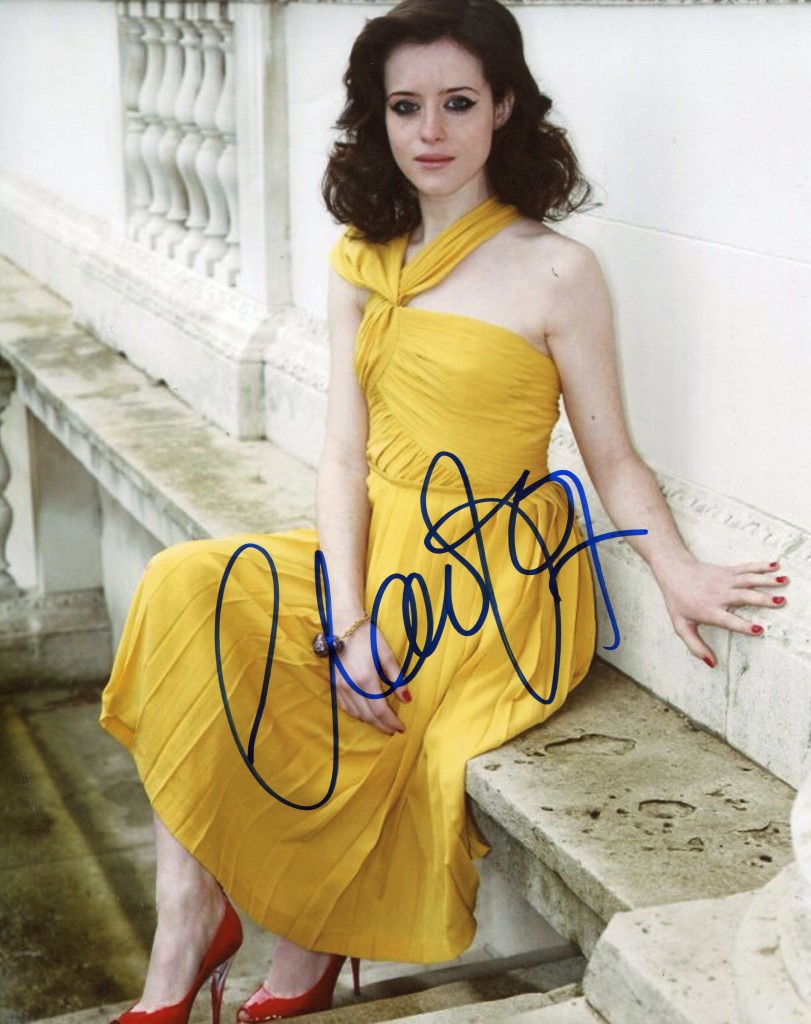
Claire Foy
Claire Foy
Claire Foy

Claire Foy was born in Stockport in 1984.   She is best known for her performance in the new series of “Upstairs, Downstairs” and the television series “White Heat”.

“Guardian” interview:

Claire Foy is running late for her interview in the first-floor private dining room of a north London pub, finally phoning to say: “I’m downstairs”. “And I’m upstairs,” I reply, which is all very droll because Foy is of course one of the stars of Upstairs Downstairs, BBC1’s reconstituted version of the Seventies ITV classic about toffs and servants. Except that today the toffs are downstairs, or rather the cast of ‘scripted reality’ show Made in Chelsea are shooting an advert for the fashion chain River Island. “How exciting,” says Foy when she puts her head round the door. “It’s Made in Chelsea downstairs… I can’t believe it.”

What chance the cast of Made in Chelsea returning the compliment: “It’s Claire Foy upstairs… we can’t believe it”? Have they even heard of her? The difference is that while the solipsistic Sloanes are chasing fame for its own sake, celebrity is a by-product of Foy’s job. She is, however, the real class act in this building, a fact momentarily disguised by her munching a Danish pastry from a paper bag. “Breakfast,” she says between bites. “I’m lucky I have a fast metabolism… my whole family does… everyone’s got a lot of nervous energy so we burn it off.”

I’ll say. Foy is high-spirited, chatty and, I discover when transcribing my recording of our conversation, tends not to finish one sentence before embarking on a fresh one. She is, you might say, the mistress of the… And this might be more frustrating if the conversational cascade was not rounded off with a pleasantly earthy, self-deprecating laugh. She seems genuinely bemused by the fact that she has won several of the most covetable television parts of recent years, from the title role in BBC1’s Dickens adaptation, Little Dorrit, to playing Erin – the young woman investigating her grandfather’s role during the British mandate in 1940s Palestine – in Peter Kosminsky’s acclaimed Channel 4 drama The Promise. Journalists have even started calling her the “next Keira” and the “next Sienna”.

“I’m not being funny but I’m never going to be Keira Knightley,” she says in a matter-of-fact way that suggests realism rather than false-modesty. “It’s that thing of going (putting on a moronic voice) ‘the next… the next…’. I hate the idea of being touted as something that I have never tried to make myself be. I mean, I might not do anything… I might finish doing Upstairs Downstairs and just drop off the face of the planet.”

Before that unlikely event, and for the next two months, Foy will be prominent on our television screens in contrasting roles – as the fascist supporting Lady Persephone Towyn in Upstairs Downstairs, and then as Charlotte, a middle-class feminist in mid-Sixties London in the Paula Milne’s generational saga White Heat. In the first series of Upstairs Downstairs, which was set in 1936 and had the misfortune of launching in the wake of the Downton Abbey juggernaut, ‘Lady Persie’, the black-shirt, black sheep of the family, had an affair with the Mosleyite family chauffeur (shades here of Downton’s Lady Sybil, who ran off with the Granthams’ driver). Lady Persie then turned her sights on the German ambassador to London (the real one at the time, but he’s not going to sue), Joachim von Ribbentrop. In other words, she is the Unity Mitford – the Hitler-loving Mitford sister – of the piece, and in the new series living in Nazi Germany.

“It would be interesting to see Lady Persie and Adolf Hitler around a table together,” muses Foy. “Probably she’d call him a stupid name and laugh and he’d probably quite like her.” Never mind Hitler, does Foy like Lady Persie? “You have to like every character that you play because if you don’t understand them then, you know…” she says. “Yes she stands for awful things, but when you read Unity Mitford’s diaries you realise she isn’t really conscious… they come from this privileged background where they were brought up in the country and their mum and dad were completely bonkers and they just say what they think. She doesn’t give a shit about what anybody else thinks.” But wasn’t that just the prerogative of privilege? “I am always so envious of people who do whatever they want. Obviously she’s not a very nice person, but I still think she’s hilarious.”

The snobbish Mitfords would probably categorise Foy as ‘non-U’. Born in 1984 in Stockport, Greater Manchester, in Stepping Hill hospital, scene of the recent spate of suspicious saline-drip deaths, she is the youngest of three siblings and part of a large, extended Irish (on her mother’s side) family. She moved south to Buckinghamshire with her father’s job (he was a salesman for Rank Xerox) and an averagely happy sort of childhood was only slightly discomfited, at the age of eight, by her parents’ divorce.

“As divorces go, on a scale of one to 10? I don’t remember a thing – so, 10, amazing,” she says. “My sister was five years older, so she got a lot of the… and my brother is my brother so he didn’t pay much attention either, bless him. But I didn’t really know what was going on. Or maybe I just chose not to remember, but mum and dad didn’t shout at each other or anything so… And we moved to another house in the same village so we didn’t have to change school or anything”.

Claire was the least academic of the three children, but her mother’s persistence with the schools’ appeal system finally got her into the same grammar school as her older siblings, and she mustered enough A-level grades to secure a place at Liverpool John Moores University to do a joint-honours degree in drama and ‘screen studies’, with a vague idea of becoming a cinematographer – “not realising that you have to have an interest in lighting people,” she laughs. “You should see the video of this children’s TV programme we made at university. It was shockingly lit.”

Foy was the only graduate from her course to actually go on and study acting – a year’s course at the Oxford School of Drama. “I wouldn’t have been able to go to drama school when I was 19,” she says. “I don’t think I was even conscious of life… I was like a zombie. But when I finished uni’ I just realised… just go and do it, stop being a knob.”

What she could not have foreseen was the speed with which she would “go and do it”. An obligatory episode of the BBC1 daytime soap Doctors and the pilot of BBC3’s supernatural drama Being Human under her belt, Foy was plucked, as they say, from obscurity to play the title role in BBC1’s 16-part adaptation of Charles Dickens’s Little Dorrit. “It was a bit of a shock… yeah, it was very weird,” she recalls. “I remember the first audition where I was sat with a load of ginger girls, and everyone was ginger apart from me. Rachel Frett, the casting director, was really plugging for me – I don’t know why. I must have looked right because I was not doing it right. Then the BBC do like launching people, they do like finding people who haven’t done anything before, and Andrew Davies likes doing that because then people think you are that character.”
Actually, Davies has said that he wanted every shot in Little Dorrit to be “a big close-up of Claire and those huge eyes and that wonderful straight gaze,” and indeed the enduring image of the series was not Andy Serkis’s bravura malevolence as Rigaud, or Tom Courtenay’s shambling brilliance as Mr Dorrit, but Foy’s delicate and very still, pellucid white face and big blue eyes staring out from beneath her bonnet – more Irish moss than English rose, and the very picture of innocence. It gets me to thinking about an often overlooked aspect of an actor’s fortune, one that cannot be taught or learnt, of how the camera responds to their particular assemblage of cheekbones, eye-colour and skin-tone. And when Eva, our photographer, says “I was really excited to shoot you – you’ve got such an amazing face,” Foy seems embarrassed. Is it difficult to accept that a significant part of your fortune is something you have no control over?

“I don’t know what you’re supposed to say when people say stuff like that… it’s just my face, I’m quite lucky to have a face…” In fact, Foy doesn’t mean this facetiously, because at the age of 17 she developed a growth – a benign tumour – in one eye. “I was like a Cyclops and it was all a bit scary,” she says, “and I was on steroids for about a year and a half afterwards that makes you put on a lot of weight and have really bad skin. It’s quite good when you have something like that, because the amount of time you’ve got to look in a mirror when you’re working… the amount of time people talk about your face… It’s quite good to have some sort of perspective, because it’s just a face.”

And of Little Dorrit, and the camera’s absorption in her visage, she says: “It actually set me up quite well because the director, Dearbhla [Walsh], said to me, ‘Your face is powerful enough to communicate stuff, so just trust that you don’t have to…’ you know. And less really is more.”

Less really was more – less screen time, more money – in Foy’s follow-up project, starring opposite Nicolas Cage in the Hollywood fantasy Season of the Witch. “A really bizarre experience,” she says. “Amazing but ludicrous… how much money they spend and the places where we were staying. And there’s so much free time. I had been doing something that had 16 scripts where I was in every other scene; this was one single script that was about 90 pages long and I was in about six scenes.”

Foy liked Cage. “I think he’s a real actor, which I was surprised at… not surprised but shocked. Not shocked but he really acts,” – this last sentence being pure Foy in its skittish circularity. “He’d ask me questions like, ‘What do you do in your life?’ and I’d say, ‘Well, go to the shops…’. People who are in that position don’t really do that sort of thing anymore!”

Does Foy get recognised in shops? “It depends whether I’ve been on the telly the night before. The Promise was the thing that got most people stopping.” Peter Kosminsky’s drama, in which Foy played a stroppy 18-year-old, Erin, experiencing a political and historical consciousness-raising gap-year in Israel, showed that she could do more than look beatific beneath a bonnet. The Night Watch, an adaptation of Sarah Waters’s Sapphic love story unfolding against the backdrop of the Blitz, saw her playing Anna Maxwell Martin’s girlfriend, while she appeared opposite Benedict Cumberbatch in a low-budget movie, Wreckers (“He’s a complete geek… he’s got more brain power than I will ever have so it just makes it so difficult to have a conversation with him”). And in a complete change of style and pace, she was the tabloid editor whose resemblance to Rebekah Brooks was entirely coincidental, in Channel 4’s spoof of the phone-tapping scandal, Hacks. “I should play someone normal,” she says.

White Heat, Paula Milne’s new saga following a group of student housemates from 1965 London to the present day (it’s already been dubbed Our Friends in the South) sees Foy returning to the more watchful ways of Amy Dorrit. Her Charlotte is a fledgling feminist, putting ‘This Ad Degrades Women’ stickers on London Underground posters, and falling into bed with her radicalised landlord (played by Sam Claflin). “If I never had to do [a sex scene] again that would be the best thing in the world because no one in their right mind would enjoy that,” she says. “You’re worried about what the crew are thinking, whether they’re really uncomfortable, whether you’re uncomfortable. You’re just thinking, God, let this be over.

“The Nightwatch was the first thing I had ever done like that and I remember thinking at the time, ‘When it’s on the telly I’m going to die’ and actually I really didn’t care. Because I’d done the worst bit of it… it’s not like every time you see somebody, people are going to think they’ve seen you naked. You forget it, you just forget it.”

Which brings us, in a roundabout way, to her boyfriend, actor Stephen Campbell Moore, who made his name with The History Boys and who met Foy while working together on Season of the Witch. They share a flat in Notting Hill, and Foy is horrified when I jokingly describe them as the latest celebrity couple, British TV’s very own Brangelina. “A celebrity couple, Jesus Christ. I saw someone recently who I went to school with who was saying something like that and I nearly punched her.

“We did a job together – a pilot for a medical drama called Pulse that was on BBC4. It was quite funny because everyone knew we were together and [were] like, ‘You’re actually going out, aren’t you?’.”

“I don’t think I could ever do a play with him, however, because it’s too much. You’re in a room and you’re constantly being taken apart, and told to do this again and again. You don’t really want the person you’re with see you being told ‘You’re shit’ all day and every day. Anyway, he’s a brilliant actor, so I’d be lucky to be in anything that he’s in, to be honest.”

She may be being honest, but that last statement is baloney. Foy has already proved that she can carry a variety of ambitious projects, and being the sort of person that she is – cheerful and grounded – she must be very easy to work with. This month she’s taking her mother on holiday to New York, and is then doing the rounds with her newly acquired American agent.

Martin Scorsese and Mark Rylance are mentioned as directors she’d like to act for. “I’d like to work with directors who really make you work hard,”she says. “I’d like to be given a responsibility and have to live up to it. I don’t want to do anything easy because I’ve got the rest of my life to do that. Before I have kids and stuff I might as well get all the horrible, you know, self-involved stuff out of the way.” An actor with a horror of self-involvement? Now there’s a thing.

‘Upstairs Downstairs’ returns to BBC1 tomorrow; ‘White Heat’ begins on BBC2 in early March

Beyond bonnets: Period drama superstars

Brideshead Revisited, 1981

When this adaptation of Evelyn Waugh’s 1945 novel was broadcast on ITV, it set the standard for period dramas – and helped catapult the careers of Jeremy Irons and Diana Quick.

Pride and Prejudice, 1995

For many, it’s still the definitive screen version of Jane Austen’s novel. The public were gripped by the on-screen romance of Mr Darcy and Lizzy Bennet, not to mention the real-life love affair between the stars it spawned: Colin Firth and Jennifer Ehle.

Wives and Daughters, 1999

An Andrew Davies adaptation of an Elizabeth Gaskell novel, Wives and Daughters provided early roles for costume-drama regulars Rosamund Pike and Keeley Hawes.

Bleak House, 2005

As well as propelling the career of Anna Maxwell Martin, who led the impressive ensemble cast as Esther, you can also spot a young Carey Mulligan playing the orphaned Ada.

Tess of the D’Urbervilles, 2008

Before she was a Bond Girl, Gemma Arterton starred in this BBC version of Thomas Hardy’s classic. Man of the moment Eddie Redmayne also appeared as Angel Clare.

By Holly Williams

The above “Guardian” interview can be accessed online here.