



“Guardian” obituary in 2020
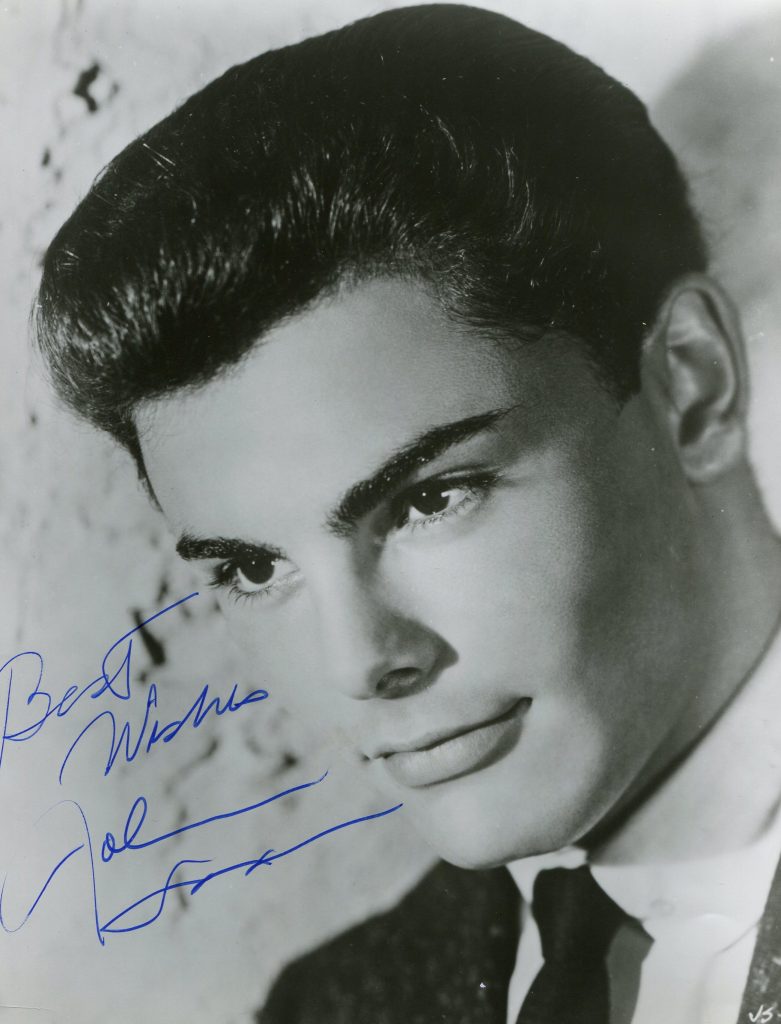
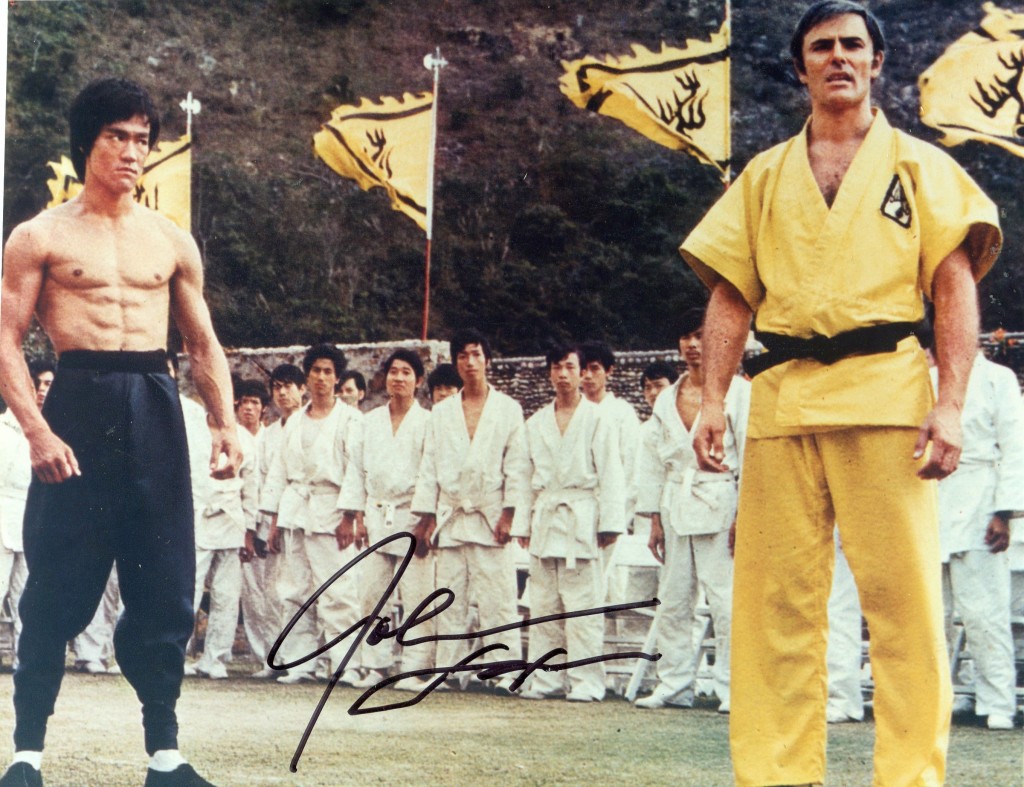
John Saxon, the actor, who has died aged 83, was probably best-known for his role as the martial artist Roper in Enter the Dragon (1973), Bruce Lee’s final film and the one which made him a star beyond Asia.
By then, Saxon had already tasted stardom himself, and though often still cast for his handsome looks he was leaving behind his years as a leading man to become more of an authority figure character actor. Paradoxically, this ultimately enabled him to show the range of which he was capable in what proved, for a teen idol of the 1950s, a notably long career.
Spotted by a scout coming out of a cinema in Times Square when he should have been in high school, Saxon began as a photographic model. The agent Henry Willson, who promoted good-looking “beefcake” actors such as Rock Hudson, soon noticed a magazine shot of Saxon. Within days, he had a Hollywood contract – though as he was under age his parents signed it for him.
A brief early part was as an usher in the Judy Garland version of A Star is Born (1954). A strong performance as a stalker, of Esther Williams, in The Unguarded Moment (1955) raised his profile, and by the time he was paired with Sandra Dee in The Restless Years (1957) he was receiving 3,000 fan letters a week.
The following year, he shared the Golden Globe award for New Star with James Garner, and appeared with Dee and Rex Harrison in The Reluctant Debutante, and opposite Debbie Reynolds in This Happy Feeling, directed by Blake Edwards.
Saxon – a stage name – was of Italian descent, and his looks allowed him in the Hollywood of the day to be cast as many races, notably as a Mexican outlaw in The Appaloosa (1966), with Marlon Brando, for which Saxon was nominated for a Golden Globe. He was also teamed with Clint Eastwood in Joe Kidd (1972).





The following year came Enter the Dragon, in which Saxon – who had studied some judo and karate – had top billing as a gambler forced by debt to take part in a deadly martial arts tournament on a mysterious island.
Saxon’s standing was such that the script was changed to accommodate his wish that his character, rather than Jim Kelly’s black karate champion, survives the film. Yet while it was Lee’s charisma and skills which made the picture a colossal hit, Saxon was able to display some of the charm and self-deprecating wit that in other circumstances might have made him a bigger star.
The eldest of three children, he was born Carmine Oricco in Brooklyn on August 5 1936. His father was a painter and decorator, and as a boy Saxon worked on the fairground stalls at Coney Island.
From the 1970s onwards, he appeared mainly on television, for instance as a recurring character in The Six Million Dollar Man and The Bionic Woman. He also had spells in Falcon Crest and Dynasty, and guest-starred in shows such as Starsky & Hutch and The A-Team.
On the big screen in that era, he was perhaps best remembered as the father of Freddy Krueger’s adversary Heather in the Nightmare on Elm Street series of horror films. Saxon had been seen over the years in several Italian horror films, or gialli, working with directors such as Mario Bava and Dario Argento, and it became one of his favourite genres. He also featured, with Dennis Hopper, in Roger Corman’s Queen of Blood (1966).
His final roles included From Dusk Till Dawn (1996), which was co-written by Quentin Tarantino, and an episode of CSI directed by him.
John Saxon is survived by his third wife, Gloria, and by two sons.
John Saxon, born August 5 1936, died July 25 2020
John Saxon (1936–2020) was one of the most prolific and versatile actors of his generation, a “utility player” of cinema who transitioned seamlessly between teen heartthrob roles, gritty Italian police thrillers, and legendary martial arts epics. While he was often categorized as a “B-movie” king, a critical analysis reveals a performer of immense physical intelligence and a subtle, brooding masculinity that allowed him to survive and thrive across six decades of changing cinematic trends.
1. Career Arc: From Brooklyn to the Global Stage
-
The Teen Idol (1954–1958): Born Carmine Orrico, he was discovered by the legendary agent Henry Willson (the man who “created” Rock Hudson). His early roles in films like Rock, Pretty Baby utilized his swarthy, athletic looks to position him as a “sensitive” rebel.
-
The Dramatic Maturation (1960s): Saxon quickly grew out of the “heartthrob” phase, seeking out challenging roles in Westerns (The Unforgiven) and early slasher precursors (Blood and Black Lace).
-
The Global Icon (1970s): This was his most culturally significant period. He became a staple of the Italian “Poliziotteschi” (police thrillers) and achieved immortality as Roper in Enter the Dragon.
-
The Horror Statesman (1984–2000s): He gained a new generation of fans as Lieutenant Donald Thompson in the A Nightmare on Elm Street franchise, becoming the “rational” anchor in a world of supernatural horror.
2. Critical Analysis of Key Performances
Enter the Dragon (1973) – The “Cool” Professional
As Roper, the gambling-addicted American fighter who joins Bruce Lee on Han’s island.
-
Analysis: Saxon’s performance is critical to the film’s crossover success. While Bruce Lee provided the transcendent martial arts, Saxon provided the Western “Noir” sensibility. He played Roper with a cynical, effortless cool that grounded the film’s more fantastical elements.
-
Critique: Saxon’s martial arts were legitimate (he was a black belt in Karate), but it was his understated charisma that mattered. He portrayed a man who was morally ambiguous but ultimately honorable, providing a perfect counterpoint to the more rigid heroics of Jim Kelly and Bruce Lee.
The Appaloosa (1966) – The Villianous Masterclass
As Chuy Medina, the Mexican bandit leader who clashes with Marlon Brando.
-
Analysis: In a film starring the “greatest actor in the world,” Saxon managed to steal the show. He utilized a menacing, theatrical charm that made him a formidable foil for Brando’s mumbling protagonist.
-
Critique: He won a Golden Globe nomination for this role. Critics praised his ability to avoid the “caricature” often found in 1960s portrayals of Mexican characters, instead playing Medina with a sharp, aristocratic cruelty.
A Nightmare on Elm Street (1984) – The Authority of Logic
As Lt. Donald Thompson, the father of Nancy and the voice of law and order.
-
Analysis: Director Wes Craven used Saxon’s natural gravitas to represent the “adult world” that refuses to believe in the monster.
-
Critique: Saxon’s performance is a masterclass in “Genre Grounding.” He played the role with a weary, professional realism. By making the police procedural elements of the film feel authentic, he made Freddy Krueger’s intrusions into reality feel even more terrifying.
3. Style and Legacy: The “Stoic Physicalist”
John Saxon’s acting style was defined by economy of movement and a “simmering” internal energy.
| Attribute | Critical Impact |
| Physicality | His background in judo and karate gave him a specific “center of gravity.” He moved with the grace of a predator, making him equally believable as a hero or a threat. |
| Ethnic Versatility | His Italian-American heritage allowed him to be “ethnically fluid,” playing Mexican, Middle Eastern, and European roles with a high degree of conviction. |
| The “Utility” Player | He was an actor who raised the level of the material. Whether it was a high-budget epic or a low-budget Italian thriller, he never “winked” at the camera; he took the work seriously. |
The “B-Movie” Paradox
Critical analysis often notes that Saxon was perhaps “too reliable” for his own good. Because he could do anything—from comedy to horror to martial arts—he was rarely given the “A-list” roles that might have led to an Oscar. However, modern critics like Quentin Tarantino have championed Saxon as a cinematic chameleon. He was the “glue” that held together some of the most influential cult films of the 20th century.
Critical Note: John Saxon represented a specific kind of masculinity: quiet, competent, and slightly dangerous. He wasn’t the loudest man in the room, but he was often the most interesting to watch. His legacy is that of the ultimate professional who proved that a career in “genre cinema” could be conducted with immense dignity and craft