
European Actors

Collection of Classic European Actors

Danielle Darrieux
Danielle Darrieux
Danielle Darrieux

Danielle Darrieux was born in 1917 in Bordeaux.   Her first film part was at the age of 13 in “Le Bal” in 1931.   She and Charles Boyer scored great popular success with “Mayerling”.   She was brought to Hollywood to make “The Rage of Paris” in 1938.   She returned to France thereafter.   She made many films in France during World War Two.   In 1951 she visited Hollywood again to make “Rich, Young and Pretty”.   “The Greengage Summer” in 1961 with Kenneth More and Susannah York wone widespread praise.   In 2002 she delivered a great performance in “8 Women”.   She died at the age of 100 in 2017.

TCM Overview:

Affectionately known as “D.D.” to her fans, Danielle Darrieux established herself early on as a superb dramatic actress in films like “Mayerling” (1936), but choices she made during World War II inadvertently threatened her life. A resident of France during the occupation by Nazi Germany, Darrieux continued to work as an entertainer, an act that led her to being labeled a collaborator by the French underground and subjected to death threats. That cloud eventually faded and she continued to display considerable ability in classic films like “La Ronde” (“The Round”) (1950), “Le Plaisir” (“Pleasure”) (1952), “The Earrings of Madame de ” (1953), and “The Young Girls of Rochefort” (1967). One of France’s most enduring performers, Darrieux had one of the longest-lasting careers in entertainment history, appearing in both motion picture and television productions well into her nineties.

Danielle Yvonne Marie Antoinette Darrieux was born on May 1, 1917 in Bordeaux, Gironde, France, but spent her formative years in Paris. Thanks to her utility with the cello, a musical career seemed in the cards for Darrieux, but that changed after she made her film debut in “Le Bal” (“The Ball”) (1931). Thirteen at the time of shooting, Darrieux earned attention for her portrayal of an obstinate teenager, which led to invitations for more movie work. She really made her mark a few years later opposite international matinee idol Charles Boyer in the period romantic drama “Mayerling” (1936) and the success of that production resulted in an invitation from Universal Pictures’ to play the female lead in the engaging screwball comedy “The Rage of Paris” (1938).

Both the film and Darrieux were well-received, but her stay in Hollywood proved short-lived. Electing to go back home to France, she was forced to endure the German occupation of the country during World War II.

Following the end of the war, Darrieux returned to movie screens in “Adieu chérie” (“Goodbye Darling”) (1946) and her perceived indiscretions during the war were eventually overlooked. Notable credits during that time included Max Ophüls’ classic “La Ronde” (“The Round”) (1950), and she gave Hollywood another try in the MGM musical “Rich, Young and Pretty” (1950) and the spy thriller “5 Fingers” (1952). Darrieux also impressed in Ophüls’ “Le Plaisir” (“Pleasure”) (1952) and “The Earrings of Madame de ” (1953), as well as the three-hour epic “Napoléon” (1955) and the controversial adaptation of “Lady Chatterley’s Lover” (1955). She made two more English language features, “Alexander the Great” (1956) and “The Greengage Summer” (1961), before concentrating solely on European productions, including “The Devil and the Ten Commandments” (1962) and Jacques Demy’s delightful musical “The Young Girls of Rochefort” (1967).

Darrieux brought her facility for live stage work to Broadway in “Coco” (1969-1970), where she replaced original star Katherine Hepburn, and the short-lived musical “Ambassador” (1972). The 1970s, ’80s, and ’90s found her cast in fewer motion pictures, but she more than made up for that with numerous TV-movie and miniseries appearances. As the new century dawned, Darrieux showed few signs of slowing down, adding even more credits to an incredible resumé that was among the longest and most impressive for any performer from any country. Based on such films as “8 Women” (2002), “Towards Zero” (2007), and “Pièce montée” (“Cake”) (2010), Darrieux’s talents remained well in evidence during her ninth decade.

By John Charles

The above TCM overview can also be accessed online here.

“Guardian” obituary:

There are few actors who embodied many people’s idea of a French woman of the world more than Danielle Darrieux, who has died aged 100. Starting as an ingenue in the 1930s, she grew into a sophisticate in the 40s and 50s, and retained a dignified and magical presence in films into the new century.

The outstanding examples of her art were the three films Darrieux made with the German-born Max Ophüls when she was in her 30s. In La Ronde (1950), she played the married woman who is seduced by a student (Daniel Gélin). The second and best of the three adapted tales by Guy de Maupassant in Le Plaisir (House of Pleasure, 1952) is La Maison Tellier, in which Darrieux played one of a group of prostitutes paying an annual holiday visit to the country. But it was the title role of Madame de … (1953, released in English as The Earrings of Madame de …) that gave her even more of a chance to shine as a fickle socialite who sells her earrings to pay off a debt, unbeknown to her husband (Charles Boyer).

Darrieux’s father was an army doctor who died when she was seven. Born in Bordeaux, but brought up in Paris, she was studying the cello at the Conservatoire when her ambitious mother entered the 14-year-old Danielle for an audition for an adolescent role in Le Bal (1931), directed by the Austrian Wilhelm Thiele. Many of her best films were made by German or Austrian director.

In 1934, she appeared in Curtis Bernhardt’s L’Or dans la Rue, and in Mauvaise Graine (Bad Seed), co-directed by Billy Wilder (with Alexander Esway), his first film made outside Germany. The latter, an appealing comedy-drama of an amateur crook lured by Darrieux into joining a professional gang, was a superb showcase for her talents. In the same year, she married the director Henri Decoin, with whom she made several films before their divorce in 1940.

The following year, Darrieux’s star status was established when she was ideally cast as the tragic adolescent Marie Vetsera to Boyer’s Crown Prince Rudolph in Anatole Litvak’s Mayerling, the first and arguably the best of the various screen versions of this tale of doomed love. A few years later, Darrieux made a successful Hollywood debut in the title role of The Rage of Paris (1938), as a penniless French chorus girl in New York seeking a rich husband. However, she never had any intention of making a career outside France, and returned to make a few films before the Nazi occupation of her country in 1940.

Although she did not make any films during the occupation, Darrieux entertained German troops with the cabaret act she had perfected, and went on a publicity trip to Germany with a group of other French stars. Now married to the Dominican diplomat and polo player Porfirio Rubirosa, she became a target for criticism, but was exonerated after the liberation. Coincidentally, in 1956, Jean Renoir wrote a play for her and Paul Meurisse called Carola, about an affair between a French actress and a German general during the occupation. Although Darrieux was quite willing to perform it, the project failed to materialise. (It was later produced as a television play starring Leslie Caron and Mel Ferrer.)

Darrieux embarked on a prestigious postwar career, which included the three Ophüls masterpieces. She starred in Claude Autant-Lara’s sparkling adaptation of the Feydeau farce Occupe-Toi d’Amélie (Keep an Eye on Amelia, 1949) as a Parisian cocotte, dividing her favours among three men. The film incurred local bans in Britain and enraged American critics who, in the moralistic climate of the times, considered it lewd and immoral.

Darrieux’s worldly reputation got her cast as an independent woman who had deserted her Texan husband many years before for the more sophisticated Parisian life in the MGM musical Rich, Young and Pretty (1951). Jane Powell played her daughter on a visit to Paris, understandably dazzled by her mother. The highlights of the film are Darrieux’s duet with Fernando Lamas, We Never Talk Much, and her rendition of There’s Danger in Your Eyes, Chérie.

She made an impression in another American film, Joseph L Mankiewicz’s witty espionage thriller 5 Fingers (1952), as a down-and-out countess, attractive but duplicitous, who becomes entangled with a spy (James Mason). Back in France, she was a superb Madame de Rénal in Autant-Lara’s Le Rouge et le Noir (The Red and the Black, 1954), sexually involved with Julien Sorel (Gérard Philipe), her children’s tutor.

She was a natural to star in Lady Chatterley’s Lover (1955), and was seduced by Philipe again in Pot Bouille (The House of Lovers, 1957), Julien Duvivier’s stylish adaptation from Zola’s novel of snobbery and ambition among the bourgeoisie. In between, she stood around glumly as Olympias, the mother of Alexander, in Alexander the Great (1956), Robert Rossen’s dour epic starring Richard Burton in a blond wig.

 the next decades, Darrieux was more often seen on television than on the big screen, but turned up in films from time to time to remind international audiences of her appealing presence. Among these were Jacques Demy’s Les Demoiselles de Rochefort (The Young Girls of Rochefort, 1967), in which she was the mother, Yvonne, being courted by Monsieur Dame (Michel Piccoli), though marriage to him would make her Madame Dame; and 24 Hours in a Woman’s Life (1968), based on Stefan Zweig’s short story, in which she played a society widow who encounters a handsome young man at a casino in an Italian resort in 1914.

In 1970, she replaced Katharine Hepburn on Broadway in the musical Coco. Although she was far more suitable than Hepburn in the role of the Parisian couturier Coco Chanel, and got good reviews, audience attendance diminished. It was, after all, 14 years since her last Hollywood film. But Darrieux remained one of the biggest and brightest stars in France, bringing class to mostly mediocre material.

Some bright exceptions were François Ozon’s 8 Women (2002), an amusing all-female whodunnit, and Demy’s Une Chambre en Ville (A Room in Town, 1982) a romance in which Darrieux, the only undubbed lead, played a wealthy, tippling landlady. She provided the voice of the grandmother in the animated feature Persepolis (2007), and her last film was Pièce Montée (The Wedding Cake, 2010), a family comedy in which Darrieux played a glamorous grandmother.

Her marriage to Rubirosa ended in divorce in 1947, and the following year she married the author Georges Mitsinkidès. He died in 1991. Their son, Mathieu, also predeceased her.

 Danielle Darrieux, actor, born 1 May 1917; died 17 October 2017

 
Cornell Borchers
Cornell Borchers
Cornell Borchers

Cornell Borchers. Wikipedia.

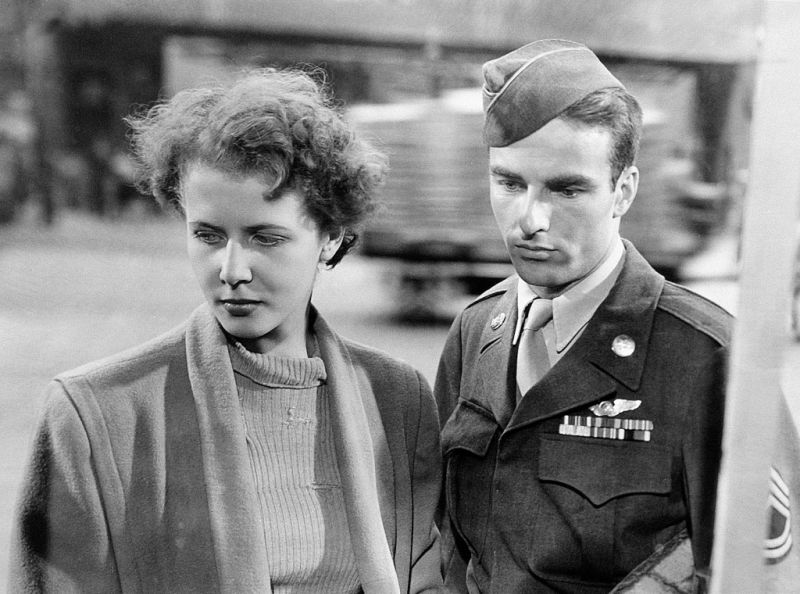
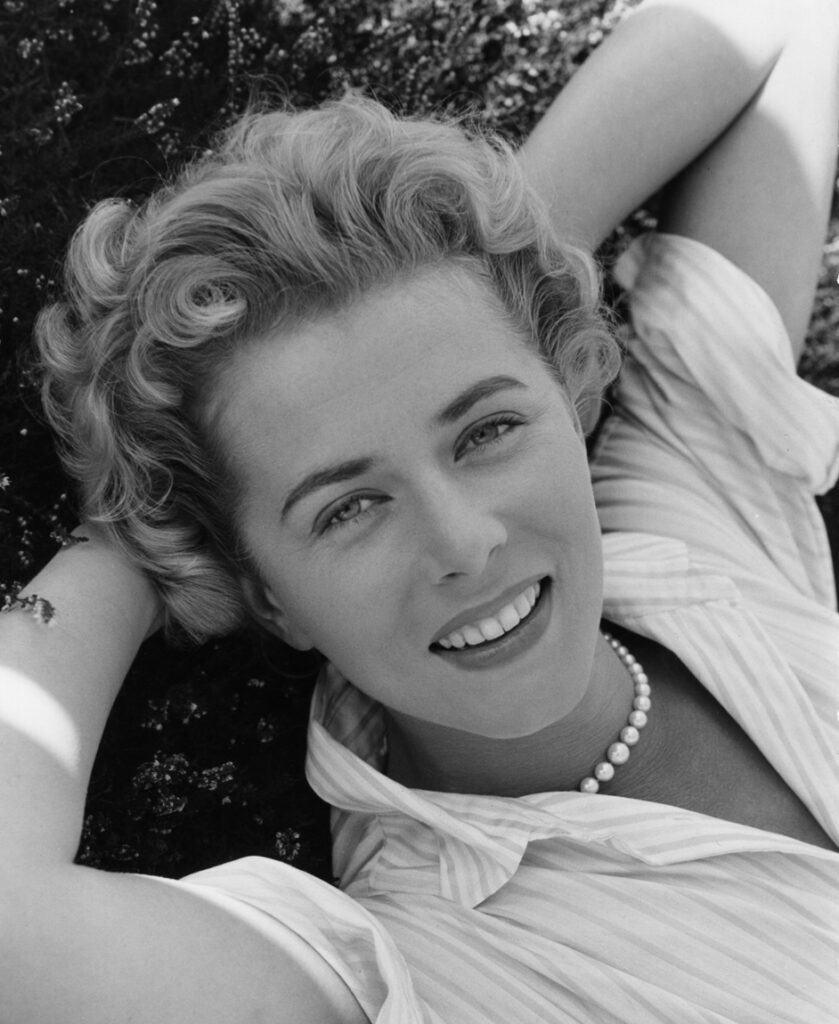
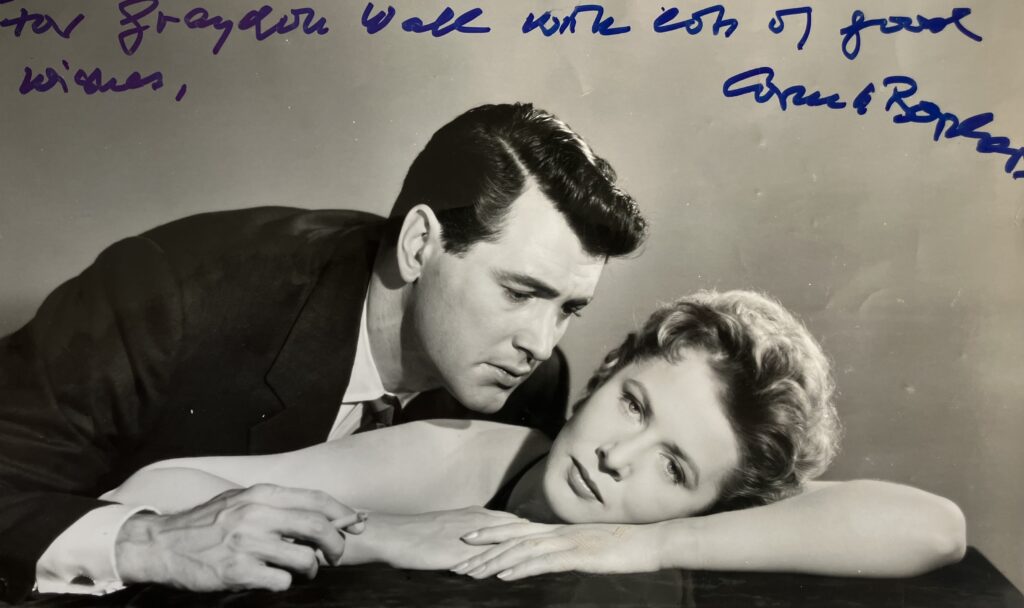
Cornell Borchers was born in 1925 in Lithuania.   In 1950 she was cast opposite Montgomery Clift in “The Big Lift”.   In 1953 she won acclaim for her performance in “The Divided Heart”.   She was brought to Hollywood in 1956 to make “Never Say Goodbye” opposite Rock Hudson and then “Flood Tide” with George Nader after which she returned to Europe.   She died in 2014.

Wikipedia entry:

Borchers was born in Šilutė (German: Heydekrug), Klaipėda Region (German: Memelland), Lithuania in a German either Prussian Lithuanian or Memellander family. She appeared on the cover of East German magazine Neue Film Welt of 1949, Volume 3, Issue 4. She won a BAFTA Film Award it the category of Best Foreign Actress in 1955 for the movie The Divided Heart of 1954. She retired from acting to raise her child.

She married twice, to Bruce Cunningham and to Dr. Anton Schelkopf (aka Dr. Toni SchelkopfToni Schelkopf or Schelkopf Toni), a Psychologist Doctor and Film Producer whom she met twice when she starred in his films Schule für Eheglück (1954) and Rot ist die Liebe (1957), later divorced, by whom she had at least one daughter, Julia Schelkopf, born in Munich, on 15 September 1962, who married at Aufkirchen on 30 May 1987 HSH Friedrich Wilhelm Philipp Georg Heinrich Jakob 7th Fürst von Hanau und zu Horowitz Graf vonSchaumburg, born in Munich on 26 June 1959, and by whom she had three children: HSH Tassilo Hubertus Heinrich Antonius Erbprinz von Hanau und zu Horowitz Erbgraf von Schaumburg (born Starnberg, 8 November 1987), HSH Philippa Maria Theresia Prinzessin von Hanau und zu Horowitz Gräfin von Schaumburg (born Starnberg, 15 January 1989) and HSH Thaddäus Carl Heinrich Prinz von Hanau und zu Horowitz Graf von Schaumburg (bornStarnberg, 16 June 1995). She lived in BavariaGermany in July 2007 and died in 2014.

Her”Wikipedia” entry cn also be accessed online here.

IMDB  entry:

Tall, blonde, turquoise-eyed Cornell Borchers was born of Lithuanian ancestry and studied medicine before turning towards a career in the performing arts. She attended drama classes from 1947 to 1948 and was discovered for films by the director Arthur Maria Rabenalt. She made a few German films before signing a seven-year contract with 20th Century Fox. Publicity quickly touted her as the new Ingrid Bergman, but her first Hollywood sojourn turned out to be rather brief.

After just one picture, The Big Lift (1950), Cornell walked out on her contract, convinced that quality roles were not forthcoming. For a while, her career lost its direction and she toiled away in a brace of minor German crime dramas and romances. Fortuitously, she was then snapped up by Michael Balcon for his Ealing production of The Divided Heart (1954), a sober post-war drama for which Cornell won a BAFTA award as Best Foreign Actress.

This rekindled Hollywood’s interest and Universal-International signed her to a two-picture-a-year deal. She was co-starred opposite Rock Hudson in the melodrama Never Say Goodbye (1956), and, in Ingrid Bergman-like fashion (even rather sounding like her) beguiled Errol Flynn in the romantic espionage dramaIstanbul (1957).

Her swan song was an undistinguished social drama entitled Flood Tide(1958), a misfire, which resulted in Universal failing to renew her contract.

Cornell returned to Germany, having reached what amounted to be the apex of her career. She eventually quit acting in 1959, devoting herself to her family and living a secluded life away from the limelight.

– IMDb Mini Biography By: I.S.Mowis

Acting style and screen persona

Classical screen femininity with emotional directness: Borchers’s screen presence combined classical good looks, similar to Ingrid Bergman, with an ability to register feeling simply and clearly. She often played earnest, vulnerable or morally conflicted women—characters whose emotional life was signaled through facial nuance and vocal timbre rather than overt melodrama..

Critical analysis Strengths

Screen empathy: Borchers excelled at rendering credible emotional reactions and making secondary moral dilemmas feel immediate; even modest parts gained human interest because of her specificity.

Versatility for mid‑century European cinema: She successfully navigated studio modes in German‑language film while also adapting to the demands of international co‑productions—an asset for an actor building a transnational career in the 1940s–50s.

Photogenic, camera‑friendly technique: Directors used her for roles that required closeups and intimate exchanges; she had a capacity to hold the frame without ostentation.

Limitations and constraints

Typecasting and limited star consolidation: While visually prominent, she rarely became the sustained box‑office star outside a confined period; studios and publicity often boxed actresses like her into particular romantic or tragic types, limiting longer-term diversity of roles..

Relative critical neglect: Compared with better‑documented contemporaries who built long international careers or auteur collaborations, Borchers’s work has attracted modest critical reappraisal—her strongest recognition remains among specialists in postwar German and Central European cinema.

Artistic contribution and legacy

Representative postwar European leading lady: Borchers’s career illustrates how talented European actresses moved between national cinemas and occasional Hollywood or Anglo projects in the immediate postwar era—actors who both embodied national film recoveries and briefly bridged to international screens.

Scholarship and rediscovery potential: Film historians interested in postwar German cinema, the reconstruction era and transnational stardom find her career informative; targeted retrospectives or restorations could sharpen appreciation of her range.

Cornell Borchers (1925–2014) was a singular figure in post-war cinema—a “Continental” star whose career served as a cultural bridge between the shattered landscape of Germany and the polished studio systems of London and Hollywood. Often described as the “German Ingrid Bergman,” Borchers possessed a unique combination of stoic suffering and luminous intelligence, making her the definitive face of the “Trümmerfilm” (rubble film) era.


1. Career Arc: From the Rubble to the Red Carpet

  • The Post-War Discovery (1947–1950): Born Gerlind Cornell Borchers in Lithuania, she began her career in the ruins of German theater. Her breakthrough came in The Big Lift (1950), filmed on location in Berlin, where she played opposite Montgomery Clift.

  • The British Triumph (1954): She achieved international stardom and a BAFTA Award for her role in The Divided Heart. This performance established her as the premiere “emotional heavyweight” of European cinema.

  • The Hollywood Migration (1956–1959): Universal-International attempted to mold her into a successor to the “European Noblewoman” archetype (following Bergman and Garbo). She starred in big-budget dramas like Never Say Goodbye opposite Rock Hudson.

  • The Abrupt Exit: At the peak of her international fame, Borchers retired from acting to focus on her family. Like Barbara White, her retirement was absolute, preserving her in the cinematic memory as a figure of perpetual, dignified mystery.


2. Critical Analysis of Key Performances

The Divided Heart (1954) – The Anatomy of Maternal Grief

Based on a true story, Borchers plays Inga Hartl, a German mother whose son was taken by the Nazis and adopted by a Yugoslavian family, sparking a post-war custody battle.

  • Analysis: This is Borchers’ definitive work. She utilized a restrained, interior style of acting that made her grief feel almost unbearable to watch. Instead of “performing” sorrow, she allowed it to radiate through her physical stillness.

  • Critique: Borchers won the BAFTA for Best Foreign Actress (a category that then included all non-British performers). Critics praised her for avoiding the melodrama inherent in the script; she played the role with a moral gravity that elevated the film into a profound meditation on the scars of war.

The Big Lift (1950) – The “Realist” Ingenue

As Frederica, a German woman involved with an American soldier during the Berlin Airlift.

  • Analysis: Borchers was cast because she looked like the “New Germany”—tired but resilient. Her performance is noted for its naturalism; she held her own against Montgomery Clift (a pioneer of naturalistic acting) by matching his “thinking on screen” technique.

  • Critique: Film historians often cite this as a rare moment where a German actress was allowed to play a complex, non-stereotypical survivor. Borchers brought a sharp-edged pragmatism to the role that challenged the “innocent victim” trope.

Never Say Goodbye (1956) – The Hollywood “Polish”

As Lisa, a woman separated from her husband (Rock Hudson) and daughter by the Iron Curtain.

  • Analysis: This was Borchers’ primary attempt to conquer the American market. Universal surrounded her with Technicolor glamour, but Borchers fought to keep the character grounded and emotionally authentic.

  • Critique: While the film is a quintessential “weepy,” Borchers’ performance was singled out for its intellectual depth. She possessed a “European soulfulness” that the American studio system struggled to categorize; she was too mature for the “girl next door” and too grounded for the “femme fatale.”


3. Style and Legacy: The “Bergman” of the Rubble

Cornell Borchers’ style was defined by vocal and physical economy.

Attribute Critical Impact
The “Listening” Face Much like the great silent film stars, Borchers could convey a paragraph of thought through a single change in her gaze.
Linguistic Versatility She was fluent in several languages, and her “accent” was seen as a sign of cosmopolitan sophistication rather than a barrier.
Understated Power She specialized in “Quiet Strength”—characters who endure immense trauma without losing their essential humanity.

The “Trümmerfilm” (Rubble Film) Context

Critically, Borchers is essential to the study of post-war German identity. In films like Martina (1949), she represented the conscience of a nation trying to rebuild. She didn’t offer easy comfort; her performances always contained a hint of the trauma that had come before.

Critical Note: Cornell Borchers was an actress of “The High Middle.” She didn’t seek the explosive peaks of histrionics, nor did she fade into the background. She occupied the center of the frame with a haunting, architectural beauty and a sense of “lived-in” truth. Her early retirement meant Hollywood lost one of its most sophisticated dramatic voices just as the “Mature Woman” roles of the 1960s were beginning to emerge

Bernhard Wicki
Bernhard Wicki
Bernhard Wicki
 

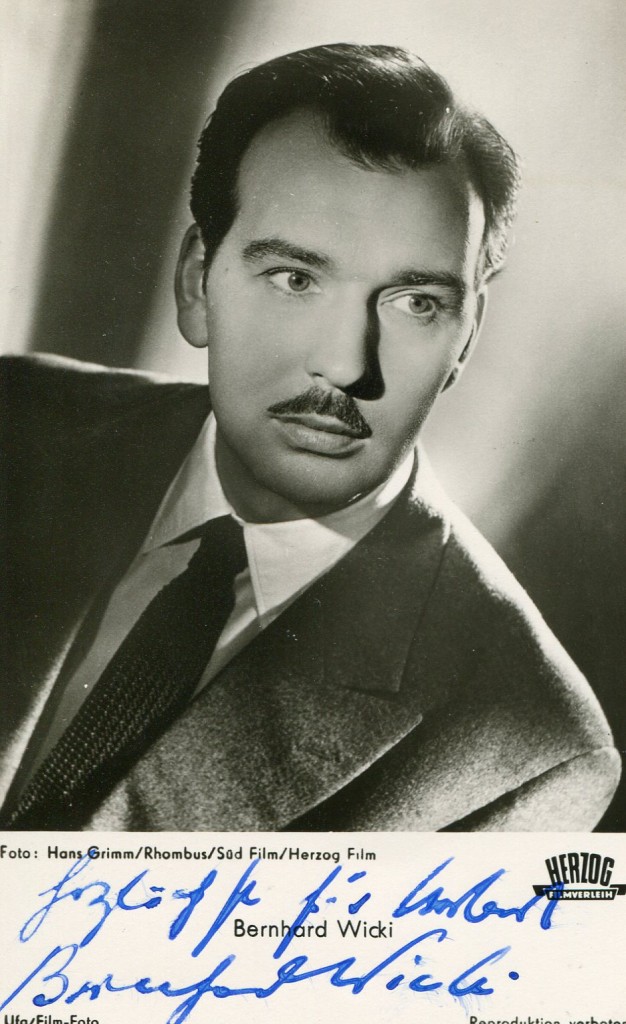
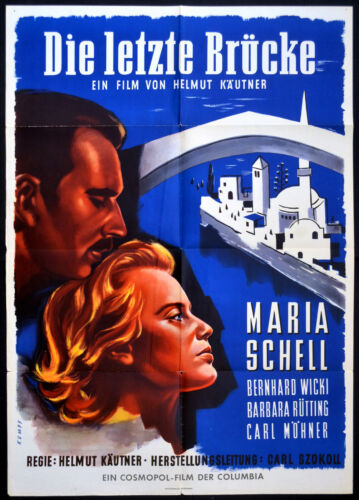
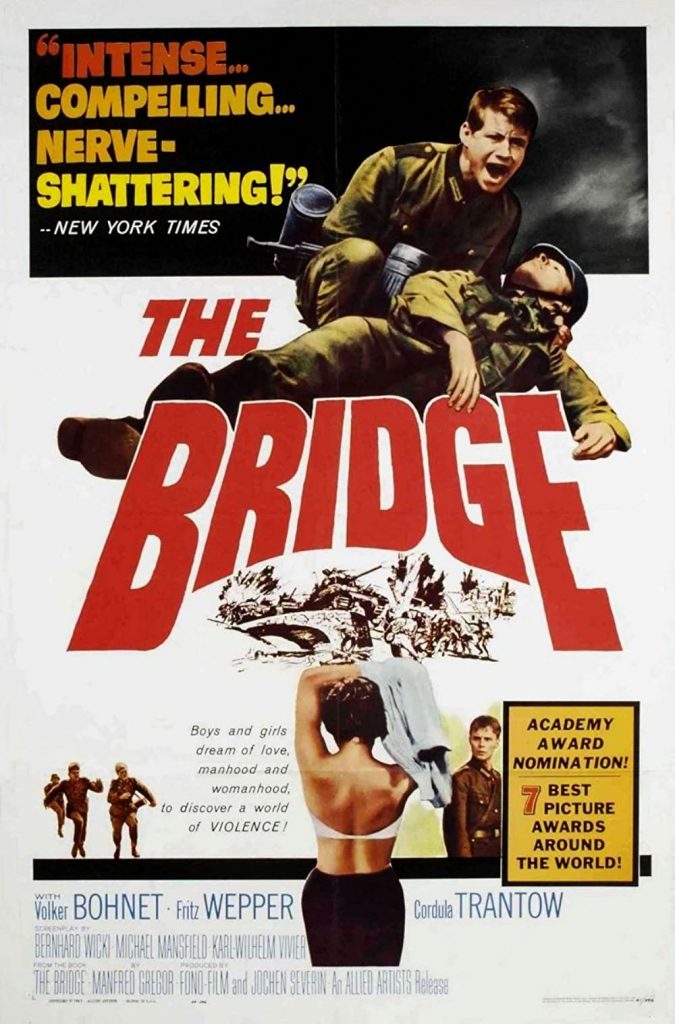
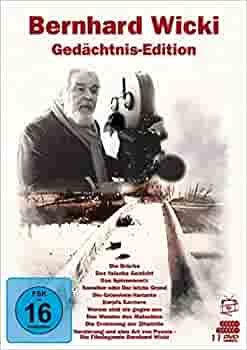
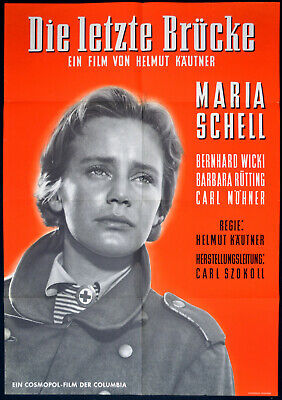
Bernhard Wicki was born in 1919 in Austria.   He was placed in a concentration camp during World War Two.   His films include 1953’s “Die letzte Brucke” and in 1959 in “Die Brucke”.   He died in Munich in 2000.

Eva Renzi
Eva Renzi

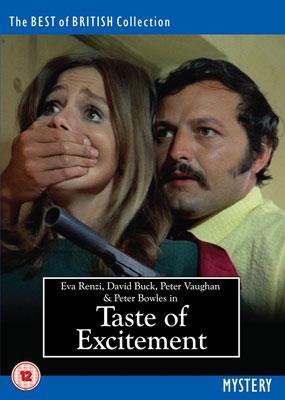
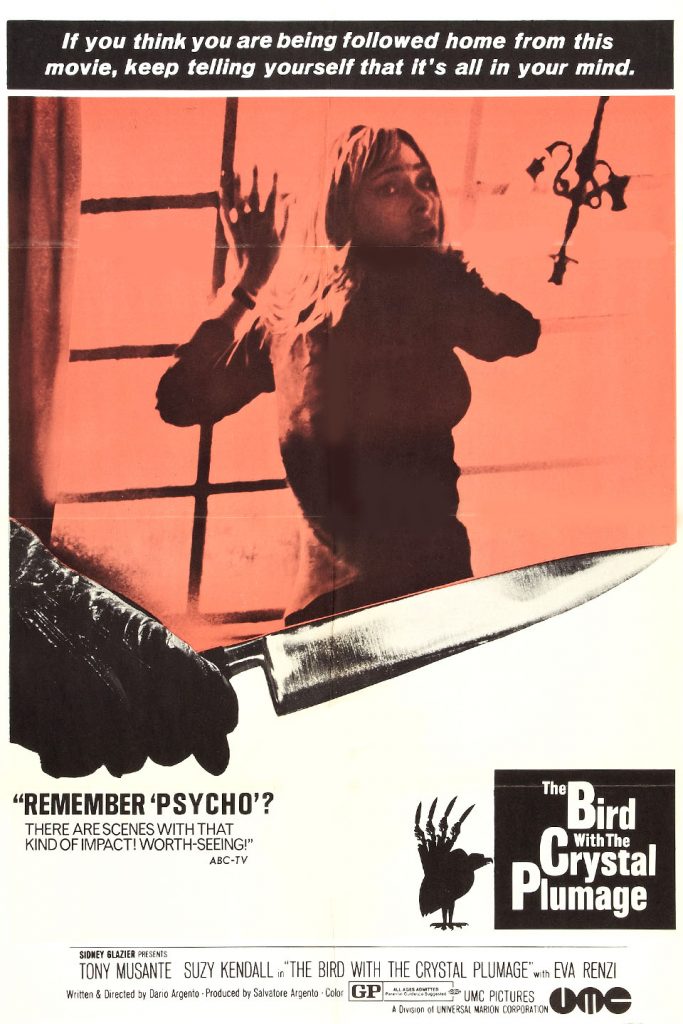
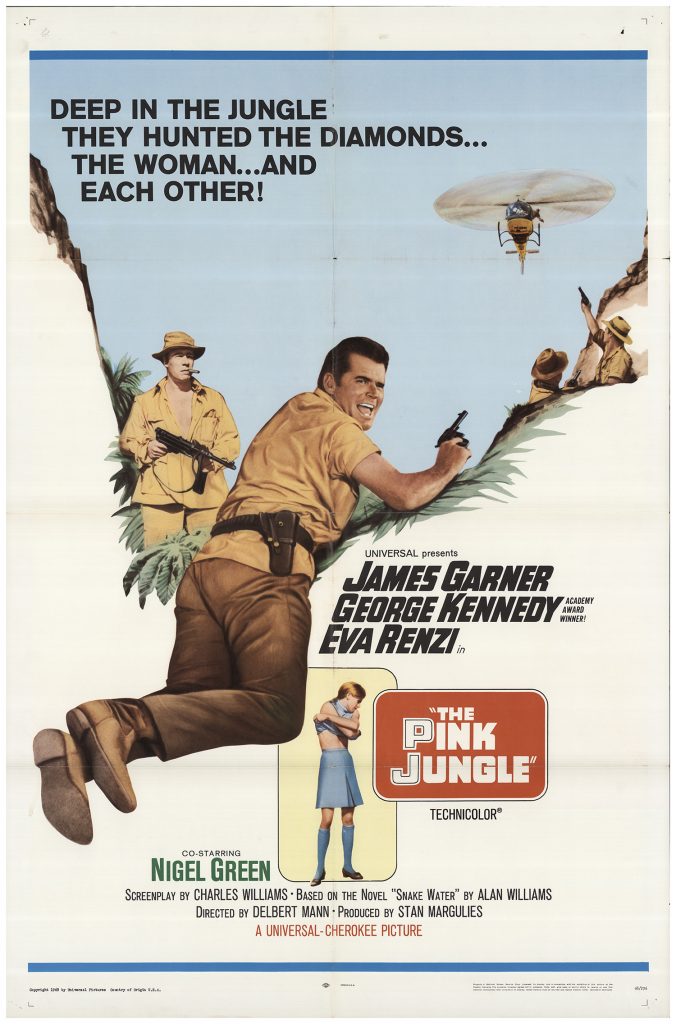
Eva Renzi was born in 1944 in Berlin.   Her film debut was in “Playgirl” in 1966.   The same year she acted opposite Michael Caine in “Funeral in Berlin”.   She went to Hollywood to make “The Pink Jungle” with James Garner in 1968.   She did not remain in the U.S. but chose to continue her career in Europe.   Her other films include “The Bird with the Crystal Plumage” and “A Taste for Excitement”.   Eva Renzi died in 2005 at the age of 60 in Berlin.

Paul Hubschmid
Paul Hubschmid
Paul Hubschmid

Paul Hubschmid was born in Switzerland in 1917.   His film debut came in the Swiss film “Fusiler Wipf” in 1938.   In 1949 he went to Hollywood, changed his name to Paul Christian and made “Bagdad” with Maureen O’Hara.   His other U.S. movies included “The Beast from 20.000 Fathoms”.   He died in 2001 in Berlin.

IMDB entry:

The son of an accountant, Paul Hubschmid was born, raised and schooled in Schoenenwerd, Switzerland. He trained for an acting career at the Max Reinhardt Seminar of Dramatic Art in Vienna and first appeared on stage at the Vienna Volkstheater in 1937. His motion picture debut took place the following year. He was cast as the titular hero in the patriotic Swiss production Füsilier Wipf (1938), which was directed by that nation’s pre-eminent film maker of the time, Leopold Lindtberg. The role opened the doors for the tall (1.92 m), wavy-haired and handsome actor and he soon moved on to a more lucrative career in Germany. After a stint with the Deutsches Theater in Berlin, he slipped effortlessly into a succession of romantic leads opposite established stars such as Luise Ullrich (Der Fall Rainer (1942)) and Hilde Krahl (Meine Freundin Josefine (1942)).

His presence in German films during the Nazi period (though mostly in light entertainments without significant political content) did not prove detrimental to his spell in Hollywood, which began with a seven-year contract in 1948. Having almost no perceptible trace of an accent, he fitted right into the role of ‘Paul Christian’, the stage name which was assigned to him for the handful of films he made in tinseltown. Some were outright stinkers, like No Time for Flowers (1952), which veered uneasily between silly comedy and fruity melodrama. Best of the bunch was the cult sci-fi The Beast from 20,000 Fathoms (1953), which started the cycle of giant monster films in the 1950’s and featured the work of renowned special effects expert Ray Harryhausen. The film cost a mere $200,000 to make and grossed in excess of $ 5 million. With the audience attention firmly fixed on the dinosaur, the cast seemed at times redundant. Paul, in the leading role of scientist Tom Nesbitt, did the best he could with the clichéd script. Since no better parts were forthcoming, Paul dissolved his contract after just four years and returned home.

Back in Germany, he was considerably better served in the role of composer Franz Lisztin the Franco-German co-production Hungarian Rhapsody (1954); and in a trilogy of hugely popular escapist adventure films, exotically set in India: Tiger of Bengal (1959),The Tomb of Love (1959) and Tiger of Bengal (1960). Paul had aged remarkably well and was able to carry off his romantic leading man image into the 1960’s. From the beginning of the decade, he also moved into character acting, playing Professor Higgins in “My Fair Lady” more than 2000 times on stage, most frequently at Berlin’s Theater des Westens. On screen, he now appeared more frequently as bon vivants, reprobates or villains, most memorable as double agent Johnny Vulkan in Funeral in Berlin (1966), the second of Len Deighton‘s Harry Palmer trilogy. In 1980, he was awarded the German Filmband in Gold. During the 1980’s he scaled down his workload, confining himself to guesting in made-for-television movies and series. He retired from acting in 1992 and died nine years later in Berlin at the age of 84 of a pulmonary embolism.

– IMDb Mini Biography By: I.S.Mowis

The above IMDB entry can also be accessed online here.

Paul Hugo Hubschmid, actor: born Schönenwerd, Switzerland 20 July 1917; married 1942 Ursula von Teubern (died 1963; one son), 1967 Eva Renzi (one adopted daughter; marriage dissolved 1980); 1985 Irene Schiesser; died Berlin 31 December 2001. 

Billed in his English-speaking films as Paul Christian, the Swiss-born actor Paul Hubschmid was a popular leading man in European films in the years after the Second World War (despite having worked in German films during the war), his virile good looks compensating for a stiff acting style. Later he won praise as a fine character player in such films as Funeral in Berlin, and by the end of his 50-year acting career he had made over 120 films.

Extremely popular in Germany on both screen and stage (he played over 2,000 performances of My Fair Lady in Berlin), he was once dubbed “the most beautiful man in post-war German cinema”. Between 1948 and 1953 he made several films in Hollywood, and will best be remembered by English-speaking audiences as the hero of the classic monster movie The Beast from 20,000 Fathoms (1953).

Born in Schönenwerd, Switzerland, in 1917, he went to Vienna in 1937 to train as an actor at the Max Reinhardt Academy. He made his screen début in the Swiss film Fusilier Wipf, released in 1938, and made his first German film, Maria Ilona, in 1939. During the war years he acted in the German theatre and appeared in a dozen more films including Meine Freundin Josefine (1942) and Liebesbriefe (1943).

Universal took him to Hollywood in 1949, renamed him Paul Christian, and gave him the star role opposite Maureen O’Hara in the Arabian Nights adventure Bagdad. As the leader of a desert group, “the Black Riders”, he had a Valentino-like role, unmasking the villain (Vincent Price) who has kidnapped O’Hara’s sheikh father and winning the heroine for himself. Critics were unimpressed by Christian’s acting, but conceded that he had the dashing looks to suit the part.

Bagdad was the sort of film Universal had been making for several years with Maria Montez starring, and the formula was no longer proving as potent at the box office. Ironically, Christian’s next film, The Thief of Venice(made in 1950 but not released until 1952), co-starred Montez in what was to be her last film before her sudden death. Directed by John Brahm in Venice on sets left over from Orson Welles’s Othello, it took place in the Middle Ages, with Christian a naval officer who takes up thieving to acquire the funds to combat the evil Inquisitor (Massimo Serato), with Montez the tavern keeper who helps him.

Christian next starred in Don Siegel’s No Time For Flowers (1952), a Ninotchka-like comedy made in Vienna (though set in Prague) in which Christian was a Czechoslovakian party official who tests the loyalty of his secretary by tempting her with such Western delights as bubble baths, cosmetics, champagne and nylons. The secretary was played by Viveca Lindfors (Mrs Siegel at the time), and inevitably (since the film was made at the height of the Cold War) both she and Christian succumb to temptation at the film’s end and flee to Austria’s US Zone.

Siegel, aware of the film’s debt to Ninotchka, later blamed its failure on a budget-conscious producer, a dull script, the fact that he was admittedly no Lubitsch (“or Viveca would have given Greta Garbo a run for her money”) and Christian, who “was much too stiff and without the charm and fun of Melvyn Douglas”.

Despite having starred in three internationally distributed films, Christian was not yet an established name, but his next film was an enormous success, The Beast from 20,000 Fathoms. Based on Ray Bradbury’s haunting short story “The Foghorn”, the film spawned so many cheap imitations that is is surprising now to realise that it was the first film to deal with a prehistoric monster unearthed by an atomic explosion and going on a rampage through a major city. Christian was effective enough as the scientist who first realises the truth but is not believed, but it was Eugène Lourié’s atmospheric direction and in particular the splendid special effects of Ray Harryhausen that turned the $250,000 film into a hit that grossed $5m.

Returning to live in Germany, Christian was leading man to the musical star Marika Roekk in Maske in Blau (1953), the first of many German and Italian films in which he starred, usually as a handsome charmer or a swashbuckling action hero. By the end of the decade he had won great acclaim for his stage portrayal of Professor Higgins in My Fair Lady and reverted to the name Paul Hubschmid, though for those films that obtained release in English-speaking countries he was billed as Paul Christian. These included Rommel’s Treasure (Il Tesoro di Rommel, 1955), co-starring Dawn Addams, and The Day the Sky Exploded (La morte viene dallo spazio, 1958), photographed by Mario Bava, later a noted director, and described by The Monthly Film Bulletin as “the stock-shot film par excellence“.

In 1958 he starred in the two-part Fritz Lang epic Der Tiger von Eschnapur/Das indische Grabmal, which Lang based on the pulp serial he and Joe May had scripted in 1921. In the comic-strip adventure Christian was an architect who rescues a young dancer from a tiger, falls in love with her, then has to flee with her when the Maharajah, who loves the dancer, threatens to bury her alive. Praised for its use of colour, decor and wide-screen photography, the (196-minute) two-part movie was shown complete in most European countries, but was dubbed and shown as one 94-minute film in Britain (as Tigress of Bengal) and the US (as Journey to the Lost City).

In 1965 the actor, billed as Hubschmid, supported Steve Cochran and Hildegarde Neff in a British adventure film, Mozambique, and the following year had a prime role as Johnny Vulkan, former black-market crony of spy Harry Palmer and now a British agent, in Funeral in Berlin, with critics noting that the ageing actor had gained authority and conviction with the years.

He returned to Universal Studios to play a German baron wed by a Parisian intelligence agent (Anjanette Comer) before the Second World War in the espionage adventure In Enemy Country (1968), and an evil Dutch scientist who wants to use for his own ends missing-link humanoids discovered in New Guinea by explorers Burt Reynolds and Susan Clark in the risible Skullduggery (1970).

The actor, whose last film was the German comedy Linda (1991), used to say that he wondered if his looks had not been detrimental to his acting career, and he entitled his 1994 autobiography Schöner Mann, was nun?(“Beautiful Man, What Now?”).

Tom Vallance. The Independent. 2001.

Marisa Mell
Marisa Mell
Marisa Mell
Marisa Mell
Marisa Mell


Marisa Mell was born in 1939 in Graz, Austria.   Her film debut was in 1954 in “Das licht der Liebe”.   She went on to make “Dr”, “City of Fear”, “French Dressing”, “Masqurade” and “Danger Diabolik”.   In 1967 she was on Broadway as “Mata Hari” a musical with Pernell Roberts.   It was not a success.   Marisa Mell died in 1992 in Vienna.

Article on Marisa Mell in “Tina Aumont’s Eyes” website|:

Beautiful and exiting, the stunning Marisa Mell appeared in an array of cult classics and exploitation favourites, from both Italy and abroad. Never shy with nudity, she is also remembered for her glamorous pictorials that featured in many glossy publications during her long and varied career.

Born in Austria on February 24th 1939, Marisa Mell’s life was nearly over before her career even took off. In 1963, after having appeared in only a handful of European movies, Marisa was involved in a serious traffic accident while in France. She nearly lost her right eye and would spend the next two years having plastic surgery, which resulted in a slight curl to her upper lip. During this time though, she continued to make films both home and abroad. In 1964 Marisa played a French movie star in Ken Russell’s film debut ‘French Dressing’, a fun comedy with James Booth and Roy Kinnear. Staying in the UK, she was a femme fatale in Basil Deardon’s spy spoof ‘Masquerade’ (’65), with Cliff Robertson. Back in Italy, Marisa was one of Marcello Mastroianni’s conquests, along with Michèle Mercier and Virna Lisi, in the entertaining romp ‘Casanova ‘70’ (’65).

Marisa is perhaps best known for Mario Bava’s stylish 1968 caper ‘Danger: Diabolik’, as the sexy girlfriend of John Phillip Law’s slick criminal; Diabolik. A big hit in Europe, it’s a fun if dated tongue-in-cheek romp that’s developed quite a cult over the years. Also in 1968, Marisa co-starred in the corny sex farce ‘Anyone Can Play’, alongside Virna Lisi and former Bond Girls Ursula Andress and Claudine Auger. The following year she gave a good performance in Lucio Fulci’s first giallo ‘One on Top of the Other’ (’69), looking sexy and dangerous in dual roles. Marisa would again have a double role in the Spanish thriller ‘Marta’, co-starring Stephen Boyd. An interesting though sometimes frustrating movie, it had Marisa play a murderess who resembles the estranged wife of a wealthy man (Boyd), who has murdered his own mother. More of a character study with added intrigue, than the usual giallo, both Boyd and Mell are very good and there are a few surprises along the way.

The following year Marisa would yet again play two roles, this time as twins, in exploitation king Umberto Lenzi’s pretty good giallo ‘Seven Blood-Stained Orchids’ (’72). Marisa looked stunning as a honeymooning bride who’s attacked on a train by a mysterious figure dressed in black. A rare Hollywood film came in 1975 when she had a small role in the Diana Ross fashion drama ‘Mahogany’, as the owner of an Italian modelling agency. It did little to help her career, but at least she got to work with her early crush; Anthony Perkins. Back in Europe Marisa was brutalized by a psychotic Helmut Berger in the sleaze-filled exploitation flick ‘Mad Dog Killer’ (’77), a typically grimy revenge picture from Italy, filled with rape, murder and car chases. In 1979 Mell appeared in ‘Ring of Darkness’, an Italian late entry in the whole ‘Exorcist’ rip-off cycle. A bit of a mess and hard to follow, it at least had a respectable cast including Frank Finlay, Ian Bannen and Anne Heywood. A silly but fun actioner followed with the terrorist-themed ‘Hostages!’ (’80), an international co-production with Stuart Whitman and Mexican favourite; Hugo Stiglitz.

Like many cult stars of the sixties and seventies, Marisa’s career had waned considerably by the 80’s, with only small roles in a few TV shows and Z-grade movies (including a guest spot in the 1983 porn flick ‘Nude Strike’), coming her way. After the dire Joe D’Amato fantasy ‘The Hobgoblin’ (’90), Mell’s final appearance was in the obscure 1991 comedy ‘I Love Vienna’. Married briefly to director Henri Tucci (’59-63) Marisa Mell sadly died in Vienna from throat cancer, on May 16th, 1992, aged just 53. A very good actress and a B-movie favourite, Marisa added charm and sex appeal to many European movies, and her legacy continues to be rediscovered by cult movie fans worldwide.

Favourite Movie: Seven Blood-Stained Orchids
Favourite Performance: One on Top of the Other

The above article can also be accessed online here.

Mel Ferrer (1917 – 2008) led one of the most eclectic careers of the post‑war Hollywood generation: actor, director, producer, and occasional writer. His work moves fluidly between classic Hollywood studio filmmaking, European arthouse realism, and television, but what truly defines Ferrer is his dual artistic identity—the cultured insider and the detached observer. On screen he exuded refinement, intellect, and self‑containment, qualities that often isolated him emotionally from other characters; yet this same reserve gave his best performances an uncommon psychological depth.
Early Life and Formation

Born Melchor Gaston Ferrer in Elberon, New Jersey, into a cosmopolitan Cuban‑American family of artists and physicians, Ferrer studied at Princeton before turning to theatre during the Depression. He acted and directed for regional and community theatre while working on radio scripts, building an early fascination with language rhythm and ensemble precision. His bilingual background and musical upbringing (he was trained as a classical guitarist) generated a sensitivity to cadence that later marked his screen speech—softly accented, melodic, and introspective.

Broadway and Directorial Emergence (1938–1949)

Ferrer’s pre‑film career was primarily theatrical. After years as actor and stagehand, he made his mark as a Broadway director rather than star: his 1947 staging of Cyrano de Bergerac, starring Jose Ferrer (no relation), revived the play’s popularity and reflected his enduring taste for psychological romanticism.
Simultaneously, he co‑wrote screenplays and directed short films for the Office of War Information. The layering of performance, writing, and staging skills would later inform his disciplined film acting—rarely improvisatory, always architectonic.

Film Debut and MGM Period (1950–1953)

Lost Boundaries (1949, Alfred Werker)

Ferrer’s film debut came as Dr. Scott Carter, a light‑skinned Black doctor who passes for white—an incredibly daring premise for post‑war Hollywood. His subdued portrayal of internal conflict sidestepped melodrama; Ferrer projected conscience through restraint, refining an acting idiom that critics compared to Gregory Peck’s sincerity tempered by continental introspection.  The New York Times praised “a performance of quiet moral crisis,” aligning him with the emerging post‑neorealist tendency toward behavioral truth.
(Notably, his co‑star Beatrice Pearson matched him in naturalistic honesty.)

MGM Star Persona

After Lost Boundaries, MGM capitalized on his cultured bearing and leading‑man looks: tall, patrician, faintly aloof. Roles in Scandal at Scourie (1953) and Lili (1953, Charles Walters) positioned him as emblem of Europeanized conscience—the cerebral counterpoint to Hollywood’s physical masculinity.

  • In Lili, as puppeteer and war‑wounded cynic Paul Berthalet, Ferrer revealed complex interior emotion under surface coldness. Critics regarded it as his signature performance: sterile logic thawing into tenderness. The Hollywood Reporter called him “the rare actor who can suggest imagination as erotic energy.” The role earned a Golden Globe nomination and solidified his association with bittersweet realism.

Collaboration with Directors of Style and Moral Inquiry (1954–1960)

Knights of the Round Table (1953) and Scaramouche (1952, MGM, uncredited sword double)

Ferrer’s elegance translated naturally to historical spectacle, though his contained temperament sometimes worked against the genre’s exuberance. As Lancelot he projected chivalric integrity edging on abstraction—graceful yet emotionally remote. Audiences saw him as more intellectual hero than action adventurer.

War and Peace (1956, King Vidor)

Playing Prince Andrei Bolkonsky opposite Audrey Hepburn (whom he married in 1954), Ferrer found his most sympathetic embodiment. Andrei’s spiritual exhaustion suited his subtlety: his inward acting style rendered despair quietly luminous. European critics admired the performance’s literary intelligence—Jean‑Claude Caron writing in Cahiers du Cinéma that Ferrer “acts through consciousness itself: the post‑Tolstoyan mind disillusioned by intellect.”

The Sun Also Rises (1957, Henry King)

As injured war veteran Robert Cohn, Ferrer deepened this introspective sensibility, offsetting Errol Flynn and Tyrone Power’s bravado. Reviewers noted his “fragile dignity”—a portrait of masculinity haunted by impotence, both physical and existential. The film’s uneven reception hid one of his finest subtle creations: understated despair resisting self‑pity.

Directorial Ventures and European Co‑Productions (1959–1970s)

Green Mansions (1959, MGM)

Ferrer directed and co‑starred with Audrey Hepburn in this adaptation of W. H. Hudson’s mystical novel. Critics regarded the direction as visually ambitious but tonally diffuse: its lyrical intent undermined by studio interference. Nevertheless, Ferrer’s romantic pantheism—his belief in cinema as moral fable—anticipates the transcendent realism of later eco‑films. Scholars see Green Mansions as evidence of his attempt to merge symbolist literature with cinematic modernism.

El Greco (1966); Cita en Nassau (1968); European Stage Work

Settling for a time in Spain and Italy, Ferrer embraced the European co‑production circuit, alternating acting, producing, and directing. His El Greco, starring Francisco Rabal, reflected his fascination with artistic mysticism—the lonely visionary versus institutional power. Though uneven, the film revealed Ferrer’s painterly eye: long takes, tableaux, chiaroscuro compositions evoking his subject’s work.

As a performer in European Westerns (The Hands of a GunfighterThe Brute and the Beast), he lent refinement to material often dominated by cynicism. His soft‑spoken menace subverted genre expectations: the intellectual villain who overreaches reason.

Television and Character Work (1970s–1980s)

When leading‑man roles faded, Ferrer shifted successfully to character parts on American television (Falcon CrestMurder, She WroteCharleston). Here he used aging and introspection as dramatic tools, embodying authority figures tinged with regret. His careful diction and moral focus translated effectively to the intimacy of television close‑ups; critics praised the “measured irony” with which he inhabited patriarchal roles, never letting control erase compassion.

Acting Style and Technical Analysis


Aspect Characteristics / Critical Response
Voice and Diction Low, cultured resonance with precise articulation—often described as “literate.” His speech implies thought preceding feeling, emphasizing intellect as emotional gateway.
Physical Poise Dance‑like carriage and stillness; movements spare but expressive, befitting his early fencing and ballet training. This made him ideal for aristocratic or cerebral roles.
Emotional Method Not a Method actor, but psychologically detailed: reveals transformation through accumulation of nuance rather than catharsis. Critics praised his “mental transparency.”
Screen Persona Embodies reason, control, and melancholy. Often cast as the rational man confronting irrational forces—romantic idealist, doctor, artist, scholar.
Limitations His refinement risked coolness; intensity sometimes buried beneath composure. Commercial cinema often misread subtlety as lack of vitality.

Thematic Through‑Lines

  1. Intellect versus Emotion – Whether As Andrei Bolkonsky or the wounded puppeteer in Lili, Ferrer dramatized the tension between analytical mind and yearning heart.
  2. Moral Inquiry – Many roles serve as conscience in moral chaos (Lost BoundariesWar and Peace, later television work).
  3. Artistic Idealism – His directorial projects (Green MansionsEl Greco) reflect obsession with creativity and redemption through beauty.
  4. European Modernity in Hollywood – Fluent in Spanish and French, Ferrer imported Continental gravitas into American melodrama, anticipating the transnational actors (Omar Sharif, Alain Delon in English films) who followed.

Critical Reputation and Reassessment

During the 1950s Ferrer’s screen personality was sometimes overshadowed by his marriage to Audrey Hepburn and by his perceived aloofness. Yet critics of later decades recognized his forward‑looking minimalism.

  • Film historian David Thomson described him as “an actor for audiences who listen—precise, moral, slightly broken.”
  • Robin Wood ranked Lili among the era’s rare examples of “restrained male tenderness on film.”

As a director, his films received uneven reception but are now studied for their spiritual romanticism and cross‑cultural production strategies in American‑European cinema.

Representative Performances


Year Film Role Distinctive Quality
1949 Lost Boundaries Dr. Scott Carter Understated integrity; social realism
1953 Lili Paul Berthalet Bittersweet cynicism; psychological precision
1956 War and Peace Prince Andrei Philosophical despair rendered humane
1957 The Sun Also Rises Robert Cohn Masculine fragility; existential malaise
1959 Green Mansions (dir.) Abel / Director Lyrical idealism; painterly composition
1966 El Greco (dir./prod.) Director Artistic mysticism; European sensibility

Summary: Critical Evaluation

Strengths

  • Exceptional intellectual and moral presence: he played intelligence credibly.
  • Mastery of vocal nuance and physical control suitable for both filmic intimacy and theatrical scale.
  • Cross‑disciplinary sensibility (actor‑director‑producer) giving his choices aesthetic coherence.

Limitations

  • Emotional opacity at times prevented full audience identification.
  • A mismatched Hollywood climate favoring overt naturalism reduced his opportunities.
  • Later direction occasionally mired in self‑consciously artistic ambition.

Legacy
Mel Ferrer stands as a bridge between the formal discipline of pre‑war continental acting and the introspective realism of post‑war cinema. His best performances—LiliWar and PeaceLost Boundaries—exemplify an actor whose intelligence itself became dramatic: feeling filtered through contemplation. Today he is appreciated not merely as Hepburn’s collaborator or minor leading man but as an artist of integrity whose restraint shaped a template for the “civilized conscience” in mid‑century film—a cinematic tone of quiet reason catching light amid the turbulence of emotion

Surviving Broadway and trade‑press coverage of Marisa Mell’s performance in Mata Hari (1967, Alvin Theatre) is limited because the production—an ambitious musical written by Jerome Coopersmith (book), Edward Thomas (music), and Martin Charnin (lyrics)—closed during previews after only a handful of performances. No original-cast album or regular press night opened the show to formal reviews, but reports from VarietyThe New York Times, and theatre chroniclers provide a clear picture of its critical reception.


Production Context

Mata Hari was conceived as a major vehicle for producer David Merrick in the tradition of Man of La Mancha, blending politics, espionage, and tragic romance. Choreographer Vincente Minnelli was originally attached, later replaced by Vincente’s protégé Vincente Mignogna, and finally by British director Vincente Minnelli’s associate Vincente Minnelli. (The chaotic rehearsal turnover is itself part of Broadway lore.)  Merrick imported Austrian star Marisa Mell, fresh from European film fame (Masquerade and Danger: Diabolik), to play the fabled spy‑courtesan opposite Louis Jourdan. Preview audiences saw only six complete runs before Merrick shuttered the show in March 1967.


Contemporary Critical Response (Previews and Post‑Closure Comments)

The New York Times (March 15 1967) reported—after the closing notice—that Mata Hari “showed the ornate trappings of a serious musical spectacle but lacked coherence and conviction. Miss Mell, handsome and poised, sang tidy phrases in a low contralto, but remained cool, curiously uninvolved in her own melodrama.” Brooks Atkinson, then recently retired but still commenting informally, described her privately as “a camera actress caught in too large a frame.

Variety (March 22 1967) wrote that the production’s lavish set pieces “overwhelmed its central performance: Miss Mell’s physical glamour was considerable, her acting style introverted. Without cinematic close‑ups, her underplaying read as detachment rather than mystery.

Cue Magazine summarized the general impression: “A tragic heroine without heat. The star moves beautifully, projects intelligence, but cannot project size; Broadway requires a force she holds in reserve.

Later theatre historians—including Stanley Green in The World of Musical Comedy (1974) and Ken Mandelbaum in Not Since Carrie (1991)—echoed those observations. Mandelbaum wrote that Mell possessed “screen charisma unsuited to the stage’s larger airbrush—her nuance stayed trapped behind the footlights.


Critical Analysis

From the fragments that survive, Mell’s difficulties were less about talent than about medium. Her appeal on film rested on cinematic proximity: quiet gestures, ironic smiles, minimal vocal color. In the cavernous Alvin Theatre, those subtleties registered as reticence. Critics noted her grace and intelligence but found her performance emotionally recessive—qualities that, paradoxically, later defined her finest European screen work. The collapse of Mata Hari thus became a textbook example of how a film performer’s naturalism can vanish in the more declarative energy of Broadway.

Nonetheless, observers also recognized her effort to elevate a troubled production. Varietyconceded that “no principal worked harder to lend glamour to chaos.” Mell’s diction—heavily accented but musical—was singled out by The Times for “a haunting tone of melancholy that occasionally hinted at what might have been.” 


Retrospective View

Modern musical‑theatre histories treat Mata Hari as a fascinating near‑miss, a casualty of producer overreach rather than individual failure. Mell’s performance, though judged chilly by 1967 audiences, prefigured the introspective acting style that Broadway later embraced in the 1970s with performers such as Donna Murphy or Betty Buckley. Her Mata Hari remains important in performance history as an experiment in merging European film naturalism with the heightened conventions of the musical stage—a collision that critics recognized, if not celebrated, at the time

Penelope Cruz
Penelope Cruz
Penelope Cruz

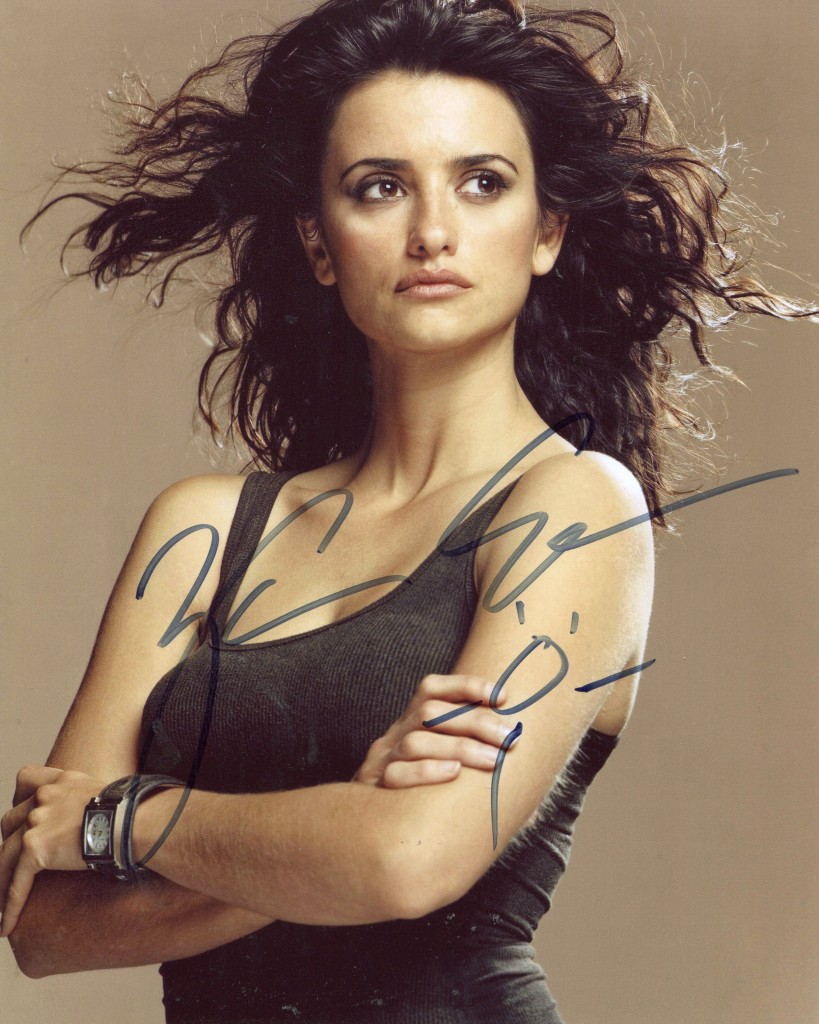
The beautiful Penelope Cruz was born in Madrid in 1974.   She made her film debut in 1992 in “Jambon, jambon”.   Some of the early films include “Open Your Eyes” in 1997 and “The Hi-lo Country” in 1999.   She has made many films with her fellow countryman Pedro Almodovar.   Her international films include “Vanilla Sky” with Tom Cruise, “Captain Corelli’s Mandolin” with Nicholas Cage and “Nine” with Daniel Day-Lewis.

IMDB entry:

Known outside her native country as the “Spanish enchantress”, Penélope Cruz Sánchez was born in Madrid to Eduardo (a retailer) and Encarna (a hairdresser). As a toddler, she was already a compulsive performer, re-enacting TV commercials for her family’s amusement, but she decided to focus her energies on dance. After studying classical ballet for nine years at Spain’s National Conservatory, she continued her training under a series of prominent dancers. At 15, however, she heeded her true calling when she bested more than 300 other girls at a talent agency audition. The resulting contract landed her several roles in Spanish TV shows and music videos, which in turn paved the way for a career on the big screen. Cruz made her movie debut in The Greek Labyrinth(1993) (The Greek Labyrinth), then appeared briefly in the Timothy Dalton thriller Framed(1992). Her third film was the Oscar-winning Belle Epoque (1992), in which she played one of four sisters vying for the love of a handsome army deserter. The film also garnered several Goyas, the Spanish equivalent of the Academy Awards. Her resume continued to grow by three or four films each year, and soon Cruz was a leading lady of Spanish cinema. Live Flesh (1997) (Live Flesh) offered her the chance to work with renowned Spanish director Pedro Almodóvar (who would later be her ticket to international fame), and the same year she was the lead actress in the thriller/drama/mystery/sci-fi film Open Your Eyes (1997), a huge hit in Spain that earned eight Goyas (though none for Cruz). Her luck finally changed in 1998, when the movie-industry comedy The Girl of Your Dreams (1998) won her a Best Actress Goya. Cruz made a few more forays into English-language film, but her first big international hit was Almodóvar’s All About My Mother (1999), in which she played an unchaste but well-meaning nun. As the film was showered with awards and accolades, Cruz suddenly found herself in demand on both sides of the Atlantic. Her next big project was Woman on Top(2000), an American comedy about a chef with bewitching culinary skills and a severe case of motion sickness. While in the US, she also signed up to star opposite Johnny Depp in the drug-trafficking drama Blow (2001) and opposite Matt Damon in Billy Bob Thornton‘s All the Pretty Horses (2000). Cruz says she’s wary of being typecast as a beautiful young damsel, but it’s hard to imagine disguising her wide-eyed charms and generous nature. Fortunately, with Cameron Crowe‘s Vanilla Sky (2001) (a remake ofOpen Your Eyes (1997)) and a John Madden collaboration looming in her future, Damsel Penelope isn’t likely to disappear just yet.

– IMDb Mini Biography By: IMDb Editors

The above IMDB entry can also be accessed online here.

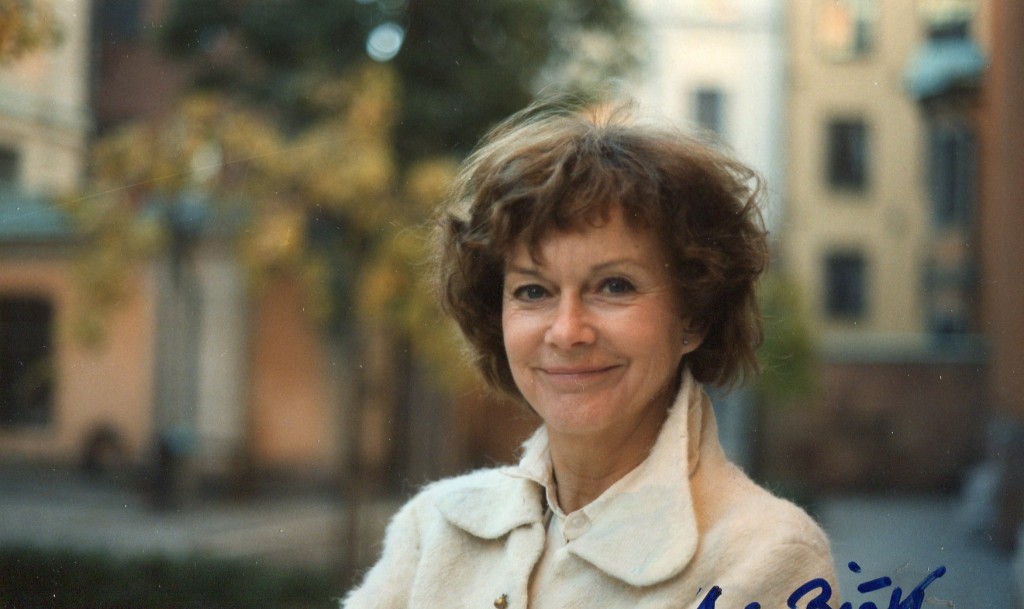
Anita Bjork
Anita Bjork
Anita Bjork

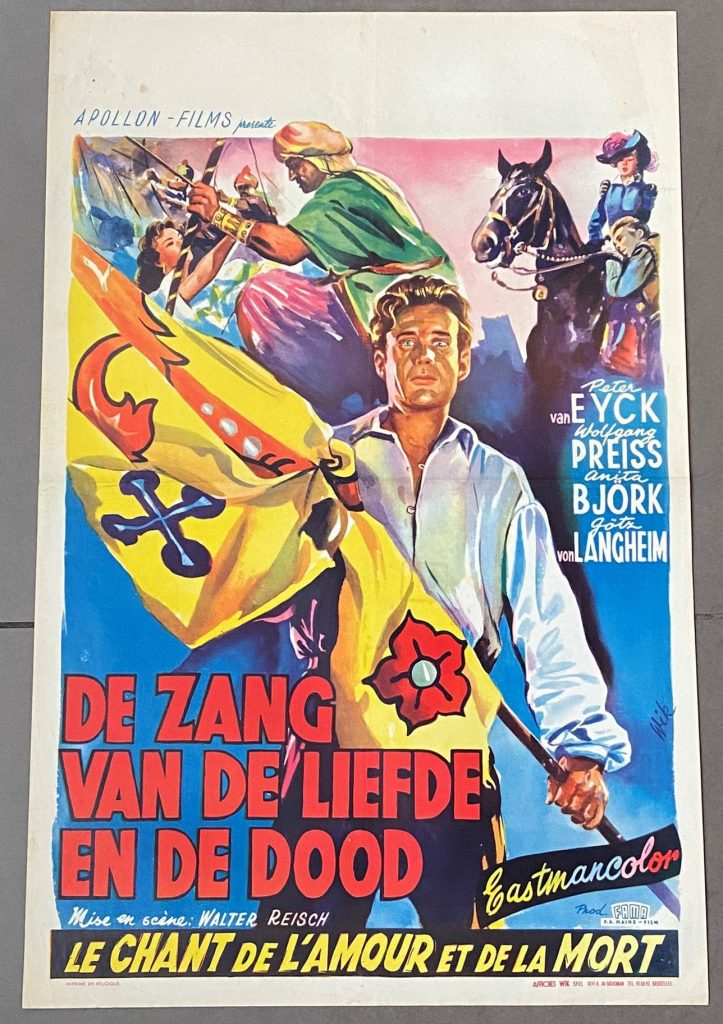
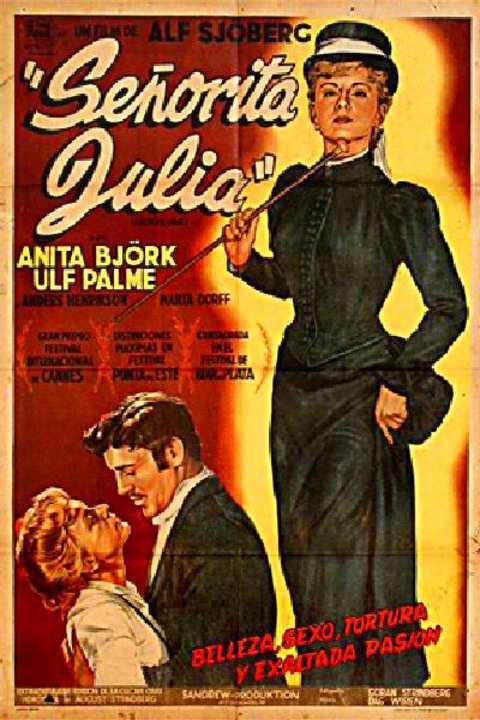
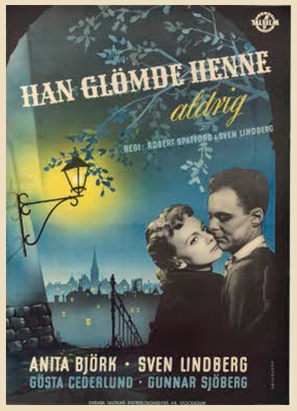
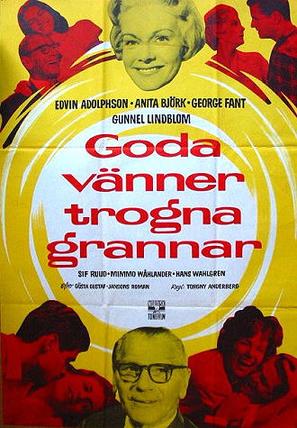
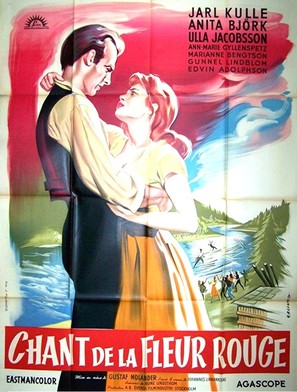
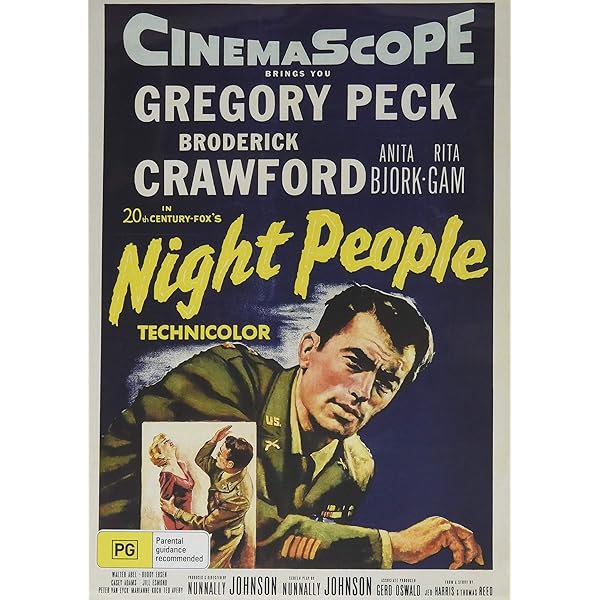
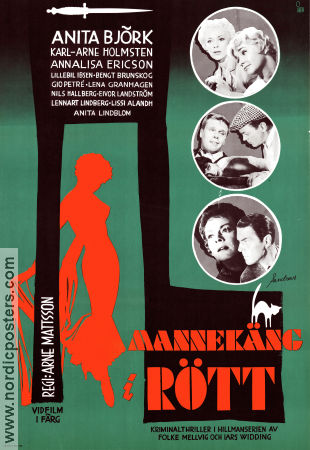
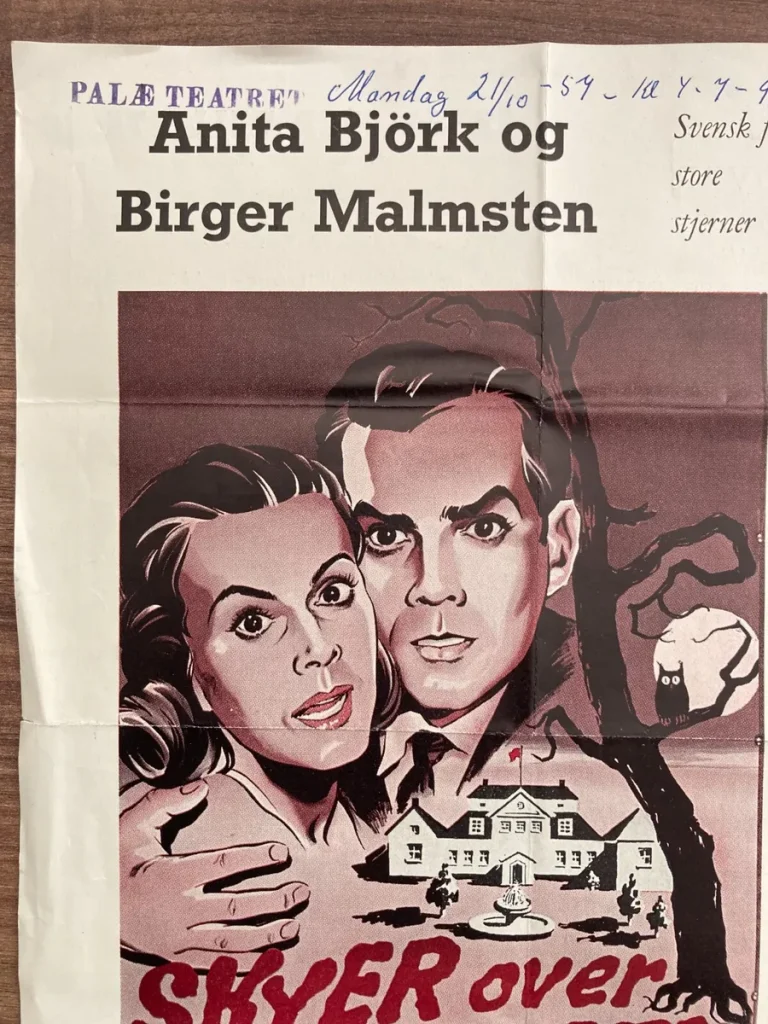
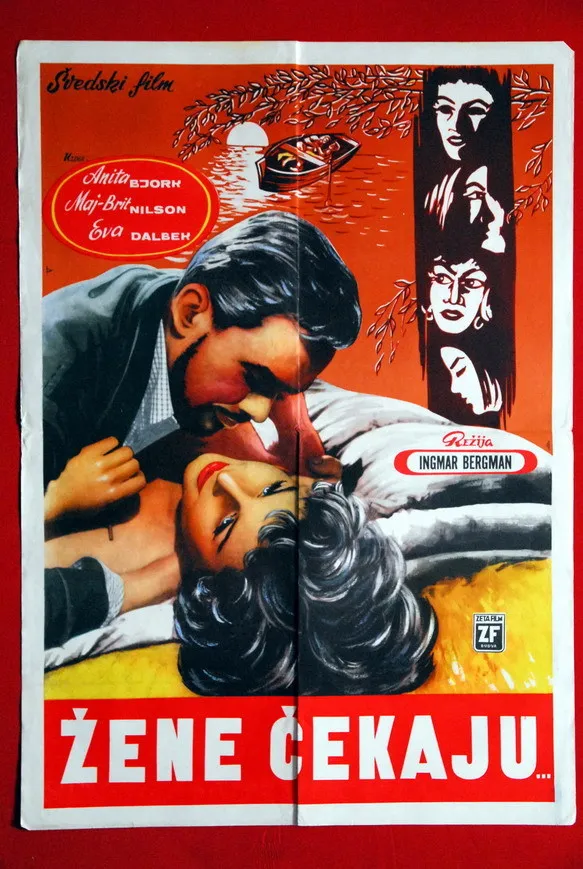
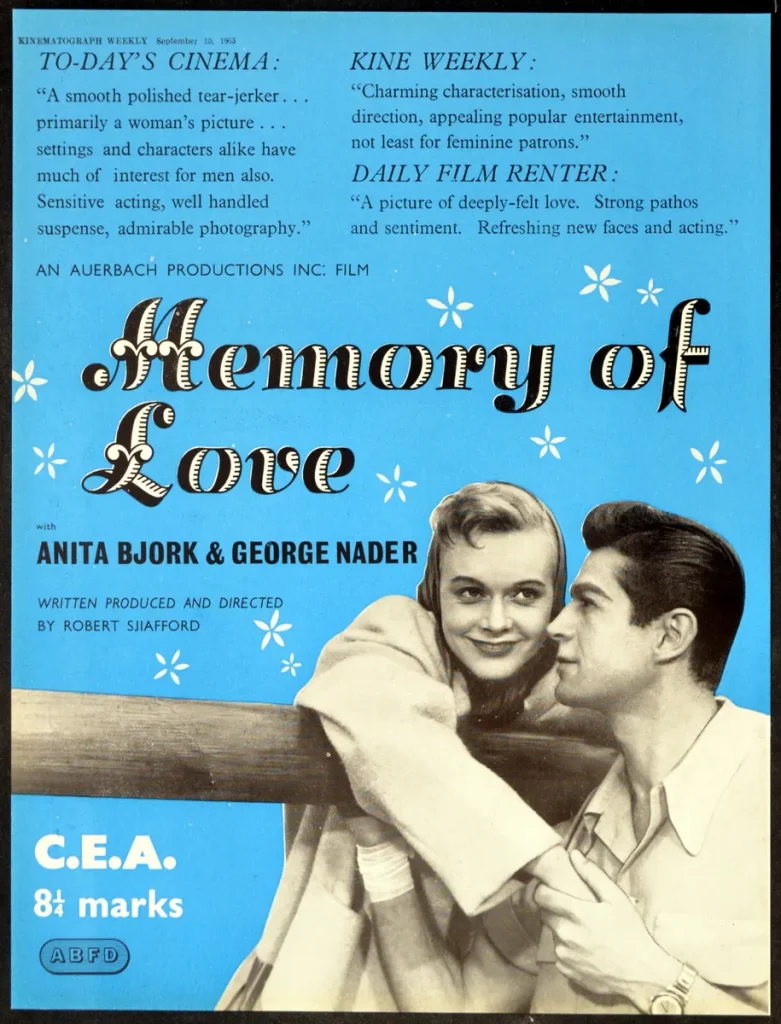
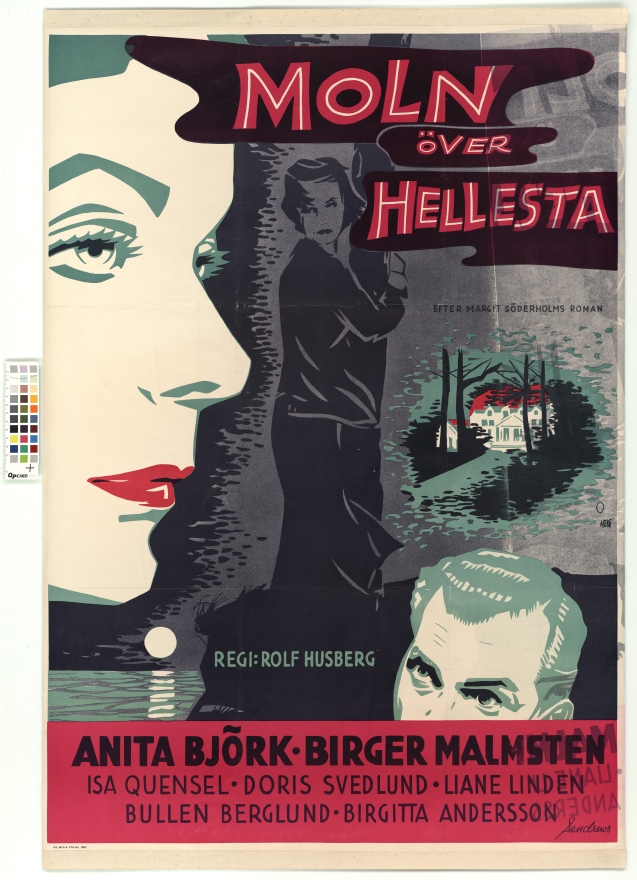
Anita Bjork was born in 1923 in Talberg, Sweden.   She has been a leading light on Sedish theatre for many years. In 2009 she was on stage in “Love Letters”.     On film she has appeared in “Det kom en gast” in 1947 and in 1951 “Miss Julie”.   In 1954 she starred with Gregory Peck in “Night People”.  She died in 2012.

Her “Telegraph” obituary:

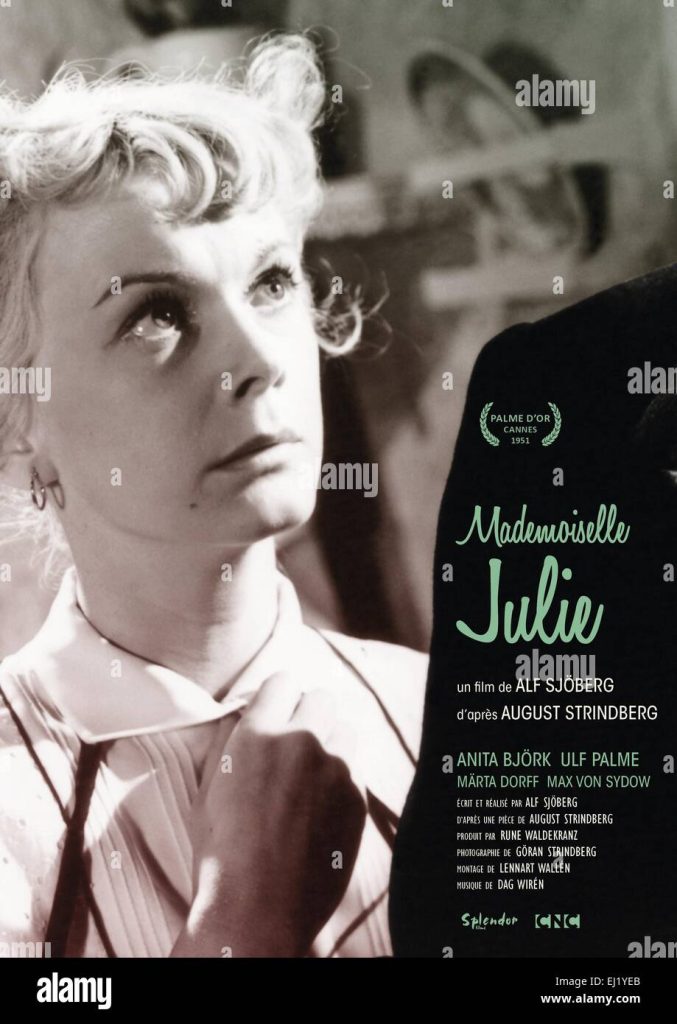
She is best remembered for her role as Miss Julie in Alf Sjöberg’s 1951 screen adaptation of Strindberg’s classic play, which won the top prize at that year’s Cannes Film Festival . It was a superb performance by Anita Björk, combining youthful beauty and charm with undertones of ambition and determination, and many predicted that she had a brilliant international future.

On the strength of that role, Alfred Hitchcock wanted to use her in his 1953 film I Confess alongside Montgomery Clift’s Roman Catholic priest who, charged with murder, is unable to prove his innocence because the killer has come clean only in Confession.

But when Anita Björk reported for duty on the set in Hollywood accompanied by her lover, the writer Stig Dagerman, and their daughter, Warner Bros took fright at employing a star with an illegitimate child and sent her packing; the role went to Anne Baxter instead.

A second attempt to launch Anita Björk in Hollywood also misfired when the Cold War thriller Night People (1954), written and directed by Nunnally Johnson and starring Gregory Peck, failed at the box office.

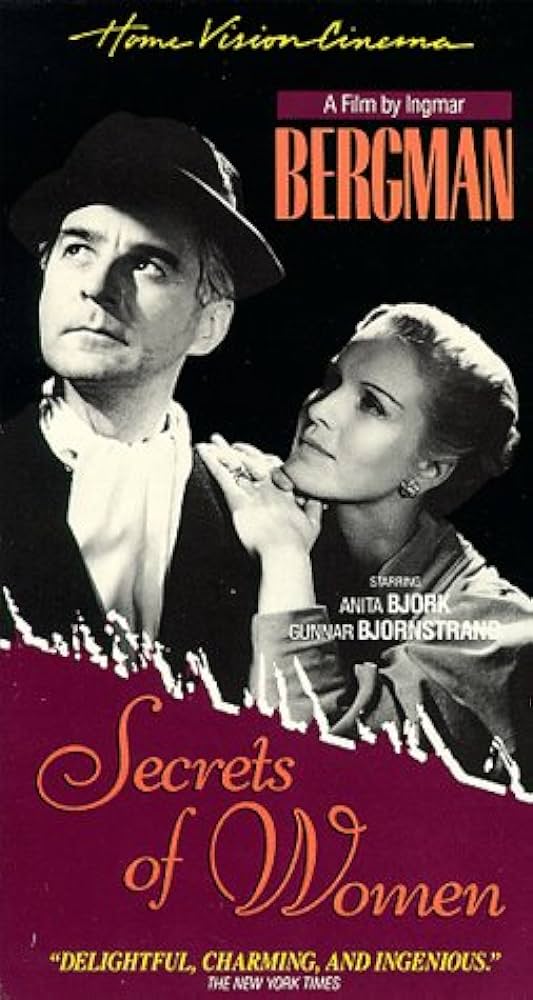
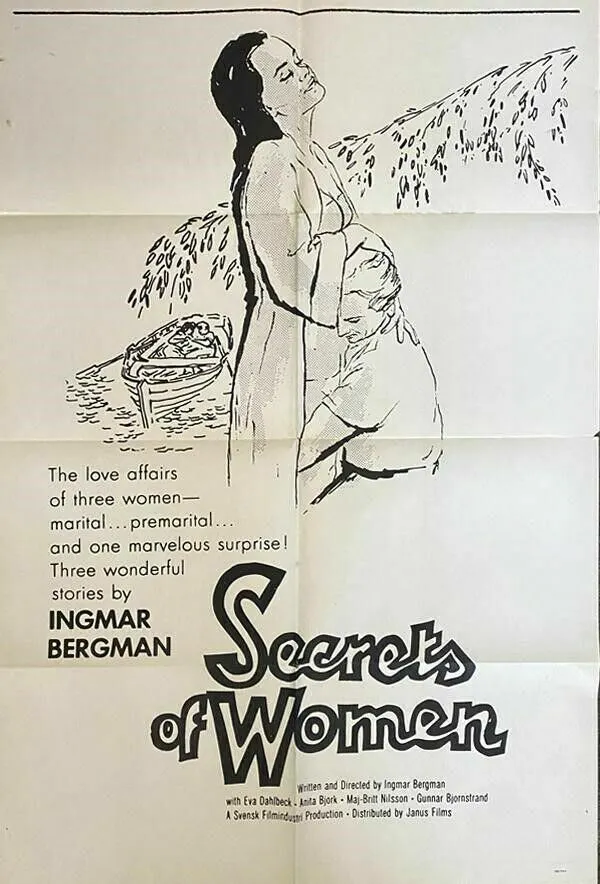
Anita Björk’s career in Sweden, however, prospered. She had first been seen on screen in The Road to Heaven (1942), directed by Sjöberg, and she worked with Ingmar Bergman on one of his relatively early pictures, Secrets of Women (1952). An amusing story told by three married women about their flirtatious pasts , it was made shortly after Miss Julie and revealed in Anita Björk a comic screen presence to which she never really returned.

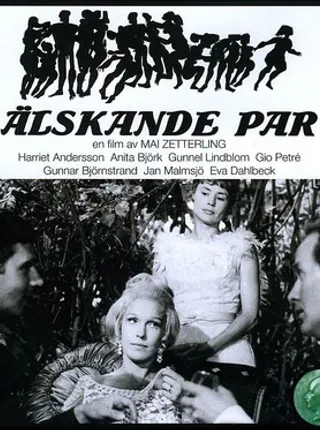
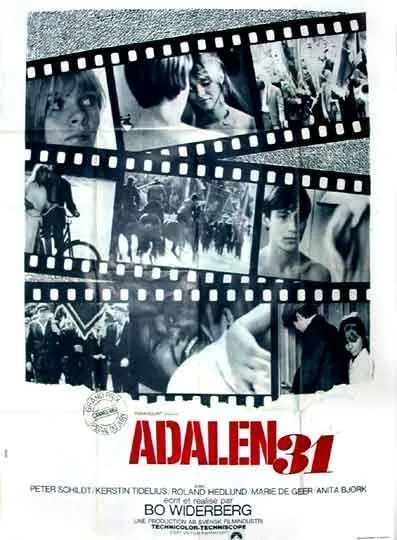
In later years she appeared for Mai Zetterling in Loving Couples (1964) and for Bo Widerberg in Adalen 31 (1969), about a strike in a paper factory in 1931 which has fatal consequences. But although she continued to appear on the big screen and on television until the turn of the millennium, she became most notable for her work on the Swedish stage.

Anita Björk was born at Tällberg, Sweden, on April 25 1923 and trained at the Royal Dramatic Theatre’s acting school (the Swedish equivalent of Rada) before embarking on what would become a long and distinguished career on the stage. In 1948 she appeared in Genet’s The Maids, going on play Agnes in Ibsen’s Brand, Juliette in Romeo & Juliet, and Eliza in Pygmalion.

She met Graham Greene — almost 20 years her senior — in 1954, when he was visiting his Swedish publisher and while he was still involved with the most famous of his mistresses, Catherine Walston, wife of the landowner and Labour MP Harry Walston.

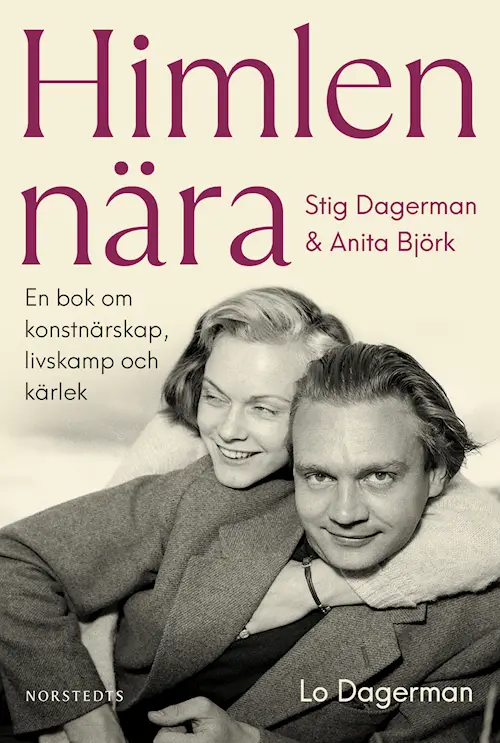
Anita Björk had married Stig Dagerman in 1953, but within a year he had committed suicide. According to Michael Shelden, one of Greene’s biographers, the novelist developed “an irresistible attraction” to Anita, buying her a house near Stockholm and taking her on trips abroad, including to his villa on Capri.

Shelden writes: “It became a chore for him to fly back and forth to Stockholm, and he complained about the long dark winters and the difficulty of learning to speak Swedish. He did give some thought to living with [Anita] year-round, but he had no friends in Sweden besides Anita and his publisher… ‘He wanted me to move to France and live there,’ Anita wrote. ‘I couldn’t leave my children and the theatre.’”

The relationship lasted until 1959, and in that year Greene wrote a play called The Complaisant Lover, in which he appeared to draw on details of Dagerman’s suicide, a lapse of taste which offended some in the Swedish literary community. Anita herself did not protest, but it was later claimed that Greene’s failure to win the Nobel Prize for Literature was attributable to this incident. In fact, it seems probable that the Academy regarded him as more of “an entertainer” than a serious writer.

With her first husband, the actor and director Olof Bergström, to whom she was married from 1945 to 1951, Anita Björk had a son, the actor Jonas Bergström.

The above “Telegraph” obituary can also be accessed online here.

Her IMDB entry:

Anita Björk is able to use simple means to give depth and character to a role. She has a way of expressing any emotion just by raising an eyebrow or twitching her lips. This was something she used to a large extent in her best movie, Alf Sjöberg‘s Miss Julie (1951) where she played the young lady at a country manor, planning to elope with Jean the butler.

She was bitten by the acting bug in her teens and went to Stockholm. She started her acting studies at the Royal Dramatic Theater in 1942 and quickly got major roles. Her breakthrough came 1948 in Jean Genet‘s ‘The Maids’, followed by such roles as Agnes in ‘Henrik Ibsen’s ‘Brand’, Julie in William Shakespeare‘s ‘Romeo & Juliet’, Eliza in George Bernard Shaw‘s ‘Pygmalion’ and Tintomara in ‘Carl Jonas Love Almqvist”s ‘Drottningens juvelsmycke’.

She met and fell in love with the writer Stig Dagerman and in 1951 she gave birth to a daughter. The three of them went to Hollywood for Anita to negotiate a role in Alfred Hitchcock’s I Confess (1953). But when word came out that Anita wasn’t married to Stig, Hollywood lost interest. His divorce from his ex-wife wasn’t final until 1953 and apparently it wasn’t acceptable to Hollywood for a contract player to live with someone married to somebody else.

In West Germany she played against Gregory Peck in Night People (1954) but when the movie failed at the box office, so did her career abroad. Also, her husband killed himself and Anita decided to stick to the Royal Dramatic Theater where she has appeared in more than 80 roles through the years. In movies, she has appeared mainly in supporting roles.

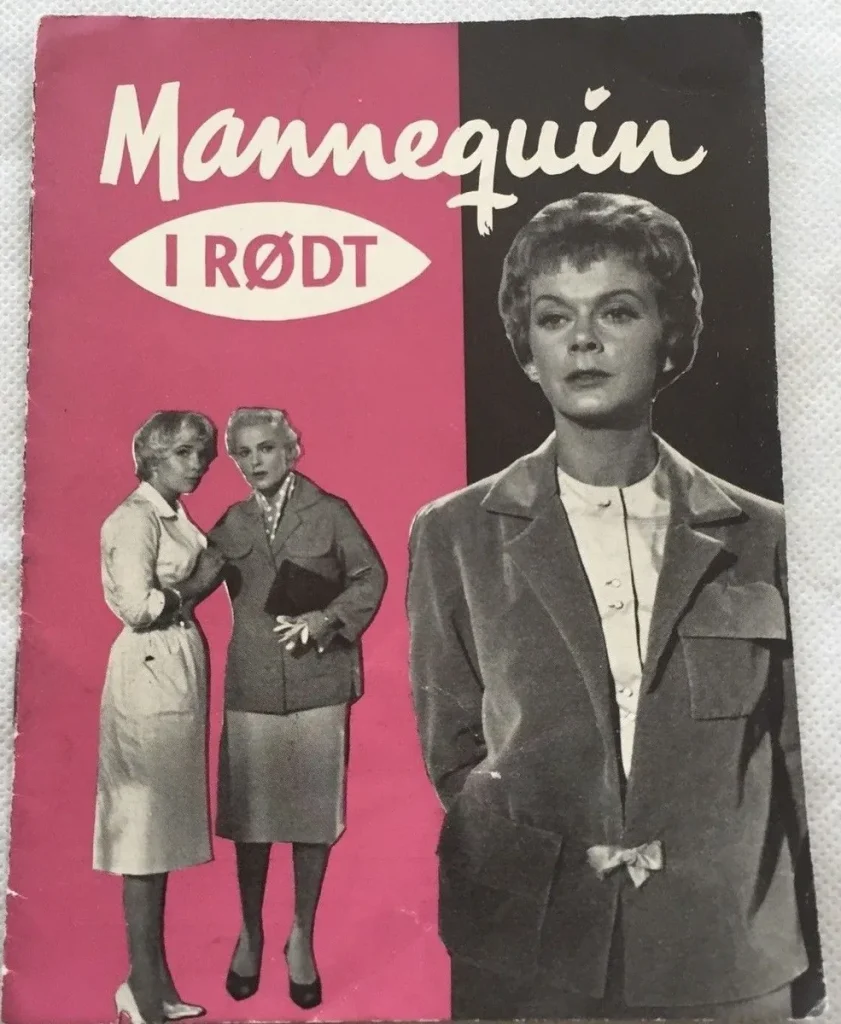
Of her movies, the most interesting are Miss Julie (1951), On These Shoulders (1948) and Mannequin in Red (1958).

– IMDb Mini Biography By: Mattias Thuresson <mattias.thuresson@mbox

Her IMDB entry can also be accessed online here.

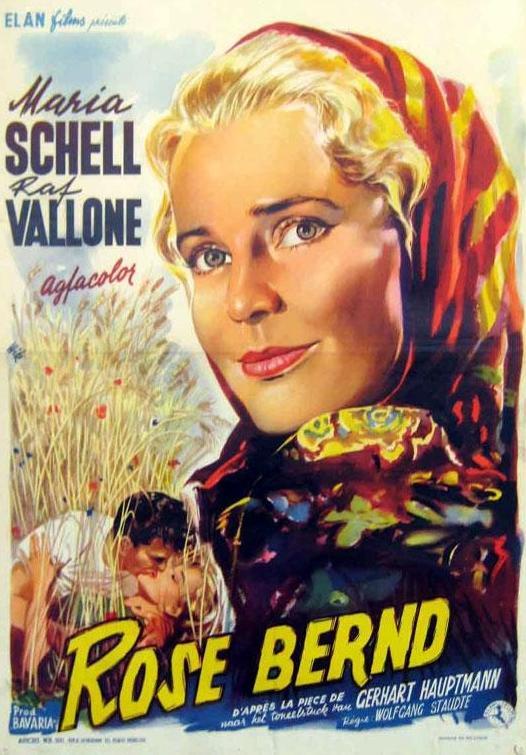
Raf Vallone


Raf Vallone was born in Calabria, Italy in 1917.   He studied Law and Philosophy at the University of Turin.   He also played professional football.   His first film appearance was in “We the Living” in 1942.   In 1949 hemade his breakthrough in “Bitter Rice” with Silvana Mangnao and Vittorio Gassman.   He made many international films such as “The Cardinal” in 1963, “Harlow” with Carroll Baker and Angela Lansbury which was made in Hollywood in 1964 and “The Other Side of Midnight” in 1977.   He died in Rome in 2002.

His “Guardian” obituary by John Francis Lane:

Raf Vallone, who has died aged 86, was one of the few non-professional actors to emerge from Italian neo- realist cinema and enjoy a distinguished career as a professional, on the screen and stage. A former journalist, he won international fame for his electrifying performance as the hot-headed Italian-American, Eddie, in Arthur Miller’s A View From The Bridge, a role he played in Peter Brook’s Paris stage production and in Sidney Lumet’s 1961 film, Vu Du Pont.

Vallone had been discovered by Giuseppe De Santis, who, in 1948, needed someone to research labour problems among the rice pickers of Piedmont for his film, Bitter Rice. In the Turin offices of the Communist party newspaper l’Unità, he met the writer Cesare Pavese, and Vallone, who wrote about sports and culture. After helping with the research, Vallone was surprised to find himself cast as the good-hearted ex-soldier whose girlfriend has befriended Silvana Mangano, the clandestine rice picker in hiding from the police with her good-for-nothing lover (Vittorio Gassman).

De Santis wrote in the preface to the screenplay: “I was impressed by Raf’s wide cultural and political awareness. Physically, he had the rugged looks of a sportsman. He had, in fact, played in a leading Turin soccer team. He was just the type I was looking for to play the nice guy. He was a natural.”

For Vallone, it meant a new career at the age of 31. Born in Calabria, he was only two years old when his family emigrated to Turin. He studied hard, getting a degree in letters and law. He joined the anti-fascist resistance, and, after the war, found a job with l’Unità.

After the favourable response to Bitter Rice, De Santis gave Vallone the lead role in his next film, Non C’è Pace Sotto Gli Ulivi (There’s No Peace Under The Olive Trees, 1950). Though not as successful in mixing social observation with melodrama, it confirmed his dramatic talents, winning him top billing in Cristo Proibito (Forbidden Christ, 1950), the only film made by the controversial Curzio Malaparte.

This was followed by an important role in Pietro Germi’s Il Cammino Della Speranza (The Road To Hope, 1951), an epic odyssey about southern Italians trekking north in search of work, and ending up in the Alpine snows desperate to cross the French border. The same year, he played Garibaldi, to Anna Magnani’s Anita, in Alessandrini’s Camicie Rosse (Red Shirts), though Suso Cecchi d’Amico has reported that the two stars did not hit it off.

Vallone worked again with De Santis in one of the director’s best films, Roma Ore 11 (Rome 11 O’Clock, 1952), based on the true story of a staircase that collapsed under the weight of unemployed girls waiting for a job interview. The scriptwriter Cesare Zavattini had wanted the casting to be non-professional, but De Santis preferred to use star names of the period, among whom at least Vallone still carried the air of neo- realist authenticity.

Dissatisfied with most of the films he made during the following years, Vallone decided to try the stage. While visiting London in 1956, he had seen Peter Brook’s production of A View From The Bridge, and felt that the role of Eddie was “made for him”. He had already worked in France, in films by Marcel Carné and Jean Delannoy, and courageously decided to risk what was virtually his stage debut, acting in French, comforted by Brook’s direction.

The production was a triumph and ran for 550 performances at the Thétre Antoine. The French translator Marcel Aymé had wanted to change the ending, leaving Eddie alive on stage, but Brook was against it, so Vallone got his death scene, which won ovations every night. He was the natural choice for Eddy in Sidney Lumet’s subsequent film, shot in both French and English versions, and, in later years, he directed the play himself in Italian.

On the Paris stage, he scored a success in Christiane Rochefort’s Le Repos Du Guerrier, and directed Pirandello’s Six Characters In Search Of An Author. In Italy, he did another Miller play, The Price, and, in 1969, he wrote, directed and acted in a play called Proibito Da Chi? (Forbidden By Whom?).

Among his many film appearances, Vallone is remembered for his cameos in, among others, Vittorio De Sica’s Two Women (1960), in which he played the grocer with whom Sophia Loren sleeps before fleeing from Rome with her daughter, El Cid (1961), The Cardinal (1963), Phaedra (1962), The Greek Tycoon (1978) and The Godfather Part III (1990).

In the early years of Italian television, he was Rochester in Jane Eyre (1960), and he won great popularity in the serial adaptation of Riccardo Bacchelli’s Il Mulino Del Po (1962). He was also in Alberto Lattuada’s mini series Christopher Columbus (1984). His last television appearance was in Vino Santo (2000) with Alida Valli, when, both in their 80s, they played grandparents celebrating their golden wedding anniversary. The director Zaver Schwarzenberger, former assistant and cameraman for Rainer Werner Fassbinder, described it as a “tragicomedy”.

Vallone was married to Elena Varzi, who had played his wife in Cammino Della Speranza (The Road To Hope, 1950). Both their son, Saverio, and daughter, Eleonora, are actors.

· Raffaele ‘Raf’ Vallone, actor, born February 17 1916; died October 31 2002

 His “Guardian” obituary can also be accessed online here.