Contemporary Actors

Collection of Contemporary Actors

Tim Thomerson
Tim Thomerson
Tim Thomerson

Tim Thomerson was born in 1946 in California.   He studied acting with Stella Adler in New York.   He began his career as a stand-up comic and then began an acting career.   His films include His films include “Car Wash” in 1978, “Which Way Is Up”, “Carny” and “Fade to Black”.

TCM Overview:

Tall, weathered, silver-haired lead of “B” actioners and supporting player of “A” films and TV. A former comic, Thomerson has amassed credits in over 30 films and made over 50 TV appearances since the mid-1970s. Making his feature debut in the 1976 comedy “Car Wash”, Thomerson went on to appear in some worthier projects including Robert Altman’s “A Wedding”, Alan Rudolph’s “Remember My Name” (1978) and Clint Eastwood’s “Honkytonk Man” (1982). In 1985, Thomerson teamed with thrifty auteur Charles Band to star as Jack Deth in the futuristic thriller “Trancers”. They reteamed for the sequels “Trancers II: The Return of Jack Deth” (1991), “Trancers III: Deth Lives” (1992) and “Trancer 4: Jack of Swords” (1994). Thomerson has also starred in other straight-to-video Band classics including “Dollman” (1991) and “Dollman vs. Demonic Toys” (1993).Between films Thomerson worked as a series regular on several ill-fated shows including the Bill Cosby variety series “Cos” (1976); “Angie” (1979-80); “Glory Years” (1987); “Down and Out in Beverly Hills” (1987) and “Sirens” (1993). His numerous TV guest spots include “Hunter”, “St. Elsewhere”, “21 Jump Street” and “Major Dad”.

The above TCM overview who can also be accessed online here.

Victoria Smurfit
Victoria Smurfit
Victoria Smurfit
Victoria Smurfit
Victoria Smurfit

Victoria Smurfit was born in 1974 in Dublin.   She made her television debut in “Ivanoe” as Rowena in 1997.   Her other TV work includes “Ballykissangle” , “The Clinic” and “Trial and Retribution” where she played DCI Roisin Connor.   Her films include “The Beach” and “About A Boy”.

Lisa Richard’s agency page:

Victoria recently appears as the role of Lady Jane in NBC’s new TV seriesDRACULA opposite Jonathan Rhys Meyers. Due to her fabulous performance she has been nominated for an IFTA for Best Actress in a Supporting Role in Television for DRACULA..

Her film credits include About a Boy, The Leading Man, Bulletproof Monk, The Beach, So This is Romance? and The Last Great Wilderness.
Victoria’s television credits include The Shell Seekers, directed by Piers Haggard, for ITV; Berkeley Square, The Alan Clark Diaries and Ivanhoe, all for the BBC; as well as leading roles in several iconic series, including Jane in Cold Feet, Orla in Ballykissangel and, most notably, DCI Roisin Connor in Trial and Retribution, the next series of which will be seen onITV in the New Year.

Her theatre performances include Maire in Brian Friel’s Translations at the Bristol Old Vic, The Jungle Book for the RSC, and Ten Rounds by Carlo Gebler at the Tricycle Theatre in London. Victoria most recently appeared on stage in Ireland for the first time as Carole in the hugely successful new play October by Fiona Looney produced by Landmark Productions at the Gaiety Theatre, Dublin and Cork Opera House.

Victoria most recently appeared as series regular, Dr. Edel Swift in Season 7 of The Clinic for Parallel Films and RTE and as a guest lead in an episode of Marple (as Ella Blunt) for ITV. Victoria recently wrapped filming Honeymoon for One directed by Kevin Connor for Hallmark Channel.

The above page can be also accessed online here.

Liam Cunningham
Liam Cunningham
Liam Cunningham

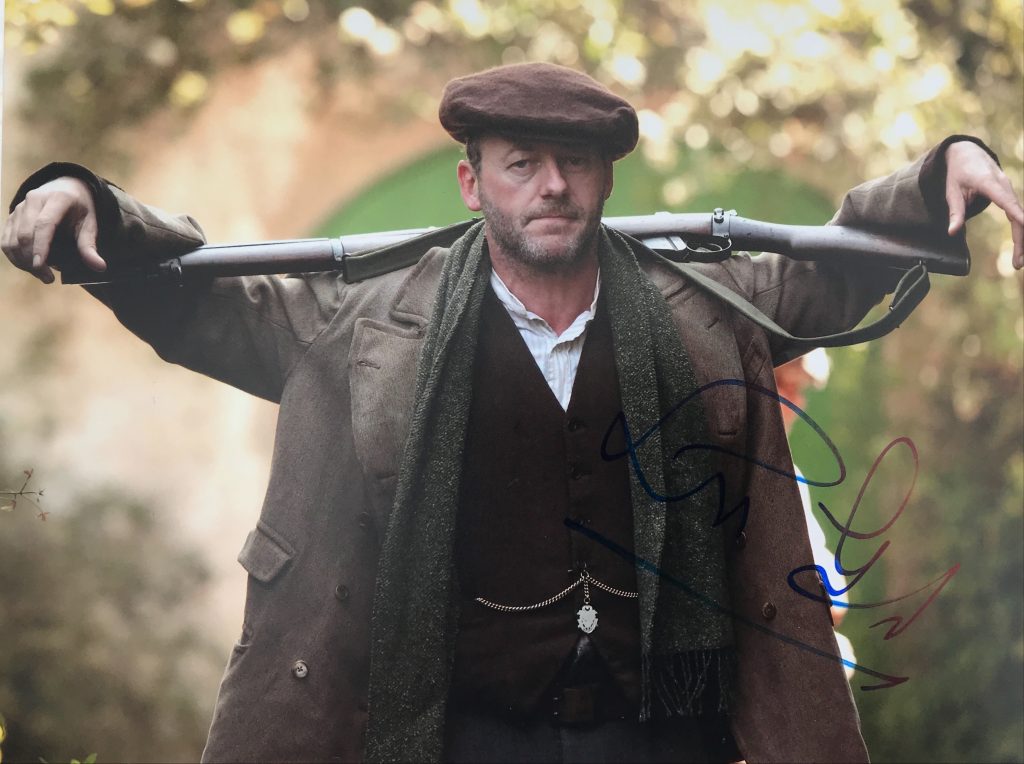
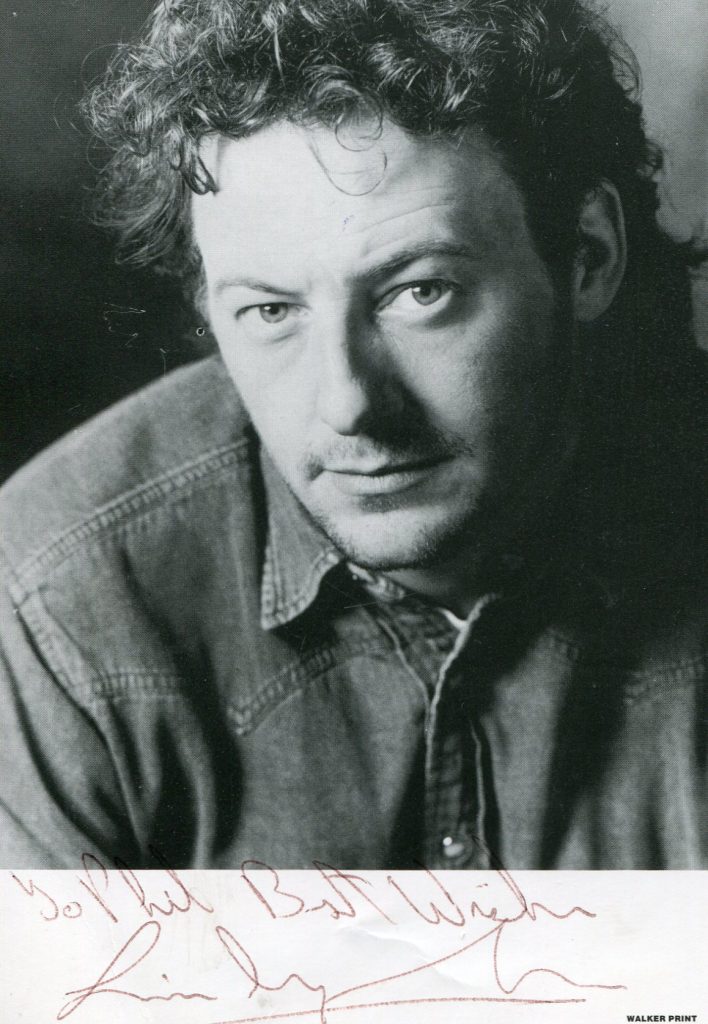
Liam Cunningham was born in 1961 in Dublin.   He originally trained as an electrican before taking to the boards.   He made his feature film debut in 1992 in “Into the West” with Gabriel Byrne and Ellen Barkin.   His other films include “War of the Buttons”, “A Little Princess”, “Jude”, “A Love Divided”, “Showbands” and “The Wind That Shakes the Barley”.

2014 “Independent.ie” article:

The Game of Thrones star has featured in a number of projects with daring or dangerous stunts throughout his career.

And Cunningham (52), who portrays former smuggler Davos Seaworth in the smash-hit HBO drama, told the Herald that he has not left every job unscathed — he has experienced one or two close calls while working in front of the cameras.

“There are always going to be injuries on set — if you are doing things properly,” he said.

“I nearly got killed on a horse when I was filming in France with Clemence Posey a few years ago, where I had two swords attached to me and the horse reared up and I came down on my back; two inches either way and I would have lost a kidney and my life,” he revealed.

“You can only make stunts so safe.

“They are stunts — and it should be bordering on dangerous, because if it’s very safe it looks crap, so there needs to be a sense of danger.”

Even though he has a lead part in a global TV phenomenon, Cunningham — who launched the Westbury Hotel’s new Cafe Novo light breakfast menu yesterday — told this newspaper that he can’t afford to take on small budget theatre work.

“I can’t afford to do theatre, I think people assume if you’re on the television you’re a multi-millionaire.

“It’s HBO and cable, with a very big cast. It’s doing a network show where you make the money, but I’m much too lazy to do that — you have to give up your entire year.”

His co-star Trinity College graduate Jack Gleeson, who plays King Joffrey recently announced that he is looking to pursue a career in theatre production instead.

Cunningham commended the 21-year-old, and said that there are “few actors” who experience the level of success as Gleeson has.

The above “Independent.ie” article can also be accessed online here.

Denis Leary
Denis Leary
Denis Leary

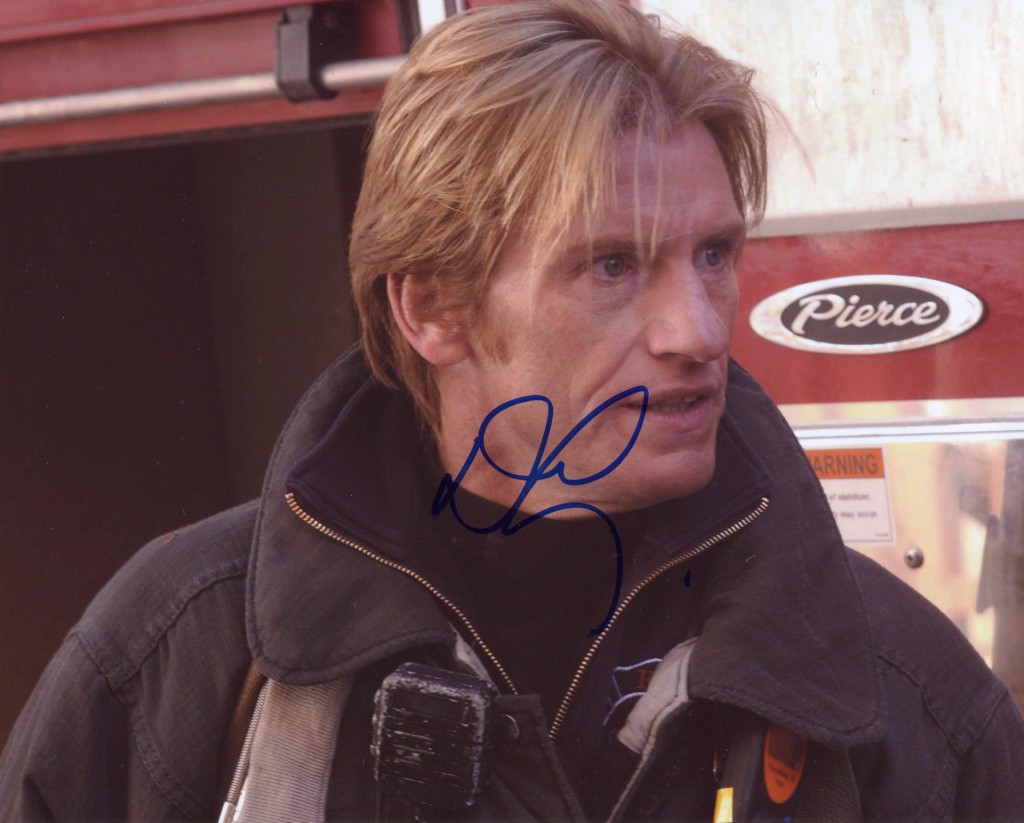
Denis Leary was born in Worchester, Massachusetts in 1957 of Irish parents who came from Killarney.   He became a top flight comedy artist before branching into movies.   Among his credits are the wonderful “The Ref” with Kevin Spacey and Glynis Johns in 1994, “Demolition Man” and “Suicide Kings”.   He is also starring in the television drama series “Rescue Me”.   He holds both US and Irish nationality.

TCM Overview:

Having made his mark as an angry man comedian in the early 1990s with a stand-up act that lambasted every aspect of popular culture, actor Denis Leary put his abrasive persona to good use when he made the transition to the screen. He first gained widespread notice with his fast-talking rants that were featured in between commercials on MTV. After achieving a minor hit in the music world with the sardonic 1993 single “Asshole,” Leary starred in the funny, but under-performing comedy “The Ref” (1994) before appearing in the cringe-worthy comedy “Operation Dumbo Drop” (1995). He delivered sturdy performances in uncharacteristically dramatic fare like “Love Walked In” (1997), “Monument Ave” (1998), “The Thomas Crown Affair” (1999) and “Jesus’ Son” (1999). Despite a series of uneven roles, Leary finally found his groove as the star, co-creator and executive producer of “Rescue Me” (FX, 2004-2011), a gritty and acerbically funny look at a group of fireman coping with their dysfunctional lives post-9/11. Irreverent, shocking and sometimes controversial, “Rescue Me” proved to be the perfect vehicle for Leary’s sardonic wit, playing a recovering alcoholic who struggles to keep together what’s left of his family while constantly battling his inner demons. Hailed by critics and blasted by some of the more overzealous watchdog groups, the show allowed Leary to put the full force of his talents on display while opening doors to more mainstream projects.

Denis Leary was born on Aug. 18, 1957, the second of four children of Irish immigrants, Jack and Nora Leary. He was raised in Worcester, MA, where his father was a mechanic and, by his own description, pretty much everyone in the neighborhood grew up to be a cop, firefighter, teamster or criminal. Leary first had his sights set on becoming a professional hockey player until a viewing of Martin Scorsese’s “Mean Streets” (1973) altered his world view. He was so captivated by the realness of the characters onscreen, he decided he wanted to try acting. He became involved with community theater groups after graduating from St. Peter-Marion Catholic high school in 1975, then moved to Boston to study writing and theater at Emerson College. At Emerson, Leary fell in with other talented up-and-comers – including future stand-ups Steven Wright and Mario Cantone – and in 1976, he co-founded the Emerson Comedy Workshop, a writing and performing group that survives today. He appeared in sketch comedy shows and one-act plays, eventually wanting to try stand-up comedy. At the time, Boston had a thriving local comedy scene that launched the careers of Lenny Clarke, Colin Quinn, Paula Poundstone, Wright and Cantone. In addition to schoolwork and Emerson productions and hosting his own stand-up night at the club Play it Again Sam’s, Leary also formed a band with musicians from the Comedy Workshop. The group performed comical songs that would become a trademark of Leary’s eventual breakout.

Following his graduation in 1979, Leary was offered a job teaching comedy writing at his alma mater. He stayed in Boston another five years; long enough to work up solid stand-up material and marry one of his students, writer Ann Lembeck. The pair eventually moved to New York City, where Leary began to break into the city’s standup scene and land writing work. In one of his earlier gigs, Leary was a writer and performer on MTV’s Colin Quinn-hosted game show “Remote Control” (1987-1990), where Leary made walk-on appearances as Andy Warhol and a lion tamer with a kitten, among others. In London, he served as host of the “London Underground” TV variety show and while he was there he debuted his one-man show “No Cure for Cancer” at the Edinburgh International Arts Festival. His performance swept the Critic’s Award and established Leary’s onstage persona as an angry, chain smoking, cynical social observer preoccupied with red meat, death and rock ‘n’ roll. He expounded on such issues as smoking (“I’m going to get a tracheotomy so I can smoke two cigarettes at the same time”) to pop stars (“Sting – he wants to save the seals, he wants to save the rain forests…how about saving your hair, OK, pal?”). The show landed a sold-out run on London’s famed West End and the Learys returned to New York and a four-month run off-Broadway.

MTV tapped Leary’s rebellious attitude for a series of image spots and he became an instant icon of the era, pacing back and forth in a black leather jacket in a squalid urban setting, smoking furiously, and ranting about everything from Cindy Crawford to the hypocrisy of “political correctness.” “No Cure for Cancer” was aired on Showtime in 1992 and released as an album in 1993, spawning a single and music video for “Asshole,” Leary’s searing musical ode to the “average Joe” living the American consumerists’ self-centered dream. Leary’s instant fame had its detractors, however. Following the widespread popularity of “No Cure for Cancer,” comedy insiders stepped forward to accuse Leary of plagiarizing from similarly angry, nicotine-addicted Bill Hicks. There were claims that Leary not only used some of the comedian’s material verbatim but also co-opted his stage persona. Hicks remained relatively unknown when he died of cancer in 1994 which further enraged accusers who believed Leary had shot to fame based on someone else’s material.

Leary’s MTV work led to product endorsements for Nike, and naturally the acting offers began to come in. The year 1993 found him appearing in nearly half a dozen films, where the 6’3″ blond was generally limited to comic cameos (“National Lampoon’s Loaded Weapon 1”), evil heavies (“Judgment Night”), and regular guys (“The Sandlot”). In 1994 he began a long-term association with budding young director Ted Demme, who cast him as a burglar trapped in a house with dysfunctional hostages in “The Ref” (1994). The black comedy was a perfect vehicle for Leary, while his follow-up “Operation Dumbo Drop” (1995) was historically unsuccessful. Leary teamed with wife Lembeck to collaborate on the story for “Two If By Sea” (1996), but sadly the romantic comedy co-starring Sandra Bullock was also a bomb. Leary and Lembeck teamed up again for the “Lust” segment of “National Lampoon’s Favorite Deadly Sins” (Showtime, 1996), earning a CableACE Award for the short written by Lembeck and directed by Leary. The coffee and cigarettes kept Leary going full speed, and in 1997, he acted in five films – including the forgettable titles “The Matchmaker” and “Love Walked In” – as well as the mildly successful political satire “Wag the Dog” with Robert De Niro and Dustin Hoffman.

In 1997 Leary finally taped his second stand-up show, “Denis Leary: Lock ‘n’ Load” (HBO), where no one was safe from his acid wit, least of all, O.J. Simpson. (“I hope your kids pull a Menendez on you, O.J. And they’ll be forgiven, 10 times over.”) Big screen offers in the family comedy “Wide Awake” (1998) and “Small Soldiers” (1998) kept his profile high and his bank account full, but still failed to capitalize on Leary’s creative talents. He decided it was time to start his own production company. Apostle, he hoped, would help him gain more creative control over projects and expand his options as an actor and writer. He reunited with Demme to co-produce and star in “Monument Ave” (1998), a dark drama about the Irish mob set in Charlestown, MA, which opened to favorable reviews (under the original title “Snitch”) at the Sundance Film Festival. He went on to enjoy a scene-stealing supporting role in the remake of “The Thomas Crown Affair” (1999), with Pierce Brosnan and Rene Russo, and earned a Blockbuster Award for Best Supporting Actor. He also gave a powerful, understated performance as a working class alcoholic down on his luck in the indie “Jesus’ Son” (1999), which was one of the top critic’s picks of the year.

In December of 1999, news came from home that Leary’s cousin Jerry Lucey and his childhood friend Tommy Spencer – both firefighters – had been killed in a savage warehouse blaze in Worcester. In response, he formed the Leary Firefighters Foundation to raise money for survivors of firefighters killed in the line of duty and help supply necessary training and equipment for local fire departments. Perhaps as a tribute, Leary played a firefighter in the David Mamet adaptation “Lakeboat” (2000), before putting features on hold and launching a new phase of his career.

In 2001, Leary debuted “The Job” (ABC, 2001-02), a half hour, single-camera police dramedy co-created with Peter Tolan. Leary starred as the wise-ass, straight shooting, and believably flawed detective Mike McNeil in the standout series, which he also wrote and produced. Despite critical raves, ABC executives seemed unsure what to do with the project and eventually cancelled it, but with all Leary had learned about TV production, he was hungry to take a second crack at it. Meanwhile, the staggering number of firefighting deaths resulting from September 11th prompted him to form The Fund for New York’s Bravest, an offshoot of the Leary Firefighters Foundation devoted to the needs of New York firefighters and their families. While co-developing his next television project with Tolan, Leary appeared in the 2002 crime drama “Bad Boy” and the well-received indie “The Secret Lives of Dentists” (2002), playing a patient of dentist Campbell Scott who becomes the voice of his paranoia. He also voiced saber-toothed tiger Diego in the hit CGI-animated film “Ice Age” (2002).

Leary was finally able to combine his long-time loyalty towards firefighters with his writing and acting talent in the co-creation of “Rescue Me.” The hour-long drama/comedy hybrid starred Leary as Tommy Gavin, a seemingly fearless and tough-as-nails New York firefighter battling alcoholism, the disintegration of his marriage and family, and hallucinations of his firefighting cousin who died on September 11th. An outstanding ensemble cast represented several generations of hard-living blue collar workers daily surviving intense drama with ball-busting wit. Fortunately the show was picked up by edgy cable network FX, which allowed the raunchy firehouse talk and often controversial situations so crucial to its gritty realism to remain intact.

With “Rescue Me,” Leary finally proved that when given the chance to follow his vision, his work was top notch. In 2005, he was nominated for a Best Performance Golden Globe Award. Leary was also nominated for an Outstanding Writing Emmy in 2005 and Outstanding Lead Actor Emmys in 2006 and 2007. Meanwhile, he was a significant player in a strong ensemble cast in “Recount” (HBO, 2008), a made-for-television movie the depicted the behind-the-scenes action during the month-long election fiasco between George W. Bush and Al Gore in 2000. Leary played Democratic consultant and strategist, Michael Whouley, which earned him a Golden Globe nomination for Best Supporting Actor in a series, movie or miniseries. Meanwhile, Leary unsurprisingly generated some controversy after the release of his book, Why We Suck: A Feel Good Guide to Staying Fat, Loud, Lazy and Stupid (2008), in which he called autistic children “dumb-ass kids,” “morons,” “stupid” and “lazy.” Leary claimed he was taken out of context, saying that he was commenting on the over-diagnosis of autistic children, though he did later publicly apologize. After reprising Diego the saber-toothed tiger for “Ice Age: Dawn of the Dinosaurs” (2009), Leary embarked on his first stand-up tour in 12 years, headlining the “Rescue Me Comedy Tour” in Atlantic City, NJ, with co-stars Lenny Clarke and Adam Ferrera. Meanwhile, the show itself aired its seventh and final season in 2011, ending Leary’s most popular and accomplished project to date.

The above TCM overview can also be accessed online here.

Robert Sean Leonard
Robert Sean Leonard

Robert Sean Leonard was born in 1969 in Westwood, New Jersey.   He is avery profilic and acclaimed stage actor.   His first major film role was in 1989 in “Dead Poet’s Society”.   Other films include “Mr and Mrs Bridge” and “Much Ado About Nothing”.

TCM Overview:

A Tony Award-winning stage and film actor with a boyish charm, Robert Sean Leonard first caught the attention of Hollywood with his touching portrayal of a prep school student with theatrical aspirations in Peter Weir’s modern film classic, “Dead Poet’s Society” (1989). A stage-trained actor from the age of 12, Leonard became known for his earnest and touching dramatic performances throughout his career. Dividing his time equally between stage and screen, Leonard managed to maintain success in both mediums, starring opposite some of the business’ most acclaimed actors, including Paul Newman, Glenn Close and Kenneth Branagh. Making the shift to series television in 2004, Leonard joined the cast of the hit medical drama, “House” (Fox, 2004- ), and as Dr. James Wilson, enjoyed the most high profile success in his career to date.

Born Feb. 28, 1969 in Westwood, NJ to Robert and Joy Leonard, the talented youngster showed an interest in theater from an early age, making his stage debut at age 12 in a New Jersey production of “Oliver!” He began to pursue an acting career at the age of 14, performing at the Ridgewood Theater in New York, as well as acting off-Broadway in “Sally’s Gone, She Left Her Name” and in his Broadway debut, starring as Eugene in Neil Simon’s “Brighton Beach Memoirs” in 1986. Only 17 years-old, Leonard’s stage experience and boyish charm helped him make a smooth transition to film, with his feature film debut in “The Manhattan Project” (1986) as well as a starring role in the teen comedy, “My Best Friend is a Vampire” (1988). Landing a prominent dramatic role, Leonard was cast as Neil Perry in Peter Weir’s “Dead Poet’s Society” (1989). Starring opposite Robin Williams and Ethan Hawke, Leonard’s touching performance as a suicidal prep school student earned him rave reviews and opened the door for other film roles.

Managing to balance both acting and an education, Leonard went on to study history at New York’s Fordham University and later attended Columbia University’s School of General Studies and Continuing Education. Forging ahead with acting, however, he appeared on film as the teenage son of Paul Newman and Joanne Woodward in the Merchant-Ivory production “Mr. and Mrs. Bridge” (1990). On stage, he performed in the Riverside Shakespeare Company’s production of “Romeo and Juliet” and in the Broadway production of “The Speed of Darkness.” Back on film, Leonard went on to star as a jazz-crazy youth in the World War II drama, “Swing Kids” (1993), portray the love-struck Claudio in Shakespeare’s “Much Ado About Nothing” (1993) and appear in Martin Scorsese’s “The Age of Innocence” (1993) – all certifiable critical hits. That same year, Leonard earned a Tony nomination for his performance in the Broadway revival of “Candida.” A devoted theater actor, Leonard went on to perform in a production of “King Lear” at San Diego’s Old Globe Theater and appeared on Broadway in productions of “Philadelphia, Here I Come” and Tom Stoppard’s “Arcadia.”

Hollywood came calling again, with Leonard starring opposite Glenn Close and Whoopi Goldberg in Christopher Reeve’s acclaimed directorial debut, “In the Gloaming” (1997), in which Leonard turned in a touching performance as a young AIDS patient who returns home for his final months. Next, Leonard appeared in Whit Stillman’s ensemble comedy, “The Last Days of Disco” (1998) and returned to the stage in 1999 to appear in the Broadway revival of Eugene O’Neill’s “The Iceman Cometh” – in which he shared the stage with none other than Oscar-winner, Kevin Spacey. Teaming up with “Dead Poet” alum Hawke for two films in 2001, Leonard appeared as part of an ensemble cast in Hawke’s directorial debut, “Chelsea Walls” (2001) and starred opposite Hawke and Uma Thurman in Richard Linklater’s indie drama “Tape.” Bouncing back to the stage in that same year, Leonard appeared as A.E. Housman in Tom Stoppard’s “The Invention of Love” – a performance that won him the Tony Award for Best Performance by a Featured Actor in a Play. He continued his hot streak by starring in the Broadway musical “The Music Man,” “The Violet Hour,” and “Long Day’s Journey Into Night,” for which he was nominated for another Tony Award in 2003.

Taking on his first major television role in 2004, Leonard joined the cast of the Fox medical drama, “House” (2004- ), portraying oncologist Dr. James Wilson. The hit drama, which often veered toward the humorous, was Leonard’s most buzzed about role to date. Most of the accolades fell on the show’s lead, maverick doctor, Gregory House – expertly played by British actor, Hugh Laurie. Dr. House’s unorthodox treatment of patients – including an eccentric bedside manner which involved offering rapid and accurate diagnoses after seemingly not paying attention – got most of the critical buzz, but the ensemble cast, including Leonard, each got their chance to shine in the quirky drama that became an instant hit with viewers.

The above TCM overview can also be accessed online here.

A.J. Buckley
A.J. Buckley
A.J. Buckley
A.J. Buckley
A.J. Buckley
 

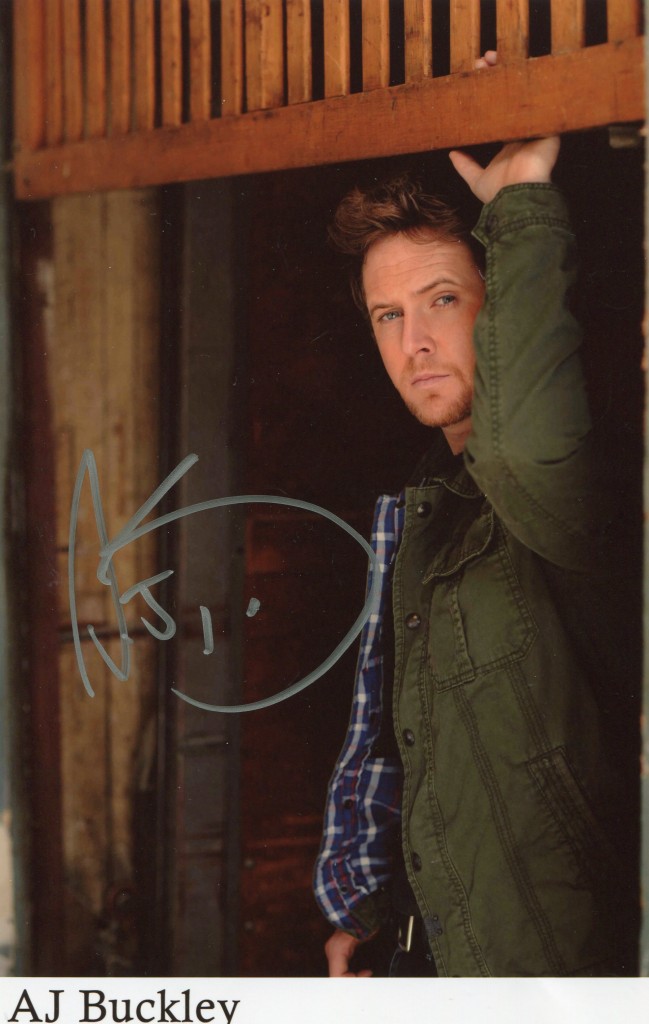
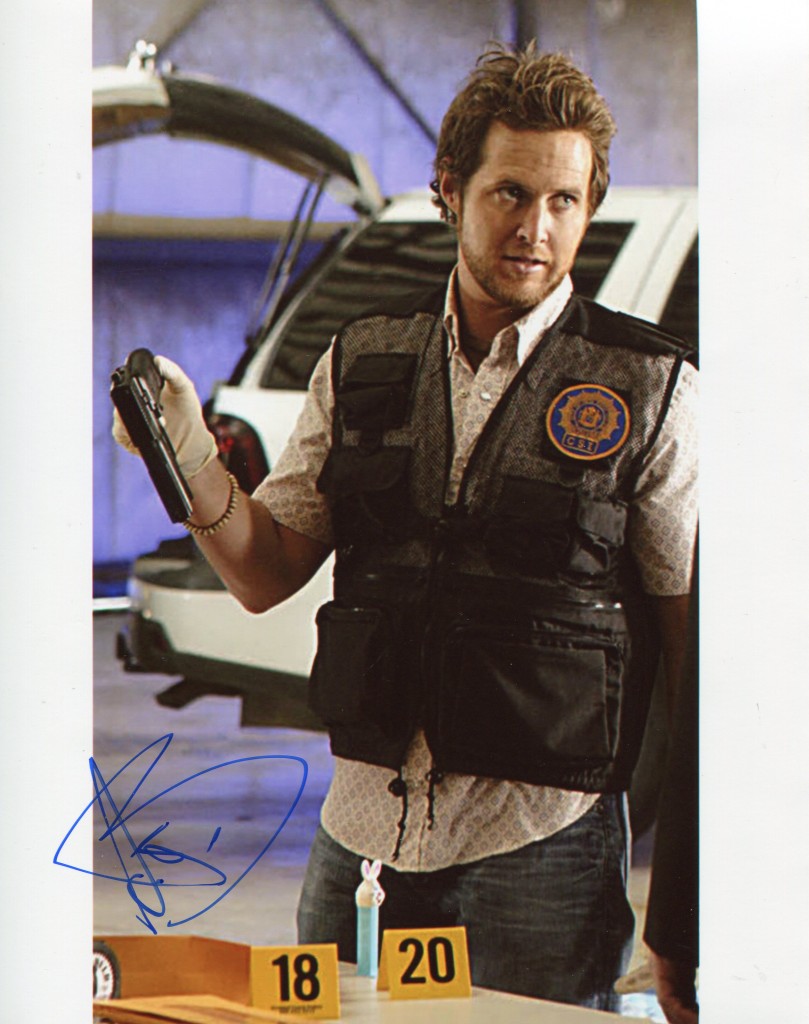
A.J. Buckley was born in Dublin in 1978.   When he was six, his parents emigrated to Canada.   He was featured in the 1998 film “Disturbing Behaviour” and he stars as Adam Ross in the television series  “CSI:NY”.

Interview in “Calgary Herald”:

f you didn’t realize that A.J. Buckley is on this season of Justified, don’t feel bad: the actor’s own mother didn’t recognize him when she walked past him at the airport.

Best known for playing lab nerd Adam Ross on CSI: NY, Buckley physically transformed himself so he wouldn’t be typecast by his eight years on the popular TV series after it was cancelled last year.

“I trained my ass off. I put on 45 pounds. I am really big. I’m up to 197 pounds,” Buckley says of the seven months he spent in the gym preparing for his role in North of Hell, a feature film with Katherine Heigl and Patrick Wilson. (Buckley is also a producer on the project.) “I was training twice a day with no cardio, all power lifting.”

And viewers can see the results on this week’s episode of Justified.

“I am pretty much buck naked. You’ll get to see my whole world on Tuesday,” Buckley says, laughing. “It was cold that day. That’s all I have to say.”

The Irish-born, Vancouver-raised actor plays Danny Crowe, a “romantic sociopath,” on Justified. His murder of Crowes imposes on kin back in Harlan County, Kentucky, when their criminal enterprises in Florida dry up. The Crowe clan figures in the works of author Elmore Leonard, whom was an executive producer of the series before his death in 2013. The author excelled at creating engaging characters who lived in a universe of shades of grey.

“None of these guys think they are doing anything wrong and that is the fun part of playing it,” Buckley says. “They don’t think they are bad buys. They have conviction that what they are doing is right and that they are claiming what is theirs.”

But Justified isn’t the only tasty treat on Buckley’s professional plate. The 35-year-old is on the phone from Vancouver, where he’s filming an episode of Supernatural. Yes, the Ghostfacers are back, ready to take names and kick butt. (Not really, but they think they are, as is the wont of the bumbling team of so-so supernatural investigators led by Buckley and Travis Wester.) So, A.J., give us the scoop!

“Uhhh, we’re back?” he says, laughing again. While the details on the plot are under wraps, Buckley will say “Definitely, this episode is a lot different than any other Ghostfacers episode that we’ve done. And I will leave it at that. It’s a lot different in the way that we have shot it, and been portrayed.”

As if ping-ponging from the set in Los Angeles to Vancouver wasn’t enough, Buckley is a freshly minted father. His fiancée, Abigail Ochse, gave birth to the couple’s first child, Willow, on Jan. 19. The day they brought Willow home from the hospital, Buckley had to hop a plane to Vancouver.

He’s been keeping in touch via pictures and Skype, and as Ochse tells him, not much happens the first few weeks except sleeping and feeding.

“This is where it gets crazy: we shoot from 7 a.m. Monday to 6 in Vancouver, then I take the eight o’clock flight and get in at midnight in Los Angeles. I go home and see my fiancée and baby, then leave at 7 a.m. for an all day and night shoot for Justified,” he says. “I’m not complaining at all about how busy I am, but this is definitely going to test my sleeping ability and being able to memorize lines.”

Something else that’s been challenging that last one is his colleagues on the Justified set. From lead Timothy Olyphant to show runner Graham Yost (another Canuck) to the cast and crew, everyone is playing at the top of their game, he says.

“The words are unbelievable. The episode I’m about to do, I’m looking at the words and how it’s written and comes together is so awesome,” Buckley marvels. “Walton Goggins is the best bad guy on TV, hands down. He’s so eloquent. I am doing takes and I am looking at what he is bringing. And then it’s ‘Oh s..t. Sorry, I was looking at what you were doing there.’ Everybody just brings so much.”

Justified airs Tuesdays on Super Channel.

The above article can also be accessed online here.

TCM Overview:

At age six, actor A. J. Buckley’s family moved across the Atlantic to White Rock, British Columbia, where Buckley would grow up. Diagnosed with dyslexia, he struggled with his studies, but found success when he landed his first acting job in the mid ’90s on the Canadian adventure series “The Odyssey.” Shortly thereafter he appeared on the American science-fiction dramas “The X-Files” and “Millennium.” In 1998, he made his film debut in the teen horror thriller “Disturbing Behavior,” which boasted a lineup of teen stars including James Marsden, Katie Holmes, and Ethan Embry. He went on to appear in a number of films, most notably the teen horror flick “The In Crowd” and the acclaimed indie drama “Blue Car.” He worked regularly in television as an actor and voice actor. In 2005, he landed the recurring role on “CSI: NY” as Adam Ross, a gifted scientist with a dark sense of humor. The next year, he made his first appearance on TV’s “Supernatural” as Ed Zeddmore, an aspiring ghost hunter. The character caught on and would appear in several episodes of the show’s run. In 2008, Buckley co-founded the film production company FourFront Productions. Two years later he created a web-series spin-off for his character called “Ghostfacers.” Buckley writes, directs, and stars in the critically acclaimed web-series.

The above TCM overview can also be accessed online here.

Robert Forster
Robert Forster
Robert Forster

Robert Forster – An Appreciation

Robert Forster, the handsome and omnipresent character actor who got a career resurgence and Oscar nomination for playing bail bondsman Max Cherry in Jackie Brown, died in October 2019. He was 78.

Publicist Kathie Berlin said Forster died of brain cancer following a brief illness. He was at home in Los Angeles, surrounded by family, including his four children and partner Denise Grayson.

Condolences poured in Friday night on social media. Bryan Cranston called Forster a “lovely man and a consummate actor” in a tweet. The two met on the 1980 film Alligator and then worked together again on the television show Breaking Bad and its spinoff film, El Camino, which launched Friday on Netflix.

“I never forgot how kind and generous he was to a young kid just starting out in Hollywood,” Cranston wrote.

His Jackie Brown co-star Samuel L. Jackson tweeted that Forster was “truly a class act/Actor!!”

A native of Rochester, New York, Forster quite literally stumbled into acting when in college, intending to be a lawyer, he followed a fellow female student he was trying to talk to into an auditorium where Bye Bye Birdie auditions were being held. He would be cast in that show, that fellow student would become his wife with whom he had three daughters, and it would start him on a new trajectory as an actor.

A role in the 1965 Broadway production Mrs Dally Has a Lover put him on the radar of Darryl Zanuck, who signed him to a studio contract. He would soon make his film debut in the 1967 John Huston film Reflections in a Golden Eye, which starred Marlon Brando and Elizabeth Taylor.Advertisement

Forster would go on to star in Haskell Wexler’s documentary-style Chicago classic Medium Cool and the detective television series Banyon. It was an early high point that he would later say was the beginning of a “27-year slump”.

He worked consistently throughout the 1970s and 1980s in mostly forgettable B-movies — ultimately appearing in over 100 films, many out of necessity.

“I had four kids, I took any job I could get,” he said in an interview with the Chicago Tribune last year. “Every time it reached a lower level I thought I could tolerate, it dropped some more, and then some more. Near the end, I had no agent, no manager, no lawyer, no nothing. I was taking whatever fell through the cracks.”

It was Quentin Tarantino’s 1997 film Jackie Brown that put him back on the map. Tarantino created the role of Max Cherry with Forster in mind; the actor had unsuccessfully auditioned for a part in “Reservoir Dogs,” but the director promised not to forget him.

In an interview with Fandor last year, Forster recalled that when presented with the script for Jackie Brown, he told Tarantino, “I’m sure they’re not going to let you hire me.” Tarantino replied: “I hire anybody I want.”

“And that’s when I realised I was going to get another shot at a career,” Forster said. “He gave me a career back and the last 14 years have been fabulous.”

The performance opposite Pam Grier became one of the more heartwarming Hollywood comeback stories, earning him his first and only Academy award nomination. He ultimately lost the golden statuette to Robin Williams, who won that year for Good Will Hunting.

After Jackie Brown, he worked consistently and at a decidedly higher level than during the “slump”, appearing in films like David Lynch’s Mulholland Drive, Me, Myself and Irene, The Descendants, Olympus Has Fallen, and What They Had, and in television shows like Breaking Bad and the Twin Peaks revival. He said he loved trying out comedy as Tim Allen’s father in Last Man Standing.

He’ll also appear later this year in the Steven Spielberg-produced Apple+ series Amazing Stories.

Even in his down days, Forster always considered himself lucky. “You learn to take whatever jobs there are and make the best you can out of whatever you’ve got. And anyone in any walk of life, if they can figure that out, has a lot better finish than those who cannot stand to take a picture that doesn’t pay you as much or isn’t as good as the last one,” he told IndieWire in 2011. “Attitude is everything.”

Forster is survived by his four children, four grandchildren and Grayson, his partner of 16 years.

Shirley MacLaine
Shirley MacLaine
Shirley MacLaine

Shirley MacLaine has had a long and varied career.   She was born in Virginia in 1934.   She made her film debut for Alfred Hitchcock in 1955 in The Trouble With Harry”.   Among her films are “Around the World in 80 Days”, “Ask Any Girl”, “Some Came Running”, “The Apartment”, “Irma La Douce”, “Sweet Charity”£, “Can Can”, “Terms of Endearment” and “Steel Magnolias”.

TCM Overview|:

Broadway hoofer, dramatic talent, spiritual eccentric, activist, Oscar winner… Over the course of a varied and distinguished career, actress Shirley MacLaine earned these titles many times over. A former ballerina hopeful-turned-chorus girl, she rose to fame in the early 1950s after Hollywood producers noticed her in Broadway’s “Pajama Game.” She made the transition to features in a series of roles that emphasized her quirkiness and heartbreaking vulnerability, most notably in “Some Came Running” (1960), “The Apartment” (1960) and “Irma La Douce” (1963). The redheaded pixie dropped out of features in the late 1960s – watching her brother Warren Beatty rise to fame at that time -but reemerged in the late 1970s with several acclaimed performances in such films as “The Turning Point” (1977), “Being There” (1979) and “Terms of Endearment” (1983), the latter of which brought her a long-overdue Oscar for Best Actress. She remained a vital presence in efforts like “Steel Magnolias” (1989), “Postcards from the Edge” (1990) and “Guarding Tess” (1994), while extolling alternative beliefs in reincarnation and extraterrestrials that occasionally earned derision from pundits. Well into her seventies, the actress continued to command attention in acclaimed projects, ranging from the biopic “Coco Chanel” (Lifetime, 2008) to the black comedy “Bernie” (2012). Not that the validation was necessary, but an AFI Life Achievement Award merely punctuated the fact that MacLaine remained among the most gifted of Hollywood and stage performers for over 40 years – a distinction that she continued to earn well into the new millennium.

Born Shirley MacLaine Beaty on April 24, 1934, she was the daughter of teachers Ira Owen Beaty and Kathrine Corrine MacLean, who also raised a son, Warren, later a major Hollywood talent in his own right. MacLaine was born in Richmond, VA, but the family moved to several locations in the state throughout her childhood before settling in Waverly. MacLaine’s most fervent desire was to become a dancer, which she had begun to train for at the age of two; by four, she had made her public debut and would appear on the professional stage just eight years later. So great was her desire to dance that while warming up before a performance of “Cinderella,” she snapped her ankle. Not wishing to bow out, she bound her feet and went through with the production, after which she was dispatched in an ambulance. Eventually, the rigors of ballet proved too great for MacLaine to pursue in earnest, so she shifted her attention to acting. Just one summer shy of high school graduation, she lit out for New York in 1950 to audition for musicals and landed a part in the chorus for a revival of “Oklahoma!” She went back to Virginia to earn her diploma, after which she returned to the Great White Way to seek her fortune. Billed as Shirley MacLaine, she worked as a model while auditioning for musicals, eventually serving as Carol Haney’s understudy in the Broadway production of “The Pajama Game.”

In 1952, MacLaine had her big break in an amusingly showbiz way; Haney, who had garnered a reputation for never missing a performance, broke her ankle before curtain call. MacLaine was called in to replace her. The debut was a rough one, but MacLaine held her own. Three months later, Haney was again forced to miss a show, and MacLaine – now more familiar with the intricacies of the part – stepped in again. This time, director-producer Hal B. Wallis was in the audience and was charmed by her boundless energy. The veteran showman signed her to a five-year contract at Warner Bros., which commenced with “The Trouble with Harry” (1955) for no less than legendary director, Alfred Hitchcock. Though not one of the great filmmaker’s biggest hits, the black comedy helped to establish MacLaine’s screen persona: bubbly, irreverent and unquestionably alluring. She later belied that perception by showing a feistier side while engaging in and winning a highly publicized contract dispute with Wallis. She soon balanced light features like “Artists and Models” (1955) and “Around the World in Eighty Days” (1956) with more dramatic fare, which proved her to be among the more versatile actresses of the period. Most notable among the latter was “Some Came Running” (1960), in which she captivated as a small-town girl who overcomes her bad reputation in an attempt to find true love with Frank Sinatra’s cynical war vet. Critics and audiences responded favorably to the turn, which netted MacLaine Academy Award and Golden Globe nominations. Her participation in the film, which co-starred Dean Martin, made her an unofficial member – some said, sole female mascot – of Sinatra’s Rat Pack, an allegiance that was solidified with her uncredited cameo as a tipsy woman in the group’s iconic heist film, “Ocean’s Eleven” (1960).

MacLaine hit her stride in movies during the early 1960s, where she divided her time equally between straight drama, light comedies, and her roots in musical theater. She received perhaps her best early showcase as the vulnerable young elevator operator who beguiles Jack Lemmon’s salary man in Billy Wilder’s “The Apartment” (1960). Her performance, alternately winning and heartbreaking, earned her a second Oscar nod and wins from BAFTA and the Golden Globes. She played variations on that role in “Two for the Seesaw” (1962) with Robert Mitchum, “The Yellow Rolls-Royce” (1964) as a moll for gangster George C. Scott, and “What a Way to Go” (1964), as the seemingly “cursed” widow of Dean Martin, Dick Van Dyke, Paul Newman and Robert Mitchum, among others. She also reunited with Wilder to once again entice Jack Lemmon as the French prostitute “Irma La Douce” (1963), which brought her a third Academy Award nomination and second Golden Globe. However, by the mid-1960s, MacLaine’s career seemed to be in a rut. Musicals had faded as a money-making genre for studios, and executives seemed to have little idea of how to cast MacLaine as anything but the offbeat romantic lead in such largely unremarkable efforts as “Gambit” (1966) and “Woman Times Seven” (1967), in which director Vittorio De Sica had her tackle seven different roles. She continued to land Golden Globe nominations for her work, but the projects were simply not up to the standards of her past projects. She managed to land one final musical with 1969’s “Sweet Charity” for director Bob Fosse. The project turned out to be a miserable failure, though it did leave MacLaine with a signature song, “If They Could See Me Now,” which would later become a highlight of her singing engagements and TV specials.

MacLaine was largely off the screen for much of the late 1960s and early 1970s, preferring instead to work in other capacities. She was frequently on television during the decade, both as the star of her own short-lived sitcom “Shirley’s World” (ABC, 1971-72) and as the star of several well-received TV specials that highlighted her song and dance talents, beginning with 1974’s Emmy-winning “Shirley MacLaine: If They Could See Me Now” for CBS. MacLaine also defied her “kooky” screen persona by becoming deeply involved in politics; first as a delegate from California for Robert F. Kennedy and later, as a campaigner for George McGovern in 1972. The following year, MacLaine toured mainland China and recounted her experiences in a book, You Can Get There from Here, as well as in a documentary, “The Other Half of the Sky: A China Memoir” (1975), which earned her an Oscar nomination (shared with Claudia Weill) for Best Documentary. MacLaine also penned the first of several candid memoirs, Don’t Fall Off the Mountain in 1973, and mounted an impressive return to Broadway with a one-woman show, “Gypsy in My Soul” in 1976.

Her feature film career began to rebuild itself in the mid-1970s with an Oscar-nominated turn as a former ballerina who locks horns with a longtime competitor (Anne Bancroft) in “The Turning Point” (1977). She matched this success with a sexually charged turn as the long-neglected wife of a powerful businessman who attempts to find relief from Peter Sellers’ kindly gardener in Hal Ashby’s “Being There” (1979). Both films helped to put an older but no less spunky MacLaine back on the Hollywood map. But her greatest screen triumph would come four years later with James Brooks’ “Terms of Endearment” (1983). MacLaine unleashed the full brunt of her dramatic talents as the high-maintenance Aurora Greenway, who puts aside her differences with daughter Emma (Debra Winger) to care for her while she endures a terminal illness. The performance was hard-fought; MacLaine quit the production midway through, only to return for its completion, and reports from the set detailed numerous squabbles between the veteran actress and up-and-comer Winger, but it ultimately yielded her an Oscar which she famously won over her onscreen daughter.

Some of the goodwill and buzz generated by the Academy Award win was deflated by the release of MacLaine’s memoir Out on a Limb (1983). The bestseller detailed her ongoing fascination with spirituality, including out-of-body experiences and multiple reincarnations. The decidedly unusual subject matter helped to brand MacLaine as a bit of an eccentric, a label she handled with remarkable good humor, as noted by her appearance as an afterlife version of herself in Albert Brooks’ comedy “Defending Your Life” (1991). MacLaine was off the big screen for about four years after the release of Out on a Limb, during which she appeared as herself in an Emmy-nominated TV adaptation of the book for ABC in 1987. She also penned three similarly-themed follow-ups, Dancing in the Light (1986), It’s All in the Playing (1987) and Going Within (1989); even releasing her own spiritual workout video, “Shirley MacLaine’s Inner Workout” in 1989. She also played to adoring crowds in her second one-woman show on Broadway, “Shirley MacLaine on Broadway,” in 1984.

MacLaine returned to movies with a vengeance in the late 1980s, starting with her Golden Globe win as an eccentric piano teacher in John Schlesinger’s “Madame Sousatzska” (1988). She essayed numerous formidable matrons during this period, most notably Ouiser Boudreaux in the all-star adaptation of “Steel Magnolias” (1989), and a thinly veiled version of Debbie Reynolds in Mike Nichols’ adaptation of Carrie Fisher’s “Postcards from the Edge” (1990), both of which earned BAFTA nominations. Less acclaimed, but no less well played, were Golden Globe-nominated turns as a Jewish mother in “Used People” (1992) and as a flinty First Lady in “Guarding Tess” (1994). MacLaine also returned to Aurora Greenway for “The Evening Star” (1997), the long-awaited sequel to “Terms of Endearment,” but the results paled by comparison to its predecessor, largely due to the absence of Debra Winger and their unique onscreen rapport. In 1998, her considerable body of work in film, television and stage was honored by the Academy with the Cecil B. DeMille Award. MacLaine’s busy schedule in the late 1990s and early 2000s included several returns to made-for-TV efforts; among the most high-profile of these was the Carrie Fisher-penned “These Old Broads” (ABC, 2001), which pitted her against the equally iconic lineup of Elizabeth Taylor, Debbie Reynolds and Joan Collins. MacLaine also tackled makeup maven Mary Kay Ash in “The Battle of Mary Kay” (CBS, 2002) and lent her star power to a supporting role in Joseph Sargeant’s “Salem Witch Trials” (CBS, 2003). She also made her solo directorial debut with “Bruno” (2000), an unusual indie drama about a young boy with a taste for cross-dressing.

As she approached her seventh decade, MacLaine’s rarefied talents remained in demand for features, and she was showcased in a trio of high-profile supporting performances in 2005. She offered a deliciously arch Endora to rival even Agnes Moorhead’s original in Nora Ephron’s big-screen version of “Bewitched,” then dropped the glam to play the sympathetic grandmother to rival sisters Cameron Diaz and Toni Collette in Curtis Hanson’s “In Her Shoes.” Her comic skills were also given a workout as Jennifer Aniston’s grandmother, who may have been the inspiration for Mrs. Robinson in “The Graduate” (1967), in Rob Reiner’s “Rumor Has It.” MacLaine received strong notices for each picture, earning her umpteenth Golden Globe nomination for “In Her Sh s.” She then starred in “Coco Chanel” (Lifetime, 2008), delivering an icy turn as the notorious French fashion maven, which earned her yet another Golden Globe nomination; this time in the Best Actress in a miniseries or movie category. She also earned an Emmy Award nomination for the role in 2009. In her personal life, she continued to explore her spiritual interests in a flurry of books throughout the new millennium, including Out on a Leash: Exploring the Nature of Reality and Love (2003) and Sage-ing While Age-ing(2007).

Showing absolutely no signs of slowing down, MacLaine co-starred with Barbara Hershey in “Anne of Green Gables: A New Beginning” (CTV, 2008), the fourth entry in the film series based on the characters of Lucy Maud Montgomery, in which an adult Anne (Hershey) recalls her childhood in the days before she arrived at the iconic Prince Edward Island farm. Two years later, she returned to theater screens as part of the ensemble cast of director Garry Marshall’s romantic comedy “Valentine’s Day” (2010) as a wife struggling with a secret she had kept from her husband (Héctor Elizondo) for many years. After another two-year respite, she co-starred with Jack Black in Richard Linklater’s based-on-fact dark comedy “Bernie” (2012), in which she played a lonely, bitter widow whose intense relationship with a younger, well-liked local mortician (Black) takes a deadly turn. In June of that year, MacLaine was honored with the 40th American Film Institute’s Life Achievement Award in a ceremony that was later broadcast on the TV Land cable network. Rather than rest on her laurels, MacLaine further demonstrated her artistic vitality when she joined the cast of the critically-acclaimed British period drama “Downton Abbey” (PBS, 2010- ) as Martha Levinson, the widowed American mother of Lady Grantham (Elizabeth McGovern).

 The above TCM overview can also be accessed online here.

M. Emmet Walsh

M. Emmet Walsh


M. Emmet Walsh

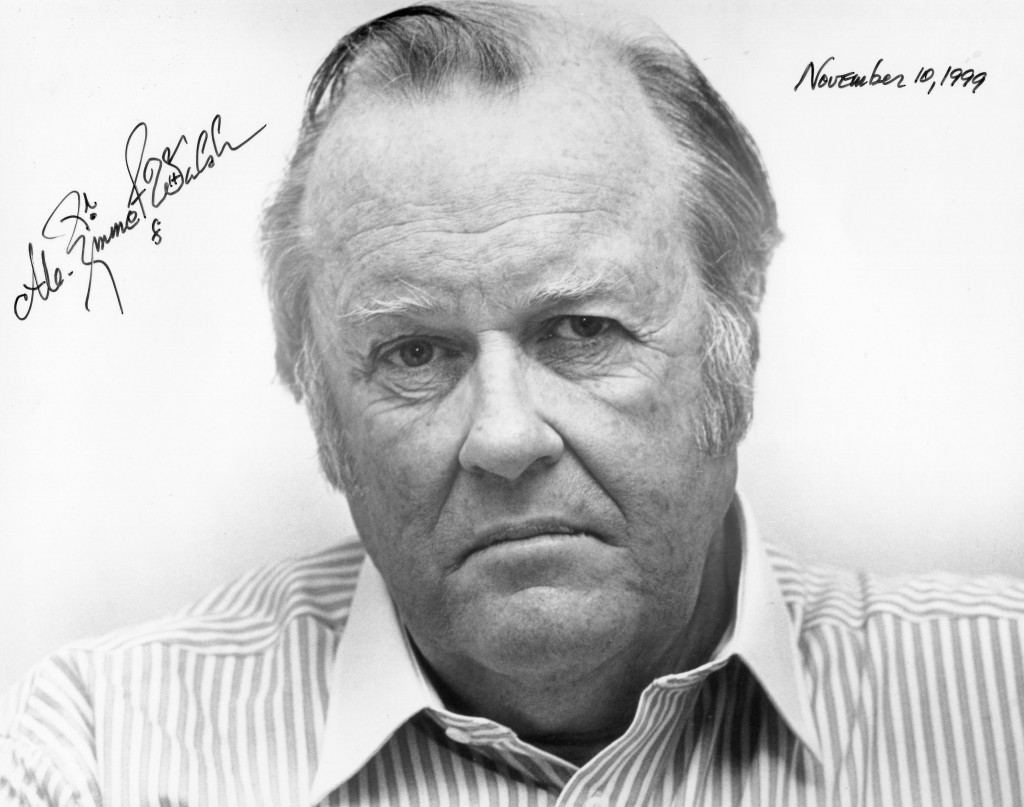
M. Emmet Walsh was born in New York in 1935.   In 1978 he was featured in “Straight Time” and went on to make “Blade Runner”, “Blood Simple”in 1984 and “Killer Image”.

IMDB entry:

Wonderfully talented, heavyset character actor (from New York, but regularly playing Southerners) M. Emmet Walsh has made a solid career of playing corrupt cops, deadly crooks, and zany comedic roles since the early 1970s. First appeared in a few fairly forgettable roles both on TV and onscreen before cropping up in several well remembered films, including a courtroom police officer in What’s Up, Doc? (1972), as the weird Dickie Dunn in Slap Shot (1977), and as a loony sniper hunting Steve Martin in The Jerk (1979). On-screen demand heated up for him in the early 1980s with attention-grabbing work in key hits, including Brubaker (1980), Reds (1981), and as Harrison Ford‘s police chief in the futuristic thriller Blade Runner (1982). Walsh then turned in a stellar performance as the sleazy, double-crossing private detective in the Joel Cohen and Ethan Coen film noirBlood Simple. (1984), and showed up again for the Coens as a loud-mouthed sheet-metal worker bugging Nicolas Cage in the hilarious Raising Arizona (1987). As Walsh moved into his fifties and beyond, Hollywood continued to offer him plenty of work, and he has appeared in over 50 movies since passing the half-century mark. His consistent ability to turn out highly entertaining portrayals led film critic Roger Ebert to coin the “Stanton-Walsh Rule,” which states that any film starring Walsh or Harry Dean Stanton has to have some merit. And the “M” stands for Michael!

– IMDb Mini Biography By: firehouse44

The above IMDB entry can also be accessed online here.