
Contemporary Actors

Collection of Contemporary Actors

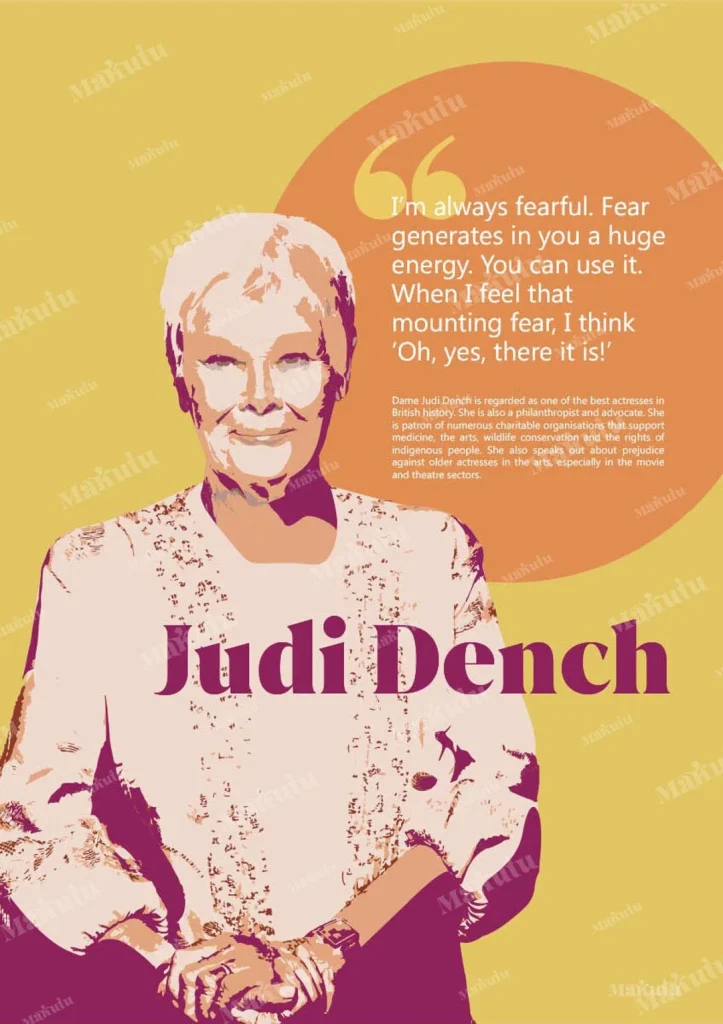
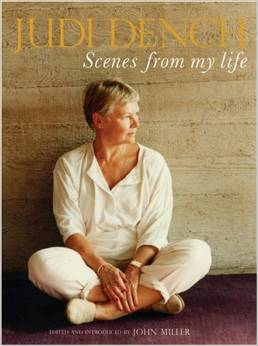
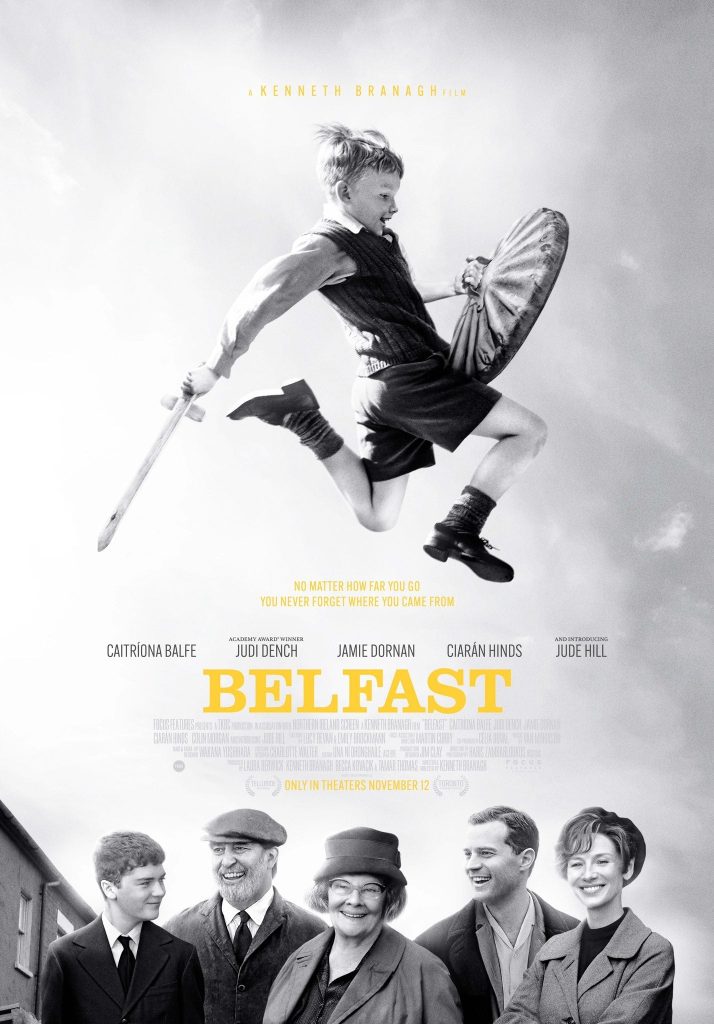
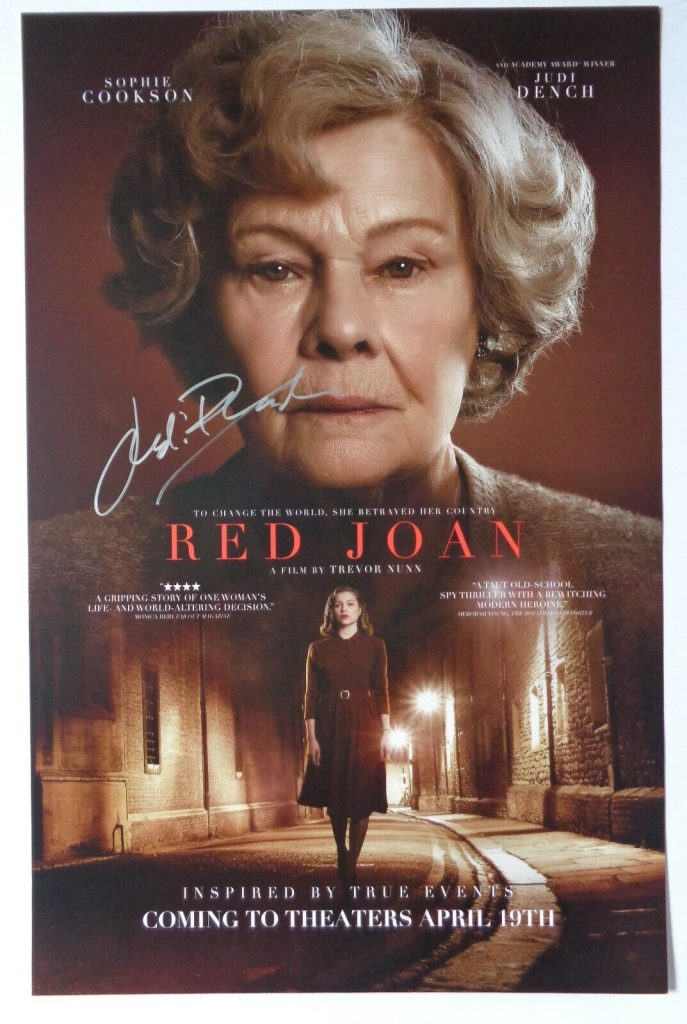
Judi Dench
Dame Judi Dench
Dame Judi Dench

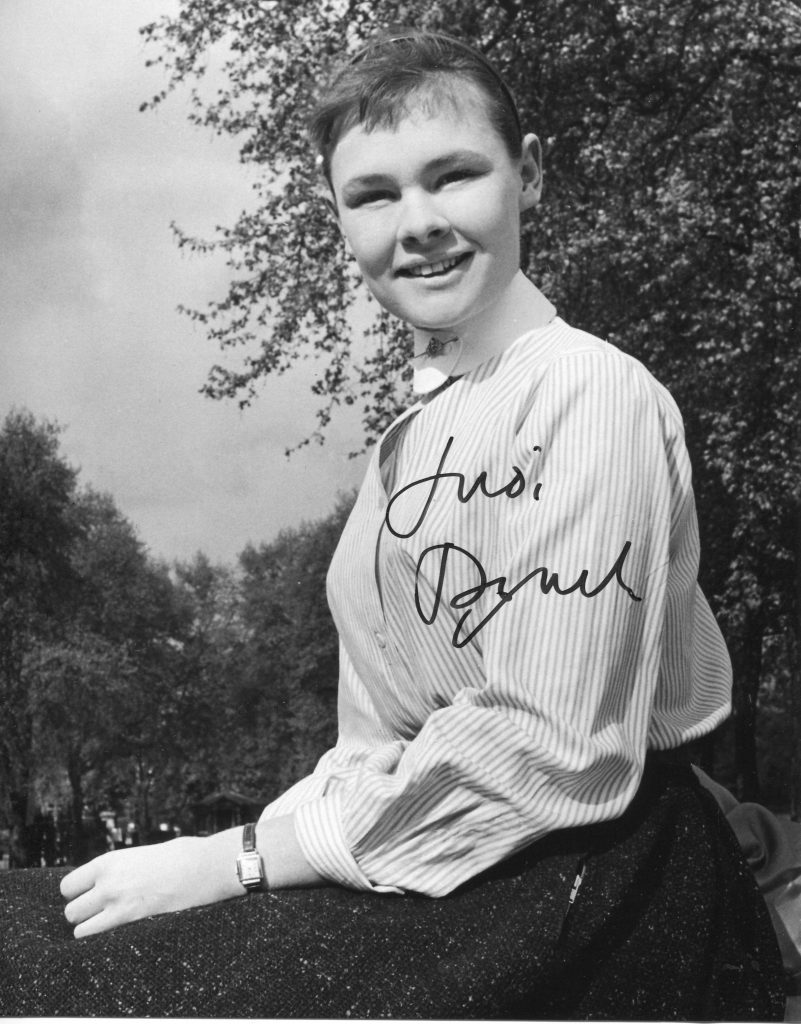
Judi Dench, although an acclaimed stage performer for many years, she not achieve major recognition on film until she was in middle age. She was born in 1934 in York. She made her stage debut with the Old Vic in 1957. She made her film debut in 1964 in “The Third Secret” with Stephen Boyd. She made sporadic film appearances throughout the remainder of the sixties and early seventies. In 1985 she begain making regular film appearances in increasingly larger roles. These movies include “Wetherby” with Vanessa Redgrave, “A Room With A View” with Maggie Smith and “84 Charing Cross Road” with Anthony Hopkins. In 1995 she began her regular appearances in the James Bond series as M in “GoldenEye” with Pierce Brosnan. She won an Oscar for “Shakespeare in Love”. Recent movies include “Nine” and “Jane Eyre” and”Philomena”.

TCM Overview:

A distinguished talent widely recognized as one of Great Britain’s greatest modern actresses, Dame Judi Dench spent much of her career concentrating on stage and television in her native England. From her early years with the Old Vic Theater Company in London, Dench proved a commanding stage performer in both classic drama and musical comedy, and at the same time, was known by non-theatergoers for starring roles on the British comedy series “As Time Goes By” (BBC, 1992-2005) and “A Fine Romance” (1981-84). It was not until Dench hit her fifties that she began finding film roles that enabled international audiences the opportunity to appreciate her commanding gifts. Dench was one of the most frequently nominated actresses in Academy Award history, earning a statue for her portrayal of Queen Elizabeth I in “Shakespeare in Love” (1998) and nominations for a wide range of screen performances in “Chocolat” (2000), “Iris” (2001) and “Notes on a Scandal” (2006). A national treasure, Dench was honored by the British government with the title of Dame Commander of the British Army, and her homeland recognized her outstanding contributions to British Theater with a Laurence Olivier Award – officially proving that Dame Judi Dench was what critics had claimed for years: the modern, female equivalent of Sir Laurence Olivier, both onscreen and under the bright glare of the footlights.

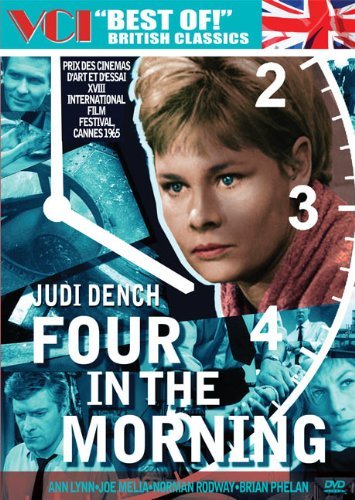
The daughter of Reginald Arthur Dench, a doctor, and Eleanora Olave, a native of Dublin, Dench was born on Dec. 9, 1934 and raised as a Quaker in York, North Riding of Yorkshire. She made her acting debut in the city’s cycle of mystery plays, in which both her father and older brother Jeffrey also appeared. After graduating from London’s Central School of Speech and Drama, she made an auspicious debut with the Old Vic Theatre Company as Ophelia in “Hamlet” in 1957. The following year, Dench made a Broadway appearance with the Old Vic and remained with the troupe until 1961, excelling in such roles as Hermia in “A Midsummer Night’s Dream” (1960) and Isabella in “Measure for Measure” (1962). Throughout the 1960s, she made one strong stage characterization after another, but only in rare instances appeared on film. She was memorable as a young wife in the little-seen “Four in the Morning” (1965) and was majestic as Titania in Peter Hall’s filming of “A Midsummer Night’s Dream” (1968).

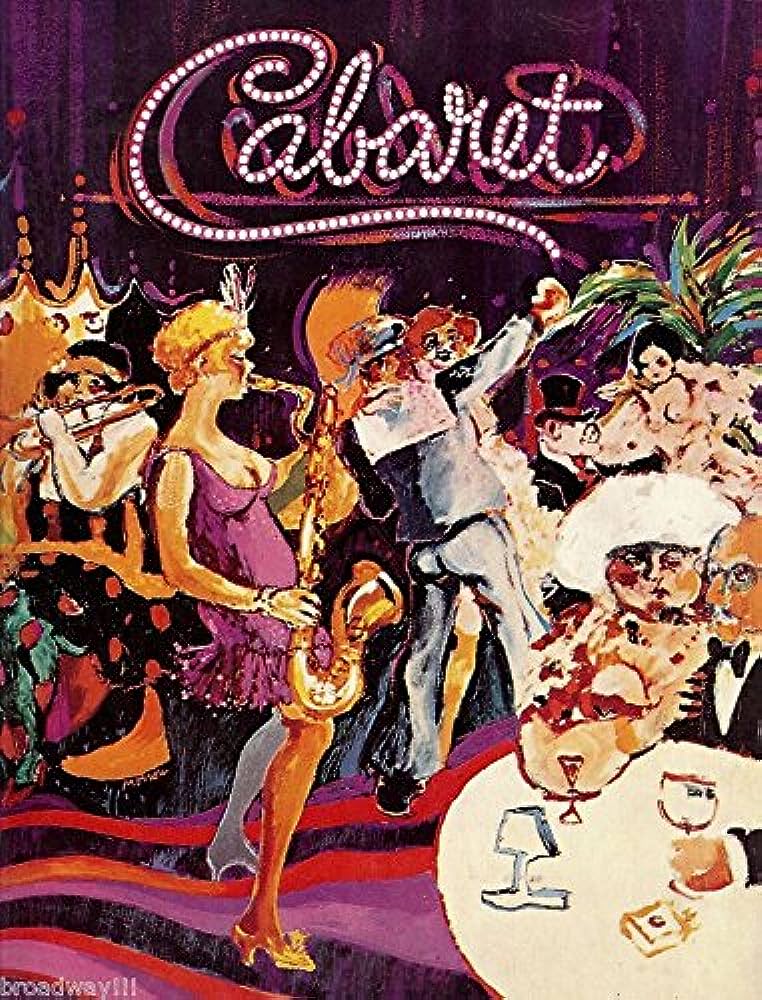
As Sally Bowles in the 1968 London staging of “Cabaret,” Dench delivered what many felt was the definitive interpretation of the role. She joined the Royal Shakespeare Company (RSC) in 1969, spending much of the next two decades amassing an impressive body of work and earning numerous accolades. After notable roles as Lady Macbeth (opposite Ian McKellen) in “Macbeth” (1977-78) and Lady Bracknell in “The Importance of Being Earnest” (1982), Dench’s screen presence increased. She held a starring turn on the television series “A Fine Romance,” starring opposite her husband Michael Williams, and on the big screen in David Hare’s provocative “Wetherby” (1985), in which she and Ian Holm played a married couple who become caught up in the personal turmoil of their friend (Vanessa Redgrave). In further film outings, she demonstrated her range with diverse portrayals of a flighty romance novelist in “A Room with a View” (1986), and Anthony Hopkins’ jealous wife in “84 Charing Cross Road” (1987).

Dench returned to the stage to play Cleopatra in “Antony and Cleopatra” (1987-88), and followed up with a pair of film roles as a materialistic mother in “A Handful of Dust” (1988) and the lusty Mistress Quickly in Kenneth Branagh’s “Henry V” (1989). She was back on stage the same year as Ranyevskaya in “The Cherry Orchard” (1989-1990). The solidly booked actress showed no signs of slowing with each advancing year, taking on a starring role on the long running British television comedy “As Time G s By” in 1992. In her most mainstream role to date, she was cast as M, the superior of James Bond (Pierce Brosnan), in “GoldenEye” (1995), which unveiled a revamped version of the franchise that successfully brought the international spy into modern times. In 1996, Dench became the first actress to win two Olivier Awards in the same year; for the play “Absolute Hell” and for her musical turn as Desiree in “A Little Night Music.” In 1997, she earned raves as an aging actress in David Hare’s acclaimed “Amy’s View” and reprised M alongside Brosnan in “Tomorrow Never Dies” (1997).

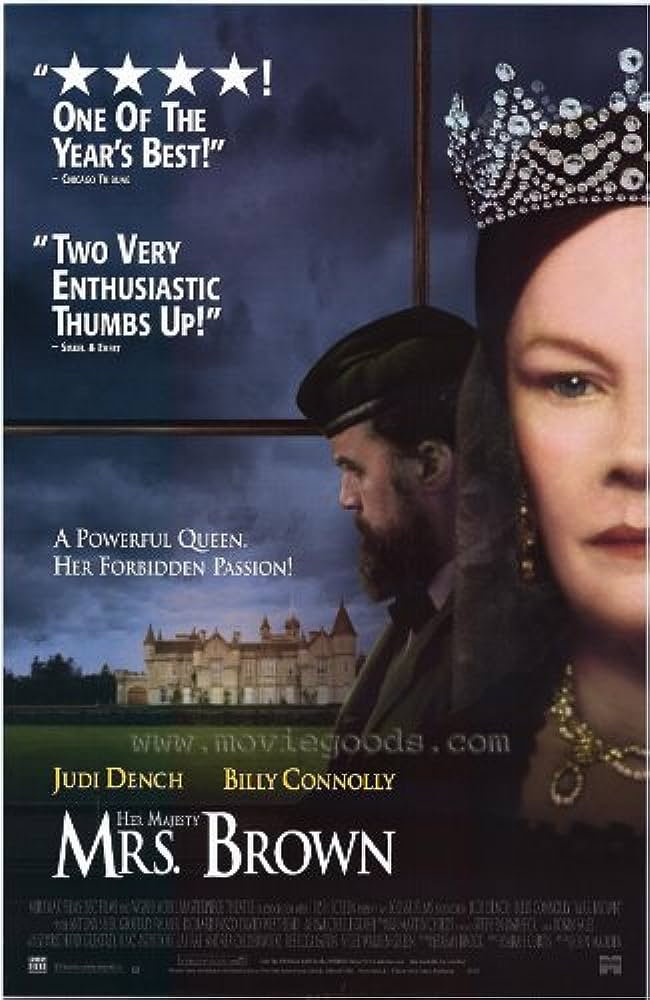
Remarkably, in a career that spanned some 40 years, Dench had never played the lead in a film until she was cast as the widowed Queen Victoria who embarks on a questionable relationship with her Scottish manservant (Billy Connolly) in the John Madden-directed “(Her Majesty) Mrs. Brown” (1997). The film was originally intended as a made-for-British-TV movie, with the role of the monarch earmarked for Elizabeth Taylor. When Taylor fell ill, Dench was cast and it was released theatrically. Her performance earned the actress some of the best reviews of her career to that point, including a richly deserved Best Actress Academy Award nomination. As a follow-up, director Madden cast her as another venerable British monarch, Queen Elizabeth I, in “Shakespeare in Love” (1998). Although Dench only appeared in a handful of scenes totaling approximately eight minutes, she made such a strong impression as the Virgin Queen that she was awarded that year’s Best Supporting Actress Oscar.

The newly minted Oscar winner took on the title stage role of “Filumena” (1998) and reprised M in the Bond offering “The World Is Not Enough” (1999). Now recognized internationally, Dench returned to the New York stage for the first time in close to four decades, reprising her triumphant portrayal of a famous actress clashing ideologically with her daughter in “Amy’s View,” for which she earned a Tony Award. Her run was briefly interrupted when she returned to England to care for her longtime husband, who had been diagnosed with cancer. At that time, she was also seen on the big screen as an eccentric artist living as an expatriate in 1930s Italy in “Tea with Mussolini” (1999). The following year, Dench headlined the HBO original “The Last of the Blonde Bombshells,” earning a Golden Globe award for playing a feisty widow reflecting on her life as a saxophone player in a WWII-era swing band. The actress agreed to provide the narration for the affecting Holocaust documentary “Into the Arms of Strangers: Stories of the Kindertransport” (2000) before gracing screens again in the pivotal role of a crusty villager who welcomes free-spirited Juliette Binoche in Lasse Hallstrom’s “Chocolat” (2000). The latter netted Dench yet another Oscar nomination as Best Supporting Actress.

Following her husband’s death in January 2001, the widowed Dench turned in two rich, very different screen performances. Hallstrom cast her as a Canadian woman who assists her nephew (Kevin Spacey) on a journey of self-discovery in the film adaptation of the bestselling novel “The Shipping News” (2001). Dench then undertook the demanding role of British novelist Iris Murdoch in the biopic “Iris” (2001), based on the memoirs of Murdoch’s husband John Bayley. The actress rose to the challenge of playing a vibrant, intelligent woman who gradually succumbs to the ravages of Alzheimer’s disease. As with all her work, Dench offered an impeccable and deeply moving performance that the members of the Academy recognized with a Best Actress nomination. She was back in period clothing for her follow-up, portraying the indomitable Lady Bracknell in a remake of Oscar Wilde’s classic play “The Importance of Being Earnest” (2002). Also in 2002, Dench returned as M in the James Bond action feature “Die Another Day,” starring Brosnan and Halle Berry.

Once finished with a brief sabbatical from onscreen roles, during which she lent her voice to the animated feature “Home on the Range” (2004) and several James Bond video games, Dench made a welcome return to the big screen in 2004 in the unlikely vehicle “The Chronicles of Riddick,” director David Twohy’s sci-fi/action sequel to his cult hit “Pitch Black.” Dench played Aereon, an ethereal Elemental who helps Riddick (Vin Diesel) learn the secrets of his origin. She essayed an appropriately imperious Lady Catherine de Bourg in 2005’s “Pride and Prejudice,” director J Wright’s lively adaptation of the Jane Austen classic starring Keira Knightley. That same year, the busy actress also headlined director Stephen Frears’ “Mrs. Henderson Presents,” starring as Laura Henderson, a widow who becomes a partner in Britain’s Windmill Theater during World War II and, in attempts to provide a spark for her downtrodden nation, hopes to allow her actresses to perform in the nude. For her performance, she earned award nominations from SAG, the Golden Globes and the Academy Awards – all for Best Actress.

Dench revived M for a fifth time in “Casino Royale” (2006), her first outing opposite Daniel Craig, successor to the iconic role after Pierce Brosnan left the franchise in 2002. Though she missed working with Brosnan, she heaped praise upon the new keeper of the flame, telling The Evening Standard how “frighteningly good” Craig was in the role. For her part, Dench maintained her usually blunt and stiff-upper-lipped performance as the head of MI6, sending him on a mission to Montenegro in order to join a high-stakes poker game with Le Chiffre (Mads Mikkelsen), banker to the world’s terrorist organizations in what many critics called one of the best films in the series. Dench made a startlingly decisive departure in her next project, “Notes on a Scandal” (2006), where she essayed a treacherous school teacher who habitually stalks younger women in a desperate attempt to find love. Once again, she accrued award nominations from the Golden Globes and the Academy Awards.

Dench returned to television the following year in the 1840s-set drama series “Cranford” (BBC, 2007), earning an Emmy nomination for her performance as a financially strapped spinster in a remote village about to be thrust into the modern age with the impending arrival of the railroad. And, not surprisingly, given the actress’ loyalty and lack of vanity in regards to size of part, she returned to the Bond fold as M for the second Daniel Craig outing, “Quantum of Solace” (2008). While basking in the international success of the latest Bond installment, Dench received a Golden Globe nomination for Best Actress in a Miniseries or TV Movie for her performance in “Cranford.” She reprised her role for the miniseries sequel, “Return to Cranford” (PBS, 2010), and received similar honors, earning another Golden Globe nomination in December 2010. Back on the big screen, she portrayed British actress Sybil Thorndike in “My Weekend with Marilyn” (2011) and was the mother of J. Edgar Hoover (Leonardo DiCaprio) in Clint Eastwood’s uneven biopic “J. Edgar” (2011). After reprising M for the last time opposite Daniel Craig’s James Bond in “Skyfall” (2012), Dench was part of an excellent ensemble cast in John Madden’s winning comedy “The Best Exotic Marigold Hotel” (2012), which focused on a group of British pensioners retiring at a lesser-than-advertised hotel in India. Dench’s performance as a newly widowed housewife forced to sell off her home to cover her dead husband’s debts was singled out for praise and earned her a Golden Globe nomination for Best Actress in a Comedy or Musical. Dench’s next starring role came in the drama “Philomena” (2013), the true-life tale of an elderly Irish woman’s search for the son she had been forced to give up for adoption a half-century before. The film was directed by Stephen Frears and co-written by Steve Coogan, who co-starred opposite Dench as an investigative journalist.

The above TCM overview can also be accessed online here.

 
Joseph Bottoms
Joseph Bottoms
Joseph Bottoms

Joseph Bottoms is the middle brother of the talented acting family including Timothy and Sam. Joseph was born in 1954 in Santa Barbara. He came to prominence with his major role in “The Dove” in 1974. Other roles include Rudi Weiss in the magnificent television series “Holocaust” in 1978. He manages the Bottoms Arts Galleries in Santa Barbara.

IMDB entry:

Joseph Bottoms was born on April 22, 1954 in Santa Barbara, California, USA. He is an actor, known for Santa Barbara (1984), The Black Hole (1979) and Blind Date (1984).m BottomsBen Bottoms and Timothy Bottoms.

Made his Broadway debut in 1981’s “The 5th of July”.
Began his career performing in community theater productions.
Won the 1975 Golden Globe Award for “New Star Of The Year – Actor” for his work in the film The Dove (1974), which was based on the real life experiences of Robin Lee Graham, a young man who spent five years sailing around the world as a single-handed sailor, starting when he was 16-years old.
The second son of sculptor James “Bud” Bottoms.
Decided to be an actor when 13 after having a premonition that he would dance on stage with Elizabeth Taylor which he later did in the 1978 TV film Return Engagement.
Santa Barbara, California. Lives with his two daughte

Rupert Hill
Rupert Hill
Rupert Hill

Rupert Hill was born in 1978 in Southampton. He appeared first as Jamie Baldwin in “Coronation Street” in 2004. He has also appeared in such series as “The Bill”, “Holby City” and “Doctors”.

IMDB entry:Rupert Hill was born on June 15, 1978 in London, England as Rupert Sinclair Hill. He is an actor and director, known for Coronation Street (1960), Family Affairs (1997) and Entity(2012). He has been married to Jenny Platt since May 11, 2013. They have one child.

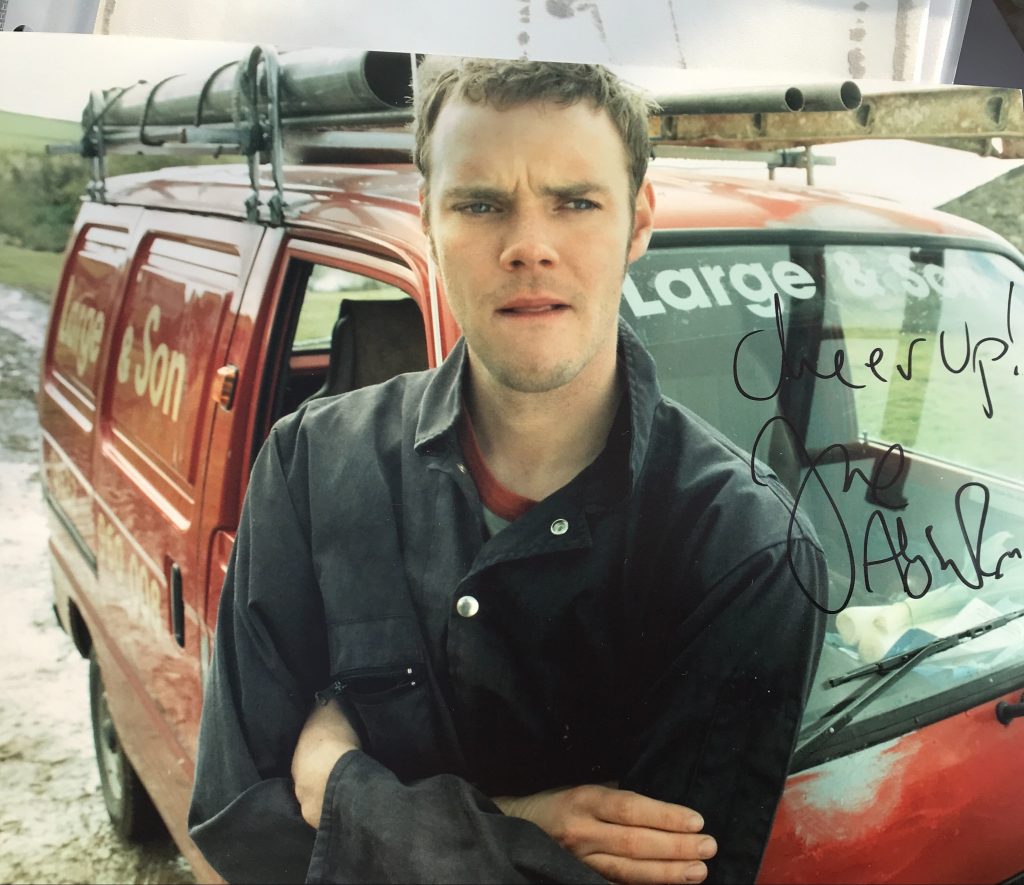
Joe Absolom
Joe Absolom

Joe Absolom is one of the best young actors working in Britain to-day. He was born in 1978 in Lewisham, London. He made his acting debut in the 1991 movie “Antonia & Jane”. His other credits include “Long Time Dead” and the television series “Vincent” with Ray Winstone and “Doc Martin” with Martin Clunes.

2011 “MailOnline” interview:

What drew you to Doc Martin?

The blue skies and the surfing-golf-work ratio. Plus the chance to work with lovely people such as Martin Clunes, Ian McNeice [his screen father Bert] and Dame Eileen Atkins [who has joined the cast as Martin’s Aunt Ruth]. Eileen has so many theatre anecdotes. And she’s met the Queen.

So why did you swap the Cornish sun for the Arctic in last year’s celebrity challenge series 71 Degrees North?

Because my dad said that when I’m 60 I’ll want to talk about the things I’ve done rather than the ones I haven’t. It was an amazing, life-affirming experience – even when my beard froze and there were six of us huddled in a tent for warmth.

How do you relax on set?

My Doc Martin scenes [as Al Large, who owns the local restaurant with his dad] aren’t shot every day, and there’s lots of waiting around between takes. So I play my guitar and listen to my favourite Who or Oasis tracks.

What was it like adjusting to life after soap stardom?

After I left EastEnders [from 1997 to 2000 he played Matthew Rose, who was framed for murder by gangster Steve Owen], I spent six months thinking, ‘What the hell am I doing?’ because I left a regular income without a job to go to. But I’m enjoying the variety of being a jobbing actor.

What is your USP?

I’m punctual. I’m good at getting to a job on time and also at leaving on time; it’s the middle bit I struggle with.

Plan B, career-wise?

I’d be a postman – because I’m good at getting up early.

Anything you’re not so good at?

I’m useless at laughing on camera. I end up with a rather forced har-har-har guffaw that sounds as if I’m imitating Sid James in the Carry On films – handy if I’m ever cast as a middle-aged lecher.

What did you want to be when you were ten years old?

A skateboarder. I was inspired by Tony Hawk, the American professional skateboarder who invented most of the modern tricks. I became an actor instead after my father, who’s an artist, sent photos of me and my baby sister to a children’s acting agency. I was so shy at first that I didn’t realise the catering on film sets was for everyone – I just watched other people eat the food.

Can you remember your first kiss?

Yes, it was on top of a garden shed in Brockley, South London, when I was nine. It felt momentous at the time, but the shed didn’t move.

Your partner Liz is a great cook, so who are your dream dinner party guests?

Rock and rollers such as Jimi Hendrix, Keith Richards, Keith Moon and Noel Gallagher, and the jazzman Miles Davis. They’d bring great music and great times. And I would get Keith to bring some pretty ladies along, too.

You and Liz share childcare for Lyla, five, and Casper, one. What makes a good parent?

Listening to children – they mean what they say 100 per cent; they are not talking rubbish like adults sometimes do. And being patient, which I find difficult at times! I enjoy fatherhood a lot more the second time round; I was always petrified I was going to drop Lyla when she was a baby.

What’s the secret of a happy relationship?

Listening and patience – the same tactics as with children – and laughing a lot. Seeing Liz’s eyes light up when she laughs always makes me smile.

Your worst nightmare to be stuck in a lift with?

Smug people such as Piers Morgan or Simon Cowell. But my dream lift companion would be Cindy Crawford – I’ve always had a thing about her.

How would you like to be remembered?

I won’t care, because in the afterlife, I will be up there jamming on my guitar.

The above “MailOnline” interview can also be accessed online here.

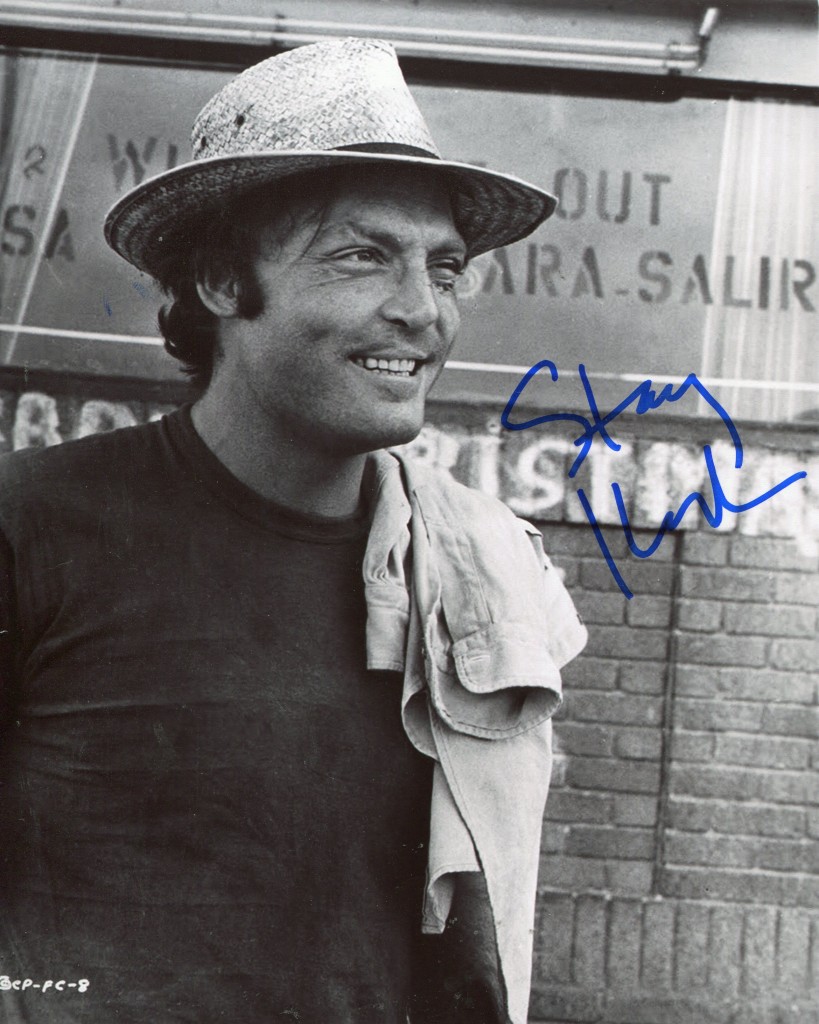
Stacy Keach
Stacy Keach
Stacy Keach

Stacy Keach. IMDB.

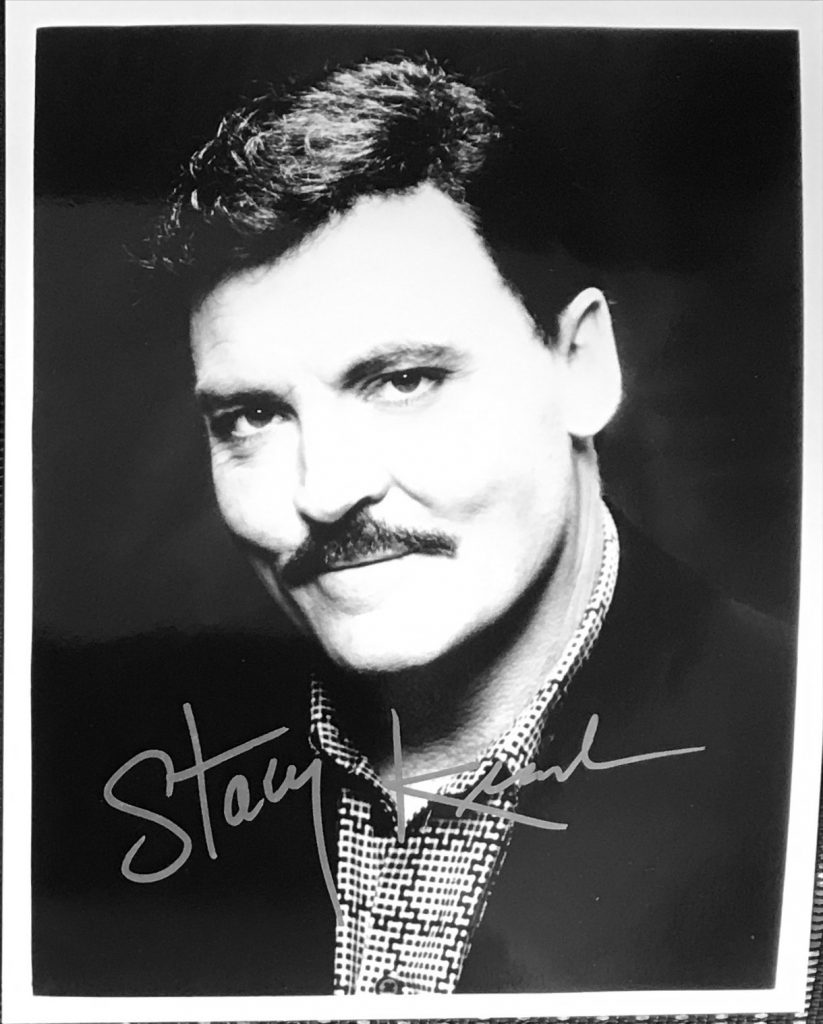
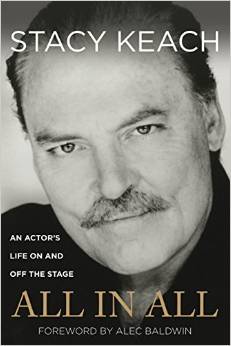
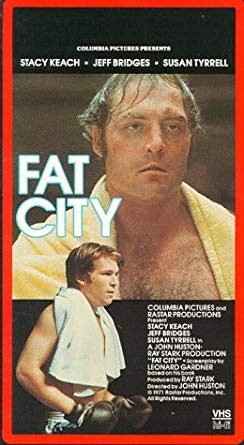
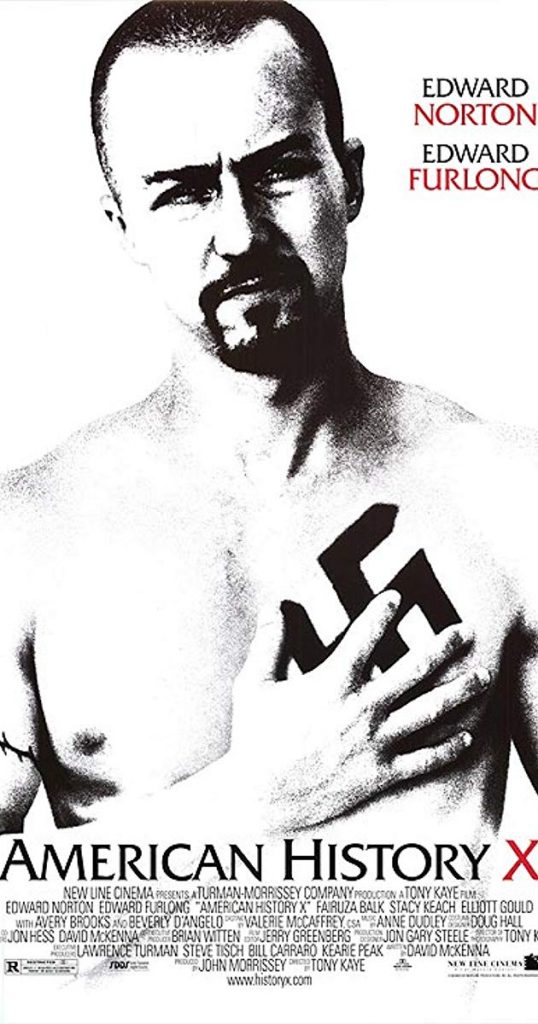
Stacy Keach was born in 1941 in Savannah, Georgia. His parents were both actors and drama directors. He has had an extensive theatre career as well as playing Philip Marlow on television. His films include the wonderful “The Heart Is A Lonely Hunter” in 1968, “The New Centurians”, “Fat City” and “The Ninth Configuration”. He played the leader of a far right wing group in “American History X”.

IMDB entry:

Stacy Keach has played to grand success a constellation of the classic and contemporary stage’s greatest roles, and he is considered a pre-eminent American interpreter of Shakespeare. His SRO run as “King Lear” at the Shakespeare Theatre Company in Washington, D.C. received the best reviews any national leader has earned in that town for decades. Peter Marks of the Washington yPost called Mr. Keach’s Lear “magnificent”. He recently accepted his third prestigious Helen Hayes Award for Leading Actor in 2010 for his stellar performance. His next stage appearance premiering January 13, 2011 at the Lincoln Center in New York is “Other Desert Cities” by Jon Robin Baitz and teaming him with Stockard Channing, Linda Lavin and Elizabeth Marvel.

Stacy Keach

His latest television series, Lights Out (2011), on the FX network is a major new mid-season dramatic show, taking him back to the world of boxing which has been a rich setting for him before, notably in Huston’s Fat City (1972) which ignited Keach’s career as a film star.

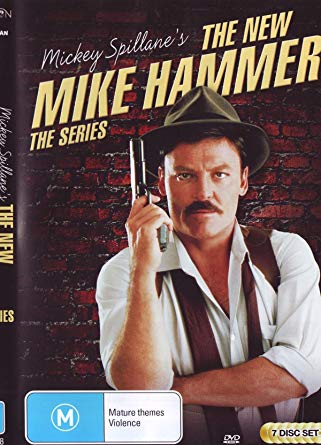
Versatility embodies the essence of Stacy Keach’s career in film and television as well as on stage. The range of his roles is remarkable. His recent performance in Oliver Stone’s “W” prompted fellow actor Alec Baldwin to blog an impromptu review matching Huston’s amazement at Keach’s power. Perhaps best known around the world for his portrayal of the hard-boiled detective, Mike Hammer, Stacy. Keach is also well-known among younger generations for his portrayal of the irascible, hilarious Dad, Ken Titus, in the Fox sitcom, Titus, and more recently as Warden Henry Pope in the hit series, Prison Break. Following his triumphant recent title role performance in King Lear for the prestigious Goodman Theatre in Chicago, Keach joined the starring cast of John Sayles’ recent film, Honeydripper. In the most recent of his non-stop activities, he has completed filming Deathmatch for the Spike Channel, and The Boxer for Zeitsprung Productions in Berlin, Germany.

German audiences will also see him as one of the co-stars in the multi-million dollar production of Hindenburg (2011), scheduled to air in January, 2011 with worldwide release thereafter. Mr. Keach co-stars in the new FX series entitled Lights Out (2011) about a boxing family, where he plays the Dad-trainer of two boxing sons played by Holt McCallany and Pablo Schreiber. The series is also scheduled to air in January, 2011. Keach returns to the New York stage at the start of the 2011 in Jon Robin Baitz’s new play, “Other Desert Cities,” at the Lincoln Center.

Capping his heralded accomplishment on the live stage of putting his own stamp on some of the theatre world’s most revered and challenging roles over the past year when he headed the national touring company cast of “Frost/Nixon,” portraying Richard M. Nixon, bringing still another riveting characterization to the great legit stages of Los Angeles, Chicago, Boston, the nation’s capitol and other major cities. He won his second Best Actor Helen Hayes Award for his outstanding performance. His second triumphant portrayal of King Lear in the past three years, this time for the Shakespeare Theatre Company in the nation’s capital earned reviews heard around the world, with resulting offers for him to repeat that giant accomplishment in New York, Los Angeles and even Beijing.

Stacy Keach
Stacy Keach

An accomplished pianist and composer, Mr. Keach composed the music for the film,Imbued (2009), directed by Rob Nilssen, a celebrated film festival favorite, in which Keach also starred. He has also completed composing the music for the Mike Hammer audio radio series, “Encore For Murder”, written by Max Collins, directed by Carl Amari, and produced by Blackstone Audio.

Mr. Keach began his film career in the late 1960’s with _The Heart Is A Lonely Hunter_, followed by _The New Centurions_ with George C. Scott; Doc Holiday with Faye Dunawayin the film ‘Doc’ (1971); an over-the-hill boxer,Billy Tully in Fat City (1972); directed byJohn Huston, and The Long Riders (1980), which he co-produced and co-wrote with his brother, James Keach, directed by Walter Hill. On the lighter side, his characterization of Sgt. Stedenko in Cheech and Chong’s Up in Smoke (1978), and the sequel, Nice Dreams(1981), gave a whole new generation a taste of Mr. Keach’s comedic flair, which he also demonstrated in Robert Altman’s Brewster McCloud (1970), playing the oldest living lecherous Wright Brother; and The Life and Times of Judge Roy Bean (1972) where he played a crazed albino out to kill Paul Newman.

Historical roles have always attracted him. In movies he has played roles ranging from Martin Luther to Frank James. On television he has been Napoleon, Wilbur Wright, J. Robert Oppenheimer, Barabbas, Sam Houston, and Ernest Hemingway, for which he won a Golden Globe as Best Actor in a mini-series and was nominated for an Emmy in the same category. He played an eccentric painter, Mistral, in the Judith Krantz classic,Mistral’s Daughter (1984), a northern spy in the civil war special, The Blue and the Gray(1982), more recently as the pirate Benjamin Hornigold in the Hallmark epic Blackbeard(2006).

As a director, his production of Arthur Miller’s Incident at Vichy (1973) for PBS was, according to Mr. Miller in his autobiography, Timebends, “the most expressive production of that play he had seen.” He won a Cine Golden Eagle Award for his work on the dramatic documentary, The Repeater, in which he starred and also wrote and directed.

But it is perhaps the live theatre where Mr. Keach shines brightest. He began his professional career with the New York Shakespeare Festival in 1964, doubling as Marcellus and the Player King in a production of Hamlet directed by Joseph Papp and which featured Julie Harris as Ophelia. He rose to prominence in 1967 in the Off-Broadway political satire, MacBird, where the title role was a cross between Lyndon Johnson and Macbeth and for which he received the first of his three Obie awards. He played the title roles in Henry 5, Hamlet (which he played 3 times), Richard 3, Macbeth, and most recently as King Lear in Robert Falls’ modern adaptation at Chicago’s Goodman Theatre, which Charles Isherwood of the NY Times called “terrific” and “a blistering modern-dress production that brings alive the morally disordered universe of the play with a ferocity unmatched by any other production I’ve seen.” Mr. Keach’s stage portrayals of Peer Gynt, Falstaff and Cyrano de Bergerac, and Hamlet caused the New York Times to dub him “the finest American classical actor since John Barrymore.”

Mr. Keach’s Broadway credits include his Broadway debut, Indians, where he played Buffalo Bill and was nominated for a Tony award as Best Actor. He starred in Ira Levin’s Deathtrap, the Pulitzer Prize winning Kentucky Cycle (for which he won his first Helen Hayes award as Best Actor), the Rupert Holmes one-man thriller, Solitary Confinement, where Mr. Keach played no less than six roles, all unbeknownst to the audience until the end of the play. In the musical theatre, he starred in the national tour of Barnum, played the King in Camelot for Pittsburgh’s Civic Light Opera, and the King in The King and I, which he also toured in Japan. He starred in the Jon Robin Baitz play, Ten Unknowns, at the Mark Taper Forum in 2003. The LA Times said: “And then there’s Keach. What a performance! How many actors can manage such thunder and such sweet pain. He’s been away from the LA stage too long. Welcome back.”

In 2004, he starred as Scrooge in Boston’s Trinity Rep musical production of A Christmas Carol; earlier in 2004, he starred as Phil Ochsner in Arthur Miller’s last play Finishing The Picture, directed by Robert Falls at the Goodman Theatre.

As a narrator his voice has been heard in countless documentaries; as the host for the Twilight Zone radio series; numerous books on tape, including the Short Stories of Ernest Hemingway. In the year 2000, he recorded a CD of all of Shakespeare’s Sonnets. He recently recorded the voice of St. Paul for a new audio version of The New Testament:, The Word of Promise and Job for the Old Testament edition. He is the narrator on CNBC’s new hit show, American Greed (2007), and recently narrated the award-winning documentary, The Pixar Story (2007). He has also reprised his role as Mike Hammer in the Blackstone audio series, the most recent being “Encore for Murder”. A charter-member of LA Theatre Works, Mr. Keach recently played the title role in Bertolt Brecht’s Galileo, recorded both for radio and CD. He was seen on CBS’s hit show Two and a Half Men (2003) as the gay Dad of Charlie’s fiance.

Stacy Keach also believes strongly in ‘giving back’ and has been the Honorary Chair for the Cleft Palate Foundation for the past twenty-five years. He is also the national spokesman for the World Craniofacial organization. He has served on the Artist’s Committee for the Kennedy Center Honors for two decades, is on the board of directors for Genesis at the Crossroads, a Chicago-based organization dedicated to bringing peoples of combatant cultures together through the shared artistic expressions of the visual and culinary arts, music, dance, and theater. He also serves on the artistic board for Washington DC’s Shakespeare Theatre National Council, where he was also honored in 2000 with their prestigious Millennium Award for his contribution to classical theatre. Some years ago Hollywood honored him with a Celebrity Outreach Award for his work with charitable organizations.

He has been the recipient of Lifetime Achievement Awards from Pacific Pioneer’s Broadcasters, the San Diego Film Festival, the Pacific Palisades Film Festival, and The 2007 Oldenburg Film Festival in Germany. Later this year, he will be awarded the 2010 Lifetime Award from the St. Louis Film Festival. In 2008, he received the Mary Pickford Award for versatility in acting.

Mr. Keach was a Fulbright scholar to the London Academy of Music and Dramatic Art, attended the University of California at Berkeley and the Yale Drama School. He has always been a star of the American stage, especially in Shakespearen roles such as Hamlet, Henry 5, Coriolanus, Falstaff, Macbeth, Richard 3, and most recently, King Lear.

Of his many accomplishments, Mr. Keach claims that his greatest accomplishment is his family. He has been married to his beautiful wife Malgosia for twenty-five years, and they have two wonderful children, Shannon Keach (1988), and daughter Karolina Keach (1990).

– IMDb Mini Biography By: Guttman Associates

THe above entries IMDB can also be accessed online here.

Dominic West
Dominic West

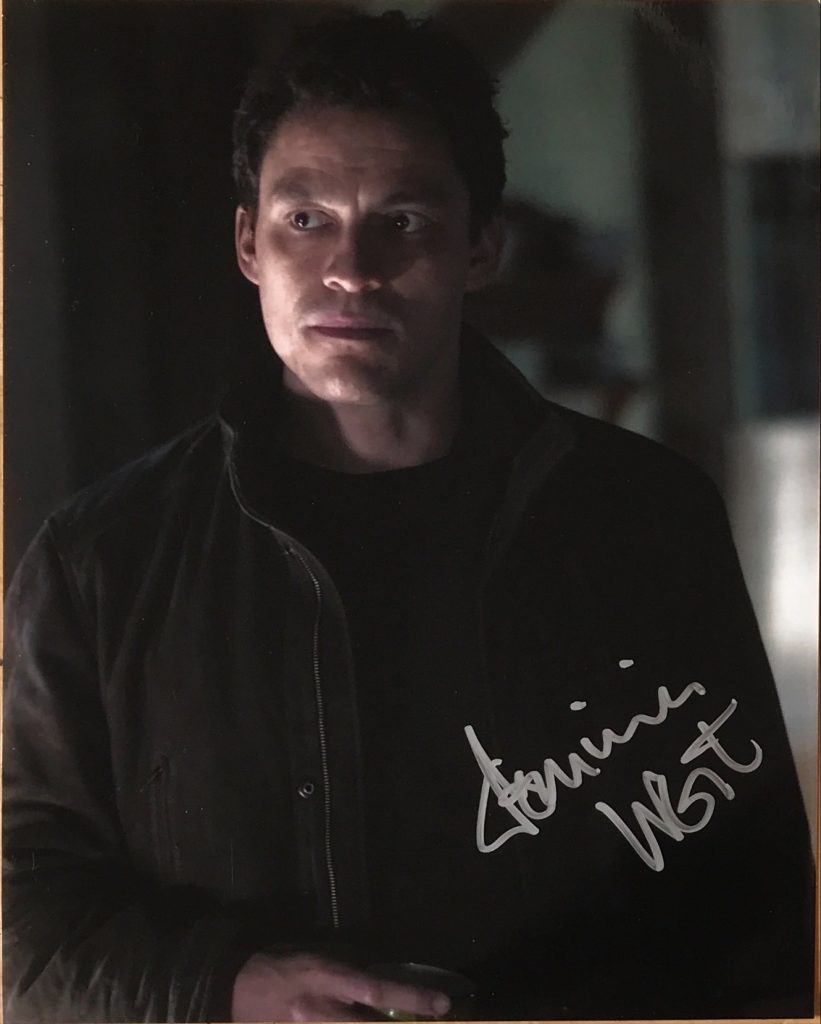
Dominic West was born in 1969 in Sheffield, Yorkshire. He is well-known for his performance in the hughly popular series U.S. television series “The Wire” as Jimmy McNulty. In 2001 he had been featured in the film “Rock Star”.His other films include “The Mona Lisa Smile”, “28 Days” and “Chicago”.

TCM overview:

Hailing from the stage and screen of his native England, actor Dominic West made a name in the United States playing hard-drinking, anti-authoritarian homicide detective, Jimmy McNulty, on the gritty television crime drama, “The Wire” (HBO, 2002-08). Prior to that critically acclaimed role, West appeared in films like “Richard III” (1995), “Surviving Picasso” (1996) and “The Gambler” (1998). But it was his five years on “The Wire” that perhaps offered him the richest and most compelling performance of his career on a show numerous critics dubbed the greatest series in the history of television. Thanks to the critical adulation heaped upon “The Wire,” West nabbed plumber roles in higher-profile movies like “Mona Lisa Smile” (2003) and “The Forgotten” (2004). He had his first major co-starring role in the blockbuster adaptation of Frank Miller’s graphic novel, “300” (2007), and continued along in that vein with “Punisher: War Zone” (2008) and “Centurion” (2010). Thanks to a ready charm and comedic flair mixed with serious acting chops, West was an extraordinary talent worthy of attention.

Born on Oct. 15, 1969 and raised in a wealthy Catholic home in Sheffield, England, West became involved with acting at an early age, appearing in amateur stage productions as a child alongside his mother and eldest sister. It was while attending Eton College – an independent school for teenage boys – that he fell into the mindset of becoming a professional actor, thanks to the passionate encouragement of drama department head Robert Freedman. West performed in several school productions; most notably as the melancholy lead in “Hamlet.” After graduating Eton, he moved on to Trinity College in Dublin, Ireland, where he earned his bachelor of arts in literature, before continuing his dramatic training at the Guildhall School of Music & Drama. From the time he left Guildhall, West went to work as an actor straight away, honing his trade with London stage work, while landing turns in small British features and supporting parts in larger-scale productions. He made his big screen debut in the Oxford-set drama, “Wavelength” (1995), which he followed with a turn as Richmond in the 1930s-set take on “Richard III” (1995), starring Ian McKellen.

After a small part as the son of Pablo Picasso (Anthony Hopkins) in “Surviving Picasso” (1996), West returned to the stage to star in productions of “Cloud Nine” and “The Seagull” during director Peter Hall’s 1997 season at the Old Vic. That same year, West starred in Hungarian director Karoly Makk’s “The Gambler” (1997), a unique dramatization that intertwined the real life of Fyodor Dostoyevsky with his fiction. In scenes from the novel that were played out on screen, West portrayed a young man who becomes a high roller in a bid to secure the affections of a beautiful woman (Polly Walker). That same year he starred alongside Toni Collette in the romance “Diana & Me” (1997), playing an ambitious British paparazzo involved with an Australian Diana Spencer who shared her name and birthday with the famed Princess of Wales. West’s portrayal of the slimy photographer was nonetheless likeable and human, despite the victimizing nature of his livelihood. He played a photographer again the following year; this time with a cameo in the zany mockumentary on the girl group, the Spice Girls, “Spice World” (1998), but was thankfully left unassociated with the “movie.”

West followed with the pivotal role of Lysander in Michael Hoffman’s star studded adaptation of “William Shakespeare’s A Midsummer Night’s Dream” (1999), which increased the actor’s visibility to an American audience in more ways than one. Virtually naked for much of the film and given the unenviable task of nude bicycling, West still capably held his own alongside co-stars Kevin Kline, Michelle Pfeiffer, Christian Bale, Calista Flockhart and Anna Friel. After the high-profile and rather revealing co-starring role, he landed a rather conventional and uncharacteristic bit part by uttering a single line as a mostly obscure palace guard in the summer blockbuster “Star Wars: Episode I – The Phantom Menace” (1999). While the role was barely noticeable, West considered the opportunity to be in such a monumental film as one not to pass up. Meanwhile, he marked his U.S. television debut as the nephew to Ebenezer Scrooge (Patrick Stewart) in the made-for-cable version of “A Christmas Carol” (TNT, 1999). Returning to the stage once again, West spent five months in the London production of “De La Guarda” (1999).

West’s profile continued to rise in 2000, beginning with his co-starring role in the dramedy, “28 Days,” which followed a New York City writer (Sandra Bullock) through her court-ordered rehab. West played Jasper, the writer’s fun-loving British boyfriend who shared her life of hard partying and forgotten evenings. West followed up the engaging performance playing a rhythm guitarist for popular hard rock band Steel Dragon in the fact-based comedy “Rock Star” (2001), starring Mark Wahlberg and Jennifer Aniston, then got a major career boost when he played Fred Casely, the victim in the ballyhooed murder trial of Roxie Hart (Renee Zellweger) in director Rob Marshall’s acclaimed film version of the musical “Chicago” (2002). In his first turn on the small screen, West landed the role of a lifetime as one of the stars of David Simon’s gritty crime drama “The Wire” (HBO, 2002-08). Dropping the Queen’s English for a tough Baltimore twang, West played homicide detective Jimmy McNulty, a hard-drinking outsider who revels in bucking authority, sleeping with as many women as possible, and taking down murderers and drug dealers with good old fashioned police work. During the first season of “The Wire,” McNulty joins a joint homicide and narcotics team (Sonja Sohn, Wendell Pierce, Lance Reddick, among others) to take down a notorious drug kingpin (Wood Harris), but discovers that trying to make a difference can lead one to ruin.

Hailed by numerous critics as being the greatest television series of all time, “The Wire” offered West his most richly textured and compelling performances, which spanned the entire five seasons of the show’s run. Subsequent seasons of showed West’s McNulty demoted to the Marine Unit during an investigation of dock workers stealing shipping containers and retuning to walking a beat in uniform while helping to keep four high school students stay on the straight and narrow. Meanwhile, he maintains a riotous camaraderie with fellow hard-drinking, but far more sensible partner, Bunk (Pierce), while routinely making a sordid mess of his personal life, particularly with customs officer Beadie Russell (Amy Ryan). During his run on the show, West continued appearing in films, playing a predatory Italian language professor at an all-girls school who casually sleeps with his students in “Mona Lisa Smile” (2003). Next, he essayed the role of a man told his child never existed, who embarks on a harrowing investigation alongside similarly bereft parent (Julianne Moore) in the critically dismissed paranormal thriller “The Forgotten” (2004).

Returning to features, West had his first major blockbuster role, portraying Theron of Acragas, tyrant of Greek-occupied Sicily, in “300” (2007), a loose telling of the famed Battle of Thermopylae, where 300 Spartan warriors led by King Leonidas (Gerard Butler) inflicted heavy damage to the massive Persian army of Xerxes I (Rodrigo Santoro). Based on the popular graphic novel by Frank Miller, “300” was a big box office hit while having a lasting impact on popular culture, all of which helped West make more of a name for himself. He followed that with a role as an inspector in “Hannibal Rising” (2007), which traced the early years of Hannibal Lecter (Gaspard Ulliel) and his transformation from a frightened boy who witnessed his family massacred into a fearsome serial killer. Once “The Wire” wrapped for good in 2008, leaving many hearts empty in front of and behind the cameras, West stayed with features for a while, co-starring as the horribly disfigured crime boss, Jigsaw, in the comic book adaptation, “Punisher: War Zone” (2008). He next starred in director Neil Marshall’s “Centurion” (2010), playing a Roman general who leads the famed Ninth Legion, which was rumored to have disappeared or been completely destroyed in battle.

The year 2011 was a busy one for West who was seen as well as heard in theaters with supporting roles in the slapstick spy-comedy sequel “Johnny English Reborn” (2011) and the animated holiday adventure “Arthur Christmas” (2011). It was, however, on television that the actor once again achieved his greatest success. West gave a chilling performance as notorious U.K. serial killer Fred West in the British docudrama miniseries “Appropriate Adult” (ITV, 2011). Also that year, he joined the cast of the U.K. series “The Hour” (BBC, 2011), a period political-drama centering on an investigative current affairs program during the time of the Suez Canal crisis. For his role as charismatic anchorman Hector Madden, West earned a Golden Globe nomination for Best Performance in a Miniseries.

The above TCM overview can also be accessed online here.

Dominic West
Dominic West
Sinead Keenan
Sinead Keenan
Sinead Keenan
Russell Tovey
Russell Tovey

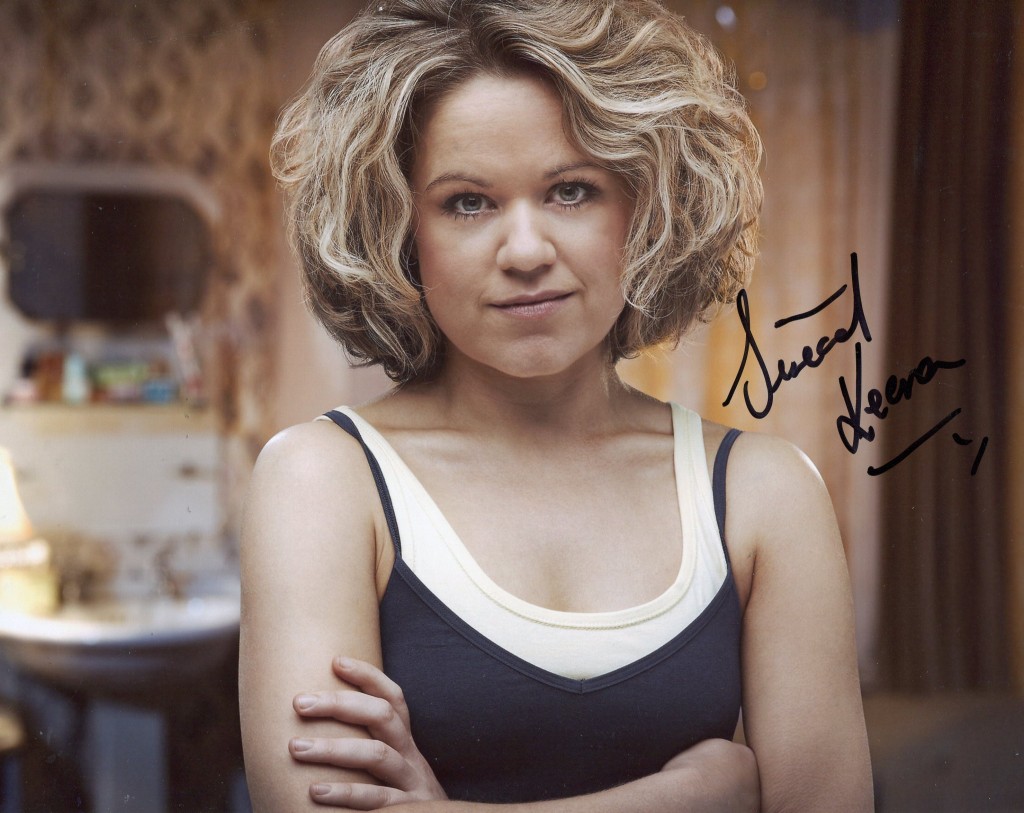
Sinead Keenan was born in Dublin in 1977. She is best know for her role as Nina on TV in “Being Human”. She starred first on the Irish television series “Fair City”. Film roles include “On the Nose” in 2001 and “Conspiracy of Silence”.

Max Irons
Max Irons

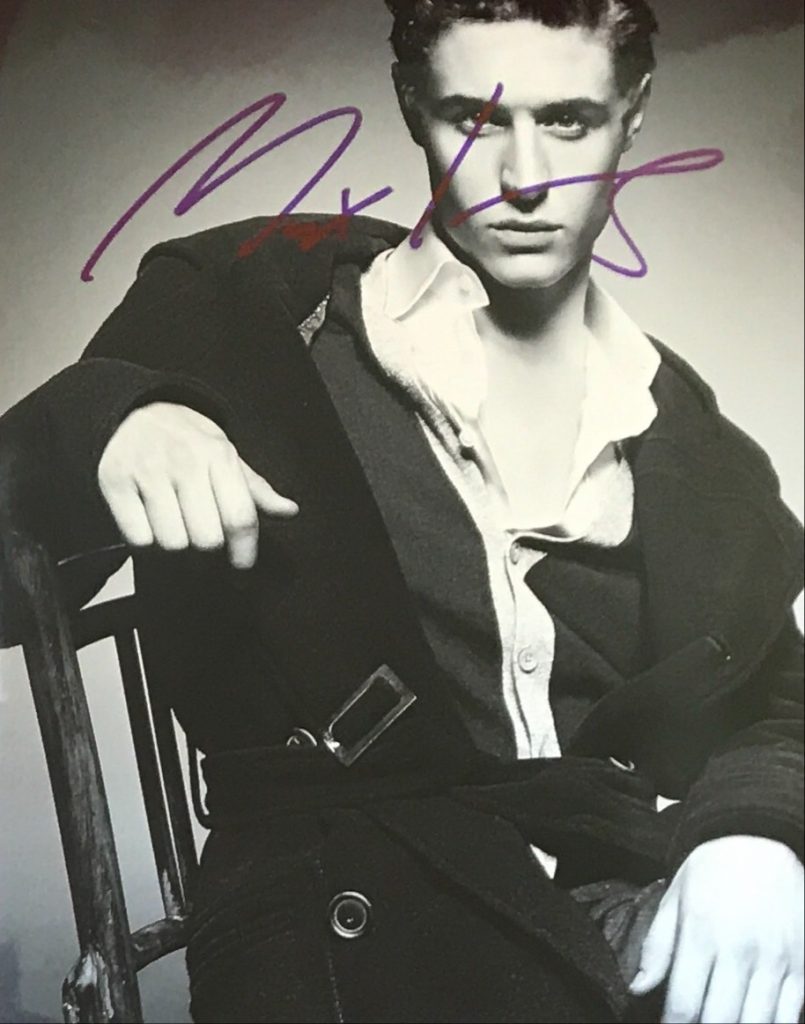
Max Irons was born 1985. He is the son of Sinead Cusack and Jeremy Irons and the grandson of Cyril Cusack. His films include “Red Riding Hood” in 2011 and the upcoming “Vivaldi”.

Interview with “Independent.ie”:

STEPHEN MILTON – UPDATED 17 JUNE 2013 02:43 PMHowever, the decision to either go with his commanding family name and forever risk association with his Oscar-winning father or adopt a new moniker and start anew posed a dilemma for the fledgling star.”I toyed around with adopting my middle name as my surname,” he says. “It’s Diarmuid, so, I don’t know… it was a thought.”But when I’d introduce myself as ‘Diarmuid’, people would hear ‘Dermot’. I’d correct them and say ‘Diarmuid’, and straight away ‘Dermot’ would come back to me. There was always going to be a problem there.”Irons glances out of the window. The familial connection is a topic he’s finding difficult to escape.   I’m not ashamed of it,” he says. “I wouldn’t be the first actor who has famous actor parents. I just want to concentrate on my own work, and hopefully ‘the Jeremy Irons‘ son’ business will become less and less.”That remains to be seen. With a towering 6ft 2in stature and yawning, hollowed cheekbones, he’s unmistakably his father’s son. It’s uncanny.

But there’s a warmth and a brightness in young Irons, inherited from his mother, renowned actress Sinead Cusack. “I’m much more like her,” he says. “From far off you can see my dad, but when you see my face, it’s far more Cusack.”

Prior to today’s meeting, a stern warning was issued from his publicist: only one solitary question about family is permitted.

Sitting opposite the spawn of an Oscar-winner who’s best known for ‘The Mission’, ‘The Lion King‘ and ‘Reversal of Fortune’, and heir to the Cusack dynasty, this poses a problem. It’s a captivating legacy that betrays a flourishing future.

I immediately apologise for running over my allotted quota, but the incredibly likeable star courteously says: “I’ll talk about my family all day long, particularly the Cusacks, and Cyril. I don’t get as much about them.

“It’s when I hear, ‘What’s it like to have Jeremy Irons as your father?’ – what do you say to that? I don’t know, what’s it like having your father as your father?”

Parked in his agent’s office just off London’s Regent Street, all high gloss and mahogany furnishing, the conversation flows with ease while the rain lashes against the window pane on a miserable afternoon.

Having just nipped out for a quick cigarette, the 27-year-old is in chipper mood, periodically smacking his right knee and clapping his hands at the climax of a joke.

He’s as pleasantly responsive as when I interviewed him more than two years ago for fabled flop ‘Red Riding Hood’. Back then, he fielded relentless questions about his clan with an elegant grace, and does the same today while chatting about his challenging role as King Edward IV in the Beeb’s lavish adaptation of ‘The White Queen’, based on Philippa Gregory‘s best-selling novel series ‘The Cousins’ War’.

Set against the backdrop of the War of the Roses, it’s the story of the ongoing conflict for the throne of England between the House of York and the House of Lancaster and focuses on three women in their quest for power: Elizabeth Woodville (Rebecca Ferguson) Margaret Beaufort (Amanda Hale) and Anne Neville (Faye Marsay).

And after largely ‘guy candy’ work in teen fare ‘Red Riding Hood’ and recentSaoirse Ronan sci-fi misfire ‘The Host’, the sumptuous saga offers Irons the opportunity to employ a powerful presence as Edward IV. A deeply complex historical figure, he was a ruler who exercised a balance between nobility and treachery to maintain the crown.

“I fell in love with him,” Max explains. “Opinions are split as to what kind of person he was, whether he was reckless, foolish and irresponsible, while others say he was politically very savvy and militarily, very successful. He was a moderniser and a modern thinker.”

Did this complexity prove an attraction? “That’s what we wanted for the first episode, to quite not nail his initial intentions. To marry Elizabeth, a virtual commoner, was such an unusual thing for him to do, but he was besotted,” he says.

“In those days, love had nothing to do with it; it was simply about alliances. And I guess Edward was a bit of a swine, but a sort of loveable one. He didn’t play by the rules. He did what he did very successfully until the day he died.”

The royal role points the former Burberry model, who recently ended his relationship with ‘Sucker Punch’ beauty Emily Browning, in a more mature direction.

“I got some feedback recently from an audition: ‘Very good, bit too old, not quite pretty enough,'” he grins. “Naturally I was offended, but then you think, maybe I’m getting to a place where I can sort of leave that teen place behind.”

Surely this was that one of the harshest critiques he’s received? “That was quite mild. A friend of mine didn’t get a job because he was told he was too hairy.”

Born and raised in north London, Irons attended the Dragon School in Oxford before winning a place at the Guildhall School of Music and Drama, cultivating a distinctly Anglicised clutch of manners and personality.

He spent his summers at the family’s west Cork abode of Kilcoe Castle – briefly a shade of hot pink during the mid-1990s, “which was only an undercoat”, the actor protests.

These get-togethers with the Cusack clan farmed his Hibernian roots.

“I’m probably not as Irish as I would like to be. I can’t speak the language and God knows I can’t do the accent. I’ve always lived [in London], but my sensibilities are far more like my mother and her side of the family.”

Grandfather Cyril, who starred in ‘Harold and Maude’, ‘My Left Foot’ and ‘Strumpet City’, passed away after a lengthy battle with motor neurone disease when Max was only five. Does he treasure memories of the legendary performer?

“Cyril loved to laugh and had so many stories. And he was proud of all his family, especially watching his daughters following in his footsteps,” he says.

Pride might not necessarily be the word used to describe Max’s feelings for his father’s opinions of late, however.

A man of strong, impulsive words, Irons senior has blithely vented his views on several controversial subjects including same-sex marriage, branding it ‘incestuous’, and claiming he felt sorry for high-profile figures such as ‘Coronation Street‘ actor William Roache, accused of sexual abuse in the wake of the Jimmy Savile scandal.

“I don’t stand by everything he says, but it’s important that we have people who throw out ideas, if not for us to reject,” says Max. “My father says what he thinks, even if some of it is a little off kilter. But God knows it’s a lot more interesting than just saying what people want to hear constantly. That’s boring.”

His next film is ‘Posh’, a screen adaptation of Laura Wade’s play based on the clandestine movements of the Oxford Bullingdon Club – whose members once included British prime minister David Cameron, chancellor George Osborneand London mayor Boris Johnson – while the actor has several other projects in the offing.

Armed with a deadly combination of Celtic charm and Austen propriety, it’s surely a balance he calls upon in his quest to conquer the heights ofHollywood?

“That would be the ideal,” he chuckles, “being able to bounce between the two. But it’s just the accent really screws me over. I can’t walk into a meeting and say, [in Queen’s English] ‘Hello, I’m Max Irons and I’m Irish’ with this voice; that isn’t going to work.

“The English card gets you quite far over there [in LA]. You think the Irish get the royal treatment, but being British works a treat, too. Turn up the poshness, turn it down to Cockney – just do whatever you need to do to get that part.”

Clapping his hands together, he throws his head back and makes a laboured sigh.

“That’s going to end up as the headline of this piece, isn’t it? I’m really my own worst enemy at the best of times.”

The above “Independent.ie” interview can also be accessed online here.

Steven Waddington
Steven Waddington
Steven Waddington

Steven Waddington. TCM Overview.

Steven Waddington was born in 1968 in Leeds.   He made his movie debut in 1991 in Derek Jarman’s “Edward the 2nd”.   The following year he garnered very positive reveiws for his performance as the doomed major in “The Last of the Mohicans”.   His other movies include “Carrington”, “Prince of Jutland” and “Sleepy Hollow”.   Interview with Steven Waddington on “Loose Women” here.

TCM Overview:

Steven Waddington
Steven Waddington

Born and raised a steelworker’s son in Leeds, West Yorkshire, England, actor Steven Waddington enjoyed a long, if somewhat unsung career. After portraying the title lead in “Edward II” (1991), an adaptation of Christopher Marlowe’s play about Britain’s only acknowledged gay monarch – a conflict which eventually led to civil war – Waddington came to prominence with “The Last of the Mohicans” (1992). In Michael Mann’s historical adventure, Waddington played the persistent, but ultimately spurned suitor of the daughter (Madeline Stowe) of an English officer (Maurice Roeves) rescued in the woods by the adopted son of the Mohican, Chingachgook (Daniel Day-Lewis). He continued his period pieces trend with the dismal “1492: The Conquest of Paradise” (1992), before returning to a contemporary setting in “Don’t Get Me Started” (1993), playing the old friend of a former mob hit man (Trevor Eve) who is threatening to expose his criminal past on national television.

After an unceremonious role as a construction worker in the NBC movie, “Take Me Home Again” (1994), Waddington returned to the past with “Royal Deceit” (1994), Saxo Grammaticus’ 12th century chronicle about a young prince who sees his father and brother murdered by his uncle and feigns madness to exact revenge – the very story William Shakespeare based Hamlet on. In another period film, “Carrington” (1995), Waddington played a strapping young army officer who marries painter Dora Carrington (Emma Thompson), but attracts the attention of literary critic and author, Lytton Strachey (Jonathan Pryce). He next played a British SAS officer sent with a team to destroy SCUD missiles inside Iraq during Operation Desert Storm in “The One That Got Away” (A&E, 1996), before portraying the onetime cellmate of a leftist political activist (Robert Carlyle) who plans the robbery of a major London security firm in “Face” (1997). Another unceremonious role – this time as a cowboy in a bank in “Breakdown” (1998) – was followed by a meatier role as a ruthless explorer trying to find the lost city of Opar in “Tarzan and the Lost City” (1998).

Following a bit part in Tim Burton’s creepy “Sleepy Hollow” (1999), Waddington appeared in “The Parole Officer” (2001), playing a former boxer-turned-fisherman and only one of three convicts ever rehabilitated by a klutzy parole officer (Steve Coogan). Waddington was little more than window dressing in “The Hole” (2003), a straight-to-video thriller about four private school students who investigate a mysterious hole leading to an abandoned World War II bomb shelter.

He next played King Prasutagus in “Warrior Queen” (PBS, 2003), leader of a Celtic tribe on the British Isles in the 1st century A.D. who dies and leaves his queen (Alex Kingston) to defend his people against the Roman emperor Nero (Andrew Lee Potts). Waddington next portrayed Thomas Cromwell, 1st Earl of Essex and chief minister to King Henry VIII (Jonathan Rhys Meyers) in “The Tudors” (2007- ), Showtime’s lavish 10-part series depicting the brutal monarch in younger, thinner times, before he split with the Catholic Church. The above TCM overview can also be accessed online here.