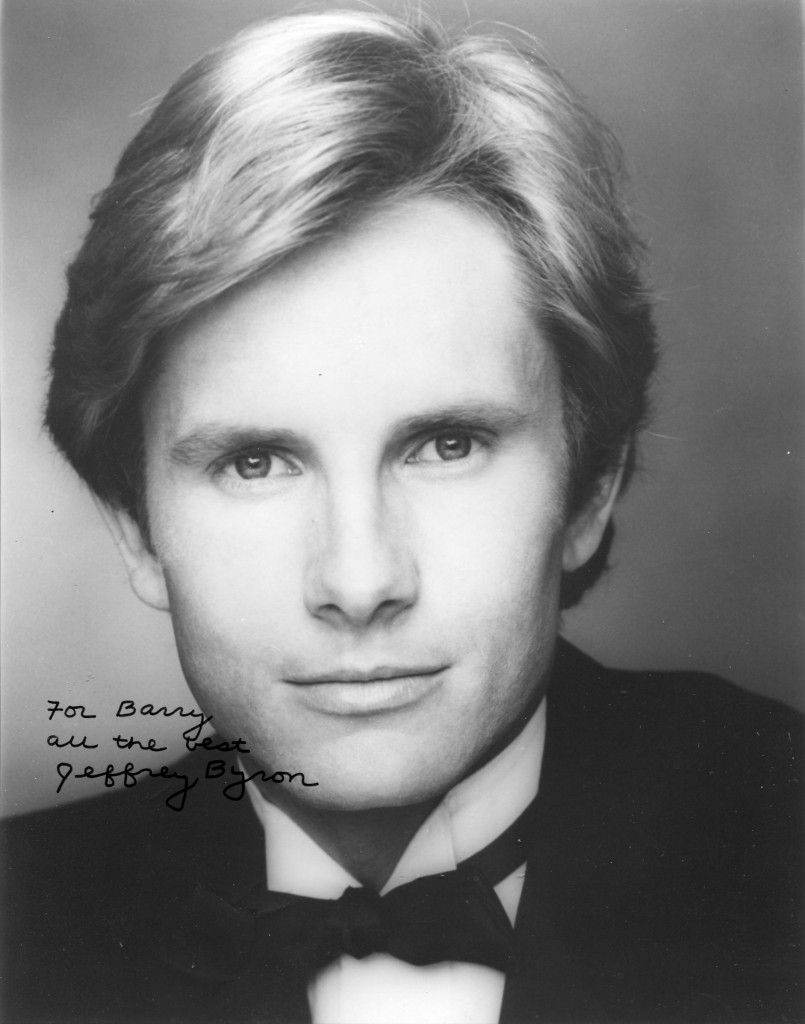
Jeffrey Byron was born in 1955 in Santa Monica, California. His film debut was in 1963 in “Donovan’s Reef” which was directed by John Ford. His other films include “Hot Rods to Hell” in 1967 with Jeanne Crain and Dana Andrews and “International Velvet”. He is the son of actress Anna Lee.
IMDB entry:
effrey Byron has starred in a variety of movie and television roles (see IMDB credits) and is also focusing his attention on writing and producing.
The writer has crafted four screenplays, “Stan The Man,” The Eye’s Have It,” “Being Robert Parker” and the recently completed “A Deer In Headlights.”
The producer is developing the works of his late stepfather, novelist Robert Nathan, one of the most revered American authors of the 20th century. Jeffrey controls the rights to over 40 Nathan novels and is developing them into feature films, television movies and TV series. He has also just launched his new website (www.robertnathanlibrary.com). Currently (2010) three Nathan Novels are in development. “Stonecliff”, “Juliet In Mantua” and “The River Journey.”
Jeffrey also controls the rights to Dr. Lawrence Farwell’s life story. Farwell is the creator of Brain Fingerprinting, a new state of the art technology used to implicate the guilty and exonerate the innocent in a crime investigation. Byron is developing this into a alternative programming television series.
The photo artist has launched a new business venture. “J. Byron Photo Artist & Design.” Jeffrey shoots still life and other unique images and mounts them on canvas.
Lastly – Jeffrey comes from a distinguished show business family. His late mother was actress Anna Lee, his stepfather was the aforementioned Robert Nathan, and his godfather was legendary film director, John Ford!
– IMDb Mini Biography By: Dimitry Krol
The above IMDB entry can also be accessed online her
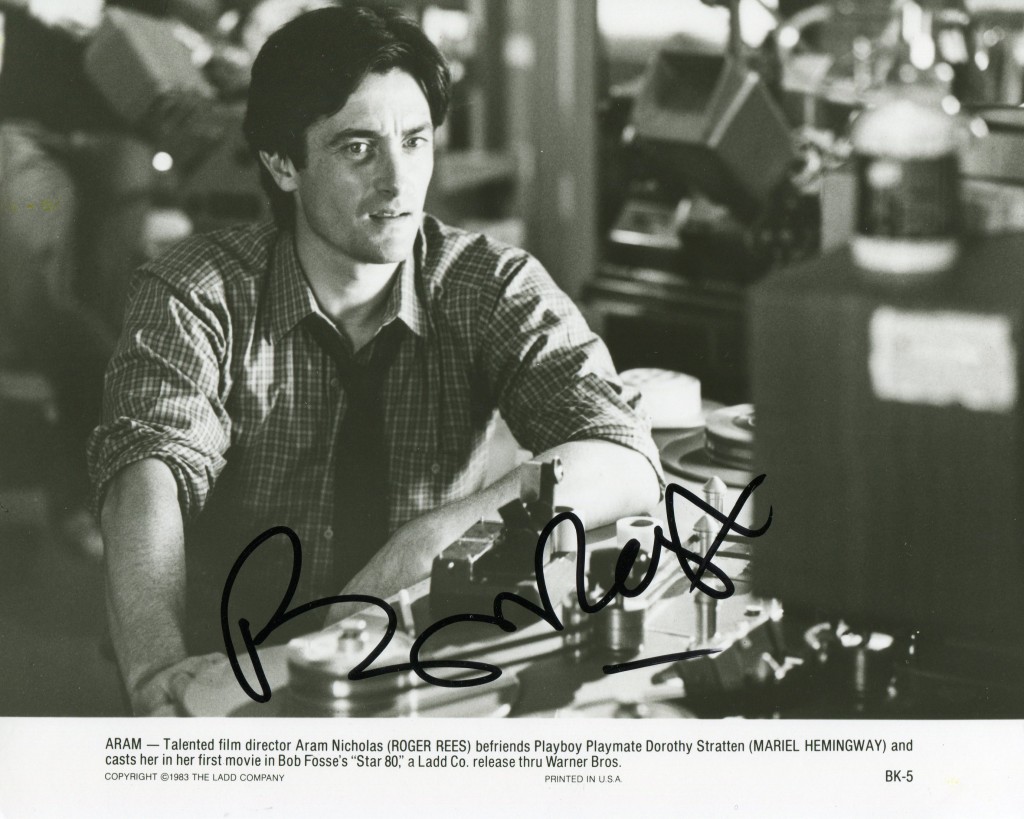
Roger Rees, who has died aged 71 after suffering from cancer, was an outstanding associate of the Royal Shakespeare Company, who made his name in the title role of Nicholas Nickleby in 1980, winning an Olivier best actor award in London and a Tony best actor on Broadway before he moved to New York in the late 1980s, taking US citizenship in 1989, and becoming known to millions in two top television shows.
In Cheers, he was Kirstie Alley’s love interest, as the millionaire industrialist Robin Colcord; in The West Wing, he was the British ambassador to Washington Lord John Marbury. He became a go-to Brit on various US series, but returned briefly to Britain in 1988 to record the sitcom Singles, a sort of low-rent Cheers in a singles bar.
None of these roles exploited the vibrancy and emotional fizz Rees exhibited on stage, especially in a hot streak at the RSC which took him from one suicidal ditherer, Semyon, in the first UK production of Nikolai Erdman’s 1928 comic classic The Suicide in 1979, to a 1984 Hamlet in the same Stratford-upon-Avon season as Antony Sher’s Richard III and Kenneth Branagh’s Henry V (Branagh was Laertes to his Hamlet). The electrifying Nicholas Nickleby came in between.
Like Ben Kingsley, he languished in small parts at the RSC when he first joined in 1967, but both he and Kingsley became stars, and associate artists, in the Trevor Nunn and Terry Hands era. There was always a febrile intensity about Rees, a quickness and charm that could move an audience to tears or laughter, often both, at the speed of light; he was a superb and touching Tuzenbach in Nunn’s brilliant 1978 production of Three Sisters, moustachioed and bespectacled, pleading with Emily Richard’s Irina to say something before he went off to be shot in the duel.
He returned to the London stage in 2010 as Vladimir in Sean Mathias’s revival of Waiting for Godot at the Haymarket; he took over the role, opposite Ian McKellen’s Estragon, from Patrick Stewart, and was spryer and infinitely more cheerful than Stewart, though more of a junior partner. He remained close friends with many old RSC colleagues; McKellen and Stewart, but also Judi Dench (he was Malcolm in the great 1976 Dench/McKellen Macbeth). With Dench, Rees sustained a comic ritual of exchanging sushi by special delivery at unexpected and inconvenient hours.
And then in 2012 he brought his solo show, What You Will, to the Apollo and seemed as puppyish and perennially youthful as ever as he mixed Shakespearean speeches with anecdotal gems (such as the story of Wilfrid Lawson, on a payday matinee, quelling a mutinous crowd as he lurched into the opening soliloquy of Richard III with: “If you think I’m pissed, wait till you see Buckingham … ”)
Rees was one of two sons of an Aberystwyth policeman, William Rees, and his wife Doris (nee Smith). The family moved to south London, where Roger attended Balham secondary modern school and the Camberwell School of Art; his drawing skills won him a place at the Slade. He had appeared only in Ralph Reader’s Gang Show at the Golders Green Hippodrome in 1963, and was painting scenery at the Wimbledon theatre in 1964 when a crisis of casting pitched him on to the stage as Alan Jeffcote, the juvenile lead in Stanley Houghton’s Hindle Wakes.
After a season at Pitlochry, he joined the RSC, gradually making his mark in the early 70s as Claudio in Much Ado About Nothing, Roderigo (the perfect comic gull: “I’ll go sell all my land”) in Othello, Gratiano in The Merchant of Venice and Posthumus in Cymbeline. He toured with the Cambridge Theatre Company as Fabian in Twelfth Night and Young Marlowe in She Stoops to Conquer before making a Broadway debut with the RSC as Charles Courtly in Dion Boucicault’s London Assurance in December 1974.
After Nickleby, Rees had another West End triumph as the pop fan playwright Henry in Tom Stoppard’s The Real Thing (1982), co-starring Felicity Kendal, at the Strand. Henry’s personal credo, delivered while wielding a cricket bat, of how ideas bounce more effectively from a hard, sprung surface, was a defining moment in the postwar theatre friction between politics and art, ideology and expression (“Screw the whale, save the gerund”) and all the better for shining in a play about love.
Rees’s transatlantic translation was also romantically motivated. He was in a relationship from 1982 onwards with the writer and producer Rick Elice (whom he married in 2011), and his Broadway and television work was increasingly shared with commitments as a director.
He won an off-Broadway Obie for his portrayal of a narcissistic doctor in John Robin Baitz’s The End of the Day (1992) and in 1995 he starred alongside Kathleen Turner, Eileen Atkins and Jude Law in Jean Cocteau’s Indiscretions (or Les Parents Terribles) on Broadway. He co-directed a Peter Pan prequel, Peter and the Starcatcher, written by Elice, in 2012 and scored, too, as the father in a 2013 revival of Terence Rattigan’s The Winslow Boy.
He had been appointed artistic director of the Williamstown theatre festival in Massachusetts in 2004 (he resigned in 2007), where he workshopped John Kander and Fred Ebb’s last musical, The Visit, starring Chita Rivera. The show finally came to Broadway in spring 2015, and Rees played Anton Schell, the doomed ex-lover of Rivera’s extravagant millionairess, but illness forced him to leave the show in late May, shortly before it closed.
Rees made many films without ever matching the 1982 Channel 4 version of Nickleby, but he made an impression in Tony Tews’s God’s Outlaw (1986), as the impassioned Bible translator William Tyndale; in Mel Brooks’s Robin Hood: Men in Tights (1993), as the ludicrous, not so dastardly Sheriff of Rottingham; in Julie Taymor’s Frida (2002), starring Salma Hayek as Frida Kahlo and Alfred Molina as Diego Rivera; and in Christopher Nolan’s The Prestige (2006), starring Hugh Jackman and Christian Bale.
Rees is survived by Elice.
Michael Coveney
David Edgar writes: In 1976, I’d seen Roger Rees be unmatchably brilliant in the RSC’s musical Comedy of Errors. Three years on, I was asked to adapt Nicholas Nickleby, and he brought that genius to a part some thought less fruitful than the wonderful Dickensian grotesques which surrounded it.
The directors, John Caird and Trevor Nunn, had the idea that the actors would shift effortlessly from narrating the story to commenting on their character to playing it. The deftness with which Roger pulled off this post-Brechtian device was used to great comic effect (if he tried a line twice and it didn’t work, it was because it couldn’t), but also allowed him to chart the growth of an angry young man into a moral hero. He applied his unique talent for shaping a line both to a cod happy-ending Romeo and Juliet, and to the death of Smike, the orphan boy Nicholas has befriended. That moment proved the most heartbreaking any of us had ever seen.
When, after Nickleby’s transatlantic success, Roger moved to New York, he was rightly seen as a loss to the British but a gain for the American theatre. There were parts in later plays of mine I wish he could have played. But he played Nicholas Nickleby as well as it was possible for any actor to do.
• Roger Rees, actor, born 5 May 1944; died 10 July 2015
Nicholas Farrell was born in Essex in 1955. His film debut came with “Chariots of Fire” in 1981. In 1984, he was featured in “Greystroke” and “The Jewel in the Crown”. He has had an extensive career on television in such shows as “Foyle’s War” and “Casualty”. He is married to actress Stella Gonet.
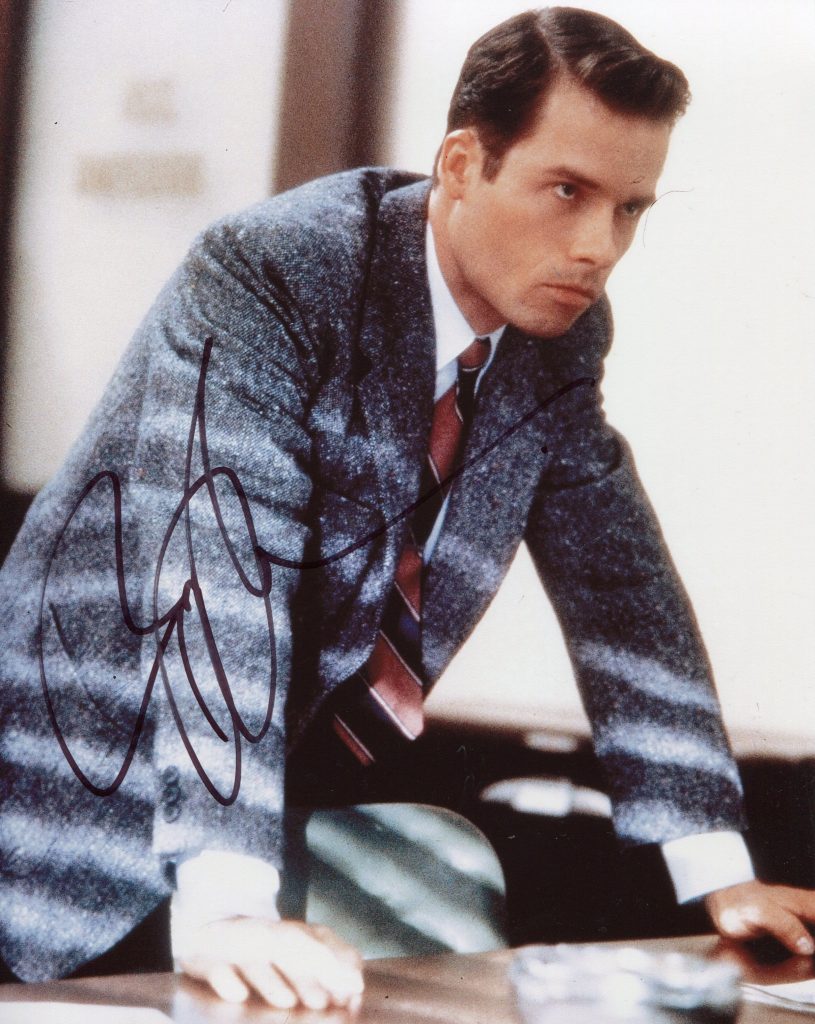
Guy Pearce was born in 1967 in Cambridgeshire. When he was three years of age, his family moved to Geelong in Australia. In 1985 he was cast in the popular soap opera “Neighbours”. He was also featured in “Home and Away”. In 1994 he made international recognition with his role in the cult movie “Priscilla, Queen of the Desert”. In the U.S. he has starred in such movies as “L.A. Confidential”, “Rules of Engagement” and “The Time Machine”. He recently won widespread critical acclaim for his role as Monty Beragon opposite Kate Winslet in the miniseries “Mildred Pierce”. He won an Emmy for his performance.
TCM Overview:
Having earned a considerable reputation in his native Australia through such primetime series as “Neighbours” (Network Ten, 1986- ) and “Home and Away” (Seven Network, 1988- ), actor Guy Pearce earned international attention as the bratty drag queen Adam/Felicia in “The Adventures of Priscilla, Queen of the Desert” (1994). Catching the eye of director Curtis Hanson, Pearce went on to international stardom with his unforgettable portrayal of Lt. Edmund Exley in the critically acclaimed neo-noir, “L.A. Confidential” (1997). From there, he starred in both big and small features like “A Slipping Down Life” (1999) and “Rules of Engagement” (2000), before delivering one of his most memorable performances, playing an amnesiac trying to find his wife’s murderer in Christopher Nolan’s groundbreaking “Memento” (2001). Following underwhelming results with two high-profile projects, “The Count of Monte Cristo” (2002) and “The Time Machine” (2002), Pearce earned critical kudos in smaller fare like “The Proposition” (2006) and “Death Defying Acts” (2008), in which he portrayed famed escapologist Harry Houdini. He delivered a small, but notable turn in “The Hurt Locker” (2009) before portraying King Edward VIII in the Oscar-winning drama “The King’s Speech” (2010) and a playboy who seduces a mother and daughter in “Mildred Pierce” (HBO, 2011), which only added to the handsome actor’s exceptional versatility.
Born Oct. 5, 1967 in Ely, Cambridgeshire, England, Pearce and his family immigrated to Australia, setting up roots Geelong, when he was three years old. Five years later, his father, a New Zealand pilot, died tragically in a plane crash, leaving his English schoolteacher mother to care for him and his older sister Tracey. Even as a youngster, Pearce shunned subjects like math and science in favor of art and music. He joined local theatrical groups at the age of eleven, where he appeared in amateur theater productions of “The King and I,” “Alice in Wonderland,” and “The Wizard of Oz.” In a typical mix of Australian duality, at the same time he performed in stage musicals, the teenager also became involved in body building to pump up his naturally thin body. From ages 16 to 22, he competed in competitions, culminating in a “Mr. Junior Victoria” body building win. Lifting weights aside, Pearce knew his real calling was performing, be it on stage, telly or silver screen. Just two days after his final high school exam in 1985, Pearce won the role of hunky student-turned-teacher Mike Young on the popular Aussie soap “Neighbours” (1985), a four-year stint which helped turn him into a major teen idol. After his television successes in such other Australian programs as “Home and Away” (1988- ) and “Snowy River: The McGregor Saga” (1993-96), Pearce next conquered Australia’s big screen, landing parts in the contemporary rock drama, “Heaven Tonight (1990), the comical romantic fantasy, “Dating the Enemy” (1996) and portraying a young Errol Flynn in “Flynn” (1996).
Then he put on a dress, and the rest was history. In the international camp classic, “The Adventures of Priscilla, Queen of the Desert,” Pearce was the youngest of the three drag performers, a bundle of energy always pushing the envelope. Although “Priscilla” was his first big hit, it was his next film that catapulted him to levels only dreamed of. In 1997, director Curtis Hanson brought him to the States and, ironically, teamed him with fellow Aussie Russell Crowe as California policemen in the superb modern day noir “L.A. Confidential.” As the bespectacled Lt. Ed Exley, Pearce delivered a polished portrayal of a headstrong, politically astute cop who redeems himself in the end. Of the three leads (also including American actor Kevin Spacey), critics took notice of the two Australian unknowns, often mentioning Oscar nominations in the same breath. A far cry from the drag artiste of “Priscilla,” Exley demonstrated the actor’s range and versatility in adapting a flawless American accent.
Pearce further honed his talents as one of a group of soldiers pursued by a cannibal in the graphic thriller, “Ravenous” (1999). That same year, Pearce earned praise for his starring role opposite Lili Taylor, as a bearded brooding musician in “A Slipping Down Life.” Both films debuted at the Sundance Film Festival, but failed to capture much attention when theatrically released. He next costarred in the military courtroom drama, “Rules of Engagement” (2000), starring Samuel L. Jackson as a decorated officer on trial for a rescue mission gone bad and Tommy Lee Jones as his mediocre, but trusted lawyer. Though the two leads were trumpeted on the marquee, Pearce was cited by critics for his strong performance as a bulldog prosecuting attorney. In his most noteworthy performance since “L.A. Confidential,” Pearce landed the lead in Christopher Nolan’s breakthrough feature, “Memento” (2001). As Leonard, a former insurance claims adjuster who suffers from short-term memory loss after an attack in his home that also left his wife dead, he has only instamatic photographs, paper notes and tattoos to help him find his wife’s killer during the 15 minutes he is cognizant. Though Pearce was hailed by critics for his intricate performance, he was overshadowed by Nolan’s inventive backwards narrative and tense direction. Still, an international home run yet again.
On the heels of “Memento,” Pearce made the leap to big budget, special effects-laden Hollywood fare with a contemporary take on H.G. Wells’ classic sci-fi novel, “Time Machine” (2002). Playing a 19th century inventor determined to change the past by using a self-constructed time machine, he is instead hurtled 80,000 years into a post-apocalyptic future, where he discovers that mankind has been divided into hunters and the hunted. The film was not a hit with either critics or theatergoers, though Pearce received his usual acting accolades. He then costarred in “The Count of Monte Cristo” (2002), based on Alexandre Dumas’ epic novel, where he played the deceitful Fernand Mondego, who frames best friend Edmond Dantes (Jim Caviezel) for a crime he did not commit, in order to have his beautiful lover, Mercedes (Dagmara Dominczyk), to himself. After riding the Hollywood wave for several lucrative years, Pearce returned to his homeland to film “Till Human Voices Wake Us” (2003), a supernatural drama about a psychiatry instructor (Pearce) who develops a romance with a mysterious woman (Helena Bonham Carter) whom he rescues from drowning in a river. In “The Hard Word” (2003), Pearce displayed an engaging wit as the cool-headed brains of a trio of bank robbing brothers released from prison after an off-the-books deal is struck, only to discover that they must rob several banks for a pair of crooked cops and their shady lawyer.
In a change of pace, Pearce appeared in the family-friendly “Two Brothers” (2004), playing Aidan McRory, a big game hunter who kills a male tiger, forcing two orphaned cubs into captivity. After the cubs manage to escape, McRory must protect a nearby village from them, only to have a change of heart after seeing them in their natural habitat. Back again to Australia, Pearce filmed “The Proposition” (2006), a western set at the end of the nineteenth century about an Outback law enforcer who pits three notorious outlaw brothers against each other. Future roles for Pearce include famed escapologist Harry Houdini in “Death Defying Acts” and infamous 20th century artist and tabloid fixture, Andy Warhol in “Factory Girl” (2006) opposite Sienna Miller as his muse, Edie Sedgwick. Following a small, but memorable turn in “The Hurt Locker” (2009), Pearce portrayed Edward, the Prince of Wales, who becomes King Edward VIII only to abdicate the thrown and leave his stuttering brother (Colin Firth) to become King George VI in the Oscar-winning drama “The King’s Speech” (2010). In a rare television role, he essayed playboy Monty Beragon, who seduces a successful businesswoman (Kate Winslet) and her wayward daughter (Evan Rachel Wood) in the acclaimed miniseries remake of the Joan Crawford classic melodrama, “Mildred Pierce” (HBO, 2011). The role earned Pearce an Emmy Award for Outstanding Supporting Actor in a Miniseries or Movie.
The above TCM overview can also be accessed online here.
Kyle McLaughlan was born in 1959 in Yakima, Washington. He is associated with the work of the great director David Lynch. In 1984 he starred in Lynch’s “Dune” and two years later was in the brilliant “Blue Velvet”. He went on to star in Lynch’s culy TV series “Twin Peaks” as Special Agent Dale Cooper. Recently he has starred on television in “Desperate Housewives”.
TCM overview:
Plucked from obscurity, clean-cut Kyle MacLachlan became a movie star overnight when he landed the lead in the epic space opera “Dune” (1984), but the film’s disastrous critical reception nearly consigned him to the role of “has been” just as quickly. Luckily for MacLachlan, he had a guardian angel in David Lynch, the visionary director who had cast him in the adaptation of the classic science fiction novel. Lynch would give MacLachlan the starring role in his next film, “Blue Velvet” (1986) and a lead role on the surrealistic television series “Twin Peaks” (ABC, 1990-91). The former would eventually be regarded as a cinematic masterpiece, while the latter became an instant sensation during its first season. Big box office success, however, continued to elude MacLachlan with overlooked vehicles like the sci-fi thriller “The Hidden” (1987) and Oliver Stone’s facile Jim Morrison biopic “The Doors” (1991), as well as starring in the laughing stock that was “Showgirls” (1995), which later developed a rabid cult following. MacLachlan would make a modest return to notoriety on television with recurring parts as the wealthy, impotent husband of Charlotte York on “Sex in the City” (HBO, 1998-2004), and later on the guilty pleasure “Desperate Housewives” (ABC, 2004- ). And while the endearingly stiff MacLachlan became known as a respected working actor, continuing to appear in film and episodic television, there remained the lingering impression of a promising career unfulfilled after such an auspicious beginning under the tutelage of David Lynch.
Born Feb. 22, 1959 in Yakima, WA, MacLachlan attended local Eisenhower High School prior to graduating from the University of Washington’s Professional Actor Training Program in 1982. After the requisite stint in summer stock, he joined Seattle’s Empty Space Theater for a mounting of “Tartuffe” later that year when suddenly everything changed for the young actor. Idiosyncratic director David Lynch was conducting a nationwide audition for the lead in his big-budget adaptation of Frank Herbert’s classic science fiction tome, Dune. Adopting a decidedly “what have I got to lose” attitude, MacLachlan tried out for the part, reading a few lines on video tape. Lynch clearly liked what he saw, as MacLachlan – who had never before acted on screen – was soon cast in the epic fantasy film. “Dune” (1984) may have been a lavish feast for the eyes, but it was terribly bloated, nearly collapsing under its own weight, and unfocused in its execution. Many critics viewed MacLachlan’s debut performance as stilted and lacking the gravitas the role demanded. “Dune” would go on to achieve a degree of cult status, but upon its release was considered a spectacular failure. Despite the film’s disappointing reception, David Lynch had found in MacLachlan a leading man with whom he wanted to collaborate again. It would, in fact, be on the director’s very next project.
In “Blue Velvet” (1986), Lynch’s neo-noir journey into the rotten underbelly of American suburbia, MacLachlan played college student-turned-amateur sleuth, Jeffrey Beaumont. The violent, surrealistic thriller starring Dennis Hopper and Isabella Rossellini shocked and offended many critics and theater goers alike upon its release. Over time, however, it would go on to be considered by many to be the pinnacle of Lynch’s career – not to mention MacLachlan’s – as well as one of the most influential films of the 1980s. It was on the set of “Blue Velvet” that MacLachlan met co-star Laura Dern, daughter of actors Bruce Dern and Diane Ladd, with whom he would remain romantically involved until the end of the decade. With his next project MacLachlan stepped out from under the wing of Lynch, starring in the sci-fi thriller “The Hidden” (1987). Playing an intergalactic lawman disguised as an FBI agent sent to capture an alien criminal capable of inhabiting host bodies here on earth, “The Hidden” was as ridiculous as it was fun, with MacLachlan’s stiff body language put to good use in his role as a stranger in a strange world. MacLachlan followed with the television family drama “Dream Breakers” (CBC, 1989), and the barely seen romantic comedy “Don’t Tell Her It’s Me” (1990). After this string of increasingly disappointing endeavors, it was once again in working with David Lynch where MacLachlan would create his most indelible character – oddly enough as yet another quirky FBI agent.
Co-created with Mark Frost, the television series “Twin Peaks” (ABC, 1990-91) found Lynch revisiting the theme of darkness lurking just under the surface in small-town U.S.A., viewed though the prism of his surrealistic lens. As Special Agent Dale Cooper, the eager, super-efficient FBI man with a weakness for non sequiturs, cherry pie and a “damn fine cup of coffee,” MacLachlan blossomed as an actor, his former rigidness becoming stylish and engagingly goofy. In a show populated by weird characters and bizarre happenings, Cooper provided a likable and reassuring anchor. Although canceled after its second season, “Twin Peaks” was an instant pop culture phenomenon, with millions of viewers asking the question, “Who killed Laura Palmer?” While filming the series, MacLachlan began a brief relationship with co-star Lara Flynn Boyle, who played Donna Hayward, the girl-next-door harboring a secret. After “Twin Peaks,” MacLachlan returned to the big screen with another director as accomplished as he was controversial. In Oliver Stone’s rock history lesson “The Doors” (1991), he essayed keyboardist Ray Manzarek, the pragmatic band mate of Val Kilmer’s self-destructive Jim Morrison. It was a thankless role when viewed alongside Kilmer’s scenery-devouring performance as the doomed “Lizard King.” The resulting film, while beautiful to look at and featuring some spot-on performances, failed to shed any new light on the troubled icon. As a vehicle for MacLachlan’s career, it also failed to produce the desired result of elevating his status in Hollywood.
The next year saw MacLachlan taking a small part in the teenage runaway melodrama “Where the Day Takes You” (1992), co-starring his soon-to-be ex-girlfriend, Lara Flynn Boyle. The same year there was also an extended cameo, reviving his role as Agent Cooper, in the prequel “Twin Peaks: Fire Walk with Me” (1992), which chronicled the days leading up to the brutal murder of Laura Palmer. The film, plagued with problems from the start – not the least of which being MacLachlan’s reluctance to participate in the project – was poorly received by both critics and fans of the enigmatic series. Equally disappointing was the Harold Pinter-scripted adaptation of Franz Kafka’s “The Trial” (1993), with MacLachlan starring as Joseph K, an Everyman accused of an unspecified crime. In 1993, MacLachlan was given the opportunity to direct an episode of the horror anthology “Tales from the Crypt” (HBO, 1989-1996), with a tawdry tale of a jealous husband’s plot to murder his wife’s secret lover. Whether it was born of a desire to participate in lighter fare, or simply collect a paycheck, MacLachlan’s next appearance in a feature film was in “The Flintstones” (1994), a live-action rendering of the beloved cartoon. In it, MacLachlan played Cliff Vandercave, a sleazy Neolithic yuppie bent on framing Fred in a stone-age embezzlement scheme. If “The Flintstones” seemed like an unlikely choice for the eclectic actor to take part in, MacLachlan’s next project would be truly jaw-dropping – and for all the wrong reasons.
“Showgirls” (1995) told the rags-to-riches-to-rags story of Nomi Malone (Elizabeth Berkley), a beautiful, young drifter who finds herself thrust into the world of Las Vegas glitz, sex and power. As Zack Carey, the ambitious entertainment director at a major resort, MacLachlan oozed a sort of reptilian charm, providing the NC-17 rated film with one of its more lascivious moments when Zack and Nomi loudly, almost comically make love in his swimming pool. Directed by Paul Verhoeven from a script by Joe Esterhaus – for which the writer was paid a reported $2 million – the film was given a vicious drubbing by the critics. So bad was it, “Showgirls” later achieved cult status, with the likes of Quentin Tarantino regarding it as one of the few examples of enjoyable big-budget exploitation. However for MacLachlan, it was an embarrassment. In an attempt at redemption, MacLachlan next starred in the criminally under-seen “The Trigger Effect” (1996) alongside Elisabeth Shue and Dermot Mulroney. Written and directed by David Koepp, the film explored man’s tenuous grasp on civility when a massive power blackout lasts for several days. Perhaps a victim of preconceived notions, the slow-burn drama was not the apocalyptic survival thriller people were expecting, and the film quickly disappeared from theaters. Even if his film career was not exactly firing on all cylinders, at least MacLachlan’s romantic life was flourishing, when in 1996 he announced his engagement to supermodel Linda Evangelista.
MacLachlan rounded out the decade with a slate of television performances and overlooked feature films. Among them, Larry Bishop’s onerous gangster comedy “Mad Dog Time” (1996); director Mike Figgis’ cautionary tale of marital infidelity “One Night Stand” (1997); the experimental “Timecode” (2000), also helmed by Figgis; and a contemporarily set adaptation of “Hamlet” (2000), starring Ethan Hawke. Following his breakup with Evangelista, MacLachlan began dating television producer Desiree Gruber in 1999 and marrying her three years later. It seemed as if the Hollywood player, known for keeping company with ingénues and supermodels, had finally settled down. MacLachlan’s professional visibility received a boost in 2000 when he scored a recurring role on the incredibly popular dramedy series “Sex in the City” (HBO, 1998-2004). Perfectly cast as the uptight “momma’s boy” and love interest of Charlotte York (Kristin Davis), MacLachlan’s Trey MacDougal did his best to give Carrie’s Pollyannaish gal pal the life she had dreamed of. MacLachlan’s character left the show in 2002, after finally admitting to Charlotte that he had no desire to have children, but the recurring role went a long way toward putting the actor back on the map.
Post-“Sex,” MacLachlan moved on yet again to another stretch of roles in films that few people saw. There was a brief appearance in “Perfume” (2002), a largely improvised ensemble comedy set in the world of New York high fashion. He had a small supporting role in the coming-of-age drama “Me Without You” (2002), and played the ghost of Cary Grant in “Touch of Pink” (2004). MacLachlan took another shot at starring in his own series with the courtroom procedural “In Justice” (ABC, 2005-06). Despite setting itself apart from similar crime dramas by focusing on MacLachlan’s legal team representing wrongly convicted prisoners, the series lasted only a season. He would not be out of work for long, however, when diehard “Twin Peaks” fan and creator of the primetime histrionic soap “Desperate Housewives” (ABC, 2004- ) Marc Cherry cast MacLachlan as Orson Hodge. As the dentist husband of Bree (Marcia Cross) and a generally creepy guy, MacLachlan once again channeled his Lynchian side, much to the delight of the show’s fans. As the 2010-11 season approached it was announced that after a few more cameos, Hodge would be leaving Wisteria Lane for good. Back in theaters, MacLachlan appeared as immigration attorney Charles Foster in “Mao’s Last Dancer” (2010), a biopic recounting the story of famed Chinese dancer Li Cunxin. MacLachlan would also have a recurring role as the Mayor of Portland, Oregon, on the sketch comedy series “Portlandia” (IFC, 2010-11).
The above TCM overview can also be accessed online here.
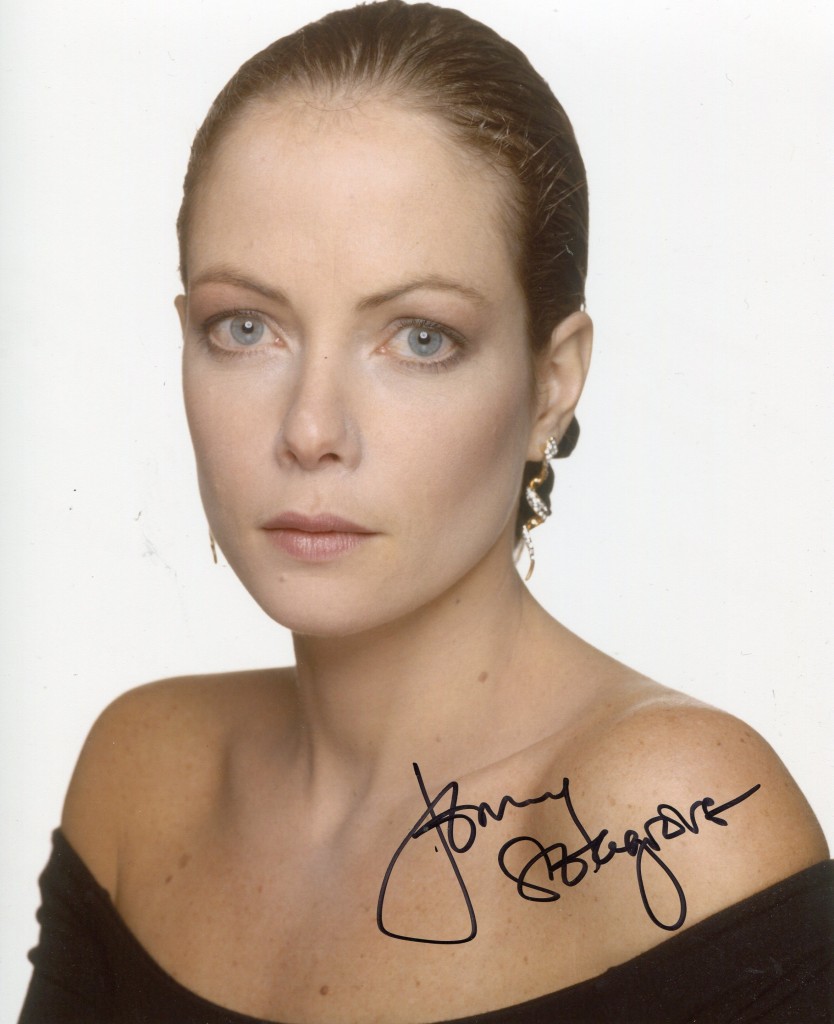
Jenny Seagrove was born in 1957 in Kuala Lumpur, Malaya. In 1983 she achieved national fame in the UK for her role in the very popular film “Local Hero”. She followed this with the lead in the television mini-series “A Woman of Substance”. She also starred as Jo MIlls opposite Martin Shaw in the long running series “Judge John Dee” which ran from 2001 until 2007.
Gary Brumburgh’s entry:
British actress Jenny Seagrove distinguished herself as a sensitive heroine during the 1980s in plush TV romances such as The Woman in White (1982), Diana (1984) and, in particular, the adaptations of Barbara Taylor Bradford‘s A Woman of Substance (1984) wherein she played Emma Harte, and Hold the Dream (1986) as Paula Fairley. Jenny enjoyed a privileged childhood though it was marked with sadness. Born in Kuala Lumpur, Malaysia, her father ran an import-export firm and her mother was a British aristocrat who suffered a debilitating stroke when Jenny was less than a year old. At age 9, Jenny attended a girls’ boarding school in England and appeared in school plays. Initially interested in a culinary career, she opted for acting instead and trained at the Bristol Old Vic. After leaving school, Seagrove met Indian-born Madhav Sharma, an actor-director and the marriage lasted between 1984 and 1988 . She also had a long term relationship with director Michael Winner of “Death Wish” fame, whom she met on the set of the Agatha Christie mystery Appointment with Death (1988). She now lives with theatre impresario Bill Kenwright and has appeared in many of his productions including “The Miracle Worker,” “Jane Eyre,” “Present Laughter” and, more recently, “The Constant Wife” and “The Secret Rapture.” To date, her film career has not been as favorably compared to her stage and TV work. She did enjoy a small role playing an offbeat Scottish lass in Local Hero (1983), and in the United States she was seen in an unsympathetic light as the evil nanny in The Guardian (1990), directed by William Friedkin.
– IMDb Mini Biography By: Gary Brumburgh / gr-home@pacbell.net
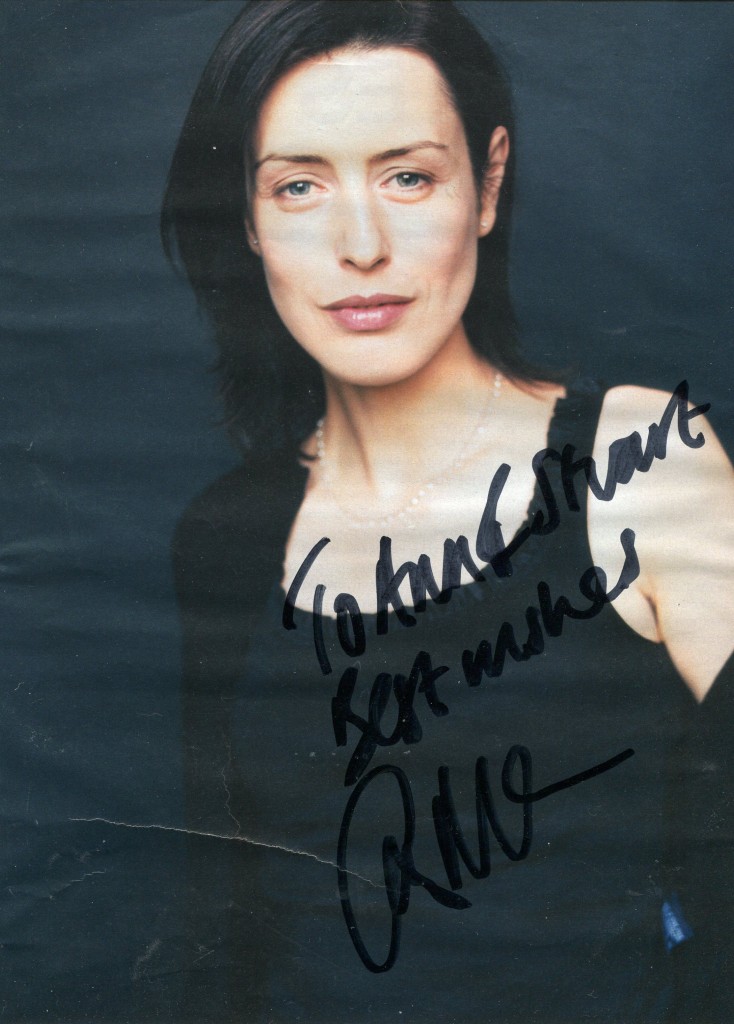
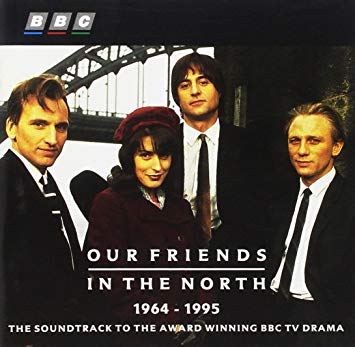
Gina McKee was born in 1964 in Durham. She made her film debut in 1988 in “The Lair of the White Worm”. In 1996 she made a strong impression in the excellent television series “Our Friends From the North” with Mark Strong and Daniel Craig. Her other films include “Croupier”, “Notting Hill” and “The Blackwater Lightship” with Angela Lansbury. She played Irene in the re-make of the series “The Forsyte Saga”.
TCM Overview:
Actress Gina McKee lent an ethereal presence to dozens of British film and television projects over the course of a three-decade career, including the award-winning “Our Friends in the North” (BBC 1996), “Notting Hill” (1996), “Divine Secrets of the Ya-Ya Sisterhood” (2002) and numerous episodic series. The daughter of a coal miner, McKee began acting on television, and proceeded directly into guest roles without any actual dramatic training. Her striking visage and thoughtful performances attracted the attention of major directors like Mike Leigh (“Naked,” 1993), Mike Hodges (“Croupier,” 1998), Michael Winterbottom (“Wonderland,” 1999) and writer Richard Curtis, who provided McKee with her biggest project to date in “Notting Hill.” McKee remained an in-demand presence on UK features and in television, which underscored her status as one of the British entertainment industry’s most respected if somewhat unsung talents.
Born Georgina McKee on April 14, 1964 in the English mining town of Peterlee, County Durham, Gina McKee was descended from a long line of coal miners, which included her father. A teacher who encouraged her students to experiment with improvisation introduced her to acting in primary school. Later, as a teenager, she joined a local drama group run by theater director Ros Rigby, which led to appearances in various plays. A talent scout of Tyne Tees, the ITV television franchise for North East England, spotted McKee during one of the group’s productions and cast her in a children’s adventure series called “Quest of Eagles” (Tyne Tees Television, 1979). From there, she spent three summers with the National Youth Theatre before applying to study at the Bristol Old Vic Theatre School, the London Academy of Music and Dramatic Art and the Central School of Speech and Drama. Though all three schools rejected her, she had earned her Equity card from “Quest of Eagles” and began appearing on UK television and in features.
McKee worked steadily in bit and supporting roles throughout the 1980s and 1990s, most notably in Ken Russell’s psychedelic horror fantasy “The Lair of the White Worm” (1988) and Mike Leigh’s intense drama “Naked” (1993). Three years later, she earned her breakout role in the TV drama “Our Friends in the North,” which followed four friends over three decades of turbulent British history. The film established all four of its stars – McKee, Daniel Craig, Christopher Eccleston and Mark Strong – as major talents and earned McKee Best Actress Awards from both the BAFTAs and Royal Television Society Awards. She soon divided her time between television and feature efforts, earning strong critical praise for her performances in the satirical news program “Brass Eye” (Channel 4 1997-2001) and as Clive Owen’s neglected girlfriend in the noirish “Croupier” (1998) for director Mike Hodges. In 1999, McKee was introduced to international audiences as the paraplegic lawyer Bella in “Notting Hill.” Despite that film’s blockbuster status, McKee remained a fixture of English drama, enjoying character roles in such acclaimed efforts as an adaptation of “The Forsyte Saga” (ITV/WGBH 2002-03), the Oscar-nominated drama “Atonement” (2007), blackly comic satire “In the Loop” (2009) and “The Borgias” (Showtime 2011-2013) as the fierce Catherine Sforza. In 2012, she made a rare return foray to comedy in the series “Hebburn” (BBC Two 2012- ) as the mother of a young man who marries a middle-class Jewish girl during a drunken spree in Las Vegas.
The above TCM overview can also be accessed online here.
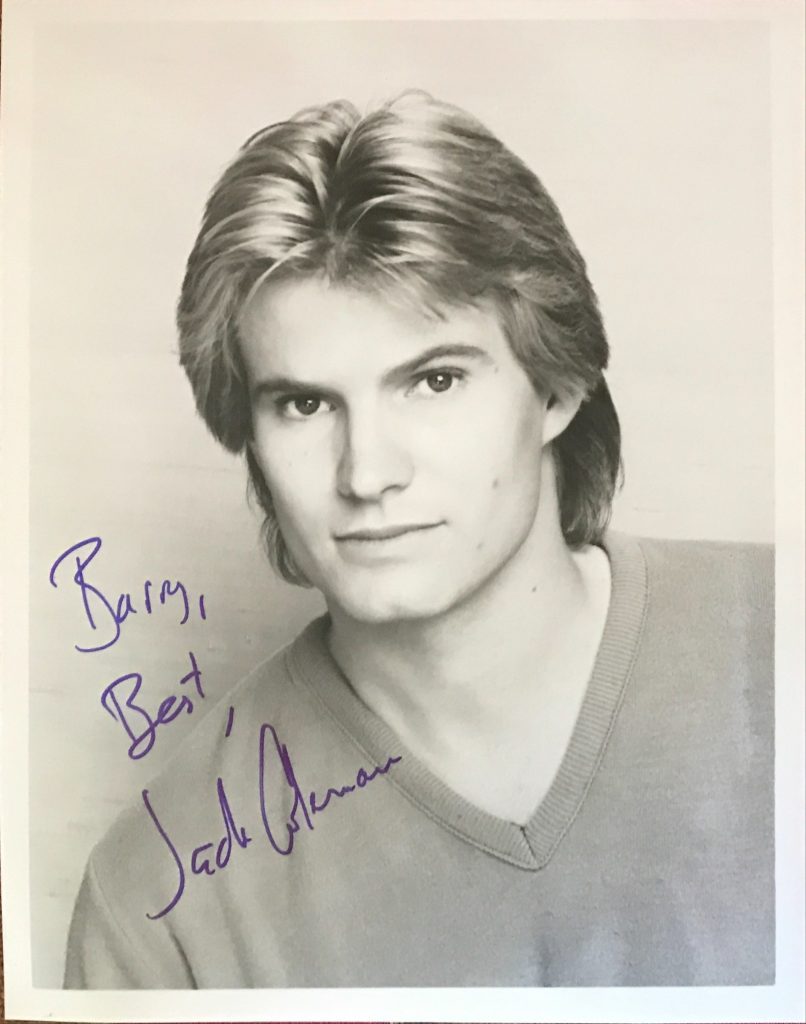
Jack Coleman was born in 1958 in Easton, Pennsylvania. He is best known for his portryal of Steven Carrington in the long running tleevision series “Dynasty”. When Al Corley decided to leave the role, Jack Coleman replaced him. Coleman’s other work includes “Cow Belles Entourage”.
IMDB entry:
Jack Coleman was born on February 21, 1958 in Easton, Pennsylvania, USA as John MacDonald Coleman. He is an actor and writer, known for Heroes (2006), Dynasty (1981) and Spawn (1997). He has been married to Beth Toussaint since June 21, 1996. They have one child.Trivia (6)
A sixth-generation grandson of Benjamin Franklin, in turn related to President John Calvin Coolidge Jr. and a remote descendant of the old Earls of Orkney and the ancient Kings of Scotland.
Graduated from Duke University in 1980, where he studied acting.
Has one daughter Tess, born in 1999. His wife Beth appeared in the Wes Craven film Red Eye (2005).
In theater, he won the 1986 Los Angeles Drama Critics Circle Award for his performance in “Bouncers”.
Studied acting at the National Theater Institute at the Eugene O’Neill Theater Center, and Writers’ Boot Camp.
Gained TV notice after replacing Al Corley in the role of “Steven Carrington”, one of prime-time television’s first openly gay characters, on the night time soap Dynasty(1981).
Personal Quotes:
After a hit show is over, you soon realize this is a very tough business … brutally tough. But I’m a better actor and I have more gravitas than I had at 24 with bleached-blonde hair.
I don’t want to play earnest. I’d rather play somebody who’s kind of sleazy. It’s much more fun, especially in a comedy. You don’t want to be some earnest guy who’s just trying to do the right thing but can’t. I want to be doing the wrong thing intentionally.
I always thought invisibility would be cool, but then I was invisible for most of the ’90s.
I am blind as a bat and I wear contact lenses because the vision they afford is much better. So I wear contacts and then I have to wear reading glasses. My eyes have been bad – I come from bad eyesight on both sides of my family.
I don’t play a lot of convicts or mafia guys. I’m usually a professional, a doctor, lawyer, banker… that kind of thing. But sometimes you get to be the twisted guy, too, which is what I’m relishing so much about this [Heroes] role. There’s nothing worse than playing a milquetoast. I’m happy to play a jerk, and I’m happy to play a bad guy. It really is fun to be able to play somebody who has a dark, sinister side.
I would love to do a movie like All the President’s Men. A really smart, crisp political thriller.
The above IMDB entry can also be accessed online here.
Ryuichi Sakamotoe is a Japanese musician, composer, singer and actor. He was born in 1952 in Tokyo. His best known film is “Merry Christmas Mr Lawrence” with Tom Conti and David Bowie in 1983.