Contemporary Actors

Collection of Contemporary Actors

Nancy Allen
Nancy Allen
Nancy Allen

Nancy Allen was born in 1950 in New York City.   She made her film debut in a small role opposite Jack Nicholson in “The Last Detail” in 1973.   Other films  included “I Wanna Hold Your Hand” in 1978 and three excellent roles in Brian De Palma’s movies, “Carrie” in 1976, “Dressed to Kill” with Angie Dickinson in 1980 and “Blow Out”.   She also starred in “Robocop” with Peter Weller.

IMDB entry:

Nancy Anne Allen was the daughter of a police lieutenant from Yonkers, New York. At a young age, she trained for a dancing career at the High School of Performing Arts, and then attended Jose Quintano’s School for Young Professionals. In dozens of television commercials from the age of 15, Nancy made her first film appearance in The Last Detail(1973) with Jack Nicholson. Three years later, she set the standard for all future “bitch-goddess teenagers” as Chris Hargensen in Stephen King‘s Carrie (1976), taken to the big screen by director Brian De Palma. Nancy then married De Palma in 1979. She next appeared in Steven Spielberg‘s I Wanna Hold Your Hand (1978); for the next few years, she appeared only in De Palma’s films: Home Movies (1980), Dressed to Kill (1980), and she starred with John Travolta in Blow Out (1981).

After her divorce from De Palma in 1984, Nancy’s film opportunities were supposedly narrowed, but then she surprised the whole world in 1987 when she performed as Officer Anne Lewis in the sci-fi cult film RoboCop (1987), along with Peter Weller. Here, she set another standard as a tough but at the same time feminine policewoman, whose sex would not interfere with her actions. After the success of RoboCop, she performed as Patricia Gardner in the second sequel in the Poltergeist series. She came back inRoboCop 2 (1990) and in order to get more involved with the character Nancy Allen learned martial arts and police training for real. She returned again in RoboCop 3 (1993), though her co-star Peter Weller did not this time. In 1993, Nancy joined several other veteran stars in Acting on Impulse (1993), and married co-star Craig Shoemaker, in the same year. A few years later, she divorced Craig and some time after she married again.

Later, she appeared in some diverse films: Dusting Cliff 7 (1997) Secret of the Andes(1999), Circuit (2001), and she had a guest appearance in Steven Soderbergh‘s Out of Sight (1998). Her last performance was for the television series Law & Order: Special Victims Unit (1999), in the episode “Escape” aired on December 2, 2003. Allen has recently appeared in several documentaries about her most famous films: Acting ‘Carrie’(2001), _DVD BackStory: RoboCop (2001)_, The Making of ‘Dressed to Kill’ (2001), DVD _ET True Hollywood Stories: The Curse of Poltergeist (2002)_.

Interested in projecting the image of a strong but at the same time feminine woman, she managed to get away from the victim roles she was always offered, she also was able to get away from the stereotype of the beautiful but dumb woman in most action films. She is an environmentalist that traded her Volvo car for an Hybrid car in order to set the example. She is also an activist against breast Cancer along with her friend actress Wendie Jo Sperber, who created the foundation WeSpark. Her last appearance on television was on the Inside E! story of her co-star John Travolta and the A&E Biography of Travolta – both appearances in 2004. Nowadays, Nancy Allen lives a quiet life along with her family and friends somewhere in the United States.

– IMDb Mini Biography By: Eva Dalila Rojano, thanks to Derek Hazell nancy_tribute@hotmail.com

The above IMDB entry can also be accessed online here.

Theo James
Theo James
Theo James
Theo James & David Allison
Theo James
Theo James

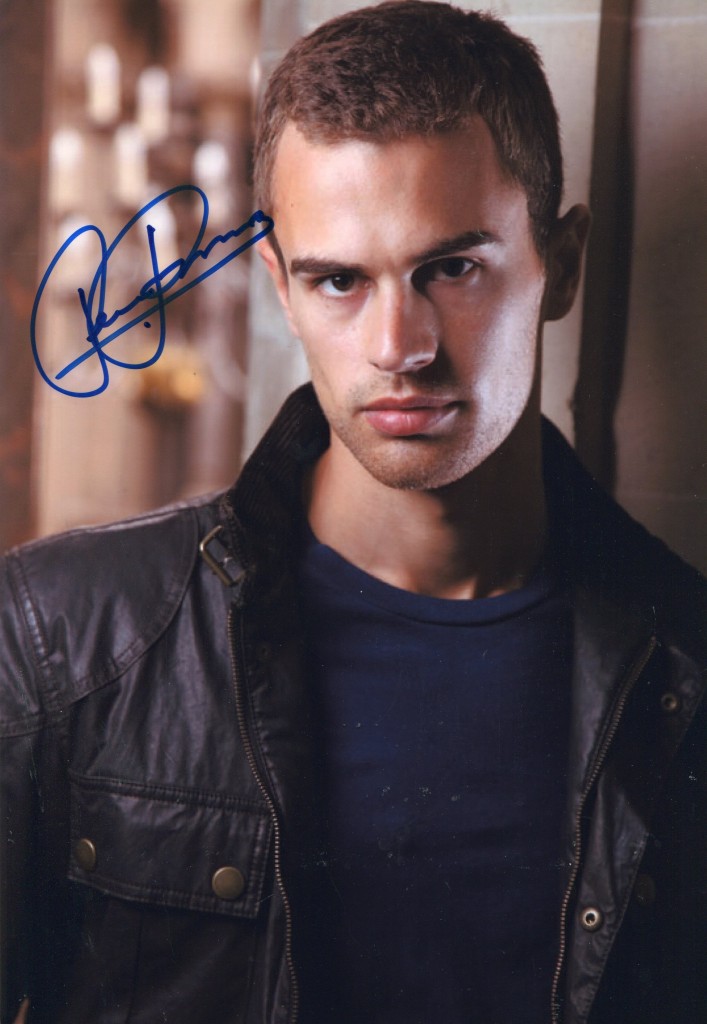
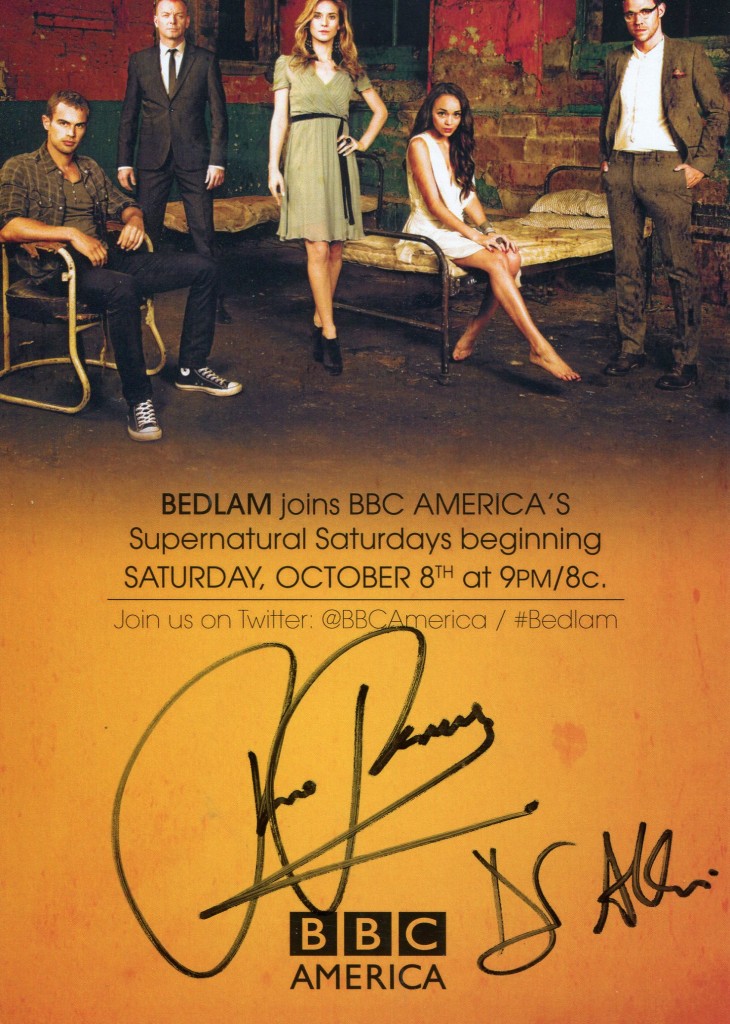
Theo James was born in 1984 in Oxford.   He made his television debut opposite Billie Piper in “A Passionate Woman” in 2010.   He was featured in “Downton Abbey” as Turkish diplomat Kemal Parnuk.   He will be seen shortly in the televsion verion of John Braine’s “Room at the Top”.   His films include “Red Tails” and “Underworld Awakening”.

TCM overview:

Theo James was part of the new wave of talented British actors storming American shores, snapping up sitcoms and starring roles in their wake. From clean cut Oxford boy to New York City cop, James proved his versatility on the procedural crime drama, “Golden Boy” (CBS, 2013-). Still a fresh face on the small screen, James made quite the impression on American audiences with a small but memorable role on the hugely popular period drama, “Downton Abbey.” (PBS, 2010-) James played the dashing young Turkish diplomat Kemal Pamuk, who deflowers the female lead and then promptly dies, giving a whole new meaning to the phrase, “la petite mort.” With his exotic features, it’s no surprise James passed for a foreign diplomat, although his heritage lies in Greece rather than Istanbul.

Born Theodore Peter J. K. Taptiklis, he goes by one of his many middle names, James. Son of Jane and Phillip Taptiklis, James was born on December 16, 1984 in Oxford, England. As a child he attended Aylesbury Grammar School and as a young adult, he pursued and earned a degree in philosophy from the University of Nottingham. After completing his undergraduate studies, he trained for the stage at Bristol Old Vic Theatre School, and from there, pursued acting outside of the stage. James made his television debut on the mini-series “A Passionate Woman” (BBC, 2010), starring opposite Billie Piper, of “Dr.Who” fame. In his final year of school, James was offered a small part in Woody Allen’s “You Will Meet a Tall Dark Stranger” (2010), alongside Hollywood heavyweights Anthony Hopkins, Naomi Watts and Josh Brolin. Not a bad start for a drama kid still in school.

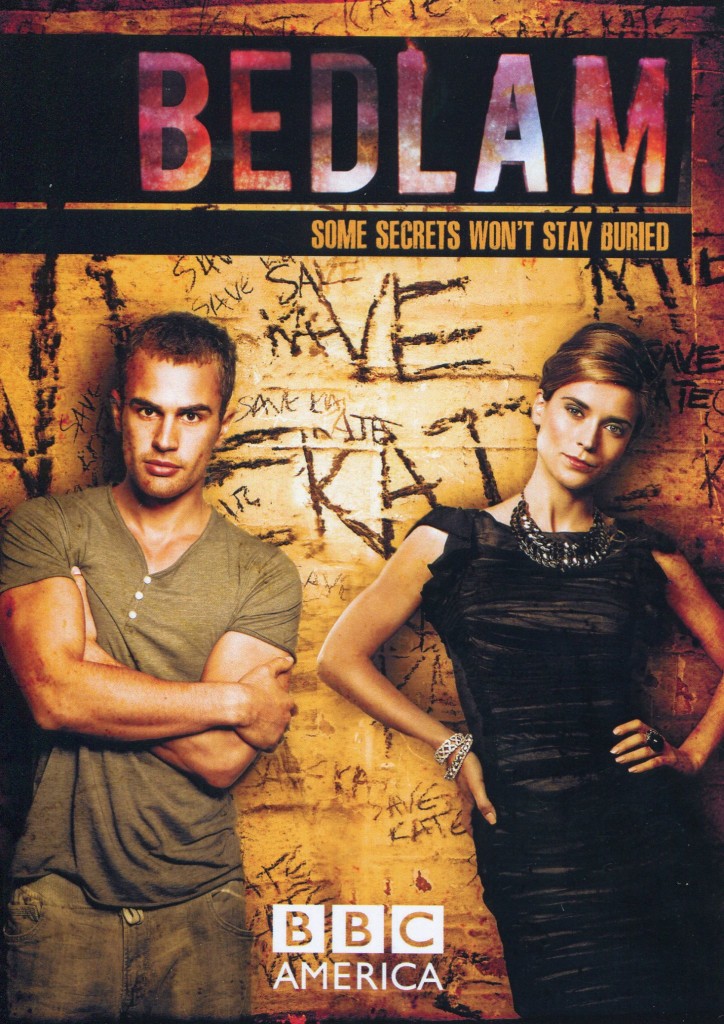
After graduating, James appeared in six episodes of the horror series “Bedlam” (Sky Living, 2011), and earned a part as an insufferable nightclub representative in “The Inbetweeners Movie” (2011), a British film adaptation of the popular coming-of-age raunchy TV series akin to “Superbad” (2007). The actor then built up quite the resume, despite his relatively short tenure in the industry. His second Hollywood feature had him don his best leather to star opposite Kate Beckinsale in the vampire sequel, “Underworld: Awakening” (2012). As a fresh import to the States, James did his homework for his next role as a hotheaded, young detective rising up the ranks of the NYPD for the cop drama, “Golden Boy.” After logging some time in plenty of squad cars, the U.K. expat got a feel for how the boys in blue really operate.

 The above TCM overview can also be accessed online here.
James Purefoy
James Purefoy
James Purefoy
James Purefoy
James Purefoy

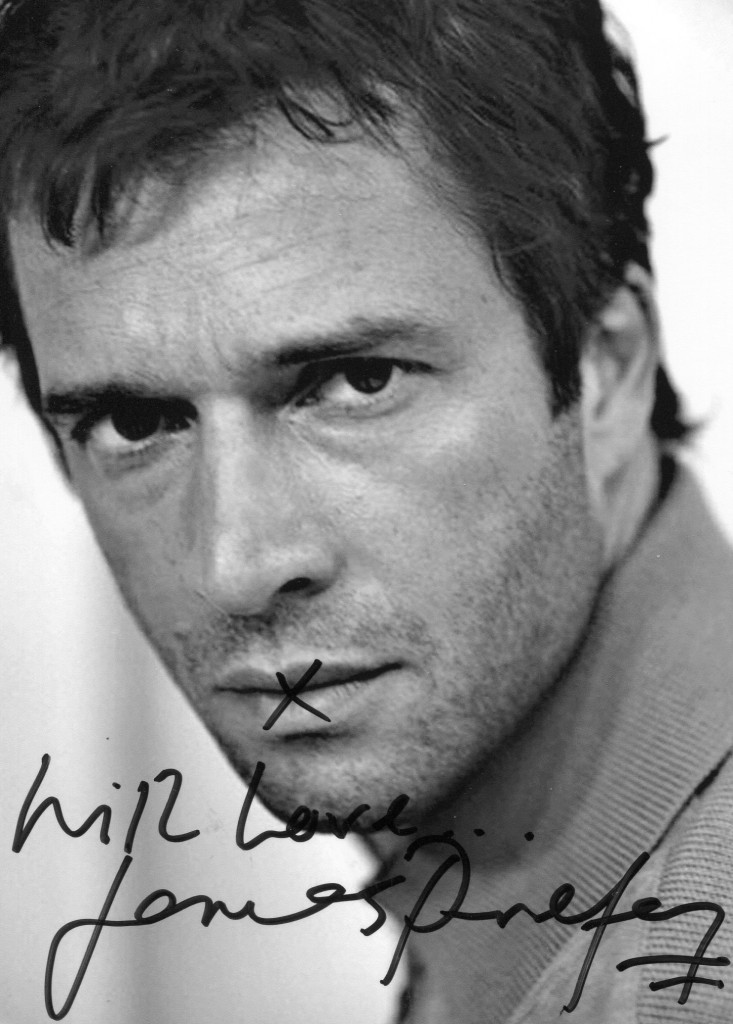
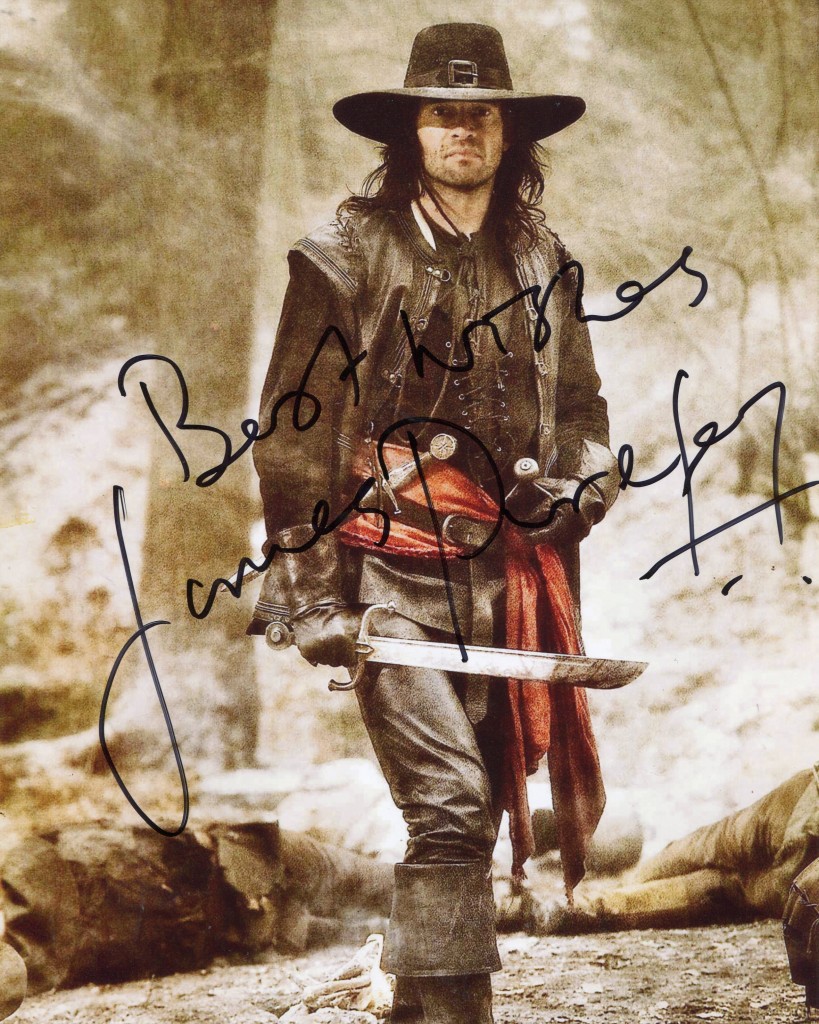
James Purefoy was born in 1964 in Taunton, Somerset.   He joined the Royal Shakespeare Company in 1988.   He has had an extensive stage career and in 2011 was one of the leads in “Flare Path” by Terence Rattigan at the London’s Theatre Royal,  Haymarket.   His movies include “Vanity Fair” and in 1999, “Mansfield Park”.

TCM overview:

A dashingly handsome, dark-haired actor hailing from Somerset, England, James Purefoy did extensive stage and television work in his native country beginning in the mid-1980s before breaking out with significant film roles at the close of the 90s. The performer made his professional acting debut as Alan Strang in a 1986 stage production of “Equus” and subsequently joined the Royal Shakespeare Company, where he was featured in productions including “The Tempest” and “Macbeth”. Looking to make the move to screen work, but finding little in the way of film roles, Purefoy began a successful television run with a co-starring role on the Granada-CV series “Coasting”, chronicling a theme park owned by two brothers in Blackpool. In 1991, he made his debut on American television when PBS broadcast “The Casebook of Sherlock Holmes” as a presentation of “Mystery!” His supporting role in the British miniseries “The Cloning of Joanna May” landed him back on the small screens of USA when it was aired on A&E in 1992, and the following year he was featured in the three-part miniseries “Calling the Shots” on PBS’ “Masterpiece Theatre.”

Purefoy made his feature acting debut in “Feast of July,” a period drama produced by Merchant Ivory. This debut didn’t immediately jump-start a film career, and Purefoy instead spent his time performing with the Birmingham Repertory Theatre and acting in television productions including the popular British period action series “Sharpe” and the British TV adaptation of “The Tenant of Wildfell Hall” (1996). He returned to the Royal Shakespeare Company to act in Simon Callow’s 1996 staging of “Les Enfants du Paradis.” The following year, he reappeared on British small screens with a co-starring role in the critically lauded miniseries “A Dance to the Music of Time.”

1998 saw the actor return to features with a pivotal supporting role as an appealingly rugged but sensitive heterosexual upon whom a gay acquaintance (Kevin McKidd) develops a crush in Rose Troche’s winning and fresh “Bedrooms & Hallways”. Becoming something of a crush object himself thanks to the charming role, Purefoy went against type and bulked up to play the downwardly spiraling drunk Tom Bertram in Patricia Rozema’s somewhat revisionist take on Jane Austen’s “Mansfield Park” (1999). The actor returned to the stage with “Four Knights in Knaresboro,” a dark comedy produced at Kilburn’s Tricycle Theatre the same year he was featured in the independents “The Lighthouse” and “Women Talking Dirty” (all 1999).

Purefoy kicked off 2000 with an appearance in the British miniseries “Metropolis” and made the most of a supporting turn as a seductive actor who strikes the fancy of the hormonal J ly Richardson in Ben Elton’s less-than-impressive feature directorial debut “Maybe Baby.” He again appeared on American television, portraying Carrasco in the TNT original “Don Quixote”, while his delightfully sincere supporting turn as the Black Prince of Wales suitably impressed with the skills of the lowly squire (Heath Ledger) in “A Knight’s Tale” (2001) introduced him to an even larger USA audience. A co-starring role in the eagerly-awaited action thriller “Resident Evil” (2002) would prove the actor’s breakthrough with the American audience. Later that year, he starred in the small screen remake of Thomas Hardy’s novel “The Mayor of Casterbridge” (A&E, 2003).

Purefoy next appeared in the European films “Photo Finish” (2003), “George and the Dragon” (2004) and “Blessed” (2004) before garnering much attention from Hollywood in his next role, playing Reese Witherspoon’s high-born lover Rawdon Crawley in director Mira Nair’s stylish 2004 adaptation of the classic William Thackery novel “Vanity Fair.” Purefoy was then cast as a regular in his first television series, portraying Marc Antony in HBO’s sprawling historical epic, “Rome” (2005- ). The role of the loyal foot soldier to Julius Caesar (Ciarán Hinds) gave Purefoy romantic notions of playing a noble character. But the truth, as always, was stranger than fiction. The real Marc Antony, however, was a wild man-a drunken party animal who enjoyed his women as much as battle-making the character “great fun to play.”

The above TCM overview can also be accessed online here.

Bernadette Peters
Bernadette Peters

Bernadette Peters was born in Queens, New York in 1948.   A consummate theatrical performer she has also starred in such movies as “The Longest Yard” in 1974 with Burt Reynolds, “Silent Movie” with Mel Brooks in 1976  and “Pink Cadillac” with Clint Eastwood in 1989.

TCM overview:

Instantly recognizable for her curly red hair and porcelain doll features, Bernadette Peters was already a seasoned theater actress when she broke through with 1968’s “Dames at Sea.” Her critical triumphs as the star of a series of stage musicals earned her multiple Tony and Drama Desk Awards, and she earned an amazing track record with acclaimed turns in “Song and Dance,” “Sunday in the Park with George,” “Into the Woods,” “Annie Get Your Gun,” “Gypsy” and “A Little Night Music,” earning a reputation as the premier interpreter of Stephen Sondheim. Romantically linked to Steve Martin for several years, Peters achieved great success onscreen as well, starring in Mel Brooks’ “Silent Movie” (1976), the comedy classic “The Jerk” (1979), “Annie” (1982) and “Pennies from Heaven” (1981), winning a Golden Globe for the latter. Gifted with impeccable comic timing, a powerful voice, and a unique charisma, Peters became one of musical theater’s most loved and recognizable ambassadors, appearing in many variety shows, tributes and filmed performances that increased mainstream interest in theater. Even audiences resistant to Broadway’s charms could appreciate Peters in popular roles such as the sorceress Circe in “The Odyssey” (NBC, 1997) or as Brandy’s wickedly bitchy stepmother in “Rodgers and Hammerstein’s Cinderella” (ABC, 1997). Working steadily and to enormous acclaim across the entire entertainment spectrum, Bernadette Peters was universally hailed as one of the greatest musical theater performers of all time, if not the all-time greatest.

Born Feb. 28, 1948 in Ozone Park, Queens, NY, Bernadette Lazzara was the daughter of her bread delivery truck driver father, Peter, and a showbiz-savvy mother, Marguerite. (She would later take a form of her father’s first name as her stage name.) Thanks to her mother’s machinations, the young girl with the powerhouse voice made appearances on several game shows and local children’s programming, including “Juvenile Jury” (NBC, 1947-1954; BET, 1983-84; syndicated, 1970-71, 1989-1991). After these first steps, Peters quickly revealed an innate talent for showmanship, notching several impressive professional credits before she was a teenager, including roles in “A Boy Called Ciske” (NBC, 1958) as well as 1959’s musical “The Most Happy Fella.” A small role in the second national touring company of “Gypsy” introduced Peters to Marvin Laird, who would become her longtime accompanist, conductor and arranger after he overheard her singing to herself and marveled at her immense talent.

Ascending through the theatrical ranks, Peters gained invaluable experience in a variety of plays and musicals, and after graduating high school, she landed work in several off-Broadway musicals, including 1966’s “The Penny Friend” and 1967’s “Curley McDimple.” That same year, she debuted on Broadway in “Johnny No-Trump” and won a Theatre World Award opposite Joel Grey in 1968’s “George M!” Her performance as the show-saving ingénue Ruby in the 1968 parody musical “Dames at Sea” sealed her stardom, earning her a Drama Desk Award and a wealth of critical acclaim. A newly minted Broadway star, she starred in 1969’s “La Strada,” 1971’s “On the Town” and 1974’s “Mack and Mabel,” receiving Tony nominations for the latter two.

Hollywood beckoned, and Peters began to systematically accrue screen credits, including appearing in the TV movie version of the musical “Once Upon a Mattress” (CBS, 1972) and playing a sexy but easily duped prison secretary in the Burt Reynolds comedy smash “The Longest Yard” (1974). A comedic dynamo with a wicked intelligence glowing from behind her ringlet curls and porcelain doll face, Peters proved a natural fit as Mel Brooks’ leading lady in his comedy “Silent Movie” (1976) and calibrated her talents to the perfect whacko wavelength to romance Steve Martin in “The Jerk” (1979). A scene in which Peters and Martin, who were dating in real life, earnestly but goofily warble “Tonight You Belong to Me” to each other showcased both performers at the peak of their comedic powers. Many viewers fell in love with Peters during one of her many performances as a staple guest on variety programming during this time, with her Emmy-nominated guest spot on “The Muppet Show” (syndicated, 1976-1981) proving a highlight.

She notched a Top 40 hit with the single “Gee Whiz” in 1980, but she proved most effective as a vocalist when her singing and acting merged on stage or on screen. Perhaps Peters’ best feature performance came as a frustrated schoolteacher in love with a traveling salesman (Steve Martin) in Herbert Ross’ stylish, underrated “Pennies from Heaven” (1981), a throwback to 1930s movie musicals. For her work in the film, she won a Best Actress Golden Globe and that same year, hosted an episode of “Saturday Night Live” (NBC, 1975) as well as posing for the December issue of Playboy wearing Bob Mackie-designed lingerie. Although her follow-up, the film version of the beloved musical “Annie” (1982), was not the enormous blockbuster Hollywood hoped for, Peters stole the show from co-stars Tim Curry and Carol Burnett as Lily St. Regis, Curry’s delightfully tacky moll intent on kidnapping America’s most optimistic orphan (Aileen Quinn). Despite her success on the West Coast, Peters heeded the siren song of New York and returned to appear in the 1982 off-Broadway dramedy “Sally and Marsha,” for which she earned a Drama Desk Award nomination.

In 1984, she appeared in the first of two Stephen Sondheim/James Lapine musicals, the experimental “Sunday in the Park with George.” Playing a dual role as the lover of artist Georges Seurat (Mandy Patinkin) and her elderly descendent, Peters delivered an incandescent, Tony-nominated performance. A 1986 PBS recording of the performance earned the actress a CableACE Award. Many fans and critics believed that Peters was overdue for earning Broadway’s highest honor, and were happy to see her nail the demanding female lead role in Andrew Lloyd Webber’s 1985 hit, “Song and Dance.” Playing an English girl adrift in America, Peters was onstage alone for the first act, singing nearly 20 numbers depicting various stories and aspects of the character’s life. For her powerhouse performance, she won the Tony for Best Leading Actress in a Musical and a reputation for being musical theater’s premier leading lady.

A longtime muse of Sondheim’s, Peters was universally acclaimed as perhaps the greatest interpreter of the famed composer/lyricist’s work; she created the role of the Witch in the Sondheim/Lapine 1987 collaboration “Into the Woods” to rave reviews and a Drama Desk nomination. That same year, she was named Harvard’s Hasty Pudding Woman of the Year as well as the Sarah Siddons Actress of the Year. (Almost 10 years later, she would be the youngest person ever inducted into the Theatre Hall of Fame.) The actress returned to film work playing a disaffected hat designer in the downtown New York art scene ensemble “Slaves of New York” (1989), starring opposite Clint Eastwood in the dramedy “Pink Cadillac” (1989), and essaying the imperious mistress of Franz Liszt in James Lapine’s “Impromptu” (1990).

She would find more success on television, however, winning raves for her turns as the mother of a kidnapped child in the powerful “David” (ABC, 1988), as colorful televangelist Tammy Faye Bakker 0opposite Kevin Spacey as Jim Bakker in the biopic “Fall From Grace” (NBC, 1990), and as a cancer patient befriended by her psychologist (Mary Tyler Moore) in “The Last Best Year” (ABC, 1990). Younger viewers also benefited from the talents of this vocal chameleon as she voiced the breathy Rita in a series of recurring appearances on Steven Spielberg’s well-regarded cartoon “Animaniacs” (Fox, 1993-95; The WB, 1995-98) as well as a loyal lady-in-waiting in Don Bluth’s fantasy-based-in-fact cartoon musical “Anastasia” (1997).

Peters returned to Broadway in the ill-fated 1994 stage version of Neil Simon’s “The Goodbye Girl,” but garnered her second Tony and third Drama Desk Award as a goofy, goodhearted Annie Oakley in the 1999 Broadway revival of “Annie Get Your Gun.” The lure of Hollywood remained strong, and she essayed memorable turns as a series of powerful women: the sorceress Circe in Homer’s epic “The Odyssey” (NBC, 1997), the deliciously wicked stepmother to actress-singer Brandy in “Rodgers and Hammerstein’s Cinderella” (ABC, 1997), and a country singer who mentors the up-and-coming LeAnn Rimes in “Holiday in Your Heart” (ABC, 1997). For her recurring role as a woman seeking a divorce after her husband paid someone to seduce her on “Ally McBeal” (Fox, 1997-2002) Peters earned her second Emmy nomination.

Many viewers who did not have the opportunity to see Peters on Broadway were able to see her work her theatrical magic in several performing arts specials such as the star-studded “Sondheim: A Celebration at Carnegie Hall” (PBS, 1992), “Hey Mr. Producer!: the Musical World of Cameron Mackintosh” (PBS, 1998) and “Quincy Jones: the First 50 Years” (ABC, 1998). She co-starred with Christina Applegate and Martin Short in the likable fairy tale-inspired “Prince Charming” (TNT, 2001) and earned a Daytime Emmy nomination for her work in “Bobbie’s Girl” (Showtime, 2002). Back on the big screen, Peters played Michael Douglas’ wife in the dramedy “It Runs in the Family” (2003), but the most impressive next chapter in her career came as Mama Rose in the 2003 Broadway revival of “Gypsy.” Considered by many critics to be one of the finest Broadway performances of all time, Peters managed to deliver a complex and radically new take on the legendary stage mother, earning another Tony nomination as well as the best accolades of her career.

In addition to her six solo albums, including the Grammy-nominated Bernadette Peters Loves Rodgers & Hammerstein, Sondheim Etc.: Bernadette Peters Live At Carnegie Hall and I’ll Be Your Baby Tonight, Peters added yet another of her Grammy-winning Broadway cast albums to her discography with the release of Gypsy. Television continued to provide juicy roles for the actress, who impressed on the breast cancer research drama “Living Proof” (Lifetime, 2008) and in guest spots on “Grey’s Anatomy” (ABC, 2005- ) as well as a recurring role on “Ugly Betty” (ABC, 2006-2010). Showered with awards and honors, Peters received a star on the Hollywood Walk of Fame. Along with her immense success giving concerts, she also branched out into writing children’s books to support Broadway Barks, an annual star-studded pet adoption event she and Mary Tyler Moore co-founded. In a lovely bit of serendipity, the multi-hyphenate talent who performed for Stephen Sondheim at his 1993 Kennedy Center Honors ceremony not only replaced Catherine Zeta-Jones in a 2010-11 Broadway revival of the composer’s “A Little Night Music,” but also won the Stephen Sondheim Award in 2011 and performed in Sondheim’s musical “Follies” during the summer of 2011. Back on the small screen, Peters appeared on a pair of episodes of the Broadway-themed “Smash” (NBC, 2012- ), playing a former actress as well as the mother of Ivy Lynn (Megan Hilty).

By Jonathan Riggs

The above TCM overview can also be accessed online here.
Ruth Bradley
Ruth Bradley
Ruth Bradley

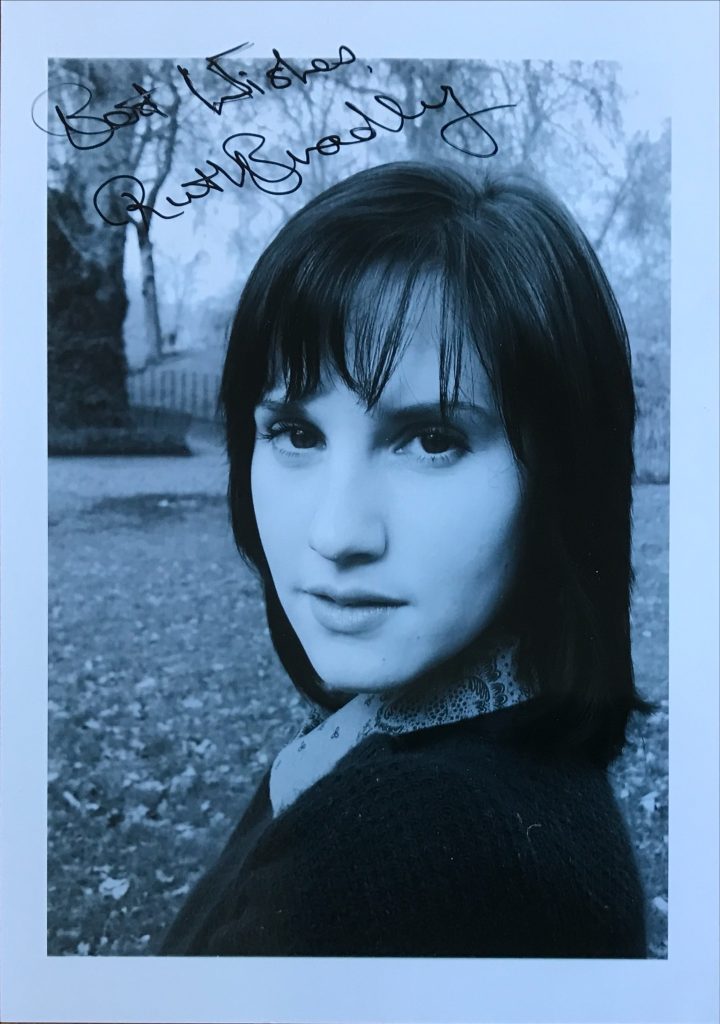
Ruth Bradley was born in 1987 in Dublin.   In 2007 she starred in the film “Stardust” followed ib “In Her Skin”.   She is in the series “Primeval”.

IMDB entry:

Ruth Bradley was born on January 24, 1987 in Dublin, Ireland. She is an actress, known for Grabbers (2012), Flyboys (2006) and In Her Skin (2009).   When she was 18 she went to Trinity College Dublin to study drama and languages. After three weeks she dropped out of student life knowing that that lifestyle wasn’t for her. She then moved to London to pursue acting full time.   Her mother is IFTA winning actress Charlotte Bradley.   She lived in Newfoundland Canada until she was five and then moved to Ireland.   Her sister is IFTA nominated actress Roisin Murphy.   Bradley’s first screen appearance’s were in 2002 in Ultimate Force (as Georgia Gracey) and Sinners (as Angela).   Bradley won the IFTA Award for Best Supporting Actress in 2007 for “Stardust”.   Bradley won a Best Actress award at the Milan International Film Festival for her performance in “In Her Skin” (2010

Lauren Tom

Kieu Chinh

Kieu Chinh

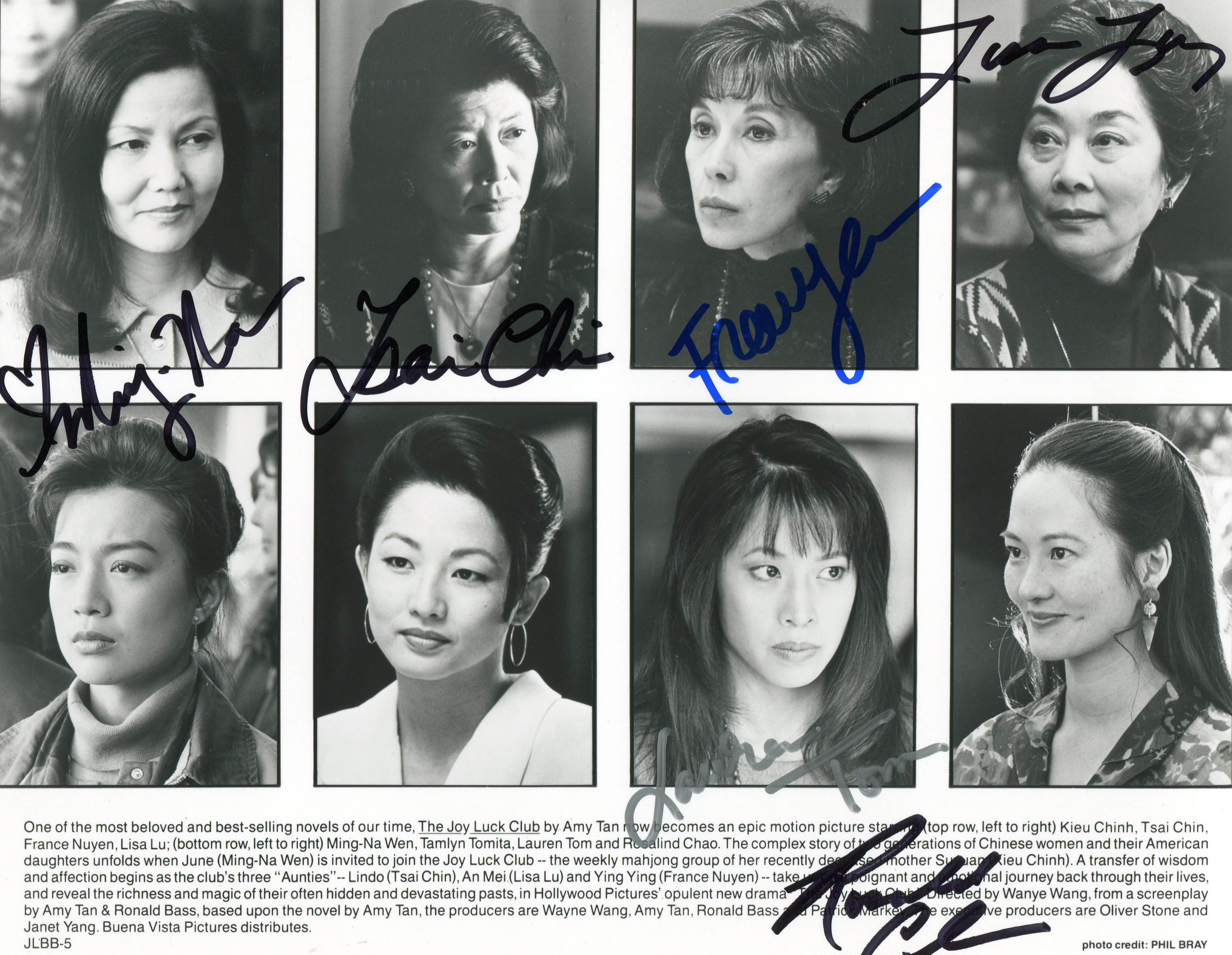
Lauren Tom was born in 1961 in Chicago.   Her films include “When A Man Loves AWoman” in 1994, “Mr Jones” and “The Joy Luck Club” as France Nuyen’s daughter.   She had a recurring role on television’s “Friends”.

TCM overview:

Alluring stage-trained actress of Asian heritage, active in stage, TV and film. Tom studied acting and music in her native Illinois, and her first professional credit was as an addition to the national tour of “A Chorus Line”, which led her to Broadway. She appeared in the Broadway production of “Hurlyburly” and, as the intrepid Honey (sidekick to Duke), in the Broadway musical adaptation of the comic strip “Doonesbury” (1983-84). Tom earned an OBIE Award for her performance in “American Notes” while with the New York Shakespeare Festival; she also appeared in such shows as “Volpone”, “Tiger on the Right” and “Family Devotions”.

Tom’s TV work has included a recurring role during the early years of “The Facts of Life” as well as guest spots on “The Cosby Show” (1985), “thirtysomething” (1990), “Quantum Leap” (1991), “Anything But Love” (1991), and “Chicago Hope” (1995). In 1995 she played David Schwimmer’s girlfriend on six episodes of the hit NBC sitcom “Friends”. She also has made a handful of TV-movies, none of which are particularly memorable: “Mom’s On Strike” (ABC, 1984), “The Exchange Student” (CBS, 1985), “Angel of Death” (CBS, 1991), “In the Line of Duty: Kidnapped” (NBC, 1995), and “Escape to Witch Mountain” (ABC, 1995).

Tom’s film career began in 1982 with a lead in the comedy “Nothing Lasts Forever”, but when she returned to the medium later in the decade it was in small roles ( “Wall Street”, 1987; “Blue Steel”, 1990; “Cadillac Man”, 1990; “Man Trouble”, 1992). Tom’s largest role to date was as one of the American-born daughters of Chinese immigrants in “The Joy Luck Club” (1993). As Lena, who cares for her mentally unstable mother, Tom gave a quiet, intelligent performance which boded well for her future onscreen. Her roles grew somewhat larger–though still only supporting ones–in the Richard Gere starrer “Mr. Jones” (1993) and the Meg Ryan/Andy Garcia drama “When a Man Loves a Woman” (1994). She was one of the many performers turning in cameos in Rob Reiner’s “North” (1994).

The aboce TCM overview can also beaccessed online here.

Andrew Scott
Andrew Scott
Andrew Scott
Andrew Scott
Andrew Scott

Andrew Scott was born in Dublin in 1976.   He made hismovie debut in “Korea” with Donal Donnelly in 1995.   Other films include “Nora” with Susan Lynch and “The American” with Diana Rigg.   He is currently to be seen as Moriarty in the hit television series “Sherlock”.

2013 interview by James Rampton in “The Independent”:

At the start of our interview, Andrew Scott and I are squeezing into a booth in the restaurant at the British Film Institute. It is very similar to the one occupied by Billy Crystal and Meg Ryan’s characters in When Harry Met Sally. Quick as a flash, the actor smiles at me and says, “I’ll have what she’s having.”

Scott goes on to remark that he often dreads reading interviews with actors and hopes this won’t be another that he recoils from. “Sometimes talking about acting can be reductive and a bit boring. Of course,” he adds, breaking into a wry, self-mocking grin, “I’m not like that. I’m completely fascinating. Everything I say is a bon mot. It’s epigram after epigram. It’s like sitting with Oscar Wilde… Although I have better hair!”

Witty. Mischievous. Charming.

These are precisely the qualities that catapulted Scott to stardom as Moriarty in BBC1’s worldwide hit drama, Sherlock. People were already talking about him as a striking new talent after his first brief, if completely scene-stealing, 10-minute appearance in Steven Moffat and Mark Gatiss’s compelling modern-day reworking of Sir Arthur Conan Doyle’s classic detective stories.

His performance as Holmes’s dastardly foe – by turns mesmerising and menacing – won Scott the best supporting actor Bafta award last year, beating his co-star Martin Freeman (who plays John Watson in Sherlock) in the process.

It was not exactly an overnight success for Scott – the 37-year-old Irishman had for many years been turning in very creditable, if not such conspicuous performances in dramas such as Lennon Naked (in which he gave a memorable Paul McCartney opposite Christopher Ecclestone’s John Lennon), The Hour, John Adams and Band of Brothers.

But Moriarty, who appeared to come to a sticky end at the end of the last series on Sherlock, transformed Scott’s profile. Moriarty is the archetypal baddie who has all the best lines, and his popularity meant that the actor was soon being offered leading roles in ITV1 dramas such as The Town and The Scapegoat.

Scott, who was raised in Dublin, where his father worked in an employment agency and his mother was an art teacher, has the volume turned down in real life and has no need to turn the dial up to 11 in the way that Moriarty does. But you can see that he still possesses the same razor-sharp instincts as Sherlock’s arch-enemy.

Adversaries: Benedict Cumberbatch (left) as Sherlock Holmes and Andrew Scott as Jim Moriarty in the ‘Sherlock’ series-two finale ‘The Reichenbach Fall’The actor is the first to acknowledge that playing the role of Moriarty has moved his career up several notches. Picking at a croissant, he reflects that: “Sherlock has changed all our careers, and I’m really pleased about that. It gives you the benefit of the doubt because executives like to see recognisable faces.

“It was overwhelming to be on a TV show that is quite so popular. That took me totally by surprise. People had an instant affection for it from the first episode. The reaction was extraordinary. People still come up to me in the street all the time, wanting to talk about it.”

Sherlock fans are known as some of the most passionate in the business, but Scott says they are generally delightful. “There is this impression that the fans are crazy, but they’re not – they’re very respectful. They don’t overstep the mark. I get a lot of fan mail. Of course, some of it is a bit creepy, but mostly it’s very moving and creative. People send me drawings and their own versions of Sherlock stories. It’s a source of escapism for people and that’s great.

“I’m an enthusiast for people, and I don’t want them to become the enemy. I’ve seen that happen to colleagues who are disturbed the whole time, but there’s a certain degree of control you can have if you keep yourself to yourself. The kind of actors I admire move through different characters and genres. That’s the kind of actor I try to be. If you want that, you have to be circumspect about your private life.”

Scott thinks the character made such an impact because, “Moriarty came as a real surprise to people”. He adds: “He doesn’t have to do the conventional villain thing. He is witty, and people like that. He is also a proper match for Sherlock. He’s very mercurial, too. I have since been offered to play a lot of different characters, and that’s because Moriarty is a lot of different characters. He changes all the time.”

The next legacy of the “Sherlock Effect” is that Scott is starring in a one-off BBC2 drama entitled Legacy. An adaptation by Paula Milne of Alan Judd’s bestselling 2001 espionage novel, this is an absorbing contribution to the BBC’s “Cold War” season. In this film, set at the height of the conflict between the UK and the USSR in 1974, which goes out on Thursday 28 November, Scott plays Viktor Koslov, a KGB spy.

Charles Thoroughgood (Charlie Cox), a trainee MI6 agent, tries to reconnect with Viktor, an old friend from their Oxford days, in an attempt to “turn” him. However, Victor adroitly turns the tables on Charles with a shocking revelation about the British spy’s family. Deliberately shot in Stygian gloom, Legacy captures the murky world of the secret services where cynicism and duplicity are part of the job description. Its tagline could well have been: “Trust no one.”

The film convincingly conjures up the drabness of the 1970s, all three-day weeks, petrol rationing and power cuts. Scott says: “Characters in those days called from phone boxes – whoever does that now? The film fits the era. It has a melancholic tone. It’s very brown and downbeat.”

Scott particularly enjoyed playing the ambiguity of Viktor’s character. “I like the idea that you don’t know who he is. It’s important that you feel for Viktor and his predicament. You have to feel he’s a human being with a family. But both he and Charles are elusive figures – it’s not clear whose side they’re on. It’s not at all black-and-white, and that’s why the film is so shadowy.”

Life after death: Sherlock Holmes killed his character (or did he?) But Andrew Scott returns as Viktor Koslov in ‘Legacy’The actor boasts a terrific Russian accent in Legacy. Where did it come from? “There isn’t a huge amount of footage of Russians speaking English as a second language, so I started looking at Vladimir Putin videos on YouTube. But then Putin introduced anti-gay legislation this summer – so, being a gay person, I switched to Rudolf Nureyev videos instead. It was another Nureyev defection of sorts!”

Scott is low-key on the subject of his sexuality. “Mercifully, these days people don’t see being gay as a character flaw. But nor is it a virtue, like kindness. Or a talent, like playing the banjo. It’s just a fact. Of course, it’s part of my make-up, but I don’t want to trade on it. I am a private person; I think that’s important if you’re an actor. But there’s a difference between privacy and secrecy, and I’m not a secretive person. Really I just want to get on with my job, which is to pretend to be lots of different people. Simple as that.”

Scott is very much getting on with the job at present. He has many intriguing projects in the pipeline, including starring in Jimmy’s Hall, the new Ken Loach movie about a political activist expelled from Ireland during the “Red Scare” of the 1930s. He is also appearing with Tom Hardy and Ruth Wilson in Locke, a film about a man whose life is falling apart, and in The Stag, a movie about a stag weekend that goes horribly wrong. In addition, he is headlining alongside Bill Nighy, Dominic West and Imelda Staunton in Matthew Warchus’s movie Pride, a true story about an alliance between the mine workers and the lesbian and gay community during the 1984 miners’ strike.

If he can possibly find any spare time, Scott is also open to comedy offers. “Everything in life has to have an element of comedy about it. I did Design for Living at the Old Vic in 2010 – Noël Coward was a master of comedy. The audience were convulsing every night. It’s such a joyous feeling to hold a pause and wait for the laughter. There is no better high. Forget about drugs!”

But despite the fact that producers are now cold-calling him like overeager mis-sold PPI salesmen, Scott won’t be rushing into the first role he’s offered. One positive by-product of his success is his ability to be choosy about what he does. He observes: “You have to be brave to turn things down, but there is a certain power to that. I’ve had offers to do more regular TV series, but I don’t regret rejecting them. If money and fame are not your goals, then it becomes easier. American agents use the expression, ‘this could be a game-changer’. The implication is that you want the game to change. But I don’t. I don’t have a plan. I like unpredictability and randomness.

“People get distracted by box-office figures and take jobs because they think it will advance their careers. Of course, it’s nice to get a big cheque and be able to buy a massive house, but my view is that we’re not here long, so why not do something of value?”

So Scott is very happy with where he’s at. “To do all these different things is a dream for me. My idea of a successful actor is not the most recognisable or the richest – it’s someone who is able to do a huge amount of different stuff. I don’t want to be known for just one thing.”

It’s true that Scott is now broadening his career far beyond Moriarty. But I can’t resist one final question on the subject: Is there any chance that Moriarty will, like his nemesis, be making a Lazarus-like comeback in the new series of Sherlock? Scott has, after all, been photographed filming scenes for the upcoming third season.

“People ask me that every day. It’s a small price to pay for having been in such a wonderful show,” he teases. But he is forbidden from spilling the beans about Moriarty’s fate in Sherlock even to close family members.

So has Moriarty played one more dastardly trick on us by faking his own suicide? Or are the scenes the actor has been shooting merely flashbacks? Scott could tell us, but then – like some ruthless Cold War spy – he would have to kill us…

The above “Independent” interview can also be accessed online here.

Oliver Platt
Oliver Platt & Brian F. O'Byrne
Oliver Platt & Brian F. O’Byrne

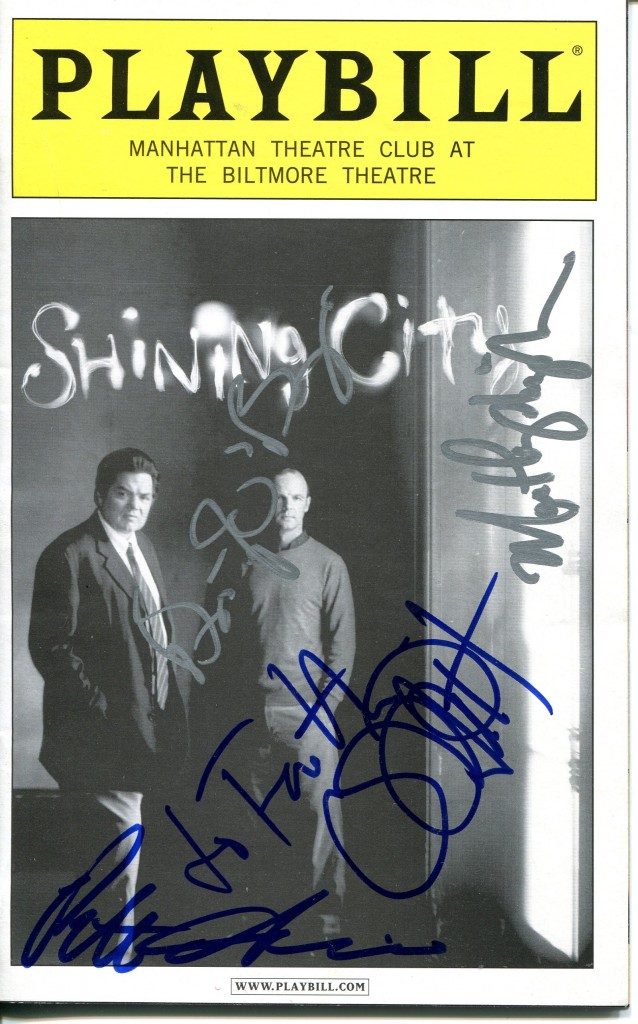
Oliver Platt was born in 1960 in Windsor, Ontario, Canada.

TCM overview:

The definitive scene-stealing supporting player, Oliver Platt built a steady acting career with his knack for taking unappealing characters, like Russell Tupper on “Huff” (Showtime, 2004-06) and making them funny and unexpectedly empathetic. Platt’s large frame, expressive face, and booming, gravelly voice were leveraged to great effect in countless roles as attorneys and other educated professionals, with the actor earning acclaim for guest stints on TV’s “The West Wing” (NBC, 1999-2006) and “Nip/Tuck” (FX, 2003-10). On the movie screen, he made pompous, amoral scoundrels his calling card in “A Time to Kill” (1996), “Bulworth,”(1999) and “Frost/Nixon” (2008), while occasionally getting the chance to steal the spotlight in the madcap comedy “Impostors” (1997) and on Broadway with his Tony-nominated performance in “Shining City.” Platt’s unique talent for balancing imposing physical presence with subtle wit, while hinting at the vulnerable side of the over-confident blowhard made him one of the most interesting, craft-oriented actors on stage and screen.

The son of a U.S. diplomat, Platt was born in Windsor, Ontario, Canada on Jan. 12, 1960, and spent his early years shuttling between the Middle East, Asia and Washington, D.C. Early on he discovered acting as a useful survival mechanism for his rootless life, but so many relocations eventually took a toll on Platt. After the troublemaker was kicked out of a number of schools, he finally landed in boarding school at the Colorado Rocky Mountain School, where three years of a stable, progressive environment reined him in. From there he headed to Tufts University in Boston where he met longtime friend and collaborator Hank Azaria and earned a drama degree. Platt stayed in Boston for several years after college, finding steady work in regional productions. Despite some anxiety about the failure rate of the New York actor, Platt’s stage career blossomed almost immediately after he made the move, and he spent the next several years appearing in productions at the Playwright’s Horizons, the Manhattan Theater Club, and the Manhattan Punch Line Theatre Group, where show biz rumor had it that he caught the eye of comic actor Bill Murray, who recommended him to his friend, director Jonathan Demme. Demme subsequently gave Platt his first film role in the sharp-witted comedy “Married to the Mob” (1988), where he played the wisecracking partner of an FBI agent (Matthew Modine) infiltrating the mob.

Platt followed up with a small role as Melanie Griffith’s sexist boss in Mike Nichols’ blockbuster “Working Girl” (1988), and in 1990 landed a co-starring role as one of the death-defying medical students in J l Schumacher’s “Flatliners” (1990). He built up his resume with solid performances in “Postcards from the Edge” (1990), the madcap family comedy “Beethoven” (1992), and “Diggstown” (1992), where he played a con man alongside James Woods. Platt continued to establish his persona as educated, professional jerks with appearances as Timothy Hutton’s associate in “The Temp” (1993) and Woody Harrelson’s sneaky lawyer (the first of many attorneys the actor would play) in the saucy hit, “Indecent Proposal” (1993). After a rare working class role in “Benny & Joon” (1993), Platt gave a memorable performance as Porthos in Stephen Herek’s “The Three Musketeers” (1993), and at nearly 6’4″, was well-cast as Paul Bunyan in the fantasy “Tall Tale: The Unbelievable Adventures of Pecos Bill” (1995). The same year, the relative screen newcomer was cast opposite comedy legend Jerry Lewis in the indie film “Funny Bones” (1995), where he played the aspiring stand-up comic and belligerent son of comedy icon (Lewis). During that busy year Platt also starred in the HBO Original Movie, “The Infiltrator” (1995), as a journalist who exposes a group of neo-Nazis.

In a pair of big budget outings in 1996, Platt had a supporting role as a weapons designer assisting in the rescue of a hijacked plane in the actioner, “Executive Decision” (1996) and essayed the shifty, alcoholic mentor of a young attorney (Matthew McConaughey) in the courtroom drama, “A Time to Kill” (1996). In the independent film world, Platt made his producing debut with the acclaimed “Big Night” (1996), co-directed by actors Stanley Tucci and Campbell Scott. He went on to team with Tucci as Depression-era actors who stow away aboard a luxury cruise liner in the delightful madcap comedy, “The Impostors” (1998) – one of five films he appeared in that year. While the costume drama “Dangerous Beauty” and the literary adaptation “Simon Birch” received little fanfare, Platt hit a home run as Warren Beatty’s coke-snorting campaign manager and spin doctor in “Bulworth,” and as Eddie Murphy’s medical partner in the mega family hit, “Dr. Dolittle.” In 1999 he had a scene-stealing turn as a hilariously pompous mythology professor in the David E. Kelly-scripted satire “Lake Placid” (1999), and continued to make a huge impression from the wings playing a robot mechanic in “Bicentennial Man” (1999) and a caustic gay architect in “Three to Tango” (1999).

Platt began the new millennium playing a hotheaded Mafia chieftain in the well-reviewed comedy “Gun Shy” (2000), another crime comedy exploring the vulnerabilities of tough guys, then put his imposing size to use playing a bitter, drunken professional wrestler in “Ready to Rumble” (2000). Platt landed his first regular television role that fall, starring as a tabloid journalist who teams with students to solve crimes in Dick Wolf’s “Deadline” (NBC, 2000). The show failed to capture viewers and was cancelled after only five airings, but Platt returned to prime time the following year in a recurring role as shrewd and sardonic White House counsel Oliver Babish on the NBC political drama, “The West Wing” (NBC, 1999-2006), a performance that netted him an Emmy nomination. Following a nicely etched supporting turn as a therapist in the thriller “Don’t Say a Word” (2001), Platt appeared in one of his most subtle and appealing performances, playing Katie Holmes’ compassionate, put-upon father struggling to reconcile his splintered family in “Pieces of April” (2003). Following a standout supporting turn as a small town New England mayor in the otherwise unremarkable romantic comedy “Hope Springs” (2003), Platt appeared opposite Liam Neeson as the nervous university president of a controversial sexuality researcher in the critically acclaimed biopic, “Kinsey” (2004).

Finally teaming onscreen with longtime pal Hank Azaria, Platt returned to television in the fall of 2004 in the Showtime comedy series “Huff,” playing the indulgent, womanizing, attorney best friend of a significantly less joyful psychiatrist (Azaria). The pair’s great chemistry was key to the show’s status as a critical darling, and Platt earned one Golden Globe and two Emmy nominations for Best Supporting Actor. During the two season-run of “Huff,” Platt maintained a big screen presence as well with Harold Ramis’ pitch-black comedic film noir, “The Ice Harvest” (2005), in which he delivered one of the funniest and most realistic portrayals of a man on a bender ever shot on film, and “Casanova” (2005), Lasse Hallstrom’s fictionalized account of the legendary lothario (Heath Ledger) that was easily one of the most ill-conceived and disappointing films of the year, despite a game performance by Platt as an obese pork magnate. Platt returned to the stage in 2006 with a Tony Award-nominated Broadway debut as a grieving widower in Conor McPherson’s “Shining City,” which itself earned a Tony nod for Best Play. Television came calling again, and Platt was cast in a recurring role as an uptight reality show producer on the FX drama “Nip/Tuck” in 2007, earning an Emmy nomination for Best Guest Actor in a Drama Series.

The same year Platt gave a triumphant performance as charismatic New York Yankees owner George Steinbrenner in ESPN’s miniseries “The Bronx is Burning,” and was recognized with an Outstanding Male Actor in a Miniseries nomination from the Screen Actors Guild Awards. The following year, Platt was tapped to portray another real-life figure, journalistic investigator Bob Zelnick, in the Oscar nominee for Best Picture, “Frost/Nixon” (2008), based on Peter Morgan’s stage play about Richard Nixon’s infamous television interviews with British TV presenter David Frost in 1977. In the spring of 2009, Platt was surprised when he was called upon to play Nathan Detroit in a Broadway revival of “Guys and Dolls.” While Platt was certainly not known for musicals, directors sought the actor’s talent for making shady characters into likable, forgivable charmers, for the role of the gambling impresario. From the glamour of that role, Platt turned around to portray a caveman in “Year One” (2009), the prehistoric comedy starring Jack Black and Michael Cera, and returned to a White House set once again to play the White House Chief of Staff in Roland Emmerich’s big budget sci-fi thriller, “2012” (2009).

The above TCM overview can also be accessed online here.

Assi Dayan

Assaf Dayan

Assaf Dayan


Assi Dayan was born in 1945 and is the third son of the Israeli politican Moshe Dayan.   In 1967 he won critical praise for his performance in the film “He Walked Through the Fields”.   In 1969 he starred with Anjelica Huston in “A Walk with Love and Death” which was directed by John Huston.   He has directed on film and television,     He died in 2014.

“Jersusalem Post” tribute:

Assi Dayan, one of the most celebrated actor/directors in the Israeli entertainment industry, and also one of its most troubled souls, died in Tel Aviv on Thursday at the age of 68.

The son of the late defense minister and general, Moshe Dayan, Assi starred in dozens of movies, directed a handful of classic films, and was the lead, playing a psychologist, in one of the most successful Israeli television series of all time, BeTipul, which was adapted by HBO into the American show In Treatment.

The funeral will take place Sunday in Nahalal at 4 p.m.

The public will be able to pay their last respects at Hall 3 in the Tel Aviv Cinematheque from 11 a.m. to 1 p.m., where his casket will be on display.

Dayan was born Assaf Dayan in 1945 in Nahalal, the son of one of Israel’s most celebrated politicians and military heroes and Ruth Dayan, a peace activist now in her late 90s. His parents had a very public divorce in the early 1970s, and Moshe left the bulk of his estate to his second wife, Rachel. Dayan’s sister, Yael Dayan, is a politician and author who wrote a book about her troubled relationship with their father. His brother, Ehud (Udi) Dayan, is a sculptor and writer.

Dayan went into acting as a young man, starring in the romantic and patriotic drama He Walked in the Fields, directed by Yosef Milo, in 1967, an adaption of the novel and play by Moshe Shamir. With his good looks and thoughtful air, he personified the face of the sensitive sabra that Israel liked to show to the world. Not long after that, he flirted with an international career.

In 1969, he starred opposite Anjelica Huston in A Walk with Love and Death, directed by her father, John Huston.

The film was a notorious flop that made Anjelica quit acting for decades. Dayan was then cast in the Hollywood production of Fiddler on the Roof starring Chaim Topol, in the role of Perchik, one of Tevye’s sons-in-law, but he reportedly did not speak English well enough for the producers and was replaced by Paul Michael Glaser.

Back in Israel, he continued acting and starred in one of the most successful Israeli films of the ’70s, Operation Thunderbolt, a celebration of the raid on Entebbe to free the Israeli hostages in which Lt.-Col. Yoni Netanyahu, the current prime minister’s brother, was killed.

The film, directed by Menahem Golan, was nominated for an Oscar for Best Foreign Language Film. In 1984, he had a key role as a jailed political activist in Uri Barbash’s Beyond the Walls, a tense political prison drama that was also nominated for an Oscar.

In the 1970s, he turned his energy to directing and writing as well as acting, and he did so with great success. All in all, he directed 17 films. Two of the films he made with the comedy trio HaGashash HaHiver, were among the most popular Israeli comedies of the decade. He also directed Halfon Hill Doesn’t Answer (1976) and The Hit, better known as Shlager, in 1979.

His greatest triumph as a director was Life According to Agfa (1992), a black-and-white film about the alienated patrons of a Tel Aviv bar, which swept the Israeli film awards, winning eight awards, including Best Picture and Best Director and Best Screenplay for Dayan. The movie also received a special mention at the Berlin International Film Festival. He wrote and directed several more films, and in 2012 was nominated for an Ophir Award, Israel’s Oscars, for the screenplay of his last film, Dr. Pomerantz, in which he played a psychologist.

As the Israeli film industry underwent a renaissance in the past decade-and-a-half, he rode that wave and worked with some of the younger directors who emerged as the country’s new film elite. He seemed to become even more talented as he grew older, giving some of his best performances in recent years. He was the uncle of actress/director Shira Geffen and pop star Aviv Geffen, and had a role in Shira Geffen’s 2007 film, Jellyfish, which she co-directed with her husband, author Etgar Keret.

Although he was one of Israel’s best known secular, leftwing bohemians, he achieved some of his greatest success as an actor playing as ultra-Orthodox and national-religious characters.

What was most remarkable was that he seemed to disappear into these roles, never winking at the audience to show how different he was from the men he was playing, and was virtually unrecognizable.

In 2007, he played an ultra-Orthodox father taking his family on vacation in David Volach’s My Father My Lord, which won the Best Narrative Feature Prize at the Tribeca Film Festival in New York. He had a key role in Joseph Cedar’s first feature, Time of Favor (2000), in which he played a West Bank rabbi who exhorted his followers to destroy the Temple Mount. In 2004, he appeared in Cedar’s second film, Campfire, in which he played the head of a West Bank settlement.

As the local television industry blossomed, he was right in the center of it, starring in the series Parshat HaShavua (Portion of the Week), as well as BeTipul.

His 1997 black comedy, Mr. Baum, has been remade in the US as The Angriest Man in Brooklyn, starring Robin Williams, and that film is set to be released later this month.

Dayan was married and divorced several times, and had four children with his ex-wives and other women: Amalia Dayan and Avner Dayan, with ex-wife Aharona Melkind; Lior Dayan, with ex-wife Caroline Langford; and Assia Neumann Dayan, with former girlfriend Augusta Neumann. He was also married to actress Smadar Kilchinsky and sculptress Vered Tandler-Dayan. Tandler-Dayan made a movie about him, called Living, Period, in 1999.

The actor had a serious substance abuse problem that in his later years, at times, overshadowed his professional success.

In 2006, when he won the Ophir Award, the prize of the Israel Academy for Film and Television, for Best Actor for his performance in Things Behind the Sun, where he played the patriarch of a dysfunctional family, he reeled onstage and seemed to have difficulty finding the microphone, then launched into a barely coherent monologue and refused to leave the stage while the rest of the evening’s awards were announced. It was a moment that in many ways was emblematic of Dayan’s entire life. He was coming off a year that any actor would envy – in addition to Things Behind the Sun, the actor was starring in BeTipul, and had won the Best Supporting Actor Ophir the previous year for Comrade – yet was obviously so troubled. It was no secret that he had a drug problem, and because of that and his stature in the film industry, no one made a serious attempt to get him off the stage.

A tribute to Dayan on “The Jerusalem Post” can be found here.