Lost close to thirty pounds to play Frank in Angela’s Ashes (1999). While at school, he appeared in a variety of plays, both modern and classic. He is a ten-year veteran of theater in his Northern Ireland hometown.
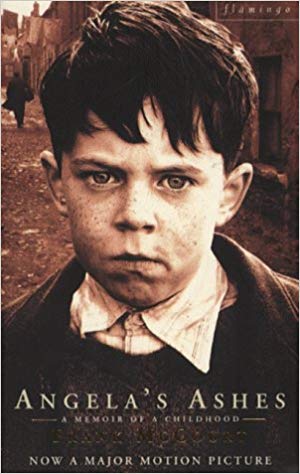
Frank McCourt‘s novel “Angela’s Ashes” had been his mom’s, aunt’s, and grandmother’s favorite book. He appeared as Older Frank in the film version of the novel.
Was encouraged to act at school by drama teacher Sean Hollywood, who was respected and renowned throughout Ireland for his talent-scouting of young actors in the Newry district. TCM Overview:
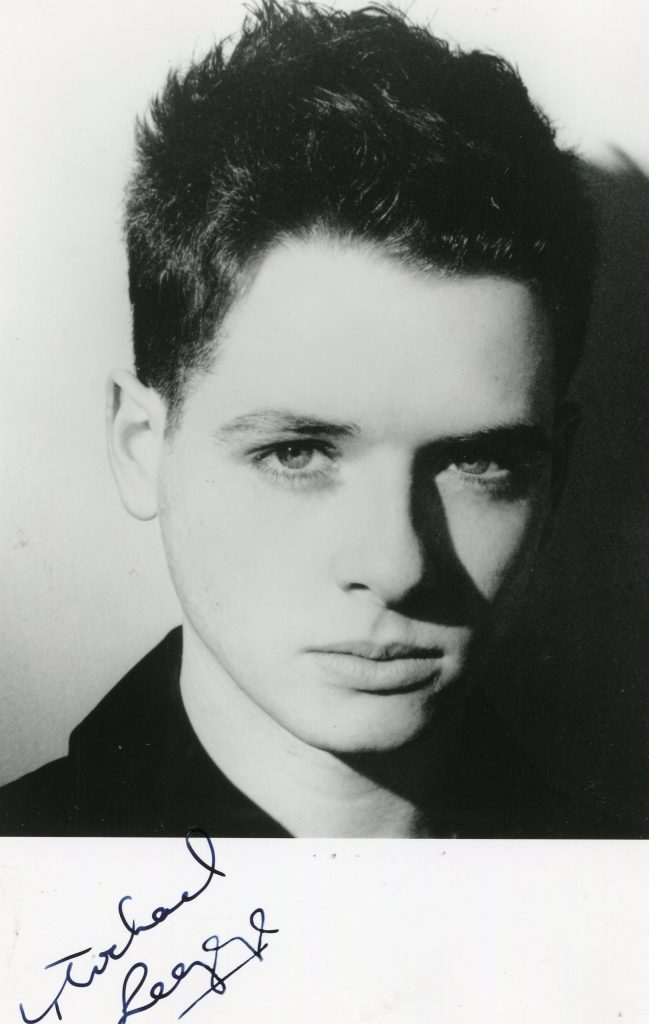
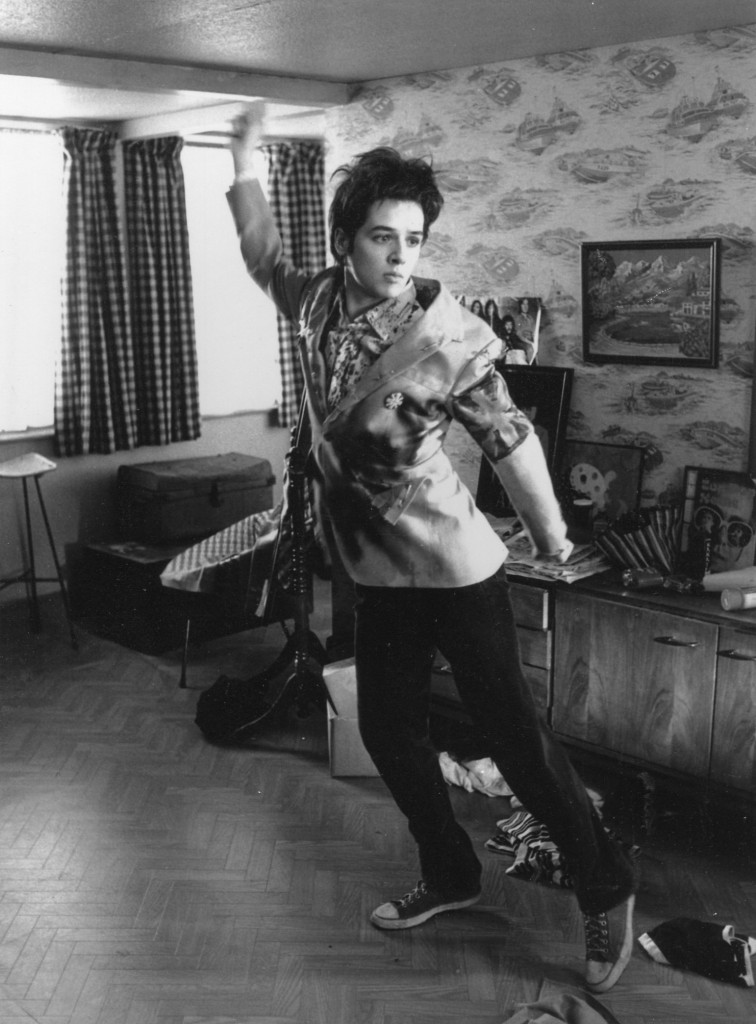
Lanky, dark-haired, freckle-faced Michael Legge came to moviegoers’ attention as the older incarnation of narrator Frank McCourt in the “Angela’s Ashes” (1999), the film adaptation of McCourt’s Pulitzer-winning memoir. A native of Newry in Northern Ireland, Legge was already a veteran stage and TV performer when he won that role over some 15,000 aspirants.
As a child, he came to the attention of drama teacher Sean Hollywood who encouraged the youngster. Work in local theater followed as did a featured role in the 1996 British television drama “The Precious Blood”. 1999 proved to be a banner year for Legge as he landed pivotal roles in three features. In addition to his finely wrought portrayal of McCourt in “Angela’s Ashes”,
Michael Legge
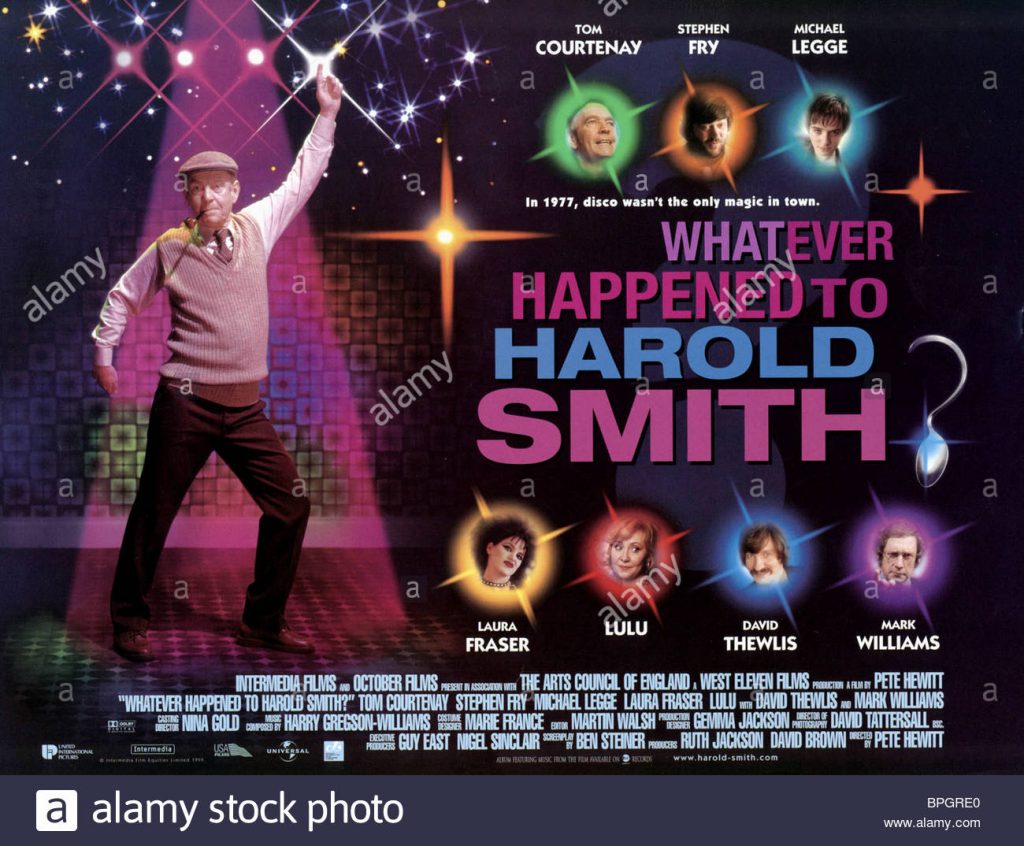
he demonstrated his versatility as a teenager who discovers the hideaway of three feral youths during an unnamed conflict in the intense, Swedish-made “Straydogs” and displayed his comic gifts and natural charm as a disco-loving teen in 1977 Sheffield in “Whatever Happened to Harold Smith?”.The above TCM overview can also be accessed online here.
American wrestler who has branched into acting. His film debut was in 1991 in “For Parents Only”. Other films include “High Voltage” and “Fire Down Below”.
IMDB entry:
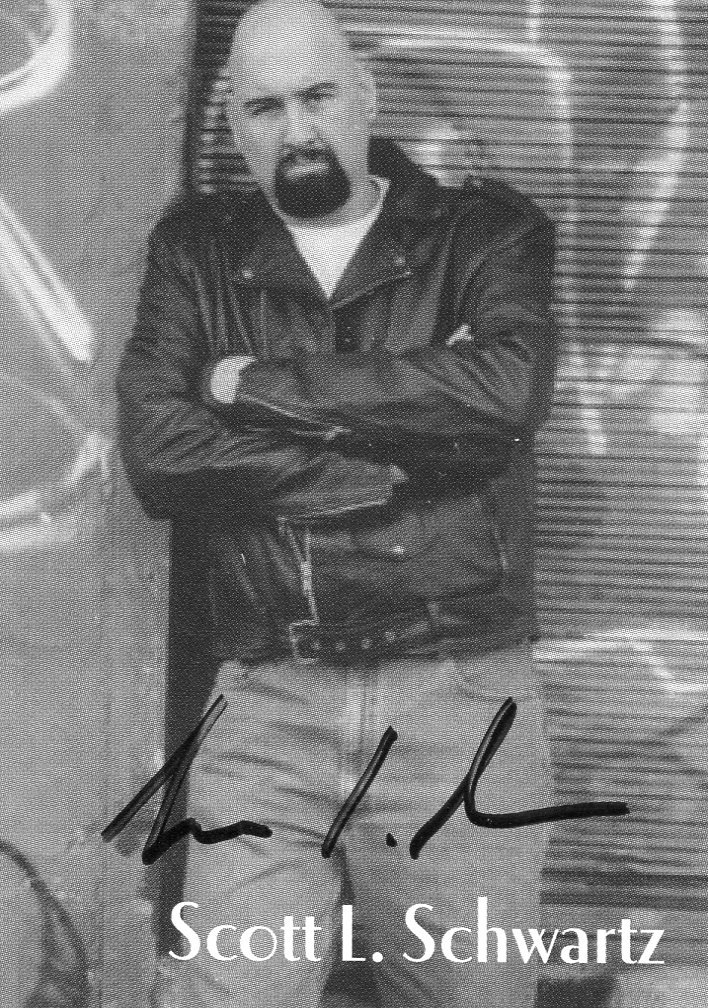
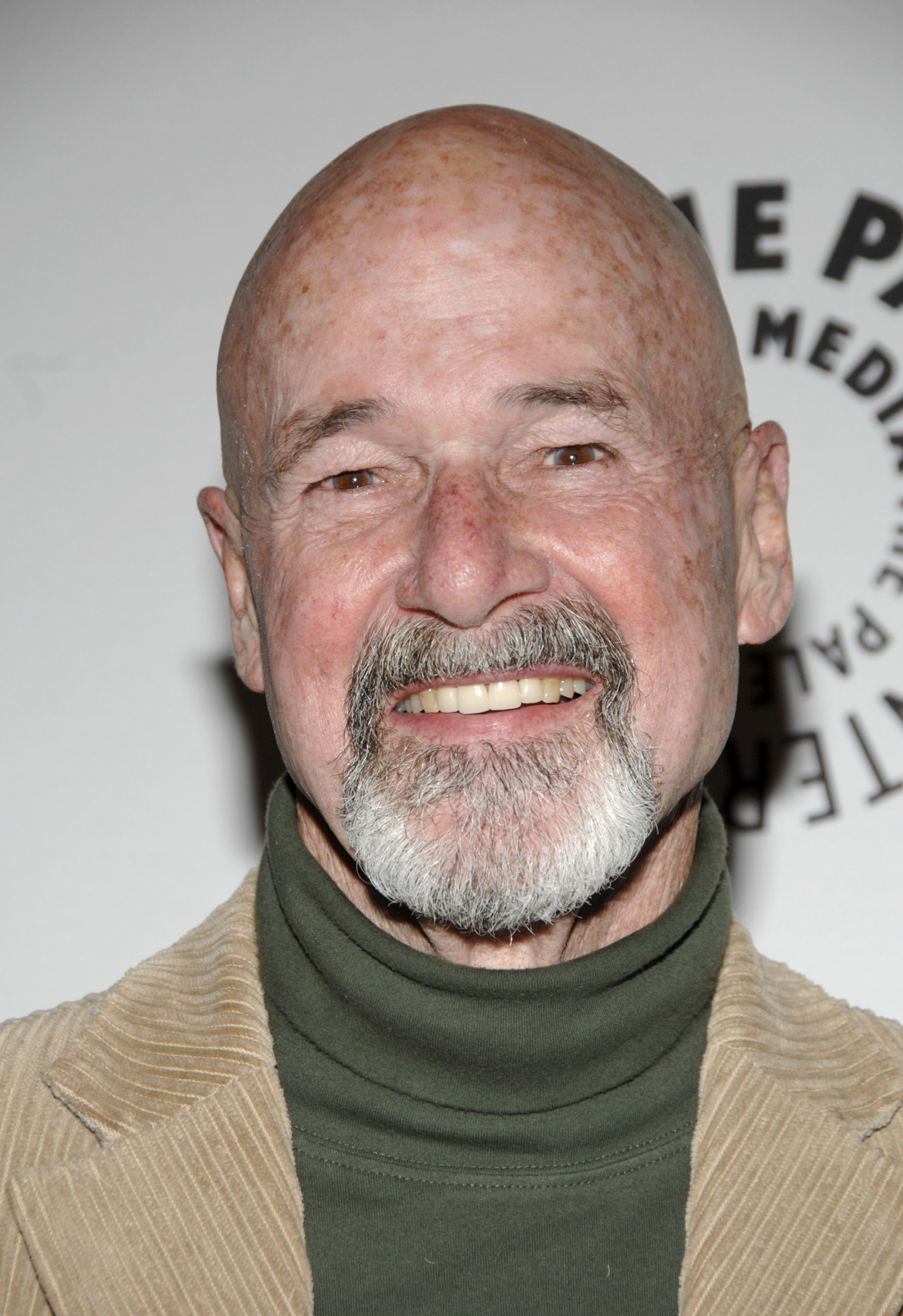
Scott L. Schwartz was born in Philadelphia, Pennsylvania, USA. He is known for his work on Ocean’s Eleven (2001), The Scorpion King (2002) and Starsky & Hutch (2004 He usually plays hulking brute criminals due to his immense height and threatening looks. Scott L. Schwartz has been visiting children’s hospitals worldwide for the past 12 years after losing his sister to lung cancer in 1998. Is on the board at numerous charities including Santa’s Gift and Reading, Writing, It’s Exciting. Wrote/Directed/Produced his first film “Changing Hands” in 2010 and is in final phases of it – to be released Spring 2012. Scott is the recipient of the 2012 CHOC Glass Slipper Award (a prestigious award that others like David Beckham, Gwen Stefani among others have received). This year Scott along with others helped raise over $250k to benefit CHOC. Scotts recent charity accomplishments include Scott along with “Legendary Cubs Pitcher” Milt Pappas raising over $50k to benefit Alicia’s House Food Pantry in Chicago, IL. On May 21, 2013 Scott was invited by General Mills to be an Ambassador for Outnumber Hunger. Outnumber Hunger partners with Feeding America and Big Machine Label Group to help Feeding America secure meals on behalf of local food bank.Personal Quotes (1) Making it in the film business is best described by the situation when you are a child. When you are playing with blocks they tell you: “Put the square block in the square hole and the round block in the round hole” In order to make it in the film business, you have to get the square block into the round hole. It seems difficult, even impossible when you think about it. Some people quit and don’t try. If you grind it hard enough and long enough – it will go in. Don’t quit.
The above IMDB entry can also be accessed online here.
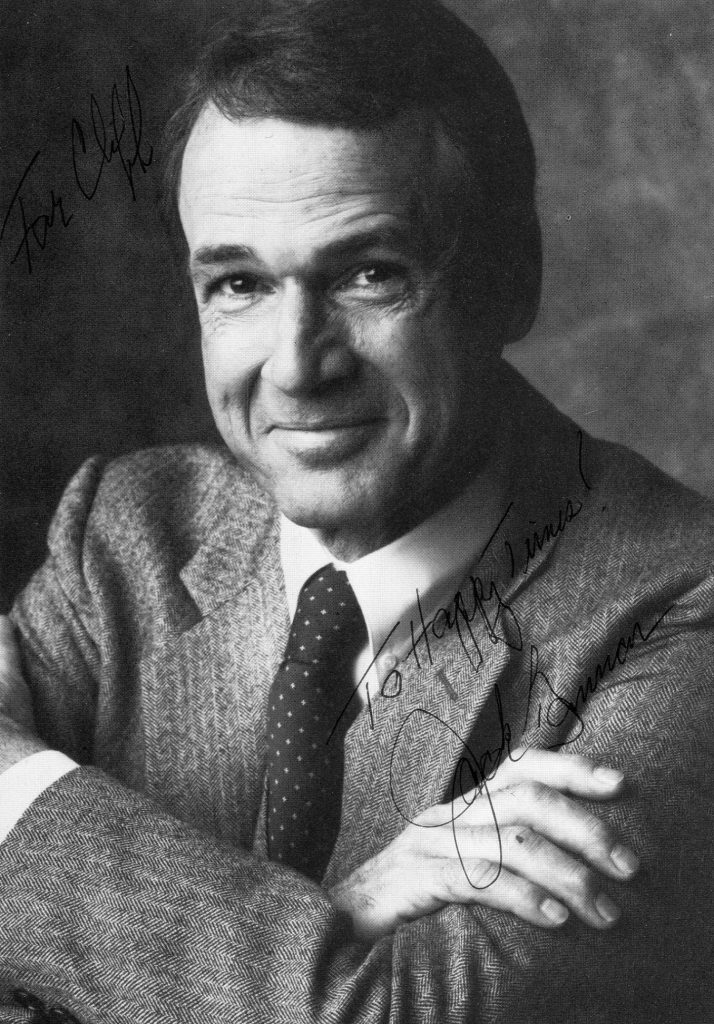
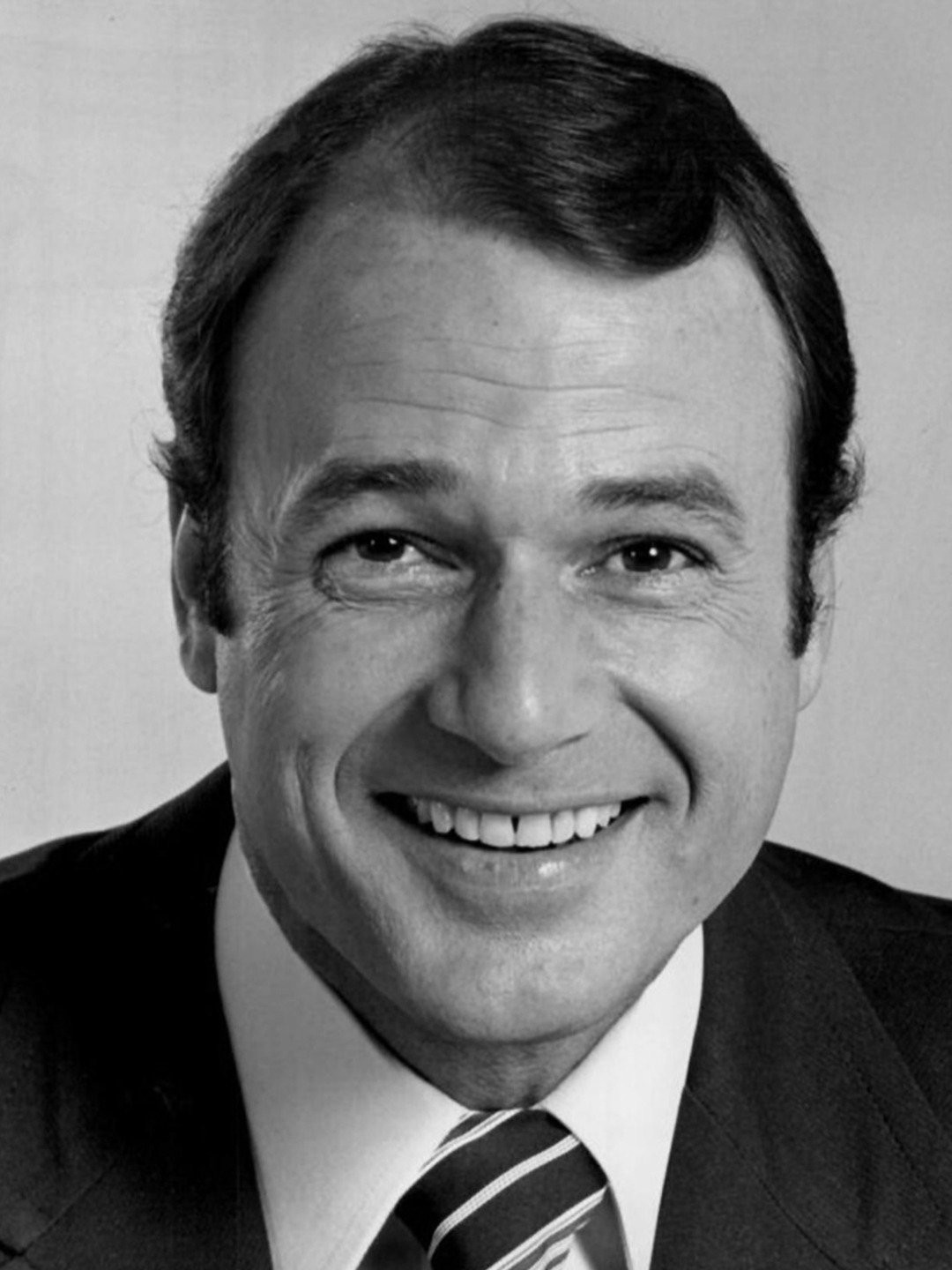
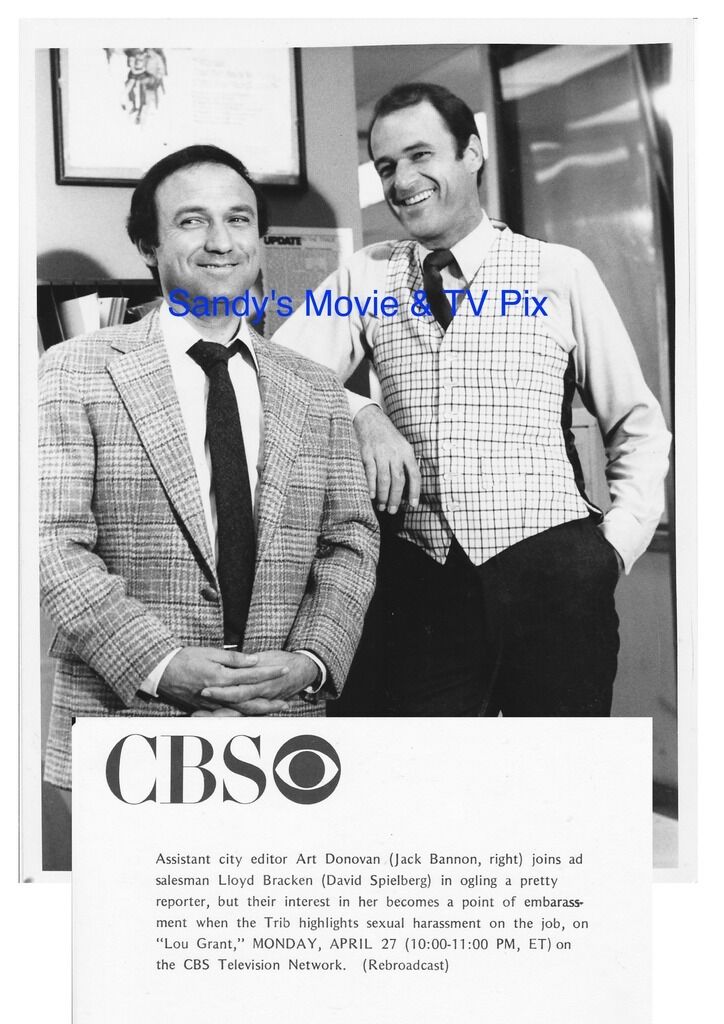
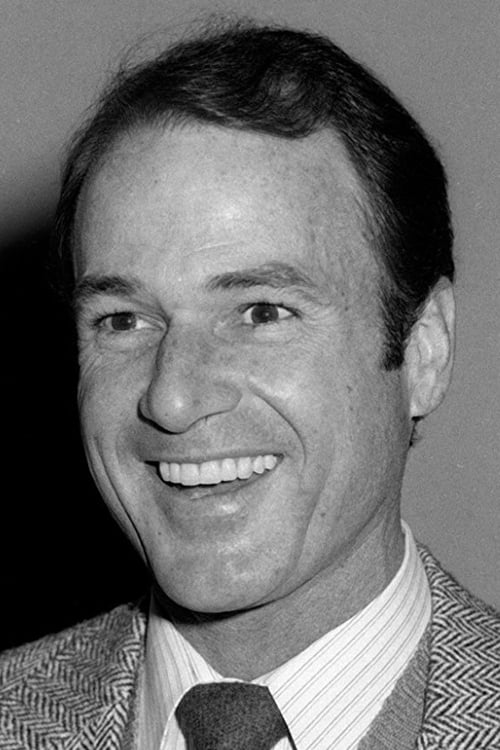
Jack Bannon was a brilliant American actor, best known for his part as Assistant City Editor Art Donovan in the classic TV series “Lou Grant” which ran from 1977 until 1982. He is the son of actress Bea Benaderet (of “Petticoat Junction” fame” and is married to actress Ellen Travolta, sister of John. Jack Bannon has featured in such movies as “To the Limit” and “Navajo Blues”. He was born in 1940 in Los Angeles and died in October 2017.
Obituary by Carolyn Lamberson:
Jack Bannon, who played assistant city editor Art Donovan on the Emmy-winning TV series “Lou Grant,” and who since 1995 has lived in Coeur d’Alene with his wife, Ellen Travolta, died Wednesday.
He was 77.
Bannon was active player on local stages, including two decades in the company of Coeur d’Alene Summer Theatre. There, he was Don Quixote in “Man of La Mancha,” Henry Higgens in “My Fair Lady,” Horace Vandergelder twice in “Hello, Dolly,” Daddy Warbucks in “Annie,” and the narrator of “Into the Woods.” At Spokane Civic Theatre, he portrayed the stage manager in “Our Town,” and at the former Interplayers he starred in “Art,” “The Fantasticks” and “Bus Stop,” among others. His last play was “On Shaky Ground,” for Ignite Community Theater in 2016, which was written by his stepdaughter, radio host Molly Allen. He and his wife co-starred frequently, doing “Love Letters” at Lake City Playhouse, Interplayers, CST and the University of Idaho, or in recent years in the holiday show at the Coeur d’Alene Resort.
His career stretched back to 1964, when he made his debut in the TV sitcom “Karen.” He would go on to make appearances on shows such as “The Andy Griffith Show,” “Petticoat Junction,” “The Beverly Hillbillies,” “Daniel Boone,” “Mannix,” “Barney Miller,” and “Charlie’s Angels.”
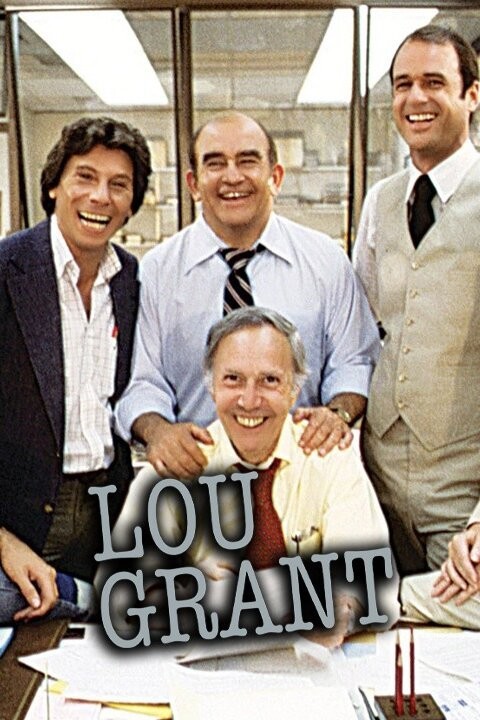
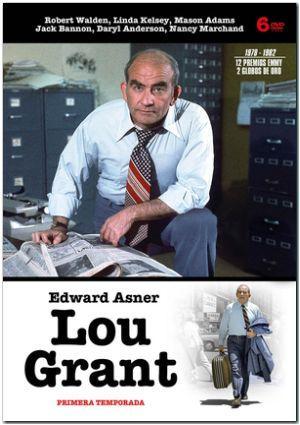
But it was “Lou Grant” that most closely defines Bannon’s career. The show was a spin-off of the iconic “Mary Tyler Moore Show,” as Ed Asner’s gruff editor relocated from a Minneapolis TV station to the newsroom of the fictional Los Angeles Tribune. It was an unusual move, taking the character from a 30-minute comedy to an hourlong drama that often delved into social commentary, but it seemed to work. The show ran for five seasons on CBS, and won an Emmy for outstanding drama. It also won two Golden Globes and the Peabody.
His film credits include the 1969 horror film “Whatever Happened to Aunt Alice,” starring Ruth Gordon and Geraldine Page, 1970’s “Little Big Man” with Dustin Hoffman and Faye Dunaway, and the 1990 Jean-Claude Van Damme action flick “Death Warrant,” as well as the regionally produced films “Navajo Blues” (1996) and “The Basket” (1999).
Bannon was born June 14, 1940, to a show business family. His father, Jim Bannon, was a radio, television and movie actor who played the Red Ryder in four 1940s Westerns. His mother, Bea Benaderet, was a noted radio and television performer. She did several voices for the “Fibber McGee and Molly” radio show, and was a two-time Emmy nominee for best supporting actress for her work on “The George Burns and Gracie Allen Show.” She was Kate Bradley on “Petticoat Junction” and “Green Acres” and the voice of Betty Rubble on the “The Flintstones.”
His first marriage to Kathleen Larkin ended in divorce. In 1983, he married Travolta. The two met at birthday party for their agent – a party both Bannon and 10-year-old Molly brought the same gift to.
“Their longtime agent, he was a hypochondriac, and I brought him a pretend doctor’s kit,” Allen said. “And Jack brought him a deluxe pretend doctor’s kit. Then he saw my mom he asked who the lady with the pretty green eyes was. Then they started dating.”
She added, “Jack and I had a similar sense of humor from the beginning.”
Bannon and Travolta started visiting the Coeur d’Alene area in the late 1980s. By 1995, they’d bought their place above the lake and left Los Angeles. Rather than retire, he continued to work, although mostly it was on the stage.
He typically was a standout performer in whatever role he was in, and was seemingly as happy with a major role as he was with smaller parts. In his final season with CST, in 2013, he cropped up as a last-minute substitution in “Big River,” playing Judge Thatcher.
“It was sweet because sometimes he would do small parts in a play at summer theatre because he wanted to be part of it, and he’d do two scenes. Another show, he would be the lead,” Allen said. “He just wanted to be a part of it.”
While he made a living primarily in television, he was an accomplished stage actor. He was part of the ensemble that won an L.A. Drama Critic’s Award for Caryl Churchill’s 1983 “Cloud Nine,” and starred in a 1982 revival of “Mr. Roberts” in Los Angeles, directed the legendary Joshua Logan.
In his review of Civic’s “Our Town” in 2000, former Spokesman-Review arts reporter Jim Kershner admitted to gushing in his appraisal of Bannon’s work as the stage manager. “He is commanding in a way which manages not to be domineering. He is informal, droll and his New England accent is right on the mark. He not only sounds the part, he looks the part. With his vest and pocket watch and his long, lean Yankee frame, he looks like an uncommonly wise train conductor. You might say he is conducting us into a kind of a fourth theatrical dimension, in which we can finally see ourselves as we really are.”
For the actors who worked with him, Bannon was an inspiring presence who was funny and kind and a consummate professional.
Spokane-born actor Cheyenne Jackson, star of “American Horror Story” and “United 93,” fondly recalled working alongside Bannon at the summer theater.
“I have such fond memories of working with Jack on a few different occasions,” Jackson said in a statement. “He had a wonderful ease and confidence about him. He made you feel comfortable in the world and was the epitome of a gentleman.”
Longtime friend and collaborator Patrick Treadway recalled Bannon as a wonderful person.
“He was always available to any local actor,” Treadway said. “When he was invited, he was an excellent teacher. He was a master of dialects and he certainly knew his way around acting. But he was not one to force his opinions or his techniques on anyone. If you asked him, he was a wealth of knowledge.”
Through work together at CST and Interplayers, and the holiday show in 2014, Treadway said he learned a valuable lesson from Bannon.
“Kindness in the workplace, i.e. the stage, is the most valuable gift you can give yourself and everyone else around you,” Treadway said. “You might as well just be kind is what Jack’s message really was. I never saw him turn anyone way. Generous is the word that just keeps coming back in describing him and in describing my friendship with him. He was the same guy at home and in the workplace and in public. He was a very genuine fella.”
Bannon died in Coeur d’Alene surrounded by family, Allen said. He is survived by his wife, Ellen Travolta Bannon; stepchildren Molly Allen and Tom Fridley; sister Maggie Fuller and her husband, Clark Fuller; and two nieces and a nephew. Services are pending.
Jack Bannon (1940–2017) was a consummate professional of American television, an actor whose career exemplifies the “Golden Age of the Ensemble.” While he possessed the clean-cut, authoritative looks of a traditional leading man, his greatest critical contributions came from his ability to disappear into a group dynamic, providing the essential “connective tissue” that allowed more eccentric characters to shine.
1. Career Arc: From the “Family Business” to Television Staple
Bannon was born into Hollywood royalty; his mother was Bea Benaderet (Petticoat Junction, The Flintstones) and his father was Jim Bannon (the cinematic Red Ryder).
The Apprenticeship (1960s): Bannon’s early career was defined by “paying his dues.” He appeared in bit parts on his mother’s shows and guest-starred in virtually every major procedural of the era, from Lassieto The Man from U.N.C.L.E.
The Definitive Role (1977–1982): His career reached its critical and cultural peak when he was cast as Art Donovan on Lou Grant. This role redefined him from a guest actor to a recognized face of “prestige television.”
The Regional Statesman (1990s–2017): In his later years, Bannon became a pillar of the Pacific Northwest acting community after moving to Idaho. He focused on theater and voice work, maintaining a reputation for technical precision and mentorship.
2. Critical Analysis of Key Performances
Lou Grant – The Ethics of the “Quiet Man”
As Art Donovan, the assistant city editor of the Los Angeles Tribune.
Analysis: In a newsroom filled with the booming energy of Ed Asner and the neuroticism of Robert Walden, Bannon’s Art Donovan was the eye of the storm. He played the role with a dry, observational wit and a “workmanlike” dignity.
Critique: Bannon’s performance is often studied for its economy of action. He understood that a city editor is a facilitator. Critics praised his ability to convey complex ethical dilemmas through subtle facial expressions rather than grand speeches. He represented the “Everyman” journalist—the person who keeps the presses running while others chase the glory.
Death Valley Days and the Western Guest Spots
Analysis: In his younger years, Bannon utilized his athletic, “classic American” physicality in Westerns. Unlike the gritty, anti-hero types that became popular in the late 60s, Bannon played his Western roles with a 1950s-style earnestness.
Critique: Bannon was a “director’s actor.” He hit his marks and delivered lines with a crisp, mid-century clarity. While he rarely played the villain, his presence in these shows provided a necessary sense of stability and moral clarity that allowed the more volatile guest stars to stand out.
Distant Signals (1984) – The “What If” Lead
As John Webb in the film Distant Signals.
Analysis: This was a rare leading film role for Bannon. It allowed him to showcase a more brooding, internal range. He played a man obsessed with a mystery, shifting away from his “newsroom” confidence into a space of psychological vulnerability.
Critique: Critics noted that Bannon had the “weight” to carry a film, but his natural inclination toward understatement meant he was often overlooked by major studios looking for “bombastic” stars. This performance remains a hidden gem for those wanting to see Bannon’s capacity for sustained dramatic intensity.
3. Style and Legacy: The “Anchor” Technique
Jack Bannon’s style was defined by transparency. He never let the audience see the “gears turning” in his performance.
Attribute
Critical Impact
Vocal Neutrality
He possessed a clear, non-regional American accent that made him perfectly castable in any setting, from a 19th-century frontier to a modern-day office.
The “Listening” Actor
Much like Maureen O’Sullivan, Bannon’s greatest strength was his ability to react. He made the person he was talking to look better by being a fully present, engaged scene partner.
Dignified Humility
He never pushed for the “close-up.” This lack of ego made him a favorite among ensemble directors like Gene Reynolds.
The “Lou Grant” Legacy
Critically, Jack Bannon is remembered as an essential part of the show that bridged the gap between the “sitcom” and the “serious drama.” By playing Art Donovan with such unwavering professionalism, he helped legitimize the portrayal of journalism on screen. He didn’t play a “character”; he played a professional.
Critical Note: Jack Bannon’s legacy is a reminder that the “supporting” actor is often the most vital part of a show’s success. He provided the grounding reality that allowed the audience to believe in the world of the story. He was a “craftsman” in the truest sense of the word—dedicated to the scene, the story, and the integrity of the ensemble
Steven Mackintosh was born in 1967 in Cambridge. His first film appearance was in “Prick Up Your Ears”. He followed with “Lock Stock and Two Smoking Barrels” ,”Good” and the brilliant “Small Engine Repair”. He has made numerous television appearances.
TCM overview:
This wiry blond English actor has excelled in character roles, playing everything from villains to a transsexual. Born and raised in rural Cambridge, England, Steven Mackintosh began acting as a child in local theatricals. At the age of 12, he was tapped for his professional debut in a play at London’s Bush Theatre in which he played “this beast of a child who swore and cursed at everyone.” Soon thereafter, the teen was cast as Nigel, the glue-sniffing, exercised-obsessed pal of the title character in “The Secret Diary of Adrian Mole Aged 13 3/4”. Mackintosh’s career received a further boost when he landed the role of Eugene Jerome in the London premiere of Neil Simon’s autobiographical “Brighton Beach Memoirs”.
Inevitably films beckoned. The actor made his debut in a bit part as actor Simon Ward in the Joe Orton biopic “Prick Up Your Ears” (1987) and appeared as a rookie crewman in “Memphis Belle” (1990). Alternating between films and TV, Mackintosh has created a gallery of fascinating characters ranging from a drug dealer in “London Kills Me” (1991) to a glam rocker in the 1993 BBC miniseries “The Buddha of Suburbia” to a psychopath known as ‘The Street’ in “Prime Suspect 5: Errors in Judgment” (PBS, 1997). One of his best roles, however, was as the transsexual Kim (formerly Karl) in “Different for Girls” (1996), playing up the ordinariness of the character and avoiding camp. More recently, the actor excelled as a rural farm worker who dreams of enlisting as a pilot in the WWII-era “The Land Girls” and offered an amusing turn as the owner of a cannabis factory in “Lock, Stock and Two Smoking Barrels” (both 1998). On British TV, Mackintosh headlined two impressive 1998 miniseries, offering strong characterizations as the long-suffering John Rokesmith in “Our Mutual Friend” and as the husband in a crumbling marriage in “Undercover Heart”.
The above TCM overview can also be accessed online here.
Steven Mackintosh
BFI entry
A sombre-looking, slightly-built young actor who has made his mark on film, television and stage, coming to the fore as an obsessive surfie in Blue Juice (d. Peter Salmi, 1995), as object of the attentions of The Land Girls(UK/France, d. David Leland, 1998) and as upper-class student, Winston, in Lock, Stock and Two Smoking Barrels (d. Guy Ritchie, 1998), after building up a very solid CV throughout the ’90s.
He was a compellingly ambiguous cop in TV’s Undercover Heart (BBC, 1998), the enigmatic lead in the miniseries, Our Mutual Friend (BBC, 1998), and the explosive, damaged protagonist of Antonia Bird’s Care (BBC, tx. 8/10/2000). Also, in 2000 he returned successfully to the stage, after nearly a decade’s absence, at the Royal Court, in David Hare’s The Zinc Bed, having made his debut aged 13 and been with the National Theatre in 1988. He is married to actress Lisa Jacobs, who played the title role in The Attic: the Hiding of Anne Frank (ITV, tx. 17/4/1998).
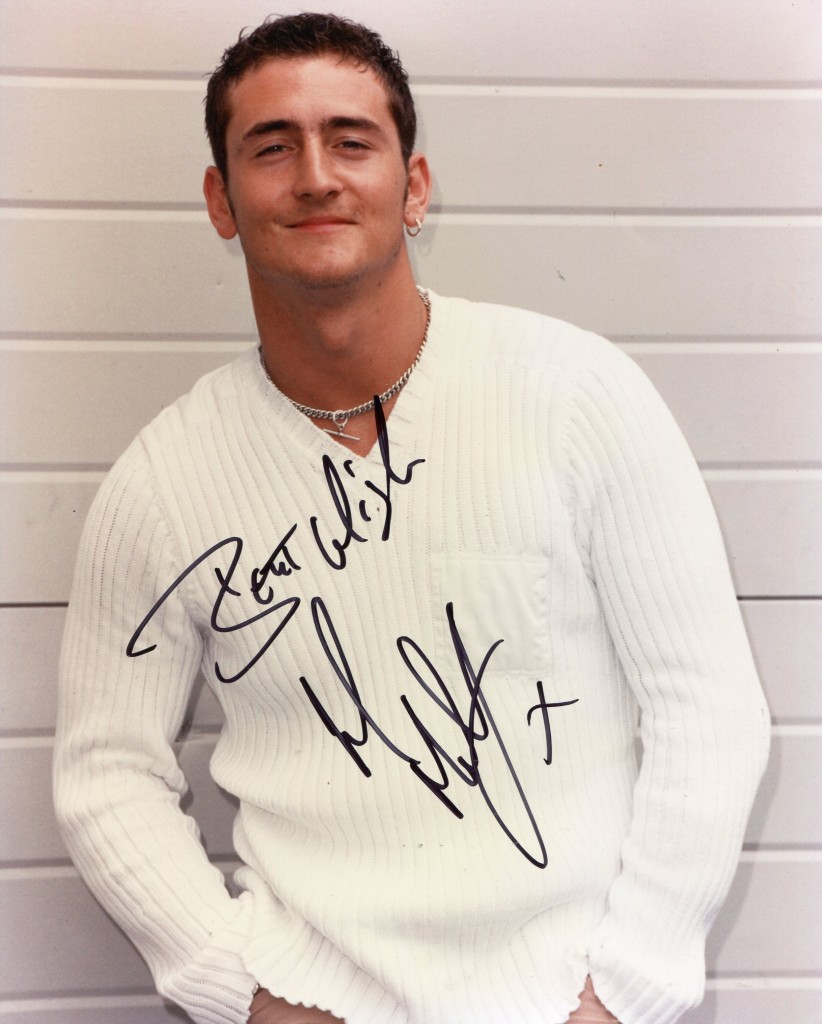
Will Mellor was born in Stockort, Manchester in 1976. He starred as Jambo Bolton in “Hollyoaks” on British televsion. Other television roles include “Two Pints of Lager and a Packet of Crisps” and “The Street”. Films include “The Reeds”. Interview in “TV Choice” here.
Anthony Howell was born in 1971 in the Lake District in England. He is best known for his role as Sgt Paul Milner, assistan to Michael Kitchen in the great television series “Foyle’s War”. His other television credits include “The Other Boleyn Girl” and “Hawking”.
IMDB entry:
Anthony Howell was born in 1971 in the Lake District in England. He trained to be an actor at the ‘Drama Centre.’ His acting debut came when he went on a world tour with Robert Lepage’s ‘Geometry of Miracles’. Then came Wives and Daughters (1999). Along with his TV work, he took a year out and appeared in the 1999-2000 RSC season in Stratford-Upon-Avon, where he took major roles in the three main plays of that season: Orlando in ‘As You Like It’, Benvolio in ‘Romeo and Juliet’ and Antipholous of Ephesus in ‘The Comedy of Errors’.
More recently, he has taken up the role of Paul Milner in Foyle’s War (2002), with David Tennant, who starred alongside him in the RSC, and is currently filming series two.
– IMDb Mini Biography By: Mrs Anthony Howell <HarchesterBabe@aol.com>
Prepared for his role as wounded ex-soldier Paul Milner in Foyle’s War (2002), by visiting libraries, museums and hospitals to learn all he could about the experience of a soldier injured in combat.Personal Quotes. “It’s my first home so I’ve been buying furniture, painting and putting up shelves and cupboards. It’s great to have a place of my own, but I still see my family often as we are very close. My parents are really supportive and come and watch everything I do. I have just bought myself a wonderful oil painting by Richard Whadcock. It’s my present to myself after filming and it’s my first proper painting. I’d like to buy one a year because it would be nice to look back and associate a painting with a time in my life. I enjoy horse riding, tennis, yoga and running – it helps to clear my head and I can do bits of yoga in between filming. You only have to turn on the telly to see what has happened in the aftermath of Iraq or any of the countries that have been at war over the last few years to see the devastation that people face. In the new series of Foyle’s War, London starts to get bombed and the country falls under heavy attack. It affects people’s sense of well-being, their sense of the future and their concerns for their family and friends. All those emotions you can still see in the eyes of people who are suffering today. The sad thing is that war goes on.
The aboce IMDB entry can also be accessed online here.
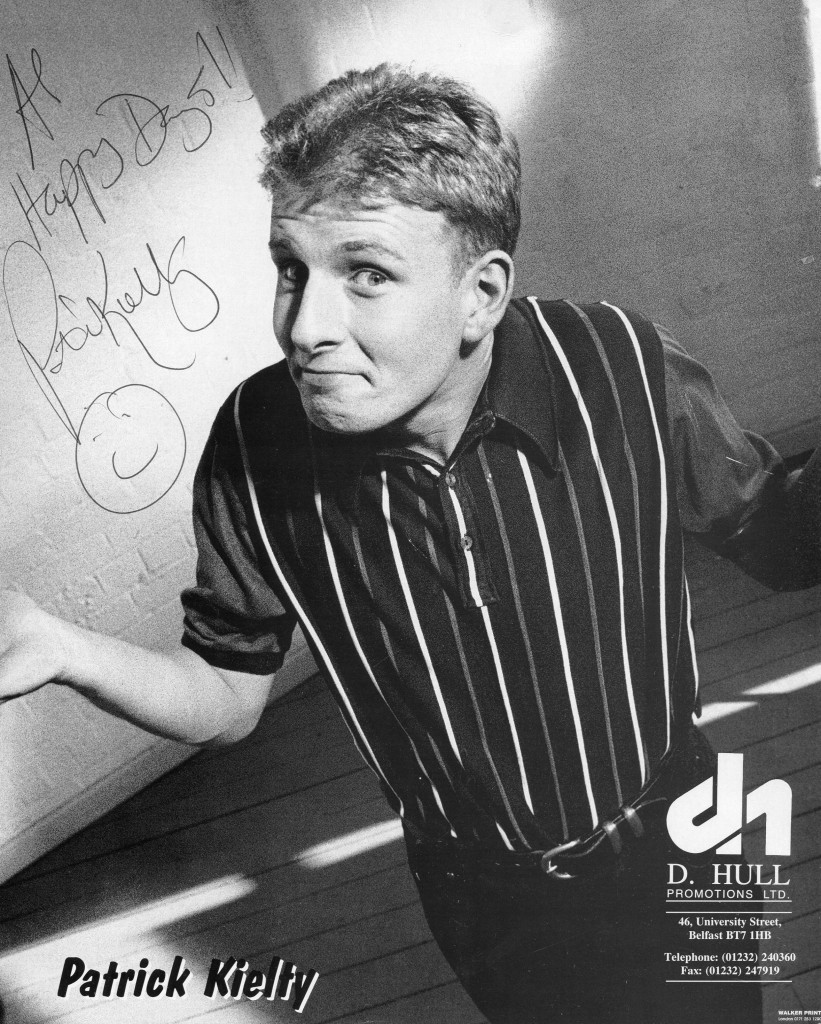
Patrick Kielty is an Irish comedian and television personalty who has made some films. He was born in Northern Ireland in 1971. His films include “Get Up, Stand Up” in 1998. He is married to Cat Deely. His webpage here.
Finlay Robertson is an upcoming young UK actor who was born in 1975. He made his acting debut in an episode of the television series “Peak Practice” in 1999. Films include “In A Day” in 2006 and “The Disappeared”. Has guest starred in many television series including “Taggert” and “Garrow’s Law”.
IMDB entry:
Finlay Robertson was born in the Netherlands to Scottish parents and grew up in the North West of England. After studying History at Cambridge University he performed in a play at the Edinburgh Fringe and was signed by an agent. Moving to London to pursue his career, he acted in several plays – including appearing naked onstage at The Royal Court in Jez Butterworth’s ‘The Night Heron’. Amongst his short film work, his feature credits include the lead in the independent films ‘In A Day’ and ‘The Story Of’. On television, he has played guest leads in several shows, as well as series regulars in ITV’s ‘Life Begins’, BBC3’s ‘How Not To Live Your Life’ and BBC1’s ‘The Body Farm’. He also wrote, directed and edited a short film, ‘Count Backwards From Ten’, and recently wrote and performed a one-person play, ‘Strong Arm’, which was taken to the Edinburgh Fringe by The Old Vic Theatre. He lives in North London with his wife and family.
– IMDb Mini Biography By: drnicktoms
The above IMDB entry can also be accessed online here.
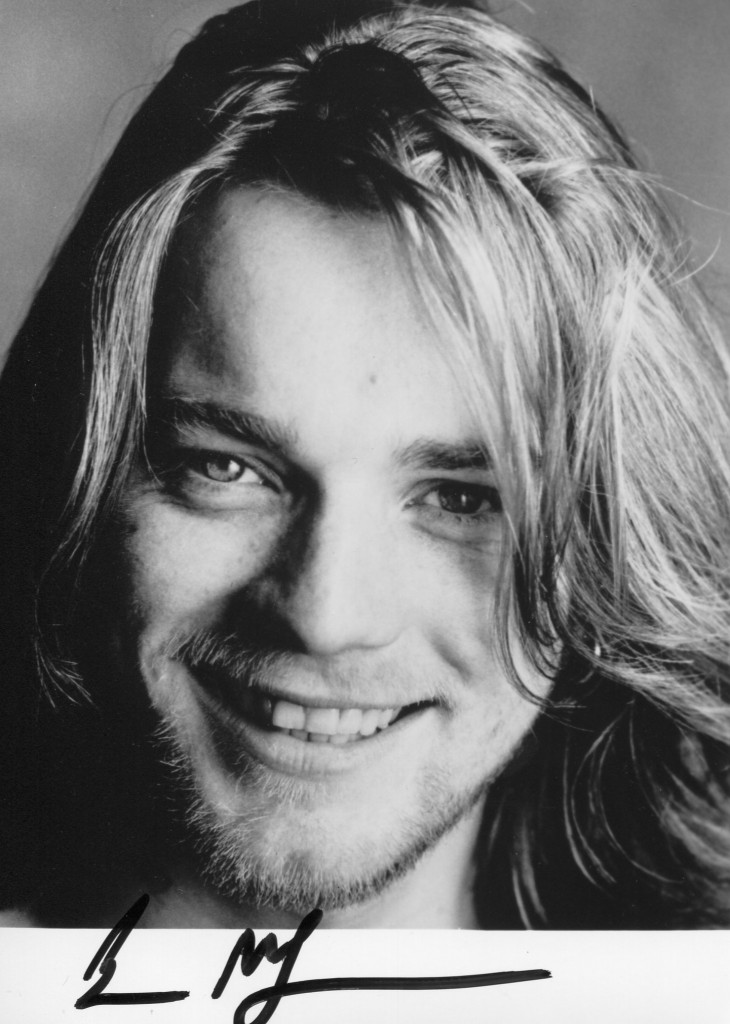
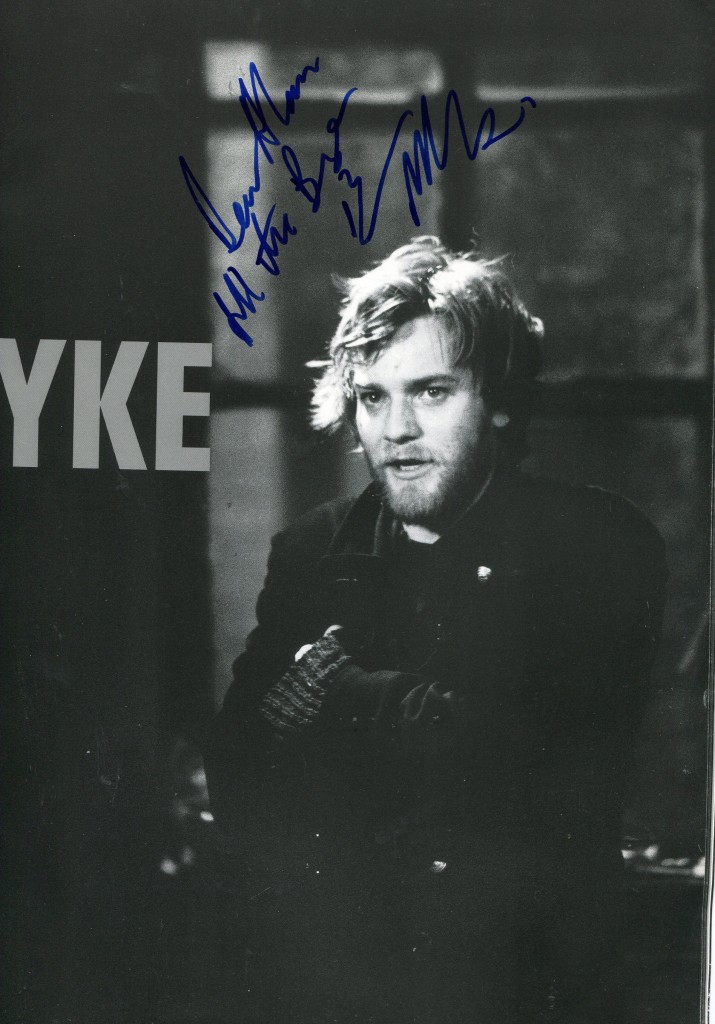
Ewan McGregor was born in Scotland in 1971. He is the nephew of actor Dennis Lawson. McGregor first came to promincence with his performance in the film “Trainspotting” in 1996. He has since starred in “Moulin Rouge” with Nicole Kidman and as James Joyce in “Nora” opposite Susan Lynch. More recent movies include “Haywire”.
TCM overview:
In perhaps one of the fastest rises in Hollywood, actor Ewan McGregor emerged onto the scene six months shy of graduating drama school to star in his first miniseries. A mere two years later, he was the toast of the independent circuit with his brave performance in Danny Boyle’s highly regarded “Trainspotting” (1996), which propelled the young actor to stardom virtually overnight. Ever since his acclaimed portrait of a heroin addict struggling to put his drug days behind him, McGregor was a consistent presence in small features like “Emma” (1996) and “A Life Less Ordinary” (1997) as well as amazed fans and critics alike with his romantic leading man appeal and singing talent in the smash musical, “Moulin Rouge” (2001). Never shy to speak his mind, he routinely lambasted big budget Hollywood movies, only to find himself playing one of the most beloved characters in one of the most popular film franchise of all time. As Obi-Wan Kenobi in the three “Star Wars” prequels – “The Phantom Menace” (1999), “Attack of the Clones” (2002) and “Revenge of the Sith” (2005) – McGregor deftly channeled the character created by Sir Alec Guinness, while at the same time making it his own. Though he slipped a little with films like “The Island” (2005) and “Deception” (2008), McGregor nonetheless remained a viable performer capable of playing just about any role he wished.
Born on Mar. 31, 1971 in Crieff, Scotland, McGregor was raised by his father, James, and his mother, Carol, both of whom were teachers. But McGregor was not much of a student. In fact, he was demoted from math class to typing, eventually quitting school altogether when he was 16, but with the blessing from both his parents. After leaving Morrison’s Academy, where his father was the gym teacher, McGregor worked a series of odd jobs and attended Kirkcaldy College of Technology – later renamed Fife College – where he studied drama. He also worked with the Perth Repertory Theatre. Moving to London, he continued his dramatic studies at Guildhall School of Music and Drama, but left six months before graduating to star in his first major production, Dennis Potter’s six-part miniseries, “Lipstick on Your Collar” (Channel 4, 1993), in which he played a young, rock ‘n’ roll-loving British serviceman stationed in the War Office as a Russian translator. That same year, he starred as a 19th-century Frenchman who dreams of becoming another Napoleon, but is betrayed by the married woman who loves him, in the television miniseries “Scarlet & Black” (BBC2, 1993).
With two solid starring roles under his belt right off the bat, it was no surprise that McGregor soon made his feature film debut, appearing in director Bill Forsyth’s intriguing, but ultimately uneven “Being Human” (1994), starring Robin Williams as a man who searches for his family in various incarnations throughout human history. He forged a beneficial relationship with Danny Boyle, who directed McGregor in the acclaimed crime thriller “Shallow Grave” (1995). McGregor deftly played Alex Law, a cocky young journalist who becomes enmeshed in murder. A mere two years after turning professional, McGregor was vaulted into international stardom when he starred in “Trainspotting” (1996), Boyle’s kinetic and visceral comedic drama about young heroin addicts in Edinburgh. McGregor was superb in the leading role of Mark Renton, a charming junkie who tries to straighten up his act in London, only to get sucked back into old criminal behaviors with his longtime mates. The popularity of “Trainspotting,” both with critics and audiences, officially launched McGregor’s career, thanks in no small part to his harrowing and disarming performance, which earned him a London Film Critics Circle Award for Best British Actor.
Building on his success, McGregor landed more high profile feature roles, including playing the dashing Frank Churchill opposite Gwyneth Paltrow in “Emma” (1996), Douglas McGrath’s winning adaptation of the Jane Austen classic. McGregor next played a British expatriate used by a poet (Vivian Wu) as a writing pad in Peter Greenaway’s erotic “The Pillow Book” (1997). Displaying his romantic side opposite Tara Fitzgerald, McGregor was an unemployed mineworker performing in a brass band in the well-received comedy “Brassed Off” (1997). After an appearance as a burglar who comes up against a vampire in a 1996 episode of “Tales from the Crypt” (HBO, 1989-1996), McGregor reached mainstream American television viewers as a petty crook whose attempted robbery of a convenience store goes awry in an episode of “ER” (NBC, 1994-2009), which earned him an Emmy Award nomination for best guest-starring appearance. Reteaming with Boyle and writer John Hodge, the actor was cast as a recently fired janitor who seeks revenge on his employer by kidnapping the man’s daughter (Cameron Diaz), only to fall in love with the help of two angels (Holly Hunter and Delroy Lindo) in the quirky romantic fantasy, “A Life Less Ordinary” (1997).
McGregor continued to display his prodigious talents as a Dutchman who romances a mother (Greta Sacchi) and her daughter (Carmen Chaplin) in the period drama “A Serpent’s Kiss” (1997); as an innocent man who becomes the prime suspect in a murder in “Nightwatch” (1998); and as a glam-rock musician a la Iggy Pop in Todd Haynes’ “Velvet Goldmine” (1998) – a film in which he famously offered up full frontal nudity – something he would, in fact, become known for having little qualms about doing, in comparison to most working actors. The never bashful star rounded out the year with an uncharacteristic, but well-played role in “Little Voice” (1998), in which he played a painfully shy telephone installer who keeps carrier pigeons. In a rare stage appearance, McGregor starred in the London Comedy Theatre’s production of “Little Malcolm and His Struggle Against the Eunuchs” (1999). Though he has publicly decried the big-budget blockbuster on numerous occasions, McGregor made headlines and magazine covers when he landed the coveted role of a youthful Obi-Wan Kenobi in George Lucas’ highly anticipated “Star Wars: Episode I – The Phantom Menace” (1999). Though the film itself was a colossal artistic disappointment, faltering from the modern fairy tale feel of its predecessors that attracted the actor to the project in the first place, it nonetheless struck box-office gold and turned McGregor into a bona fide star.
After playing a man somewhat innocently stalking a woman (Ashley Judd) in the promising, but ultimately unsuccessful “Eye of the Beholder” (2000), McGregor was impressive in his portrayal of James Joyce in “Nora” (2000), a little-seen biopic of the legendary Irish author’s longtime love that was produced by Natural Nylon, a company McGregor formed with fellow actors Jude Law, Jonny Lee Miller, Sadie Frost and Sean Pertwee. The following year, he won raves and an entire new wave of fans – particularly of the female persuasion – as the star of Baz Luhrmann’s popular musical spectacular “Moulin Rouge!” (2001). An often over-the-top production, “Moulin Rouge!” benefited greatly from McGregor’s heartfelt turn as the talented, but naive writer who falls in love with a magnetic but doomed courtesan (Nicole Kidman). The film also offered the actor the opportunity to showcase his very capable singing voice, with several challenging numbers that led Luhrmann to claim that the actor “could be the Frank Sinatra of this new period.” That same year, McGregor was featured in Ridley Scott’s fact-based war film “Black Hawk Down” (2001), bringing strength and vulnerability – as well as an impressive American accent – to his role as a desk jockey soldier who sees his first combat in the 1993 Somalian humanitarian mission that turned into a devastating battle.
McGregor reprised the role of Obi-Wan Kenobi in Lucas’ anticipated but again, lackluster “Star Wars: Episode II – Attack of the Clones” (2002), which he followed with another singing and dancing role as the Rock Hudson-esqe swinging playboy Catcher Block opposite Renee Zellweger in “Down With Love” (2003), director Peyton Reed’s tribute to the fluffy Doris Day-Rock Hudson sex comedies of the 1960s. McGregor delivered a wonderfully dry and winking performance in the well-reviewed, but little-seen film. The actor closed out the year with a part in director Tim Burton’s bizarre fantasy, “Big Fish” (2003), playing the role of Young Ed Bloom in the fanciful, mythically embellished flashbacks, as related by Albert Finney as the older version of the same character. Now going back and forth between studio features and small independents with ease, McGregor appeared in the erotic noir thriller, “Young Adam” (2004), based on Alexander Trocchi’s Beat Generation novel. Mixed reviews trickled in for the bleak tale about an amoral drifter who descends into increasingly erratic behavior while carrying on with the wife (Tilda Swinton) of a co-worker (Peter Mullan).
After narrating the motorcycle racing documentary “Faster” (2004), McGregor provided the voice of Rodney Copperbottom, a genius inventor who finds himself out of work in “Robots” (2005), an animated sci-fi tale about a world entirely inhabited by robots. Once again, he reprised Obi-Wan for the third and final prequel “Star Wars: Episode III – Revenge of the Sith” (2005). Although he had publicly voiced disappointment in the earlier films, the actor dutifully fulfilled his role for the final outing and in the process turned in his best performance as the Jedi Knight, who discovers his apprentice (Hayden Christensen) has embraced the Dark Side. Ever the physical actor, McGregor also continued to demonstrate his commitment and facility with a weapon in the film’s extensive light saber battles. Meanwhile, prior to the release of “Episode III,” McGregor and friend Charley Boorman embarked on an across-the-globe motorcycle ride that spanned four months, 18 countries and over 20,000 miles. The result was “Long Way Down” (BBC2, 2007), a six-part television series documenting the extraordinary journey.
In June 2005, McGregor sang and danced on stage when he starred as Sky Masterson in a London production of “Guys and Dolls” at the West End’s Piccadilly Theatre alongside Jane Krakowski. The actor returned to the big screen for the sci-fi actioner “The Island” (2005) as Lincoln Six Echo, a man who lives in an orderly facility seemingly in a post-Apocalyptic world, hoping to win the right to relocate to the only remaining pure bio-zone on the planet, only to discover his world was a facade disguising a more sinister existence. “The Island” failed to score with audiences, as did “Stay” (2005), a murky psychological thriller that cast McGregor as a shrink with a suicidal patient (Ryan Gosling) who somehow begins invading his dreams and blurring the lines of their realities and individualities. After starring opposite Renée Zellweger in the period drama “Miss Potter” (2006), McGregor was part of the ensemble cast in the romantic comedy “Scenes of a Sexual Nature” (2006). He next starred in Woody Allen’s rare turn into dark crime thriller territory “Cassandra’s Dream” (2007) and followed with a starring turn opposite Hugh Jackman and Michelle Williams in the little-seen erotic thriller, “Deception” (2008).
Returning to blockbuster films, McGregor was the Camerlengo of the Catholic Church, who takes control of the Vatican after the mysterious death of the Pope in “Angels & Demons” (2009), which he followed with a turn as an investigative journalist who uncovers bizarre military experiments in “The Men Who Stare at Goats” (2009). Rounding out a busy year, McGregor was the sensitive cellmate of a convicted con man (Jim Carrey) who falls in love with him in the dark comedy “I Love You Phillip Morris” (2009), before playing aviation pioneer, Gene Vidal, who entered into business and allegedly an affair with Amelia Earhart (Hilary Swank) in the underrated biopic “Amelia” (2009). In Roman Polanski’s political thriller “The Ghost Writer” (2010), he was the titular unnamed ghost writer who is hired to write the memoirs of a British prime minister (Pierce Brosnan), only to become embroiled in a conspiracy that endangers his life. After that McGregor had a supporting turn in the lighter family film, “Nanny McPhee Returns” (2010), and went on to play the son of a man (Christopher Plummer) who comes out as a gay man following the death of his mother in the acclaimed drama, “Beginners” (2010). Following a turn opposite MMA fighter Gina Carano in Steven Soderbergh’s lean-and-mean spy thriller, “Haywire” (2011), McGregor was a man with Asperger’s syndrome who falls for Emily Blunt in “Salmon Fishing in the Yemen” (2012). The role in the latter garnered him a Golden Globe nod for Best Actor in a Comedy or Musical. He capped off the year with a gripping performance opposite Naomi Watts as a man literally ripped away from his family during the catastrophic 2004 Indian Ocean tsunami in the harrowing drama “The Impossible” (2012).
The above TCM overview can also be accessed online here.