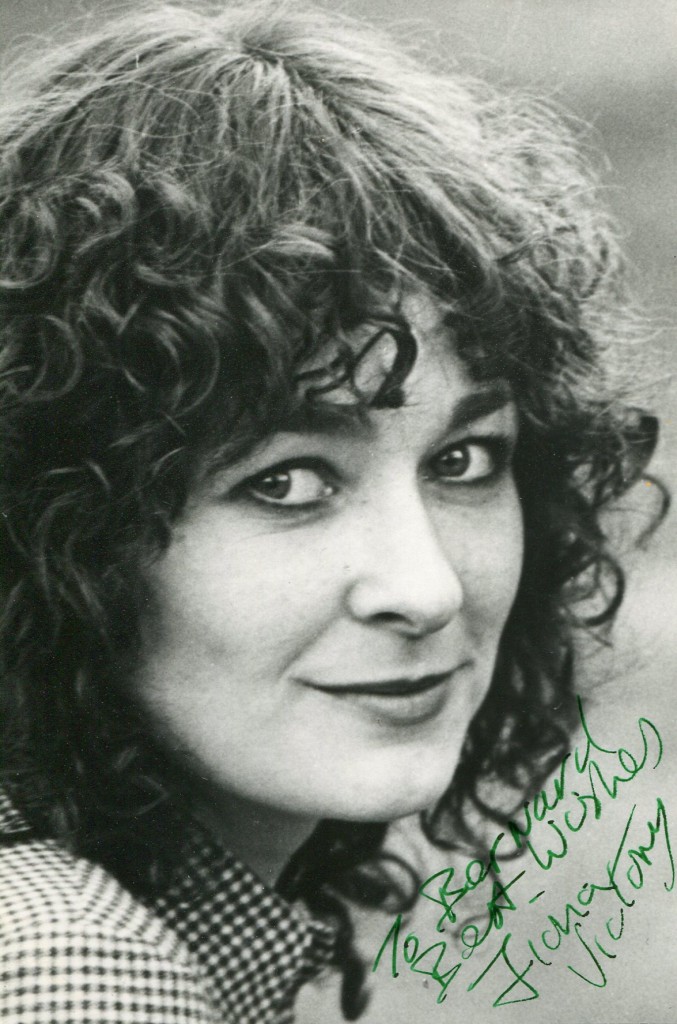
Fiona Victory was born in Dublin. Her father was the RTE Orchestra Conductor Gerard Victory. She came to prominence in RTE’s “Brackenn” opposite Gabriel Byrne in 1980. Her other TV work includes “Nanny”, “Bergerac” and “Shine On Harvest Moon”.
“Shine on Harvey Moon” page:
She had great success in Ireland before coming to England where she worked extensively for the touring Paines Plough Theatre Company based in Lancaster and for the Michael Bogdanos Company at the Young Vic in London. On television she featured in Resnick with Tom Wilkinson. She made a great impression in a four parter ‘The Hanging Gale’ a drama set at the time of the Irish Famine. Her fils include ‘Return to Oz and ‘Champions. Last year she returned to the stage to play the title role in ‘The House of Bernarda Alba’ in Coventry. Before that she played the widow Queen in ‘The Playboy of the Western World’ in Liverpool. Kenneth Cranham & Fiona played Oberon and Titania together at the Edinburgh Festival and the Manchester Royal Exchange Theatre. Fiona won best actress award for her performance in the one woman show as ‘Kitty O’Shea’ at the Abbey Theatre in the Dublin Theatre festival in 1990.
The above “Shine on Harvey Moon” page can also be accessed online here.
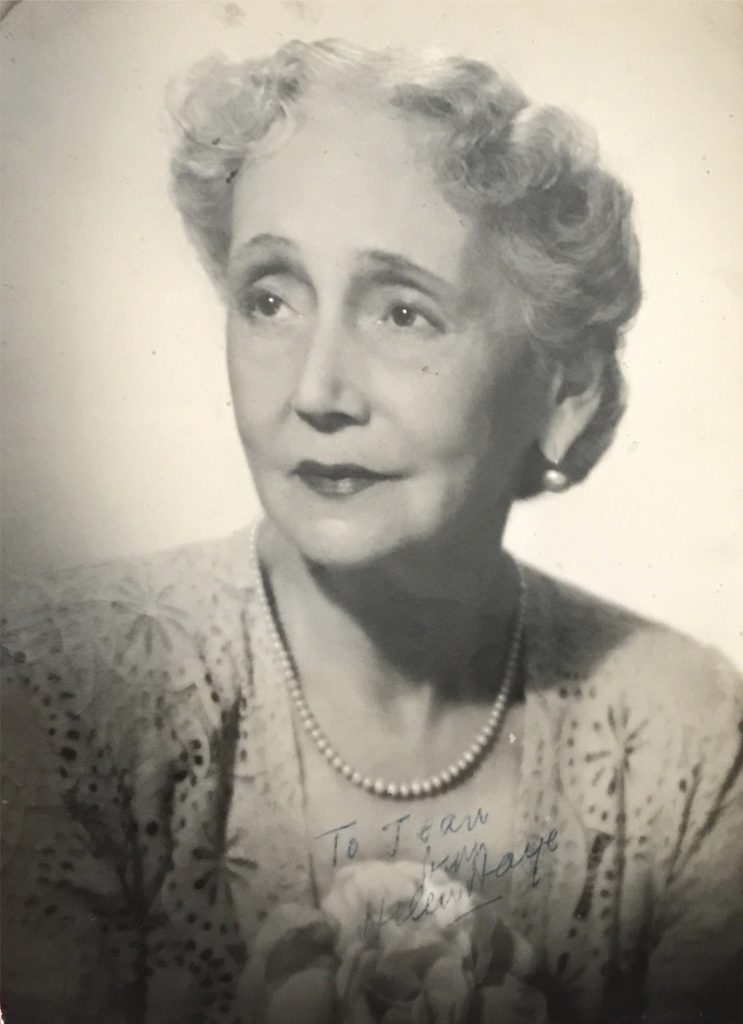
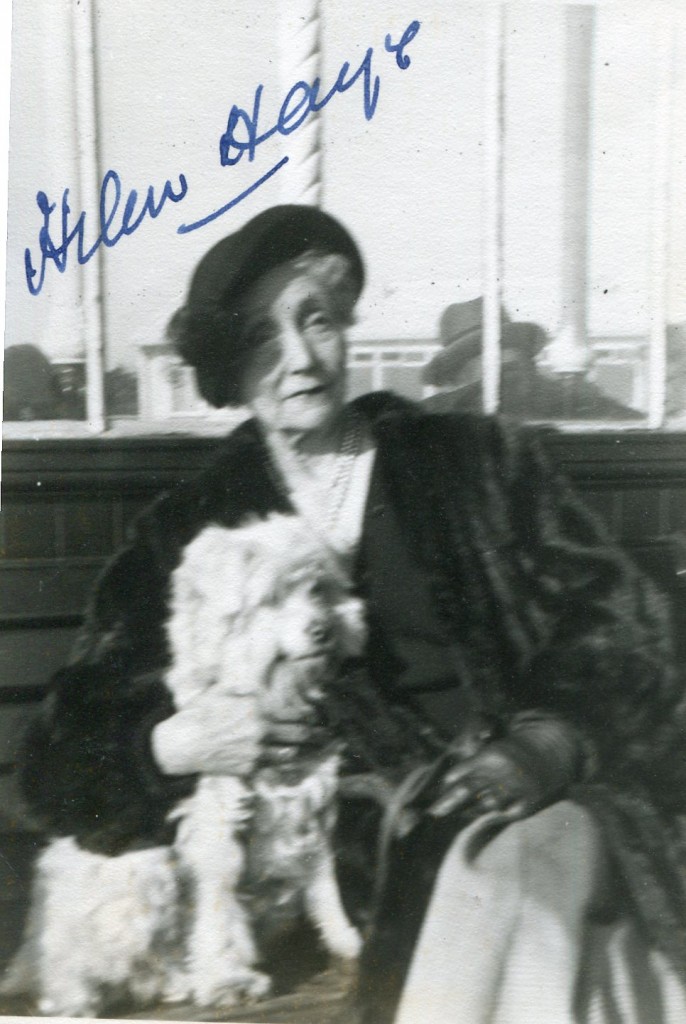
Helen Haye was born in 1874. She was a popular character actress in films in the U.K. in the 1930’s and 40’s. Her movies include “The 39 Steps” in 1935, “Riding High”and “Madonna of the Seven Moons”. She died in 1957.
IMDB entry:
Helen Haye was born on August 28, 1874 in Assam, India as Helen Hay. She was an actress, known for The 39 Steps (1935), The Skin Game (1931) and Hobson’s Choice(1954). She was married to Ernest Attenborough. She died on September 1, 1957 in London, England.
English character actress, on stage from 1898. In films from 1916, she was usually seen in benevolent or aristocratic roles. She gave particularly strong performances in The Spy in Black (1939) and The 39 Steps (1935). Helen Haye taught for years at the Royal Academy of Dramatic Art, her prize pupils including John Gielgud and Charles Laughton.
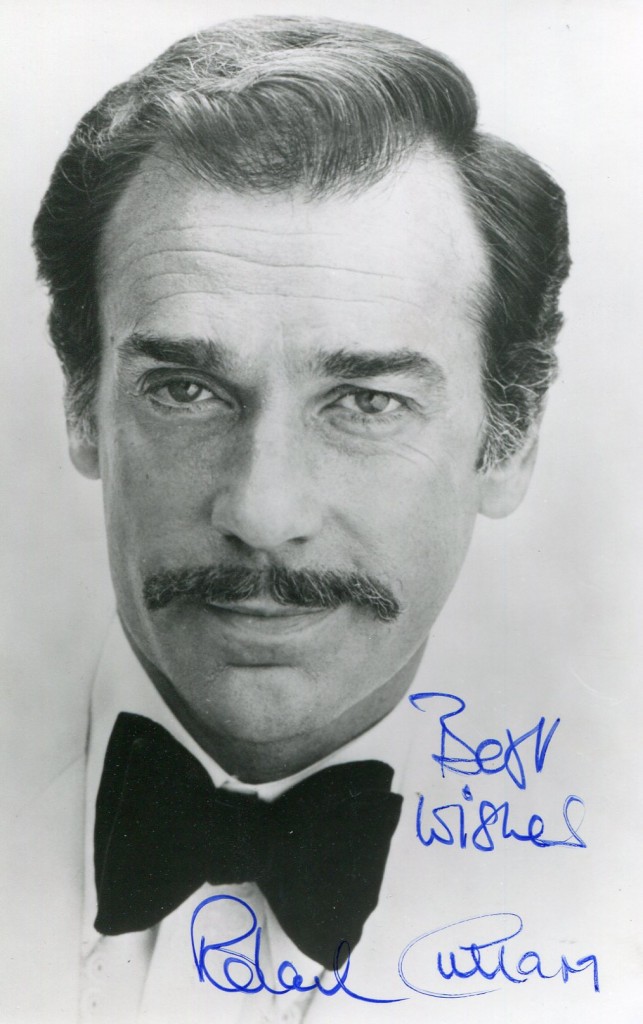
Roland Curram was born in 1932 in London. His first movie was in 1954 in “Up to His Neck”. Other movies include “Dunkirk” and “Darling” in 1965.
IMDB entry:
Roland Curram was born in 1932 in London, England. He is an actor, known for Darling(1965), Madame Sousatzka (1988) and Dr. Jekyll and Mr. Hyde (1980). He was previously married to Sheila Gish. Father of actresses Lou Gish and Kay Curram. Best known for playing Julie Christie‘s gay traveling companion in her Oscar-winning movie Darling (1965), Roland went on to play one of the greatest homosexual characters in British soap, the expatriate Freddie in the BBC’s shortlived series Eldorado (1992). Long married to British actress Sheila Gish, they eventually split up in the 1980s. She later married actor/director Denis Lawson and Roland came out of the closet. He subsequently met his longtime companion and they settled in Chiswick. His ex-wife died in March of 2005 of facial cancer, in which she lost an eye. Actress/daughter Lou Gish also died of cancer in February of 2006. Graduate of Bognor Regis Repertory Theatre, his acting peers there included Rosemary Harris and Michael Hawkins.
The above IMDB entry can also be accessed online here.
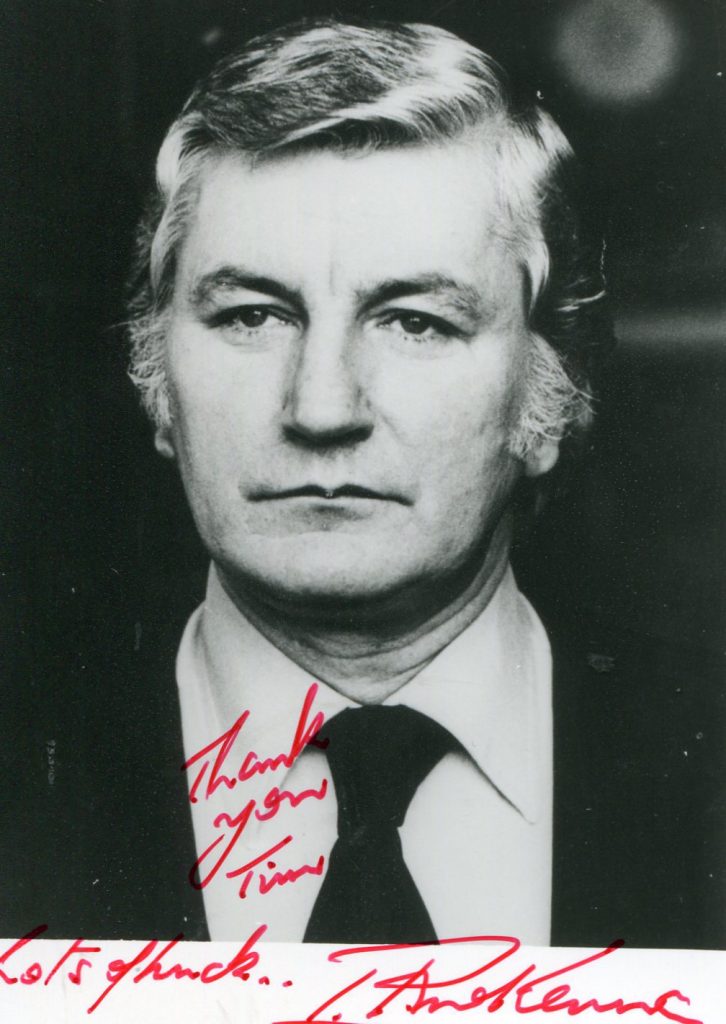
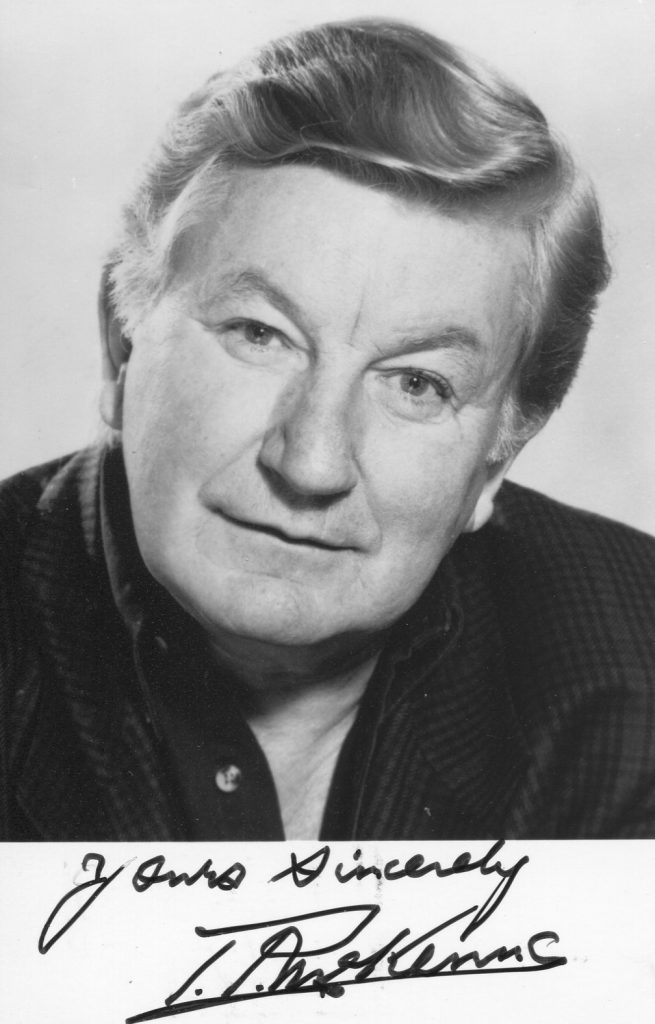
T.P. McKenna was born in 1929 in Co Cavan, Ireland. He began his acting career in Dublin at the famed Abbey Theatre. In 1959 he made the film “Shake Hands With the Devil” with James Cagney, Dana Wynter and Glynis Johns. He made his career in England and acted in most of the major television series of their time e.g.”The Sweeney”. “Blake 7” etc. He died in 2011.
Michael Coveney’s “Guardian” obituary:
Before he became a familiar face on television and cinema screens, the outstanding Irish actor TP McKenna, who has died after a long illness aged 81, bridged the gap between the old and the new Abbey theatres in Dublin. He appeared with the company for eight years during the interim period at the Queen’s theatre; the old Abbey burned down in 1951, the new one opened by the Liffey in 1966.
During that time he made his reputation as a leading actor of great charm, vocal resource – with a fine singing voice – and versatility. He was equally adept at comedy and tragedy, a great exponent of the best Irish playwriting from JM Synge and Séan O’Casey to Hugh Leonard and Brian Friel. The elder son in Eugene O’Neill’s Long Day’s Journey Into Night was a favourite, much acclaimed role.
It was Stephen D, Leonard’s skilful conflation of two James Joyce books, for the rival Gate theatre that in 1963 brought McKenna to London, where he stayed for more or less the rest of his career, appearing regularly on West End stages while reaching wider audiences.
He played barristers and detectives, conmen, police officers and a pope. His default mode was an imposing, authoritative geniality, and when he played a Nazi engaging in the casual slaughter of Jews in the TV mini-series Holocaust (1978), it was as hard to watch as it was to credit that this was the same actor who was so delightful as Harold Skimpole (“no idea of time, no idea of money”) in Charles Dickens’s Bleak House (1985) on BBC television.
For an actor, McKenna was an unusually modest and self-effacing man, and this trait lent a profound transparency and poignancy to those performances that touched on failure and disappointment, notably in Chekhov. You never saw the joins.
His family had settled in Mullagh, County Cavan, in the north of Ireland, in the 18th century. His great-grandfather, Nicholas McKenna, was an auctioneer, tradesman and farmer; his uncle, Justin McKenna, a notable politician; and his father, Ralph, also an auctioneer and merchant. Thomas – generally known in later life as “TP” – was the eldest of 10 children. He was educated at Mullagh national school and St Patrick’s college, Cavan, where he studied literature and discovered his acting and singing talent in Gilbert and Sullivan. He played Gaelic football, representing St Patrick’s in the final of the All Ireland colleges competition in 1948.
As a schoolboy, he had seen the legendary Anew McMaster‘s touring company in Shakespeare and decided to go on the stage. But first he took his banking exams in Belfast, then worked for the Ulster Bank in Granard, Trim and Dublin, where he trained at the Abbey Theatre School. He made his debut at the Pyke in 1953, appeared with McMaster at the Gaiety in 1954 (playing Horatio in Hamlet and Albany in King Lear) before joining the Abbey.
McKenna played more than 70 roles for the Abbey at the Queen’s, a large, demanding theatre seating 900. One of the Gate theatre’s biggest modern successes was Stephen D at the Dublin Theatre festival of 1962. In the following year, McKenna came with it, and his fellow actor Norman Rodway, to London. Although he returned to Dublin in 1966 to play in the Abbey’s reopening production – Walter Macken’s Recall the Years, a curtain-raiser to a major revival of O’Casey’s The Plough and the Stars – McKenna never liked the new theatre and revelled in the wider opportunities now open to him on British television and stage.
At the Royal Court in 1964, he played Cassius in Lindsay Anderson’s revival of Julius Caesar, then joined Stuart Burge and Jonathan Miller at the Nottingham Playhouse in 1968, playing the Bastard in King John, Joseph Surface in Richard Brinsley Sheridan’s The School for Scandal, Trigorin in Chekhov’s The Seagull and Macduff in Macbeth. At the end of an exhausting season, he directed his first and favourite play, Synge’s The Playboy of the Western World.
Back at the Court in 1969, he was one of the two Irish contractors in David Storey’s The Contractor, directed by Anderson, and this role with his compatriot Jim Norton led to both of them being hired by Sam Peckinpah to appear in Straw Dogs (1971), his fourth major film, following Joseph Strick‘s Ulysses (1967) – he was Buck Mulligan – Tony Richardson’s The Charge of the Light Brigade (1968), and Charles Jarrott’s Anne of the Thousand Days (1969). McKenna had a soft spot for Peter Hall’s Perfect Friday (1970), a comedy caper with Stanley Baker, Ursula Andress and David Warner, and he also popped up tellingly opposite Richard Burton in Michael Tuchner’s Villain (1971), the first movie “inspired” by the Kray twins.
McKenna had married May White, literally the girl next door, who worked for Radio Éireann, in 1955, but he did not bring the family over to settle in London until 1972. Notable stage roles over the next two decades included Robert Hand in James Joyce’s only play, Exiles, directed byHarold Pinter at the Mermaid in 1970; a straitlaced puritan preacher inGeorge Bernard Shaw‘s The Devil’s Disciple for the RSC in 1976, a performance of coruscating charm opposite Tom Conti, John Wood, Zoë Wanamaker and Bob Hoskins; a beautifully modulated doctor in Max Stafford-Clark’s production of Thomas Kilroy’s take on The Seagull at the Royal Court in 1980; and the Duke of Florence, an acid-voiced, bleakly ruthless intelligencer, in Philip Prowse’s gorgeous staging of John Webster’s The White Devil at the National in 1991.
He returned to the Gate several times. The artistic director Michael Colgan said that his Uncle Vanya there in 1987 was the most moving performance of his tenure, while his Serebryakov in the same Chekhov play, a few years later, fitted equally well. His whiskey-sodden, disenchanted ophthalmologist in Friel’s Molly Sweeney (1994), a play about regaining sight but losing faith, was just as potent and memorable, and he played a wonderful double act with Niall Buggy in Pinter’s No Man’s Land in 1997.
And there seemed hardly a major television series he did not adorn, as a maverick Russian agent in Callan, or as various villains in Lovejoy, Minder and The Sweeney. He was the final suspect ever interviewed byJohn Thaw as Inspector Morse. His last major movie was Lawrence Dunmore’s The Libertine (2004), starring Johnny Depp in Stephen Jeffreys’s screenplay from his own theatre piece, and he last appeared on the London stage in 2005, as the disabled father in a National Theatre revival by Tom Cairns of Friel’s elegiac Aristocrats.
But with a fine, black-humoured Irish flourish, he saved his last gasp for a short, low-budget movie called Death’s Door (2009), in which he played a dying man in a grand old house confronted by a junkie career criminal played by one of the Irish theatre’s rising stars, Karl Sheils.
May died in 2007. McKenna is survived by four sons and a daughter, three brothers and five sisters.
• Thomas Patrick McKenna, actor, born 7 September 1929; died 13 February 2011
The above IMDB entry can also be accessed online here.
T.P. McKenna obituary in “The Guardian”.
T.P. McKenna was born in 1929 in Co Cavan, Ireland. He began his acting career in Dublin at the famed Abbey Theatre. In 1959 he made the film “Shake Hands With the Devil” with James Cagney, Dana Wynter and Glynis Johns. He made his career in England and acted in most of the major television series of their time e.g.”The Sweeney”. “Blake 7” etc. He died in 2011.
Michael Coveney’s “Guardian” obituary:
Before he became a familiar face on television and cinema screens, the outstanding Irish actor TP McKenna, who has died after a long illness aged 81, bridged the gap between the old and the new Abbey theatres in Dublin. He appeared with the company for eight years during the interim period at the Queen’s theatre; the old Abbey burned down in 1951, the new one opened by the Liffey in 1966.
During that time he made his reputation as a leading actor of great charm, vocal resource – with a fine singing voice – and versatility. He was equally adept at comedy and tragedy, a great exponent of the best Irish playwriting from JM Synge and Séan O’Casey to Hugh Leonard and Brian Friel. The elder son in Eugene O’Neill’s Long Day’s Journey Into Night was a favourite, much acclaimed role.
It was Stephen D, Leonard’s skilful conflation of two James Joyce books, for the rival Gate theatre that in 1963 brought McKenna to London, where he stayed for more or less the rest of his career, appearing regularly on West End stages while reaching wider audiences.
He played barristers and detectives, conmen, police officers and a pope. His default mode was an imposing, authoritative geniality, and when he played a Nazi engaging in the casual slaughter of Jews in the TV mini-series Holocaust (1978), it was as hard to watch as it was to credit that this was the same actor who was so delightful as Harold Skimpole (“no idea of time, no idea of money”) in Charles Dickens’s Bleak House (1985) on BBC television.
For an actor, McKenna was an unusually modest and self-effacing man, and this trait lent a profound transparency and poignancy to those performances that touched on failure and disappointment, notably in Chekhov. You never saw the joins.
His family had settled in Mullagh, County Cavan, in the north of Ireland, in the 18th century. His great-grandfather, Nicholas McKenna, was an auctioneer, tradesman and farmer; his uncle, Justin McKenna, a notable politician; and his father, Ralph, also an auctioneer and merchant. Thomas – generally known in later life as “TP” – was the eldest of 10 children. He was educated at Mullagh national school and St Patrick’s college, Cavan, where he studied literature and discovered his acting and singing talent in Gilbert and Sullivan. He played Gaelic football, representing St Patrick’s in the final of the All Ireland colleges competition in 1948.
As a schoolboy, he had seen the legendary Anew McMaster‘s touring company in Shakespeare and decided to go on the stage. But first he took his banking exams in Belfast, then worked for the Ulster Bank in Granard, Trim and Dublin, where he trained at the Abbey Theatre School. He made his debut at the Pyke in 1953, appeared with McMaster at the Gaiety in 1954 (playing Horatio in Hamlet and Albany in King Lear) before joining the Abbey.
McKenna played more than 70 roles for the Abbey at the Queen’s, a large, demanding theatre seating 900. One of the Gate theatre’s biggest modern successes was Stephen D at the Dublin Theatre festival of 1962. In the following year, McKenna came with it, and his fellow actor Norman Rodway, to London. Although he returned to Dublin in 1966 to play in the Abbey’s reopening production – Walter Macken’s Recall the Years, a curtain-raiser to a major revival of O’Casey’s The Plough and the Stars – McKenna never liked the new theatre and revelled in the wider opportunities now open to him on British television and stage.
At the Royal Court in 1964, he played Cassius in Lindsay Anderson’s revival of Julius Caesar, then joined Stuart Burge and Jonathan Miller at the Nottingham Playhouse in 1968, playing the Bastard in King John, Joseph Surface in Richard Brinsley Sheridan’s The School for Scandal, Trigorin in Chekhov’s The Seagull and Macduff in Macbeth. At the end of an exhausting season, he directed his first and favourite play, Synge’s The Playboy of the Western World.
Back at the Court in 1969, he was one of the two Irish contractors in David Storey’s The Contractor, directed by Anderson, and this role with his compatriot Jim Norton led to both of them being hired by Sam Peckinpah to appear in Straw Dogs (1971), his fourth major film, following Joseph Strick‘s Ulysses (1967) – he was Buck Mulligan – Tony Richardson’s The Charge of the Light Brigade (1968), and Charles Jarrott’s Anne of the Thousand Days (1969). McKenna had a soft spot for Peter Hall’s Perfect Friday (1970), a comedy caper with Stanley Baker, Ursula Andress and David Warner, and he also popped up tellingly opposite Richard Burton in Michael Tuchner’s Villain (1971), the first movie “inspired” by the Kray twins.
McKenna had married May White, literally the girl next door, who worked for Radio Éireann, in 1955, but he did not bring the family over to settle in London until 1972. Notable stage roles over the next two decades included Robert Hand in James Joyce’s only play, Exiles, directed byHarold Pinter at the Mermaid in 1970; a straitlaced puritan preacher inGeorge Bernard Shaw‘s The Devil’s Disciple for the RSC in 1976, a performance of coruscating charm opposite Tom Conti, John Wood, Zoë Wanamaker and Bob Hoskins; a beautifully modulated doctor in Max Stafford-Clark’s production of Thomas Kilroy’s take on The Seagull at the Royal Court in 1980; and the Duke of Florence, an acid-voiced, bleakly ruthless intelligencer, in Philip Prowse’s gorgeous staging of John Webster’s The White Devil at the National in 1991.
He returned to the Gate several times. The artistic director Michael Colgan said that his Uncle Vanya there in 1987 was the most moving performance of his tenure, while his Serebryakov in the same Chekhov play, a few years later, fitted equally well. His whiskey-sodden, disenchanted ophthalmologist in Friel’s Molly Sweeney (1994), a play about regaining sight but losing faith, was just as potent and memorable, and he played a wonderful double act with Niall Buggy in Pinter’s No Man’s Land in 1997.
And there seemed hardly a major television series he did not adorn, as a maverick Russian agent in Callan, or as various villains in Lovejoy, Minder and The Sweeney. He was the final suspect ever interviewed byJohn Thaw as Inspector Morse. His last major movie was Lawrence Dunmore’s The Libertine (2004), starring Johnny Depp in Stephen Jeffreys’s screenplay from his own theatre piece, and he last appeared on the London stage in 2005, as the disabled father in a National Theatre revival by Tom Cairns of Friel’s elegiac Aristocrats.
But with a fine, black-humoured Irish flourish, he saved his last gasp for a short, low-budget movie called Death’s Door (2009), in which he played a dying man in a grand old house confronted by a junkie career criminal played by one of the Irish theatre’s rising stars, Karl Sheils.
May died in 2007. McKenna is survived by four sons and a daughter, three brothers and five sisters.
• Thomas Patrick McKenna, actor, born 7 September 1929; died 13 February 2011
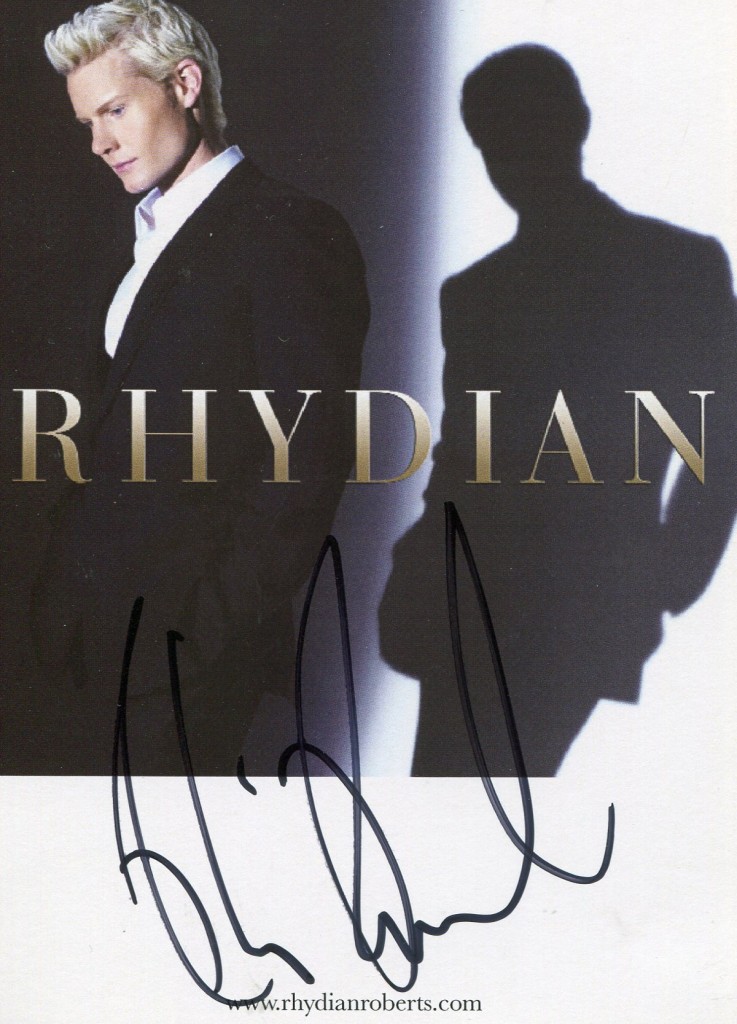
Rhydian was born James Roberts in 1983. He came to fame in “The X Factor” in 1983.
“Classic FM” article:
We asked the Welsh singer, who shot to fame in X Factor in 2007, why he thought Wales produces so many great singers and whether he misses his homeland when he’s away.
Next month, Rhydian is embarking on a tour of UK arenas in Jeff Wayne’s musical The War of the Worlds, in which he plays Parson Nathaniel. He tells us about the role, for which he’s losing his trademark white hair.
Asked what it’s like performing in such large venues as the O2, and whether it requires different skills, Rhydian said “I’ve always been a larger than life character when I’m on stage and I think that helps.”
The above “Classic FM” article can also be accessed online here.
Born in Pontypridd, South Wales, in 1940 to a traditional coal-mining family, he began singing at an early age in church and in the school choir. Left school at 16 and was married, having a son a year later. He brought in money for his family from an assortment of jobs, singing in pubs at night. By 1963, he was playing regularly with his own group in the demanding atmosphere of working mens clubs. Gordon Mills, a performer who had branched out into songwriting and management went to see him. He became his manager and landed him a record contract in 1964. They made a great team and had huge international success with their second single, a song penned by Mr Mills — “It’s Not Unusual.” An avalanche of gold singles and albums followed. Mr Jones, a vocal powerhouse, has sustained his popularity for over three decades, and his recordings have spanned the spectrum of musical styles. Now lives with his wife Melinda in homes in Wales and California.
– IMDb Mini Biography By: BlackKnight1(vanessawhistler@ntlworld.com
Andrea Riseborough was born in Whitley Bay in 1981. She is one of Britain’s best young actresses with sterling performances in such films as “Made in Dagenham”. “Never Let Me Go”, the remake of “Brighton Rock” and “the Belfast set “Shadow Dancer”.
TCM overview:
It is alright if the name Andrea Riseborough seems a little unfamiliar. Though the actress has been a rising star in her native England for years, beginning with her role as an ambitious Labour Party researcher on the political satire “Party Animals” (BBC Two, 2007), the Royal Academy of Dramatic Art graduate has only appeared on American audiences’ radars since 2011, when she portrayed American divorcee and future Duchess of Windsor Wallis Simpson in Madonna’s divisive “W.E.” But those intervening four years found the preternaturally observant Riseborough pack in several memorable performances: she earned a BAFTA nomination for her nuanced turn as a young Margaret Thatcher in the made-for-TV movie “Margaret Thatcher: The Long Walk to Finchley” (BBC 4, 2008); was cast as a strong-willed factory machinist in the union drama “Made in Dagenham” (2010); and found the strong heart of a naively trusting wife in the 2010 remake of Graham Greene’s “Brighton Rock.” Her affinity for portraying determined women matched up perfectly with her role as Wallis Simpson, whose romance with King Edward VIII caused him to abdicate his throne in 1936 so they could marry. The film’s controversial reception did nothing to slow the thoughtful actress’ burgeoning career, however, and in 2012 she earned critical acclaim for her role as an IRA-member-turned-informant in “Shadow Dancer,” set in ’90s Belfast. Her next role, as a mysterious drone supervisor opposite Tom Cruise in the big-budget “Oblivion” (2013), highlighted her ability to shift from intense period piece to glossy Hollywood sci-fi. With a startling intensity and wise-beyond-her years talent, Andrea Riseborough is one to watch.
Born in 1981 in northern England a few days shy of Halloween, Riseborough was an inveterate people watcher from a young age. Keenly aware of her socio-economic status — her father worked as a car salesman, and her mother was employed as both a secretary and beautician — the young Riseborough closely observed those around her. Though she did well in the private school her parents placed her in, which they were able to afford thanks to the economic boom England enjoyed in the 1980s, she eventually dropped out and worked a number of odd jobs, including managing a Chinese restaurant, as a way to gain experience outside school walls. Her family lost everything in the early ’90s recession, and their resulting hardship supplied another experience for her to draw from.
Her interest in acting led her to enroll at the Royal Academy of Dramatic Art in London, and after graduating from the internationally-renowned school in 2005, she quickly jumped from stage to screen with supporting roles in everything from the BBC made-for-TV movie “A Very Social Secretary” (2005) to the feature film “Venus” (2006), starring Peter O’Toole as a nearly-forgotten actor who becomes a mentor to his wild-child granddaughter. In 2006 she won a prestigious young actor’s award for her work in the Royal Shakespeare Company productions of the Swedish “Miss Julie” and “Measure for Measure,” one of Shakespeare’s not-quite-comedy, not-quite-drama “problem plays.” A year later she was cast in a breakout role on “Party Animals” as Kirsty, a political researcher not above using her feminine charms to rise to the top. It was that mix of dogged ambition and steely calculating that led to her being cast as a young Margaret Thatcher in the BAFTA-nominated “The Long Walk to Finchley,” which chronicled the future Prime Minister’s decade-long battle to win a Parliamentary seat. Her intense preparation and commitment to the character has since proved to be one of Riseborough’s greatest strengths.
The film, which skirted controversy by avoiding Thatcher’s politics and focusing on feminist ideals, also marked a stretch of challenging performances for Riseborough. In 2010 she was featured as a sewing factory machinist in “Made in Dagenham,” based on the 1968 female employee-led protests that shut down a Ford sewing factory and led to the Equal Pay Act of 1970. That same year she turned in a harrowing performance as a naive waitress in “Brighton Rock,” which could not have been farther from her confident turn as Simpson in the critically dismissed “W.E.” She next portrayed a defiant housewife in the alternate-reality World War II drama “Resistance” (2011), and appeared opposite Clive Owen in the critically-acclaimed “Shadow Dancer” as an IRA member whose attempt to leave the deadly organization leaves her paralyzed with fear. In 2013 she appeared in the cat-and-mouse thriller “Welcome to the Punch,” and later made her U.S. debut with her role as Tom Cruise’s aloof supervisor in the aptly named “Oblivion.”
The above TCM overview can also be accessed online here.
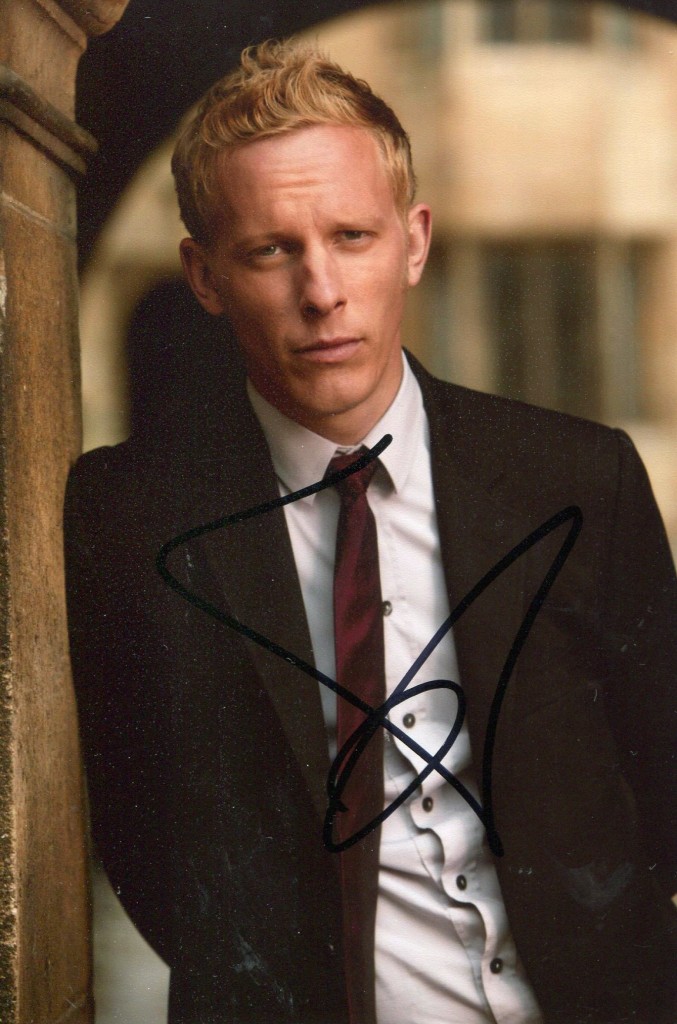
Laurence Fox is best known for his portrayal of ‘James Hathaway’ in the popular television series “Lewis”. He was born in 1978 and is the son of acor James Fox. His movies include “Becoming Jane” in 2007 and “The King’s Speech”.
IMDB entry:
RADA-trained Laurence Fox is the third son of the actor James Fox and his wife Mary. He is a rising British actor who has appeared in several important films, plays, and television programs. He comes from a theatrical family and promises to have an illustrious career ahead of him.
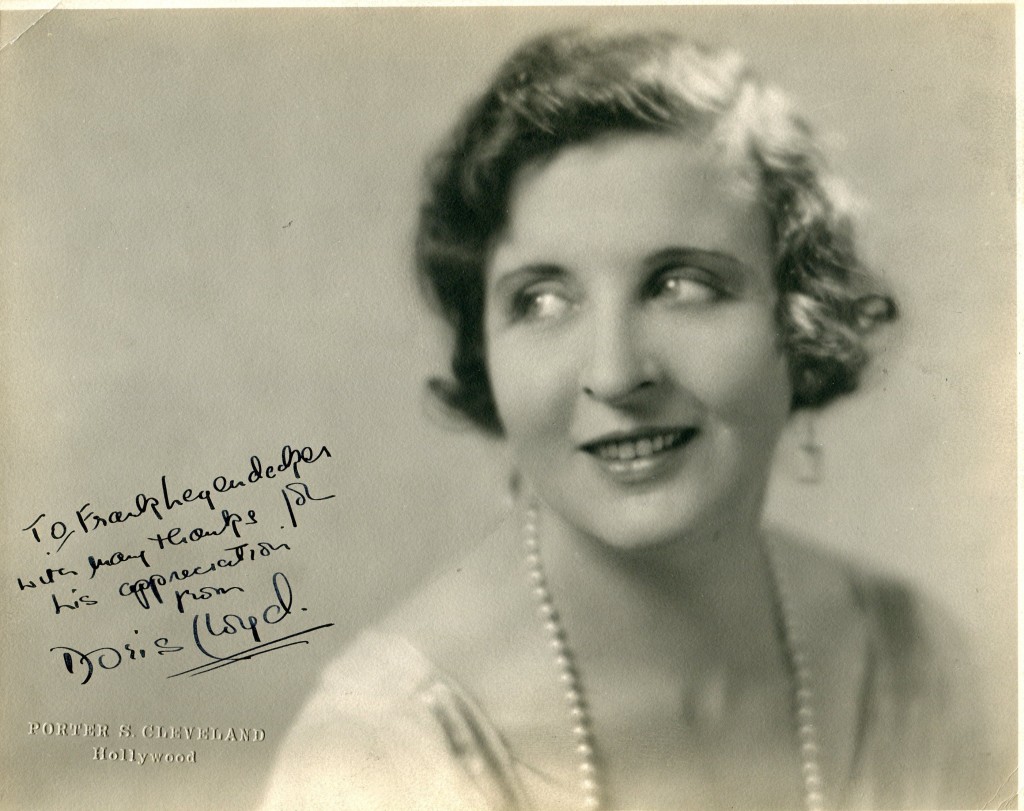
Doris Lloyd, was born in Walton Liverpool in 1896. She began her acting career on Broadway in 1925 and began making movies in 1929. She became a well known character actress. Her movies include “Tarzan, The Ape man” in 1932, “Back Street”, “The Letter”, “Shining Victory”, “Midnight Lace” and later “Rosie” and “The Sound of Music”. She died in California in 1968.
IMDB entry:
Doris Lloyd was born on July 3, 1896 in Liverpool, England as Hessy Doris Lloyd. She was an actress, known for The Sound of Music (1965), Alice in Wonderland (1951) and The Time Machine (1960). She died on May 21, 1968 in Santa Barbara, California, USA. British stage actress who came to Hollywood in 1925 and stayed playing domestic and/or dowager support roles in costumers. Was a very popular radio & television actress, appearing in over 150 movies. Versatile character actress, who first appeared on stage with the Liverpool Repertory Theatre Company in 1914. Intended to merely visit her sister in the United States, but ended up settling down in California. Her lengthy movie career began in 1925 and included countless small parts as (British) charwomen, landladies and, occasionally, society matrons. Notable as a spy in ‘Disraeli’ (1929) and Nancy Sykes in the Monogram version of ‘Oliver Twist’ (1933). On Broadway in ‘An Inspector Calls’ (1947-1948,as Sybil Birling).