

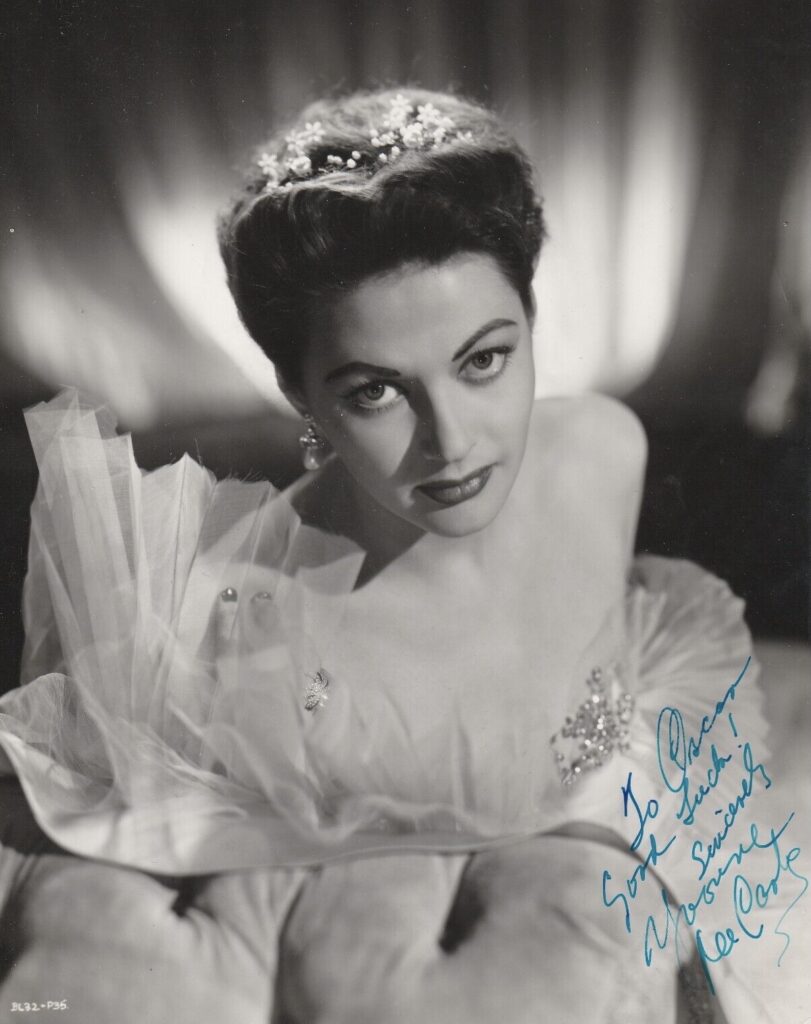
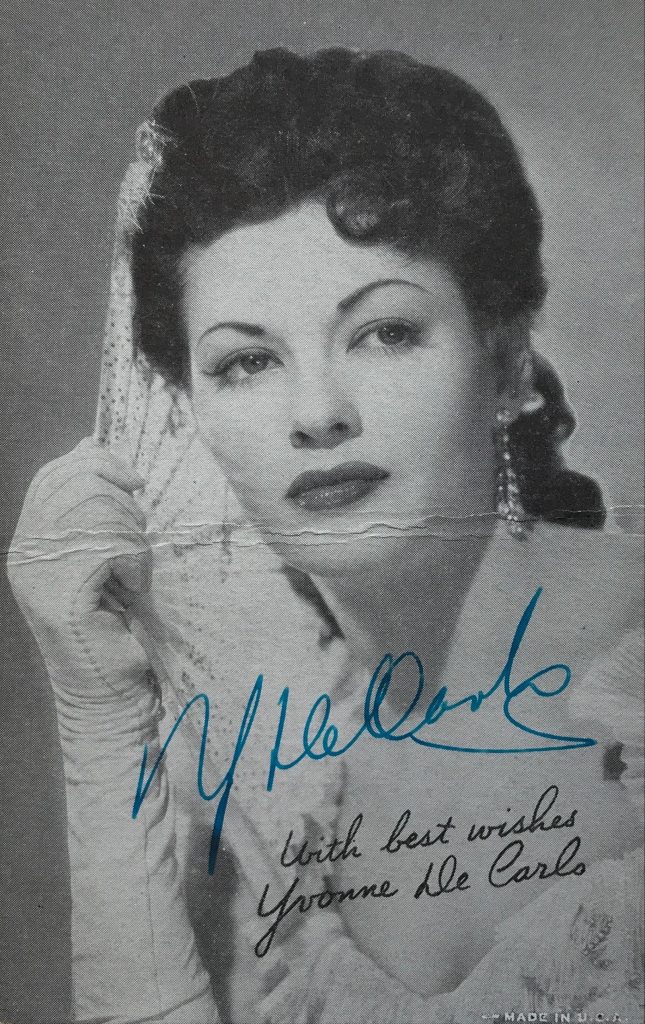
Yvonne De Carlo obituary in “The Independent”:
n her first starring role, Yvonne De Carlo was billed as “The Most Beautiful Woman in the World”. In Hollywood biopics, her beauty inspired both Rimsky-Korsakov and Wagner. Although critics of her earlier assembly-line costume extravaganzas dubbed her “Yvonne the Terrible”, the reliable De Carlo worked steadily for the better part of five decades, appearing on the big screen opposite such icons as Bob Hope, Burt Lancaster, Clark Gable, John Wayne and Charlton Heston, on the small screen as the vampiresque Lily in The Munsters and on Broadway in Follies, singing “I’m Still Here”, Stephen Sondheim’s triumphant anthem of showbiz survival, that boasts the line, “Then you career from career to career.”
Who else could have played Lily Munster, Lola Montez, Calamity Jane, Scheherazade, Mary Magdalene and Moses’s wife Sephora?
She was born Margaret Yvonne Middleton in Vancouver, Canada in 1922. She began dancing at an early age and, after moving to the United States, worked as a dancer and movie extra, graduated to short subjects, and finally made her feature-film début at Columbia Picture in Harvard, Here I Come (1942), a low-comedy “B” picture, starring the boxer “Slapsy Maxie” Rosenbloom. Like the film, her role was small, but a contract with Paramount Pictures followed.
Between 1942 and 1944 she acted in no less than 19 films, making subliminal appearances in This Gun For Hire, Let’s Face it, So Proudly We Hail!, For Whom the Bell Tolls, The Road to Morocco and a host of forgotten Paramount quickies.
Throughout the Second World War, the Queen of Universal Pictures was Maria Montez, whose ludicrous pieces of Technicolored high camp earned the studio a fortune. In 1945 De Carlo inherited the Montez mantle, beginning with Salome – Where She Danced (1945). She played an exotic dancer who, when knowledge of her espionage activities during the Franco-Prussian War came to light, fled to America. Soon she so dazzled the hard-bitten citizens of Drinkman’s Wells, Arizona, that they changed the name of their town to Salome, Where She Danced. The critic James Agee called the film “The funniest deadpan parody I have ever seen.”
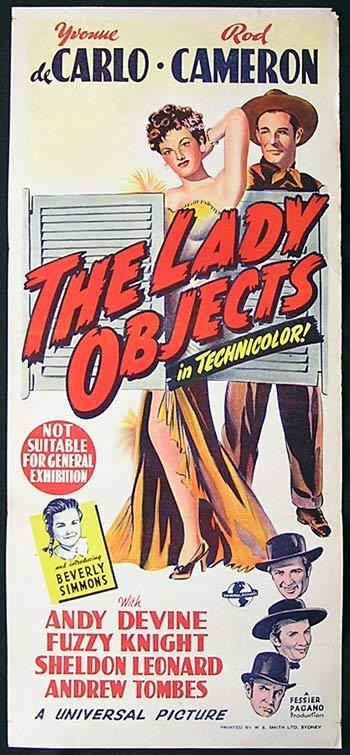
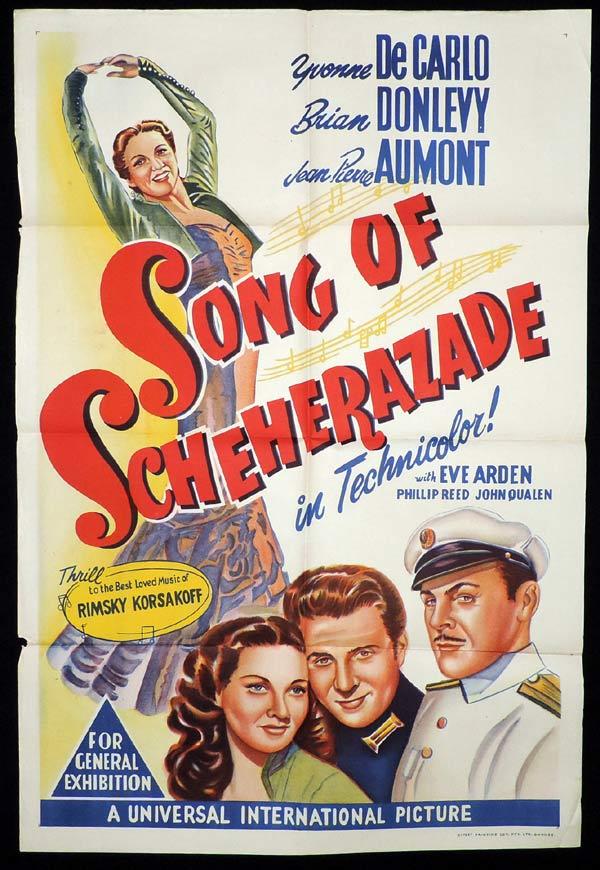
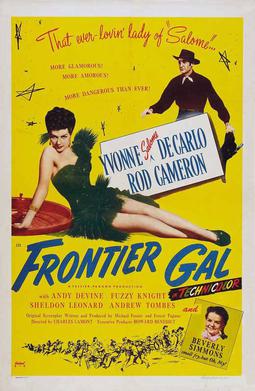
She consolidated her stardom in Frontier Gal (1945), giving an assured comedy performance (in a role turned down by Montez) and singing three songs. Song of Scheherezade (1947) was the film involving dancer De Carlo’s romance with young Russian naval cadet Nikolai Rimsky-Korsakov (Jean-Pierre Aumont). This outrageous fantasy ended with her dancing the Scheherezade ballet, the music she had inspired, at the St Petersburg Opera House.
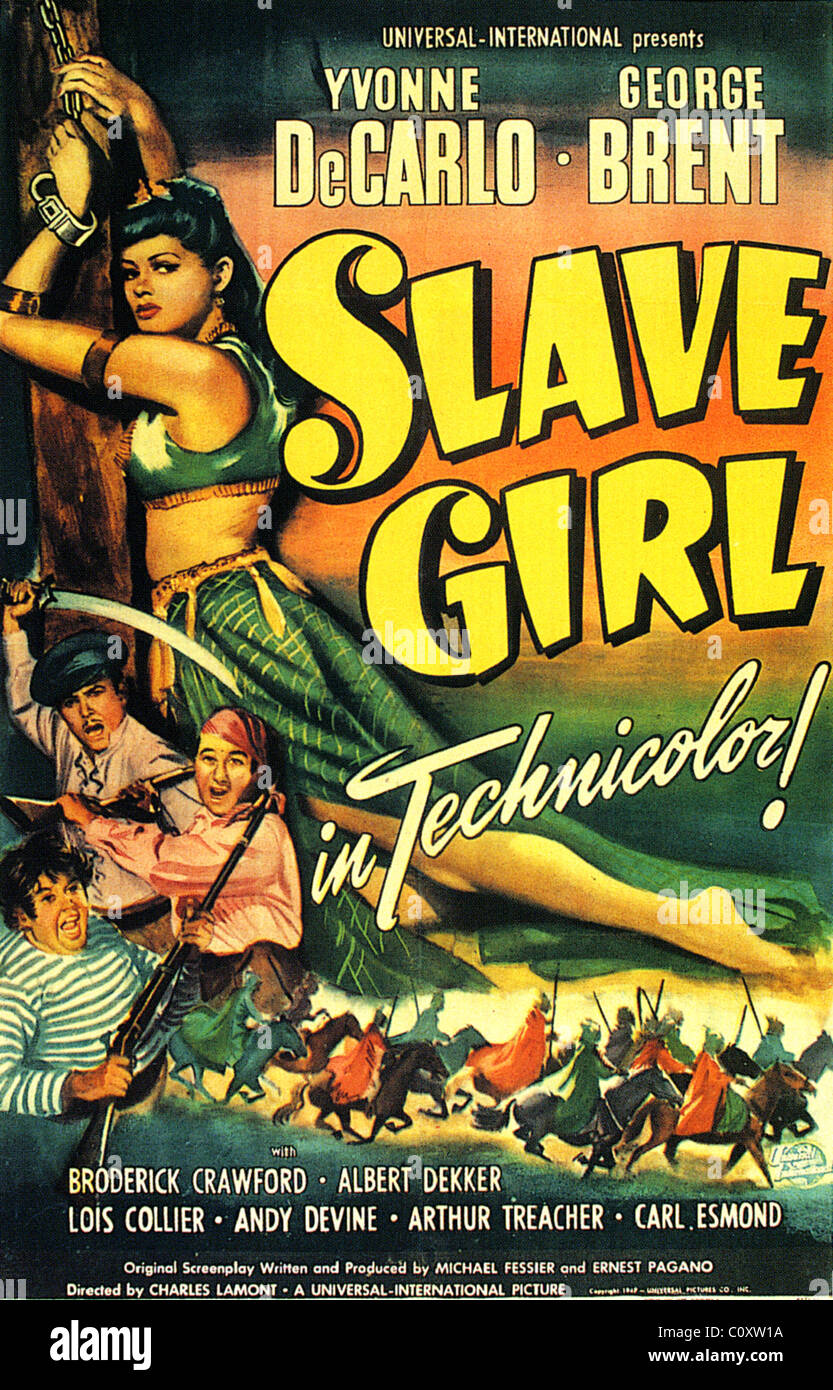
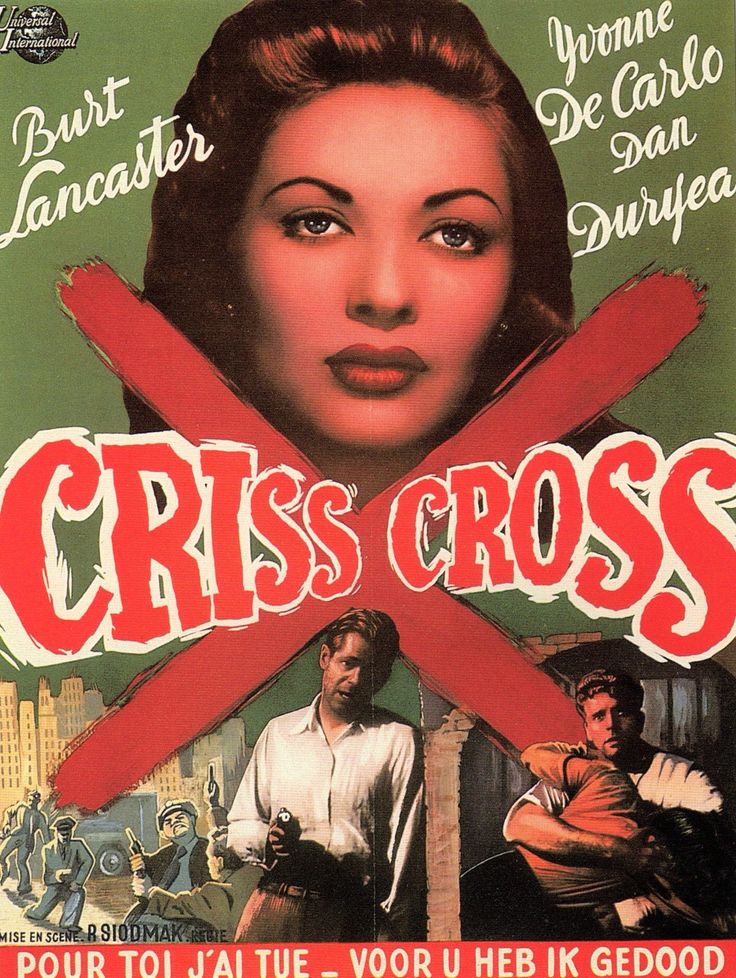
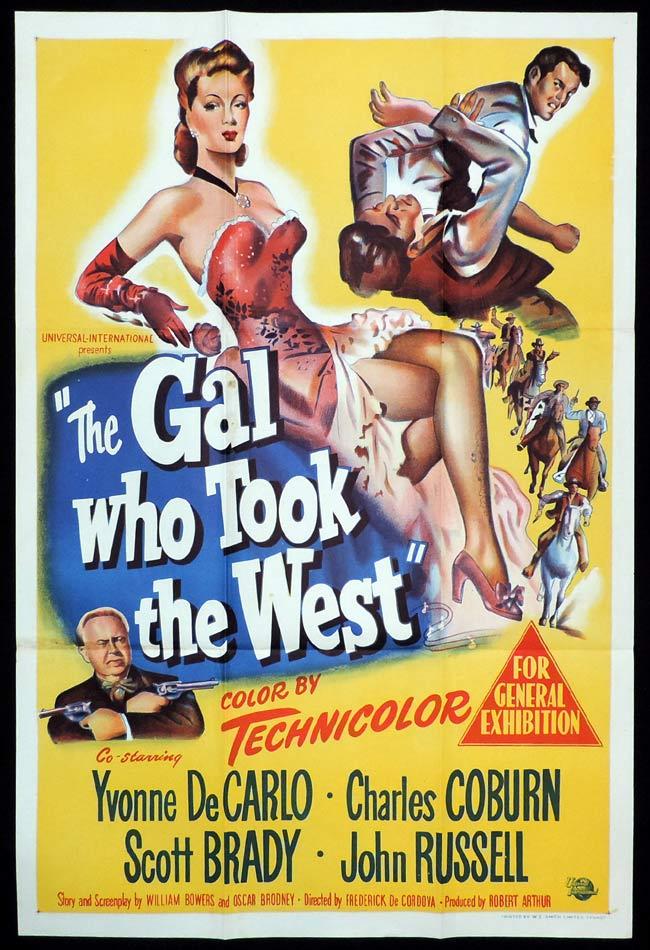
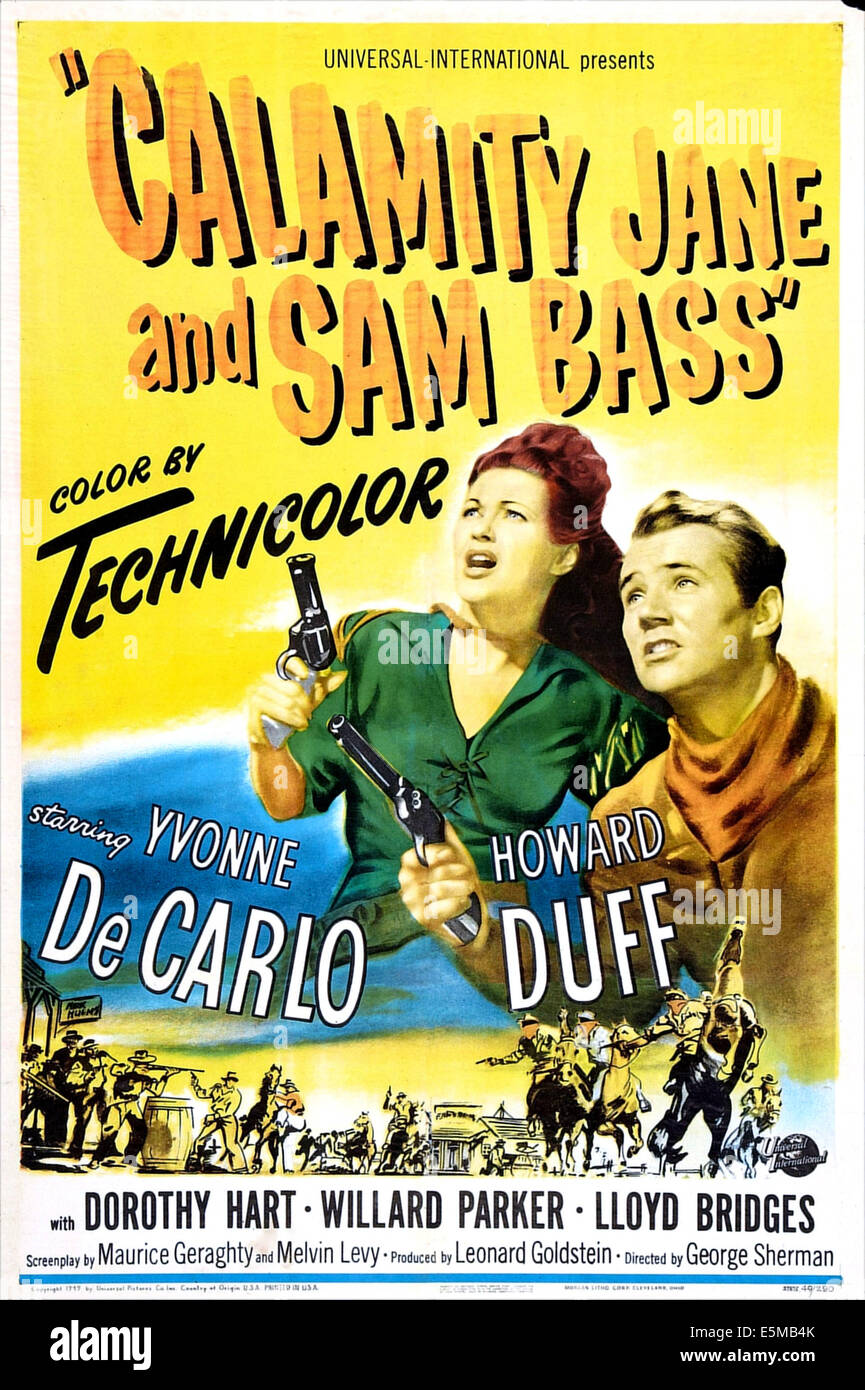
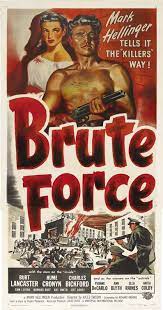
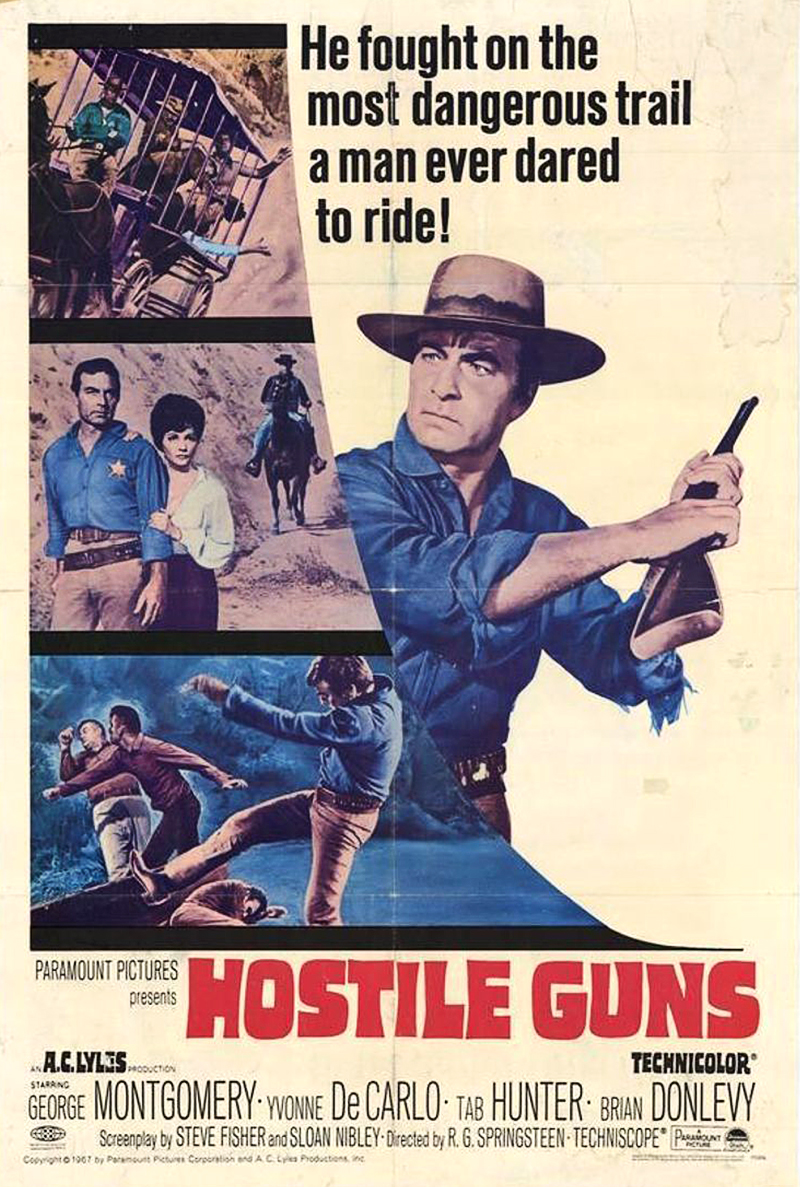
Despite strong performances in two Burt Lancaster films, the taut prison drama Brute Force (1947) and the heist thriller Criss Cross (1949), she was mostly cast in such formula westerns as Black Bart (1948, as Lola Montez), Calamity Jane and Sam Bass and The Gal Who Took the West (both 1949), and such formula easterns as The Desert Hawk (1950, as the actual Princess Scheherazade) and Slave Girl (1947), which was so disastrous the desperate studio added a talking camel and other farcical sequences and released it as a satire.
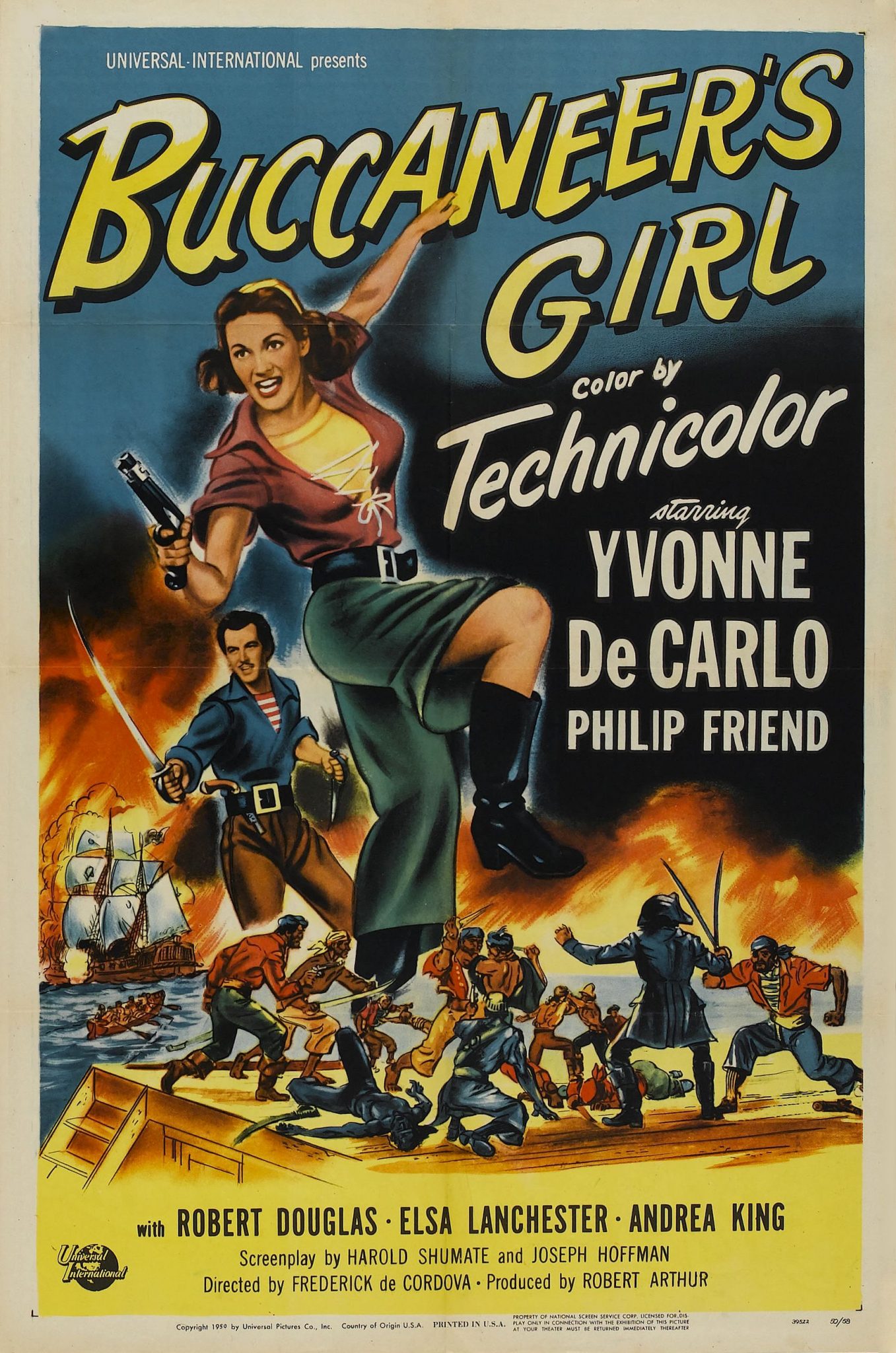
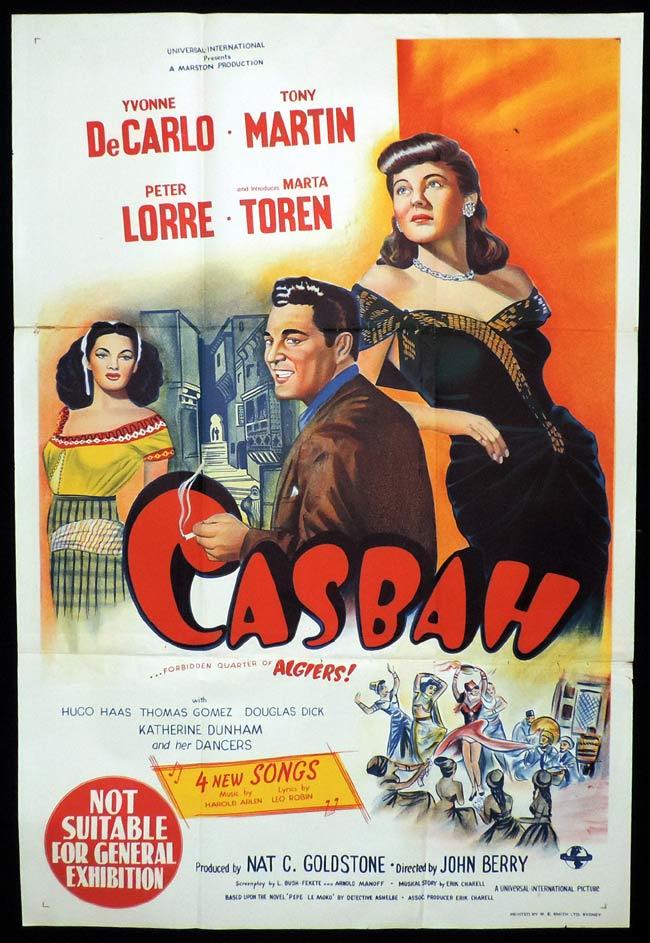
Harold Arlen and Leo Robin wrote the Oscar-nominated “For Every Man There’s a Woman” and other fine songs for Casbah (1948), a musical remake of Algiers, but De Carlo just had to look sensuous while Tony Martin, as Pepe LeMoko, sang them all. She did sing in Buccaneer’s Girl (1950), but this pirate yarn was a typical Universal all-action potboiler.
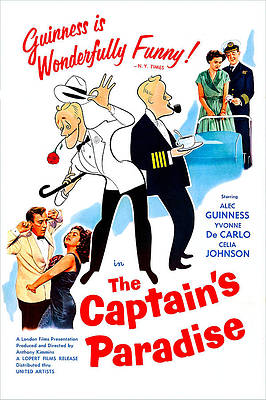
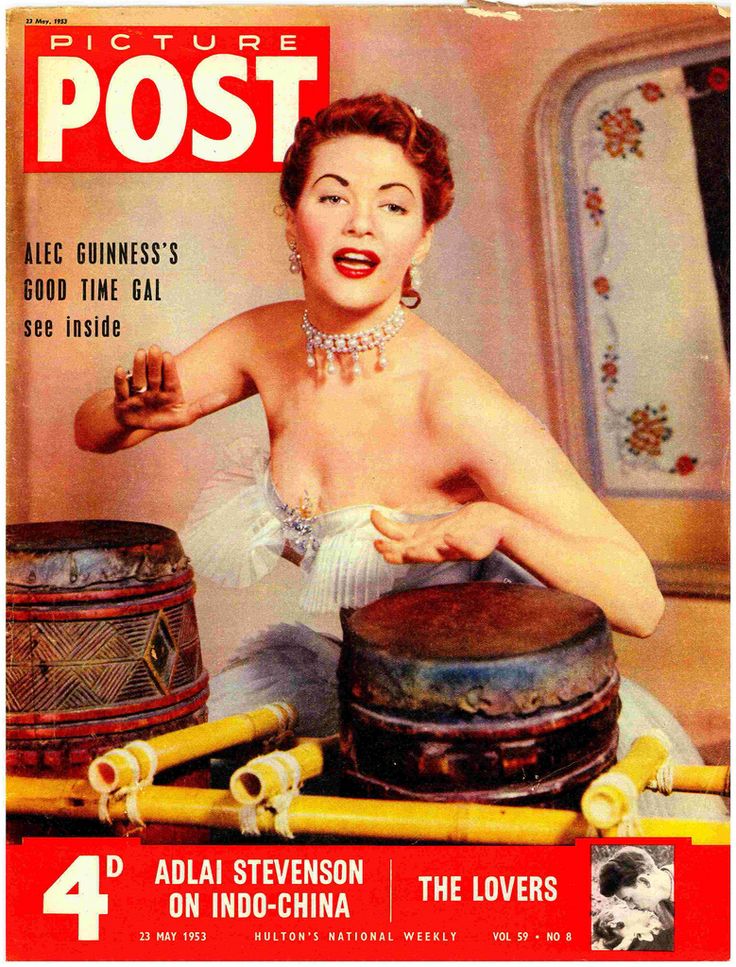
Away from Hollywood, she suddenly confounded her detractors with deft comedy performances in two well-received British films. In Hotel Sahara (1952), set during the Second World War, she and her fiancé (Peter Ustinov) ran a small North African inn which kept changing sides according to the nationality of its occupiers. In The Captain’s Paradise (1953), Alec Guinness, the blissfully contented skipper of a Tangier-to-Gibraltar ferry, had ideally contrasting wives in both ports: the fiery De Carlo in Tangier and the cosily domestic Celia Johnson on Gibraltar.
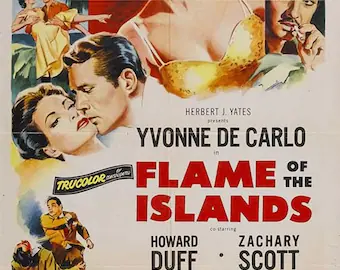
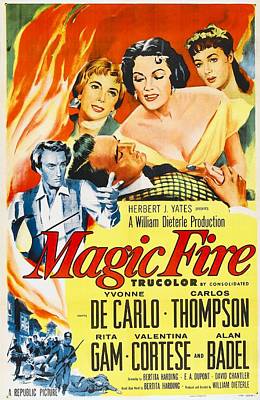
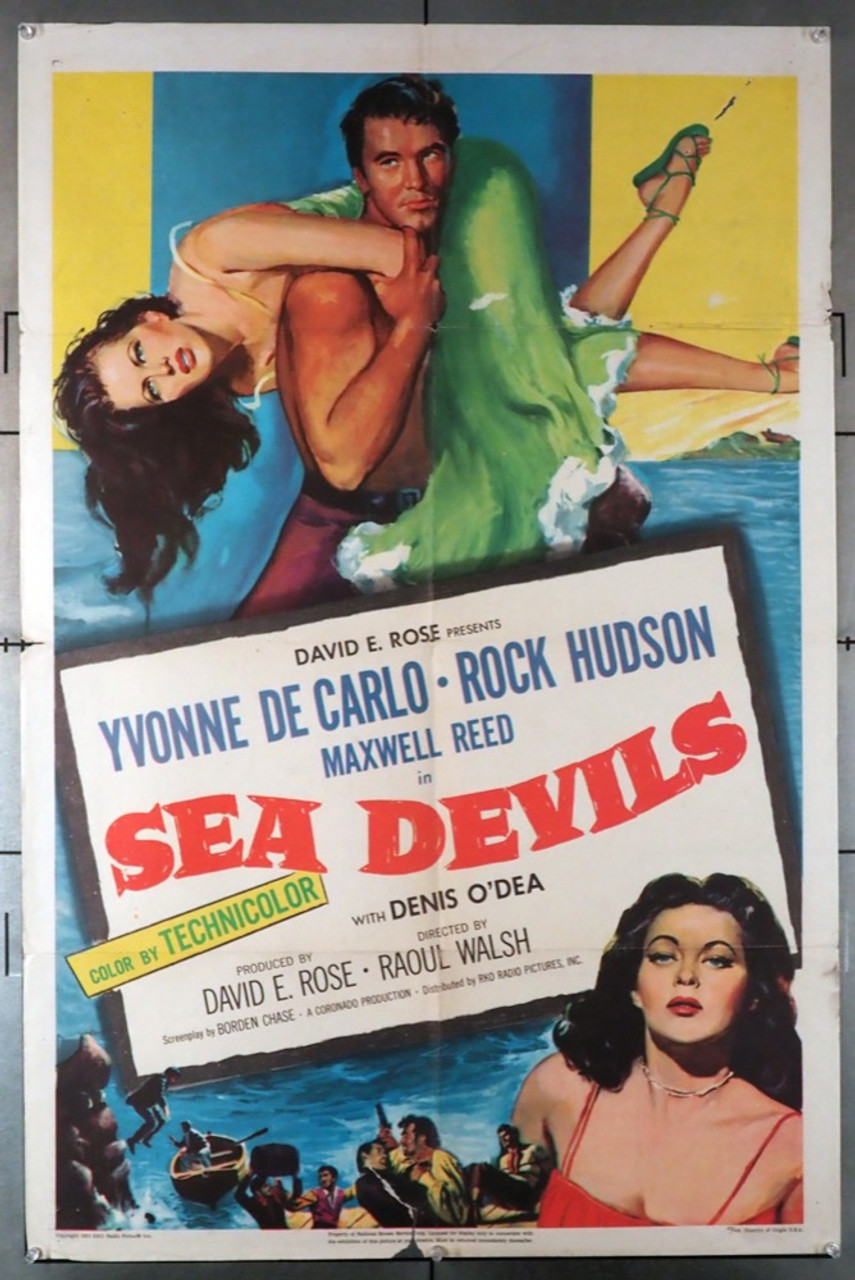
In Sea Devils (1953) De Carlo was a British spy during the Napoleonic wars. That same year she spied for the French in Fort Algiers, singing “I’ll Follow You”, for which she wrote the lyrics. She sang again as a sultry Caribbean café performer in Flame of the Islands (1956), and romanced Richard Wagner (Alan Badel) in the dismal Magic Fire (1956).
In 1957 the veteran Raoul Walsh, who had directed Sea Devils, gave De Carlo her meatiest screen role. Set before the Civil War and filmed largely on location in Louisiana, Band of Angels cast her as a well-reared southern belle who, when it’s revealed that her mother was a slave, is herself sold into slavery. She is bought by a rakish southern millionaire – Clark Gable, making an anticlimactic return to Gone with the Wind territory.
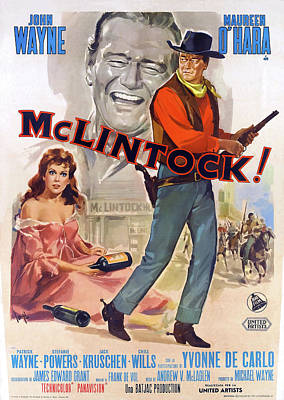
Perhaps because she had played Sephora in The Ten Commandments two years earlier, she was next cast as Mary Magdalene in the Italian film La Spada e la Croce (The Sword and the Cross, 1958). As an attractive widow working as John Wayne’s housekeeper, she aroused the jealousy of Wayne’s estranged wife (Maureen O’Hara) in McLintock! (1963), and in A Global Affair (1964) acted opposite the 61- year-old Bob Hope, severely miscast as the footloose young UN diplomat pursued by a bevy of beautiful women of various nationalities.
From 1964 to 1966 De Carlo lived in a dark, cobwebby mansion at 1313 Mockingbird Lane. As the 137-year-old Lily Munster, she slept in a coffin with, appropriately, a lily clutched to her chest. Her beloved husband Herman (Fred Gwynne), a bashful clone of Frankenstein’s monster, was Lily’s idea of male beauty; after meeting a handsome male in one of the 70 episodes, she commented, “He looks like Cary Grant – poor man!” The success of The Munsters spawned the feature film Munster, Go Home (1966) and the TV movie The Munsters’ Revenge (1981).
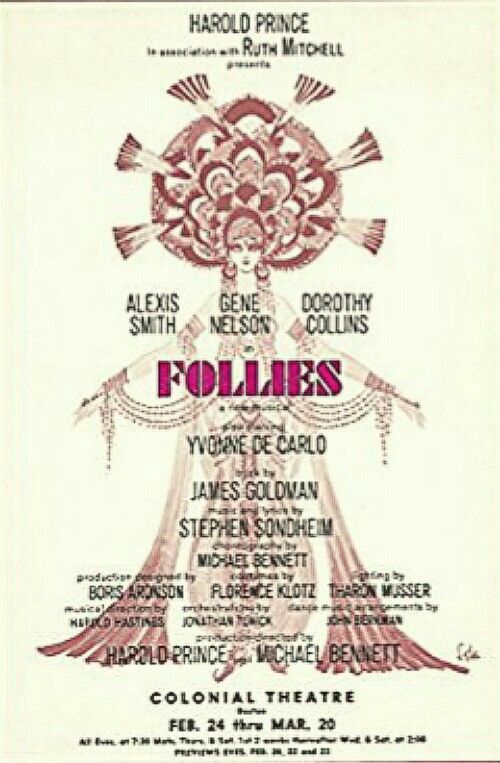
At the age of 49, De Carlo, along with her fellow Hollywood veterans Alexis Smith and Gene Nelson, appeared in Stephen Sondheim’s spectacular Broadway musical Follies (1971). The show was set in a crumbling, soon-to-be-razed New York theatre where various editions of the fictitious Weismann Follies had been presented. On its bare stage, Dimitri Weismann held a farewell reunion of some of the performers he had employed in his revues over the years. One of these artistes was Carlotta Champion (De Carlo), an ageing Hollywood star.
Impressed with her large vocal range, Sondheim wrote De Carlo a solo number, the wickedly witty “Can that Boy Fox-Trot” (“A false alarm, / A broken arm, / An imitation Hitler and with littler charm, / But oh, can that boy fox-trot!”). She sang it well and, during the show’s Boston try-out, Sondheim tried to build the number for her, but his efforts failed. “The problem with the one-joke song,” he later said, “is that as the song goes on and on, the joke becomes less funny.”
He solved his problem by sitting down with De Carlo and letting her tell him the story of her life. He then went to his hotel room and proceeded to write her a replacement number, the superb “I’m Still Here” (“First you’re another / Sloe-eyed vamp / Then someone’s mother / Then you’re camp . . .”).
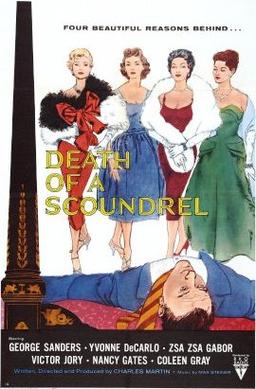
Her Broadway success seemed to mean little to Hollywood, where De Carlo was offered nothing more interesting than TV movies (in one of which she played Zorro’s mother) and such minor films as Satan’s Cheerleaders (1977), Nocturna, Granddaughter of Dracula (1979), The Man with Bogart’s Face (1980), Guyana: cult of the damned (1980), Silent Scream (1980), American Gothic (1987) and Oscar (1991).
Another line in “I’m Still Here” was “I’m almost through my memoirs”. De Carlo’s autobiography, Yvonne, was published in 1987.
Dick Vosburgh
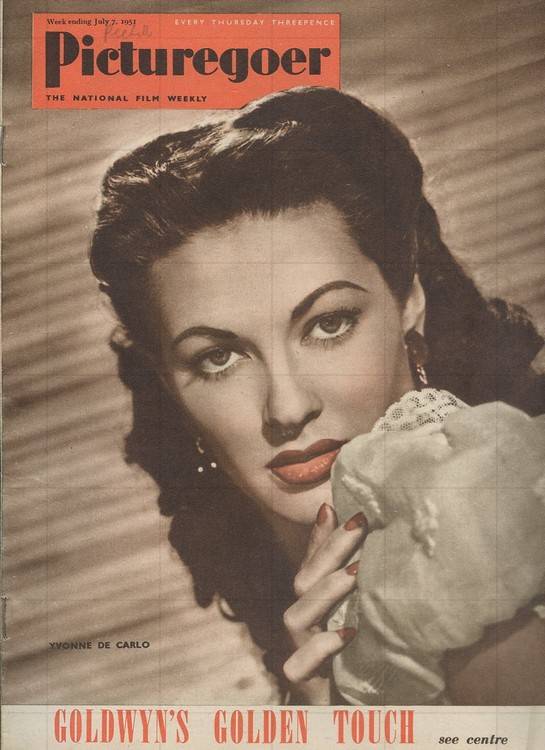
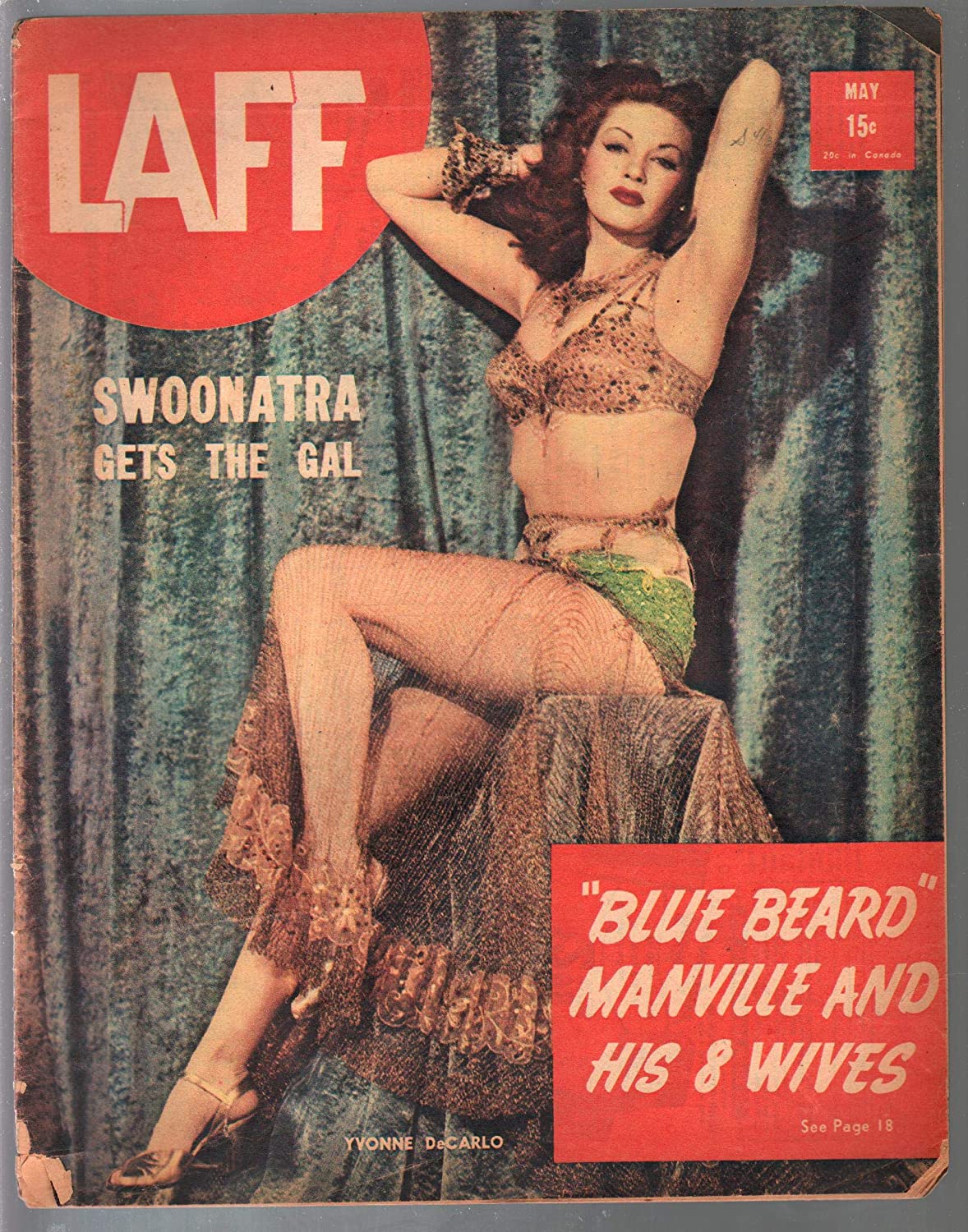
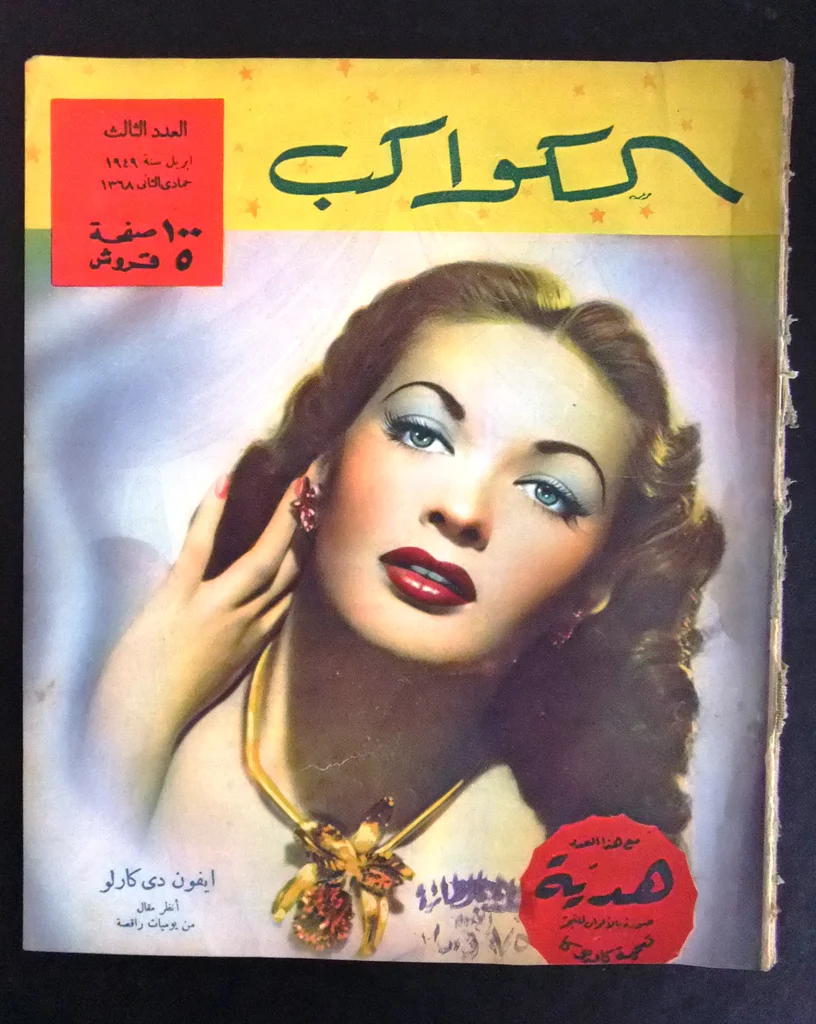
Career Overview and Critical Analysis of the Work of Yvonne De Carlo
Yvonne De Carlo (1922–2007) was a Canadian-born actress, singer, and dancer whose career extended across film, television, and musical theatre from the early 1940s to the late 20th century. Her professional trajectory illustrates a remarkable transformation—from Hollywood exotic adventure heroine to cult television icon and Broadway performer. Critically, De Carlo’s work reveals both the opportunities and constraints faced by actresses within the Hollywood studio system and later television culture.
Early Life and Entry into Film
De Carlo was born Margaret Yvonne Middleton in Vancouver, Canada. Her early career involved dancing and performing in nightclub revues before she moved to Hollywood in the early 1940s.
Her initial screen work consisted largely of small or uncredited roles in studio productions. These early appearances allowed her to develop camera presence and screen discipline within the tightly controlled structure of the studio system.
Early screen persona
Even in minor roles, De Carlo displayed several traits that soon became central to her image:
- striking physical presence
- expressive body language shaped by dance training
- a confident and sensual screen persona
These qualities made her particularly attractive to studios producing adventure films and exotic melodramas.
Rise to Stardom in Hollywood Adventure Films
De Carlo achieved her breakthrough with the Technicolor adventure film:
- Salome, Where She Danced
In this film she played an Austrian dancer who becomes a famous performer in the American West.
Critical analysis of the performance
The film established De Carlo as a major studio star. Her performance emphasizes:
- dramatic physical expressiveness
- theatrical glamour
- commanding stage presence
However, critics have noted that the film also demonstrates how Hollywood constructed the “exotic” female star. De Carlo was frequently cast in roles that emphasized sensuality and cultural ambiguity rather than psychological depth.
Despite this limitation, she used her dance background and strong visual presence to create memorable characters.
Historical Epics and Major Film Roles
During the late 1940s and 1950s De Carlo appeared in several large-scale Hollywood productions.
One of her most notable roles was:
- The Ten Commandments
Directed by Cecil B. DeMille, the film starred Charlton Heston as Moses.
De Carlo played Sephora, Moses’ wife.
Critical evaluation
In contrast to her earlier adventure roles, Sephora is a quieter and more dignified character. De Carlo portrays her with:
- calm emotional warmth
- moral seriousness
- restrained romantic expression
This performance shows her ability to move beyond the sensual “exotic” roles that initially defined her career.
The character functions as an emotional anchor in the narrative, and De Carlo’s understated performance helps humanize the epic spectacle.
Transformation into Television Icon
Perhaps the most surprising phase of De Carlo’s career came with her role as Lily Munster in:
- The Munsters
The series was a comedic sitcom about a family of friendly monsters.
Critical significance of the role
Lily Munster represents a dramatic shift from De Carlo’s earlier screen image. Instead of glamorous heroines, she played a gothic parody of the classic Hollywood vampire woman.
However, De Carlo’s performance elevated the character through:
- elegant comic timing
- affectionate parody of aristocratic femininity
- warmth that balanced the show’s macabre humor
Her portrayal combines camp theatricality with genuine maternal warmth, making Lily Munster both humorous and sympathetic.
Cultural impact
The role became one of the most recognizable television characters of the 1960s. De Carlo’s ability to transition from dramatic film roles to comedic television demonstrated remarkable adaptability.
Musical Theatre Career
De Carlo also enjoyed success on stage, particularly in musical theatre.
One of her most notable performances was in:
- Follies
Written by Stephen Sondheim.
Critical interpretation
Her participation in Follies reflects the later phase of her career, in which she embraced nostalgia and theatrical spectacle.
The show itself explores themes of aging performers reflecting on their past glory, making De Carlo’s presence particularly poignant. Her performance demonstrates:
- strong musical interpretation
- theatrical charisma
- self-aware engagement with her own Hollywood legacy
Acting Style
Physical expressiveness
Because of her dance training, De Carlo’s acting often relied on body language and movement. She used posture, gesture, and physical rhythm to convey character emotion.
This quality made her especially effective in visually oriented genres such as historical epics and adventure films.
Glamour and theatricality
Her performances frequently emphasized glamour and spectacle. She projected confidence and sensuality, characteristics that fit well with Hollywood’s mid-century visual style.
Comic adaptability
Later in her career, particularly in The Munsters, De Carlo demonstrated a talent for comedy that had been largely absent from her earlier film roles.
Her comedic acting relies on:
- exaggerated elegance
- precise timing
- playful self-awareness
Recurring Character Types
Throughout her career, De Carlo was frequently cast as:
- exotic or foreign heroines
- historical or biblical figures
- glamorous romantic leads
- sophisticated maternal figures
These roles reflect the evolving phases of her screen persona.
Cultural Significance
Yvonne De Carlo’s career provides insight into several broader trends in entertainment history:
- the Hollywood studio system’s construction of star images
- the transition from film stardom to television celebrity
- the reinvention of aging actresses through stage and television work
Her transformation from adventure-film star to beloved sitcom character demonstrates the adaptability required for longevity in the entertainment industry.
Legacy
Today Yvonne De Carlo is remembered both for her classic Hollywood film roles and for her iconic television character Lily Munster.
Her legacy rests on:
- strong visual screen presence
- versatility across genres
- ability to reinvent her career across decades
She remains an example of an actress who successfully navigated the changing landscape of 20th-century entertainment.
Summary
Yvonne De Carlo’s career evolved dramatically over time. Beginning as a glamorous Hollywood adventure heroine, she later appeared in epic historical films and ultimately became a beloved television comedy figure. Her performances combine physical expressiveness, theatrical glamour, and later comedic sophistication. Through these varied roles, she created a distinctive and enduring place in film and television history