

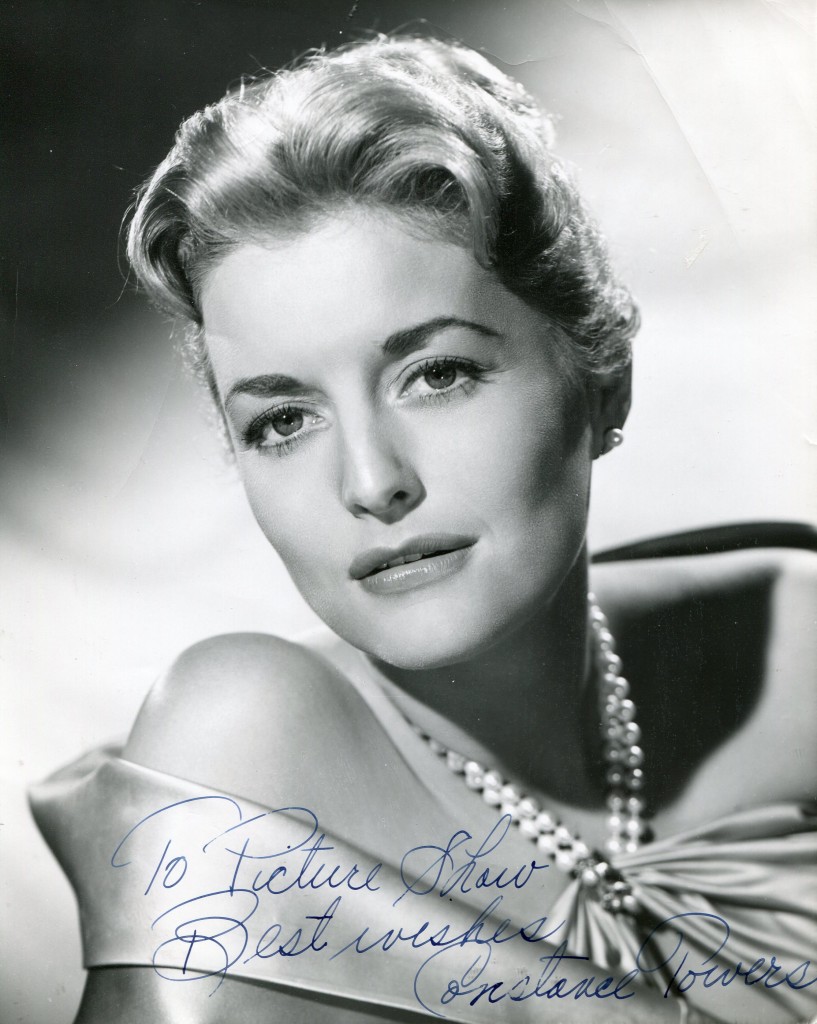
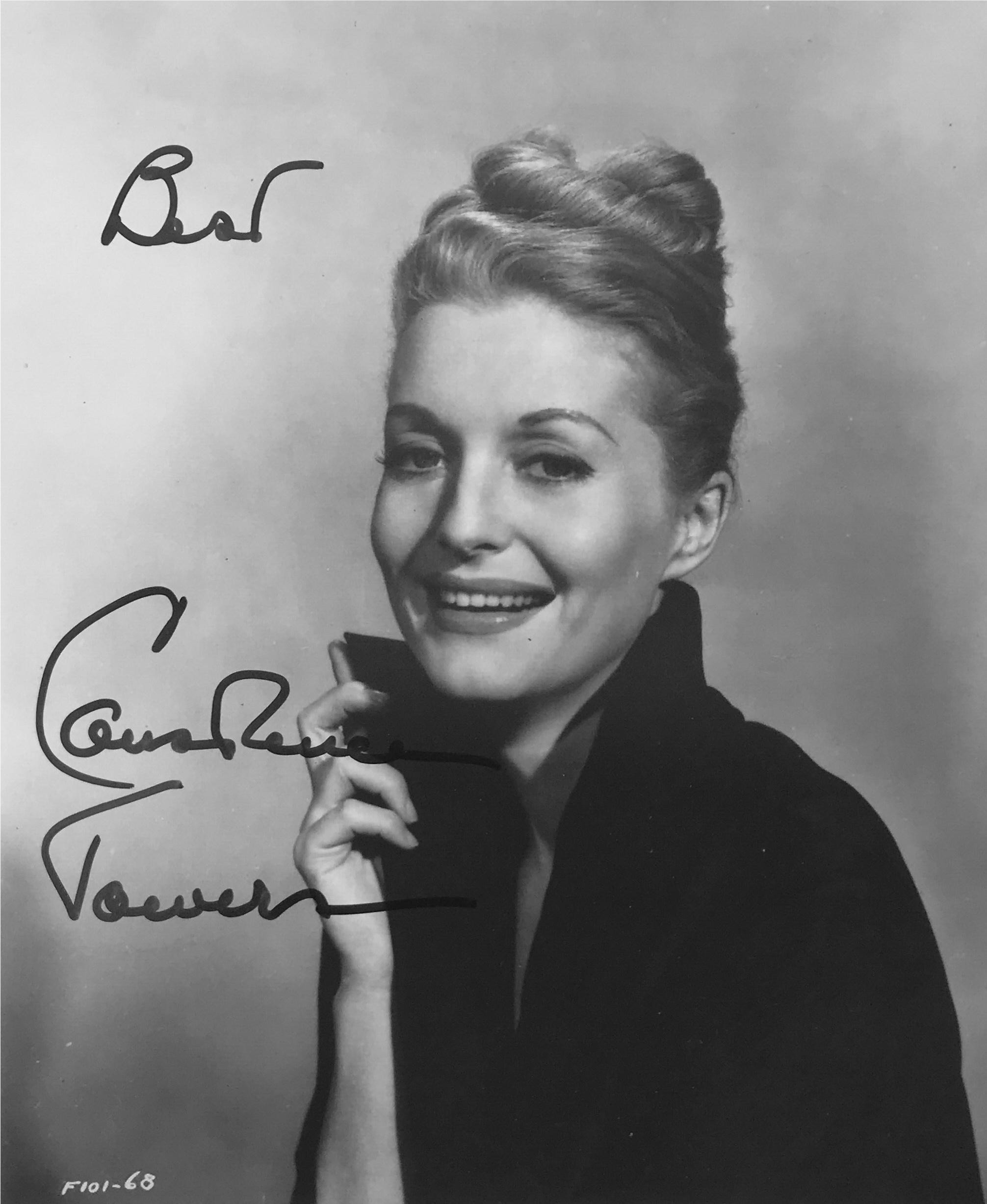
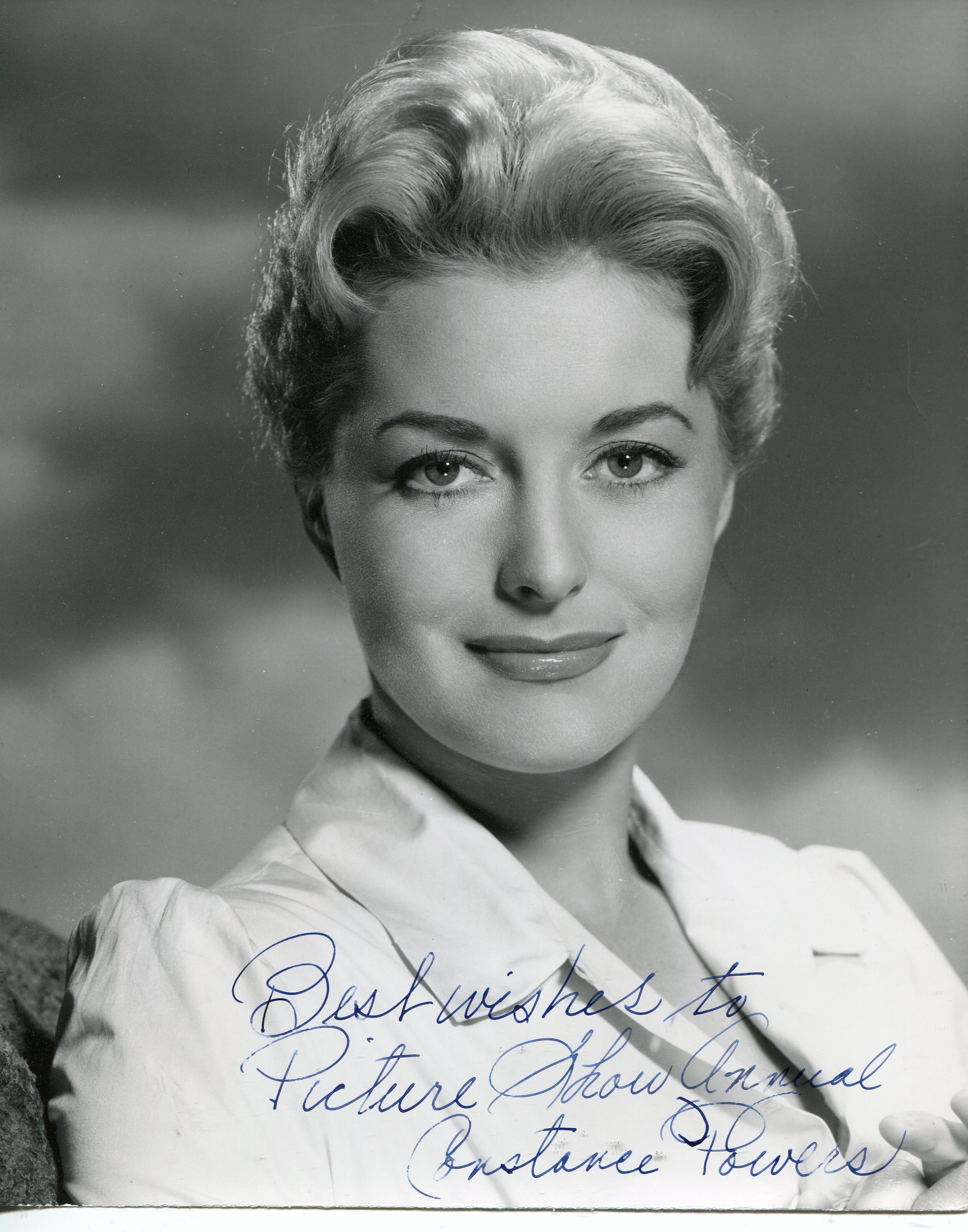
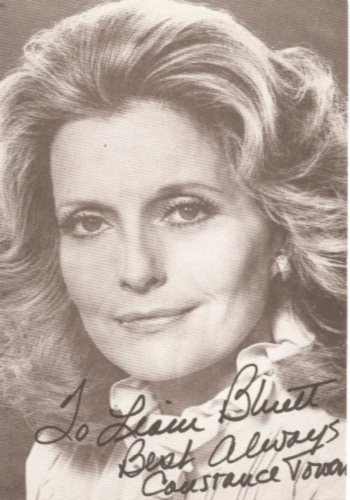
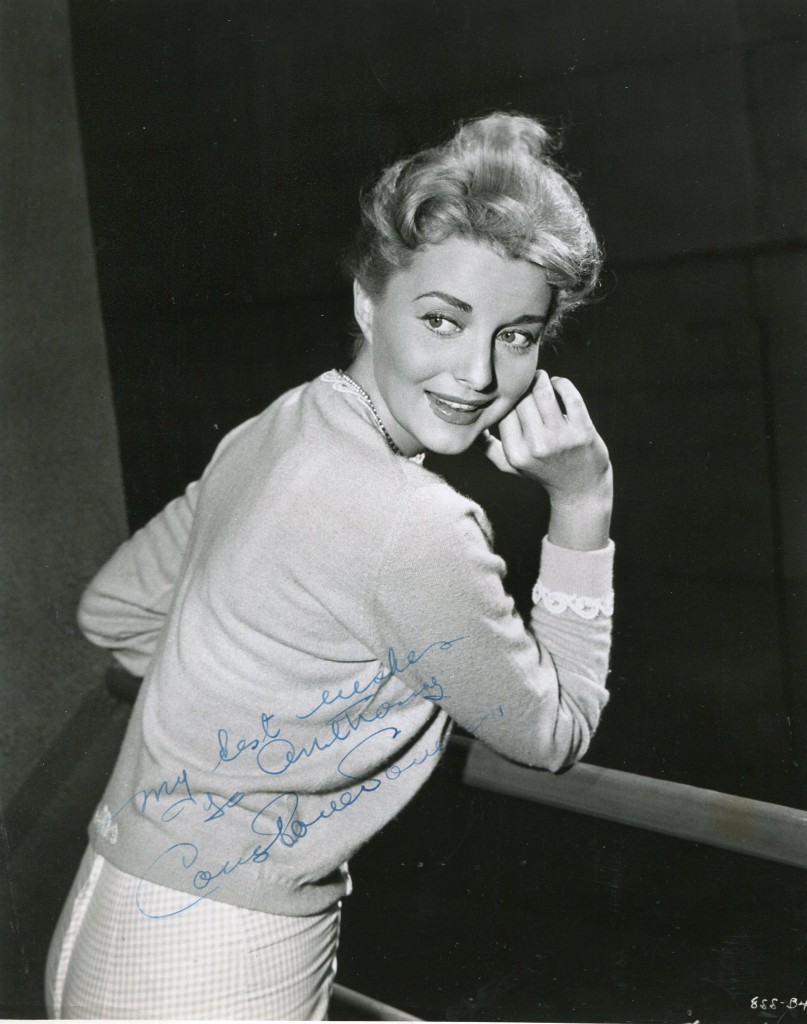
This elegant, lovely blonde singer/actress initially had designs on becoming an opera singer. Born in Montana on May 20, 1933, and christened Constance Mary Towers, she appeared on radio as a child singer. Her family moved to New York where she subsequently studied at the Julliard School of Music and the American Academy of the Dramatic Arts (AADA). A chance casting in a summer production of “Carousel” led her away from her operatic aspirations and into the musical theater arena.
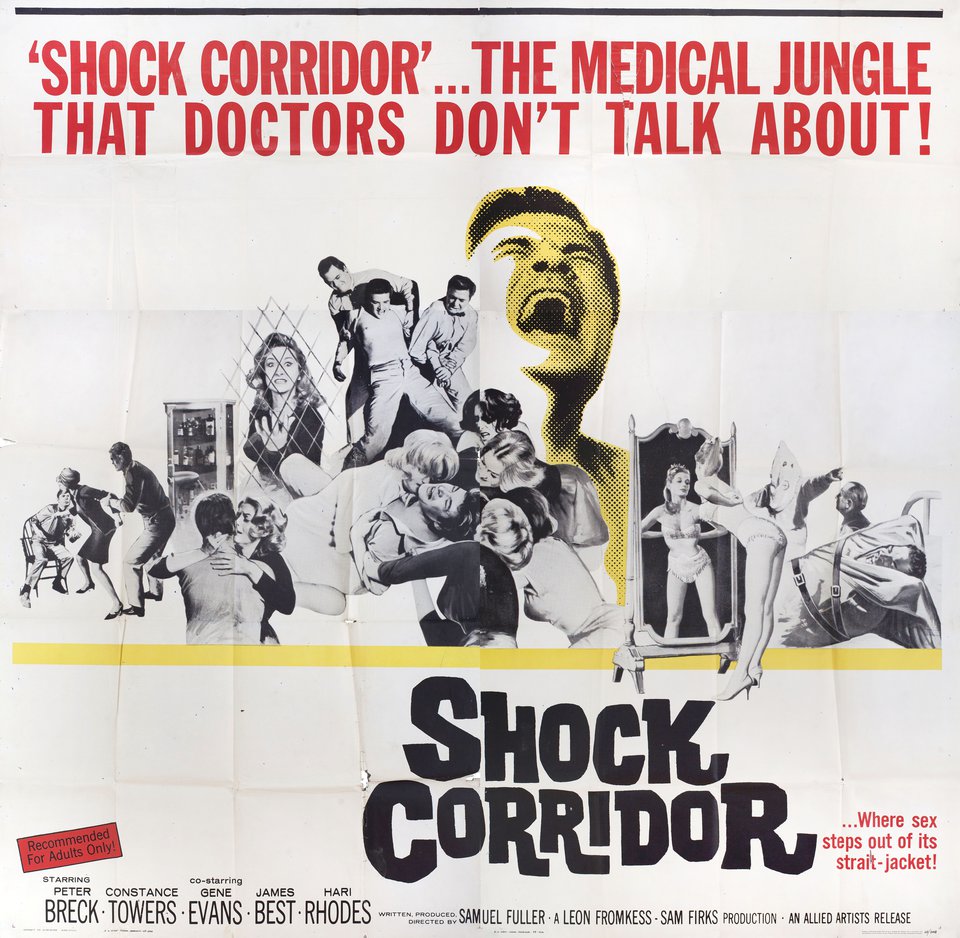
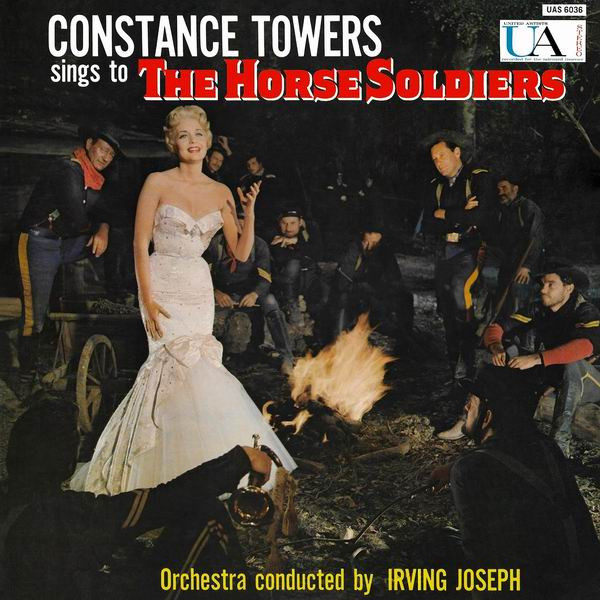
Before she settled into this, however, Constance gained early exposure on the chic nightclub circuit and fostered an attempt at stardom via films. She co-starred with Frankie Laine playing a school teacher in the modest movie musical Bring Your Smile Along (1955), and appeared in exceptionally strong ingénue roles in the movie dramas The Horse Soldiers (1959) starring John Wayne and Sergeant Rutledge (1960) opposite Jeffrey Hunter. Director Samuel Fuller cast her against type in some of his highly offbeat dramas in the early 1960s. She played a stripper girlfriend in Shock Corridor (1963) and in The Naked Kiss (1964) gave a no-holds-barred performance as a former prostitute trying to clean up her act. While TV guest appearances were frequent on such shows as “The Bob Cummings Show,” “The Outer Limits,” “Zane Grey Theatre,” and multiple appearances on “Perry Mason,” films were few and far between.
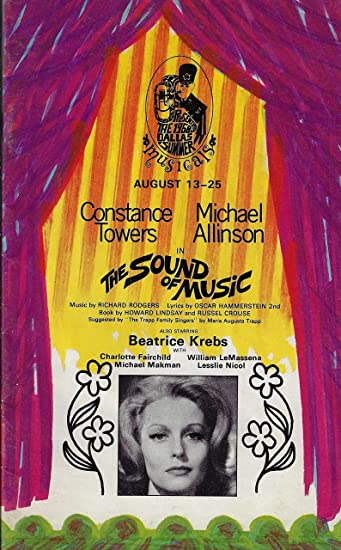
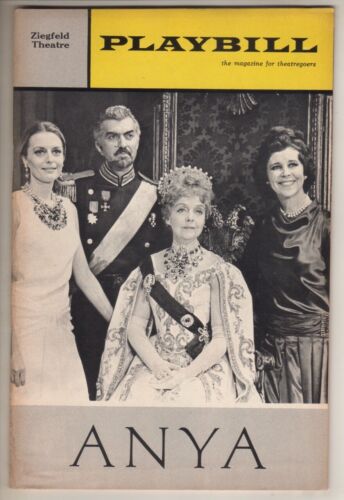
By this time she was starting to settle in as a pristine musical leading lady. After a 1960 performance as missionary Sarah in “Guys and Dolls,” Constance made her Broadway debut in the title role of “Anya” (1965), in which she played the title role of the Russian princess Anastasia. Heralded performances in “Carousel” (1966) and “The Sound of Music” (1967), in which she won the Outer Critic’s Circle Award as Maria, not to mention a Broadway revival of “The King and I” opposite Yul Brynner truly put her on the musical map. Her run with Brynner lasted nearly 800 performances. She had earlier played the school teacher Anna off-Broadway opposite Michael Kermoyan in 1972. Other sterling stage appearances included “Kiss Me Kate,” “42nd Street,” “Oklahoma!,” “Camelot” and “Mame.” She also starred in the musical “Ari,” an adaptation of the Leon Uris novel “Exodus.”
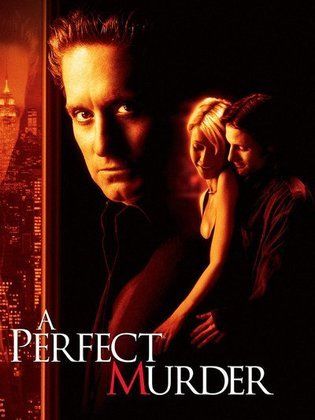
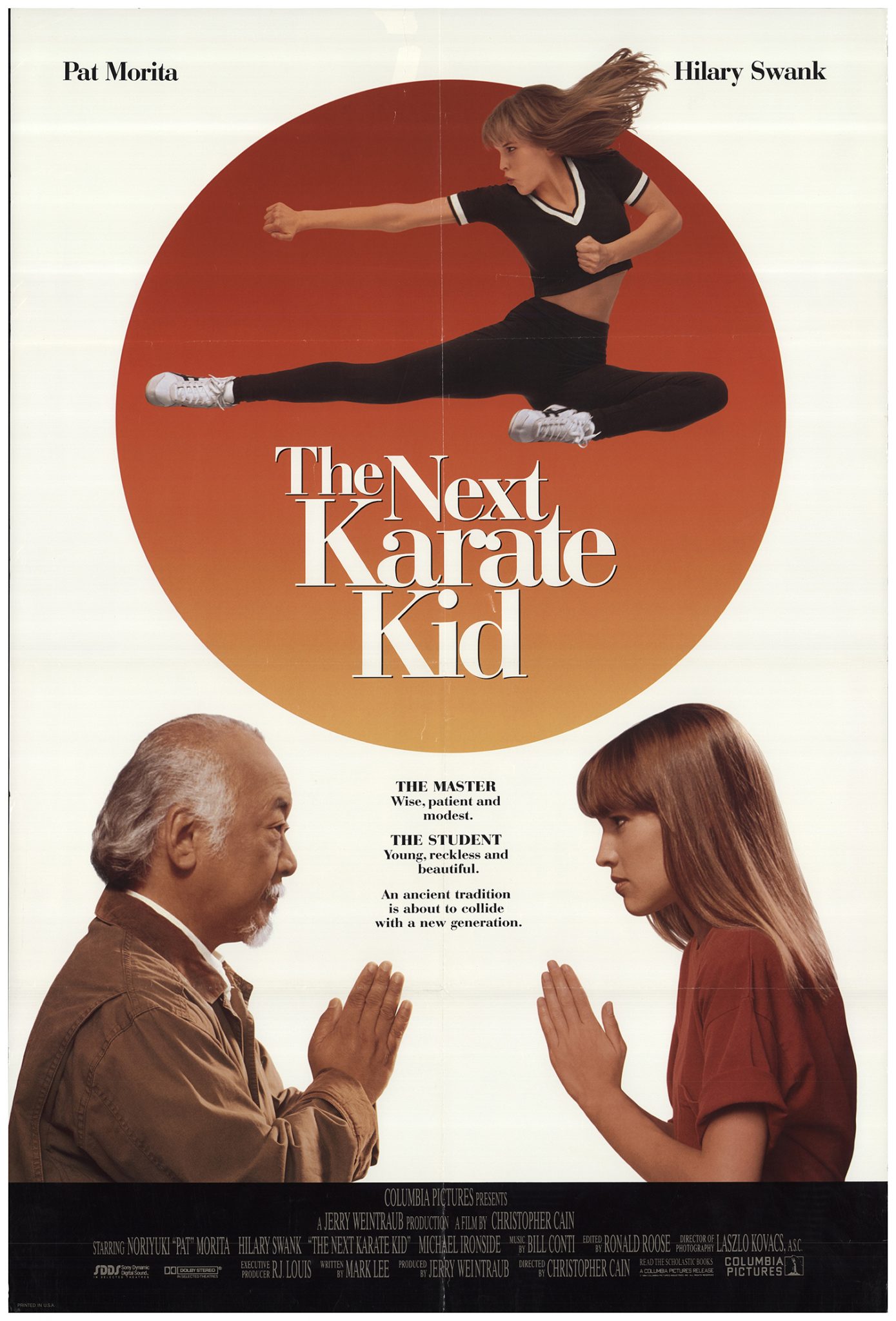
TV proved a sturdy medium as well. In her early days, she made singing appearances on Ed Sullivan’s Toast of the Town (1948) and, in dramatic roles, was a frequent glamorous suspect on Perry Mason (1957). As she matured, her sharp, glacial, strikingly handsome features also worked very well for her in unsympathetic aristocratic roles on daytime. Winning regular spots on Love Is a Many Splendored Thing (1967), The Young and the Restless (1973) and Sunset Beach (1997), she did her most consistent work on Capitol (1982), in which she played Clarissa McCandless for five seasons. For nearly three decades she courted favor with audiences stealing scenes on a regular basis on General Hospital (1963), in which she plays the inherently wicked Helena Cassadine, a role originated by the legendary Elizabeth Taylor. Recent films have included The Next Karate Kid (1994), The Relic (1997) and A Perfect Murder (1998) starring Michael Douglas and Gwyneth Paltrow, in which she played Paltrow’s mother.
Constance also enjoyed a resurgence on prime-time TV with a sprinkling of guest parts on L.A. Law (1986), Designing Women (1986), The Fresh Prince of Bel-Air (1990), Star Trek: Deep Space Nine (1993), “Caroline in the City,” Frasier (1993), Baywatch (1989), and Providence (1999). She received an Emmy nomination for her role in the single episode drama special on CBS Daytime 90 (1974) entitled “Once in Her Life.” Millennium on-camera appearances have included the films The Awakening of Spring (2008) and The Storyteller (2018) and TV work on such shows as “Providence,” “Criminal Minds,” “The 4400” and “Cold Case.”
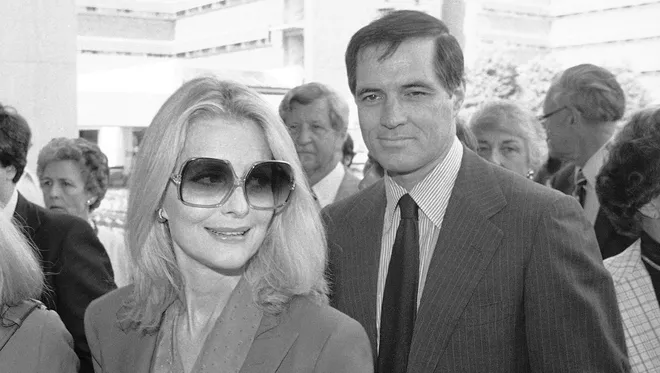
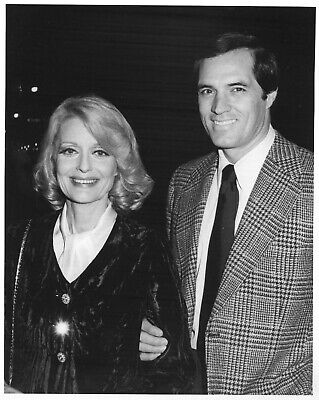
Constance was married since 1974 to one-time actor and former Mexican ambassador John Gavin. It was the second marriage for both, and lasted for 44 years until his death in 2018. The handsome couple have two children: Cristina and Maria Gavin. Constance also has two children, Michael and Maureen McGrath, from her prior marriage to Panamanian businessman Eugene McGrath. As a result of husband Gavin’s civic work, she became actively involved in a multitude of charities. “Project Connie” not only offered aid to those in need of medical and rehabilitation assistance after the Mexican earthquake of 1985, it has served as an adoption placement agency to hundreds of children from Mexico to El Salvador. She has also involved herself with the Children’s Bureau of California, the National Health Foundation, and the Red Cross and the Blue Ribbon of Los Angeles.

Constance Towers (born 1933) is a fascinating figure in American entertainment, possessing a “dual-track” career that split between being the sophisticated, high-art muse for major film directors and becoming a definitive icon of American daytime television. While her name is synonymous with elegance, her most critical film work is surprisingly gritty, challenging the “cool blonde” archetype of the late 1950s and 60s.
1. Career Arc: From the Lyric Stage to “The General”
The Musical Foundation (1950s): Towers began as a classically trained singer, making her mark in prestigious nightclub acts and musical theater. Her statuesque height and refined diction led to early casting as the “idealized” American woman.
The Ford and Fuller Muse (1959–1964): Her cinematic peak occurred when she was discovered by John Ford and later became the favorite lead of the independent maverick Samuel Fuller. These directors utilized her elegance as a counterpoint to violent, masculine worlds.
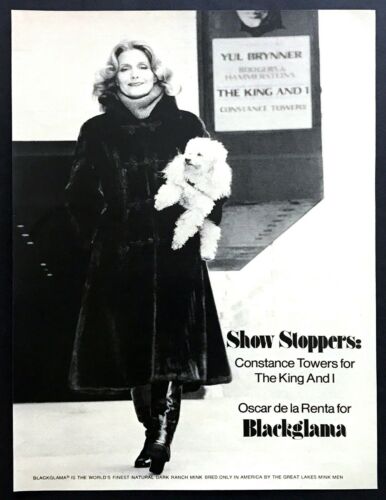
The Stage Veteran (1970s–1980s): She became a staple of the musical theater circuit, most notably starring as Anna Leonowens in The King and I opposite Yul Brynner in over 2,000 performances.
Television Royalty (1997–Present): To modern audiences, she is best known as the villainous Helena Cassadine on General Hospital, a role that allowed her to weaponize her “regal” persona into something deliciously menacing.
2. Critical Analysis of Key Performances
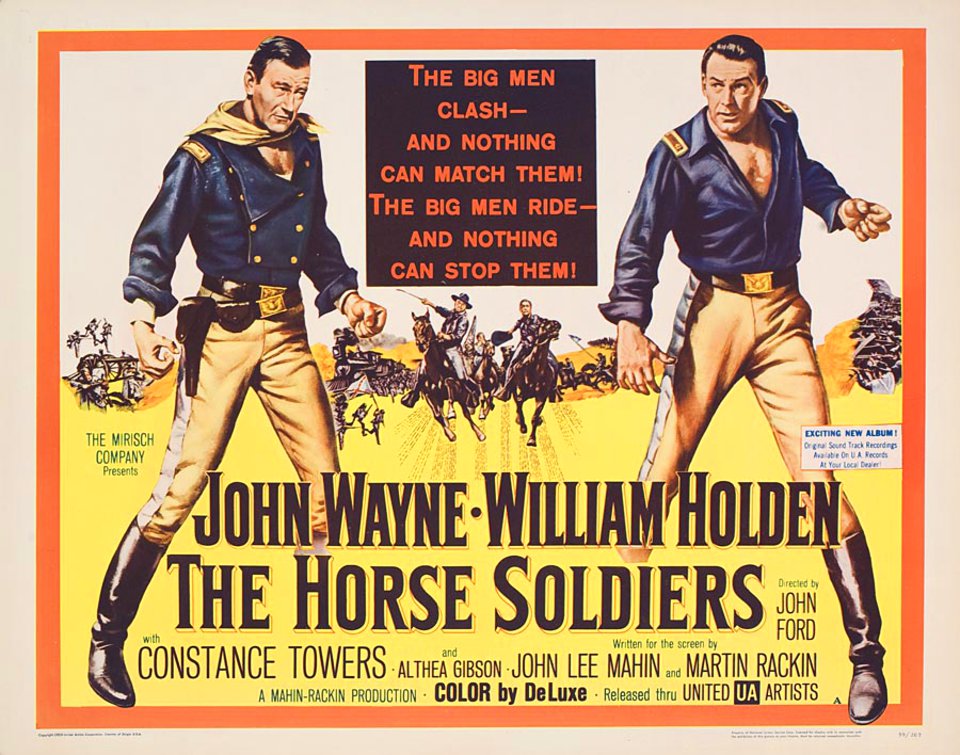
The Horse Soldiers (1959) – The Southern Aristocrat
Playing Hannah Hunter opposite John Wayne and William Holden.
Analysis: In her film debut, Towers was thrust into a John Ford “Western” (set during the Civil War). She played a Southern belle who is forced to travel with Union soldiers.
Critique: Towers brought an intellectual defiance to the role. While she fit the visual mold of the “Southern Rose,” she played the character with a sharp, sarcastic edge. Critics noted that she didn’t just provide romantic tension; she provided the moral “anti-war” voice in a film about the brutality of cavalry maneuvers.
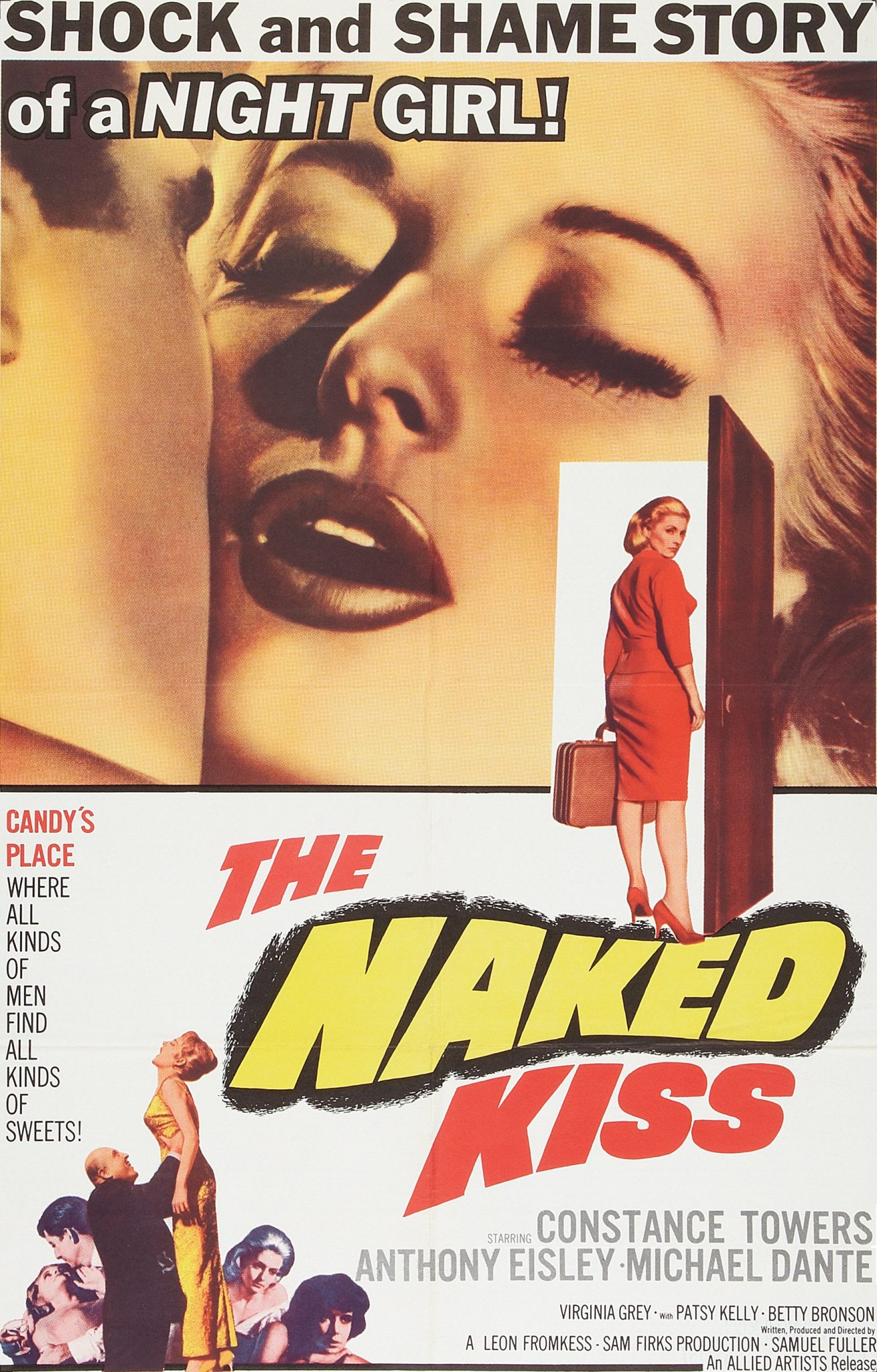
The Naked Kiss (1964) – The Subversive Heroine
In Samuel Fuller’s shocking (for the time) pulp masterpiece, Towers plays Kelly, a former sex worker attempting to reinvent herself in a small town.
Analysis: This is arguably Towers’ greatest contribution to cinema. The film’s opening scene—where she beats a pimp while her wig falls off—shattered the “polished” image she had previously cultivated.
Critique: Towers’ performance is a masterclass in hard-boiled vulnerability. She played Kelly as a woman who is smarter and more moral than the “respectable” townspeople around her. Critically, she managed to balance the film’s “trashy” pulp roots with a performance of immense dignity, turning a B-movie into a profound character study.
Shock Corridor (1963) – The Stripper and the Saint
As Cathy, the girlfriend of a journalist who infiltrates a mental asylum.
Analysis: Another collaboration with Samuel Fuller, this role required Towers to play a “nightclub stripper” who is also the voice of reason.
Critique: Fuller used Towers’ architectural beauty to create a sense of cognitive dissonance. She looked like a high-society debutante but spoke with the gritty wisdom of the streets. Critics praised her for providing the “human heart” in a film that was otherwise hallucinatory and cynical.
3. Style and Legacy: The “Steel-Magnolia” Precision
Constance Towers’ style is defined by a paradox: she looks like she was “chiseled from marble,” but she acts with “blood and guts” intensity.
| Attribute | Critical Impact |
| Vocal Authority | Her stage training gave her a voice of immense clarity. Even in film, she used her “rhythmic” delivery to command attention in rooms full of men. |
| Physical Stasis | Like the great actresses of the 1940s, she understood the power of a “fixed gaze.” She could convey a character’s entire history by simply standing still and observing. |
| The “Refined” Villainy | In her later TV work, she proved that “elegance” is a perfect mask for “evil.” Her Helena Cassadine became a benchmark for the “grand dame” villain. |
The “Fuller” Transformation
Critical analysis of Towers often centers on how Samuel Fuller “deconstructed” her. Before Fuller, she was a traditional Hollywood leading lady. Fuller saw the toughness beneath the silk. By casting her as “outcasts” (the prostitute, the stripper), he allowed her to tap into a layer of female experience that was often denied to actresses with her “high-born” looks.
Critical Note: Constance Towers represents the “Dignity of the Survivor.” Whether she was playing a woman in the 1860s, the 1960s, or a soap opera in the 2000s, her characters were defined by their refusal to be broken by the men—or the systems—around them