

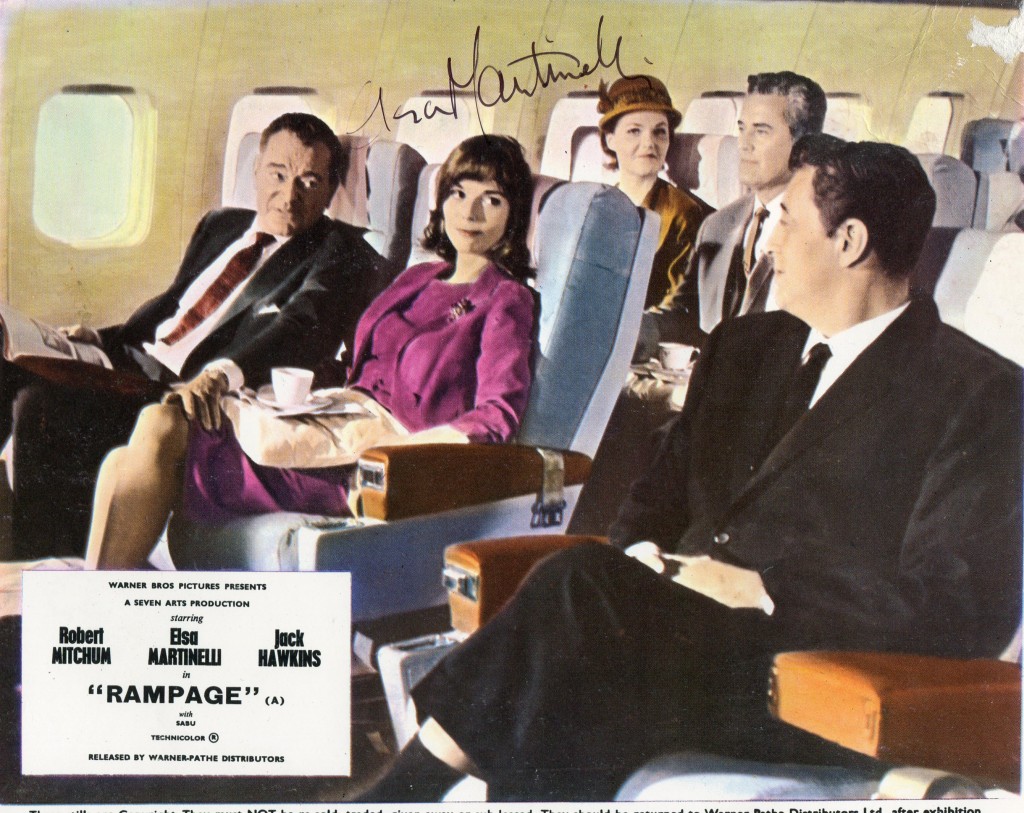
The telegraph obituary in 2017.
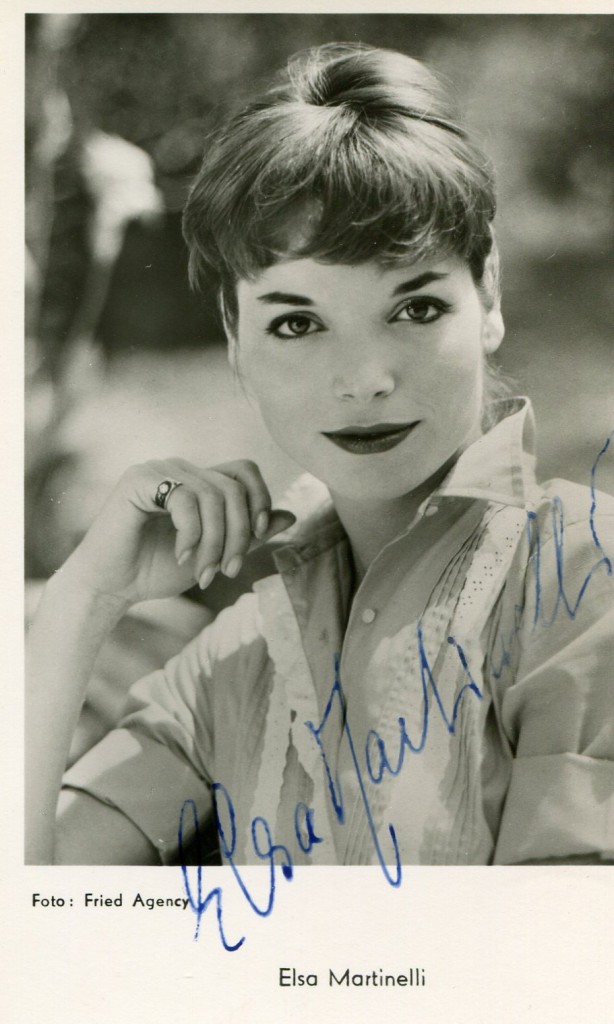
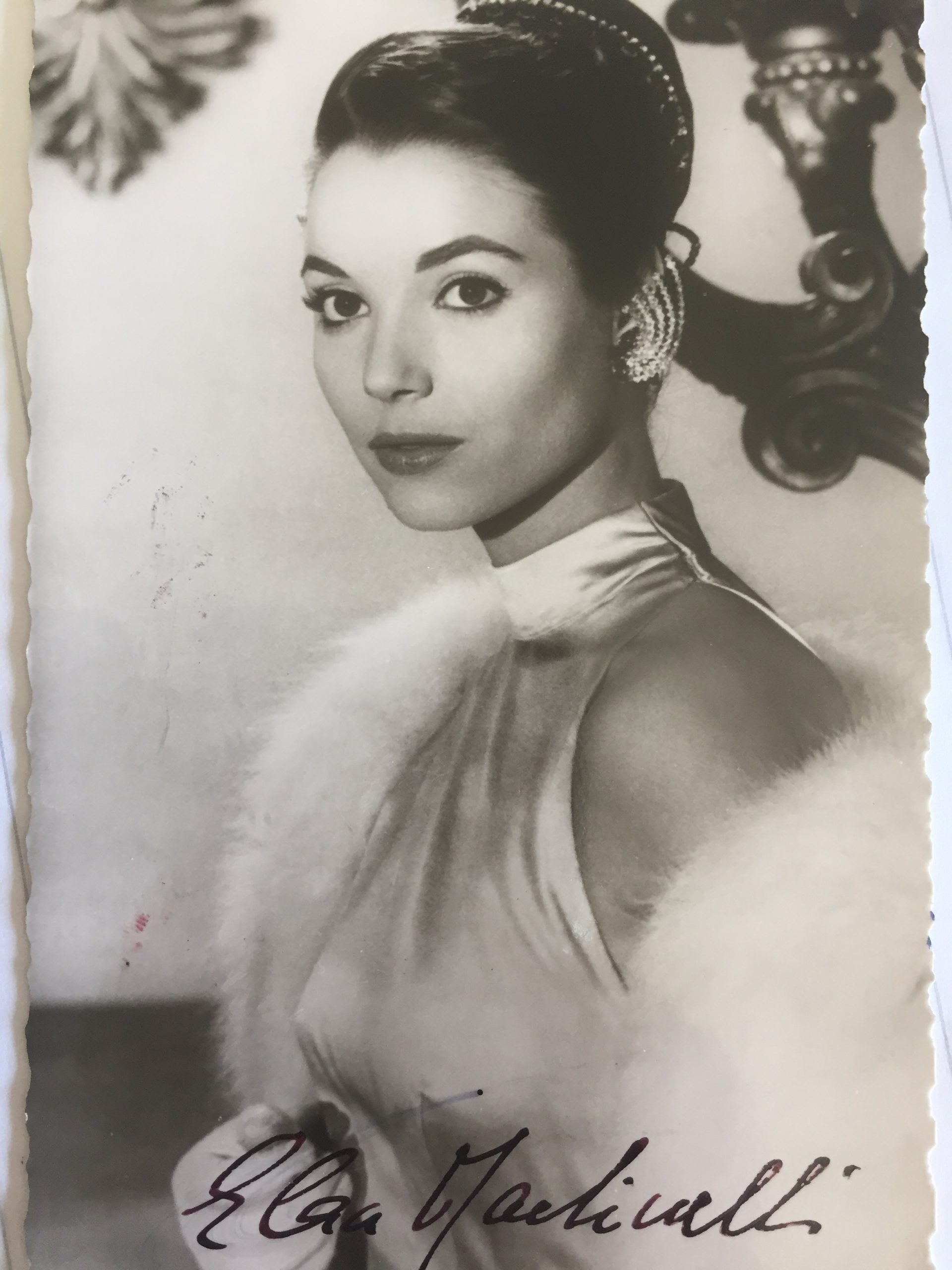
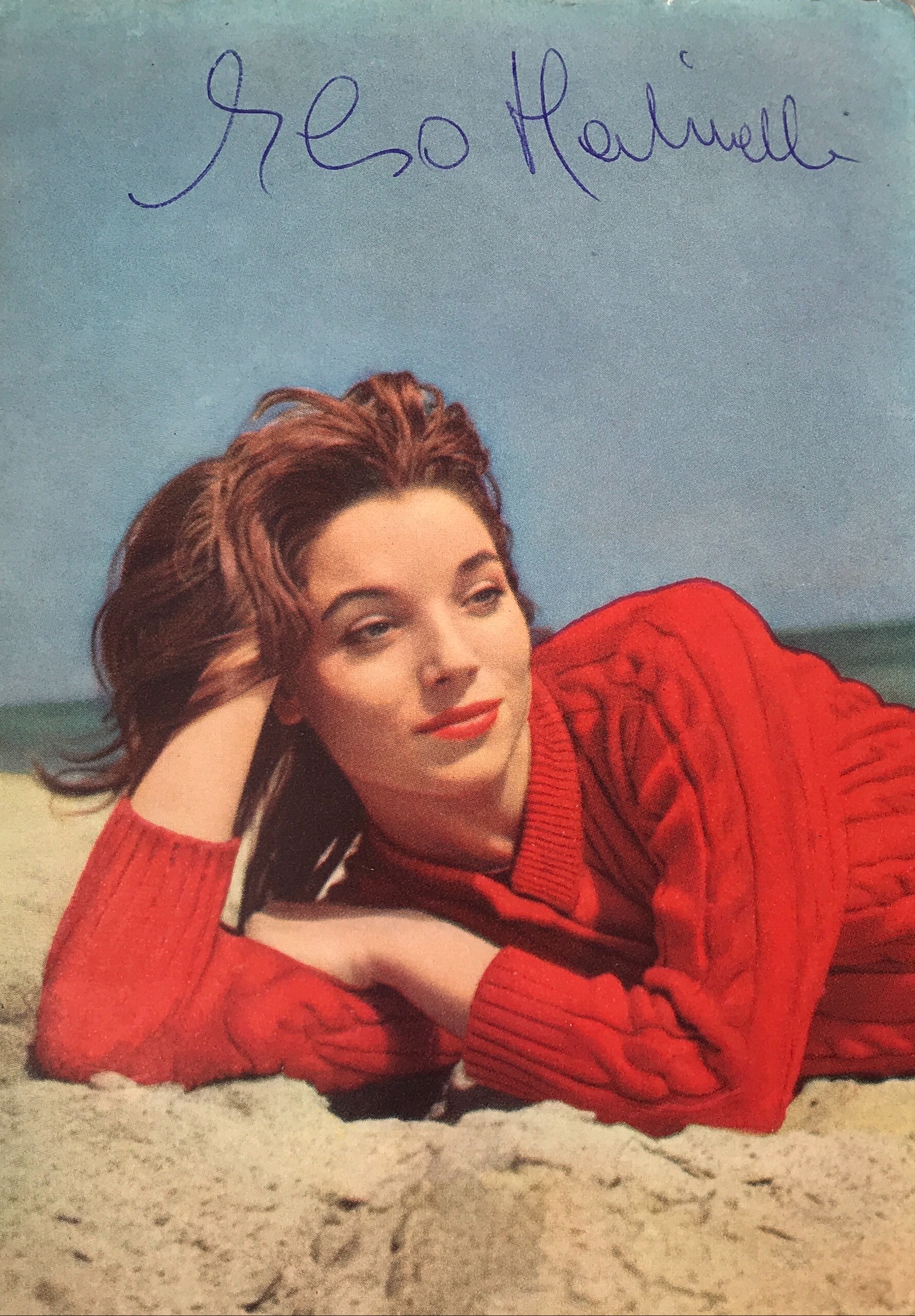
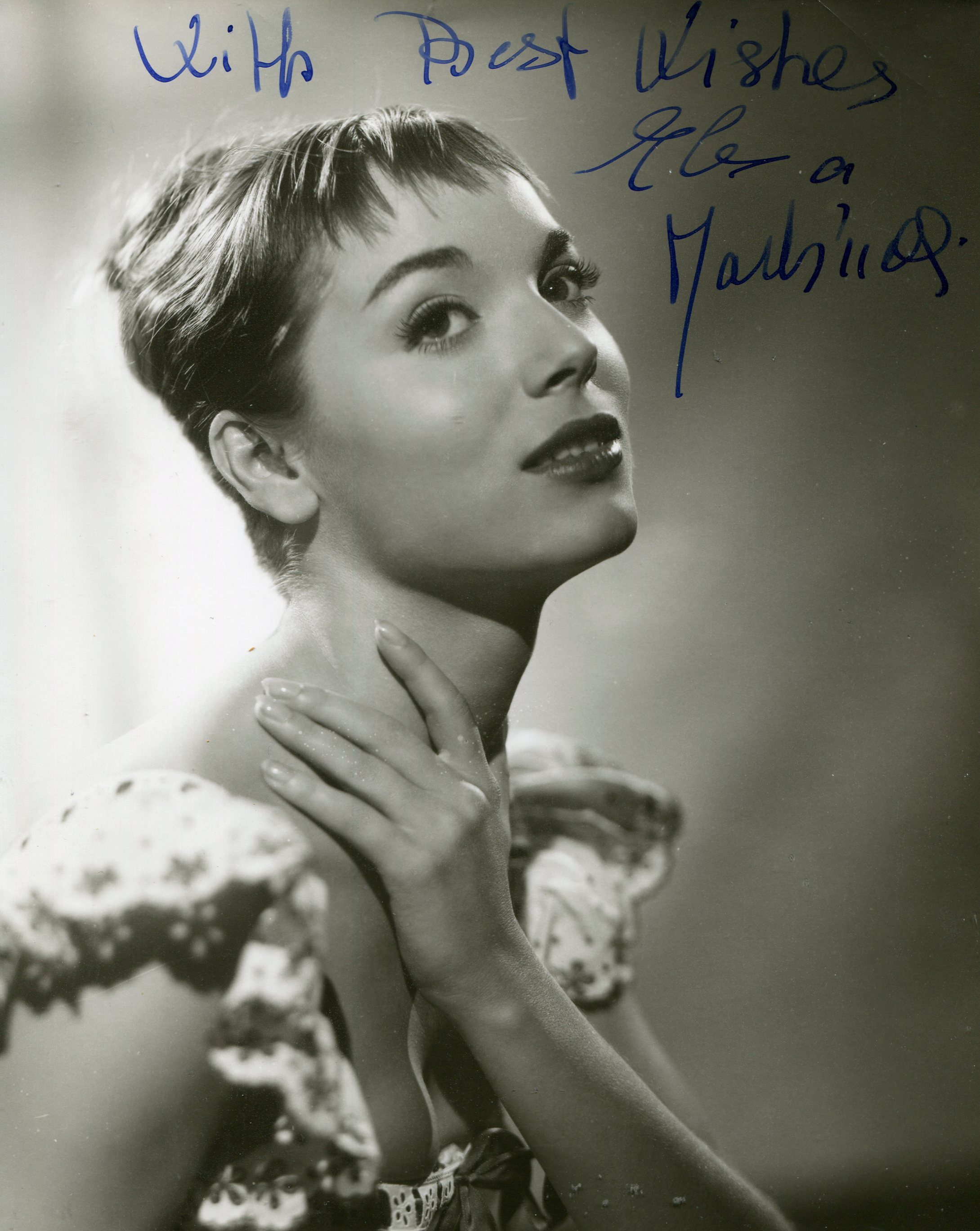
Elsa Martinelli, who has died aged 82, was an Italian model turned Hollywood actress best remembered for her leading role opposite John Wayne in Howard Hawks’s African adventure Hatari! (1962); on account of her gamine good looks and sensuality she was described by the Sydney Morning Herald in 1956 as “a kind of Audrey Hepburn with sex appeal”.
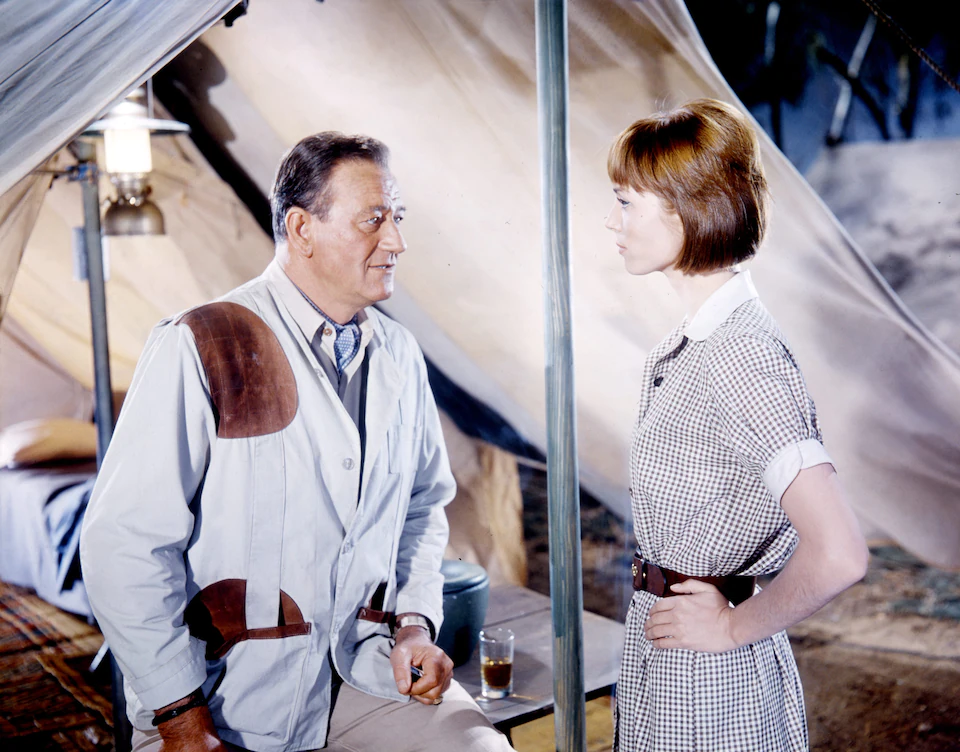
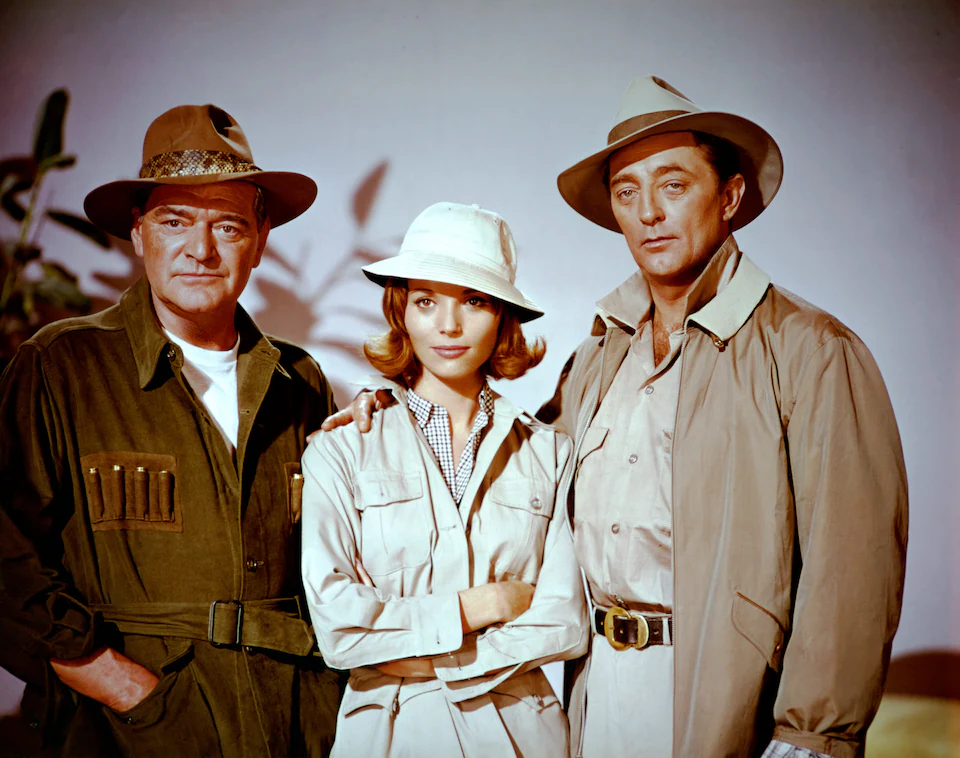
In Hatari! she was cast as Dallas, a flame-haired Italian photojournalist proving herself the equal of a macho group of adventurers in Tanganyika who pursue and trap wild animals for zoos; their gruff leader, John Wayne, becomes her sparring love interest.
In one sequence, Dallas escorts a troupe of young elephants to the accompaniment of Henry Mancini’s melodious Baby Elephant March. The elephants had grown attached to her, as she explained to Cinema Retro: “I went there one month ahead of the others just as the baby elephants were born. You see, the trick is to feed them right away. That’s how you become their ‘mother’.”
Hatari! was not universally welcomed, however. The Sunday Telegraph’s critic Alan Dent deplored the film’s treatment of animals, complaining that “the open cruelty of the trapping business as shown here seems to me to put Howard Hawks, the film’s producer and director, to shame”.
Elsa Martinelli’s breakthrough role (“a new face – one of the world’s most beautiful women,” thundered the trailer) came in 1955 in André de Toth’s progressive Western The Indian Fighter, which was promoted as a blockbuster to rival epics like Red River and Cimarron. At the time she was a leading fashion model in New York, signed to the Ford agency, when Kirk Douglas’s wife Anne Buydens spotted a photograph of her in Vogue and told Douglas: “This girl would make a fantastic Indian.”
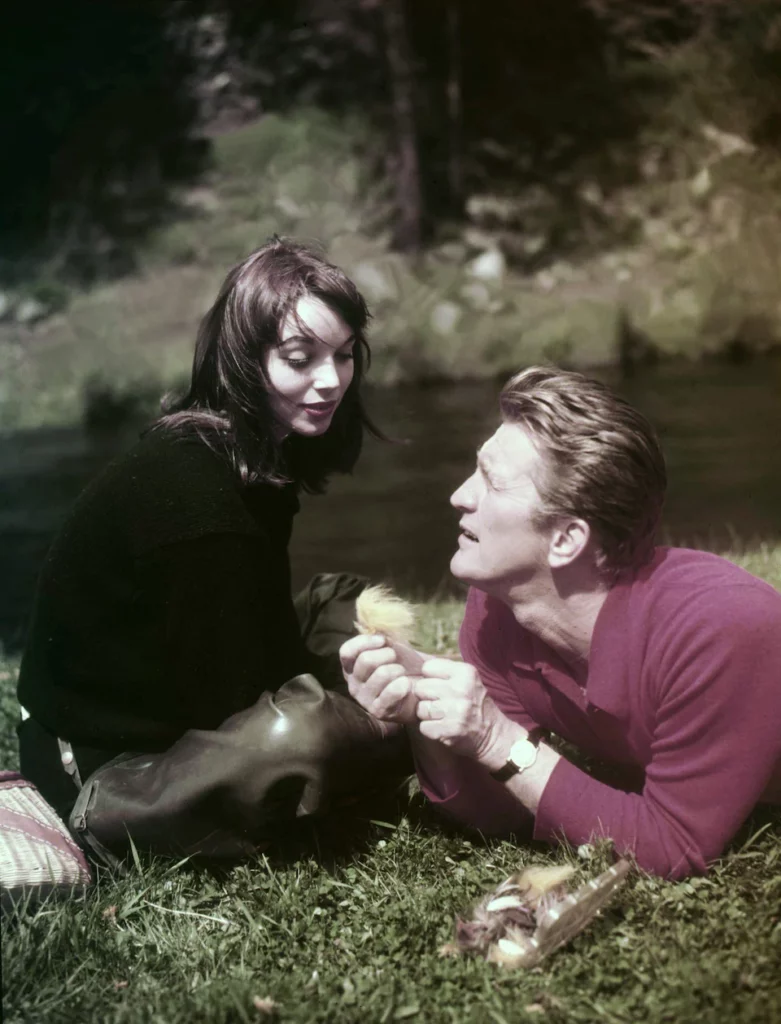
She played Onahti, the daughter of a Sioux chief who falls in love with Kirk Douglas’s frontier scout leading a wagon train through hostile territory, and the film’s most memorable scene features the couple cavorting in a river
In his autobiography, The Ragman’s Son (1988), Kirk Douglas remembered that Elsa Martinelli had thought it was a prank when he called to offer her the part; she demanded that he sing Whale of a Tale, the hit song from his 1954 Disney film 20,000 Leagues Under the Sea, to confirm that he really was Douglas.
“Over the telephone,” Douglas recorded, “I had to audition for Elsa Martinelli, three thousand miles away. I started to sing. ‘Gotta whale of tale to tell you, lads.’ Elsa started to shriek. ‘Dio mio! Keerka Doogalas! Keerka Doogalas
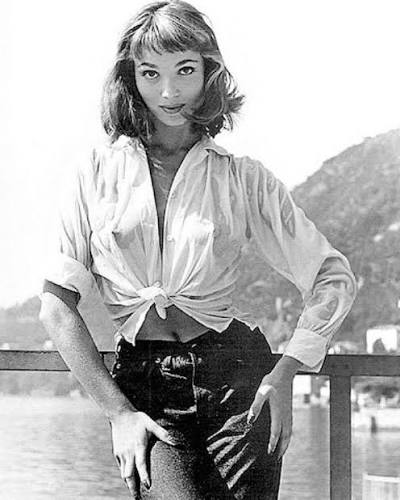
The daughter of a railway stationmaster, Elsa Martinelli was born Elisa Tia in Grosseto, Tuscany, on January 30 1935. She had six sisters and a brother, and the family moved to Rome when she was nine. Her studies did not continue into secondary school and instead she went to work, first in a hat shop, then behind the till in a bar.
In her later teens, while trying on a skirt in his shop, she was spotted by the promising young couturier Roberto Capucci. He was captivated by her slim, long-stemmed figure, high cheekbones and distinctly modern air of self-confidence, and appointed her his house model. She appeared in his first collection.
Elsa Martinelli’s early film roles included, in 1954, an uncredited appearance in a French adaptation of Le rouge et le noir with Danielle Darrieux and Gérard Philipe. From then she would oscillate between Europe and Hollywood, making some 70 films on diverse themes
In 1956 she won the Silver Bear for best actress at the 1956 Berlin International Film Festival for Mario Monicelli’s Donatella, in which she played a simple Italian girl whose life is transformed after an encounter with a rich American woman.
In Guy Hamilton’s Manuela (1957) she portrayed a half-caste stowaway lusted after by Trevor Howard’s sea captain. She played opposite Jean Marais in Le Capitan (“Captain Blood”, 1960), and with Jack Hawkins and Robert Mitchum in the big-game hunting adventure Rampage (1963).
She was Hilda in Orson Welles’s version of Kafka’s The Trial (1962) and played the protégée of Welles’s film tycoon in Anthony Asquith’s The VIPs (1963). There was also Roger Vadim’s Et mourir de plaisir (“Blood and Roses”, 1960); Elio Petri’s Italian-French science fiction The 10th Victim (1965); and Vittorio De Sica’s Woman Times Seven (1967
By the 1970s she had largely retired from films, but she turned up regularly on Italian chat shows and in 1995 published an autobiography, Sono come sono: Dalla Dolce vita e ritorno. Her final appearance in an English-language film was in the all-star comedy-mystery Once Upon a Crime (1992), and her last acting role was in 2006 in a costume drama for Italian television, Orgoglio
Elsa Martinelli married Count Franco Mancinelli Scotti in 1957, but his mother apparently disapproved of the union and expelled her from the family palace; the marriage was later annulled. In 1968 she married the Paris Match photographer Willy Rizzo; he died in 2013. She is survived by a daughter.
Elsa Martinelli, born January 30 1935, died July 8 2017
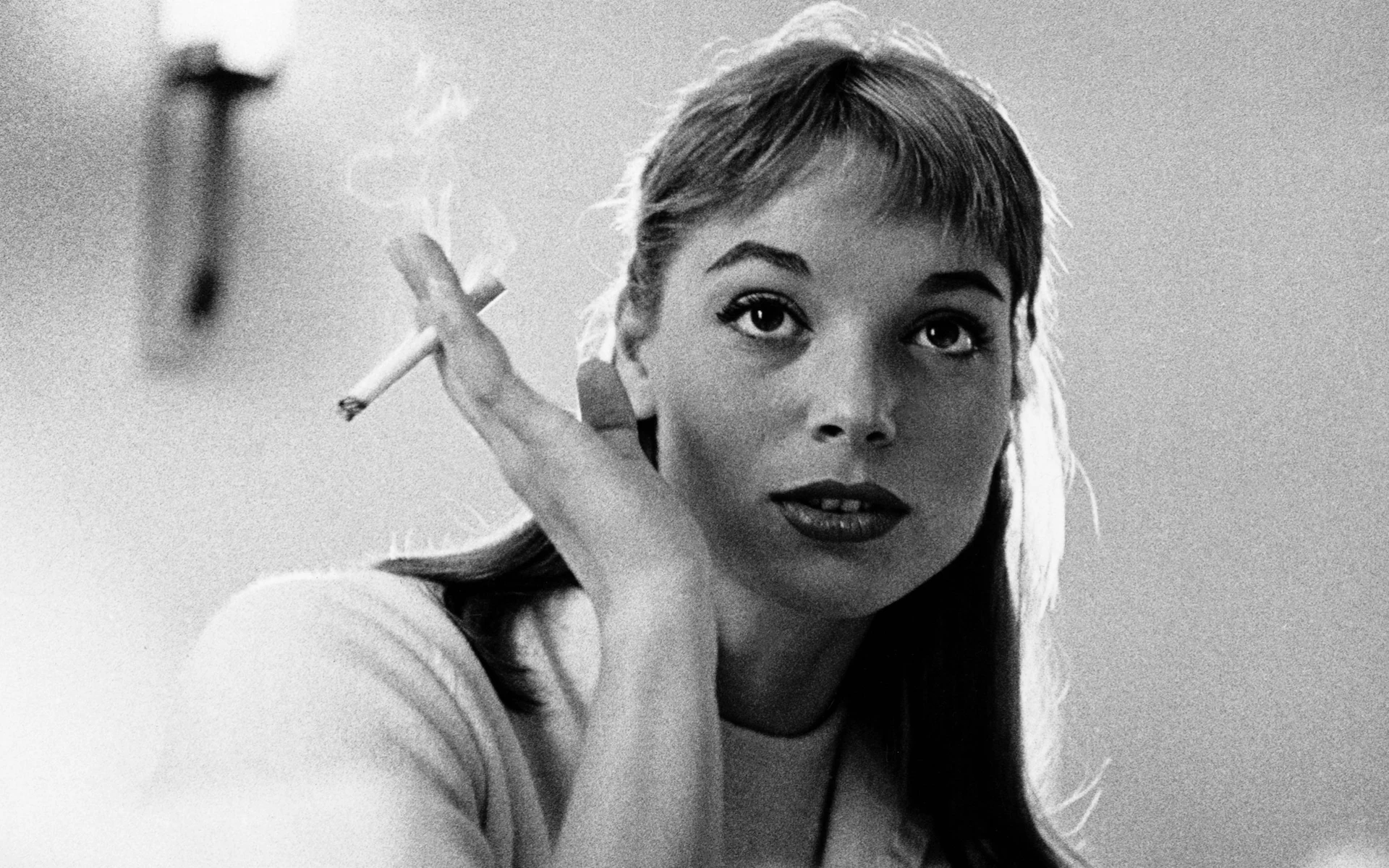
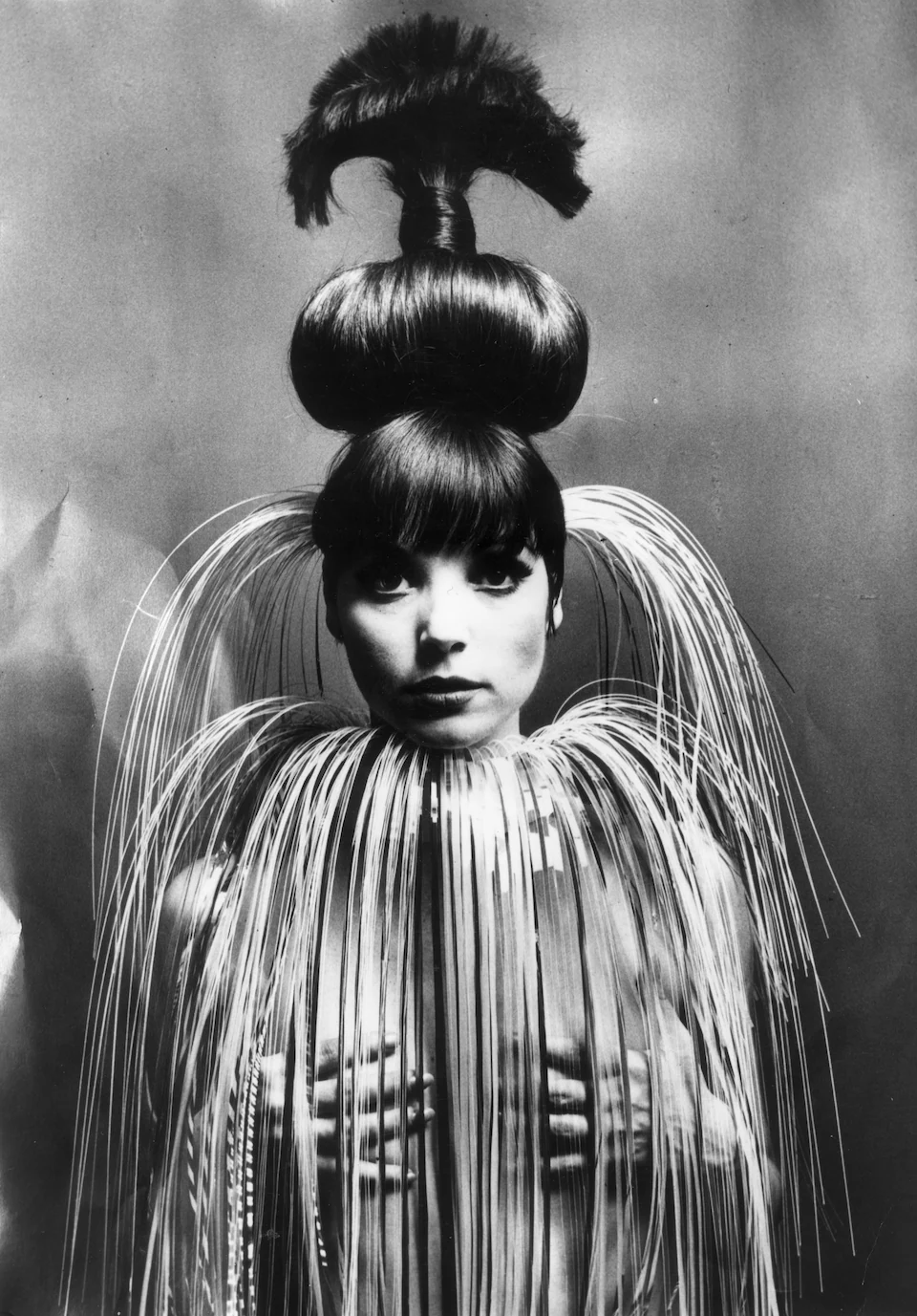
Elsa Martinelli (1935–2017) was an Italian actress and model whose career bridged Hollywood epics, European art cinema, and later television, giving her a distinctive, if somewhat under‑chronicled, place in mid‑20th‑century film history. She began as a fashion model, was discovered by director‑designer Roberto Capucci, and then remade herself into a sultry, modern‑looking leading lady whose career spanned romantic comedies, period epics, and spaghetti‑tinged genre films.
Early career and breakthrough
Born Elisa Tia in Grosseto, Tuscany, Martinelli moved into fashion in Rome before being scouted for cinema. Her first significant role was in Mario Monicelli’s Donatella (1956), in which she played a working‑class girl mistaken for an upper‑class woman; her performance earned her the Silver Bear for Best Actress at the Berlin International Film Festival, instantly marking her as a rising talent rather than just a glamorous face. That award signaled that she could carry an entire film with a mix of vivacity and vulnerability, and it helped her cross into Hollywood at a moment when the studio system was seeking fresh European stars.
Her first major American film was The Indian Fighter (1955), opposite Kirk Douglas, whom legend has it first noticed her on a magazine cover and brought her to Bryna Productions. The role as the Native American woman Onahti leaned heavily on 1950s Hollywood’s stereotypical “exotic” framing, yet critics and biographers note that Martinelli’s presence lifted the material: she brought a sense of inner life and dignity that the script rarely gave her, hinting at later, more nuanced work.
Hollywood and transatlantic stardom
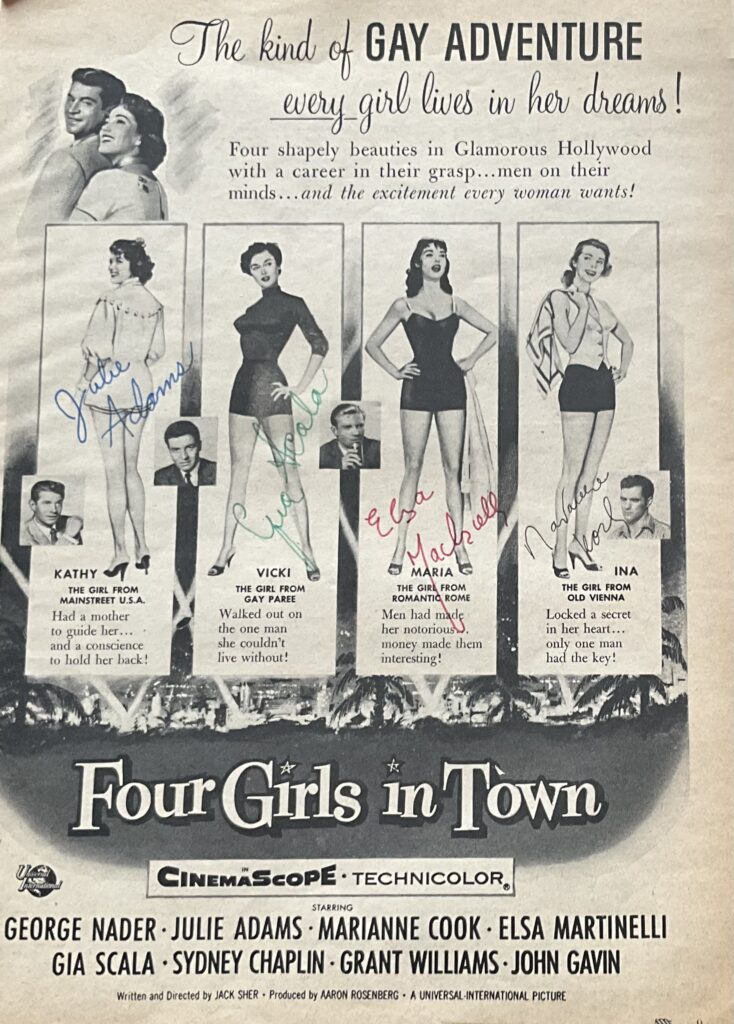
Throughout the late 1950s and 1960s, Martinelli divided her time between Europe and the United States, working with major stars and directors on both sides of the Atlantic. She appeared in such Hollywood productions as Four Girls in Town (1957), Manuela (a.k.a. Stowaway Girl), Rice Girl (a.k.a. La Risaia), and The Indian Fighter, often cast as the alluring, slightly exotic romantic interest opposite leading men such as Douglas, John Wayne, and Robert Mitchum.
A standout in this phase was Howard Hawks’ Hatari! (1962), in which she plays Dallas, a glamorous yet somewhat willful woman who joins a team of big‑game hunters in Africa. Critics of the film often describe her performance as a successful blend of starlet charm and comic spark: she is neither a passive damsel nor a caricature, but a woman who is self‑aware about her own allure and who can spar emotionally with John Wayne’s rugged protagonist. Her work in Hatari! is now viewed as evidence that she could hold her own in a classic‑style adventure film without being reduced to mere décor.
At the same time, she remained active in European cinema, including Roger Vadim’s stylish horror‑tinged Blood and Roses (1960), where she plays Georgia Monteverdi, a woman whose beauty and sexuality are entangled in a vampiric, Gothic atmosphere. Her performance there is frequently praised for its cool eroticism and dream‑like restraint; rather than shrieking or over‑playing, she suggests desire and unease through posture and voice, aligning her more with art‑horror than with exploitation conventions.
European arthouse and genre work
In the mid‑1960s and 1970s, Martinelli’s career shifted toward European‑centric projects, including politically and psychologically complex films. She appeared in Orson Welles’ adaptation of The Trial (1962) as Hilda, a minor but memorable role in which she embodies the Kafkaesque bureaucracy’s seductive, enigmatic side. Critics often note that her very brief screen time is disproportionately effective: she is both alluring and emotionally distant, underscoring the film’s sense of a world where human connection is either manipulated or impossible.
She also worked in politically charged Italian cinema, such as Marco Bellocchio’s One on Top of the Other (1969), a psychological thriller examining power, identity, and guilt. Her role there is less showy than some of her 1950s parts, but it showcases her ability to play a woman whose composure conceals inner turmoil. Review‑oriented overviews of her filmography often single out such later roles as evidence that she had deepened into a more interior, psychologically grounded actress by the late 1960s.
Her performance in L’amica (1969) earned her a Silver Ribbon for Best Supporting Actress, reinforcing that Italian critics recognized her transition from glamour model to serious character performer. This period is thus critical for understanding her not as a one‑era type, but as someone who evolved from Hollywood “exotic lead” to a more layered, adult presence in European arthouse and genre film.
Critical reputation and screen persona
Critically, Martinelli is often described as a “sophisticated muse of Italian cinema” and a versatile star of Hollywood’s international phase, capable of shifting from romantic comedy to gothic horror and social drama without losing her distinctive poise. Her voice—husky and lightly accented for English‑language work—and her statuesque, modern beauty created a screen persona that was both glamorous and slightly cerebral, distancing her from the purely decorative “bombshell” stereotype.
At the same time, a consistent critique in retrospectives is that her potential was never fully realized in long‑term Hollywood stardom. She was often cast in roles that foregrounded her looks and foreign‑film cachet rather than sustained dramatic arcs, and by the late 1960s she increasingly retreated to European productions and eventually to Italian television.
From a critical‑analysis standpoint, her work is best understood as a bridge between the fading Golden‑Age studio system and the more director‑driven, post‑New Wave European cinema. She embodied the “international” star—comfortable in English‑language epics but never fully assimilated into typical Hollywood archetypes—and her later choices (Bellocchio, horror‑tinged Garbo‑esque fare, and eventually TV dramas) suggest a conscious gravitation toward morally and psychologically complex women rather than straightforward romantic leads.
Later years and legacy
From the late 1960s onward, Martinelli’s film output slowed, and she worked more in European television and occasional TV movies. Her final English‑language credit was in the farce Once Upon a Crime (1992), and her last major screen appearance was in the Italian TV series Orgoglio (2005), where she played the Duchess of Monteforte. Late‑career profiles also note that she became an interior designer and tastemaker, reinforcing her image as an icon of style and elegance beyond the screen.
In summary, Elsa Martinelli’s career is that of a model‑turned‑actress who parlayed early glamour and a single major festival win into a surprisingly wide‑ranging filmography, from Hollywood epics to Italian arthouse and genre pictures. Critically, she is appreciated for her intelligence, restraint, and ability to suggest complexity beneath the surface of roles that often did not fully merit it, making her a quietly significant figure in the transatlantic cinema of the 1950s and 1960s