

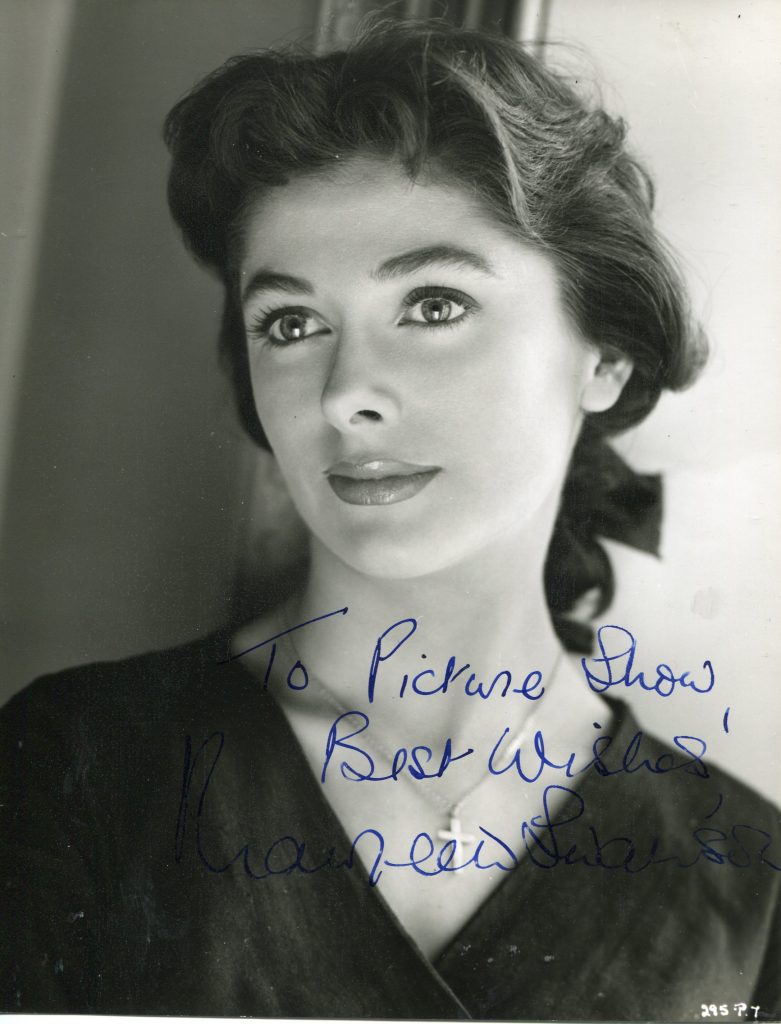
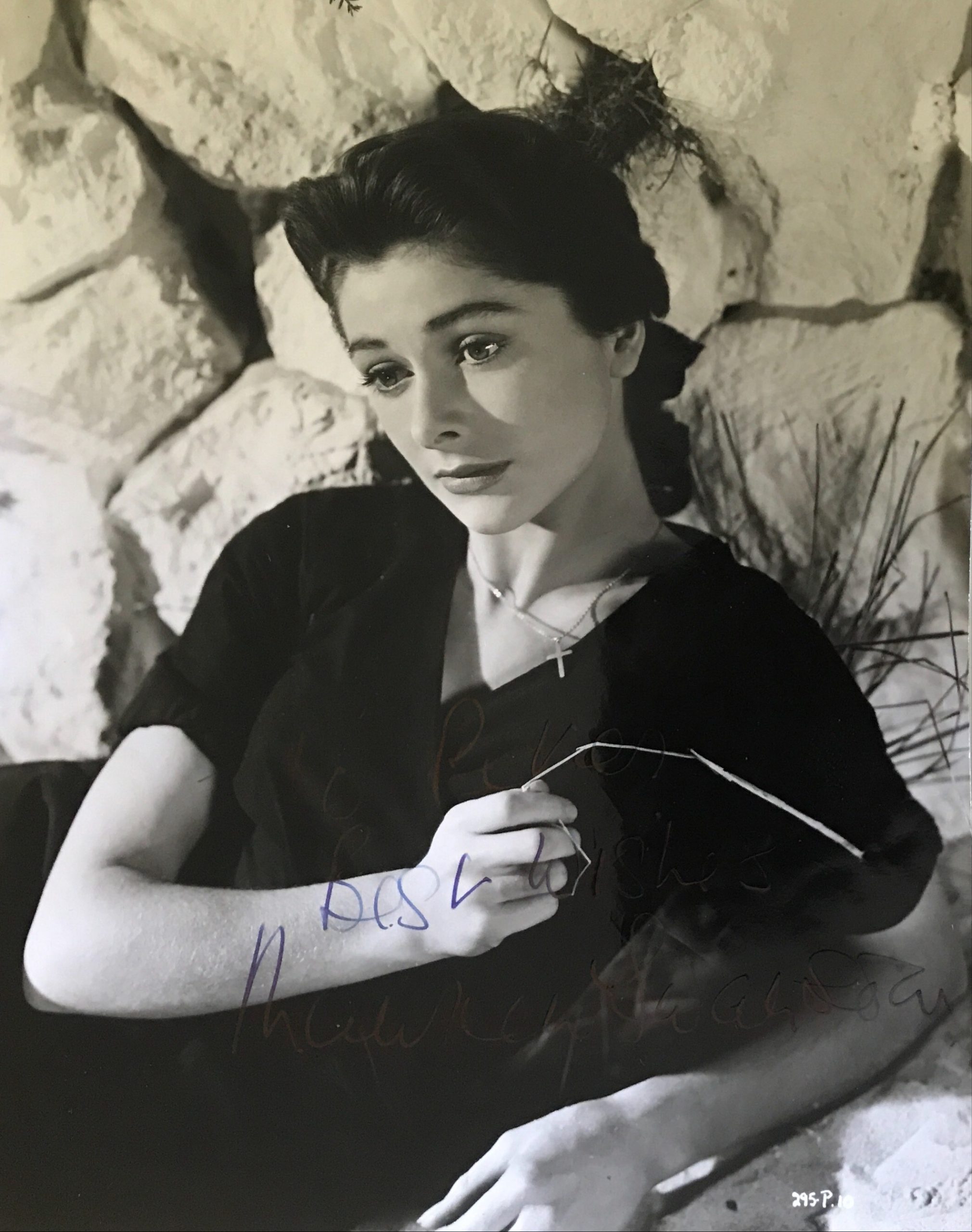
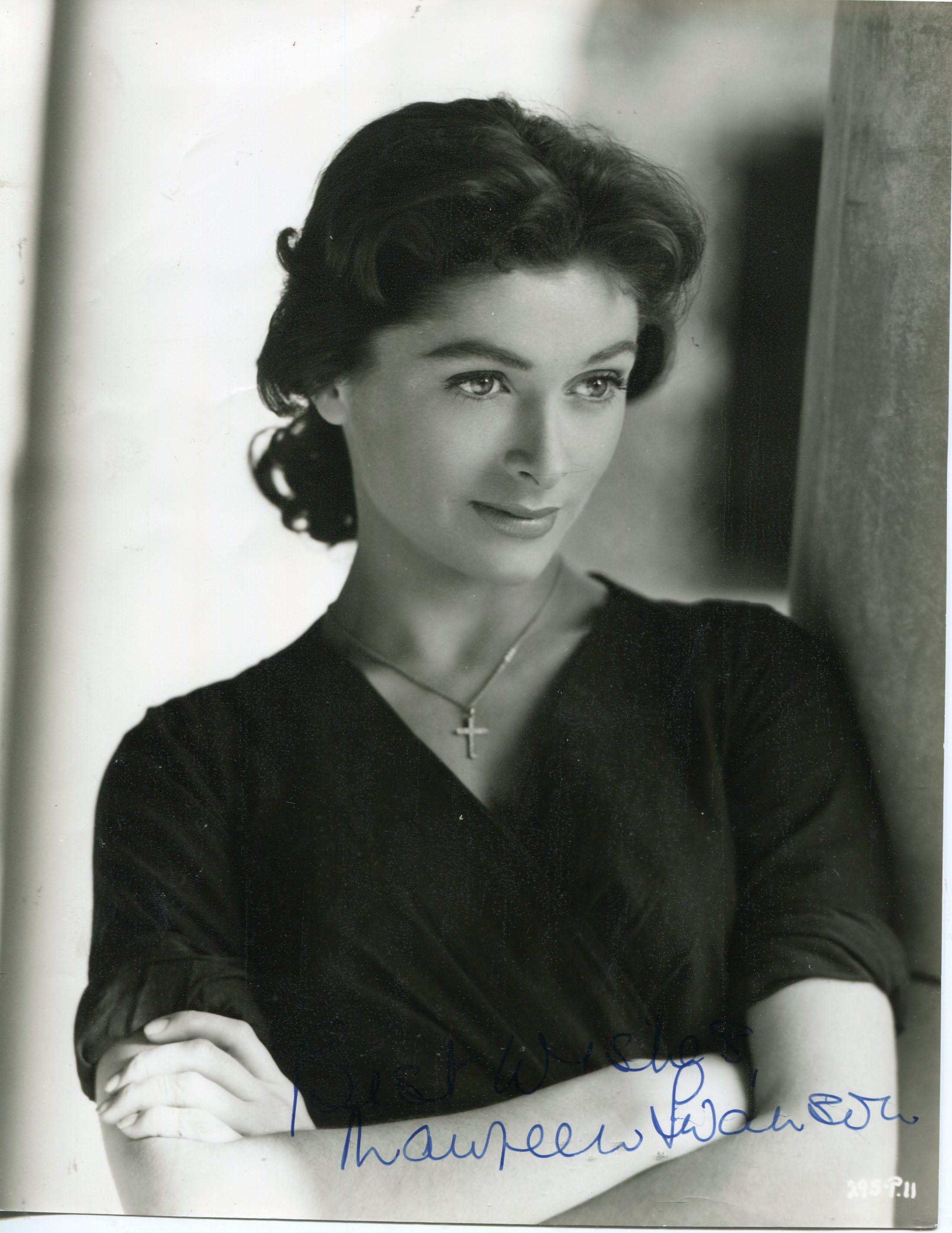
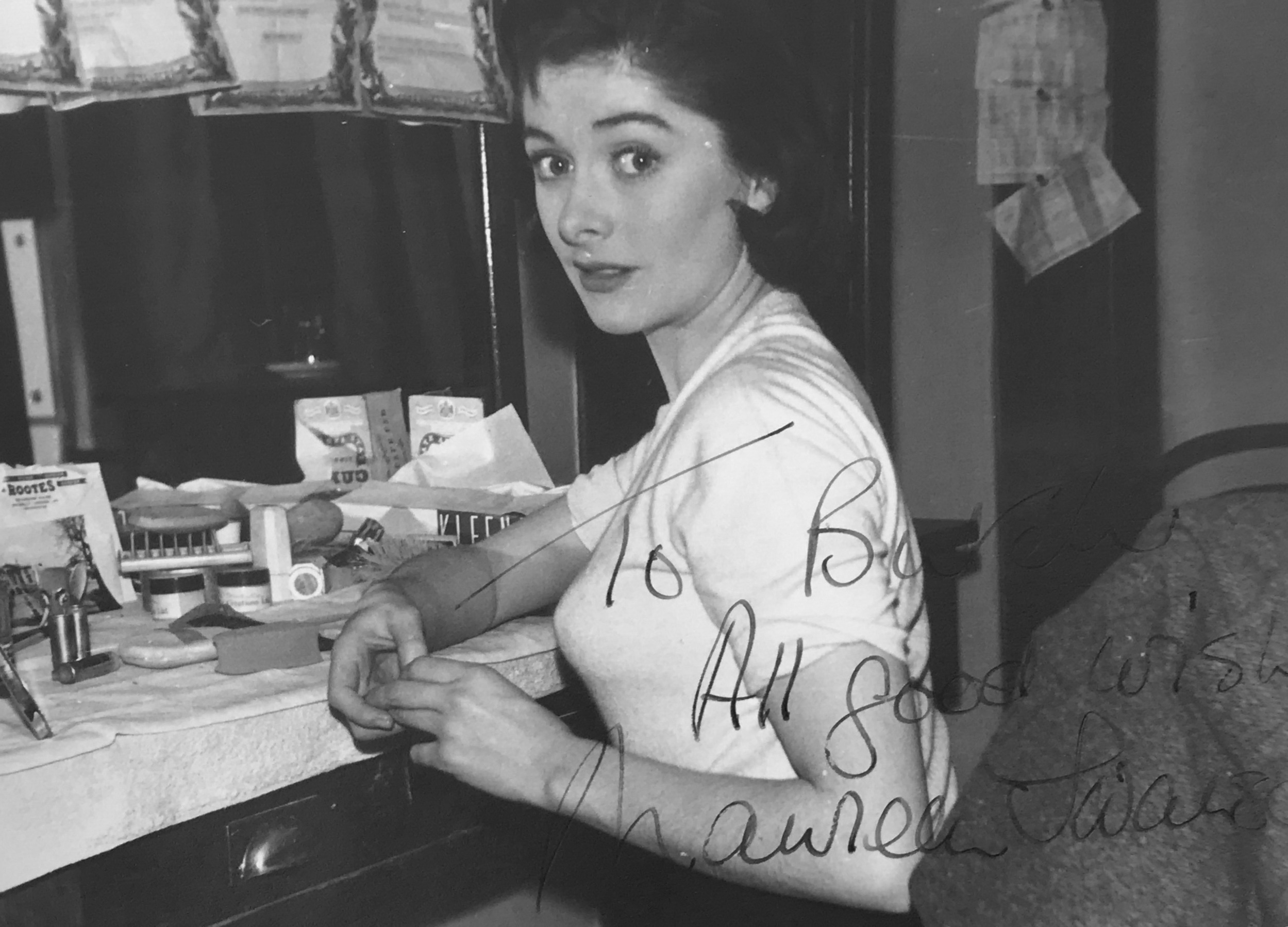
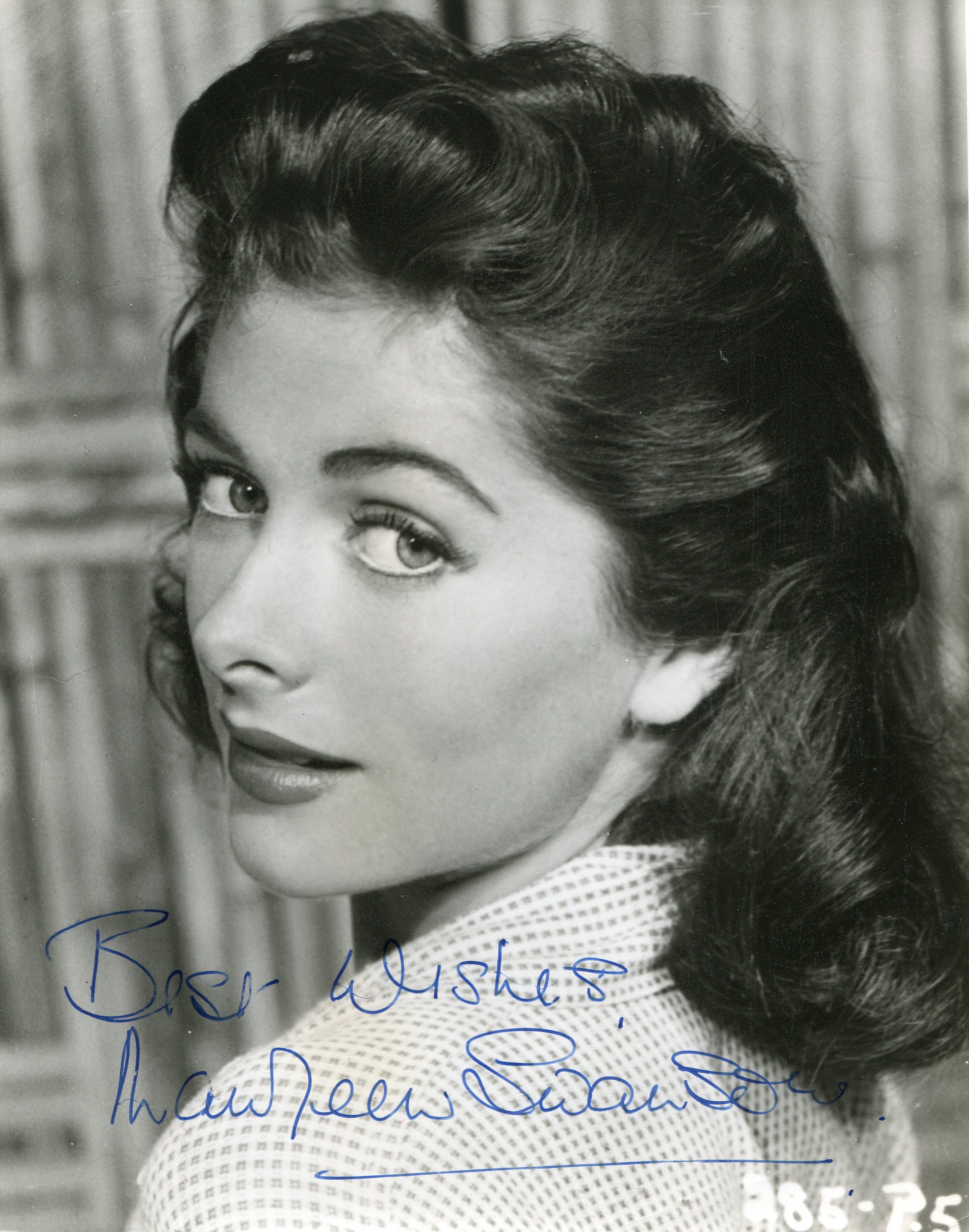
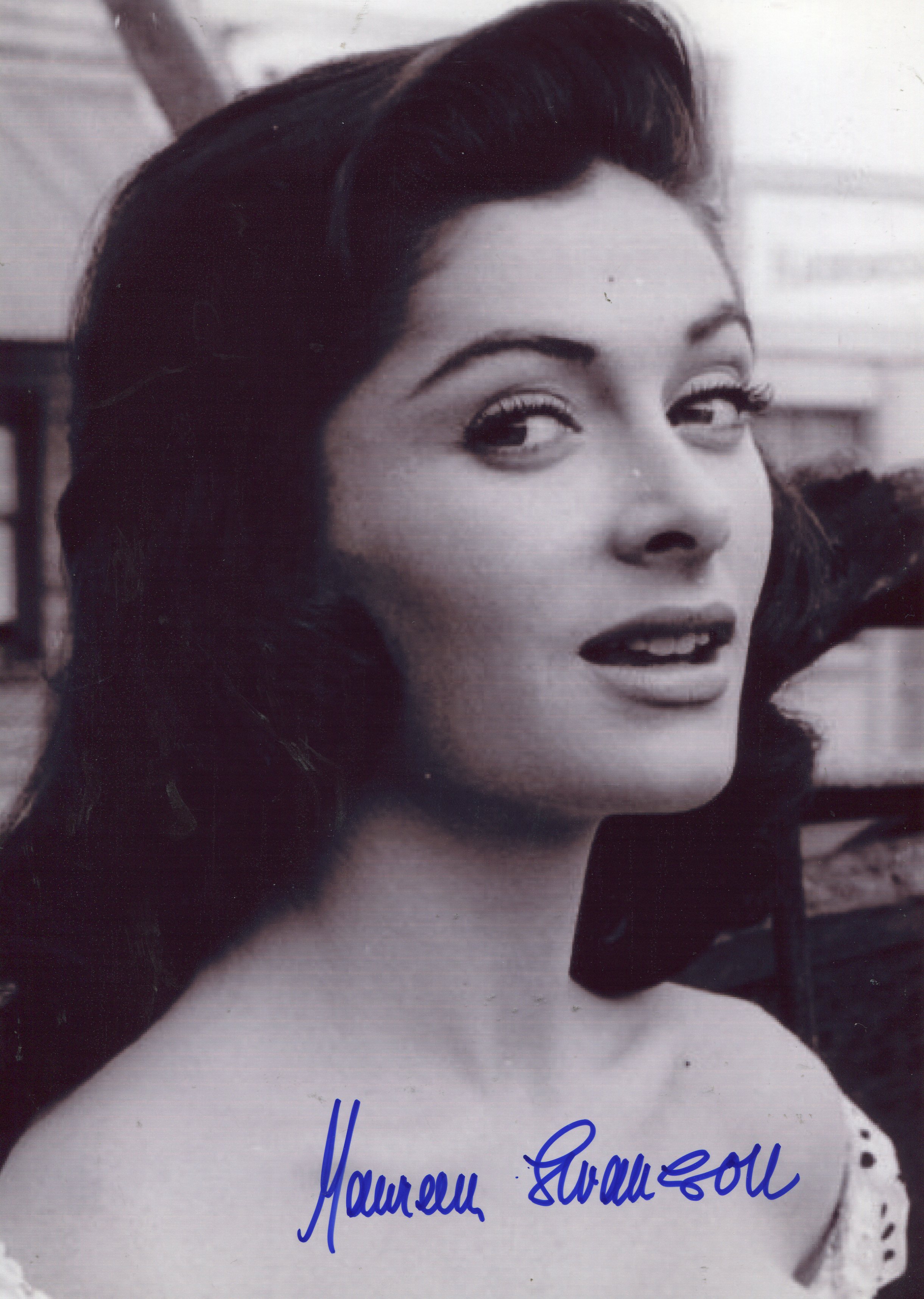
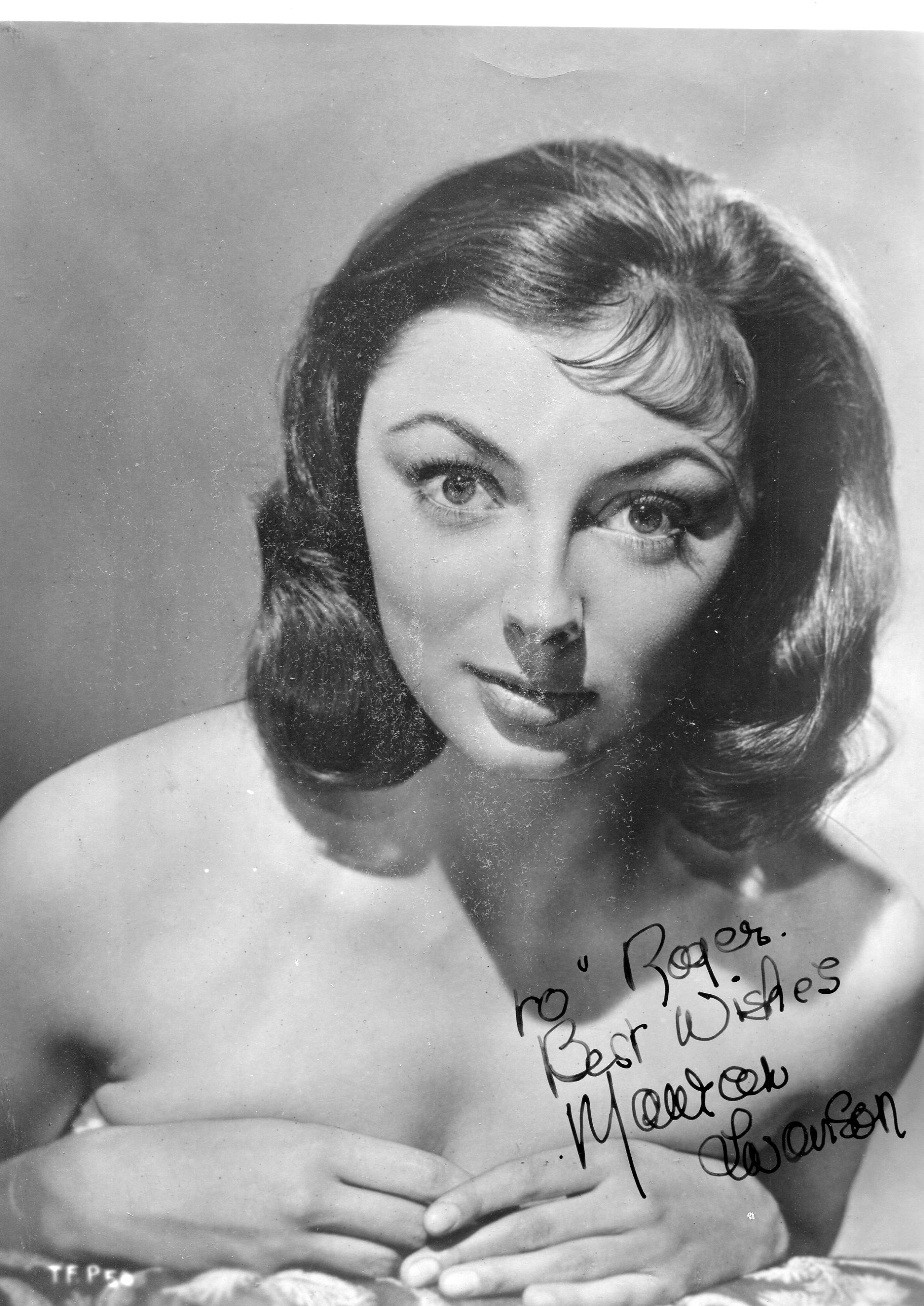
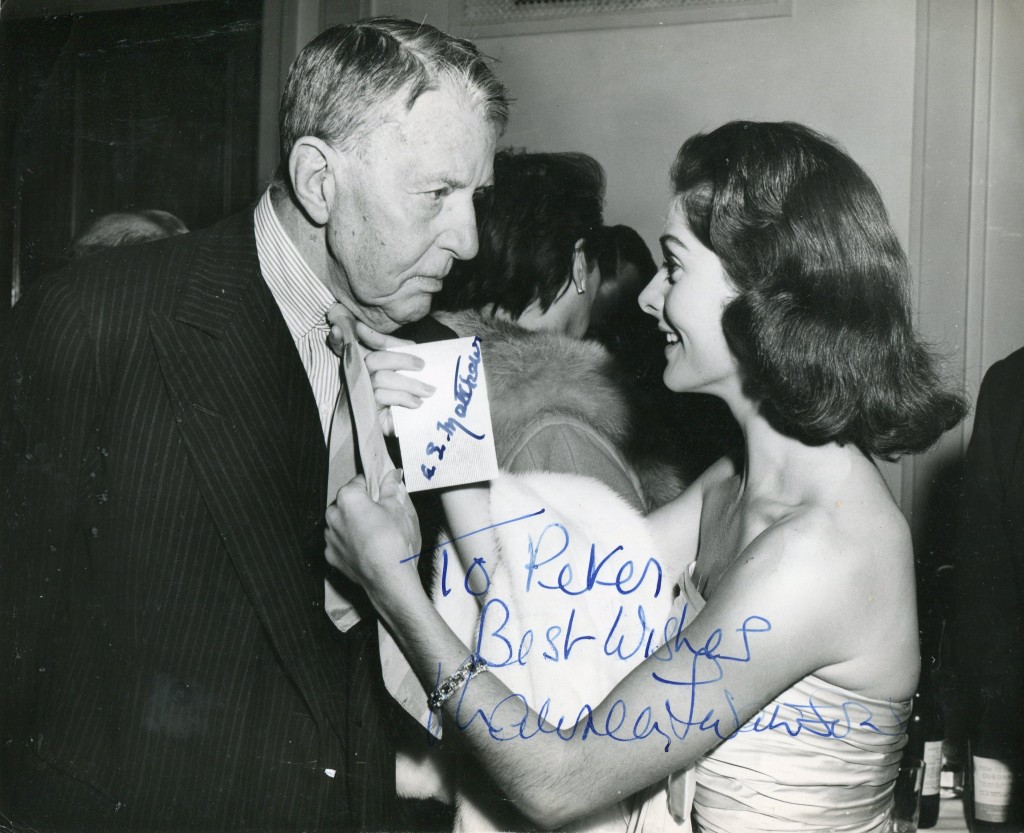
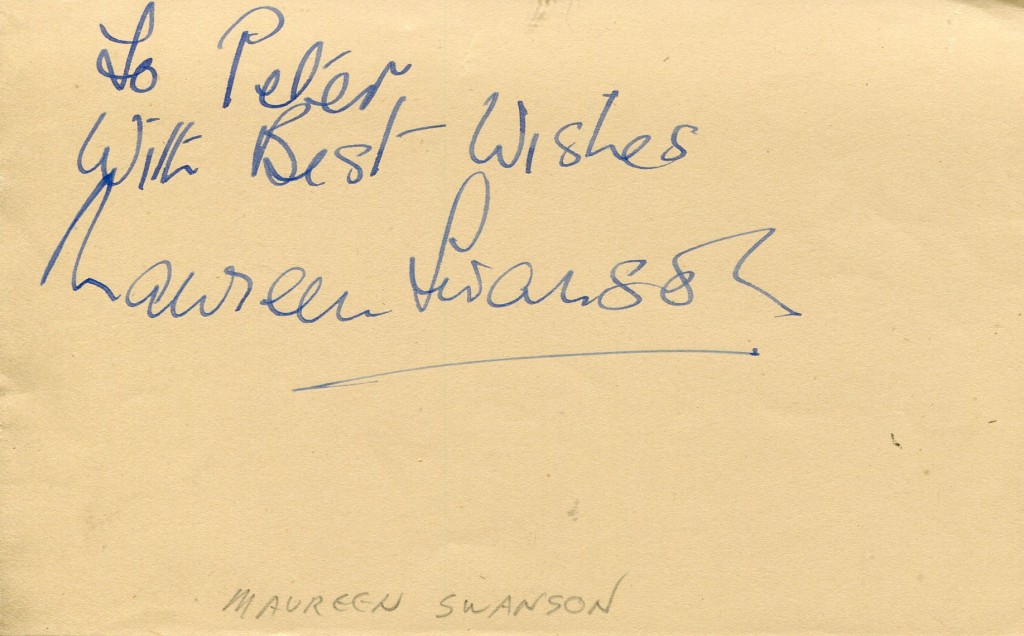
MAUREEN SWANSON OBITUARY IN “THE GUARDIAN” IN 2011.
Never having had the chance to justify her initial build-up as “the next Vivien Leigh”, the svelte brunette Maureen Swanson, who has died of cancer aged 78, deserved much better than she was given in the 1950s by the Rank Organisation, to whom she was under contract. Although Swanson was not a graduate of the much-maligned Rank Charm School, she was, to her chagrin, often referred to as a “Rank starlet”, which implied that she was merely on screen in order to look glamorous. But unlike Rank charmers such as Diana Dors, Joan Collins andBelinda Lee, Swanson was not a “naughty” sex symbol, but more of a “good girl”.
She might have gone on to better parts had not her marriage in 1961 to William Ward, Viscount Ednam (later the 4th Earl of Dudley) terminated her acting career for good. The role of Countess of Dudley, and mother of six children, five of them girls, would take up most of her time.
Swanson was born in Glasgow and educated at a convent school there, before going to Paris to study ballet. She soon won a place at the Sadler’s Wells Ballet School and then the company itself, for which she had a featured role in The Haunted Ballroom, choreographed by Ninette de Valois. This gave her the chance, aged 19, to take over the important dancing role of Louise in Rodgers and Hammerstein’s Carousel at the Theatre Royal, Drury Lane, in 1951.
Swanson was brought to the attention of the director John Huston, who was making Moulin Rouge (1952) at Shepperton Studios in England. He cast her in the small but significant role of the aristocratic girl who rejects a proposal of marriage from Henri de Toulouse-Lautrec (José Ferrer), telling him no woman will ever love him, which prompts him to leave his childhood home in despair to begin a new life as a painter in Paris.
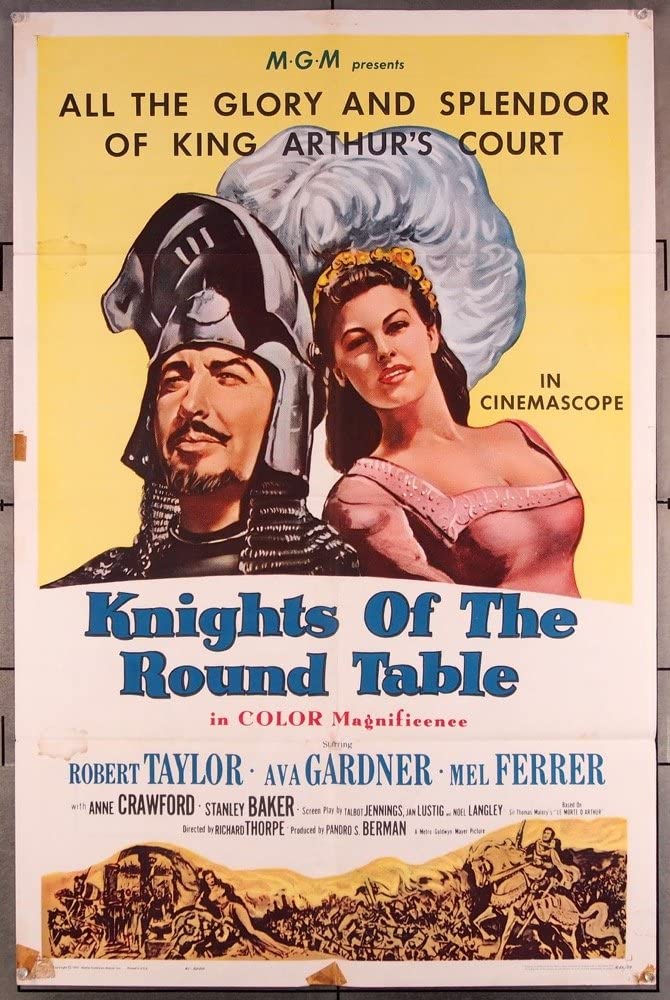
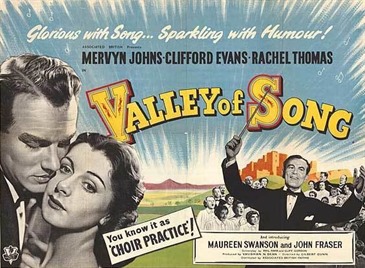
After Moulin Rouge, which earned more money than Lautrec made from all his paintings in his lifetime, Swanson gained even wider international exposure in MGM’s first CinemaScope feature, the spectacular Knights of the Round Table (1953), shot in England. Swanson played the gentle wife of Lancelot (Robert Taylor), who has to contend with the more voluptuous Ava Gardner as Guinevere.Swanson appeared in more modest British fare such as Valley of Song (1953), a charming Romeo and Juliet-type story of a feud over choir singing between two families in a south Wales village. Swanson, with a convincing Welsh accent, had some poignant moments as she pines for her sweetheart (John Fraser).
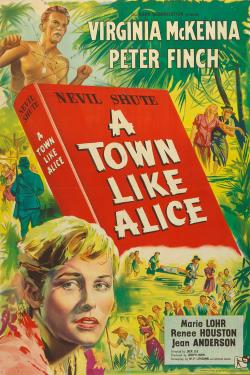
Her first film under contract to Rank, A Town Like Alice (1956), was her best by far. It covers how a small group of women and children were force-marched through Malaysia by the Japanese during the second world war. In the film, Swanson, the youngest and prettiest of the women, flirts with any available man and even goes off with a Japanese officer.
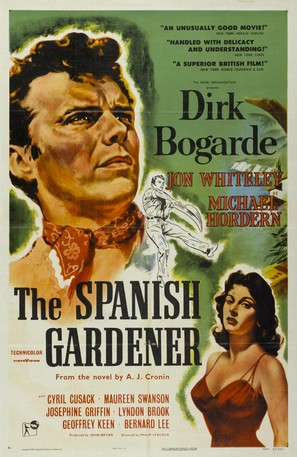
The Spanish Gardener (1956) tells of a stuffed-shirt British diplomat’s concern about losing the love of his young son, who is closer to his gardener than to him. Swanson plays the girlfriend of Dirk Bogarde, in the title role, slightly mitigating the homosexual subtext, though the fact that both of them play Spaniards with cut-glass English accents is rather disconcerting.
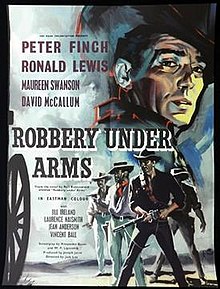
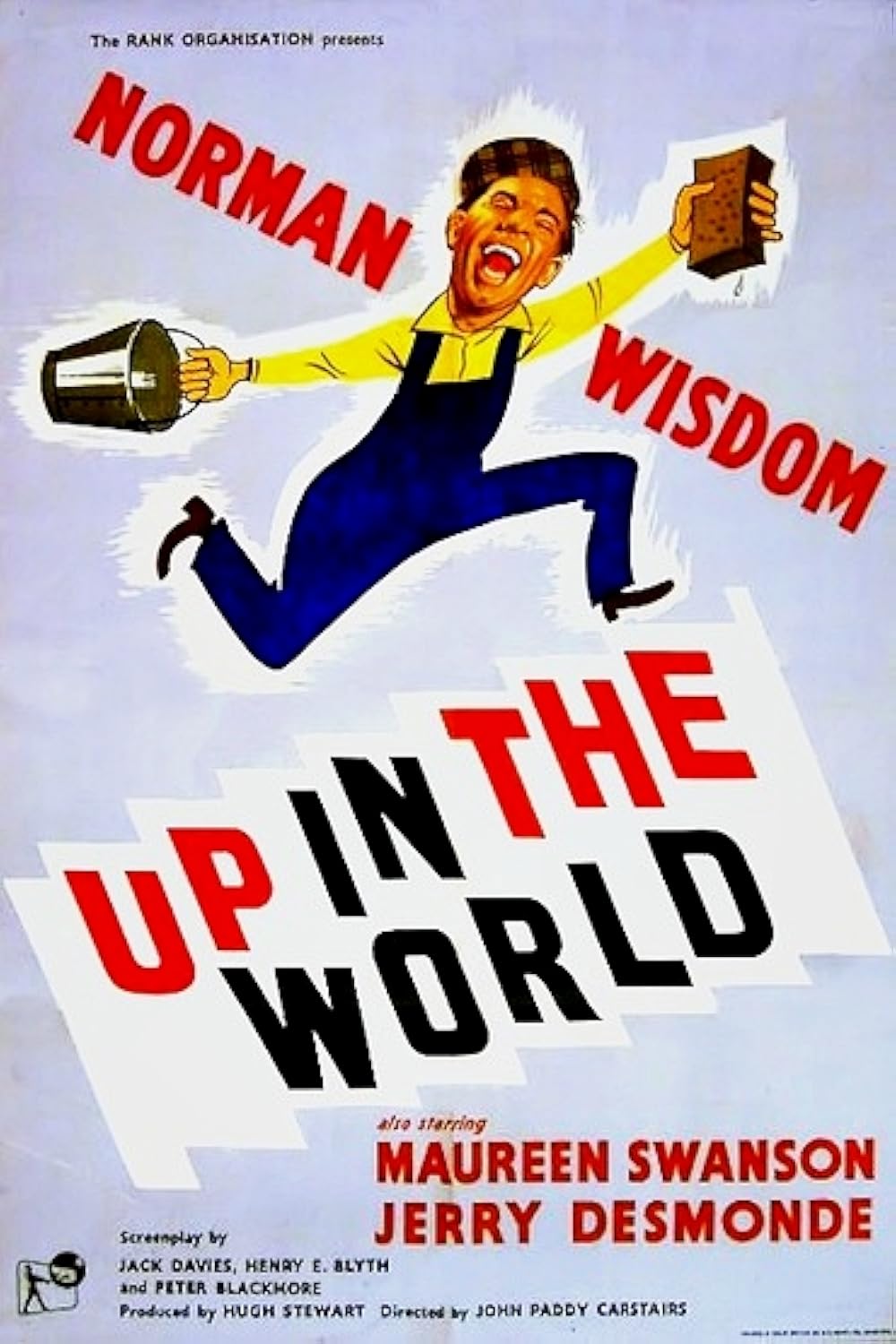
Swanson gets sung to and kissed by Norman Wisdom between all the slapstick in Up in the World (1956), as a maid in a country manor where he is the clueless window cleaner. Her final film was the period adventure story, Robbery Under Arms (1957), set and shot in Australia, where she is effectively furious as a woman scorned. The following year, she made an exquisite Cecily Cardew in the ITV production of The Importance of Being Earnest (1958).
Although Swanson retired from show business completely in 1961 to marry into the English aristocracy, heavily publicised libel cases made sure she was not entirely out of the public eye. First, in 1987, the countess, who had accompanied Princess Michael of Kent on a semi-official visit to the United States, won £5,000 in libel damages from the Literary Review for a review of a book about ladies-in-waiting which, she claimed, had made her out to be a greedy and vulgar woman. In 1989 she won damages from the publishers of a book which suggested she was one of the women procured by Stephen Ward, who was charged with living on the immoral earnings of Christine Keeler after the Profumo scandal. She again accepted damages after Keeler referred to Swanson as being “one of Stephen’s girls” in her 2001 book The Truth at Last. In fact, Swanson had dated him 10 years before the scandal.
Swanson is survived by her husband and children
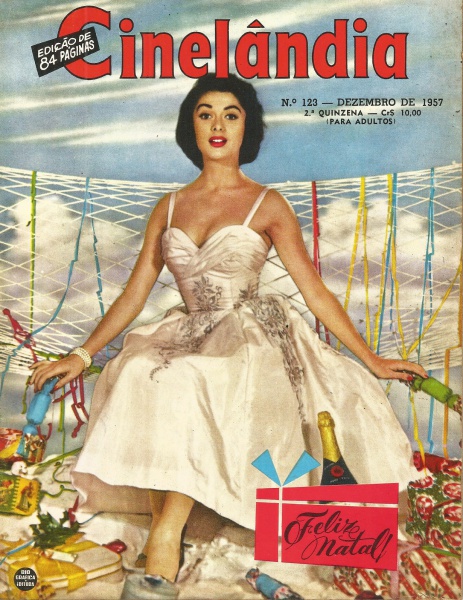

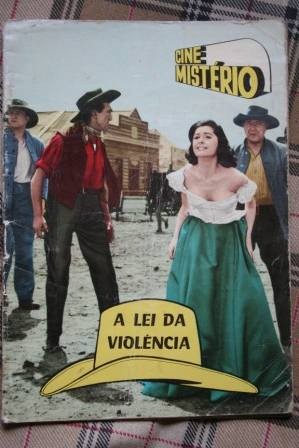

Maureen Swanson was born in Glasgow, Scotland on 25 November 1932. She trained originally as a classical ballet dancer at the Sadler’s Wells Ballet School, giving her a disciplined physical and stage background before transitioning to musical theatre and film.
This early training — ballet and stage — would later influence her screen presence, giving her an expressive body language and an elegant bearing uncommon in many Rank Organisation actresses of the time.
Entry into Film and Early Career (1952–1953)
Swanson’s entry into movies came in 1952, when she was cast in Moulin Rouge (directed by John Huston), playing Denise de Frontiac — a small but memorable role in a high‑profile film.
She followed this with parts in:
- Valley of Song (1953) — romantic drama set around Welsh choirs
- Knights of the Round Table (1953) — Hollywood‑backed epic where she played Elaine opposite Robert Taylor and Ava Gardner.
Critical Commentary
These early performances introduced Swanson as a graceful, engaging presence on screen, capable of holding her own alongside seasoned leads even in modest supporting parts. In Knights of the Round Table, her poised delivery and classic screen beauty stood out amid the film’s spectacle, suggesting she could have transitioned into more substantial roles had the momentum continued. However, the industry often cast her in characters defined more by elegance and charm than psychological complexity, reflecting the genres and conventions of early 1950s British cinema.
Rise Through British Cinema (1954–1957)
From 1954 onward Swanson worked steadily in British film:
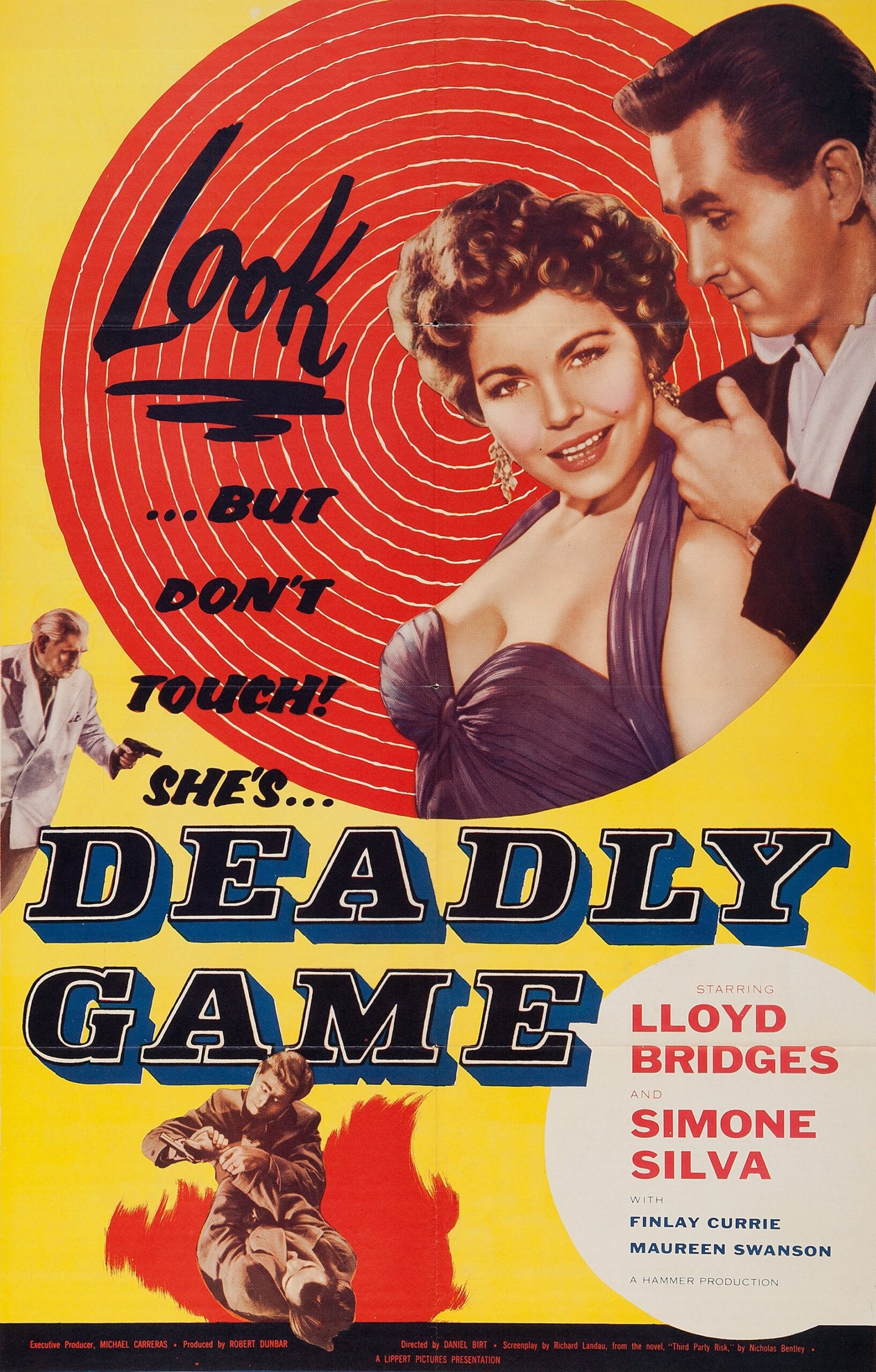
- Third Party Risk (1954) — a noir thriller where she was female lead Marina.
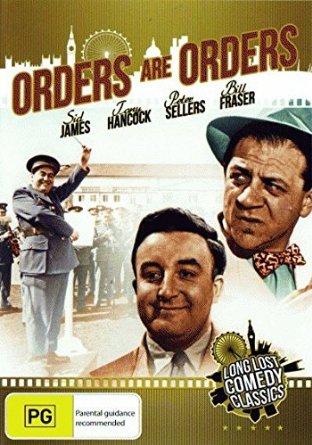
- Orders Are Orders (1954) — comedy ensemble.
- A Town Like Alice (1956) — one of her most significant screen roles as Ellen, a member of a group of women forced to march through Japanese‑occupied Malaya.
- The Spanish Gardener (1956) — romantic‑drama adaptation opposite Dirk Bogarde.
- Up in the World (1956) — comedy with Norman Wisdom.
- Robbery Under Arms (1957) — Australian adventure film where she played Kate Morrison.
Critical Analysis
This period marks Swanson’s most varied and artistically interesting screen work:
- In A Town Like Alice, she demonstrated dramatic range — moving from light flirtatiousness to moments of resilience under adversity. Critics have noted this as arguably her strongest cinematic performance because the role demanded emotional complexity and narrative centrality beyond mere screen charm.
- In The Spanish Gardener, she added nuance to a romantic subplot, softening a potentially perfunctory “love interest” role with subtle reactions and believable chemistry opposite Bogarde.
- Even in comedies like Up in the World, she showed charismatic screen presence and a willingness to play to the genre rather than dominate it — a quality that made her dependable in ensemble casts.
However, as with many Rank contract players, Swanson was often used to support male leads and narrative frameworks rather than explore fully realized psychological arcs. This meant that while her performances were solid and expressive, they sometimes lacked the dramatic imprint of more character‑driven actresses of the era.
Television and B‑Film Work (Late 1950s–1961)
Swanson appeared in episodic television such as The Vise (1954–55) and acted in second‑feature crime films including The Malpas Mystery (released 1960) — a B‑movie based on an Edgar Wallace story where she played Audrey Bedford.
Critical Note: The Malpas Mystery — while a modest production — afforded her a lead turn, and critics at the time (e.g., Variety) noted her “appealing vulnerability,” adding to the suspense.
This work shows that even as mainstream feature roles dwindled, Swanson retained professional polish and screen magnetism, making her a reliable lead in smaller projects.
Retirement and Later Life (Post‑1961)
In 1961, Swanson retired from acting upon her marriage to Viscount Ednam, later the 4th Earl of Dudley. She left behind her screen career entirely to fulfill aristocratic and family roles, becoming Maureen Ward, Countess of Dudley.
Her departure at the age of 28 effectively curtailed what might have been a longer, deeper acting career. Film historians and retrospective critics (e.g., Filmink) have suggested she was “immensely watchable on screen” and might have had a very strong career if personal circumstances had not intervened.
Acting Style and Screen Persona
1. Poised Elegance and Physical Expression
Swanson’s background in ballet and theatre translated into a distinctive physical elegance. On screen, she moved and framed her features with deliberate clarity — a feature noticeable in both dramatic roles and lighter fare. This gave many of her characters a sense of refined presence that directors could shape around both spectacle (Knights of the Round Table) and intimacy (A Town Like Alice).
2. Emotional Accessibility
Critics have observed that Swanson’s strongest work stemmed from emotional accessibility — she was able to invest seemingly simple roles with credible reactions rather than stylized acting. In A Town Like Alice, for example, she makes adversity feel real without overacting.
3. Typecasting and Limitations
Despite her evident talent, Swanson was often cast in roles that leaned heavily on appearance and compliance with genre conventions (romance, cavalry epic support, light comedy). The Rank Organisation’s marketing at times put her in the category of “rank starlet,” a term she could be uncomfortable with, as she later insisted on being seen as a serious actress and dancer rather than simply glamorous.
Historical and Cultural Significance
Maureen Swanson occupies an interesting place in mid‑century British cinema. Although she was not a major international star, she represents a class of adaptable, professionally reliable actresses in the 1950s who could effortlessly move between studio epics, domestic dramas, comedies, and television. Her film slate reflects the post‑war British industry and Rank Organisation’s strategies — using graceful, expressive performers to embody the era’s diverse genre output.
Her early retirement also highlights the contrast between personal agency and career ambitions experienced by many actresses of the time, where marriage and social obligations could curtail professional trajectories.
Selected Key Films
- Moulin Rouge (1952) — introduction and international exposure
- Knights of the Round Table (1953) — Hollywood‑backed epic
- Third Party Risk (1954) — noir lead role
- A Town Like Alice (1956) — most critically significant dramatic role
- The Spanish Gardener (1956) — romantic drama
- Up in the World (1956) — comedy with Norman Wisdom
- Robbery Under Arms (1957) — adventure drama
- The Malpas Mystery (1960) — crime B‑feature with lead role
Conclusion
Maureen Swanson’s screen career, though relatively brief, was consistent, expressive, and varied. Her performances combined the poise of her classical training with an on‑screen emotional directness that made her roles feel credible and engaging. While she never became an enduring international star, she demonstrated real acting talent across genre cinema and television, and most critics today regard her as a memorable and under‑valued figure in 1950s British film history whose career could have reached greater heights had she remained in the industry.
Maureen Swanson had a brief but notable 1950s screen career built around Rank Organisation stardom, with her strongest work coming in supporting and leading roles in British and international productions. Critics and historians generally remember her as an elegant, promising actress whose career was curtailed early by marriage and retirement rather than by a lack of visibility or screen appeal.
Career overview
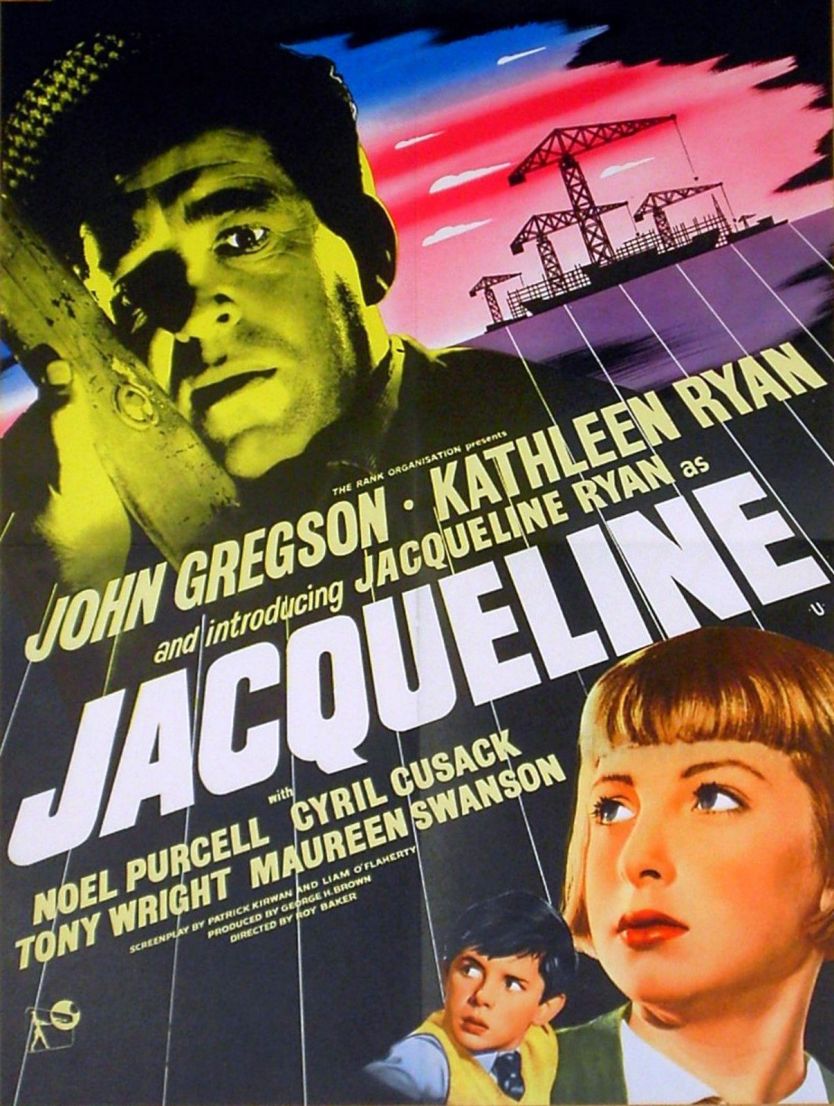
Swanson, born in Glasgow in 1932, entered acting after early work in ballet and stage performance, and she was selected for Moulin Rouge after touring in Carousel. That debut helped launch a run of 1950s films that included Valley of Song (1953), Knights of the Round Table (1953), Third Party Risk (1954), A Town Like Alice (1956), Jacqueline (1956), Up in the World (1956), The Spanish Gardener (1956), and Robbery Under Arms (1957).
Rank saw her as a possible international star and cast her in a series of vehicle-like roles, often opposite major male leads such as Dirk Bogarde, Norman Wisdom, and Peter Finch. She also worked in television and stage productions, including The Vise, The Importance of Being Earnest, and The Happiest Millionaire, before retiring from acting in 1961 after her marriage.
Critical view
Swanson’s critical reputation rests less on range than on screen presence: she is frequently described as pretty, poised, and particularly effective as a contrasting presence to more grounded co-stars. Film historians tend to note that she was strongest when given roles that played to warmth, composure, and a lightly teasing or vulnerable quality, rather than heavy dramatic complexity.
Her best-regarded work is often said to be A Town Like Alice, where she made a noticeable impression in a carefully balanced ensemble, and Robbery Under Arms, which earned her good reviews. By contrast, some of her earlier and more formulaic assignments, especially in studio-era supporting parts, appear to have limited her development, making her feel more like a potential star than a fully realized one.
Strengths on screen
Elegant, polished presence that suited costume drama and adventure films.
Effective in ensemble settings, especially where she could sharpen the contrast with a more serious lead character.
Comfortable in both film and stage settings, which gave her a broader professional base than her short filmography suggests.
Limitations of the career
Her career was brief and ended just as she was becoming more established.
Many of her roles were shaped by Rank’s star-making system, which often prioritized appearance and type over deep character opportunities.
Because she retired young, there is less evidence of growth across decades, so her legacy is concentrated in a relatively small number of performances.
Overall assessment
Maureen Swanson comes across as a talented, photogenic actress whose career was promising but incomplete. The critical consensus is that she had enough intelligence and presence to matter in mid-century British cinema, but not enough time, or perhaps not enough materially challenging roles, to become a major enduring figure