


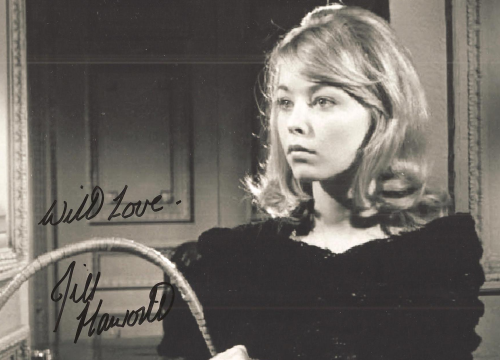
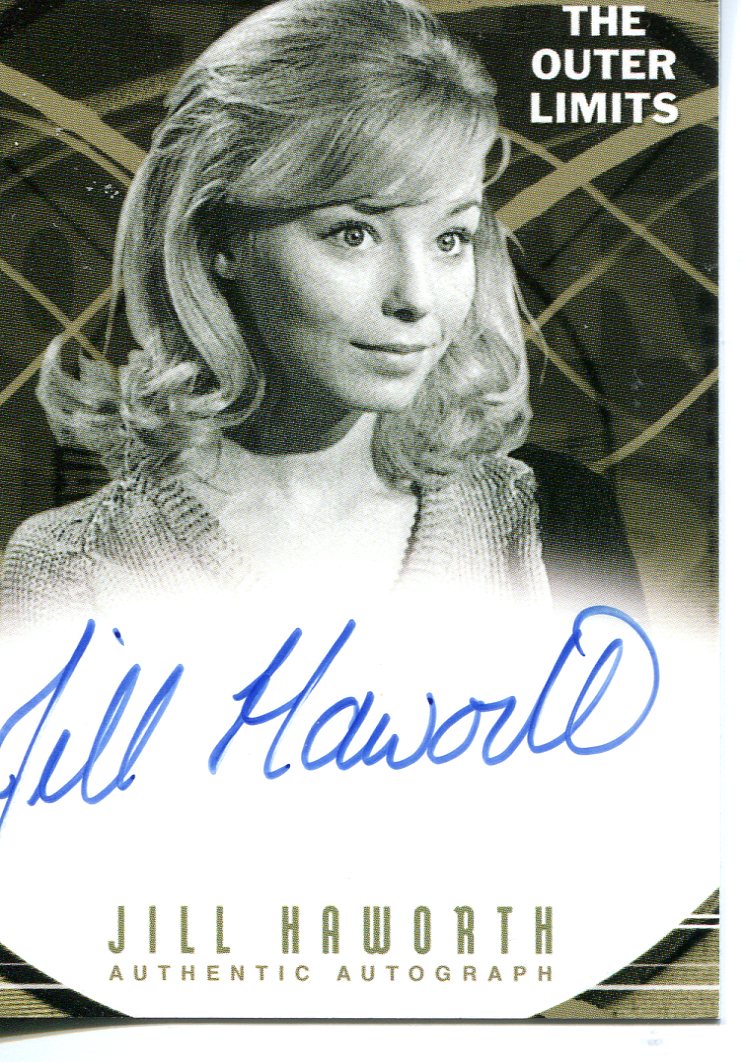
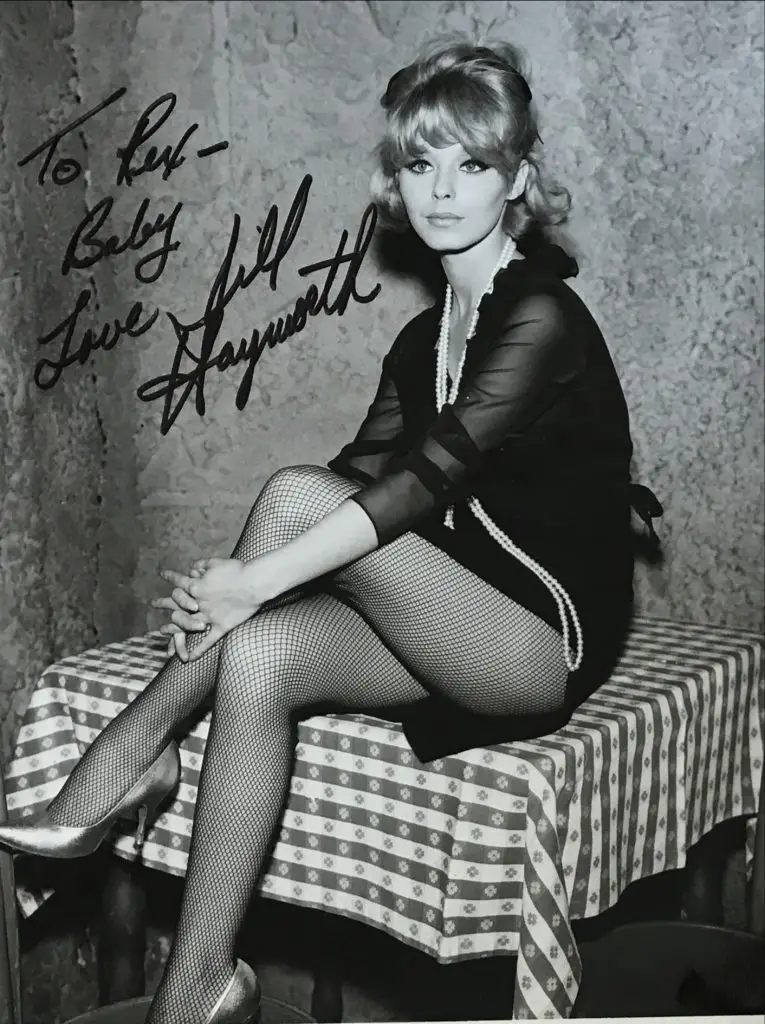

The Guardian Obituary in 2011.
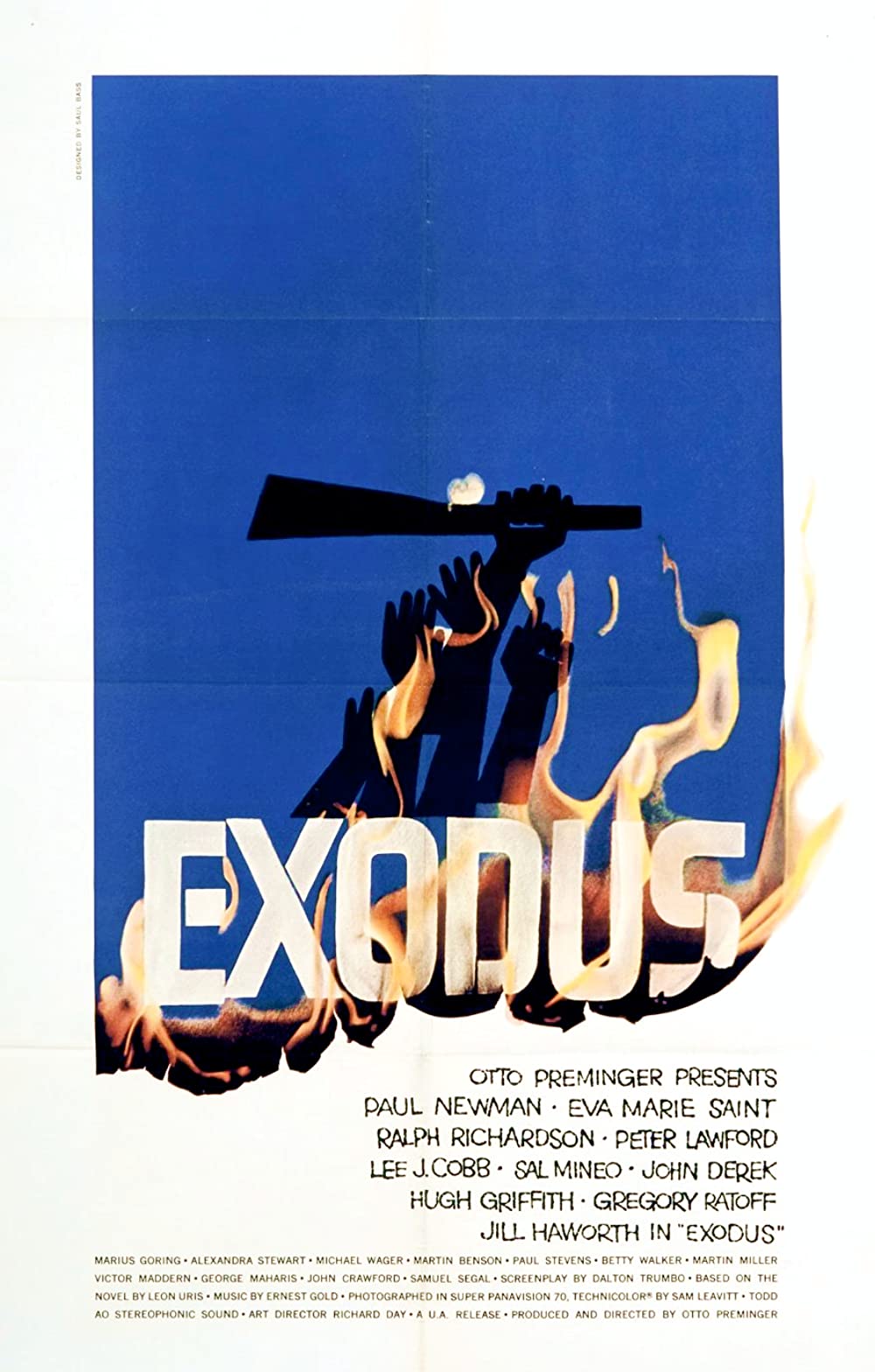
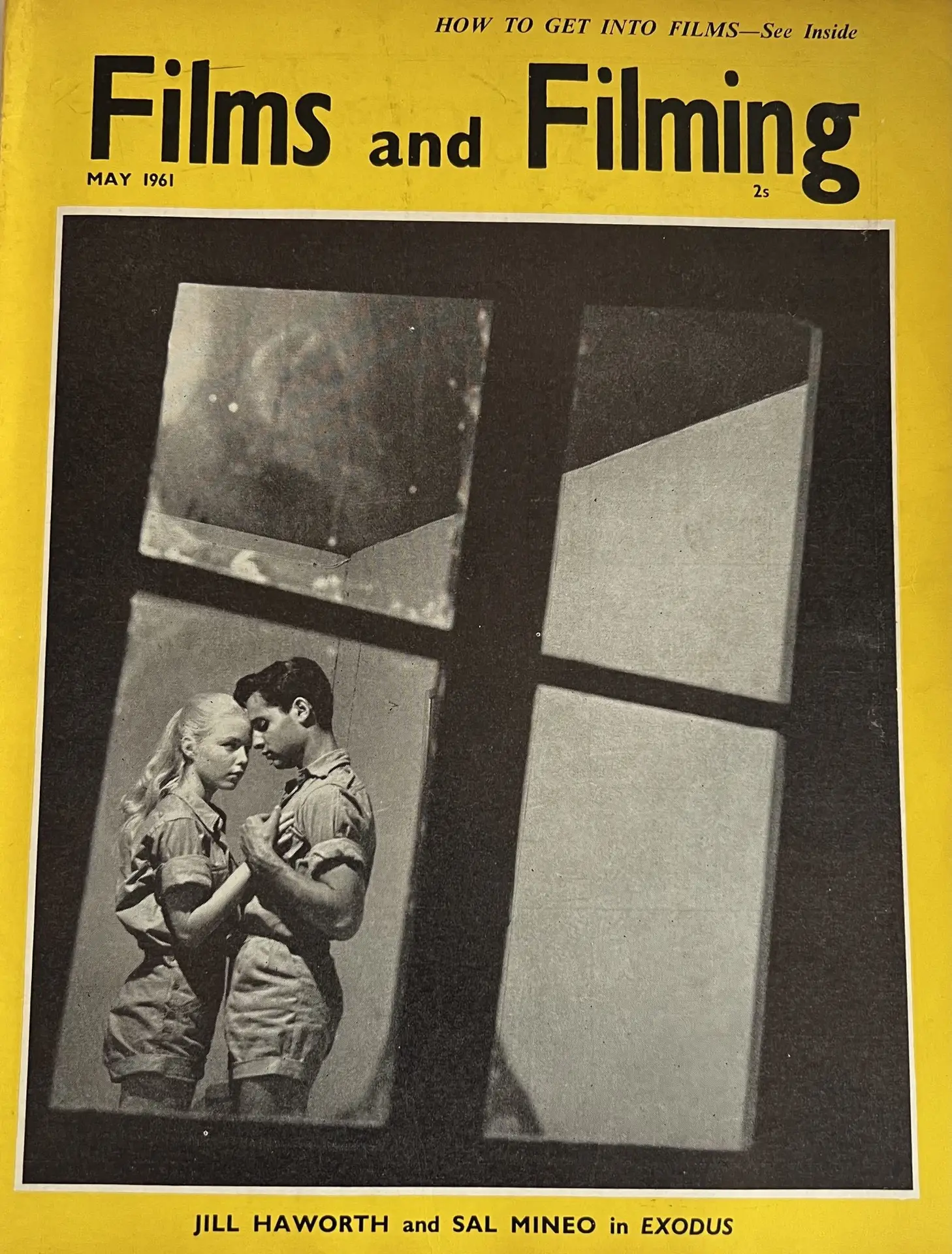
The producer-director Otto Preminger had an eye for blue-eyed blondes, casting two complete unknowns, the 19-year-old Jean Seberg in Saint Joan (1957) and the 15-year-old Jill Haworth in Exodus (1960), with mixed results. In Preminger’s rambling, all-things-to-all-people saga about the birth of Israel, Haworth, who has died aged 65, played Karen Hansen, a young Danish-Jewish girl searching for her father, from whom she was separated during the second world war. She falls in love with a radical Zionist (Sal Mineo), but is killed during a raid and buried in the same grave as an Arab, a symbol of reconciliation between the two peoples. Despite a phoney accent and the fact that she had never acted previously, Haworth was cute and touching in the significant role.
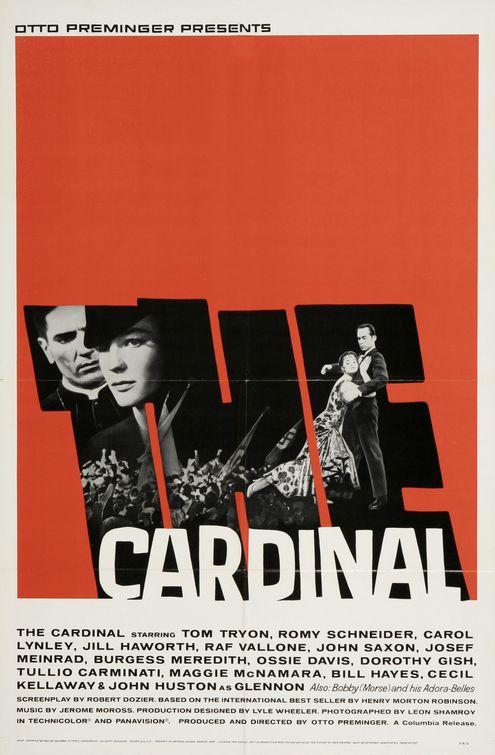
She then appeared in two more of Preminger’s overstretched epics on huge subjects: The Cardinal (1963), on the Catholic church; and In Harm’s Way (1965), on the American military in the immediate aftermath of Pearl Harbor. In the former, she is a saintly French-Catholic girl (thankfully using her own, well-enunciated English accent) who devotes her life to helping the sick and the dying, and in the latter, she is a nurse who is raped by a naval commander (Kirk Douglas), which leads to her suicide
Haworth’s rather tragic appearances in these three Hollywood blockbusters, preceding her starring role as Sally Bowles in the hit John Kander-Fred Ebb Broadway musical Cabaret (1966-69), seemed to foretell a long and lustrous career in films and on stage. Somehow, it was not to be.
Valerie Jill Haworth was born into a wealthy family in Sussex, her father being in the textile business. Though the surname was pronounced “Hahworth”, she consented to the Americans calling her Hayworth, “just as long as they don’t spell it H-a-y,” she insisted.
As a youngster, she had ambitions to be a ballet dancer like her mother, until Preminger changed all that. During the making of Exodus, there were rumours that she and Mineo had fallen in love. This seemed to be confirmed when she moved into his home in Beverly Hills, California, after the movie was finished, and stayed there for two years, although she soon discovered that Mineo was gay. They remained good friends.
Between the Preminger films, Haworth made three films in France, notably The Mysteries of Paris (1962), the seventh screen version of Eugène Sue’s 19th-century melodramatic serial novel. Haworth was splendid as Fleur de Marie, a prostitute – still retaining her angelic looks – rescued from evil by Jean Marais as the swashbuckling hero, Rodolphe de Sombreuil.
At the same time, she made several appearances in television series such as Burke’s Law and Rawhide, but she is best remembered for an episode of Outer Limits called The Sixth Finger (1963), in which she played the faithful Welsh girlfriend of David McCallum, who is a victim of an experiment to speed up evolution.
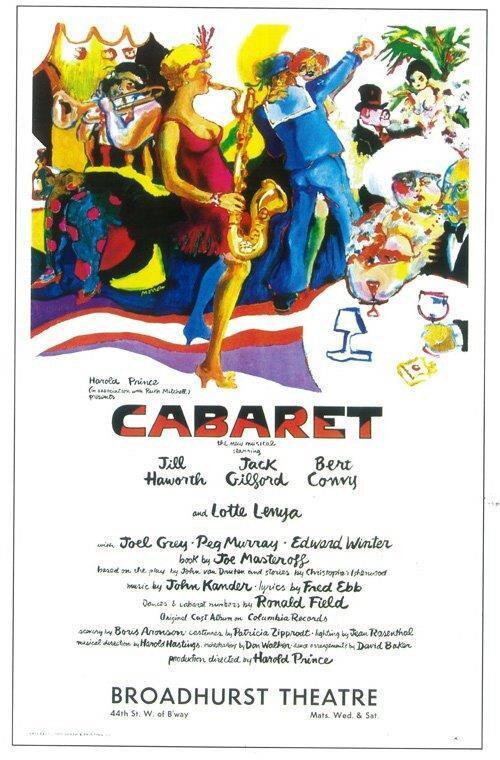
Although Haworth had never sung a note professionally, she was chosen out of more than 200 applicants for the role of Sally Bowles, the British expat singer at the Kit Kat Klub in pre-war Berlin, in Cabaret. Despite mixed reviews – including a particularly bad one from the influential Walter Kerr of the New York Times, who noted that “the musical’s one wrong note is Jill Haworth, worth no more to the show than her weight in mascara” – she stayed with the show for almost two years, gaining a following.
Actually, Haworth, wearing a dark wig, was much closer to Christopher Isherwood’s Sally in his Goodbye to Berlin than Liza Minnelli was in the 1972 film version. Minnelli was much too good a singer to be found in such a seamy club. Isherwood described Sally in the book thus: “She had a surprisingly deep, husky voice. She sang badly, without any expression, her hands hanging down at her sides – yet her performance was, in its own way, effective because of her startling appearance and her air of not caring a curse of what people thought of her.” That was exactly Haworth’s performance, especially in the gutsy title number.
After Cabaret, her career entered another stage, that of a “scream queen” in low-budget horror movies. She had taken the first steps previously in It! (1967), a risible updating of the golem legend, in which Roddy McDowall, as a deranged museum curator, lusts after his assistant, Haworth. He manages to bring a giant ancient Hebrew statue to life, bringing about the “monster carries girl” climax, a cliche of the genre.
Haworth is threatened again in The Haunted House of Horror (1969), in which she is a mini-skirted swinger who goes ghost-hunting with her “groovy” friends in an old, deserted mansion. In Tower of Evil (1972), she is chased around a lighthouse by someone or something with a sharp weapon. In Home for the Holidays (1972) – a television film scripted by Joseph Stefano, the screenwriter of Psycho – she is killed with a pitchfork, and in Mutations (1974), inexplicably directed by the great cinematographer Jack Cardiff, she is a student who gets involved with the unspeakable acts of a scientist (Donald Pleasence) who crosses humans with plants.
Haworth, who never married, had lived in New York since 1967, in an apartment bought during her time in Cabaret, which she considered the peak of her career.


Jill Haworth (1945–2011) was a performer whose career serves as a poignant case study in the “blonde starlet” machinery of the 1960s. Discovered at age 14 by the legendary director Otto Preminger, she was thrust into the spotlight as an international star before she had finished school.
A critical analysis of her work reveals an actress of refined, crystalline stillness who reached her artistic zenith not on the screen, but as the original “Sally Bowles” on Broadway—a role that she defined before it was famously reimagined by Liza Minnelli.
I. Career Overview: The Preminger Protégé
Act 1: The Discovery (1960–1963)
Haworth was a schoolgirl in London when Preminger cast her as the young Jewish refugee Karen in the epic Exodus (1960). Under a strict multi-picture contract, she became Preminger’s “fair-haired girl,” appearing in his war epic In Harm’s Way (1965) and the political drama The Cardinal (1963). During this time, she was marketed as the “English Rose”—virginal, sophisticated, and slightly aloof.
Act 2: The Broadway Revolution (1966–1968)
Frustrated by the “damsel in distress” roles in Hollywood, Haworth took a massive risk by auditioning for Harold Prince’s new musical, Cabaret. She beat out hundreds of hopefuls to originate the role of Sally Bowles. While the show was a massive hit, Haworth’s performance was divisive among critics of the era, though it has since been re-evaluated as a more “accurate” portrayal of Christopher Isherwood’s character.
Act 3: The Horror and Television Era (1970s–1980s)
After Cabaret, Haworth’s film career pivoted toward the “Scream Queen” genre in British cult horror, such as It!(1967) and Tower of Evil (1972). She eventually moved into television guest spots (Mission: Impossible, Bonanza) and became a respected voice actress for commercials before retiring from the industry.
II. Critical Analysis: The “Unsentimental” Sally Bowles
1. The Preminger “Object”: Exodus and The Cardinal
Under Otto Preminger’s notoriously difficult direction, Haworth’s early performances are characterized by a guarded luminescence.
The Technique: Haworth had a “statuesque” quality. In Exodus, she used her youth to project a sense of unspoiled idealism. Critics note that she didn’t “act” so much as she “existed” within the frame, providing a visual anchor for the film’s massive political themes.
Analysis: Modern critics analyze her early roles as the “Idealized Victim.” Preminger used her blonde, fragile appearance to heighten the stakes of his dramas. However, Haworth’s performance in The Cardinal showed a maturing ability to handle melancholic subtext, playing a woman whose life is ruined by social and religious rigidity.
2. The Original Sally Bowles: A Study in “Realism”
When Cabaret opened in 1966, Haworth’s Sally Bowles was a shock to the system.
The Performance: Unlike Liza Minnelli’s later “superstar” version, Haworth played Sally as she was written in the books: a mediocre, desperate club singer with no real talent but a lot of “front.”
Critical Conflict: Critics at the time (including the New York Times) were confused by her. They expected a powerhouse singer. Haworth, however, sang with a “reedy, slightly off-key charm” that captured the character’s tragic delusion.
Re-evaluation: Today, theater historians often prefer Haworth’s version. She captured the shabby-genteel decay of Weimar Berlin. She didn’t play Sally as a hero; she played her as a girl who was “whistling past the graveyard” of Nazi Germany.
3. The “Final Girl” of British Cult Horror
In films like Tower of Evil (1972), Haworth adapted to the changing landscape of the 70s.
The Transition: She traded her “English Rose” softness for a harder, more cynical edge.
Analysis: Critics of the “Slasher” genre note that Haworth brought a level of prestige and class to low-budget horror. She never “winked” at the camera; she played the terror with a straight-faced conviction that made the absurd plots of films like It! (where she stars opposite a living statue) oddly watchable.
III. Major Credits and Comparative Roles
| Work | Medium | Role | Significance |
| Exodus (1960) | Film | Karen Hansen | Golden Globe Nominee; her star-making debut. |
| The Cardinal (1963) | Film | Lalage Menton | Showcased her ability to play “broken” innocence. |
| Cabaret (1966) | Stage | Sally Bowles | Originated one of the most famous roles in theater history. |
| In Harm’s Way (1965) | Film | Annalee Dorne | A tragic role in a high-prestige John Wayne war epic. |
| Tower of Evil (1972) | Film | Penny Read | Established her as a premier “Scream Queen” of the era. |
Final Reflection
Jill Haworth was a victim of her own early success. By the time she was 21, she had been a “Preminger Girl” and a “Broadway Star,” leaving her with few places to go but “down” into the world of cult cinema. However, her legacy is defined by her refusal to be a caricature. She played Sally Bowles with a realistic grit that Hollywood eventually smoothed over, and she navigated the “horror boom” with a dignity that few other starlets of her generation managed to maintain.
The relationship between Jill Haworth and Otto Preminger is one of the most stark examples of the “Pygmalion” dynamic in mid-century Hollywood—a combination of visionary mentorship and what many contemporary observers described as psychological warfare.
Preminger “discovered” Haworth when she was a 14-year-old student at the Corona Stage School in London, and for the next five years, he acted as her director, legal guardian, and professional gatekeeper.
I. The “Discovery” and the Seven-Year Contract
Preminger was notorious for his “discovery” of young, inexperienced actresses (most notably Jean Seberg in Saint Joan). When he saw Haworth, he was struck by her translucent, “unspoiled” quality.
The Legal Hold: Preminger didn’t just hire Haworth; he signed her to a personal seven-year contract. This meant he had total control over which films she appeared in, her public image, and even her personal appearances.
The “Exodus” Initiation: During the filming of Exodus (1960) in Israel, Haworth was thrust into a massive, high-pressure production. Preminger’s directing style was famously “dictatorial,” often screaming at actors in front of the entire crew to provoke a raw, emotional reaction.
II. Critical Analysis: The Director as Sculptor
1. The “Stillness” Technique
Critics often noted that Haworth’s performances under Preminger were remarkably controlled.
The Power Dynamics: Analysis of her scenes in The Cardinal (1963) shows that Preminger used her as a visual motif of purity. He directed her to be “still” and “hollowed out,” allowing the camera to project onto her rather than letting her “act” in a traditional sense.
The Emotional Toll: Haworth later admitted in interviews that Preminger’s bullying was “constant” and that she spent much of her early career terrified of his temper. This genuine fear translated on screen as a fragile, bird-like vulnerability that became her trademark.
2. The Jean Seberg Comparison
Film historians frequently compare Haworth’s experience to that of Jean Seberg.
The Pattern: Preminger sought out girls who were “blank slates.” He believed he could “mold” them into stars through sheer force of will.
The Difference: While Seberg was eventually broken by the Hollywood machine, Haworth possessed a steely British pragmatism. She survived Preminger’s “school of hard knocks” by developing a thick skin, which later allowed her to transition to the grueling schedule of Broadway.
III. The Break and the Legacy
The relationship effectively ended when Haworth’s contract was up and she chose to move toward the stage.
The Turning Point: By the time of In Harm’s Way (1965), Haworth was no longer a child. She had begun to push back against Preminger’s controlling nature. Her decision to audition for Cabaret without his direct “management” was her final act of professional independence.
Preminger’s Reflection: In his autobiography, Preminger remained characteristically unsentimental, viewing his treatment of his “protégés” as a necessary part of the artistic process. He saw Haworth’s success in Cabaret as a validation of the discipline and toughness he had beaten into her.
Final Reflection
The Haworth-Preminger relationship was a relic of the “Old Studio” mentality—a brutal, paternalistic system that created stars by stripping them of their agency. While it provided Haworth with an international platform, it also burdened her with a “victim” persona that she spent the rest of her career trying to shed. Her move to Cabaret was not just a career change; it was an exorcism of the Preminger influence.