Rita Johnson (1913–1965) remains one of the most enigmatic “utility players” of the Hollywood studio era. While she never reached the pantheon of top-tier stardom inhabited by her contemporaries, a critical analysis of her work reveals an actress of superior technical precision and a unique ability to bridge the gap between the “virtuous wife” and the “scheming predator.”
Often described as having a “chiseled, cool beauty,” Johnson’s career is a fascinating study in how the studio system utilized—and often limited—performers who possessed too much intelligence for standard ingenue roles.
1. Career Arc: From Broadway to the “B-Plus” Tier
-
The Sophisticated Start (1930s): Johnson arrived in Hollywood as a seasoned radio and Broadway professional. Her voice was her primary asset—clear, mid-Atlantic, and projecting an effortless upper-class authority. This led to her being cast in sophisticated comedies and “high-society” dramas.
-
The MGM and Paramount Years (1940s): This was her most prolific decade. She became a reliable “second lead,” often playing the sophisticated rival to the more “earthy” female lead. However, she occasionally broke through with haunting performances in genre films, specifically Noir and Thrillers.
-
The Tragic Pivot (1948–1965): Johnson’s career was effectively derailed by a bizarre and near-fatal domestic accident in 1948 involving a falling hair dryer, which resulted in brain surgery and permanent neurological effects. While she attempted a comeback in the 1950s, her momentum was lost, and she spent her final years in obscurity.
2. Critical Analysis of Key Performances
The Big Clock (1948) – The “Haunting” Casualty
As Pauline York, the doomed mistress of a tyrannical publishing mogul.
-
Analysis: This is arguably Johnson’s most critically significant role. She appears primarily in the first act, but her presence haunts the remainder of the film.
-
Critique: Critics point to this performance as a masterclass in “Sophisticated Despair.” Johnson played Pauline with a sharp, brittle wit that masked a deep fear. She avoided the “drunken floozy” tropes common in 1940s noir, instead portraying an intelligent woman who was fully aware of her own disposal. Her chemistry with Ray Milland was based on a shared “intellectual exhaustion” that set the film’s high-stakes tone.
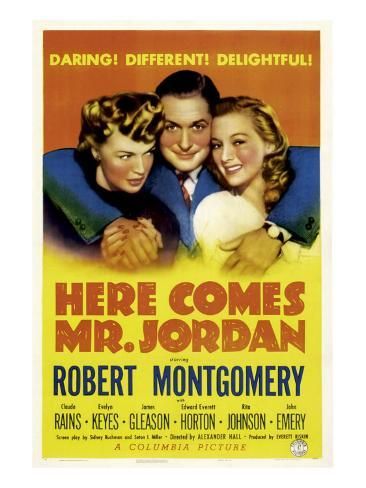
Here Comes Mr. Jordan (1941) – The Comic Villainess
As Julia Farnsworth, the murderous wife who, along with her lover, kills her husband.
-
Analysis: In this classic fantasy-comedy, Johnson was tasked with playing a “remorseless killer” within a lighthearted framework.
-
Critique: Johnson utilized her physical composure to great effect here. By remaining perfectly poised and “ladylike” while discussing murder, she created a darkly comedic friction. Critics noted that she didn’t “play for laughs,” which made her character’s frustration with the supernatural plot much funnier. She was the “straight man” to the film’s absurdity.
They Won’t Believe Me (1947) – The Enigmatic Foil
As Greta Ballentine, the wealthy, controlling wife of a philandering husband (Robert Young).
-
Analysis: This is one of the grimmest and most cynical noirs of the period. Johnson was required to play a character who is both a victim and a psychological jailer.
-
Critique: Modern critical analysis often highlights Johnson’s ability to project “Passive-Aggressive Power.” She used a soft, reasonable vocal tone to exert absolute control over her husband. She portrayed Greta as a woman who bought her husband’s loyalty, and she did so without becoming a caricature of a “shrew,” making the film’s tragic conclusion feel earned rather than forced.
3. Style and Legacy: The “Cool” Interiority
Rita Johnson’s style was defined by understatement and vocal control.
| Attribute |
Critical Impact |
| Vocal Authority |
Having been a “radio queen,” Johnson knew exactly how to use microphone technique on a film set, delivering lines with a clarity that suggested high social status. |
| The “Polished” Mask |
Her face was often remarkably still; she allowed the audience to see her characters’ emotions through “cracks” in her sophisticated exterior. |
| The “Smartest Woman in the Room” |
She consistently projected an aura of high IQ, which meant her characters were rarely fooled—they were either in on the scheme or resigned to it. |
The “Studio Utility” Trap
Critically, Johnson is often seen as a victim of the “Stock Character” system. Because she was so reliable at playing “The Other Woman” or “The Sophisticated Wife,” studios rarely took the risk of casting her in transformative leading roles.
However, her legacy among Noir enthusiasts is significant. She represented a specific kind of “Mid-Century Modern” femininity: sleek, articulate, and slightly dangerous. She wasn’t a “femme fatale” in the traditional sense; she was the woman who had the keys to the penthouse and knew exactly where the bodies were buried.
Critical Note: Rita Johnson was the “Architect of the Second Lead.” She proved that a performance doesn’t need 90 minutes of screen time to be the moral or psychological center of a film. Her career is a reminder that in the Golden Age, the most interesting work was often done by the actors standing just to the left of the spotlight