Joan Rice obituary in “The Daily Telegraph” in 1997.
Joan Rice is best remembered for her role as a lovely Maid Marian to Richard Todd in Walt Disney’s “The Story of Robin Hood and his Merrie Men” in 1952. She then went on to star in the big budget “His Majesty O’Keefe” opposite Burt Lancaster. Her other films include “Operation Bullshine” in 1959 and her last film was in 1970 “The Horror of Frankenstein”. She died in 1997 at the age of 67.
This was Joan’s obituary in The Daily Telegraph, which was very kindly sent to me by her nephew, Richard Keeble:
“Joan Rice who has died aged 66 [1997], was a Rank starlet of the 1950’s; her best remembered role was Maid Marian in Disney’s Robin Hood (1952) opposite Richard Todd. Hers was a Cinderella story without the glass slipper. She was discovered as a waitress at the former Lyons Corner House in Piccadilly and signed to a film contract after winning the Lyons ‘Miss Nippy’ contest of 1949. With no formal acting training, she was sent to the Rank charm school and rushed into a stream of mostly minor roles in British films of the day. One‘His Majesty O’Keefe,’ (1953) was a Hollywood production set in the South Seas, with Burt Lancaster, but it made little impact at the box office.
A Day To Remember, poster, US poster art, top left: Joan Rice; top right: Stanley Holloway; bottom left: Odile Versois; bottom second left: James Hayter, 1953. (Photo by LMPC via Getty Images)
Joan Rice never found the big role that might have established her on the international scene. She dropped out of the cinema in the 1960’s to build aless glamorous life in provincial repertory. She claimed never to miss her movie career, and later in life, at the instigation of her father-in-law, she took up live acting to repair the omissions of youth. She toured in ‘Rebecca’ and ‘A View from the Bridge,’ her favourite play. She never attracted bad notices, but none of these productions reached the West End and she became a forgotten figure to many of the cinemagoers of the 1950’s who fondly recalled herEnglish rose complexion and shapely contours. After seven years she abandoned acting completely because she disliked being away from home for such long periods. She was tempted into television only once – as a contributor to a ‘This Is Your Life’ show for Richard Todd, but dried up before the cameras and had to be steered through the programme by Michael Aspel.
Joan Rice was born in Derby on February 3rd 1930, one of four sisters from a broken home. She was brought up for eight years in a convent orphanage in Nottingham. After early experience as a lady’s maid and a housemaid, she left for London with half a crown in her purse and took a job as a waitress withLyons at £3 a week. Balancing tea trays and negotiating obstacles gave a natural poise that stood her in good stead in the company’s in-house beauty contest. The prize was a week’s promotional tour in Torquay ( a town to which she returned 20 years later in a revival of ‘The Reluctant Debutante’ at the Princess Theatre). As winner of the ‘Miss Nippy’ contest, she was introduced to the theatrical agent Joan Reese, who went to work on her behalf and secured a screen test and a two-line bit part in the comedy, ‘One Wild Oat.’ Her first substantial role, however, was in ‘Blackmailed’ (1950), a hospital melodrama, starring Mai Zetterling and Dirk Bogarde, in which Joan Rice played a good time girl.
It caught the eye of Disney and led to the role of Maid Marian, in which she was hailed as the “new Jean Simmons.” Rank however, seemed unable to capitalise on this. In the 11 years that she was active in British films, Rank offered her only supporting roles in films dependant on a large cast of character actors. ‘Curtain Up’ (1952), for example was about a seaside repertory company,‘A Day to Remember’ (1953), about a darts team on a one day excursion to France, ‘The Crowded Day,’ (1954) about the staff of a department store coping with the Christmas rush and ‘Women without Men,’ (1956) about a breakout from a women’s prison. Only ‘Gift Horse’ (1952), a traditional wartime naval picture, had quality, yet her role as a Wren was subsidiary to Trevor Howard, Richard Attenborough and Sonny Tufts. In ‘One Good Turn’ (1954), she was wasted as a stooge to Norman Wisdom. After ‘Payroll’ in 1961, she effectively called it quits, returning for only one last picture, ‘The Horror of Frankenstein’ in 1970.
After leaving show business, she lived quietly with her beloved Labradors,Jessie and Sheba, took work as an insurance clerk and later set up an estate agent, letting accommodation in Maidenhead through the Joan Rice Bureau, though she had only one member of staff.
She smoked heavily and suffered from asthma and emphysema, which kept her largely housebound for the last six years.
She married first, in 1953 (dissolved in 1964), David Green, son of the American comedian, Harry Green; they had one son. She married secondly, in 1984, the former Daily Sketch journalist Ken McKenzie, who survives her [1997].”
A Daily Telegraph obituary of Ms Rice can be accessed here.
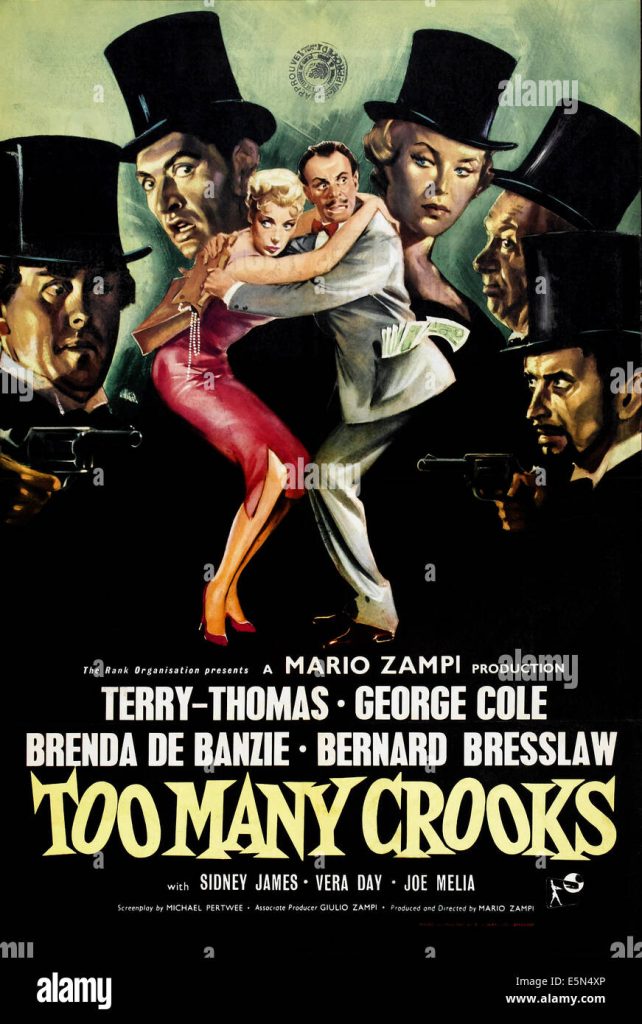
Brenda de Banzie starred in several major films in Britain in the 1950’s and 60’s but biographical information on her seems very scarce. She was born in Manchester in 1909. She did not begin a career on film until she was in her mid 40’s. Her film debut was in “The Yellow Balloon” with Kathleen Ryan and Kenneth More in 1953. She had the female lead opposite John Mills and Charles Laughton in “Hobson’s Choice”. Her other major films include “The Purple Plain”, “The Man Who Knew too Much”, “A Kid for Two Farthings”, “Doctor at Sea” , “The Entertainer” and “The Pink Panter”. Her last film was “Pretty Polly” as the aunt of Hayley Mills in 1967. She died in 1981 at the age of 71. She never seemed to play tender roles. It would have been interesting to see her in such parts.
Her IMDB mini biography:
The daughter of a musical conductor, fair-haired, slightly plump Brenda de Banzie appeared in just a handful of films. As the result of two outstanding performances, she became an unexpected star when well into her middle age. Brenda first came to public notice as a sixteen year old chorine on the London stage in “Du Barry Was a Lady”, in 1942. By that time, she had already been treading the boards in repertory for some seven years. The theatre was, first and foremost, her preferred medium. In the early 1950’s, she had an excellent run of top-billed performances at the West End, which included “Venus Observed” with Laurence Olivier, and “Murder Mistaken”, as a wealthy hotel owner whose husband is plotting to bump her off for her money. For this, she won the coveted Clarence Derwent Award as Best Supporting Actress.
Critical plaudits tempted her to try her luck on screen, so Brenda eventually made her celluloid debut in Anthony Bushell‘s murder mystery The Long Dark Hall (1951). Her performance, as a rather vulgar and dowdy boarding house landlady, drew good notices – including one from Bosley Crowther of The New York Times. In 1954, director David Leancast Brenda in her defining role as Maggie Hobson, a middle-aged, temperamental spinster, opposite Charles Laughton and John Mills in Hobson’s Choice (1954). She pretty much stole every scene from her illustrious co-stars. Rather surprisingly, a BAFTA, eluded her. In 1958, Brenda landed the prize role of Phoebe Rice, the bitter, alcoholic wife of a second-rate music hall performer (played superbly by Olivier) in John Osborne‘s The Entertainer (1960). She recreated her performance for Broadway and for the film version in 1960 and received a Tony Award nomination. Sadly, little else came along which did much justice to Brenda’s intelligence and acting skills. During the 1960’s, she appeared primarily in matronly character roles and passed away during surgery for a non-malignant brain tumor in March 1981.
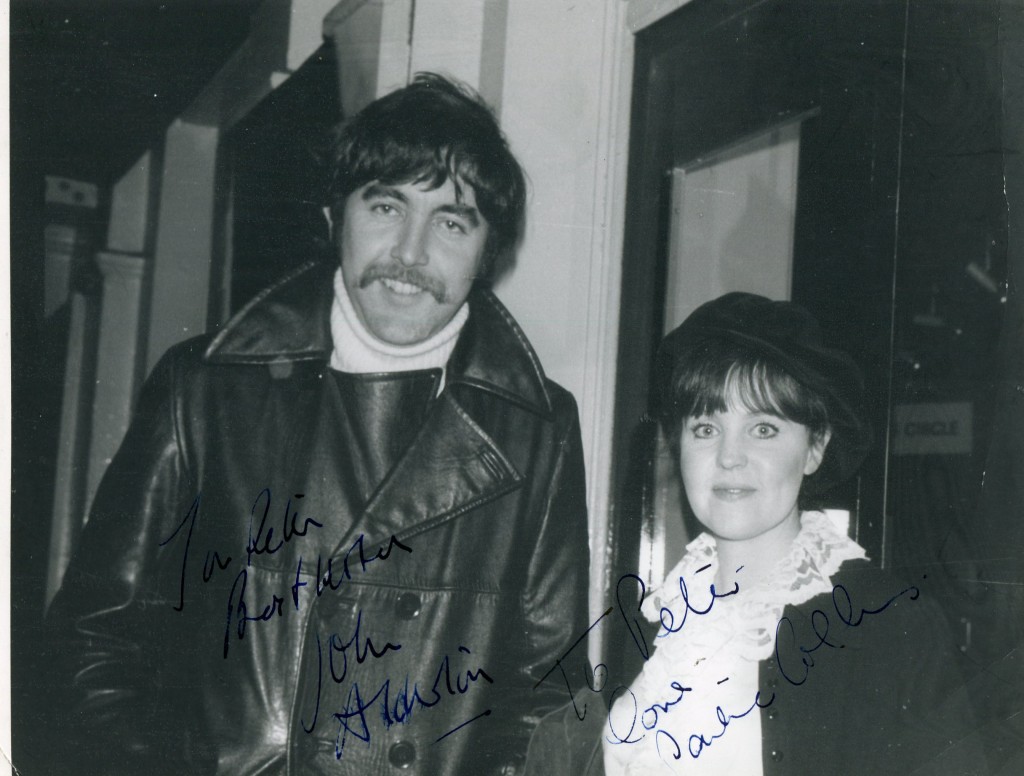
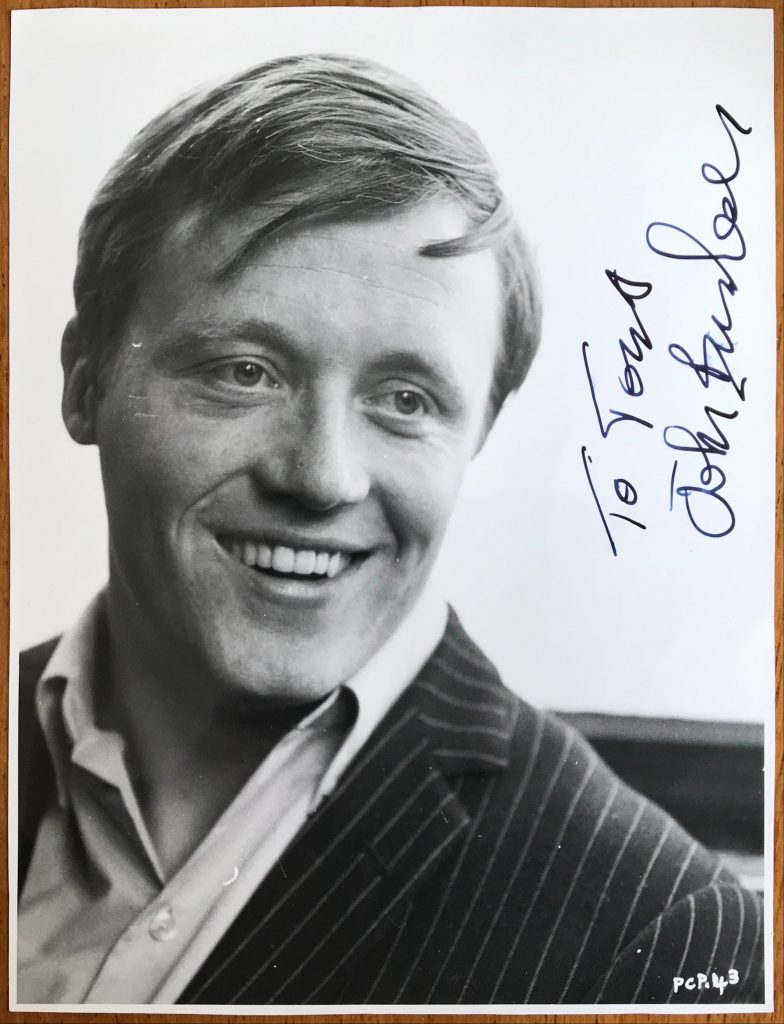
John Alderton was born in 1940 in Gainsborough in England. He has had many successful British television series including “Emergency Ward 10”, “Please Sir”, “Upstairs, Downstairs”, “Thomas and Sarah” , “My Wife Next Door”,and “Forever Green”. His films include “Duffy” in 1969 and more recently “Calender Girls”. He is long married to actress Pauline Collins. Interview here.
He made his first stage appearance with the repertory company of the Theatre Royal, York in August 1961, in Badger’s Green by R.C. Sherriff. After a period in repertory, made his first London appearance at the Mermaid, November, 1965, as Harold Crompton in Spring and Port Wine, later transferring with the production to the Apollo. At the Aldwych, March 1969, played Eric Hoyden in the RSC’s production of Dutch Uncle. At the Comedy Theatre, July 1969, played Jimmy Cooper in The Night I Chased the Women with an Eel. At the Howff, October, 1973, played Stanley in Punch and Judy Stories, and played the same part in “Judies” at the Comedy, January, 1974. At the Shaw, January 1975, played Stanley in Pinter’s The Birthday Party. At the Apollo, May 1976, played four parts in Ayckbourn’s Confusions.
During the 1980s and 1990s, Alderton had few roles, but he narrated the children’s original animated series ‘Little Miss‘ in 1983 (with his wife Pauline Collins) and, from 1987 to 1994, he narrated and voiced all the characters in the original series of Fireman Sam. From 1989 to 1992, he starred in the series Forever Green as the character Jack Boult, and appeared in the film Clockwork Mice in 1995.
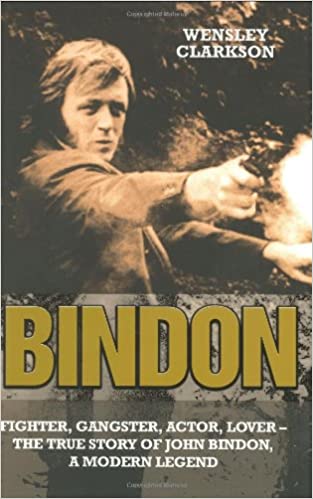
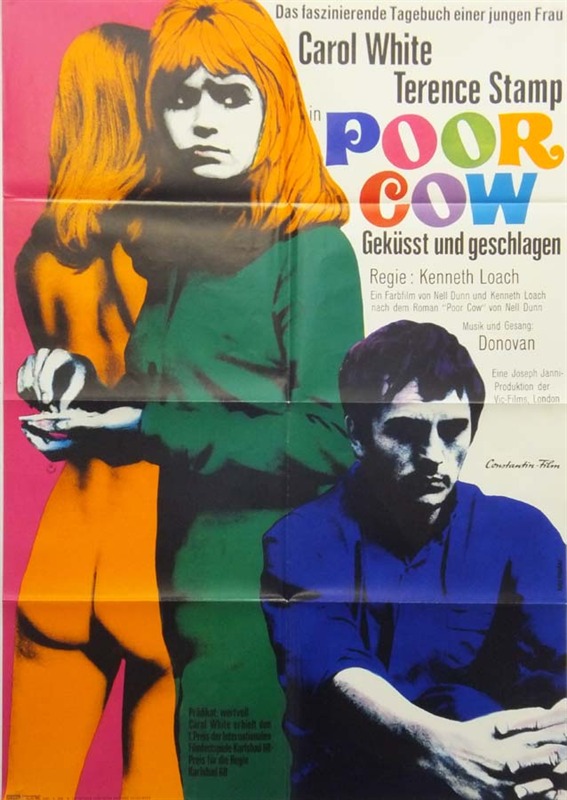
John Bindon was a very interesting screen actor in British films in the 1960’s and 70’s . He usually played tough guys a role which he seemed to play in real life. The director Ken Loach spotted him in an East End pub in London in 1966 and cast him as the abusive husband of Carol White in the excellent “Poor Cow”. He was then cast in “Performance” with Mick Jagger. He also had major roles in “Quadrophenia” and “Get Carter”. He died in 1993 at the age of 50.
His “Independent” obituary:
A MAN of the Sixties, John Bindon lived a life at least as colourful as the roles he played: he was the archetypal actor-villain, and an all- round ‘good geezer’. ‘The fundamental thing about John was that he was a bright, intelligent man a size bigger than the room he was in,’ recalls his agent, Tony Howard.
The son of a Fulham cabbie, Bindon had an upbringing shrouded in machismo myth. It was all good training for the adult Bindon, for whom the term method acting might have been invented. The director Ken Loach cast him in Poor Cow (1967), the gritty realist film of Nell Dunn’s novel, having been introduced to him by Dunn ‘through a contact of hers. He was very easy to direct,’ says Loach, ‘and he was very good in it, very straight.’ Bindon’s portrayal of Carol White’s wife-battering husband was to set the tone for his acting career.
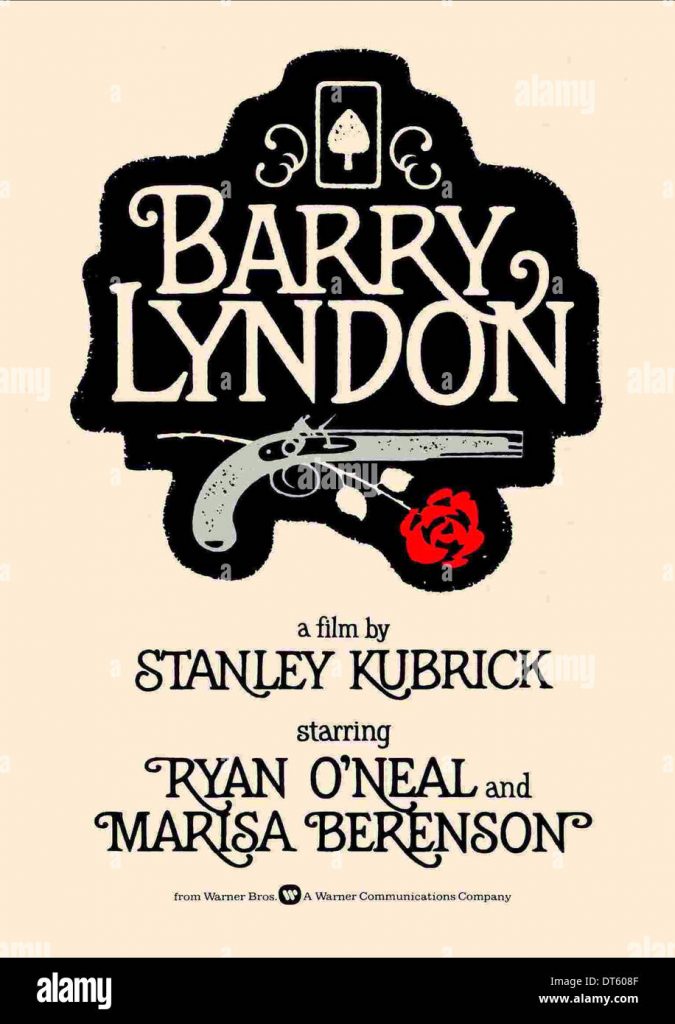
The celebrity of Poor Cow brought the model Vicki Hodge into Bindon’s life, and Bindon into high society. He was ‘not an East End tough,’ says Tony Howard. ‘He was a genial fellow welcome everywhere he went, from the highest to the lowest places. He could make a horse laugh – he could put people on the ground. He could charm Princess Margaret equally as well as anyone else.’ Bindon’s bonhomie certainly won him many celebrated friends: ‘John Huston loved him, Stanley Kubrick loved him,’ Howard says. Bindon appeared in the former’s film The Mackintosh Man (1972) , with Paul Newman, and had a small part in Kubrick’s Barry Lyndon (1975).
In 1970 Bindon was cast, alongside Mick Jagger and James Fox, in Performance, in which he played minder to the Kray-like ‘Harry Flowers’. The film’s co-director Nicholas Roeg remembers him as a ‘wild, naked talent; an extraordinary man; a totally unafraid person; people often mistrust that, mistake it for pugnacity.’ Bindon kept in contact with Roeg, who met him again some 10 years later, when the actor came to the United States ‘shortly after his ‘other problems’. We were always able to pick up a friendly conversation. I had a very great regard for him. I liked his attitude of raw courage; he had an unencumbered attitude – people are so often encumbered by fear.’ Bindon won the Queen’s Award for bravery in 1968, after rescuing a drowning man from the Thames (although it was alleged that Bindon had pushed the man in himself, and only pulled him out when a policeman appeared).
In between bouts of acting, Bindon became involved in the music scene, acting as tour manager and security for Led Zeppelin and David Bowie; he was a particular friend of Bowie’s manager, Tony de Fries, and through him got to know Angie Bowie, with whom he had a well-publicised affair. Bindon’s amatory interests – Christine Keeler, Serena Williams – excited almost as many gossip column inches as did his other activities.
Unfortunately, what Roeg calls his ‘other problems’ soon established another sort of fame. In 1976 Bindon was declared bankrupt; two years later he killed John Darke, a London gangster, outside a pub in Putney, allegedly for a fee of pounds 10,000. Bindon escaped to Dublin, badly wounded. He returned to England, however, and was acquitted on a plea of self-defence when it was revealed that he had saved a victim whom Darke had stabbed in the face. The substantial appearance of Bob Hoskins as a character witness at the trial helped sway the verdict.
Bindon made various appearances, generally portrayed as a ‘heavy’, in television series such as Hazell, The Sweeney, Softly, Softly and Minder, where his tough-guy persona lent an authentic air to such productions. But film work declined after the adverse publicity of his trial – although he did memorably play a drug dealer in the rock film Quadrophenia (1979), a role which again appeared perilously close to typecasting.
In 1981, Bindon’s 12-year relationship with Vicki Hodge ended, and his criminal activities began to garner more publicity than his acting work. In 1982 he was convicted of threatening a law student with a piece of pavement; and two years later was sentenced to two months in prison for holding a carving knife in the face of a detective constable. Although this sentence, and a similar one of six months for carrying an offensive weapon, was suspended, Bindon had spent time inside for other crimes. Tony Howard recalls: ‘His time in jail was well spent, reading avidly. He had a great knowledge of history and Shakespeare – he loved the classics – he knew everything there was to know about people like Wellington – he could quote Shakespeare freely, and did.’
Bindon’s last appearance was at the tiny King’s Head theatre in Islington in 1987, but his performance merited a worthy critical mention. The latter part of Bindon’s life was spent in a small flat in Belgravia, in a degree of poverty. His death from cancer brought unlikely tributes to the man’s goodheartedness from colleagues and close friends. Over 200 people attended his funeral at Putney Vale crematorium, spilling out of the chapel in their eagerness to show respect.
His “Independent” obituary can also be accessed online here.
Brian Glover was an actor, writer and wrestler from the English midlands . He was born in 1934 in Sheffield. His first film role was as Mr Sugdon the bossy soccer coach in Ken Loach’s “Kes” in 1970. He had a recurring role in the classic TV series “Porridge”. On the stage he acted in Lindsay Anderson’s “The Changing Room”. He died from a brain tumour in 1997 at the age of 63.
His “Independent” obituary:
Bluff and bald Brian Glover, who made his acting debut as the ebullient games master in Kes, was one of Britain’s most distinctive and popular character actors. His chunky frame was familiar from countless television appearances as well as film and stage work, while his homely Yorkshire tones were heard as voice-overs in television commercials, notably his assurances that “Tetley make tea bags make tea”, and that Allison’s bread has “nowt taken out”.
me that when Glover starred in a West End revival of The Canterbury Tales a few years ago it was advertised as “Chaucer with nowt taken out”.
Glover was born in Sheffield in 1934, but raised in Barnsley. His parents did not marry until he was 20. “I was in the gym in Barnsley one day and me dad came in and said, `Me and your mother made it all right today’, and I said `About bloody time!’ ” His father was a wrestler who called himself the Red Devil (“I don’t know what the neighbours thought when me mum used to hang out his masks on the clothes line”), and his mother ran a small grocer’s shop.
With his stocky frame, it was inevitable that Glover too would become a wrestler, eventually topping bills under the name of Leon Aris. Prompted by his mother to get a good education, he attended Sheffield University and became a teacher of French and English in Barnsley, where a fellow teacher was Barry Hines, the author of Kes.
In 1968, when the film was in preparation, Hines suggested that the director Ken Loach consider Glover for the role of the bullying games master Sugden. “Ken Loach was improvising a fight with a load of kids, and he asked me to stop it like a teacher would,” recounted Glover. “Well, I’d stopped a good few playground fights, and I had the confidence of being in the ring all those years, so I just grabbed the two kids who were fighting and banged their heads together.”
Though both the film and Glover’s performance in it were successful, he returned to teaching for two years until the entrepreneur Binkie Beaumont saw Kes while casting Terence Rattigan’s play about Nelson, Bequest to the Nation, and thought Glover right for the role of Hardy. The actor wickedly commented later, “Binkie used to take me to the Ivy – I must have been his rough trade or something.”
Glover’s acting career continued to flourish with roles at the Royal Court (including two David Storey plays directed by Lindsay Anderson, The Changing Room, 1971, and Life Class, 1974), and with the Royal Shakespeare Company, including Charles the Wrestler in As You Like It. Anderson cast him in his epic allegorical film O Lucky Man! (1973) and as Sergeant Match in his stage production of Orton’s What the Butler Saw (1975).
Prolific work with the National Theatre included roles in The Long Voyage Home, The Iceman Cometh (both 1979), Don Quixote (1982) and Saint Joan (1983), while other films included Brannigan (1975), The Great Train Robbery (1979), Company of Wolves (1984), Aliens 3 (1991) and Leon the Pig Farmer (1992).
The advertising industry, which grades voices by colour, had Glover’s as a robust, no-nonsense dark brown, and it was in demand for commercials, including his famous ones for bread and tea. His dozens of acting roles on television included a Doctor Who adventure in 1984 that proved a source of steady income. “I get more repeat fees for that than anything,” he said recently, adding, “The other big success is A Midsummer Night’s Dream. Get in a Shakespeare on the telly and the BBC sell it all over the world on video to schools.”
Though he played Bottom in this production, and had one of his greatest successes playing a blunt but benign God in The Mysteries (1985), he accepted with good humour that many of his roles would be villainous. “You play to your strengths in this game,” he said, “and my strength is as a bald- headed, rough-looking Yorkshireman.”
Along with his success as an actor, Glover pursued a writing career which included over 20 television plays and short films, plus a regular column for a Yorkshire paper. A committed socialist, he proved a lively member of the BBC television discussion programme Question Time. A totally unpretentious and down-to-earth personality (he refused to be ferried by limousines even when they were offered), he was enormously liked within the profession.
Though he had an operation for a brain tumour last September, he was back at work two weeks later filming John Godber’s Up and Under, in which he plays a Rugby League fan who is mentor to a younger player. “I first met Brian in 1977,” said Godber yesterday, “when he was one of the few people to see my first play, Bouncers, on the Edinburgh Fringe. He was kind enough to write me a little note and say he thought I might have something.”
Having always wanted to make a film with Glover, Godber created the film role especially for him. “He was a little bit poorly during the shoot,” said Godber, “but he never let it get in the way. He was always terrific company.”
Brian Glover, actor: born Sheffield 2 April 1934; twice married (one son, one daughter); died London 24 July 1997.
Rupert Graves was born in 1963 in Weston-Super-Mare in Somerset. He started his career as a circus clown. His breatkthrough roles came with two E.M. Forster’s novels into film, “A Room With A View” in 1985 and two years later “Maurice”. Among his other films are “Where Angels Fear to Tread”, “The Sheltering Desert” and “Mrs Dalloway”.
Gary Brumbrugh’s entry:
Born in a seaside resort town, Britain’s Rupert Graves was born a rebel, resisting authority and breaking rules at an early age. In his teens he became a punk rocker and even found work as a circus clown and in traveling comedy troupes. In 1983 he made his professional stage debut in “The Killing of Mr. Toad” and went on to co-star with Harvey Fierstein in the London production of “Torch Song Trilogy.” It didn’t take long for somebody to take note of Rupert’s boyish good looks and offbeat versatility. By the mid-80s he was a presence in quality films and TV, primarily period pieces such as his Freddy Honeychurch in A Room with a View (1985) and the gay drama Maurice (1987).
Rupert moved to the front of the class quickly. His decisions to select classy, obscure arthouse films as opposed to box-office mainstream may have put a dimmer on his star, but earned him a distinct reputation as a daring, controversial artist in the same vein as Johnny Depp. In A Handful of Dust (1988) he essayed the role of a penniless status seeker who beds down a married socialite; in Different for Girls (1996) he was the lover of a male-to-female transsexual woman; in The Innocent Sleep (1996) he played a derelict drunk; and in the award-winning Intimate Relations (1996) he portrayed an aimless boarder who has a relationship with both the mother/landlady and her daughter.
Equally adept at costume and contemporary drama, Rupert more recently earned rave reviews on Broadway with “Closer” in 2000 and “The Elephant Man” in 2002. Rupert is currently married to production coordinator Susie Lewis.
– IMDb Mini Biography By: Gary Brumburgh / gr-home@pacbell.net
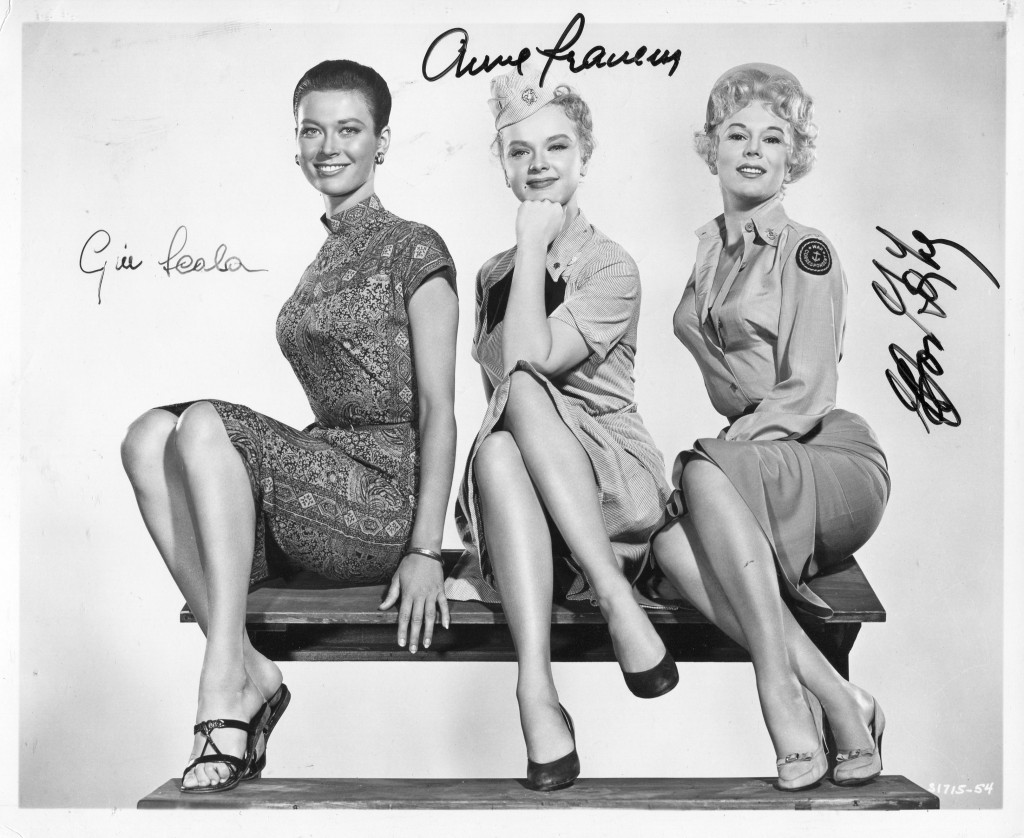
Gia Scala was a beautiful English actress of Italian/Irish parentage. She was born in Liverpool in 1934. Her family moved to Rome and then on to New York when she was fourteen. She was signed to a Hollywood contract with Universal Studios and her first film was “The Price of Fear” with Merle Oberon and Lex Barker in 1956. She went on to make “Don’t Go Near the Water”, “Four Girls in Town”, “The Garment Jungle” and probably her most famous film “The Guns of Navarone”.She died in 1972 at the age of 38.
Her IMDB entry:
This tall, dazzling, yet shy and painfully sensitive foreign import was born Giovanna Scoglio in Liverpool, England but moved to Sicily with her aristocratic Sicilian father and Irish mother at three months of age. She migrated to New York at age 14 and attended Bayside (Queens) High School, graduating in 1952.
She worked various jobs as a file clerk and airline reservations taker while studying with Stella Adler and the Actors Studio. While appearing as a contestant on a television game show, a Universal Studios agent spotted her and placed the young beauty under contract in 1954.
The Angry Hills, poster, from left: Gia Scala, Robert Mitchum, 1-sheet poster art, 1959. (Photo by LMPC via Getty Images)
Her best known film role came as Anna, the Greek resistance fighter, in the classic all-star epic film, The Guns of Navarone (1961).
From there things began to spiral downhill for Gia personally and professionally. Riding on the coattails of her ever-rising glamour and success were those deep-rooted insecurities, and she began to drink heavily as compensation.
She eventually lost her contract at Universal due to her unreliability, which forced her to seek work overseas. Her marriage to actor Don Burnett burnt itself out, and, at one point, she threw herself off the Waterloo Bridge in desperation.
She would have drowned in the Thames River had a passing cab driver not plucked her out of the water in time.
Her alcoholic addiction led to numerous arrests, and her bouts with depression grew so severe that she was forced to undergo frequent psychiatric observations.
On April 30, 1972, it all ended for her. Gia was found dead in her Hollywood Hills bedroom of an overdose of alcohol and sleeping pills, another Tinseltown statistic. It was listed as a suicide.
– IMDb Mini Biography By: Gary Brumburgh / gr-home@pacbell.net
Simon McCorkindaleMichael York & Simon McCorkindale
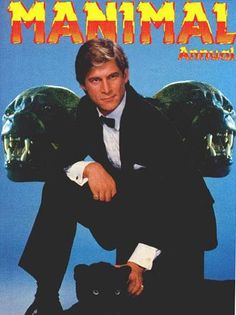
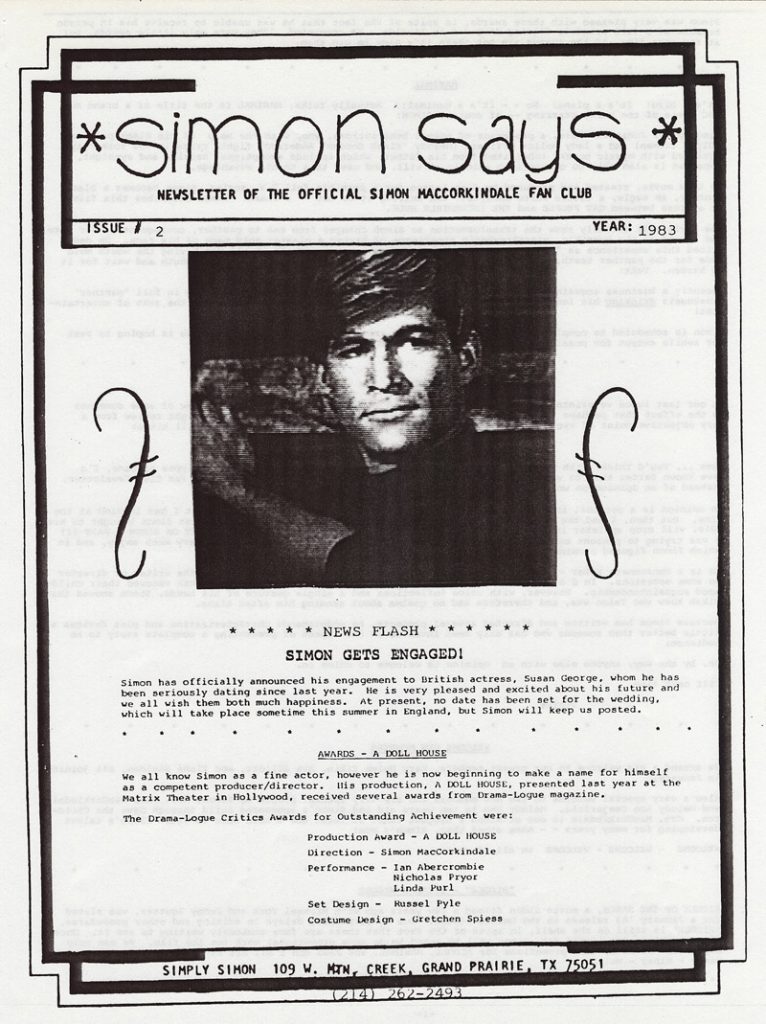
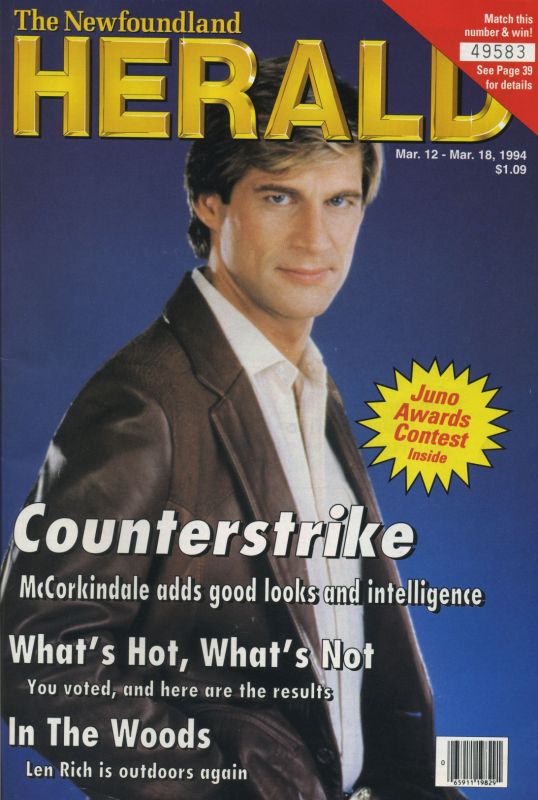
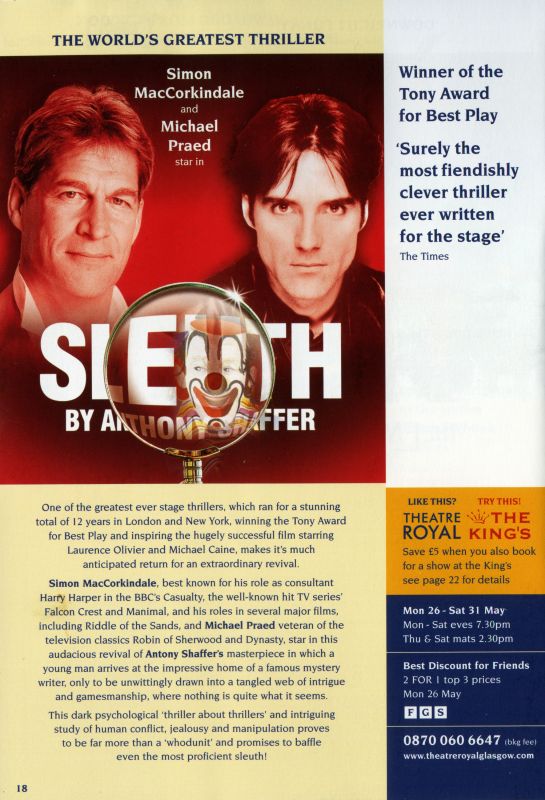
Simon McCorkindale was born in 1952 in Ely in Cambridgeshire. His father was a Group Captain in the Royal Air Force and he hoped to follow in his father’s footsteps but he was shortsighted and unable to enlist. He made his West End stage debut in “Pygmalion” with Sir Alec MacCowan and Dame Diana Rigg. His film breakthrough came with the higly popular “Death on the Nile” where he was caught in a love triangle with Mia Farrow and Lois Chiles. He went to Hollywood where he made the TV series “Manimal” which was not a success. He was then part of the cast of “Falcon Crest” with Jane Wyman. After some years he returned to the UK and was cast in the long running “Casualty” as clinical lead consultant Harry Carpenter. Simon MacCorkindale died in October 2010. He was long married to actress Susan George.
His “Guardian” obituary by Ronald Bergan:
In common with his contemporaries Jeremy Irons, Michael York and Hugh Grant, the actor Simon MacCorkindale, who has died of cancer aged 58, on screen projected the very English persona of an ex-public schoolboy. But unlike them, MacCorkindale never made it big in films. Nevertheless, his “posh” accent, his suave demeanour and patrician good looks made him a natural for roles in television soap operas, from the opulent mansions of Falcon Crest (1984-1986), to the hospital corridors of Casualty (2002-2008). In the latter, he played the autocratic clinical consultant Harry Harper, who ran Holby City hospital’s emergency department. A doctor of the old school, he sweeps through the wards, advising, cajoling, admonishing and seducing colleagues and patients alike.
In 2007, having already been diagnosed with bowel cancer, MacCorkindale learned that it had spread to his lungs and that he had no more than five years to live. It was cruelly ironic that he continued to play Harry Harper, sometimes being required to inform patients that they had an incurable disease. “I don’t want people to think that I’m pale, losing my hair, losing weight and on the way out,” he commented in 2009. “I’m not. I’m as active as I’ve ever been.”
Immediately after leaving Casualty, and refusing to let his illness interfere with his work, MacCorkindale toured in the strenuous part of Andrew Wyke in Sleuth, took over the role of Captain Georg Ludwig von Trapp in the London Palladium production of The Sound of Music, as well as appearing in a couple of films and television plays. This stoicism may be put down to his upbringing.
MacCorkindale was born in Ely, Cambridgeshire, the son of Scottish parents. He spent much of his early childhood moving around because his father, a group captain and a station commander in the RAF, had postings at various bases in Britain, Germany and Belgium. Eventually, Simon was sent to Haileybury school, Hertfordshire, where he played rugby and was head boy. His desire to follow his father into the RAF was thwarted when he failed an eyesight test, so he decided to train for the stage, despite his father’s conviction that it was “not a sensible job”.
While in his early 20s, MacCorkindale started to get small parts on stage (“a sarcastic bystander” in Pygmalion, 1974) and on television (Paris in Romeo and Juliet; Lucius in I, Claudius, both 1976). But his breakthrough came with the role of the charming cad Simon Doyle in Death on the Nile (1978), in which he was in no way outshone by the starry cast of murder suspects under the scrutiny of Peter Ustinov’s Hercule Poirot. The following year, MacCorkindale appeared as an astronomer in The Quatermass Conclusion, co-starring with John Mills, a hero of his, and in The Riddle of the Sands, based on Eskine Childers’s adventure novel, wherein he and Michael York were two British yachtsman who foil a German plot to invade Britain in 1901.
In 1982, following his divorce from the actor Fiona Fullerton, to whom he had been married for six years, MacCorkindale went to live in California. There, along with Joan Collins in Dynasty, MacCorkindale found himself in the first wave of British stars to make an impact in American television shows. After appearances in one episode each of Hart to Hart and Dynasty, he was given the lead in Manimal (1983), which had the rather absurd conceit of having MacCorkindale as a British college professor at New York University who has the unusual ability to transform himself into any kind of animal in order to help the police battle crime. Not surprisingly, despite some clever special effects, the show ran only eight episodes. Fortunately, MacCorkindale, who always refused to Americanise his accent, got the part of Greg Reardon, a conniving British lawyer employed by Angela Channing (Jane Wyman), the equally conniving matriarch who runs the family winery in the glossily extravagant Falcon Crest.
However, after a few more soaps, he and the actor Susan George, whom he had married in 1984, decided to return to Britain, where he set up a production company called Amy International Artists, named after the character his wife had played in the controversial Straw Dogs (1971). In 1995, they bought and took over a 45-acre stud-farm on Exmoor, where they bred Arabian horses. Then came the six-year run in Casualty, which required a relatively more realistic acting style than in American soap operas.
MacCorkindale is survived by his wife.
• Simon MacCorkindale, actor, born 12 February 1952; died 14 October 2010
The “Guardian” obituary can also be accessed online here.
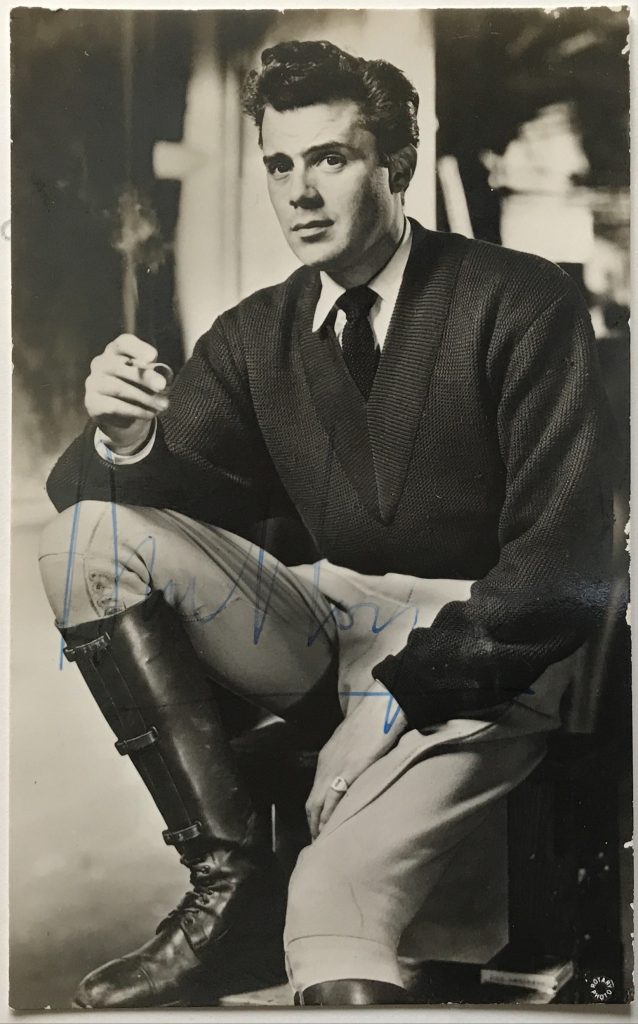
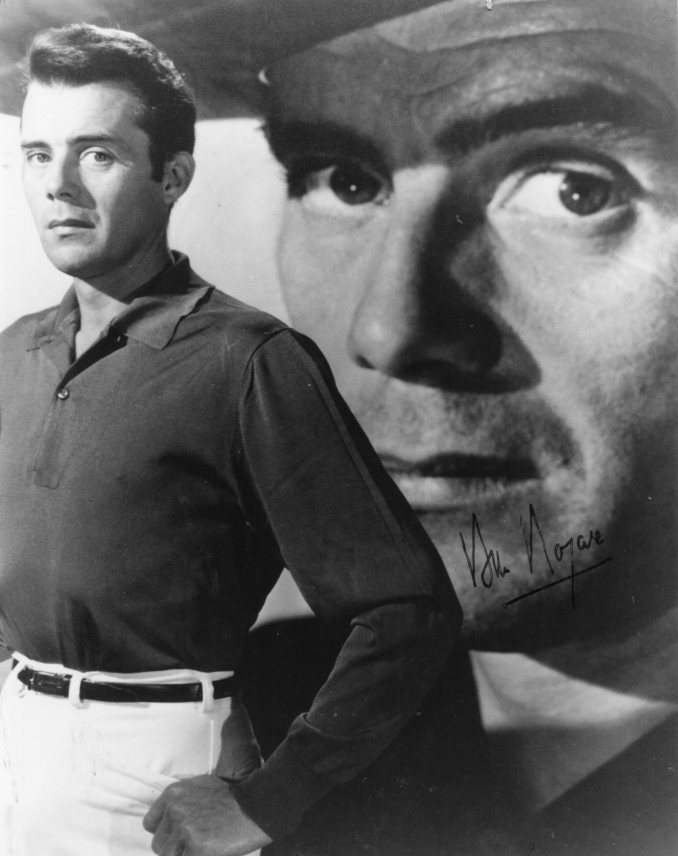
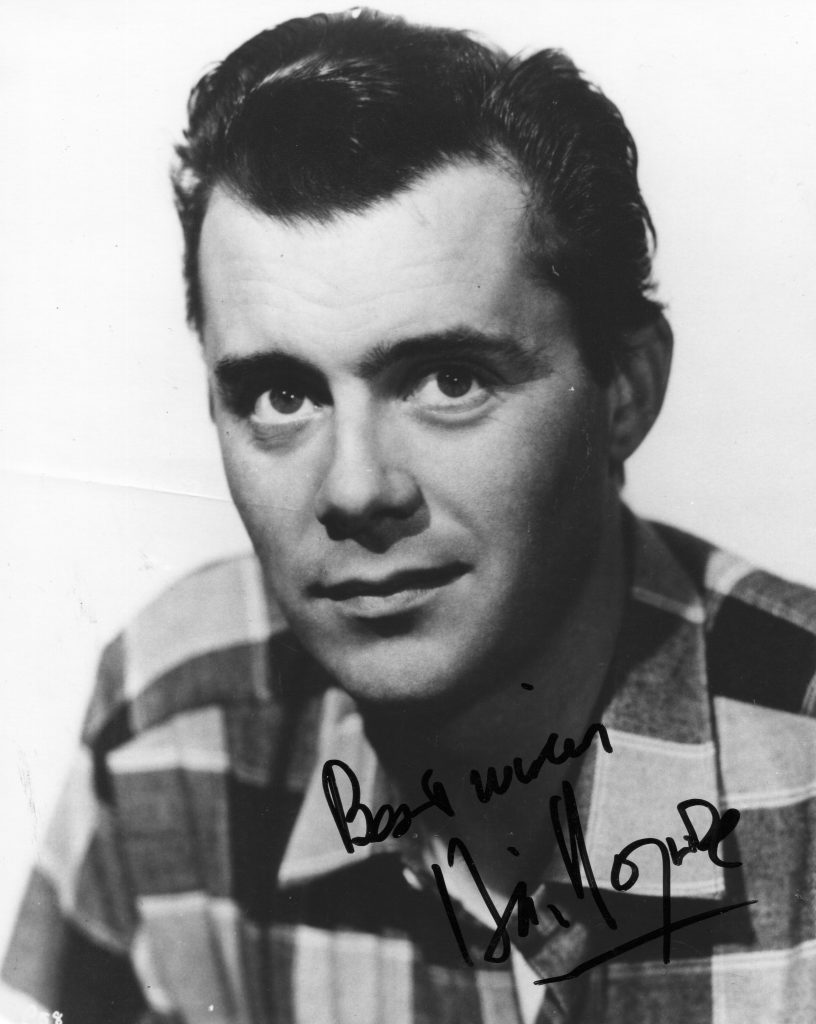
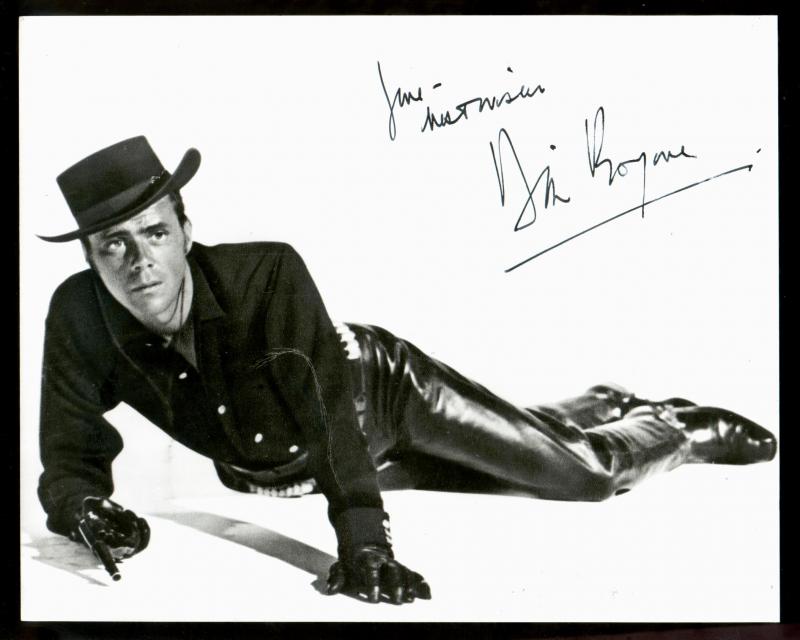
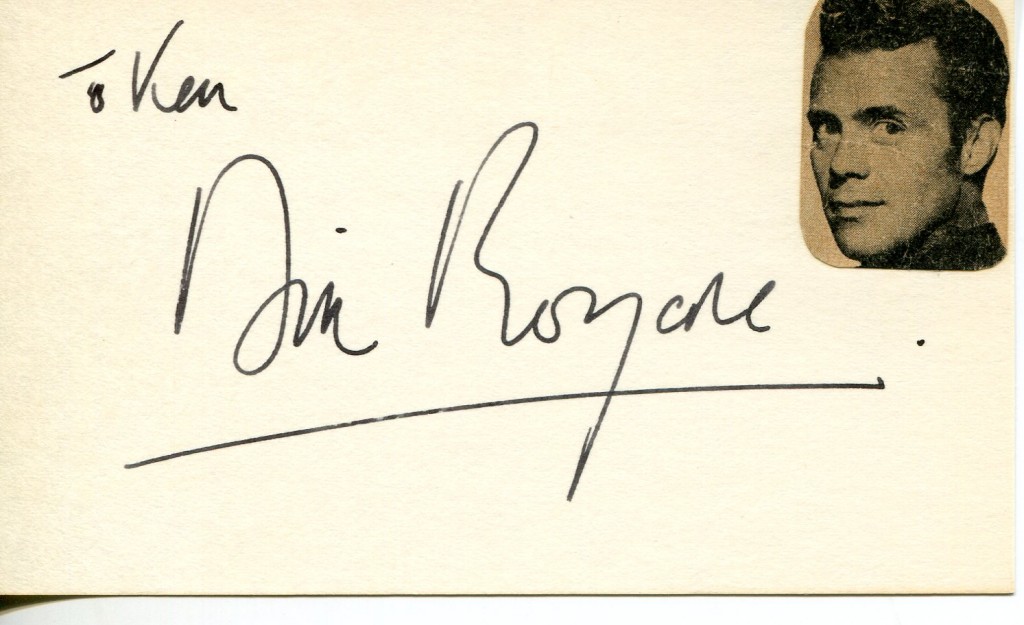
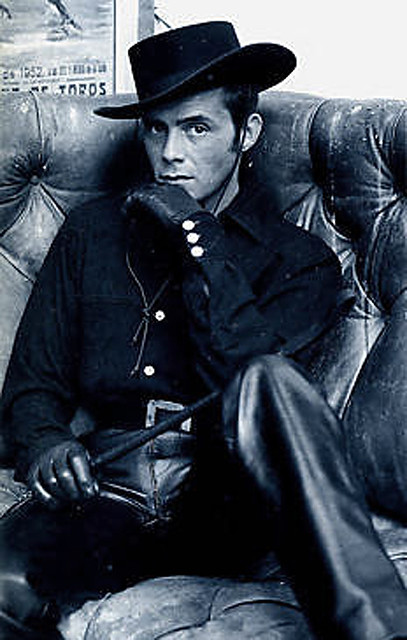
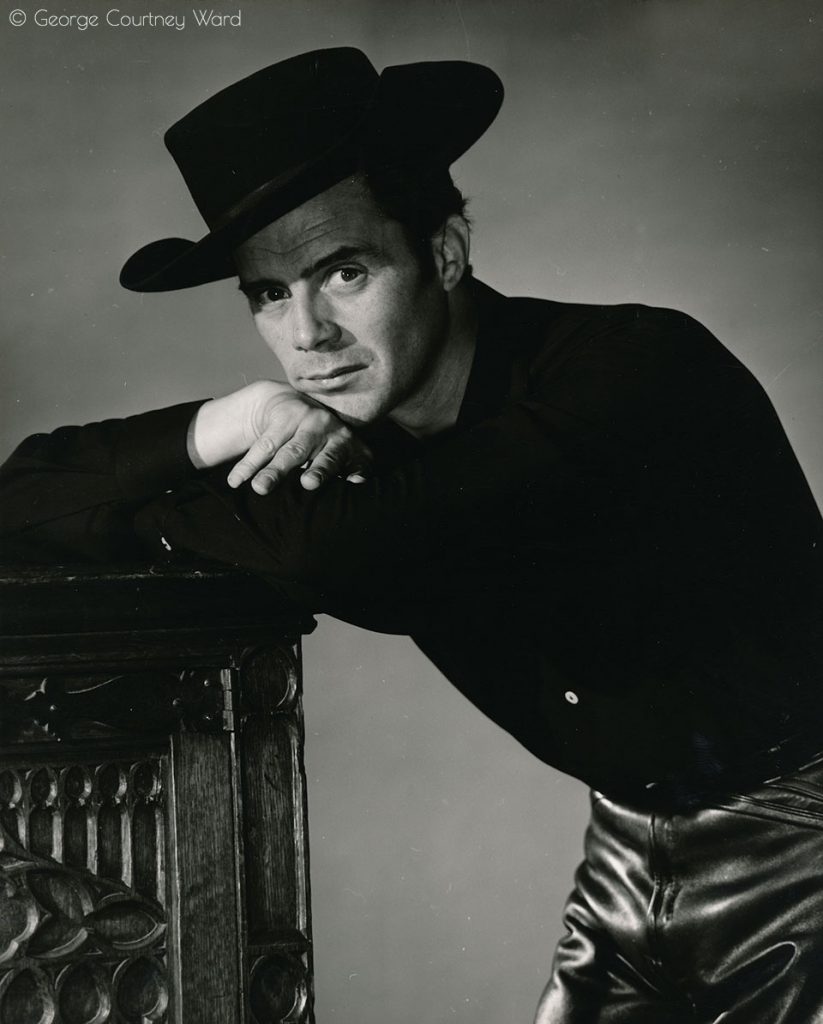
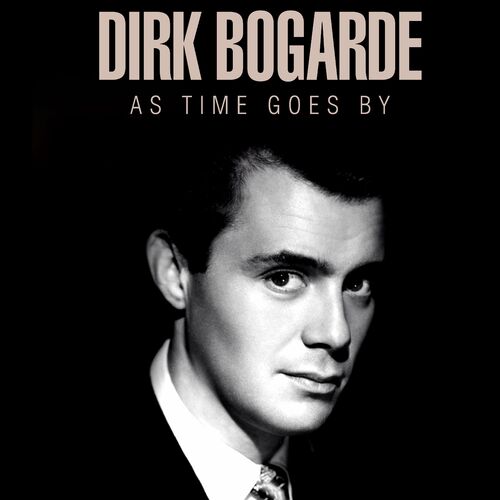
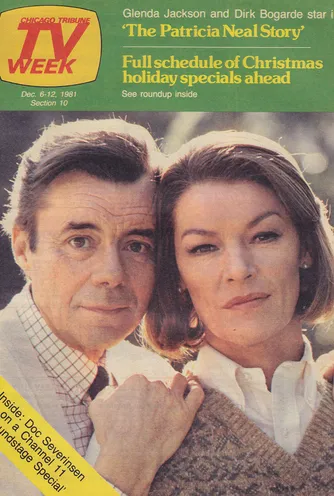
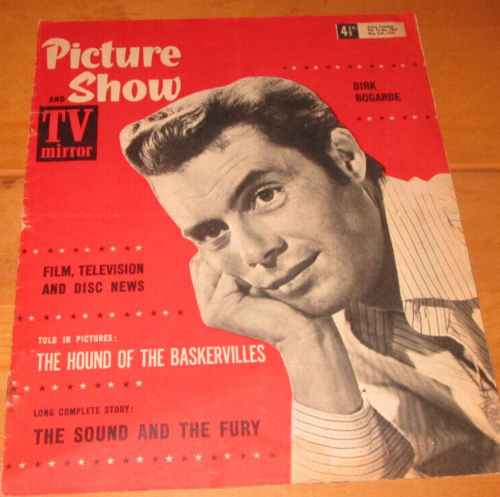
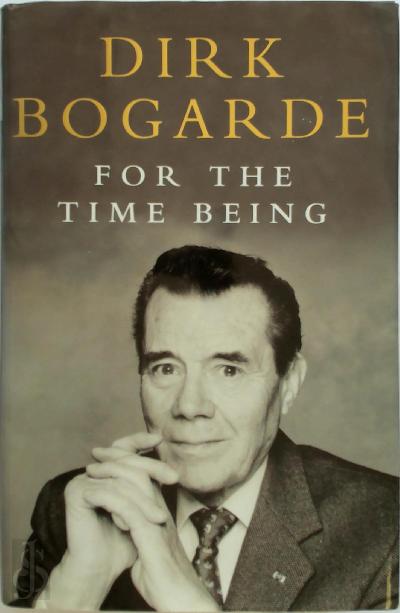
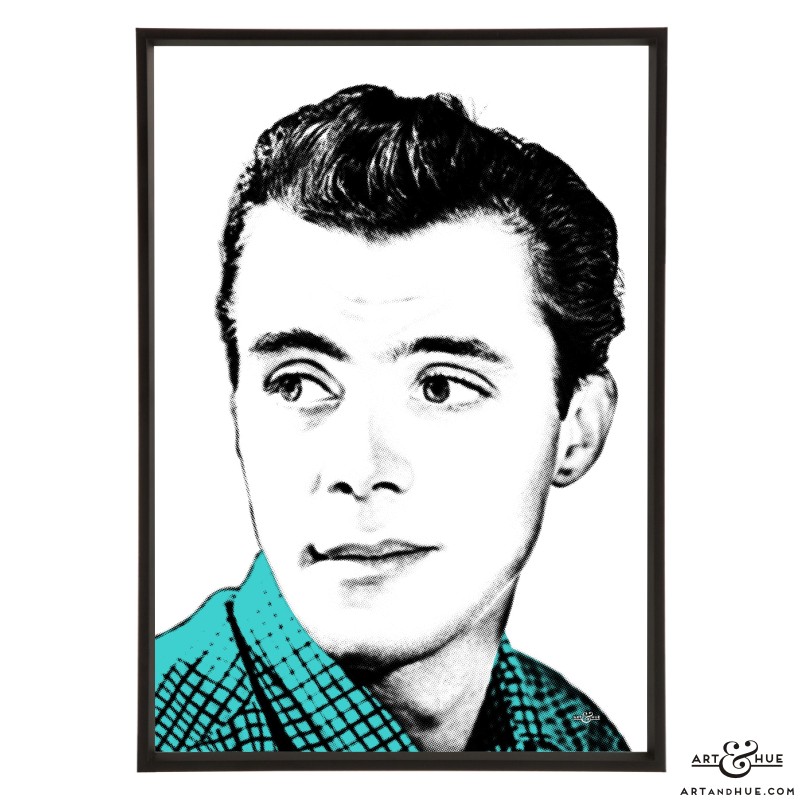
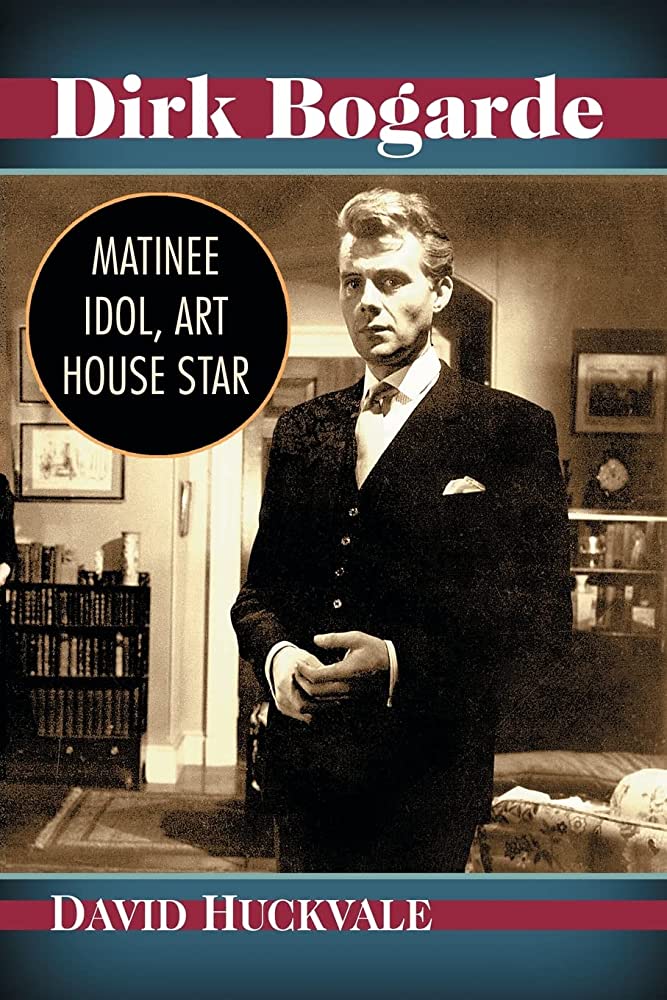
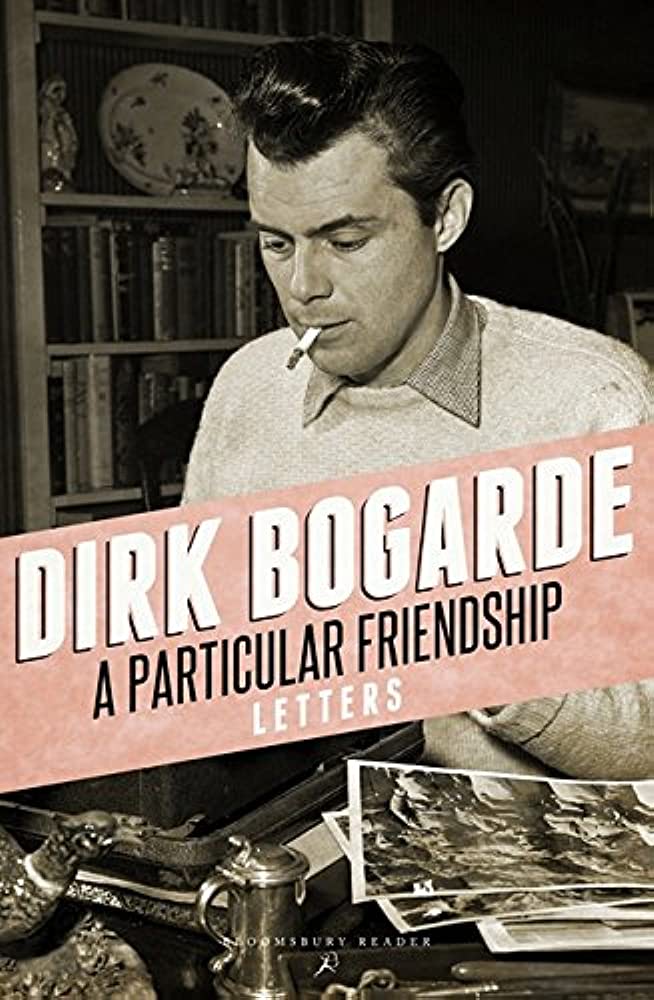
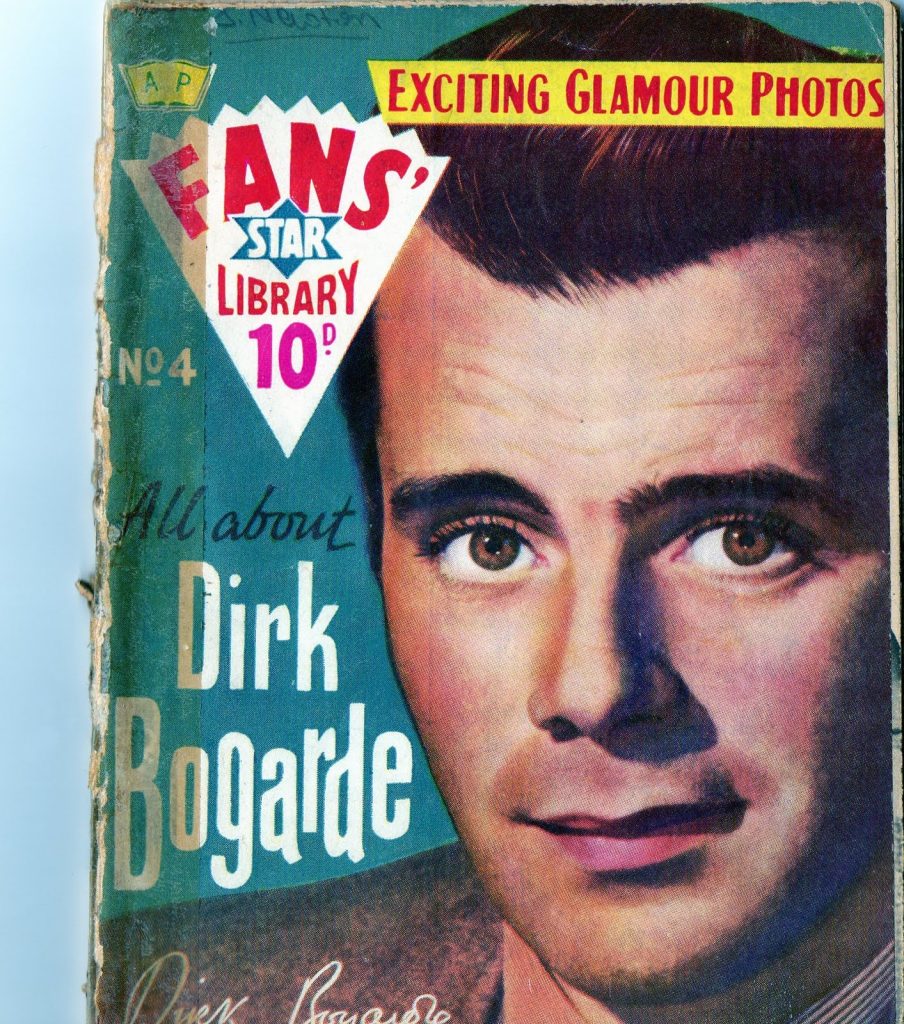
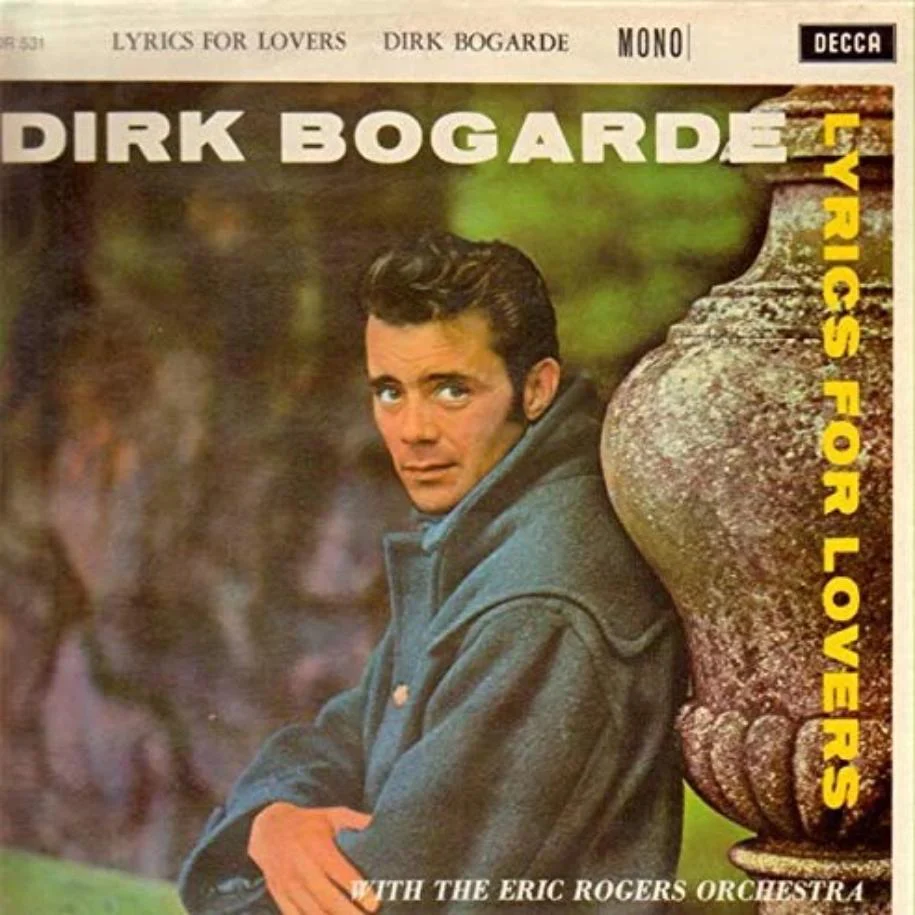
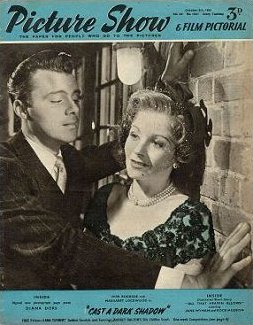
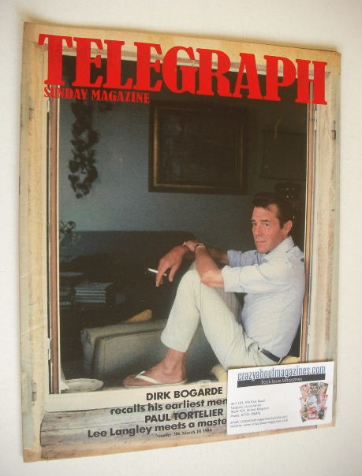
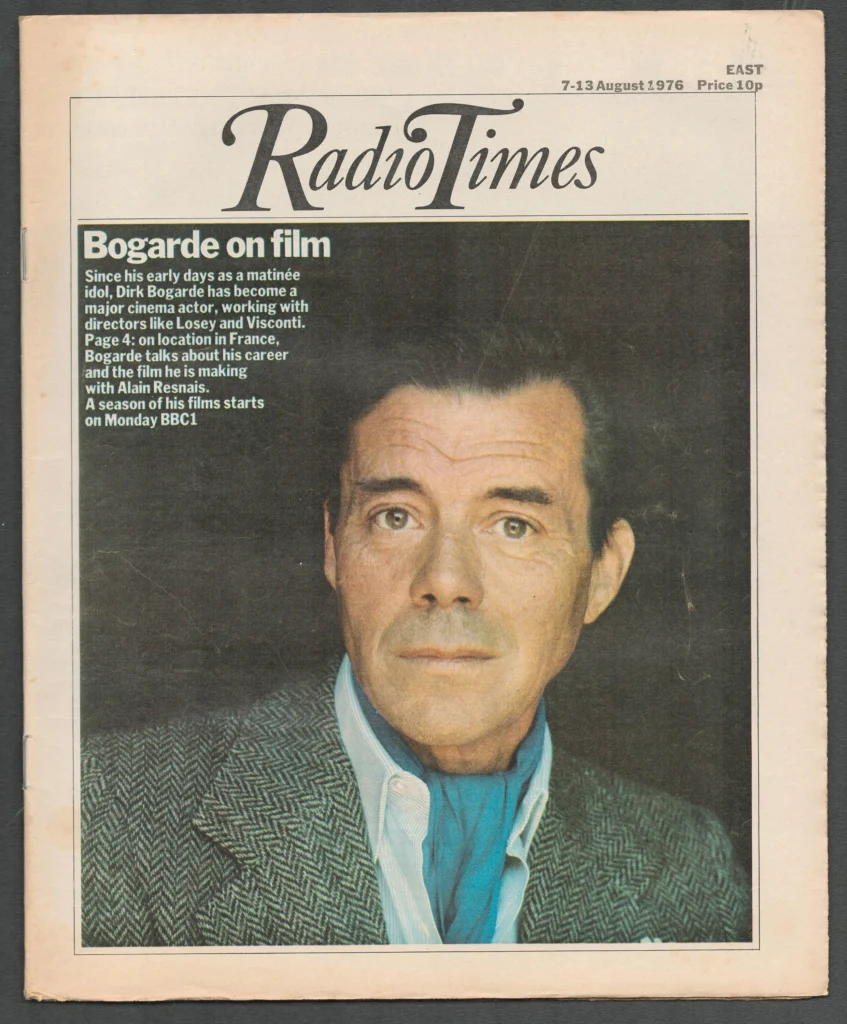
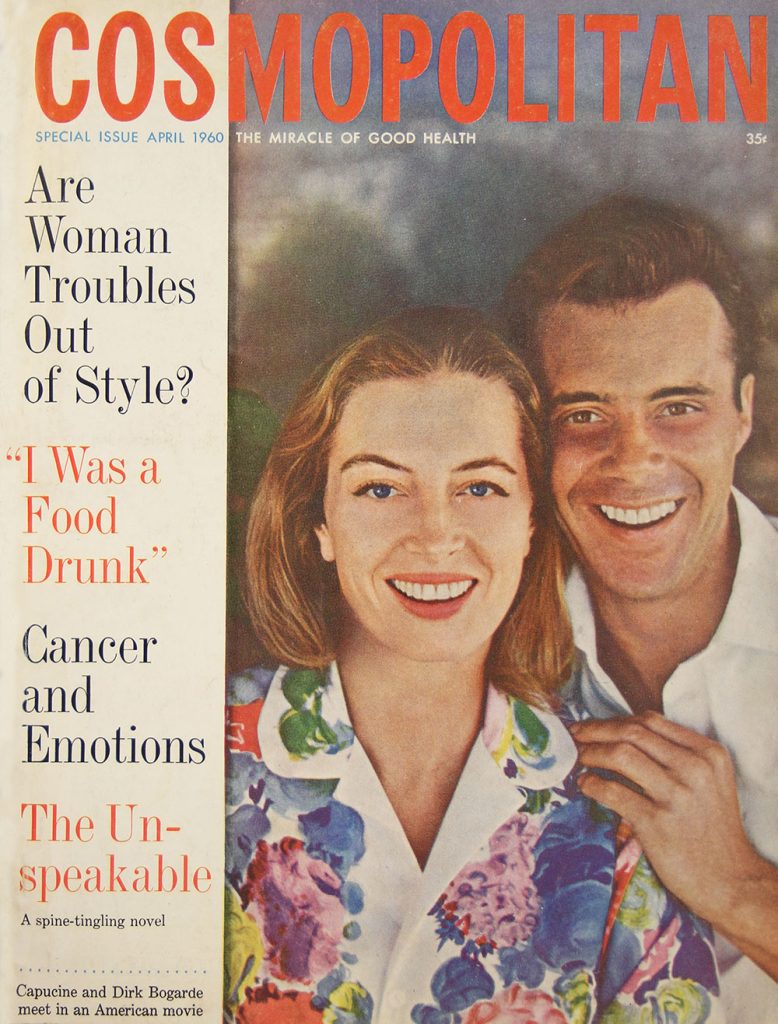
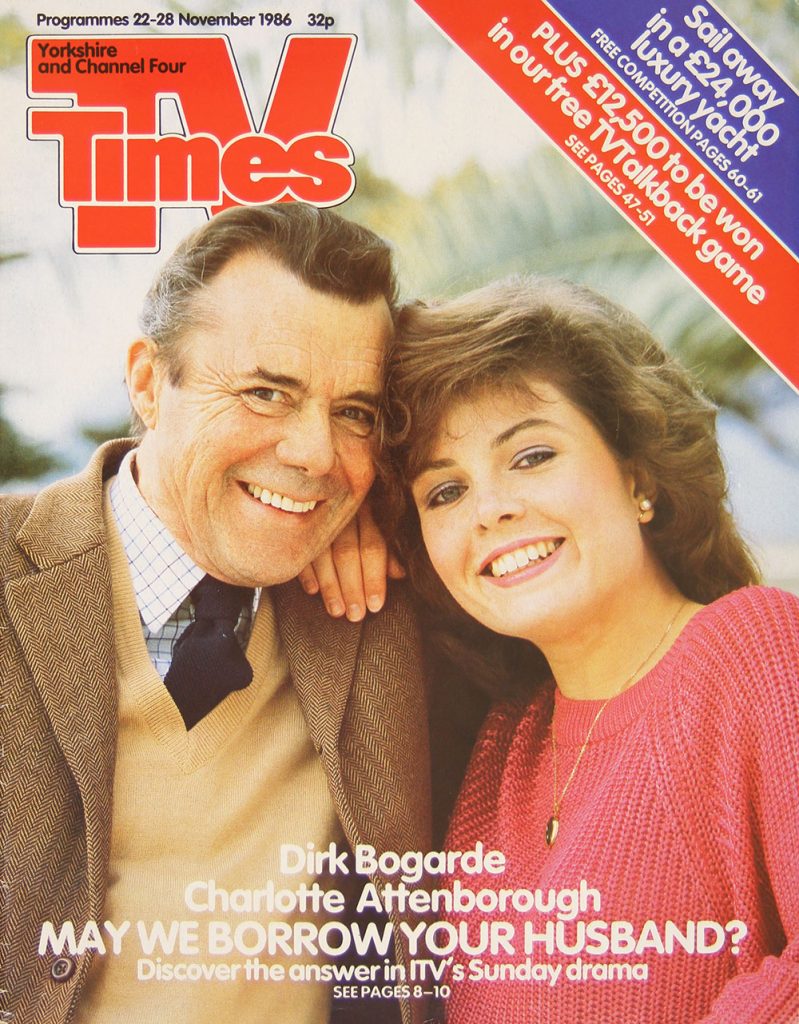
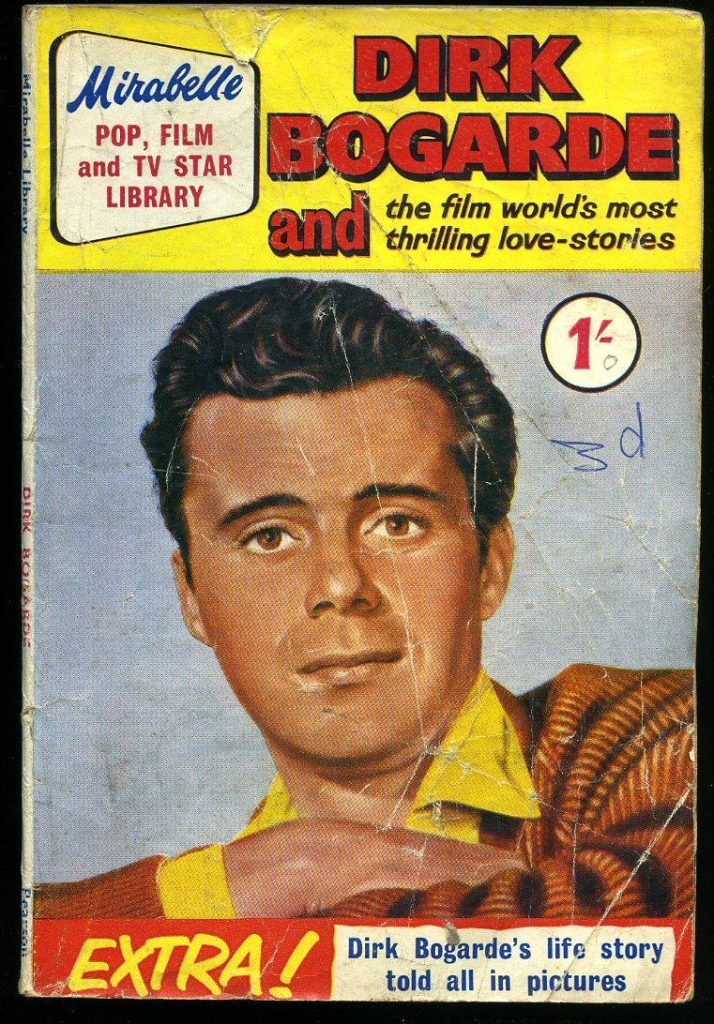
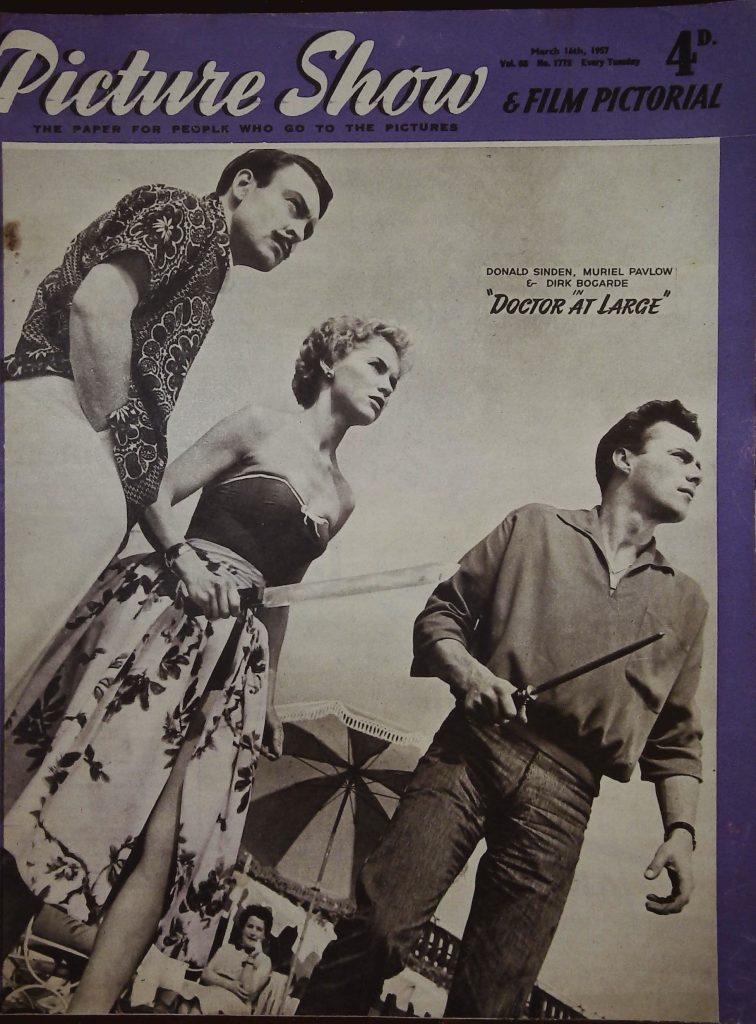
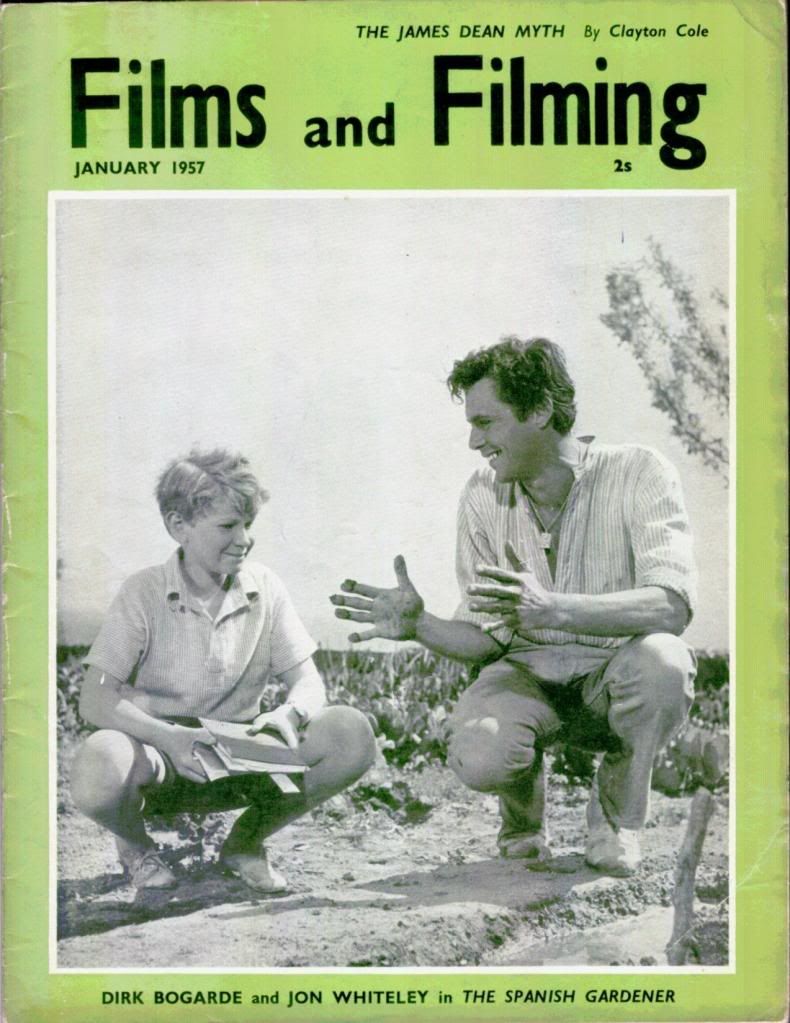
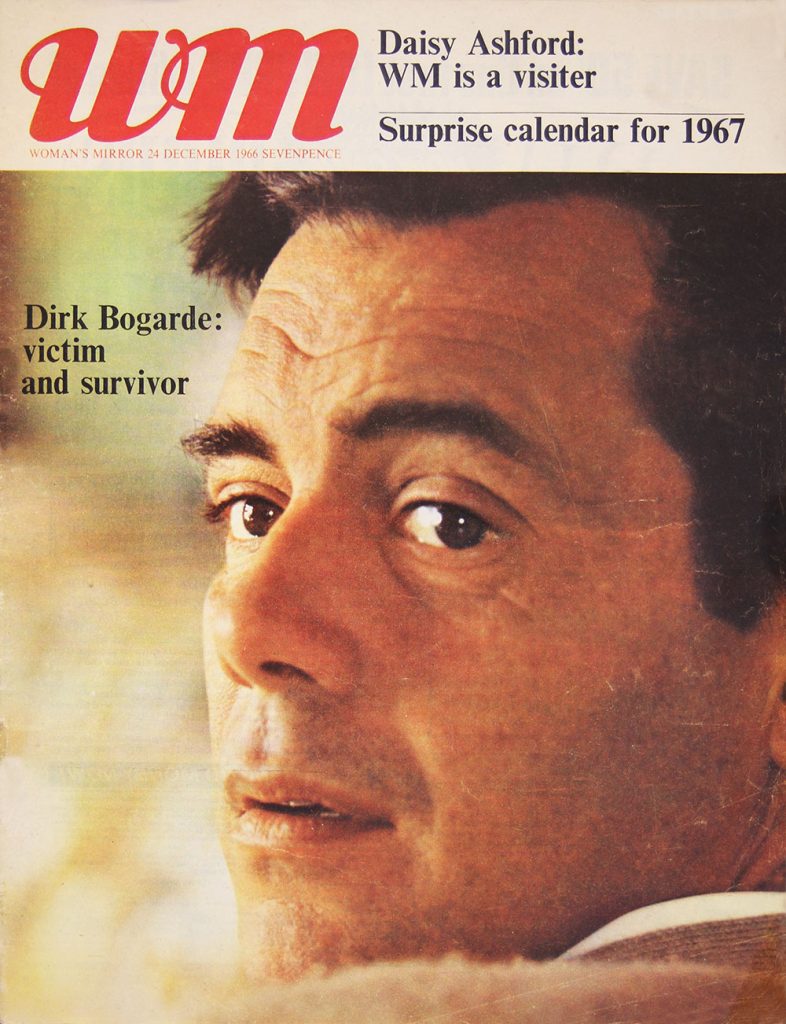
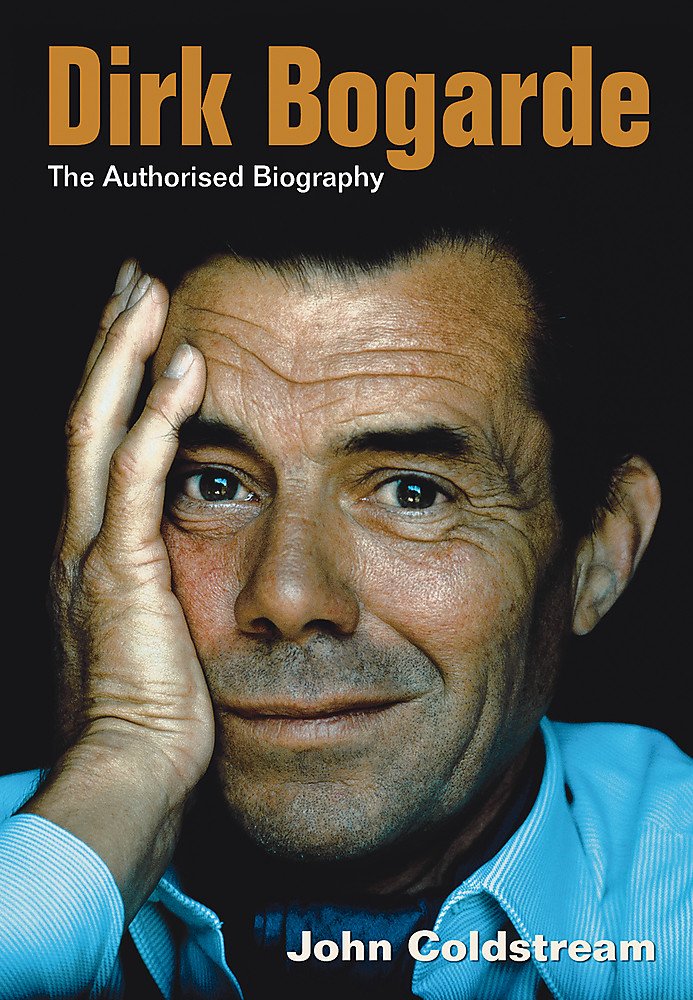
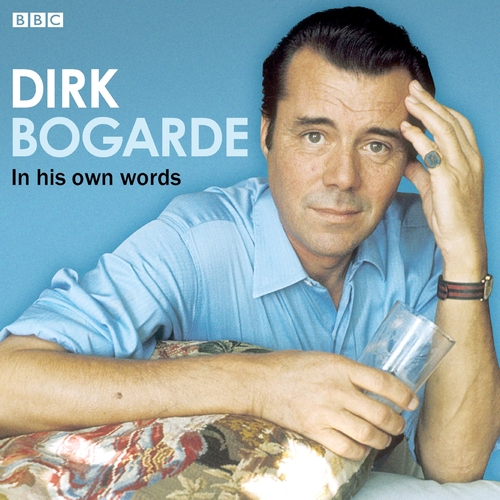
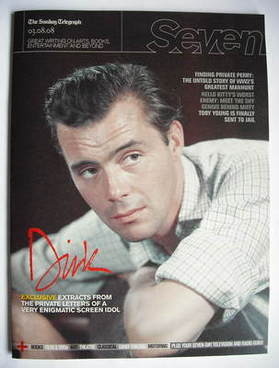
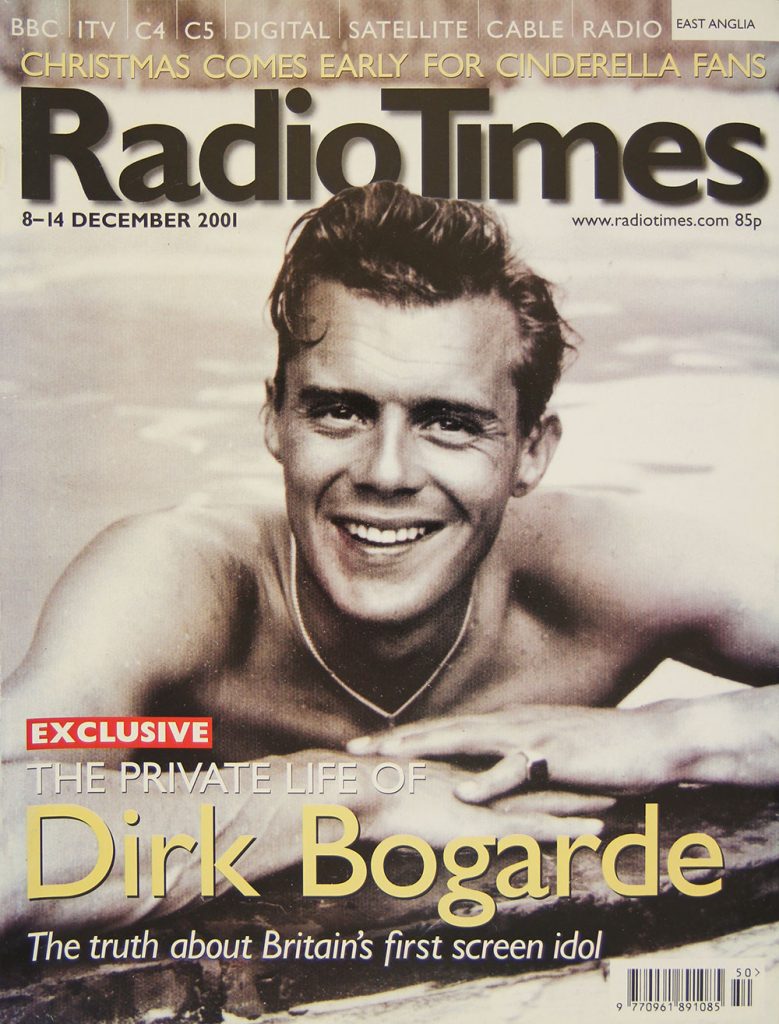
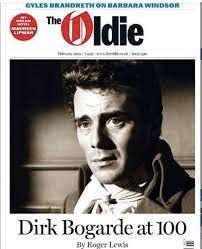
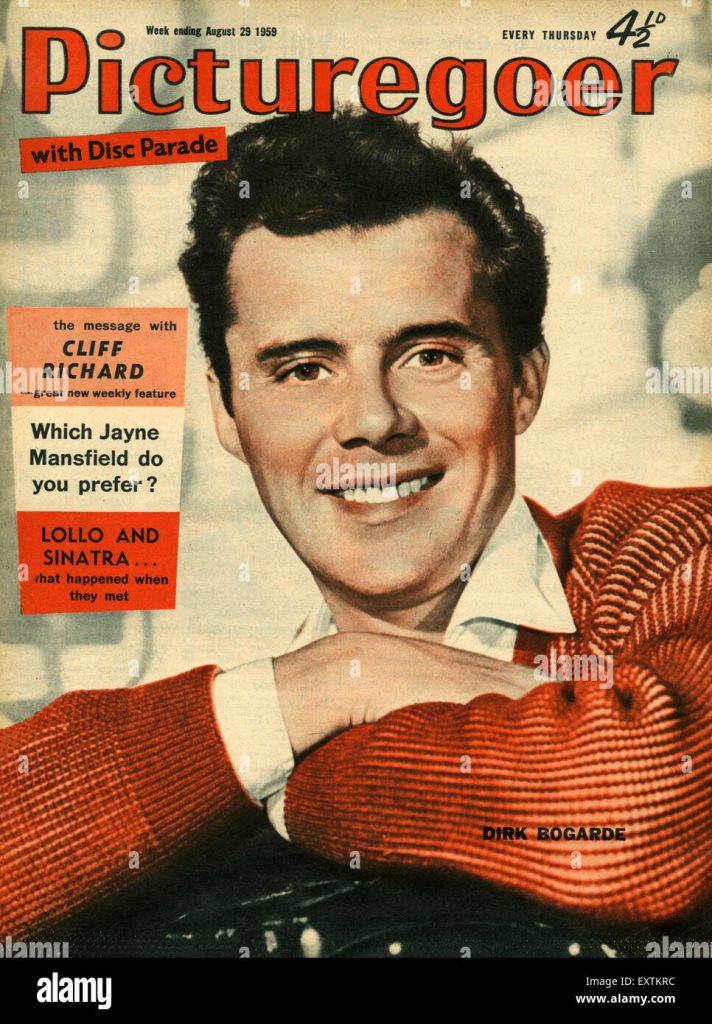
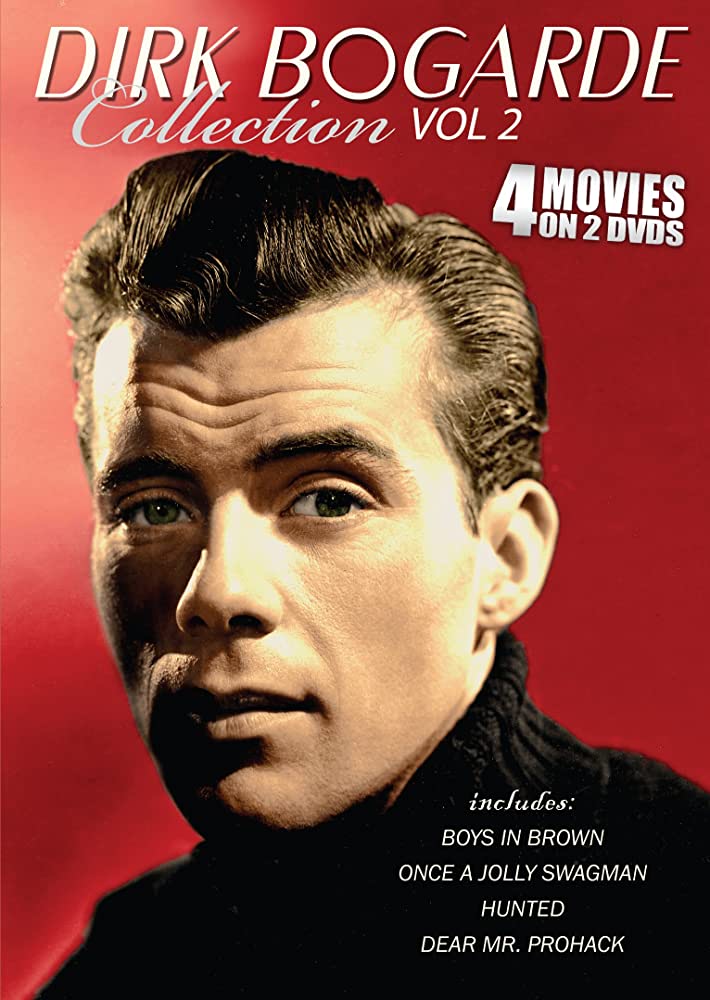
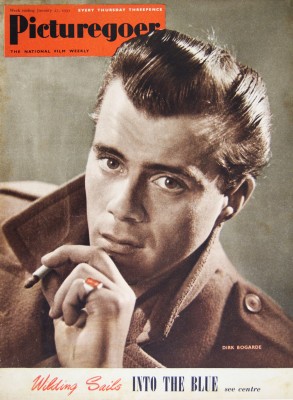
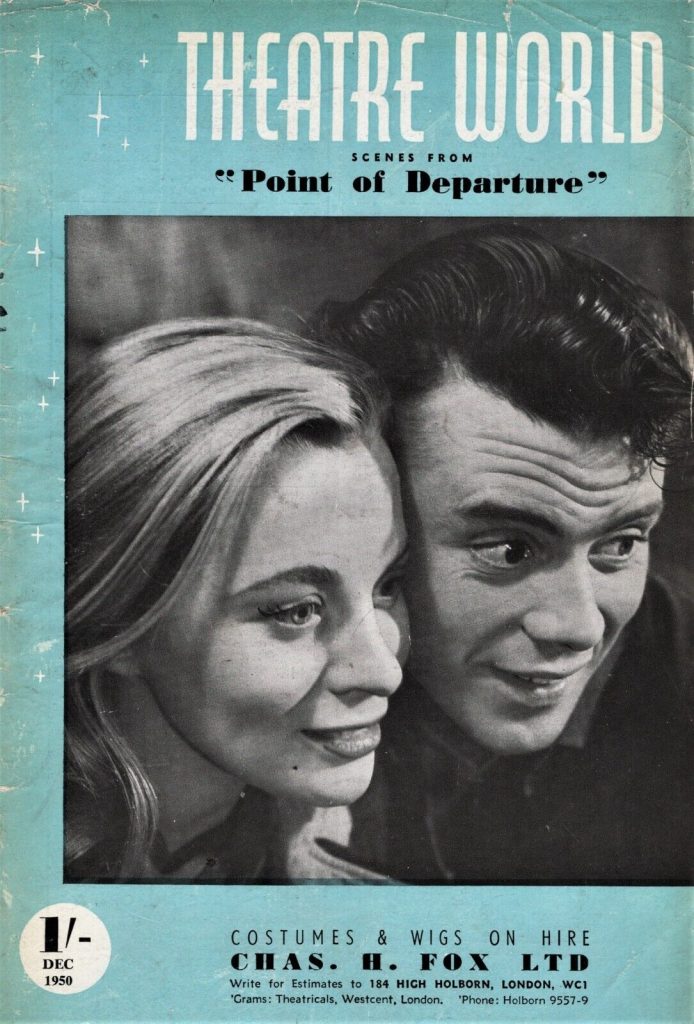
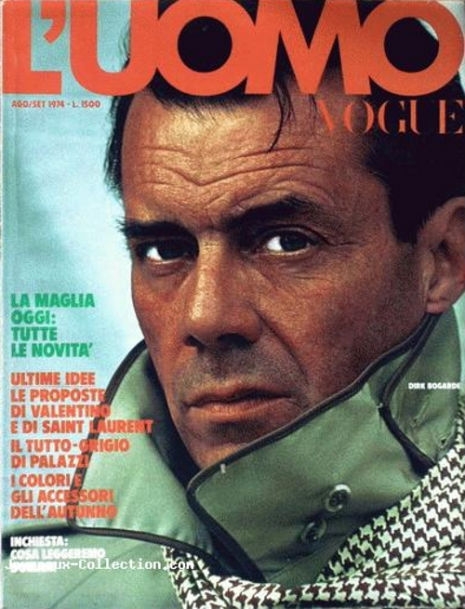
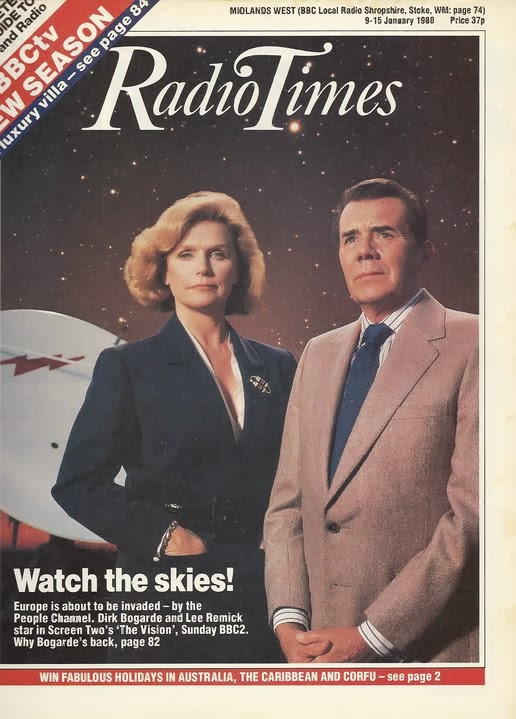
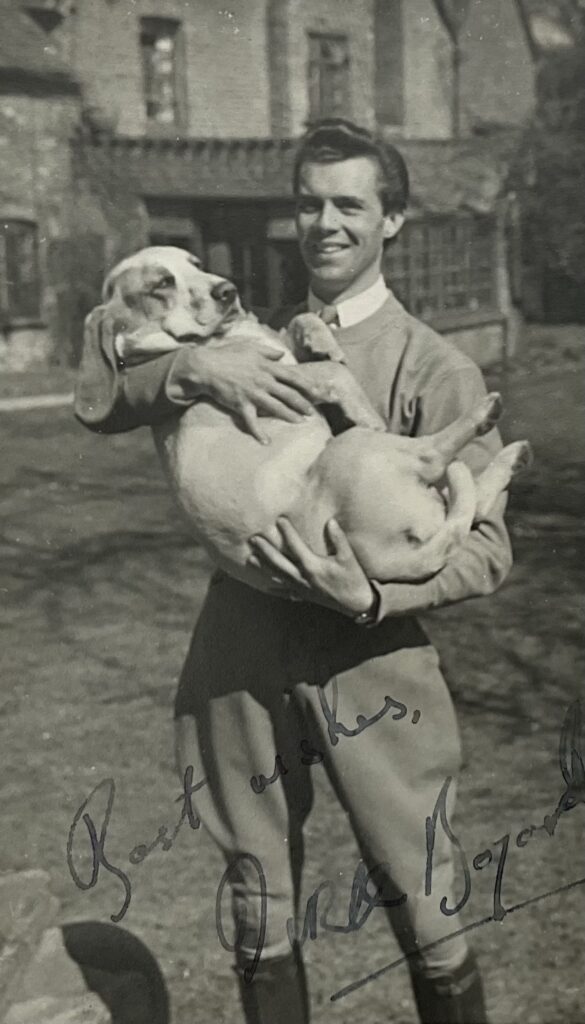
Dirk Bogarde obituary in “The Independent” in 1999.
His “Independent” obituary:
Dirk Bogarde
LIKE GARBO before him, Dirk Bogarde mysteriously exceeded the sum of his parts. Many of his 63 films were forever banal, while others initially thrilling and controversial were tamed or stultified by time. In a career spanning almost 60 years he willingly switched disguise, but neither wigs nor breeches, the officer’s khaki nor the doctor’s white coat, could long conceal his limitations of range. When he offered subtlety and suggestiveness instead of versatility those limitations appeared almost a virtue; but with the failure of that exchange in the mid-1970s his acting became almost intolerably arch and repetitive.
Yet he could never be dismissed – and his stature involved something more than the fact that to critics and colleagues he suggested stylish professionalism, or that in 1955 and 1957 his popularity made him Britain’s principal box-office attraction, or that he rejected formulaic heroism in Hollywood and Pinewood to redeem himself in the European cinema he found more inquisitive.
Dirk Bogarde was a major figure because, wherever they were made, his finest films are all somehow about him. He was a great self- portraitist and the screen persona he fashioned, a stylisation of his private being, not only dominated its surroundings but spoke subliminally and powerfully to British audiences about the tensions of the time, about the connivances and cruel respectabilities of England in the Fifties and Sixties.
By the time he renounced acting for writing his numerous renditions of acquiescers, outsiders, self-doubters and repressors of secrets constituted a poetic enquiry into the dramas of pragmatic dishonesty and subterranean emotion and had made Bogarde emblematic, a man who might have been born to play exiles from happiness.
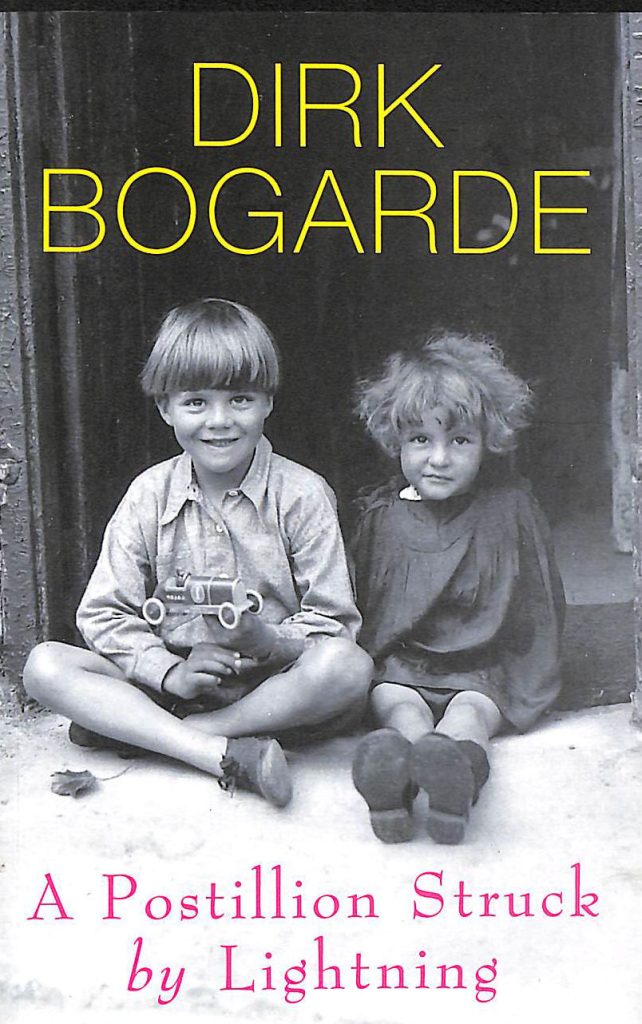
Indeed when he took to writing in his fifties Derek Jules Ulric Niven van den Bogaerde’s first impulse, in A Postillion Struck By Lightning, was to depict his childhood as a lost paradise, only later conceding that despite its contentment he had learnt before adolescence “every lesson needed to get through adult life, from courage, to control, to determination and deceit”.
His Scottish mother, Margaret Niven, daughter of Forrest Niven, actor and painter, was compelled by her husband to abandon acting, despite her Haymarket appearance in Bunty Pulls The Strings and despite an invitation from Hollywood to join the Lasky Players. Her regret was lifelong and she looked to alcohol for the mitigation three children could not always provide. Besides, her half-Dutch husband, art editor of The Times, worked too hard; soon Dirk and sister Elizabeth sought amusement in nursery theatricals.
While still a schoolboy, and perhaps with encouragement from his actress godmother Yvonne Arnaud, Dirk appeared in an amateur production of Alf’s Button and every summer, when the family retreated to a cottage in Sussex, he and his sister animated the enchanted countryside with make-believe.
Innocence, inevitably, was doomed. A new-born brother Gareth usurped attention and Dirk, installed at the Allan Glen’s School in Glasgow, was bullied into chronic self-doubt. Further patchy schooling in London culminated in a course of commercial art at Chelsea Polytechnic, where he was taught by Henry Moore and Graham Sutherland (who later found his features too anodyne to merit portraiture).
Despite Ulric’s hopes that his son would pursue a career in art or diplomacy Dirk wanted to act: in 1939 he was an extra in the George Formby comedy Come On, George and months later, when he made his West End debut in J.B. Priestley’s Cornelius, The Stage praised his “sulky true-to-life office boy”.
Engagement to the actress Annie Deans quickly failed and following conscription into Ensa he was called to war at Catterick army camp. He proved an inept signaller, but eventually became a major in Intelligence; he was in Normandy for D-Day, was decorated, and demobbed in Singapore. Distinction notwithstanding, military life taught advanced disenchantment: off-duty war paintings (some of which now belong to the Imperial War Museum) helped channel distress but many experiences registered anguish too great for anything but later flippancy. As for witnessing the liberation of Belsen, “We never spoke of it again to anyone”.
He returned to civilian life without much hope or many credentials, yet within two years he had anglicised his name, acquired a first agent, won Noel Coward’s admiration for his proletarian murderer in Power Without Glory at the New Lindsay Theatre and appeared in a television adaptation of Rope, playing the first of many homosexuals.
Coward urged that the beginner’s destiny lay on stage but events swiftly confounded him. Wessex Films offered Bogarde a part in Esther Waters (1947); then with Stewart Granger’s defection the leading role was thrust upon him; then J. Arthur Rank, which distributed Wessex Films, proffered a contract, despite anxieties about its new recruit’s skinny neck, uneven leg length and asymmetrical head.
His 14 years with Rank proved a glamorous apprenticeship. Beginning in 1947 on pounds 30 a week, he emerged a decade later as Britain’s principal star: each film gained him about pounds 10,000, his off-set publicity involved the land-owning accessories of dogs, Bentleys and big houses and Rank appointed the actresses he dated.
Of the 36 films he made with the studio few merited his or his audience’s attention: The Blue Lamp (1949), paean to the British bobby, made his name; Doctor in the House (1954), based on Richard Gordon’s novels about medical students, his fortune; and Victim (1961) his reputation, as an actor prepared to venture his popularity in a film which at the dawn of the Sixties appeared almost self-destructively controversial and conscientious.
Nevertheless he learnt the technicalities of filming and understood why whole sets rose around his gentler left profile. He developed a confidant intimacy with the camera and enriched every film he made with his exotic prettiness, his thoroughness and his tense, truculent style.
After Victim, which confronted homosexuality as a certainty and exposed the evils of its illegality, there was no returning to studio fantasias. Bogarde left Rank in 1961, and for the next 17 years devoted himself freelance to the films which brought him international fame, films which taxed his sensitivity of interpretation and showed him willing, in his forties and fifties, to address the controversial preoccupations of a youthful and liberal age.
The social allegory of Joseph Losey’s The Servant (1963) may now seem dated but Bogarde’s performance (which won him his first British Film Academy Award) retains its stealthy menace. Death in Venice (1971, directed by Luchino Visconti) has its longueurs but Bogarde’s Von Aschenbach remains a virtuoso rendition of almost wordless yearning. For all its flamboyance, The Night Porter (1973) is a determined investigation, structured around Bogarde’s Max, into the passions of sado-masochism.
Yet as his European prestige grew so, despite the direction of Losey, Visconti, Resnais and Fassbinder, did his mannerisms; and his celebrated facial inflexions, which began as disclaimers of involvement and passion, developed into an unwitting but almost declamatory spinsterishness.
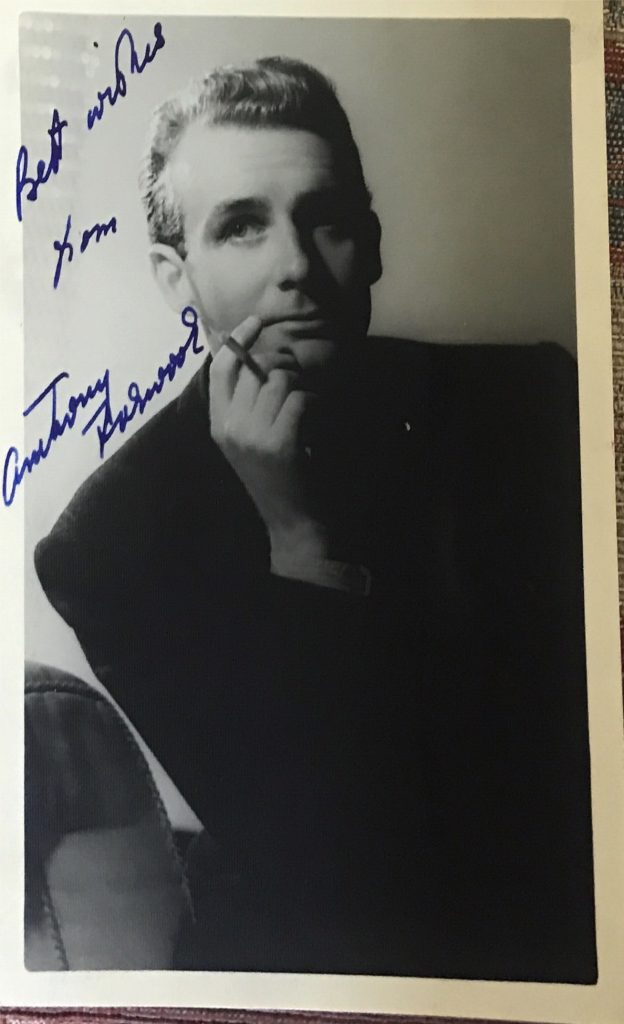
In any case, he was retreating – from England and from film. Along with Anthony Forwood, the former husband of Glynis Johns who became his manager and lifelong companion, he restored a 15th-century farmhouse near Grasse and recreated the paradise of distant Sussex; and in 1977 he began his successful career as an autobiographer and novelist with Postillion, his first volume of memoirs.
He was retreating also from people. He had never cultivated the common touch, never welcomed fame’s intrusions into privacy; and unscheduled digressions in later interviews revealed with what asperity he manned his fortress. But he was an illusionist by trade and he outmanoeuvred curiosity with dexterity.
His best-selling autobiographies won him a reputation for self- revelation when in fact they camouflage: Postillion (which merits survival) beautifully evokes his childhood, indeed is generous with its harmless secrets and sins; but the sequels, which could have explained the mature Bogarde’s inner workings and should have given some account of Tony Forwood, the most important figure in his life, are in varying degrees thespian anecdotage.
His excursions into the more revealing medium of fiction (inspired by experience) were smooth; but although the slickness of his novels is occasionally animated by accounts of female domination, male narcissism and male prostitution, their author’s true pleasures remained classified.
Even as he guarded it, Dirk Bogarde’s neat world crumbled. Having been ill since 1983 Forwood died in 1988, doubly stricken with cancer and Parkinson’s disease. The French house was sacrificed to medical bills and proximity to London hospitals and Bogarde’s last years passed in a flat in Chelsea. Planning ahead, he espoused euthanasia in 1991 and in 1992 he received a knighthood. He reviewed books for The Sunday Telegraph, contributed irritable, anglophobic articles elsewhere and testily reiterated his heterosexuality – but discreetly friends thought him unbearably embittered by Forwood’s death.
It was a grief he could not allow himself to acknowledge, a grief which united with his early and frequently reinterpreted disillusion to lend to his public appearances a great disenchantment. Off-duty, he seemed even more poignant – squeamishly skirting Sloane Square, his hair as black as the dying Von Aschenbach’s, his manner no less fussy, frail and furtive; and Chelsea’s pavements, like Visconti’s Lido, a lonely place for yearning.
Derek Jules Ulric Niven van den Bogaerde (Dirk Bogarde), actor and writer: born 28 March 1921; Kt 1992; died London 8 May 1999.
“The Guardian” obituary can also be accessed online here.