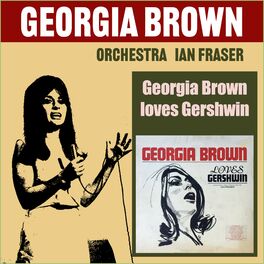

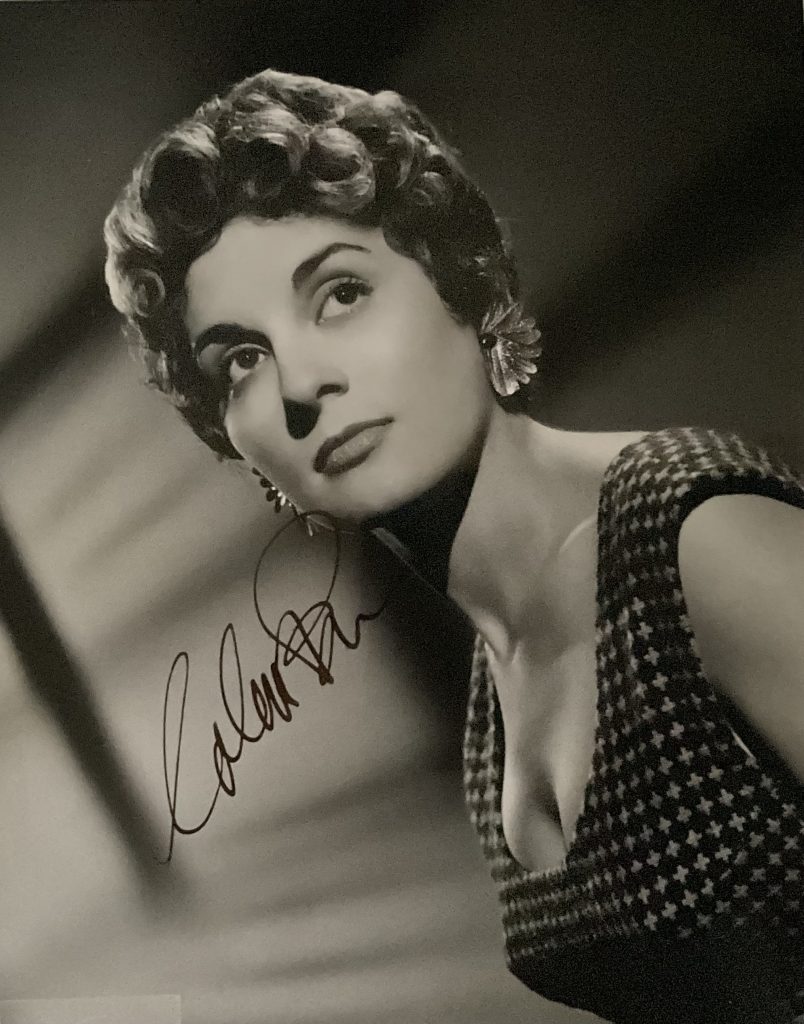

Georgia Brown was born in the East End of London in 1933. She first came to prominence on the London stage as Lucy in a 1956 adaptation of “The Threepenny Opera”. In 1959 she won widespread acclaim as Nancy in Lionel Bart’s “Oliver” which she then took to Broadway” in 1963 and winning a Tony for her performance. However she lost our to Shani Wallis for the film version. Her films include “The Raging Moon” in 1973 and “The Seven-Per-Cent Solution”. She moved to the U.S. and performed in supper clubs and on television in such shows as “Murder She Wrote”. Georgia Brown died suddenly while on a visit to London in 1992 at the age of only 58.
Her “Independent” obituary by Tom Vallance:
THE MEMORABLE night in 1960 when Oliver] opened in London at the New Theatre (now the Albery) will not be forgotten by those of us lucky enough to be there, but one moment stands out most of all.
When the audience returned for the second half, the intermission buzz having confirmed that everyone was in a similar state of rapture, the curtain went up on Sean Kenny’s brilliant smoke- filled set of an East End drinking den, and to a pounding waltz beat Georgia Brown, as Nancy, launched into her raucous music- hall ditty ‘Oom-Pah-Pah’. When she finished, the roar of approval was deafening and spine-tingling. The dark-haired actress-singer with her husky and full-throated delivery had deservedly triumphed in the role and performance of her career. She repeated her success in the Broadway production, but was never seriously considered for the film version which, though lauded, would have been even better if she had played Nancy.
Born Lillie Klot in Whitechapel, east London, in 1933, she became the most successful product of the Brady School, a training ground for impoverished East-Enders, and was justifiably proud of having made it against all the odds. As a teenager she performed at youth clubs while learning the rag trade by day, and by the time she was 17 she was working at the Stork Club in London and appearing in television variety shows, having assumed a name taken from one of her numbers ‘Sweet Georgia Brown’.
Her early influences were jazz singers, but her earthy, energetic delivery made her equally at home with music hall in the Marie Lloyd tradition, while when singing popular standards her interpretative skill was comparable to Piaf or Garland. If she lacked the vulnerability of those ladies it only gave her more sentimental moments and added pathos. Nobody has ever sung ‘As Long As He Needs Me’ as well as Georgia Brown.
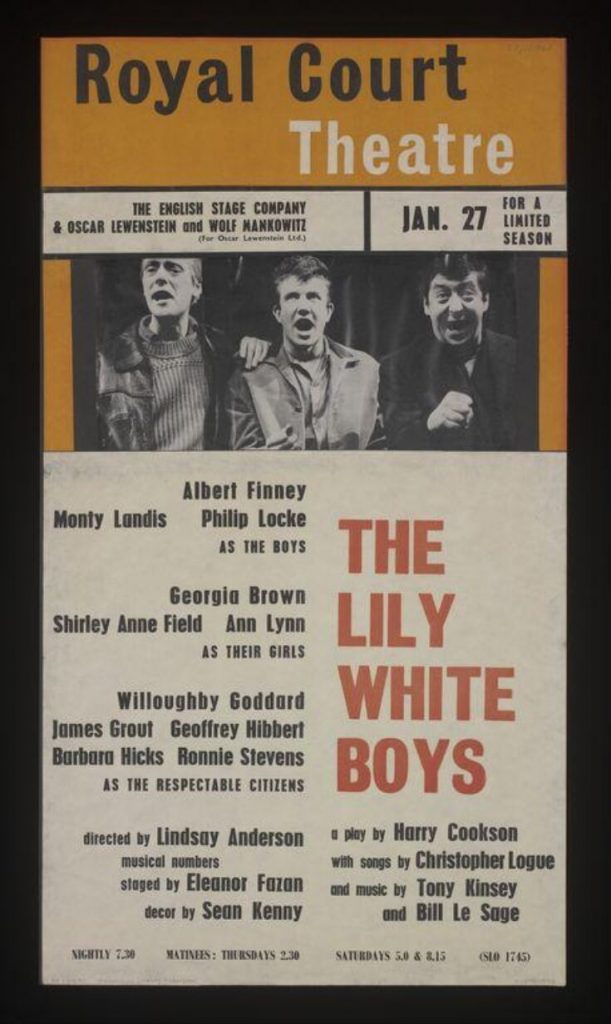
In 1956 she was cast as Lucy in The Threepenny Opera at the Royal Court, the start of a long association with the works of Brecht, and the following year she succeeded Beatrice Arthur in the show’s off-Broadway production. She returned to the Royal Court in The Lily White Boys with Albert Finney, then came Oliver].
After the Broadway production she elected to stay in the US, turning down the show Lionel Bart created for her, Maggie May, though she replaced its star, Rachel Roberts, six months into the London run. She maintained an affection for life in the United States which American show-business never managed adequately to reciprocate. The impetus in her career created by Oliver] gradually faltered and, despite steady work and respect within the profession, the enormous potential was never fully realised.
She made records, did more Brecht – The Baby Elephant upstairs at the Royal Court in 1971 and, later the same year, Man is Man in the main theatre. She sang Anna in the Royal Ballet’s Seven Deadly Sins in 1973/74 and played in Mother Courage on television. Television work also included Sartre’s Roads to Freedom. Her films included A Study in Terror (1965), The Fixer (1968), Bart’s Lock up Your Daughters (1969), Galileo (1975), and The Seven Per Cent Solution (1976), in which she introduced Stephen Sondheim’s blatantly risque I Never Do Anything Twice.
That same year she settled permanently in Los Angeles. She returned to Broadway in two new musicals, but neither was successful. Carmelina (1979), based on the Gina Lollobrigida film Buona Sera, Mrs Campbell, had songs by Burton Lane and Alan Jay Lerner, but, with a poor production and Jose Ferrer’s leaden direction, it lasted only 17 performances.
Five years later Brown was due to open in Roza at the Adelphi in London when financing was suddenly withdrawn. In 1987, directed by Harold Prince, it opened on Broadway with Brown playing a role Simone Signoret had enacted in the film Madam Rosa (based on a novel, La Vie Devant Soi, by Romain Gary). Brown had gained weight to play the former prostitute who now looks after the children of prostitutes in a run-down section of Paris, but the show’s score by Gilbert Becaud and Julian More was too pop-orientated for Broadway taste, its book too flimsy and despite outstanding personal reviews for Brown it closed after 12 perforamnces.
In London she starred in 42nd Street but, though nominally the leading role, the part of an ageing and temperamental star replaced by an ingenue was a thanklessly underwritten and unsympathetic one. In 1980 Brown had played the twin roles of Mother/Sphinx in Steven Berkoff’s Greek for its brief New York run and when the play came to London in 1988 she successfully repeated her powerful performance.
Recently she had been performing a one-woman show, Georgia Brown and Friends, and had come to London for an appearance in a charity tribute to Sammy Davis Jnr. Fortunately, Brown recorded both Oliver] and Carmelina and two of her solo albums, devoted respectively to the works of Kurt Weill and George Gershwin, were combined last year on one CD to win new critical acclaim. Her tartly abrasive ‘Strike up the Band’and plaintively aching ‘It Never Was You’ on these albums are just two fine examples of her distinctive talents.
The above “Guardian” obituary can also be accessed online here.