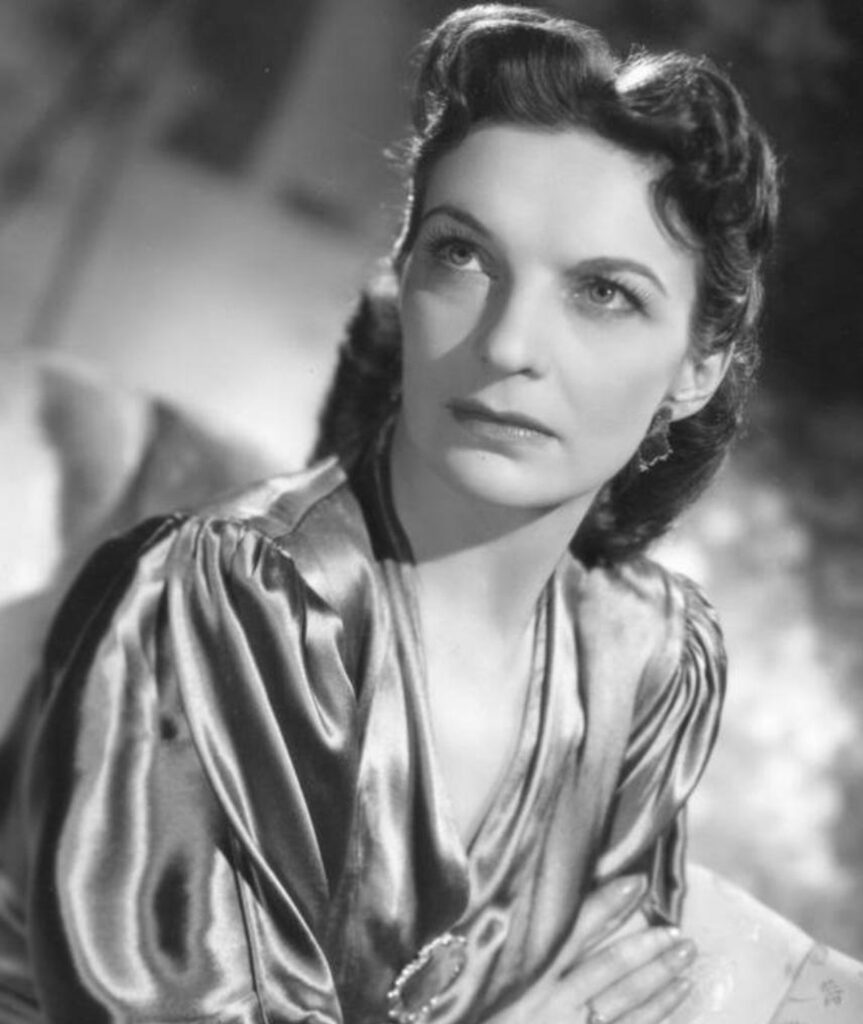

Sonia Dresdel was born in the East Riding of Yorkshire in 1909. Among her films are “While I Live”, “The Fallen Idol”, “The Clouded Yellow” with Jean Simmons and “Public Eye”. She died in 1976.
IMDB entry:
Sonia Dresdel was born on May 5, 1909 in Hornsea, Yorkshire, England as Lois Obee. She was an actress, known for The Fallen Idol (1948), The Trials of Oscar Wilde (1960) andWhile I Live (1947). She died on January 18, 1976 in Canterbury, Kent, England.


Sonia Dresdel (1909–1976) was a formidable presence in mid-20th-century British performance, characterized by her intense, often “predatory” dramatic style. Though she began on the stage, she is best remembered today for her chilling portrayals of sharp-edged, formidable women on screen.
Career Overview
Born Lois Obee in Hornsea, Yorkshire, Dresdel established herself as a leading dramatic actress before transitioning to film and television. Her career spanned several decades, moving from Shakespearean tragedy to modern melodrama.
-
Stage Roots: Dresdel made her stage debut in 1931. She gained significant acclaim after joining the Old Vic company in 1939. Her breakthrough came with her performance as the titular lead in “Hedda Gabler” at the Westminster Theatre in 1943, a role that solidified her reputation for playing complex, high-stakes characters.
-
Film Breakthrough: Her film career peaked in the late 1940s. She became a household name for her role as the oppressive Mrs. Baines in Carol Reed’s “The Fallen Idol” (1948) and for starring in the melodrama “This Was a Woman” (1948).
-
Television and Later Years: In her later career, she became a frequent face on British television, appearing in prestigious adaptations like “The Pallisers” and “The Strauss Family”, as well as popular series like “Sykes” and “Public Eye”.
Critical Analysis of Her Work
Dresdel’s acting was often described as “theatrical” in the best and worst senses of the word; she possessed a commanding vocal range and a physical presence that could easily dominate a scene.
1. The “Ice Queen” Archetype
Dresdel specialized in women who were emotionally restrained yet internally volatile. In “The Fallen Idol”, her portrayal of Mrs. Baines is a masterclass in psychological menace. Critics often point to her ability to play “shrewish” or “unsympathetic” characters without making them caricatures. She captured the petty cruelties of the character—such as her hatred for the young protagonist’s pet snake—with a cold, calculated precision that made her one of British cinema’s most memorable antagonists.
2. Mastery of Melodrama
In “This Was a Woman”, Dresdel played a matriarch who manipulates her family with sociopathic detachment. Critical reception of this period often noted her “strenuous” and “powerful” acting style. While some contemporary critics found her style too “theatrical” for the emerging realism of the 1950s, others argued that her intensity was exactly what gave British melodrama its bite.
3. Range and Versatility
Despite her reputation for villainy, Dresdel demonstrated significant range:
-
Comedic Relief: In “The Secret Tent” (1956), she was praised for providing “relief” and “amusement” as a gossiping neighbor, showing a lighter, albeit still sharp, side to her persona.
-
Classical Precision: Her background at the Old Vic allowed her to bring a sense of gravity to historical roles, such as Lady Wilde in “The Trials of Oscar Wilde” (1960).
Key Filmography & Notable Roles
| Year | Title | Role | Note |
| 1943 | Hedda Gabler (Stage) | Hedda Gabler | Defined her early career. |
| 1948 | The Fallen Idol | Mrs. Baines | Her most iconic film performance. |
| 1948 | This Was a Woman | Sylvia Russell | A lead role showcasing her “villainous” range. |
| 1950 | The Clouded Yellow | Jess | Starring alongside Trevor Howard. |
| 1960 | The Trials of Oscar Wilde | Lady Wilde | A return to high-drama historical roles. |
| 1972 | Lady Caroline Lamb | Lady Bessborough | One of her final major film appearances. |
Legacy: Sonia Dresdel is remembered as an actress of “quality” and “conviction.” While she didn’t always receive the “leading lady” roles of her peers, she became a definitive character actress whose presence ensured a high level of dramatic tension in every scene she occupied.