


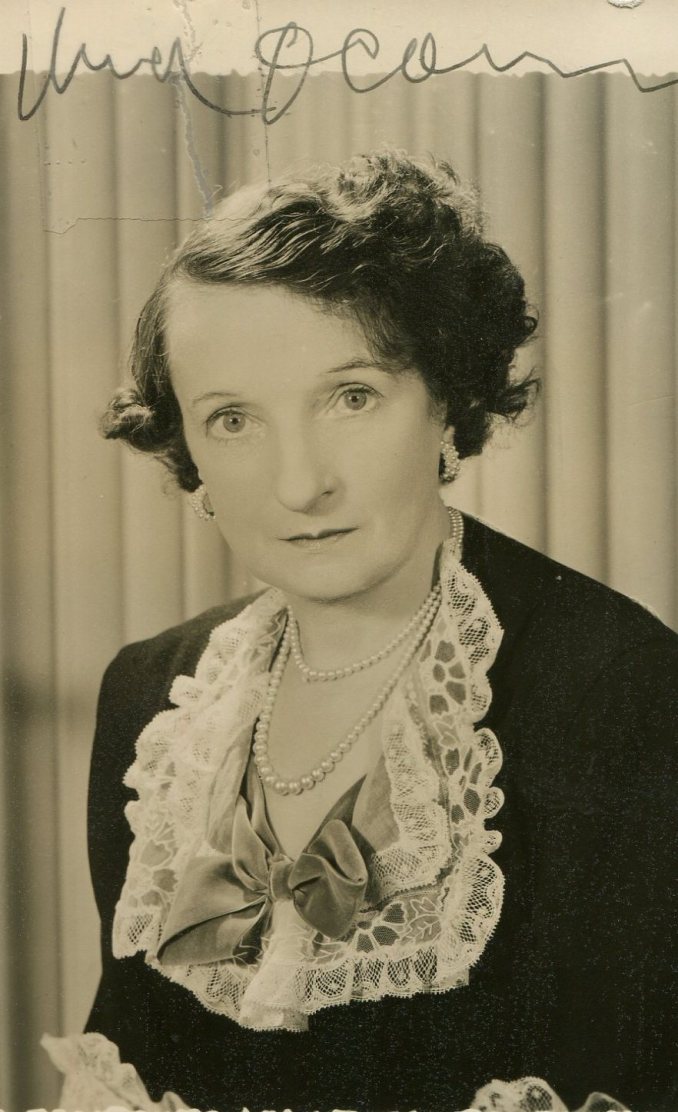
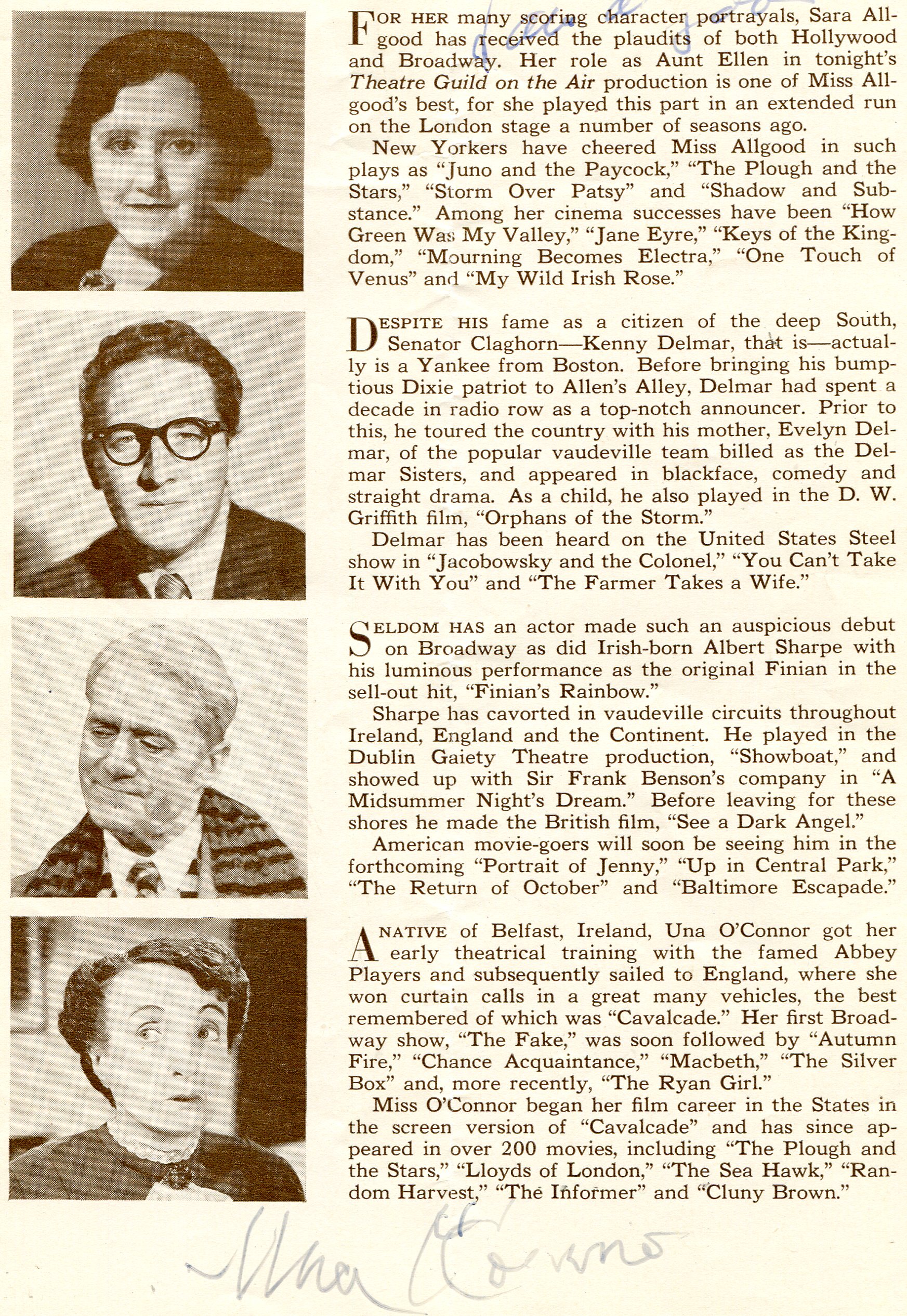
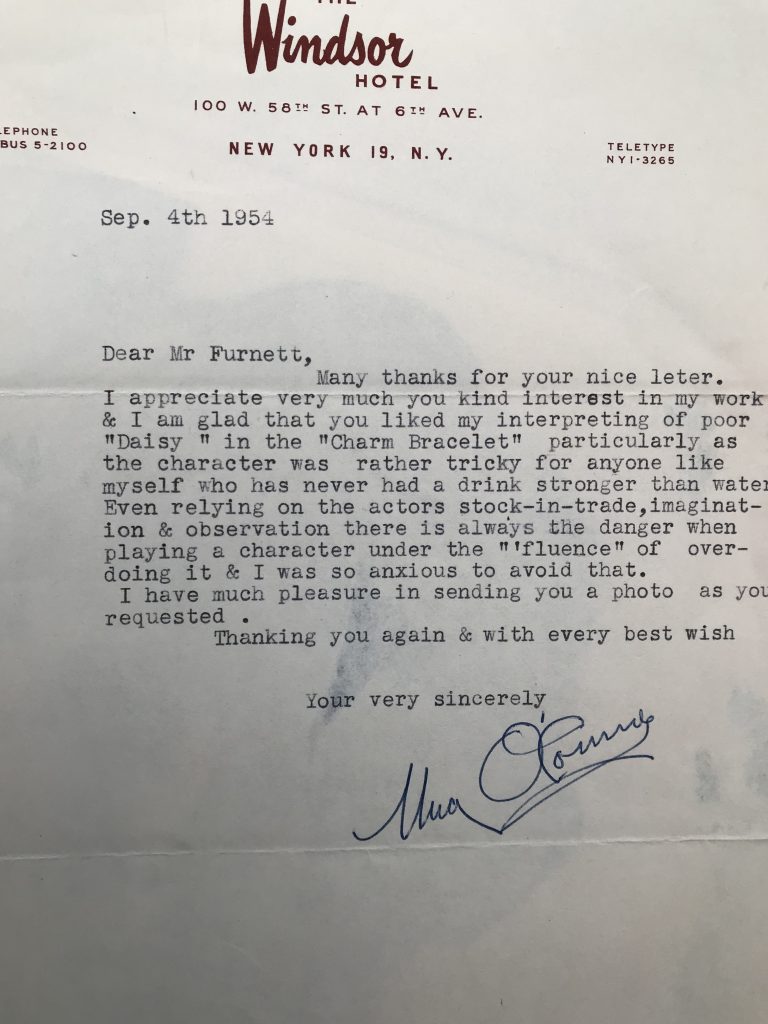
UNa O’CONNOR (WIKIPEDIA)
Born to a Catholic nationalist family in Belfast, Ireland. Although her mother died when she was two, her father was a landowner farmer, insuring that the family always had income from family land. He soon left for Australia and McGlade was brought up by an aunt, studying at St. Dominic’s School, Belfast, convent schools and inParis. Thinking she would pursue teaching, she enrolled in the South Kensington School of Art.
Before taking up teaching duties, she enrolled in the Abbey School of Acting (affiliated with Dublin‘s Abbey Theatre). She changed her name when she began her acting career with the Abbey Theatre. One her earliest appearances was in George Bernard Shaw‘s The Shewing-Up of Blanco Posnet in which she played the part of a swaggering American ranch girl. The production played in Dublin as well as in New York, opening 20 November 1911 at the Maxine Elliott Theatre, marking O’Connor’s American debut. By 1913 she was based inLondon where she appeared in The Magic Jug, Starlight Express (1915-16 at the Kingsway Theatre), and Paddy the Next Best Thing. In the early 1920s she appeared as a cockey maid in Plus Fours followed in 1924 by her portrayal of a cockney waitress in Frederick Lonsdale‘s The Fake. In a single paragraph review, an unnamed reviewer noted “Una O’Connor’s low comedy hotel maid was effectively handled.” The latter show also played in New York (with O’Connor in the cast), opening 6 October 1924 at the Hudson Theatre. A review of the New York performances of The Fake recounts details of the plot,
These two plays in which she portrayed servants and waitresses appear to have portended her future career. Returning to London, she played in The Ring o’ Bells (November 1925), Autumn Fire (March 1926), Distinguished Villa (May 1926), and Quicksands of Youth (July 1926). When Autumn Fire toured the U.S., opening first in Providence, Rhode Island, a critic wrote: “Una O’Connor, who plays Ellen Keegan, the poor drudge of a daughter, bitter against life and love, does fine work. Her excellence will undoubtedly win her the love of an American public.”
She made her first appearance on film in the 1929 Dark Red Roses, followed by Murder! (1930) directed by Alfred Hitchcock, and an uncredited part in To Oblige a Lady (1931).
Despite her lengthy apprenticeship she had not attracted much attention. British critic Eric Johns recalled meeting her in 1931 in which she confessed “I don’t know what I’m going to do if I don’t get work…The end of my savings is in sight and unless something happens soon, I’ll not be able to pay the rent.”[ Her luck changed when she was chosen by Noël Coward to appear in Cavalcade at the Theatre Royal, Drury Lane in 1933. Expressing surprise that Coward noticed her, Coward responded that he had watched her for years and wrote the part with her in mind. She portrayed an Edwardian servant who transforms herself into a self-made woman. When the curtain came down after a performance attended by Hollywood executives, they exclaimed to each other “We must have that Irish woman. That is obvious.” Her success led her to to reprise her role in the film version of Cavalcade, and with its success, O’Connor decided to remain in the United States.
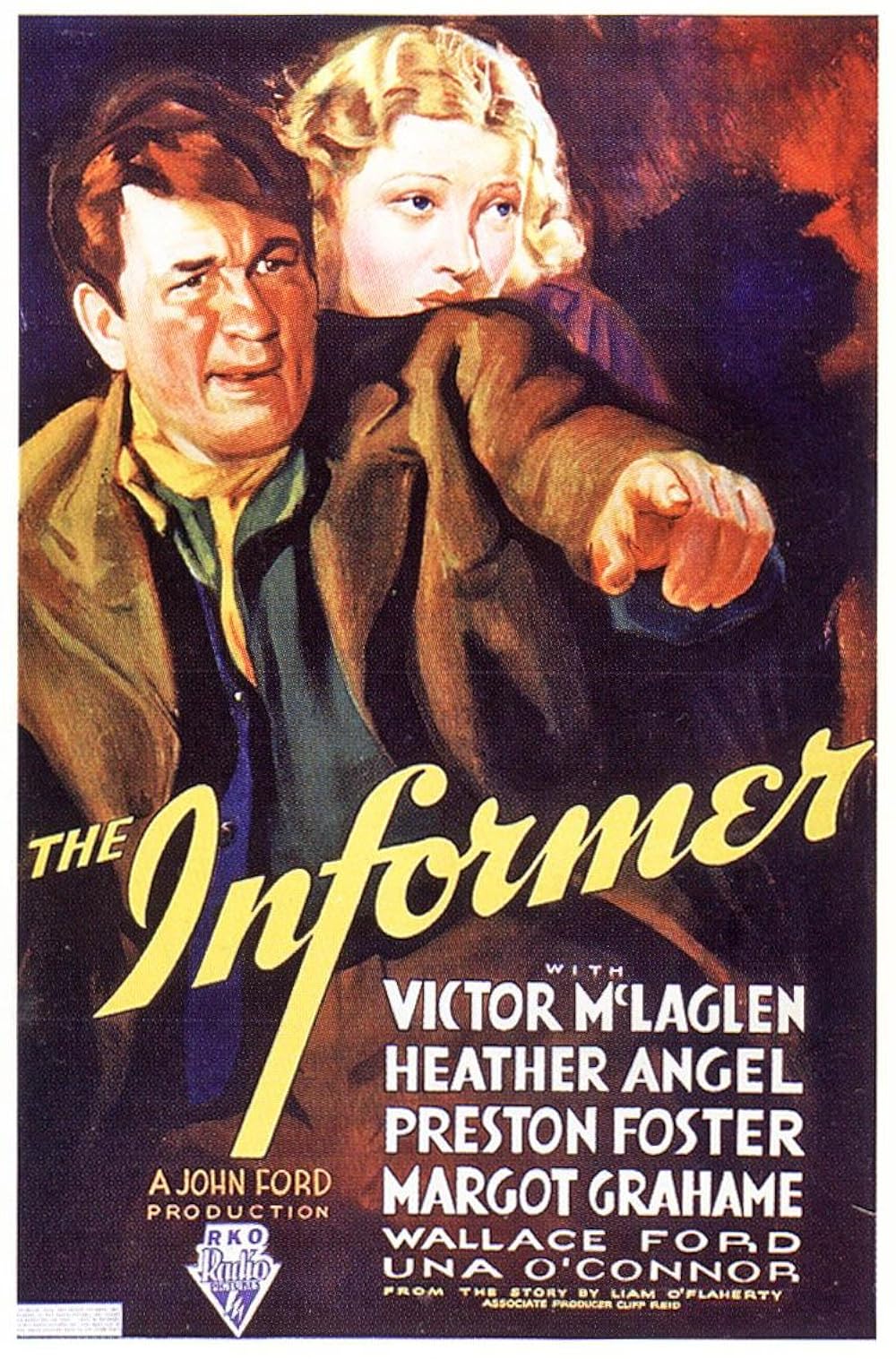
Among O’Connor’s most successful and best remembered roles are her comic performances in Whale’s The Invisible Man (1933) as the publican’s wife and in Bride of Frankenstein (1935) as the Baron’s housekeeper. She appeared in such films as The Informer (1935). Feeling homesick, in 1937 she went back to London for twelve months in the hope of finding a good part but found nothing that interested her. While in England she appeared in three television films. After her return to America, the storage facility that housed her furniture and car was destroyed in one of The Blitz strikes, which she took as a sign to remain in America.
Her film career continued notably with The Bells of St. Mary’s (1944). She also appeared in supporting roles in various stage productions and achieved an outstanding success in the role of “Janet McKenzie”, the nearly deaf housemaid, in Agatha Christie‘s Witness for the Prosecution at Henry Miller’s Theatre on Broadway from 1954–56; she also appeared in the film version in 1957, directed by Billy Wilder. As one of the witnesses, in what was essentially a serious drama, O’Connor’s character was intended to provide comic relief. It was her final film performance.
After a break from her initial forays in television, she took up the medium again by 1950. In 1952 she was able to state that she had been in 38 production that year alone. In a rare article that she authored, O’Connor called working in television “the most exacting and nerve-racking experience that has ever come my way. It is an attempt to do two things at once, a combination of stage and screen techniques with the compensations of neither…” Noting that many actors dislike television work, O’Connor said that she liked it because it allowed her to play many parts. She lamented that preparation for television work was too short a period for an actor to fully realize the depths of role characterization, but that it showed an actor’s mettle by the enormous amount of work needed. “Acting talent alone is not enough for the job. It requires intense concentration, an alert-quickmindedness that can take changes in direction at the last minute…” O’Connor concluded presciently: “It sounds fantastic and that is just exactly what it is, but it also an expanding field of employment that has come to stay. As such it is more than welcome here, where the living theatre seems determinedly headed the opposite way.”
Reportedly she was “happily resigned” to being typecast as a servant. “There’s no such thing as design in an acting career. You just go along with the tide. Nine times out of ten one successful part will set you in a rut from which only a miracle can pry you.”
Her weak heart was detected as early as 1932, when her arrival in America began with detention at Ellis Island because of a “congenital heart condition.” By the time of her appearance in the stage version of Witness for the Prosecution she had to stay in bed all day, emerging only to get to the theater and then leaving curtain calls early to return to her bed. Her appearance in the film version was intended to be her last.
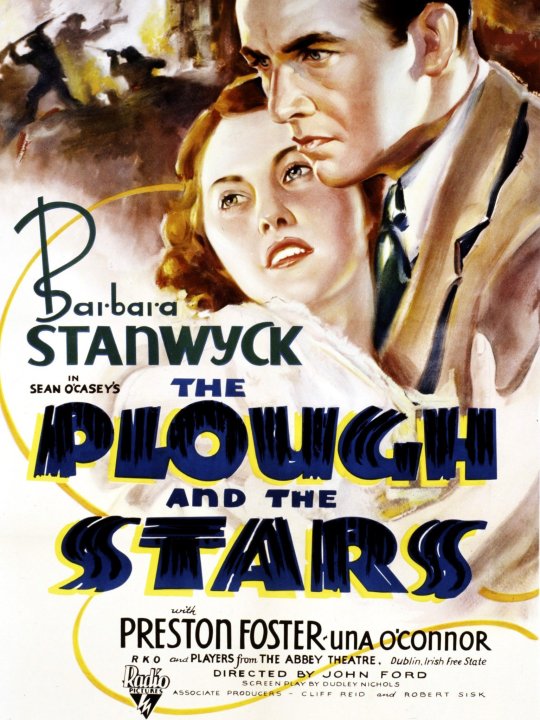

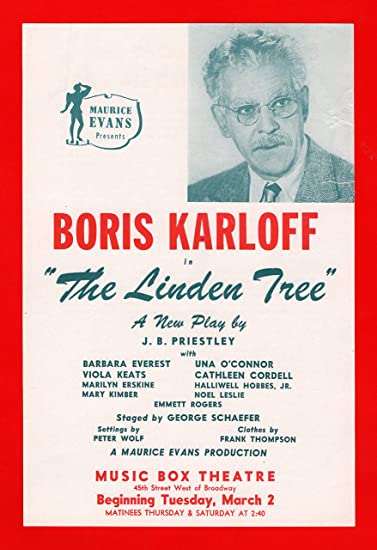

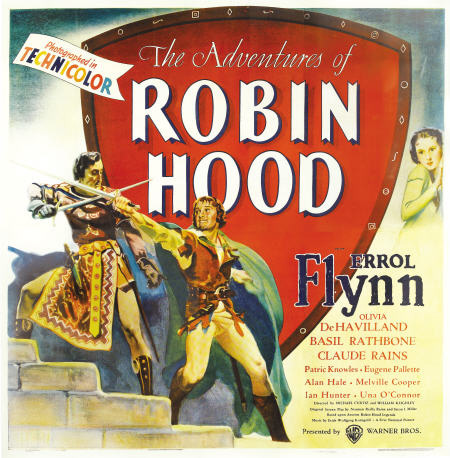


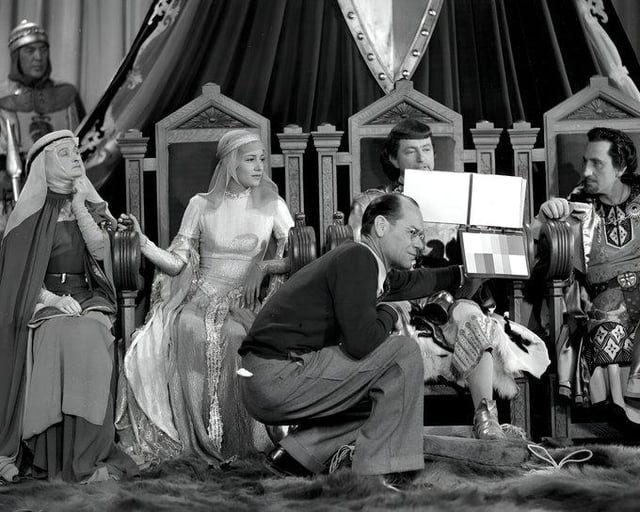

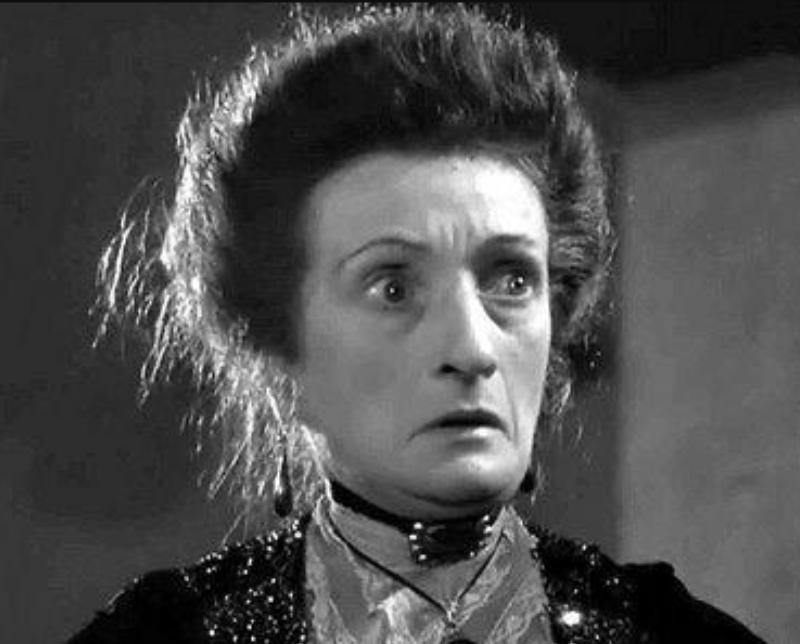
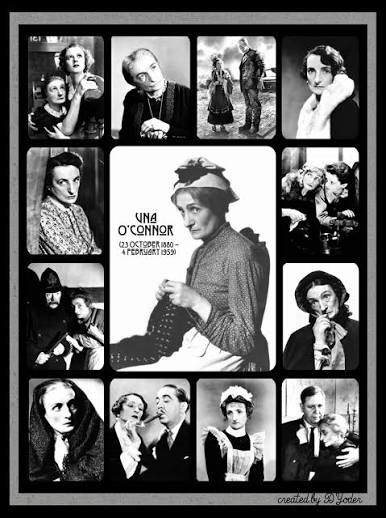
Una O’Connor (1880–1959) was the definitive character eccentric of Hollywood’s Golden Age. While often remembered for her “shrieking” comedic relief in horror classics, a critical look at her career reveals a sophisticated artist who transitioned from the prestigious Abbey Theatre in Dublin to become one of the most reliable and scene-stealing character actors in cinema history.
1. Career Arc: From the Abbey to the “Scream Queen”
O’Connor’s career was defined by a lengthy theatrical apprenticeship that gave her a level of technical precision few of her peers could match.
The Irish Roots (1911–1930): Born Agnes Teresa McGlade in Belfast, she honed her craft at Dublin’s Abbey Theatre. Her training in the “Abbey style”—which emphasized ensemble realism and specific vocal cadences—made her an expert in playing the “common woman” with uncommon depth.
The Coward Breakthrough: Her luck changed when Noël Coward hand-picked her for the stage and film versions of Cavalcade (1933). Coward had reportedly watched her for years, admiring her ability to play an Edwardian servant who undergoes a rags-to-riches transformation.
The Universal Horror Years (1933–1935): Director James Whale recognized that her exaggerated facial contortions and high-pitched yelp were the perfect “safety valve” for gothic horror. Her roles in The Invisible Man and Bride of Frankenstein cemented her as an international icon of “nervous comedy.”
The Final Act: She remained active until the very end, concluding her career by reprising her Broadway success in Billy Wilder’s Witness for the Prosecution (1957).
2. Critical Analysis of Key Performances
The Invisible Man (1933) – The Archetype of Hysteria
As Jenny Hall, the publican’s wife, O’Connor provided the film’s chaotic energy.
Analysis: Her performance is often analyzed as a “bridge” between the audience and the monster. By reacting with such absurd, over-the-top terror, she allowed the audience to find the Invisible Man both frightening and slightly ridiculous.
Critique: While some modern viewers find her “shrieking” repetitive, critics of the era noted that she never undermined the film’s tension. She occupied the precise space between fright and farce, a balance that became a hallmark of the “Whale style.”
The Informer (1935) – The Restrained Mourner
In John Ford’s IRA drama, she played Mrs. McPhillip, the mother of a martyred rebel.
Analysis: This role is a complete reversal of her “scream queen” persona. It is a performance of extraordinary silence and economy. With just a tilt of her head and a haunted look in her enormous eyes, she conveyed the weight of Irish history and maternal grief.
Critique: Film historians often point to this as her finest dramatic work. It proved that her “comic” face was equally capable of reflecting profound tragedy, grounding Ford’s expressionistic film in human reality.
Witness for the Prosecution (1957) – The Technical Specialist
Playing Janet McKenzie, the hard-of-hearing housemaid, O’Connor was the only member of the original Broadway cast invited by Billy Wilder to reprise her role for the film.
Analysis: This performance is a masterclass in timing. Playing a character who is “dour” and “difficult,” O’Connor utilized her deafness as a comedic weapon, frustrating Charles Laughton’s barrister with perfectly timed misunderstandings.
Critique: Even at 77, her energy was undiminished. Critics noted that she exited the screen (and her career) as she entered it: stealing scenes from titans like Laughton and Marlene Dietrich through sheer, disciplined character work.
3. Style and Legacy: “Bricks Without Straw”
A contemporary critic once described O’Connor as the “mistress of the art of making bricks without straw.” This summarizes her unique contribution to the craft.
| Attribute | Impact on Cinema |
| Physicality | She was a “frail little woman” with eyes like a “hunted animal.” She could move an audience to tears or laughter with a single wide-eyed stare. |
| Vocal Signature | Beyond the scream, she had a rapid-fire delivery and a specific “nervous” staccato that made her servants and housekeepers feel perpetually busy. |
| Scene Stealing | She famously “stole” Cavalcade from its lead, Diana Wynyard, by being more vibrant and “alive” than the stiff, upper-lip protagonists. |
The “Dignity of Service”
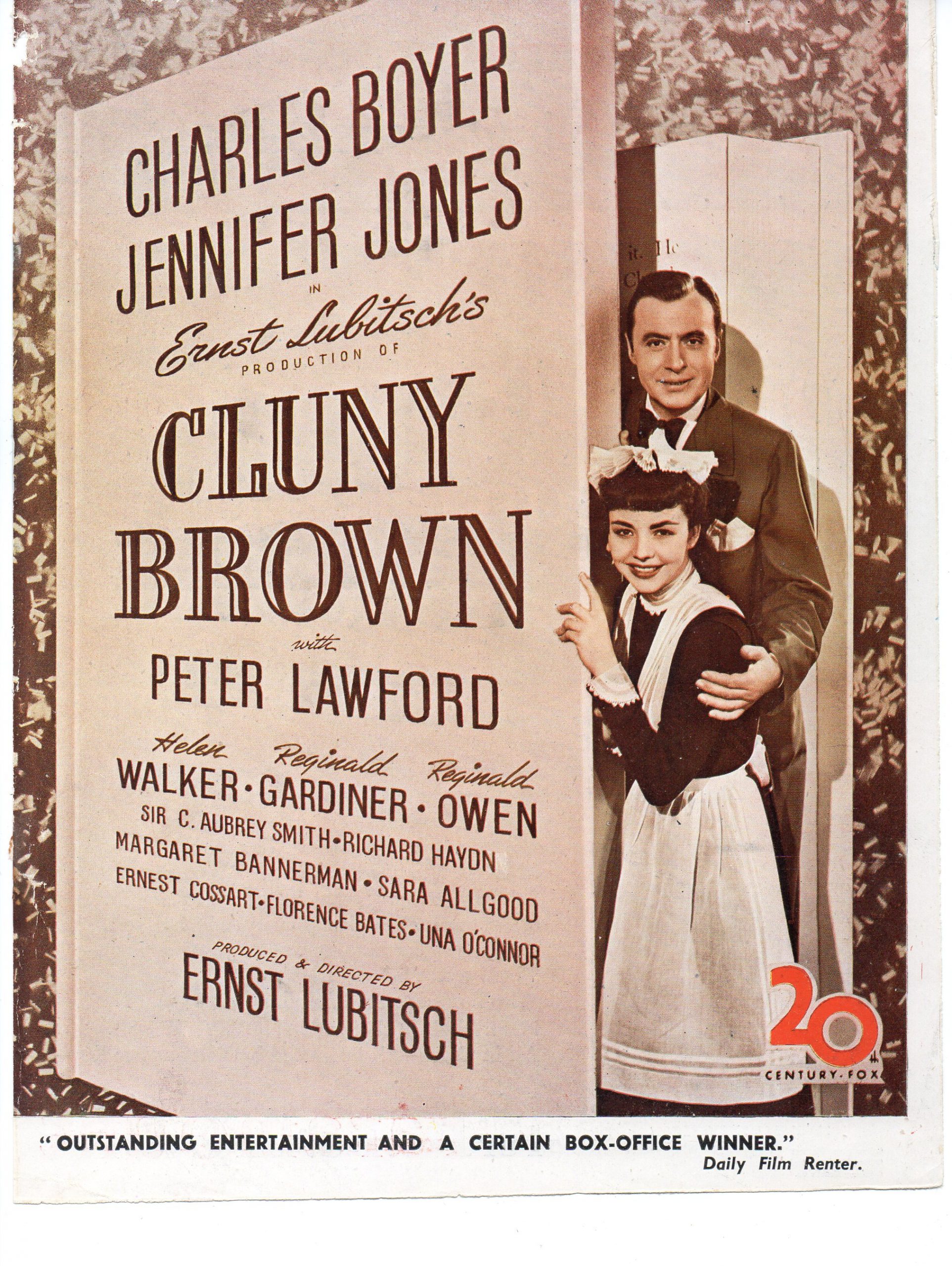
Critical analysis often highlights how O’Connor reclaimed the “servant” role. In her hands, a maid wasn’t just a plot device; she was a “real flesh-and-blood creature” with a credible life off-screen. Whether she was clearing her throat (as in Cluny Brown) or clearing a room, she brought the meticulous standards of the Abbey Theatre to every role, no matter how small.
Critical Note: O’Connor is the rare actor whose work remains “undated.” While the acting styles of many 1930s leading men and women now feel artificial, O’Connor’s specific brand of eccentricity—grounded in real human observation—remains as effective today as it was 90 years
Una O’Connor’s performance in Alfred Hitchcock’s “Murder!” (1930) is a pivotal moment in film history, as it represents one of the earliest and most successful transitions of a stage-trained Irish actress into the brand-new world of “talking pictures.”
In 1930, sound technology was still cumbersome and primitive, but Hitchcock—ever the innovator—utilized O’Connor’s specific theatrical gifts to overcome these technical hurdles.
1. Analysis: The “Abbey Style” Meets the Microphone
In Murder!, O’Connor plays a landlady caught up in a whodunit involving a touring theater company. This role is a direct precursor to her later Hollywood “nervous servant” roles, but here it is played with more realism.
Vocal Texture: At a time when many actors were over-enunciating for the new microphones, O’Connor brought a naturalistic, rapid-fire staccato. She was one of the first actors to prove that a regional (Irish-inflected) accent could be clear, characterful, and “recorded” effectively.
Physicality in the Frame: Hitchcock was fascinated by O’Connor’s face. He used her “darting eyes” to suggest a character who knows more than she is letting on. This established the “Una O’Connor Archetype”: the woman who is perpetually startled but highly observant.
2. The Hitchcockian “Quiet Comedy”
Hitchcock famously disliked broad slapstick, preferring humor derived from character. He used O’Connor as his primary tool for tonal balancing.
The Counterpoint: While the film deals with a grim murder trial and the threat of the gallows, O’Connor’s scenes provide a “domestic comedy” that grounds the film. Her fussing over tea and the mundane details of her boarding house makes the central murder feel more shocking by contrast.
The “Double Take”: This film features some of her earliest recorded “double takes.” Hitchcock realized that O’Connor didn’t need dialogue to be funny; she just needed to react to the leading man (Herbert Marshall).
3. Comparison: British Realism vs. Hollywood Eccentricity
| Element | Una O’Connor in Murder! (UK) | Una O’Connor in The Invisible Man (USA) |
| Tone | Restrained, grounded, subtly suspicious. | High-pitched, hysterical, overtly comedic. |
| Class Focus | A working-class woman with agency and a voice. | A “type” designed to be the foil for the monster. |
| Directorial Intent | Used to build a realistic “world” for the mystery. | Used for explosive “shock” relief in a horror context. |
Critical Summary of the Performance
Critically, her work in Murder! is a masterclass in understatement. It serves as a reminder that before Hollywood “caricatured” her into the screaming landlady of the 1930s horror cycle, she was a subtle character actress capable of playing complex social dynamics.
Hitchcock was so impressed with her ability to inhabit a space that he reportedly considered her a “lucky charm,” leading to her being one of the few British character actors to successfully transplant their career to the American studio system just a few years later.
Technical Insight: This film is also notable because Hitchcock experimented with voiceovers (the character’s internal thoughts) for the first time. O’Connor’s “live” reactions to these silent internal monologues showed her immense skill as a “reaction actress”—a talent she would eventually use to steal scenes from stars like Gary Cooper and Tyrone Power