

Maggie McNamara
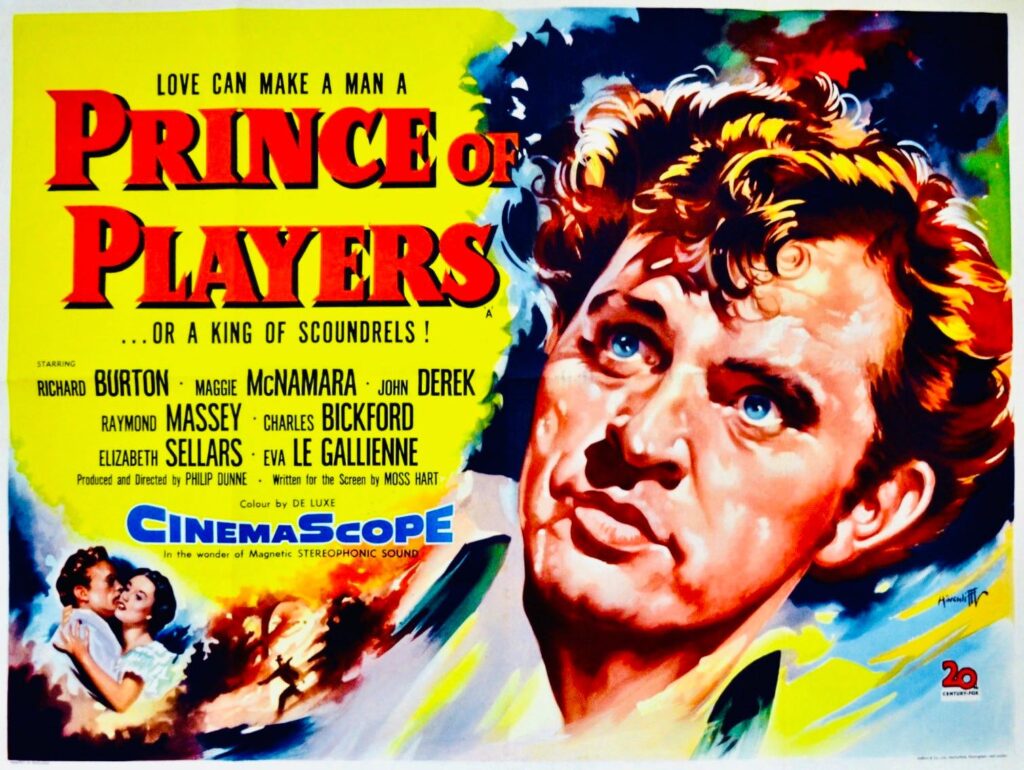
Maggie McNamara seemed destined for major stardom in the early 1950’s. However her career soon petered out with just an occassional role therafter. She was born in New York City in 1928. She replaced Barbara Bel Geddes on Bradway in “The Moon Is Blue” in 1951. She played the same part on film with David Niven. Her performance earned her an Academy Award nomination. She was one of the leads in the very popular 20th Century Fox movie “Three Coins in the Fountain” and appeared opposite Richard Burton in “Prince of Players”. She did not make another film until 1963 when her old mentor Otto Preminger cast her as Tom Tryon’s sister in “The Cardinal”. She then retired from acting. Maggie McNamara died in 1978. Link to article on Maggie McNamara here.
Article on Maggie McNamara and “The Moon Is Blue”by ‘Fritz and the Oscars”:
An Oscar nomination never will be and never has been a guarantee for a long and successful career as an actor. A lot of actors and actresses disappeared from the public eye after their nomination but there are surely not a lot of Oscar-nominated performers that seem as obscure as Maggie McNamara. Few names in this category provoke such an universal reaction of ‘Who is that?` like hers, except maybe the nominees in the 20s and early 30s. A lot of times, these unknown performers can surprise with a wonderful performance and make me want to know more about them. But to be honest, Maggie McNamara isn’t among them. Her performance in The Moon is Blue came and go and she disappeared from my memory rather quickly and I only checked out her name again on the internet to find some information about her for this review.
There I learned that Maggie McNamara followed her Oscar-nominated debut with a performance in the Best-Picture-nomineeThree Coins in the Fountain but after that, things seemed to fall out of place for her. She only acted in a few more films until she became a typist in New York and then committed suicide in 1978, following a history of mental illness. It’s a tragic end to a performer who might have had a great career but we will never know what went wrong. One thing that must might worked against her was maybe the fact that Maggie McNamara began her career in the same year another actress appeared who was even better suited for the kind of roles Maggie McNamara could have played. Just looking at a picture of her, one can’t help but compare her to Audrey Hepburn – the same delicacy, the same sweet appearance but Maggie McNamara didn’t have the same charming aura and charisma and so she probably must have considered herself lucky to even have been cast in The Moon is Blue. One year later, this part would probably have naturally been offered to Audrey Hepburn.
Well, there is no sense in speculating about the possibilities of a career that never was – so what about this Oscar-nominated debut? I didn’t know what to expect of The Moon is Blue before I watched it, I only heard that it was ‘daring’ and had problems with censors in 1953. So, I didn’t know what would be offered to me but somehow I certainly didn’t expect a plot about a young actress who meets an architect, played by William Holden who must have been a sort of lucky charm for actresses in the 50s when it came to Oscar nominations, on the top of the Empire State Building and then follows him to his apartment where she is courted by both him and the father of his ex-fiancé, played by David Niven. It all sounds rather risky and could have been an amusing comedy of manners, but The Moon is Blue is a movie that seems to think of itself as the height of sophistication and wordplay but unfortunately, it all comes together as an incredibly lifeless, dull and sometimes even unpleasant experience. Like a lot of Neil-Simon-plays, The Moon is Blue has everyone talk in such an invariable mix of jibes, jokes, supposedly clever observations or statements but it unfortunately never develops and constantly circles around the same topic – two men who want nothing more than to bed a girl they just met while she keeps up her proper façade and protects her virginity with the most serious dedication.In the role of the younger suitor, William Holden gives a performance her could do in his sleep while David Niven, who received a Golden Globe, adds some charm and style to the proceedings but the film solely depends on the central performance by Maggie McNamara. And she does succeed in bringing an unique approach to this part but what seems like a breath of fresh air begins to resemble never-ending repetition much too soon. In her first scenes, Maggie McNamara is able to create a certain fascination around her character. She possesses some of the sweetness and naivety that Audrey Hepburn and Leslie Caron showed that year but at the same time her Patti is obviously more aware of the world – and sex. Maggie McNamara has the thankless job of playing a character who seems perfectly innocent and inexperienced while endlessly talking about sex and ‘virginity’. The trick is that Patti knows everything about sex but decided to wait for the right man. This certainly separates her from the other nominees of 1953 who were either very active in the sexual business or seemed like they never even heard of sex. So, Maggie McNamara’s Patti is a woman who knows what she wants and what she wants to keep but the script so many times bends her character and uses her to proclaim its own sense of failed wit and cleverness that her character basically remains more a scratch than a real woman. Patti says that she doesn’t want to be seduced but at the same time she sees no problem in flirting with two men at the same time, sitting on one’s lap and kissing him.


The movie’s and Maggie McNamara’s problem is that what sounds so modern and open is actually very old-fashioned and done in a way to reach the audience of 1953. Like most other nominees that year, Maggie McNamara has to play an underwritten character but is able to bring a lot more to the movie thanks to her own charm and personality. She plays Patti with an disarming openness and honesty. There seems to be no topic she doesn’t want to talk about but she plays all this with a combination of unique naivety and honest seriousness that very often leaves the other characters speechless, but always in a rather humorous and entertaining kind of way. She’s a woman who is constantly talking about what’s in her mind and who obviously takes everything very seriously but Maggie McNamara plays it all in a manner that is neither playful nor overly earnest – instead, she finds a wonderful combination of both extremes. When William Holden tells her that he can build a cathedral, she earnestly wonders what a cathedral costs these days – a small one. In the hands of Maggie McNamara, Patty sees herself as a very practical and logical woman who may seem rather old-fashioned in her ideas and believes but who is a very lively and lovely spirit. All the time, Maggie McNamara shows that Patti is well aware of what’s in the mind of this man, but she has her own way of handling things. She willingly walks in the cave of the lion but she will surely not allow the lion to eat her (if you forgive this comparison). Maggie McNamara also finds the right tone for her voice which contains an interesting freshness and a bubbly charm that helps her to preventThe Moon is Blue from becoming a complete disaster.
The main problem is that everything that is interesting and fascinating about Maggie McNamara and Patti O’Neill becomes old and uninteresting very soon. Maggie McNamara suffers from a screenplay that is constantly asking her to find new ways to shock or delight the audience but the combination of naivety and seriousness begins to feel very one-dimensional after one gets used to the character and one can’t help but wonder why William Holden and David Niven would continue to be so completely smitten by this strange woman whom they just met a few hours ago. Maggie McNamara plays Patti’s uniqueness in a way that becomes too monotonous too soon and one feels a certain relief when this chatterbox leaves the scenery for a while after having talked almost non-stop for 45 minutes.
Just like the character of Patti O’Neill is neither Princess Ann nor Eloise Kelly, Maggie McNamara possesses neither the sweet charm of Audrey Hepburn nor the sassy personality of Ava Gardener but she finds a balance between them that, as long as it lasts, feels surprisingly intriguing. She doesn’t have the staying power of the other nominees that year which isn’t the fault of Maggie McNamara but of the screenplay that doesn’t offer her one memorable moment or one truly note-worthy line but her performance is still something that is worthwhile in itself.
Maggie McNamara’s biggest success in The Moon is Blue is that she can make Patti a realistic character. Just like Leslie Caron inLili she has to play a woman who seems so unbelievable in everything she does and who, like Ava Gardener in Mogambo, has to say so many lines that could ruin the whole performance – but Maggie McNamara also found an approach to this part that helped to improve the character thanks to the personality and charm of the actress. The thing is that Maggie McNamara had a big disadvantage in her part compared to her other nominees – thatThe Moon is Blue has absolutely no idea what to do with its leading lady. As mentioned, she gets to speak the saucy lines but her character is shockingly underdeveloped – she is actually supposed to be an aspiring actress but there is absolutely no sense in this aspect since it is only mentioned once and neither the script nor Maggie McNamara ever remind the viewer of it again. And during The Moon is Blue, one also rather gets the feelings that she tries to become housewife of the year as she basically spends the whole movie either talking or doing housework in another man’s apartment.
It’s an overall very unsatisfying movie and leading character – Maggie McNamara tries her best but unfortunately both her performance and her part don’t develop and that way loses the interest of the viewer very soon. Still, Maggie McNamara leaves her own distinct mark on this part and even though Audrey Hepburn would seem like an obvious choice for a different actress in this part, it’s doubtful that she could have portrayed the combination of innocence and a much too-mature spirit in the same effective way. It’s a charming and interesting piece of work that unfortunately couldn’t really rise above the material but the lively presence of Maggie McNamara is still the only reason thatThe Moon is Blue doesn’t fail completely. A promising debut to a career that sadly never happened.
The article can also be accessed on line here.
The article can also be accessed on line here.