

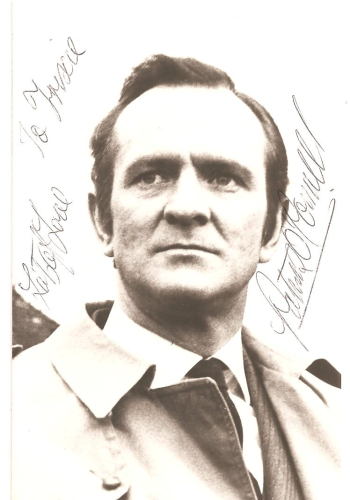
Patrick O’Connell obituary in “The Guardian”.
Patrick O’Connell was born in 1934 in Dublin. He was brought up in Birmingham and studied drama in Londonat RADA. He won great acclainm for his portryal of Edward Hammond in television’s long-running “The Brothers”. His film appearances include “Cromwell”, “The Hunting Party”and “The McKenzie Break”. Patrick O’Connell died in October 2017.
“Guardian” obituary by his daughter Kate O’Connell
My father, Patrick O’Connell, who has died aged 83, was an actor for 40 years. He first made his name in social realist drama, and went on to work with the RSC and on television.
Paddy, as he was known to friends and family, started in the theatre at that exciting time when French windows were replaced by kitchen sinks and he fitted the archetype of the “angry young man”. One of his big breaks was the role of Gunner O’Rourke in John McGrath’s Events While Guarding the Bofors Gun at Hampstead theatre in 1966, with James Bolam. “Patrick O’Connell creates a dangerous, pitiful psychotic who frightened me so much that if he had moved one step nearer the auditorium, I would have run for my life,” wrote Alan Brien in the Sunday Telegraph.
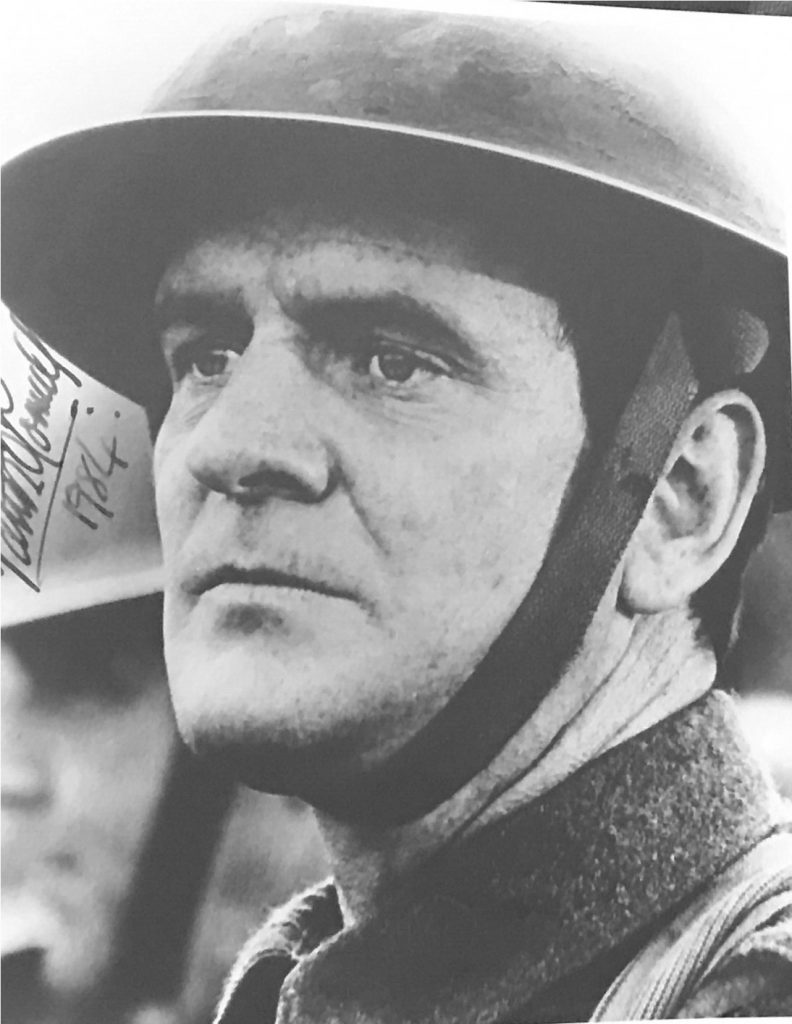
His first television work was as Derek in the factory-set Lena, O My Lena (1960) by Alun Owen, with Billie Whitelaw in the title role, for Armchair Theatre, directed by Ted Kotcheff, who was a major influence on Paddy’s work. He had his own series playing DI Gamble in ATV’s Fraud Squad (1968-70) and he played the eldest brother, Edward Hammond, in the BBC’s The Brothers (1972-76).
On stage, he was the original Stan Mann in Arnold Wesker’s Roots at the Belgrade, Coventry, the Royal Court and the Duke of York’s (1959) and was in Peter Brook’s US (an experimental play about the Vietnam war) with the RSC at the Aldwych (1966). He played McLeavy in Joe Orton’s Loot, at the Ambassadors (1984) and the Lyric, with Leonard Rossiter as Inspector Truscott.
Paddy had a lifelong love of Shakespeare and joined Peter Hall’s company at the RSC in 1967 to play Macduff to Paul Scofield’s Macbeth at Stratford upon Avon and the Aldwych. He also played Henry V in the Henrys with the English Stage Company at the Old Vic in 1985.
His film work included Tony in Alan Sillitoe’s The Ragman’s Daughter (1972), Sgt Major Cox in The McKenzie Break (1970) and Charlie Lyne in The Shooting Party (1985) with James Mason, Dorothy Tutin and John Gielgud
Born in Dublin to Richard O’Connell, an army officer, and his wife, Patricia (nee Wardell) and given away at birth, Paddy was rescued and raised from the age of three by a remarkable woman, Dorothy Thomas, from Birmingham, who nurtured him back to some semblance of normality, only for his father to place him at the age of five in a Catholic orphanage in Blackrock, Dublin. After a four-year fight, Dorothy was allowed to take him back, and, through her job as housekeeper to a kind and cultivated businessman, Paddy was introduced to classical music and the theatre, and his creativity encouraged.
Paddy rejected Catholicism with a religious fervour, saying that acting saved him and it was a great channel for angst and anger. He attended Birmingham TheatreSchool, then won a scholarship to Rada in London in 1955.
His first job was an Arts Council tour of Look Back in Anger and She Stoops to Conquer in 1957, on the first day of which he met Patricia Hope, a fellow actor. They married in 1959, and settled in Chiswick, west London, then Teddington. Pat went on to become a television casting director.
Paddy retired from acting in his early 60s to concentrate on his painting, linocuts and etchings.
He is survived by Pat, his daughters, Fran and me, and his grandchildren, Finn and Sadie.
His “Wikipedia” entry:
Patrick O’Connell (born, January 29, 1934 in Dublin) is a retired Irish actor known for numerous performances on UK television and in films.
He was brought up in Birmingham, England and after working in the office of a department store he trained as an actor at RADA. He then appeared in repertory theatre, at the Royal Court Theatre and with the Royal Shakespeare Company.
His television appearances include Fraud Squad as (Detective Inspector Gamble), Dixon of Dock Green, The Brothers (as Edward Hammond), Yes Minister, The Professionals, We’ll Meet Again, The Bill, Inspector Morse, Peak Practice, Dangerfield and As Time Goes By.
His film roles include The Shooting Party, The Human Factor, The McKenzie Break (as Sergeant Major Cox) and Cromwell.
He is also an artist known for his paintings and drawings.