

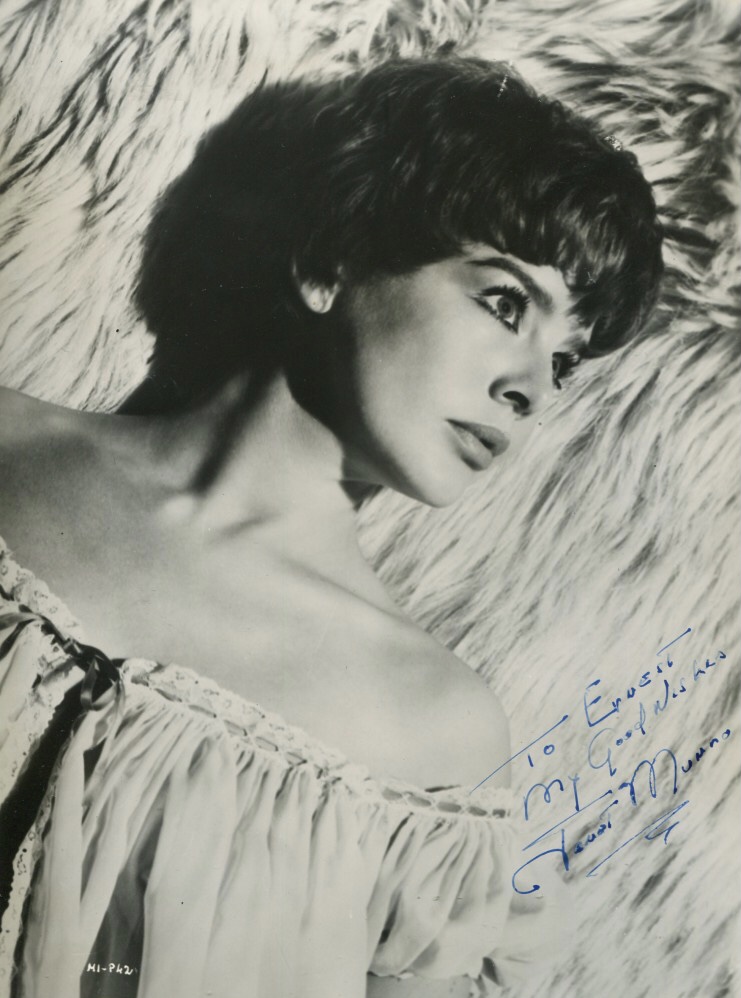
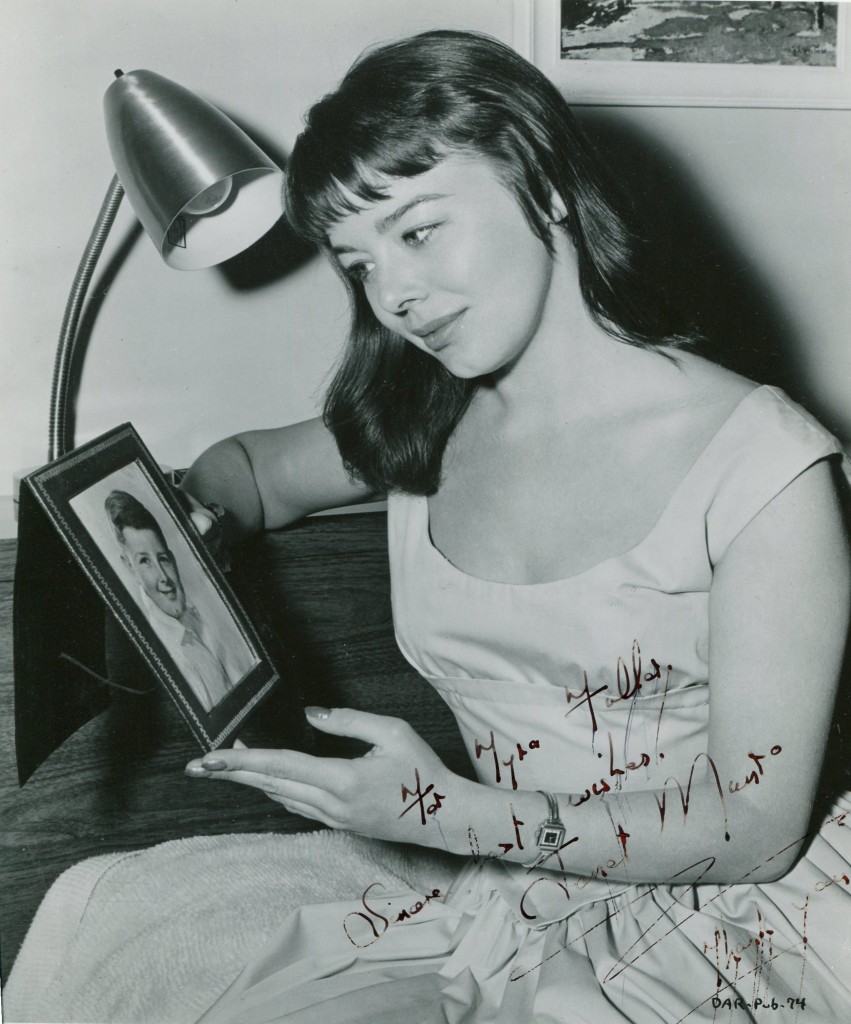
Janet Munro.
Janet Munro star shone brightly but sadly all to briefly. For a period in the late 1950’s until the very early 1960’s she starred in some very popular and then interesting movies.
She was born in Blackpool in 1934. In 1958 she had a leading role in “The Young and the Guilty” opposite Andrew Ray.
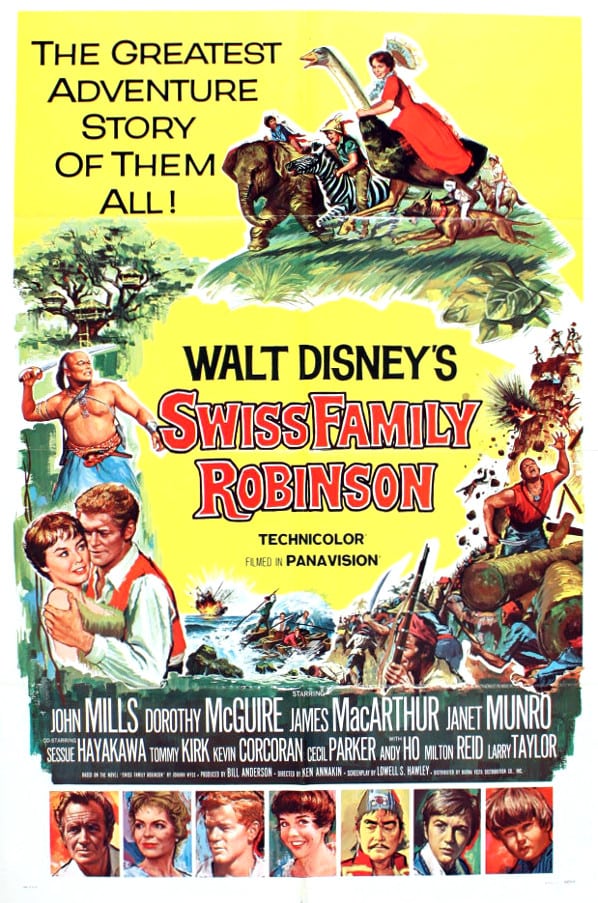
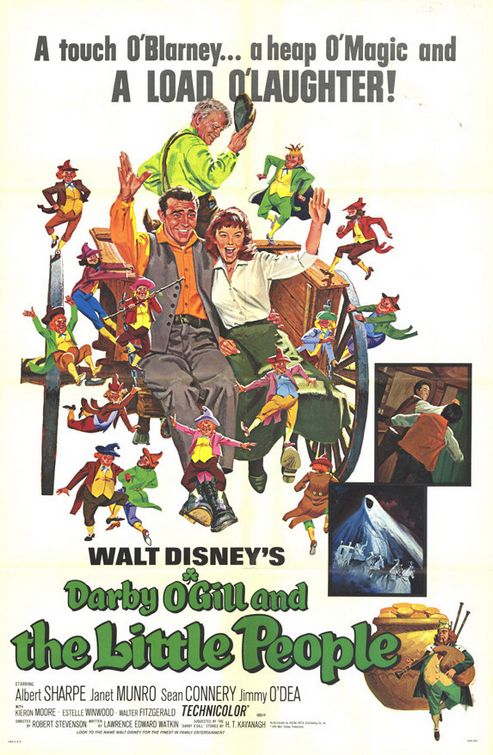
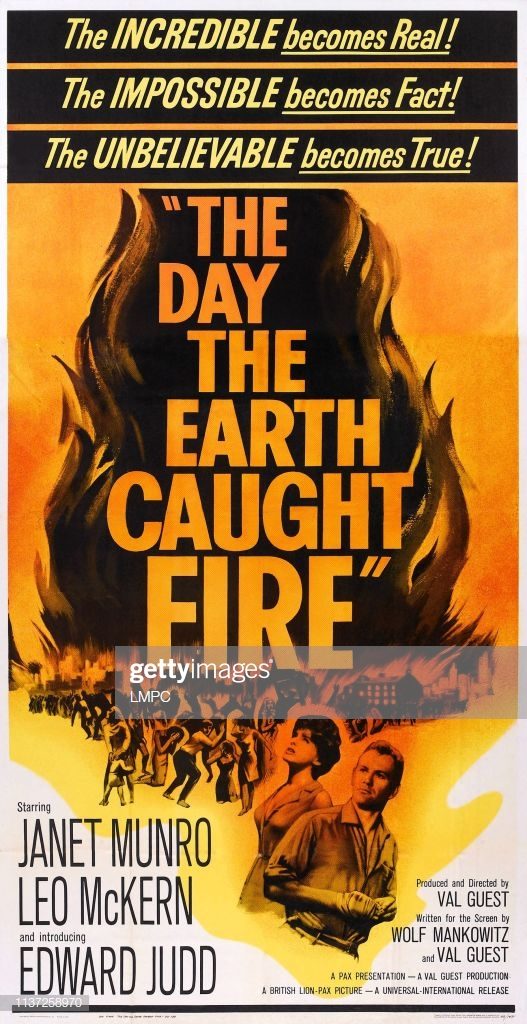
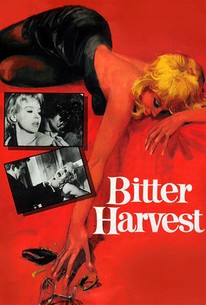
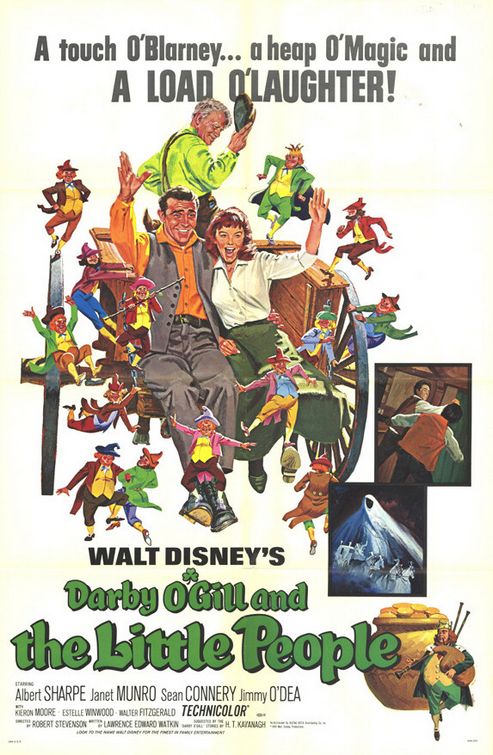
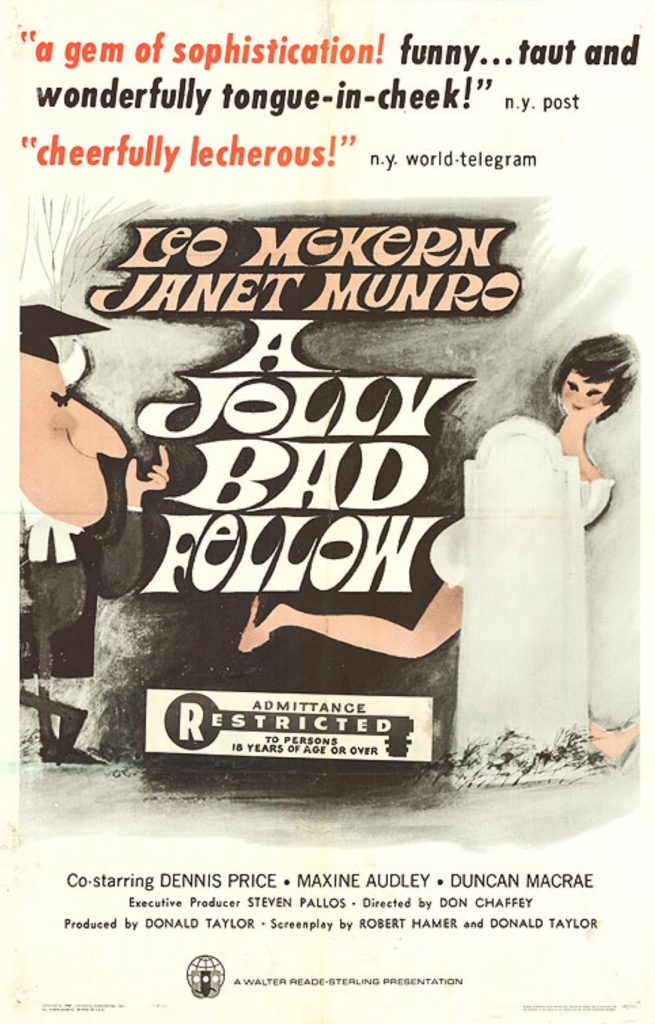
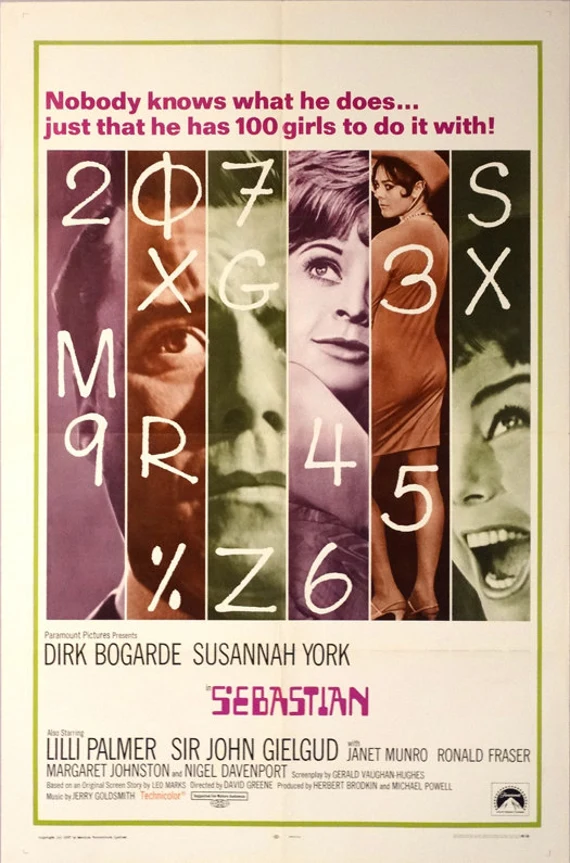
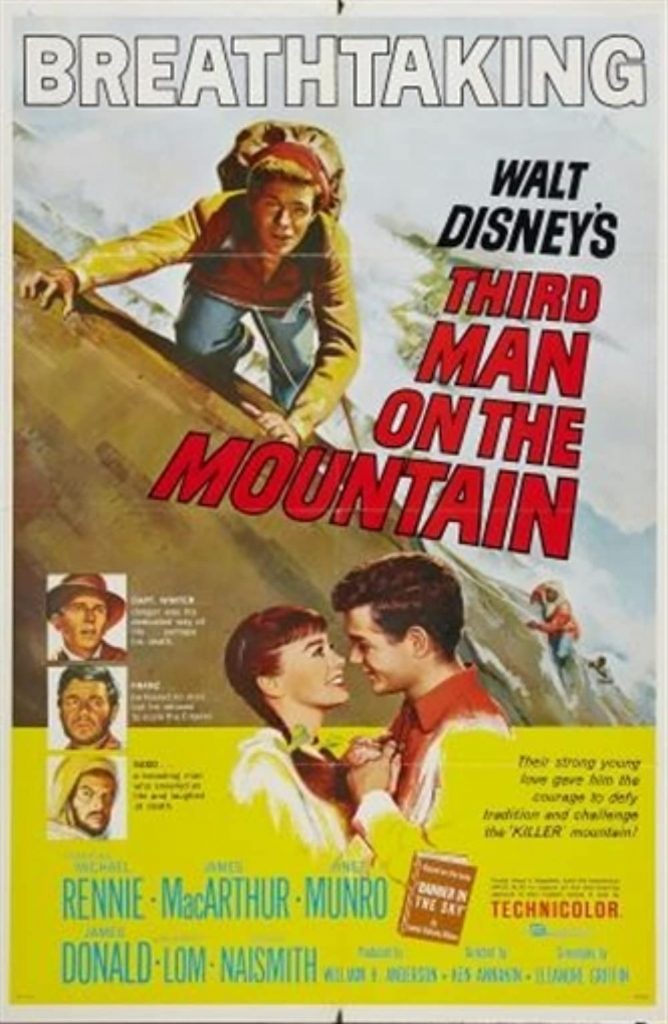
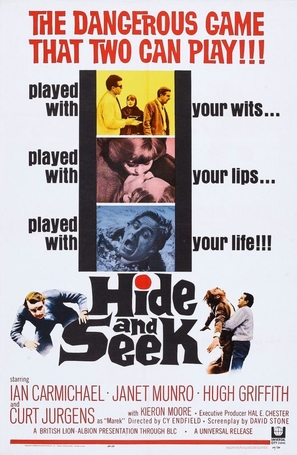
Shortly afterwards she went to Hollywood where she signed a Walt Disney contract and starred opposite Sean Connery in “Darby O’Gill and the Little People” and opposite James MacArthur in both “Swiss Family Robinson” and “Third Man on the Mountain”.
She was leading lady to Tommy Steele in “Tommy the Toredor”, John Stride in “Bitter Harvest” and opposite Edward Judd in the cult classic “The Day the Earth Caught Fire”.
Her film career fizzled out somewhat afterwards and she died at a young age in 1972. She was married to actor Tony Wright and then Ian Hendry who survived her
His biography features Janet Munro extensively.

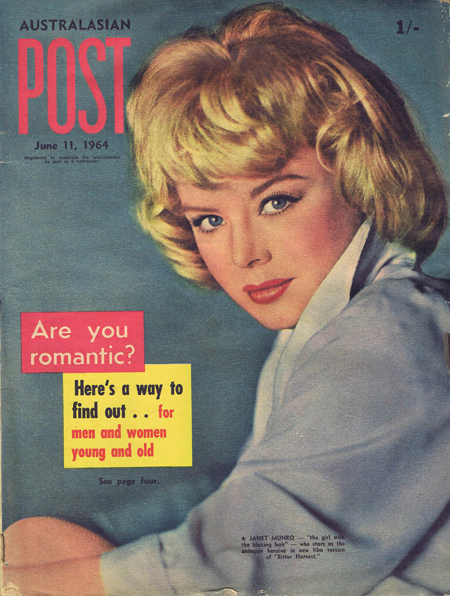
The onscreen chemistry between Edward Judd and Janet Munro in The Day the Earth Caught Fire (1961) is frequently cited by critics as the gold standard for adult, naturalistic romance in science fiction. At a time when the genre was often populated by wooden scientists and screaming damsels, Judd and Munro delivered a relationship defined by intellectual friction and sexual maturity.
Critical Analysis: The “Sweat and Nicotine” Romance
1. Subverting the “Meet-Cute”
In most 1960s films, the leading man and woman met under idealized circumstances. In The Day the Earth Caught Fire, Judd (Peter Stenning) and Munro (Jeannie Craig) meet in the sterile, high-pressure environment of a government switchboard and a newsroom.
-
Analysis: Their chemistry is built on adversity. Stenning is a washed-up, cynical journalist; Jeannie is a professional woman guarding state secrets. Critics note that their attraction isn’t “love at first sight” but rather a mutual recognition of loneliness. They are two people trying to maintain their dignity while the world literally heats up around them.
2. The “Fast-Talking” Rhythm
Director Val Guest utilized a “Pre-Noir” pacing for their dialogue.
-
Technical Detail: Judd and Munro engage in overlapping, staccato dialogue. This technique, reminiscent of His Girl Friday, creates a sense of intellectual parity. Munro’s Jeannie doesn’t just listen to Judd; she challenges him, mocks his cynicism, and matches his wit. This verbal “sparring” serves as a sophisticated form of cinematic foreplay.
3. Physicality and the “Heat” Metaphor
As the film progresses and the Earth’s temperature rises, the physical chemistry between the two becomes increasingly visceral.
-
Visual Analysis: The film famously uses yellow and orange filters to simulate the rising heat. Judd and Munro are often depicted drenched in sweat, their clothes disheveled. Critics have argued that this “environmental pressure” acts as a catalyst for their intimacy. They aren’t just falling in love; they are clinging to each other for survival.
-
The “Apartment” Scenes: The scenes in Stenning’s cramped, sweltering apartment are remarkably frank for 1961. There is a “lived-in” quality to their interactions—the way they share a drink or navigate the small space—that suggests a deep, immediate physical connection that bypassed the censors of the day.
4. The Tragedy of Timing
The ultimate power of their chemistry lies in its transience.
-
Critical View: Because the film ends on an ambiguous note (with two versions of the front page prepared: “World Saved” or “World Doomed”), their romance feels incredibly precious. Critics point out that Judd’s performance softens significantly when he is with Munro; she is the only element in the film that makes his cynical character care if the world actually survives. She is his “Humanity Anchor.”
Janet Munro (1934–1972) remains one of the most poignant “what-if” stories in British cinema. A performer of luminous intelligence and a raspy, sophisticated vocal delivery, she spent her early career as the “Queen of Disney Live-Action” before staging a radical, critically acclaimed breakout into “Kitchen Sink” realism and psychological drama.
She was an actress who successfully transitioned from a wholesome archetype to a mercurial modern woman, though her career was tragically cut short at the age of 38.
Career Overview: From Disney Darling to Fleet Street
1. The “Contract Girl” Era (1957–1960)
After a childhood in the theater (her father was Scottish comedian Alex Munro), Janet was signed to a five-film contract by Walt Disney. She became the studio’s premier leading lady for live-action adventures, starring in Darby O’Gill and the Little People (1959), Third Man on the Mountain (1959), and Swiss Family Robinson(1960). In these roles, she was the “spunky,” outdoorsy ingenue—wholesome but possessing a noticeable spark of independence.
2. The Adult Pivot: The Day the Earth Caught Fire (1961)
Seeking to shed her “Disney Girl” image, Munro took a massive professional risk by starring in Val Guest’s gritty, apocalyptic thriller. As Jeannie Craig, she displayed a sexual maturity and professional cynicism that shocked audiences who only knew her from Swiss Family Robinson.
3. The “Social Realism” Peak (1962–1964)
Munro moved into the “British New Wave” with force. She delivered a devastating, BAFTA-nominated performance in “Life for Ruth” (1962), playing a mother torn between her religious convictions and her child’s life. She followed this with the bitter, sharp-edged comedy “Bitter Harvest” (1963), playing a small-town girl corrupted by the city.
4. The Transition to Prestige TV
In the late 60s, as her film roles slowed due to personal health struggles, Munro became a fixture of “Play for Today” and other prestigious BBC/ITV dramas. Her final roles were characterized by a haunted, fragile dignity.
Detailed Critical Analysis: The “Luminous Realist”
1. Deconstructing the “Disney Spunk”
Even in her early Disney roles, Munro was technically superior to the standard “damsel.”
-
Analysis: In Darby O’Gill, Munro utilized a “Feisty Naturalism.” While the film was a fantasy, her performance was grounded in a very real, tactile Irish earthiness. Critics noted that she had a “modern face”—one that didn’t quite fit the Victorian settings, suggesting a woman who was ahead of her time. This “internal modernism” is what eventually allowed her to escape the Disney mold.
2. The “Jeannie Craig” Transformation
In The Day the Earth Caught Fire, Munro performed a masterclass in “rebranding through technique.”
-
Technical Detail: She lowered her vocal register and adopted a “clipped,” professional cadence. She portrayed Jeannie as a woman who had seen the darker side of government and journalism.
-
Critical Insight: Critics hailed her for her unfiltered physicality. In the film’s sweltering heat, she didn’t try to look “pretty”; she looked exhausted, sweaty, and desperate. She proved that she could carry the emotional and intellectual weight of a high-concept “adult” film.
3. The Emotional Depth of Life for Ruth
This remains Munro’s most technically demanding performance.
-
Analysis: Playing Pat Harris, a woman watching her daughter die because her husband refuses a blood transfusion on religious grounds, Munro utilized “Micro-Expressionist” acting.
-
Critical View: She avoided the “hysterical mother” tropes. Instead, she portrayed a woman in a state of intellectual and spiritual paralysis. The conflict played out entirely in her eyes—the battle between her loyalty to her husband and her instinct as a mother. It is a performance of immense restraint and remains a benchmark for British social realism.
4. The “Voice of Experience”
Munro’s voice was a critical component of her late-career appeal.
-
Technical Analysis: She possessed a distinctive, slightly “whiskey-toned” rasp. This gave her characters an immediate sense of lived-in history. In her later TV work, she used this vocal quality to project a “shattered elegance”—playing women who were beautiful but had been significantly “marked” by life.
Key Credits & Critical Milestones
| Year | Title | Role | Significance |
| 1959 | Darby O’Gill… | Katie O’Gill | Won the Golden Globe for “Most Promising Newcomer.” |
| 1960 | Swiss Family Robinson | Roberta | Her peak as a global Disney icon. |
| 1961 | The Day the Earth… | Jeannie Craig | Her successful “Adult Breakthrough” role. |
| 1962 | Life for Ruth | Pat Harris | BAFTA Nominee for Best British Actress. |
| 1963 | Bitter Harvest | Jennie Jones | A gritty, “Kitchen Sink” tragedy that pushed her range. |
Janet Munro was the “Bridge to the Modern Heroine.” She was one of the first British actresses to successfully navigate the chasm between the “Studio System” and the “Indie Realism” of the 1960s. She possessed a translucence on screen; you could see her thoughts as clearly as her face. Though her light was extinguished early, she left behind a body of work that proved a woman could be both a “Disney Princess” and a “Realist Icon”—provided she had the technical courage to burn the old image down.
Would

Comment
Liam Byrne
Slight correction to the Biography above…….Janet is survived by her two daughters Sal (Walker) and CORRIE…not Connie..(Hendry). …Also the actual cause of death is not as given but for personal reasons the Family would prefer that it is not made public.