

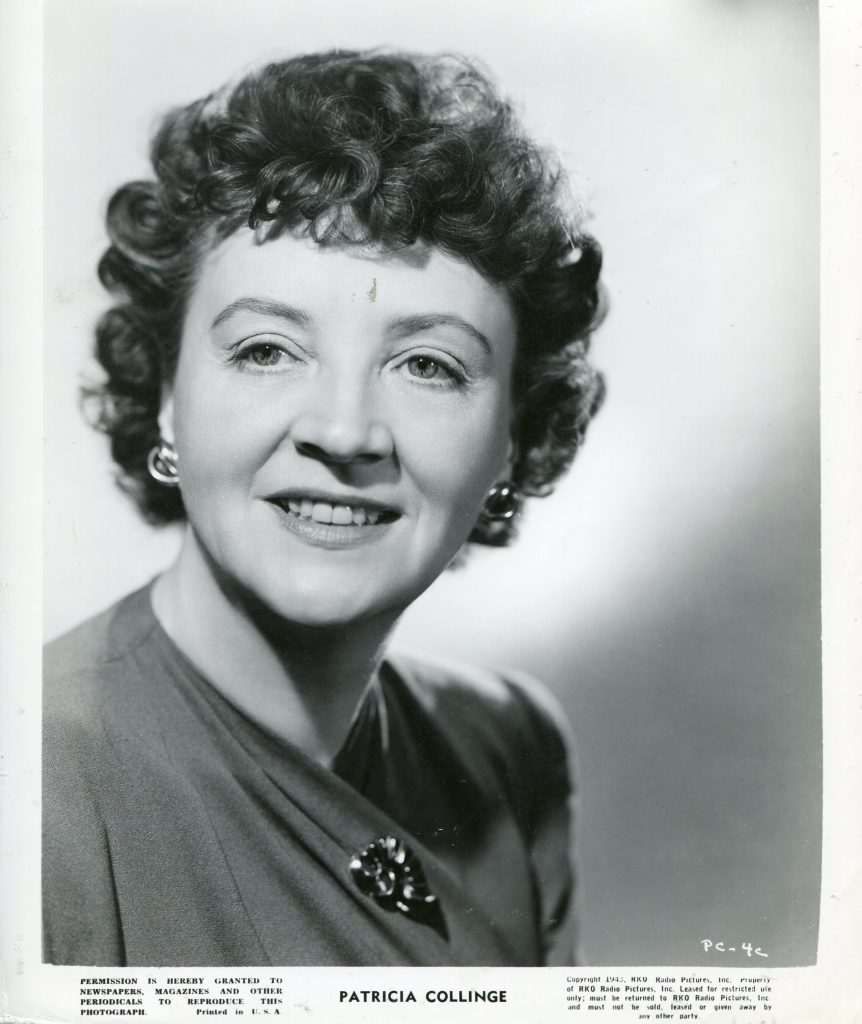
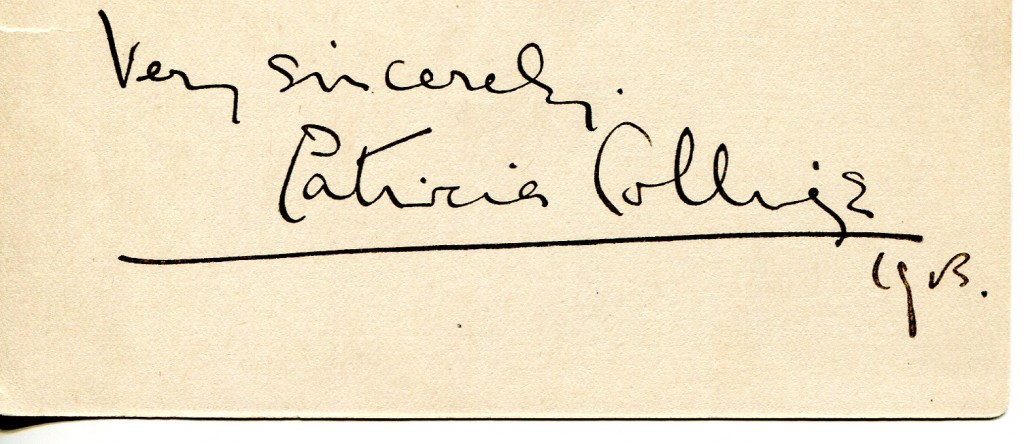
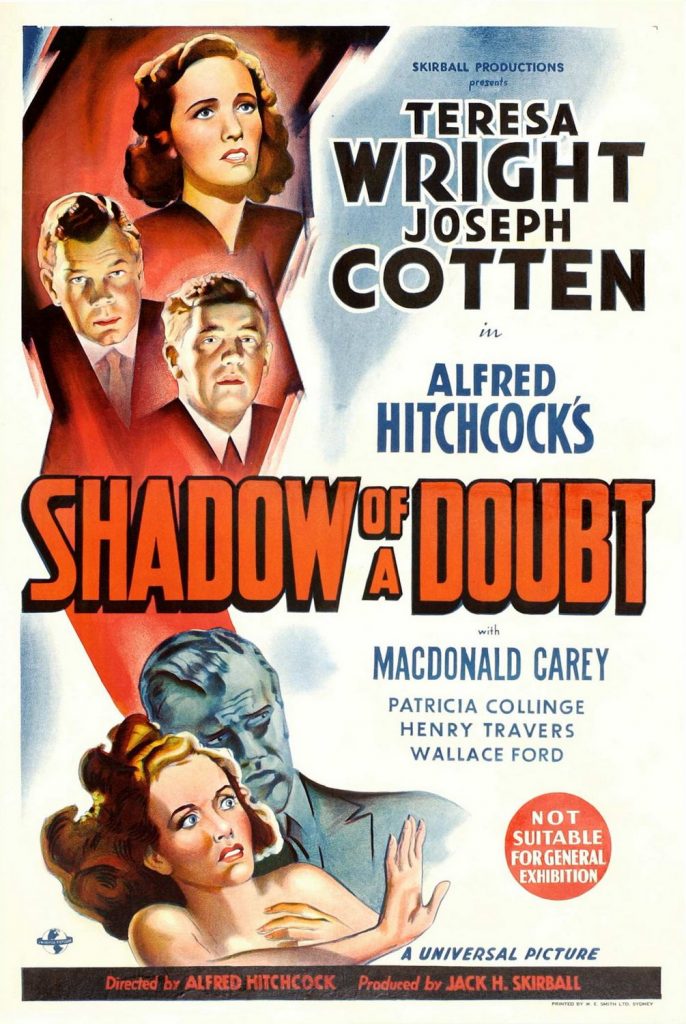
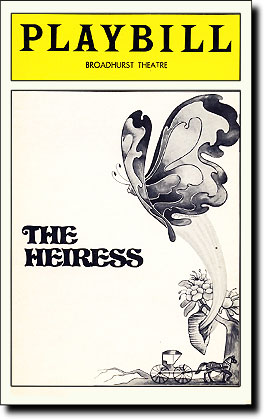
Irish-born stage actress, in London from 1904, on Broadway from 1908. After appearing as a flower girl in ‘The Queen of the Moulin Rouge’, she became a celebrated theatrical star of many classic plays by George Bernard Shaw, Henrik Ibsen, J.M. Barrie and others. From 1947 to 1948, she starred as Lavinia Penniman in ‘The Heiress’ at the Biltmore Theatre, directed by Jed Harris. The play ran for 410 performances. On screen, she was noted for her work with Alfred Hitchcock. She appeared as Emma Newton in Shadow of a Doubt (1943). Though uncredited, Patricia wrote some of the dialogue for this film, as well as for Lifeboat (1944), in which she did not appear as an actress. In the 1960’s, she acted in several episodes of Alfred Hitchcock Presents (1955) and The Alfred Hitchcock Hour (1962). However, her finest moment was as the endearing, disillusioned Aunt Birdie in The Little Foxes (1941), which she had created on the stage in 1939, and which won her an Academy Award nomination for Best Supporting actress.
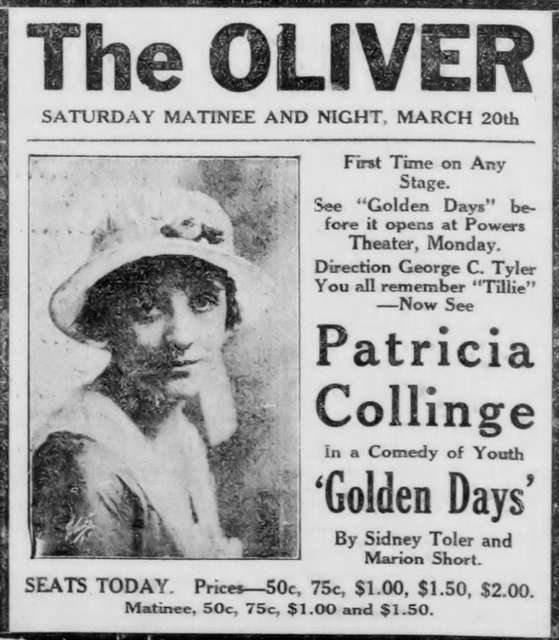
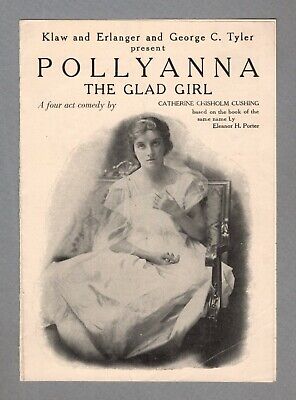
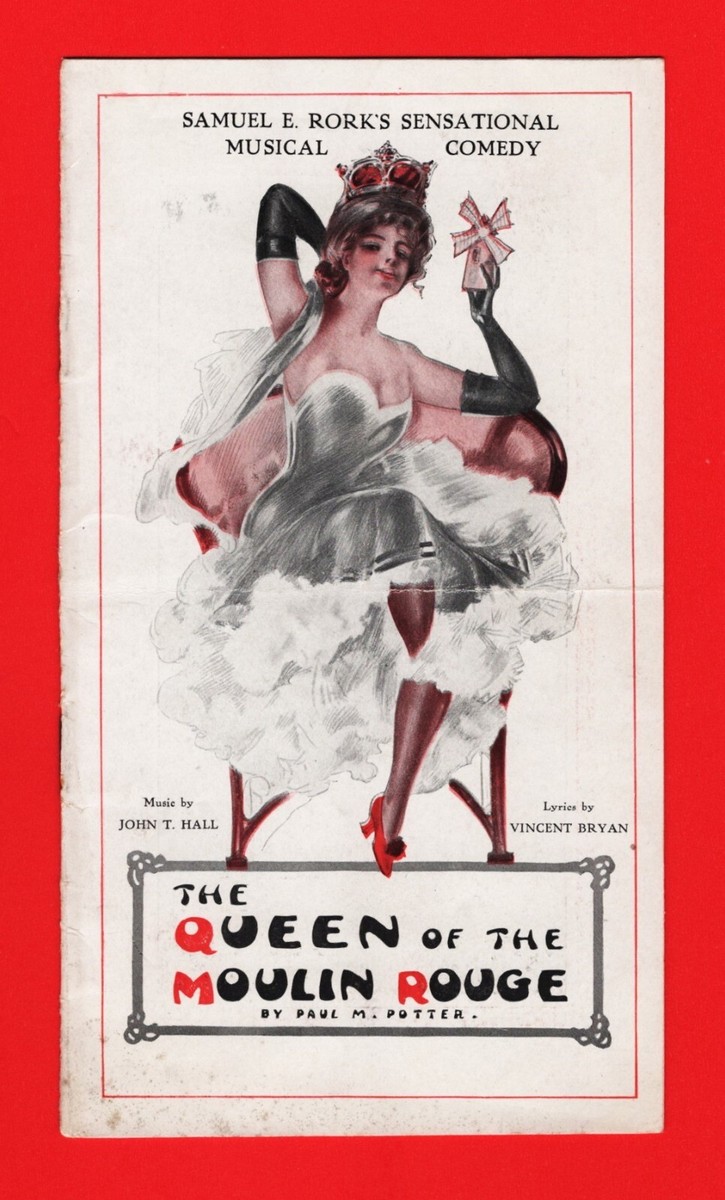
NEW YORK TIMES OBITUARY IN 1974.
Patricia Collinge, an actress who started her career in London in 1904 and came to New York four years later to become an important part of the American theatre, died yesterday at her home, 30 Beekman Place. Her age was 81.
In 1932 when she appeared in “Autumn Crocus” with Francis Lederer, Brooks Atkinson, The New York Times, critic, said of her: “Miss Collinge plays with the soft, pliant sincerity that makes her one of the most endearing actresses.?
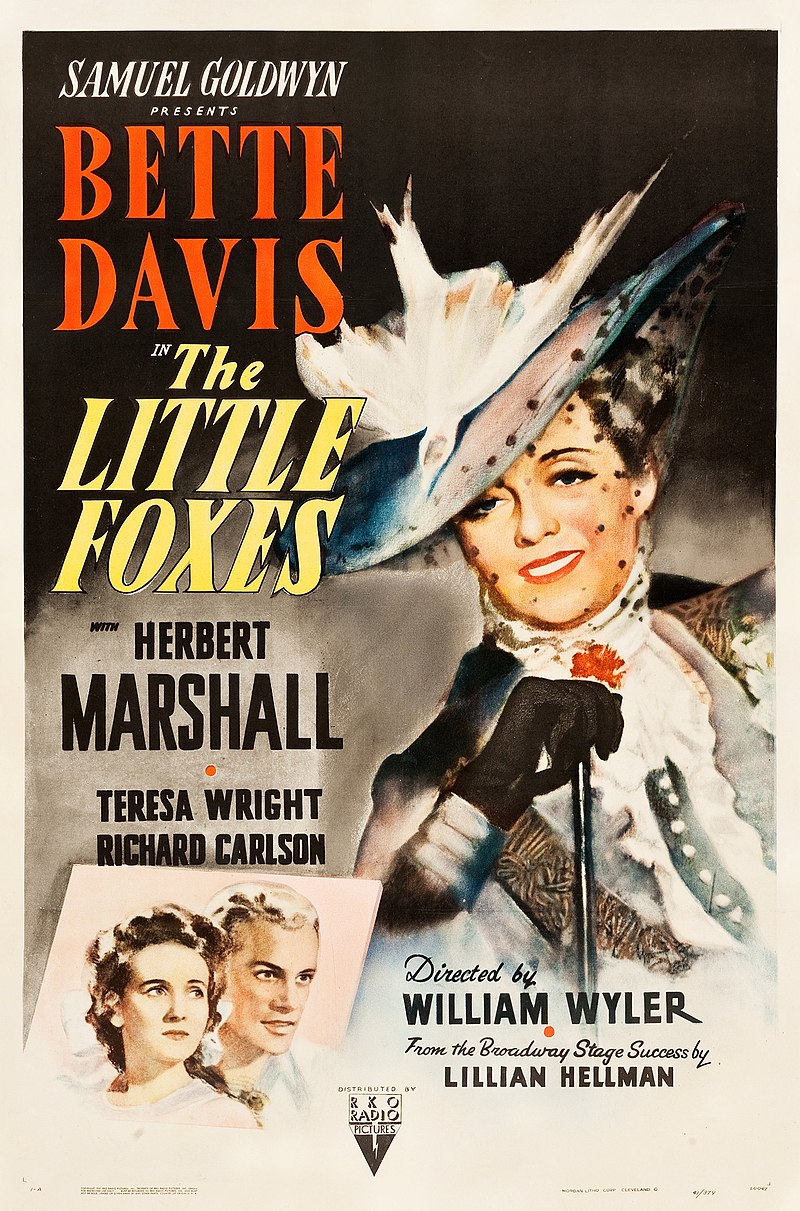
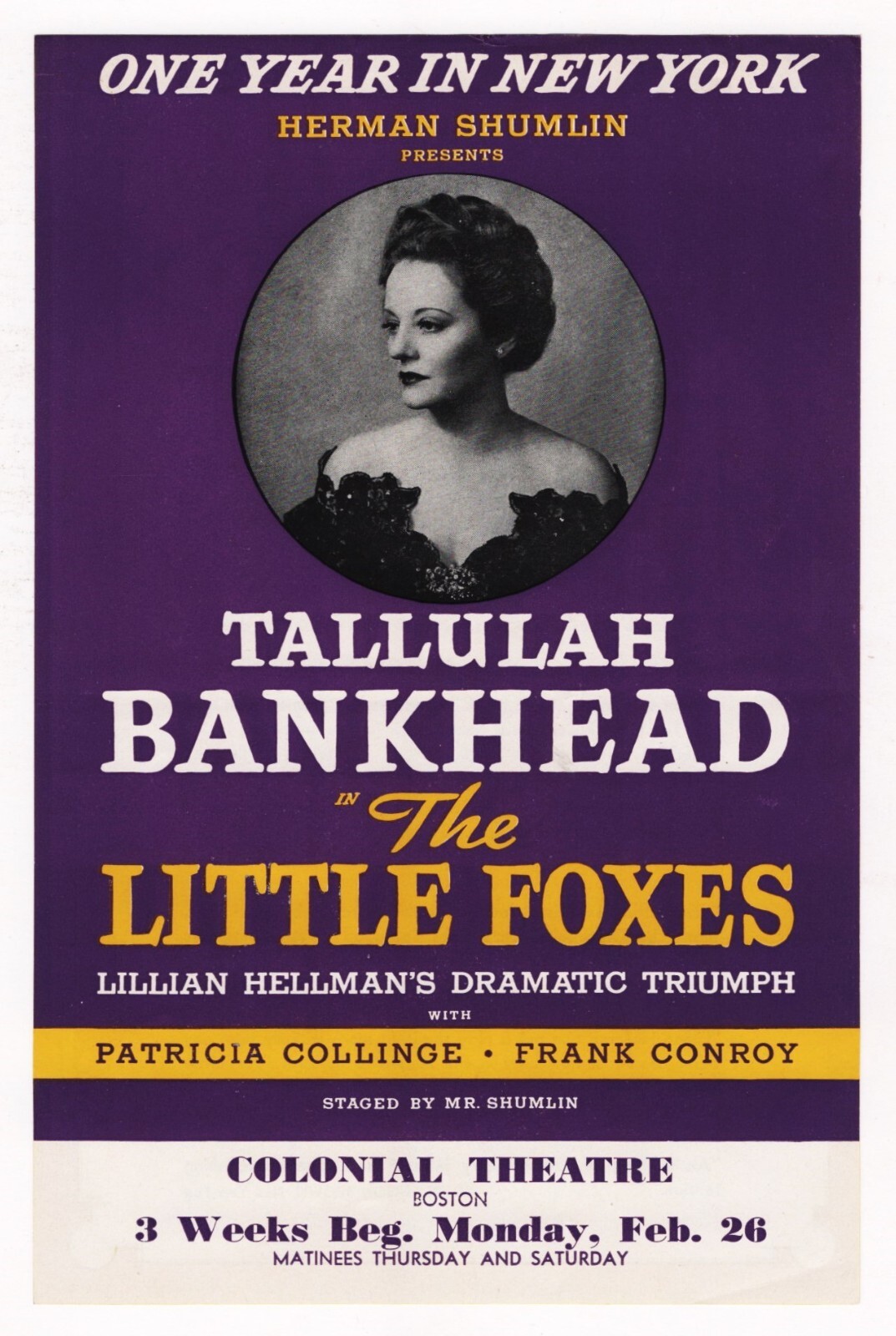
In 1939 she took the role of Birdie Hubbard in “The Little Foxes” with Tallulah Bankhead and two yars later played the same part when Bette Davis had the lead in the film version.
As an indication of her versatility she wrote a play, “Dame Nature,” in 1938, that was an adaptation of a French drama. She also wrote a series of short Stories for The New Yorker, was a contributor to The New York Times Book Review, and was a councilor of Actors Equity.
She also wrote “The Small Mosaics of Mr. and Mrs. Engel,” a story of travel in Italy that brought her a gold medal from the Italian Government, and with Margalo Gillmore, was the author of “The B.O.W.S.,” the story of the American Theater Wing unit that took “The Barretts of Wimpole Street” to the soldiers in Italy and France during, World War II.
Miss Collinge was born and educated in Dublin. She made her first appearance on the stage at the Garrick Theater in London in 1904 in “Little Black Sambo and Little White Barbara.” After coming to New York, she appeared as a flower girl in “The Queens of the Moulin Rouge.” A series of plays followed that included “Everywoman” at the Herald Square Theater in 1911.
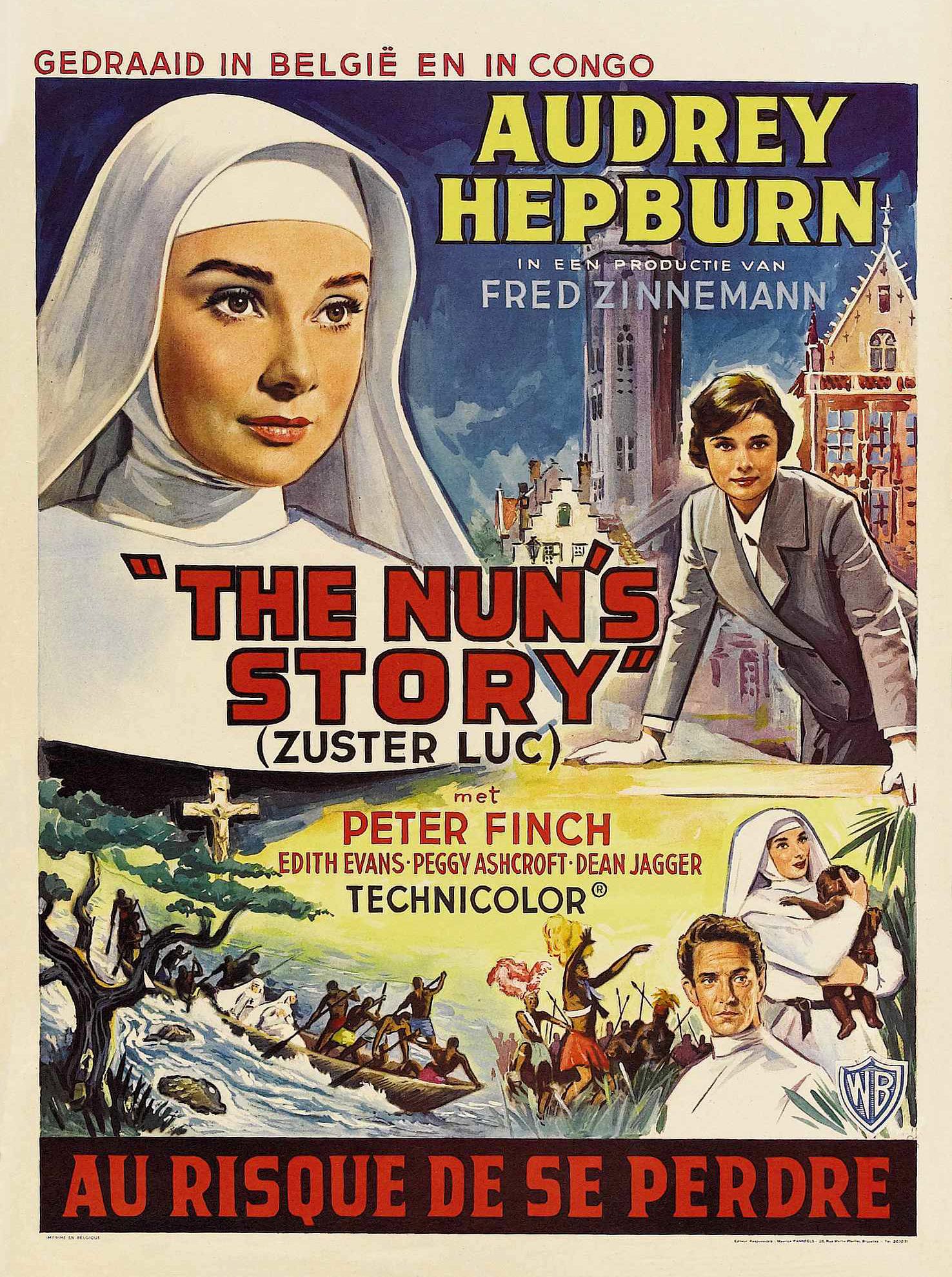
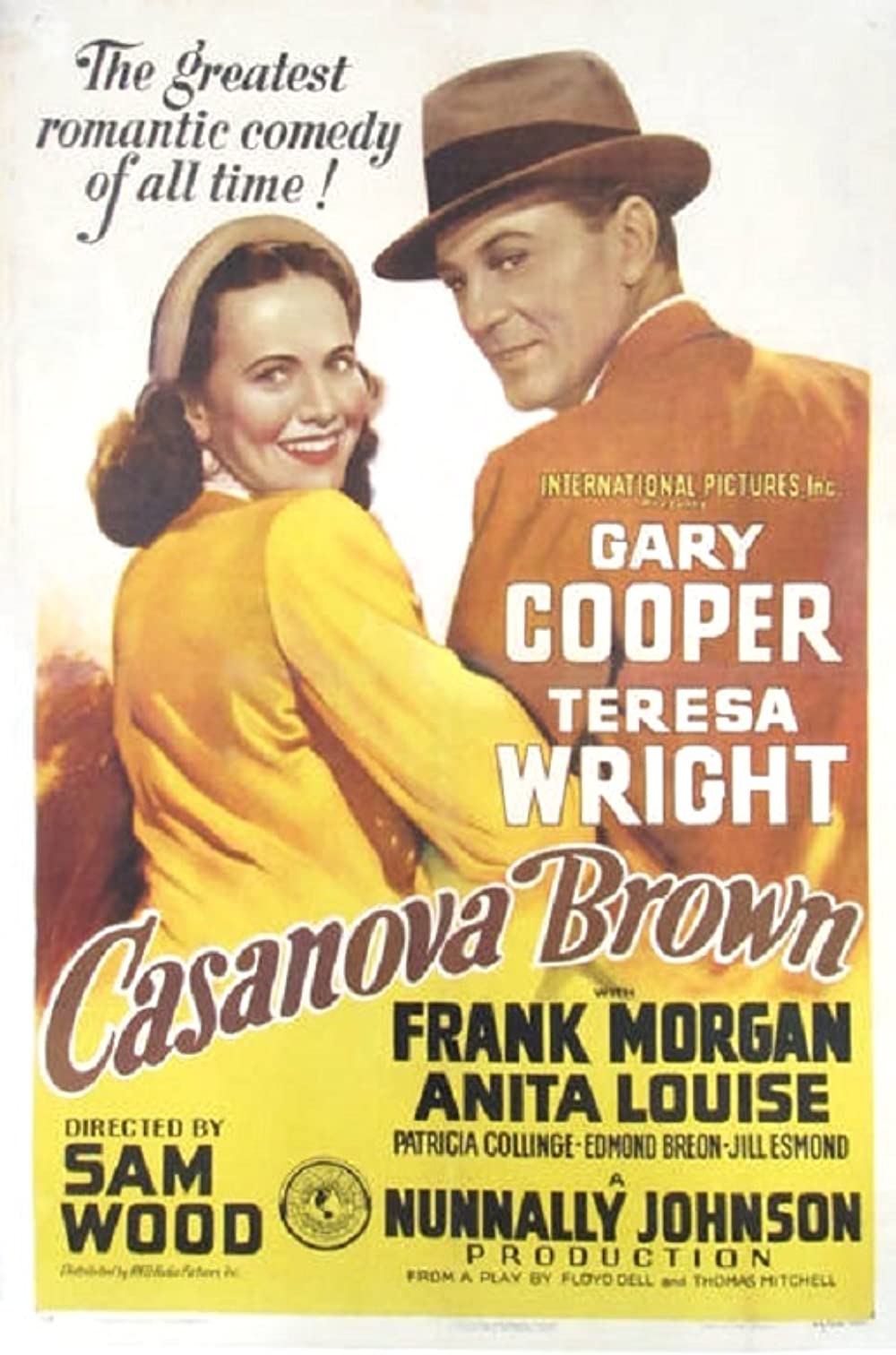
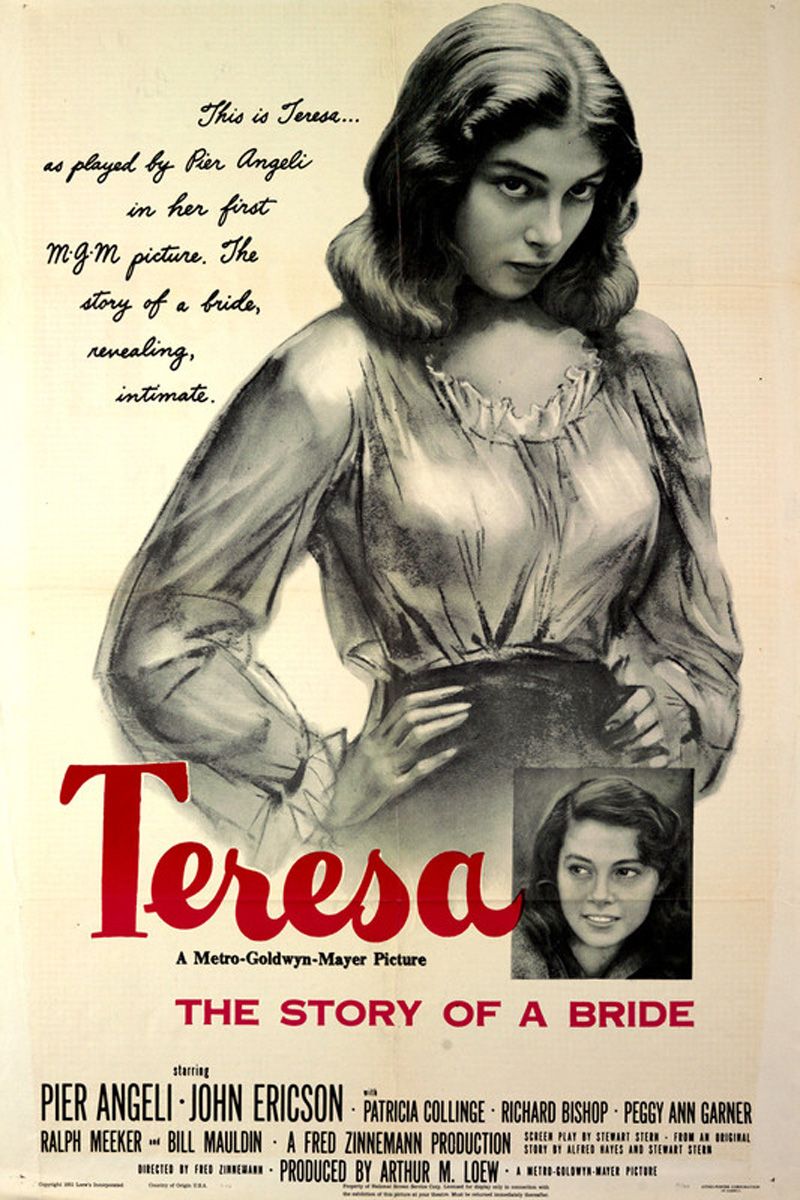
She dater toured with Douglas Fairbanks Sr. in “A Regular Businessman” and was the original Pollyanna Whittier in “Pollyanna:” Her other plays included “The Heiress,” “Just Suppose,” “The Dark Angel” “The Importance of Being Earnest,” “To See Ourselves” and “Lady With a Lamp.” Her films included “Shadow of a Doubt” “Teresa,” “Casanova Brown” and “The Nun’s Story.”
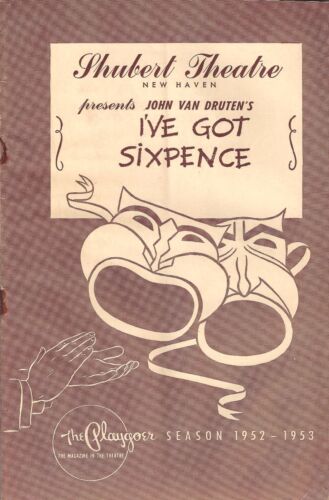
Miss Collinge’s last stage appearance was at the Ethel Barrymore Theater in December, 1952, in “I’ve Got Sixpence.” She later was in television dramas with “Hitchcock Presents” and “Playhouse 90.”
She leaves her husband, James N. Smith, a retired insurance executive.
A funeral service will be held Monday at 11 A.M. at the Church of the Holy Family, 315 East 47th Street
Patricia Collinge (1892–1974) was an actress of extraordinary delicacy and intellectual precision. Though her filmography is relatively small—spanning only about a dozen features—she is regarded by film historians and critics as one of the most gifted “theatrical” imports to Hollywood, bringing a haunting, fragile realism to the screen that was decades ahead of its time.
Career Overview
Collinge’s career began on the stages of London and blossomed into a legendary tenure on Broadway before her late-career transition to cinema.
The Broadway Star (1904–1938): Born in Dublin, Collinge moved to the U.S. as a teenager. she became a major stage star, most famously originating the role of Pollyanna in 1916. She was a favorite of the era’s elite playwrights, known for her ability to play “the eternal girl” with a soulful, rather than sugary, depth.
The Definitive Birdie (1939–1941): Her greatest professional triumph came as Birdie Hubbard in Lillian Hellman’s The Little Foxes on Broadway. When Samuel Goldwyn produced the film version in 1941, Collinge was one of the few stage cast members brought to Hollywood to reprise her role.
The Hitchcock & Prestige Era (1943–1952): Following her Oscar-nominated film debut, she became a highly sought-after character actress. She played the perceptive, somewhat frail mother in Alfred Hitchcock’s Shadow of a Doubt (1943) and appeared in major dramas like The Nun’s Story (1959).
The Writer: Beyond acting, Collinge was a sophisticated writer. she contributed regularly to The New Yorker, wrote the book The Small Mosaics of Mr. and Mrs. Engel, and co-authored The Lunts, a biography of the famous acting duo.
Detailed Critical Analysis
1. The “Fragile Steel” of Her Performance
Critically, Collinge is analyzed for her unique ability to portray extreme vulnerability without ever appearing weak or “victim-like.”
The Tragedy of Birdie Hubbard: In The Little Foxes, her portrayal of the alcoholic, abused aunt is often cited as one of the greatest supporting performances in cinema. Critics note that she didn’t play Birdie as a “drunk”; she played her as a woman whose spirit had been methodically dismantled. Her “confession” scene—where she admits she drinks because she is lonely—is a masterclass in quiet, devastating naturalism.
Subtle Resistance: Even in her most “broken” characters, Collinge infused a sense of lost nobility, making the audience mourn the person the character used to be.
2. The Hitchcockian “Intuitive”
In Shadow of a Doubt, Collinge played Emma Newton, the mother of the protagonist and sister to the serial killer, Uncle Charlie.
Emotional Intelligence: Hitchcock famously used Collinge’s face to represent the “blindness of love.” Critics point out that while her character is technically “fooled” by her brother, Collinge plays her with an undercurrent of nervous energy that suggests a subconscious awareness of the truth.
The Domestic Anchor: She provided a warmth and “maternal flutter” that made the encroaching darkness of the thriller feel more invasive. Her performance grounded Hitchcock’s stylized suspense in a recognizable, middle-class reality.
3. The Bridge Between Victorian and Modern Acting
Because Collinge began her career in the early 1900s but peaked on film in the 1940s, she represents a fascinating stylistic bridge.
Rejection of Grandiosity: Unlike many stage actors who “overacted” for the camera, Collinge’s film work is remarkably contained. She understood the power of the micro-expression.
Literary Sensitivity: Her background as a writer deeply informed her acting. She approached scripts with a “thematic” eye, often finding the subtext in a scene that other actors might miss. This “intellectual” approach meant she was rarely cast in “fluff” roles; she was almost exclusively used for characters with significant psychological complexity.
4. The “Observer” Persona
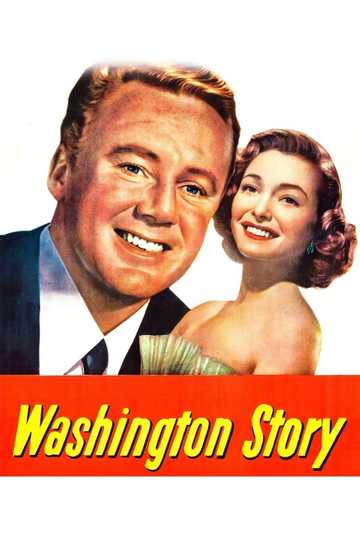
In her later roles, such as in The Washington Story (1952) or her television work (notably Alfred Hitchcock Presents), she often played the “observer”—the character who sees the truth while others are distracted. Critically, this became her “signature.” She used her wide, expressive eyes and a slightly hesitant vocal delivery to suggest a woman who was “out of time” or perhaps too sensitive for the harsh world around her.
Major Awards & Notable Credits
| Award/Project | Role | Significance |
| Academy Award Nom. | The Little Foxes(1941) | Nominated for Best Supporting Actress; lost to Mary Astor. |
| Shadow of a Doubt | Emma Newton | Considered one of Hitchcock’s most perfectly cast “mothers.” |
| The Little Foxes | Birdie Hubbard | Reprised her legendary Broadway role; remains her definitive work. |
| The Nun’s Story | Sister William | A late-career turn opposite Audrey Hepburn, showing her enduring grace |
It is a fascinating side to her career; while she was known for playing fragile, broken women on screen, her writing for The New Yorker revealed a sharp, observational wit that was almost the polar opposite of “Birdie Hubbard.”
Collinge the Writer: The “Mrs. Engel” Series
Throughout the 1940s and 50s, Collinge contributed short stories and “casuals” to The New Yorker. Her most famous creation was the “Mr. and Mrs. Engel” series.
The Style: Her writing was characterized by a gentle, sophisticated satire of the American middle class traveling abroad. She captured the “comedy of manners” that occurs when well-meaning people find themselves out of their depth in foreign cultures.
The Critical Eye: Critics of her prose noted that she had an “actor’s ear” for dialogue. She could reproduce the specific cadences of nervous social interaction, making her stories feel like “one-act plays” on the page.
The “Lunts” Biography: She also co-authored The Lunts (1958), a biography of the legendary acting duo Alfred Lunt and Lynn Fontanne. It is still considered one of the most insightful books on the craft of acting because Collinge wrote it from the perspective of a peer, focusing on their technical discipline rather than just their celebrity.
Birdie Hubbard: A Critical Deep Dive
Since you mentioned being interested in the analysis of her work, the “Confession Scene” in The Little Foxes (1941) is the essential piece of evidence for her genius.
The Context: Birdie, having been struck by her husband and humiliated by her family, finally admits to her niece, Alexandra, that she doesn’t actually have “headaches” (the family’s euphemism for her alcoholism).
The Analysis:
The “Mask” of Gentility: Collinge starts the scene with a fluttery, nervous energy—the “Southern Belle” defense mechanism.
The Breakdown of Rhythm: As she speaks, her vocal rhythm begins to stumble. She stops trying to “perform” for her niece and starts speaking to herself. Critics have noted that her eyes seem to “dim” during this speech, a remarkable physical feat that suggests a soul retreating inward.
The Lack of Self-Pity: Most importantly, Collinge plays the scene with shame, not a plea for sympathy. By making Birdie ashamed of her own weakness, she makes the audience feel a much deeper level of tragedy. It is often cited by acting coaches as the perfect example of “playing the subtext.”
Hitchcock’s Use of Collinge
In Shadow of a Doubt (1943), Hitchcock used her specific “fluttery” quality to create a sense of unease.
The “Invisible” Mother: As Emma Newton, she is the emotional heart of the family, but she is so distracted by her own nostalgia for her brother that she cannot see the monster in her house.
The Irony of Innocence: Hitchcock liked to contrast “absolute evil” with “absolute innocence.” Collinge represented the latter. Her performance is critical to the film’s success because if the audience didn’t believe in her genuine, simple love for her brother, the threat he poses to her wouldn’t feel so agonizing