

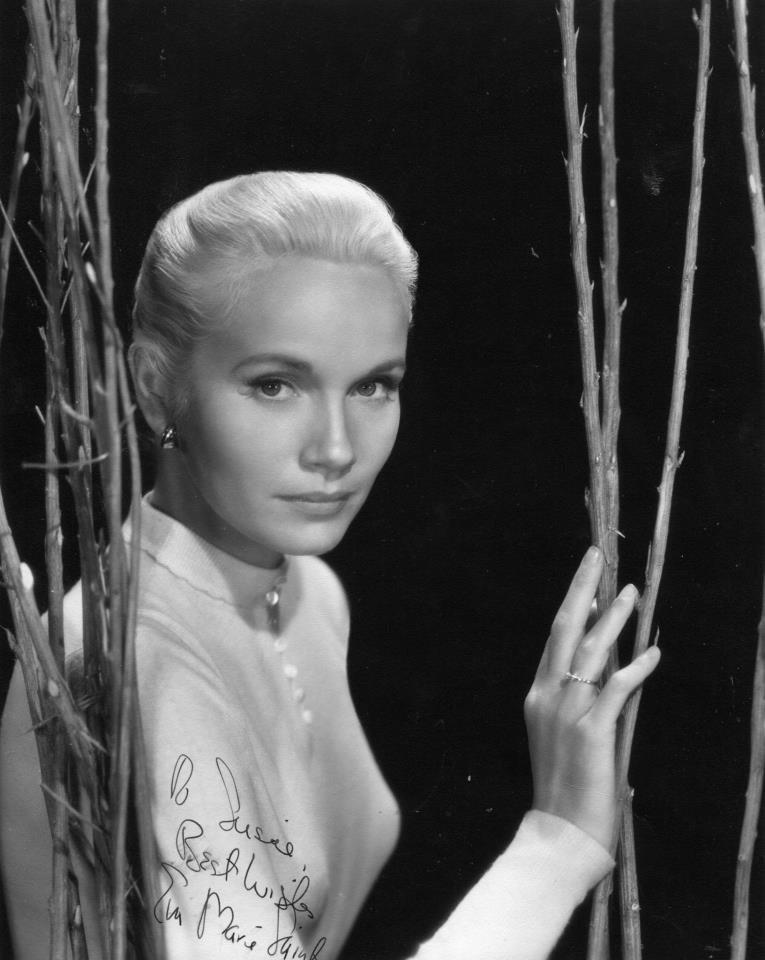
Eva Marie Saint. TCM Overview.
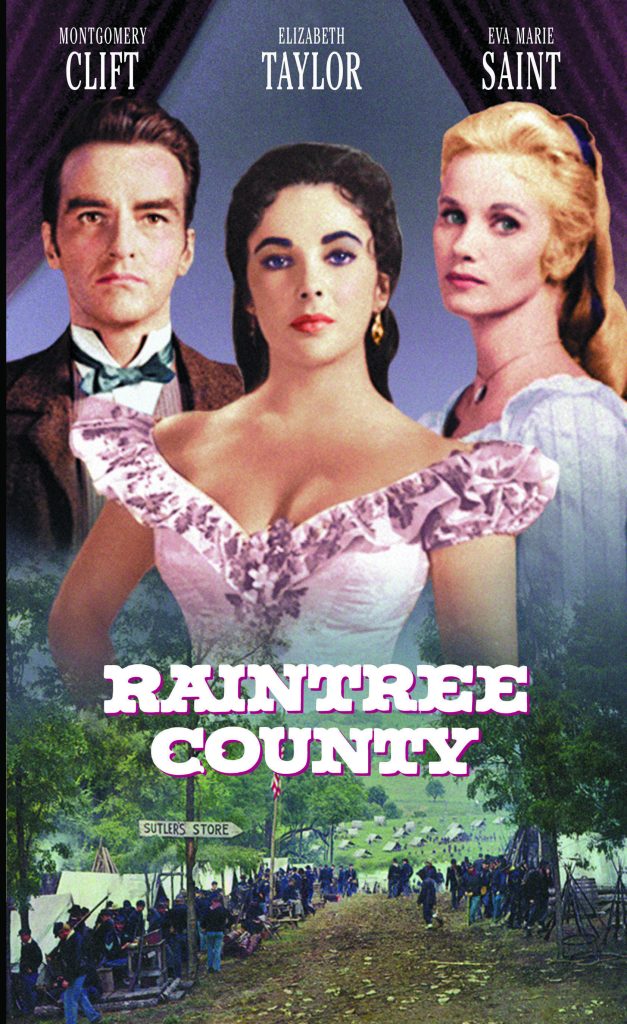
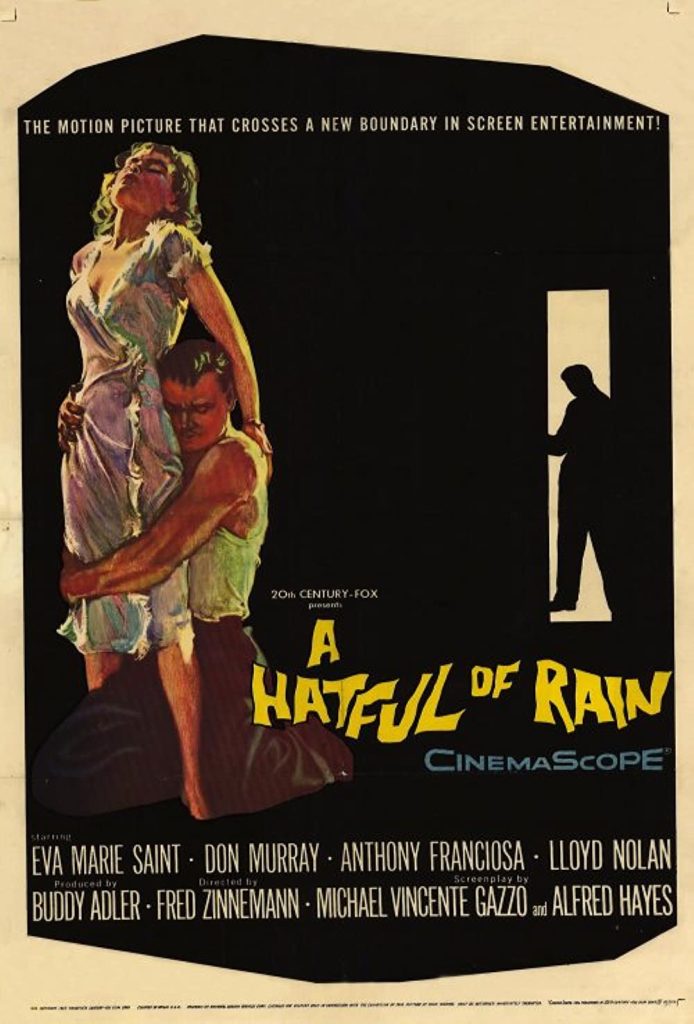
Eva Marie Saint was born in Newark, New Jersey in 1924. She began her professional acting career in television drama and made her film debut as Edie Doyle in 1954 in “On the Waterfront” opposite Marlon Brando. She won an Oscar for her performance. Her other films include “Raintree County” opposite Montgomery Clift and “A Hatful of Rain” opposite Don Murray. She gave a magnificent performance opposite Cary Grant as a cool Hitchcock blonde heroine in “North by Northwest” in 1959. Her other major films include “Exodus” in 1960 opposite Paul Newman and “All Fal Down” in 1962 opposite Warren Beatty. In 2005 she starred with Jessica Lange in “Don’t Come Knocking”. Now nearly 95, it is good to see her still working.
TCM Overview:
Though her film appearances were sporadic at best – less than 20 movies between 1955 and 2006 – Academy Award winner Eva Marie Saint enjoyed revered status among her peers due to her emotionally complex performances in several iconic films. She was perhaps best known as the delicate object of affection for dock worker Marlon Brando in “On the Waterfront” (1951), which earned her an Oscar. She would play variations on the role in several subsequent features, including “A Hatful of Rain” (1957), though Alfred Hitchcock would tap her inner sexiness as a double agent opposite Cary Grant in “North by Northwest” (1959). Sadly, the majority of Saint’s films never rose to her skill level, so she found more substantive work on television, where she contributed greatly to such projects as “Fatal Vision” (1984) and “People Like Us” (1990). Her return to the big screen in “Superman Returns” (2006) reminded moviegoers not only of her timeless, ethereal beauty, but her acting chops, which – though rarely given their proper showcase – had been substantial enough to hold her own against the Brando’s and Grant’s of the world.
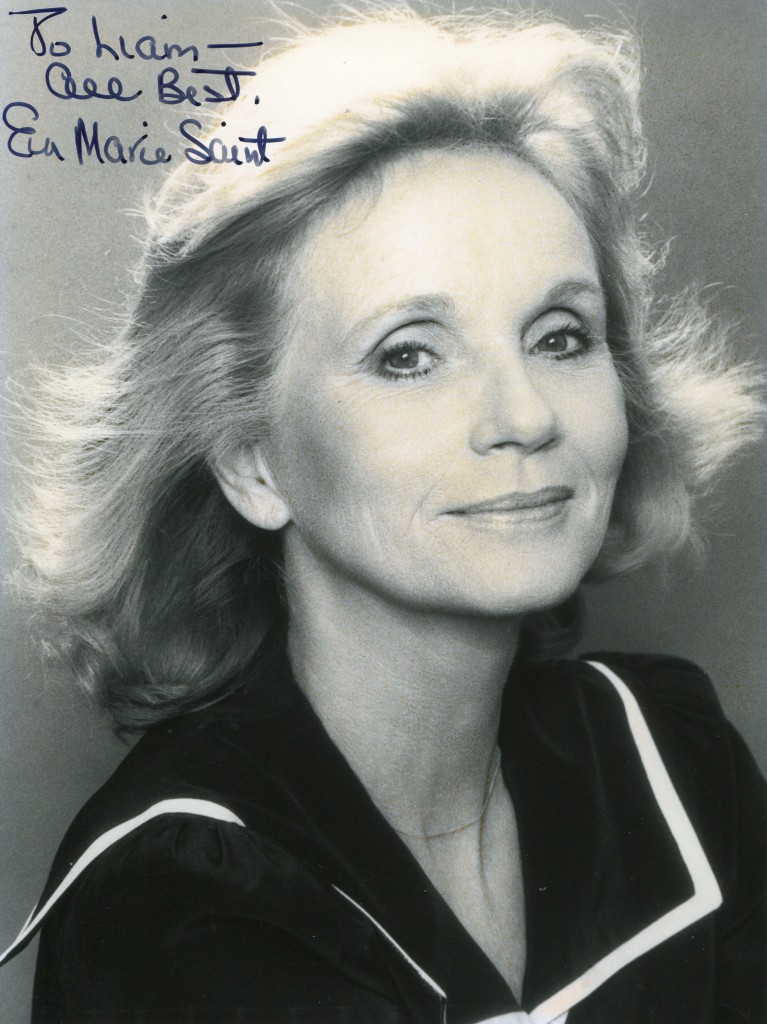
Born July 4, 1924 in Newark, NJ, Saint discovered acting as a student at Ohio’s Bowling Green State University, which would later pay tribute by naming a campus theater after her. Her first exposure to a national audience came via radio and television dramas in the 1940s, where she made a name for herself with sensitive portrayals of young women, most notably as Emily Webb opposite Paul Newman and Frank Sinatra in a production of “Our Town” for “Producers’ Showcase” (NBC, 1954-57) and “Middle of the Night” for “Philco TV Playhouse” (NBC, 1948-1955), which brought her a Emmy nomination in 1955. Saint also scored a professional triumph on Broadway opposite the legendary Lillian Gish in “The Trip to Bountiful,” which earned her a Drama Critics Award in 1953. Saint’s solid reputation among critics was becoming reinforced so often that she was referred to as “the Helen Hayes of television.”
Saint’s film debut was equally laudable. Director Elia Kazan cast her as Edie Doyle, the young sister of a murdered dockworker who captures the heart of rough dockhand Terry Malloy (Marlon Brando). A marvel of carefully modulated emotions, alternately delicate and fiery in her scenes with Brando, and especially in her confrontation with Karl Malden’s waterfront priest, Saint’s performance catapulted her to fame and earned her a Best Supporting Actress Oscar in 1954.
The success of her “Waterfront” performance elevated Saint to the forefront of Hollywood actresses, and for a period of five years, she could be counted upon to bring emotional depth and grace to serious dramas. She received a Golden Globe nomination in 1958 as the pregnant wife of Don Murray’s drug-addicted war veteran in “A Hatful of Rain,” and excelled as Montgomery Clift’s jilted sweetheart in Edward Dmytryk’s Civil War drama, “Raintree Country” (1957).
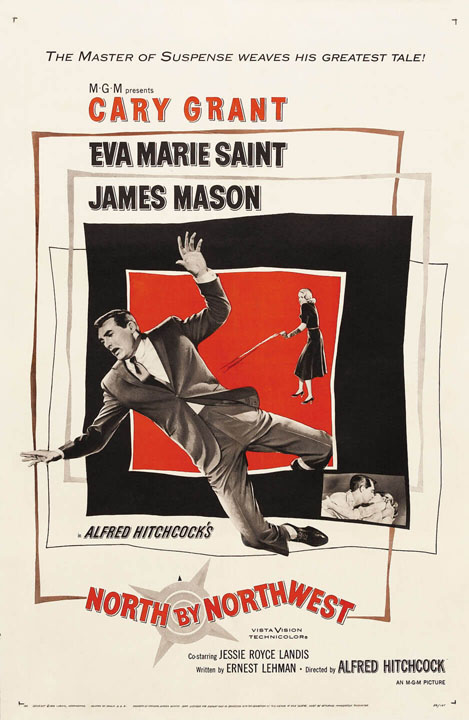
Both roles were squarely in the mold of her “Waterfront” character – lovelorn, seemingly fragile but possessed of a bottomless emotional reserve – but Alfred Hitchcock saw another side to the actress when he cast her in his espionage drama, “North by Northwest” (1959). The Hitchcock thriller – one of the director’s best loved – thrust Saint into entirely new territory as a coolly seductive spy who comes to the aid of but falls in love with advertising executive Cary Grant. The actress, who garnered considerable publicity for trimming her signature waist-length hair for the role, even indulged in several action sequences, most notably the famed showdown on Mount Rushmore that served as the film’s conclusion. While some pundits may have viewed the marriage of a dramatic actress like Saint with an action-thriller as an awkward match, the results were entirely pleasing, and Saint received some of the best reviews of her career for the performance.
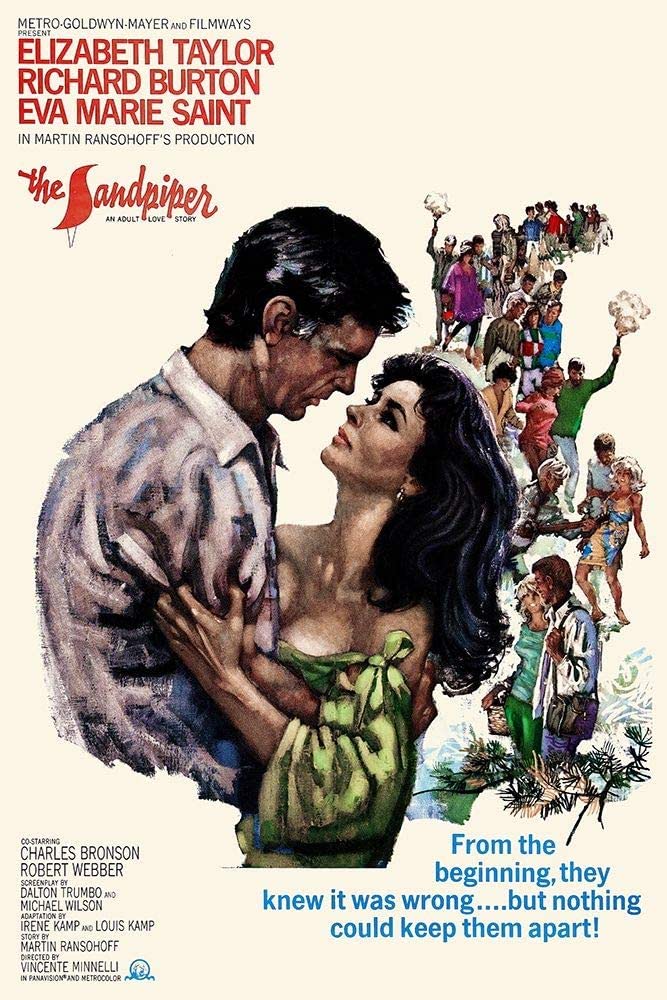
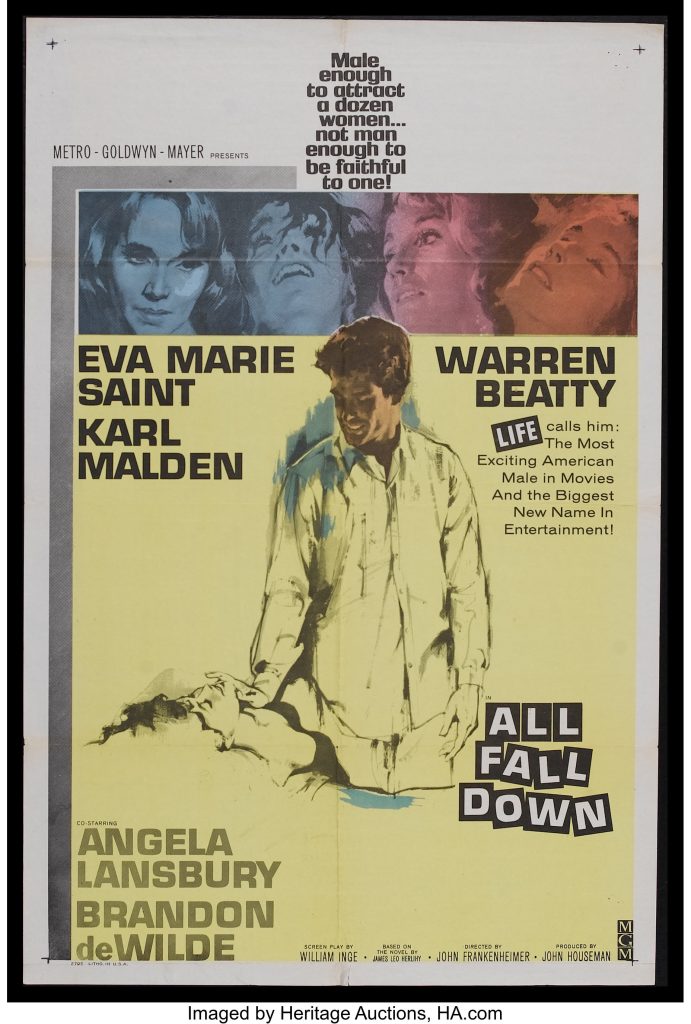

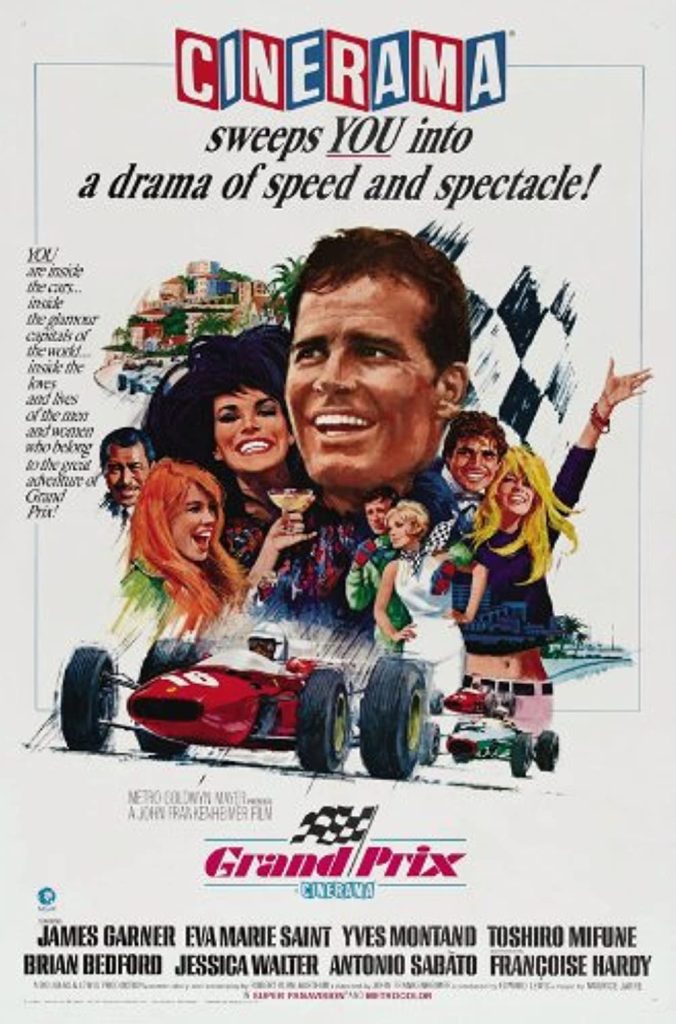

Though “Northwest” and her previous efforts had made Saint a star, by 1960 she was actively moving away from the Hollywood machine to spend more time with her husband, director Jeffrey Hayden, and their two children. As a result, her screen performances declined in number as the decade wore on. There were still several high-profile projects, most notably Otto Preminger’s “Exodus” (1960), which cast her as an American nurse who becomes involved in the founding of the state of Israel. Director John Frankenheimer used her in two very different pictures – the Southern drama “All Fall Down” (1962), which cast her as a pregnant girl destroyed by Warren Beatty’s wastrel, and the racing picture “Grand Prix” (1966). There were also supporting roles in “The Sandpiper” (1965) and “The Russians Are Coming! The Russians Are Coming!” (1966), but none were truly showcases for Saint’s talent. By the mid-1960s, she was appearing more frequently on television, which would regularly provide her with work for the next two decades.
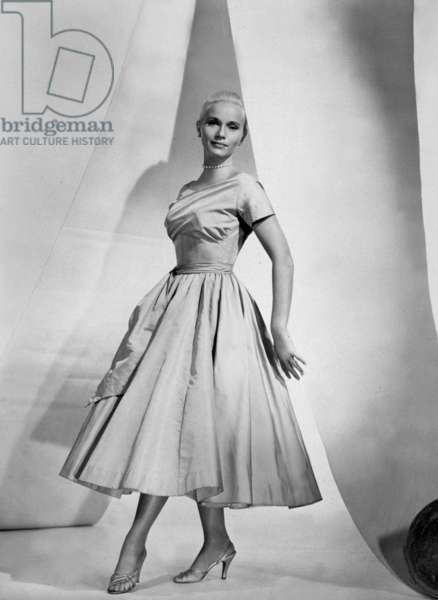

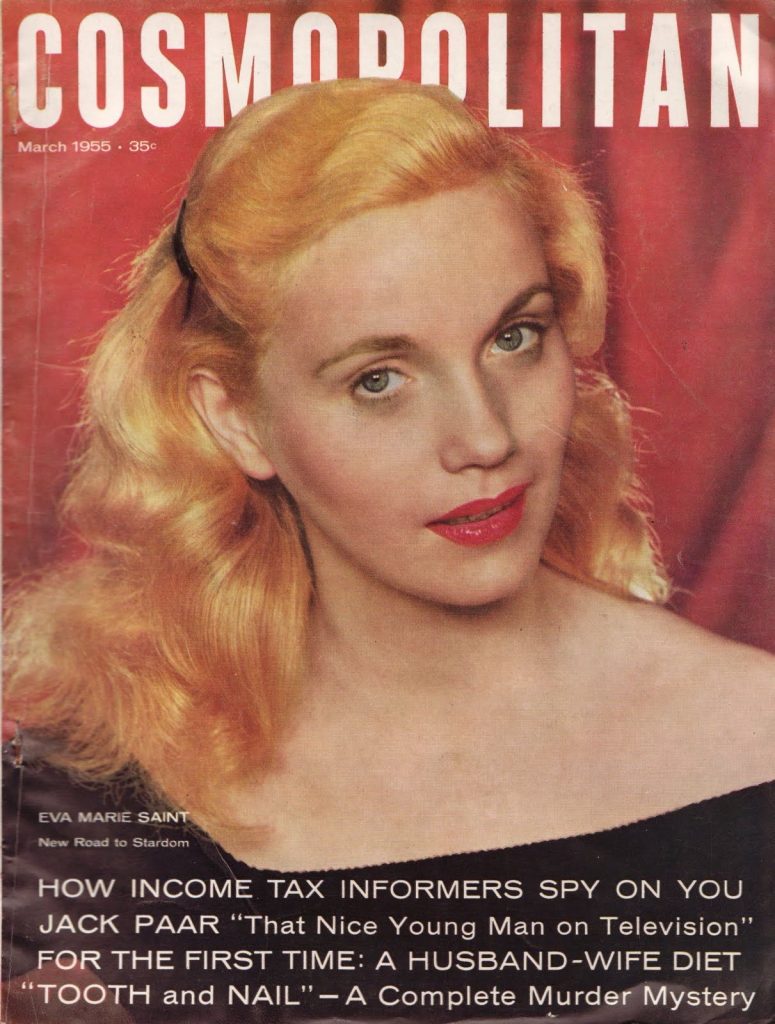
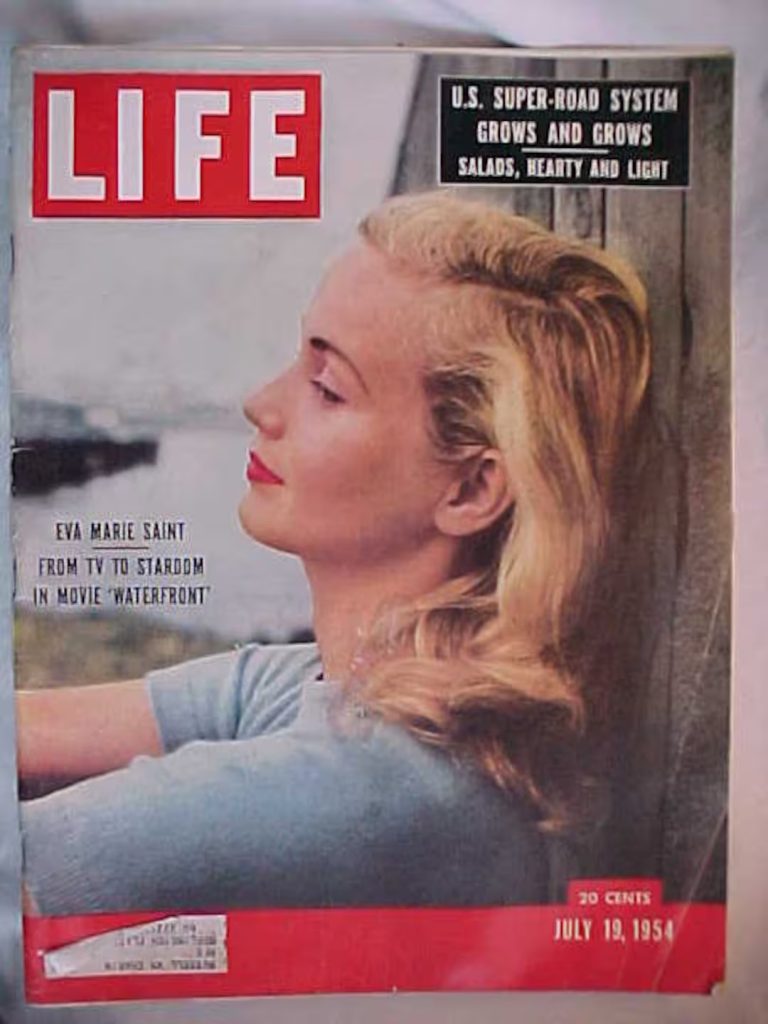
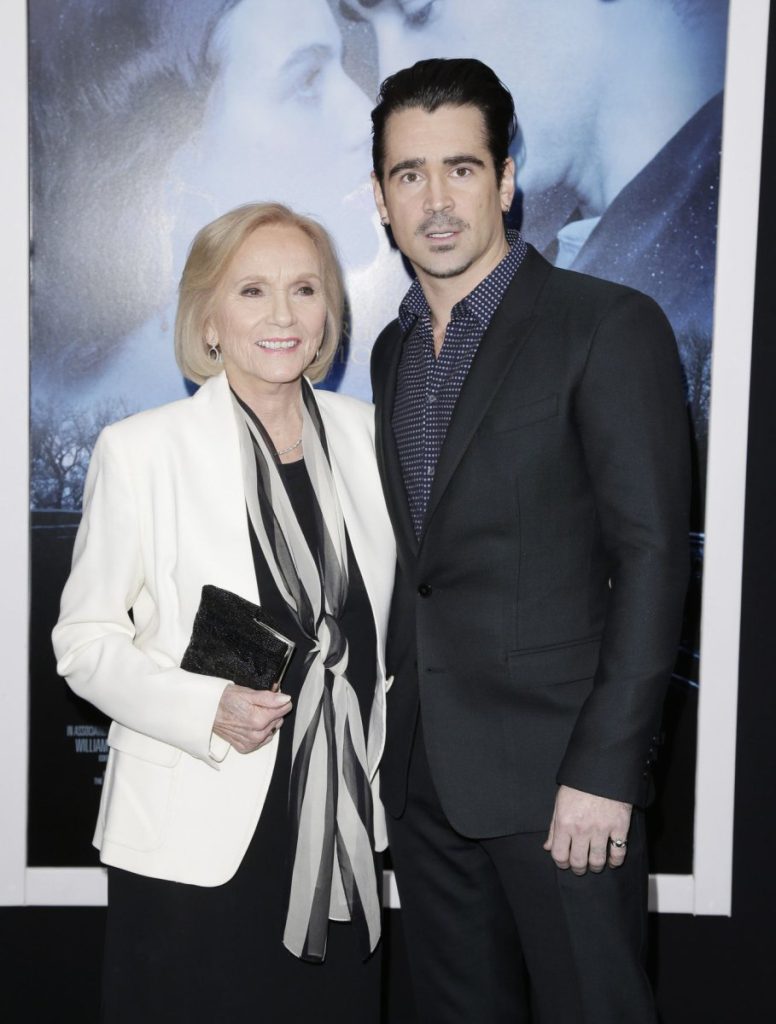
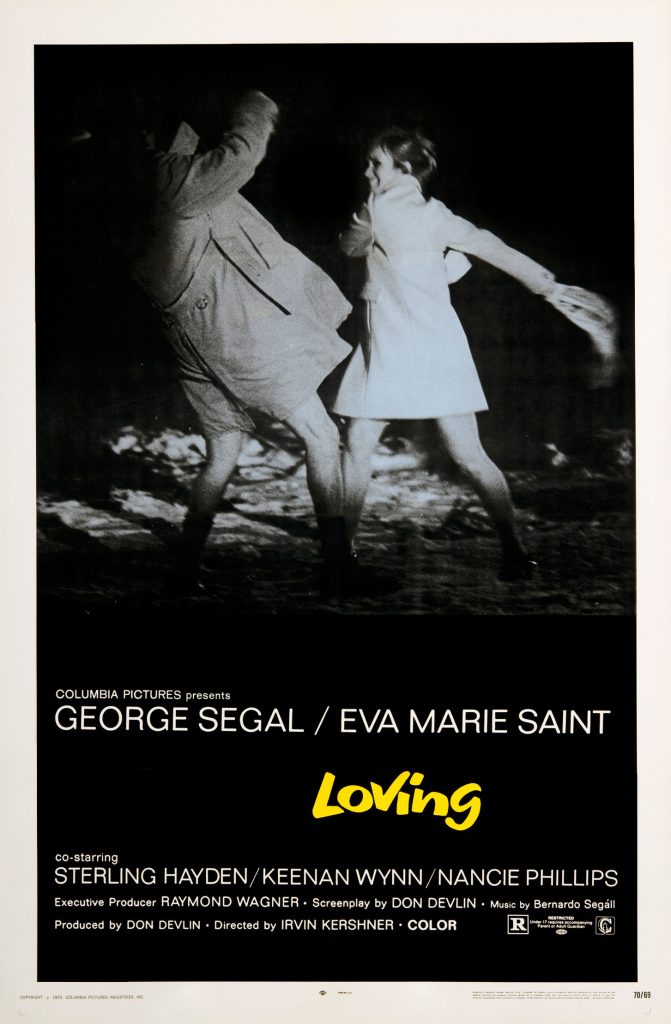
Saint made just two features in the 1970s, one of which – Irvin Kershner’s marital drama “Loving” (1970), which cast her as the harried wife of rudderless commercial artist George Segal – offered her one of the meatiest parts to come her way in decades. For the most part, she preferred the shorter commitment and more intimate stories of made-for- TV features. She brought immeasurable prestige to numerous productions, including “Taxi” (NBC, 1978), a two-person drama with Martin Sheen that brought her an Emmy nomination. Saint was also stellar in the POW drama “When Hell Was in Session” (NBC, 1979), as the mother of anorexic teen Jennifer Jason Leigh in “The Best Little Girl in the World” (ABC, 1981), and as the mother who fights to see justice for her slain daughter in “Fatal Vision” (NBC, 1984), which was based on the Jeffrey MacDonald murder trial.
Saint’s television schedule was remarkably active throughout the 1980s and 1990s. In addition to the aforementioned projects, she also appeared in the miniseries “A Year in the Life” (NBC, 1986), which hinged its dramatic arc on the death of her beloved family matriarch, and made several appearances as Cybill Shepherd’s mother on “Moonlighting” (ABC, 1985-89). In the middle of this flurry of work, she returned to moviemaking for the first time in over a decade as Tom Hanks’ mother in the Garry Marshall comedy “Nothing in Common” (1986). Critics applauded her return to features, but Saint was soon back on the small screen in numerous projects, including George C. Scott’s wife in “The Last Days of Patton” (CBS, 1986) and “People Like Us” (1990), an adaptation of a Dominick Dunne novel that won her an Emmy for Best Supporting Actress.
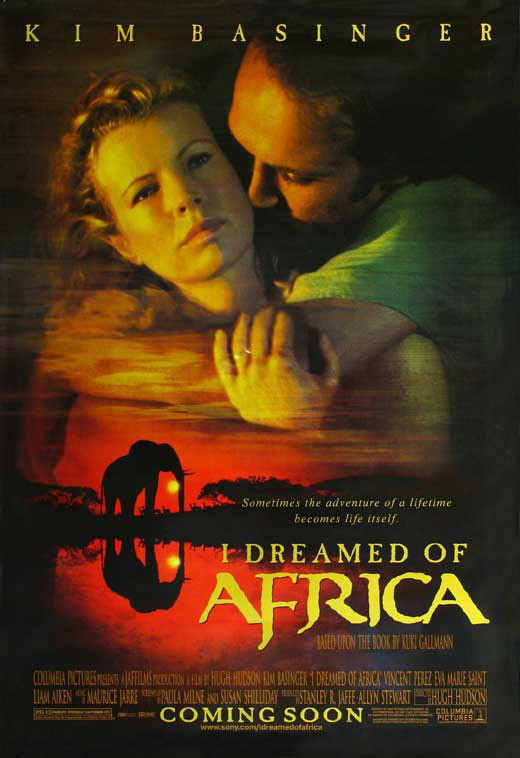
Saint began making inroads back to features in the late 1990s and early 2000s; most went largely unseen, like the Kim Basinger drama “I Dreamed of Africa” in 2000 and Wim Wenders’ “Don’t Come Knocking” (2005), which cast her as the mother of star and screenwriter Sam Shepard. However, “Superman Returns” (2006) afforded her one of her biggest film showcases ever as Martha Kent, the adoptive human mother of the Man of Steel. Saint displayed her enormous capacity for warmth in her scenes with newly-minted Superman, Brandon Routh, who experiences a crisis of conscience while attempting to revive his status as savior of Metropolis. The above TCM overview can also be accessed online here.
Eva Marie Saint (born July 4, 1924 in Newark, New Jersey) is among the most versatile and quietly transformative actresses in American film and television history. Spanning more than seven decades, her career maps the evolution of female performance in modern Hollywood—from the “Method‑era naturalism” of the 1950s through the complex, introspective portrayals of mid‑life women in later decades. Winner of the Academy Award for Best Supporting Actressfor On the Waterfront (1954), Saint was often described as “the grace note of American realism”—an actress who combined unforced technique with moral intelligence.
Early Life and Training
Saint studied acting at Bowling Green State University and later at the Actors Studio under Elia Kazan, absorbing method principles anchored in psychological truth rather than theatrical display. Before Hollywood, she built a solid reputation in live television drama, appearing on programs like Kraft Television Theatre and The Philco Television Playhouse. Her camera ease and emotional authenticity in these intense one‑take performances shaped her later film subtlety. By 1950, she had become one of U.S. television’s most respected new performers—an actress noted for “quiet power rather than mannerism.”
Breakthrough: On the Waterfront (1954)
Context
When Elia Kazan cast her opposite Marlon Brando, she had no film experience. Yet her portrayal of Edie Doyle, a dockworker’s sister seeking justice, quickly entered cinema history.
Critical Reception
- The New York Times called her “a discovery of rare delicacy—real, simple, strong.”
- Variety lauded her “instinctive fusion of fragility and courage.”
Her scenes with Brando—particularly the park confrontation and the glove sequence—became textbook examples of spontaneous, psychologically layered acting.
Technique
Saint’s realism derived from listening: she reacts to other actors with microscopic shifts in expression and rhythm. Unlike the stylized ingénues of earlier decades, she made emotional hesitation her signature; the audience witnesses her thinking.
Her Oscar win established her among the emerging generation of Method‑influenced performers (Brando, Clift, Dean). Yet unlike them, she radiated empathy and moral serenity—the conscience within Kazan’s brutal world.
Transition to Hollywood Stardom (1955–1959)
Having begun in realism, Saint adapted that intimacy to mainstream studio genres without losing credibility.
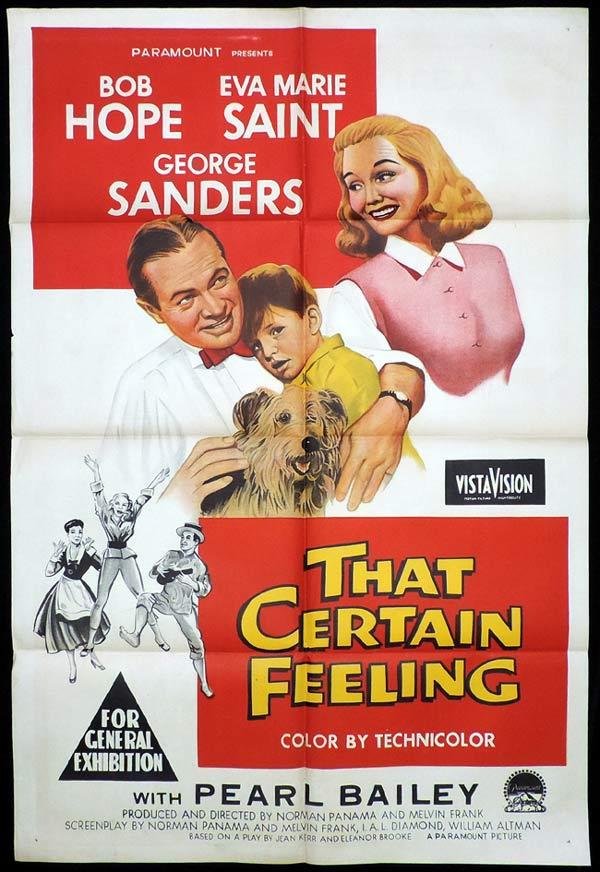
That Certain Feeling (1956, comedy)
Saint demonstrated natural comic timing, maintaining grounded truth within screwball structure—a sign she could humanize any genre.
A Hatful of Rain (1957, Fred Zinnemann)
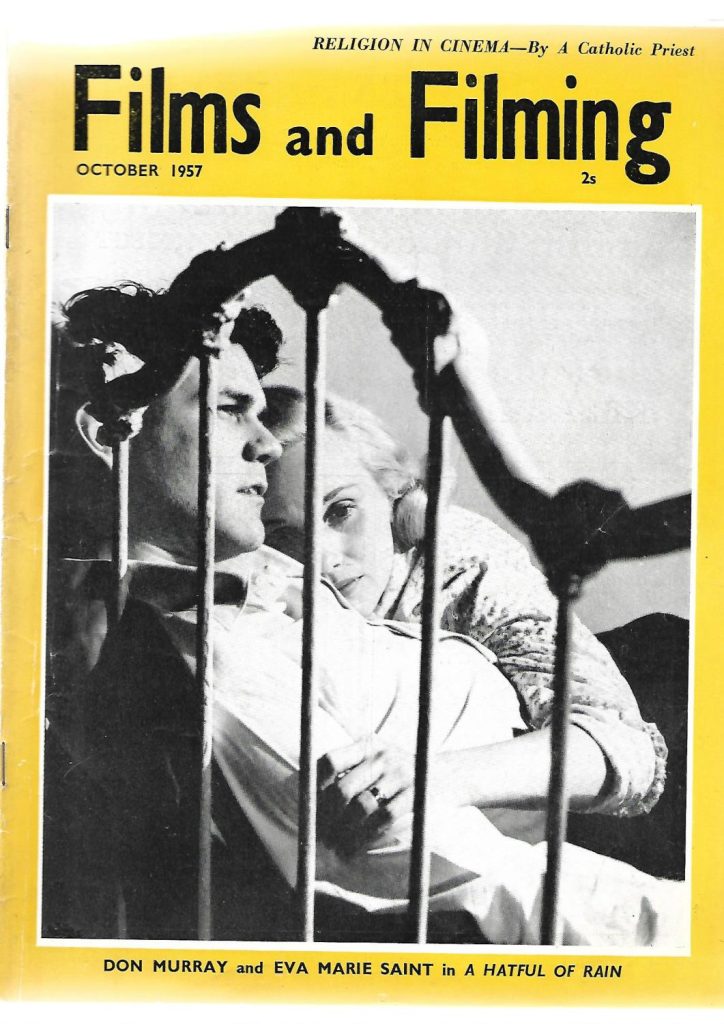
As Celia Pope, wife of a Korean‑War veteran addicted to morphine (Don Murray), she gave one of the decade’s most penetrating portraits of domestic unease. Critics saw her as an emotional realist among stylized Hollywood wives; her hushed anguish mirrored 1950s social repression. The performance earned her Academy Award and Golden Globe nominations.
Raintree County (1957)* and North by Northwest (1959)*
In the latter, Alfred Hitchcock recast her image radically as the mysterious agent Eve Kendall. Hitchcock coached her to underplay femininity “like a lady who’s thinking faster than the hero.”
Critical impact:
Saint’s cool composure and ironic sensuality anticipated the modern screen heroine: equal parts desire and intellect. The role overturned the dichotomy between innocence and erotic intrigue—her Eve Kendall is both moral and sexual, compassionate yet duplicitous. Critics remarked that she “made grace itself into suspense.”
Hitchcock later said she was “the best sensual actress who never shouts about it.”
Maturity and Adaptation (1960s–1970s)
Saint declined to become an industry starlet; she chose projects that allowed moral dimension over glamour.
Exodus (1960, Otto Preminger)*
Playing nurse Kitty Fremont in the founding‑of‑Israel epic, she brought moral sincerity to a role often accused of being a narrative device. Reviewers felt her quiet conviction outshone the film’s rhetoric. Her subtle romantic rapport with Paul Newman suggested ethical partnership, not melodrama.
The Russians Are Coming, The Russians Are Coming (1966)*
Demonstrated yet again her comic grace; her ability to portray panicked humanity rather than caricature helped turn farce into charm.
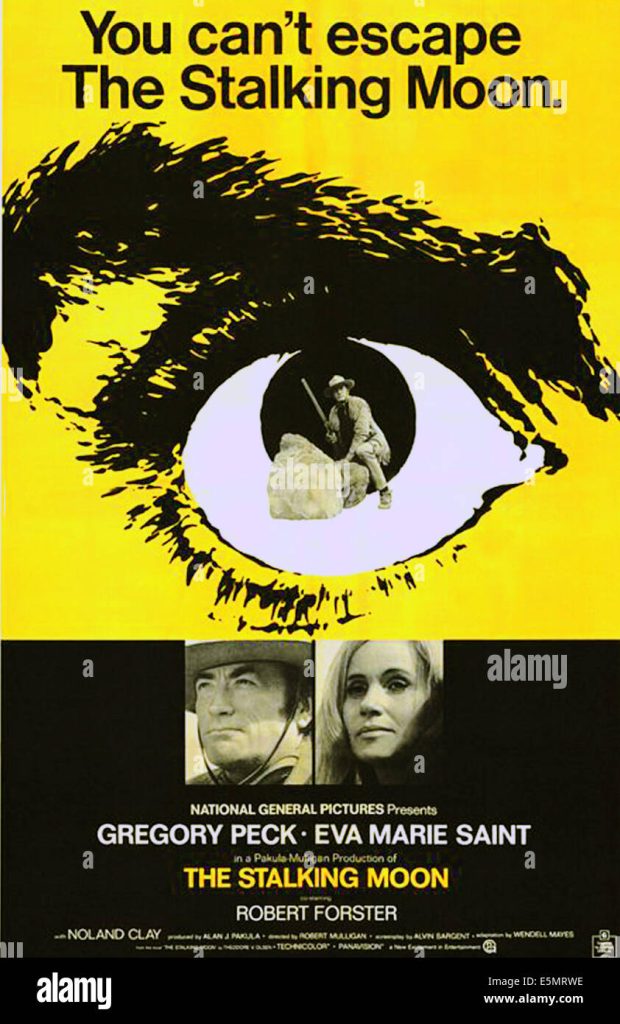
The Stalking Moon (1968, Robert Mulligan, with Gregory Peck)*
Saint infused the frontier thriller with emotional credibility; critics admired her “mixture of fear and endurance,” reinforcing her reputation for quiet strength.
By the early 1970s, Hollywood offered limited roles to actresses over forty; Saint pivoted toward television dramas, where her precision found congenial space. She earned Emmy nominations for How the West Was Won and later won an Emmy Award (1990) for People Like Us.
Later Career (1980s–2000s)
Saint’s rare screen appearances afterward carried authority and dignity shaped by experience.
Nothing in Common (1986, Garry Marshall)*
As the long‑suffering wife opposite Jackie Gleason’s failing patriarch, she provided moral center; critics observed that she “steals the film by speaking softly.”
I Dreamed of Africa (2000)* and voice work in animation and documentaries demonstrated continued vitality.
Superman Returns (2006)*
As Martha Kent, she conveyed maternal gravitas and warmth, completing a cultural circle linking 1950s realism to 21st‑century fantasy heroism.
Even in cameo, Saint’s stillness registered as depth. At age 82 she told an interviewer that “the key is to let the other actors move around you; if you’re truthful, stillness can fill the screen.” It summarized her life‑long aesthetic.
Acting Style and Craft Analysis
| Aspect | Critical Description |
|---|---|
| Physical Economy | Saint minimizes gesture; a flicker of the eyes or a half‑smile signals complex thought. This non‑verbal eloquence distinguishes her from more extroverted contemporaries. |
| Vocal Subtlety | Soft‑grained, steady articulation conveys calm conviction. She allows pauses to carry emotion—the listener feels her thought rather than hears it. |
| Psychological Realism | Rooted in Method but disciplined by classical measure; she exposes emotion rather than displays it. |
| Screen Persona | Represents moral intelligence and emotional transparency; even in deceitful roles she radiates humanity. |
| Range | Traversed romance, thriller, comedy, domestic realism; maintained credibility from ingénue to matriarch. |
Thematic Through‑Lines
- Integrity vs. Chaos – From Edie Doyle to Eve Kendall, Saint’s characters mediate between moral clarity and turbulent worlds.
- The Feminine Conscience in a Male Narrative – Often cast opposite powerful men (Brando, Grant, Newman), she grounds their volatility in empathy and reason.
- Quiet Revolution of Naturalism – She normalized understated acting on the big screen, influencing later actors such as Jane Fonda, Meryl Streep, and Michelle Pfeiffer.
- Longevity through Truthfulness – Across mediums and decades, her performances reveal a consistent human core that transcends fashion.
Critical Standing and Legacy
- Elia Kazan: “She could stand still and make an audience lean toward her.”
- Andrew Sarris: called her “the kindly realist of American film—a face carved in empathy.”
- Pauline Kael: admired her balance of “virtue and erotic intelligence.”
Modern scholars regard Saint as a bridge figure: she carried Method psychology into the mainstream without the narcissism often associated with it and introduced a new tone of emotional restraint into Hollywood storytelling.
Younger directors (Robert Zemeckis, Christopher Nolan) cite her as a model of screen naturalism—proof that authenticity can command spectacle.
Representative Performances
| Year | Title | Director | Role | Significance |
|---|---|---|---|---|
| 1954 | On the Waterfront | Elia Kazan | Edie Doyle | Oscar‑winning debut; moral purity rendered realistic |
| 1957 | A Hatful of Rain | Fred Zinnemann | Celia Pope | Portrait of emotional endurance; domestic realism |
| 1959 | North by Northwest | Alfred Hitchcock | Eve Kendall | Redefinition of female sensual intelligence in espionage |
| 1960 | Exodus | Otto Preminger | Kitty Fremont | Blend of political idealism and compassion |
| 1966 | The Russians Are Coming, The Russians Are Coming | Norman Jewison | Elspeth Whittaker | Comic naturalism; ensemble warmth |
| 1986 | Nothing in Common | Garry Marshall | Lorraine Basner | Mature poignancy; late‑career renewal |
| 1990 | People Like Us (TV) | Lamont Johnson | Chloe Avery | Emmy Award; reconfirms emotional precision |
Summary: Critical Evaluation
| Strengths | Potential Limitations |
|---|---|
| Radiant emotional authenticity grounded in quiet intellect | Avoided theatrical excess—occasionally undervalued in larger-than-life genres |
| Seamless integration of realism into multiple genres | Her naturalism sometimes mistaken for simplicity |
| Graceful aging; maintained artistic integrity | Chose family life over relentless stardom, limiting output |
Conclusion
Eva Marie Saint represents the enduring ideal of honesty in performance. Across an 80‑year career, she demonstrated that stillness can be dynamic and transparency dramatic. Whether opposite Brando’s raw passion or Cary Grant’s suave irony, she preserved dignity, intelligence, and truth—the moral center of every scene.
Her legacy is twofold: she humanized classical Hollywood acting through nuance and proved that quiet sincerity could outweigh spectacle. In doing so, Eva Marie Saint secured an abiding place in the lineage of American realism—an actress who made empathy an art form