

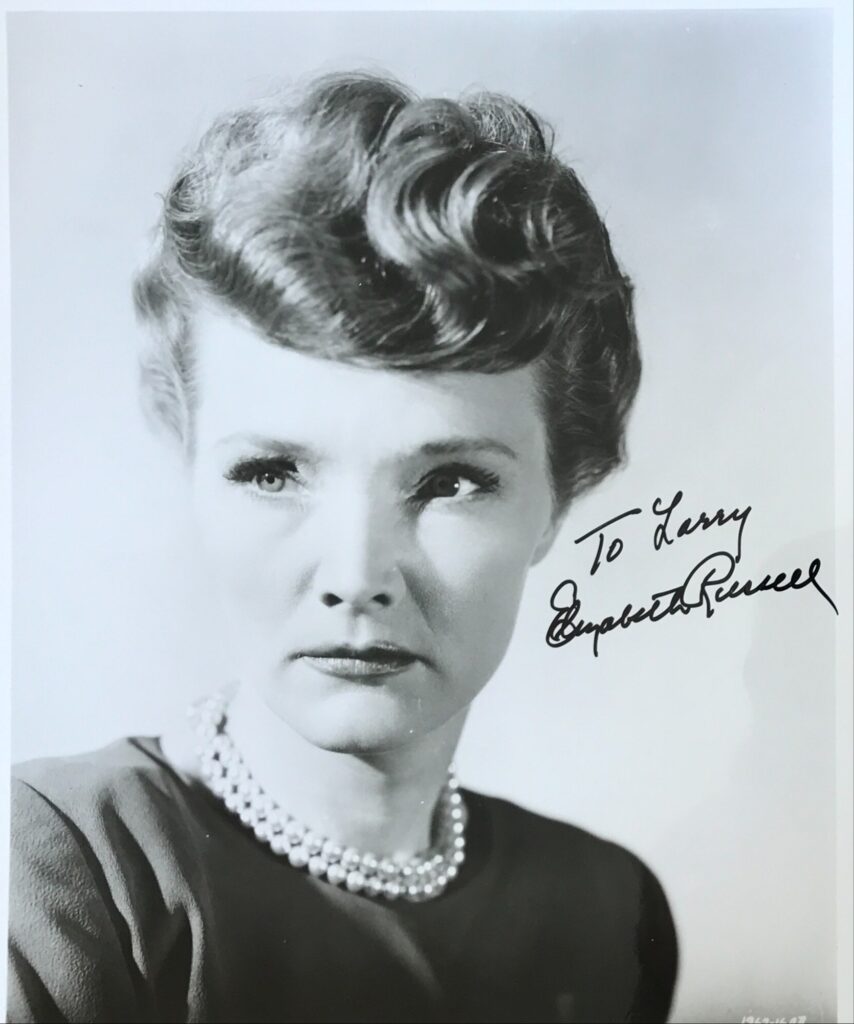
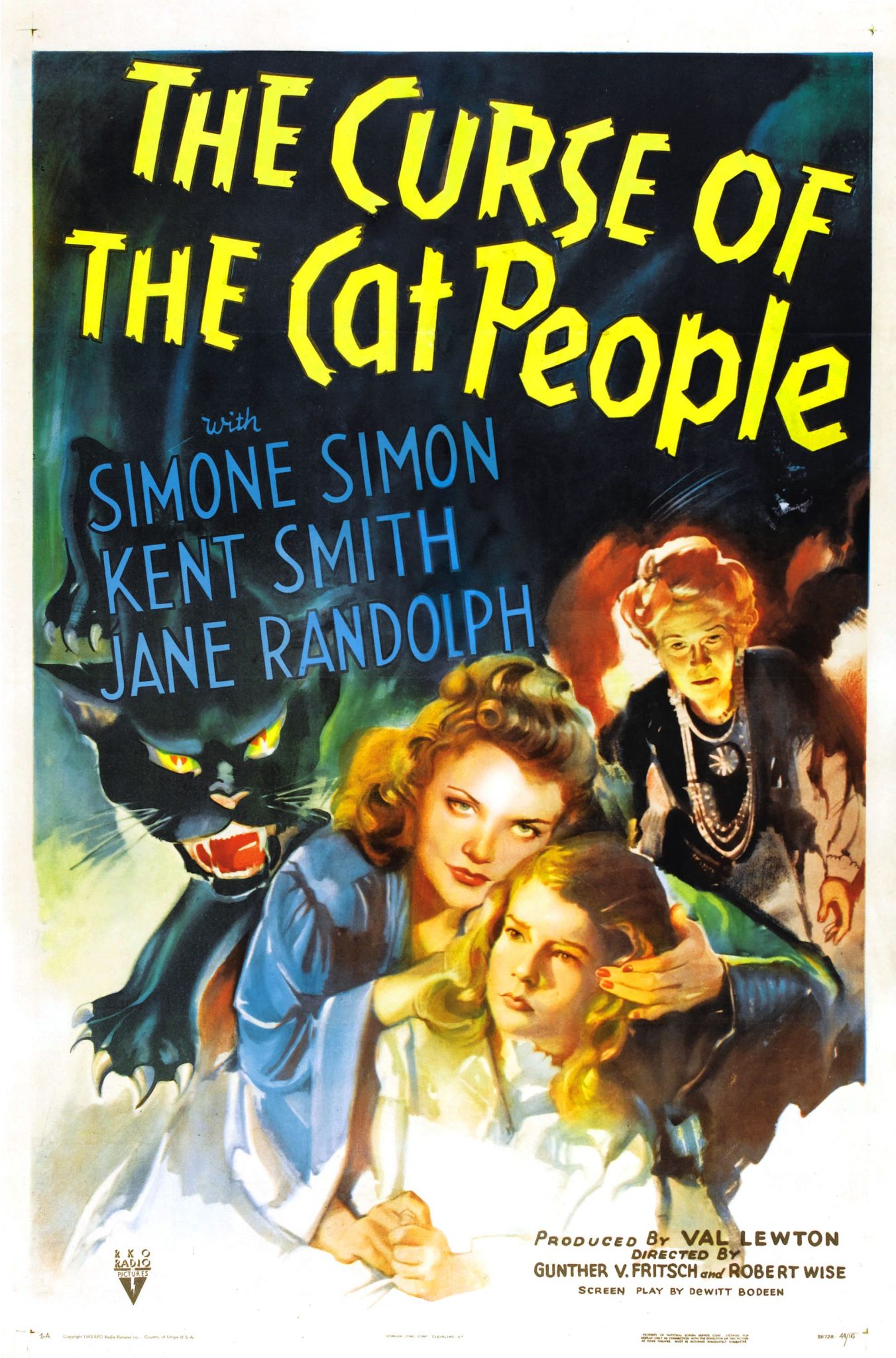
Elizabeth Russell was born in 1916 in Philadelphia. She is particularly reknowned for her performances in some key horror films of the 1940’s including “Cat People” with Simone Simon in 1942, “Seventh Victim”, “Curse of the Cat People”and “Bedlam”.
IMDB Entry:
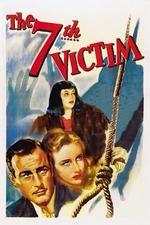
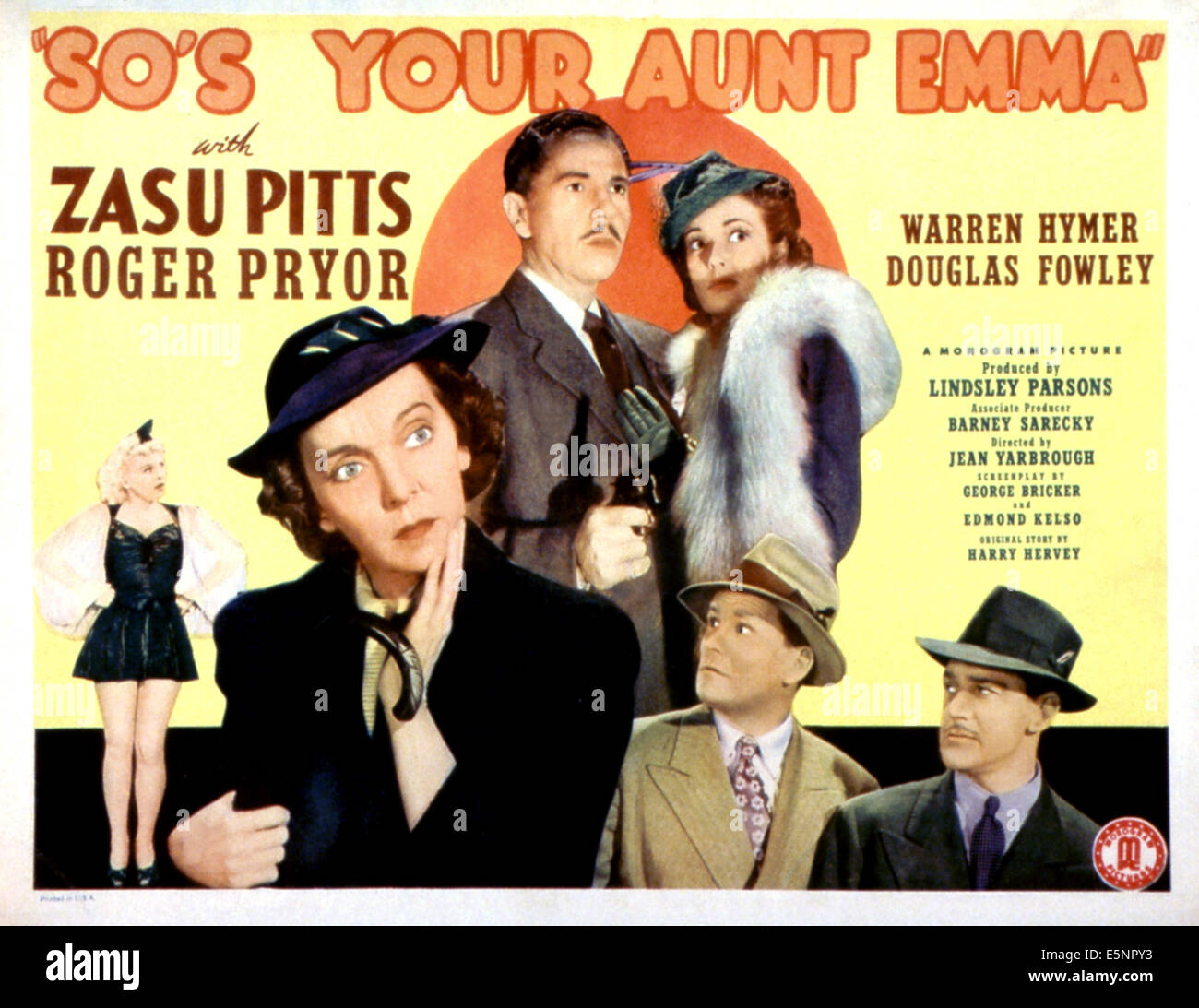
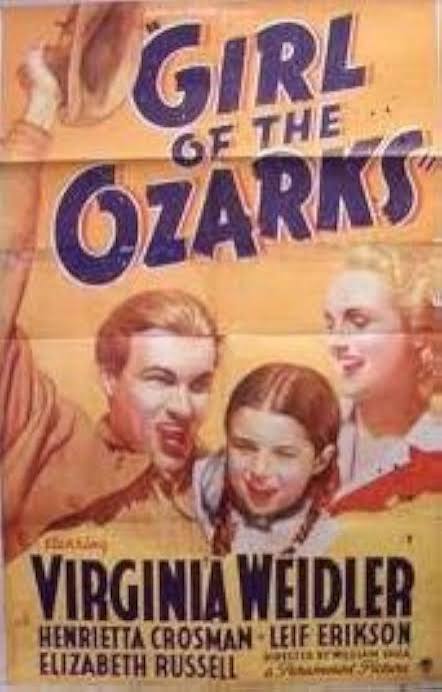
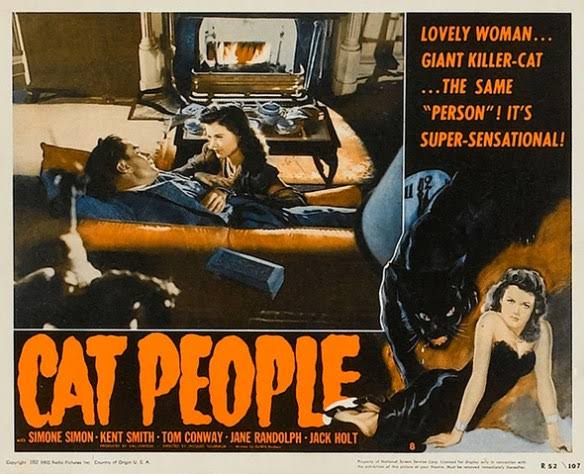
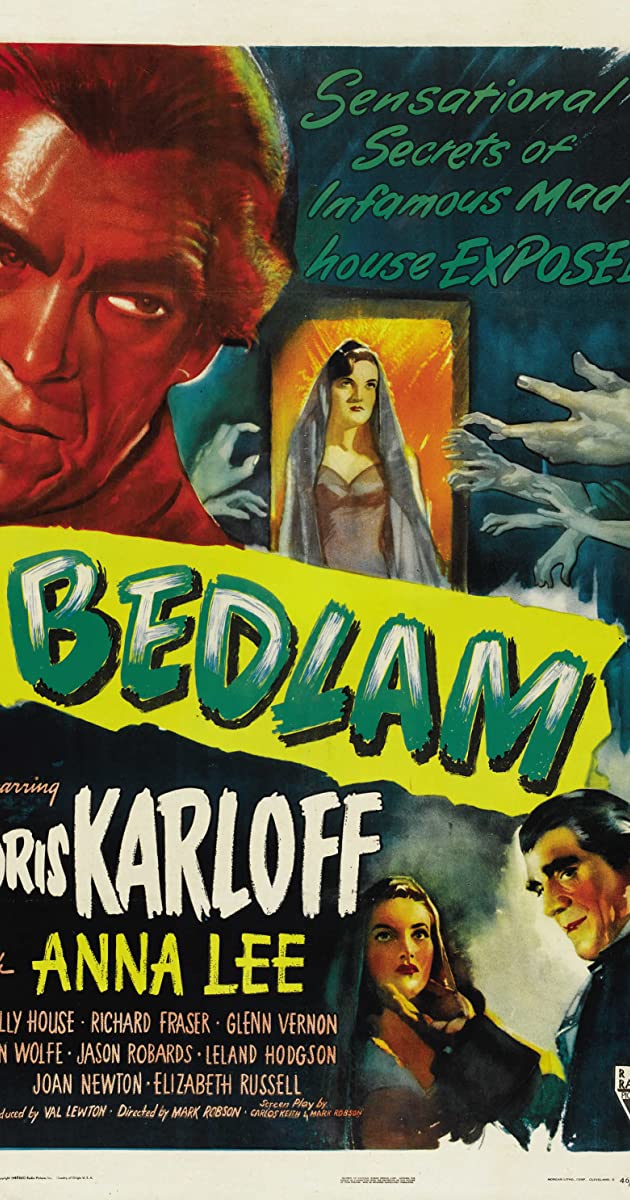
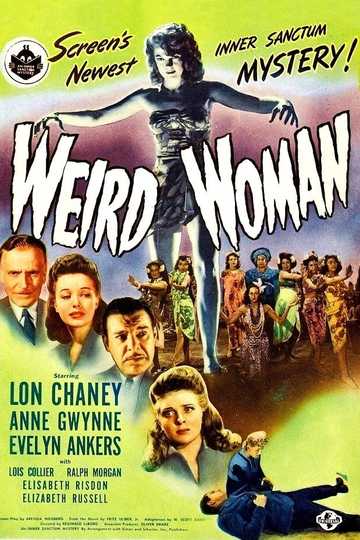
Elizabeth Russell was an American character actress whose film career, though relatively brief and concentrated between the late 1930s and early 1950s, left an indelible mark on classic Hollywood—particularly through her association with producer Val Lewton and the atmospheric psychological horror films he made at RKO. While she never achieved stardom, Russell’s screen presence—haunting, stylish, and enigmatic—helped define an emerging kind of cinematic femininity: elegant, spectral, and unsettlingly modern.
Career Overview
Early Life and Career Beginnings
Born Elizabeth Russell Tyson in 1916 in Davenport, Iowa, she came to acting through modeling and theatre, distinguishing herself with striking features and poise that translated well to the screen. After moving to Los Angeles, she took small roles in films during the late 1930s, typically cast as glamorous women or background figures in social settings—roles that hinted at her sophistication but gave little room for depth.
Russell’s career trajectory changed when she began working at RKO Pictures, where she would find her most distinctive niche under the aegis of producer Val Lewton in the 1940s.
Film Work and Collaboration with Val Lewton
Russell appeared in a number of Lewton’s low‑budget yet artistically ambitious horror productions, where atmosphere, psychology, and suggestion replaced the explicit monsters typical of Universal’s horror cycle. These films have since become touchstones for film scholars examining the aesthetics of noir, repression, and gendered fear.
Her most notable appearances include:
- Cat People (1942) – Russell plays the mysterious Serbian woman who greets Simone Simon’s Irena with the chilling phrase, “Moia sestra?” (“My sister?”). Though on screen for only seconds, the moment became iconic—suggesting the existence of a hidden community of cursed women and amplifying the film’s erotic menace.
- The Curse of the Cat People (1944) – She returned in another small but eerie part, reinforcing the mythic continuity of Lewton’s world.
- The Ghost Ship (1943), The Seventh Victim (1943), and Bedlam (1946) – Russell appeared in several other RKO features, often embodying women outside normative boundaries: isolated, intellectual, mysterious, and melancholic.
These roles collectively built a kind of cinematic aura around her: she became a visual and psychological motif across the Lewton cycle—a symbol of transgressive femininity and doomed allure.
Style and Screen Persona
Russell projected an unusual duality: elegance intertwined with alienation. Her beauty carried an element of danger—less warm glamour than cool fascination. This quality made her especially effective in the Lewton films, where menace was conveyed through suggestion rather than overt action.
Her acting was remarkably modern for its time. Unlike the theatricality common in studio-era supporting roles, Russell used minimal gesture, precise diction, and a calm intensity that hinted at psychological depth. This restraint mirrored Lewton’s own narrative philosophy of implication over exposition.
Russell’s performances also played into 1940s Hollywood’s changing visual codes. Her angular face, poised silhouette, and sardonic poise aligned her with the emerging film‑noir aesthetic—women rendered in chiaroscuro, simultaneously powerful and endangered. Even in bit parts, she projected an intelligence and irony that transcended the limitations of the script.
Other Work and Later Career
Outside the Lewton circle, Russell’s career included small but visible roles in larger studio films such as:
- The Corpse Vanishes (1942)
- That’s My Man (1947)
- Doomed to Die (1940)
However, she rarely found material to match the subtlety of her Lewton collaborations. After the late 1940s, her screen appearances became infrequent, and she eventually retired from acting in the early 1950s. She died in 2002, largely forgotten by mainstream audiences but revered among film historians and genre specialists.
Critical Analysis
Artistic Strengths
- Economy of Expression: Russell mastered emotional understatement. Her screen power derived from stillness—the kind of acting that draws attention by doing less.
- Atmospheric Presence: She became a recurring visual motif of haunted beauty, functioning less as character than as symbol, embodying the Lewton aesthetic of sublimated terror.
- Genre Innovation: Within Lewton’s films, she helped redefine horror’s female iconography—from screaming victim to enigmatic observer. Her gaze, rather than her fear, drives tension.
Thematic Resonance
Russell’s work engages deeply with themes of identity, repression, and the uncanny feminine. In Cat People, for instance, her single line encapsulates otherness—she represents the latent community of women considered monstrous for their desires. In The Seventh Victim, she appears amid a cult of nihilists, further exploring female interiority as both forbidden and alluring.
Through these portrayals, Russell’s presence articulates the cultural anxieties of the 1940s: fear of women’s autonomy, postwar disillusionment, and the psychological fallout of suppressed emotion. Her characters are not narrative drivers but psychic mirrors—reflecting the fears the audience and protagonists cannot voice.
Limitations
Russell’s career was constrained by:
- Typecasting: Hollywood’s tendency to use her only for mysterious or sinister roles.
- Industry Marginalization: As a supporting performer in B‑unit pictures, she lacked the institutional backing or visibility for sustained stardom.
- Production Context: The brevity of her roles made her work easy to overlook despite its imaginative significance.
Legacy and Reappraisal
Though often confined to cult scholarship, Russell has become emblematic of cinema’s minor‑key modernism—actors who carved meaning from the margins. Scholars have compared her presence to that of Maria Casares or Delphine Seyrig in European art cinema: women whose distance and poise challenge narrative convention.
In contemporary critical writing on Val Lewton, Russell frequently features as a shorthand for the producer’s most haunting motifs—the mysterious female archetype who encapsulates the unseen terrors within ordinary lives. Her handful of appearances achieve what many careers never do: a lasting, instantly recognizable cinematic image.
Summary
Elizabeth Russell’s career, though modest in scale, exemplifies how acting can transcend screen time. Through a series of brief but unforgettable appearances—especially in Val Lewton’s RKO horrors—she defined a new kind of female presence in American film: poised, self‑contained, and unnervingly self‑aware.
Her legacy lies not in fame but in affective intensity: a face and voice that transformed suggestion into substance. Within the tapestry of 1940s Hollywood, Elizabeth Russell stands as a minor‑key auteur of the uncanny—a supporting actress who gave silence and ambiguity their own magnetic power