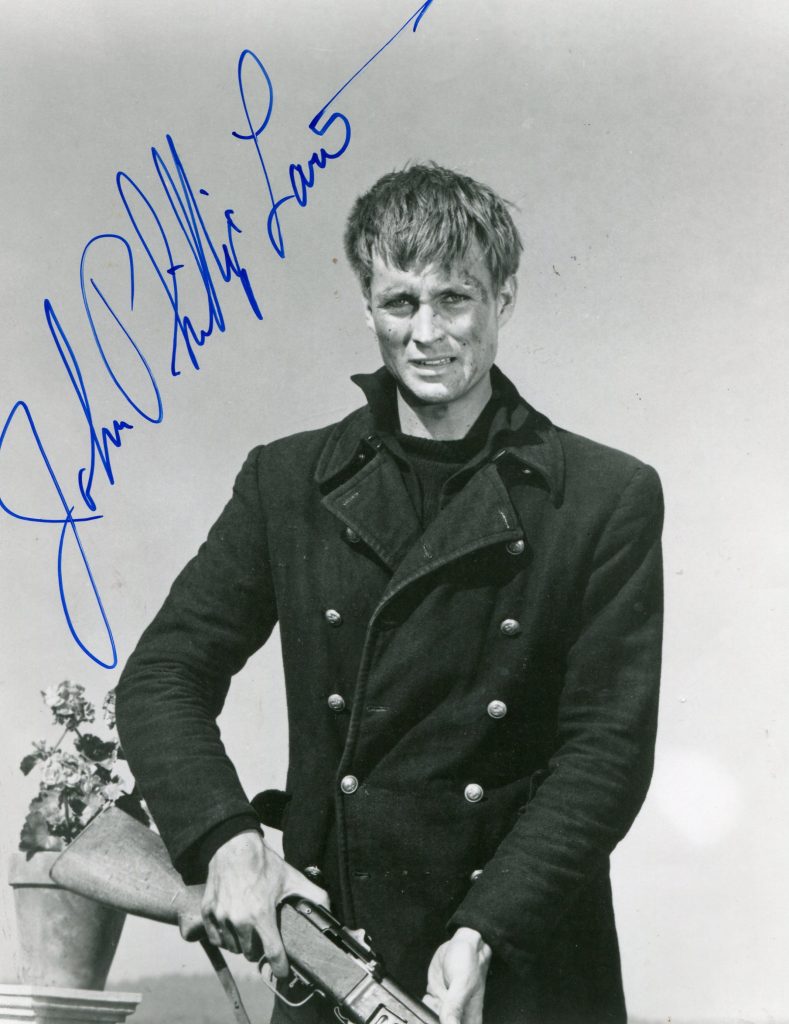
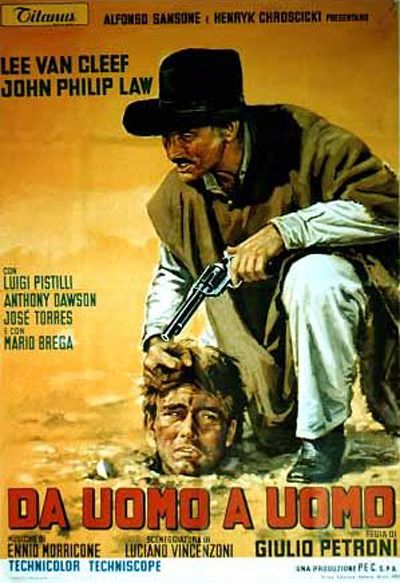
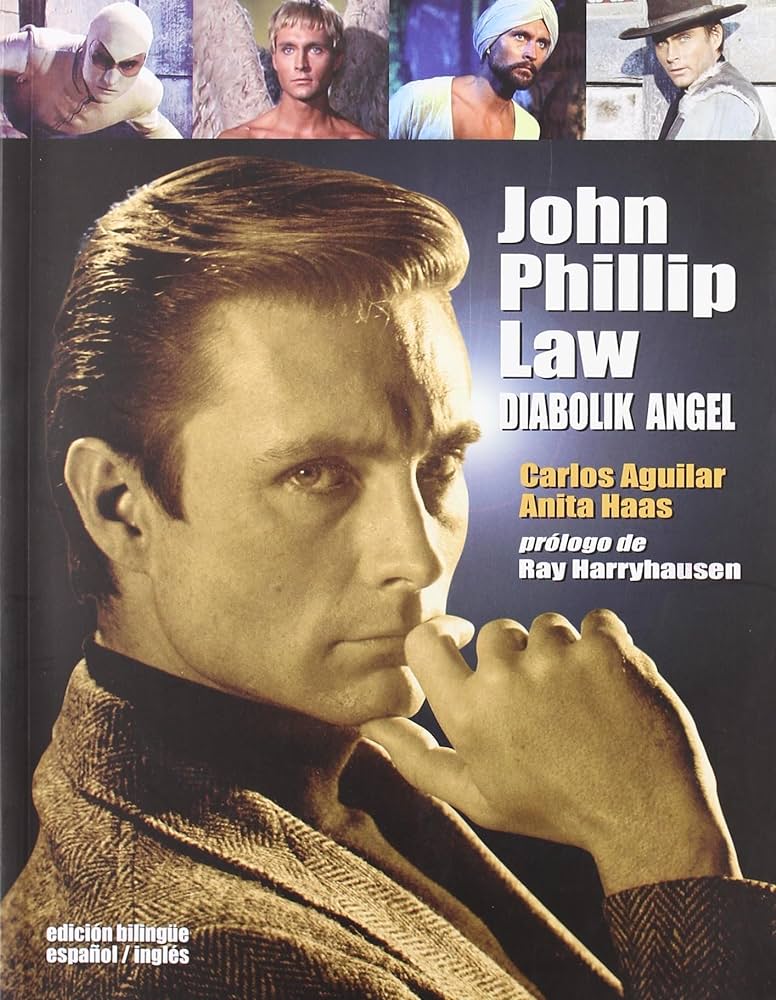
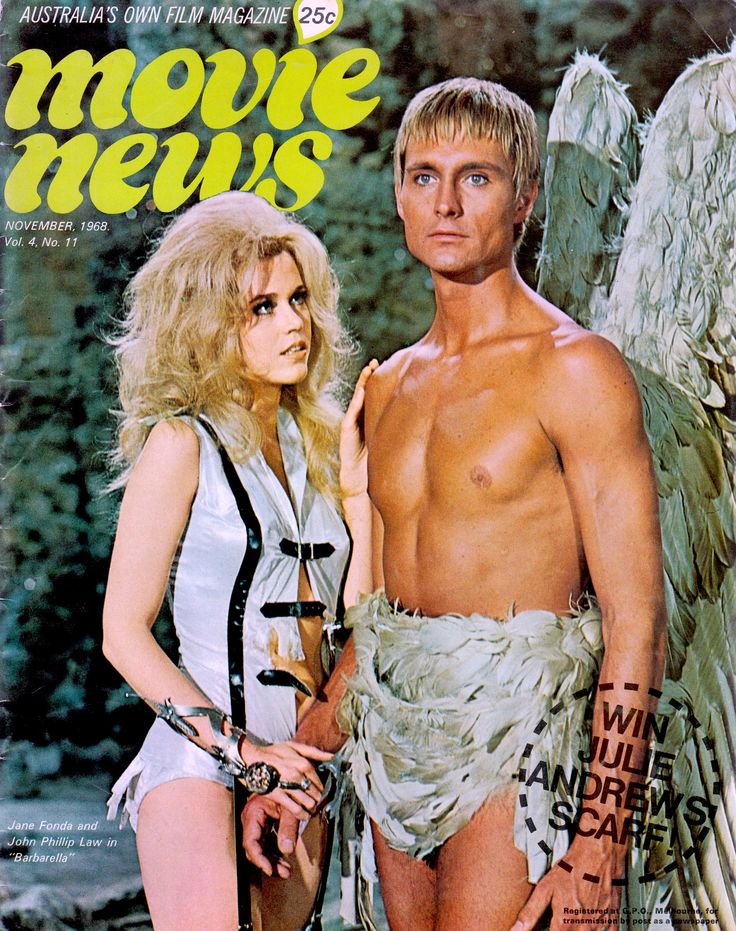
John Philip Law (1937–2008) occupies an unusual and significant position in post‑war cinema. Over a career spanning nearly forty years, he moved fluidly among Hollywood, European art cinema, and international genre filmmaking, becoming one of the quintessential “transnational” actors of the 1960s and 1970s. His image—a tall, blond, stoic presence simultaneously angelic and menacing—embodied the era’s shifting ideals of masculinity: less square‑jawed heroism, more emotional opacity and erotic neutrality. Behind that sculptural beauty lay a thoughtful performer who used minimalism as a modernist tool rather than a limitation.
Early Life and Formation
John Philip Law was born in Hollywood in 1937, but his upbringing was itinerant—his father a shrewd stage director, his mother Hollywood actress Phyllis Sallett. Studying at the University of Hawaii and later acting in Off‑Broadway repertory, Law combined physical athleticism (sailing, surfing, fencing) with classical training and a fascination for European film aesthetics. Stage experiences in New York gave him discipline and voice control; his looks offered immediate cinematic potential.
In the early 1960s he studied briefly at the Actors Studio, absorbing the Method’s psychological realism but tempering it with his own preference for external control. This mix of inner concentration and physical poise—typical of actors working in both America and Europe at the time (e.g., Alain Delon, Helmut Berger)—would define his screen style.
Breakthrough: The Russians Are Coming, the Russians Are Coming (1966)
Norman Jewison’s Cold War comedy announced Law as a distinct new presence in American film. As Lieutenant Alexei Kolchin, the sensitive Russian sailor who falls for an American girl (Sandy Dennis), he inverted the typical foreign‑agent stereotype, portraying decency and curiosity rather than menace.
Critics praised him as a “surprisingly eloquent minimalist.” The New York Times described his acting as “lyrical, faintly ironic; he makes naiveté graceful.” The performance garnered a Golden Globe nomination for Most Promising Newcomer, and producers noted his combination of physical glamour and gentle humor—an image that Hollywood didn’t yet know how to develop but that European filmmakers were eager to exploit.
European Ascent and the Emergence of the Pop‑Cinematic Hero (1966–1970)
The Red Tent (1969, M. Kalatozov)
While still alternating American projects, Law moved to Europe, drawn by the artistic freedom of the Italian and French industries. In Kalatozov’s Soviet‑Italian co‑production about Arctic explorers, he appeared opposite Sean Connery. His stoic intensity suited the film’s almost spiritual realism: when the film drifted into allegory, Law anchored it with unshowy conviction.
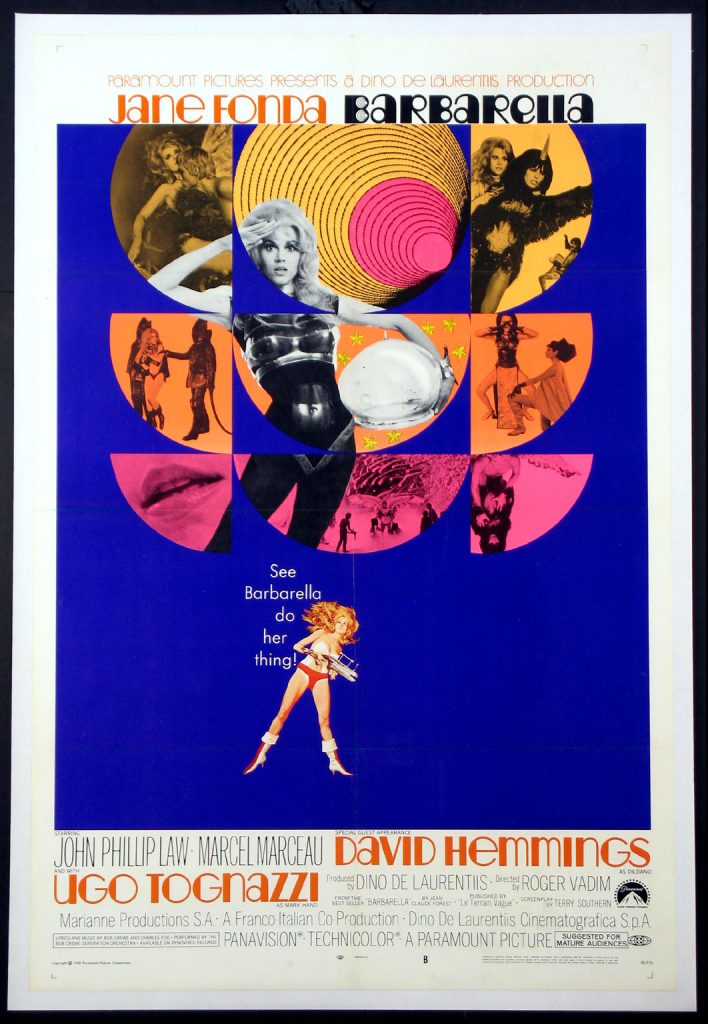
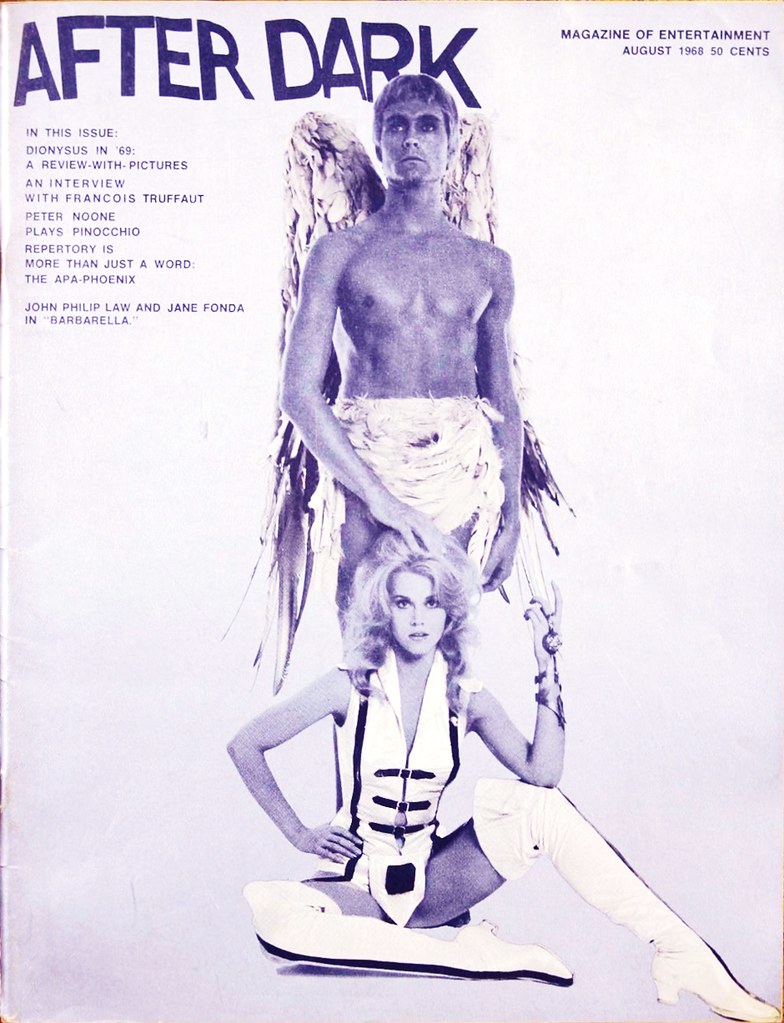
Barbarella (1968, dir. Roger Vadim)
As the blind angel Pygar, Law achieved his most internationally recognizable role. Vadim’s erotic sci‑fi fantasia relied as much on tone as narrative, and Law’s stillness amidst the film’s camp chaos gave it mythic counterpoint.
Critics then were divided—some seeing him as beautifully passive, others as thematic necessity. Retrospectively, scholars note his clever modulation: Pygar’s quasi‑religious calm offered an androgynous ideal of male beauty. His serene voice and luminous physicality created what one reviewer called “the first cinematic angel who radiates human doubt.”
Barbarella remains an ur‑text of 1960s visual pop art. Law’s performance—half statue, half soul—helped define the constellation of “beautiful male object” roles later inhabited by Helmut Berger and Terence Stamp.
Danger: Diabolik (1968, dir. Mario Bava)
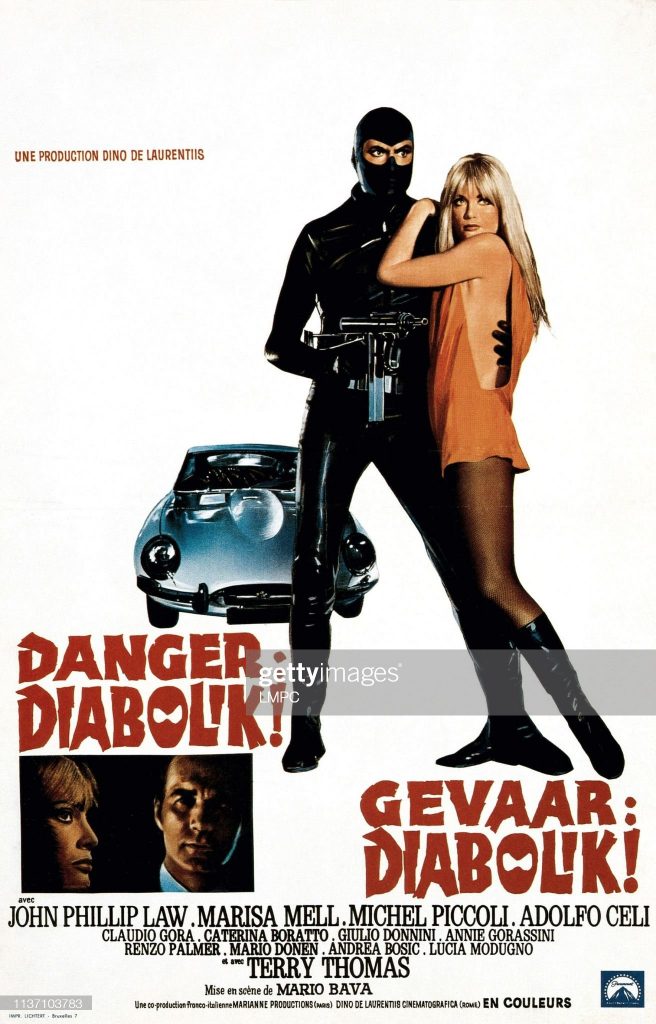
Shot almost back‑to‑back with Barbarella, this Italian comic‑book adaptation gave Law his defining cult performance. As the masked master thief Diabolik, opposite Marisa Mell, he sculpted charisma purely through gesture and gaze. Most of his face hidden, Law relied on body language: panther‑like grace contrasted with amusement in the eyes.
Contemporary critics misunderstood the film’s tone, but modern reassessment identifies Diabolik as a masterpiece of Italian pop modernism. Tim Lucas, in Mario Bava: All the Colors of the Dark, calls Law’s acting “kinetic sculpture—embodied design rather than character psychology.” His chill sensuality defined the 1960s anti‑hero: self‑aware, ironic, aesthetic rather than moral.
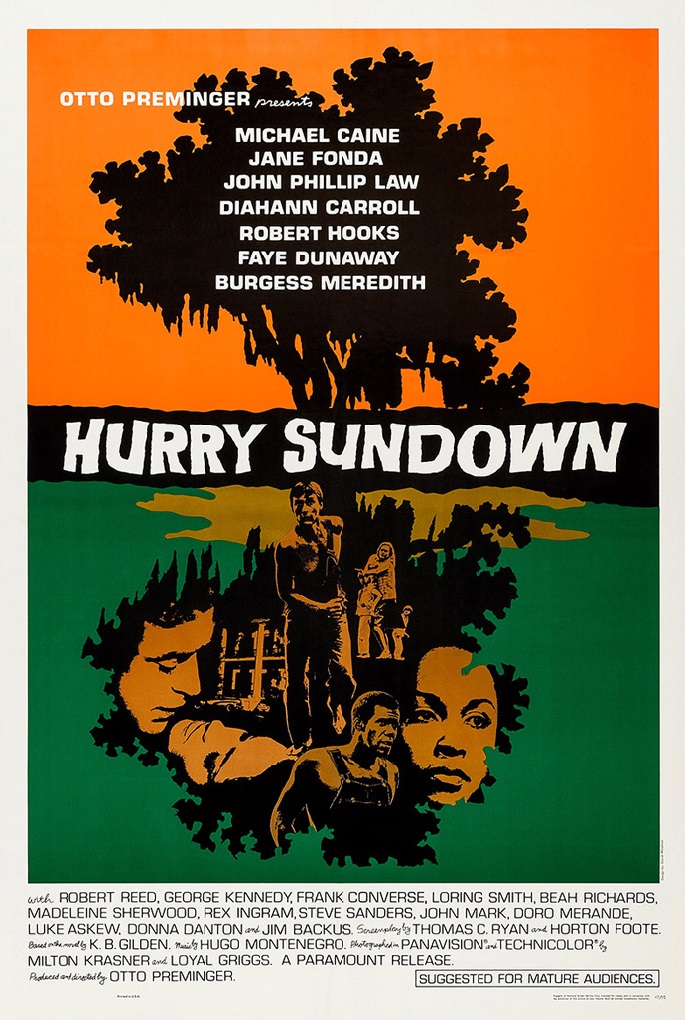
Hurry Sundown (1967, Otto Preminger)
A rare Hollywood assignment from this period, Law’s performance drew mixed notices—his subtlety clashing with Preminger’s florid melodrama—but critics acknowledged his refusal to overplay. Bosley Crowther described him as “remote but strikingly real amid an overheated story.”
Crossing Genres: 1970s Work
As Euro‑co‑productions proliferated, Law’s transatlantic persona was in high demand. He adapted seamlessly to thrillers, Spaghetti westerns, and even experimental art cinema. His fluent French and Italian allowed him to participate fully in Continental production culture.
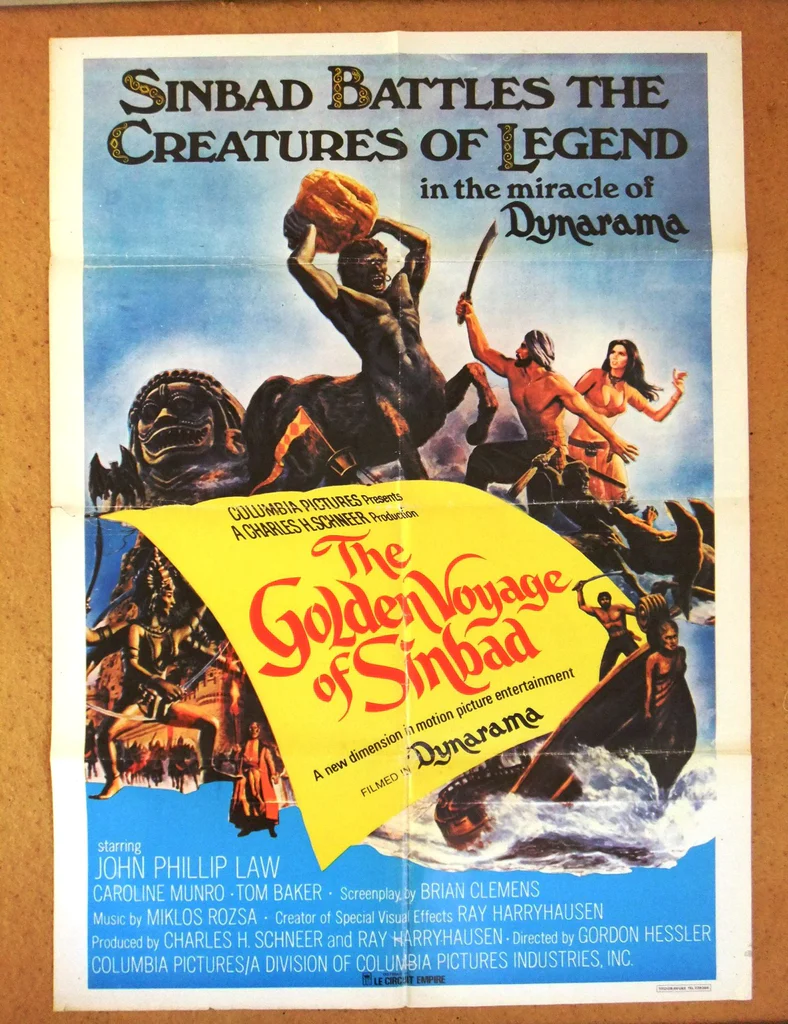
The Golden Voyage of Sinbad (1973, dir. Gordon Hessler)
Returning to Hollywood-backed adventure, Law’s Sinbad was less the swashbuckling extrovert of earlier versions than a noble rationalist. Critics admired the sobriety he brought to fantasy: The Observer noted his “intellectualized heroism—a Sinbad who conquers chaos by patience.” His calm authority was crucial to grounding Ray Harryhausen’s effects in emotional reality.
No Trabajes Ardilla! (Spain, 1970s), Open Season (1974), The Love Machine (1971)*
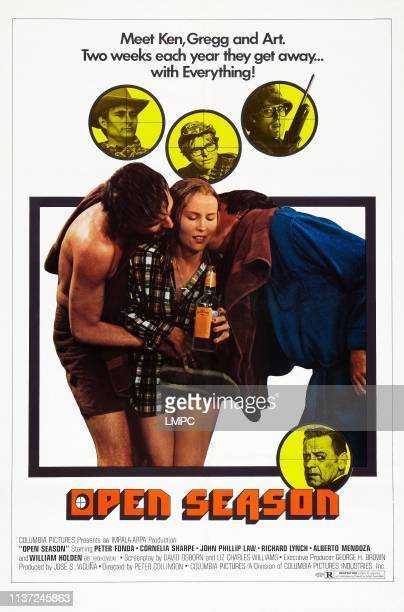
The results were uneven, yet even in exploitation contexts he extracted moments of psychological credibility. In Open Season he destabilized the film’s macho hunting allegory, playing moral horror subtly rather than as diatribe.
The Last Valley (1971, dir. James Clavell)*
As a doomed mercenary in this metaphysical war epic, Law layered pride with doubt—echoing Prince Andrei from War and Peace. Michael Winner wrote later that “few actors could combine the physical majesty of a warrior with the tremor of conscience; Law did.”
Later Career (1980s–2000s): Character Actor and Cult Elder
As his matinee‑idol beauty faded, Law embraced character work, particularly in Italian and low‑budget English‑language productions. He appeared in Attack Force Z (1981) alongside Mel Gibson, maintaining a stoic moral presence. Television provided steady work (Murder, She Wrote, F/X: The Series), and he became a favored guest at cult‑film conventions, reflecting on his European years with lucid affection.
Critics looking back found his minimalism prescient: what once read as detachment now seemed modern understatement. Scholars of European genre film position Law alongside Clint Eastwood and Alain Delon as practitioners of “the silent‑gaze hero,” communicating tension through posture more than speech.
Acting Style and Technique
| Dimension |
Analysis |
| Physicality |
Trained in fencing and dance, Law treated his body as an expressive architecture. In Diabolik, Bava used his silhouette as graphic element; Law’s awareness of framing transformed him into a kinetic component of mise‑en‑scène. |
| Vocal Economy |
A measured, resonant delivery—often described as “two degrees above whisper”—lending gravity to pulp material. His voice conveyed decency or irony without changing volume. |
| Minimalism and Modernism |
Law’s impulse was subtractive: remove gesture until only essence remains. In 1960s Europe, this matched cinematic modernism’s preference for ambiguity, aligning him with Antonioni’s emotionally abstract prototypes. |
| Ambiguity of Masculinity |
Tall, angelic, and self‑possessed, he de‑sexualized male power. His heroes and anti‑heroes defined strength as control, not domination, presaging later “post‑Bond” sensibilities. |
Critical Themes
- Beauty as Alienation – Law’s good looks became a metaphor for isolation; directors exploited the tension between appearance and identity.
- Transnational Identity – Working globally, he mirrored the polyglot fluidity of 1960s cinema itself—an actor without a fixed nationality.
- Intellect in Genre – He elevated pulp by treating it seriously; his Diabolik, Sinbad, and Pygar are conceptually coherent within their fantasy worlds.
- Moral Stillness – His characters often serve as observers rather than agitators, dramatizing decency under absurd conditions.
Representative Performances
| Year |
Film |
Role |
Distinctive Quality |
| 1966 |
The Russians Are Coming |
Lt. Alexei Kolchin |
Naïve virtue, comic timing |
| 1968 |
Danger: Diabolik |
Diabolik |
Physical precision; pop‑art anti‑hero |
| 1968 |
Barbarella |
Pygar |
Erotic innocence; mythic stillness |
| 1971 |
The Last Valley |
Graf |
Conscience amidst war; quiet tragedy |
| 1973 |
The Golden Voyage of Sinbad |
Sinbad |
Classic heroism with human calm |
| 1974 |
Open Season |
Ken Bakeman |
Modern moral nihilism |
| 1981 |
Attack Force Z |
Captain Pettrowski |
Symbolic endurance in ensemble |
Critical Reassessment and Legacy
Though studio press once dismissed him as a “handsome cipher,” modern scholarship views Law as a bridge figure between classic and contemporary screen acting. Sight and Sound’s 2008 obituary summarized him as “the body of the 1960s: beautiful, slightly bewildered, seeking ethics in a world of surfaces.”
In retrospectives by the Cinemathèque Française and Fantafest Roma, his work with Mario Bava is celebrated for codifying the visual grammar of comic‑book cinema that later shaped directors like Tim Burton and Nicolas Winding Refn. Likewise, The Golden Voyage of Sinbad endures in popular memory for its sincerity, reminding viewers that wonder need not be ironic.
Summary Evaluation
Strengths
- Extraordinary physical and visual awareness; understood film composition instinctively.
- Courage to underplay in an age of melodramatic exaggeration.
- Multilingual flexibility across radically different production cultures.
- Capacity to embody both innocence and menace with minimal adjustment of expression.
Limitations
- Under‑written roles; beauty overshadowed acting complexity.
- Occasional stiffness when material required overt intensity.
- Shifting between industries hindered coherent stardom.
Conclusion
John Philip Law’s career charts the evolution of late‑twentieth‑century screen performance from classical romanticism to postmodern detachment. Whether as the saintly Pygar or the anarchic Diabolik, he turned his statuesque presence into commentary on the image itself. His best work radiates a paradoxical combination of sensuality and abstraction: feeling held in aesthetic suspension. For modern critics, Law stands not simply as a cult icon but as an emblem of an era when cinema looked at its heroes and wondered—beautifully—what they still meant