

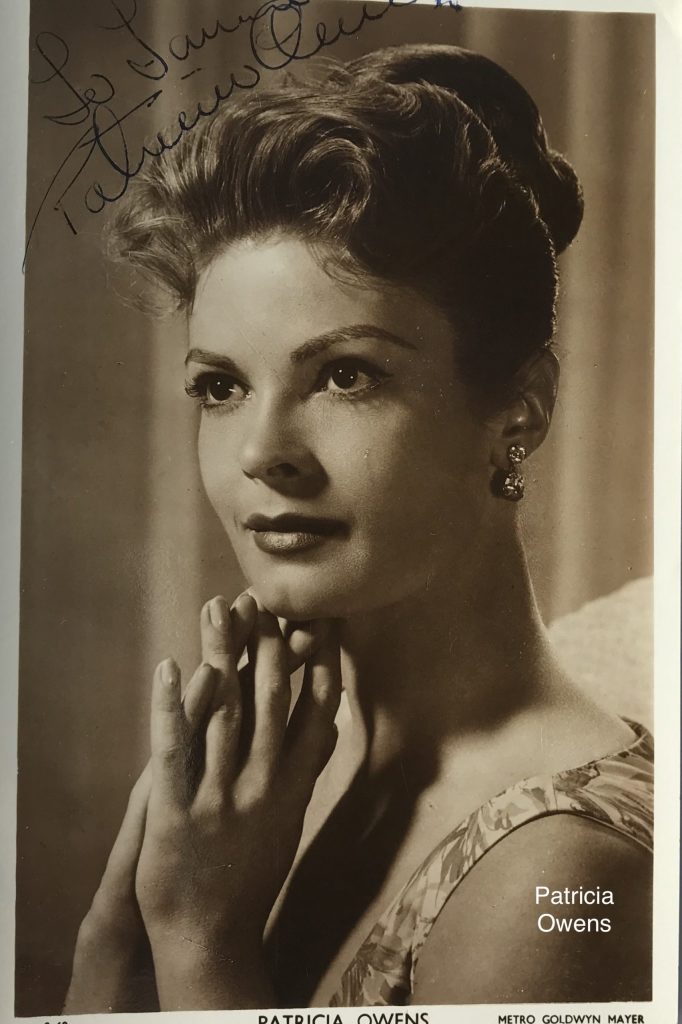
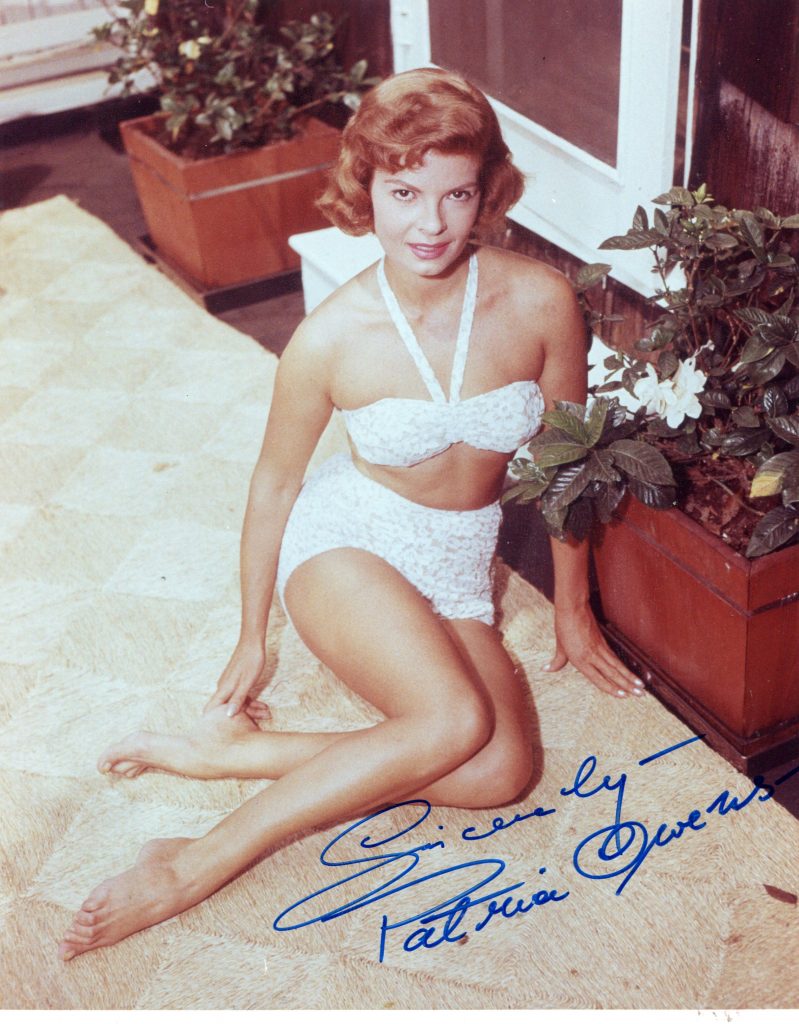

Patricia Owens (Wikipedia)
Patricia Owens was a Canadian-born American actress, working in Hollywood. She appeared in about 40 films and 10 TV episodes in a career lasting from 1943 to 1968.
She moved to England in 1933 with her parents (her Welsh father Arthur Owens was later to become an MI5 double agent), and ten years later, at age 18, she made her motion-picture debut in the musical comedy Miss London Ltd.
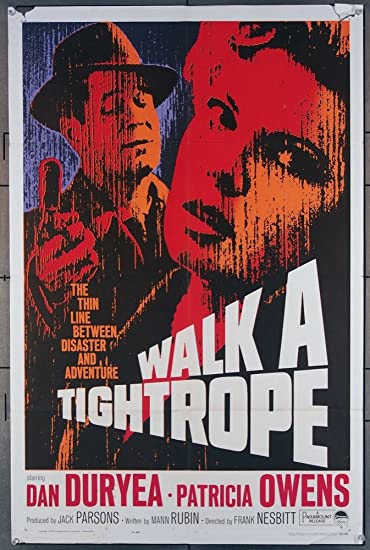
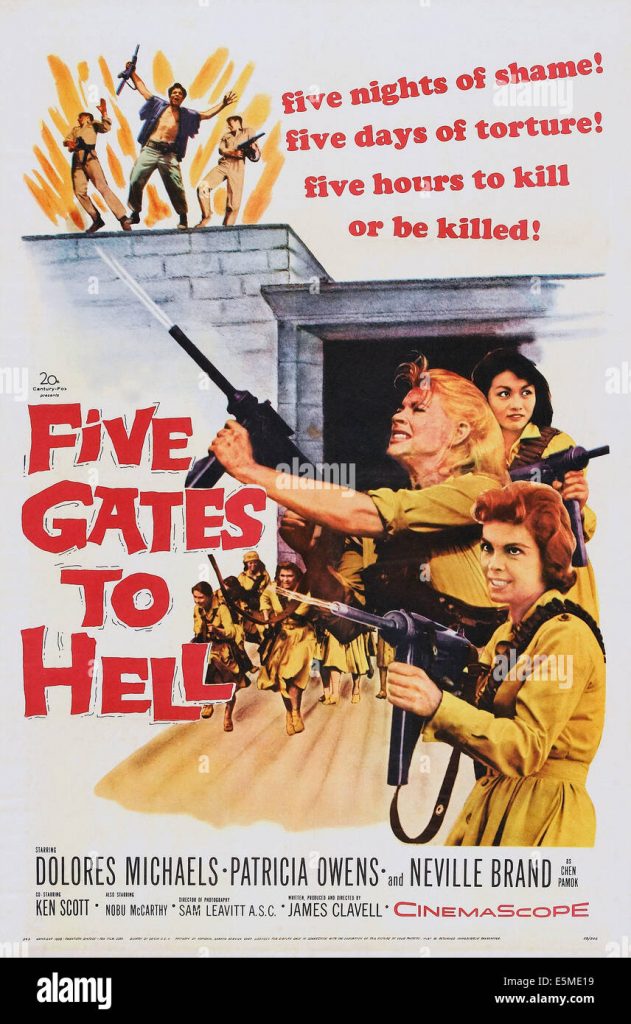
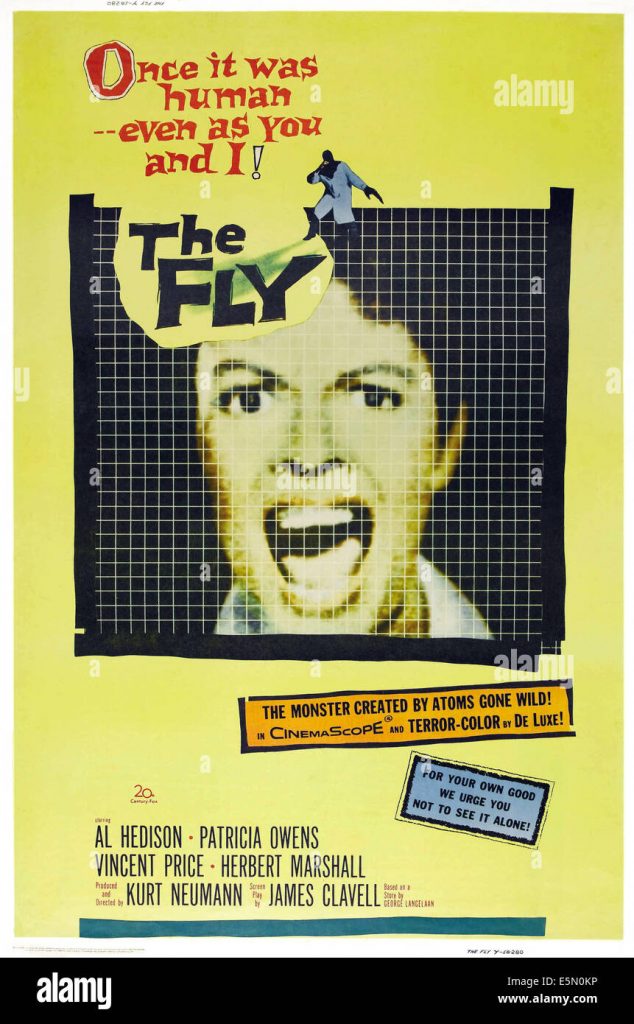
The following year, she had a small role in Harold French‘s social satire English Without Tears. Her career continued in this manner for a few years, Owens getting ever-larger roles in movies.
Her career received a boost when she was seen by a 20th Century Fox executive while performing in a stage production of Sabrina Fair and was offered a screen test.
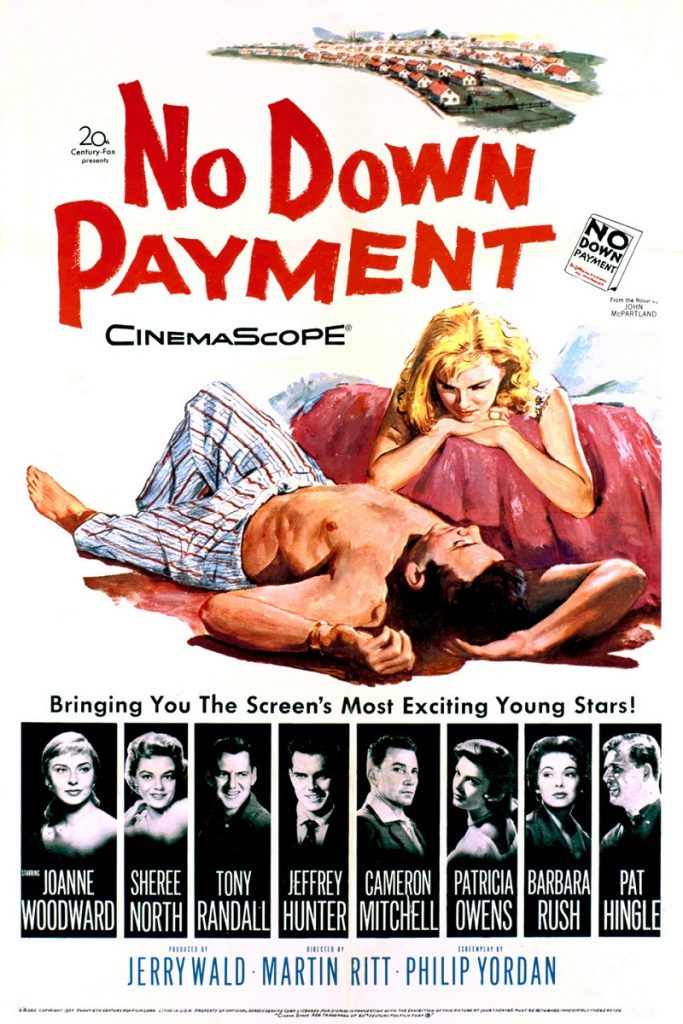
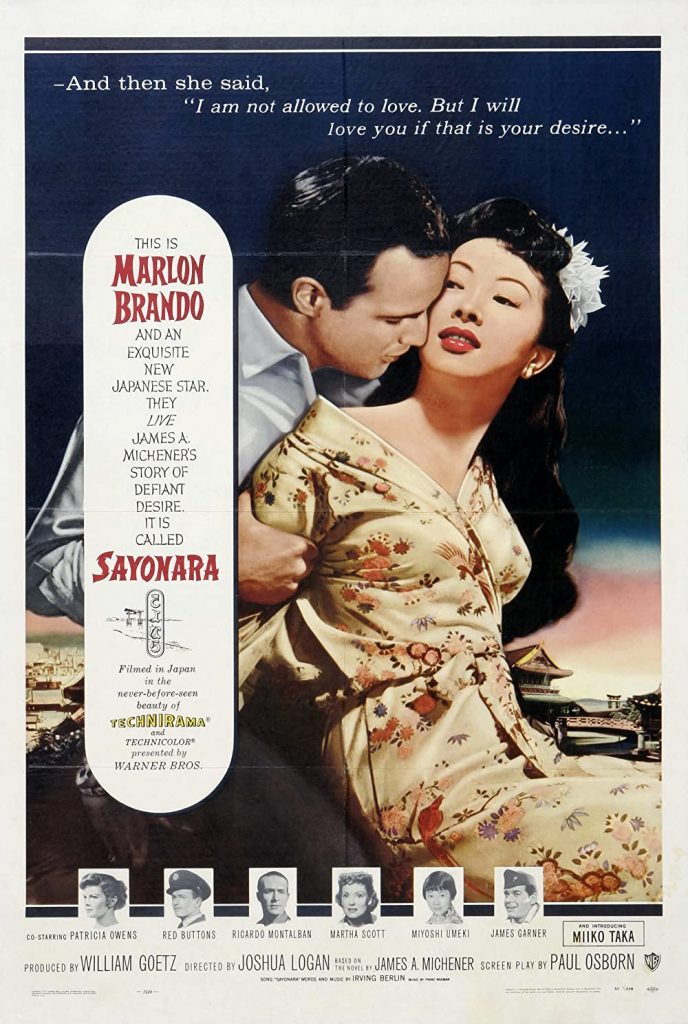
The result was a contract with the studio and a move to Hollywood. Her first American film was Island in the Sun (1957), followed by No Down Payment, both for Fox, after which Owens was loaned out to Warner Bros. to appear in the critically acclaimed drama Sayonara(1957).
Owens spent the rest of 1957 working mostly on loan-out, but it was a successful Fox production that secured her best known role—as Hélène Delambre, the wife of scientist André Delambre in The Fly (1958).
Owens carried much of that horror film’s narrative, which was largely presented in flashback from her character’s point of view.
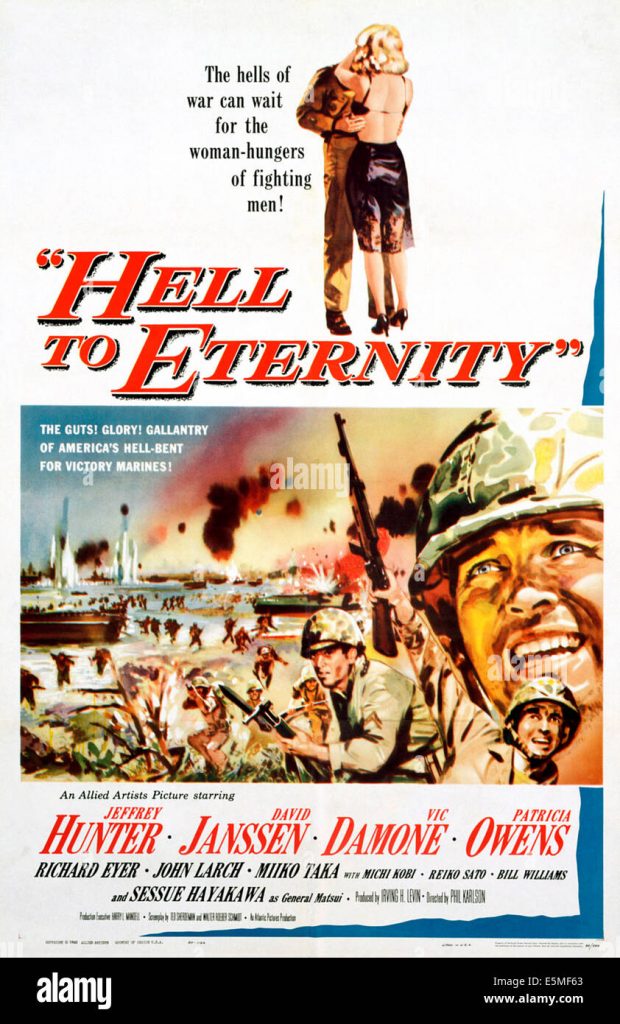
None of Owens’ subsequent films ever attained the same level of success as The Fly. She co-starred in the 1960 war film Hell to Eternity, then in 1961 appeared in the threadbare, backlot POW/jungle chase drama Seven Women from Hell.
Owens made occasional television appearances, on series such as Perry Mason and Burke’s Law, but these were relatively infrequent. Owens starred in the 1959 episode “The Crystal Trench” of the series Alfred Hitchcock Presents.
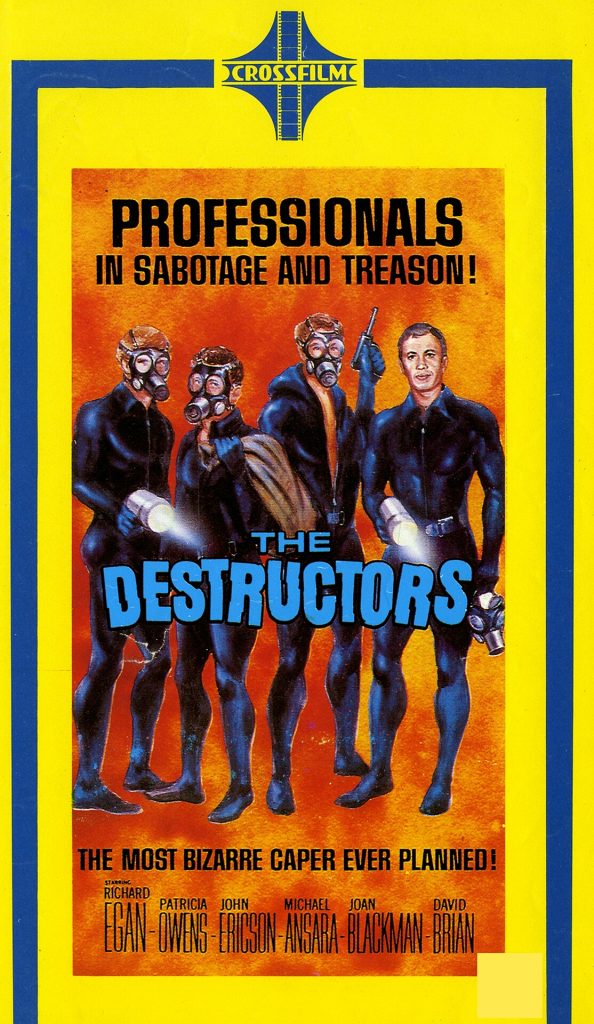
By 1965, Owens was working in Black Spurs, a B-Western produced by A.C. Lyles, who was renowned for using older stars in that genre. She retired from feature films in 1968 after portraying the love interest in the low-budget espionage thriller The Destructors.
Later that same year, she made her last professional appearance in a televised episode of Lassie.
Owens was married and divorced three times. She and her first husband, producer and screenwriter Sy Bartlett, wed in 1956 and remained together for two years. She next married Jerome Nathanson in 1960 and they had one child before their divorce in 1961. Her third marriage was to John Austin from 1969 until their divorce in 1975.
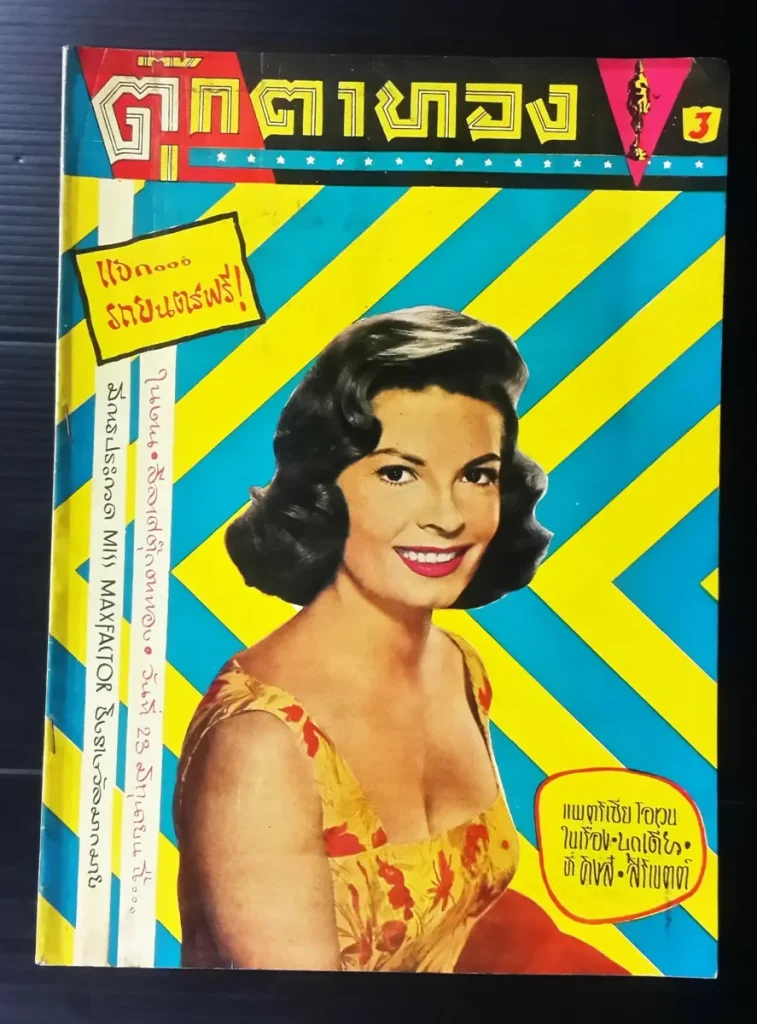
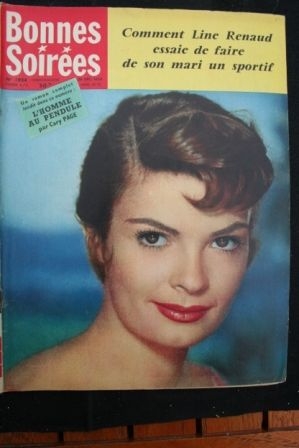
Career Overview
Patricia Owens (1925–2000) was a Canadian‑born actress who built a compact but revealing Hollywood career between the early 1940s and late 1960s. Best known internationally for her leading role in The Fly (1958), she embodied the poised but emotionally expressive screen woman of the post‑war era—intelligent, symmetrical of feature, and often caught between gentility and inner turbulence. Her story illustrates both the international mobility and the fragility of mid‑century film stardom.
Career Overview
Early life and British beginnings
Born in Golden, British Columbia, Owens grew up in England, where she began performing on stage in her teens. She made her screen debut at 18 in the British musical comedy Miss London Ltd (1943) and gained small but visible roles in British films such as English Without Tears (1944) before steadily earning larger parts
Move to Hollywood
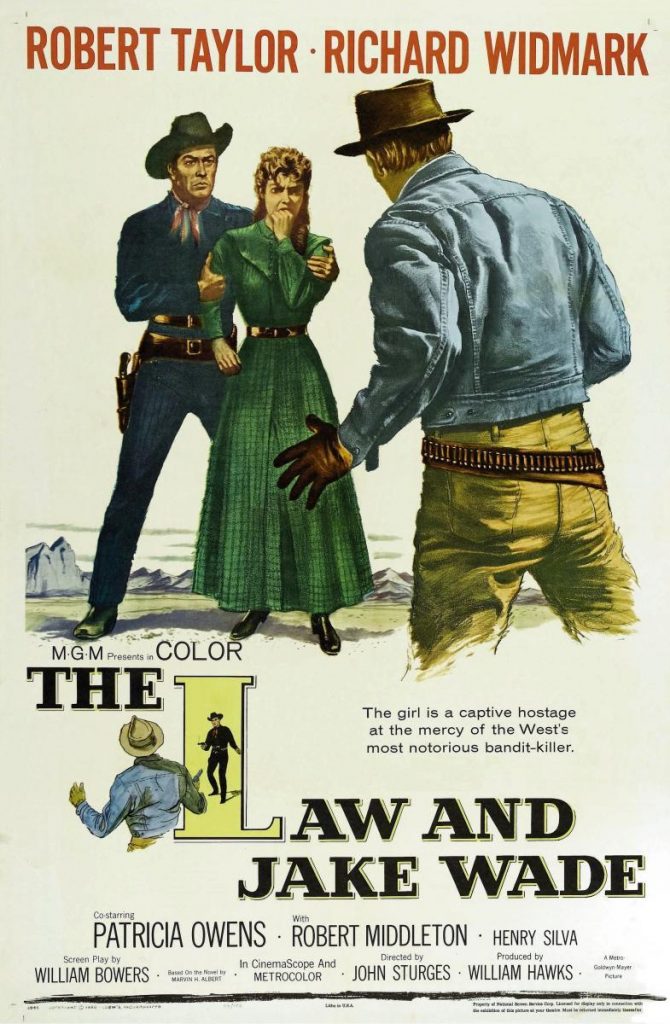
While appearing in a London stage production of Sabrina Fair, she caught the attention of a 20th Century‑Fox talent scout and was offered a studio contract. She relocated to Hollywood in 1956, making her U.S. debut in Island in the Sun (1957), followed quickly by No Down Payment (1957; dir. Martin Ritt) and Sayonara (1957), where she played Marlon Brando’s unhappily betrothed fiancée. That same period saw her featured in the western The Law & Jake Wade.
Peak and signature performance
Owens reached her artistic and popular zenith with The Fly (1958; dir. Kurt Neumann), portraying Hélène Delambre, the wife of a scientist whose teleportation experiment goes monstrously wrong. The film’s narrative unfolds largely from her viewpoint, positioning her as both emotional anchor and participant in a science‑fiction nightmare. Her restrained performance—alternately nurturing, terrified and resolute—grounded the fantastical premise and was widely praised
Later work and decline
Despite The Fly’s success, Owens did not sustain leading‑lady momentum. She appeared in Hell to Eternity (1960) and Seven Women from Hell (1961) before turning primarily to American television. Credits included Alfred Hitchcock Presents, Gunsmoke, Burke’s Law, and Perry Mason
. By the late 1960s she retired from acting, having logged roughly forty films and a handful of TV episodes.
Owens lived mostly out of the spotlight thereafter and died of cancer in 2000 at age 75
Critical Analysis
Acting style and strengths
Composure under pressure: Owens specialized in women who maintained social polish as they faced moral or psychological stress. Her measured diction and attentive listening lent realism to melodrama and elevated sensational material like The Fly.
Emotional transparency: Within the period’s restrained studio style, she conveyed fear, curiosity and empathy with natural clarity. In Sayonara, for instance, she makes a potentially unsympathetic character—the jilted fiancée—credible and pitiable through small, truthful emotional adjustments.
Camera poise: Owens photographed beautifully, and her ability to hold a long take without visible strain reinforced her suitability for close‑ups that rely on interior emotion rather than overt action.
Limitations and challenges
Typecasting and image: Hollywood saw her as the “nice” or dignified woman—refined, middle‑class, but not flamboyant. That decorum limited opportunities once fashion shifted toward earthier or more volatile female types in the late 1950s.
Industrial timing: Her brief “two‑year hot streak,” as one commentator noted, coincided with a crowded market of attractive imported actresses; when The Fly branded her within horror, producers had trouble envisioning her
Underexposure post‑1958: Owens’s best work often occurred in ensemble contexts, leaving her dependent on strong scripts and directors to define her. Without major studio pushes afterward, her star faded quickly.
Artistic and cultural significance
Bridge figure in postwar cinema: Owens’s transition from British cinema to mid‑century Hollywood mirrors the industry’s wider post‑WWII exchange of talent and sensibility.
Defining woman of 1950s genre hybridity: Her performance in The Fly fuses melodrama and horror, demonstrating how female subjectivity could drive genre storytelling. The film’s lasting cultural footprint ensures Owens an enduring niche in science‑fiction history.
Craft over celebrity: Although she never achieved sustained superstardom, her work embodies the professionalism of mid‑century studio actors who maintained high performance standards even in uneven material.
Overall Assessment
Patricia Owens was a poised actress possessing restrained emotional intelligence rather than overt theatricality. Her Fly performance remains a model of how sincerity and discipline can humanize pulp material. The brevity of her stardom speaks less to a lack of talent than to the gendered shifts of 1950s Hollywood, whose fascination with youth and glamour often crowded out quieter, subtler performers. Today she stands as a reminder of the many skilled actors whose careers flickered briefly yet left genuine craft behind .