


Anita Sharp-Bolster was born on August 28, 1895 in Glenlohan, Ireland. She was an actress, known for The Lost Weekend (1945), Scarlet Street (1945) and Saboteur(1942). She died on June 1, 1985 in North Miami, Florida, USA.


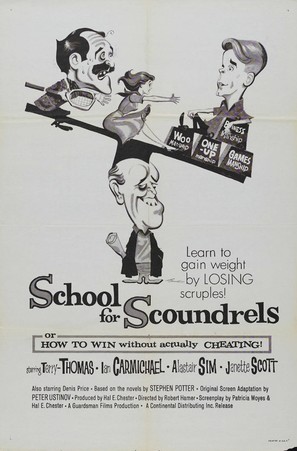

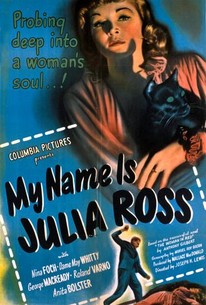


Irish independent article in 2012.
With all things John Ford being celebrated, Carol Hunt recalls one of his finest actors
It was not long after he and his wife had returned home to Cork from working in the United States that Desmond Sharp-Bolster received a rather odd request from Hollywood — asking for information about his now deceased Aunt Anita’s “Communist affiliations”. He was nonplussed.
“I knew her very well,” he told me last week, “but I had heard nothing about any socialist leanings.” Nor had he realised that his aunt — a Cork-born actress far better known in Hollywood and New York than her native Ireland — had served as a nurse on the Aragon front in 1937 during the Spanish Civil War.
Soon afterwards, though, while going through some papers, Desmond discovered this information on a playbill for a production of Pygmalion on Broadway, which Anita had starred in with Raymond Massey and Gertrude Lawrence, among others.
“We never really got into politics,” said Desmond, “but as I understand it, Hemingway and that Bohemian crowd, while assisting the Communists, were really there to combat Fascism.” (Co-incidentally, Desmond’s wife’s family published all of Hemingway’s books.)
Desmond is well aware, though, of the extraordinary life led by his aunt and how, as an Irish artist, Anita Sharp-Bolster had a comprehensive impact on arts and culture worldwide for many years — yet still she seems to have been somewhat overlooked in her home country.
Born in 1895 to an Anglo-Irish family in Glenlohane, Kanturk, Co Cork, Alice (Anita) Sharp-Bolster amassed an extraordinary portfolio of work during her 90 years.
“I know of no other Irish actor or actress of that era with such an extensive participation in both stage and film,” is the opinion of her nephew. Or any era, one would have to add.
Like many Irish actors who would go on to Hollywood and work extensively with John (Feeney) Ford, Anita’s acting career began with the Abbey Players, in a play called The Mineral Waters.
Her talent must have been quickly spotted as she then travelled on to London, got to New York in 1938 and finally made her screen debut in Hollywood in 1941. She went on to run the The Gate Theatre in California in association with Peter Godfrey. Some of her better known films were Going My Way, The Lost Weekend, The Picture of Dorian Gray, Kitty, The Perfect Woman, Botany Bay, The Thin Man Goes Home and The Two Mrs Carrolls. In her lifetime, she worked with such well-known names as Charles Laughton, Raymond Massey, John Ford, of course, and later on, Angela Lansbury.
One Hollywood screen biography blurb says that: “Bolster became one of the busiest character actresses of the 1940s.”
Considering if his aunt may have had what we call a ‘risque life’, Desmond laughs and says he wouldn’t have thought so: “She was always such a breath of fresh air when she came home, which she did regularly and she received total support from her family.”
Anita was also responsible for her nephew’s American schooling and connections. “She was at a cocktail party in Thirties New York when she overheard a couple saying that they were going to Ireland and were interested in fox-hunting.”
She immediately introduced herself and told them that her brother and sister-in-law took in paying guests in Cork and that they could organise riding to hounds with them.” So they came, they stayed, became great friends and then godparents to the young Desmond who was born in 1939.
Consequently in 1953, after the war, Desmond went to stay with them and was schooled where they lived, two hours north of New York.
She bought land here in Schull and was thinking of retiring here,” says Desmond. “But then she went off back to work in the States, kept on working and finally moved to Florida.”
She died there in 1985; an extraordinary Irish woman. As her nephew noted: “While there are certainly Irish actors and actresses that have made a name for themselves in one or two movies, it is people like John Ford and Anita that have enabled Ireland to ‘punch above its weight’ on the international scene
Gemini said
Anita Sharp-Bolster (1895–1985) was the definitive “face you know but the name you don’t” of the Golden Age. An Irish character actress of incredible consistency, she carved out a niche playing the sharp-featured, often formidable women who kept the gears of cinema moving—the governesses, the stern maids, and the eccentric spinsters.
A critical analysis reveals a performer who mastered the art of the “memorable cameo,” using her distinct physicality to leave an indelible mark on a film in sometimes less than five minutes of screen time.
I. Career Overview: The Professional Outsider
1. From the Abbey Theatre to Hollywood (1920s–1941)
Born in County Cork, Ireland, Sharp-Bolster was a product of the rigorous Abbey Theatre tradition. She brought a high-level stage discipline to London and later New York, where her Broadway performance in Lady in Waiting caught the eye of Hollywood scouts.
-
The “Stern” Archetype: She made her American debut in 1941, quickly becoming the go-to actress for roles that required a “no-nonsense” British or Irish authority.
2. The Golden Age Workhorse (1942–1959)
Throughout the 1940s and 50s, she appeared in an astonishing number of classics.
-
The Hitchcock Connection: She played “Lorelei” in Alfred Hitchcock’s Saboteur (1942). Hitchcock often favored character actors with unique, slightly “off-kilter” features, and Sharp-Bolster fit his visual palette perfectly.
-
Prestige Supporting Roles: She appeared in Billy Wilder’s The Lost Weekend (1945), Fritz Lang’s Scarlet Street (1945), and Billy Wilder’s Sabrina (1954). In each, she provided a grounded, often cynical realism that contrasted with the more polished leading stars.
3. The “Good Witch” and TV Transition (1960s–1970s)
As the studio system changed, she moved seamlessly into television.
-
Dark Shadows (1968): Late in her career, she achieved a different kind of cult fame as Bathia Mapes, the “good witch” summoned to cure Barnabas Collins of his vampirism. It was a role that allowed her to lean into her more theatrical, mystical roots.
II. Detailed Critical Analysis
1. The “Architecture” of the Face
Critically, Sharp-Bolster is analyzed for her angular physicality. Her high cheekbones and sharp nose were often used by directors to signify moral rigidity or social class.
-
The Maid as Observer: In films like The Two Mrs. Carrolls (1947), her presence as a maid isn’t just functional; it’s atmospheric. She used a “watchful silence” that made the audience feel the character knew more than she was letting on. She was a master of the “knowing glance” that added a layer of suspense to many a film noir.
2. The Efficiency of the Character Turn
In the “Kitchen Sink” dramas and 1940s noirs you enjoy, Sharp-Bolster was the “texture” of the world.
-
The “Unsentimental” Performance: Unlike many character actresses who played “lovable” eccentrics, Sharp-Bolster often played unsympathetic characters. She didn’t ask for the audience’s love; she demanded their attention. Critics note that she had a “dry, clipped” vocal delivery that cut through the melodrama of her leading co-stars, providing a much-needed dose of reality.
3. The “Domestic” Integrity
In the 1950s, she often played housekeepers (notably in the TV version of Dr. Jekyll and Mr. Hyde).
-
The Power of the Domestic: Analysts point out that Sharp-Bolster portrayed these women as the true masters of the house. She didn’t play “servitude”; she played “management.” This gave her characters a quiet dignity and a sense of history that enriched the films, making the cinematic world feel “lived-in” and authentic.
Iconic Performance Highlights
| Work | Role | Year | Critical “Savouring” Moment |
|---|---|---|---|
| Saboteur | Lorelei | 1942 | A classic Hitchcockian “quirky” supporting turn. |
| The Lost Weekend | Mrs. Foley | 1945 | Brought a gritty, non-judgmental reality to a dark film. |
| Scarlet Street | Peeping Neighbor | 1945 | Mastered the “nosy gossip” archetype in a Fritz Lang noir. |
| Dark Shadows | Bathia Mapes | 1968 | Showcased her late-career range as a powerful, tragic witch. |
Anita Sharp-Bolster was the “Unsung Architect” of the Hollywood background. She was the woman in the hallway, the maid with the tea, and the neighbor in the shadows—the essential “human scenery” that made the Golden Age feel real. Her legacy is one of “Invisible Excellence”—an actress who never needed a lead role to prove she was a master of her craft.