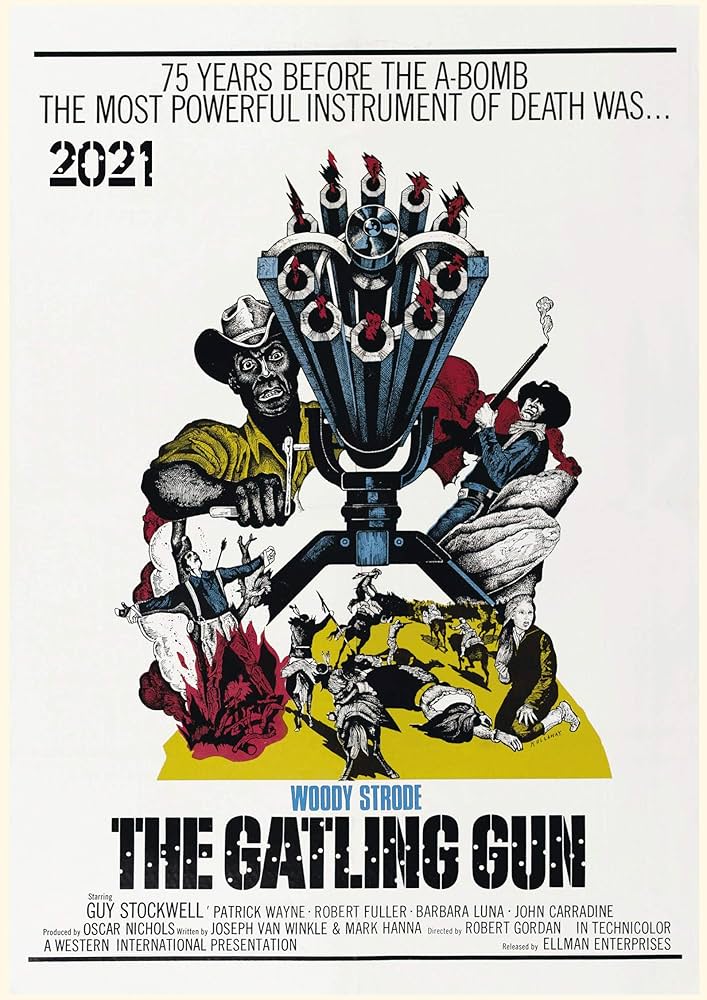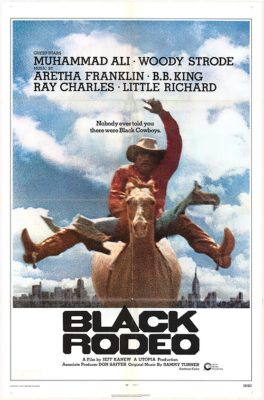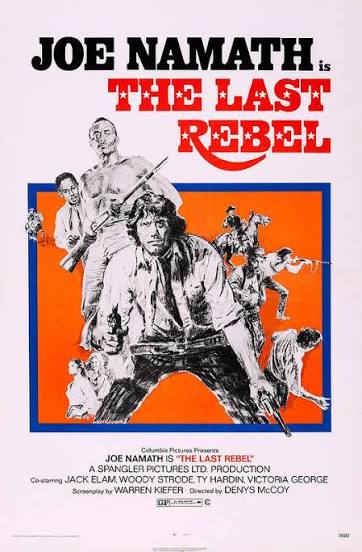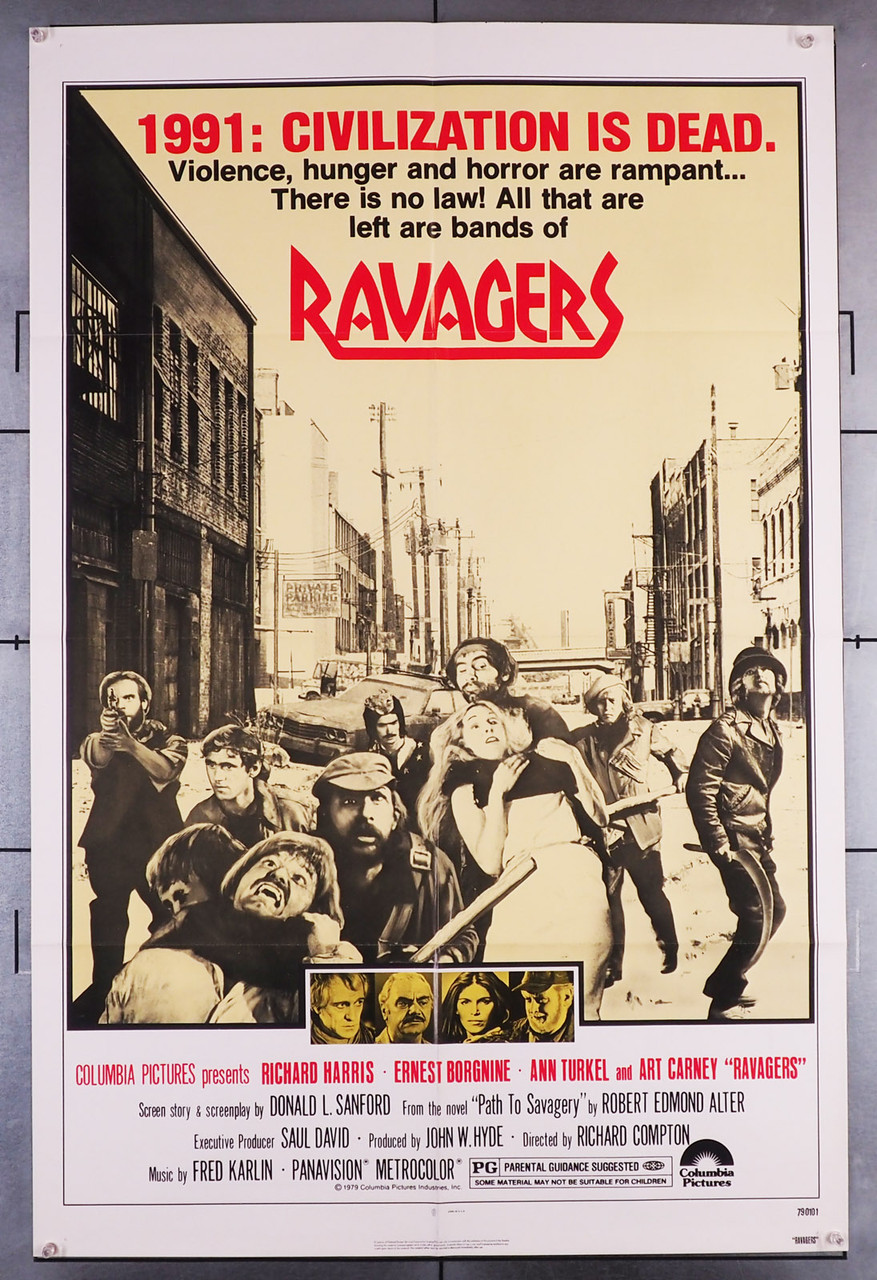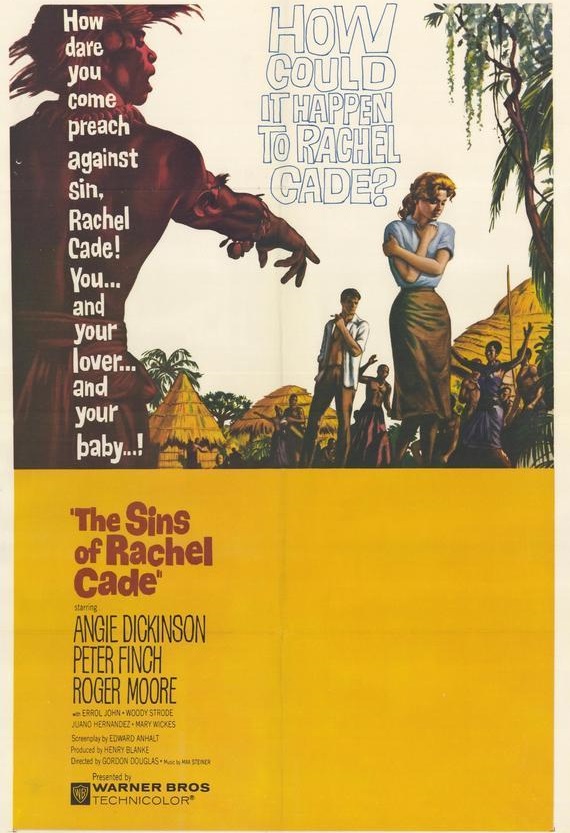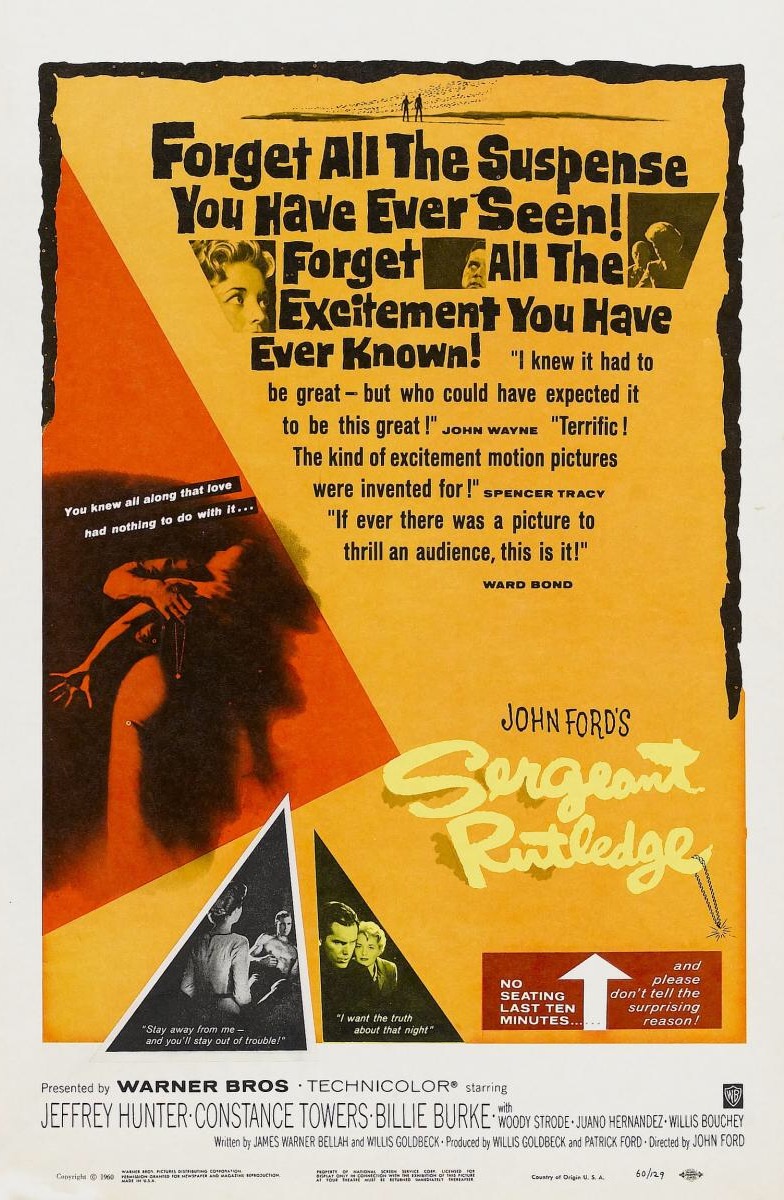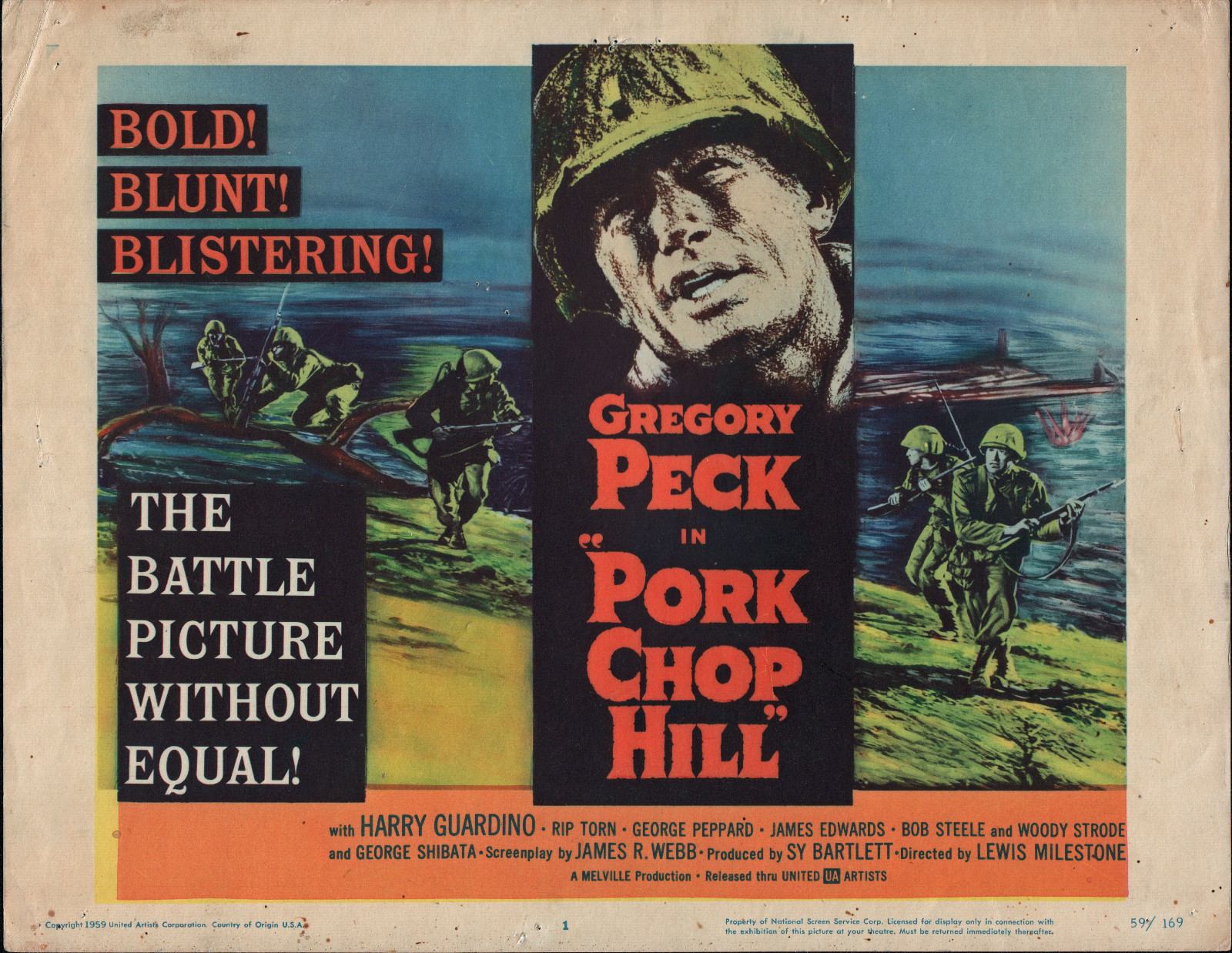

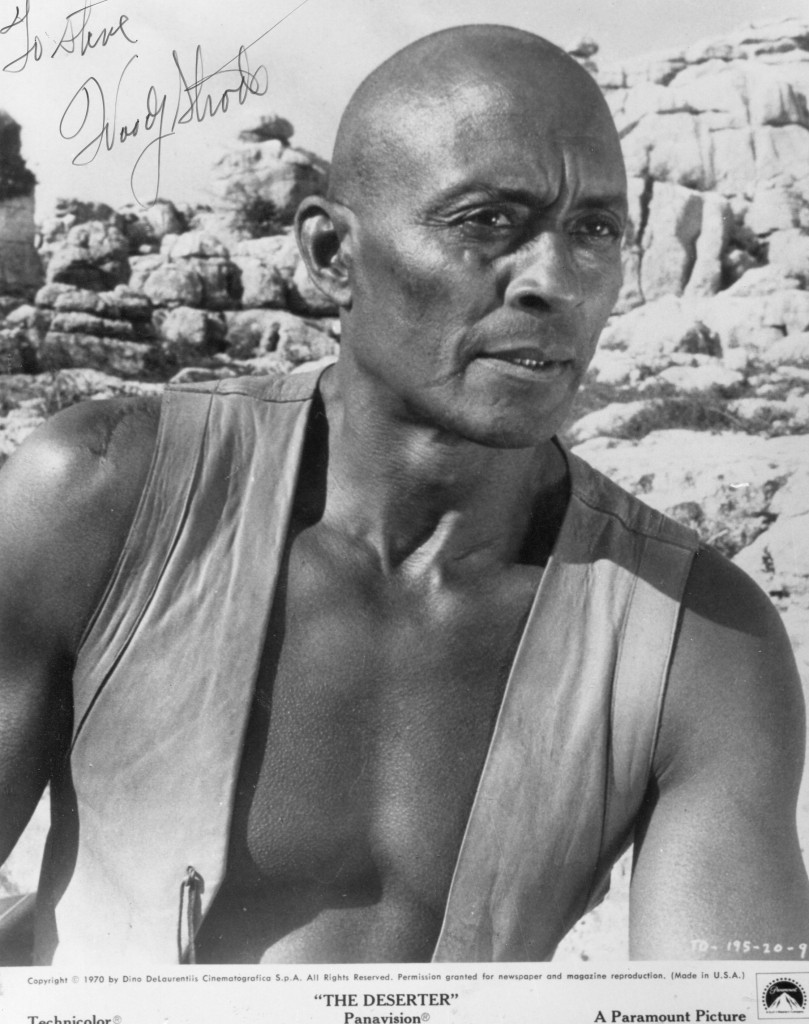
Woody Strode was born in 1914 in Los Angeles. He wasan outstanding athlete before his entry into movies. He is best known for his performance opposite Kirk Douglas in “Spartacus” and in the title role in 1960 in John Ford’s “Sgt Rutledge”. His other films include “City Beneath the Sea” in 1953, “The Sins of Rachel Cade”, “The Man Who Shot Liberty Valence” and “The Deserter”. He died in 1994.
David Shipman’s obituary in “The Independent”:
Strode was educated at UCLA before the Second World War and was one of the first blacks to play in integrated college football; he was also a star of the Canadian Football League. In 1941 the producer Walter Wanger gave him a walk-on in one of Hollywood’s then frequent tributes to the British Empire, Sundown, but he did not film again for another decade.
He took up wrestling after war service and was noticed by Walter Mirisch, then producing his Bomba the Jungle Boy series, cut-price adventure junkets starring Johnny Sheffield, who had played the son of Tarzan, Johnny Weissmuller. Mirisch invited Strode to appear in The Lion Hunters (1951). Strode continued his wrestling career taking occasional small parts in movies, as in DeMille’s The Ten Commandments (1956), in which he was a slave, and Tarzan’s Fight for Life (1958), MGM’s unenthusiastic attempt atreviving the old series, with Gordon Scott replacing Weissmuller.
By this time Strode was getting regular movie offers and became a full-time actor. John Ford chose him the title-role in Sergeant Rutledge (1960), about a court martial during for the Civil War. The charges – of the rape and murder of a white woman – were obviously trumped up, for no screen hero ever looked as noble, or behaved so selflessly or bravely. No one till late in the plot mentions the colour of his skin – all of which suggests that Ford was trying to appear liberal at a time when the civil rights of blacks needed less simplistic solutions. Ford said later that the good sergeant “was the first time we had ever shown the Negro as a hero”, doing himself no credit by overlooking the fact that Poitier and Harry Belafonte had been doing so for several years.
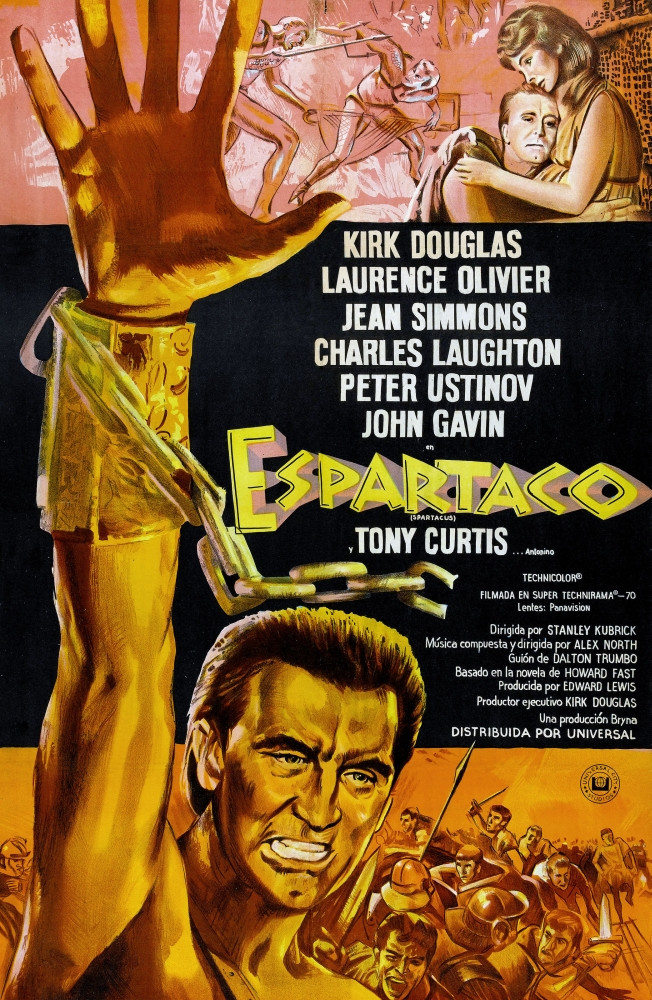
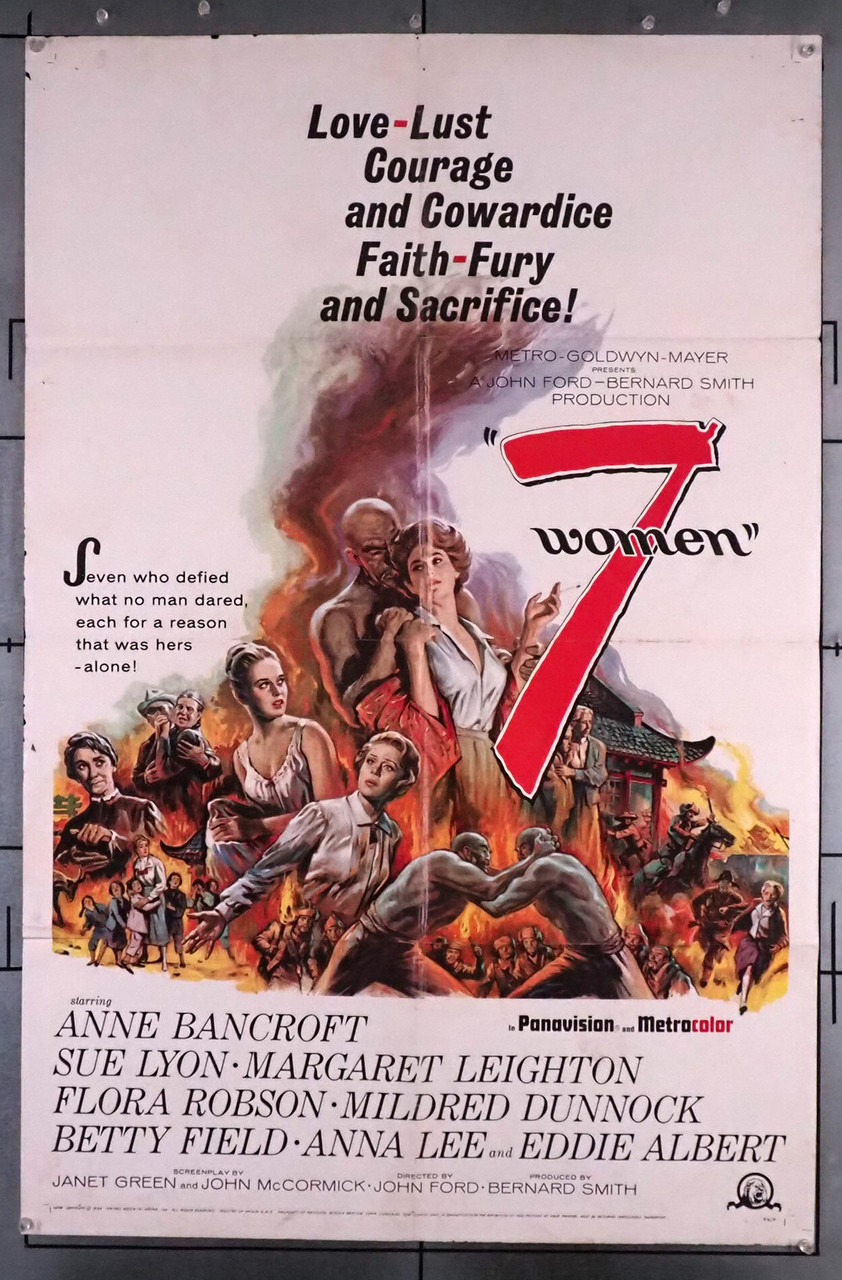
But to his credit Ford used Strode again (if not in leading roles), in three more films, including his last, Seven Women (1966), rather strangely described by Ford as “a hell of a good picture” – a description more apt for either Spartacus (1960), directed by Stanley Kubrick, or Richard Brooks’s The Professionals (1966). Besides Sergeant Rutledge they also gave Strode his best American screen roles; in the former as the Nubian gladiatorial opponent who saves the life of Spartacus (Kirk Douglas), and in
the second as a mercenary hired by a millionaire (Ralph Bellamy) to recover his kidnapped wife.
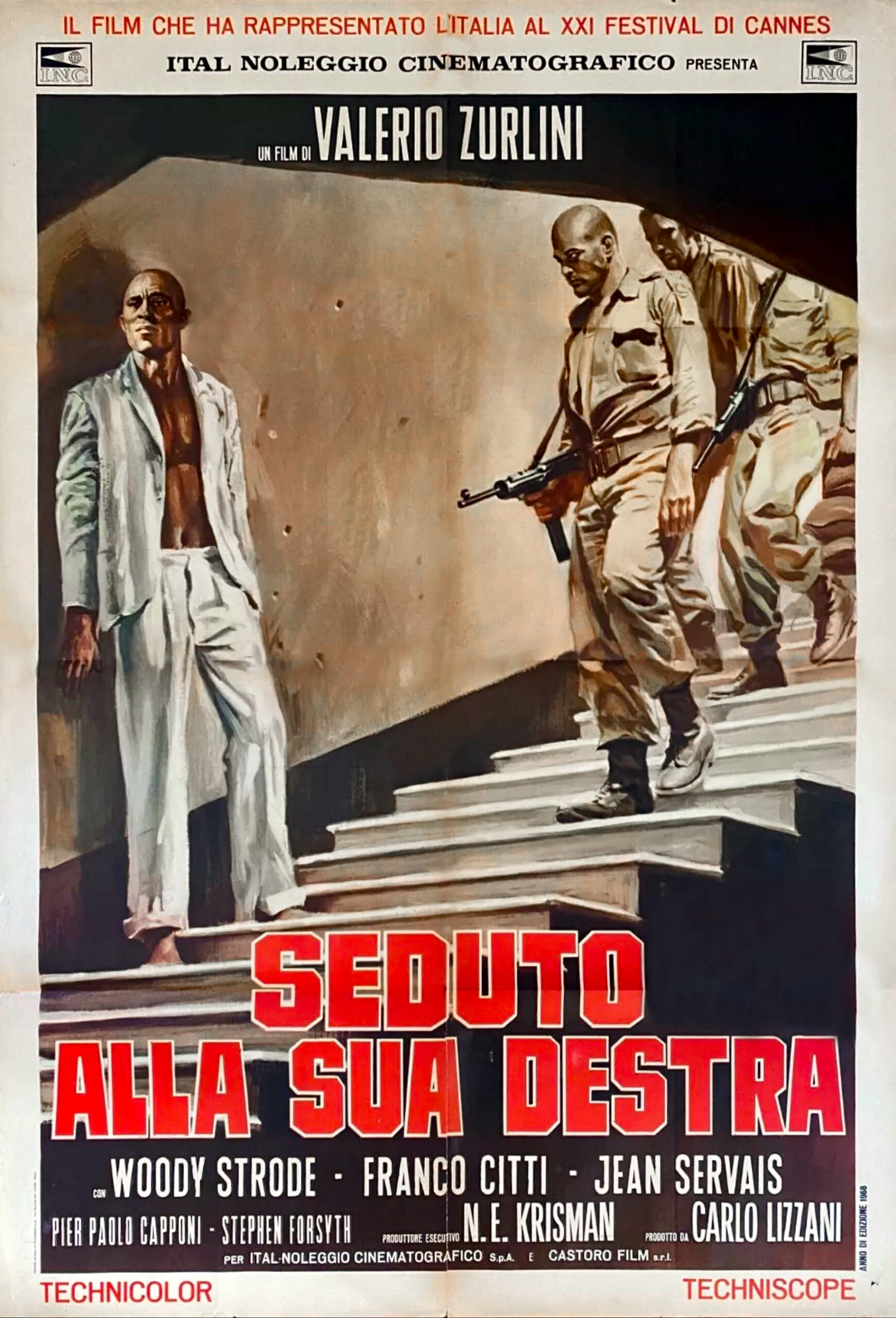
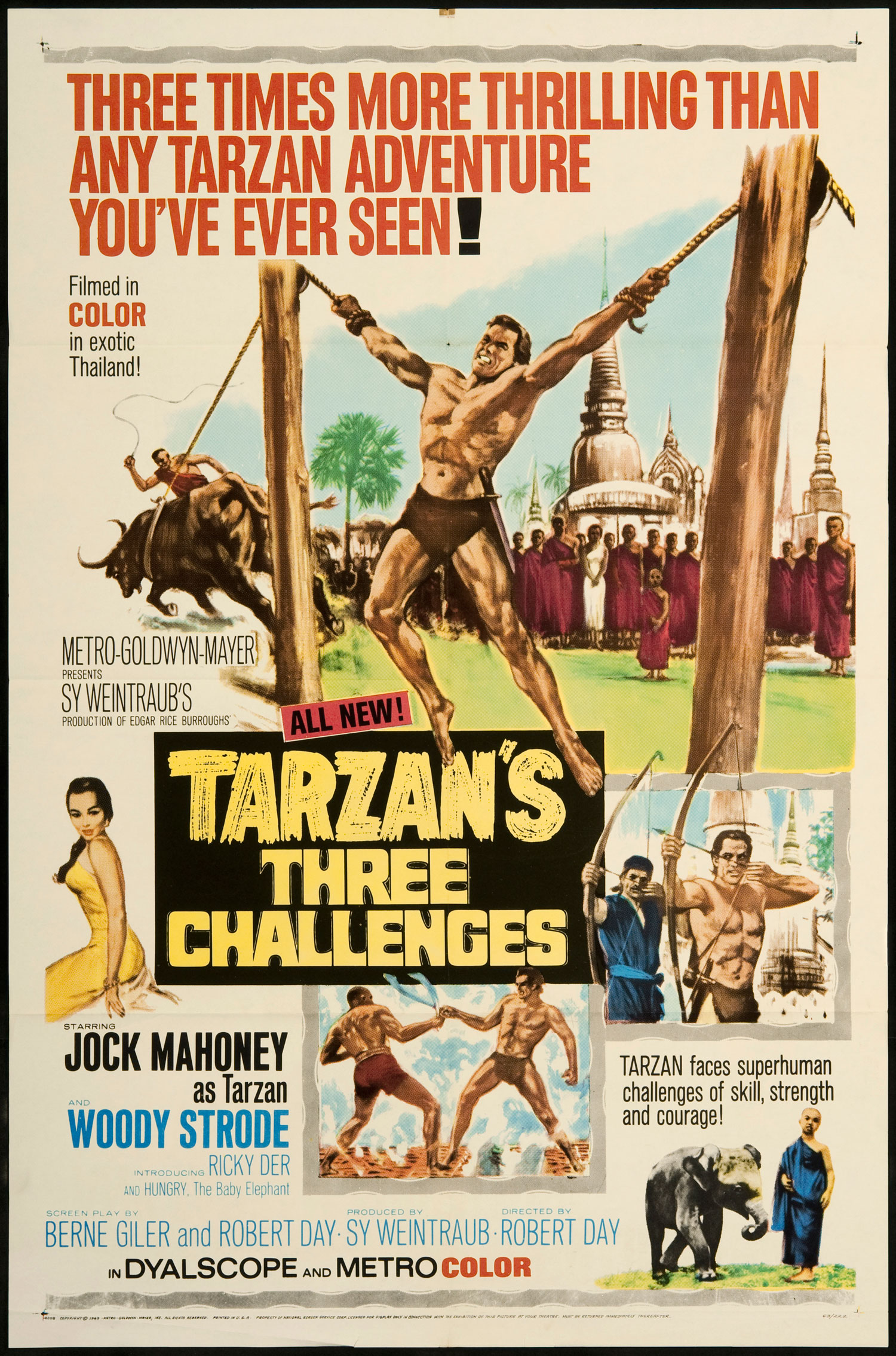
Strode co-starred with another Tarzan, Jock Mahoney, in Tarzan’s Three Challenges (1963). But too often he was required merely to lend his formidable presence to potboilers. As good Hollywood offers grew fewer he began accepting some from Europe, for ex a mple the gunman killed before the credits in Sergio Leone’s Once Upon a Time in the West (1969). He also worked regularly in television. Unseen in Britain is Seduta alla sua Destra (1968), in which he had the star role as an African leader modelled on Pa trice Lumumba. He had recently completed filming in The Quick and the Dead, a western starring Sharon Stone.
David Shipman
Woodrow Strode, actor: born Los Angeles 25 July 1914; died Glendora, California 31 December 1994.
The above “Independent” obituary can also be accessed online here.
TCM overview:
Black actor and former pro football player and wrestler who made his film debut in the early 1940s. 6’4″ tall and weighing in at 210 pounds, Strode lent his imposing presence to a number of mostly peripheral roles, such as Kirk Douglas’ sparring partner in “Spartacus” (1960), though he got a chance to flex his underused acting muscles as a soldier wrongly accused of rape in John Ford’s “Sergeant Rutledge” (1960).
Article on Woody Strode in “Tina Aumont’s Eyes” website:
6’4” athlete turned actor Woody Strode, brought his muscular, powerful presence to everything from big budget Hollywood productions to cheap, lesser-known exploitation fare. He was also notable as being the first African-American to play a heroic lead in a big-scale Hollywood western.
Born in California on July 25, 1914, Woody’s screen career began with minor parts in the Gene Tierney western ‘Sundown’ (’41) and the romantic comedy ‘No Time for Love’ (’43). After playing the lion in the Jean Simmons picture ‘Androcles and the Lion’ (’52), he was the king of Ethiopia in Cecil B. DeMille’s ‘The Ten Commandments’ (’56), and then a cowardly private in the Gregory Peck war drama ‘Pork Chop Hill’ (’59). Strode’s big break would come though, through his association with legendary director John Ford.
Strode had begun his association with Ford back in 1939, with an uncredited role in his classic western ‘Stagecoach’. They reunited 20 years later when he played the title role in Ford’s rather neglected 1960 western ‘Sergeant Rutledge’, as a black Cavalry officer unfairly tried for the rape and murder of a white women and her father. Giving a strong dignified performance, it remains one of Strode’s best loved roles. He was also memorable that year in the role of Draba, a towering gladiator defeating Kirk Douglas, in ‘Spartacus’. After playing an Indian in John Ford’s ‘Two Rode Together’ (’61), Woody was John Wayne’s servant in Ford’s ‘The Man Who Shot Liberty Valance’ (’62). There was tension on set between Strode and Wayne, and the two nearly came to blows, forcing Ford to keep them apart for a few days. It was said that Wayne was jealous of Woody’s football achievements and military career, as Wayne had not served in WWII, even though he wished to and would feel guilty about this the rest of his life. The final film Woody made with Ford was the 1966 missionary drama ‘7 Women’, starring Anne Bancroft and Sue Lyon.
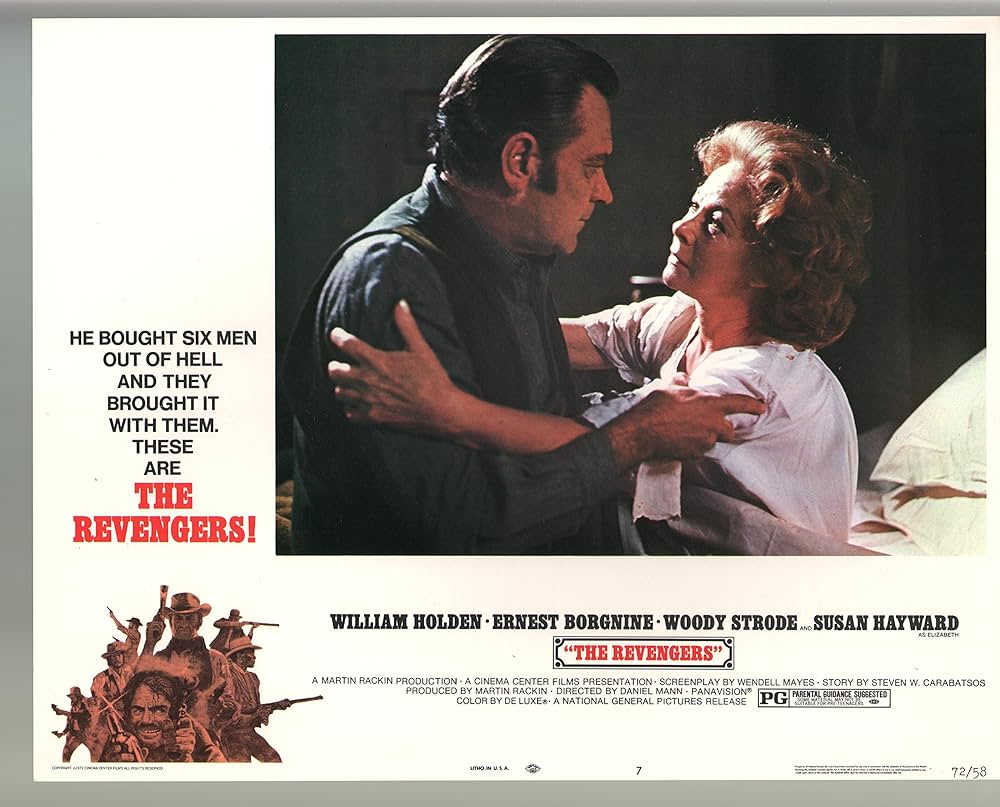
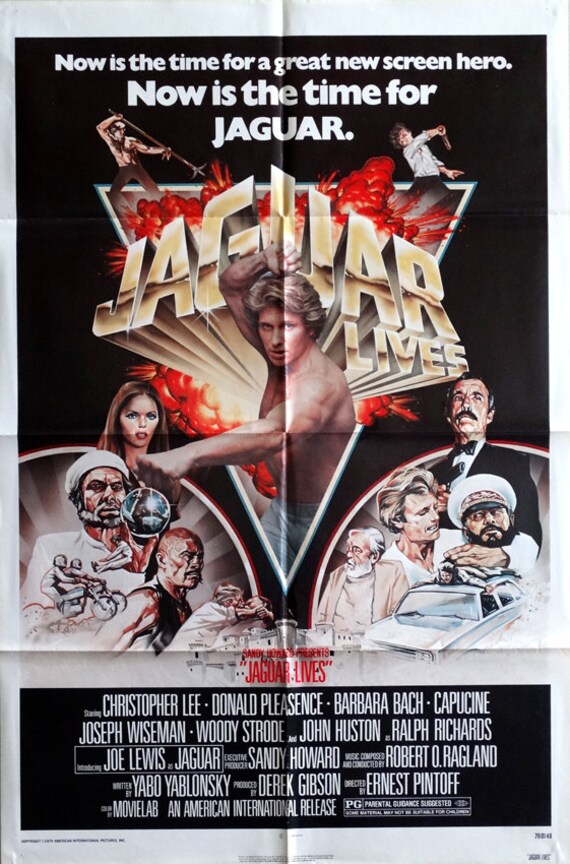
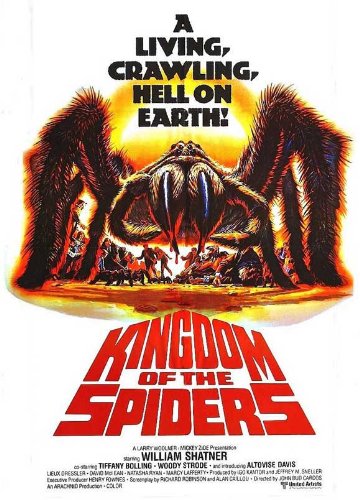
I loved Woody’s strong turn as Jake the longbow expert, in Richard Brooks’ superb all-star adventure ‘The Professionals’ (’66), and it remains one of his best roles. He followed that up with a cameo in Sergio Leone’s ‘Once Upon a Time in the West’ (’68), playing Stony, one of Henry Fonda’s heavies. Another western came in 1972 with ‘The Revengers’, a pretty dire effort with a great cast; William Holden, Ernest Borgnine and, in her final film, Susan Hayward. By now Woody was living in Rome, and had already begun appearing in Italian exploitation actioners, earning far more than he did in the US. He made a couple of pictures with Fernando Di Leo; ‘Manhunt in Milan’ (’72), as a hit man, and ‘Loaded Guns’ (’75), with an often naked Ursula Andress. After playing an alcoholic rancher in Enzo G. Castellari’s cult western ‘Keoma’ (’76), Strode supported William Shatner in the enjoyable sci-fi horror ‘Kingdom of the Spiders’ (’77), playing another rancher whose prize calf is killed by a mysterious spider venom. Now aged 65, and still in great shape, Strode had some decent fight scenes in ‘Jaguar Lives!’ (’79), a mediocre actioner with a cast of ex-Bond villains; Christopher Lee, Donald Pleasance and Joseph Wiseman.
Back on the grimy exploitation scene, Woody appeared in William Lustig’s gritty revenge flick ‘Vigilante’ (’83), and then chewed the scenery as an ex-lawman and mentor, in ‘The Final Executioner’ (’84), one of the poorer Italian post-apocalyptic drama’s. After playing a sleaze-ball in the Sybil Danning kidnap drama ‘Jungle Warriors’ (’84), Woody was thankfully back in an A-list production, Francis Ford Coppola’s ‘The Cotton Club’ (’84), though it was only a small role as the club’s doorman. A good minor role came in 1987 when he played Yank, a WWII veteran, in Volker Schlöndorff’s wonderful television movie ‘A Gathering of Old Men’, starring Holly Hunter and Richard Widmark.
Back in western territory, Strode’s’ final two movies were ‘Posse’ (’93), as the narrator, and Sam Raimi’s ‘The Quick and the Dead’ (’95), starring Sharon Stone, although it was not released until after his death.
Twice married, Woody died from lung cancer on New Years Eve 1994, aged 80. A quiet- spoken and gentle giant, Woody Strode was an optimistic and honest man who certainly lived life to the full, refusing to give in to old age. Whether playing the quiet hero or murderous mob boss, he remains a role model and cult figure in not only the US but across the globe.
Favourite Film: The Professionals
Favourite Performance: The Professionals
The above article can also be accessed online here.
Career Overview and Critical Analysis of Woody Strode
Woody Strode was a distinctive and pioneering figure in Hollywood whose career spanned over four decades (from the early 1940s until his death in 1994). Strode was not only a groundbreaking athlete — one of the first Black American players in the NFL post‑integration era alongside figures like Jackie Robinson and Kenny Washington — but also a film actor whose physical presence, dignity, and resilience helped redefine the roles available to Black performers in mainstream cinema.
1. Early Life and Pre‑Screen Career
Born Woodrow Wilson Woolwine Strode in Los Angeles in 1914, Strode excelled as a decathlete and collegiate football player at UCLA, where he helped break racial barriers in sports. After World War II and a brief stint with the Los Angeles Rams in 1946, his athletic career wound down; he moved into professional wrestling and acting, largely because his towering 6’4″ physique and athletic build stood out to talent scouts.
Critical perspective: Strode’s early physical discipline and athletic training — from high‑level track & field to football — shaped his screen persona. It gave him a commanding physical authority that casting directors repeatedly sought in adventure, Western, and historical epics. However, it also meant early roles were shaped by physicality more than dramatic depth, a pattern he would spend much of his career pushing against.
2. Breaking into Hollywood (1950s)
Strode’s first credited film appearance came in Sundown (1941), but he became active only in the early 1950s, often cast in low‑budget adventure films, jungle features, and television series such as The Lion Hunters (1951), Ramar of the Jungle (1952–54), and Jungle Jim.
Early Roles and Stereotyping
During this period, Strode was frequently cast as:
- African warriors
- jungle henchmen
- otherwise non‑leading characters defined primarily by physical presence
These parts reinforced Hollywood’s tendency to typecast Black actors in roles emphasizing exoticism or brute force, a limitation faced by many performers of color at the time.
Critical analysis:
These early roles reveal both the structural constraints of Hollywood casting and Strode’s perseverance. While his appearances lacked depth, they positioned him in the industry and made his imposing physicality a screen asset — albeit one initially tied to stereotype rather than complexity. His resilience in these early jobs laid the groundwork for much richer work to come.
3. Emerging as a Character Actor (Late 1950s–1960)
By the late 1950s, Strode began to land more substantial parts in major productions.
Turning Point: Pork Chop Hill (1959)
In this Korean War film he played Private Franklin, a conflicted soldier whose bravery and self‑doubt add emotional nuance. Strode later considered this “the first dramatic role I had done.”
Breakthrough: Spartacus (1960)
His performance as the Ethiopian gladiator Draba in Stanley Kubrick’s Spartacus was pivotal. Though brief, the role was dramatically rich. Draba defeats Spartacus in combat but refuses to kill him, choosing instead to attack the corrupt system that enslaved them — a moment that crystallizes the film’s moral core and ignites the gladiator revolt. Strode’s physicality, stoicism, and emotional restraint made Draba iconic; he earned a Golden Globe nomination for Best Supporting Actor for the role.
Critical analysis:
This performance distilled Strode’s on‑screen power:
- Presence and restraint: Few words, but every gesture and gaze conveys resolve and depth.
- Moral agency: He transforms a physically brutal role into a site of ethical resistance.
In Spartacus, Strode helped shift perceptions of Black performers: from background figures to symbolic moral centersof epic narratives. It’s one of the strongest examples in Hollywood where physical strength is coupled with moral complexity and emotional weight.
4. Work with John Ford and Mature Roles
Soon after Spartacus, Strode developed a crucial professional relationship with director John Ford, becoming part of the Ford “family” of actors.
Sergeant Rutledge (1960)
Ford gave Strode the title role in Sergeant Rutledge, a Western in which he stars as a Black cavalry sergeant falsely accused of a crime. This was an unusually central, complex role for a Black actor in 1960 Hollywood — exploring themes of racism, honor, and justice.
Critical analysis:
- Narrative importance: Unlike his earlier supporting roles, Strode’s Rutledge is central to the story, with agency, dignity, and a full emotional arc.
- Social significance: The film engages directly with racial injustice, and Strode’s performance anchors this with gravity and quiet intensity.
- Acting skill: He balances vulnerability and strength, using minimal dialogue to convey internal conflict.
Other Ford Films
He appeared in other significant Ford films, including Two Rode Together (1961) and The Man Who Shot Liberty Valance(1962), often as a figure of imposing calm or moral strength.
Critical perspective:
Strode’s collaboration with Ford is historically significant because Ford was one of Hollywood’s most powerful directors, and entrusting complex material to Strode demonstrated both artistic respect and gradual racial progress in casting.
5. European and Genre Work (1960s–1970s)
Strode expanded his range internationally in the late 1960s:
- He played a memorable gunslinger in Once Upon a Time in the West, directed by Sergio Leone — framing him with extended dramatic close‑ups uncommon for Black performers in Hollywood.
- He starred as a character inspired by Patrice Lumumba in Black Jesus (1968), receiving significant press attention at the time.
- Strode worked frequently in Spaghetti Westerns and European genre films, where he became a recognizable star with more opportunities for substantial roles.
Critical analysis:
Europe offered Strode a wider range of roles that bypassed some of Hollywood’s more rigid racial typecasting. In Leone’s work, for example, he is framed as a stoic, almost mythic figure, blending Western iconography with his own commanding presence.
6. Later Career and Television (1970s–1990s)
Throughout the 1970s and 1980s, Strode continued to work steadily:
- He appeared in films across genres — from horror to Westerns to action — including The Cotton Club (1984) and A Gathering of Old Men (1987).
- His final film appearance was The Quick and the Dead, released posthumously, with the credits dedicated to him.
Critical analysis:
Although later roles were often supporting parts in genre fare, Strode’s continuing presence underscores his longevity and adaptability — traits that sustained him across changing cinematic eras.
7. Acting Style and Screen Persona
Several consistent elements mark Strode’s craft:
Physicality as Expression
Unlike actors whose technique relies solely on dialogue, Strode’s physical presence — posture, gait, gaze — was a central part of his performance toolkit. Even in silence, his body conveyed narrative weight.
Restraint and Emotional Economy
Strode rarely indulged in overt sentimentality. Instead, he used controlled gestures and a subdued delivery, allowing subtext to shape character presence — particularly in roles like Draba (Spartacus) or Sergeant Rutledge.
Dignity and Agency
In an era rife with reductive racial portrayals, Strode’s most compelling roles affirmed individual depth over stereotype— a testament to his integrity as an actor and his ability to imbue characters with quiet moral authority.
8. Legacy and Significance
Pioneering Representation
Strode is recognized as a key Black actor who moved from stereotyped supporting parts to roles of real narrative and thematic weight, helping open the door for later generations of actors of color.
Versatility Across Eras and Genres
From Hollywood epics (The Ten Commandments) to Western classics (The Man Who Shot Liberty Valance), and from European genre films to late‑career appearances in contemporary cinema, Strode’s career reflects a rare adaptability and resilience.
Cultural and Historical Impact
Film historians note that his role in Spartacus and his partnership with John Ford in Sergeant Rutledge are among the most important contributions by a Black actor to mainstream studio cinema in the 20th century, far beyond mere athleticism or physicality.
🔍 Critical Conclusion
Woody Strode’s body of work is a compelling study of an artist negotiating identity, race, and physical presence in Hollywood.
- Early roles reveal the industry’s initial limitations and typecasting.
- Breakthrough performances like Spartacus showcase moral force and emotional restraint.
- Collaborations with major directors like John Ford demonstrate narrative depth and thematic significance.
- His later work highlights longevity and adaptability in changing cinematic landscapes.
Strode remains not just a memorable face on screen but a figure whose career reflects broader cultural shifts and expanding possibilities for non‑white performers in mainstream American cinema.
Comment
Agatha
He was a great actor