

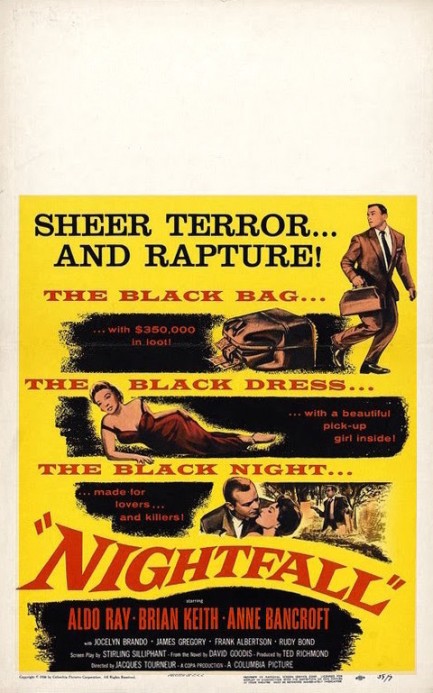


James Gregory was born in 1911 in The Bronx, New York. He is best known for his performance as Angela Lansbury’s husband in the chilling “The Manchurian Candidate” in 1962. A popular character actor, his other movies include “The AScarlet Hour” and “P.T. 109”. He died in 2002 at the age of 90.
“The Telegraph” obituary:
ames Gregory , the actor who has died aged 90, was one of those performers whose face was recognised by many, even if his name was known to only a few.
His best-known role was probably as the Right-wing Senator Iselin in John Frankenheimer’s The Manchurian Candidate (1962), about a brainwashed Korean War hero, but in a career spanning more than half a century Gregory appeared in some 35 films and 200 television series.
He was cast in television dramas such as Gunsmoke, Bonanza, Wagon Train, and Rawhide. If an American cop was required on the television screen, the chances were that he would be embodied by James Gregory. He had roles in Columbo, McCloud, Alfred Hitchcock Presents, and Hawaii Five-O.
From 1959 to 1961 he was Barney Ruditsky in The Lawless Years, a series based on the exploits of a real detective in New York City in the 1920s. He also played Inspector Frank Luger from 1975 to 1982 in Barney Miller, about a Jewish policeman portrayed by Hal Linden.
James Gregory was born in the Bronx on December 23 1911, and grew up in the New York suburb of La Rochelle. In his youth he demonstrated a talent for both acting and golf, and he might have opted for a career in either. But his first proper employment, after a series of jobs as golf caddy, waiter and clerk, was on Wall Street, where he worked as a runner after the crash of 1929; within five years he had been promoted to the post of private secretary to a stockbroker.
But Gregory simultaneously acted with local drama groups, and by the late 1930s he was acting professionally, performing with a travelling company in plays up and down the east coast of America. Then, in 1939, he made his debut on Broadway in a production of Key Largo.
During the Second World War Gregory served in the US Navy and Marine Corps in the Pacific, before returning to the stage; he appeared in a further 25 Broadway productions, including Arthur Miller’s Death of a Salesman, in which he played Biff. In the early 1950s Gregory moved into live television – it is said that at one stage he appeared in five different dramas over a period of only 10 days.
Apart from The Manchurian Candidate, his films included The Young Stranger (1957); Al Capone (1959); The Sons of Katie Elder (1965), in which Gregory played a murderer who kills the witnesses to his crimes; Beneath the Planet of the Apes (1969); and Shootout (1971).
James Gregory died on September 16. He is survived by his wife, Anne Gregory.
The above “Telegraph” obituary can also be accessed online here.
James Gregory (1911–2002) was a powerhouse of mid-century American acting, possessing a “commanding sneer” and a voice like gravel over silk. While he frequently portrayed authority figures—generals, senators, and police inspectors—a critical analysis reveals an actor who excelled at deconstructing the “Establishment” figure, often exposing the incompetence, malice, or weary humor hidden behind a badge or a uniform.
I. Career Overview: The “Tough” Professional
1. The Broadway and Military Foundation (1939–1946)
Gregory began his career on the Broadway stage, debuting in Key Largo (1939). His career was interrupted by WWII, during which he served in both the Navy and the Marine Corps. This real-world military experience provided him with a gritty, authentic baseline for the dozens of officers he would later portray.
2. The Authoritarian Peak (1950s–1960s)
In the 1950s, Gregory became one of the most recognizable faces in the “Golden Age” of television and film noir.
-
The Manchurian Candidate (1962): He delivered his most chilling and critically acclaimed performance as Senator John Iselin, a dim-witted, McCarthy-esque puppet controlled by his wife (Angela Lansbury).
-
Beneath the Planet of the Apes (1970): Even under heavy prosthetic makeup, Gregory’s booming authority was unmistakable as General Ursus, the warmongering gorilla leader.
3. The Comedic Reinvention (1970s–1980s)
In a surprising late-career pivot, Gregory moved into comedy.
-
Barney Miller (1975–1982): As Inspector Frank Luger, he became a beloved figure of 70s television. Playing the role “dead straight,” he portrayed a politically incorrect, nostalgic, and lonely police veteran, earning him a new generation of fans.
II. Detailed Critical Analysis
1. The “Bombastic Puppet” Technique
Critically, Gregory’s greatest achievement was his portrayal of Senator Iselin in The Manchurian Candidate.
-
The Comedy of Menace: Gregory played the Senator not as a mastermind, but as a “loudmouthed vacuum.” He captured the specific danger of a man who is both powerful and easily manipulated. Critics noted how he used his booming voice to cover up his character’s intellectual emptiness—a performance that remains a haunting satire of American demagoguery.
2. The “Abrasive” Naturalism
In your favorite 1940s Noirs and 1950s Westerns, Gregory was often the “fly in the ointment.”
-
The Sons of Katie Elder (1965): As the villainous Morgan Hastings, he provided a masterclass in cowardly villainy. Unlike the “cool” killers of noir, Gregory’s villains were often frantic and sweaty, making them feel more dangerously unpredictable.
-
The “Iron Guts” Archetype: In MASH* (as General “Iron Guts” Kelly) and Twilight Zone, he played the “Military Blowhard” with such precision that it became a critique of the military-industrial complex itself. He showed the absurdity of the “Great Man” myth.
3. The “Luger” Pathos
In Barney Miller, Gregory used his “tough guy” history to create something deeply poignant.
-
The Relic of the Past: Inspector Luger was a man out of time. Gregory utilized a “deadpan” delivery to voice Luger’s bewilderment at the modern world. Critics point out that beneath the “brash” exterior, Gregory infused the character with a profound sense of loneliness. He wasn’t just a comic foil; he was a portrait of a man who had outlived his era—the very era Gregory himself had helped define in his younger roles.
Iconic Performance Highlights
| Work | Role | Year | Critical Achievement |
| The Manchurian Candidate | Senator Iselin | 1962 | The definitive “Satire of Authority.” |
| Beneath the Planet of the Apes | General Ursus | 1970 | Proved he could dominate the screen even under prosthetics. |
| Barney Miller | Inspector Luger | 1975–82 | Successfully deconstructed his own “Tough Guy” persona. |
| Al Capone | Sgt. Schaefler | 1959 | A masterclass in the “Obsessive Detective” trope. |