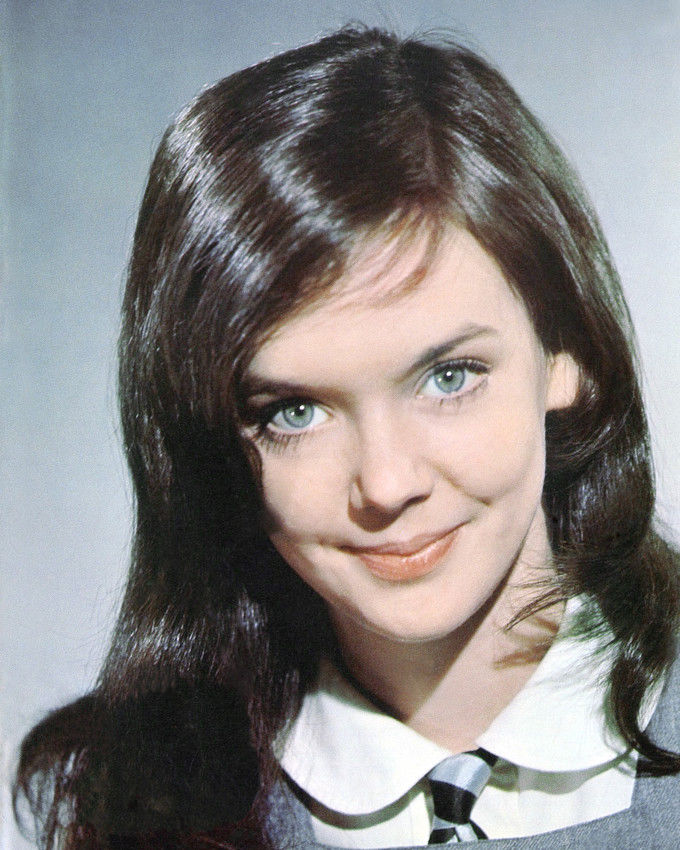




Pamela Franklin. IMDB.
Pamela Franklin was a very talented child actress who had a very successful transition to adult roles before retiring from the screen to raise her family. She was born to a British family in Japan in 1950.
iMDB entry:
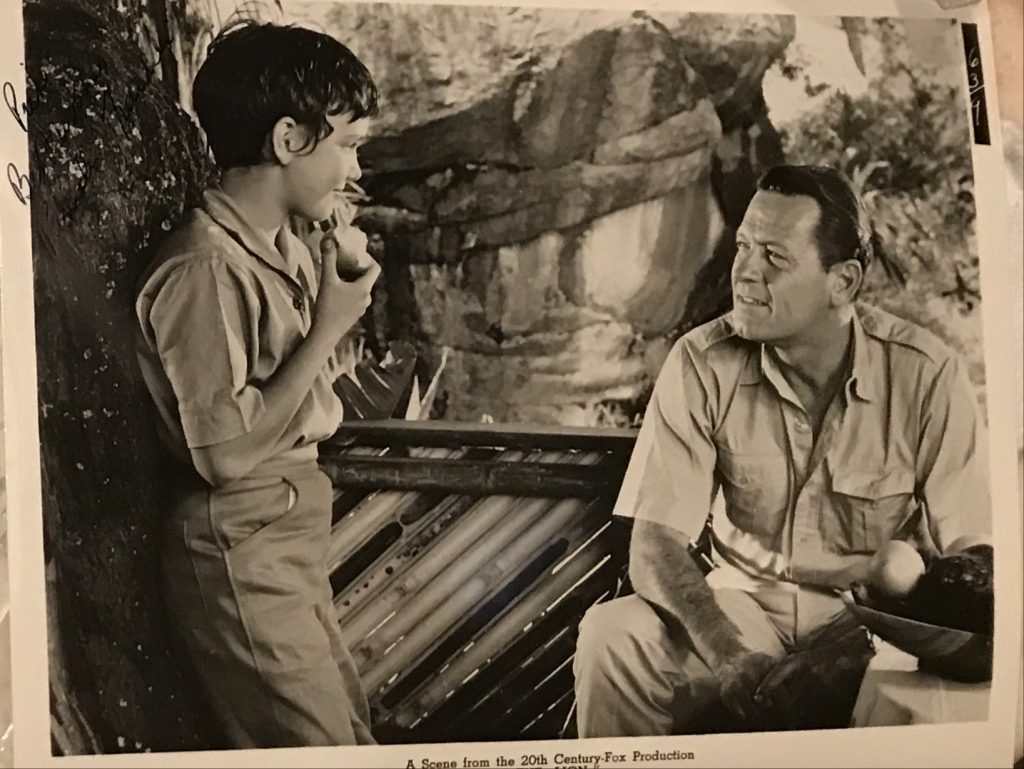
She made her film debut in England in 1961 in Jack Clayton’s masterful “The Innocents” with Deborah Kerr. The following year she played the daughter of William Holden and Capucine in “The Lion”. In 1964 she went to Hollywood to make “A Tiger Walks” with Sabu for Walt Disney. She gave an insightful performance as Sandy in “The Prime of Miss Jean Brodie” where she held her own acting opposite Maggie Smith at her best. In the early 1970’s she concentrated her career in Hollywood films and made her last (to date) television appearance in the series “Vegas” in 1981.
Lovely, petite, and beguiling brunette British actress Pamela Franklin was born in Yokohama, Japan. Because her father was an importer/exporter, Pamela grew up all over the world in such places as Hong Kong and Australia. Franklin studied dance at the Elmhurst School of Ballet in England and originally planned on becoming a dancer.
Franklin made her film debut at age 11 as “Flora” in the marvelously eerie The Innocents(1961). Pamela was quite appealing as “Tina” in The Lion (1962) and held her own alongside Bette Davis in the fine Hammer chiller The Nanny (1965). An adorable child, Pamela grew up to become a strikingly sensual and beautiful woman who was cast in more bold adult parts as she got older.
Pamela gave a terrific performance as the rebellious “Sandy” in the outstanding drama The Prime of Miss Jean Brodie (1969) and was memorable as a hapless kidnap victim in The Night of the Following Day (1968). Franklin carved out a nice little niche as a personable and captivating scream queen in a handful of hugely enjoyable 70s horror features: the imperiled “Jane” in the harrowingAnd Soon the Darkness (1970), the equally endangered “Lori Brandon” in Necromancy(1972);
at her best as vulnerable psychic medium “Florence Tanner” in the superior haunted house winner The Legend of Hell House (1973), the plucky “Elizabeth Sayers” in the fun made-for-TV movie Satan’s School for Girls (1973), and feisty scientist “Lorna Scott” in the outrageously tacky The Food of the Gods (1976). Among the many TV shows Pamela did guest spots on are Fantasy Island (1977), Vega$ (1978), Trapper John, M.D.(1979), Barnaby Jones (1973), Police Woman (1974), Hawaii Five-O (1968), Thriller(1973), Medical Center (1969), Mannix (1967), Cannon (1971), The Six Million Dollar Man(1974), The Streets of San Francisco (1972), Bonanza (1959), Green Acres (1965) andWalt Disney’s Wonderful World of Color (1954). Franklin voluntarily quit acting in the early 80s. She married actor Harvey Jason in 1970-they met on the set of Necromancy(1972)-and has two children. Pamela Franklin still lives in Hollywood, California.
– IMDb Mini Biography By: woodyanders
The above IMDB entry can also be accessed online here.