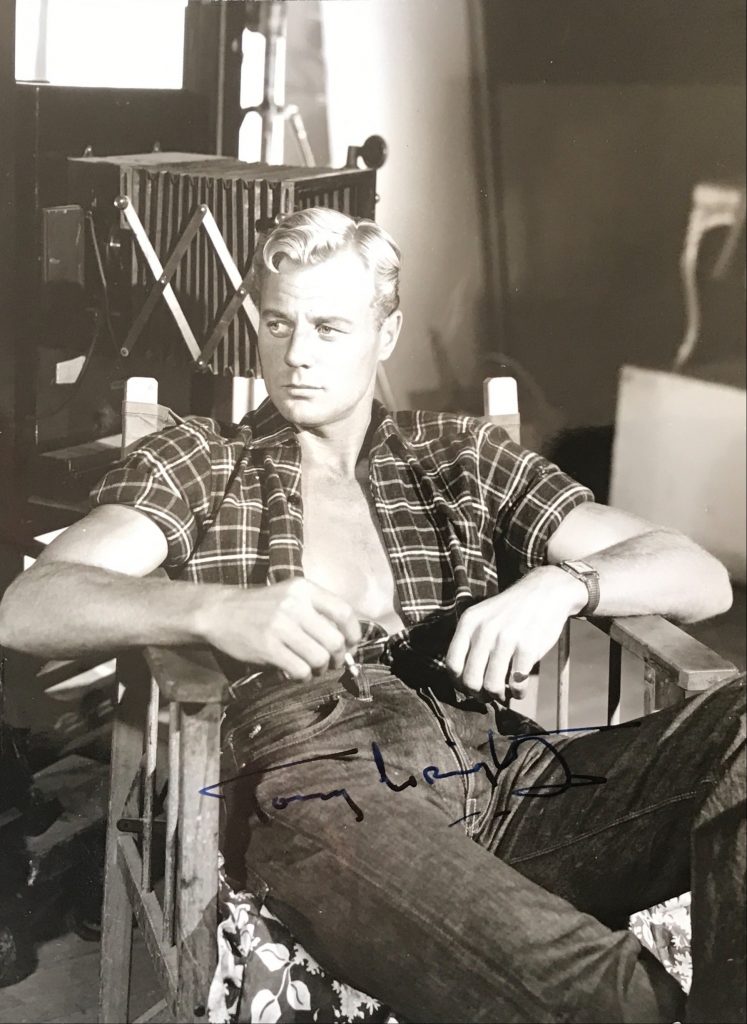
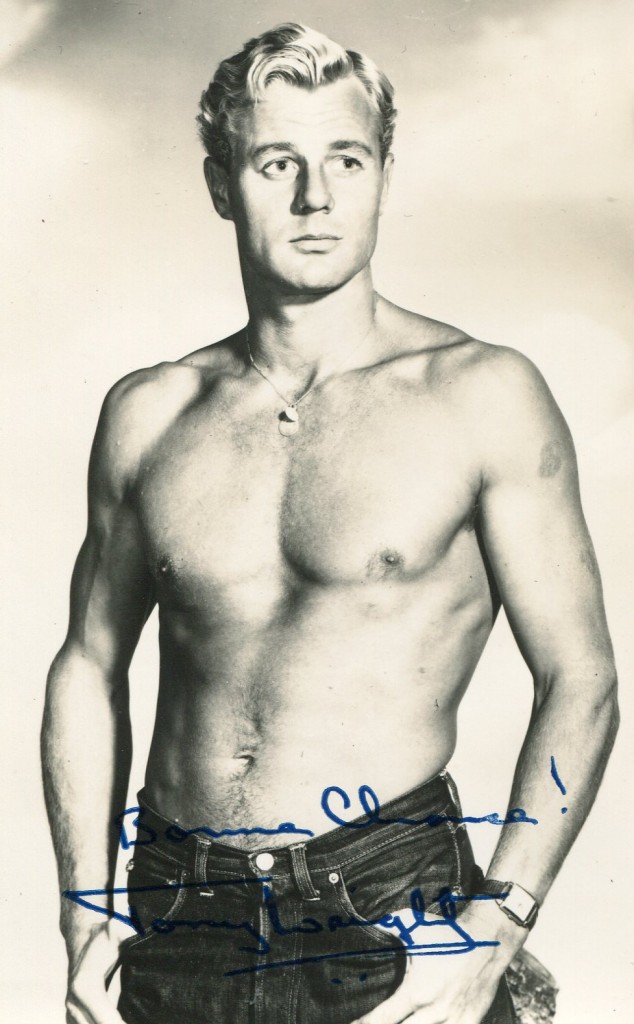
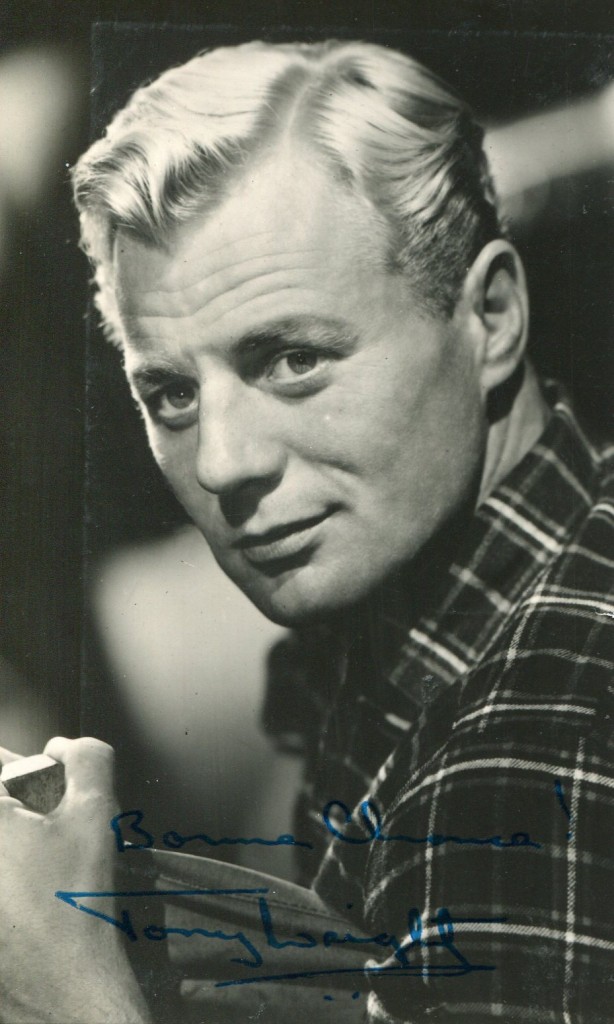
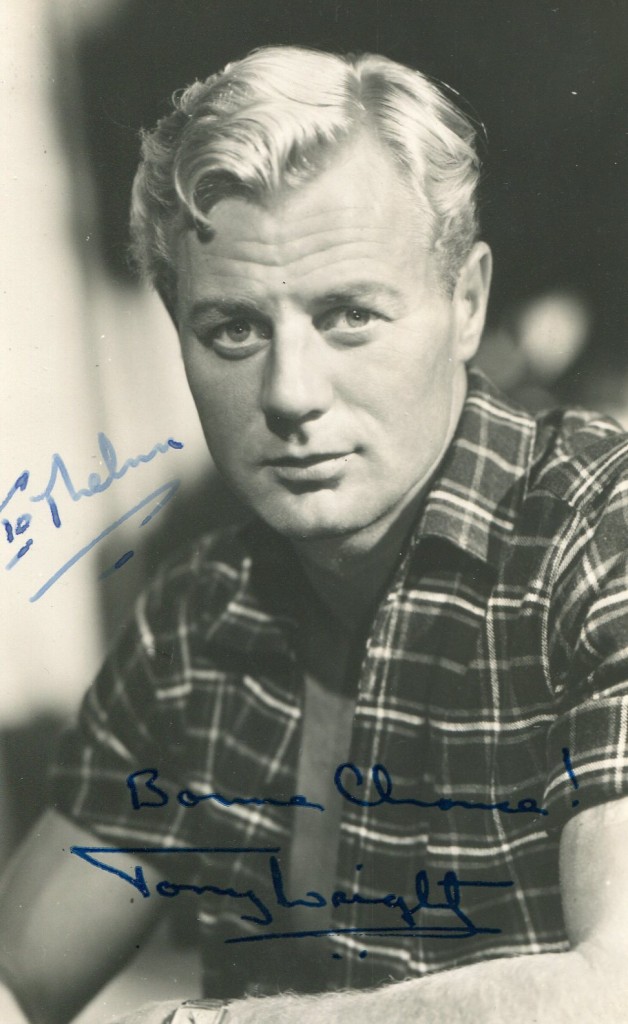
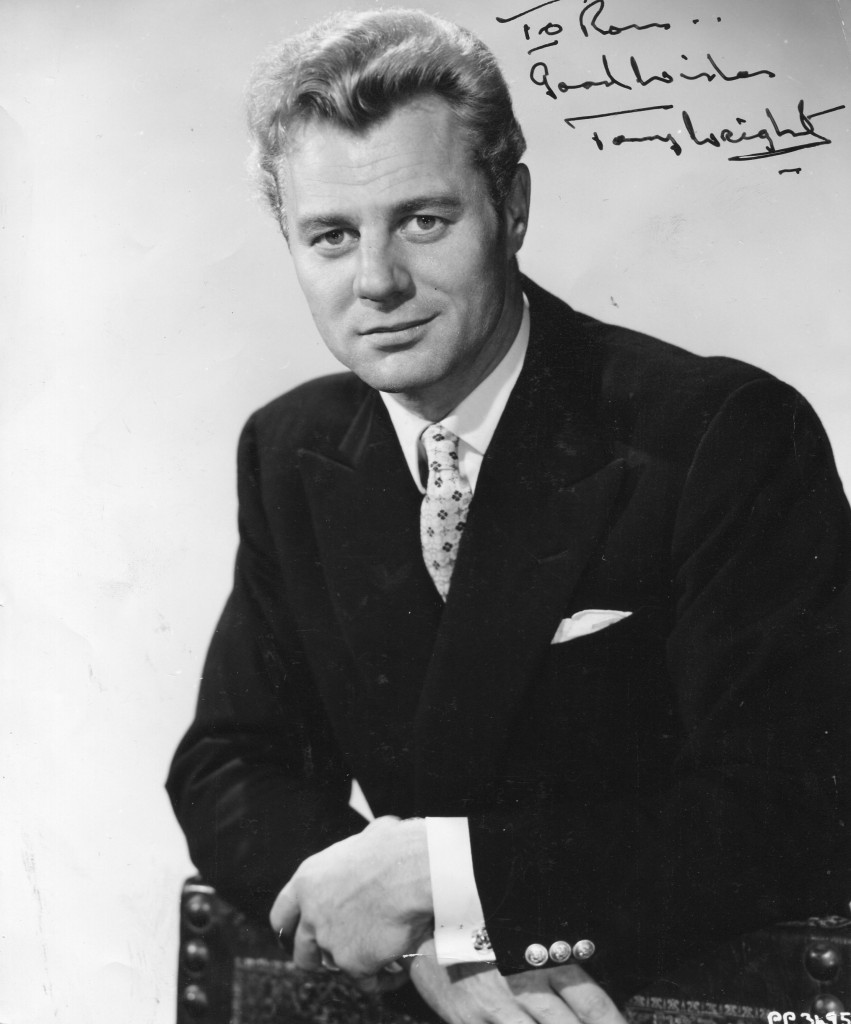
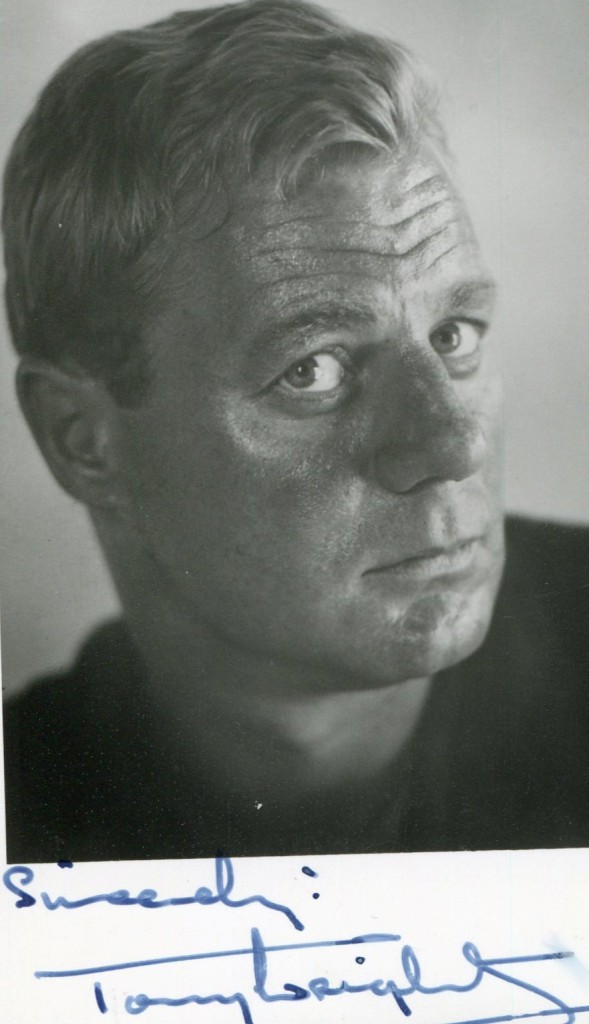
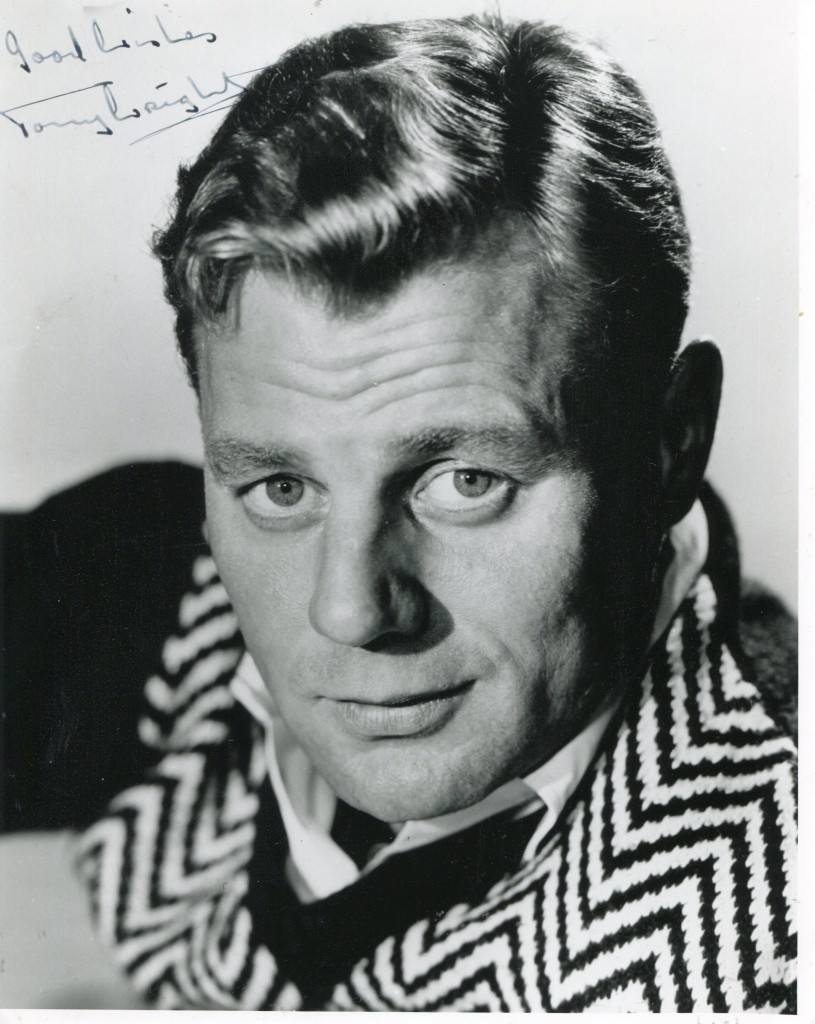
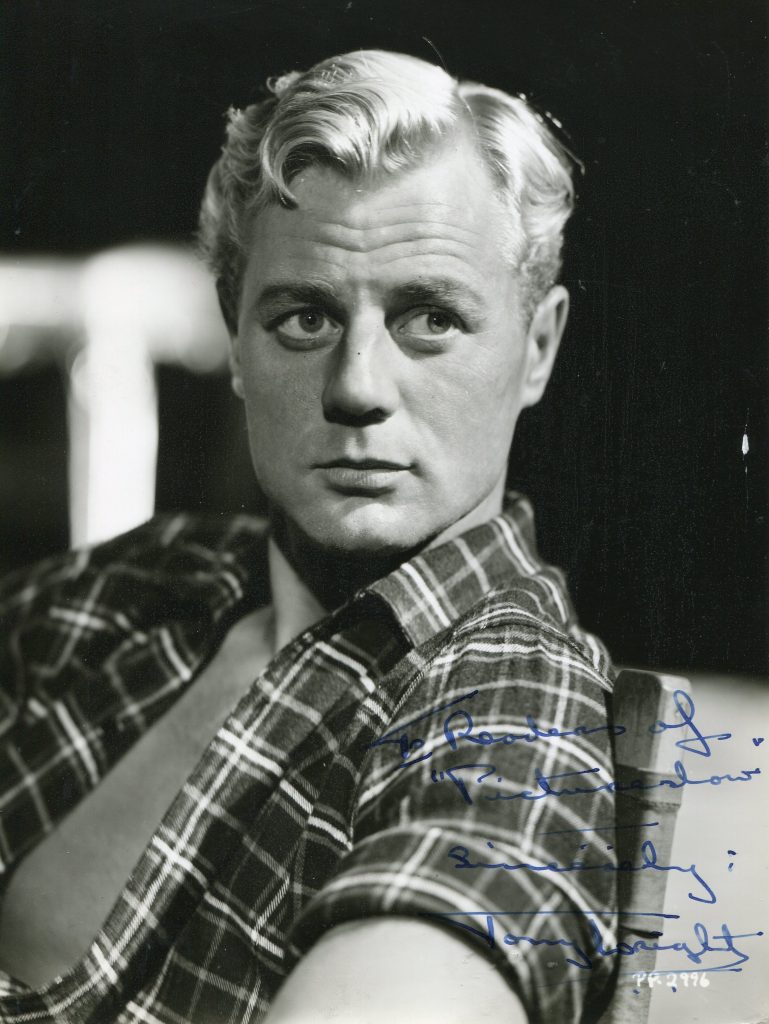
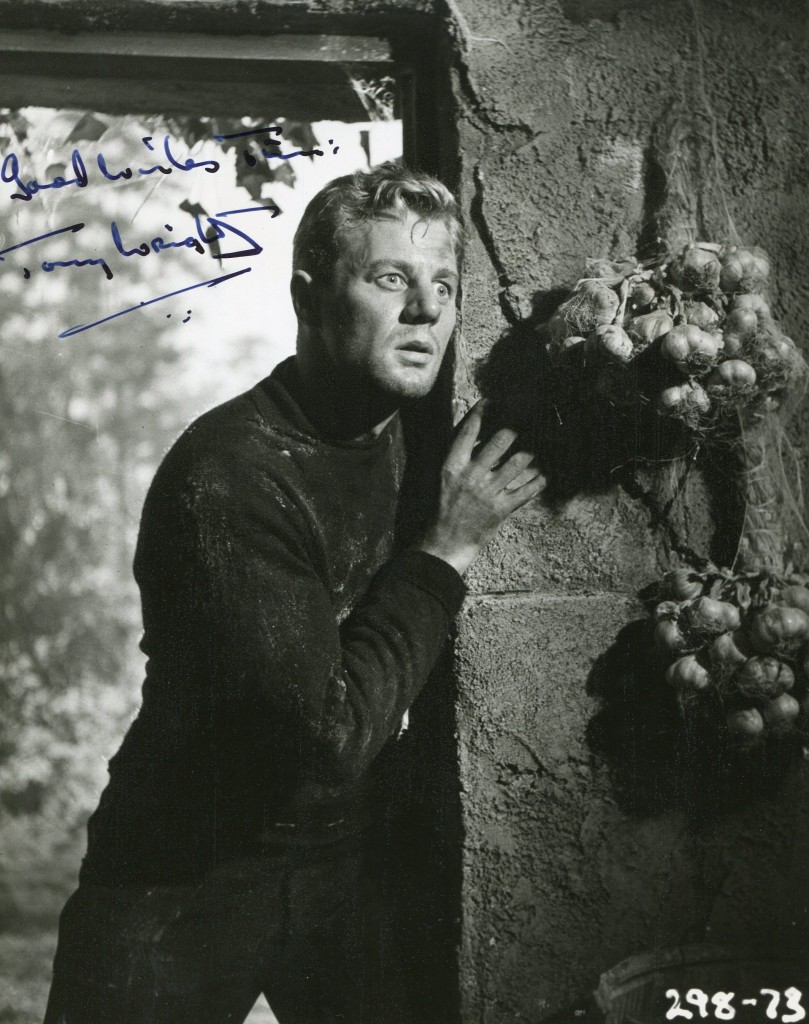
He was a very popular actor in British films of the 1950’s.
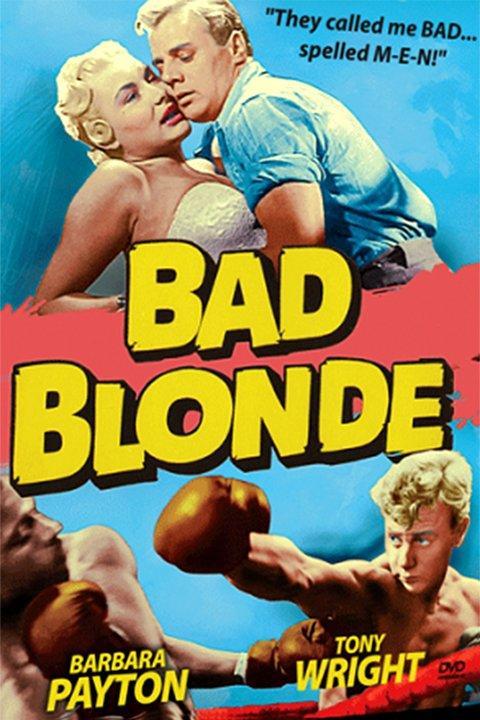
He made his movie debut in “The Flanagan Boy” in 1953.
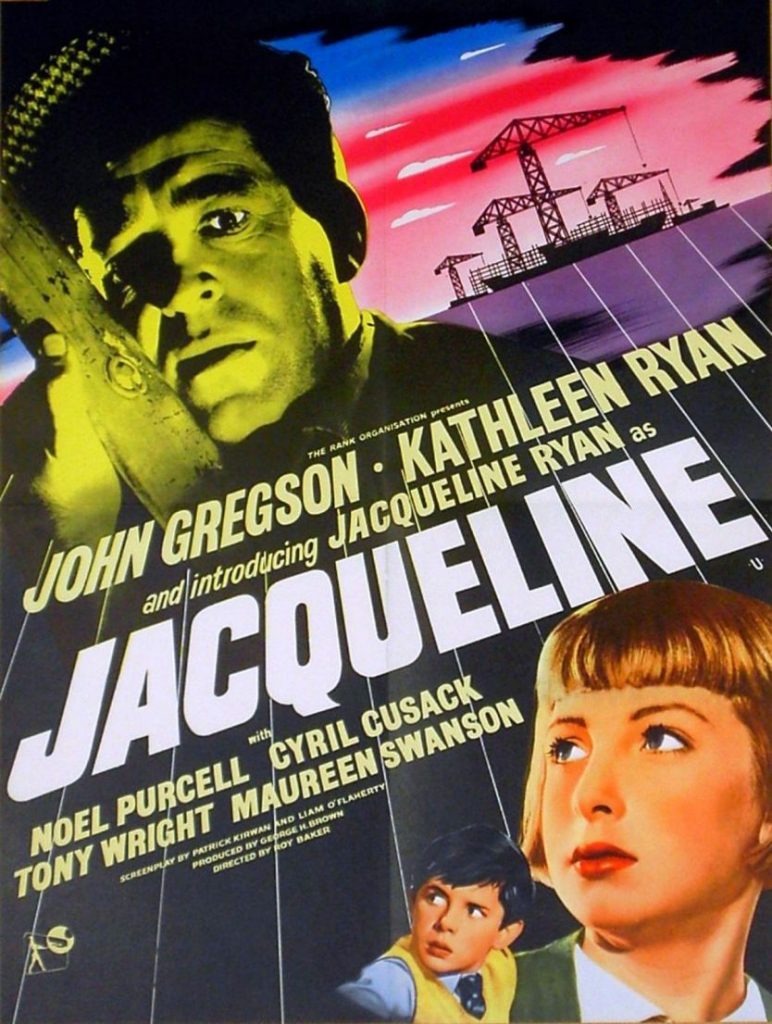
His other films of interest include “Jacqueline” in 1956, “Tiger in the Smoke”, “Seven Thunders” with Stephen Boyd in 1957.
Tony Wright died in 1986 at the age of 60’s ”
He is one of my favourite actors.
Article from Brian McFarlane’s “Encyclopedia of British Film”:
“Light-haired actor, briefly in starring roles in the 1950s playing men of action, portrayed by fan magazines as the ‘beefcake boy’ of British films.
Tony Wright
With limited acting range (too lightweight for villains), he had a laid-back charm but was rarely given roles to display it.
After navy service, and reputedly, whaling in the Antarctic, was on stage from 1946.
He was married to Janet Munro from 1957 until 1959.”
Career overview
Tony Wright (born Paul Anthony Wright, 1925 – 1986) was an English film and television actor whose brief burst of stardom in 1950s British cinema epitomized what film historians call the “Rank Organisation contract‑player phenomenon”: handsome young leads groomed to rival Hollywood’s glamour but often confined by the very system that promoted them. Wright’s career—lively, uneven, and short‑lived as a leading man—offers a revealing snapshot of mid‑century British film culture.
Early life and entry into acting
Wright was born in London, the son of French‑born performer and writer Hugh E. Wright . He grew up bilingual and adventurous: after naval service, he spent time in South Africa trying his hand at chicken farming and gold mining before joining repertory theatre . His father’s theatrical background and his fluency in French later proved useful in his continental collaborations.
He first appeared on BBC television in a 1952 adaptation of Noël Coward’s This Happy Breed, then earned attention as a professional boxer in The Flanagan Boy (Bad Blonde, 1953)—a Hammer noir where he played the simple but virile “bad boy” seduced into crime by Barbara Payton. The picture’s success made him a pin‑up dubbed “Britain’s Mr. Beefcake” .
Rank Organisation contract and brief stardom
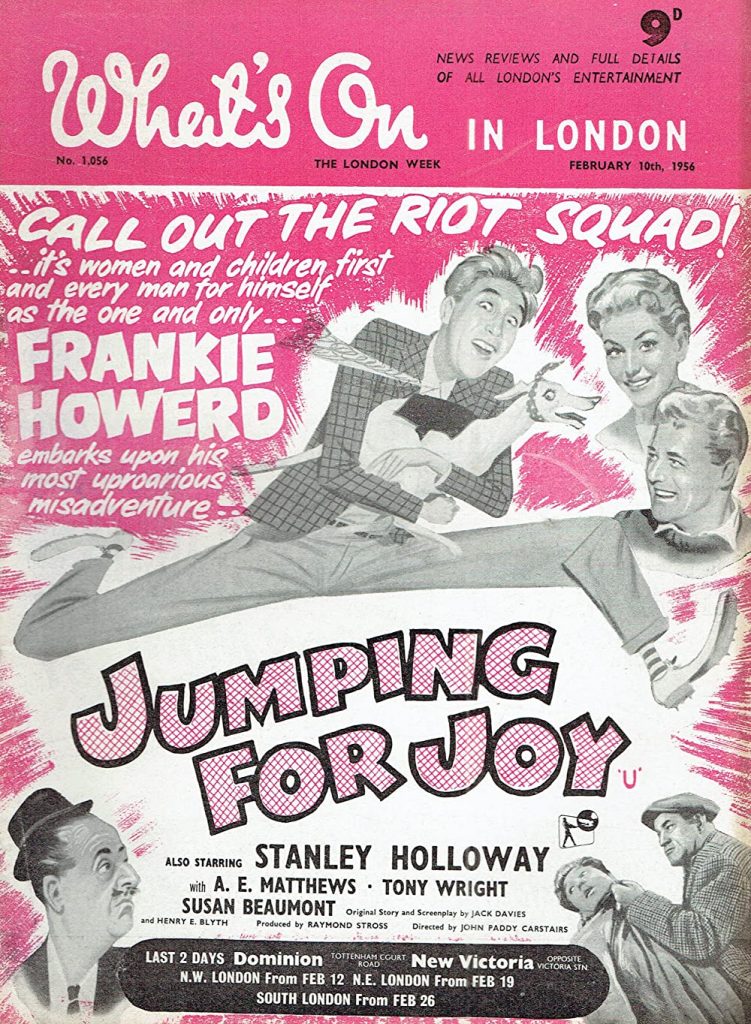
John Davis, Rank’s managing director, predicted in 1956 that Wright would become an international star. As part of Rank’s push to cultivate marketable “young leads,” Wright starred in Roy Ward Baker’s Jacqueline (1956) and Tiger in the Smoke (1956), and in the Frankie Howerd comedy Jumping for Joy the same year . Critics and colleagues remembered him as physically confident and naturally camera‑friendly but, in Roy Ward Baker’s words, “a studio choice rather than a director’s.”
Publicity emphasized looks over craft: his tanned physique and blond hair were then rare among British male stars, leading Rank to tout him as “the latest tough‑man hope” of the local industry . While this image earned work, it also pigeonholed him into crime and adventure roles that left little scope for deeper acting.
Continental success: Slim Callaghan and French films
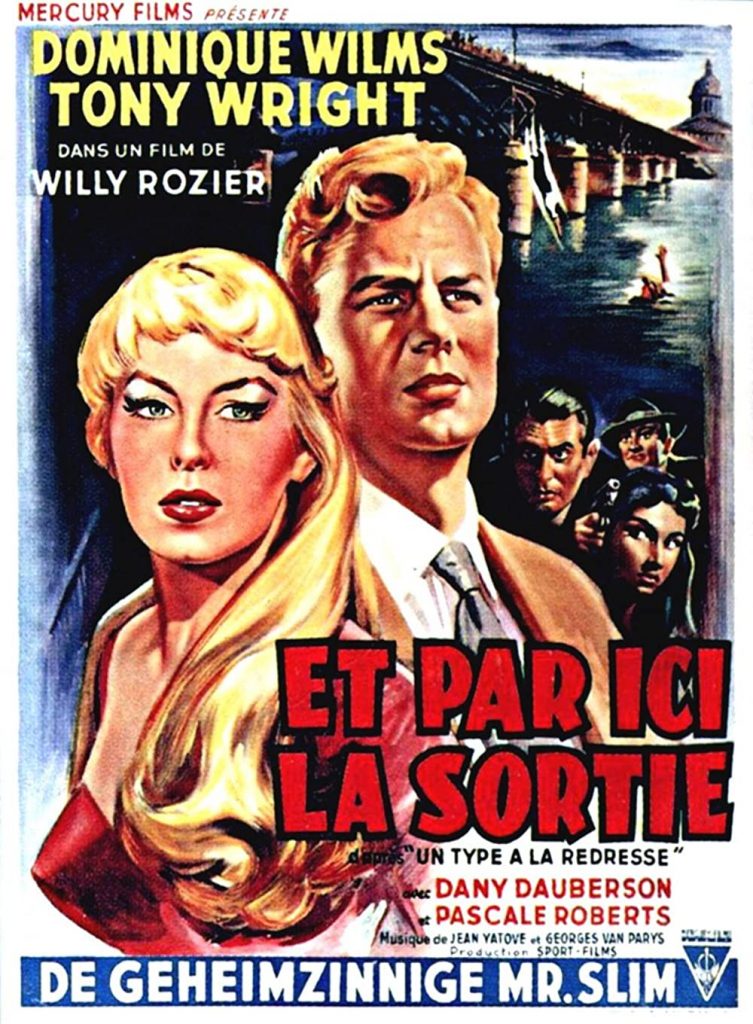
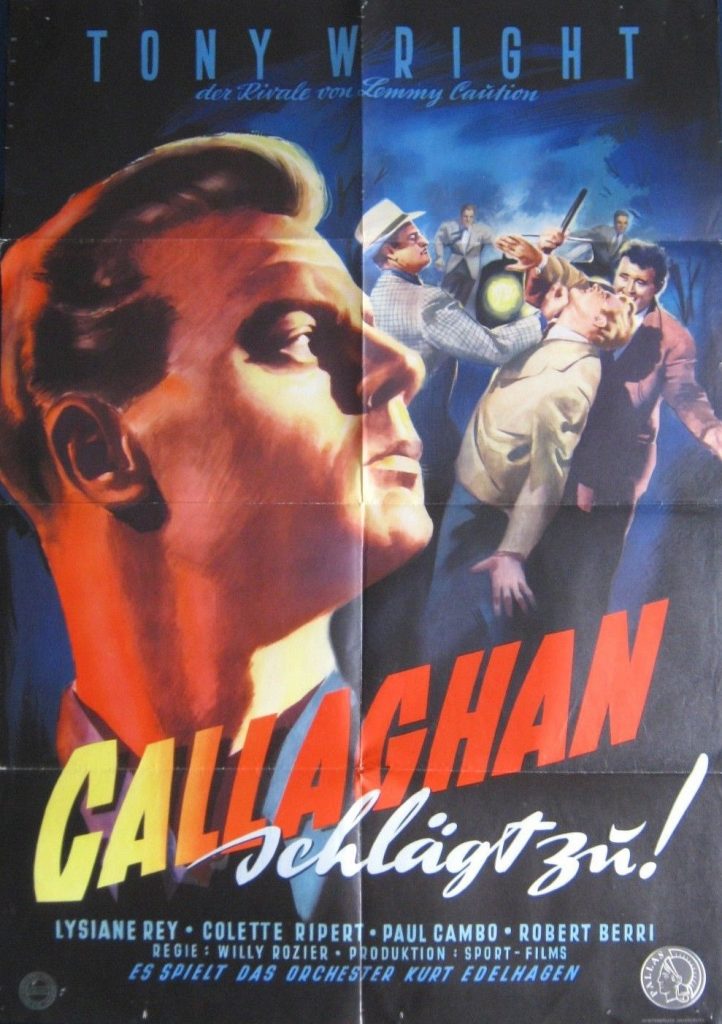
Wright’s bilingualism brought him a surprising niche in France, playing London private eye Slim Callaghan in a series of mid‑1950s thrillers directed by Willy Rozier—À toi de jouer… Callaghan! (1955) and Plus de whisky pour Callaghan! (1955), followed by Et par ici la sortie (1957) and Callaghan remet ça (1961). The jokey phrase “Bien joué Callaghan !” (“Well played, Callaghan!”) briefly entered French slang in tribute .
These films, stylish B‑level hybrids of British and French noir, suited his understated charm better than Rank’s domestic vehicles, and they built him a modest continental following.
Later career: television and character parts
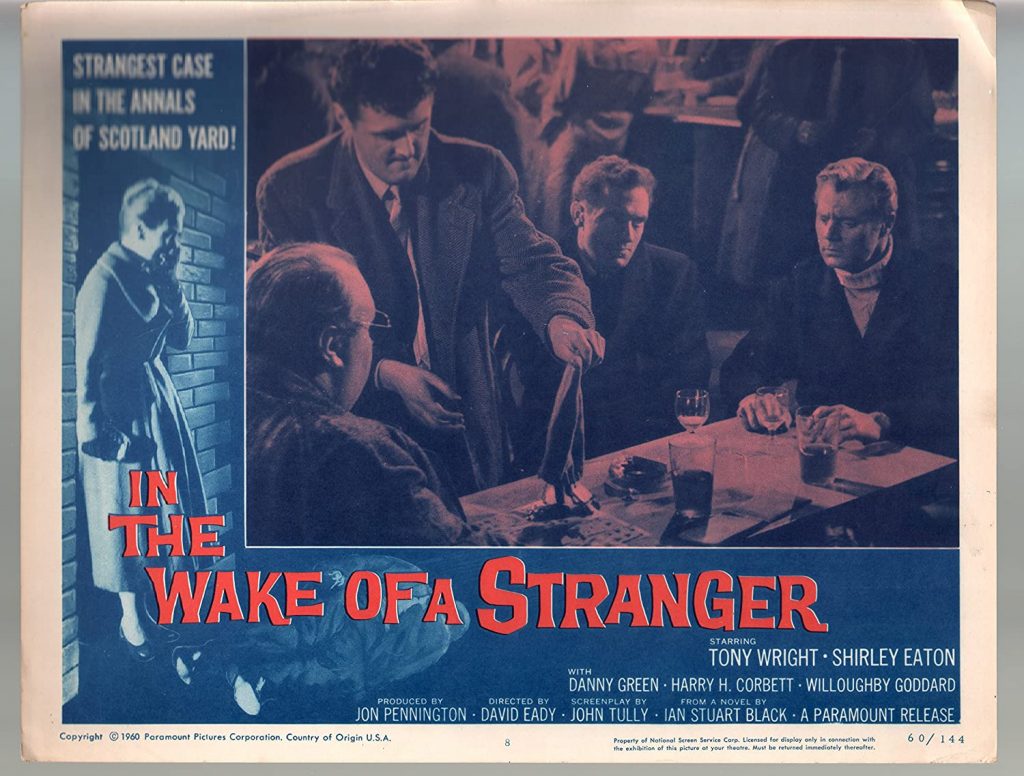
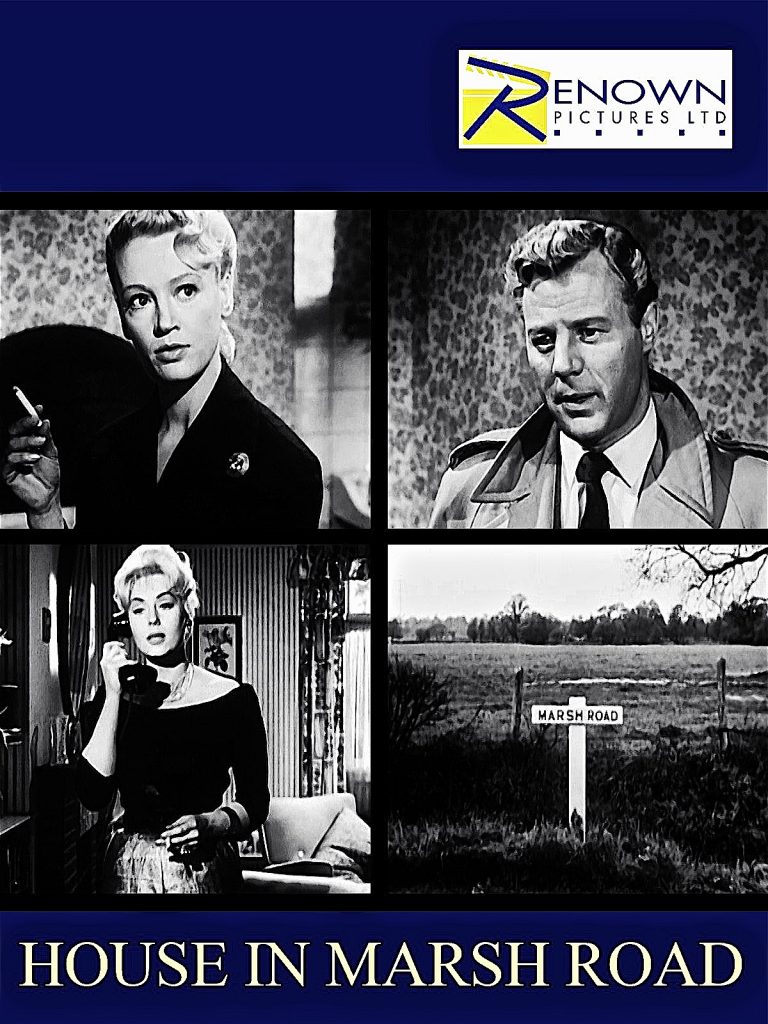
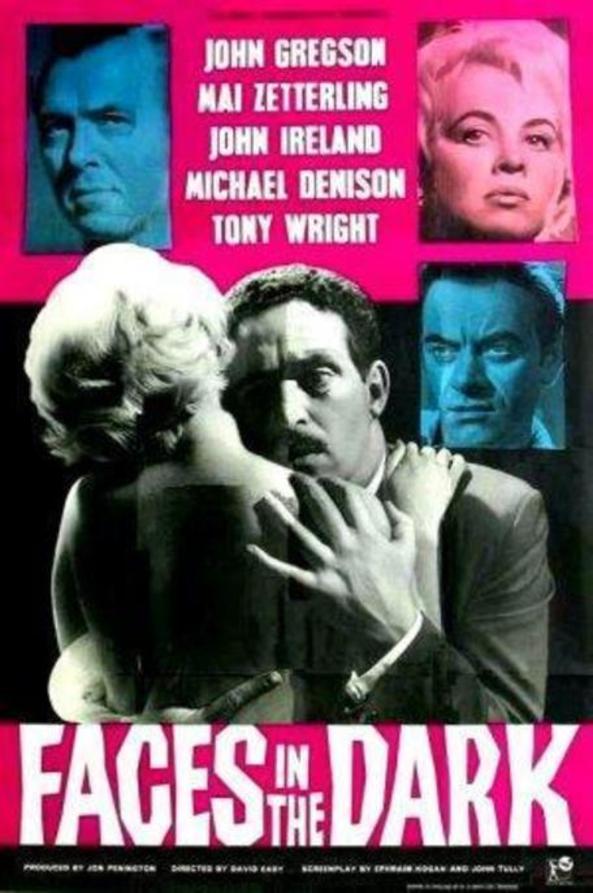
After his Rank contract ended, Wright never recaptured top billing. He married actress Janet Munro in 1957 (divorced 1959) and later Shirley Clark, daughter of writer Lesley Storm . Through the 1960s and ’70s he appeared steadily on British television—The Saint, The Avengers, Dixon of Dock Green, Public Eye, and The Jensen Code—often as policemen or suave antagonists . On film he turned up in solid supporting work, including Faces in the Dark (1960), The House in Marsh Road (1960), The Creeping Flesh (1973), and Clinic Exclusive (1971). He remained active until the early 1980s.
Acting style and persona
Physical confidence: Critics of the time often dwelled on his physique and “outdoor masculinity,” a contrast to the intellectual or genteel types dominating British leads.
Natural charm, limited depth: He projected ease on screen but lacked the emotional or vocal versatility of established character players. Directors noted that his success depended on sympathetic direction and well‑paced editing rather than on instinctive dramatic timing.
Ease in genre pieces: Crime thrillers, adventures, and light comedies let him exploit a laconic suavity that worked best opposite action or glamour rather than heavy drama.
Critical reception and later reputation
Contemporary critics saw him as a promising screen presence rather than a mature actor. Later assessments—such as the FilmInk retrospective quoted on his Wikipedia page—call him “one of the oddest ‘shooting‑comet’ stars of British cinema: limited training, limited ability, even his blonde hair unusual. Yet for a short while he had the lead in a franchise, the backing of Britain’s biggest studio…and then it went away.”
Modern commentators like Cult TV Blog note an inconsistency: while press clippings derided his skill, his long list of credits suggest discipline and professional competence . His later television career, though modest, demonstrated steady reliability—traits often undervalued next to early‑career publicity hype.
Legacy and evaluation
Tony Wright exemplifies the mid‑1950s Rank Organisation effort to manufacture local matinee idols. He possessed the looks, athleticism, and cosmopolitan polish the studio wanted in a British answer to Hollywood’s rugged stars, but his limited dramatic range and the collapsing Rank star system meant that fame was fleeting.
His lasting claim to note lies in two areas: 1. As Slim Callaghan, he briefly became Britain’s noir export to Europe, a rare instance of an English actor achieving cult popularity in French popular cinema. 2. As a case study in manufactured stardom—how image could propel, and then trap, a promising performer in an industry caught between post‑war realism and pre‑Swinging‑London commercialism.
He continued acting until the early 1980s and died in 1986 from injuries after a fall . Today, Wright stands as a fascinating footnote: the handsome, self‑aware journeyman who flashed briefly across 1950s British screens, leaving a small but memorable body of work that captures the look and mood of his