


Mercedes McCambridge obituary in “The Guardian” in 2004.
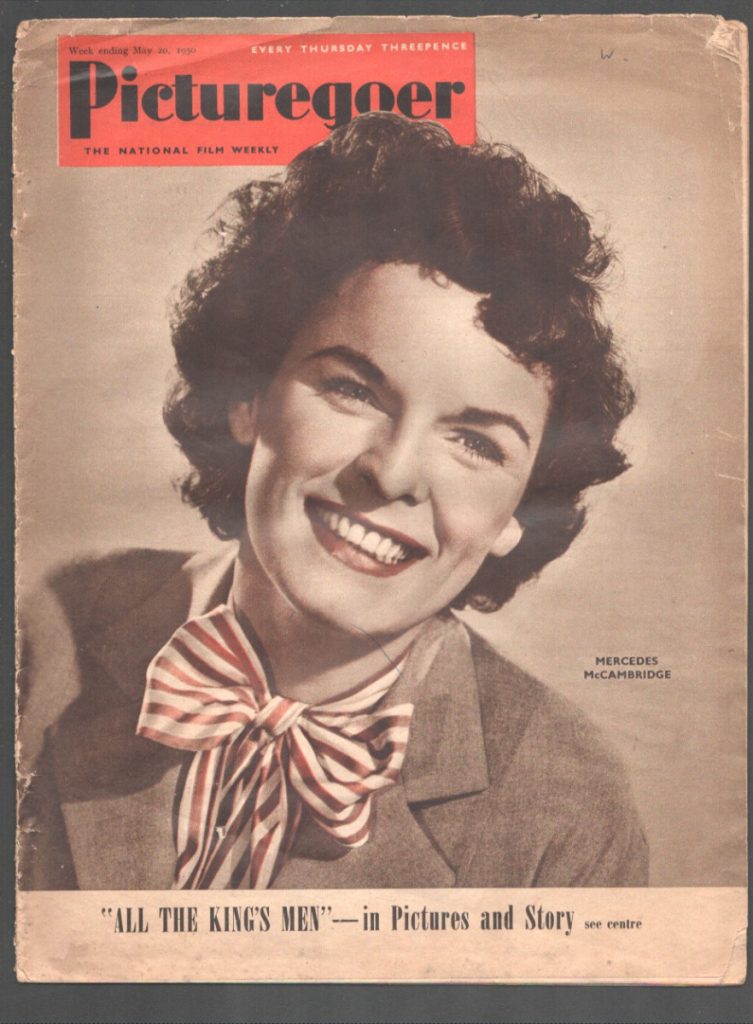
Mercedes McCambridge was a powerhouse of an actress who only made a few films but made an enormous impact. She was born in 1916 in Illinois to an Irish American Catholic family. She won an Oscar for her first performance in “All the King’s Men” in 1949. Other films include “Giant” in 1956, “Johnny Guitar” striking sparks off Joan Crawford and “Suddenly Last Summer”. She voiced the devil in the persona of Linda Blair in “The Exorcist”. She suffered unbelievable sorrow when her only child, her son Stephen killed his two daughters, his wife and himself in 1987. Mercedes McCambridge died in 2004.
Ronald Bergan’s obituary in “The Guardian”:
Hollywood has had its fair share of actors turned into lesbian icons – think of Barbara Stanwyck, Marlene Dietrich, Joan Crawford or Greta Garbo – but none had a dykier screen persona than Mercedes McCambridge, who has died aged 87.
She played up this image in her cameo performance in Orson Welles’s Touch Of Evil (1958), as the duck-tailed, leather-jacketed leader of a band of Mexican bikers, wanting to watch Janet Leigh being raped in the motel room. This was a follow-up to perhaps her most famous role, that of the butch bitch who leads a posse against Joan Crawford in Nicholas Ray’s baroque western, Johnny Guitar (1954).
The question posed by several critics about the latter role was whether McCambridge, as Emma Small, who owns “every head of cattle for 500 miles”, wanted to kill Crawford’s saloon-owning character Vienna, or sleep with her. Whatever the answer, McCambridge’s lynch-happy harpy was one of the most striking portrayals of a forceful woman in cinema.

Almost two decades later, she provided one of the eeriest sounds in films by voicing the demon inside Linda Blair, in William Friedkin’s The Exorcist (1973). According to Welles, who co-starred with her in the Ford Theater series, it was, in fact, McCambridge’s versatile voice that made her “the world’s greatest living radio actress.”
Born in Joliet, Illinois, she had begun performing on radio while still at Loyola Catholic College, in Chicago, and went on to make a name for herself in the I Love A Mystery radio series, from 1939 to 1949. After a shortlived marriage to William Fifield, among the people she worked with was Canadian actor-writer-director Fletcher Markle, whom she married in 1950. The couple went to Hollywood in 1949, he to direct a few minor films, she to make her screen debut in Robert Rossen’s All The King’s Men, for which she promptly won an Oscar as best supporting actress.

In this movie, McCambridge is superb as Sadie Burke, the hard-boiled henchwoman and lover of populist southern demagogue Willie Stark (Broderick Crawford). Few actors could have taken, or convincingly merited, such a slap across the face as she receives from investigative journalist John Ireland.
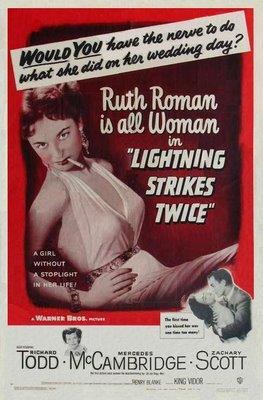
It was Ireland again, as a mentally disturbed man on the run from an asylum, who almost murdered McCambridge, playing a tough, singing waitress called Cash And Carry Connie, in The Scarf (1951). She, in turn, was a murderer in King Vidor’s Lightning Strikes Twice (1951), killing Richard Todd’s wife out of jealousy.



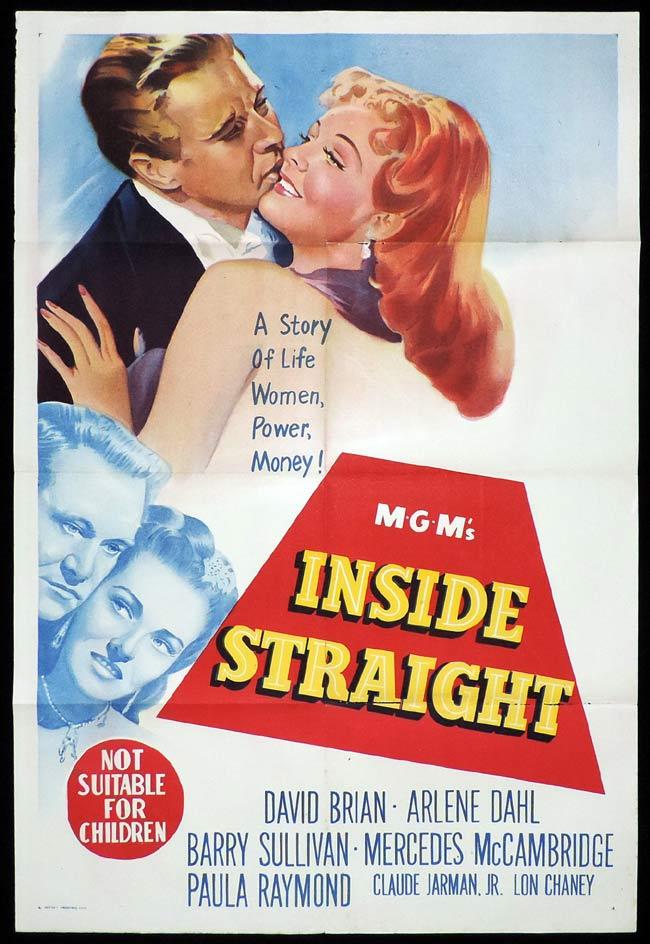


Five years later, she was Oscar-nominated as best supporting actress for her performance in George Stevens’s Texas saga, Giant (1956). Here, she expressed an almost incestuous jealousy as Luz Benedict, Rock Hudson’s unmarried older sister, passionately at odds with Elizabeth Taylor, her brother’s wife. Her character is killed when she is thrown from the horse Warwinds, which she symbolically cannot master, in scenes enacted in masterful wide images and close-ups.
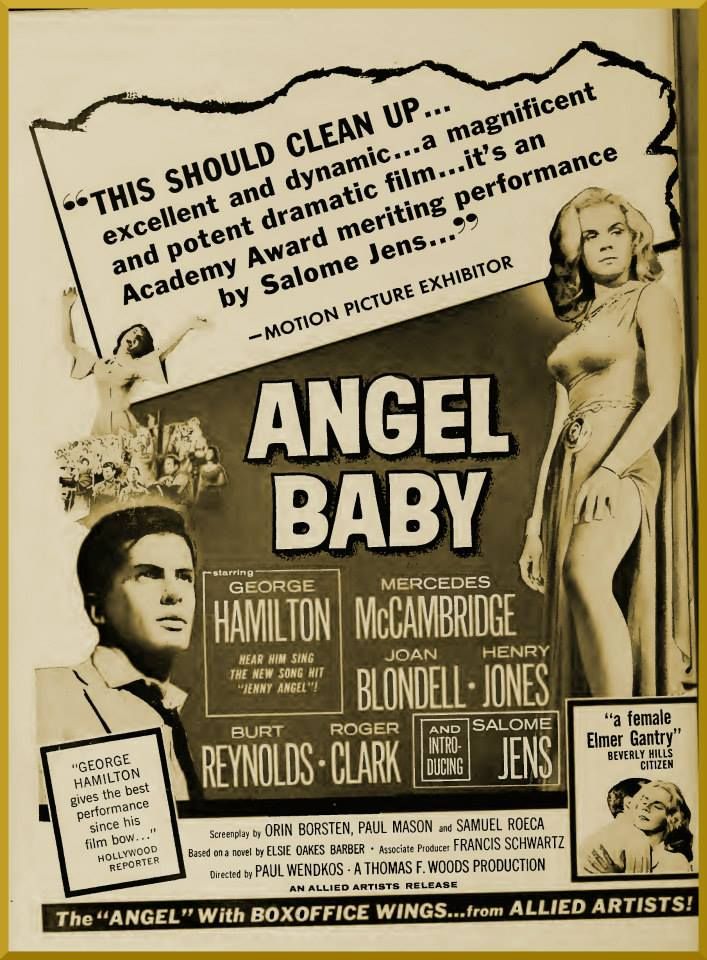
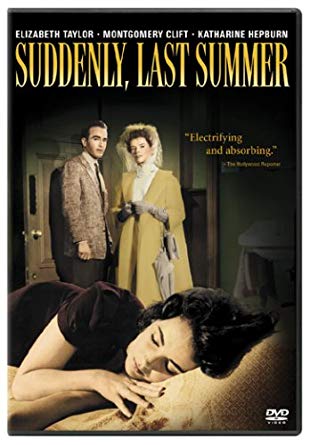
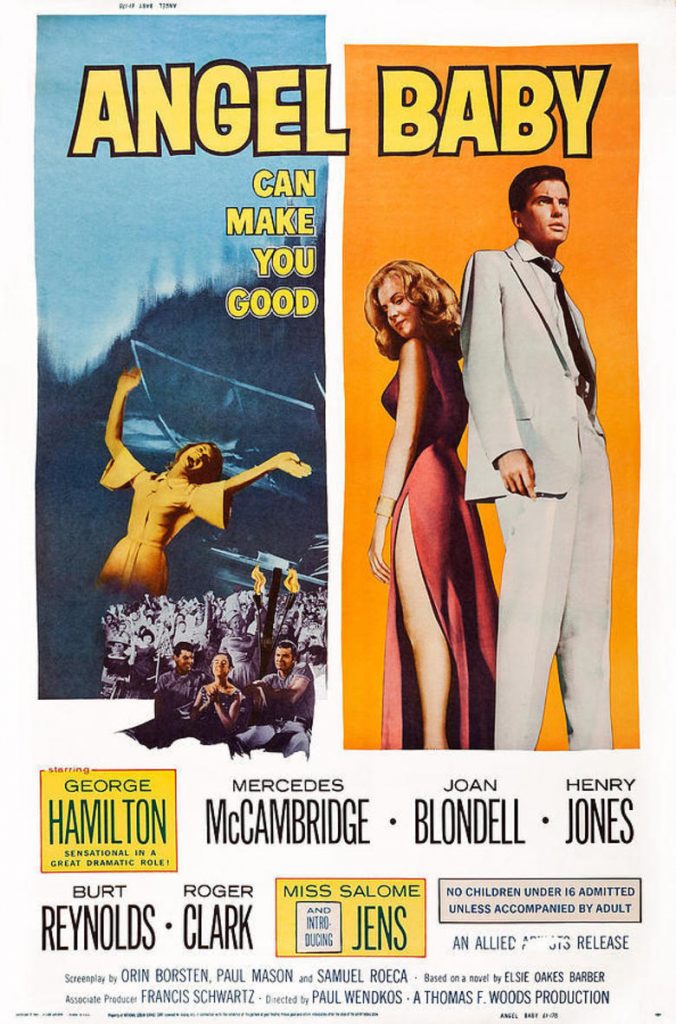
Following that, McCambridge made the most of her short screen time as Taylor’s avaricious mother prepared to permit her daughter, who “went off her rocker in Europe”, to have a lobotomy in Joseph L Mankiewicz’s film of Tennessee Williams’s Suddenly Last Summer (1959). Her line in boot-faced characters continued in Angel Baby (1961), as the shrewish wife of evangelist promoter George Hamilton.
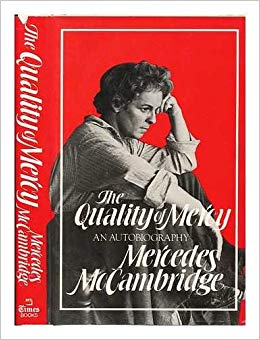
It was about this time that McCambridge, recently divorced from Markle, with a young son to bring up, started to drink heavily. A devout Catholic, she claimed to have lost her faith. Along struggle against alcoholism ensued until she gave up drink in 1969, becoming a leading member of the US National Council on Alcoholism, while regaining her Catholic faith. (Her experiences were noted down in an autobiography, The Quality Of Mercy, in 1981.)
But none of this stopped her appearing as the sadistic, lesbian supervisor of a women’s prison on a Caribbean island in the exploitative 99 Women (1969), or happily lending her voice to the demon in The Exorcist. According to Friedkin: “When I started making The Exorcist, I had no idea how we were going to do the demon voice. I knew I wanted a voice that was neutral – neither male nor female – but with both male and female characteristics. In the end, the name Mercedes McCambridge came into my head. I spoke to her on the phone, and, to my joy, she sounded exactly as she had sounded 30 years earlier on the radio.
“She worked for, maybe, three weeks doing the demon voice. She was chain-smoking, swallowing raw eggs, getting me to tie her to a chair – all these painful things just to produce the sound of that demon in torment. And as she did it, the most curious things would happen in her throat. Double and triple sounds would emerge at once, wheezing sounds, very much akin to what you can imagine a person inhabited by various demons would sound like. It was pure inspiration.”
Unfortunately, when The Exorcist was released, Warner Brothers failed to credit her, so McCambridge sued the studio. On later prints, her credit reads, not “the voice of the demon”, as she would have preferred, but simply “and Mercedes McCambridge”.

Meanwhile, McCambridge was more active in the theatre: in Who’s Afraid Of Virginia Woolf on tour, and in the military courtroom drama, The Love Suicide Of Schofield Barracks, on Broadway in 1972, for which she was nominated for a Tony award. She also guest-starred in a number of television western series, among them Gunsmoke and Bonanza.
In 1987, a tragedy hit her family. Her son, John Markle, a high-flying economist, became involved in a financial scandal, and subsequently shot his wife and two daughters, and then himself. McCambridge soldiered on, continuing to perform on stage and winning plaudits in Los Angeles for her role in Neil Simon’s Lost In Yonkers (1992), as the grandmother who rules the household with a rod of iron.
Even then, she had lost little of what made her one of the most memorable of supporting actors.
· Charlotte Mercedes Agnes McCambridge, actor, born March 16 1916; died March 2 2004 The above “Guardian” obituary can also be accessed online here.