Edward Mulhare

Edward Mulhare
Edward Mulhare
Edward Mulhare
Edward Mulhare
Edward Mulhare
Edward Mulhare

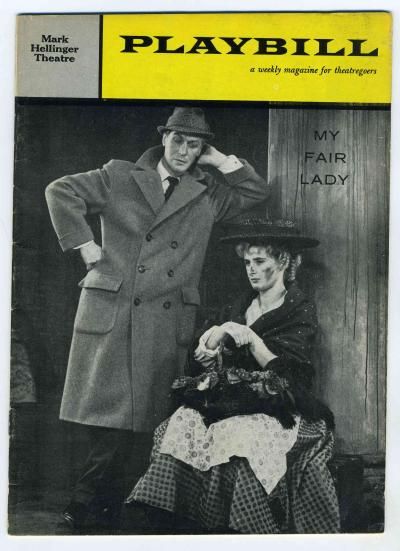
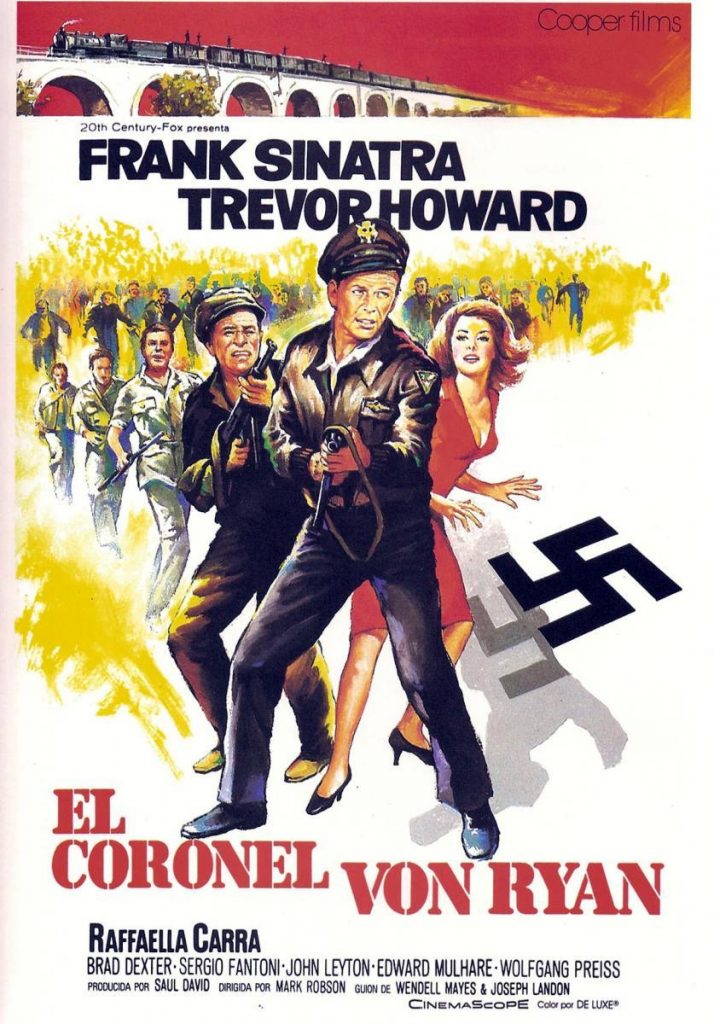
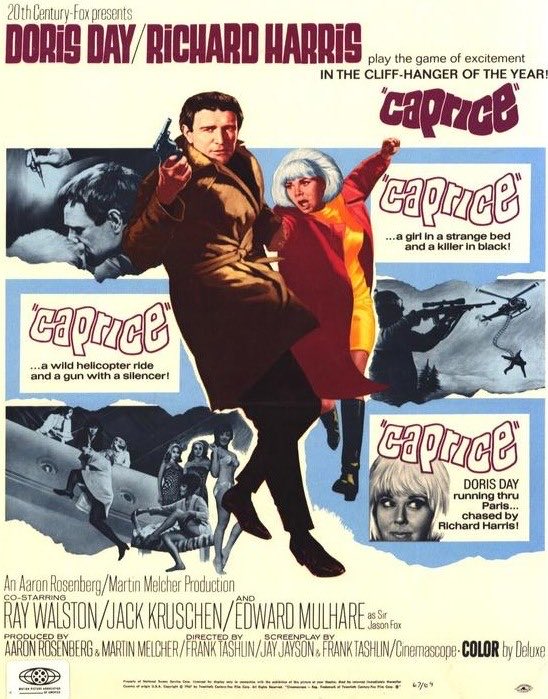
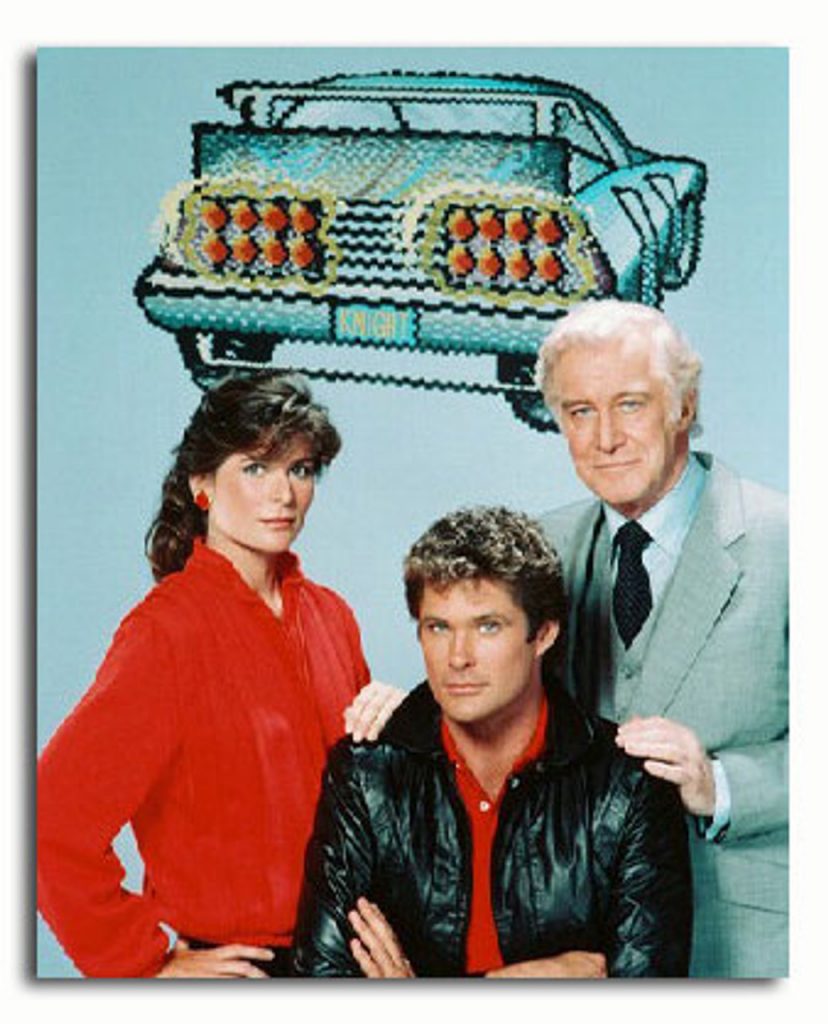
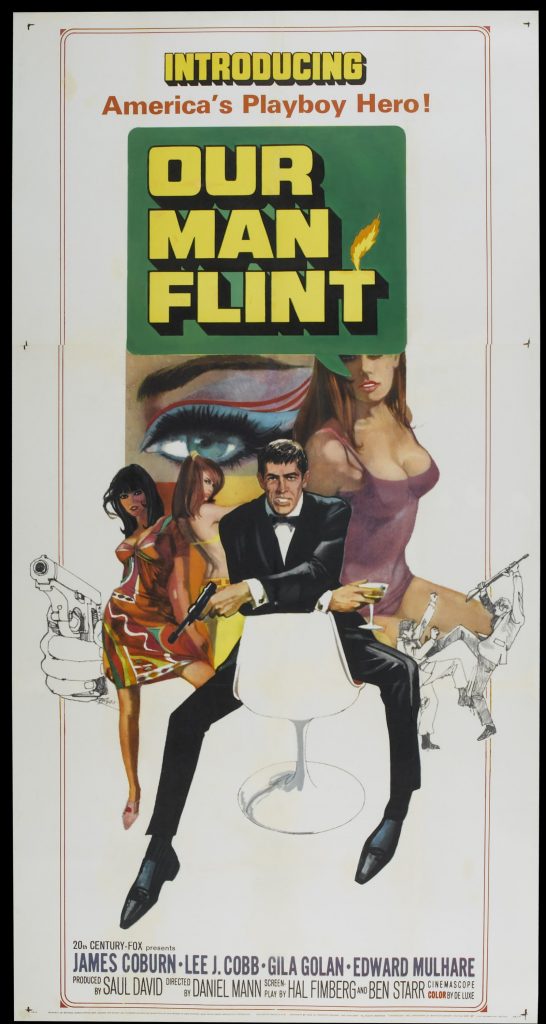
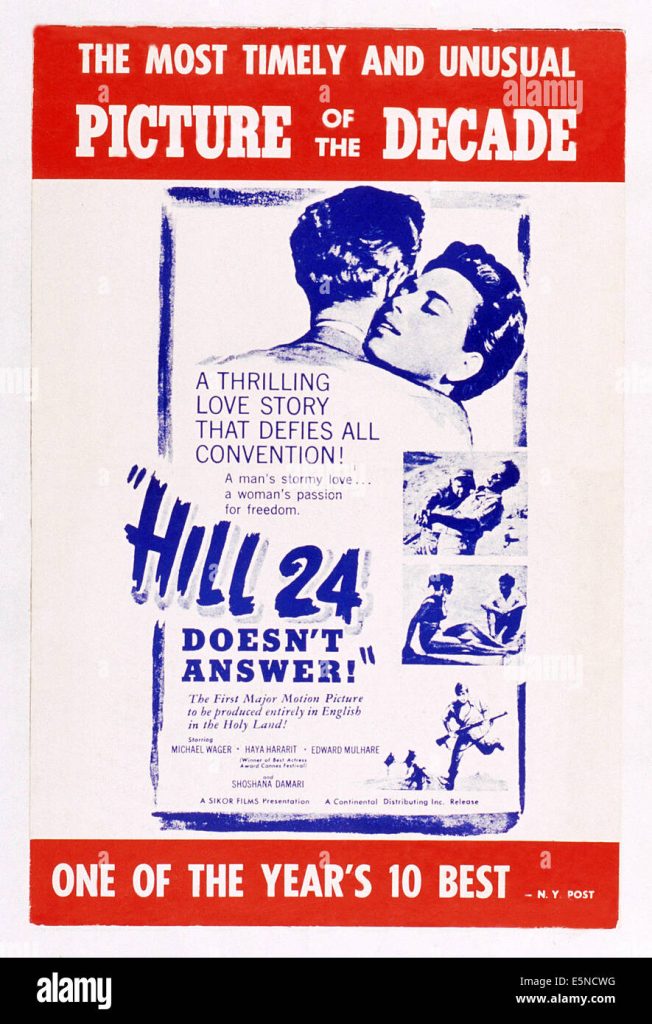
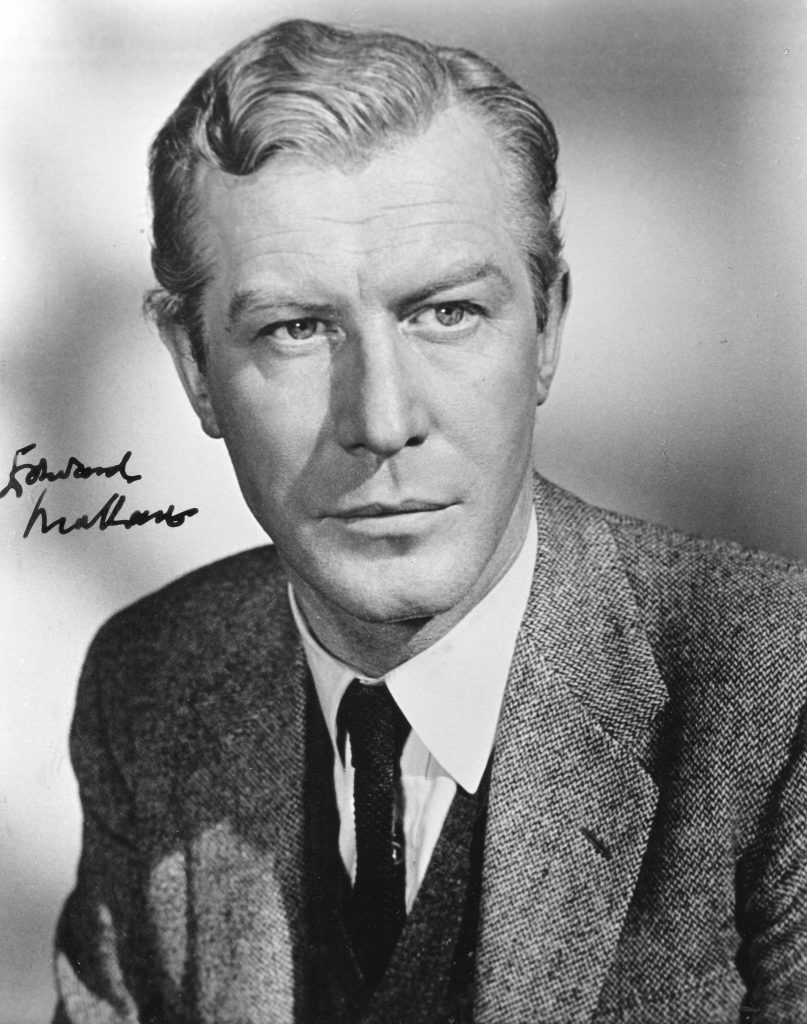
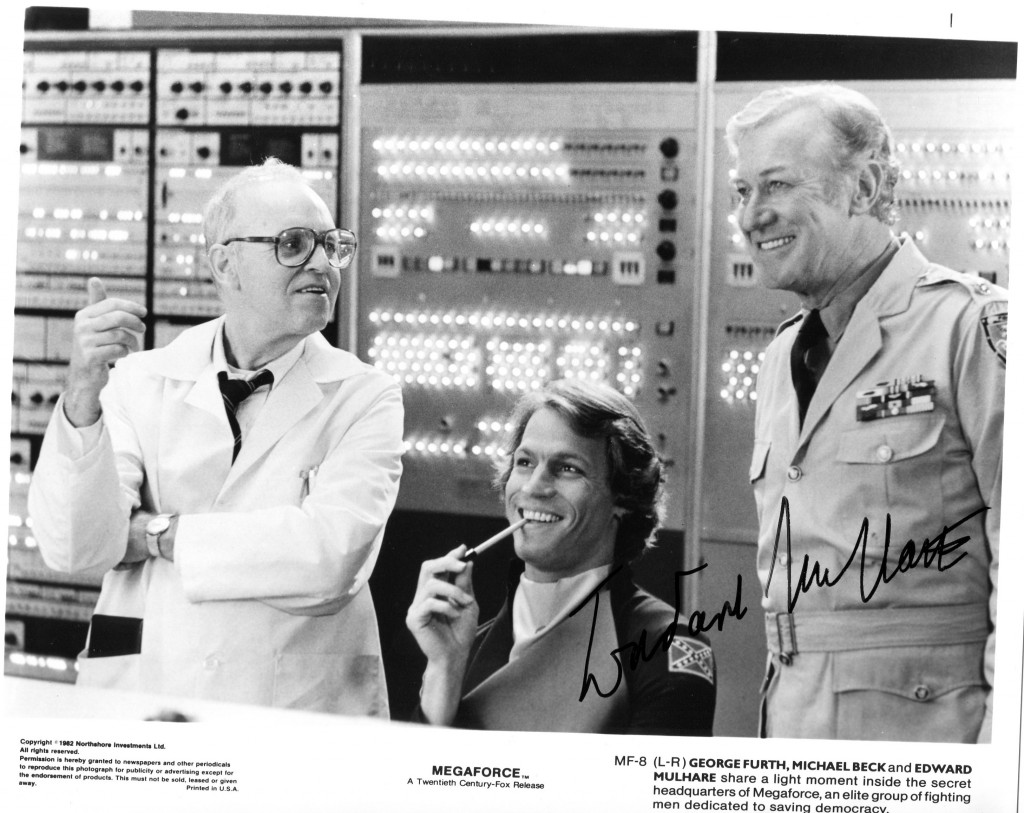
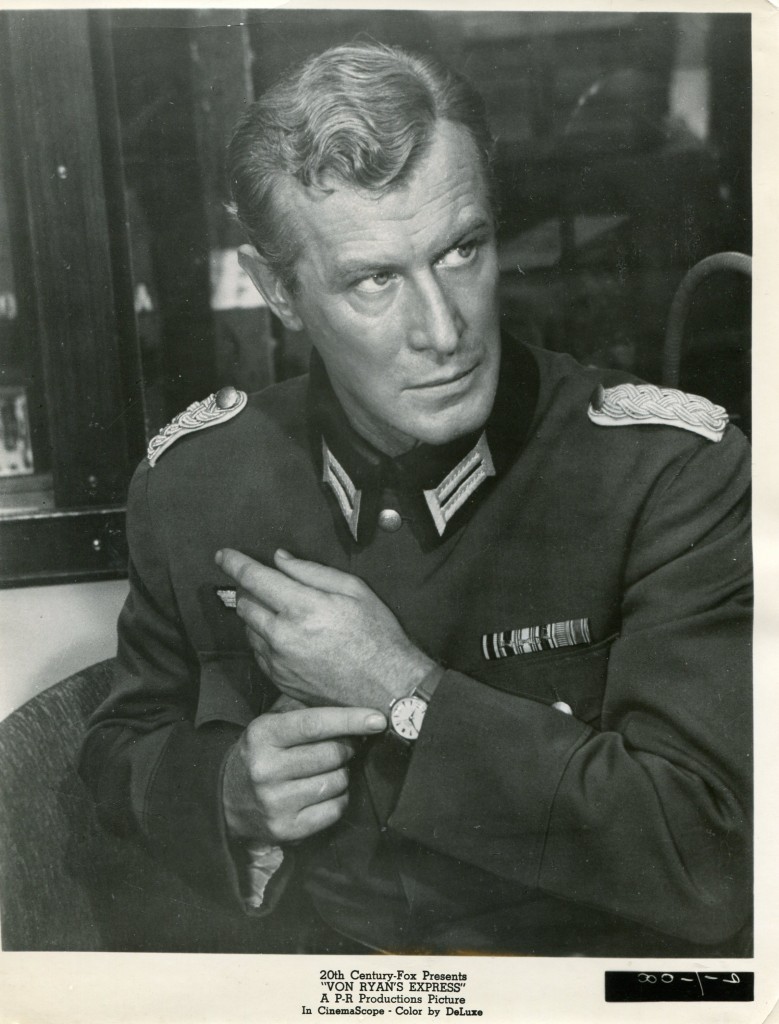
Edward Mulhare was born in Cork in 1927.  He acted at the Gate Theatre in Dublin before moving to London to pursue his career.   In the 1950s he appeared on British television in “The Adventures of Robin Hood” and made his film debut in 1956 in “Hill 24 Does Not Answer” with Haya Harayeet.   In 1958 he and Sally Ann Howes took over from Julie Andrews and Rex Harrison on Broadway in “My Fair Lady”.   He remained on in the U.S. and was featured in the 1965  film “Von Ryan’s Express” with Frank Sinatra, “Our Man Flint” with James Coburn and  “Caprice” with Doris Day and fellow Irishman Richard Harris.   In 1969 he had a popular television success with the series “The Ghost and Mrs Muir” with Hope Lange.   In 1982 he was in another successful series “Knight Rider”.   His last film was “Out to Sea” in 1997.   Edward Mulhare died the same year at the age of 74.

His “Independent” obituary:

ing established himself in the late-Fifties as a Broadway star when he succeeded Rex Harrison in My Fair Lady, he spent the last 40 years in the United States, where his prolific work on stage, screen and television made him a popular player and box-office attraction, particularly in touring productions. His early career included notable work in the theatres of Ireland and England, including West End appearances with Orson Welles and Gladys Cooper.

Mulhare was born in Cork in 1923. Educated at St Nessan’s School and North Monastery, he spent a few months reading medicine at the National University of Ireland before deciding to follow his passion for theatre, and at 19 he made his professional debut at the Cork Opera House playing in successive weeks Murdo in The First Mrs Fraser and Cassio in Othello. Joining the newly formed Dublin Theatre Guild, who were recruiting talent from all over Ireland, he played Bill Walker in Shaw’s Major Barbara, Horace Giddens in Hellman’s The Little Foxes and La Hire in Shaw’s St Joan.

He made his first appearance in England with an Ensa unit as Max De Winter in Rebecca. After sporadic employment with the Gate Theatre in Dublin and club theatres in London, in 1950 he was named leading man of the Liverpool Repertory Company, which had spawned Rex Harrison and Michael Redgrave. The following year he played Othello once more, this time as Lodovico to Orson Welles’ Moor at the St James’ Theatre, produced by Laurence Olivier. Though this by Kenneth Tynan, who described Welles as having “the courage of his restrictions”, it was generally well received.

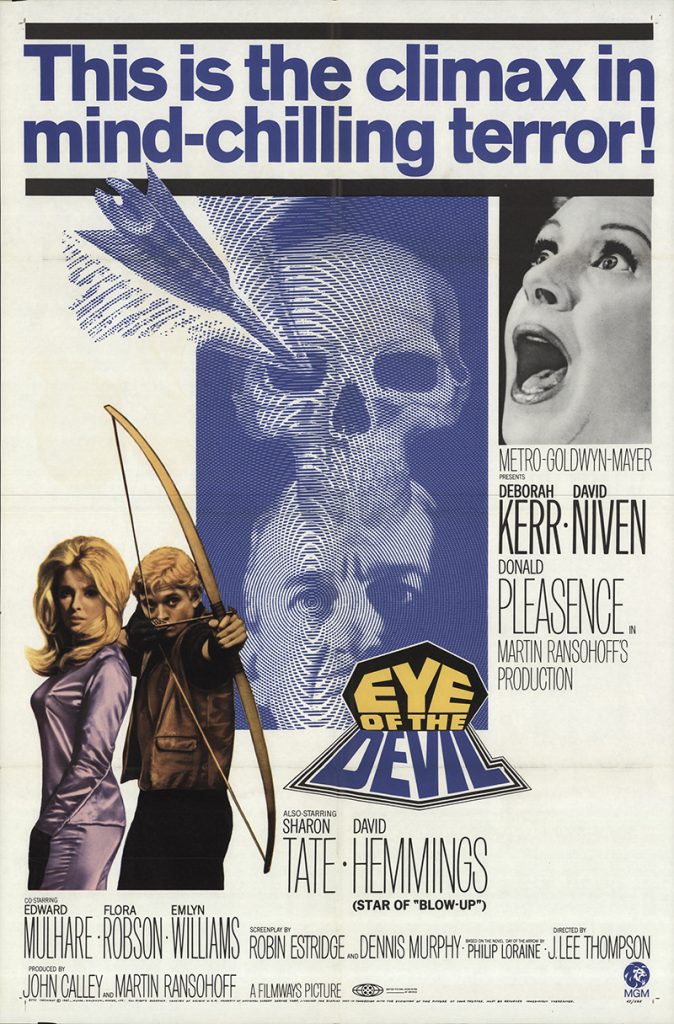
In 1952 Mulhare was part of the John Gielgud season at the Lyric Theatre, Hammersmith, and with Gielgud he subsequently went to the Rhodes Festival at Bulawayo, Rhodesia (now Zimbabwe), in Richard II. In 1953 he made his film debut in Thorold Dickinson’s Israeli-made film Hill 24 Doesn’t Answer. In this potent drama of the fight for modern Israel, he was top-billed as one of four soldiers defending a hill outside Jerusalem in the 1948 war. The same year he had a featured role as Sidney Willis MP, in the West End production of The Night of the Ball with Gladys Cooper and Wendy Hiller.

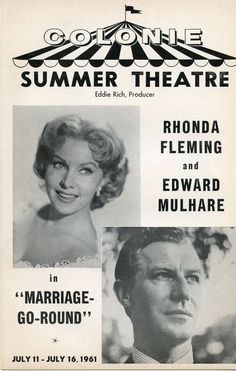
A turning-point in his career came in 1957, when he was chosen to succeed Rex Harrison in the Broadway production of My Fair Lady. With his suave urbanity and clipped British accent, he proved a popular successor and played the role for three years, his Elizas including Julie Andrews, Sally Ann Howes and Anne Rogers. When Rex Harrison saw the show for the first time as a member of the audience, he found Mulhare “very good – I was enchanted with the whole performance”.

In 1960 he went with the show to Russia then decided to settle in the US, where he found steady employment on stage, screen and television. On Broadway he starred in The Devil’s Advocate (1961) and succeeded Michael Wilding in Jean Kerr’s hit comedy Mary, Mary (1961). Later he starred in a Los Angeles production of The Sound of Music, and with Anne Rogers, who had become one of his closest friends, he toured the US in the musical Camelot and play Death Trap as well as revivals of My Fair Lady. In the early Seventies he toured 159 American cities in a production of Shaw’s Don Juan in Hell with Myrna Loy, Ricardo Montalban and Kurt Kasznar. “Edward Mulhare made a superb Devil,” said Loy later. “He possessed all the charm and wit for the part.”

On screen he was one of the British prisoners-of-war, an army padre who impersonates a German officer during a daring escape in Von Ryan’s Express (1964), and he was an effectively smooth villain in two spoofs of James Bond movies, the hit Our Man Flint (1966) starring James Coburn, and the dire Caprice (1967) in which he was a duplicitous cosmetics tycoon, involved in a covert drugs operation, who recruits Doris Day as an industrial spy.

His prolific television work started in England with two episodes of The Adventures of Robin Hood (1956). American series in which he appeared included Murder She Wrote, Streets of San Francisco, Outer Limits, Hart To Hart, Battlestar Galactica, and regular roles in two further series, both of which becane hits.

When the 1941 film The Ghost and Mrs Muir was converted to a television series in 1968, Mulhare again followed in Harrison’s footsteps as the ghost of an irascible sea captain who shares a Cornish cottage with an attractive widow (Hope Lange, in Gene Tierney’s original role). The show ran for two years and made Mulhare a household name.

He was to have an even bigger success in 1982 with Knight Rider, in which he was the dapper Devon Miles, mentor to an undercover policeman (David Hasselhoff), who has been killed but brought back to life and given a lavishly equipped car (which could leap 50 feet in the air – and talk) in which to defend the unfortunate and fight injustice. With particular appeal to young audiences, it was the first show on the NBC network to hold its own against Dallas on CBS, and ran for five years and 90 episodes.

Mulhare continued to act until diagnosed with cancer a few months ago, and has a role in the forthcoming Jack Lemmon / Walter Matthau film Out to Sea.

Tom Vallance

Edward Mulhare, actor: born Cork, Ireland 8 April 1923; died Los Angeles 24 May 1997.

His obituary in “The Independent” can also be accessed here.

Edward Mulhare (1923–1997) was the personification of mid-century “Mid-Atlantic” sophistication. An Irishman who conquered the British stage before becoming an American television icon, his career is a study in suave authority. While he was often cast for his impeccable diction and silver-haired elegance, a critical analysis reveals an actor of immense technical discipline who could make “stiff” characters feel deeply human.


I. Career Overview: From Cork to the Cosmos

1. The Impossible Task (1951–1960)

Mulhare’s early career was defined by one of the most daunting “replacements” in theater history.

  • The Legend’s Shoes: In 1957, Mulhare took over the role of Professor Henry Higgins from Rex Harrison in the original Broadway production of My Fair Lady.

  • The Critical Triumph: Critics initially scoffed at the idea of a 33-year-old Irishman replacing Harrison, but Mulhare played the role over 1,000 times to rave reviews. He was credited with bringing a “younger, more romantic” energy to Higgins, proving he was more than just a vocal mimic.

2. The Ghostly Romantic (1968–1970)

After a decade of guest spots and film roles (including the WWII classic Von Ryan’s Express), Mulhare found his definitive screen identity.

  • The Ghost & Mrs. Muir: As Captain Daniel Gregg, a 19th-century sea captain haunting his former home, Mulhare became a romantic lead for the TV age. His chemistry with Hope Lange was the show’s engine; he played the Captain as crusty and chauvinistic, yet undeniably lonely.

3. The Mentor of the 80s (1982–1986)

To a new generation, Mulhare became synonymous with high-tech justice.

  • Knight Rider: As Devon Miles, the head of the Foundation for Law and Government (FLAG), he served as the “civilized” foil to David Hasselhoff’s brash Michael Knight. He brought a sense of gravitas to a show about a talking car, ensuring the “Foundation” felt like a legitimate institution rather than a cartoonish plot device.


II. Detailed Critical Analysis

1. The “Acoustic” Actor

Critically, Mulhare was admired most for his voice.

  • The Mid-Atlantic Ideal: Mulhare possessed a voice that sounded “from everywhere and nowhere”—a blend of his native Cork lilt, London polish, and American clarity.

  • The Power of Diction: In The Ghost & Mrs. Muir, critics noted that Mulhare could make an insult sound like a compliment through sheer vocal modulation. He used his voice as a musical instrument, varying the “bass” of his sea captain’s roar with the “tenor” of his romantic yearning.

2. The “Civilized” Foil

Mulhare’s greatest contribution to the “Buddy” or “Mentor” dynamic was his ability to play restraint.

  • Contrast in Knight Rider: In the 1980s, American TV was dominated by “macho” action stars. Mulhare provided a “European” alternative. Critics analyzed Devon Miles as the “conscience” of the show—his exasperation with Michael Knight’s antics was played with a dry, comedic wit that prevented the character from becoming a boring “schoolmaster” figure.

  • Dignity in Camp: Whether dealing with talking cars or 1960s spy plots (Our Man Flint), Mulhare never “winked” at the camera. He treated the most outlandish premises with total sincerity, which helped anchor the audience’s belief in the story.

3. The “Ageless” Leading Man

A recurring theme in Mulhare’s critical reception was his precocious maturity.

  • Early Silver: He went gray in his 20s, which meant he spent most of his career playing characters older than himself. This gave him a “timeless” quality.

  • The Romantic Paradox: In The Ghost & Mrs. Muir, he managed to be a romantic sex symbol while playing a man who was technically dead and physically untouchable. Critics praised this “hands-off” chemistry, noting that Mulhare could convey more desire with a raised eyebrow than most actors could with a physical embrace.


Iconic Performance Comparison

Character Work Year Critical Achievement
Henry Higgins My Fair Lady 1957 Successfully stepped out of Rex Harrison’s shadow on Broadway.
Constantius Von Ryan’s Express 1965 Showcased his ability to play chilling, bureaucratic authority.
Captain Gregg The Ghost & Mrs. Muir 1968 Proved that “classic elegance” could translate to a TV sitcom.
Devon Miles Knight Rider 1982 Defined the “Sophisticated Mentor” archetype for the 1980s.

Edward Mulhare was the “Gentleman of the Airwaves.” He brought the precision of the Irish and British stage to the American living room, proving that a sharp suit and a sharper tongue were just as effective as a gun or a fast car.

Would.

. Edward Mulhare’s final years on stage were a masterclass in “aging with elegance.” While he was globally famous as a television star, he spent his final decade returning to his first love: the live theater. His work in the 1990s was defined by a transition from the “romantic lead” to the “stately patriarch,” often revisiting the classical roles that had defined his early career.


I. The Return to the Classics (1990–1995)

In his late 60s and early 70s, Mulhare sought out roles that allowed him to use his “silver-fox” gravitas.

  • The “Full Circle” Higgins: Mulhare returned to My Fair Lady several times in regional and international touring productions. Critics noted that his 1990s Henry Higgins was far more “crusty and vulnerable” than his 1950s version. He leaned into the character’s intellectual isolation, making the final “I’ve Grown Accustomed to Her Face” a poignant reflection on a life nearly spent alone.

  • The British Heritage Tour: He participated in high-end “drawing room” comedies, touring the UK and US in works by Noël Coward and Oscar Wilde. His performance as the Earl of Caversham in An Ideal Husband was praised for its “effortless, dry-as-a-bone” wit.

II. The Definitive Final Act: Deathtrap (1996)

Mulhare’s final major stage role was in a highly successful national tour of Ira Levin’s thriller Deathtrap, opposite his long-time friend and fellow TV icon, Patrick Macnee (The Avengers).

  • The Dynamic: The pairing of Mulhare and Macnee was a marketing masterstroke, billed as the “Battle of the British Gentlemen.” Mulhare played Sidney Bruhl, the washed-up playwright willing to commit murder for a hit.

  • Critical Analysis: Critics were fascinated by Mulhare’s turn as a villain. After years of playing the morally upright Devon Miles (Knight Rider) or the noble Captain Gregg, seeing Mulhare use his sophisticated diction to deliver threats was chilling. He played the character with a “velvet-glove” menace—his refined exterior making the character’s internal desperation feel even more dangerous.

III. Detailed Critical Analysis of the “Late Style”

1. The Economy of Movement

By the mid-1990s, Mulhare had mastered what actors call “stillness.” Critics noted that he could command a stage simply by standing still and listening. He no longer needed the grand gestures of his youth; a slight tilt of the head or a precisely timed pause in his speech was enough to hold an audience of 2,000 people.

2. The Preservation of the “Standard”

Mulhare was one of the last prominent actors to maintain “Received Pronunciation” (RP) on the American stage. In an era where acting was becoming increasingly casual and naturalistic, Mulhare’s final stage years were a “preservation project.” He represented a high-theatrical tradition where clarity of thought and speech were the primary tools of the trade

The Gate Theatre in Dublin was the true forge where Edward Mulhare’s “mid-Atlantic” sophistication was hammered out. Before he was a ghost or a foundation director, he was a product of one of the most avant-garde theatrical movements in Europe.


I. The Gate Theatre Context (1940s)

Founded by Michéal Mac Liammóir and Hilton Edwards, the Gate was the rebellious, stylish younger sibling to the nationalistic Abbey Theatre.

  • The “International” Focus: While the Abbey focused on “peasant dramas” and Irish identity, the Gate looked to Europe and America. This environment was perfect for Mulhare, whose natural inclination was toward a more polished, universal style of acting.

  • The Apprenticeship: Mulhare joined the company in the mid-1940s. Under the tutelage of Edwards (a master of lighting and stagecraft) and Mac Liammóir (a master of flamboyant artifice), Mulhare learned that diction and posture were just as important as emotion.

II. Detailed Critical Analysis: The Gate “DNA”

1. The “Edwards-Mac Liammóir” Influence

Critics who saw Mulhare’s early work at the Gate noted that he adopted the “Edwards-Mac Liammóir” house style: a blend of high-style theatricality and rigorous intellectualism.

  • The Visual Actor: The Gate emphasized the “picture” on stage. Mulhare learned how to wear a costume—how to make a cape, a tuxedo, or a period uniform look like a second skin. This “costume-consciousness” stayed with him through The Ghost & Mrs. Muir and Knight Rider.

  • Vocal Architecture: Mac Liammóir was famous for his melodic, “heightened” speech. Mulhare took this influence and refined it into his own signature baritone. He didn’t just speak lines; he “built” them, ensuring every vowel reached the back of the house—a skill that served him well when he eventually played the 1,500-seat Mark Hellinger Theatre on Broadway.

3. Key Early Roles

At the Gate, Mulhare wasn’t just a “pretty face”; he was a workhorse in complex classical and modern plays:

  • The Shakespearean Foundation: He played roles in Othello and Hamlet, developing the “Shakespearean breath” required to sustain long, complex monologues.

  • The Shavian Transition: It was at the Gate that he first encountered the works of George Bernard Shaw. His early exposure to Shaw’s rhythms was the direct precursor to his success in My Fair Lady(which is based on Shaw’s Pygmalion). Critics later remarked that his Henry Higgins felt like a “Gate Theatre Higgins”—less a musical theater caricature and more a grounded, Shavian intellectual.


III. The Leap to London and Beyond

By 1951, Mulhare had “graduated” from the Gate and moved to the London stage, where he debuted in Othello at the St. James’s Theatre (directed by Laurence Olivier).

Critically, the move to London was seamless because the Gate had already turned him into an “internationalist.” He didn’t arrive in London as a “provincial Irish actor”; he arrived as a fully-formed leading man with a technique that rivaled the best of the West End.

Comparison: Gate Theatre vs. Later TV Work

Skill Learned at The Gate Applied in Hollywood
Diction Precise, melodic RP (Received Pronunciation) Clear, authoritative “Boss” persona
Presence Commanding the “Proscenium Arch” Dominating the television close-up
Versatility Rotating from tragedy to farce nightly Balancing drama and camp with sincerity

Edward Mulhare’s time at the Gate Theatre ensured that he would never be “just” a TV star. He was part of a lineage of actors—alongside the likes of Orson Welles (who also started at the Gate)—who viewed the screen as merely an extension of the grand, illuminated stage.

Leave a Reply

Your email address will not be published. Required fields are marked *