


Joan Lorring

Joan Lorring
Joan Lorring
Joan Lorring
Joan Lorring

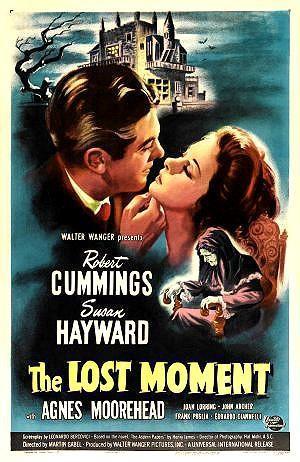
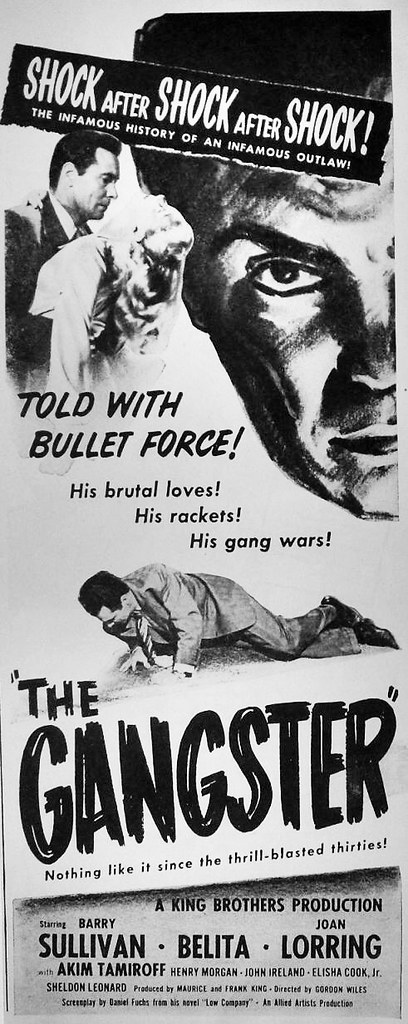
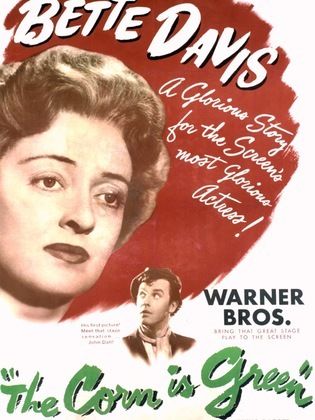
Joan Lorring was born in 1926 in Hong Kong. She made her film debut in “Song of Russia” in 1944. She was Oscar nominated for her role in “The Corn Is Green” with Bette Davis and Mildred Dunnock. Other films incliude “The Bridge of San Luis Rey”, “Three Strangers”and “The Lost Moment”.

Her IMDB entry by Gary Brumburgh:

Joan Lorring was born Mary Magdalene Ellis in Hong Kong on April 17, 1926. She was forced to leave her native country after the outbreak of WWII and, along with her family, arrived in America as a teenager in 1939. After finding radio work in Los Angeles, the Anglo-Russian actress worked her way into films making a minor debut at age 18 in the romantic war drama Song of Russia (1944) and subsequently played the small part of Pepita in the ensemble suspenser The Bridge of San Luis Rey (1944).

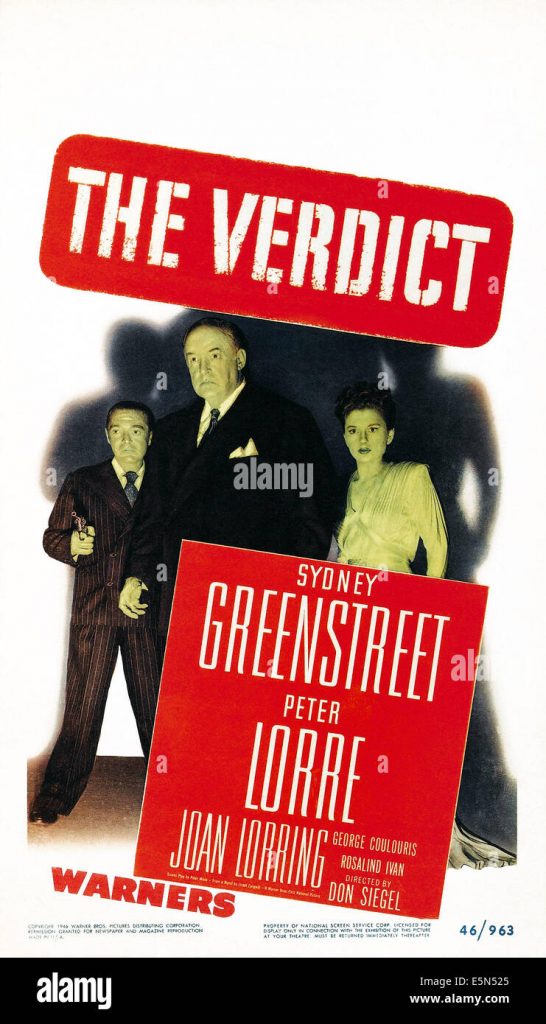
The following year Joan won the coveted role of the scheming, trampish Bessie oppositeBette Davis in The Corn Is Green (1945), earning a Academy Award nomination for “best supporting actress” in the process. She may have lost the Oscar trophy that year to Anne Revere for National Velvet (1944) but Warner Brothers Studio was more than impressed with the up-and-comer and eagerly signed her up. Joan proved quite able in a number of juicy film noir parts, including Three Strangers (1946) and The Verdict (1946), both opposite the malevolent pairing of Sydney Greenstreet and Peter Lorre.

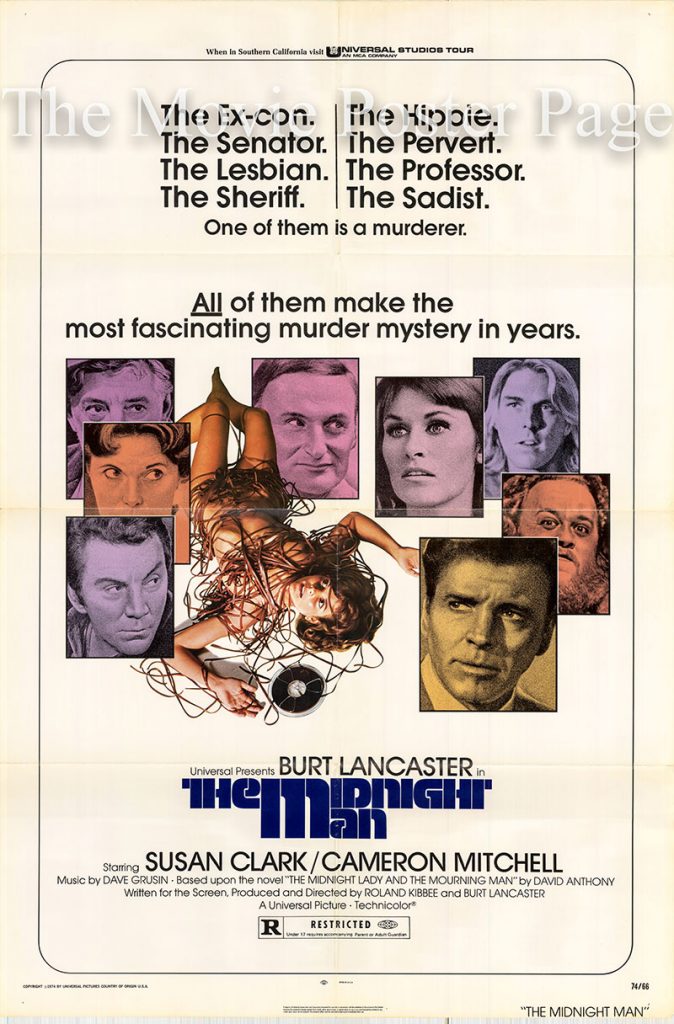
Unexplicably her film career went into a rapid decline by the end of the decade. As a result she sought work elsewhere and maintained with stage, radio and small screen endeavors into the next decade. On Broadway she made her debut in the prime role of budding college student Marie who sets off the explosive dramatic action in “Come Back, Little Sheba” (1950) starring Shirley Booth and Sidney Blackmer. She continued with strong roles in “The Autumn Garden” (1951), “Dead Pigeon” (1953) and “A Clearing in the Woods” (1957). _Among her many 1950s dramatic showcases on TV was her portrayal of convicted ax-murderess Lizzie Borden’s sister Emma on an Alfred Hitchcock episode. In the 1970s, Joan made a mini comeback in the Burt Lancaster movie The Midnight Man(1974) as Cameron Mitchell‘s wife. She also performed on radio soap operas and appeared for a season on the TV soap Ryan’s Hope (1975) before phasing out her career once again. Long married to New York endocrinologist Dr. Martin Sonenberg, she is the mother of two daughters.

– IMDb Mini Biography By: Gary Brumburgh / gr-home@pacbell.net

“LA Times” obituary from May 2014:

Joan Lorring, 88, who was nominated for an Oscar for her performance in the 1945 Bette Davis film “The Corn Is Green,” died Friday, said her daughter, Andrea Sonenberg. Lorring had been ill and died in a hospital in the New York City suburb of Sleepy Hollow.

Davis chose Lorring for the role of the scheming Bessie Watty in the late-19th century drama after reviewing screen tests of several actresses, according to the website of cable channel Turner Classic Movies. It was only the third film for Lorring.

Although Davis was known to speak her mind forceably on movie sets, Lorring said the star was greatly supportive of her. “I have only had one or two teachers in my life about whom I felt as strongly and positively as I did about Bette Davis,” Lorring said, according to the Turner Classic Movie website. Lorring lost the Academy Award for supporting actress to Anne Revere, who was in “National Velvet.”

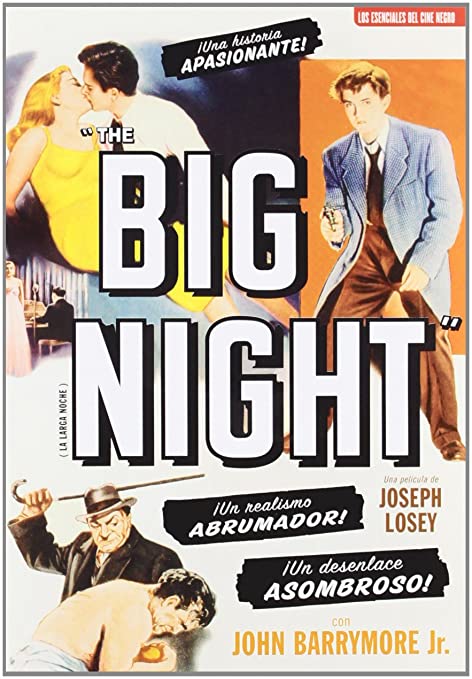
Lorring went on to juicy parts in “Three Strangers” (1946) and “The Verdict” (1946), both opposite Sydney Greenstreet and Peter Lorre, and she was in the 1951 film noir “The Big Night” directed by Joseph Losey.

She had numerous roles in early television series while also appearing on stage. In 1950, Lorring made her Broadway debut in the William Inge drama “Come Back, Little Sheba.” “As the blond and self-centered college girl,” New York Times critic Brooks Atkinson wrote in his review, “Joan Lorring gives a genuine and attractive performance.”

Lorring appeared on TV only a few times in the 1960s and 1970s but returned to play a role in the soap opera “Ryan’s Hope” in 1979. Her final credit was for a 1980 episode of “The Love Boat.”

She was born Madeline Ellis on April 17, 1926, in Hong Kong and moved to the U.S. in 1939. She was married to prominent endocrinologist Martin Sonenberg, who preceded her in death in 2011.

In addition to her daughter Andrea Sonenberg, she is survived by daughter Santha Sonenberg and two grandchildren.

Times staff and wire reports
news.obits@latimes.com

Joan Lorring (1926–2014) was a performer of intense, jittery intelligence whose career serves as a classic Hollywood cautionary tale of the “Academy Award Curse.” Born Madeline Ellis in Hong Kong, she fled the Japanese invasion to become a standout dramatic force in the 1940s, only to see her film career stall just as it reached its peak.

Career Overview

Lorring’s career was defined by her ability to play characters who were simultaneously predatory and pathetic—a delicate balance that made her one of the most interesting young actresses of the post-war era.

  • The Prodigy (1944–1945): After minor roles, she was cast at age 19 in “The Corn Is Green” (1945). Her performance was so impactful it earned her an Academy Award nomination for Best Supporting Actress, an almost unheard-of feat for a newcomer playing such an unsympathetic role.

  • The Noir & Melodrama Specialist (1946–1952): She became a staple of Warner Bros. and Paramount “dark” features, often playing the “other woman” or the manipulative younger sister in films like The Verdictand Three Strangers.

  • The New York Transition (1950s–1980s): As film roles dried up, Lorring reinvented herself as a powerhouse on the Broadway stage and in “Golden Age” television dramas. She found a second life in the New York theater scene, notably in the original production of Come Back, Little Sheba.


Critical Analysis of His Work

1. The Mastery of the “Lower-Class Siren”

Lorring’s breakthrough in The Corn Is Green remains the primary subject of her critical legacy. Playing Bessie Watty, a girl who seduces a young miner to spite her teacher (Bette Davis), Lorring introduced a new kind of “mean girl” to the screen.

  • Analysis: Critically, Lorring was praised for her refusal to make Bessie “likable.” While most young starlets of 1945 were coached to maintain a certain degree of “softness,” Lorring played Bessie with a sharp-edged, mercenary pragmatism. She successfully held her own against Bette Davis by using a “vulpine” energy—moving and speaking with a predatory hunger that felt dangerously modern.

2. Intellectualizing the B-Movie

In films like “The Verdict” (1946) and “Three Strangers” (1946), Lorring worked within the confines of the B-movie thriller but brought an A-list psychological depth to her roles.

  • Analysis: Critics have often noted that Lorring didn’t just play “femme fatales”; she played women who were victims of their own limited social mobility. She used her voice—which had a slight, nervous vibrato—to suggest that her characters’ manipulations were born of desperation rather than pure evil. This “anxious” quality made her a favorite of directors who wanted to subvert the standard Noir tropes.

3. The “Un-Glamorous” Choice

Unlike many of her contemporaries at Warner Bros., Lorring was willing to look “plain” or “unruly” for a role.

  • Analysis: In an era of perfection, Lorring’s willingness to appear disheveled or morally decayed was a bold stylistic choice. Modern analysis of her work often compares her to later “Method” actresses. She prioritized the internal truth of a scene over the “Star Image,” which likely contributed to her difficulty in finding traditional “Leading Lady” roles in a Hollywood that still demanded conventional beauty archetypes.

4. Stage vs. Screen: The Great Pivot

When her film career declined, Lorring’s transition to the stage was a critical triumph.

  • Analysis: In the theater, her small stature and “big” voice were utilized to different effects. In “Come Back, Little Sheba,” she played Marie with a nuanced understanding of youthful selfishness. Theater critics noted that Lorring possessed a “theatrical electricity” that the camera sometimes struggled to contain. She was better suited for the long-form character arcs of the stage than the often two-dimensional roles offered to women in 1950s cinema.


Key Filmography and Stage Work

Work Year Role Significance
The Corn Is Green 1945 Bessie Watty Oscar Nomination; her definitive “bad girl” role.
Three Strangers 1946 Icey Crane Highlighted her ability to play complex, morally grey characters.
The Verdict 1946 Lottie Rawson A classic Noir performance alongside Sydney Greenstreet and Peter Lorre.
Come Back, Little Sheba 1950 Marie Buckholder Her successful transition to Broadway; earned a Donaldson Award.
The Big Night 1951 Marion Directed by Joseph Losey; a stark, gritty role at the end of her film peak.

In summary: Joan Lorring was an actress of “high-frequency” energy. She was perhaps too intelligent and too uncompromising for the Hollywood machine of the 1940s, which preferred its ingenues to be either saints or sirens. In reality, Lorring was a character actress trapped in a starlet’s body, leaving behind a brief but searing body of work that continues to fascinate fans of Classic Hollywood melodrama

Leave a Reply

Your email address will not be published. Required fields are marked *