


Celia Johnson tribute in “The Guardian”
Who can ever forget Celia Johnson in her silly hat rushing around the home counties train stations in post-war Britain trying to escape the romantic inclinations of Trevor Howardin “Brief Encounter”. She was nominated for an Acadmey Award for her performance. Primarily a stage actress she made relatively few films but some of them are now regarded as classics including ther afore mentioned “Brief Encounter”, “This Happy Breed”, “A Kid for Two Farthings” and “The Prime of Miss Jean Brodie”. Celia Johnson died in 1982. She was a consummate actress.
“Guardian” tribute:




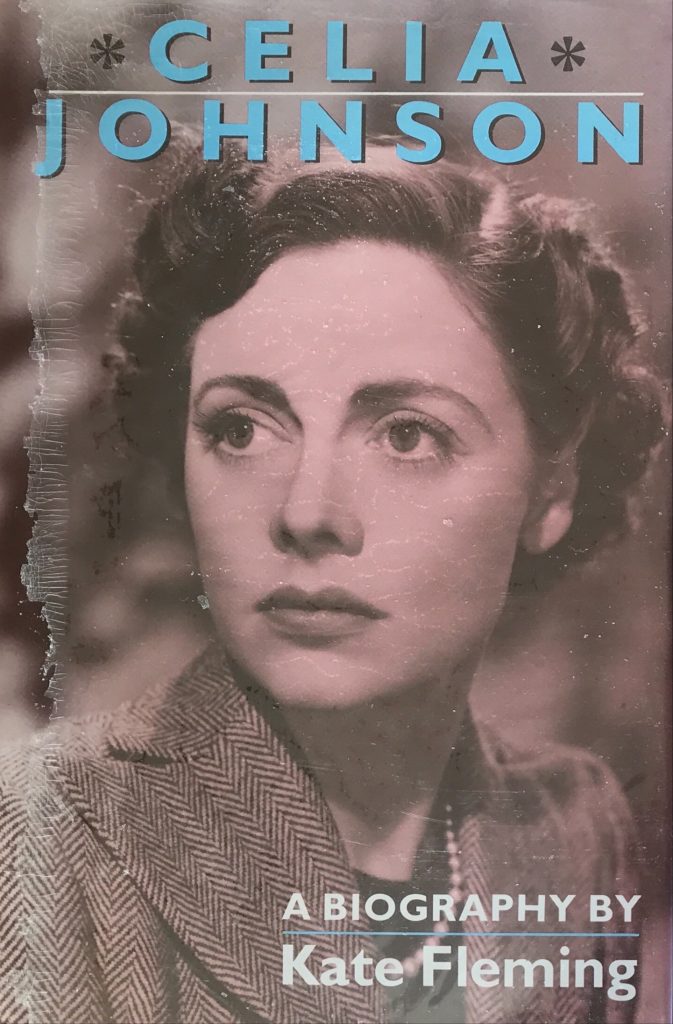
Celia Johnson died in her prime – at the age of 73. There was no other actress on the English stage whose career reached its zenith, a luminous Indian summer on both stage and television, in middle and old age. She defined to perfection a social type occupying the entrenched territories of middle and upper-middle class gentility, whose crisp, understated manners and stringent lack of sentimentality she conveyed to the manner born. Yet she did not simply serve as a comprehensive guide-book to or map of a contracting portion of England. She incarnated qualities both of restraint and of passion; she knew everything about high English comedy whose airs of distraction and self-absorbed remoteness she conveyed so sharply in Coward’s Hay Fever and Ayckbourn’s Relatively Speaking; more surprisingly she was able in old age to act indelibly roles of high tragic velocity and pathos, and obliterated all sentimental nuances from the plays of William Douglas-Home.


It was after the 1945 film Brief Encounter where, grief-struck but tight-lipped in a railway station, she gave a regretful adieu to adultery without savouring its joys, that she became a surprise star. Who then would have imagined this light elegant comedienne, who had won the admiration of du Maurier in the Thirties, could convey all the nuances of erotic passion with such conviction and discriminating restraint? For in the first 15 or so years of her theatrical career, which had begun in 1928, she had played a succession of bright young things in period pieces. Brief Encounter brought the theatrical reward of St Joan at the Old Vic. The critic Kenneth Hurren, applauding the “immensely moving” nature of her performance, noted with approval that she had chosen to stress the saintly rather than the peasant-like aspect of the rare girl. It was to be followed three years later by an Old Vic Viola and the quietly suffering Olga in Three Sisters, to Ralph Richardson’s Vershinin.
It seemed as if she were poised to become one of our leading classical actresses, discarding the light comic roles with which she had earlier dealt. But it was not to be. She had married the author and explorer Peter Fleming, and had three children. Home and domestic life exerted a greater hold upon her than the theatre: she told me when I talked with her a fortnight ago that she never really enjoyed acting on stage and submitting herself to the rigour of nightly performance.


Throughout the Fifties and the early Sixties, she was fitfully and briefly seen on stage. But Laurence Olivier, never particularly willing to enlist players of his generation to the National, called her in 1964 to play opposite him as the neurasthenic Mrs Solness in Ibsen’s Master Builder. Her parched, wrenching performance of the woman was akin to an announcement of her unused powers. She had arrived again. Michael Billington was among those who praised her first Shakespearian performance for 20 years, applauding the way in which she was “not the usual wilting voluptuary but a distraught, untidy maternal figure caught up in events beyond her comprehension.” She regretted, she told me, that she had not played more Shakespeare. John Gielgud, a great admirer, suggests that a most unsuccessful early performance as Juliet damaged her chances of being such an ingenue.
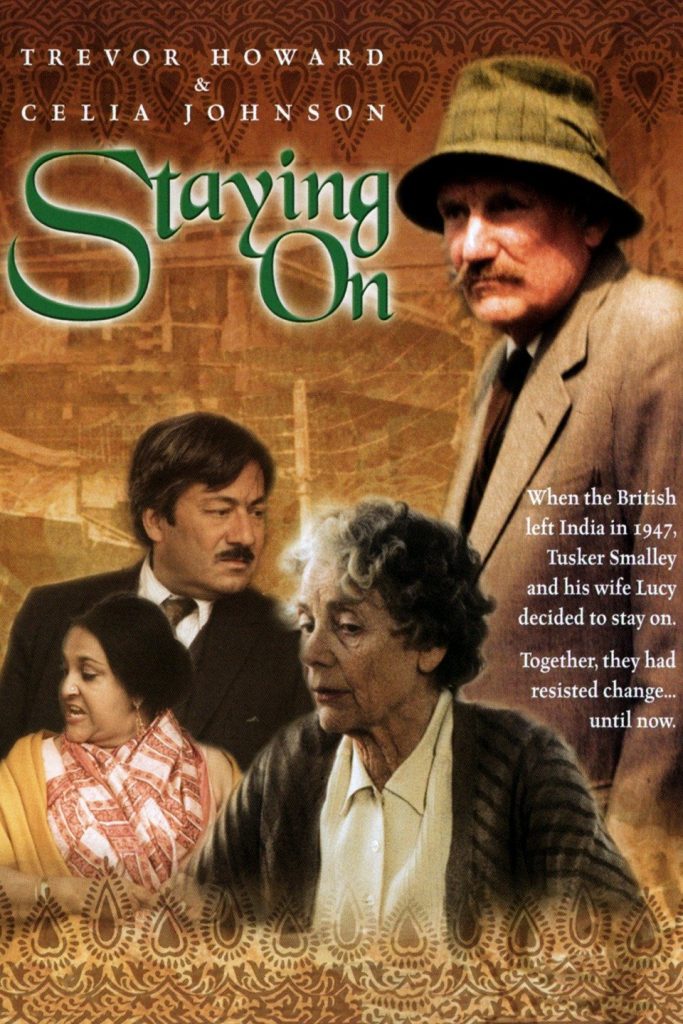
In the last decade also she became quite simply the finest television actress of her generation, coming to the medium with huge enthusiasm and scaling down her performance to comply with the range and subtleties of the screen. Her Mrs Alving in Ghosts, Mrs Palfrey at the Claremont, the wife in Graham Green’s The Potting Shed, and opposite Trevor Howard again in an adaptation of Paul Scott’s Staying On were quite remarkable for their vehement emotional clarity and tragic intimations.
The above “Guardian” tribute by Nicholas de Jongh can also be accessed online here.


Career Overview and Critical Analysis of the Work of Celia Johnson
Celia Johnson (1908–1982) was one of the most admired British actresses of the mid-20th century. Renowned for her emotional subtlety, moral intelligence, and understated acting style, she achieved lasting fame through her work in theatre and film. Her performances often centered on introspective, emotionally conflicted characters, and she became especially associated with the restrained emotional realism characteristic of British cinema in the 1940s.
Although she appeared in relatively few films, Johnson’s work—particularly in Brief Encounter—is widely regarded as one of the finest examples of screen acting in British film history.
Early Life and Stage Career
Celia Johnson was born in Richmond, Surrey, and educated at St Paul’s Girls’ School in London. She later trained at the Royal Academy of Dramatic Art (RADA), where she developed the classical technique that shaped her later acting.
Her early career unfolded primarily in the theatre. During the 1930s she appeared in numerous West End productions and classical plays, establishing herself as a talented stage performer with strong interpretive abilities.
Critical characteristics of early stage work
Johnson’s stage acting was noted for:
- clarity of speech and diction
- emotional sincerity
- intellectual understanding of character
Unlike more flamboyant performers of the era, she specialized in quiet psychological realism, a trait that would later define her film performances.
Film Breakthrough
Johnson’s major breakthrough came with the wartime drama:
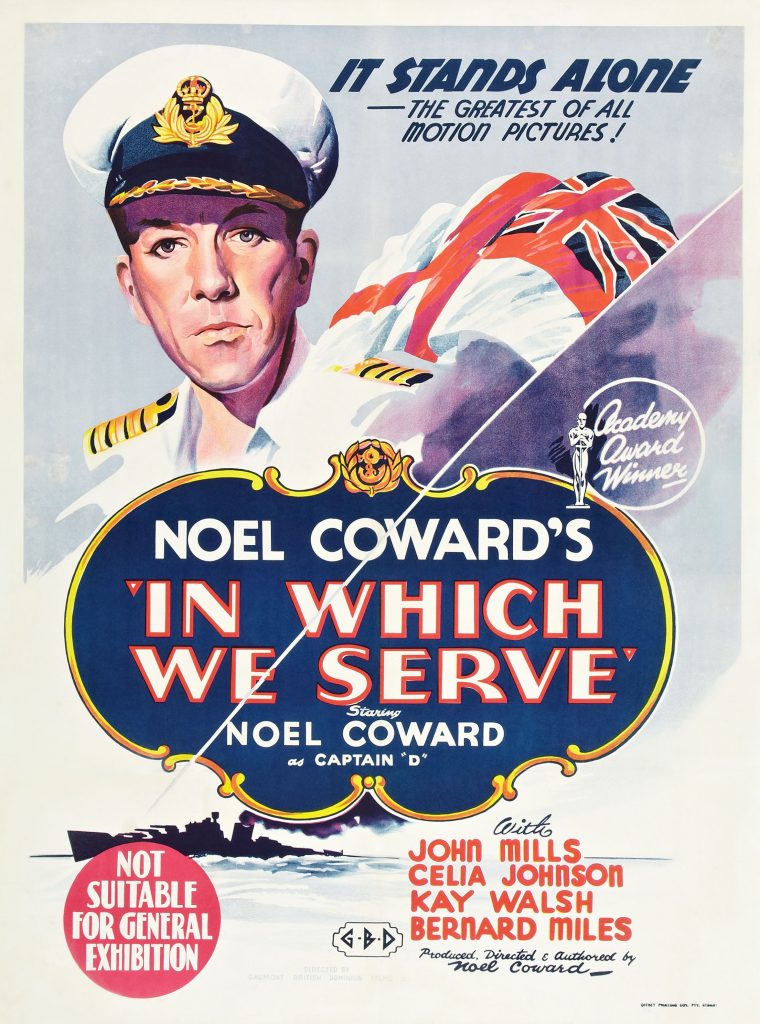
- In Which We Serve
Directed by David Lean and Noël Coward, the film depicted the experiences of British naval officers and their families during the Second World War.
Johnson’s role as the wife of a naval officer exemplified the type of character she would often portray: emotionally resilient, morally serious, and quietly dignified.
Critical significance
Her performance captured the emotional endurance associated with Britain’s wartime identity. Rather than heroic grand gestures, she conveyed strength through restraint, reinforcing the cultural ideal of stoic wartime endurance.
The Defining Role: Brief Encounter
Johnson’s greatest and most celebrated performance is as Laura Jesson in:
- Brief Encounter
Directed by David Lean and adapted from a play by Noël Coward.
The film tells the story of a married woman who experiences a brief but intense emotional affair with a doctor played by Trevor Howard.
Johnson’s performance earned her an Academy Award nomination for Best Actress.
Critical Analysis of the Performance
1. Interiorized acting
The brilliance of Johnson’s performance lies in its interior quality. Much of the character’s emotional life occurs within her thoughts rather than through overt action.
Johnson communicates Laura’s feelings through:
- subtle shifts in facial expression
- hesitant speech patterns
- moments of silence and reflection
The result is an unusually intimate portrayal of emotional conflict.
2. Use of voice and narration
The film uses voice-over narration to reveal Laura’s internal thoughts. Johnson’s delivery is crucial to making this device believable.
Her voice conveys:
- suppressed longing
- moral anxiety
- self-reflection
The narration becomes an extension of the character’s inner life rather than a purely narrative device.
3. Moral conflict and emotional restraint
Laura Jesson is defined by moral responsibility. She is neither rebellious nor reckless; instead, she is painfully aware of the consequences of her emotions.
Johnson portrays this tension through a delicate balance between:
- romantic longing
- social duty
- personal guilt
Her restraint prevents the story from becoming melodramatic and instead gives it profound emotional authenticity.
Later Film Career
Although Brief Encounter made Johnson internationally famous, she appeared in relatively few films afterward. She preferred to focus on theatre and family life.
Later film roles include:
- The Captain’s Paradise
- The Prime of Miss Jean Brodie
In The Prime of Miss Jean Brodie, starring Maggie Smith, Johnson played the conservative teacher Miss Mackay.
Critical assessment
In this role Johnson presents a stark contrast to Smith’s charismatic title character. Her performance embodies:
- institutional authority
- moral discipline
- controlled frustration
Rather than playing Miss Mackay as a simple antagonist, Johnson gives her a sense of principled seriousness, suggesting that her opposition to Brodie arises from genuine concern rather than jealousy.
Acting Style
Emotional restraint
Johnson’s defining trait as an actress was her restraint. She rarely used exaggerated gestures or dramatic displays of emotion.
Instead she conveyed feeling through:
- minute facial expressions
- carefully modulated speech
- thoughtful pauses
This style aligned with the British cinematic tradition of subtle psychological realism.
Moral intelligence
Her performances often emphasize ethical awareness. Many of her characters confront dilemmas involving:
- loyalty
- duty
- emotional honesty
Johnson’s ability to express these conflicts made her performances deeply human.
Naturalistic authenticity
Although classically trained, Johnson avoided theatrical mannerisms in film acting. Her performances appear spontaneous and conversational, creating a sense of realism that resonated strongly with audiences.
Cultural and Historical Significance
Celia Johnson became one of the defining faces of British cinema during the Second World War and its aftermath.
Her characters often represented:
- emotional restraint
- moral responsibility
- quiet resilience
These qualities reflected the social values that British wartime culture sought to emphasize.
At the same time, her portrayal of Laura in Brief Encounter revealed the hidden emotional lives beneath these social ideals, making the film both culturally representative and psychologically insightful.
Legacy
Although her filmography is relatively small, Johnson’s influence on screen acting is substantial.
Her work in Brief Encounter remains a benchmark for subtle film acting and is frequently cited as one of the greatest performances in British cinema.
Her legacy rests on:
- emotional authenticity
- refined acting technique
- the ability to convey profound feeling through minimal means
Summary
Celia Johnson was a master of restrained emotional expression. Through her performances in films such as In Which We Serve and especially Brief Encounter, she demonstrated how subtlety and psychological insight could create deeply moving drama. Her acting represents a distinctive moment in British film history, where understated realism replaced theatrical melodrama, and where emotional depth emerged through quiet, intimate performance