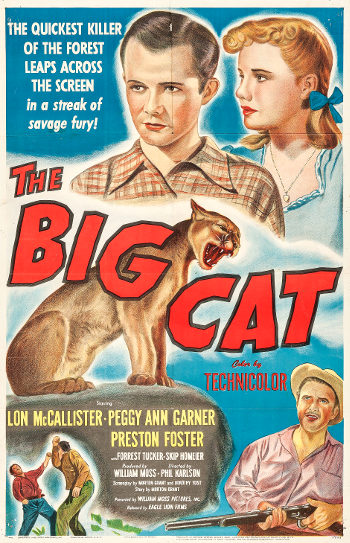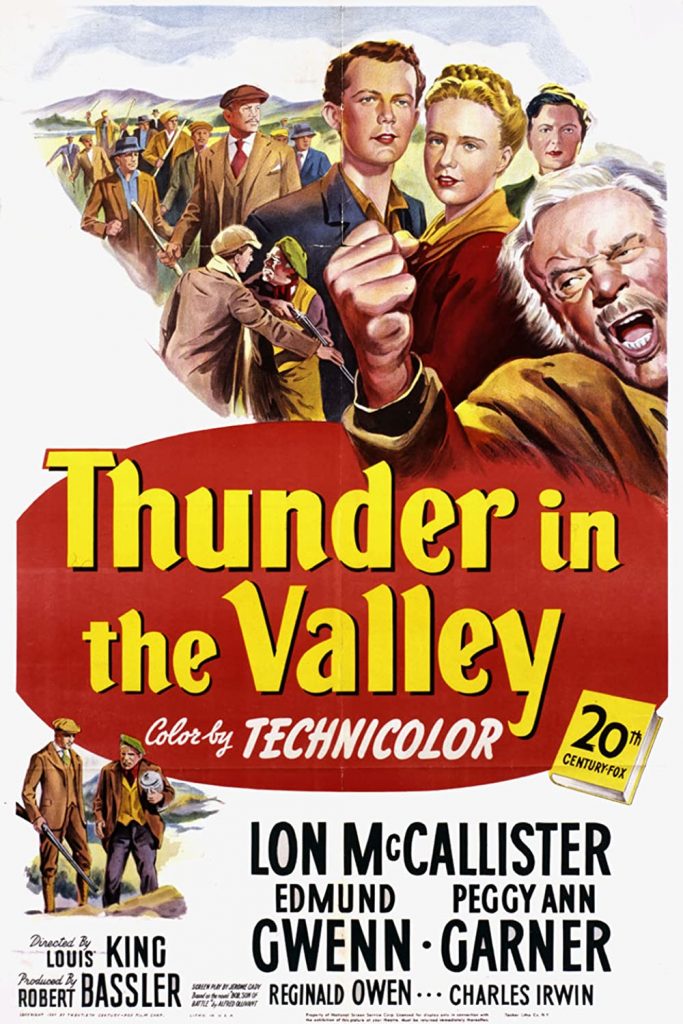

Lon McCallister

Lon McCallister obituary in “The Guardian” in 2005.

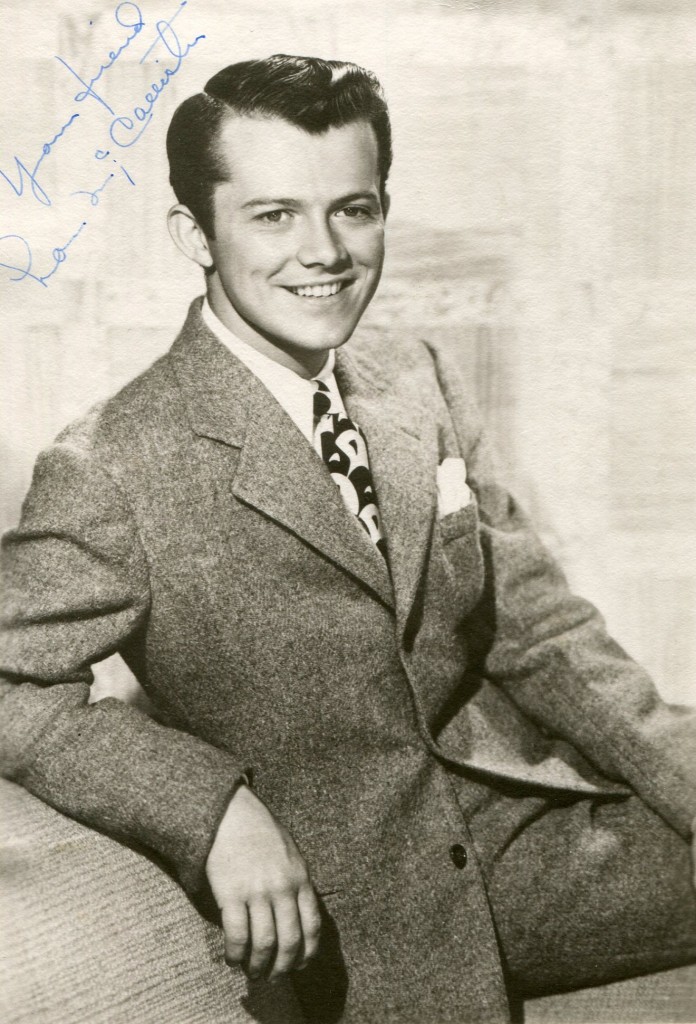
Ronald Bergan” “Guardian” obituary:

In the 1940s, it seemed every Hollywood horse-racing yarn – such as Home In Indiana (1944) and The Story Of Seabiscuit (1949) – starred Lon McCallister, who has died aged 82. He also appeared in bucolic romances in which animals featured prominently: Thunder In The Valley (1947) – boy falls for sheepdog – and The Big Cat (1949) – boy rescues community from mountain lion.

The “boy” McCallister was over 20 at the time, although cherubic looks and small stature allowed him to play adolescents almost until his retirement from acting in 1953 at the age of 30. “Being a movie star was great,” McCallister said in a 1992 interview “but I wanted to be myself, to go where I pleased without causing a traffic jam. “

He was the son of a real estate broker, born in Los Angeles. After taking singing and dancing lessons, he had dozens of bit parts in the seven years after his 13th birthday. One of the first was in George Cukor’s Romeo And Juliet (1936), where he was seen in close-up in the first scene, during the fight between the Capulets and the Montagues.

Cukor described McCallister as “the perfect choirboy”, and later cast him as a pilot in the morale-boosting Winged Victory (1944). Cukor held Sunday salons for his gay friends at his west Hollywood home. McAllister was among the up-and-coming stars invited.

McCallister’s first real break came in Stage Door Canteen (1943), as the shy recruit called California, who gets the chance to act the balcony scene from Romeo and Juliet with Katherine Cornell as a great lady of the theatre. He was a hit with bobby-soxers, and gossip columnist Hedda Hopper called him “the cutest boy the movies have hauled up out of obscurity since Mickey Rooney”.

After war service, McCallister landed a 20th Century-Fox contract. In Home In Indiana, he trains a blind filly with his “whispering hands” to win a big trotting race; he also drives the rig. In The Story Of Seabiscuit, he played the jockey of America’s most famous racehorse with 23-year-old has-been Shirley Temple as the human love interest. McCallister also trained a horse to win the big race in The Boy From Indiana (1950). Two mules were his preoccupation in Scudda Hoo! Scudda Hay! (1948), the film in which Marilyn Monroe made a fleeting debut.

One of the few chances McCallister had away from this Technicolored fare was in Delmer Daves’s The Red House (1947). He and Allene Roberts played inquisitive teenagers who find out a secret hidden for years by dour farmer Edward G Robinson.

McCallister’s last film was a low-budget Korean war picture, Combat Squad (1953) after which he decided to go into real estate speculation in Malibu, California. He lived for 10 years with an actor and fellow Fox contractee William Eythe, with whom he produced travel films until Eythe’s death at the age of 39. McCallister is survived by a brother and a sister.

· Lon (Herbert Alonzo) McCallister, actor, born April 17 1923; died June 11 2005

His “Guardian” obituary can be accessed here.

Lon McCallister (1923–2005) occupied a unique niche in the 1940s Hollywood landscape as the definitive “boy next door.” While his career was brief—effectively ending by age 30—he was a significant star during the WWII era, embodying a specific brand of American innocence that provided a vital cultural tonic during the war years.


Career Overview

McCallister’s trajectory was defined by his remarkably youthful appearance. Despite being in his 20s during his peak years, his slight stature (5’6″) and “cherubic” features allowed him to play teenagers and young GIs with a level of sincerity that resonated with family audiences.


  • The Juvenile Apprentice (1936–1942): He spent years in uncredited bit parts, including a brief appearance in George Cukor’s Romeo and Juliet (1936), where Cukor’s mentorship proved pivotal.


  • Wartime Stardom (1943–1945): His breakout came in “Stage Door Canteen” (1943), playing a star-struck soldier. This was followed by his most iconic lead role in the horse-racing drama “Home in Indiana” (1944).


  • Post-War Transition & Retirement (1947–1953): After serving in the Army, he returned to a changing Hollywood. While he headlined several “animal” features like The Red House and The Story of Seabiscuit, he found it difficult to transition into mature leading-man roles. He retired in 1953 to become a highly successful real estate investor.


Critical Analysis of His Work

1. The Aesthetic of “Aggressive Innocence”

McCallister’s primary contribution to cinema was his ability to project a pure, almost radical naivety. In a decade defined by the cynical shadows of film noir, McCallister represented the “Home Front” ideal.

  • Analysis: In Stage Door Canteen, critics noted he “stole the film” with his bashful smile. His acting wasn’t about complex psychological layering; it was about transparency. He became the cinematic surrogate for the “American Boy” that soldiers were fighting to protect, making his performances emotionally patriotic without being overtly political.


2. The Rural Romanticism and “Horse Films”

Much of his critical legacy is tied to the “outdoor” genre. Movies like Home in IndianaThunder in the Valley, and The Big Cat utilized his small frame to make him appear more “at one” with the animals and the landscape.


  • Analysis: Critically, these roles showcased his physical empathy. He possessed “whispering hands” on screen—a gentleness that made his connection with animals feel authentic. However, this also pigeonholed him; he became so synonymous with rural, adolescent sincerity that the industry struggled to imagine him in a suit, in a city, or in a position of authority.


3. The Noir Outlier: The Red House (1947)

Perhaps his most interesting performance for modern film scholars is in the psychological thriller “The Red House”, starring Edward G. Robinson.


  • Analysis: Here, McCallister’s innocence is weaponized. Playing against Robinson’s simmering madness, McCallister’s “goodness” acts as a catalyst for the film’s tension. It is one of the few instances where a director (Delmer Daves) used McCallister’s boyishness to create a sense of genuine dread, proving he was capable of more than just “homespun sentiment.”

4. The Challenge of Longevity

The central critical conflict of McCallister’s career was the “Peter Pan” trap. As he entered his 30s, his face remained that of a 17-year-old.

  • Analysis: Unlike contemporary Alan Ladd, who used a similar stature to play “tough,” McCallister’s features were too soft for the burgeoning cynicism of the 1950s. His retirement at 30 was a rare act of Hollywood self-awareness; he recognized that he was an actor “out of time.”


Key Filmography for Study

 
Film Year Role Significance
Stage Door Canteen 1943 “California” Jack The breakout role that turned him into a wartime sweetheart.
Home in Indiana 1944 ‘Sparke’ Thornton His definitive lead role; established the “boy and his horse” archetype.
The Red House 1947 Nath Storm A rare foray into dark, psychological melodrama.
Scudda Hoo! Scudda Hay! 1948 Snug Dominy Notable for his top billing (and a tiny cameo by an unknown Marilyn Monroe).
The Story of Seabiscuit 1949 Ted Knowles Co-starring with Shirley Temple; marked the twilight of his leading-man era.


In summary: Lon McCallister was the face of American “Goodness” during its most turbulent decade. While he didn’t have the range of a character actor, he had a crystalline screen presence that defined an era of family-centric storytelling. He remains a fascinating example of a star who chose a graceful exit over a faded decline

Leave a Reply

Your email address will not be published. Required fields are marked *